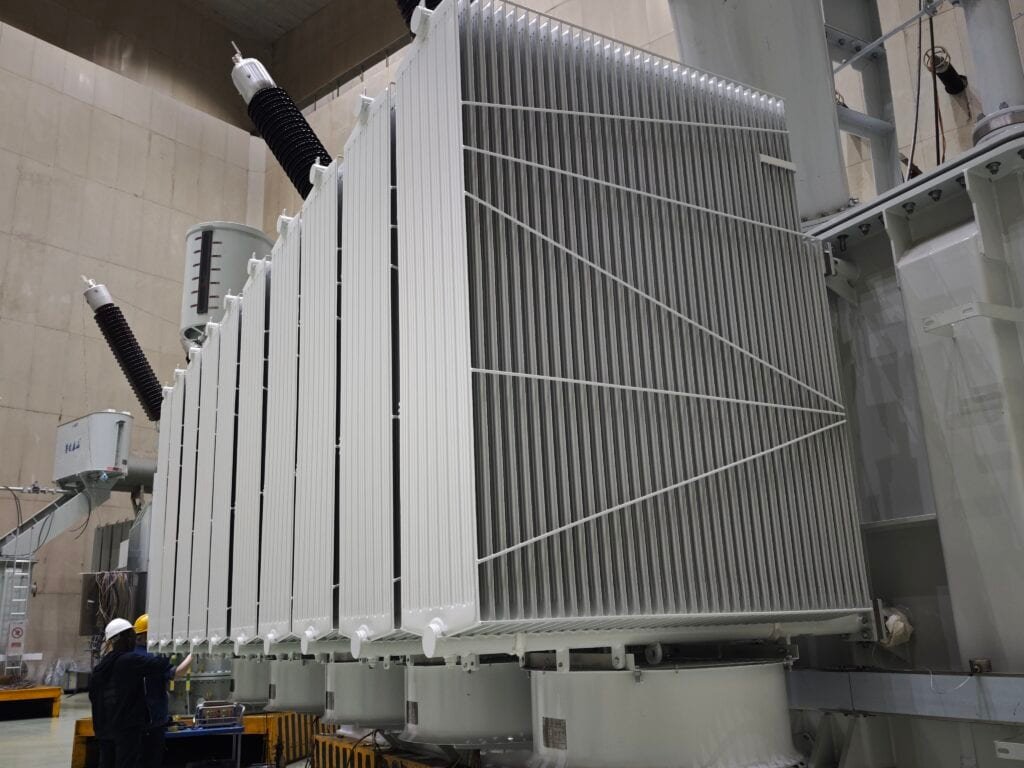
Cooling is a critical aspect of power transformer operation. Excessive heat can degrade insulation, reduce efficiency, and shorten service life. To maintain optimal operating temperatures, power transformers use various cooling methods based on the application, size, and load requirements. These methods are identified by international letter codes such as ONAN, ONAF, OFAF, and OFWF, each representing different combinations of oil and air (or water) circulation. Understanding these cooling systems helps ensure the safe and efficient operation of transformers.
Why Is Cooling Important in Power Transformers?
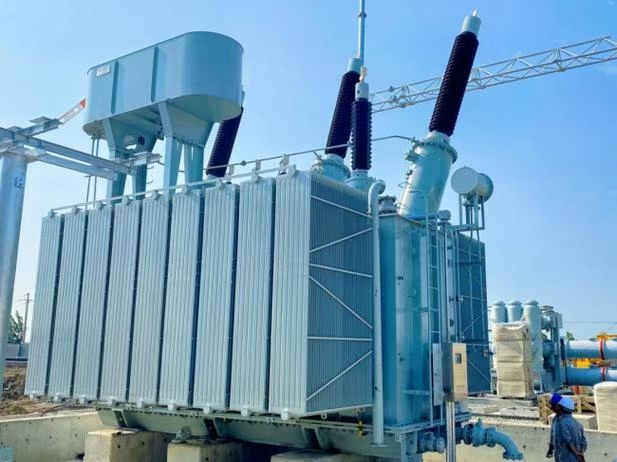
Power transformers handle high voltage and current, which inevitably generates heat due to electrical losses in the windings (copper losses) and the core (iron losses). Without proper heat management, the transformer’s insulation degrades, thermal stress accumulates, and failure risk increases exponentially. Efficient cooling ensures that the transformer operates safely, reliably, and within its thermal limits throughout its service life.
Cooling in power transformers is critical to maintain safe operating temperatures, prevent insulation degradation, avoid thermal overloads, and extend service life. Transformers dissipate heat through their cooling systems—oil circulation, radiators, fans, and pumps—which help regulate winding and core temperatures. Without cooling, the risk of breakdowns, fire, and reduced lifespan increases significantly.
Cooling systems are a fundamental part of transformer design—not an optional accessory.
Cooling systems are not necessary for power transformers operating at high voltage.False
High voltage transformers generate significant heat from core and winding losses, requiring dedicated cooling to prevent overheating and failure.
Why Transformers Generate Heat
| Heat Source | Cause |
|---|---|
| Copper Losses (I²R) | Current flow in windings creates resistive heating |
| Core Losses (hysteresis & eddy) | Magnetic field in the steel core cycles continuously |
| Stray Losses | Leakage flux heating nearby metal parts |
| Load Cycles | Higher loads = higher current = more heat |
Cooling System Functions
| Function | Impact on Transformer Operation |
|---|---|
| Heat Removal | Dissipates heat from windings and core to the environment |
| Thermal Stability | Maintains oil and winding temperature within rated range |
| Insulation Protection | Prevents overheating that degrades paper and oil insulation |
| Overload Capacity | Enables transformer to handle short-term high loads |
| Alarm and Shutdown Triggers | Signals when overheating occurs to prevent fire or explosion |
Types of Cooling Methods
| Code | Description | Use Case |
|---|---|---|
| ONAN | Oil Natural, Air Natural | Up to 25 MVA, passive systems |
| ONAF | Oil Natural, Air Forced (fans) | Medium-size transformers with moderate loads |
| OFAF | Oil Forced, Air Forced (pumps/fans) | High-load industrial and utility transformers |
| OFWF | Oil Forced, Water Forced | Indoor, confined spaces, high ratings |
Impact of Overheating
| Overheat Level | Consequences |
|---|---|
| >65 °C winding rise | Accelerated insulation aging |
| >85–90 °C oil | Oil breakdown, bubble formation |
| >120 °C | Risk of paper charring, internal flashover |
| Repeated overheating | Shortened transformer life, frequent failures |
Industry data shows each 8–10°C rise above rated temperature halves insulation life.
Key Cooling System Components
| Component | Function |
|---|---|
| Radiators | Air-cooled heat exchangers connected to oil circuit |
| Cooling Fans | Boost airflow over radiators for increased heat transfer |
| Oil Pumps | Circulate oil faster through the core and coils |
| Conservator Tank | Compensates for oil expansion with temperature |
| Temperature Sensors | Measure top oil and winding hot spot temperatures |
| Pressure Relief Devices | Protect tank from pressure buildup during overheating |
Real-World Example – 40 MVA Grid Transformer
- Type: ONAF-cooled 132/33 kV transformer
- Site: Urban substation, ambient 40 °C
- Challenge: Load surge during peak summer caused top oil temp to reach 80 °C
- Solution: Auto fan activation cooled unit in 12 minutes; temp stabilized at 62 °C
Outcome: Transformer continued full-load operation with zero derating, no thermal alarm triggered—highlighting cooling’s critical role.
What Does the ONAN Cooling Method Mean in Power Transformers?
ONAN is the most common and foundational cooling method used in oil-immersed transformers, especially those with small-to-medium power ratings. It is entirely passive, meaning no mechanical fans or pumps are required, and it relies solely on natural convection and thermal radiation to dissipate heat from the transformer core and windings.
ONAN stands for Oil Natural Air Natural, a cooling method where transformer oil circulates naturally due to heat-induced density differences, and heat is dissipated from radiators into the ambient air by natural airflow. ONAN systems operate silently, with minimal maintenance and are ideal for transformers up to \~25 MVA.
This method is reliable, cost-effective, and widely used for both distribution and utility transformers.
ONAN transformers require fans or pumps for operation.False
ONAN cooling uses natural convection of oil and air, without any forced circulation. It is a passive cooling system.
ONAN Cooling: How It Works
| Process Step | Description |
|---|---|
| 1. Heating | Windings generate heat during operation |
| 2. Oil Rises | Hot oil becomes less dense and rises to the top of the tank |
| 3. Radiator Flow | Oil flows into radiators connected to the top of the tank |
| 4. Cooling | Air cools the oil through radiator surfaces |
| 5. Oil Falls | Cooled oil becomes denser, returns to the bottom of the tank |
| 6. Recirculation | Natural convection cycle continues without mechanical aid |
This thermo-siphon effect drives oil flow—no moving parts involved.
Advantages of ONAN Cooling
| Benefit | Explanation |
|---|---|
| Low Maintenance | No fans, pumps, or controls to maintain |
| No External Power | Cooling operates independently of electrical supply |
| Low Noise | Completely silent operation—ideal for residential areas |
| Cost-Effective | Simpler design, lower capex and O\&M costs |
| Reliable and Proven | Used in millions of installations worldwide |
Limitations of ONAN Cooling
| Constraint | Description |
|---|---|
| Power Limit | Typically limited to 25–30 MVA due to natural flow limits |
| Cooling Efficiency | Less effective in hot climates or confined installations |
| Overload Handling | No active cooling = limited short-term overload capacity |
Application Scenarios for ONAN Transformers
| Sector | Application Example | Typical Power Range |
|---|---|---|
| Distribution Networks | 11/0.4 kV or 33/11 kV step-down transformers | 100 kVA–5 MVA |
| Renewable Integration | Solar and wind step-up transformers | 1–10 MVA |
| Industrial Loads | Power supply for isolated machines or campuses | 500 kVA–10 MVA |
| Rural Electrification | Pole-mounted or pad-mount transformers | 50 kVA–500 kVA |
Typical ONAN Nameplate Indication
| Field | Example Value |
|---|---|
| Cooling Class | ONAN |
| Rated Power | 2500 kVA |
| Top Oil Temp Rise | 55 °C (above ambient) |
| Winding Temp Rise | 60–65 °C |
| Ambient Reference | 40 °C max ambient (IEC Std) |
ONAN transformers are often designed with temperature rise ≤55/65 °C under IEC 60076.
Real-World Case – Utility Distribution Transformer
- Rating: 11/0.4 kV, 160 kVA, ONAN cooled
- Installation: Pole-mount in rural feeder line
- Climate: 38 °C summer peak, dry air
- Performance: No thermal alarms over 7 years, 99.5% uptime
ONAN cooling proved adequate and maintenance-free, requiring no external power or intervention.
What Is the ONAF Cooling System and When Is It Used?

As power ratings increase and operating loads become more demanding, natural air cooling (ONAN) becomes insufficient to maintain safe transformer temperatures. In such cases, the ONAF cooling system—Oil Natural Air Forced—is employed to enhance heat dissipation without altering the oil circulation mechanism. It combines passive oil flow with active air flow, offering a smart step-up in thermal performance.
ONAF (Oil Natural, Air Forced) is a transformer cooling method where oil circulates naturally through the transformer core and windings, while external cooling is enhanced by forced air—typically fans mounted on radiators. ONAF enables transformers to handle higher power ratings or overloads by improving heat exchange without requiring oil pumps.
It is commonly used for medium-to-large oil-immersed transformers between 10–60 MVA, especially in environments with variable loads or limited space for larger radiators.
ONAF cooling systems use oil pumps to circulate the oil.False
In ONAF systems, oil circulation remains natural—no pumps are used. Only the air cooling is forced using fans.
How ONAF Cooling Works
| Step | Description |
|---|---|
| 1. Heat Generation | Core and windings heat the oil during operation |
| 2. Natural Oil Convection | Heated oil rises to the tank top and enters radiators |
| 3. Fan Activation | Air fans blow across radiator fins, increasing heat dissipation |
| 4. Oil Cools Down | Oil cools more effectively and returns to bottom of the tank |
| 5. Temperature Control | Fans may run continuously or be thermally triggered via sensors |
Only the air is forced—the oil continues to flow naturally due to thermal gradients.
Advantages of ONAF Cooling
| Benefit | Explanation |
|---|---|
| Enhanced Cooling Capacity | Up to 40–60% more load capacity than ONAN alone |
| Thermal Margin Flexibility | Handles peak loads without transformer overheating |
| No Oil Pumps Required | Lower maintenance than OFAF systems |
| Ideal for Stepwise Ratings | Transformers can be dual-rated (e.g., 40 MVA ONAN / 50 MVA ONAF) |
Typical Applications of ONAF Transformers
| Sector | Installation Example | Power Range |
|---|---|---|
| Utility Substations | 132/33 kV or 66/11 kV power transformers | 10–60 MVA |
| Renewables | Step-up for solar/wind inverters to HV feeders | 5–40 MVA |
| Industrial Plants | Main feeders or substation interface transformers | 5–30 MVA |
| Urban Substations | Space-constrained installations needing compact cooling | 10–50 MVA |
Dual-Cooling Rating Example
| Cooling Mode | Rated Power | Temperature Rise |
|---|---|---|
| ONAN | 40 MVA | 55°C top oil |
| ONAF | 50 MVA | 55°C top oil (due to fan boost) |
Fan Control and Automation
| Fan Operation Mode | Description |
|---|---|
| Thermostatic Start | Fans turn on when oil temperature exceeds threshold |
| SCADA/Remote Control | Fans controlled by supervisory system |
| Time-Cycled Fans | Fans run at scheduled intervals |
| Redundant Fan Arrays | Extra fans improve reliability |
Fans are usually powered by a separate auxiliary supply (AC or DC panel).
Real-World Case – Urban Grid Transformer
- Site: 33/11 kV utility substation
- Transformer: 25/33 MVA ONAN/ONAF, Dyn11
- Cooling: 12 axial fans with thermostatic relays
- Climate: 43 °C ambient, summer peak loads
- Performance: Maintained <55 °C oil temperature under 95% loading
Enabled reliable operation during overload events without derating, extending service life and reducing maintenance cycles.
How Does the OFAF Cooling Method Work in Power Transformers?
As transformer ratings climb above 40–60 MVA or when they are subject to continuous high loading or peak conditions, traditional cooling methods like ONAN or ONAF may not provide sufficient heat removal. In such scenarios, OFAF (Oil Forced, Air Forced) cooling is used to dramatically enhance both internal oil circulation and external air cooling—resulting in significantly improved thermal performance.
The OFAF (Oil Forced, Air Forced) cooling method uses oil pumps to circulate insulating oil through the transformer windings and radiators, while external fans blow air across radiator surfaces to accelerate heat dissipation. This active cooling system allows transformers to operate at higher capacities and maintain stable temperatures under continuous or peak loads.
It is the standard choice for high-capacity power transformers (≥60 MVA) in grid, industrial, and generation settings.
OFAF cooling uses natural oil flow like ONAN, with only fans added.False
Unlike ONAN or ONAF, OFAF cooling actively circulates oil using pumps, providing superior thermal performance and increased load-handling capacity.
How OFAF Cooling Operates
| Stage | Description |
|---|---|
| 1. Heating | Core and winding losses heat the transformer oil |
| 2. Pump Activation | Oil pumps circulate hot oil through radiators continuously |
| 3. Fan Operation | Air fans force ambient air across radiator surfaces |
| 4. Efficient Cooling | Oil temperature drops rapidly due to combined pump/fan action |
| 5. Temperature Control | Sensors control fan and pump operation based on oil temperature |
This dual-forced circulation ensures maximum heat transfer from the windings to the environment.
Key Components in OFAF Systems
| Component | Function |
|---|---|
| Oil Pumps | Circulate oil through the core, windings, and cooling radiators |
| Air Fans | Increase air velocity across radiator fins |
| Radiator Panels | Surface area for heat exchange between oil and air |
| Temperature Sensors | Monitor top oil and winding hot-spot temperatures |
| Control Panel | Automates fan/pump activation, monitors performance |
Benefits of OFAF Cooling
| Advantage | Explanation |
|---|---|
| High Load Capability | Enables continuous operation at higher power ratings |
| Stable Temperature Control | Suitable for variable or peak demand environments |
| Compact Transformer Size | Higher performance in smaller footprint |
| Extended Insulation Life | Reduced hot-spot temperature slows aging |
Typical Use Cases for OFAF Cooling
| Application Sector | Transformer Example | Power Class |
|---|---|---|
| Transmission Grids | 220/132 kV and 400/220 kV substations | 60–315 MVA |
| Power Plants | Step-up transformers for generators | 90–500 MVA |
| Industrial Plants | 33/6.6 kV large-load feeders | 40–100 MVA |
| Data Centers | Redundant high-capacity backup transformers | 20–50 MVA |
Dual-Cooling Nameplate Example
| Cooling Mode | Rated Capacity | Notes |
|---|---|---|
| ONAN | 40 MVA | Natural oil + air (standby) |
| ONAF | 50 MVA | Fan-only operation |
| OFAF | 63 MVA | Full fan + oil pump active |
Pumps and fans may be designed in stages or redundant pairs for fail-safe operation.
Real-World Case – Power Station Step-Up Transformer
- Transformer: 250 MVA, 400/132 kV, OFAF
- Site: Thermal power station, base-load generation
- Cooling: 2 oil pumps + 8 axial radiator fans
- Temperature control: Oil top temp maintained at <55 °C under full load
Result: No load derating, excellent dielectric oil condition after 5 years, and 24/7 operation under hot (ambient 45 °C) conditions
What Is OFWF Cooling and Where Is It Applied?
When transformers are installed in confined, enclosed, or thermally insulated environments—such as power plants, tunnels, marine vessels, or underground substations—air-based cooling systems (like ONAN or OFAF) are not feasible. In these high-load, high-performance installations, OFWF (Oil Forced, Water Forced) cooling provides an ideal solution, offering maximum thermal efficiency in minimal space.
OFWF stands for Oil Forced, Water Forced, a transformer cooling method that uses oil pumps to circulate insulating oil through the windings and a water-cooled heat exchanger, while a separate water circuit (typically closed-loop) carries away the heat. OFWF is used for high-capacity transformers installed in space-restricted or noise-sensitive environments where air cooling is impractical or insufficient.
This method delivers exceptional thermal performance with compact radiators and is widely adopted in power plants, underground substations, offshore platforms, and large-scale industrial facilities.
OFWF systems are cooled by air fans blowing across radiators.False
OFWF systems use heat exchangers and water circuits—not air—to remove heat from transformer oil, making them ideal for indoor or closed environments.
How OFWF Cooling Works
| Stage | Description |
|---|---|
| 1. Heat Generation | Core and winding losses heat the insulating oil |
| 2. Oil Pump Circulation | Pumps move hot oil through transformer core and to oil-water cooler |
| 3. Water Loop Circulation | External water system (closed or open) absorbs oil-side heat |
| 4. Heat Exchange | Heat transfers from oil to water without direct contact |
| 5. Cooling Completion | Water carries heat to external radiator, chiller, or discharge point |
Main Components in OFWF Systems
| Component | Function |
|---|---|
| Oil Pumps | Circulate hot oil through transformer and heat exchanger |
| Water Pumps | Force water through heat exchangers or coolers |
| Plate or Shell Heat Exchangers | Transfer heat from oil to water efficiently |
| Water Inlet/Outlet Ports | Interface with cooling tower, chiller, or recirculating loop |
| Control Panel | Manages flow rates, temperatures, and system alarms |
| Thermal Sensors | Monitor oil and water temperatures at key points |
Advantages of OFWF Cooling
| Benefit | Explanation |
|---|---|
| High Thermal Efficiency | Water has superior heat transfer capability vs. air |
| Compact Installation | Eliminates large radiators and fans |
| Low Noise | No fans = quiet operation—ideal for residential or hospital zones |
| Temperature Stability | Excellent for high ambient temperatures or indoor substations |
| Flexible Water Discharge | Heat can be routed to remote location or reused |
Typical Applications of OFWF Transformers
| Sector | Example Use Case | Rating Range |
|---|---|---|
| Power Generation Plants | Generator step-up transformers (11/220 kV) | 60–1000+ MVA |
| Underground Substations | Metro or city grid installations | 20–100 MVA |
| Offshore Platforms | Transformer cooling in marine/oil environments | 5–50 MVA |
| Industrial Complexes | Steel, petrochemical, and chemical plants | 30–250 MVA |
| Data Centers | High-performance UPS or PDU transformers | 5–40 MVA |
Real-World Case – Thermal Power Plant GSU Transformer
- Transformer: 315 MVA, 15.75/400 kV, OFWF cooled
- Cooling: Two oil pumps, dual water heat exchangers, and water loop to chiller
- Site: Generator step-up unit at indoor turbine hall
- Performance: Operated at 95% loading with oil top temp ≤55 °C under 42 °C ambient
Result: Silent, space-saving, high-efficiency cooling with stable thermal margins and long-term reliability
Design and Operation Considerations
| Factor | OFWF System Requirement |
|---|---|
| Water Quality | Must meet IEC 60304 or equivalent to prevent fouling/corrosion |
| Water Source | Cooling tower, chiller, seawater, or glycol loop |
| Redundancy | Dual oil and water pumps recommended for reliability |
| Monitoring | Temperature, pressure, and flow sensors essential |
| Emergency Bypass | Optional for water loop failure scenarios |
How Do You Select the Right Cooling Method for a Transformer?
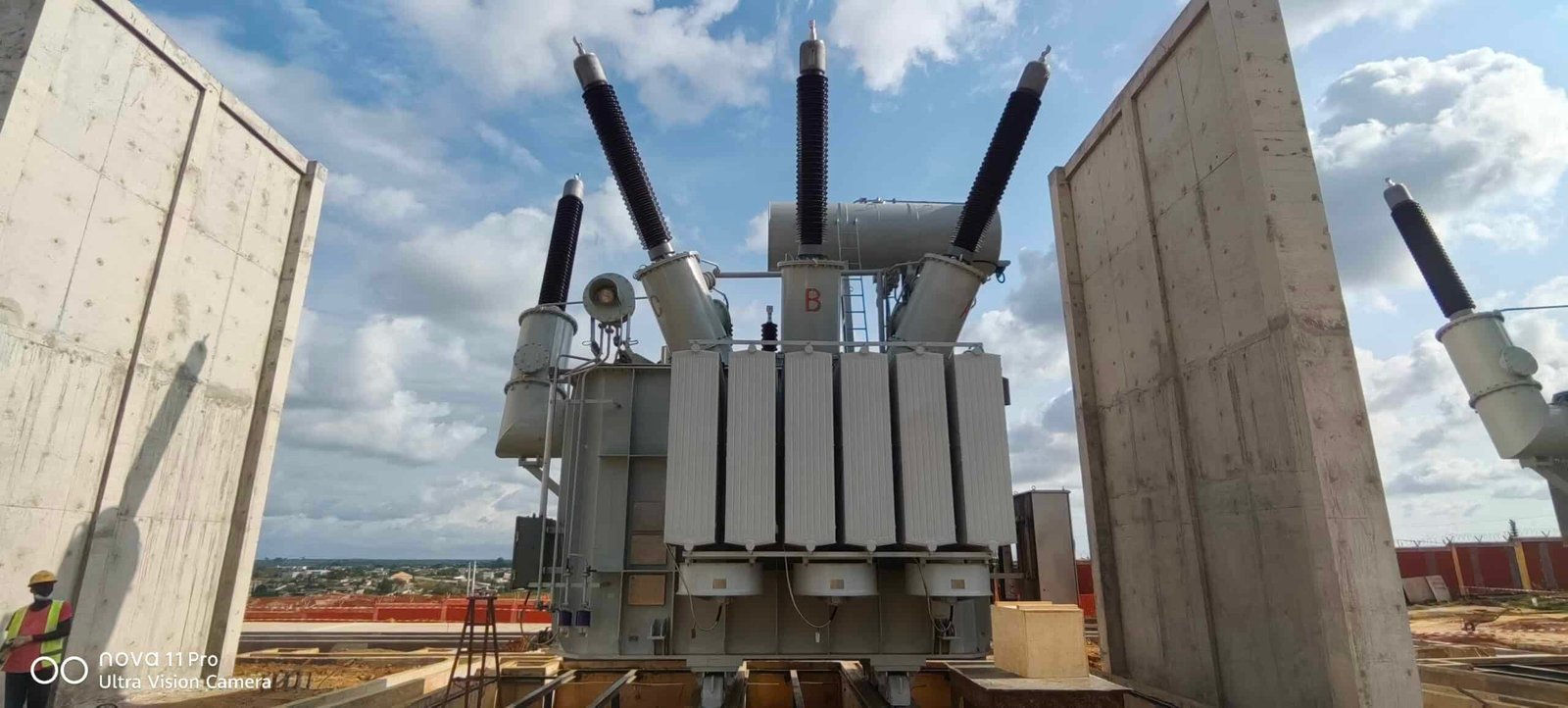
Choosing the correct transformer cooling method is not just a technical formality—it directly impacts thermal performance, equipment lifespan, footprint, noise levels, and overall cost. Each cooling class (ONAN, ONAF, OFAF, OFWF) is engineered to meet specific application scenarios, so the choice must be made based on a holistic evaluation of operating conditions and transformer rating.
To select the right cooling method for a transformer, you must consider the power rating (MVA), load profile (steady or variable), installation environment (open air or enclosed), available space, ambient temperature, and operational reliability needs. ONAN suits low to medium loads with simple outdoor access; ONAF is ideal for medium-capacity transformers with variable load; OFAF and OFWF are preferred for high-capacity or enclosed installations where active thermal management is essential.
Cooling design should be finalized early in the engineering stage to match installation and performance criteria.
Transformer cooling method selection can be done after manufacturing is complete.False
Cooling class selection must be determined during the design phase, as it affects radiator size, pump/fan configuration, protection, and thermal capacity.
Key Factors in Cooling Method Selection
| Factor | Influence on Cooling Method Selection |
|---|---|
| Rated Power (kVA/MVA) | Higher ratings demand more efficient cooling methods |
| Load Profile | Continuous vs. peak/variable loads determine cooling dynamics |
| Installation Site | Outdoor, indoor, underground, offshore environments vary |
| Ambient Temperature | Hot climates may need forced cooling for temperature control |
| Space Constraints | Enclosed sites favor compact systems like OFWF |
| Noise Sensitivity | OFWF or ONAN are quietest; OFAF/ONAF use fans |
| Maintenance Resources | Simpler systems (ONAN) need less attention than OFAF systems |
Cooling Method Comparison Matrix
| Parameter | ONAN | ONAF | OFAF | OFWF |
|---|---|---|---|---|
| Cooling Type | Oil-Natural/Air-Natural | Oil-Natural/Air-Forced | Oil-Forced/Air-Forced | Oil-Forced/Water-Forced |
| Typical Rating Range | Up to 25–30 MVA | 10–60 MVA | 40–315 MVA | 60–1000+ MVA |
| Installation | Open air, simple | Substations, outdoors | High-load stations | Indoor, confined areas |
| Maintenance Need | Low | Medium (fan checks) | High (pumps + fans) | High (pumps + water loop) |
| Noise Level | Low | Medium | Medium–High | Low |
| Footprint | Larger radiators | Medium | Medium | Most compact |
| Heat Dissipation | Passive | Active (air only) | Active (oil + air) | Active (oil + water) |
Step-by-Step Selection Guide
What is the power rating of the transformer?
✔ <10 MVA → ONAN
✔ 10–50 MVA → ONAN or ONAF
✔ >50 MVA → OFAF or OFWFIs the transformer installed outdoors with good airflow?
✔ Yes → ONAN or ONAF
✔ No → OFAF or OFWFAre ambient temperatures >40 °C or loads highly variable?
✔ Yes → ONAF or OFAF with thermostatic controlIs the transformer located underground, indoors, or offshore?
✔ Yes → OFWF is best (air cooling not viable)Is low noise mandatory (e.g., hospital or city)?
✔ Yes → Consider ONAN or OFWFIs space a constraint?
✔ Yes → OFWF offers most compact cooling
Real-World Application Examples
| Application Site | Transformer Cooling Chosen | Reason |
|---|---|---|
| Rural Pole-Mount | ONAN | Low cost, passive cooling, easy access |
| Urban Distribution Yard | ONAF | Compact and handles peak load fluctuations |
| Thermal Power Plant GSU | OFWF | Indoor setup, 315 MVA, water-cooled heat exchangers |
| Industrial Rolling Mill | OFAF | 100 MVA, high load variation, continuous fan/pump control |
| Metro Underground Substation | OFWF | Ventilation limits, silent cooling |
Dual-Rating Flexibility
| Cooling Class Label | Transformer Rating Modes |
|---|---|
| ONAN/ONAF | 40/50 MVA |
| ONAN/ONAF/OFAF | 40/50/63 MVA |
| ONAF/OFAF | 60/80 MVA |
| OFAF/OFWF | 100/125 MVA |
Dual or triple cooling ratings provide flexibility for overloads and future expansions.
Conclusion
Cooling systems are essential for the reliability and performance of power transformers. Each method—from ONAN to OFWF—serves specific operational needs, balancing natural and forced circulation of cooling media. The choice of a suitable cooling method depends on thermal performance requirements, installation environment, and transformer rating. Proper cooling not only improves efficiency but also extends transformer life and prevents premature failure.
FAQ
Q1: Why is cooling important in power transformers?
A1: Cooling is critical because:
Transformers generate heat due to load current and core losses
Excessive heat degrades insulation, shortens lifespan, and may cause failure
Efficient cooling ensures safe operation, longer service life, and performance reliability
Cooling systems are classified based on how oil and air/water circulate to dissipate heat.
Q2: What does ONAN mean in transformer cooling?
A2: ONAN = Oil Natural Air Natural
Oil circulates naturally (convection) inside the tank
Heat is transferred to the tank surface, then dissipated by ambient air
Suitable for low to medium capacity transformers (≤5 MVA)
It is simple, passive, and requires no external fans or pumps.
Q3: What is ONAF cooling in transformers?
A3: ONAF = Oil Natural Air Forced
Oil circulates naturally, but fans are used to blow air over radiators
Improves heat dissipation, enabling the transformer to handle 25–50% more load
Common in substations and industrial transformers
ONAF is more efficient than ONAN, but slightly more complex.
Q4: How does OFAF cooling work?
A4: OFAF = Oil Forced Air Forced
Oil is pumped through radiators, and fans force air across the surface
Allows high-capacity transformers (e.g., 30–300 MVA) to stay within temperature limits
Requires active control systems, pumps, and backup power
Used in utility-grade, continuous-load transformers.
Q5: What is OFWF cooling and when is it used?
A5: OFWF = Oil Forced Water Forced
Oil is pumped through heat exchangers, which are cooled by water circulation
Most effective for very high-power transformers in dense installations, like:
Power plants
Underground substations
Demands complex plumbing and water supply systems, but allows maximum cooling efficiency
References
"Transformer Cooling Methods Explained" – https://www.electrical4u.com/transformer-cooling-types
"IEEE C57 Standards for Cooling Classification" – https://ieeexplore.ieee.org/document/8751236
"NREL: Transformer Efficiency and Cooling" – https://www.nrel.gov/docs/cooling-systems-transformers.pdf
"ScienceDirect: Heat Transfer in Transformer Oil Systems" – https://www.sciencedirect.com/transformer-cooling-performance
"Doble: Transformer Thermal Management" – https://www.doble.com/transformer-cooling-methods