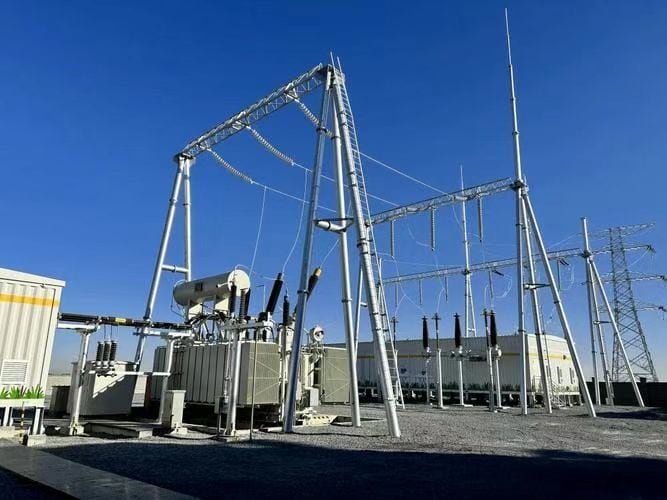
Transformers are the backbone of modern power systems, ensuring electricity generated at power plants can be efficiently transmitted over long distances and safely delivered to homes, businesses, and industries. Without transformers, power grids could not function effectively or economically.
How Do Transformers Enable Long-Distance Power Transmission?

Without transformers, it would be nearly impossible to transmit electrical power efficiently over long distances. If electricity were sent directly at low voltages, the current would be extremely high, leading to massive I²R (copper) losses, overheating, and wasted energy. This would require very thick, expensive conductors and still result in poor delivery efficiency. Transformers solve this challenge by stepping up voltage for transmission and stepping it down for safe distribution and end use.
Transformers enable long-distance power transmission by increasing voltage at generation sites (step-up transformers), which reduces current and transmission losses, and then lowering voltage near consumers (step-down transformers) to safe, usable levels. This process ensures efficient, economical, and reliable delivery of electricity across hundreds or even thousands of kilometers.
This fundamental role of transformers explains why they are called the “heart of the power system”—they balance efficiency, safety, and practicality in global electricity networks.
Electricity can be transmitted long distances without the use of transformers.False
At low voltage, long-distance transmission would cause excessive energy losses, making it impractical and uneconomical.
Step-up and step-down transformers are essential to reduce current, minimize losses, and adjust voltage levels for safe usage.True
Transformers match the optimal voltage for transmission efficiency and consumer safety.
The Physics Behind Transmission
- Power (P) = Voltage (V) × Current (I).
- For the same power, increasing voltage reduces current.
- Lower current means lower I²R losses in transmission lines.
📊 Losses vs. Transmission Voltage for 100 MW at 100 km
| Transmission Voltage | Current (A) | Power Loss (%) |
|---|---|---|
| 11 kV | ~5,250 A | >15% |
| 132 kV | ~416 A | ~1.1% |
| 400 kV | ~144 A | <0.5% |
👉 Clearly, higher voltage drastically reduces losses.
Step-Up Transformers at Generation
- Installed at power plants (thermal, hydro, renewable).
- Raise voltage from 11–33 kV (generator output) to 110–765 kV (transmission levels).
- Reduce current, making long-distance high-voltage transmission feasible.
Step-Down Transformers at Substations
Lower voltage in stages:
- Transmission → Sub-transmission (e.g., 220 kV → 66 kV).
- Sub-transmission → Distribution (e.g., 33 kV → 11 kV).
- Final step-down: 11 kV → 415 V/230 V for industrial and household use.
- Ensure safety and compatibility with appliances and machinery.
Efficiency and Reliability Benefits
- Minimized conductor size requirements.
- Lower energy losses → reduced CO₂ emissions.
- Greater stability and flexibility of the grid.
- Capability to integrate renewable energy from remote areas into cities.
Environmental and Economic Impact
📊 Economic Comparison Over 25-Year Grid Operation
| Factor | Without Transformers | With Transformers |
|---|---|---|
| Conductor Size | Extremely large | Economical |
| Transmission Losses | >20% | <2% |
| Cost of Power Delivered | Unsustainable | Affordable |
| Grid Flexibility | Very low | High |
Why Are Step-Up Transformers Essential at Power Plants?
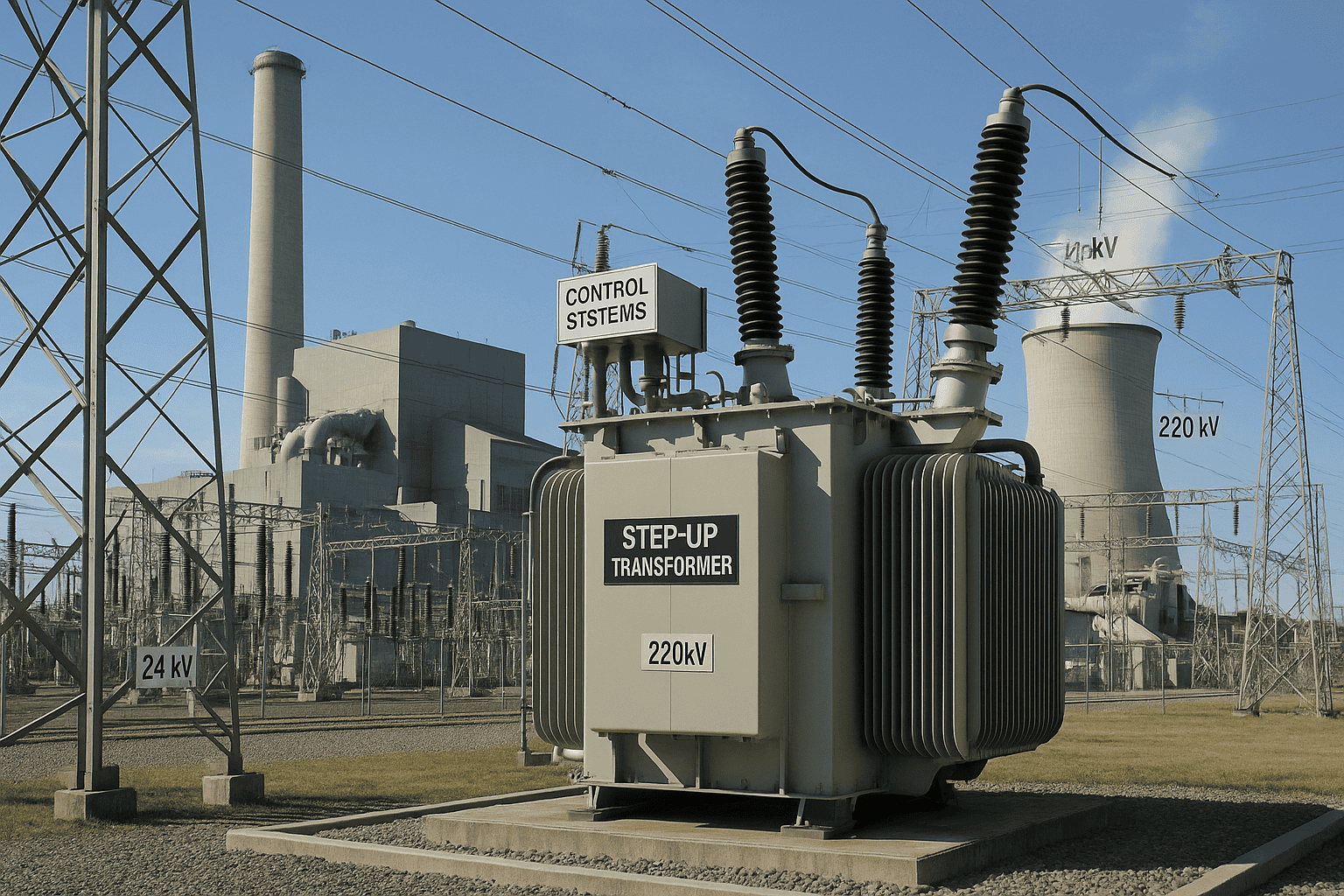
At power plants, electricity is generated at relatively low voltages—typically between 11 kV and 33 kV depending on the generator type. If this electricity were sent directly into transmission lines, the current flow would be extremely high, leading to severe energy losses, conductor overheating, and inefficient delivery over long distances. This would make large-scale power distribution economically unviable. Step-up transformers solve this by increasing the voltage and lowering the current, making long-distance transmission efficient and practical.
Step-up transformers are essential at power plants because they increase the generator’s output voltage to high transmission levels (110 kV to 765 kV or higher), which reduces current flow, minimizes I²R losses, decreases conductor size requirements, and enables efficient, reliable, and economical delivery of electricity across long distances.
In other words, without step-up transformers, modern interconnected power grids could not exist, as transmission would be too costly and inefficient.
Electric generators naturally produce electricity at very high transmission voltages.False
Generators typically produce electricity at medium voltages (11–33 kV), not high transmission levels. Step-up transformers are needed to raise voltage for transmission.
Step-up transformers reduce transmission losses by lowering current for the same power level.True
Increasing voltage reduces current (P=VI), which significantly cuts I²R losses in transmission lines.
Why Step-Up Transformers Are Critical
Voltage Transformation
- Generator output: 11–33 kV.
- Transmission requirement: 110–765 kV or more.
- Step-up transformer bridges this gap immediately at the plant.
Reduction of Transmission Losses
- Losses are proportional to I²R.
- By stepping up voltage, current decreases proportionally.
- Lower current → drastically reduced line losses and heating.
📊 Comparison of Transmission Losses for 500 MW, 200 km
| Transmission Voltage | Current (A) | Approx. Loss (%) |
|---|---|---|
| 11 kV | ~26,000 A | >20% |
| 220 kV | ~2,600 A | ~1.2% |
| 400 kV | ~1,250 A | <0.5% |
Economic Benefits
- Smaller current means smaller conductor cross-section, reducing line material costs.
- Lower energy loss → less fuel consumption and reduced CO₂ emissions.
- Longer-distance transmission becomes practical, allowing centralization of power generation.
Grid Stability and Expansion
High-voltage transmission makes it possible to:
- Interconnect regional grids.
- Supply power to urban centers from remote plants.
- Integrate renewable energy sources (solar, wind) located far from demand centers.
Case Example: Step-Up in Action
- A hydroelectric station produces power at 15.75 kV.
- A step-up transformer raises voltage to 400 kV.
- The same 500 MW can now be transmitted hundreds of kilometers with minimal losses.
- At distribution substations, step-down transformers return it to safe levels for industry and households.
What Role Do Step-Down Transformers Play in Distribution Networks?
Electricity is transmitted across long distances at very high voltages to minimize current and losses. However, these voltages—ranging from 110 kV to 765 kV—are too dangerous and impractical for factories, businesses, and households to use directly. Without reducing these levels, no electrical appliance or industrial equipment could operate safely. This is where step-down transformers become essential. They adjust electricity from transmission levels to lower, usable voltages in multiple stages, ensuring safe, efficient, and reliable distribution.
Step-down transformers reduce high transmission voltages to medium and low voltage levels that are safe for distribution and end-use. They are installed at substations and within local networks to gradually lower voltage from hundreds of kilovolts to 33 kV, 11 kV, and finally 400/230 V for residential and commercial consumption. By doing so, they enable practical use of electricity while maintaining grid reliability and safety.
This staged voltage reduction ensures that power can travel economically over long distances and still be safely delivered to homes, offices, and industries.
Electricity from transmission lines can be directly supplied to households without step-down transformers.False
Transmission voltages are dangerously high and incompatible with consumer equipment. Step-down transformers are required to make electricity usable.
Step-down transformers are essential for converting transmission voltages to safe distribution voltages.True
They progressively reduce voltage levels, ensuring electricity is safe and practical for end-users.
How Step-Down Transformers Function in Distribution
Bulk Power Transmission to Substations
- Transmission voltage: 110–765 kV.
- Step-down transformer reduces it to 33–132 kV for regional sub-transmission.
Sub-Transmission to Distribution
- At distribution substations, voltage is lowered further to 11–33 kV.
- Delivered to industrial estates or local distribution networks.
Final Voltage Reduction
- Pole-mounted or pad-mounted transformers step down 11 kV to 415 V (3-phase) or 230 V (single-phase).
- Supplies homes, offices, and small businesses.
📊 Typical Voltage Step-Down Stages in Distribution
| Grid Level | Voltage Range | Transformer Type | End-Use |
|---|---|---|---|
| Transmission | 220–765 kV | Step-Down (Bulk) | To sub-transmission |
| Sub-Transmission | 33–132 kV | Step-Down (Regional) | To distribution |
| Distribution | 11–33 kV | Distribution Transformer | To local areas |
| Consumer Supply | 400/230 V | Pole/Pad-Mounted | Homes & businesses |
Benefits of Step-Down Transformers
- Safety: Prevents dangerous high-voltage exposure.
- Compatibility: Matches consumer appliances and industrial equipment needs.
- Flexibility: Allows staged reduction for diverse users (factories vs. households).
- Efficiency: Minimizes energy waste while maintaining supply stability.
- Reliability: Ensures smooth integration between transmission and consumption levels.
Example in Practice
- A transmission line delivers 220 kV into a city.
- Substation step-down transformer lowers it to 33 kV.
- A local distribution transformer reduces it to 11 kV for factories and 415/230 V for residential supply.
- Each stage ensures the grid is safe, stable, and efficient.
How Do Transformers Improve Power Quality and Reliability?
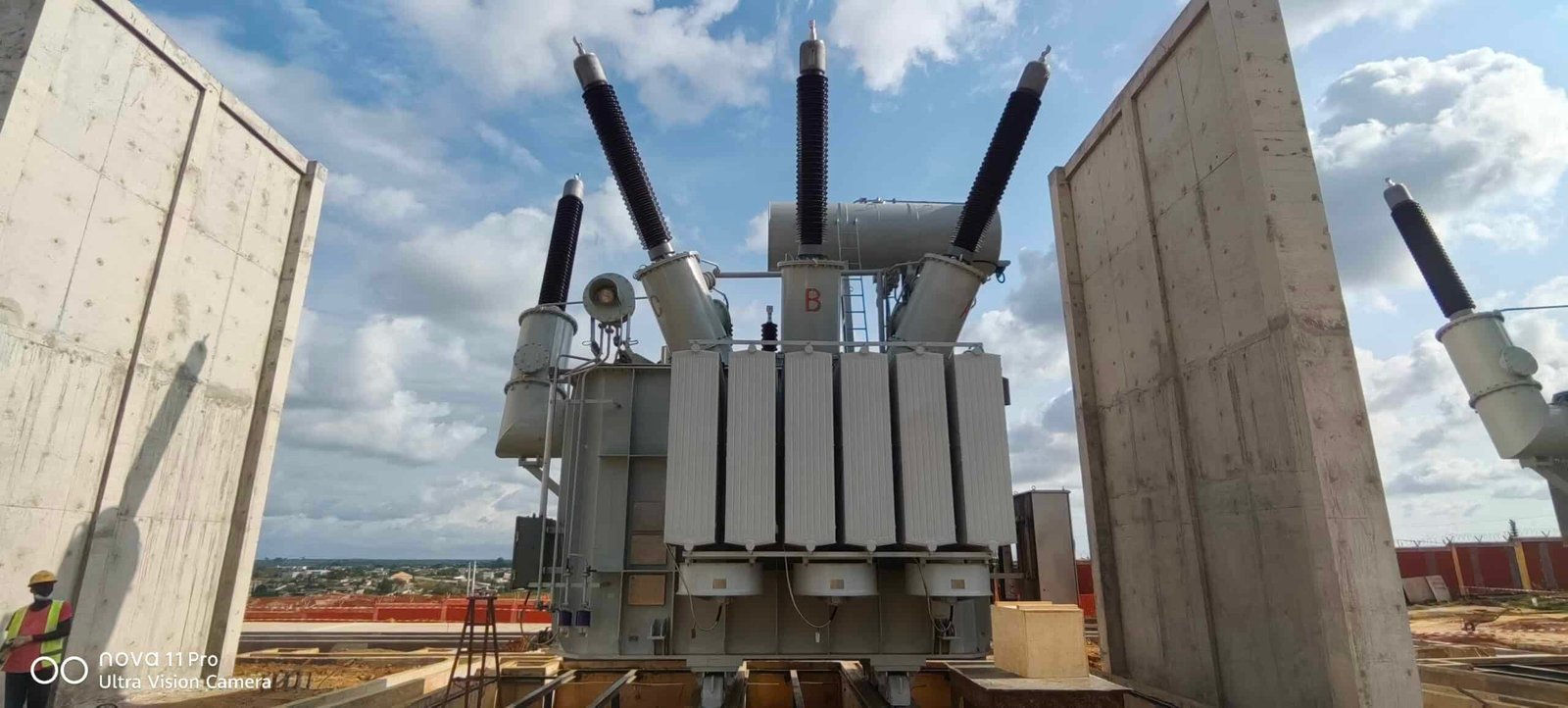
Poor power quality—manifesting as voltage fluctuations, harmonic distortion, flicker, or imbalances—can cause serious consequences such as equipment malfunctions, overheating, reduced lifespan of devices, and even large-scale blackouts. In industries, it leads to downtime, product defects, and higher maintenance costs. In households, it affects sensitive electronics and causes nuisance outages. Power transformers play a vital role not only in voltage conversion but also in stabilizing, conditioning, and protecting the power supply, ensuring both quality and reliability across transmission and distribution networks.
Transformers improve power quality and reliability by regulating voltage levels, reducing transmission losses, providing isolation between circuits, filtering harmonics through special designs, and supporting grid stability during load variations. They ensure electricity is delivered within safe operating limits, protecting both the power system and connected equipment.
This makes transformers indispensable for a modern, resilient power infrastructure that balances efficiency, safety, and environmental performance.
Transformers only change voltage levels and have no role in power quality.False
Transformers not only convert voltage but also regulate, isolate, and condition electricity, significantly improving power quality.
Special transformer designs can mitigate harmonics, voltage imbalance, and power fluctuations.True
K-rated and phase-shifting transformers are engineered to handle harmonic-rich loads and improve supply stability.
Key Roles of Transformers in Power Quality
Voltage Regulation and Stability
- Step-up transformers minimize losses in transmission.
- Step-down transformers ensure safe, stable voltages for end-users.
- On-load tap changers (OLTC) automatically adjust voltage under varying load conditions.
Loss Reduction for Reliability
- By lowering current at high voltages, transformers reduce line losses.
- Less heating and stress on conductors improves overall system reliability.
System Isolation and Safety
- Isolation transformers separate sensitive equipment from grid disturbances.
- Prevents transfer of faults, surges, and harmonics from one circuit to another.
Harmonic Mitigation
- K-rated transformers are designed for nonlinear loads (e.g., data centers, variable speed drives).
- Phase-shifting transformers reduce harmonic distortion and improve power factor.
📊 Transformer Types and Power Quality Benefits
| Transformer Type | Key Function | Power Quality Benefit |
|---|---|---|
| Step-Up / Step-Down | Voltage conversion | Stable transmission & distribution |
| Isolation Transformer | Circuit separation | Protects sensitive loads |
| K-Rated Transformer | Withstands harmonic currents | Prevents overheating & failure |
| Phase-Shifting Transformer | Harmonic control | Reduces distortion, balances loads |
| OLTC Transformer | Tap adjustment | Maintains constant voltage |
Load Balancing and Reliability Enhancement
- Autotransformers and distribution transformers help balance phase loads.
- Reduces overload risk, preventing outages and extending equipment life.
Case Example: Industrial Power Quality Improvement
- A factory with high harmonic loads (VFDs, computers, robotics) faced frequent transformer overheating.
- Replacing the standard unit with a K-rated transformer eliminated failures and improved reliability.
- Downtime costs were cut by 40%, proving how transformer design directly impacts power quality.
Environmental and Economic Impact
- Better power quality = reduced losses → lower CO₂ emissions.
- Reliable power reduces equipment replacement → lower capital and maintenance costs.
- Grid stability supports integration of renewable energy sources without compromising supply.
What Is the Connection Between Transformers and Grid Efficiency?

One of the greatest challenges in modern power systems is delivering reliable electricity with minimal losses from generating stations to end-users. Without transformers, the grid would require massive, costly conductors and still suffer from enormous I²R losses, making electricity unaffordable and unstable. Transformers form the backbone of the grid by ensuring voltage levels are optimized for both long-distance transmission and safe end-user distribution, directly impacting grid efficiency.
Transformers are directly connected to grid efficiency because they step up voltage at generation plants to reduce current and transmission losses, then step down voltage for safe distribution and consumption. High-efficiency transformers also reduce no-load and load losses, improving overall system performance, lowering energy waste, and reducing carbon emissions.
In other words, transformers are the link between energy production and energy efficiency—they make the grid both economically viable and environmentally sustainable.
Transformers only serve as voltage converters without impacting grid efficiency.False
By reducing transmission losses, optimizing voltage, and minimizing waste, transformers significantly enhance grid efficiency.
High-efficiency transformer designs contribute to reducing global electricity losses.True
Loss reduction through better core materials, winding designs, and cooling systems improves overall grid performance and sustainability.
How Transformers Boost Grid Efficiency
Step-Up at Power Plants
- Raise voltage from ~11–33 kV (generator output) to 110–765 kV.
- Higher voltage → lower current → fewer I²R losses.
- Enables long-distance transmission with minimal waste.
Step-Down for Safe Distribution
- Substation transformers lower voltage progressively (220 kV → 33 kV → 11 kV → 415/230 V).
- Ensures safe, reliable, and efficient end-user supply.
Loss Minimization
- No-load losses (from the magnetic core) occur even when unloaded.
- Load losses (from winding resistance) increase with current.
- High-quality silicon steel laminations, amorphous cores, and copper windings reduce these losses.
📊 Impact of Transformer Design on Losses (1000 kVA unit)
| Design Type | No-Load Loss (kW) | Load Loss (kW) | Efficiency at 75% Load |
|---|---|---|---|
| Standard Silicon Steel | 1.6 | 13.5 | 97.4% |
| Amorphous Core | 0.9 | 12.0 | 98.2% |
| Premium Copper Windings | 1.0 | 11.0 | 98.5% |
👉 Advanced materials and designs clearly enhance grid efficiency.
Voltage Regulation and Stability
- On-Load Tap Changers (OLTC) adjust voltage dynamically.
- Maintains stability under load variations, preventing inefficiencies and blackouts.
Integration of Renewables
- Transformers step up output from wind and solar farms for transmission.
- Grid-friendly step-down ensures smooth, stable renewable integration without extra losses.
Grid-Wide Efficiency Impact
📊 Typical Energy Flow Efficiency
| Grid Stage | Losses Without Transformers | Losses With Transformers |
|---|---|---|
| Generation to Transmission | >15% | <1.5% |
| Transmission to Distribution | ~10% | ~2% |
| Final Delivery to Consumers | ~5% | <1% |
👉 With transformers, total grid losses are reduced from ~30% to below 8% in modern systems.
Environmental and Economic Benefits
- Lower Energy Waste → Less fuel burned in power plants.
- Reduced Emissions → Supports global carbon reduction targets.
- Cost Savings → More efficient delivery reduces electricity costs for consumers.
How Do Transformers Support Renewable Energy Integration?
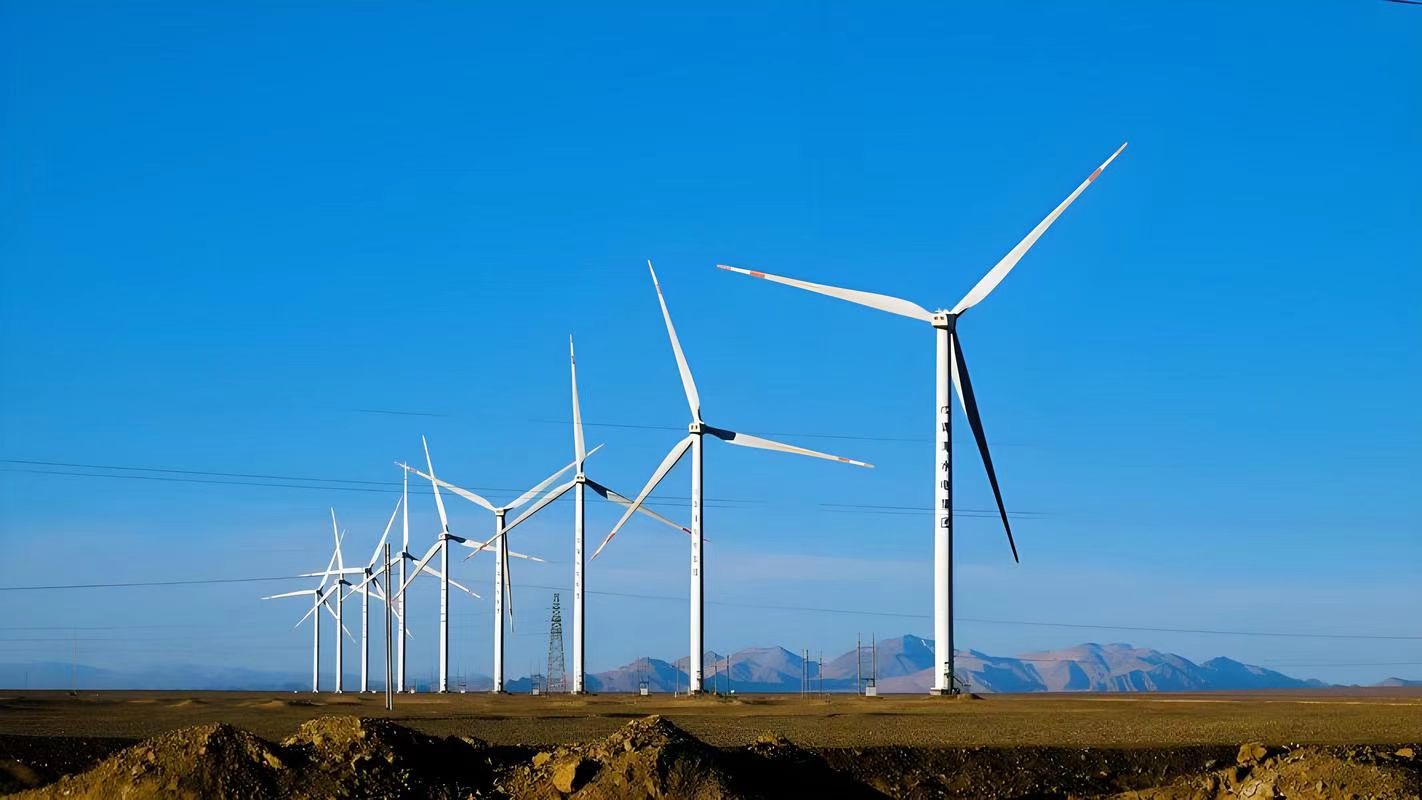
Renewable energy sources like solar PV farms, wind parks, and small hydro plants are rapidly expanding, but they generate electricity at variable and relatively low voltages. Without transformation, this power cannot be transmitted efficiently or integrated smoothly into national grids. Moreover, renewables are often located in remote areas far from demand centers, making transmission efficiency and grid compatibility critical. This is where transformers play a central role in enabling renewable energy adoption worldwide.
Transformers support renewable energy integration by stepping up the low-voltage output of renewable generators to high transmission levels for efficient delivery, ensuring grid compatibility through voltage regulation and fault protection, and stepping down voltage where necessary for local use or microgrids. Specialized designs, such as inverter-duty and amorphous core transformers, also help manage harmonics and improve efficiency in renewable systems.
In essence, transformers are the interface between renewable generation and the grid, making clean energy reliable, stable, and scalable.
Renewable energy sources can feed directly into transmission lines without transformers.False
Solar panels and wind turbines generate power at low voltages (hundreds of volts to a few kV), which must be stepped up to hundreds of kV for transmission.
Transformers are essential for matching renewable output with grid voltage and frequency requirements.True
They enable both efficient transmission and grid stability when integrating variable renewable energy sources.
Key Functions of Transformers in Renewable Integration
Voltage Step-Up at Generation Sites
- Solar inverters typically output 400 V–33 kV.
- Wind turbines may generate at 690 V–11 kV.
- Step-up transformers raise this to 66 kV–400 kV for transmission.
📊 Example: Solar Farm Voltage Transformation
| Stage | Voltage Level | Device | Purpose |
|---|---|---|---|
| PV Array Output | ~600–1500 V DC | Inverter | Converts DC to AC |
| Local Collection | 400–690 V AC | Collector Transformer | Aggregates inverter outputs |
| Grid Connection | 33 kV → 132–400 kV | Step-Up Transformer | Enables efficient transmission |
Harmonic and Power Quality Management
- Inverter-based renewables produce harmonics.
- Inverter-duty transformers with special winding arrangements help filter distortions.
- Improves grid stability and equipment lifespan.
Grid Compatibility and Stability
- On-load tap changer (OLTC) transformers regulate fluctuating renewable outputs.
- Provide voltage and frequency support, crucial during variable wind/solar conditions.
- Isolation transformers prevent disturbances from propagating into the grid.
Microgrid and Local Distribution Support
- Step-down transformers deliver renewable energy directly at 400/230 V for residential or community use.
- Enable hybrid renewable-diesel or battery storage microgrids.
Benefits of Transformers in Renewable Grids
- Efficiency: Reduce losses during long-distance transmission from remote wind/solar farms.
- Flexibility: Adapt to diverse renewable sources and output levels.
- Reliability: Stabilize intermittent energy supply.
- Sustainability: Support eco-friendly materials (e.g., amorphous cores, dry-type insulation).
📊 Loss Reduction Comparison: Traditional vs. Renewable-Specific Transformer
| Transformer Type | No-Load Loss (kW) | Load Loss (kW) | Harmonic Handling | Suitability |
|---|---|---|---|---|
| Standard Core | ~1.5 | ~13 | Limited | General use |
| Amorphous Core | ~0.9 | ~11 | Moderate | Renewable-ready |
| Inverter-Duty | ~1.1 | ~12 | High | Solar/Wind integration |
Example in Practice
- A 200 MW wind farm in Europe generates at 690 V.
- Local transformers raise it to 33 kV, then a main step-up transformer boosts it to 400 kV for transmission.
- Advanced OLTC transformers stabilize voltage before injecting into the main grid.
- Result: stable, efficient, and compliant renewable energy supply.
Conclusion
Transformers are critical in the power grid because they adapt voltage levels for efficient transmission, safe distribution, and reliable end-user supply. They minimize energy losses, improve grid stability, and enable renewable energy sources like wind and solar to integrate into the system. In short, transformers make it possible to deliver electricity wherever and whenever it is needed, powering the modern world.
FAQ
Q1: What is the role of a transformer in the power grid?
Transformers are essential for voltage conversion in the power grid. At generating stations, step-up transformers increase voltage for long-distance transmission, reducing energy losses. Near consumers, step-down transformers lower voltage to safe, usable levels for homes, offices, and industries.
Q2: Why are step-up transformers used in transmission systems?
Electricity travels more efficiently at higher voltages and lower currents. Step-up transformers raise voltage from generators (e.g., 11–33 kV) to hundreds of kV for transmission, which minimizes I²R (copper) losses and reduces the need for thicker, costlier conductors.
Q3: What is the function of step-down transformers in distribution networks?
Step-down transformers reduce high transmission voltages (e.g., 132 kV, 220 kV, or 400 kV) to medium and low voltage levels. This ensures that electricity supplied to industries, commercial buildings, and households is at safe and usable levels (e.g., 11 kV, 440 V, 230 V).
Q4: How do transformers improve efficiency in the power grid?
By matching voltage levels to transmission and usage needs, transformers:
Reduce power losses during long-distance transmission.
Ensure stable voltage supply for consumers.
Improve grid reliability by supporting load balancing and reactive power management.
Q5: What would happen without transformers in the power grid?
Without transformers, electricity would need to be transmitted at low voltages, leading to huge energy losses, thicker cables, higher costs, and unreliable supply. Transformers make modern large-scale power systems feasible and efficient.
References
IEEE Power & Energy Society – Transformers in Grid Applications: https://ieeexplore.ieee.org
IEC 60076 – Power Transformer Standards: https://webstore.iec.ch
U.S. DOE – Transmission and Distribution Basics: https://www.energy.gov
Electrical4U – Role of Transformers in Power Systems: https://www.electrical4u.com
EEP – Transformer Function in Power Grid: https://electrical-engineering-portal.com
National Grid – How the Electricity Grid Works: https://www.nationalgrid.com