Selecting the right dry-type transformer supplier is a critical decision that directly affects project reliability, long-term operating costs, and system safety. With increasing demand across renewable energy projects, data centers, commercial buildings, and industrial facilities, buyers must carefully evaluate suppliers based on technical capability, quality assurance, financial stability, and after-sales support. A systematic evaluation process ensures you receive a high-performance, durable, and cost-effective transformer that meets both current and future needs.
What Technical Certifications and Standards Should a Qualified Supplier Meet?
Companies procuring power transformers—including utilities, EPC contractors, industrial plants, and renewable developers—face increasingly complex risks when selecting suppliers. Poor-quality manufacturing, missing certifications, and lack of compliance can lead to catastrophic failures, project delays, safety hazards, and financial loss. These concerns create pressure for buyers who must choose vendors confidently without having full visibility into factory processes. The solution lies in understanding the technical certifications and international standards that legitimate, qualified transformer manufacturers must meet before supplying equipment to global markets.
Qualified transformer suppliers must meet core international manufacturing standards (such as IEC, IEEE/ANSI, ISO 9001, ISO 14001, and ISO 45001), type-test certifications, routine-test compliance, material traceability requirements, safety standards, and region-specific grid codes. These certifications ensure product reliability, safety, environmental compliance, and consistent performance across diverse applications, reducing project risk and long-term operating costs for buyers.
Modern transformer procurement involves evaluating more than price alone. By verifying these certifications, buyers gain a much clearer understanding of whether a supplier’s engineering capability, production quality, service competency, and documentation standards align with global best practices.
A certified transformer supplier must provide complete type-test reports per IEC 60076.True
IEC 60076 requires suppliers to verify performance, dielectric strength, temperature rise, and mechanical integrity before commercial production.
ISO certifications are optional for transformer factories.False
ISO 9001, ISO 14001, and ISO 45001 are essential to ensure quality consistency, environmental compliance, and workplace safety.
Global Standards That Qualified Transformer Suppliers Must Meet
Transformers must comply with recognized international standards that govern design, testing, materials, and safety. These are the primary standards compliance categories:
| Standard Body | Key Standards | Purpose | Why It Matters |
|---|---|---|---|
| IEC | IEC 60076 Series | Design, testing, insulation, safety | Required for most global projects |
| IEEE / ANSI | C57 Series | North American performance and safety | Mandatory for U.S. and Canada |
| ISO | 9001, 14001, 45001 | Quality, environmental, safety | Ensures factory-level excellence |
| ASTM | Material testing standards | Steel, copper, insulation validation | Ensures material integrity |
| EN / EU Directives | EcoDesign, Low Voltage Directive | Efficiency and safety compliance | Required in many EU installations |
IEC and IEEE/ANSI represent the highest-level technical compliance benchmarks, while ISO certifications reflect factory management maturity.
Factory-Level Certifications Ensuring Quality and Reliability
Any supplier claiming to produce “world-class transformers” must demonstrate compliance with internationally recognized factory management systems. These include:
ISO 9001 – Quality Management
Ensures consistent processes, documentation, incoming material control, and final inspection.
ISO 14001 – Environmental Management
Required for green manufacturing and eco-compliant transformer production.
ISO 45001 – Occupational Health & Safety
Mandatory for ensuring safe working conditions in high-voltage equipment factories.
ISO/IEC 17025 – Laboratory Competence
Indicates that a supplier’s testing laboratory is independently verified for accuracy.
Together, these certifications demonstrate that a manufacturer is not cutting corners, hiding defects, or relying on unverified testing procedures.
Transformer-Specific Tests and Certifications Required From Suppliers
Beyond factory certifications, transformers themselves must undergo extensive testing. These include:
Routine Tests (Mandatory for Every Unit)
Performed on every transformer shipped.
- Winding resistance
- Turns ratio
- No-load and load losses
- Induced voltage test
- Applied voltage test
- Insulation resistance
- Partial discharge test (for dry-type units)
Type Tests (Verification of Design)
Performed on representative units to confirm the design’s correctness.
| Test Category | Purpose | Required Standard |
|---|---|---|
| Temperature-rise test | Verifies thermal design | IEC 60076-2 |
| Lightning impulse test | Assesses insulation endurance | IEC 60076-3 |
| Short-circuit withstand test | Ensures mechanical strength | IEC 60076-5 |
| Sound level measurement | Confirms noise compliance | IEC 60076-10 |
If a supplier cannot produce legitimate type-test reports, the reliability of their products should be questioned.
Special Tests (Project-Specific Needs)
- Harmonic-loss evaluation
- Partial-discharge inception measurement
- VPI penetration depth (dry-type)
- Resin curing analysis
- Moisture content evaluation
These are essential in renewables, EV charging, industrial, mining, and data center projects.
Material Certifications and Traceability Requirements
High-quality transformers require high-quality materials. Buyers should demand documentation that all critical materials meet international specifications.
Certified materials include:
- Core steel (Hi-B, amorphous, or nanocrystalline) certified to ASTM or EN standards
- Copper or aluminum conductors validated for purity and conductivity
- Insulation materials compliant with IEEE and IEC flame-retardant classes
- Resins and varnishes with UL flame rating and thermal classification
- Eco-friendly fluids (esters) with biodegradability certifications
Material traceability ensures the transformer can be audited from raw steel to final assembly.
Regional Grid Codes and Compliance for Global Projects
In addition to global standards, transformers must meet local grid-specific requirements:
| Region | Required Certification |
|---|---|
| EU | EN 50588, EcoDesign Tier 2 |
| U.S. | DOE 2016/2027 efficiency rules |
| Middle East | SEC, DEWA, ADDC, ARAMCO standards |
| India | BIS certification |
| Australia | AS/NZS transformer standards |
Lack of compliance leads to rejection during inspection or commissioning, causing costly project delays.
Safety Certifications and Environmental Requirements
Modern transformers must comply with:
- Fire-safety classifications (UL, EN, IEC)
- Eco-friendly material requirements (RoHS, REACH)
- Noise regulations
- EMC and interference standards
- Seismic compliance for earthquake-prone regions
These standards ensure safe operation in hospitals, commercial buildings, tunnels, offshore platforms, and renewable stations.
How Do Manufacturing Capabilities and Production Processes Influence Quality?
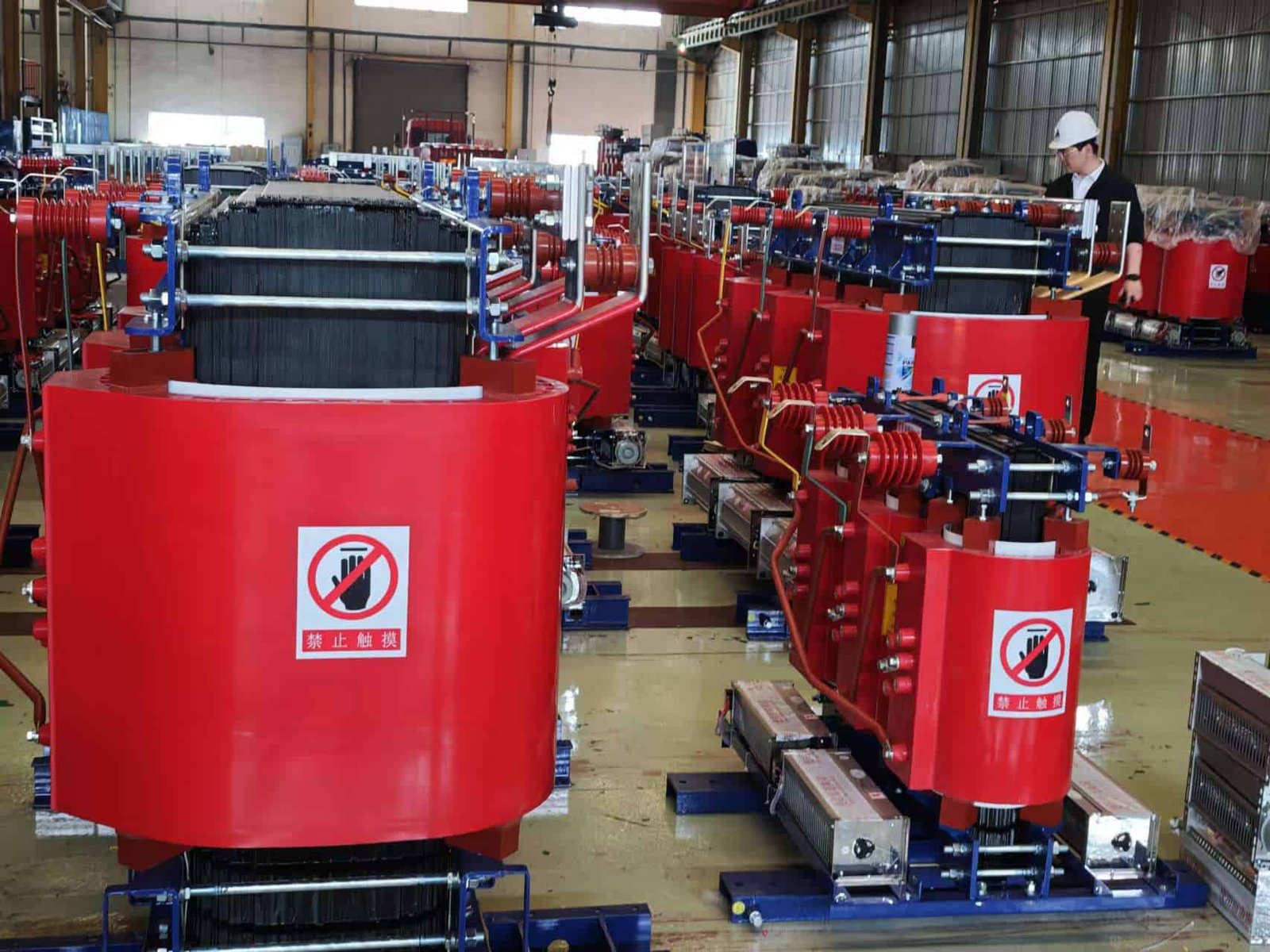
Many buyers assume that transformer quality is defined mainly by materials or design specifications, but the reality is far more complex. Even the best materials and the most advanced design can fail if the manufacturing process behind them is inconsistent, poorly controlled, or lacking in technical expertise. This creates a challenge for procurement teams who must evaluate suppliers without directly witnessing the internal production processes that determine long-term reliability. As global demand increases and project requirements become more demanding, buyers face growing uncertainty about whether a manufacturer’s capabilities can support high-performance, safety-critical transformer operation.
Manufacturing capabilities directly determine the precision, consistency, durability, and reliability of a transformer. From core processing and winding techniques to resin curing, vacuum processes, and final testing, every production step influences losses, temperature behavior, mechanical strength, and failure rates. Suppliers with advanced facilities, automated equipment, and strict quality control systems consistently produce longer-lasting and more efficient transformers.
Modern transformer production is no longer a simple assembly job—it is an engineering and manufacturing discipline requiring repeatable precision at every step.
Robotic coil winding improves consistency in electrical performance.True
Automated winders ensure uniform tension and geometric accuracy, reducing dielectric stress and hotspots.
Any factory can achieve high insulation quality without vacuum processing.False
Vacuum pressure impregnation and vacuum drying are essential for proper resin penetration and moisture removal.
The Core Factors Linking Manufacturing to Transformer Quality
Transformer performance is shaped by dozens of production decisions and factory capabilities. A supplier’s manufacturing depth determines how well they control:
- Core losses, vibration, and noise
- Winding accuracy and dielectric strength
- Thermal behavior and cooling efficiency
- Mechanical robustness under faults and short circuits
- Resin curing quality (for dry-type units)
- Moisture content and insulation lifespan
- Testing reliability and documentation accuracy
Stronger capabilities equal predictable, stable long-term operation.
Precision in Core Manufacturing and Its Impact on Losses
Core production is one of the most influential processes in transformer manufacturing. The way steel is processed determines:
- No-load losses
- Magnetostriction and noise
- Mechanical rigidity
- Efficiency across load ranges
Critical processes include:
Laser Cutting and Automated Stacking
Prevents burrs, deformation, and misalignment.
Step-Lap Construction
Improves flux distribution and reduces inrush current.
Annealing and Stress Relief
Restores magnetic properties after cutting.
Without precision equipment, even premium steel underperforms.
Coil Winding Accuracy Determines Electrical Reliability
Winding is both a technical and mechanical art. Parameters such as conductor tension, layer alignment, and geometric consistency affect:
- Dielectric withstand capability
- Short-circuit mechanical strength
- Thermal distribution
- Partial discharge levels
Automated tension-controlled winders create consistent windings that survive decades of load cycles and electrical stress.
In contrast, manual or outdated winding processes increase defect probability and insulation failure risk.
Resin System Quality and Vacuum Processing in Dry-Type Production
For dry-type transformers, insulation quality depends heavily on resin processing. Key processes include:
- VPI (Vacuum Pressure Impregnation)
- VPE (Vacuum Pressure Encapsulation)
- Casting under controlled vacuum and temperature
Superior resin penetration reduces partial discharge, improves thermal stability, and extends lifespan.
Improper curing or insufficient vacuum leads to:
- Voids
- Poor heat conduction
- Increased partial discharge
- Premature insulation failure
Advanced Testing Facilities Ensure Reliability Before Shipment
A serious manufacturer invests heavily in testing equipment. High-quality transformers require:
Routine Tests
Performed on every unit.
Type Tests
To verify design.
Special Tests
For high-performance or mission-critical applications.
Manufacturers with in-house impulse labs, temperature-rise chambers, and partial-discharge equipment offer higher assurance than those relying on third-party testing only.
Testing capability reflects engineering maturity.
Production Automation and Digitalization Reduce Variability
Factories with robust automation ensure:
- Lower human error
- Higher dimensional accuracy
- Consistent insulation quality
- Repeatable performance
- Faster root-cause analysis
Technologies that enhance quality include:
- Automated robotic core stacking
- Servo-controlled winding systems
- CNC machining
- Digital process monitoring
- MES (Manufacturing Execution Systems)
- IIoT for equipment monitoring
Automation is not about reducing labor cost—it is about guaranteeing performance consistency.
Skilled Workforce and Technical Expertise Remain Essential
Even in automated factories, human expertise matters. High-quality production requires:
- Skilled winding technicians
- Experienced insulation engineers
- Metallurgy and material specialists
- Calibration and testing experts
- Quality assurance professionals
Training, certification, and engineering culture play a direct role in long-term reliability.
Supply Chain Quality and Material Traceability Improve Product Integrity
Manufacturers with strict supply chain control can guarantee:
- Certified core steel
- Oxygen-free copper or high-grade aluminum
- Verified insulation materials
- Flame-retardant and eco-safe resin systems
- Accurate documentation
Traceability reduces hidden risk and ensures compliance with international standards.
What Factors Indicate Strong R&D and Engineering Expertise?
Many buyers try to judge transformer quality solely from datasheets, catalog ratings, or price quotations—but the true engineering strength of a manufacturer lies beneath the surface. Without strong R&D capabilities, suppliers rely on outdated designs, generic components, and trial-and-error manufacturing methods. This creates uncertainty for project owners who depend on long-term performance, high efficiency, and compliance with modern standards. As grid modernization accelerates and renewable energy integration becomes more demanding, procurement teams increasingly face the challenge of distinguishing between “assembly factories” and true engineering-driven manufacturers.
Strong R&D and engineering capability is one of the clearest indicators of a high-quality transformer supplier. It determines design accuracy, efficiency optimization, short-circuit strength, insulation performance, thermal behavior, and long-term reliability. Manufacturers that invest in advanced simulation tools, specialized engineers, prototype testing, and material innovation consistently deliver safer, more efficient, and more durable transformers than those relying only on traditional designs.
As expectations for smarter, greener, and higher-performance equipment rise, R&D capability becomes the core competitive factor that separates leaders from followers in the transformer industry.
Manufacturers with strong R&D capabilities achieve lower losses and improved thermal performance.True
Advanced simulation and material characterization allow engineers to optimize magnetic flux, reduce hotspots, and enhance efficiency.
R&D investment has minimal impact on transformer reliability.False
Without strong engineering, insulation design, short-circuit strength, and mechanical stability suffer significantly.
R&D Capability as the Foundation of Transformer Performance
A transformer’s design quality is determined long before manufacturing begins. Companies with strong engineering departments can:
- Develop highly efficient magnetic circuits
- Optimize winding geometry for low losses and high short-circuit strength
- Evaluate new insulation systems
- Predict thermal behavior under overload or harmonic stress
- Ensure compliance with IEC/IEEE standards
- Offer customized solutions with minimal risk
- Improve reliability through prototype validation
Weak engineering leads to high failure rates, inefficient designs, and inability to meet modern grid and industrial requirements.
Use of Advanced Simulation Tools Demonstrates Engineering Maturity
A strong R&D team relies heavily on digital tools to validate design performance before production. The most important categories include:
Finite Element Analysis (FEA)
Used for magnetic flux distribution, core loss prediction, hotspot identification, and electric field stress evaluation.
Computational Fluid Dynamics (CFD)
Determines airflow or coolant behavior to refine thermal performance and manage temperature rise.
Electro-Thermal Simulation
Integrates magnetic, thermal, and electrical models to forecast real-life behavior under variable loads.
Short-Circuit Mechanical Stress Modeling
Predicts conductor movement and structural reinforcement requirements.
Suppliers lacking these tools rely on outdated manual calculations and generic templates, leading to unpredictable performance.
Expertise in Insulation and Material Science Signals Strong R&D Depth
Transformer longevity depends heavily on insulation design. R&D-focused manufacturers invest in:
- Material characterization
- Thermal class optimization
- Partial discharge behavior study
- Resin chemistry improvement (for dry-type units)
- Moisture management research
- Aging and thermal cycling experiments
These analyses enable suppliers to design transformers that maintain dielectric strength under harsh conditions and over decades of operation.
In-House Prototype and Type Testing Demonstrates Design Validation Capability
A supplier with strong engineering performs extensive testing beyond basic routine inspections:
- Temperature-rise testing
- Lightning impulse tests
- Short-circuit withstand tests
- Partial discharge tests
- Harmonic and overload simulations
- Vibration and noise measurements
Manufacturers conducting these tests internally have full control over design iteration and validation, while others rely heavily on third-party labs—limiting innovation and responsiveness.
Proven Engineering Team with Specialized Expertise
Strong R&D capability is reflected by the engineering team itself. Indicators include:
- Electrical engineers specialized in high-voltage systems
- Materials and insulation experts
- Mechanical and structural design engineers
- Thermal management specialists
- Technicians experienced in advanced manufacturing
- PhDs or senior engineers involved in standards committees
- Continuous internal training programs
A factory’s engineering talent is one of the clearest predictors of long-term product quality.
Commitment to Innovation Through Material and Process Research
R&D-driven suppliers continuously explore innovations such as:
- High-efficiency amorphous and nanocrystalline cores
- Improved resin formulations with higher thermal conductivity
- Low-partial-discharge winding techniques
- Fire-safe and environmentally friendly insulation systems
- Smart monitoring integration
- Advanced cooling geometries
- Additive manufacturing for prototyping
These innovations translate directly into improved performance and lower lifecycle costs.
Collaboration With Universities, Research Institutions, and Standards Bodies
Truly advanced manufacturers partner with:
- Power engineering universities
- HV laboratories
- Material science institutes
- Utility research centers
- IEC/IEEE workgroups
Such collaboration enhances knowledge, improves designs, and aligns products with future industry trends.
Factories without these partnerships are typically limited to basic, conventional design approaches.
Strong Documentation, Design Traceability, and Engineering Discipline
Another indicator of engineering strength is the quality of documentation:
- Detailed thermal and short-circuit design reports
- Loss calculation sheets
- Magnetic flux distribution diagrams
- Material certificates and engineering specifications
- CAD/FEA models
- Quality control plans
- Failure mode and risk analysis (FMEA)
These documents reflect disciplined engineering processes and rigorous design control.
R&D Investment as a Long-Term Stability Indicator
A manufacturer’s investment into R&D directly correlates with their long-term viability. Indicators include:
- Dedicated R&D centers
- Annual R&D expenditure
- Patents or proprietary technologies
- New product introductions
- Specialized laboratory equipment
- Digital engineering systems
Suppliers who continue investing even during slow market cycles demonstrate reliability and long-term commitment.
How Do After-Sales Service and Warranty Policies Reflect Supplier Reliability?
Effective after-sales service and strong warranty policies are among the most overlooked yet most critical indicators of a transformer supplier’s reliability. Many buyers focus on price, capacity, or design features but fail to evaluate what happens after delivery and installation. The consequences of choosing a supplier with weak support include long downtimes, delayed repairs, unexpected costs, and the absence of technical accountability during critical failures. These risks can affect not just budget but also operational continuity, safety, and grid stability. The solution is to evaluate supplier reliability through the lens of their long-term service commitment.
Reliable transformer suppliers demonstrate their technical confidence by offering comprehensive after-sales service, fast technical support, clear maintenance procedures, long-term parts availability, and transparent warranty terms. These policies reflect design quality, manufacturing discipline, and engineering strength—proving that the supplier stands behind their product throughout its operational life.
A buyer who understands the connection between warranty strength and product reliability is better able to choose suppliers who prioritize lifetime value over short-term profit.
Strong warranty terms usually indicate high-quality materials and robust engineering.True
Manufacturers confident in their design and production are more willing to offer long warranty coverage.
After-sales service has little effect on transformer reliability.False
Poor support leads to slow troubleshooting, costly downtime, and unresolved technical issues.
Comprehensive After-Sales Service as a Reflection of Engineering Confidence
Leading transformer manufacturers build after-sales service into their technical strategy. Their service teams work closely with R&D, quality control, and manufacturing departments, which allows them to provide:
- Rapid troubleshooting support
- On-site or remote diagnostic assistance
- Preventive maintenance recommendations
- Guidance on load management, cooling, and environmental factors
- Replacement parts availability
- Upgrades and optimization advice
Such capabilities show that the supplier not only understands their product deeply but is prepared to support its full lifecycle. A supplier with weak service often indicates limited engineering depth, incomplete documentation, and poor quality control during manufacturing.
Warranty Length and Coverage as Predictors of Real Design Quality
Warranty policies are direct signals of product reliability. The strongest suppliers offer:
- 24–36 months standard warranty
- Extended warranties for mission-critical applications
- Clear coverage of manufacturing defects
- Guarantees for insulation failure, winding faults, and excessive temperature rise
- Explicit handling of core loss deviations or PD performance
Manufacturers using high-grade materials and advanced insulation systems confidently extend warranties because they know their transformers can withstand mechanical, thermal, and electrical stresses over decades.
In contrast, short or vague warranties are often associated with:
- Substandard insulation materials
- Low-quality cores or windings
- Inadequate testing
- Poor manufacturing consistency
- Limited confidence in long-term stability
Thus, warranty length and clarity provide a transparent window into engineering discipline and design margin strength.
Availability of Spare Parts and Component Traceability
Reliable suppliers maintain stock for critical spare parts like:
- HV/LV bushings
- Temperature sensors
- Fans or cooling components
- Core clamping hardware
- Winding support materials
- Protection relays
They also maintain detailed traceability for every component. This ensures:
- Fast replacement
- Simplified failure analysis
- Improved maintenance planning
- Guaranteed compatibility
Suppliers without reliable part availability force operators into risky improvisation or long delays—both of which increase operational risk.
Robust Technical Documentation Supporting Long-Term Operation
A trustworthy supplier provides complete technical documentation, including:
- Detailed user manuals
- Operation and maintenance guides
- Loading guidelines
- Installation procedures
- Fault diagnostics
- Vector group explanations
- Cooling system maintenance steps
This documentation is essential for safe and efficient operation. It reflects engineering maturity and commitment to customer success.
Poor documentation is a red flag that the supplier lacks technical rigor or does not fully understand their own design.
Responsiveness and Global Support Networks
A supplier’s ability to respond quickly to issues often determines operational downtime. Reliable transformer manufacturers provide:
- 24/7 technical support for critical failures
- Regional service teams for on-site visits
- Remote diagnostics using IoT monitoring
- Quick escalation pathways to engineering teams
Suppliers serving international markets typically maintain:
- Multi-language support
- Regional spare parts depots
- Certified local service partners
This infrastructure demonstrates maturity and long-term commitment.
Modern Service Tools: Digital Monitoring and Predictive Maintenance
Advanced suppliers use digital platforms to support customers after installation:
- Online monitoring of temperature, humidity, partial discharge, harmonics
- Predictive maintenance alerts
- Remote firmware and configuration updates
- Lifetime performance tracking
These capabilities drastically reduce downtime and allow operators to plan maintenance proactively.
Weak suppliers rely entirely on manual troubleshooting and have no digital diagnostic infrastructure, resulting in slower interventions.
Failure Response and Root Cause Analysis as Indicators of Engineering Competence
When a transformer failure occurs, a reliable supplier:
- Responds quickly
- Provides detailed testing and inspection
- Delivers clear root cause analysis reports
- Offers corrective solutions
- Implements preventive measures
A supplier with strong engineering confidence welcomes investigations because their manufacturing process is controlled and traceable.
By contrast, inexperienced suppliers often:
- Avoid responsibility
- Provide vague or contradictory explanations
- Refuse to share data or test results
- Delay warranty claims
This behavior exposes their lack of engineering capability.
Training and Knowledge Transfer to Improve Customer Operation
Leading suppliers provide professional training programs:
- Operation and daily inspection
- Overload management
- Cooling engineering
- Safety procedures
- Failure prevention
- Maintenance planning
Such training shows long-term commitment and reduces customer operational risk.
What Financial and Market Indicators Show Supplier Stability?

The stability of a transformer supplier is one of the most critical factors affecting long-term operational risk for project owners, EPC contractors, and utilities. Selecting a supplier without assessing their financial health and market position can result in delayed deliveries, supply chain disruptions, warranty failures, and an inability to obtain spare parts or technical support. These risks can escalate rapidly, especially in large-scale industrial or utility projects where transformer reliability directly influences grid performance. The solution is to evaluate key financial and market indicators that reveal a supplier’s overall stability and resilience.
Supplier stability can be assessed through financial performance indicators, market share trends, investment behavior, operational scale, and long-term business growth. These metrics reflect the supplier’s ability to meet delivery obligations, maintain quality consistency, support warranty commitments, and invest in continuous innovation.
Understanding these indicators allows buyers to select not just a transformer—but a trustworthy partner with the capacity to support decades-long equipment lifecycles.
Financially stable manufacturers offer better long-term warranty security and technical support.True
Firms with consistent cash flow and strong reserves can sustain service obligations even during market fluctuations.
Market share and production capacity have no relationship to supplier stability.False
Larger, more established manufacturers typically maintain better supply chains, engineering teams, and support infrastructure.
Revenue Stability and Year-Over-Year Growth as Fundamental Indicators
Consistent revenue growth is a key signal of a healthy transformer manufacturer. Strong suppliers typically demonstrate:
- Steady year-over-year revenue increases
- Diversified income across domestic and international markets
- Balanced revenue streams among transformer types (dry, oil-immersed, distribution, and power units)
- Clear resilience during global economic fluctuations
A volatile revenue curve often suggests:
- Overdependence on a small number of customers
- Exposure to unstable markets
- Poor operational management
- Insufficient market competitiveness
Stable revenues indicate strong customer trust, product reputation, and sustained demand.
Profit Margins and Cost Control Signaling Operational Efficiency
While revenue shows scale, profit margins reveal operational health. Indicators of a well-managed supplier include:
- Healthy gross margin (reflecting cost control in materials and manufacturing)
- Stable operating margin (showing management efficiency)
- Sufficient net profit to support R&D and expansion
Weak margins may point to:
- High material volatility that the supplier cannot internally manage
- Poor pricing strategy
- Inefficient manufacturing
- Overreliance on discounted projects
- Lack of economies of scale
For transformer buyers, healthy margins mean the supplier can support warranty claims, spare parts, and service obligations over the long run.
Cash Flow Strength and Liquidity for Supporting Large Projects
Cash flow is especially important in the transformer industry because manufacturing requires:
- High-value raw materials (copper, electrical steel, insulation materials)
- Skilled labor and engineering resources
- Large production facilities
- Adequate pre-shipment testing infrastructure
A strong supplier typically demonstrates:
- Positive operating cash flow
- Healthy working capital levels
- Liquid assets to cover large procurement cycles
- Ability to fund high-volume orders without supply chain strain
Weak liquidity increases the risk of delivery delays or cost disputes.
Investment in R&D and Infrastructure as Indicators of Long-Term Viability
Stable suppliers continuously invest in:
- Modern manufacturing lines
- Testing laboratories (impulse testing, PD labs, thermal chambers)
- Automation technology
- New insulation materials
- Digital monitoring systems
- Energy-efficient core materials
Such investments demonstrate the supplier’s long-term vision and competitiveness.
Companies with minimal investment often plateau technologically, resulting in outdated designs and declining market relevance.
Market Share and Global Presence Reflecting Competitive Strength
A supplier’s position in the market is a powerful signal of stability. Leading transformer manufacturers typically show:
- Growing global market share
- Presence in key regions (Asia, Middle East, Europe, Africa, Americas)
- Participation in major utility, renewable, and industrial projects
- Strong distributor or partner networks
Global presence is especially important for ensuring:
- Faster spare parts access
- Regional service support
- Compliance with multiple standards (IEC, IEEE, ANSI, GOST, etc.)
A supplier without international exposure may struggle to support long-term, multi-country projects.
Production Capacity and Manufacturing Scalability
Stable suppliers maintain large-scale, flexible production capabilities, demonstrated by:
- Multiple production lines
- Ability to scale quickly during peak demand
- Robust raw material procurement systems
- Skilled labor pools and continuous training programs
- Redundancy in critical manufacturing processes
This ensures that customer timelines can be met even during volatile market periods.
Limited-capacity suppliers often experience bottlenecks, resulting in delivery delays and reactive manufacturing.
Supply Chain Stability and Strategic Material Sourcing
Copper, grain-oriented silicon steel, resin, coil insulation, and core materials are subject to global price fluctuations. Strong suppliers mitigate risk through:
- Multi-source procurement strategies
- Long-term contracts with reputable material producers
- Inventory buffers for high-demand components
- Strategic stock management during commodity volatility
A fragile supply chain increases the risk of unexpected cost increases, slower manufacturing, or quality compromises.
Credit Ratings, Financial Transparency, and Corporate Governance
Large or reputable suppliers demonstrate transparency through:
- Audited financial statements
- Credit ratings from banks or agencies
- Clear corporate governance
- Compliance with international accounting standards
These indicators show professionalism and long-term financial responsibility.
Suppliers lacking transparency may be hiding:
- Debt strain
- Poor financial performance
- Legal complications
- Internal management instability
Customer Portfolio Diversity as a Stability Indicator
A supplier serving diverse industries and markets is more stable, such as:
- Utilities
- Renewable energy projects
- Industrial plants
- Rail infrastructure
- Commercial buildings
- Oil & gas
- Data centers
Diverse portfolios reduce vulnerability to downturns in any single sector.
A narrow customer base signals higher risk during market contractions.
M&A Activity, Partnerships, and Long-Term Strategic Growth
Stability is also reflected in strategic behaviors, such as:
- Partnerships with global technology companies
- Investment alliances
- Acquisitions of smaller transformer or component manufacturers
- Expansion into smart monitoring or digital services
These moves signal financial strength and long-term vision.
A lack of strategic development often indicates stagnation.
How Do Pricing, Lead Time, and Supply Chain Strength Affect Your Final Decision?

Choosing the right transformer supplier requires more than just reviewing technical specifications. Project owners, EPC contractors, and utilities must navigate a complex decision-making landscape where cost pressure, delivery deadlines, and global supply chain risks intersect. If any of these elements—pricing, lead time, or supply chain strength—fails, the entire project can experience delays, budget overruns, or operational vulnerabilities. The solution is a systematic evaluation that balances economic value, schedule certainty, and sourcing reliability.
Pricing, delivery lead time, and supply chain robustness collectively determine the real value and risk profile of any transformer procurement. These factors shape project scheduling, cost management, and long-term operational reliability, influencing which supplier ultimately offers the strongest overall proposition.
Understanding the interplay between these elements allows buyers to make smarter, risk-aware purchasing decisions that extend far beyond the initial price tag.
Lower pricing does not always translate to better value in transformer procurement.True
Quality, material reliability, and production stability often have a higher impact on lifecycle cost than initial purchase savings.
Lead time only affects delivery and has no impact on project cost or risk.False
Delayed deliveries can increase labor expenses, push back commissioning dates, and create contractual penalties.
Price Competitiveness and Its Impact on Total Project Value
Pricing is often the first criterion buyers consider, yet it must be understood in context. A lower initial purchase cost may appear attractive, but transformers are long-life assets where durability, failure risk, and operational efficiency matter far more over decades of service.
Key pricing considerations include:
- Cost transparency (breakdown of core materials, copper, labor, testing)
- Alignment with market material trends
- Long-term OPEX implications (losses, efficiency, maintenance)
- Value of included services (installation, testing, commissioning)
- Hidden costs (spare parts availability, transport fees, modifications)
Well-established suppliers often offer slightly higher prices but deliver far better lifecycle performance and warranty integrity. Cheaper suppliers may reduce copper content, resin quality, or testing procedures, creating hidden risks.
Price should therefore be evaluated as value per lifecycle, not simply the lowest number on the quotation.
Lead Time as a Critical Factor in Scheduling and Risk Management
Lead time directly affects:
- Construction schedules
- Grid interconnection milestones
- Permit and regulatory deadlines
- Renewable plant commissioning dates
- Labor mobilization and demobilization costs
Even a small delay can result in:
- Contract penalties
- Extra storage or transportation costs
- Idle construction teams
- Lost revenue from delayed power generation
Factors that influence lead time include:
- Material availability (copper, core steel, insulation)
- Supplier production capacity
- Workforce availability and automation levels
- Testing queue times
- Export and logistics constraints
Suppliers with strong production planning, automated lines, and buffer inventory typically offer the most reliable lead times.
Supply Chain Robustness as the Foundation of Delivery and Quality Stability
A stable supply chain is the backbone of consistent and reliable transformer production. Strong suppliers demonstrate:
- Multi-source contracts for critical materials (silicon steel, copper, resin)
- Local and international supplier diversification
- Long-term partnerships with Tier-1 component manufacturers
- Strategic inventory storage for high-demand materials
- Resilience during global disruptions (pandemics, trade restrictions, shipping delays)
A weak supply chain may lead to:
- Sudden price increases
- Production delays
- Quality inconsistencies
- Warranty vulnerabilities
- Increased risk of missing technical specifications
Supply chain reliability is often a hidden advantage of large or experienced manufacturers.
Balancing Cost vs. Delivery Risk for Large and Time-Sensitive Projects
Projects with strict schedules—such as solar farms, wind projects, data centers, and utility upgrades—cannot afford uncertain timelines. In such cases:
- A supplier with slightly higher pricing but guaranteed delivery often provides the best value.
- Suppliers offering aggressive pricing with uncertain lead time introduce substantial risk.
- Multiple ongoing projects may require parallel deliveries, which only large-capacity manufacturers can manage.
Buyers should evaluate:
- Delivery guarantee policies
- Production slot availability
- Manufacturing capacity during peak demand seasons
Reliable delivery ultimately protects profitability and project integrity.
Cost Versus Reliability: Why the Lowest Price Isn’t Always the Best Choice
Cheap transformers often achieve lower pricing through:
- Reduced copper cross-sectional area
- Lower-grade silicon steel
- Minimal quality control
- Limited testing
- Inadequate insulation or resin materials
- Weaker supply chain sourcing
These shortcuts increase risks of:
- Partial discharge issues
- Thermal instability
- Higher load and no-load losses
- Shortened lifespan
- Unexpected failure or downtime
Paying more upfront can prevent far greater losses over a 20–30 year lifespan.
How Supply Chain Strength Supports Warranty and After-Sales Service
A strong supply chain ensures reliable:
- Spare parts availability
- Maintenance components
- Emergency support materials
- Consistent quality over decades
Suppliers with inadequate supply chain control may struggle to:
- Replace failed components
- Maintain consistent resin or core materials
- Support long-term warranty obligations
A stable supply chain equals stronger, more dependable long-term service.
Strategic Considerations: Making the Final Decision
When comparing final proposals, buyers should weigh:
- Pricing: Does it reflect true lifecycle cost and quality?
- Lead Time: Can the supplier meet critical schedule milestones?
- Supply Chain Stability: Can the supplier guarantee reliability during disruptions?
An ideal supplier combines:
- Competitive but realistic pricing
- Proven delivery performance
- Multi-layer supply chain redundancy
- Strong financial and operational stability
This integrated assessment produces the lowest total project risk and the highest long-term value.
Conclusion
Evaluating and selecting the best dry-type transformer supplier requires a combination of technical understanding, business analysis, and long-term strategic thinking. A strong supplier should demonstrate compliance with international standards, possess advanced manufacturing capabilities, and maintain a proven track record of engineering excellence. Reliable after-sales service, transparent warranty coverage, and solid financial standing further reinforce supplier credibility. Finally, competitive pricing and dependable delivery timelines ensure your project stays on schedule and within budget. By applying these selection criteria, buyers can confidently choose a supplier that delivers both high-quality products and long-term value.
FAQ
Q1: What criteria should you use to evaluate dry type transformer suppliers?
Selecting the right dry type transformer supplier requires a structured evaluation process focused on quality, reliability, and long-term value. Begin by assessing the supplier’s manufacturing experience, including the number of years in operation, market reputation, and expertise in cast resin or VPI (Vacuum Pressure Impregnation) technology. Suppliers with proven track records in medium-voltage and high-capacity transformers are generally more dependable.
Next, inspect technical product quality, including core materials, insulation systems, temperature class, efficiency rating, and compliance with international standards such as IEC 60076-11, IEEE, or UL. Review the supplier’s testing capabilities—routine, type, and special tests—to ensure they meet rigorous performance requirements. Also consider the availability of digital monitoring features, which are increasingly important for modern installations.
Finally, assess production capacity, on-time delivery history, after-sales support, and warranty terms. Suppliers with global service networks, spare parts availability, and quick response times provide greater long-term reliability. The evaluation should balance technical excellence with support capabilities and cost-effectiveness.
Q2: Why are certifications important when choosing a transformer supplier?
Certifications verify that a supplier adheres to consistent manufacturing standards and provides reliable, safe products. Key certifications include:
ISO 9001: Quality management system
ISO 14001: Environmental management
ISO 45001: Occupational health & safety
IEC 60076 series: International transformer performance standards
UL/CSA certifications: Needed for North American markets
These certifications indicate that the supplier follows controlled processes, prioritizes safety, and meets internationally recognized benchmarks. Compliance with fire-resistance codes (EN, IEC, IEEE) and resin class certification is vital for public buildings, data centers, and metro systems. A certified supplier minimizes risks and ensures regulatory compatibility.
Q3: How do pricing and cost structure influence supplier selection?
Price is important but should not be the sole deciding factor. Evaluate total life-cycle cost, which includes efficiency, losses, cooling performance, reliability, maintenance needs, and expected lifespan. Low-cost suppliers may compromise on core materials, insulation, copper purity, or testing—leading to higher lifetime operating costs and failures.
Request detailed quotes that break down:
Core material grade
Copper vs. aluminum winding
Resin type
Efficiency class
Accessories and digital monitoring options
Delivery and installation cost
Comparing these factors ensures you’re not just getting a lower price but a better long-term economic value. Premium suppliers often provide more durable and efficient units with lower operating losses, leading to long-term savings.
Q4: How can supplier reliability and service support be assessed?
Reliability is critical for mission-critical applications such as hospitals, data centers, and industrial plants. Evaluate the supplier’s:
Delivery performance records
Service response time
Local technical support availability
Warranty terms and claim history
Spare parts availability
Customer reviews and case studies
Also consider whether the supplier offers site installation, commissioning support, and technical training. Reliable suppliers usually maintain strong communication throughout the project, offer post-installation checkups, and provide predictable long-term support.
Q5: What questions should you ask before finalizing a supplier?
Before placing an order, ask suppliers targeted questions to ensure transparency and compatibility:
What standards do your transformers comply with?
What insulation materials and resin technology do you use?
What are the testing procedures and reports provided?
What are your production and delivery lead times?
What is covered under the warranty, and for how long?
Do you provide installation, after-sales service, and spare parts?
Can we visit your factory or arrange a third-party inspection?
References
IEC 60076-11 – Dry Type Transformer Requirements — https://www.iec.ch
IEEE Transformer Supplier Evaluation Guidelines — https://ieeexplore.ieee.org
ISO 9001 Quality Management Standard — https://www.iso.org
Schneider Electric Vendor Selection Criteria — https://www.se.com
NEMA Transformer Purchasing Guidelines — https://www.nema.org
Global Market Insights – Transformer Supplier Market Analysis — https://www.gminsights.com