One of the most remarkable features of transformers is their ability to transfer electrical power efficiently without any moving parts. This principle is fundamental to modern power systems and explains why transformers are highly reliable, long-lasting, and require minimal mechanical maintenance. Understanding how power is transferred without motion helps clarify the core working principle of electromagnetic energy transfer.
What Physical Principle Enables Power Transfer Without Motion?
In electrical power systems, enormous amounts of energy are transferred every second without any moving mechanical parts. This capability is fundamental to transformers, reactors, and many other grid components. Without this principle, modern power transmission would require complex, inefficient mechanical coupling systems, dramatically increasing losses, maintenance, and failure risk. Understanding the physical principle behind motionless power transfer is essential to understanding how transformers work reliably for decades.
The physical principle that enables power transfer without motion is electromagnetic induction, governed by Faraday’s Law of Electromagnetic Induction, where a changing magnetic field induces voltage and current in a nearby conductor without direct contact or mechanical movement. This principle is the foundation of transformer operation and modern AC power systems.
Electromagnetic induction allows power transfer without mechanical motion or direct electrical contact.True
A time-varying magnetic field induces voltage in a conductor according to Faraday’s Law, enabling energy transfer without moving parts.
Faraday’s Law and Time-Varying Magnetic Fields
At the core of motionless power transfer is Faraday’s Law, which states that a changing magnetic flux through a conductor induces an electromotive force (voltage) in that conductor.
In practical terms:
- Alternating current flows through a primary conductor or winding
- This current creates a time-varying magnetic field
- The magnetic field links to a nearby conductor
- A voltage is induced in the second conductor
No physical movement is required—only a changing magnetic field.
Role of Alternating Current
Electromagnetic induction depends on change. Direct current (DC) produces a steady magnetic field, which does not induce continuous voltage in another conductor.
Alternating current:
- Continuously changes direction and magnitude
- Produces a constantly varying magnetic flux
- Enables continuous power transfer
- Makes transformers possible
This is why transformers operate exclusively on AC systems.
Magnetic Coupling Through a Core
In transformers, a magnetic core is used to guide and concentrate the magnetic field:
- The core provides a low-reluctance path for magnetic flux
- Flux is efficiently shared between windings
- Energy transfer efficiency exceeds 98% in many designs
The core does not move; it only channels the magnetic field created by the alternating current.
Energy Transfer Without Electrical Contact
A key feature of electromagnetic induction is galvanic isolation:
- No direct conductive path exists between circuits
- Energy crosses the insulation barrier magnetically
- High-voltage and low-voltage systems remain electrically separated
This isolation is critical for safety, fault containment, and system reliability.
Conversion Between Electrical and Magnetic Energy
During operation:
- Electrical energy in the primary winding converts to magnetic energy in the core
- Magnetic energy couples to the secondary winding
- The induced voltage converts magnetic energy back into electrical energy
This continuous energy conversion occurs without friction, wear, or motion.
Why No Mechanical Losses Occur
Because there are no moving parts:
- No mechanical friction losses exist
- Wear and fatigue are minimized
- Service life can exceed 30–40 years
- Maintenance requirements are low
This is a major reason transformers are among the most reliable assets in power systems.
Applicability Beyond Transformers
Electromagnetic induction enables motionless power transfer in many technologies:
- Transformers and autotransformers
- Inductors and reactors
- Wireless charging systems
- Induction heating equipment
All rely on the same fundamental physical law.
Compliance With Physical Laws and Standards
Transformer standards such as IEC and IEEE are built around electromagnetic induction:
- Voltage ratios are defined by turns ratios
- Losses are analyzed through magnetic and electrical behavior
- Thermal limits reflect induced current and flux behavior
The entire transformer industry is grounded in this principle.
How Does Electromagnetic Induction Work in a Transformer?
A transformer can transfer large amounts of electrical power continuously without any moving parts, mechanical contact, or direct electrical connection between circuits. This capability is not accidental—it is the direct result of electromagnetic induction, a physical principle that allows energy to move through a magnetic field rather than through conductors. Understanding how electromagnetic induction works inside a transformer explains why transformers are efficient, reliable, and central to modern power systems.
Electromagnetic induction in a transformer works by using an alternating current in the primary winding to create a time-varying magnetic flux in the core, which then induces a proportional voltage in the secondary winding according to Faraday’s Law. This process enables voltage transformation, electrical isolation, and efficient power transfer.
Electromagnetic induction is the fundamental mechanism by which transformers transfer power without direct electrical contact.True
A changing magnetic field produced by AC current induces voltage in another winding through Faraday’s Law, forming the basis of transformer operation.
Creation of a Time-Varying Magnetic Field
When an alternating voltage is applied to the primary winding, an alternating current flows through it. This current generates a magnetic field around the winding. Because the current continuously changes magnitude and direction, the magnetic field also changes with time.
This time-varying magnetic field is essential:
- A steady magnetic field cannot induce continuous voltage
- Alternating current ensures continuous magnetic flux variation
- The frequency of the supply determines the rate of flux change
Without this alternating magnetic field, electromagnetic induction would not occur.
Magnetic Flux Flow Through the Core
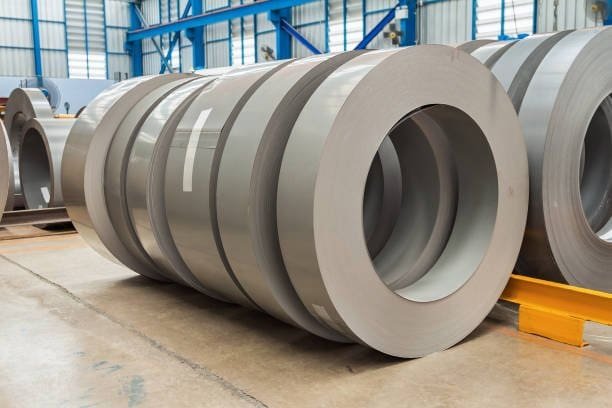
The transformer core, typically made of laminated silicon steel or amorphous metal, provides a low-reluctance path for magnetic flux.
The core:
- Concentrates and guides the magnetic field
- Minimizes magnetic losses
- Ensures that most of the flux links both windings
By efficiently channeling the magnetic flux, the core allows energy transfer with very high efficiency.
Induction of Voltage in the Secondary Winding
As the magnetic flux flows through the core, it links the secondary winding. According to Faraday’s Law of Electromagnetic Induction, any change in magnetic flux linking a conductor induces an electromotive force (voltage) in that conductor.
As a result:
- The changing flux induces voltage in the secondary winding
- The magnitude of the induced voltage depends on the number of turns
- The induced voltage follows the same frequency as the primary supply
This is how electrical energy appears at the secondary terminals without any direct connection to the primary circuit.
Voltage Transformation Through Turns Ratio
The voltage relationship between windings is defined by the turns ratio:
- More turns → higher induced voltage
- Fewer turns → lower induced voltage
This allows transformers to:
- Step voltage up for efficient transmission
- Step voltage down for safe distribution and utilization
Electromagnetic induction ensures that this transformation is precise and stable.
Energy Transfer Under Load Conditions
When a load is connected to the secondary winding:
- Current flows in the secondary circuit
- This current produces its own magnetic field
- The primary winding automatically draws additional current to maintain magnetic flux balance
This self-regulating behavior ensures that power drawn by the load is matched by power supplied from the source, maintaining system stability.
Electrical Isolation Between Circuits
Although energy is transferred, the primary and secondary circuits remain electrically isolated:
- No conductive path exists between windings
- Faults are less likely to propagate between voltage levels
- Personnel and equipment are protected
This isolation is a critical safety feature enabled by electromagnetic induction.
Losses Associated With Electromagnetic Induction
While highly efficient, electromagnetic induction is not loss-free:
- Core losses occur due to hysteresis and eddy currents
- Copper losses occur due to current flow in windings
Transformer design minimizes these losses through advanced materials, optimized core geometry, and efficient cooling systems.
Why No Mechanical Motion Is Required
Unlike generators or motors:
- No parts rotate or move
- Energy conversion occurs entirely through fields
- Mechanical wear is eliminated
This is why transformers achieve long service lives, often exceeding 30–40 years.
What Role Does the Magnetic Core Play in Energy Transfer?
A transformer’s ability to transfer large amounts of electrical energy efficiently—without motion, friction, or direct electrical contact—depends heavily on the performance of its magnetic core. While windings carry current and define voltage ratios, it is the magnetic core that makes controlled, low-loss energy transfer possible. Without a properly designed core, electromagnetic induction would be weak, inefficient, unstable, and unsuitable for practical power systems.
The magnetic core plays a central role in energy transfer by providing a low-reluctance path for magnetic flux, ensuring strong coupling between windings, minimizing losses, and stabilizing transformer operation under varying load conditions. It is the structural and magnetic backbone of the transformer.
The magnetic core enables efficient energy transfer by guiding and concentrating magnetic flux between windings.True
A low-reluctance magnetic path ensures strong flux linkage, reduced losses, and stable induction according to transformer design principles.
Concentrating and Guiding Magnetic Flux
When alternating current flows through the primary winding, it generates a changing magnetic field. The magnetic core captures this field and directs it along a defined path.
The core:
- Concentrates magnetic flux
- Prevents flux from dispersing into surrounding air
- Ensures that most of the magnetic field links all windings
By reducing magnetic reluctance compared to air, the core dramatically increases the effectiveness of electromagnetic induction.
Enabling Strong Magnetic Coupling Between Windings
Efficient energy transfer requires that the magnetic flux produced by the primary winding fully links the secondary winding.
The magnetic core:
- Maximizes mutual inductance between windings
- Reduces leakage flux that does not contribute to power transfer
- Improves voltage regulation and efficiency
Strong magnetic coupling ensures that nearly all the energy created in the primary circuit is delivered to the secondary circuit.
Supporting Voltage Transformation Accuracy
The accuracy of voltage transformation depends on stable and predictable magnetic behavior.
A well-designed core:
- Maintains uniform flux distribution
- Prevents local saturation
- Ensures consistent voltage ratios across operating conditions
This stability is essential for maintaining grid voltage quality and protecting downstream equipment.
Minimizing Core Losses During Energy Transfer
Although the core does not carry electrical current, it experiences magnetic losses during operation.
The core material and construction are optimized to minimize:
- Hysteresis losses caused by repeated magnetization cycles
- Eddy current losses caused by induced currents within the core
Using laminated silicon steel, amorphous metal, or advanced alloys significantly reduces these losses, improving overall transformer efficiency.
Preventing Magnetic Saturation
Core saturation occurs when magnetic flux exceeds the material’s capability, leading to:
- Sharp increases in magnetizing current
- Excessive heating
- Noise and vibration
- Distorted waveforms
The magnetic core is designed with sufficient cross-sectional area and appropriate material properties to avoid saturation under normal voltage and frequency conditions.
Stabilizing Energy Transfer Under Load Changes
When load current changes on the secondary side, the magnetic core helps maintain energy balance:
- Flux remains nearly constant
- Primary current automatically adjusts
- Power transfer remains stable
This self-regulating behavior is essential for reliable transformer operation across varying load conditions.
Reducing Mechanical Stress and Noise
Magnetic forces inside the transformer act on both the core and windings.
A rigid, well-clamped core:
- Reduces vibration caused by magnetostriction
- Minimizes audible noise
- Maintains mechanical integrity over decades
This improves both operational reliability and environmental compatibility.
Supporting Electrical Isolation
Although the core carries magnetic energy, it does not carry electrical current between windings:
- Electrical isolation is preserved
- High-voltage and low-voltage circuits remain separated
- Safety and fault containment are ensured
The core enables energy transfer while maintaining galvanic isolation.
Compliance With Efficiency and Design Standards
International standards such as IEC and IEEE define core performance requirements:
- Maximum allowable losses
- Thermal behavior
- Magnetic flux limits
Transformer efficiency classes are largely determined by core material and design quality.
Why Are No Mechanical Components Required?
In many energy conversion systems, motion is unavoidable—shafts rotate, bearings wear, and mechanical losses accumulate over time. Transformers are fundamentally different. Despite transferring massive amounts of power continuously, they operate without motors, gears, or moving assemblies. This is not a design shortcut, but a direct consequence of the physical principle on which transformers are built.
No mechanical components are required in a transformer because energy transfer occurs entirely through electromagnetic fields, not through mechanical motion or physical contact. Electrical energy is converted to magnetic energy and back again without any moving parts, making the transformer one of the most reliable devices in the power industry.
Transformers do not require mechanical components because power transfer is achieved through electromagnetic induction.True
Electromagnetic induction allows energy transfer via changing magnetic fields, eliminating the need for motion, friction, or mechanical coupling.
Energy Transfer Through Fields, Not Motion
The defining reason mechanical components are unnecessary is that transformers rely on field interaction rather than physical movement.
In operation:
- Alternating current in the primary winding creates a changing magnetic field
- This magnetic field propagates through the core
- The changing field induces voltage in the secondary winding
At no point does energy need to be carried by rotating parts or linear motion. The magnetic field itself is the medium of transfer.
Alternating Current Eliminates the Need for Movement
Mechanical generators require motion because they must physically cut magnetic field lines to induce voltage. Transformers avoid this entirely by using alternating current.
Because AC:
- Changes magnitude and direction continuously
- Produces a time-varying magnetic flux automatically
- Sustains induction without motion
The electrical signal itself replaces mechanical movement as the driving mechanism.
Static Magnetic Core as an Energy Channel
The magnetic core does not move, rotate, or vibrate intentionally. Its role is purely electromagnetic:
- Providing a low-reluctance path for flux
- Concentrating and guiding magnetic energy
- Ensuring efficient coupling between windings
Since the core only channels magnetic flux, mechanical motion provides no benefit and would only introduce losses and wear.
No Mechanical Energy Conversion Step
Transformers do not convert electrical energy into mechanical energy at any stage. Instead:
- Electrical energy converts directly into magnetic energy
- Magnetic energy converts directly back into electrical energy
Skipping a mechanical conversion step avoids:
- Friction losses
- Inertia-related inefficiencies
- Lubrication and alignment issues
This direct field-based conversion is inherently more efficient and stable.
Reliability and Longevity Advantages
The absence of mechanical components dramatically improves reliability:
- No bearings to wear out
- No shafts to misalign
- No gears to fatigue
- No lubrication systems required
As a result, transformers routinely operate for 30–40 years or more with minimal maintenance, something mechanical systems cannot easily match.
Reduced Maintenance and Operational Risk
Without moving parts:
- Maintenance is focused on insulation, cooling, and monitoring
- Failure modes are predictable and slow-developing
- Sudden mechanical breakdowns are eliminated
This makes transformers ideal for critical infrastructure where downtime is unacceptable.
Thermal and Acoustic Stability
Mechanical components often generate noise and vibration. In transformers:
- Noise is limited mainly to magnetic effects such as magnetostriction
- Vibration levels are low and controllable through core design
- Thermal expansion is uniform and predictable
This contributes to safer operation in urban, industrial, and indoor installations.
Compliance With Safety and Efficiency Standards
International standards such as IEC and IEEE are based on the assumption that transformers are static devices:
- Efficiency calculations exclude mechanical losses
- Reliability models assume no wear-related degradation
- Safety requirements focus on electrical and thermal behavior
The lack of mechanical components simplifies certification and performance guarantees.
Conclusion
Power is transferred in a transformer without moving parts through the principle of electromagnetic induction. An alternating current creates a changing magnetic field, which induces voltage in another winding without direct electrical contact or mechanical movement. This motionless energy transfer makes transformers highly efficient, reliable, and durable, forming the backbone of modern electrical power transmission and distribution systems.
FAQ
Q1: How can power be transferred without any moving parts?
Power is transferred without moving parts through a physical principle called electromagnetic induction. In devices such as transformers, alternating current flowing through a conductor creates a changing magnetic field. This magnetic field induces a voltage in another nearby conductor without any physical contact or mechanical motion.
Because the energy transfer occurs through a magnetic field, no shafts, gears, or rotating components are required. This makes transformers extremely reliable, efficient, and suitable for continuous operation in power systems.
Q2: What role does electromagnetic induction play in power transfer?
Electromagnetic induction is the foundation of contactless power transfer. When alternating current flows through the primary winding of a transformer, it produces a time-varying magnetic flux in the core. According to Faraday’s Law, this changing magnetic flux induces an electromotive force (EMF) in the secondary winding.
Key elements involved are:
Alternating current (AC)
Magnetic flux
Conductive windings
A magnetic core to guide flux
This process allows energy to move efficiently from one circuit to another without electrical contact.
Q3: Why is alternating current required for this type of power transfer?
Alternating current is essential because only a changing magnetic field can induce voltage. Direct current (DC) produces a constant magnetic field, which does not continuously induce voltage in another conductor.
This is why transformers operate exclusively with AC systems. In modern DC transmission systems (HVDC), power must first be converted to AC or processed using electronic converters before voltage transformation can occur.
Q4: How does the transformer core help transfer power efficiently?
The transformer core, usually made of laminated silicon steel, provides a low-reluctance path for magnetic flux. This ensures that most of the magnetic field generated by the primary winding links directly with the secondary winding.
Benefits of the core include:
Improved magnetic coupling
Reduced energy losses
Higher efficiency
Compact transformer design
By guiding magnetic flux efficiently, the core enables effective power transfer without physical motion.
Q5: How is electrical isolation achieved without moving parts?
Electrical isolation is achieved because the primary and secondary windings are not electrically connected. Energy crosses the insulation barrier only through the magnetic field. This isolation protects equipment and personnel from high voltages, ground faults, and electrical noise.
Isolation is a key advantage of transformer-based power transfer and is essential in medical equipment, industrial controls, data centers, and utility power systems.
Q6: Are there other technologies that transfer power without moving parts?
Yes. In addition to transformers, other technologies include:
Inductive charging systems (wireless power transfer)
Capacitive coupling systems
Resonant inductive coupling for EV charging
However, transformers remain the most efficient and widely used method for high-power, grid-scale energy transfer without moving components.
Q7: Why is power transfer without moving parts so reliable?
The absence of mechanical motion eliminates wear, friction, lubrication needs, and mechanical fatigue. As a result:
Maintenance requirements are minimal
Service life is long (often 30–50 years)
Operational reliability is extremely high
This reliability is one of the main reasons transformers are fundamental components of modern power systems.
References
IEC 60076 – Power Transformers
https://webstore.iec.ch/publication/602
IEEE C57 Series – Transformer Standards
https://standards.ieee.org
Faraday’s Law of Electromagnetic Induction – Britannica
https://www.britannica.com
Electrical Engineering Portal – Transformer Basics
https://electrical-engineering-portal.com
NEMA – Transformer Design Fundamentals
https://www.nema.org
U.S. Department of Energy – How Electricity Works
https://www.energy.gov