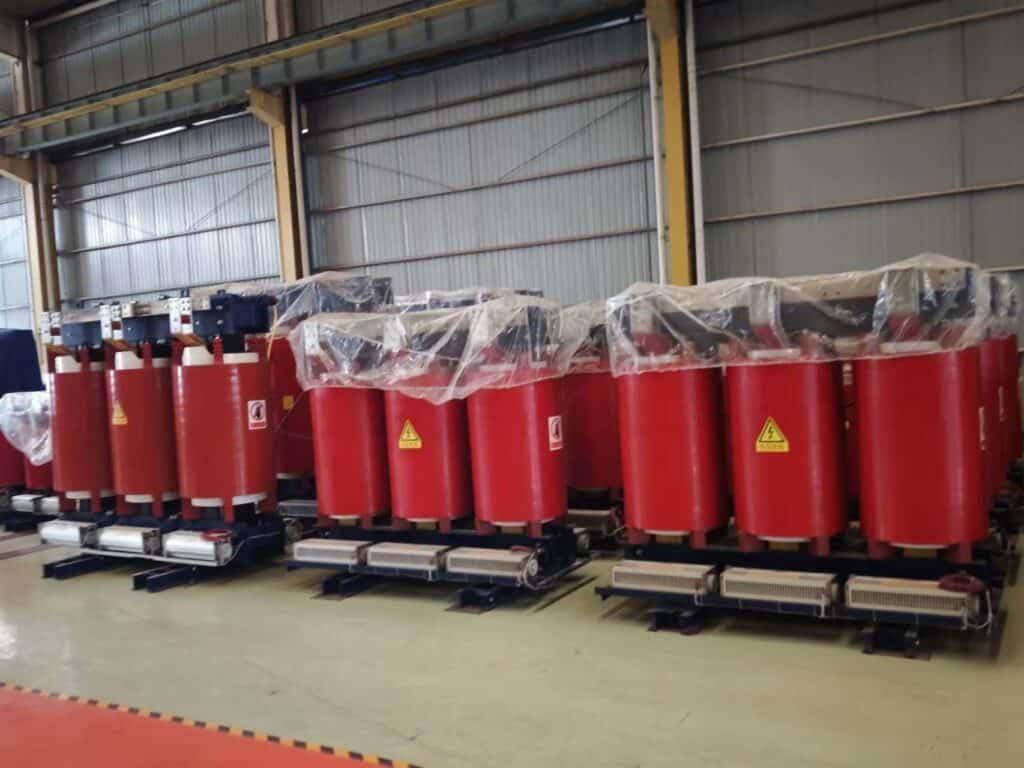
Cast resin dry-type transformers are a widely used category of transformers designed for enhanced safety, environmental protection, and reliable performance in demanding conditions. Unlike oil-filled transformers, they use solid insulation systems—specifically epoxy resin—to encapsulate the windings. This design eliminates the need for liquid insulation and makes them especially suitable for indoor, high-humidity, and fire-sensitive environments.
What Are Cast Resin Dry-Type Transformers?

In many modern electrical installations, especially in buildings, hospitals, and industrial facilities, safety, reliability, and low maintenance are critical concerns. Traditional oil-filled transformers pose risks such as fire hazards, oil leakage, and environmental contamination. Even standard dry-type transformers may struggle in harsh or humid environments without adequate protection. This is where cast resin dry-type transformers provide a superior solution by combining robust insulation with enhanced environmental resistance.
Cast resin dry-type transformers are transformers in which the windings are fully encapsulated in epoxy resin, providing excellent electrical insulation, mechanical strength, moisture resistance, and fire safety without the use of liquid insulating oil. They are widely used in applications requiring high safety, reliability, and minimal maintenance.
To understand their advantages and applications, it is essential to explore their structure, working principle, and performance characteristics.
Cast resin transformers use oil for cooling and insulation like traditional transformers.False
Cast resin transformers are oil-free and use solid epoxy resin insulation, making them safer and more environmentally friendly.
1. Basic Structure of Cast Resin Transformers
Cast resin transformers consist of several key components, similar to other dry-type transformers but with distinct insulation features.
Main Components
• magnetic core (typically laminated silicon steel)
• primary and secondary windings
• epoxy resin encapsulation
• cooling system (air-based)
Structural 특징
The windings are vacuum-cast in epoxy resin, forming a solid, protective layer around the conductors.
Structure Table
| Component | Function |
|---|---|
| Core | Magnetic flux transfer |
| Windings | Voltage transformation |
| Resin | Insulation and protection |
This encapsulated design is the defining feature of cast resin transformers.
2. Manufacturing Process
The production process is critical to achieving high performance.
Key Steps
- winding of conductors
- placement in molds
- vacuum casting with epoxy resin
- curing and solidification
Advantages of Vacuum Casting
• eliminates air bubbles
• ensures uniform insulation
• improves dielectric strength
This process results in highly reliable insulation systems.
3. Insulation System and Properties
The epoxy resin insulation provides several benefits.
Key Properties
• high dielectric strength
• excellent thermal resistance
• strong mechanical protection
Insulation Performance Table
| Property | Benefit |
|---|---|
| Electrical insulation | Prevents faults |
| Thermal resistance | Withstands high temperatures |
| Mechanical strength | Resists vibration |
The insulation system is one of the main reasons for their popularity.
4. Cooling Method
Cast resin transformers use air for cooling.
Cooling Types
• natural air cooling (AN)
• forced air cooling (AF)
Cooling Characteristics
• no oil required
• minimal fire risk
• simple maintenance
Proper ventilation is essential for effective cooling.
5. Fire Safety and Environmental Protection
One of the biggest advantages of cast resin transformers is safety.
Fire Safety Features
• self-extinguishing resin
• no flammable oil
• low smoke emission
Environmental Benefits
• no risk of oil leakage
• reduced pollution
• safer indoor installation
These features make them ideal for sensitive environments.
6. Resistance to Moisture and Contaminants
Cast resin transformers perform well in harsh environments.
Protection Features
• sealed windings
• resistance to humidity
• protection against dust and chemicals
Environmental Suitability Table
| Environment | Performance |
|---|---|
| Humid areas | Excellent |
| Industrial sites | High resistance |
| Outdoor (with enclosure) | Suitable |
This makes them versatile for various applications.
7. Mechanical Strength and Durability
The solid resin structure provides strong mechanical support.
Benefits
• resistance to short-circuit forces
• reduced vibration
• improved structural integrity
This enhances reliability under dynamic conditions.
8. Efficiency and Loss Characteristics
Cast resin transformers are designed for efficient operation.
Loss Types
• core (no-load) losses
• copper (load) losses
Performance Table
| Parameter | Performance |
|---|---|
| Efficiency | High |
| Losses | Optimized |
| Temperature rise | Controlled |
Advanced designs minimize energy losses.
9. Typical Applications
Cast resin transformers are widely used in environments requiring safety and reliability.
Common Applications
• commercial buildings
• hospitals
• data centers
• industrial facilities
• renewable energy systems
Their oil-free design makes them ideal for indoor use.
10. Comparison with Other Transformer Types
Comparison Table
| Feature | Cast Resin | Oil-Filled | VPI Dry-Type |
|---|---|---|---|
| Insulation | Solid resin | Oil | Varnish |
| Fire risk | Very low | Higher | Low |
| Maintenance | Low | Moderate | Moderate |
| Environmental impact | Low | Higher | Moderate |
Cast resin transformers offer a strong balance of safety and performance.
11. Advantages and Limitations
Advantages
• high safety (fire-resistant)
• low maintenance
• excellent environmental resistance
• reliable insulation
Limitations
• higher initial cost
• larger size compared to oil-filled units
• cooling dependent on air circulation
Understanding these factors helps in proper selection.
How Are Cast Resin Transformers Manufactured?
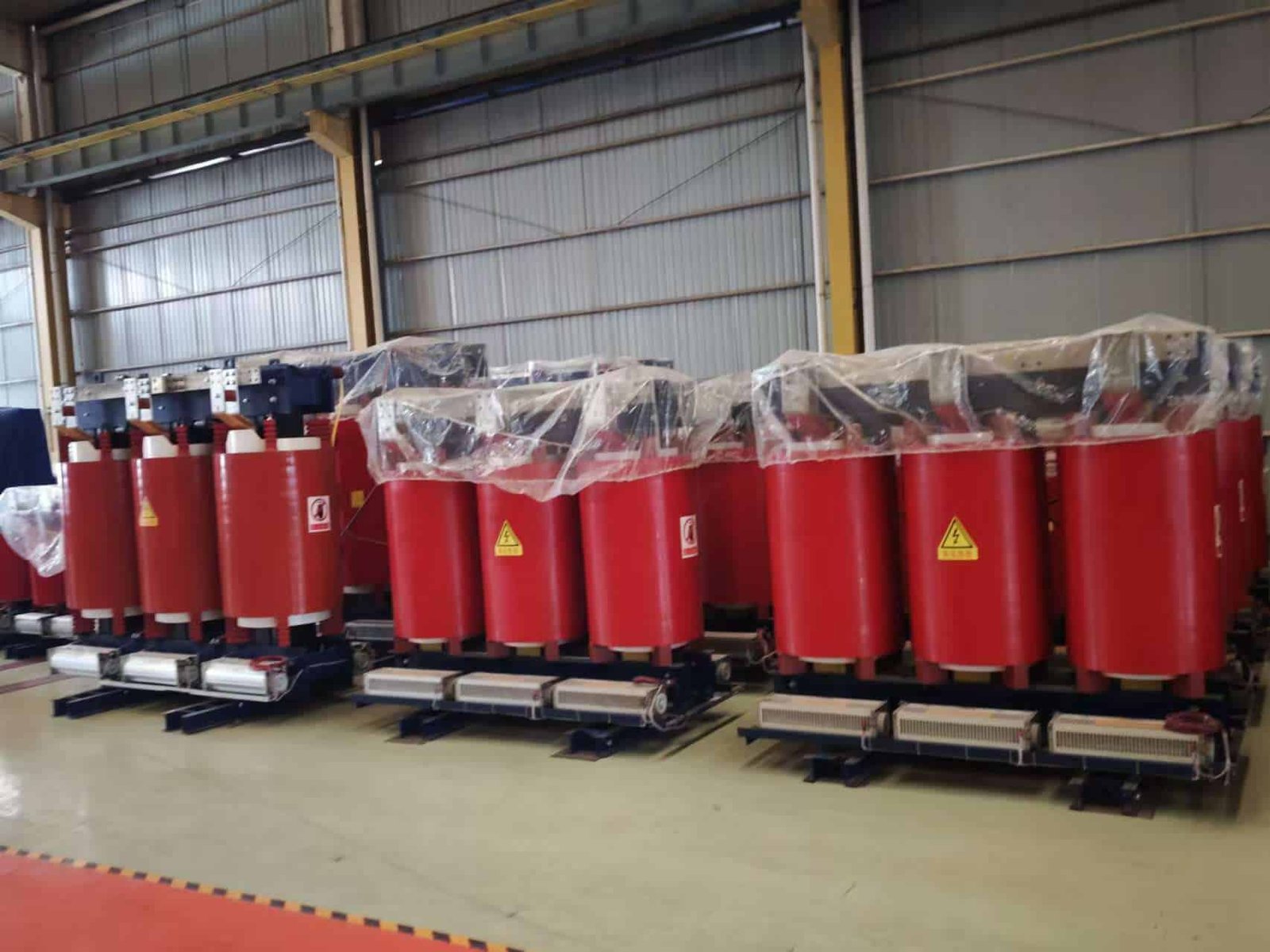
In modern power distribution systems, cast resin transformers are widely valued for their safety, durability, and environmental performance. However, these advantages do not come automatically—they are the direct result of a highly controlled and technically sophisticated manufacturing process. If any step is poorly executed, issues such as air voids, insulation defects, or mechanical weaknesses can occur, leading to reduced reliability and premature failure. Therefore, understanding the manufacturing process is essential to appreciate the quality and performance of these transformers.
Cast resin transformers are manufactured through a multi-stage process that includes core fabrication, winding production, vacuum casting with epoxy resin, thermal curing, assembly, and rigorous testing to ensure high insulation quality, mechanical strength, and long-term reliability. Each step is carefully controlled to eliminate defects and optimize performance.
To fully understand how these transformers achieve their superior properties, let us examine each stage of the manufacturing process in detail.
Cast resin transformers are made by simply coating windings with resin without special processing.False
The manufacturing process involves vacuum casting, precise curing, and strict quality control to ensure high-performance insulation and reliability.
1. Core Manufacturing and Preparation
The process begins with the production of the transformer core.
Materials Used
• grain-oriented silicon steel laminations
• high-permeability magnetic materials
Manufacturing Steps
- cutting laminations to precise dimensions
- stacking or step-lap assembly
- clamping to form a rigid structure
Core Quality Factors
| Parameter | Importance |
|---|---|
| Lamination thickness | Reduces eddy current losses |
| Assembly precision | Minimizes magnetic gaps |
| Material quality | Improves efficiency |
The core must be precisely manufactured to ensure low losses and stable magnetic performance.
2. Winding Fabrication
The windings are responsible for voltage transformation.
Conductor Materials
• copper (most common)
• aluminum (cost-sensitive applications)
Winding Process
• precision coil winding
• insulation layering between turns
• shaping to fit core structure
Key Considerations
• uniform winding tension
• proper insulation spacing
• mechanical stability
Poor winding quality can lead to electrical and mechanical failures.
3. Mold Preparation and Assembly
Before casting, the windings are placed into molds.
Mold Requirements
• high precision
• heat-resistant materials
• proper alignment features
Assembly Steps
• positioning windings in molds
• securing alignment
• preparing for resin injection
The mold determines the final shape and quality of the encapsulation.
4. Vacuum Casting with Epoxy Resin
This is the most critical step in manufacturing.
Process Description
• the mold is placed in a vacuum chamber
• air is removed to eliminate moisture and bubbles
• liquid epoxy resin is injected into the mold
Benefits of Vacuum Casting
• eliminates air voids
• ensures complete impregnation
• improves dielectric strength
Casting Quality Table
| Condition | Result |
|---|---|
| Vacuum casting | High-quality insulation |
| Non-vacuum casting | Risk of defects |
Vacuum casting is essential for achieving reliable insulation.
5. Resin Formulation and Properties
The epoxy resin used is specially engineered.
Key Properties
• high dielectric strength
• thermal resistance
• flame retardancy
Additives May Include
• fillers (to improve mechanical strength)
• fire-retardant compounds
• thermal stabilizers
The formulation directly affects transformer performance.
6. Thermal Curing Process
After casting, the resin must be cured.
Curing Steps
- controlled heating in ovens
- polymerization of resin
- gradual cooling
Importance of Curing
• solidifies the resin
• ensures mechanical strength
• stabilizes insulation properties
Curing Parameters Table
| Parameter | Effect |
|---|---|
| Temperature | Controls polymerization |
| Time | Ensures complete curing |
Improper curing can lead to cracks or weak insulation.
7. Demolding and Finishing
Once cured, the cast windings are removed from molds.
Finishing Steps
• surface inspection
• trimming excess material
• smoothing edges
Quality Checks
• absence of cracks
• uniform surface
• correct dimensions
This stage ensures the physical integrity of the insulation.
8. Assembly of Core and Windings
The core and cast windings are assembled into the final structure.
Assembly Process
• mounting windings onto core limbs
• securing with clamping structures
• installing insulation barriers
Key Requirements
• precise alignment
• mechanical stability
• minimal vibration
Proper assembly ensures reliable operation.
9. Installation of Auxiliary Components
Additional systems are integrated into the transformer.
Components Include
• temperature sensors
• cooling fans (if required)
• protective enclosures
Purpose
• monitoring performance
• enhancing cooling
• ensuring safety
These components improve functionality and reliability.
10. Testing and Quality Control
Rigorous testing is conducted before delivery.
Electrical Tests
• insulation resistance test
• high-voltage withstand test
• partial discharge test
Mechanical and Thermal Tests
• vibration testing
• temperature rise testing
Testing Summary Table
| Test Type | Purpose |
|---|---|
| Electrical | Verify insulation integrity |
| Thermal | Ensure cooling performance |
| Mechanical | Confirm structural stability |
Testing ensures compliance with standards and performance requirements.
11. Final Inspection and Packaging
Before shipment, the transformer undergoes final checks.
Inspection Items
• visual inspection
• dimensional verification
• documentation review
Packaging Requirements
• protection against moisture
• secure transport handling
• proper labeling
This ensures safe delivery and readiness for installation.
12. Importance of Manufacturing Quality
The manufacturing process directly determines transformer performance.
Key Outcomes
• high insulation reliability
• long service life
• resistance to environmental factors
A well-controlled process ensures consistent quality and performance.
What Are the Key Features of Cast Resin Insulation?
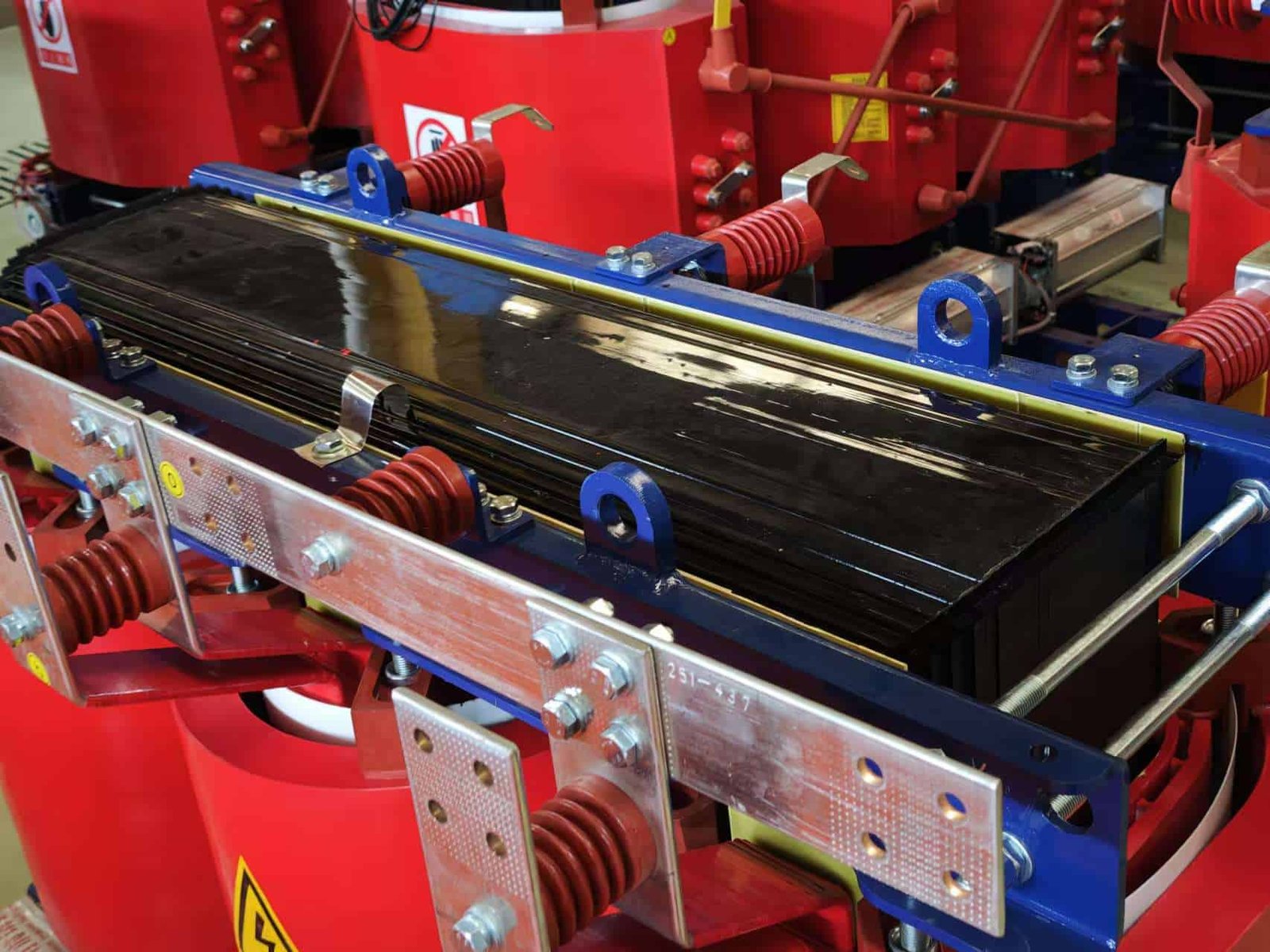
In transformer applications, insulation failure is one of the most critical risks, often leading to costly downtime, safety hazards, and reduced equipment lifespan. Traditional insulation systems can be vulnerable to moisture, contamination, thermal stress, and mechanical damage. As electrical systems become more demanding and safety standards increase, there is a growing need for insulation solutions that offer superior reliability and environmental resistance. Cast resin insulation addresses these challenges through advanced materials and manufacturing techniques.
Cast resin insulation is characterized by its high dielectric strength, excellent thermal stability, strong mechanical integrity, superior resistance to moisture and contaminants, and inherent fire-retardant properties, making it one of the most reliable insulation systems for dry-type transformers.
To fully understand its advantages, we must examine the key features that define cast resin insulation and how they contribute to transformer performance.
Cast resin insulation is prone to moisture absorption and weak mechanical strength.False
Cast resin insulation is highly resistant to moisture and provides strong mechanical support due to its solid encapsulated structure.
1. High Dielectric Strength
One of the most important features of cast resin insulation is its excellent electrical insulation capability.
Key Characteristics
• high breakdown voltage
• uniform insulation structure
• absence of air gaps
Performance Table
| Property | Benefit |
|---|---|
| High dielectric strength | Prevents electrical breakdown |
| Uniform insulation | Ensures reliability |
The vacuum casting process eliminates voids, significantly improving insulation performance.
2. Excellent Thermal Stability
Cast resin insulation is designed to withstand high operating temperatures.
Thermal Properties
• high thermal class (typically Class F or H)
• مقاومت to thermal aging
• stable performance under load
Temperature Impact Table
| Condition | Effect |
|---|---|
| Stable temperature | Long lifespan |
| Excessive heat | Accelerated aging |
Thermal stability ensures consistent performance over time.
3. Strong Mechanical Strength
The solid epoxy structure provides excellent mechanical support.
Advantages
• resistance to vibration
• ability to withstand short-circuit forces
• structural integrity under stress
Mechanical Performance Table
| Condition | Result |
|---|---|
| High mechanical strength | Reliable operation |
| Weak structure | Risk of damage |
This makes cast resin transformers suitable for demanding environments.
4. Moisture and Humidity Resistance
Cast resin insulation is highly resistant to environmental moisture.
Key Features
• sealed winding structure
• low পানি absorption
• no الحاجة for additional protection
Environmental Performance Table
| Environment | Performance |
|---|---|
| High humidity | Excellent |
| Condensation risk | Minimal impact |
This makes them ideal for humid or coastal areas.
5. Resistance to Contaminants and Chemicals
Industrial environments often expose transformers to harmful substances.
Protection Capabilities
• resistance to dust and dirt
• protection against corrosive gases
• chemical stability
Benefits
• reduced maintenance
• longer service life
• reliable operation in harsh conditions
Cast resin insulation maintains performance even in polluted environments.
6. Fire Retardancy and Safety
Safety is a major advantage of cast resin insulation.
Fire Safety Features
• self-extinguishing material
• low smoke emission
• no flammable oil
Safety Comparison Table
| Insulation Type | Fire Risk |
|---|---|
| Oil-based | Higher |
| Cast resin | Very low |
This makes cast resin transformers suitable for indoor and sensitive applications.
7. Partial Discharge Resistance
Partial discharge (PD) is a key factor in insulation degradation.
Cast Resin Advantages
• void-free structure reduces PD
• high resistance to electrical stress
• long insulation life
PD Performance Table
| Condition | PD Level |
|---|---|
| With voids | High |
| Cast resin | Very low |
Low PD levels improve long-term reliability.
8. Environmental Friendliness
Cast resin insulation is environmentally safe.
экологические Benefits
• no oil leakage risk
• reduced pollution
• recyclable components (partially)
Impact
Supports sustainable and eco-friendly transformer solutions.
9. Low Maintenance Requirements
The robust design reduces the need for frequent maintenance.
Maintenance Advantages
• no oil testing or replacement
• minimal cleaning required
• stable long-term performance
Maintenance Comparison Table
| Transformer Type | Maintenance Level |
|---|---|
| Oil-filled | High |
| Cast resin | Low |
This reduces operational costs.
10. Compact and Robust Design
Cast resin insulation allows for compact transformer construction.
Design Benefits
• reduced footprint
• integrated structure
• improved durability
This is especially useful in space-constrained installations.
11. Long Service Life
All these features contribute to extended lifespan.
Key Factors
• مقاومة to aging
• stable insulation properties
• protection against environmental stress
Lifespan Table
| Condition | Expected Life |
|---|---|
| Proper operation | Long service life |
| Poor conditions | Reduced life |
Reliable insulation ensures long-term performance.
Where Are Cast Resin Transformers Commonly Used?
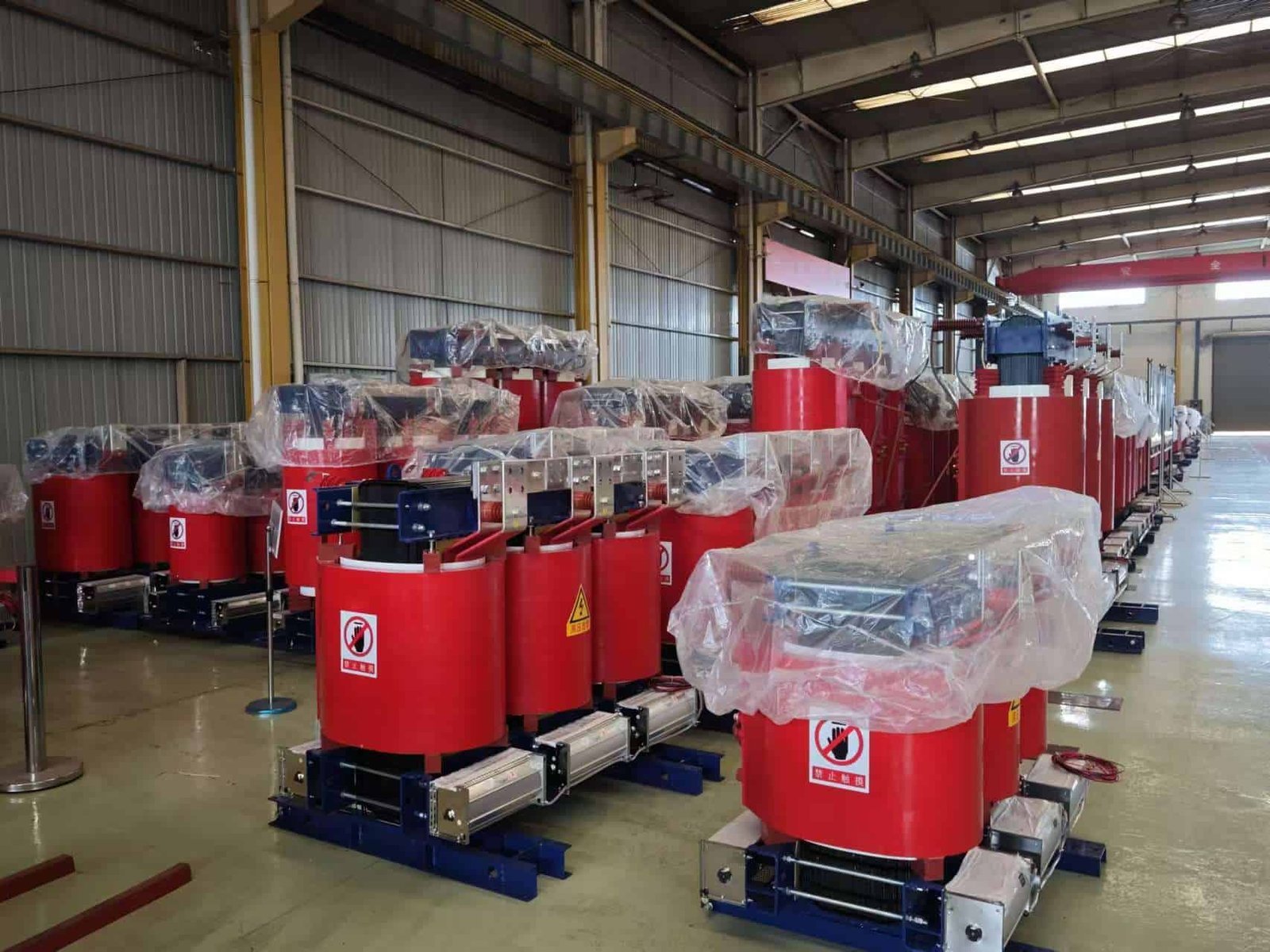
In today’s power distribution systems, selecting the right transformer type is critical for ensuring safety, reliability, and efficiency. Traditional oil-filled transformers, while effective, pose risks such as fire hazards, oil leakage, and environmental concerns—especially in sensitive or confined environments. Many facilities require equipment that can operate safely indoors, withstand harsh conditions, and demand minimal maintenance. This is where cast resin transformers have become a preferred solution across a wide range of applications.
Cast resin transformers are commonly used in commercial buildings, hospitals, industrial facilities, data centers, renewable energy systems, transportation infrastructure, and urban power distribution networks due to their high safety, environmental resistance, and low maintenance requirements.
To better understand their widespread use, let us explore the key application areas and the reasons behind their suitability.
Cast resin transformers are only suitable for small indoor applications and cannot be used in industrial or outdoor environments.False
Cast resin transformers are widely used in industrial, renewable energy, and even outdoor applications with proper enclosures due to their durability and environmental resistance.
1. Commercial Buildings and High-Rise Structures
Cast resin transformers are widely used in commercial environments.
Typical Locations
• office buildings
• shopping malls
• hotels
• airports
Why They Are Suitable
• low fire risk (no oil)
• compact design for limited space
• low noise levels
Application Benefits Table
| Requirement | Cast Resin Advantage |
|---|---|
| Indoor safety | High fire resistance |
| Space constraints | Compact design |
| Maintenance | Minimal |
These features make them ideal for densely populated areas.
2. Hospitals and Healthcare Facilities
Hospitals require extremely reliable and safe power systems.
Key Requirements
• uninterrupted power supply
• fire safety
• low electromagnetic interference
Advantages of Cast Resin Transformers
• self-extinguishing insulation
• low smoke emission
• high reliability
Critical Application Table
| Factor | Importance |
|---|---|
| Safety | Critical |
| Reliability | Essential |
| Maintenance | Low disruption |
Their safety features make them suitable for life-critical environments.
3. Industrial Facilities
Industrial environments often involve harsh operating conditions.
Common Industries
• manufacturing plants
• chemical processing
• mining operations
Environmental Challenges
• dust and загрязнение
• moisture
• corrosive gases
Suitability Table
| Condition | Performance |
|---|---|
| Dusty environment | Excellent |
| Humid conditions | High resistance |
| Chemical exposure | Durable |
Cast resin transformers provide reliable operation under these conditions.
4. Data Centers and IT Infrastructure
Data centers require stable and efficient power supply.
Key Requirements
• high reliability
• low maintenance
• compact installation
Benefits
• minimal downtime
• reduced fire risk
• efficient operation
Performance Table
| Requirement | Benefit |
|---|---|
| Reliability | High uptime |
| Safety | Reduced risk |
| Efficiency | Optimized performance |
Their reliability makes them ideal for critical digital infrastructure.
5. Renewable Energy Systems
Cast resin transformers are increasingly used in renewable energy applications.
Common Applications
• solar power plants
• wind farms
• energy storage systems
Advantages
• مقاومة to environmental conditions
• low maintenance in remote areas
• high efficiency
Renewable Energy Table
| Application | Benefit |
|---|---|
| Solar | Outdoor durability |
| Wind | مقاومة to harsh weather |
They support sustainable energy systems effectively.
6. Transportation Infrastructure
Transportation systems require reliable and safe power distribution.
Typical Uses
• railway systems
• metro stations
• airports
• tunnels
Key Advantages
• fire-resistant design
• compact installation
• low maintenance
Infrastructure Table
| Environment | Requirement |
|---|---|
| Tunnels | Fire safety |
| Railways | Reliability |
Their safety features are critical in confined public spaces.
7. Urban Power Distribution Networks
Urban environments demand compact and safe solutions.
Challenges
• limited space
• high population density
• strict safety regulations
Benefits
• indoor installation capability
• reduced environmental impact
• low noise levels
Urban Application Table
| Factor | Advantage |
|---|---|
| Space | Compact design |
| Safety | No oil risk |
They are ideal for modern smart cities.
8. Educational and Public Institutions
Schools, universities, and public buildings require safe electrical systems.
Requirements
• high safety standards
• low maintenance
• quiet operation
Benefits
• reduced risk to occupants
• minimal operational disruption
These features make them suitable for public environments.
9. Marine and Offshore Applications
Cast resin transformers are also used in marine environments.
Challenges
• high humidity
• salt الهواء
• vibration
Advantages
• moisture resistance
• corrosion protection
• mechanical strength
Marine Table
| Condition | Performance |
|---|---|
| High humidity | Excellent |
| Salt exposure | Durable |
They perform reliably in harsh marine conditions.
10. Hazardous and Sensitive Environments
Certain environments require enhanced safety.
Examples
• chemical plants
• oil & gas facilities
• explosive atmospheres
Advantages
• no flammable oil
• high fire resistance
• robust insulation
These features reduce operational risks.
11. Outdoor Installations with Enclosures
Although primarily used indoors, cast resin transformers can be installed outdoors.
Requirements
• protective enclosures (IP-rated)
• weatherproof design
Benefits
• flexibility in installation
• مقاومة to environmental exposure
This expands their application range.
What Advantages Do Cast Resin Transformers Offer?
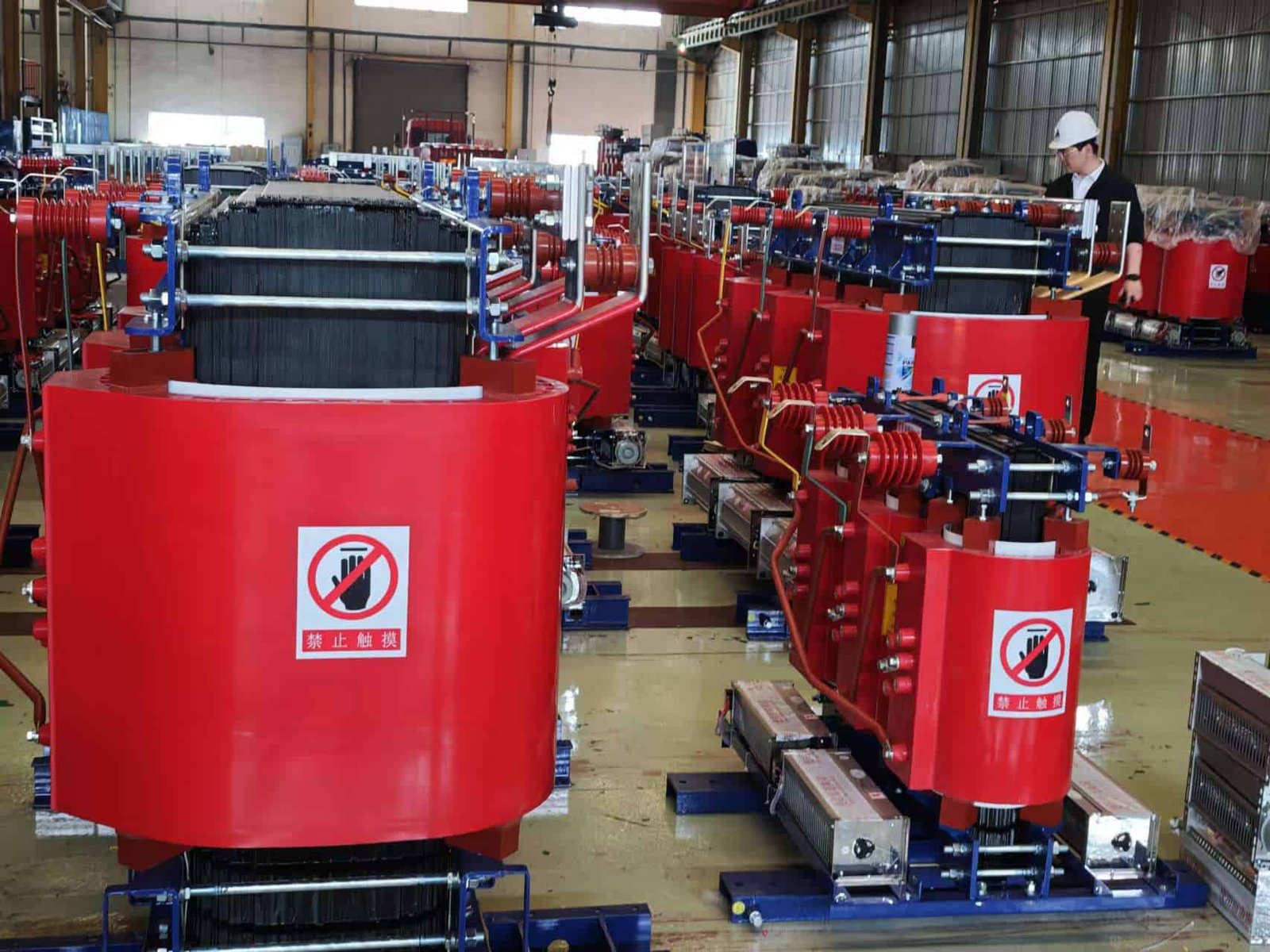
In modern power systems, users increasingly demand transformers that are not only efficient but also safe, environmentally friendly, and easy to maintain. Traditional oil-filled transformers, while widely used, present challenges such as fire risk, oil leakage, and higher maintenance requirements. Even conventional dry-type transformers may lack sufficient protection in harsh environments. These limitations create the need for a more advanced and reliable solution—this is where cast resin transformers stand out.
Cast resin transformers offer key advantages including superior fire safety, excellent moisture and environmental resistance, low maintenance requirements, high mechanical strength, reliable insulation performance, and suitability for indoor and harsh environments without the need for oil. These benefits make them an ideal choice for modern infrastructure and critical applications.
To fully understand their value, it is important to explore each advantage in detail and how it contributes to performance and reliability.
Cast resin transformers have no significant advantages over traditional oil-filled transformers.False
Cast resin transformers provide enhanced safety, lower maintenance, and better environmental resistance, making them advantageous in many applications.
1. Superior Fire Safety
One of the most important advantages of cast resin transformers is their high level of fire safety.
Key Features
• self-extinguishing epoxy resin
• no flammable insulating oil
• low smoke emission
Fire Risk Comparison Table
| Transformer Type | Fire Risk |
|---|---|
| Oil-filled | Higher |
| Cast resin | Very low |
Practical Impact
• safer for indoor installations
• reduced risk in public buildings
• compliance with strict fire regulations
This makes them ideal for hospitals, commercial buildings, and tunnels.
2. Excellent Moisture and Environmental Resistance
Cast resin transformers are highly resistant to environmental factors.
Protection Capabilities
• مقاومة to humidity and condensation
• protection against dust and загрязнение
• resistance to corrosive atmospheres
Environmental Performance Table
| Condition | Performance |
|---|---|
| High humidity | Excellent |
| Dusty environment | High resistance |
| Chemical exposure | Durable |
Benefits
• reliable operation in harsh environments
• reduced maintenance
• longer service life
This makes them suitable for industrial and coastal applications.
3. Low Maintenance Requirements
Maintenance is significantly reduced compared to oil-filled transformers.
Reasons
• no oil to monitor or replace
• sealed insulation system
• مقاومة to contamination
Maintenance Comparison Table
| Transformer Type | Maintenance Level |
|---|---|
| Oil-filled | High |
| Cast resin | Low |
Impact
• lower operational costs
• reduced downtime
• simplified maintenance procedures
This is particularly beneficial for remote or critical installations.
4. High Mechanical Strength
The solid epoxy resin provides excellent structural integrity.
Advantages
• resistance to short-circuit forces
• reduced vibration
• enhanced durability
Mechanical Performance Table
| Condition | Result |
|---|---|
| High mechanical stress | Stable |
| Weak structure | Failure risk |
Application Benefit
Suitable for environments with mechanical stress, such as industrial plants and transportation systems.
5. Reliable Insulation Performance
Cast resin insulation offers high reliability and stability.
Key Features
• high dielectric strength
• low partial discharge levels
• uniform insulation without air gaps
Insulation Performance Table
| Property | Benefit |
|---|---|
| High dielectric strength | Prevents breakdown |
| Low PD | Long insulation life |
Result
• improved operational safety
• extended transformer lifespan
Reliable insulation is critical for long-term performance.
6. Environmental Friendliness
Cast resin transformers are more environmentally friendly than oil-filled units.
экологические Advantages
• no risk of oil leakage
• reduced pollution
• safer disposal
Environmental Impact Table
| Factor | Cast Resin Advantage |
|---|---|
| Oil leakage | None |
| Pollution risk | Low |
Benefit
Supports sustainable and eco-friendly energy systems.
7. Compact and Flexible Installation
Cast resin transformers are suitable for space-constrained environments.
Features
• compact design
• indoor installation capability
• flexible placement options
Space Efficiency Table
| Requirement | Advantage |
|---|---|
| Limited space | Compact size |
| Indoor use | Safe installation |
This is especially useful in urban and commercial settings.
8. Low Noise Levels
Noise reduction is important in many applications.
أسباب Low Noise
• optimized core design
• solid construction
• reduced vibration
Noise Comparison Table
| Transformer Type | Noise Level |
|---|---|
| Oil-filled | Moderate |
| Cast resin | Lower |
Benefit
Suitable for offices, hospitals, and residential areas.
9. High Reliability and Long Service Life
All the above features contribute to long-term reliability.
Key Factors
• مقاومة to environmental stress
• stable insulation properties
• minimal maintenance
Lifespan Table
| Condition | Expected Performance |
|---|---|
| Proper operation | Long service life |
| Poor conditions | Reduced life |
Reliable performance reduces lifecycle costs.
10. Strong Short-Circuit Resistance
Cast resin transformers can withstand electrical faults effectively.
Reasons
• मजबूत winding support
• rigid resin encapsulation
Benefits
• reduced damage during faults
• improved system stability
This enhances safety in fault conditions.
11. Suitability for Critical Applications
Cast resin transformers are widely used in critical environments.
Examples
• hospitals
• data centers
• transportation systems
• industrial plants
Why They Excel
• high safety
• low maintenance
• reliable performance
These features make them indispensable in modern infrastructure.
How Do They Compare to Other Dry-Type Transformers?
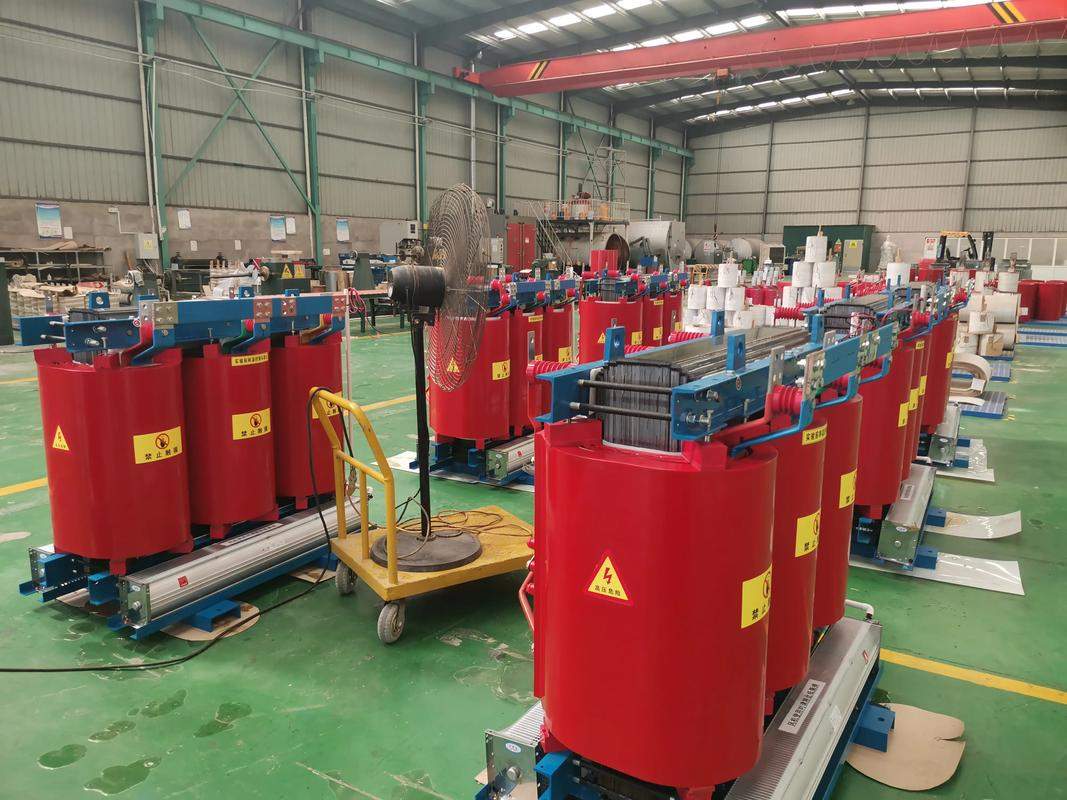
When selecting a dry-type transformer, many users face a critical question: which technology offers the best balance of safety, performance, durability, and cost? While all dry-type transformers eliminate the need for oil, not all are created equal. The two most common types—cast resin transformers and Vacuum Pressure Impregnated (VPI) transformers—differ significantly in insulation structure, environmental resistance, and application suitability. Choosing the wrong type can lead to performance issues, higher maintenance, or reduced lifespan.
Cast resin transformers differ from other dry-type transformers (such as VPI systems) primarily in their solid epoxy encapsulation, offering superior moisture resistance, fire safety, and mechanical strength, while VPI transformers provide better heat dissipation and are often more cost-effective for controlled environments.
To make an informed decision, it is essential to compare these technologies across key performance and application criteria.
All dry-type transformers have identical insulation systems and performance characteristics.False
Different dry-type transformers use distinct insulation methods, leading to variations in performance, durability, and application suitability.
1. Insulation System Differences
The most fundamental difference lies in the insulation method.
Cast Resin Transformers
• windings fully encapsulated in epoxy resin
• solid, sealed insulation structure
• void-free design
VPI Transformers
• windings impregnated with varnish under vacuum and pressure
• open winding structure
• يعتمد on air for additional insulation
Insulation Comparison Table
| Feature | Cast Resin | VPI |
|---|---|---|
| Insulation Type | Solid epoxy | Varnish-coated |
| Moisture Protection | Excellent | Moderate |
| Mechanical Strength | High | Moderate |
The encapsulated design gives cast resin a significant advantage in harsh environments.
2. Moisture and Environmental Resistance
Environmental conditions play a major role in transformer performance.
Cast Resin
• highly resistant to humidity and condensation
• suitable for coastal and polluted environments
VPI
• more sensitive to moisture
• best suited for clean, dry environments
Environmental Performance Table
| Condition | Cast Resin | VPI |
|---|---|---|
| High humidity | Excellent | Moderate |
| Dusty environment | High resistance | Lower resistance |
Cast resin transformers perform better in challenging conditions.
3. Cooling and Heat Dissipation
Cooling performance differs due to structural design.
Cast Resin
• heat must pass through solid resin
• slightly lower heat dissipation efficiency
VPI
• open structure allows better airflow
• more efficient cooling
Cooling Comparison Table
| Feature | Cast Resin | VPI |
|---|---|---|
| Heat Dissipation | Moderate | Better |
| Cooling Efficiency | Good | Higher |
VPI transformers may handle thermal loads more efficiently in controlled environments.
4. Fire Safety and Risk
Safety is a key factor in transformer selection.
Cast Resin
• self-extinguishing insulation
• no flammable materials
• low smoke emission
VPI
• generally safe but less مقاومة to fire compared to resin
Fire Safety Table
| Parameter | Cast Resin | VPI |
|---|---|---|
| Fire Resistance | Very high | High |
| Smoke Emission | Low | Moderate |
Cast resin transformers offer superior fire safety.
5. Mechanical Strength and Durability
Mechanical robustness is important in demanding applications.
Cast Resin
• rigid encapsulated windings
• high resistance to short-circuit forces
VPI
• less संरचनात्मक rigidity
• more vulnerable to mechanical stress
Mechanical Comparison Table
| Feature | Cast Resin | VPI |
|---|---|---|
| Structural Strength | High | Moderate |
| Vibration Resistance | Excellent | Good |
Cast resin transformers are more durable under stress.
6. Maintenance Requirements
Maintenance needs differ significantly.
Cast Resin
• minimal maintenance
• sealed system reduces contamination
VPI
• requires periodic inspection and cleaning
• more exposure to environmental عوامل
Maintenance Table
| Transformer Type | Maintenance Level |
|---|---|
| Cast Resin | Low |
| VPI | Moderate |
Lower maintenance is a key advantage of cast resin.
7. Cost Considerations
Cost is an important decision factor.
Cast Resin
• higher initial cost
• lower lifecycle cost due to reduced maintenance
VPI
• lower upfront cost
• potentially higher maintenance costs
Cost Comparison Table
| Cost Factor | Cast Resin | VPI |
|---|---|---|
| Initial Cost | Higher | Lower |
| Operating Cost | Lower | Moderate |
The choice depends on budget and application requirements.
8. Noise and Acoustic Performance
Noise levels can impact installation decisions.
Cast Resin
• generally low noise due to solid structure
VPI
• slightly higher noise due to open windings
Noise Comparison Table
| Parameter | Cast Resin | VPI |
|---|---|---|
| Noise Level | Lower | Moderate |
This makes cast resin suitable for noise-sensitive environments.
9. Application Suitability
Each type is suited to different applications.
Cast Resin Applications
• hospitals
• commercial buildings
• industrial environments
• renewable energy systems
VPI Applications
• clean indoor environments
• cost-sensitive projects
• controlled industrial settings
Application Table
| Application Type | Preferred Transformer |
|---|---|
| Harsh environment | Cast Resin |
| Clean indoor | VPI |
Choosing the right type depends on operating conditions.
10. Reliability and Lifespan
Both types offer reliable performance when used appropriately.
Cast Resin
• longer lifespan in harsh conditions
• مقاومة to environmental degradation
VPI
• reliable in controlled environments
• may degrade faster under stress
Reliability Table
| Condition | Cast Resin | VPI |
|---|---|---|
| Harsh environment | High reliability | Moderate |
| Controlled environment | High | High |
Matching the transformer type to the environment is essential.
Conclusion
Cast resin dry-type transformers are insulated using epoxy resin that fully encapsulates the windings, providing excellent protection against moisture, dust, and environmental contaminants. This design enhances safety, reduces maintenance, and improves reliability, especially in indoor or harsh environments. With strong fire resistance, high mechanical strength, and stable performance, cast resin transformers are an ideal solution for modern power distribution systems in commercial, industrial, and renewable energy applications.
FAQ
Q1: What are cast resin dry type transformers?
Cast resin dry type transformers are a type of transformer where the windings, especially the high-voltage coils, are encapsulated in epoxy resin instead of being immersed in oil. This solid insulation system protects the windings from moisture, dust, and environmental contaminants.
They are called “dry-type” because they do not use liquid insulating media like oil, making them safer and more environmentally friendly for indoor and sensitive applications.
Q2: How do cast resin transformers work?
Cast resin transformers operate on the same principle as all transformers—electromagnetic induction. When alternating current flows through the primary winding, it generates a magnetic field in the core, which induces voltage in the secondary winding.
The difference lies in the insulation system: epoxy resin fully surrounds the windings, providing electrical insulation and mechanical support while allowing heat to dissipate through air cooling.
Q3: What are the main advantages of cast resin dry type transformers?
Cast resin transformers offer several advantages:
High fire safety: Non-flammable and self-extinguishing
Low maintenance: No oil handling or leakage concerns
Moisture resistance: Suitable for humid environments
Environmental friendliness: No risk of oil contamination
Compact design: Ideal for space-limited installations
These benefits make them popular in commercial and industrial settings.
Q4: Where are cast resin transformers commonly used?
They are widely used in environments where safety and reliability are critical, including:
Commercial buildings and shopping centers
Hospitals and healthcare facilities
Data centers
Airports and railway systems
Renewable energy installations
Their fire-resistant and low-maintenance characteristics make them especially suitable for indoor installations.
Q5: How are cast resin transformers cooled?
Cast resin transformers are typically cooled using:
Air Natural (AN): Passive air convection
Air Forced (AF): Fans increase airflow for higher load capacity
The resin insulation is designed to withstand higher temperatures, and cooling is achieved through airflow around the windings and core.
Q6: How do cast resin transformers compare to oil-filled transformers?
Compared to oil-filled transformers:
Advantages:
No oil leakage risk
Lower fire hazard
Minimal maintenance
Limitations:
Higher initial cost
Slightly larger size for the same rating
Cooling capacity may be lower for very high power applications
The choice depends on application requirements and installation conditions.
Q7: Are cast resin transformers environmentally friendly?
Yes. Cast resin transformers are considered environmentally friendly because:
They eliminate the use of mineral oil
They reduce risk of soil and water contamination
They use recyclable materials such as copper and steel
They are often selected for projects with strict environmental and safety regulations.
Q8: What are the limitations of cast resin transformers?
Despite their advantages, they have some limitations:
Higher upfront cost compared to oil-filled units
Heat dissipation depends on ambient air conditions
Limited use in extremely high power or outdoor harsh environments without protection
However, for most indoor and medium-voltage applications, their benefits outweigh these drawbacks.
References
IEC 60076-11 – Dry-Type Transformers
https://webstore.iec.ch
IEC 60076 – Power Transformers
https://webstore.iec.ch/publication/602
IEEE C57.12.01 – Dry-Type Distribution Transformers
https://standards.ieee.org
Schneider Electric – Dry-Type Transformer Guide
https://www.se.com
Electrical Engineering Portal – Cast Resin Transformers Explained
https://electrical-engineering-portal.com
CIGRE – Advances in Dry-Type Transformer Technology
https://www.cigre.org
NEMA – Dry-Type Transformer Standards
https://www.nema.org