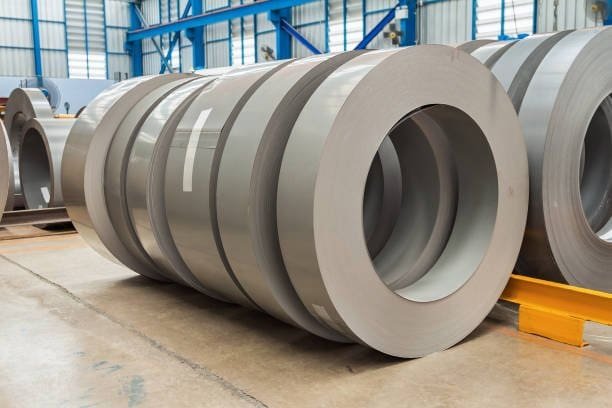
The transformer core is fundamental to efficient energy transfer, and the choice of core material directly affects losses, efficiency, temperature rise, noise, and long-term operating costs. Using unsuitable or poor-quality magnetic material can increase core losses, reduce efficiency, and accelerate thermal stress during continuous operation. For buyers, understanding common transformer core materials is therefore important when comparing manufacturers, technical specifications, and expected lifecycle performance.
The most commonly used core material in power transformers is grain-oriented electrical steel (GOES), particularly high-permeability, low-loss silicon steel. Modern transformers may also use amorphous metal for applications where very low no-load losses are a priority. The selected core material, together with lamination thickness, magnetic flux density, joint design, and manufacturing quality, determines important transformer characteristics such as efficiency, energy losses, temperature rise, and noise.
Core material is only one part of transformer design, but it has a significant influence on overall performance. Buyers should evaluate both the material grade and how the manufacturer processes, assembles, and tests the core to ensure the expected electrical and mechanical performance.
What Core Materials Are Commonly Used in Power Transformers?
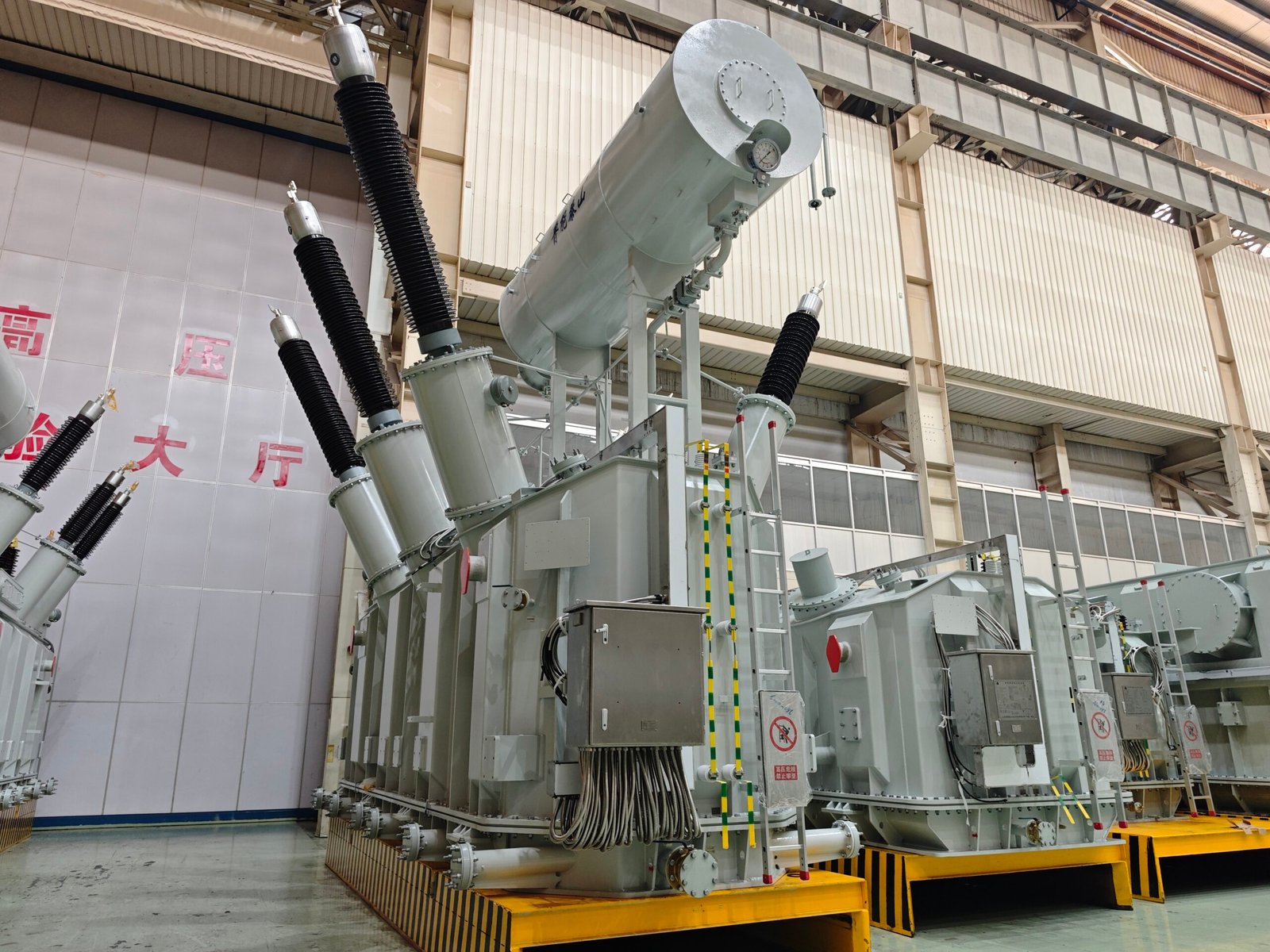
The transformer core continuously carries alternating magnetic flux, so its material directly affects no-load loss, excitation current, efficiency, temperature, and long-term operating cost. For buyers, however, the material name alone is not enough: the selected core material must also match the transformer's design and manufacturing process.
The most common core materials for modern power transformers are grain-oriented electrical steel (GOES), including conventional and high-permeability grades, while amorphous metal is used in applications where exceptionally low no-load losses are a priority. GOES is the mature, widely established choice for conventional 50/60 Hz power transformers, whereas amorphous metal can offer lower core losses but requires specialized core construction and manufacturing controls.
Grain-oriented electrical steel is commonly used for power-frequency transformer cores.True
GOES provides favorable magnetic properties in the rolling direction and has extensive industrial experience in transformer applications.
Grain-Oriented Electrical Steel
Grain-oriented electrical steel is the most established core material for conventional power transformers. Its crystal structure is processed so that magnetic properties are particularly favorable along the rolling direction. This allows manufacturers to build efficient magnetic circuits with relatively low core losses and excitation requirements. Different GOES grades provide different combinations of permeability and specific core loss, allowing designers to optimize the transformer for efficiency, size, noise, and cost.
For buyers, the important point is that GOES grade, thickness, design flux density, and manufacturing quality must be evaluated together. A premium steel grade does not automatically guarantee a lower finished-transformer loss if cutting, stacking, joints, or mechanical stress are poorly controlled.
High-Permeability and Enhanced GOES
High-permeability and other enhanced grades of grain-oriented electrical steel are used when designers need improved magnetic performance. They can help reduce core losses or excitation current and may support more compact magnetic designs. Some specialized grades also incorporate additional processing intended to improve domain behavior and reduce magnetic losses.
These materials generally cost more than standard grades, so buyers should ask whether the additional material cost produces a measurable benefit in the completed transformer. The most useful evidence is the manufacturer's guaranteed no-load loss and factory test results, rather than the material specification by itself.
Amorphous Metal
Amorphous metal is another important transformer-core technology, particularly for transformers where very low no-load loss is a major objective. Its non-crystalline atomic structure can provide very favorable magnetic-loss characteristics at power frequency.
However, amorphous metal is mechanically and technologically different from conventional electrical steel. The material is relatively thin and requires appropriate handling, cutting, stacking, and core construction methods. Therefore, buyers should pay particular attention to the manufacturer's experience with amorphous-core transformers rather than assuming that any transformer factory can manufacture them equally well.
Quick Comparison for Buyers
| Core Material | Main Strength | Main Consideration |
|---|---|---|
| Conventional GOES | Mature, reliable, widely available | Higher losses than advanced low-loss materials |
| High-permeability GOES | Improved magnetic performance | Higher material cost |
| Enhanced/domain-refined GOES | Lower-loss potential and improved performance | Requires controlled processing |
| Amorphous metal | Very low no-load-loss potential | Specialized manufacturing and handling |
Which Material Should Buyers Choose?
For most conventional medium- and high-power transformers, high-quality GOES remains a dependable baseline because of its mature manufacturing technology, predictable performance, and extensive field experience. Amorphous metal becomes particularly attractive when the transformer remains energized for long periods and reducing continuous no-load losses has significant economic value.
The final decision should therefore consider the transformer's capacity, voltage, frequency, load profile, efficiency target, noise requirements, purchase price, manufacturer experience, guaranteed no-load loss, and lifecycle energy cost. Buyers should evaluate the complete core design rather than selecting a material solely because it appears more advanced.
How Does Grain-Oriented Electrical Steel Affect Power Transformer Performance?
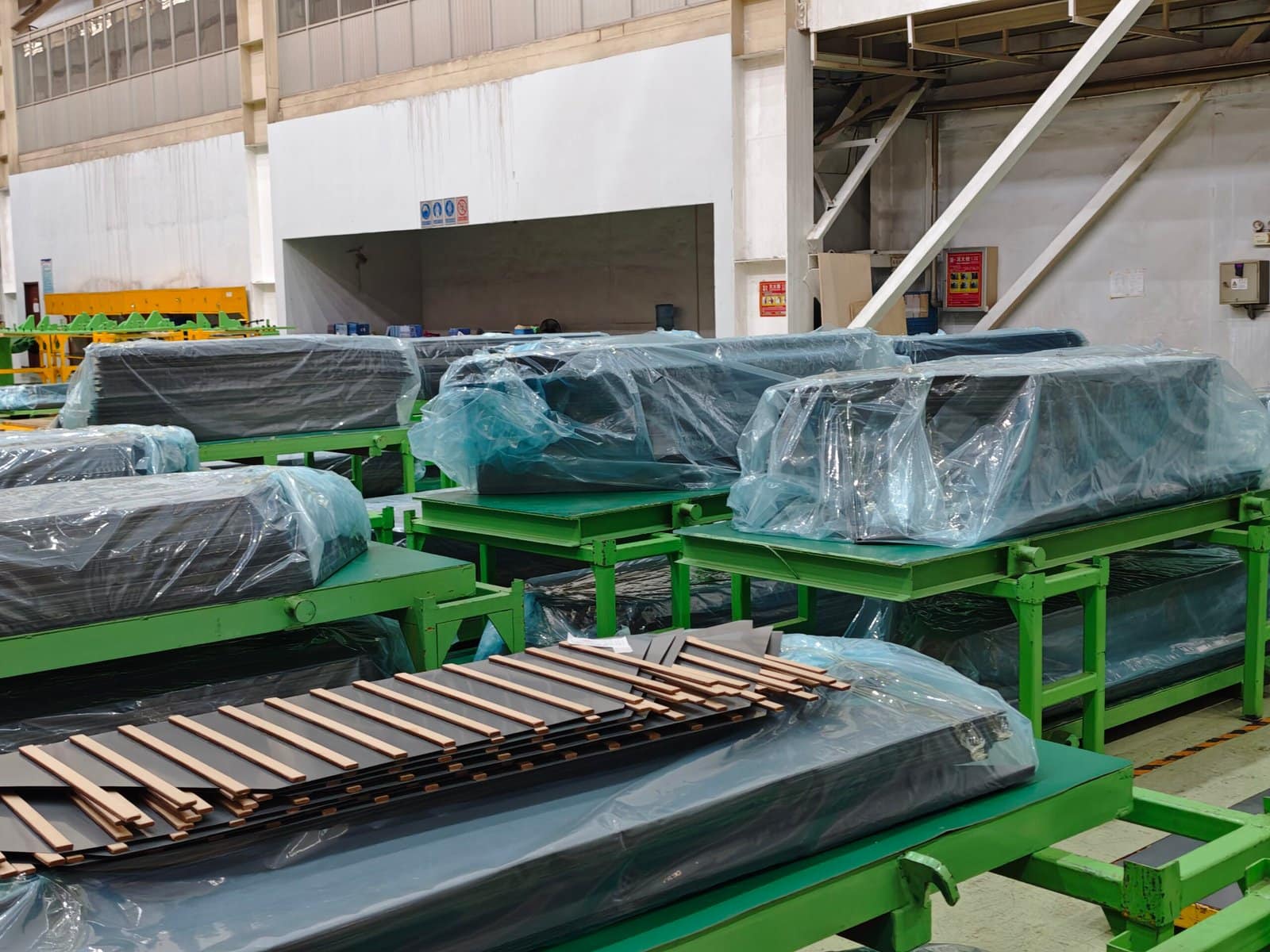
Grain-oriented electrical steel (GOES) is one of the most widely used core materials in power transformers because its magnetic properties are deliberately optimized in the rolling direction. The quality and processing of GOES directly influence core loss, excitation current, efficiency, noise, and ultimately the transformer's long-term operating cost.
GOES improves power transformer performance primarily by providing low magnetic losses and high permeability in the preferred magnetization direction. When the steel grade, operating flux density, lamination thickness, core joints, cutting process, stacking, and clamping are properly controlled, GOES can reduce no-load losses and excitation current while supporting efficient and stable transformer operation.
Grain-oriented electrical steel automatically guarantees low losses in the finished transformer.False
Finished core performance also depends on flux density, cutting stress, joints, stacking quality, clamping, and other manufacturing factors.
How Does Grain Orientation Improve Transformer Efficiency?
GOES is manufactured so that the crystallographic orientation of the steel favors magnetization along the rolling direction. Because transformer magnetic flux can be deliberately guided to follow this favorable direction, the core can achieve efficient magnetic operation with relatively low hysteresis and eddy-current losses.
This is particularly important because core loss occurs whenever the transformer is energized, even when the load is low. A reduction in no-load loss can therefore produce meaningful lifetime energy savings for transformers that remain continuously energized.
How Does GOES Affect No-Load Loss?
No-load loss is one of the clearest performance indicators affected by core material. Higher-quality GOES grades can provide lower specific core loss, but the final transformer's measured loss depends on more than the steel itself.
| Factor | Effect on Performance |
|---|---|
| GOES grade | Influences magnetic loss and permeability |
| Lamination thickness | Affects eddy-current loss |
| Flux density | Higher values can increase core loss |
| Cutting stress | Can degrade magnetic properties |
| Core joints | Contribute to localized magnetic losses |
| Stacking quality | Affects effective magnetic path |
| Clamping pressure | Excessive stress can increase losses |
For this reason, buyers should compare the guaranteed no-load loss of the completed transformer, not simply the material-loss figure in a steel datasheet.
Does GOES Affect Transformer Noise?
Yes. Core material and magnetic design can influence transformer noise through magnetostriction and core vibration. The relationship also depends on operating flux density, joint construction, mechanical clamping, and the way vibration is transmitted into the tank.
For noise-sensitive installations, buyers should therefore evaluate the manufacturer's guaranteed sound level and relevant factory-test results rather than relying only on claims such as “low-noise electrical steel.”
Why Is Manufacturing Quality Important?
Even premium GOES can lose part of its expected performance if it is poorly processed. Cutting, punching, handling, stacking, and clamping can introduce mechanical stress or damage the lamination insulation. Poorly controlled joints can also increase localized losses.
A qualified manufacturer should have controlled procedures for:
- Steel grade and batch verification
- Lamination cutting and burr control
- Grain-direction management
- Step-lap or other specified joint construction
- Lamination stacking
- Core clamping
- Core grounding
- Material traceability
- Final no-load-loss testing
What Should Buyers Check?
When evaluating a transformer manufacturer, buyers should request the proposed GOES grade, applicable material standard, lamination thickness, design flux density, guaranteed no-load loss, excitation-current data where specified, core-construction details, material certificates, and comparable project references.
Most importantly, these documents should be supported by factory acceptance testing of the finished transformer. This allows buyers to determine whether the manufacturer's processing methods actually convert the material's theoretical magnetic properties into reliable transformer performance.
How Does Amorphous Metal Compare With Electrical Steel in Power Transformer Cores?
Choosing between amorphous metal and electrical steel is mainly a trade-off between very low no-load losses, manufacturing maturity, cost, and application requirements. Amorphous metal can significantly reduce core losses, while grain-oriented electrical steel (GOES) remains a mature and widely proven solution for conventional power transformers. For buyers, the important question is not which material sounds more advanced, but which technology provides the best combination of efficiency, reliability, manufacturing consistency, and lifecycle value for the specific transformer project.
Amorphous metal generally provides lower no-load losses than conventional electrical steel, making it attractive for transformers that remain energized for long periods. GOES offers a more established manufacturing process, broad supplier availability, and extensive experience in medium- and high-power transformer applications. The better choice depends on the transformer's load profile, efficiency target, cost, physical design, and the manufacturer's experience with the selected core technology.
Amorphous metal always provides a lower total transformer cost than electrical steel.False
Amorphous metal can reduce no-load energy losses, but its higher material cost and specialized manufacturing requirements must be evaluated against the project's lifecycle savings.
How Do the Two Core Materials Differ?
GOES has a controlled grain orientation that provides favorable magnetic properties along the rolling direction. It is widely used in conventional 50/60 Hz transformers and benefits from mature cutting, stacking, joint, and clamping technologies. Its predictable mechanical and magnetic behavior makes it particularly suitable for manufacturers producing large numbers of conventional transformers.
Amorphous metal has a non-crystalline structure and can achieve exceptionally low core losses. However, its thin and mechanically sensitive structure requires specialized handling and core construction. Consequently, the material advantage can only be realized when the transformer manufacturer has appropriate production equipment and sufficient practical experience.
| Factor | Amorphous Metal | Grain-Oriented Electrical Steel |
|---|---|---|
| No-load loss | Very low potential | Low and well established |
| Manufacturing maturity | More specialized | Very high |
| Material handling | More demanding | Relatively mature |
| Supplier availability | More specialized | Broad |
| Application experience | Strongest in selected applications | Extensive |
| Main advantage | Energy efficiency | Balanced performance and proven reliability |
| Buyer priority | Lifecycle loss reduction | Overall technical and manufacturing confidence |
When Is Amorphous Metal More Attractive?
Amorphous metal can be particularly attractive when a transformer remains energized continuously while operating at relatively low or moderate load. Under these conditions, no-load loss becomes economically significant because the core consumes energy regardless of the transformer's loading level.
For distribution applications with many energized hours, even a relatively small reduction in continuous core loss can accumulate into substantial lifetime energy savings. Buyers should therefore compare the additional purchase cost with the expected annual energy savings rather than judging the material purely by its initial price.
For example, if an amorphous-core transformer costs more initially but saves several hundred watts of continuous no-load loss, the difference is accumulated every hour the transformer remains energized. Over 20 or 25 years, the resulting energy savings may substantially offset the higher capital expenditure. The actual calculation should include electricity prices, annual operating hours, discount rates, expected utilization, and future load changes.
Why Is GOES Still Widely Used?
GOES remains a strong choice because its manufacturing technology is highly developed and extensively proven. Manufacturers have considerable experience controlling lamination cutting, grain direction, step-lap joints, stacking, clamping, and core vibration.
For large power transformers, this manufacturing maturity can be an important advantage. The buyer is not only purchasing magnetic material but also relying on the supplier to transform that material into a stable, low-loss magnetic circuit. GOES also has a broad supply chain, which can simplify material sourcing and production planning for large projects.
This does not mean that GOES is technologically inferior. Modern high-permeability and enhanced electrical-steel grades can provide excellent magnetic performance, and manufacturers can optimize flux density and core construction to achieve very competitive transformer losses.
Does Amorphous Metal Require Different Manufacturing Controls?
Yes. Amorphous metal is typically supplied as very thin ribbon, making mechanical handling and core assembly more demanding. The manufacturer needs appropriate equipment and experience to avoid damaging the material or compromising the intended magnetic characteristics.
Buyers should therefore investigate whether the supplier has dedicated amorphous-core production capability rather than assuming that experience with conventional GOES automatically transfers to amorphous technology. Comparable project references are especially valuable. A manufacturer should be able to demonstrate that it has successfully produced transformers using the same or a similar amorphous-core construction and achieved stable factory-test results.
How Does Core Material Affect the Final Transformer?
Core material should never be evaluated independently from the rest of the magnetic circuit. Flux density, core dimensions, joint design, lamination thickness, cutting stress, stacking quality, and clamping pressure can all influence the final no-load loss.
This means that two transformers using different materials cannot be fairly compared simply by looking at their raw material specifications. Buyers should request the finished-transformer guaranteed no-load loss and examine the factory acceptance-test procedure used to verify it.
This approach also protects buyers from a common procurement mistake: paying a premium for an advanced material without receiving a measurable improvement in the completed transformer.
Which Technology Is Better for Large Power Transformers?
For large oil-immersed power transformers used in transmission and industrial networks, GOES remains particularly attractive because of its extensive field history and mature manufacturing infrastructure. The larger and more complex the transformer becomes, the more important manufacturing consistency, mechanical stability, core-joint control, and supplier experience become.
Amorphous metal may still be technically possible in specialized applications, but buyers should evaluate the manufacturer's specific experience rather than extrapolating from smaller distribution transformers. Large-transformer projects have different mechanical, thermal, dimensional, and short-circuit requirements, so the selected core technology must be proven at an appropriate scale.
Which Technology Should Buyers Choose?
There is no universal winner. Amorphous metal is particularly compelling when minimizing continuous no-load losses is the dominant objective, while GOES is often preferable when mature manufacturing, broad supply availability, large-transformer experience, and predictable production are priorities.
The final comparison should include:
- Guaranteed no-load loss
- Purchase price
- Annual energized hours
- Expected load profile
- Manufacturer experience
- Core construction
- Transformer dimensions and weight
- Noise requirements
- Factory acceptance-test results
- Expected service life
- Electricity cost and lifecycle savings
- Material availability and supply-chain risk
A buyer should also consider the consequences of future maintenance or replacement. If a specialized core technology requires a smaller pool of qualified repair facilities or replacement-component suppliers, that factor can influence long-term project risk even when the initial efficiency is attractive.
How Do Core Material Properties Affect Power Transformer Efficiency and No-Load Losses?
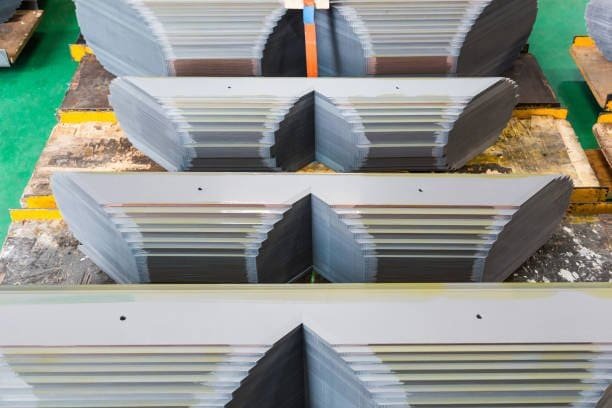
The core remains energized whenever a transformer is in service, so its material properties have a direct effect on continuous energy consumption. If the core material has excessive magnetic losses or the design does not operate it within a suitable magnetic range, the transformer can experience higher no-load losses, excitation current, heat generation, and operating costs even when the transformer is lightly loaded.
Core material properties affect transformer efficiency mainly through specific core loss, magnetic permeability, electrical resistivity, lamination thickness, and magnetization characteristics. Low-loss grain-oriented electrical steel can reduce no-load losses in conventional power transformers, while amorphous metal can provide even lower loss in suitable applications. However, the final no-load loss also depends on flux density, core joints, cutting, stacking, and manufacturing quality.
A lower specific core-loss value always means the finished transformer will have proportionally lower no-load loss.False
Finished-transformer loss also depends on operating flux density, core geometry, joints, lamination processing, stacking, and mechanical stress.
Which Core Properties Matter Most?
The most important properties for transformer-core performance include:
| Core Property | Influence on Transformer Performance |
|---|---|
| Specific core loss | Directly affects no-load energy consumption |
| Magnetic permeability | Influences excitation current and magnetic efficiency |
| Electrical resistivity | Helps limit eddy-current losses |
| Lamination thickness | Affects eddy-current behavior |
| Grain orientation | Important for GOES magnetic performance |
| Saturation characteristics | Determines operating magnetic margin |
| Magnetostriction | Influences vibration and acoustic noise |
For buyers, these values should always be considered at the actual operating frequency and magnetic induction, because material performance can change significantly with test conditions.
How Does Specific Core Loss Affect Efficiency?
No-load loss consists mainly of magnetic losses in the core, including hysteresis and eddy-current components. Because these losses occur whenever the transformer is energized, they are especially important for units that operate continuously.
For example, a transformer energized for 8,760 hours per year with a 1 kW no-load loss consumes approximately 8,760 kWh per year before any load-related losses are considered. Even a modest improvement in core loss can therefore create significant savings over a 20- or 25-year service life.
This is why buyers should compare the guaranteed no-load loss of the finished transformer, rather than selecting a core material solely from its datasheet.
Why Does Magnetic Permeability Matter?
Higher permeability generally allows the core to establish the required magnetic flux with less magnetizing effort. This can help reduce excitation current and improve the efficiency of the magnetic circuit.
However, permeability should not be considered independently. A manufacturer must select a suitable operating flux density and core geometry that take the material's magnetic characteristics into account. An excellent material operated at an unnecessarily aggressive flux density may not deliver the expected overall performance.
How Does Electrical Resistivity Reduce Core Loss?
Transformer cores are constructed from electrically insulated laminations rather than solid steel. Electrical resistivity and lamination thickness help limit circulating eddy currents induced by alternating magnetic flux.
Higher resistivity generally makes it more difficult for these circulating currents to flow, while thinner laminations further reduce their paths. The combination helps control eddy-current loss and contributes to efficient power-frequency operation.
This is one reason electrical steel is engineered specifically for electromagnetic applications rather than ordinary structural steel.
How Does Grain Orientation Influence GOES Performance?
In grain-oriented electrical steel, the crystal structure is processed to provide particularly favorable magnetic properties along the rolling direction. Transformer manufacturers can take advantage of this characteristic by controlling the direction of the laminations within the magnetic circuit.
Poor cutting, incorrect orientation, excessive mechanical stress, or unsuitable joint construction can reduce the practical benefit of grain orientation. Therefore, the material grade and the manufacturer's processing capability must be evaluated together.
What About Amorphous Metal?
Amorphous metal can provide exceptionally low no-load losses because of its non-crystalline structure and favorable magnetic characteristics. It can therefore be attractive for transformers that remain energized for long periods.
However, amorphous metal generally requires more specialized handling and core construction than conventional grain-oriented electrical steel. Buyers should verify the manufacturer's experience, comparable project references, and finished-transformer test results before assuming that its theoretical loss advantage will translate directly into field performance.
Why Is Core Manufacturing Quality So Important?
The material specification is only the starting point. Cutting and stacking processes can introduce mechanical stress, burrs, or insulation damage. Core joints can also increase localized losses, while excessive clamping pressure can alter magnetic behavior.
A qualified manufacturer should control:
- Material grade and batch traceability
- Lamination thickness
- Cutting accuracy and burrs
- Grain direction
- Joint construction
- Stacking factor and alignment
- Core clamping pressure
- Core grounding
- Final no-load-loss testing
These controls determine how effectively the selected material performs inside the finished transformer.
What Should Buyers Compare?
When comparing transformer suppliers, buyers should request the core material grade, applicable material standard, specific core-loss data, design flux density, expected no-load loss, excitation current, core construction details, and factory acceptance-test results.
The most useful procurement comparison is:
Core material properties → magnetic design → manufacturing process → guaranteed no-load loss → lifecycle energy cost.
A premium material is valuable only when the manufacturer can consistently convert its magnetic properties into measurable transformer performance.
How Do Core Construction and Manufacturing Quality Influence Power Transformer Performance?
A transformer can use high-grade electrical steel and still fail to achieve its expected efficiency, noise level, or service life if the core is poorly constructed or manufactured. Cutting damage, excessive burrs, incorrect grain orientation, poor stacking, improper joints, and excessive clamping stress can increase core losses and vibration. For buyers, this means evaluating the core material alone is not enough; the manufacturing process determines how much of the material's theoretical performance is actually achieved in the finished transformer.
Core construction and manufacturing quality influence power transformer performance by determining the efficiency of the magnetic path, the actual no-load loss, excitation current, mechanical stability, vibration, and long-term reliability. Accurate lamination cutting, controlled grain orientation, high-quality step-lap joints, uniform stacking, correct clamping, proper insulation between laminations, and effective quality inspection help the finished core achieve the performance expected from its specified material.
Using high-quality grain-oriented electrical steel guarantees that a power transformer will achieve its specified core-loss performance.False
Core processing, joint construction, stacking, clamping stress, flux density, and other manufacturing factors can significantly affect the magnetic performance of the finished core.
Why Does Core Construction Matter?
The transformer core provides the magnetic path linking the primary and secondary windings. Ideally, magnetic flux should travel through this path with minimum magnetic resistance and minimum energy loss. In practice, the core contains numerous individual laminations and joints, so its actual performance depends on how accurately these components are manufactured and assembled.
A well-designed core helps maintain a uniform magnetic path and minimizes localized flux concentration. Poor construction can create areas where flux is forced through less favorable paths, increasing localized losses and potentially contributing to additional heating and vibration.
This is particularly important in large oil-immersed power transformers because the core remains energized continuously. Even a relatively small increase in no-load loss can accumulate into significant energy consumption over many years.
How Does Lamination Cutting Affect Core Performance?
Electrical-steel laminations must be cut accurately to the specified dimensions and magnetic orientation. Cutting operations can introduce mechanical stress into the steel, particularly around the edges. Excessive burrs can also reduce electrical insulation between adjacent laminations and increase the possibility of circulating eddy currents.
For grain-oriented electrical steel, maintaining the correct grain direction is especially important because its magnetic properties are optimized along a preferred direction. A poorly controlled cutting process can therefore reduce some of the advantages of the selected material.
Buyers evaluating manufacturers should look for controlled cutting equipment, documented burr limits, regular dimensional inspection, and procedures for handling laminations after cutting.
Why Are Core Joints Important?
Core joints are critical because magnetic flux must cross these areas between sections of the magnetic circuit. Modern power transformers commonly use carefully engineered step-lap construction to reduce localized flux disturbance and associated losses.
Poorly aligned joints, excessive gaps, damaged laminations, or inconsistent stacking can increase localized magnetic losses. They may also contribute to additional vibration and acoustic noise.
| Core Construction Factor | Potential Performance Impact |
|---|---|
| Lamination cutting | Dimensional accuracy and magnetic stress |
| Burr control | Eddy-current and insulation performance |
| Grain orientation | Magnetic efficiency |
| Step-lap joints | Localized core loss and noise |
| Stacking accuracy | Effective magnetic cross-section |
| Clamping pressure | Mechanical stability and magnetic stress |
| Core grounding | Electrical safety and circulating-current control |
How Does Stacking Quality Influence the Transformer?
After cutting, the laminations must be stacked accurately to create the intended core geometry. Poor alignment can reduce the effective core area and disturb the magnetic path. Inconsistent stacking can also create mechanical instability, which may become more noticeable during long-term operation.
The manufacturer should control stacking dimensions, alignment, insulation condition, joint geometry, and overall core compression. For large transformers, these parameters should be documented through manufacturing inspection records rather than relying entirely on final visual inspection.
Can Clamping Pressure Affect Magnetic Performance?
Yes. The core must be mechanically secure because electromagnetic excitation and magnetostriction can produce vibration. However, excessive mechanical pressure can introduce stress into electrical steel and adversely affect its magnetic characteristics.
The objective is therefore controlled mechanical compression rather than simply applying as much clamping force as possible. A competent manufacturer should have defined procedures for core clamping and, where appropriate, documented torque or pressure controls.
Good mechanical design also helps limit vibration transmission from the core into the tank, which can contribute to transformer acoustic noise.
How Does Manufacturing Quality Affect No-Load Loss?
No-load loss is strongly connected with core construction because it represents the energy consumed by the energized magnetic circuit. The material's inherent loss characteristics establish the starting point, but manufacturing determines how closely the finished core approaches those characteristics.
A useful way for buyers to evaluate this is:
Material specification → core design → manufacturing process → finished-transformer no-load-loss test
If a supplier promotes a premium core material but provides little information about cutting, joints, stacking, or final loss verification, the buyer cannot confidently determine the actual performance of the transformer.
How Does Core Construction Affect Noise?
Core vibration is influenced by magnetic phenomena such as magnetostriction, as well as by mechanical construction. Material characteristics, operating flux density, joint quality, clamping, and structural transmission paths all contribute to the final sound level.
For transformers installed near residential areas, hospitals, commercial buildings, or other noise-sensitive locations, buyers should specify a measurable acoustic requirement and verify the manufacturer's test capability.
A low-noise core is therefore not simply a matter of selecting a particular steel grade. Magnetic design and mechanical construction must work together to control vibration.
What Manufacturing Controls Should Buyers Verify?
A factory audit can provide valuable evidence of core-manufacturing capability. Buyers should examine whether the manufacturer has controlled procedures for:
- Incoming electrical-steel inspection
- Material-grade and batch traceability
- Lamination cutting
- Burr measurement and control
- Grain-direction management
- Joint assembly
- Stacking alignment
- Lamination insulation protection
- Core clamping
- Core grounding
- Final dimensional inspection
- No-load-loss and excitation-current testing
The manufacturer should also be able to demonstrate how nonconforming laminations are identified and prevented from entering final assembly.
What Should Buyers Check During Factory Acceptance Testing?
The factory acceptance test provides an important opportunity to verify that the completed magnetic system performs as specified. Buyers should review the agreed test procedure, measurement conditions, instruments, acceptance criteria, and recorded no-load-loss results.
For high-value transformers, buyers may witness the test directly or use an independent inspection organization. The purpose is to compare the measured performance with the contractual guarantee rather than relying solely on material certificates.
A particularly useful comparison is between the manufacturer's design calculation and the measured no-load loss. A consistent result provides stronger evidence that the core design and manufacturing process are under control.
How Can Buyers Evaluate Core Materials When Selecting Power Transformers?

Choosing a transformer core material is more complicated than comparing material names or selecting the steel grade with the lowest quoted core-loss figure. The core operates continuously whenever the transformer is energized, so an unsuitable material or poorly matched design can increase no-load losses, excitation current, temperature, vibration, and lifetime operating costs. The risk becomes greater when buyers compare different manufacturers using different core technologies without checking whether their quoted performance is based on the same test conditions. A reliable purchasing decision therefore requires buyers to evaluate the material properties, magnetic design, manufacturing process, finished-transformer performance, and lifecycle economics together.
Buyers should evaluate transformer core materials by comparing the specified material grade, applicable standard, lamination thickness, specific core loss, magnetic permeability, electrical resistivity, grain orientation where applicable, operating flux density, and the manufacturer's processing capability. These factors should then be verified against the guaranteed no-load loss, excitation current, factory acceptance-test results, project references, and expected lifecycle energy cost. Grain-oriented electrical steel is a mature choice for conventional power transformers, while amorphous metal can be attractive when very low no-load losses are a major priority.
A material certificate is an important starting point, but it is not the final proof of transformer quality. The same electrical-steel grade can produce different finished-transformer performance depending on cutting stress, core joints, stacking, clamping, and magnetic design. Buyers should therefore focus on evidence showing how effectively the manufacturer converts the selected material into a reliable finished core.
The core material with the lowest published specific loss is automatically the best choice for every power transformer.False
The appropriate material depends on transformer load profile, flux density, manufacturing capability, purchase cost, no-load-loss guarantee, and lifecycle economics.
Finished-transformer no-load loss is more useful for procurement comparison than a material datasheet value alone.True
The finished test reflects the combined effect of material properties, core design, joints, processing, stacking, and other manufacturing factors.
![Featured image placeholder: Engineers inspecting grain-oriented electrical steel laminations and transformer core assembly inside a professional power transformer manufacturing facility.]
AI image prompt: "Power transformer core material inspection, grain-oriented electrical steel laminations and precision step-lap core assembly, professional engineers examining core components, detailed industrial manufacturing environment, realistic engineering photography, high-quality electrical steel surfaces, organized inspection equipment, reliability-focused atmosphere, clean modern transformer factory, neutral technical lighting, photorealistic and highly detailed"
Which Core Material Properties Should Buyers Compare?
The first step is to establish a consistent technical comparison. Buyers should avoid comparing suppliers using only descriptions such as “premium silicon steel” or “low-loss core material.” The specification should identify the exact material grade or class and the conditions under which its magnetic performance is measured.
For conventional 50/60 Hz power transformers, buyers will commonly encounter grain-oriented electrical steel (GOES), including standard and high-permeability grades. Amorphous metal may also be proposed, particularly where very low continuous no-load losses are important.
| Property | Why It Matters | What Buyers Should Request |
|---|---|---|
| Specific core loss | Determines magnetic energy loss | Test value at specified frequency and induction |
| Magnetic permeability | Influences excitation current | Relevant magnetic-property data |
| Electrical resistivity | Helps limit eddy-current loss | Material specification |
| Lamination thickness | Affects eddy-current behavior | Nominal thickness and tolerance |
| Grain orientation | Important for GOES | Material grade and processing requirements |
| Saturation behavior | Provides magnetic operating margin | Design flux-density information |
| Magnetostriction | Influences vibration and noise | Noise/design information where required |
The comparison is meaningful only when the test conditions are equivalent. A lower quoted loss measured at a different induction or frequency should not automatically be considered superior.
How Should Buyers Compare GOES and Amorphous Metal?
GOES is widely established in conventional power transformers because it combines good magnetic performance with mature manufacturing technology and broad industry experience. High-permeability and enhanced grades can provide further improvements where lower losses or excitation current are important.
Amorphous metal can provide exceptionally low no-load losses, which can be valuable for transformers that remain energized for many hours. However, its specialized construction and handling requirements mean that supplier experience becomes particularly important.
The right question is therefore not “Which material is better?”, but “Which material provides the required finished-transformer performance at an acceptable lifecycle cost and manufacturing risk?”
Why Should Buyers Evaluate the Manufacturer's Core-Processing Capability?
Core material properties can be degraded during manufacturing. Cutting can introduce mechanical stress and burrs; incorrect orientation can reduce the benefit of GOES; poor stacking can disturb the magnetic path; and excessive clamping pressure can create additional stress.
Buyers should therefore examine:
- Lamination cutting accuracy
- Burr control
- Grain-direction control
- Step-lap or other joint construction
- Stacking accuracy
- Lamination insulation protection
- Core clamping procedures
- Core grounding
- Material traceability
- Final no-load-loss testing
This is particularly important when a supplier proposes an advanced material. A factory with limited experience in amorphous metal or specialized electrical steel may not achieve the same practical performance as an experienced manufacturer.
What Finished-Transformer Data Should Buyers Request?
The most valuable procurement evidence is the performance of the completed transformer. Buyers should request the manufacturer's guaranteed values for no-load loss and, where specified, excitation current. These values should be linked to defined test voltage, frequency, and acceptance conditions.
The evaluation can follow a simple chain:
Material data → core design → manufacturing controls → guaranteed performance → factory test result
If a supplier claims to use a premium core material but cannot demonstrate a competitive finished-transformer no-load-loss value, the material advantage may not be meaningful.
How Does Lifecycle Cost Affect Core-Material Selection?
The initial purchase price should not be the only economic consideration. Core losses continue whenever the transformer is energized, so a transformer with a higher purchase price but lower no-load loss may produce greater long-term value.
For example, a 0.5 kW difference in continuous no-load loss corresponds to approximately 4,380 kWh per year when energized continuously for 8,760 hours. Over a long service life, this difference can become commercially significant.
| Buyer Consideration | Lower-Loss Core | Conventional Lower-Cost Core |
|---|---|---|
| Initial investment | Potentially higher | Potentially lower |
| No-load energy cost | Lower | Higher |
| Continuous operation | Strong advantage | Less advantageous |
| Manufacturing complexity | May be higher | Usually mature |
| Lifecycle value | Depends on operating hours and energy price | Depends on lower capital cost |
| Best evaluation method | Lifecycle-cost analysis | Lifecycle-cost analysis |
What Documents Should Buyers Review?
Before approving a transformer, buyers should request the core-material certificate, applicable material standard, technical datasheet, design flux-density information, core-construction description, traceability documentation, and relevant factory-test records. Comparable project references are particularly valuable when the supplier proposes a specialized material.
Buyers should also clarify whether the manufacturer is permitted to substitute the specified core material. Any material substitution can potentially affect core loss, excitation current, dimensions, or manufacturing processes, so it should normally require technical review and buyer approval.
What Are the Main Warning Signs?
Several issues deserve additional investigation. These include an unspecified material grade, magnetic-loss data without test conditions, a premium material with no corresponding finished-transformer performance guarantee, limited experience with the proposed core technology, weak material traceability, or reluctance to provide comparable factory test results.
A supplier that focuses heavily on the material brand but provides little information about core construction and manufacturing controls should also be evaluated carefully. The buyer is purchasing a transformer, not a roll of electrical steel.
Conclusion
Power transformer cores are commonly manufactured from grain-oriented electrical steel because of its favorable magnetic properties, low core losses, and proven long-term performance. Amorphous metal is another option, particularly where minimizing no-load losses is a major priority. However, material selection alone does not determine transformer quality; lamination design, core joints, flux density, assembly precision, and manufacturing controls are equally important. By reviewing core material specifications and verifying the manufacturer's manufacturing and testing capabilities, buyers can make better-informed decisions and achieve greater transformer efficiency, reliability, and lifecycle value.
FAQ
Q1: What core materials are commonly used in power transformers?
Power transformer cores are primarily made from grain-oriented electrical steel (GOES) because it offers the magnetic performance needed for efficient voltage transformation. GOES is a silicon-alloyed electrical steel manufactured with a controlled grain orientation, allowing magnetic flux to travel through the core with relatively low energy loss.
The core is not normally made from one solid piece of steel. Instead, manufacturers use many thin electrical-steel laminations. Each lamination is separated by an insulating surface coating, which helps restrict circulating eddy currents. The laminations are then carefully cut, stacked, joined, and clamped to form the finished magnetic circuit.
Another core material is amorphous metal. It has a different atomic structure from conventional electrical steel and can achieve very low no-load losses. It is particularly associated with high-efficiency distribution transformers, although the appropriate material depends on the transformer's rating, design, and operating requirements.
Specialized grades of grain-oriented electrical steel are also available. Manufacturers can select different grades according to requirements for:
Core loss
Magnetic permeability
Operating flux density
Lamination thickness
Transformer efficiency
Noise performance
The material itself is only one part of the equation. Core geometry and manufacturing quality can have a significant effect on the final transformer. Poor cutting, excessive mechanical stress, inaccurate stacking, or damaged insulation between laminations can increase losses even when high-quality electrical steel is used.
For buyers, it is therefore better to specify measurable performance requirements rather than simply asking for a particular material. Important procurement requirements may include maximum no-load losses, material grade, lamination thickness, testing procedures, and documentation.
In practical terms, grain-oriented electrical steel is the mainstream choice for many power transformers, while amorphous metal is an alternative when exceptionally low no-load losses are a major priority.
Q2: Why is grain-oriented electrical steel used in transformer cores?
Grain-oriented electrical steel is used because its magnetic properties are specifically optimized for the way magnetic flux travels through a transformer core.
During manufacturing, the steel undergoes controlled processing that produces a preferred grain orientation. This allows the material to magnetize more efficiently in the desired direction. As a result, manufacturers can achieve relatively low core losses while maintaining the magnetic performance required for transformer operation.
Another important characteristic is that the steel can be produced in very thin sheets. These sheets are assembled into laminations rather than forming the core from solid metal. The insulating layer between adjacent laminations limits unwanted circulating currents and helps reduce eddy-current losses.
The selection of GOES can influence several transformer characteristics:
No-load loss
Magnetic efficiency
Core temperature
Transformer dimensions
Operating noise
Overall energy consumption
However, the quality of the finished core depends on more than the raw material. During manufacturing, electrical steel can experience mechanical stress from cutting, bending, stacking, and clamping. Excessive stress can negatively affect its magnetic properties.
Core joints are also important. If the magnetic path is poorly constructed, the transformer may experience higher losses or increased excitation current.
For this reason, reputable transformer manufacturers carefully control core processing and assembly.
Buyers should also distinguish between different grades of GOES. Higher-performance grades can offer improved magnetic characteristics, but they may increase material costs. The correct choice depends on the required transformer efficiency, operating conditions, target losses, and lifecycle economics.
Therefore, when purchasing a power transformer, buyers should not evaluate GOES simply by asking whether the manufacturer uses "high-quality electrical steel." A stronger approach is to specify the required performance and verify it through appropriate factory testing and documentation.
Q3: Is amorphous metal better than grain-oriented electrical steel for transformer cores?
Amorphous metal is not universally better than grain-oriented electrical steel. Each material has advantages that make it suitable for different transformer applications.
The main attraction of amorphous metal is its ability to achieve very low no-load core losses. This can be particularly valuable for transformers that remain energized continuously but spend significant periods operating below their rated load.
Grain-oriented electrical steel, on the other hand, has a long-established manufacturing base and is widely used for power transformer cores. It offers a strong combination of magnetic performance, mechanical practicality, availability, and manufacturing experience.
A simplified comparison is:
Factor Grain-Oriented Electrical Steel Amorphous Metal
No-load loss Low Very low in suitable designs
Manufacturing experience Extensive More specialized
Mechanical handling Relatively robust More delicate
Typical application Power and distribution transformers Particularly attractive for efficient distribution transformers
Material availability Broad More specialized
Design flexibility High Requires specialized design considerations
Amorphous metal also has characteristics that manufacturers must consider carefully, including its mechanical behavior and lower practical saturation flux density in typical applications. These factors can influence core dimensions and transformer construction.
Therefore, the right question for a buyer is not simply "Which material is better?" It is "Which core technology provides the best technical and economic result for this application?"
For a transformer that operates continuously, reducing no-load losses can produce substantial lifetime energy savings. For other applications, the additional cost or design implications of amorphous metal may not provide enough benefit to justify its use.
A proper comparison should consider:
Transformer capacity
Load profile
Annual operating hours
Electricity cost
Efficiency requirements
Space limitations
Initial purchase price
Expected service life
This total-cost approach allows buyers to select the core material based on actual project economics rather than material price alone.
Q4: How does the transformer core material affect efficiency and operating costs?
Core material directly affects transformer no-load losses, which occur whenever the transformer is energized, even when little power is being delivered to the load.
The two principal forms of core loss are hysteresis loss and eddy-current loss. The magnetic characteristics of the core material, its electrical resistivity, lamination thickness, and operating flux density all influence these losses.
High-quality grain-oriented electrical steel is designed to minimize magnetic losses under transformer operating conditions. Amorphous metal can reduce no-load losses even further in appropriate transformer designs.
However, the total efficiency of a power transformer is determined by both no-load losses and load losses. Load losses are mainly associated with the windings and increase as transformer loading increases.
This creates an important procurement consideration.
A transformer with extremely low core losses may not automatically be the most economical choice if it has substantially higher purchase costs or if its operating profile does not provide enough energy savings.
For example, a transformer that remains energized around the clock will accumulate no-load losses continuously. In this situation, investing in a lower-loss core can have a meaningful effect on lifetime operating costs.
Conversely, a transformer with a highly variable operating schedule may require a broader evaluation of both core and load losses.
Buyers should therefore request guaranteed loss values from manufacturers rather than relying solely on the stated core material.
The evaluation can include:
Guaranteed no-load loss
Guaranteed load loss
Annual operating hours
Expected load profile
Electricity price
Transformer purchase cost
Expected service life
This provides a more realistic picture of the transformer's total cost of ownership.
In other words, the core material affects efficiency, but the economic value of a particular material depends on how the transformer will actually operate throughout its service life.
References
IEC 60404-8-7:2020 – Cold-Rolled Grain-Oriented Electrical Steel
https://webstore.iec.ch/en/publication/63884
IEC 60076 – Power Transformers
https://webstore.iec.ch/en/publication/602
U.S. Department of Energy – Large Power Transformer Resilience Report
https://www.energy.gov/sites/default/files/2024-10/EXEC-2022-001242%20-%20Large%20Power%20Transformer%20Resilience%20Report%20signed%20by%20Secretary%20Granholm%20on%207-10-24.pdf
U.S. Department of Energy – Distribution Transformer Energy Efficiency
https://www.energy.gov/articles/doe-finalizes-energy-efficiency-standards-distribution-transformers-protect-domestic
IEEE Standards Association – Transformer Standards
https://standards.ieee.org
U.S. Department of Energy – Transformer Energy Efficiency Resources
https://www.energy.gov/cmei/energy-efficiency
IEC – Magnetic Materials Standards
https://webstore.iec.ch/en/catalog/ics/29.030