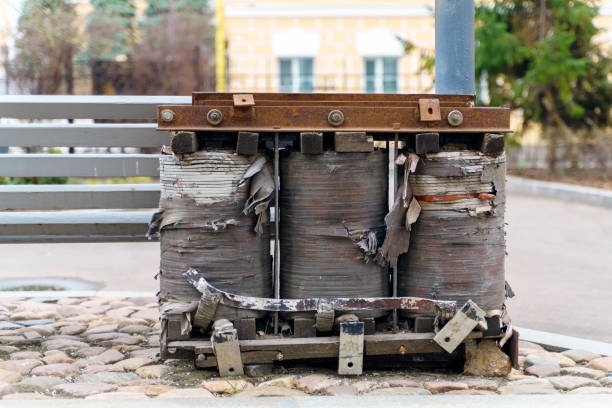
Power transformers are designed for long-term service, but aging, electrical faults, insulation deterioration, overheating, mechanical damage, and repeated overloading can eventually reduce their reliability. Continuing to operate a severely deteriorated transformer may increase the risk of catastrophic failure, unplanned outages, equipment damage, and safety incidents. On the other hand, replacing a transformer that can be economically restored may create unnecessary capital expenditure. Knowing when to repair and when to replace is therefore essential for effective transformer asset management.
Power transformers should generally be repaired when the fault or deterioration is localized, technically repairable, and the expected post-repair reliability and lifecycle cost remain acceptable. Replacement should be considered when the transformer has severe insulation or winding damage, repeated major failures, extensive corrosion or structural deterioration, obsolete components, inadequate capacity, or repair costs and future reliability risks approach or exceed the value of a new transformer. Condition assessment, diagnostic testing, failure history, age, criticality, and total lifecycle cost should all be considered before making the decision.
The decision should not be based on transformer age alone. A well-maintained transformer may remain reliable for many years beyond its nominal service period, while a younger transformer exposed to severe operating conditions may require major intervention earlier. A condition-based evaluation provides a more reliable basis for deciding between repair, refurbishment, or replacement.
When Should Power Transformers Be Repaired or Replaced?
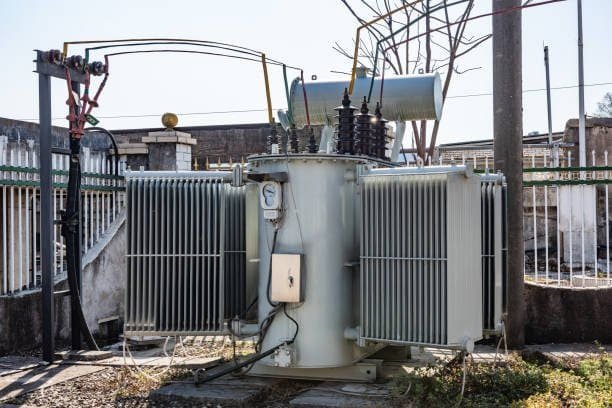
A power transformer rarely fails for just one reason. Aging insulation, repeated thermal stress, oil deterioration, winding deformation, bushing problems, corrosion, abnormal noise, overheating, or recurring protection trips can gradually reduce reliability long before a catastrophic failure occurs. The difficult decision for buyers and operators is knowing whether a transformer should be repaired, refurbished, monitored, or completely replaced. Repairing too early can create unnecessary capital expenditure, while keeping a seriously deteriorated transformer in service can increase outage, fire, environmental, and equipment-damage risks. Power transformers should generally be repaired when the problem is localized, technically recoverable, and the repaired transformer can be demonstrated to meet required electrical and mechanical performance; replacement becomes more appropriate when insulation deterioration is extensive, windings or the core have suffered major damage, failures are recurrent, spare parts are unavailable, reliability has become unacceptable, or the cost and risk of continued operation approach or exceed the lifecycle value of a new transformer. The decision should be based on condition assessment, failure history, testing, loading requirements, safety considerations, repair cost, remaining life, and the consequences of failure rather than age alone.
A power transformer should always be replaced once it reaches its nominal design life.False
Transformer age alone does not determine remaining useful life. Condition, insulation aging, loading history, maintenance, test results, failure history, and the required future duty all influence whether repair, refurbishment, continued operation, or replacement is appropriate.
What Is the Difference Between Repairing and Replacing a Power Transformer?
Repair means restoring a transformer or one of its components to an acceptable operating condition.
Typical repair work may involve:
- Replacing damaged bushings
- Repairing oil leaks
- Replacing gaskets and seals
- Repairing cooling equipment
- Servicing an OLTC
- Reconditioning insulating oil
- Repairing control circuits
- Replacing monitoring devices
- Repairing corrosion
- Correcting external mechanical damage
Replacement means removing the existing transformer and installing a new unit, usually because the existing transformer no longer provides an economically or technically acceptable level of service.
A transformer may also fall into a third category: major refurbishment.
This can include extensive work such as:
- Winding replacement
- Insulation refurbishment
- Core repairs
- Tap-changer replacement
- Major tank restoration
- Rebuilding the cooling system
Major refurbishment can sometimes extend transformer life substantially, but it requires engineering evaluation and factory-level expertise.
When Is Transformer Repair Usually the Better Option?
Repair is generally attractive when the problem is localized and recoverable.
Examples include:
| Problem | Typical Direction |
|---|---|
| Minor oil leak | Repair seal/gasket |
| Damaged gauge | Replace component |
| Cooling fan failure | Repair/replace fan |
| Bushing deterioration | Replace bushing |
| Control relay failure | Replace relay |
| External coating damage | Repair coating |
| Moderate oil contamination | Oil treatment |
| OLTC maintenance issue | Service or replace components |
| Minor accessory damage | Repair/replace accessory |
The key question is not simply whether a component has failed, but whether the underlying transformer remains structurally and electrically sound.
When Does a Transformer Need More Than a Minor Repair?
A transformer may require major refurbishment when internal damage is present but the core tank and fundamental design remain economically recoverable.
Potential examples include:
- Significant winding damage
- Localized insulation deterioration
- Tap-changer damage
- Core clamping problems
- Internal overheating
- Extensive oil contamination
At this point, the decision should be based on a detailed engineering assessment.
A major repair can require removing the transformer from service, transporting it to a qualified repair facility, opening the active part, performing internal inspection, replacing components, drying insulation, processing oil, and repeating electrical tests.
Therefore, the repair cost can be considerably higher than the initial component replacement suggests.
When Is Transformer Replacement More Appropriate?
Replacement becomes increasingly attractive when the transformer has fundamental condition problems rather than isolated component problems.
Common replacement indicators include:
- Severe insulation aging
- Major winding deformation
- Repeated internal faults
- Extensive fire damage
- Major core damage
- Persistent overheating
- Recurrent oil contamination
- Severe corrosion
- Obsolete or unavailable components
- Poor historical reliability
- Insufficient future capacity
- Inadequate voltage performance
- Excessive losses
- Increasing maintenance costs
The decision should also consider whether the transformer still satisfies the power system's future requirements.
Does Transformer Age Determine Whether It Should Be Replaced?
Not by itself.
Two transformers of the same chronological age can have very different remaining-life expectations.
One may have experienced:
- Moderate loading
- Good oil maintenance
- Stable operating temperatures
- Effective moisture control
- Few faults
while another may have experienced:
- Frequent overloads
- High winding temperatures
- Repeated short circuits
- Poor oil maintenance
- High moisture
- Frequent protection operations
The second transformer may be in substantially worse condition despite having the same installation date.
How Does Insulation Condition Affect the Repair-or-Replace Decision?
Insulation condition is one of the most important factors.
Transformer insulation ages through a combination of:
- Temperature
- Moisture
- Oxygen
- Electrical stress
- Mechanical stress
- Contamination
- Fault events
Cellulose insulation is particularly important because deterioration is generally irreversible.
Diagnostic information can include:
- Oil moisture
- Dissolved gas analysis
- Furan compounds where applicable
- Insulation resistance
- Power factor/tan-delta
- Degree of polymerization when directly assessed
If insulation deterioration is widespread and remaining life is limited, replacing a major component may not provide the desired long-term reliability.
How Does Dissolved Gas Analysis Help?
Dissolved gas analysis (DGA) can provide valuable information about developing internal conditions in oil-filled transformers.
Different gas patterns can indicate possible:
- Thermal faults
- Partial discharge
- Arcing
- Oil overheating
- Paper insulation involvement
A single abnormal DGA result does not automatically mean that a transformer must be replaced.
Instead, operators should consider:
- Historical trends
- Gas generation rates
- Other diagnostic tests
- Loading conditions
- Transformer design
- Fault history
A trend showing progressively worsening internal activity is generally more significant than an isolated abnormal measurement.
When Does Winding Damage Require Replacement?
Winding damage is a major decision point.
If a transformer has experienced a high-energy through-fault, the windings may suffer mechanical deformation even if the transformer continues to operate.
Possible indications include abnormal:
- Winding resistance
- Short-circuit impedance
- Turns ratio
- Frequency-response behavior
- Noise or vibration
If winding deformation is confirmed, continued operation may carry elevated risk.
A localized repair may be possible in some cases, but extensive winding deformation may make major refurbishment or replacement more appropriate.
How Do Repeated Failures Influence the Decision?
Repeated failures are a strong warning sign.
Suppose a transformer repeatedly experiences:
- Cooling failures
- Oil leaks
- OLTC faults
- Bushing failures
- Protection trips
- Internal overheating
Repairing each event independently may appear cheaper in the short term.
However, repeated failures can indicate that the transformer has reached a condition where maintenance is no longer economically efficient.
A useful evaluation compares:
repair cost + outage cost + future failure risk
against:
replacement cost + installation cost + expected reliability improvement.
How Do Transformer Losses Affect Replacement Decisions?
Older transformers may have significantly higher losses than modern designs.
The relevant losses include:
- No-load/core losses
- Load/winding losses
- Auxiliary losses
If the transformer operates continuously, even a relatively modest efficiency improvement can produce significant lifetime energy savings.
Therefore, replacement may be justified not only because of reliability but also because the new transformer can reduce operating losses.
How Does Capacity Affect the Repair-or-Replace Decision?
A transformer may remain technically healthy but no longer be suitable for the power system.
For example, load growth may result in:
- Higher average loading
- More frequent overloads
- Increased thermal stress
- Insufficient reserve capacity
If the existing transformer cannot economically support future demand, replacement may be more logical than repeatedly modifying the operating strategy.
This is especially relevant when the transformer is already old and a larger replacement would simultaneously solve capacity and reliability concerns.
How Does Voltage Regulation Affect Replacement?
Poor voltage regulation can become a serious operational problem.
Potential causes include:
- Increased leakage impedance
- Winding condition
- Tap-changer problems
- System loading
- Changes in network requirements
If the existing transformer cannot achieve the required voltage performance despite appropriate maintenance, replacement may offer a more reliable solution.
What Role Does the Tap Changer Play?
The on-load tap changer is a common source of transformer maintenance requirements.
If the problem is limited to:
- Contact wear
- Drive mechanism problems
- Control faults
- Oil degradation
- Position-indication problems
repair or refurbishment may be practical.
However, if the OLTC repeatedly fails and replacement parts are obsolete or unavailable, replacement of the transformer may eventually become more economical.
When Do Spare Parts Availability Become a Problem?
Obsolescence can influence transformer lifecycle decisions significantly.
Older transformers may use components that are:
- Discontinued
- Difficult to source
- Custom manufactured
- No longer supported
- Available only with long lead times
This can turn a relatively simple repair into a major outage risk.
If critical components cannot be reliably sourced, the operator should consider whether continued operation is consistent with the required reliability level.
How Does Fire or Major Internal Fault Damage Change the Decision?
A serious internal fault requires a much more detailed evaluation.
Potential damage may include:
- Winding destruction
- Insulation carbonization
- Tank deformation
- Bushing damage
- Oil contamination
- Core damage
- Fire-related structural damage
A transformer that has experienced severe internal arcing or fire should not be returned to service based only on superficial repairs.
A qualified specialist should determine whether the active part can be economically and safely restored.
What About Severe Oil Leakage?
Oil leakage ranges from minor to critical.
A small leak from a replaceable gasket may be a straightforward repair.
A leak caused by:
- Tank cracking
- Weld failure
- Severe corrosion
- Structural deformation
can indicate a more serious problem.
The source of the leak matters more than the volume of oil lost.
How Does Corrosion Influence Transformer Replacement?
Surface corrosion can often be repaired.
However, extensive corrosion affecting:
- Tank walls
- Radiators
- Structural supports
- Flanges
- Welds
may compromise long-term integrity.
If corrosion has substantially reduced structural margins, replacement may become more appropriate than repeated coating repairs.
How Can Buyers Compare Repair and Replacement Economically?
A structured decision matrix is useful.
| Evaluation Factor | Repair More Attractive | Replacement More Attractive |
|---|---|---|
| Damage | Localized | Extensive |
| Insulation | Healthy/acceptable | Severely aged |
| Windings | Sound | Deformed/damaged |
| Oil | Treatable | Persistent contamination |
| Spare parts | Available | Obsolete |
| Capacity | Adequate | Insufficient |
| Efficiency | Acceptable | Excessive losses |
| Failures | Rare | Recurrent |
| Repair cost | Low/moderate | Very high |
| Outage risk | Manageable | Unacceptable |
| Future service life | Long | Limited |
| Safety | Acceptable | Elevated risk |
This framework helps prevent decisions based on purchase price alone.
What Warning Signs Should Trigger a Detailed Condition Assessment?
Operators should investigate when they observe:
- Increasing DGA gas concentrations
- Repeated protection trips
- Unexplained temperature increases
- Abnormal oil leakage
- Increasing moisture
- Bushing deterioration
- Increasing noise or vibration
- Repeated OLTC problems
- Changes in winding resistance
- Changes in impedance
- Insulation test deterioration
- Frequent cooling-system failures
The earlier these signs are investigated, the more opportunities exist for controlled repair rather than emergency replacement.
Should Buyers Consider Remaining Service Life?
Yes.
A repair that costs a substantial percentage of a new transformer may still be worthwhile if it restores a transformer with significant remaining service life.
Conversely, a relatively inexpensive repair may not make sense if the transformer has widespread insulation aging and only a short remaining useful life.
Therefore, the relevant question is:
How much reliable service can the repair realistically provide?
What Is the Recommended Decision Process?
A practical repair-or-replace process is:
1. Identify the problem.
Determine whether the issue is electrical, mechanical, thermal, insulation-related, or accessory-related.
2. Review historical data.
Examine loading, temperatures, DGA, faults, maintenance, and previous repairs.
3. Perform condition testing.
Use appropriate diagnostic tests to establish current condition.
4. Determine the failure mechanism.
Repairing a symptom without addressing the underlying cause can lead to recurrence.
5. Estimate repair scope.
Include parts, labor, transportation, factory work, testing, and outage time.
6. Estimate replacement scope.
Include procurement, engineering, transportation, installation, commissioning, and disposal.
7. Evaluate future requirements.
Consider MVA capacity, voltage, efficiency, regulation, environmental requirements, and expected loading.
8. Compare lifecycle risk.
Consider probability and consequence of another failure.
9. Select repair, refurbishment, or replacement.
Why Should the Cost of Failure Be Included?
A transformer repair may appear economical if only direct repair costs are considered.
But transformer failure can also cause:
- Unplanned outage
- Production losses
- Grid disruption
- Emergency transportation
- Replacement power costs
- Environmental cleanup
- Fire damage
- Damage to adjacent equipment
- Expedited manufacturing costs
For critical substations, the cost of an unexpected failure can greatly exceed the cost of planned replacement.
What Power Transformer Faults Can Usually Be Repaired?
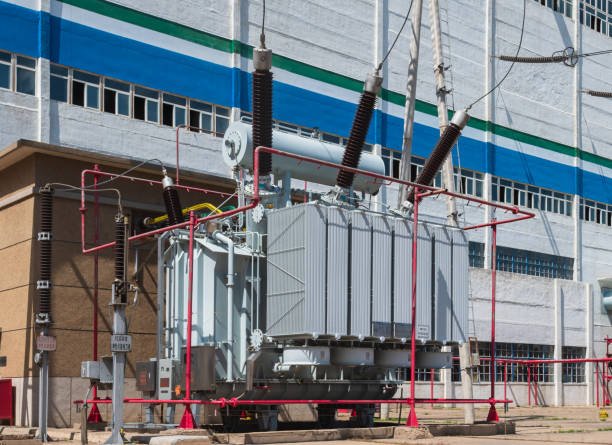
Power transformer faults do not always mean the transformer must be replaced. Many problems are localized to replaceable components or can be corrected through controlled repair, oil treatment, mechanical adjustment, or accessory refurbishment. The important distinction is whether the fault has damaged the transformer's fundamental insulation, windings, core, tank structure, or other critical internal systems. Faults that can often be repaired include localized oil leaks, damaged gaskets and seals, bushing problems, cooling-system failures, tap-changer faults, control-circuit failures, minor corrosion, contaminated insulating oil, and certain localized mechanical or accessory defects. Major winding deformation, severe insulation destruction, extensive fire damage, serious core damage, or repeated failures caused by fundamental design or aging problems may instead require major refurbishment or replacement. A repair decision should always be based on diagnostic testing and the actual failure mechanism rather than the visible symptom alone.
Any power transformer fault can be repaired if replacement components are available.False
Some faults involve fundamental damage to windings, insulation, core structures, or the tank. Even when components are available, repair may be technically impractical, uneconomical, or unable to restore the required reliability and remaining service life.
Which Transformer Faults Are Usually Repairable?
The most repairable faults are generally those that are localized, identifiable, and limited to replaceable components.
Common examples include:
| Transformer Fault | Typical Repair Approach | General Repair Potential |
|---|---|---|
| Minor oil leak | Replace gasket/seal or repair fitting | High |
| Damaged bushing | Replace bushing | High |
| Cooling fan failure | Repair or replace fan/motor | High |
| Oil contamination | Filter, dehydrate, or replace fluid as required | High |
| OLTC contact wear | Service or replace contacts | High–Medium |
| Control relay failure | Replace relay/component | High |
| Gauge failure | Replace instrument | High |
| Minor external corrosion | Clean and restore coating | High |
| Damaged valve | Repair or replace valve | High |
| Minor tank fitting damage | Repair fitting | High |
| Winding deformation | Specialized internal repair | Medium–Low |
| Major insulation damage | Rebuild/refurbish active part | Low–Medium |
| Severe internal arcing | Major factory repair or replacement | Low |
The actual decision depends on transformer condition, fault severity, repair capability, and required future service life.
Can Power Transformer Oil Leaks Usually Be Repaired?
Yes, many localized oil leaks are highly repairable.
Common leakage locations include:
- Flanges
- Gaskets
- Valve stems
- Inspection covers
- Radiator connections
- Conservator connections
- Instrument fittings
If the leak is caused by an aged gasket or loose connection, the repair can often be relatively straightforward.
However, the leak should not be treated as merely a housekeeping problem.
An oil leak can eventually cause:
- Reduced oil level
- Moisture ingress
- Insulation deterioration
- Environmental contamination
- Fire risk
If the source is a cracked tank, failed weld, or severe corrosion, a more extensive repair may be necessary.
Can Damaged Transformer Bushings Be Repaired?
In many cases, the practical solution is bushing replacement rather than bushing repair.
Bushings are critical insulation components, and damage may include:
- Cracks
- Internal insulation deterioration
- Oil leakage
- Terminal damage
- Seal failure
- Excessive contamination
A damaged bushing should be evaluated and electrically tested.
For many modern bushing designs, replacing the complete bushing is safer and more predictable than attempting field repair.
The replacement bushing must match:
- Voltage rating
- Current rating
- Insulation level
- Mechanical dimensions
- Connection arrangement
- Creepage requirements
- Transformer interface
Can Cooling-System Faults Be Repaired?
Cooling-system faults are among the most commonly repairable transformer problems.
Possible faults include:
- Fan motor failure
- Pump failure
- Control relay failure
- Temperature-controller problems
- Fan bearing problems
- Damaged wiring
- Blocked radiators
Typical repairs involve replacing or servicing the failed component.
Because cooling performance directly affects transformer temperature, cooling faults should be corrected promptly.
A transformer operating with inadequate cooling can experience accelerated insulation aging.
Can Transformer Oil Contamination Be Corrected?
Often, yes.
If transformer oil has excessive:
- Moisture
- Particles
- Dissolved contaminants
- Acidity
appropriate oil treatment may restore acceptable properties.
Depending on the condition, treatment can include:
- Filtration
- Vacuum dehydration
- Degassing
- Oil purification
Severely degraded oil may require replacement.
However, oil treatment alone cannot reverse insulation damage that has already occurred inside the transformer.
Can OLTC Faults Usually Be Repaired?
Many on-load tap-changer faults are repairable.
Common problems include:
- Contact wear
- Carbonized oil
- Drive-mechanism problems
- Position-indicator faults
- Motor-drive faults
- Control-circuit failures
Repair may involve:
- Contact replacement
- Oil replacement or treatment
- Mechanism adjustment
- Motor replacement
- Control-system repair
If the OLTC has suffered major internal damage, a specialist workshop may be required.
Can Transformer Control-Circuit Faults Be Repaired?
Yes.
Control and monitoring systems contain many replaceable components.
Typical repairable problems include:
- Failed relays
- Damaged wiring
- Faulty temperature indicators
- Failed alarms
- Control-circuit breakers
- Monitoring-device failures
- Communication-device faults
These repairs are generally much less invasive than internal transformer repairs.
However, all repaired protection and control circuits should be functionally tested before energization.
Can Minor Transformer Corrosion Be Repaired?
Yes, when corrosion is primarily superficial.
Typical repair steps may include:
- Remove loose corrosion.
- Prepare the surface.
- Apply appropriate corrosion protection.
- Restore the coating.
- Inspect surrounding areas for hidden deterioration.
If corrosion has significantly reduced tank-wall thickness or affected structural welds, the problem becomes much more serious.
Can Transformer Valves Be Repaired?
Valves are commonly repairable or replaceable.
Problems may include:
- Leakage
- Damaged seals
- Stiff operation
- Damaged handles
- Incorrect position indication
A valve should be evaluated according to its function because some valves are directly related to transformer oil circulation or isolation.
Incorrect valve positioning after maintenance can itself create operational risks, so valve status should be verified during commissioning.
Can Failed Gauges and Instruments Be Repaired?
Usually, replacing the instrument is the preferred solution.
Examples include:
- Oil-level gauges
- Temperature indicators
- Pressure gauges
- Vacuum gauges
- Flow indicators
The replacement must have the appropriate:
- Range
- Accuracy
- Connection
- Environmental rating
- Electrical output where applicable
The instrument should then be calibrated or functionally verified.
What About Tank Damage?
Tank damage has a wide range of repairability.
Minor external damage may be repaired relatively easily.
Examples include:
- Small dents
- Local coating damage
- Damaged brackets
- Minor fitting damage
More serious conditions include:
- Cracked welds
- Structural deformation
- Significant corrosion
- Tank-wall penetration
- Internal pressure damage
A qualified transformer repair specialist should determine whether the tank can be restored while maintaining the required mechanical and sealing integrity.
Can Winding Faults Be Repaired?
Winding faults are significantly more complicated.
A winding may experience:
- Inter-turn faults
- Short circuits
- Mechanical deformation
- Insulation breakdown
- Thermal damage
- Displacement after through-faults
Minor or localized winding problems may sometimes be addressed during a major factory refurbishment.
However, winding replacement or rebuilding requires specialized facilities and controlled processes.
This may involve:
- Removing the active part
- Opening the tank
- Removing damaged windings
- Manufacturing replacement windings
- Reassembling insulation
- Drying the active part
- Vacuum processing
- Oil treatment
- Repeating electrical tests
At this level, the question becomes whether refurbishment provides better value than replacing the transformer.
Can Core Faults Be Repaired?
Some core problems are repairable, but core damage can be technically demanding.
Potential problems include:
- Core grounding problems
- Damaged laminations
- Loose core clamping
- Local overheating
- Insulation failure between core components
Minor problems may be corrected during a factory refurbishment.
Severe core damage, particularly when accompanied by extensive overheating or mechanical damage, can make replacement more attractive.
Can Insulation Faults Be Repaired?
This depends heavily on the severity and location of the damage.
Oil treatment can improve the condition of the insulating fluid, but it cannot restore cellulose insulation that has already suffered severe thermal degradation.
Diagnostic information may include:
- Moisture
- Furan compounds
- Dissolved gases
- Insulation resistance
- Power factor/tan-delta
- Visual inspection during major repair
If the insulation system remains fundamentally sound, corrective maintenance may extend transformer life.
If widespread insulation deterioration has occurred, major refurbishment or replacement may be more appropriate.
Can Partial Discharge Problems Be Repaired?
Partial discharge should be treated as a diagnostic condition rather than a repair category by itself.
The first step is to determine the source.
Possible causes include:
- Void defects
- Insulation damage
- Loose connections
- Bushing problems
- Contamination
- Internal manufacturing defects
If the source is an external accessory, repair may be relatively straightforward.
If the source is deep inside the insulation system, major internal repair may be required.
Can Transformer Overheating Be Repaired?
Sometimes.
Overheating can result from:
- Failed fans
- Failed pumps
- Blocked radiators
- Excessive loading
- High ambient temperature
- Poor electrical connections
- Winding problems
- Core losses
- Circulating-current problems
If the cause is a cooling-system failure, repair may be simple.
If overheating originates from internal winding or core problems, much more extensive investigation is required.
Therefore, operators should repair the cause, not simply reset a temperature alarm.
What Transformer Faults Are Less Likely to Be Economically Repairable?
The following conditions generally require much more serious evaluation:
- Extensive winding deformation
- Severe internal arcing
- Major fire damage
- Extensive cellulose insulation destruction
- Serious core damage
- Major tank structural failure
- Repeated internal faults
- Severe long-term overheating
- Extensive corrosion
- Multiple simultaneous major failures
A technically possible repair is not necessarily an economically sensible repair.
How Does Fault History Affect Repair Decisions?
Fault history is extremely important.
For example, if a transformer has experienced three major bushing failures, repeated cooling failures, and recurring overheating, replacing only the next failed component may not address the underlying reliability problem.
Operators should ask:
- Why did the fault occur?
- Has it happened before?
- Was the root cause corrected?
- Is another failure likely?
- How much service life remains?
- Is the transformer still suitable for future loading?
How Can Buyers Decide Whether a Fault Is Repairable?
A practical decision process is:
1. Identify the fault.
Determine what actually failed.
2. Identify the root cause.
Do not repair only the visible symptom.
3. Assess internal condition.
Use appropriate diagnostic tests.
4. Determine repair scope.
Estimate parts, labor, factory work, testing, transportation, and outage.
5. Evaluate remaining life.
Determine whether the repair provides meaningful future service.
6. Compare replacement.
Include new-transformer cost, installation, efficiency, capacity, and reliability.
7. Select repair, refurbishment, or replacement.
What Diagnostic Tests Help Determine Repairability?
Depending on the transformer and fault, useful tests may include:
| Diagnostic Method | What It Helps Evaluate |
|---|---|
| DGA | Internal thermal/electrical activity |
| Oil testing | Insulating-fluid condition |
| Insulation resistance | Insulation condition |
| Winding resistance | Winding and connection integrity |
| Turns-ratio test | Winding ratio and tap-changer condition |
| Power factor/tan-delta | Insulation condition |
| SFRA | Mechanical winding/core condition |
| Bushing tests | Bushing insulation |
| Thermography | External thermal abnormalities |
| Visual inspection | Mechanical and environmental condition |
No single test should normally be interpreted in isolation.
What Signs Indicate That Power Transformers May Need Replacement?
A power transformer does not usually announce that it needs replacement with a single obvious warning. More often, replacement becomes a consideration when several indicators begin to appear together: repeated faults, worsening insulation condition, abnormal heating, rising maintenance costs, obsolete components, or inability to meet present and future system requirements. Continuing to operate a deteriorating transformer can increase the probability of an unplanned outage, collateral equipment damage, environmental incidents, and expensive emergency replacement. The strongest signs that a power transformer may need replacement are severe or widespread insulation deterioration, major winding or core damage, repeated serious faults, persistent overheating, poor reliability despite maintenance, obsolete critical components, excessive energy losses, inadequate capacity or voltage performance, serious structural deterioration, and a lifecycle cost or risk profile that is no longer justified. Transformer age is an important consideration, but it should be evaluated together with actual condition and future operating requirements.
A power transformer should be replaced as soon as it reaches a certain age, regardless of its condition.False
Chronological age alone does not determine transformer replacement. Condition, loading history, insulation aging, fault history, maintenance quality, diagnostic results, remaining useful life, and future system requirements must also be considered.
What Are the Most Important Signs of Transformer Replacement?
The following warning signs deserve particular attention:
| Sign | Why It Matters | Replacement Concern |
|---|---|---|
| Severe insulation aging | Reduces dielectric and mechanical strength | High |
| Major winding deformation | Can indicate serious internal mechanical damage | High |
| Repeated internal faults | Suggests declining reliability or unresolved root causes | High |
| Persistent overheating | Accelerates insulation aging | Medium–High |
| Severe core damage | May cause abnormal losses and heating | High |
| Extensive corrosion | Can compromise tank integrity | Medium–High |
| Obsolete critical components | Makes future repairs difficult | Medium–High |
| Excessive losses | Increases lifetime energy cost | Medium |
| Insufficient MVA capacity | Transformer no longer meets system demand | High |
| Poor voltage regulation | May compromise network performance | Medium–High |
| Repeated major repairs | Indicates increasing lifecycle risk | High |
| Severe fire damage | May affect multiple internal systems | Very High |
One sign alone does not necessarily justify replacement. The combination and severity of these indicators are much more important.
How Does Severe Insulation Aging Indicate Replacement?
The insulation system is one of the most important determinants of transformer life.
Oil-filled power transformers commonly use cellulose-based solid insulation around their windings. This material gradually ages under the influence of:
- Temperature
- Moisture
- Oxygen
- Electrical stress
- Mechanical stress
- Fault events
Unlike a replaceable gauge or cooling fan, heavily aged cellulose insulation cannot simply be restored to its original condition through routine maintenance.
Indicators of significant insulation aging may include unfavorable trends in:
- Moisture
- Furan compounds
- Dissolved gases
- Insulation resistance
- Power factor/tan-delta
- Other condition-monitoring parameters
When multiple indicators show widespread deterioration, the operator should assess remaining life and compare continued operation with refurbishment or replacement.
Can Repeated Transformer Faults Indicate Replacement?
Yes.
Repeated faults are one of the strongest practical warning signs.
A transformer that repeatedly experiences:
- Bushing failures
- OLTC problems
- Cooling failures
- Oil leaks
- Overheating
- Protection trips
- Internal faults
may be approaching the point where component-by-component repair is no longer the most economical strategy.
The key question is whether each repair addresses an isolated problem or whether the transformer is showing a broader pattern of deterioration.
How Does Winding Damage Influence Replacement?
Winding condition is critical because windings must withstand both electrical and mechanical stresses.
A transformer may suffer winding deformation after a severe external short circuit even if it continues operating.
Possible diagnostic indicators include changes in:
- Winding resistance
- Short-circuit impedance
- Turns ratio
- Frequency-response behavior
Major winding deformation can compromise future short-circuit withstand capability.
If extensive deformation is confirmed, major factory refurbishment or replacement may be more appropriate than continued operation.
Does Persistent Overheating Mean a Transformer Should Be Replaced?
Not automatically.
First determine the cause.
Overheating may result from:
- Failed cooling fans
- Pump problems
- Blocked radiators
- Excessive loading
- High ambient temperature
- Poor electrical connections
- Internal winding problems
- Core losses
If a failed fan is responsible, replacing the fan may solve the problem.
However, persistent overheating despite correctly functioning cooling equipment is more concerning. Long-term excessive temperature accelerates insulation aging and can significantly reduce remaining service life.
What Signs of Oil Deterioration Should Concern Buyers?
For oil-filled transformers, worsening oil condition can provide an important warning.
Potential indicators include:
- Increasing moisture
- Reduced dielectric strength
- Increasing acidity
- Contamination
- Abnormal dissolved-gas patterns
- Persistent gas generation
Some oil problems are highly repairable through filtration, dehydration, degassing, or oil replacement.
However, if poor oil condition is accompanied by severe insulation aging or internal fault evidence, the problem becomes much more significant.
When Does DGA Indicate Possible Replacement?
Dissolved gas analysis is particularly useful for identifying developing internal problems.
Abnormal gas patterns can indicate:
- Thermal faults
- Partial discharge
- Arcing
- Oil overheating
- Paper insulation involvement
A single abnormal DGA result does not automatically mean replacement.
The trend is often more informative.
For example, continuously increasing combustible gases combined with abnormal electrical test results and overheating is much more concerning than a stable historical abnormality.
How Can Abnormal Noise or Vibration Be a Warning Sign?
Changes in transformer noise or vibration can sometimes indicate mechanical or electromagnetic problems.
Potential causes include:
- Core looseness
- Winding movement
- Mechanical resonance
- Cooling equipment problems
- Structural deterioration
An unusual change from the transformer's established operating signature should be investigated rather than ignored.
If abnormal vibration is associated with winding deformation or core damage, replacement or major refurbishment may become necessary.
When Does Corrosion Become a Replacement Concern?
Minor surface corrosion can normally be repaired.
The concern becomes greater when corrosion affects:
- Tank walls
- Welds
- Radiator structures
- Flanges
- Structural supports
- Sealing surfaces
Severe corrosion can reduce mechanical integrity and increase the probability of oil leakage.
If tank-wall thickness or structural integrity has been significantly compromised, replacement may be safer and more economical than repeated corrosion repairs.
How Does Obsolete Equipment Influence Replacement?
A transformer can become difficult to maintain even if its core and windings remain reasonably healthy.
Problems arise when critical components become:
- Discontinued
- Unsupported
- Difficult to source
- Custom-made
- Extremely expensive
- Subject to long lead times
Examples include obsolete:
- OLTC mechanisms
- Protection relays
- Control systems
- Monitoring equipment
- Bushings
- Cooling components
If failure of one unavailable component could cause a prolonged outage, replacement should be considered as part of the risk-management strategy.
Can Excessive Energy Losses Justify Replacement?
Yes, particularly for transformers operating continuously.
Older transformer designs may have higher:
- No-load losses
- Load losses
- Auxiliary losses
Modern transformer designs can sometimes achieve significantly lower losses.
For a heavily loaded or continuously energized transformer, the value of energy savings can accumulate over many years.
Therefore, replacement economics should include both:
capital cost
and
lifetime operating cost.
A transformer with a lower purchase price may not be the least expensive option over its full service life.
When Does Insufficient Transformer Capacity Require Replacement?
A transformer may be mechanically and electrically healthy but still require replacement because the power system has changed.
For example:
- Load has increased
- New generation has been added
- Distribution demand has expanded
- Reserve requirements have increased
- Network configuration has changed
Operating a transformer continuously near or above its intended capacity can increase thermal stress and reduce reliability.
If the required capacity cannot be achieved economically through system optimization or operating changes, replacement with a suitably rated transformer may be necessary.
How Does Poor Voltage Regulation Indicate Replacement?
Voltage regulation can become inadequate when the transformer no longer meets network requirements under actual loading conditions.
Potential contributors include:
- Transformer impedance
- Winding condition
- Tap-changer performance
- Load characteristics
- Changes in the surrounding network
If tap-changer maintenance or system adjustments cannot provide acceptable voltage performance, replacement may be considered.
When Do Repeated Repairs Become a Replacement Signal?
Repeated repairs should be evaluated cumulatively.
For example, suppose a transformer has required:
- Multiple bushing replacements
- Several OLTC repairs
- Repeated oil leaks
- Cooling-system repairs
- Increasing diagnostic testing
Each individual repair might be reasonable.
But the combined maintenance history may show that the transformer is becoming increasingly unreliable.
A useful indicator is the trend in maintenance frequency and severity, not merely the cost of the most recent repair.
Can Fire Damage Require Transformer Replacement?
Severe transformer fires can affect much more than the component where the fire originated.
Potential consequences include:
- Insulation carbonization
- Winding damage
- Tank deformation
- Bushing destruction
- Oil contamination
- Core damage
- Control-system damage
After major fire damage, a detailed forensic and engineering assessment is required.
If the active part and insulation system have suffered extensive damage, replacement is often more practical than attempting to restore the original unit.
What Diagnostic Tests Help Confirm Replacement Need?
No single test should normally determine the decision.
A condition assessment may combine:
- Dissolved gas analysis
- Oil quality testing
- Insulation resistance
- Winding resistance
- Turns-ratio testing
- Power factor/tan-delta
- SFRA
- Bushing testing
- Thermal imaging
- Visual inspection
- Temperature history
- Load history
The results should be interpreted together with the transformer's operating history.
How Does Transformer Age Fit Into the Decision?
Age should be treated as a risk multiplier rather than an automatic replacement trigger.
An older transformer with excellent condition data and low historical stress may remain a valuable asset.
Conversely, a younger transformer that has experienced severe internal faults, repeated overloads, or major insulation damage may require replacement much earlier.
A better question than "How old is the transformer?" is:
"How much reliable service life remains under the required future duty?"
How Can Buyers Compare Continued Operation With Replacement?
A structured comparison can prevent decisions based only on immediate cost.
| Factor | Continue/Repair | Replace |
|---|---|---|
| Condition | Acceptable | Poor |
| Remaining life | Long | Limited |
| Fault frequency | Low | High |
| Insulation | Healthy | Severely aged |
| Capacity | Adequate | Inadequate |
| Efficiency | Acceptable | Poor |
| Spare parts | Available | Obsolete |
| Maintenance cost | Predictable | Increasing |
| Failure consequence | Manageable | Unacceptable |
| Future requirements | Met | Not met |
The final decision should consider both technical condition and economic consequences.
What Is the Most Reliable Replacement Decision Process?
A practical process is:
- Identify warning signs from inspections and operating data.
- Collect historical trends, including loading, temperature, DGA, oil quality, and failures.
- Perform diagnostic testing appropriate to the suspected problem.
- Determine the root cause rather than treating individual symptoms.
- Estimate remaining useful life.
- Evaluate repair or refurbishment options.
- Estimate replacement cost and lead time.
- Calculate lifecycle energy and maintenance costs.
- Assess outage and failure consequences.
- Compare the risks of continued operation with replacement.
This approach is especially important for large transmission and generation transformers, where replacement lead times can be substantial.
How Do Transformer Age, Condition, and Failure History Affect Repair or Replacement Decisions?
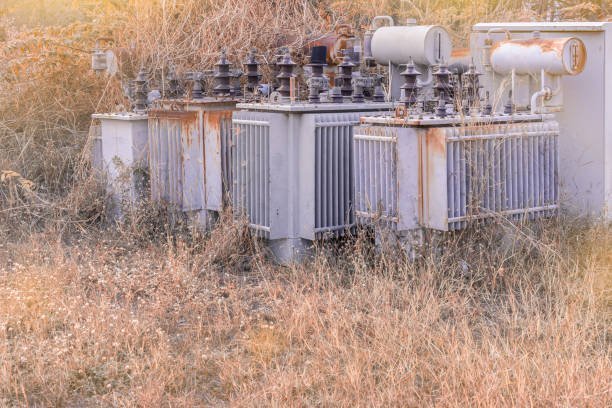
A power transformer can be old and still be a reliable asset, while a relatively young transformer can become a poor investment after severe faults, overheating, moisture exposure, or repeated component failures. This is why using transformer age alone as the basis for a repair-or-replacement decision can lead to the wrong conclusion. The real challenge is determining how age, physical and electrical condition, and failure history interact to influence remaining useful life, future reliability, maintenance cost, and failure risk. Buyers and operators should evaluate transformer age as a starting point, condition as the primary technical indicator, and failure history as evidence of reliability and underlying deterioration; repair is generally favored when an aging transformer remains fundamentally healthy and faults are localized, while replacement becomes more appropriate when poor condition and repeated failures indicate limited remaining life or unacceptable future risk. A sound decision should combine diagnostic testing, loading history, maintenance records, failure mechanisms, future system requirements, and total lifecycle cost.
Transformer age is the most important factor when deciding whether to repair or replace a power transformer.False
Age provides useful context, but condition and failure history are often more informative. Insulation condition, thermal stress, winding integrity, fault history, maintenance quality, loading, and future requirements determine whether continued operation remains technically and economically justified.
How Should Buyers Interpret Transformer Age?
Transformer age is best understood as an indicator of accumulated operating exposure, not as an automatic replacement threshold.
As a transformer operates, its components experience:
- Thermal cycling
- Electrical stress
- Mechanical vibration
- Moisture exposure
- Oxidation
- Short-circuit forces
- Switching events
- Environmental exposure
The longer a transformer operates, the greater the opportunity for these stresses to accumulate.
However, operating history matters enormously.
Two 30-year-old transformers can have very different conditions if one has operated at moderate loading with excellent maintenance while the other has experienced frequent overloads, high temperatures, short circuits, and poor moisture control.
Therefore, age should trigger closer evaluation rather than an automatic replacement decision.
Why Is Condition More Important Than Age?
Condition provides evidence of the transformer's actual present state.
A condition assessment may examine:
- Insulation aging
- Oil condition
- Winding integrity
- Core condition
- Bushings
- OLTC
- Cooling systems
- Tank integrity
- Seals
- Control equipment
Diagnostic information can reveal whether the transformer is still fundamentally sound.
For example, an older transformer with stable oil quality, acceptable insulation diagnostics, no significant DGA abnormalities, good winding test results, and a strong maintenance history may have considerable remaining service potential.
Conversely, a younger transformer showing severe winding deformation and rapidly deteriorating insulation may represent a much higher risk.
What Does Failure History Tell Operators?
Failure history provides information that a single inspection cannot.
A transformer that has experienced one isolated accessory failure is very different from one with repeated:
- Internal faults
- Bushing failures
- OLTC failures
- Cooling failures
- Oil leaks
- Overheating
- Protection trips
Repeated failures may indicate that the transformer is experiencing broader deterioration or that previous repairs did not address the underlying root cause.
The important question is:
Was each failure isolated, or does the pattern indicate declining reliability?
How Do Age, Condition, and Failure History Interact?
These three factors should be evaluated together.
A simple conceptual model is:
Age → accumulated exposure → condition → failure history → future risk
But the relationship is not linear.
For example:
- Old + good condition + low failure history: continued operation or selective refurbishment may be attractive.
- Old + deteriorating condition + increasing failures: replacement becomes increasingly attractive.
- Young + poor condition + major fault: major repair or replacement may be required despite the low age.
- Old + poor condition + obsolete components: replacement risk is usually high.
- Middle-aged + localized fault + excellent condition: repair is often logical.
What Condition Indicators Should Be Evaluated?
For oil-filled power transformers, condition assessment may include:
| Condition Area | Useful Indicators | Replacement Concern |
|---|---|---|
| Insulation | Moisture, furan compounds, power factor/tan-delta | High if deterioration is widespread |
| Oil | Moisture, acidity, dielectric strength, DGA | Medium–High depending on trends |
| Windings | Resistance, ratio, SFRA, impedance | High if deformation is confirmed |
| Core | Grounding, heating, mechanical condition | High if severe |
| Bushings | Capacitance, tan-delta, visual condition | Medium–High |
| OLTC | Operation, contacts, oil, drive mechanism | Medium–High |
| Cooling | Fan/pump operation, temperatures | Usually repairable |
| Tank | Leakage, corrosion, structural condition | Medium–High |
| Controls | Relays, wiring, monitoring | Usually repairable |
The important point is that not all defects have the same significance.
How Does Insulation Aging Affect Remaining Life?
For many oil-filled transformers, the solid insulation system is one of the most important determinants of remaining life.
Cellulose insulation gradually loses mechanical strength as it ages.
The aging rate is strongly influenced by:
- Temperature
- Moisture
- Oxygen
- Time
- Electrical stress
Thermal stress is particularly important because excessive temperature accelerates insulation degradation.
A transformer with severely aged paper insulation may continue to operate electrically but have substantially reduced mechanical strength during a future short circuit.
This is why condition assessment must look beyond whether the transformer is currently functioning.
How Does Loading History Affect the Decision?
Loading history can significantly change the meaning of transformer age.
A transformer that spent decades at moderate loading may have experienced less thermal aging than one operated frequently near its limits.
Buyers should review:
- Average loading
- Peak loading
- Overload events
- Ambient temperatures
- Hot-spot temperatures where available
- Cooling-system performance
A transformer that has repeatedly operated under severe thermal stress may deserve more aggressive assessment even if its chronological age appears acceptable.
How Do Through-Faults Affect Transformer Condition?
External short circuits can impose extremely high mechanical forces on transformer windings.
A transformer may survive a fault electrically but experience internal mechanical deformation.
Potential evidence can include changes in:
- Short-circuit impedance
- Winding resistance
- Turns ratio
- Frequency-response characteristics
Repeated through-faults are particularly important because each event can increase mechanical risk.
Therefore, a failure history containing major short-circuit events should influence the repair-or-replacement decision even when routine oil tests remain acceptable.
Is One Transformer Failure Enough to Justify Replacement?
Usually, no.
The type of failure matters.
For example:
One failed cooling fan does not necessarily indicate transformer replacement.
One failed gauge is usually a straightforward component replacement.
One failed bushing may require bushing replacement and further investigation.
But:
One major internal arcing event can require extensive investigation of the active part, insulation, windings, and core.
The severity and root cause of the event matter more than the number "one."
When Do Repeated Failures Become a Major Warning Sign?
Repeated failures become particularly concerning when they show a pattern.
For example:
Year 1: bushing failure
Year 3: OLTC failure
Year 5: overheating
Year 6: oil leak
Year 7: protection trip
Individually, each event may be repairable.
Collectively, however, the pattern suggests increasing maintenance burden and potentially declining reliability.
The operator should then evaluate whether continuing to repair individual components is still economically rational.
How Does Repair History Affect the Decision?
Repair history should be reviewed alongside failure history.
A transformer with multiple major repairs may have:
- Replaced bushings
- Rebuilt OLTC components
- Repaired windings
- Repaired tank welds
- Replaced cooling equipment
The critical question is whether these repairs restored the transformer to a stable condition or simply postponed the next failure.
If repairs are becoming more frequent and more expensive, replacement may offer better lifecycle value.
How Does Failure Severity Affect the Decision?
A useful way to classify failure history is by severity.
| Failure Category | Example | Typical Implication |
|---|---|---|
| Minor accessory fault | Gauge failure | Usually repair |
| Localized mechanical fault | Valve leak | Usually repair |
| Cooling fault | Fan/pump failure | Usually repair |
| Insulation concern | Increasing moisture | Investigate/treat |
| Repeated thermal issue | Persistent overheating | Detailed assessment |
| Mechanical winding concern | SFRA change | Major assessment |
| Internal electrical fault | Arcing/short circuit | Major repair or replacement |
| Fire | Extensive internal damage | Often major refurbishment/replacement |
This helps prevent a minor failure from being treated the same way as a major internal event.
How Does Obsolescence Combine With Age?
Age becomes more significant when critical components are obsolete.
An older transformer may depend on components that are:
- Discontinued
- No longer supported
- Difficult to source
- Custom-made
- Subject to very long lead times
Examples include older tap changers, protection systems, bushings, monitoring devices, and cooling components.
If a critical component fails and cannot be replaced quickly, the transformer's effective reliability may be lower than its electrical condition alone suggests.
How Does Condition Affect Economic Decisions?
Technical condition should be translated into economic consequences.
Consider two transformers:
Transformer A
- Older
- Good insulation condition
- Low fault frequency
- Low maintenance cost
- Adequate capacity
Transformer B
- Younger
- Repeated internal problems
- Increasing oil contamination
- Frequent repairs
- Limited spare-parts support
Transformer A may be the better asset despite being older.
This demonstrates why replacement decisions should be based on risk-adjusted lifecycle economics, not depreciation or age alone.
When Is Repair Usually More Attractive?
Repair is generally favored when:
- The fault is localized
- The active part remains healthy
- Insulation condition is acceptable
- Windings are mechanically sound
- The core is healthy
- Spare parts are available
- Repair cost is reasonable
- Future loading requirements can be met
- Expected remaining life is substantial
Examples include:
- Bushing replacement
- Cooling fan replacement
- Oil treatment
- OLTC maintenance
- Gasket replacement
- Control-system repair
- Minor corrosion restoration
When Does Replacement Become More Attractive?
Replacement becomes increasingly reasonable when several of the following occur:
- Severe insulation aging
- Major winding deformation
- Severe core damage
- Repeated internal faults
- Persistent overheating
- Extensive corrosion
- Major fire damage
- Critical component obsolescence
- Insufficient capacity
- Excessive losses
- Poor voltage performance
- Increasing maintenance costs
- Unacceptable outage consequences
The combination is particularly important.
An old transformer with one minor oil leak is not equivalent to an old transformer with severe insulation aging and repeated internal faults.
How Should Buyers Estimate Remaining Useful Life?
Remaining useful life should be based on condition and expected future duty.
The assessment may consider:
- Insulation condition
- Thermal aging
- Moisture
- Fault history
- Loading profile
- Mechanical integrity
- Oil condition
- Diagnostic trends
- Maintenance history
Then compare the expected remaining life with the required operating horizon.
For example, if a utility needs another 15–20 years of dependable service, a transformer with only a few years of credible remaining life may not justify a major refurbishment.
How Do Future System Requirements Change the Decision?
A transformer can be technically healthy but economically unsuitable if the system has changed.
Buyers should consider:
- Future MVA demand
- Voltage requirements
- Short-circuit levels
- Voltage regulation
- Efficiency targets
- Environmental requirements
- Grid expansion
- Required redundancy
If the existing transformer cannot satisfy these requirements, replacement may be more practical than investing heavily in refurbishment.
How Should Lifecycle Cost Be Compared?
A proper comparison should include more than the repair invoice.
For continued operation:
repair cost + testing + outage cost + maintenance + expected failures + energy losses
For replacement:
new transformer + transportation + installation + commissioning + disposal + financing
A new transformer may have higher initial cost but lower:
- No-load losses
- Load losses
- Maintenance requirements
- Failure probability
The analysis should cover the expected operating period rather than only the next budget year.
What Decision Matrix Can Buyers Use?
A practical scoring framework is:
| Factor | Low Risk | Medium Risk | High Risk |
|---|---|---|---|
| Age | Relatively young | Mature | Very old |
| Insulation | Stable | Aging | Severely deteriorated |
| Failure history | Few minor faults | Several repairs | Repeated major faults |
| Winding | Normal | Requires monitoring | Deformation/damage |
| Core | Normal | Minor concern | Major damage |
| Oil | Stable | Treatable | Persistent deterioration |
| Spare parts | Readily available | Longer lead time | Obsolete |
| Loading | Adequate | Increasing | Insufficient |
| Maintenance | Predictable | Increasing | Excessive |
| Safety | Acceptable | Elevated concern | Unacceptable |
If several categories move into the high-risk range, replacement should receive serious consideration.
What Is the Recommended Repair-or-Replacement Workflow?
A practical engineering workflow is:
Step 1 — Establish age and operating history.
Collect commissioning date, loading history, temperature records, fault events, and maintenance records.
Step 2 — Assess present condition.
Inspect the tank, oil, bushings, cooling system, OLTC, controls, windings, and insulation indicators.
Step 3 — Analyze failure history.
Separate isolated component failures from recurring or systemic problems.
Step 4 — Determine root causes.
Identify why failures occurred and whether previous repairs corrected those causes.
Step 5 — Estimate remaining life.
Assess whether the transformer can reliably meet the required future operating period.
Step 6 — Develop repair/refurbishment options.
Include technical scope, cost, outage duration, testing, and expected life extension.
Step 7 — Develop replacement options.
Consider capacity, voltage, efficiency, cooling, insulation, delivery time, and installation requirements.
Step 8 — Compare lifecycle risk and cost.
Step 9 — Select repair, refurbishment, continued monitoring, or replacement.
How Should Buyers Compare Power Transformer Repair Costs With Replacement Costs?
Comparing a power transformer repair quote with the purchase price of a new transformer can be misleading because the two options have very different cost structures. A repair may appear inexpensive until transportation, factory inspection, oil processing, testing, outage time, and future maintenance are included, while a new transformer may have a higher initial price but lower losses, longer expected service life, and better availability of spare parts. Buyers should compare repair and replacement using total lifecycle cost rather than the repair invoice versus the new-transformer purchase price. The comparison should include repair scope, transportation, testing, outage costs, expected life extension, future maintenance, energy losses, replacement lead time, installation, commissioning, disposal, reliability risk, and the value of improved capacity or efficiency. A repair is generally attractive when the transformer remains fundamentally healthy and the repair provides substantial additional service life; replacement becomes more compelling when repair costs approach a significant portion of a new unit's installed cost or when major underlying deterioration remains.
If repairing a power transformer costs less than buying a new transformer, repair is always the cheaper option.False
The initial repair price does not include future maintenance, outage risk, remaining service life, energy losses, installation, testing, or the possibility of another major failure. Total lifecycle cost should be compared instead.
What Costs Should Be Included in a Transformer Repair?
A repair quote should be expanded into a complete project cost.
Potential repair costs include:
- Fault diagnosis
- Factory inspection
- Dismantling
- Component replacement
- Winding repair
- Insulation refurbishment
- Core repair
- Oil processing
- Drying
- Reassembly
- Factory testing
- Transportation
- Site installation
- Commissioning
For major repairs, the transformer may need to be transported to a specialist factory. This can substantially increase the apparent "repair" cost.
What Costs Should Be Included in Transformer Replacement?
A replacement comparison should include more than the manufacturer's equipment quotation.
Typical costs include:
- New transformer purchase
- Engineering
- Factory testing
- Transportation
- Heavy lifting
- Site installation
- Oil filling or processing
- Accessory installation
- Protection and control integration
- Commissioning
- Old-transformer removal
- Disposal or recycling
- Foundation modifications where required
The new transformer may also require changes to:
- Cable connections
- Busbars
- Protection settings
- Cooling arrangements
- Physical clearances
These project costs should be included before comparing the two options.
How Should Buyers Compare the Two Options?
A useful first comparison is:
| Cost Category | Repair | Replacement |
|---|---|---|
| Initial equipment cost | Lower | Higher |
| Diagnosis | Required | Usually lower |
| Factory work | Possible | Included in manufacturing |
| Transportation | May be significant | Usually significant |
| Installation | Required | Required |
| Testing | Extensive | Extensive |
| Outage cost | Potentially high | Potentially high |
| Future maintenance | Often higher for old unit | Usually lower initially |
| Energy losses | Existing level | Potentially lower |
| Remaining service life | Limited/extended | New service life |
| Spare parts | May be obsolete | New support |
| Capacity improvement | Usually limited | Often possible |
| Reliability improvement | Depends on repair | Usually substantial |
This table provides the starting point, not the final decision.
Why Is Remaining Service Life So Important?
Suppose a major repair costs $400,000 and is expected to provide another 10 years of reliable operation.
A new transformer costs $800,000 but is expected to provide 25 years of service.
The repair is not equivalent to buying half of a new transformer.
The relevant comparison is the cost of reliable service over time.
A simplified calculation is:
Annualized repair cost ≈ total repair investment ÷ expected additional service years
This is only a simple screening method; a proper financial analysis should also account for discount rate, energy losses, maintenance, and risk.
How Does Energy Efficiency Affect the Comparison?
New transformers may offer lower losses than older transformers.
The two major categories are:
- No-load losses
- Load losses
No-load losses occur whenever the transformer is energized, while load losses generally increase with loading.
If the existing transformer operates continuously, the value of lower losses can become significant.
For example, even a few kilowatts of continuous loss represent substantial annual energy consumption.
Therefore, buyers should request guaranteed loss data for a replacement transformer and compare it against the existing transformer's measured or documented losses.
How Do Outage Costs Change the Decision?
Outage cost can be one of the largest hidden expenses.
A repair may require:
- Planned shutdown
- Transformer removal
- Factory transportation
- Repair
- Return transportation
- Reinstallation
- Testing
A replacement may also require an outage, but lead time and installation planning can differ.
For critical applications, buyers should calculate:
outage hours × economic cost per hour
rather than treating downtime as zero.
How Does Repair Lead Time Compare With Replacement Lead Time?
Lead time can change the economics significantly.
A repair may be faster if:
- Spare parts are readily available
- The fault is localized
- A qualified repair facility is nearby
But major internal repairs can take substantial time.
A new transformer may have a longer manufacturing lead time because it requires:
- Engineering
- Material procurement
- Core and winding manufacturing
- Assembly
- Factory testing
However, replacement can provide greater certainty about future reliability.
Buyers should compare the actual project schedule, not assume that repair is always faster.
How Does Failure Risk Affect Cost?
A repaired transformer may continue to carry residual risk.
For example, if a transformer has:
- Severely aged insulation
- Previous winding deformation
- Repeated internal faults
- Obsolete accessories
a successful repair of the immediate problem does not necessarily eliminate future failure risk.
A practical lifecycle comparison should therefore include an estimated risk allowance for:
- Another failure
- Emergency repair
- Emergency replacement
- Unplanned outage
- Collateral damage
This is particularly important for transformers serving critical loads.
When Is Repair Usually Economically Attractive?
Repair is generally attractive when:
- The transformer has good fundamental condition
- The fault is localized
- Windings and core remain sound
- Insulation condition is acceptable
- Spare parts are available
- Repair can provide many additional service years
- Outage requirements are manageable
- The transformer still meets future capacity requirements
Examples include:
- Bushing replacement
- Cooling-system repair
- OLTC maintenance
- Oil treatment
- Gasket replacement
- Control-system repair
- Minor tank repair
When Does Replacement Usually Become More Attractive?
Replacement deserves serious consideration when:
- Repair scope becomes extensive
- Winding replacement is required
- Core damage is severe
- Insulation is extensively aged
- Major fire damage has occurred
- Failures are recurring
- Critical parts are obsolete
- Energy losses are excessive
- Capacity is insufficient
- Voltage performance is inadequate
- Maintenance costs are rapidly increasing
In these situations, repairing one problem may leave other aging systems in place.
Is There a Useful Repair-Cost Percentage Rule?
A percentage comparison can be useful as a screening tool, but it should not be treated as a universal rule.
For example, buyers may flag a repair for detailed economic review when the total repair and refurbishment cost approaches a substantial portion of the installed cost of a new transformer.
But the appropriate threshold depends on:
- Transformer age
- Remaining life
- Criticality
- Repair quality
- Expected life extension
- New-transformer lead time
- Energy savings
- Failure consequences
A 60% repair cost may be reasonable for one transformer and unacceptable for another.
How Should Buyers Compare Lifecycle Costs?
A simplified lifecycle model can be structured as:
Repair option
Repair + transport + testing + installation + outage + future maintenance + energy losses + expected failure risk
Replacement option
New transformer + transport + installation + commissioning + disposal + outage + future maintenance + energy losses
Then compare both over the same analysis period.
This is much more meaningful than:
Repair price vs. new-transformer purchase price
What Role Does Transformer Capacity Play?
A repair normally preserves the transformer's existing fundamental rating.
A new transformer creates an opportunity to address future requirements.
For example, if an existing transformer is rated at 40 MVA but expected demand will increase substantially, spending heavily on repair may simply postpone a capacity upgrade.
Replacement can potentially provide:
- Higher MVA rating
- Improved efficiency
- Better voltage regulation
- Modern cooling
- Improved monitoring
- Better environmental performance
These benefits should be assigned economic value where appropriate.
How Should Buyers Consider New-Transformer Efficiency?
When comparing replacement against repair, request guaranteed:
- No-load loss
- Load loss
- Auxiliary consumption
- Efficiency
Then estimate annual energy savings.
For continuously energized transformers, even a relatively small reduction in no-load loss can accumulate over many years.
For highly loaded transformers, reduced load losses may provide an even greater economic benefit.
What About Maintenance Costs After Repair?
This is an important hidden cost.
A repaired 25-year-old transformer may still contain:
- Aging insulation
- Old bushings
- Older control systems
- Aging cooling equipment
- Older OLTC components
A new transformer starts with new components and typically provides better parts support.
Therefore, buyers should estimate expected maintenance expenditure over the comparison period.
How Should Reliability Be Assigned a Monetary Value?
Reliability is difficult to price, but it should not be ignored.
Consider:
- Cost per hour of outage
- Criticality of the load
- Availability of spare capacity
- Consequences of transformer failure
- Environmental risks
- Emergency replacement lead time
A transformer serving a critical industrial process or major transmission node may justify replacement at a higher apparent capital cost because the consequence of failure is much greater.
What Financial Comparison Should Buyers Request From Suppliers?
For a new transformer, request:
- Purchase price
- Guaranteed losses
- Delivery period
- Warranty
- Installation requirements
- Testing requirements
- Spare-parts availability
- Expected maintenance requirements
For repair, request:
- Detailed repair scope
- Component list
- Factory labor
- Testing
- Transportation
- Warranty
- Expected life extension
- Recommended future maintenance
- Any exclusions
A detailed scope prevents a low initial repair quotation from becoming an expensive project later.
Practical Repair vs. Replacement Decision Matrix
| Factor | Strongly Favors Repair | Strongly Favors Replacement |
|---|---|---|
| Transformer condition | Good | Poor |
| Fault type | Localized | Fundamental |
| Insulation | Healthy | Severely aged |
| Windings | Sound | Major deformation |
| Core | Sound | Severe damage |
| Failure history | Limited | Recurrent major faults |
| Spare parts | Available | Obsolete |
| Repair cost | Low/moderate | Very high |
| Remaining life | Long | Short |
| Energy losses | Acceptable | Excessive |
| Capacity | Adequate | Insufficient |
| Outage risk | Manageable | Unacceptable |
| Future requirements | Already satisfied | Major upgrades needed |
What Is the Best Buyer Workflow?
Step 1: Establish the existing transformer's condition.
Do not estimate repair costs before understanding the actual fault.
Step 2: Obtain a detailed repair quotation.
Require labor, materials, factory testing, transport, and warranty to be identified.
Step 3: Estimate the remaining service life.
Step 4: Obtain a technically equivalent new-transformer quotation.
Step 5: Compare guaranteed losses.
Step 6: Calculate outage and installation costs.
Step 7: Estimate future maintenance.
Step 8: Evaluate failure and reliability risk.
Step 9: Consider future MVA, voltage, and system requirements.
Step 10: Compare total lifecycle cost over the same period.
How Can Condition Monitoring Help Determine Whether Power Transformers Should Be Repaired or Replaced?
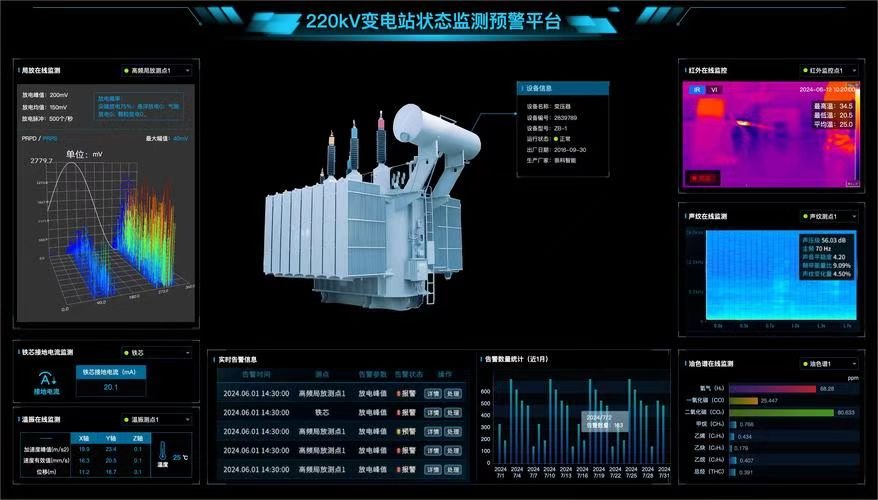
A power transformer can appear normal from the outside while developing internal problems that may eventually cause an expensive failure. Relying only on visual inspection, age, or routine maintenance can therefore make repair-or-replacement decisions uncertain. Condition monitoring provides a more evidence-based approach by continuously or periodically evaluating indicators such as dissolved gases, oil quality, temperature, moisture, bushings, load, vibration, and electrical condition. Condition monitoring helps determine whether a power transformer should be repaired or replaced by identifying developing faults, measuring deterioration trends, distinguishing localized repairable problems from widespread degradation, estimating remaining useful life, and showing whether continued operation remains economically and technically justified. The most valuable information is usually not one abnormal reading but the combination of multiple indicators and their trends over time.
A single abnormal condition-monitoring result means that a power transformer should be replaced.False
Condition-monitoring results must be interpreted in context. A single abnormal reading may indicate a repairable accessory problem, temporary operating condition, measurement issue, or developing fault. Trend analysis and supporting diagnostic tests are normally required before deciding on repair or replacement.
What Does Condition Monitoring Mean for Power Transformers?
Condition monitoring is the systematic collection and interpretation of information about transformer operating condition.
It can involve:
- Online monitoring
- Periodic diagnostic testing
- Oil analysis
- Electrical testing
- Thermal monitoring
- Mechanical monitoring
- Visual inspection
- Historical data analysis
The purpose is not simply to detect failure.
A stronger objective is to answer:
Is the transformer healthy, deteriorating, repairable, approaching the end of useful life, or becoming too risky to operate?
This distinction is critical for capital planning.
Which Parameters Are Most Useful?
Different monitoring parameters reveal different failure mechanisms.
| Monitoring Parameter | Primary Information | Typical Decision Value |
|---|---|---|
| Dissolved gas analysis | Internal thermal/electrical activity | Very High |
| Oil moisture | Insulation/moisture condition | High |
| Oil acidity | Oil aging | Medium–High |
| Dielectric strength | Oil insulation condition | Medium–High |
| Temperature | Thermal stress | Very High |
| Load current | Operating stress | High |
| Bushing condition | External insulation | High |
| OLTC monitoring | Tap-changer condition | High |
| Vibration/noise | Mechanical condition | Medium |
| Winding resistance | Winding/connections | High |
| SFRA | Mechanical deformation | Very High after faults |
| Power factor/tan-delta | Insulation condition | High |
No individual parameter gives a complete transformer-health assessment.
How Does Dissolved Gas Analysis Help?
Dissolved gas analysis, or DGA, is one of the most widely used diagnostic techniques for oil-filled transformers.
Electrical and thermal faults can produce gases that dissolve into transformer oil.
Depending on the fault mechanism, gases may include:
- Hydrogen
- Methane
- Ethane
- Ethylene
- Acetylene
- Carbon monoxide
- Carbon dioxide
The significance depends on the gas pattern, concentration, rate of change, transformer design, and other evidence.
For example, a rising gas concentration over time can be more informative than one isolated abnormal measurement.
Why Are Trends More Valuable Than Individual Measurements?
Consider two hypothetical DGA results.
Transformer A
- High gas concentration
- Stable for several years
- No abnormal temperature
- No abnormal electrical test results
Transformer B
- Moderate gas concentration
- Rapid increase over several months
- Increasing temperature
- Abnormal electrical test results
Transformer B may represent the greater immediate concern despite having lower absolute gas concentration.
This illustrates an important principle:
Rate of deterioration can be as important as present condition.
How Does Online DGA Support Decisions?
Online DGA systems can continuously or periodically monitor dissolved gases without waiting for manual sampling intervals.
This can help operators identify:
- Rapid gas generation
- Developing thermal faults
- Electrical discharge activity
- Changes following system events
Online monitoring can be particularly valuable for high-value or critical transformers.
It does not eliminate the need for laboratory testing, however.
If the monitoring system detects an unusual trend, confirmatory investigation should normally follow.
How Does Temperature Monitoring Affect Repair-or-Replace Decisions?
Temperature is directly connected to transformer aging.
Monitoring may include:
- Top-oil temperature
- Winding hot-spot temperature
- Ambient temperature
- Cooling-system status
- Load current
Persistent high temperature can indicate:
- Excessive loading
- Cooling failure
- Blocked radiators
- Fan or pump problems
- Internal losses
- Winding problems
If the problem is a failed fan, repair may restore normal operation.
If abnormal temperatures persist despite correct cooling and loading, deeper internal investigation may be required.
How Does Load Monitoring Help?
A transformer may deteriorate faster than expected if it has been heavily loaded for long periods.
Condition monitoring should therefore be correlated with:
- Load current
- MVA
- Ambient temperature
- Cooling mode
- Temperature
- Overload events
A transformer that has repeatedly operated near its thermal limits may have accumulated more insulation aging than its chronological age suggests.
This information can materially change a repair-or-replacement assessment.
How Does Moisture Monitoring Help?
Moisture is particularly important because it can affect both oil and cellulose insulation.
Excessive moisture can:
- Reduce dielectric strength
- Increase insulation aging
- Increase bubble formation risk under severe heating
- Reduce insulation mechanical strength
If moisture is primarily in the oil, treatment may be possible.
If moisture has migrated deeply into solid insulation, removing it can be much more difficult.
Therefore, moisture monitoring helps distinguish between a potentially treatable oil problem and a more serious insulation-condition issue.
How Does Oil Quality Monitoring Help?
Transformer oil serves several important functions:
- Electrical insulation
- Heat transfer
- Internal protection
Monitoring can assess:
- Moisture
- Acidity
- Dielectric strength
- Dissolved gases
- Particle contamination
- Oxidation indicators
Poor oil condition may often be corrected through:
- Filtration
- Dehydration
- Degassing
- Regeneration
- Replacement
However, oil treatment does not reverse permanent degradation of solid insulation.
How Can Monitoring Detect Bushing Problems?
Transformer bushings are critical components because they provide insulated electrical connections through the transformer tank.
Monitoring may evaluate:
- Capacitance
- Dissipation factor/tan-delta
- Leakage behavior
- Temperature
- Oil level where applicable
- Visual condition
A deteriorating bushing may often be replaced without replacing the entire transformer.
This is a good example of how condition monitoring can support a repair rather than replacement decision.
How Can OLTC Monitoring Help?
On-load tap changers can experience:
- Contact wear
- Switching problems
- Drive-mechanism deterioration
- Oil degradation
- Electrical faults
Monitoring can include:
- Operation counts
- Motor current
- Timing
- Position feedback
- Oil condition
- Temperature
If the transformer itself remains healthy but the OLTC is deteriorated, OLTC maintenance or replacement may be much more economical than replacing the entire transformer.
How Can Vibration and Noise Monitoring Help?
Transformer vibration can provide information about:
- Core condition
- Winding movement
- Mechanical looseness
- Cooling equipment
- Electromagnetic forces
A sudden change from the normal vibration signature deserves investigation.
For example, if abnormal vibration occurs after a system short circuit, winding deformation may need to be investigated with additional electrical or mechanical diagnostics.
How Does SFRA Help After a Fault?
Sweep Frequency Response Analysis, commonly called SFRA, can be valuable after:
- Through-faults
- Transportation
- Major maintenance
- Suspected winding movement
Changes in the frequency-response signature can indicate mechanical changes in the active part.
This information is particularly useful because winding deformation may not be obvious from external inspection.
If significant deformation is confirmed, continued operation without further assessment may carry increased risk.
How Does Condition Monitoring Distinguish Repairable Faults From Replacement Conditions?
A practical approach is to classify findings into three levels.
Level 1: Localized and repairable
Examples:
- Cooling fan failure
- Minor oil leak
- Bushing deterioration
- Instrument failure
- OLTC component wear
Level 2: Significant but potentially recoverable
Examples:
- Increasing DGA activity
- High moisture
- Persistent overheating
- Moderate insulation deterioration
- Winding concerns requiring investigation
These conditions may require major refurbishment.
Level 3: Widespread or fundamental deterioration
Examples:
- Severe insulation degradation
- Major winding deformation
- Severe core damage
- Repeated internal faults
- Extensive fire damage
Replacement becomes increasingly attractive in this category.
Can Condition Monitoring Estimate Remaining Useful Life?
Condition monitoring can support remaining-life estimation, although it should not be treated as an exact countdown clock.
A useful assessment combines:
- Thermal aging
- Insulation condition
- Moisture
- Loading history
- Fault history
- DGA trends
- Electrical test results
- Maintenance history
The objective is to estimate whether the transformer can reliably meet the required future duty.
For example, a transformer may be technically capable of continued operation but have insufficient credible remaining life to justify a major refurbishment.
How Does Failure History Improve Condition Monitoring?
Condition-monitoring data becomes much more useful when combined with failure history.
Suppose an existing transformer experienced a major short circuit five years ago.
If subsequent monitoring shows:
- Stable DGA
- Stable winding resistance
- Stable SFRA
- Normal temperatures
the evidence may support continued operation.
If instead monitoring shows:
- Increasing temperature
- New DGA abnormalities
- Changed impedance
- SFRA deviations
the historical fault becomes much more significant.
How Should Buyers Build a Transformer Health Score?
A practical health assessment can combine several categories:
| Category | Example Assessment |
|---|---|
| Age | Chronological exposure |
| Insulation | Healthy / aging / severe |
| Oil | Stable / treatable / deteriorated |
| Thermal | Normal / elevated / persistent |
| Mechanical | Normal / suspect / damaged |
| Electrical | Normal / abnormal / severely abnormal |
| Failure history | Low / moderate / severe |
| Maintenance | Stable / increasing / excessive |
| Spare parts | Available / limited / obsolete |
| Future duty | Adequate / marginal / inadequate |
This creates a more balanced picture than using age alone.
How Can Monitoring Reduce Emergency Replacement?
The major advantage of condition monitoring is early decision-making.
If deterioration is detected early, operators may be able to:
- Reduce loading
- Improve cooling
- Treat oil
- Replace a bushing
- Service an OLTC
- Schedule a factory repair
- Procure a replacement transformer in advance
This can convert an emergency event into a planned project.
Planned replacement is usually easier to manage than emergency replacement because procurement, transportation, installation, and system outage can be coordinated.
How Does Condition Monitoring Support Capital Planning?
For fleet operators, monitoring can help prioritize transformers.
Instead of replacing transformers solely by age, operators can rank them by:
- Condition
- Failure probability
- Load criticality
- Remaining life
- Replacement lead time
- Failure consequence
- Energy efficiency
- Maintenance cost
This allows limited capital budgets to be directed toward the assets with the highest risk-adjusted priority.
What Monitoring Patterns Should Trigger Immediate Investigation?
Operators should investigate combinations such as:
- Rapidly increasing combustible gases
- Persistent unexplained overheating
- Sudden moisture increase
- Major changes in bushing condition
- Abnormal winding-resistance results
- Significant SFRA changes
- Repeated protection operations
- New abnormal vibration
- Rapid deterioration after a fault
A monitoring alarm should trigger an engineering response, not automatically trigger transformer replacement.
How Should Buyers Compare Monitoring Data With Repair Costs?
The monitoring data should influence the expected value of repair.
For example:
Scenario A
- 25-year-old transformer
- Localized bushing fault
- Healthy insulation
- Stable DGA
- Low fault history
Repair is likely to be attractive.
Scenario B
- 25-year-old transformer
- Severe insulation aging
- Repeated internal faults
- Increasing DGA activity
- Major winding concerns
A large repair investment may be difficult to justify.
The difference is not the age. It is the condition and risk profile.
What Is the Recommended Condition-Monitoring Decision Process?
A practical workflow is:
1. Establish a baseline.
Record normal transformer operating parameters.
2. Monitor trends.
Track DGA, temperature, moisture, load, bushings, and other relevant indicators.
3. Detect abnormalities.
Identify deviations from historical and expected behavior.
4. Confirm the finding.
Use laboratory testing or additional diagnostic methods where appropriate.
5. Identify the root cause.
Determine whether the problem is accessory-related, mechanical, thermal, electrical, or insulation-related.
6. Classify repairability.
Decide whether the problem is localized, major but recoverable, or fundamental.
7. Estimate remaining life.
8. Compare repair and replacement lifecycle costs.
9. Consider future loading and system requirements.
10. Make a planned decision whenever possible.
Conclusion
The decision to repair or replace a power transformer should be based on its actual condition, failure history, operational importance, and future economic value rather than age alone. Localized and technically repairable problems can often be addressed through professional repair or refurbishment, while severe winding, insulation, structural, or repeated-failure conditions may justify replacement. Buyers and asset managers should combine diagnostic testing, maintenance records, operating history, reliability requirements, and total lifecycle cost when making the decision. A structured condition-based assessment can minimize unexpected failures while ensuring that capital is invested where it provides the greatest reliability and long-term value.
FAQ
Q1: When should a power transformer be repaired instead of replaced?
A power transformer should generally be repaired when the underlying equipment remains structurally and electrically sound and the identified problem can be corrected reliably at a reasonable lifecycle cost.
Repair is often appropriate for localized or replaceable defects rather than fundamental deterioration of the transformer.
Examples of potentially repairable problems include:
Oil leaks from seals, gaskets, or fittings
Damaged cooling fans or pumps
Faulty gauges or monitoring equipment
Bushing problems that can be safely addressed
Tap-changer maintenance issues
Minor corrosion
External accessory failures
Certain localized electrical connection problems
The decision should not be based solely on whether a repair is technically possible. Buyers and asset managers should also consider the transformer's age, operating history, condition, criticality, expected remaining life, and repair cost.
For example, repairing a relatively new transformer with a failed cooling fan is normally very different from repairing a decades-old transformer that has widespread insulation deterioration.
A condition assessment should therefore precede a major repair decision. Depending on the transformer type and failure symptoms, assessment can include:
Insulation testing
Oil analysis
Dissolved-gas analysis for liquid-immersed transformers
Winding resistance measurements
Transformer turns-ratio testing
Bushing testing
Partial-discharge assessment
Thermal inspection
Visual and mechanical inspection
The repair should also address the root cause rather than simply replacing the failed component.
For example, repeatedly replacing a cooling fan without determining why the transformer is experiencing excessive temperatures does not solve the underlying problem.
Repair is generally more attractive when:
The core and windings remain in good condition.
Insulation aging is manageable.
The tank and structural components remain sound.
Replacement parts are available.
Repair downtime is acceptable.
The expected remaining service life justifies the investment.
For critical transformers, owners should also consider whether a repair can restore the required reliability level.
If repair costs approach the cost of a replacement transformer, or if the repair cannot eliminate major reliability risks, replacement may provide better long-term value.
Q2: What are the signs that a power transformer should be replaced?
A power transformer may need replacement when its condition has deteriorated to the point where continued operation presents unacceptable reliability, safety, or economic risks.
One of the strongest indicators is serious insulation deterioration. Transformer insulation gradually ages due to thermal, electrical, mechanical, and environmental stresses. Once deterioration becomes extensive, repairing individual components may not restore the original reliability of the insulation system.
Other warning signs can include:
Repeated internal faults
Severe winding deformation
Major core damage
Persistent overheating
Serious oil contamination
Significant tank deterioration
Repeated bushing failures
Extensive corrosion
Persistent abnormal dissolved-gas results
Increasing partial discharge
Repeated protection trips
Excessive energy losses
Repeated failures are particularly important. If the same transformer experiences multiple major faults despite previous repairs, the asset may have reached a condition where replacement is more appropriate than continued corrective maintenance.
Age alone does not necessarily mean a transformer must be replaced. Some transformers can operate reliably for many decades when properly designed, maintained, and monitored.
Instead of using chronological age as the only criterion, owners should evaluate condition and remaining useful life.
Replacement becomes more attractive when:
The transformer is approaching the end of its expected service life.
Major components are obsolete.
Spare parts are difficult to obtain.
The manufacturer no longer supports the equipment.
Repair requires extensive internal reconstruction.
Modern transformers offer substantially better efficiency.
The existing capacity no longer meets system requirements.
Reliability requirements have increased.
The economic comparison should include not only the purchase price of a replacement transformer but also downtime, installation, commissioning, disposal, future maintenance, and energy costs.
For critical power-system assets, a proactive replacement can sometimes be more economical than waiting for a catastrophic failure.
Q3: How does insulation aging affect the decision to repair or replace a power transformer?
Insulation aging is one of the most important factors in determining whether a transformer should continue operating, be repaired, or be replaced.
Transformer insulation is exposed to thermal, electrical, mechanical, and environmental stress throughout its service life. In oil-immersed transformers, cellulose-based paper and pressboard insulation can gradually lose mechanical and dielectric strength as aging progresses.
Temperature is particularly important. Persistent operation at elevated temperatures can accelerate insulation aging.
Moisture can also have a major effect because it can reduce insulation performance and accelerate deterioration.
Condition monitoring can help owners determine whether aging remains manageable or has progressed to a critical stage.
Depending on the transformer design, useful diagnostic information can come from:
Oil testing
Dissolved-gas analysis
Moisture measurements
Insulation resistance
Power-factor or dissipation-factor testing
Furan analysis for cellulose insulation
Partial-discharge measurements
Thermal monitoring
Historical load data
A single abnormal test result does not necessarily mean that the transformer must be replaced. Trends are often more informative than one measurement.
For example, a gradual change in dissolved-gas concentrations or insulation indicators may suggest developing deterioration that warrants closer monitoring.
By contrast, evidence of severe internal damage or rapidly deteriorating insulation may justify immediate intervention.
The key question is:
Can the transformer continue to provide the required electrical and mechanical performance with an acceptable level of risk?
If the answer is yes, continued operation with appropriate monitoring may be possible.
If a specific component is deteriorated but the main insulation system remains healthy, repair may be appropriate.
If insulation deterioration is widespread and cannot be economically reversed, replacement or major refurbishment may be the better option.
Therefore, insulation condition should be evaluated as part of a broader remaining-life assessment, rather than using age alone as the replacement criterion.
Q4: Is it more economical to repair an old power transformer or replace it?
The answer depends on the transformer's condition, repair scope, replacement cost, downtime, efficiency, and expected remaining service life.
Repairing an old transformer may initially appear less expensive because it avoids purchasing a completely new unit. However, a major repair can become costly when it involves extensive disassembly, transportation to a repair facility, winding reconstruction, insulation replacement, core work, or tank refurbishment.
A replacement transformer may have a higher upfront cost but offer:
Lower energy losses
Improved monitoring
Modern insulation systems
Better cooling
Improved efficiency
Updated protection
Longer expected service life
Better availability of spare parts
The comparison should therefore use lifecycle cost, not simply repair versus purchase price.
A useful evaluation can include:
Factor Repair Replacement
Initial expenditure Usually lower for localized faults Usually higher
Downtime Depends on repair scope Depends on manufacturing lead time
Remaining life May be limited Typically substantially renewed
Efficiency Usually unchanged May improve
Spare parts Can be difficult for old units Generally easier
Technology Existing design Modern design
Maintenance risk May remain higher Potentially lower
Environmental impact Extends existing asset Requires new materials
The economic calculation should also account for the value of lost production or electricity supply during downtime.
For a critical industrial transformer, a repair that takes many months may have a much larger business impact than its direct repair cost suggests.
Conversely, if a relatively young transformer has a replaceable component failure, repairing it can be substantially more economical than replacement.
Owners should therefore compare at least:
Repair cost + downtime + future maintenance + expected remaining life
against:
Replacement cost + installation + commissioning + downtime + expected lifecycle savings.
This analysis provides a more realistic basis for deciding whether an old transformer should be repaired, refurbished, or replaced.
References
IEC 60076 – Power Transformers
https://webstore.iec.ch/en/publication/602
IEC 60422 – Mineral Insulating Oils in Electrical Equipment
https://webstore.iec.ch/en/publication/25456
IEEE C57 Series – Transformers
https://standards.ieee.org
IEEE C57.104 – Guide for the Interpretation of Gases Generated in Mineral Oil-Immersed Transformers
https://standards.ieee.org
U.S. Department of Energy – Large Power Transformer Resilience
https://www.energy.gov