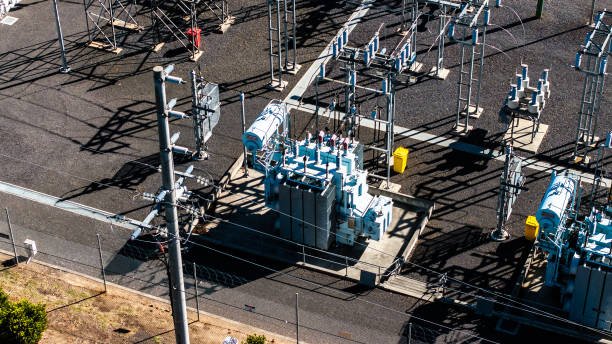
Selecting the wrong transformer type for an application can lead to inefficient operation, excessive losses, overheating, inadequate protection, higher maintenance costs, and premature equipment failure. Because transformers serve different roles across utility grids, industrial facilities, commercial buildings, renewable energy projects, and specialized installations, buyers must consider more than voltage and capacity alone. A systematic selection process helps match the transformer design with the actual electrical, environmental, safety, and operational conditions of the project.
When selecting transformer types and application scenarios, buyers should consider voltage level, required capacity, load characteristics, installation environment, cooling method, insulation system, fire and environmental requirements, efficiency, frequency, impedance, phase configuration, maintenance needs, available space, applicable standards, and lifecycle cost. The appropriate transformer type—such as oil-immersed, dry-type, distribution, power, isolation, or specialized transformer—should be selected according to the specific requirements of the power system and installation site.
Transformer selection should begin with the application rather than a particular product type. By defining the operating conditions and technical requirements first, buyers can identify the most suitable transformer configuration and avoid paying for unnecessary features or accepting a design that cannot reliably meet the project's demands.
What Factors Should Be Considered When Selecting Transformer Types and Application Scenarios?
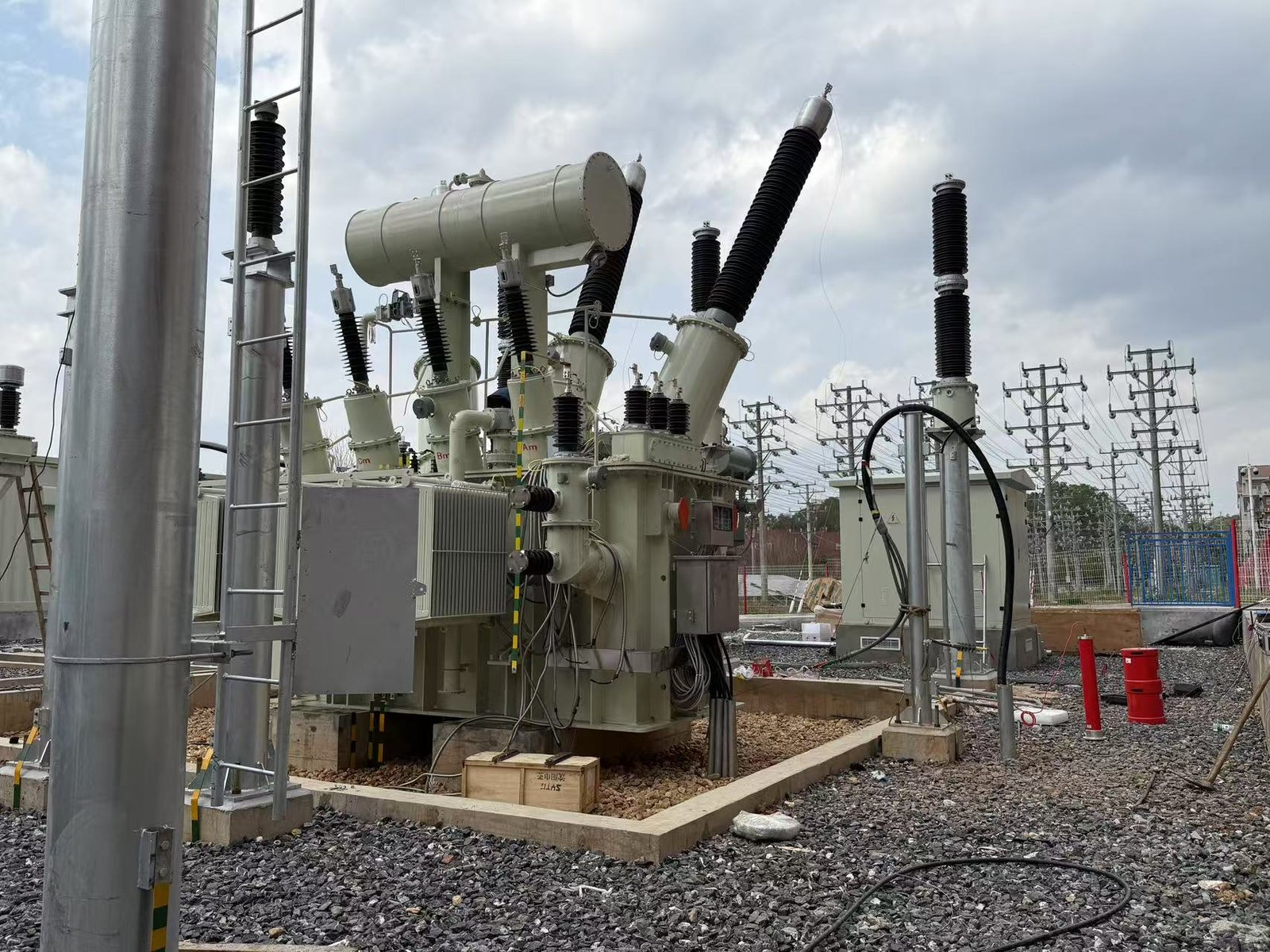
Selecting the wrong transformer type can create problems that are expensive to correct after procurement: insufficient capacity, excessive losses, unsuitable insulation, poor voltage regulation, inadequate cooling, excessive fire risk, difficult maintenance, or incompatibility with the installation environment. A transformer that performs well in an outdoor transmission substation may be inappropriate for an indoor commercial building, while a compact dry-type transformer suitable for a building distribution system may not be the economical choice for a large utility substation. Transformer selection should begin with the electrical duty and application scenario, then evaluate rated capacity, primary and secondary voltage, frequency, insulation level, load profile, impedance, regulation, cooling method, installation environment, fire and environmental requirements, efficiency, maintenance strategy, noise limits, reliability requirements, standards, transportation constraints, and total lifecycle cost. The best transformer is therefore not simply the lowest-priced or highest-rated unit; it is the type whose electrical, thermal, mechanical, environmental, safety, and economic characteristics match the actual service conditions.
The highest-MVA transformer is normally the safest choice because extra capacity always improves transformer performance.False
Excess capacity can increase purchase, transportation, installation, and sometimes no-load-loss costs. Transformer selection should balance present load, future growth, efficiency, thermal loading, reliability, voltage performance, and lifecycle economics.
A practical selection process should first define what the transformer must do, where it will operate, how the load behaves, and what happens if it fails. Only after those questions are answered should the buyer compare transformer construction and supplier quotations. This approach also prevents a common procurement mistake: selecting a transformer from a catalog based primarily on nominal MVA and voltage while overlooking the environmental and operational conditions that determine real-world performance.
1. Start With the Application Scenario, Not the Transformer Catalog
Transformer type selection is fundamentally an application-matching exercise.
Typical scenarios include:
- Power generation
- Utility transmission
- Utility distribution
- Industrial plants
- Commercial buildings
- Data centers
- Renewable-energy facilities
- Mining operations
- Railway electrification
- Marine facilities
- Oil and gas facilities
- Hospitals
- Infrastructure projects
- Residential distribution
- Temporary or mobile substations
Each scenario imposes a different combination of requirements.
For example, a large generator step-up transformer may prioritize:
- High MVA capacity
- High-voltage insulation
- Low losses
- High short-circuit withstand capability
- Reliability
- On-load or off-load voltage adjustment as required
- Large cooling capacity
- Extensive factory testing
An indoor commercial distribution transformer may place greater emphasis on:
- Fire safety
- Low environmental risk
- Compact dimensions
- Low noise
- Low maintenance
- Indoor installation suitability
A renewable-energy transformer may additionally need to accommodate:
- Variable loading
- Harmonic content
- Bidirectional power flow
- Frequent switching
- Grid-code requirements
- Outdoor exposure
- High inverter penetration
The application therefore determines the appropriate transformer architecture.
2. Which Main Transformer Types Should Buyers Compare?
The first classification normally concerns the transformer construction and intended duty.
| Transformer Type | Typical Applications | Major Strengths | Important Selection Issues |
|---|---|---|---|
| Oil-immersed power transformer | Utility substations, transmission, generation, industrial substations | High capacity, effective cooling, mature technology | Oil management, fire protection, environmental containment |
| Dry-type transformer | Buildings, indoor plants, selected industrial facilities | Reduced liquid-fire risk, indoor suitability | Cooling, enclosure, space, capacity and cost |
| Cast-resin transformer | Indoor distribution and industrial applications | Robust insulation, low maintenance | Thermal design, resin quality, environment |
| Oil-immersed distribution transformer | Utility and industrial distribution | Economical, mature, efficient | Oil/fire/environmental considerations |
| Autotransformer | Interconnection and voltage transformation with common winding | Lower material requirement for certain ratios | Electrical isolation is not provided |
| Three-winding transformer | Systems requiring multiple voltage levels | Multiple voltage interfaces | More complex design and impedance coordination |
| Phase-shifting transformer | Power-flow control | Controls active power flow | Specialized and costly |
| Furnace transformer | Electric furnaces | High-current specialized duty | Severe thermal and mechanical duty |
| Traction transformer | Railway systems | Specialized traction duty | Harmonics, duty cycle, railway requirements |
| Rectifier transformer | Industrial rectification | Designed for converter loads | Harmonics and special impedance requirements |
| Renewable-energy transformer | Solar and wind facilities | Grid/inverter integration | Harmonics, variable loading, environmental conditions |
The table should be treated as a screening framework rather than a substitute for detailed engineering.
3. How Does Rated Capacity Affect Transformer Selection?
Transformer capacity is one of the most visible specifications, but it should not be selected simply by matching today's maximum load.
The buyer should evaluate:
- Present maximum demand
- Average demand
- Load growth
- Diversity
- Emergency loading
- Redundancy requirements
- Ambient temperature
- Cooling conditions
- Harmonic loading
- Required reserve capacity
A transformer that is consistently overloaded may experience excessive thermal aging.
But oversizing also has disadvantages.
An excessively large transformer can produce:
- Higher capital cost
- Larger physical dimensions
- Higher transportation cost
- Higher installation cost
- Higher no-load energy consumption in some designs
- Lower utilization
- Potentially less favorable economic performance
The objective is to select capacity that provides an appropriate balance between normal loading, future growth, reliability margin, and efficiency.
4. Should Buyers Include Future Load Growth?
Yes.
A transformer is a long-life asset, so selection should consider the expected operating horizon.
A useful conceptual calculation is:
Required future capacity = forecast peak demand × appropriate reserve factor
The reserve factor should reflect the specific system rather than being arbitrarily maximized.
For example, a rapidly expanding industrial facility may justify additional capacity compared with a stable load center.
However, if demand growth is uncertain, buyers can compare:
- Larger transformer now
- Smaller transformer with planned future expansion
- Parallel transformer arrangement
- Modular substation strategy
This can sometimes reduce total project cost.
5. How Do Primary and Secondary Voltage Levels Affect Transformer Type?
Voltage level influences:
- Insulation design
- Bushing selection
- Clearances
- Winding construction
- Testing requirements
- Cooling and mechanical design
- Cost
- Transportation
A transformer operating at higher voltage requires an insulation system designed for the applicable system voltage and overvoltage stresses.
Buyers should specify not only nominal voltage but also relevant insulation requirements, including:
- Power-frequency withstand
- Lightning impulse withstand
- Switching impulse requirements where applicable
- Neutral insulation
- BIL or equivalent insulation-level requirements according to the applicable standard
The transformer should be designed for the actual system rather than simply its nominal voltage label.
6. How Important Is Frequency?
Frequency must match the intended electrical system.
Transformers designed for 50 Hz and 60 Hz systems are not automatically interchangeable in every application.
Frequency affects:
- Core flux
- Core losses
- Magnetizing current
- Thermal behavior
- Design optimization
Special applications may also involve unusual frequencies.
Buyers should clearly specify:
- Rated frequency
- Frequency variation
- Whether operation at multiple frequencies is required
7. When Should Buyers Choose Oil-Immersed Transformers?
Oil-immersed transformers are widely used for:
- Utility substations
- Generation
- Transmission
- Large industrial substations
- Outdoor installations
- High-capacity applications
Their major advantage is the combination of mature technology and effective heat transfer.
The insulating liquid provides both:
- Electrical insulation
- Heat-transfer capability
This makes oil-immersed construction particularly practical for high-power applications.
However, buyers must account for:
- Fire protection
- Oil containment
- Leakage prevention
- Environmental protection
- Oil testing
- Maintenance
- Accessory management
For outdoor substations and large MVA ratings, oil-immersed transformers are often a natural candidate.
8. When Are Dry-Type Transformers More Appropriate?
Dry-type transformers are often considered for:
- Indoor buildings
- Commercial facilities
- Hospitals
- Schools
- Industrial buildings
- Underground facilities
- Areas with strict liquid-fire restrictions
They eliminate the need for a large volume of liquid insulating medium.
This can simplify certain installation environments.
However, dry-type does not mean "maintenance-free" or "immune to thermal problems."
Buyers must still evaluate:
- Ambient temperature
- Ventilation
- Enclosure
- Cooling
- Altitude
- Dust
- Humidity
- Insulation system
- Noise
- Fire classification where applicable
Dry-type selection should therefore be based on the actual installation environment.
9. How Should Indoor and Outdoor Applications Be Distinguished?
The installation environment strongly affects transformer selection.
| Site Condition | Key Requirements |
|---|---|
| Indoor clean room | Compact design, noise, fire safety |
| Indoor industrial plant | Dust, heat, vibration, contamination |
| Outdoor substation | Weather protection, UV, temperature, pollution |
| Coastal site | Salt contamination and corrosion resistance |
| Desert | High ambient temperature, dust |
| High-altitude site | Reduced cooling and insulation considerations |
| Underground installation | Ventilation, fire safety, heat rejection |
| Chemical plant | Corrosive atmosphere and hazardous-area requirements |
| Data center | Reliability, redundancy, low losses |
| Renewable site | Outdoor exposure, variable loading, harmonics |
A transformer should be specified for the worst credible site conditions, not an idealized factory environment.
10. How Does Ambient Temperature Affect Selection?
Transformer thermal performance depends on the relationship between:
- Load
- Ambient temperature
- Cooling
- Transformer losses
- Heat dissipation
A transformer that works satisfactorily in a moderate climate may need different thermal design for a high-temperature environment.
Buyers should provide:
- Maximum ambient temperature
- Minimum ambient temperature
- Average ambient temperature
- Seasonal conditions
- Solar exposure for outdoor equipment
- Enclosure conditions
High ambient temperature can reduce available thermal margin.
11. Why Is Altitude Important?
At high altitude, air density is lower.
For air-cooled equipment, reduced air density can affect heat dissipation.
Altitude can also influence external insulation requirements because atmospheric insulation performance changes with pressure.
Therefore, buyers should specify site altitude during tendering.
A transformer designed for sea-level conditions should not simply be assumed suitable for a high-altitude site without engineering verification.
12. How Do Load Characteristics Affect Transformer Type?
Two facilities with the same peak MVA can impose very different electrical stresses.
The buyer should identify whether the load is:
- Resistive
- Inductive
- Motor-dominated
- Rectifier-based
- Inverter-based
- Welding-based
- Furnace-based
- Highly variable
- Cyclic
- Intermittent
This matters because transformer design depends on actual duty.
A motor-heavy facility may involve:
- Starting currents
- Voltage dips
- Transient loading
A converter-heavy facility may involve:
- Harmonics
- Additional heating
- Special impedance requirements
A furnace application can involve highly repetitive and severe current variations.
Therefore, nominal MVA alone does not describe the load.
13. How Do Harmonics Affect Transformer Selection?
Harmonics are increasingly important because modern power systems contain many nonlinear loads.
Potential harmonic sources include:
- Variable-frequency drives
- UPS systems
- Data-center power electronics
- Solar inverters
- Wind converters
- Rectifiers
- EV charging systems
- Industrial converters
Harmonic currents can increase transformer heating and losses.
Where harmonic loading is significant, buyers may need to evaluate:
- Harmonic spectrum
- K-factor or applicable equivalent loading metric
- Winding eddy-current losses
- Neutral current
- Thermal capability
A conventional transformer should not automatically be assumed suitable for a heavily nonlinear load.
14. How Does Transformer Impedance Affect Application Selection?
Transformer impedance affects:
- Voltage regulation
- Fault current
- Parallel operation
- System stability
- Load sharing
Higher impedance can reduce prospective short-circuit current, but may produce greater voltage drop under load.
Lower impedance can improve voltage regulation but may allow higher fault currents.
Therefore, the buyer should coordinate transformer impedance with the complete power system.
15. How Does Voltage Regulation Influence Selection?
Voltage regulation is particularly important for loads sensitive to voltage variation.
It depends on transformer impedance, including:
- Winding resistance
- Leakage reactance
- Load current
- Load power factor
For applications with substantial voltage variation, buyers should evaluate actual operating regulation rather than relying only on nominal transformer specifications.
Tap changers may be required where system voltage must be actively controlled.
16. When Is an On-Load Tap Changer Appropriate?
An OLTC can change transformer turns ratio while the transformer remains energized and carrying load.
It may be appropriate when:
- System voltage varies significantly
- Load changes substantially
- Voltage must be regulated continuously
- The transformer is part of a utility voltage-control scheme
However, OLTCs introduce:
- Additional mechanical components
- Maintenance requirements
- Switching contacts
- Control systems
- More complex diagnostics
For applications without a meaningful voltage-regulation requirement, a simpler tap arrangement may be more economical.
17. How Does Cooling Method Affect Transformer Selection?
Cooling must remove heat generated by:
- Core losses
- Winding losses
- Stray losses
- Auxiliary components
Common cooling approaches include:
- Natural oil/natural air
- Forced air
- Forced oil
- Forced oil and forced air
- Air cooling for dry-type units
The appropriate system depends on:
- MVA
- Ambient temperature
- Duty cycle
- Installation
- Redundancy
- Noise requirements
Higher-capacity transformers generally require more sophisticated heat-transfer arrangements.
18. How Should Buyers Consider Redundancy?
For critical applications, the question is not merely "What MVA transformer do I need?"
It is also:
"What happens if this transformer fails?"
Critical facilities may require:
- N+1 transformer arrangements
- Parallel transformers
- Dual incoming supplies
- Spare transformer strategy
- Emergency mobile transformers
Examples include:
- Hospitals
- Data centers
- Major industrial plants
- Airports
- Utility substations
- Critical infrastructure
A smaller transformer arrangement with redundancy can sometimes provide better resilience than one extremely large transformer.
19. How Does Fire Risk Affect Transformer Selection?
Fire safety can materially influence the choice between oil-filled and dry-type transformers.
For oil-filled equipment, buyers may need:
- Fire barriers
- Oil containment
- Drainage systems
- Fire detection
- Fire suppression
- Adequate separation distances
For dry-type equipment, the liquid-fire risk is reduced, but buyers still need to evaluate:
- Insulation fire behavior
- Enclosure
- Ventilation
- Local fire requirements
Fire safety should be coordinated with applicable building and electrical regulations.
20. How Do Environmental Requirements Affect Transformer Type?
Environmental considerations may include:
- Oil leakage risk
- Fire risk
- Noise
- Energy efficiency
- Greenhouse-gas considerations
- End-of-life recycling
- Fluid biodegradability
- Site sensitivity
Natural ester insulating fluids, for example, may be considered where environmental and fire-safety requirements support their use.
However, fluid selection should also consider:
- Temperature behavior
- Compatibility
- Equipment design
- Maintenance
- Supplier availability
- Standards and approvals
"Eco-friendly" should not be treated as a standalone specification; the fluid and transformer system must remain technically suitable.
21. How Important Is Noise?
Noise can be critical in:
- Residential areas
- Hospitals
- Commercial buildings
- Urban substations
- Data centers
Transformer noise can arise from:
- Core magnetostriction
- Cooling fans
- Pumps
- Mechanical vibration
If the transformer will be installed near occupied areas, buyers should establish noise requirements during procurement rather than attempting to reduce noise after installation.
22. How Do Maintenance Requirements Influence Transformer Type?
Buyers should compare:
- Routine inspection
- Oil testing
- Cooling-system maintenance
- OLTC maintenance
- Bushing testing
- Monitoring
- Spare parts
- Technician availability
Oil-filled transformers generally require liquid-related management.
Dry-type transformers eliminate liquid management but still require inspection and cleaning, particularly in dusty industrial environments.
The best transformer is not necessarily the one requiring the least theoretical maintenance; it is the one whose maintenance requirements match the owner's technical capability.
23. How Does Transformer Construction Quality Affect Type Selection?
Transformer type and manufacturing quality are closely connected.
Buyers should evaluate:
- Core assembly
- Winding manufacturing
- Insulation processing
- Vacuum drying
- Oil filling
- Sealing
- Tank welding
- Bushing installation
- OLTC assembly
- Factory testing
For large power transformers, manufacturing quality can have a greater effect on lifetime reliability than small differences in initial purchase price.
24. What Standards Should Buyers Consider?
The applicable transformer standard depends on the market and application.
Common standards families include:
- IEC
- IEEE
- ANSI
- National and regional standards
- Utility-specific specifications
The buyer should define the governing standard before comparing quotations.
Important requirements can include:
- Temperature rise
- Dielectric tests
- Lightning impulse tests
- Short-circuit withstand
- Noise
- Loss guarantees
- Routine tests
- Type tests
- Special tests
Two transformers with similar nameplate ratings may not be technically equivalent if their test and design requirements differ.
25. What Factory Tests Should Be Required?
Depending on the transformer type and project, buyers may require tests such as:
- Winding resistance
- Turns ratio
- No-load loss and current
- Load loss
- Impedance
- Dielectric tests
- Induced-voltage tests
- Applied-voltage tests
- Temperature-rise tests
- Partial-discharge tests where applicable
- Lightning impulse tests
- SFRA
- Leak testing
- Functional tests of accessories
Large power transformers may require additional special tests based on the project specification.
26. How Should Buyers Compare Oil-Filled and Dry-Type Transformers?
A simplified comparison is useful:
| Factor | Oil-Filled | Dry-Type |
|---|---|---|
| Typical capacity | Small to very large | Small to medium, with specialized larger designs |
| Indoor use | Possible with appropriate precautions | Often attractive |
| Outdoor utility use | Very common | Application-dependent |
| Cooling | Excellent heat-transfer capability | Air-based |
| Liquid management | Required | Not applicable |
| Oil leakage risk | Present | Eliminated |
| Fire considerations | Requires oil-related precautions | Different fire/insulation considerations |
| Maintenance | Oil and accessories require attention | Cleaning and thermal/accessory inspection |
| High-capacity utility duty | Strong fit | More application-specific |
| Space-sensitive indoor use | May require containment | Often favorable |
This is not a universal ranking. Actual design and site requirements determine suitability.
27. How Should Buyers Evaluate Special-Purpose Transformers?
Special loads should not automatically use a standard power transformer.
Examples include:
- Furnace transformers
- Rectifier transformers
- Traction transformers
- Converter transformers
- Phase-shifting transformers
- Grounding transformers
- Three-winding transformers
Special-purpose transformers may require specialized:
- Impedance
- Winding arrangements
- Cooling
- Insulation
- Harmonic capability
- Mechanical design
- Protection coordination
The supplier should receive detailed load and system information before design finalization.
28. How Does Renewable Energy Change Transformer Selection?
Solar and wind projects often have different operating characteristics from traditional generation.
Buyers should consider:
- Inverter characteristics
- Harmonic spectrum
- Variable loading
- Bidirectional power flow
- Voltage regulation
- Grid-code requirements
- Outdoor conditions
- Frequent switching
- Ambient temperature
A renewable-energy transformer should therefore be selected based on the electrical behavior of the inverter and grid connection, not simply the installed generation capacity.
29. How Should Data Centers Select Transformers?
Data centers place unusually high value on:
- Availability
- Redundancy
- Low losses
- Predictable thermal behavior
- Low noise
- Monitoring
- Maintainability
The transformer selection should be coordinated with:
- UPS systems
- Generator systems
- Harmonic loads
- Dual power paths
- Emergency operation
The lowest-cost transformer may be inappropriate if its failure would create a disproportionately large business loss.
30. How Should Industrial Facilities Select Transformers?
Industrial environments can be more demanding because of:
- Motors
- Drives
- Furnaces
- Welders
- Dust
- Heat
- Vibration
- Harmonics
- Chemical contamination
The buyer should therefore characterize both the electrical load and physical environment.
A clean indoor manufacturing facility and a heavy industrial plant may require completely different transformer specifications even at the same MVA rating.
31. How Does Location Affect Transportation and Installation?
Large power transformers can be difficult and expensive to transport.
Buyers should evaluate:
- Road restrictions
- Bridge limits
- Transformer dimensions
- Total transport weight
- Lifting equipment
- Installation access
- Foundation dimensions
- On-site assembly
- Oil handling
Sometimes a technically ideal transformer is impractical because it cannot be transported efficiently to the site.
Therefore, logistics should be considered during transformer selection rather than after manufacturing.
32. How Should Buyers Balance Purchase Price and Lifecycle Cost?
A transformer purchase should be evaluated using:
Total Cost of Ownership = Purchase + Installation + Losses + Maintenance + Risk + End-of-Life Costs
The purchase price is only one component.
A more expensive transformer can have:
- Lower losses
- Better efficiency
- Longer life
- Better monitoring
- Lower maintenance
- Better reliability
For equipment expected to operate for decades, these differences can become economically important.
How Do Voltage, Capacity, and Load Characteristics Determine Transformer Types and Application Scenarios?
Choosing a transformer by MVA rating alone can create serious design and purchasing problems. Two transformers with the same capacity may require completely different constructions because one serves a stable residential distribution load while the other supplies motors, rectifiers, furnaces, solar inverters, or a high-voltage transmission network. Likewise, voltage level affects insulation, winding arrangement, bushings, clearances, testing, and cost, while load characteristics determine thermal stress, harmonics, voltage regulation, short-circuit requirements, and cooling needs. Transformer type and application scenario should therefore be determined by the combined requirements of voltage, capacity, and load characteristics, together with frequency, insulation level, environment, duty cycle, harmonics, impedance, cooling, reliability, and future load growth. Voltage primarily establishes the insulation and winding architecture; capacity establishes the thermal and electromagnetic scale of the transformer; and load characteristics determine how the transformer must behave during normal, transient, cyclic, nonlinear, or emergency operation. Understanding their interaction enables buyers to select an appropriate oil-immersed, dry-type, distribution, power, autotransformer, three-winding, rectifier, furnace, traction, renewable-energy, or other specialized transformer rather than simply purchasing the largest or lowest-priced available unit.

The most reliable transformer-selection process starts by separating three questions that are often incorrectly combined: What voltage must the transformer withstand and transform? How much apparent power must it continuously and temporarily carry? What type of electrical load will actually be connected to it? Once these questions are answered, the application scenario becomes much clearer. The following framework explains how these parameters interact and how buyers can convert them into a technically equivalent procurement specification.
Transformer type can be selected accurately from MVA capacity alone.False
Transformer selection also depends on voltage ratio, insulation level, load profile, power factor, harmonics, duty cycle, impedance, cooling, environment, fire requirements, regulation, and application-specific requirements.
How Do Voltage, Capacity, and Load Characteristics Interact?
Voltage, capacity, and load characteristics are not independent specifications.
They interact through the transformer's:
- Winding design
- Insulation system
- Core design
- Conductor size
- Thermal design
- Leakage reactance
- Mechanical strength
- Cooling system
- Tap-changing arrangement
- Protection requirements
A simplified engineering relationship is:
Voltage determines electrical stress; capacity determines thermal and electromagnetic scale; load characteristics determine operating stress.
This can be visualized as a three-dimensional selection problem:
| Parameter | Main Question | Transformer Design Consequence | Application Consequence |
|---|---|---|---|
| Voltage | What voltage must be transformed? | Winding insulation, bushings, clearances | Distribution, transmission, generation, interconnection |
| Capacity | How much MVA is required? | Conductor, core, cooling, tank size | Small distribution to large power transformer |
| Load | What electrical behavior will occur? | Thermal, mechanical, harmonic and regulation design | Motors, rectifiers, furnaces, inverters, buildings |
| Power factor | How reactive is the load? | Voltage-regulation behavior | Industrial, commercial, utility |
| Harmonics | Is the current nonlinear? | Additional heating and loss considerations | UPS, VFD, PV, wind, rectifier loads |
| Duty cycle | Is loading constant or cyclic? | Thermal cycling and insulation stress | Furnace, traction, renewable, industrial |
| Fault level | What short-circuit stress exists? | Mechanical winding strength and impedance | Utility and industrial substations |
| Environment | Where will it operate? | Cooling, enclosure, insulation and corrosion | Indoor, outdoor, coastal, desert, high altitude |
This is why a transformer rated at, for example, 20 MVA cannot automatically be classified as suitable simply because another 20 MVA transformer is already operating successfully elsewhere.
How Does Voltage Determine Transformer Design?
Voltage is one of the first parameters that should be established because it determines the electrical insulation environment surrounding the transformer.
As voltage increases, the transformer generally requires more sophisticated control of:
- Electrical clearances
- Creepage distances
- Winding insulation
- Interwinding insulation
- Bushings
- Tap insulation
- Neutral insulation
- Surge protection
- Dielectric testing
The transformer therefore becomes more than a simple ratio-changing device.
A high-voltage transformer must withstand not only its normal operating voltage but also transient stresses produced by:
- Lightning
- Switching operations
- Faults
- System disturbances
The buyer must therefore specify the system voltage together with the appropriate insulation requirements.
For example, a transformer may have a nominal high-voltage winding rating, but its procurement specification should also address the applicable insulation level and dielectric test requirements.
Why Is the Voltage Ratio Important?
The ratio between primary and secondary voltage determines the transformer's fundamental application.
Typical functions include:
- Generator step-up
- Transmission step-down
- Distribution step-down
- Industrial voltage conversion
- Interconnection between different voltage levels
A generator step-up transformer typically raises generator voltage to a much higher transmission voltage.
A distribution transformer performs the opposite function by reducing medium or high distribution voltage to a usable customer voltage.
An industrial transformer may convert utility voltage to a plant-specific medium- or low-voltage level.
Thus, voltage ratio provides an important clue about application scenario.
How Does Capacity Determine Transformer Size?
Transformer capacity is generally expressed in VA, kVA, or MVA.
The rating indicates how much apparent power the transformer can transfer under specified operating conditions.
However, capacity is not simply a measure of physical size.
Higher capacity generally affects:
- Core size
- Winding conductor cross-section
- Number and arrangement of cooling surfaces
- Radiator size
- Tank dimensions
- Oil volume for oil-filled designs
- Bushings
- Structural strength
- Transport weight
- Factory equipment requirements
Consequently, increasing MVA usually increases both manufacturing complexity and project cost.
But capacity must be selected according to the actual load rather than simply maximizing the rating.
How Should Required Capacity Be Estimated?
A practical preliminary approach is:
Required transformer capacity ≥ expected maximum apparent power demand + appropriate operating margin
The buyer should examine:
- Maximum active power
- Reactive power
- Power factor
- Load diversity
- Coincident demand
- Future expansion
- Emergency loading
- Redundancy
For a three-phase system, apparent power is related to line voltage and current through the standard three-phase relationship:
For transformer sizing, however, buyers should use the applicable system voltage and current definitions consistently and follow the project standard rather than relying on simplified calculations alone.
Why Is Apparent Power More Useful Than Active Power for Transformer Sizing?
Transformers are affected by both real and reactive components of current.
A load can consume relatively little active power while drawing substantial current because of poor power factor.
Since winding heating is related strongly to current, transformer capacity is normally expressed in apparent power rather than only kilowatts.
For example, two loads may each consume 8 MW:
- Load A at power factor 1.0
- Load B at power factor 0.8
The second load requires substantially higher apparent power and therefore greater transformer current capability.
This difference can determine whether a transformer is adequately sized.
How Does Power Factor Affect Transformer Selection?
Power factor influences:
- Required MVA
- Voltage regulation
- Current
- Losses
- System voltage drop
A low-power-factor load generally requires greater current for the same active power.
This means a transformer can reach its MVA or thermal limit even when the associated MW load appears moderate.
Industrial facilities with large motors, for example, may require special attention to reactive power.
Buyers should therefore provide expected power factor rather than specifying only MW demand.
How Do Load Characteristics Determine Transformer Type?
Load characteristics can be classified broadly as:
| Load Characteristic | Typical Example | Transformer Concern |
|---|---|---|
| Stable linear load | Conventional building load | Standard thermal design |
| Motor load | Pumps, compressors | Starting current, voltage drop |
| Highly variable load | Industrial process | Thermal cycling |
| Cyclic load | Furnace, traction | Repeated thermal stress |
| Nonlinear load | Rectifiers, UPS, VFDs | Harmonic heating |
| Inverter load | Solar, wind | Harmonics, switching, bidirectional flow |
| High-current load | Furnace, electrolysis | Specialized winding/current design |
| Critical load | Hospital, data center | Redundancy and reliability |
| Reactive load | Large motors | MVA and regulation |
| Rapidly changing load | Industrial drives | Dynamic voltage performance |
This classification is one of the most important steps in transformer selection.
What Transformer Types Are Commonly Associated With Different Applications?
| Application Scenario | Common Transformer Type | Typical Voltage/Capacity Characteristics | Important Load Characteristics |
|---|---|---|---|
| Power generation | Generator step-up transformer | High MVA, high voltage | Generator output, stable/high-capacity duty |
| Transmission substation | Power transformer | High voltage, high MVA | Grid load and fault duty |
| Distribution | Distribution transformer | Lower MVA, medium-to-low voltage | Diverse customer loads |
| Commercial building | Dry-type/cast-resin | Low-to-medium capacity | Lighting, HVAC, electronics |
| Industrial plant | Oil-filled or dry-type | Medium-to-high capacity | Motors, drives, nonlinear loads |
| Solar farm | Renewable/inverter transformer | Medium-to-high capacity | Variable inverter output, harmonics |
| Wind farm | Renewable/collector transformer | Medium-to-high capacity | Variable generation, converter effects |
| Furnace | Furnace transformer | Specialized high-current duty | Cyclic, high-current load |
| Railway | Traction transformer | Specialized voltage and capacity | Cyclic traction load |
| Rectifier plant | Rectifier transformer | Specialized capacity | Harmonic-rich converter load |
| Grid interconnection | Autotransformer or power transformer | High capacity | System interconnection |
| Multi-voltage industrial system | Three-winding transformer | Multiple voltage levels | Several electrical buses |
These categories are starting points. Actual engineering specifications must be developed from the system data.
How Does Voltage Influence the Choice Between Distribution and Power Transformers?
The distinction between "distribution transformer" and "power transformer" is not based solely on one universal MVA threshold.
The intended application matters.
Distribution transformers are optimized for systems where they remain energized for long periods and supply changing downstream loads.
Consequently, their design places significant emphasis on:
- No-load losses
- Compactness
- Reliability
- Distribution voltage
- Maintenance
- Cost
Power transformers used in transmission and generation applications tend to emphasize:
- High MVA capacity
- High-voltage insulation
- Thermal capability
- System fault withstand
- Voltage regulation
- Complex accessories
- Extensive testing
- Long-term reliability
The boundary between categories depends on industry practice, standards, utility requirements, and the specific project.
When Is an Oil-Immersed Transformer Appropriate?
Oil-immersed construction is widely used for:
- Utility substations
- Transmission
- Generation
- Large industrial substations
- Outdoor installations
- High-capacity applications
The insulating liquid provides both electrical insulation and heat-transfer capability.
This is particularly valuable as transformer capacity increases.
Higher MVA produces more heat, and efficient heat removal becomes increasingly important.
Oil-immersed construction can therefore be advantageous for high-capacity applications where:
- Large heat loads must be dissipated
- Outdoor installation is acceptable
- Oil containment can be provided
- Fire protection is properly engineered
When Is a Dry-Type Transformer More Appropriate?
Dry-type transformers can be particularly attractive in:
- Indoor electrical rooms
- Commercial buildings
- Hospitals
- Schools
- Data centers
- Underground facilities
- Selected industrial applications
They avoid the use of a large volume of liquid insulation.
However, buyers should not interpret "dry-type" as automatically superior.
Dry-type transformers still need appropriate:
- Ventilation
- Thermal management
- Insulation
- Enclosure
- Environmental protection
- Cleaning
- Fire-performance assessment
The correct choice depends on the complete installation scenario.
How Does Capacity Influence Cooling Requirements?
Transformer losses are converted into heat.
The principal sources include:
- Core loss
- Winding loss
- Stray loss
- Auxiliary losses
As capacity and loading increase, heat generation can become substantial.
Therefore, cooling arrangements may progress from relatively simple natural cooling to systems incorporating:
- Radiators
- Fans
- Pumps
- Forced oil circulation
- Forced air
- Multiple cooling stages
A high-capacity transformer may need several cooling modes so that it can operate efficiently under different loading conditions.
Why Does Load Profile Matter More Than Peak MVA Alone?
Imagine two transformers, both rated at 30 MVA.
Transformer A
- 30 MVA peak
- 10 MVA average
- Occasional peaks
- Stable ambient temperature
Transformer B
- 30 MVA peak
- 25 MVA average
- Frequent overloads
- High ambient temperature
- Significant harmonic content
Although both have the same nameplate rating, Transformer B experiences much greater thermal stress.
The transformer-selection process should therefore evaluate the entire load-duration profile.
How Do Motor Loads Affect Transformer Selection?
Large motors can produce high starting currents.
These can cause:
- Voltage dips
- Increased transformer current
- Temporary thermal stress
- System disturbances
The transformer should therefore be evaluated for both steady-state and starting conditions.
Important information includes:
- Motor size
- Starting method
- Starting current
- Number of simultaneous starts
- Motor acceleration time
- System short-circuit strength
A transformer selected only from the steady-state MW demand may be inadequate for the actual industrial application.
How Do Nonlinear Loads Affect Transformer Selection?
Modern electrical installations increasingly contain nonlinear loads.
Examples include:
- Variable-frequency drives
- UPS systems
- Data-center equipment
- EV chargers
- Solar inverters
- Rectifiers
- Switching power supplies
These loads can produce harmonic currents.
Harmonics may increase:
- Winding eddy-current losses
- Stray losses
- Temperature
- Neutral current
- Acoustic noise in some circumstances
The transformer therefore needs to be evaluated for the expected harmonic spectrum.
How Do Renewable-Energy Applications Differ?
Renewable-energy transformer selection has become increasingly important because inverter-based generation behaves differently from conventional rotating generators.
A solar or wind transformer may experience:
- Variable power
- Rapid power changes
- Converter-generated harmonics
- Switching-frequency effects
- Bidirectional power flow
- Grid-code requirements
- Outdoor environmental exposure
Therefore, a renewable-energy transformer should be specified according to the inverter and grid interface characteristics.
Installed generation capacity alone is insufficient.
How Does Capacity Affect Short-Circuit Performance?
Transformer impedance influences fault current.
A lower impedance generally allows higher fault current through the transformer, while higher impedance can restrict fault current.
The buyer must therefore coordinate transformer impedance with:
- Switchgear ratings
- Protection settings
- Busbar design
- Grid fault levels
- Parallel transformer operation
Increasing transformer capacity without reviewing system fault levels can create coordination problems.
How Does Load Power Factor Affect Voltage Regulation?
Voltage regulation depends partly on transformer impedance and the characteristics of the load.
With inductive loads, leakage reactance can contribute significantly to voltage drop.
Therefore, a transformer serving:
- Large motors
- Industrial inductive loads
- Poor-power-factor systems
may need different regulation characteristics from one serving a predominantly resistive load.
Tap-changing equipment may become important where voltage must remain within a narrow range.
When Should an On-Load Tap Changer Be Considered?
OLTC is useful where the system requires voltage adjustment while energized.
Typical scenarios include:
- Transmission substations
- Major distribution substations
- Networks with large load variation
- Systems with changing upstream voltage
An OLTC adds:
- Mechanical complexity
- Contacts
- Drive equipment
- Control electronics
- Maintenance requirements
It should therefore be selected because the application requires it, not simply because it is technically available.
How Do Voltage, Capacity, and Load Determine Transformer Accessories?
Accessories are often overlooked during initial selection.
Depending on the transformer, buyers may require:
- Buchholz relay
- Pressure-relief device
- Oil-level indicators
- Temperature indicators
- Winding-temperature indicators
- Cooling fans
- Oil pumps
- Conservator
- OLTC
- Online DGA
- Bushing monitoring
- Surge protection
- Control cabinets
- Remote monitoring
The larger and more critical the transformer, the more important accessory selection becomes.
How Does Criticality Influence Transformer Type?
Electrical capacity alone does not describe the consequence of failure.
Consider:
- Hospital transformer
- Data-center transformer
- Utility transmission transformer
- Small workshop transformer
A failure of each unit can have radically different consequences.
Critical applications may justify:
- Redundant transformers
- Parallel units
- Advanced monitoring
- Online diagnostics
- Spare-transformer strategy
- More extensive factory testing
This can affect transformer type and total project architecture.
How Does Indoor or Outdoor Location Influence Selection?
The environment changes the requirements for:
- Enclosure
- Cooling
- Corrosion protection
- Insulation
- Pollution resistance
- Fire protection
- Noise
- Maintenance access
For example, an outdoor coastal transformer may require corrosion-resistant construction and suitable insulation for salt contamination.
An indoor industrial transformer may instead face dust, chemical vapors, heat, and restricted ventilation.
How Should Buyers Account for Future Capacity?
Future demand should be considered without automatically choosing excessive capacity.
Three common strategies are:
| Strategy | Advantage | Risk |
|---|---|---|
| Oversize now | Simple future expansion | Higher initial and potentially no-load costs |
| Size for current demand | Lower initial cost | May require early replacement |
| Modular/parallel units | Flexible growth and redundancy | More equipment and coordination |
The best strategy depends on demand certainty and project economics.
How Do Voltage and Capacity Influence Manufacturing Cost?
Increasing voltage can increase:
- Insulation material
- Bushing cost
- Manufacturing complexity
- Testing requirements
- Clearances
Increasing MVA can increase:
- Core material
- Copper/aluminum conductor
- Oil volume
- Cooling equipment
- Tank size
- Mechanical reinforcement
- Factory handling requirements
Increasing both simultaneously can therefore produce a substantially more complex transformer.
How Do Installation Environment and Safety Requirements Affect Transformer Types and Application Scenarios?
A transformer that is electrically suitable on paper can still be unsuitable for its installation site. Indoor electrical rooms, outdoor substations, coastal facilities, high-altitude locations, underground spaces, chemical plants, hospitals, and data centers impose very different requirements for cooling, insulation, fire protection, environmental containment, noise, corrosion resistance, access, and emergency response. Choosing transformer type without considering these conditions can lead to overheating, insulation deterioration, fire or spill hazards, excessive noise, difficult maintenance, or costly site modifications. Installation environment and safety requirements should be evaluated together with voltage, capacity, load characteristics, and applicable standards when selecting a transformer: dry-type transformers may be advantageous where liquid containment and fire risk are major concerns, while oil-immersed transformers can offer strong cooling performance and are widely suited to outdoor and high-capacity applications when appropriate fire, spill, and environmental controls are provided. The correct choice is therefore the transformer and installation system that safely manages the actual site hazards throughout its expected service life.
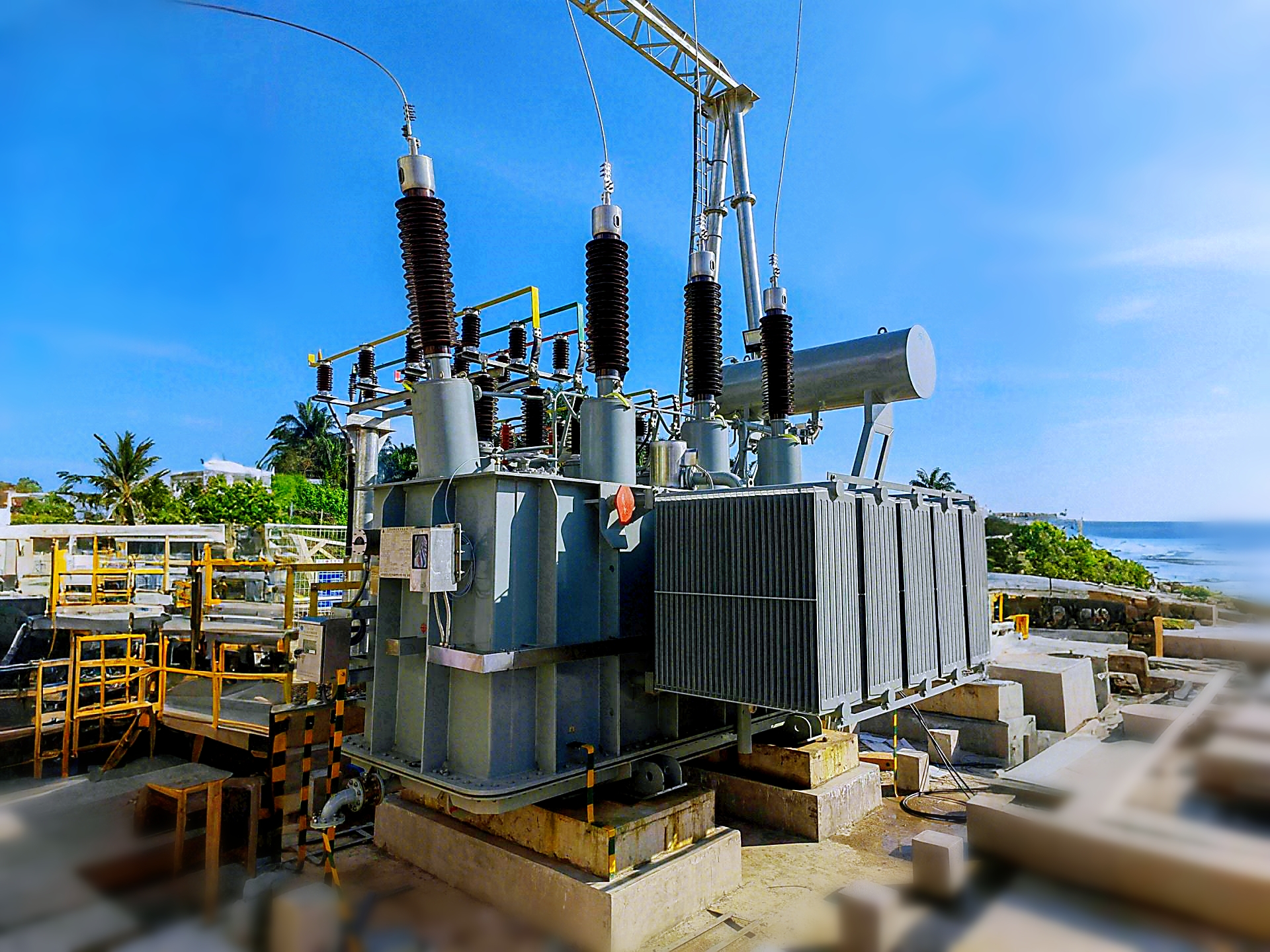
Installation conditions should not be treated as secondary information added after the transformer has been selected. They directly influence the transformer construction, cooling arrangement, insulation system, enclosure, accessories, fire protection, foundation, ventilation, maintenance strategy, and sometimes even the preferred insulating medium. The following framework shows how buyers can connect site conditions and safety requirements to practical transformer-type and application decisions.
Dry-type transformers eliminate all transformer-related fire risk.False
Dry-type transformers eliminate the large volume of liquid insulating fluid used by oil-filled transformers, but they still contain energized electrical equipment and combustible or heat-sensitive materials. Fire risk depends on the complete transformer design, insulation system, enclosure, protection, ventilation, installation, and applicable requirements.
Why Is the Installation Environment So Important?
A transformer generates heat, experiences electrical stress, and contains materials that must remain within specified operating limits.
The surrounding environment determines how effectively the transformer can:
- Reject heat
- Maintain insulation performance
- Resist contamination
- Resist corrosion
- Remain mechanically stable
- Be inspected and maintained
- Respond safely to abnormal conditions
The same transformer design can therefore have different performance depending on where it is installed.
Consider these examples:
| Installation Environment | Main Concern | Potential Transformer Selection Impact |
|---|---|---|
| Clean indoor electrical room | Space, ventilation, fire safety | Dry-type may be attractive |
| Outdoor substation | Weather and temperature | Oil-immersed often practical |
| Coastal area | Salt and corrosion | Enhanced protection required |
| Desert | Heat and dust | Cooling and enclosure require attention |
| High altitude | Reduced air density | Thermal and insulation assessment |
| Underground room | Heat removal and emergency access | Ventilation/fire strategy critical |
| Chemical plant | Corrosive or hazardous atmosphere | Specialized protection may be necessary |
| Hospital | Fire safety and continuity | Dry-type and redundancy may be considered |
| Data center | Reliability and availability | Redundancy, monitoring, low losses |
| Residential/urban area | Noise and safety | Low-noise and appropriate construction |
| Mining site | Dust, moisture, mechanical hazards | Ruggedized design/environmental protection |
| Flood-prone site | Water ingress | Elevation and enclosure protection |
This demonstrates why transformer selection cannot be separated from site engineering.
How Do Indoor Applications Influence Transformer Type?
Indoor installation is one of the most common scenarios in which buyers compare dry-type and liquid-filled transformers.
Dry-type transformers are often considered for:
- Commercial buildings
- Hospitals
- Schools
- Data centers
- Industrial buildings
- Underground facilities
- Transportation buildings
- High-occupancy structures
Their major attraction is that they do not require a large volume of liquid insulating medium.
This can simplify certain fire-safety and environmental-containment arrangements.
However, indoor dry-type installation still requires adequate:
- Ventilation
- Heat removal
- Clearance
- Enclosure
- Access
- Cleaning
- Electrical protection
A dry-type transformer cannot safely operate in an enclosed room if heat generated by its losses cannot be removed.
Can Oil-Filled Transformers Be Used Indoors?
In some applications, yes, but the decision must account for the applicable fire, building, electrical, and environmental requirements.
An oil-filled transformer introduces considerations such as:
- Insulating-liquid volume
- Fire protection
- Spill containment
- Drainage
- Separation
- Pressure relief
- Leak detection
- Emergency response
For that reason, an indoor oil-filled transformer may require more extensive site infrastructure than a comparable dry-type transformer.
The decision should therefore be based on the complete installation cost and risk profile rather than simply the transformer purchase price.
How Does Outdoor Installation Affect Transformer Selection?
Outdoor substations are common for utility and industrial power transformers.
Outdoor transformers must withstand:
- Rain
- Snow
- Solar radiation
- Wind
- Temperature cycling
- Humidity
- Pollution
- Dust
- UV exposure
- Corrosive atmospheres
Oil-immersed transformers are frequently used in these applications because their cooling systems can be well adapted to large power ratings and outdoor installation.
Nevertheless, outdoor installation does not eliminate safety requirements.
Buyers still need to address:
- Fire separation
- Oil containment
- Drainage
- Grounding
- Lightning protection
- Access control
- Security
- Emergency isolation
How Does Ambient Temperature Affect Transformer Selection?
Transformer losses become heat.
The transformer must transfer that heat to the surrounding environment without exceeding its permissible temperature limits.
Therefore, buyers should specify relevant site temperature conditions.
Important data include:
- Maximum ambient temperature
- Minimum ambient temperature
- Average ambient temperature
- Daily temperature variation
- Seasonal temperature
- Solar exposure
- Enclosure temperature
A transformer installed in a hot climate can have less thermal margin than the same unit operating in a cooler environment.
This may affect:
- Rated capacity
- Cooling arrangement
- Radiator size
- Fan requirements
- Temperature monitoring
- Permissible loading
Why Is Ventilation Critical for Dry-Type Transformers?
Dry-type transformers reject heat directly through air.
Poor ventilation can cause room temperature to rise.
If room temperature becomes excessive, transformer temperature rises even if the electrical load remains within the nominal rating.
The installation therefore needs adequate:
- Air inlet area
- Air outlet area
- Natural ventilation or mechanical ventilation
- Room volume
- Clearance around the transformer
For forced-air cooling, fan reliability also becomes important.
A transformer specification should therefore be coordinated with the building's HVAC or ventilation design.
How Does Altitude Affect Transformer Safety?
High-altitude locations require special attention.
At increased altitude, air density decreases.
This can influence:
- Air-based heat transfer
- External insulation performance
- Cooling equipment
- Electrical clearances
The manufacturer should know the actual installation altitude before finalizing the design.
This is especially important for:
- Dry-type transformers
- Outdoor air-insulated equipment
- High-voltage installations
A transformer designed for standard conditions should not automatically be assumed suitable for high-altitude operation.
How Does Humidity Affect Transformer Performance?
Humidity becomes important because moisture can affect insulation systems and electrical equipment.
Potential concerns include:
- Condensation
- Moisture absorption
- Reduced insulation performance
- Corrosion
- Surface contamination
Dry-type transformers can be particularly sensitive to condensation in environments where temperature changes cause moisture to form on surfaces.
Oil-filled transformers also require careful moisture management because water can affect oil and solid insulation.
Depending on the environment, buyers may need:
- Space heaters
- Dehumidification
- Appropriate enclosure protection
- Moisture monitoring
- Breather systems where applicable
How Does Coastal Installation Change Transformer Requirements?
Coastal locations can expose transformers to salt-laden air.
Salt contamination can increase surface leakage and accelerate corrosion.
The buyer should therefore evaluate:
- Pollution severity
- Insulation creepage requirements
- Bushing selection
- Coating systems
- Stainless or protected components where appropriate
- Tank corrosion protection
- Enclosure protection
Coastal transformer selection is therefore not simply an outdoor-versus-indoor decision.
It is also an insulation pollution and corrosion-management problem.
What About Desert Environments?
Desert installations combine:
- High ambient temperature
- Dust
- Solar radiation
- Large temperature variation
Dust can accumulate on:
- Radiators
- Cooling fans
- Insulators
- Enclosures
- Control equipment
This can reduce cooling effectiveness or increase maintenance requirements.
The transformer and site should therefore be designed with:
- Appropriate cooling capacity
- Dust-resistant equipment
- Accessible cleaning arrangements
- Suitable filtration for enclosed cooling systems
- Appropriate corrosion and UV protection
How Do Underground Transformer Installations Differ?
Underground rooms create a major heat-management challenge.
There may be limited natural airflow and restricted access.
The design must address:
- Transformer heat rejection
- Ventilation
- Fire detection
- Emergency evacuation
- Oil containment if applicable
- Water ingress
- Maintenance access
- Equipment replacement routes
A transformer that is perfectly acceptable outdoors may require significant adaptation for underground installation.
How Does Fire Safety Influence Transformer Type?
Fire safety is often one of the most important differences between transformer application scenarios.
For oil-filled transformers, the insulating liquid creates a potential fire and spill hazard that must be addressed through the complete installation design.
Measures can include:
- Fire barriers
- Separation distances
- Fire detection
- Fire suppression
- Oil containment
- Drainage
- Emergency isolation
For dry-type transformers, the absence of liquid insulation removes a major liquid-fire and spill consideration.
However, dry-type equipment still contains:
- Conductors
- Insulation
- Structural materials
- Energized components
Therefore, dry-type should not be described as inherently risk-free.
How Do Environmental Requirements Affect Oil-Filled Transformer Selection?
Oil-filled transformers require consideration of the insulating fluid itself.
The buyer may need to evaluate:
- Mineral oil
- Natural ester fluid
- Synthetic ester fluid
- Other approved insulating liquids
Selection depends on:
- Fire characteristics
- Environmental sensitivity
- Temperature
- Equipment compatibility
- Maintenance requirements
- Supplier availability
- Applicable standards
Natural ester fluids may be attractive in environmentally sensitive or fire-sensitive applications, but their use should be evaluated as part of the complete transformer design.
How Does Oil Containment Affect Application Scenarios?
For oil-filled transformers, the site may need provisions for preventing spilled insulating liquid from spreading.
Potential measures include:
- Bunded areas
- Containment pits
- Drainage systems
- Oil-water separation
- Collection tanks
- Fire barriers
The required arrangement depends on the transformer size, oil volume, local requirements, and site risk assessment.
This can significantly affect civil-engineering costs.
Consequently, when comparing oil-filled and dry-type transformers, buyers should compare transformer plus site infrastructure, not transformer purchase price alone.
How Does Pollution Affect Transformer Insulation?
Outdoor insulation can become contaminated by:
- Salt
- Industrial dust
- Cement dust
- Smoke
- Chemical deposits
When moisture is present, contamination can increase surface leakage.
The buyer should therefore consider the site's pollution environment when selecting:
- Bushings
- Insulators
- Creepage distances
- Insulation coordination
A transformer that is suitable for a clean rural environment may require different external insulation arrangements in a heavily polluted industrial area.
How Does Dust Affect Dry-Type Transformers?
Dust can be especially important for dry-type transformers because cooling air passes directly through or around the transformer.
Accumulated dust can:
- Restrict ventilation
- Reduce heat dissipation
- Contaminate insulation surfaces
- Increase maintenance requirements
Industrial dry-type transformer installations should therefore consider enclosure design and cleaning access.
In very dusty environments, a standard open-ventilated configuration may not be appropriate without additional protection.
How Do Hazardous Industrial Areas Affect Transformer Selection?
Chemical, petrochemical, mining, and oil-and-gas facilities may contain atmospheres with:
- Flammable gases
- Combustible dust
- Corrosive chemicals
- High humidity
Transformer selection must then be coordinated with the site's hazardous-area classification and applicable equipment requirements.
The buyer may need to consider:
- Equipment location
- Enclosure
- Protection
- Ventilation
- Temperature
- Ignition-risk controls
- Emergency isolation
The transformer cannot be evaluated independently from the hazardous-area engineering.
How Does Noise Influence Transformer Selection?
Transformer noise can become a significant concern in:
- Residential areas
- Hospitals
- Offices
- Hotels
- Schools
- Urban substations
Noise can originate from:
- Core magnetostriction
- Cooling fans
- Pumps
- Mechanical vibration
A transformer with a higher capacity or different cooling arrangement may have a different acoustic profile.
Buyers should establish maximum acceptable noise levels during procurement.
How Does Vibration Affect Installation?
Mechanical vibration can arise from:
- Core magnetostriction
- Electromagnetic forces
- Cooling equipment
- Loose components
If the transformer is installed near sensitive equipment, vibration may become an operational concern.
The installation may require:
- Suitable foundation design
- Vibration isolation
- Correct anchoring
- Mechanical inspection
This is especially relevant to:
- Hospitals
- Laboratories
- Data centers
- Precision industrial facilities
How Do Seismic Requirements Affect Transformer Selection?
In earthquake-prone regions, the transformer must be evaluated for seismic loading.
This can affect:
- Tank strength
- Radiator attachment
- Bushing support
- Internal active-part restraint
- Anchoring
- Foundation
- Accessory mounting
The buyer should specify applicable seismic requirements during the tender stage.
Retrofitting seismic capability after manufacturing can be considerably more difficult.
How Does Flood Risk Affect Transformer Installation?
Flooding can create severe electrical and mechanical risks.
Potential strategies include:
- Elevated foundations
- Higher equipment platforms
- Waterproofed cable routes
- Drainage
- Flood barriers
- Water-level monitoring
For outdoor oil-filled transformers, flood protection also reduces the risk of water entering electrical components and site containment systems.
How Does Lightning Protection Affect Transformer Application?
Transformers connected to overhead transmission or distribution networks can be exposed to lightning-related overvoltages.
The installation should therefore be coordinated with:
- Surge arresters
- Grounding
- Shielding
- Insulation coordination
- Bushing selection
The transformer itself is only one part of the lightning-protection system.
How Does Grounding Affect Safety?
A transformer installation requires an appropriate grounding system for:
- Tank
- Core where applicable
- Neutral
- Control systems
- Surge protection
- Associated switchgear
Grounding affects:
- Personnel safety
- Fault-current paths
- Protection operation
- Lightning performance
- Electromagnetic interference
The transformer manufacturer and site electrical engineer should coordinate grounding requirements.
How Does Physical Access Affect Transformer Selection?
A transformer must eventually be:
- Installed
- Inspected
- Maintained
- Repaired
- Replaced
Therefore, buyers should consider:
- Door dimensions
- Crane capacity
- Transport routes
- Maintenance clearance
- Removable panels
- Cable access
- Oil-processing access
A transformer that physically fits the room may still be difficult to maintain.
How Do Emergency Response Requirements Affect Transformer Type?
Critical installations should consider what happens during:
- Internal faults
- Fire
- Cooling failure
- Oil leakage
- External short circuits
- Loss of auxiliary power
Useful provisions may include:
- Remote monitoring
- Temperature alarms
- Gas monitoring
- Pressure relief
- Fire detection
- Emergency shutdown
- Redundant cooling
- Spare transformer strategy
For high-criticality facilities, these features can be more valuable than small differences in initial purchase price.
How Does Transformer Capacity Change Safety Requirements?
As capacity increases, the consequences of an abnormal event can also increase.
Large oil-filled transformers may contain substantial quantities of insulating liquid.
Higher-capacity transformers also generate more heat and may have larger:
- Fault-energy levels
- Mechanical forces
- Physical dimensions
- Oil volumes
- Cooling requirements
Therefore, increasing MVA can affect the entire installation, not just the transformer itself.
How Do Environment and Transformer Type Relate?
A practical screening table is:
| Environment/Safety Condition | Potentially Preferred Direction | Main Reason |
|---|---|---|
| Indoor occupied building | Dry-type often considered | Reduced liquid containment concern |
| Large outdoor substation | Oil-immersed often considered | Strong high-capacity cooling capability |
| High fire-sensitivity location | Dry-type or suitable alternative | Reduced liquid-fire/spill concern |
| Environmentally sensitive site | Dry-type or suitable ester-filled design | Reduced environmental risk depending on configuration |
| Very high MVA | Oil-immersed often practical | Efficient liquid-based heat transfer |
| Coastal site | Either, with enhanced protection | Pollution and corrosion control |
| High-altitude site | Application-specific | Cooling and insulation correction |
| Dusty industrial site | Application-specific | Enclosure and cooling management |
| Underground installation | Application-specific | Ventilation and emergency access |
| Hazardous industrial zone | Specialized design | Hazardous-area compliance |
| Flood-prone area | Elevated/protected installation | Water-ingress prevention |
| Urban residential area | Low-noise design | Acoustic constraints |
| Critical data center | Redundant, monitored configuration | Continuity requirements |
These are selection directions rather than universal rules.
How Should Buyers Compare Dry-Type and Oil-Filled Transformers?
A complete comparison should include both equipment and installation requirements.
| Factor | Dry-Type Transformer | Oil-Filled Transformer |
|---|---|---|
| Liquid insulation | No | Yes |
| Liquid spill risk | Eliminated | Must be managed |
| Indoor suitability | Often favorable | Requires appropriate safeguards |
| High-MVA suitability | Application-dependent | Strong traditional solution |
| Heat transfer | Air-based | Liquid-assisted |
| Oil maintenance | Not required | Required |
| Fire infrastructure | Different requirements | Oil-related requirements may be substantial |
| Environmental containment | Simpler in many applications | Requires evaluation |
| Dust sensitivity | Can be important | External cooling components still require maintenance |
| Outdoor utility use | Application-specific | Very common |
| Monitoring | Available | Extensive monitoring options |
| Noise | Design-dependent | Design-dependent |
| Maintenance | Cleaning and inspection | Oil, accessories, cooling and electrical maintenance |
The right answer depends on the actual application.
How Do Safety Requirements Affect Transformer Accessories?
Safety requirements often determine the accessory package.
For oil-filled power transformers, this can include:
- Pressure-relief devices
- Oil-level indicators
- Temperature indicators
- Buchholz protection where applicable
- Conservator and breather systems where applicable
- Fire protection
- Oil-leak detection
- Online monitoring
For dry-type transformers, requirements may include:
- Temperature sensors
- Fan controls
- Overtemperature alarms
- Enclosure temperature monitoring
- Protective relays
- Ventilation monitoring
Accessories should therefore be specified according to transformer type and site hazard.
How Do Cooling, Insulation, and Efficiency Requirements Influence Transformer Types and Application Scenarios?
Transformer selection becomes much more reliable when cooling, insulation, and efficiency are treated as interconnected design requirements rather than separate catalog specifications. A transformer that has the correct voltage ratio and MVA rating can still perform poorly if its cooling system cannot remove losses at the actual site temperature, if its insulation system is not matched to the voltage and environment, or if its efficiency is evaluated only at one operating point instead of across the real load profile. Cooling requirements determine how effectively transformer losses can be removed; insulation requirements determine whether the transformer can safely withstand normal voltage, switching surges, lightning impulses, temperature, moisture, and contamination; and efficiency requirements determine how much energy is lost during operation and therefore strongly influence the choice of oil-immersed, dry-type, amorphous-core, low-loss electrical-steel, natural-ester, or other transformer designs. The most suitable transformer is consequently the one whose thermal, dielectric, and loss characteristics match the actual application, operating profile, environment, safety requirements, and lifecycle-cost objectives.
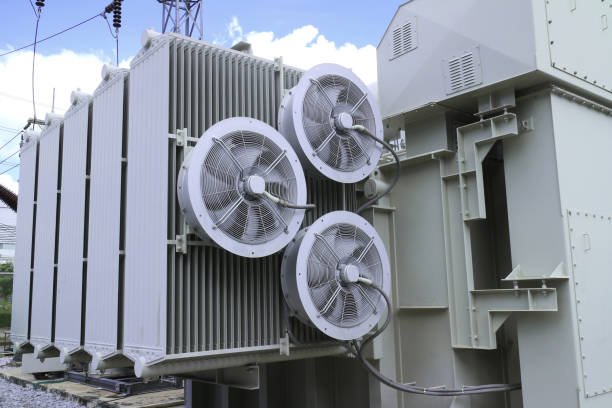
Cooling, insulation, and efficiency form a practical engineering triangle. Increasing transformer capacity usually increases the amount of heat that must be removed. Increasing voltage generally increases dielectric stress and therefore raises insulation requirements. Improving efficiency reduces losses, but the remaining losses still have to be removed through an appropriate thermal design. These relationships also explain why transformers intended for generation, transmission, distribution, industrial, commercial, renewable-energy, traction, rectifier, and other applications cannot always use the same construction.
A transformer with lower energy losses always needs a smaller cooling system.False
Lower losses generally reduce heat generation, but cooling requirements still depend on transformer rating, loading profile, ambient conditions, permissible temperature rise, cooling arrangement, and design margins. A high-capacity low-loss transformer can still require substantial cooling equipment.
Why Are Cooling, Insulation, and Efficiency Interdependent?
A power transformer is fundamentally an energy-conversion device, but it is also a thermal and dielectric system.
During operation, part of the electrical energy is converted into heat through losses such as:
- Core or no-load losses
- Winding or load losses
- Stray losses
- Dielectric losses
- Auxiliary losses
The heat must be transferred from the active parts to the surrounding environment.
At the same time, the electrical insulation system must keep conductors and grounded structures separated despite:
- Operating voltage
- Transient overvoltages
- Temperature
- Moisture
- Contamination
- Aging
- Mechanical movement
Efficiency and cooling are therefore closely related. Lower losses generally mean less heat, while better cooling allows the transformer to operate safely at its specified thermal limits.
A useful selection framework is:
| Requirement | Primary Question | Main Design Impact | Typical Application Implication |
|---|---|---|---|
| Cooling | How much heat must be removed? | Radiators, air flow, fans, pumps, oil circulation | Strong influence at medium/high MVA |
| Insulation | What electrical stress must be withstood? | Winding insulation, bushings, clearances, dielectric system | Strong influence as voltage rises |
| Efficiency | How much energy loss is acceptable? | Core and conductor materials, geometry, loss optimization | Important for continuously energized transformers |
| Environment | What site conditions exist? | Cooling correction, enclosure, corrosion and contamination protection | Indoor/outdoor and climate dependent |
| Load profile | How does loading change? | Thermal cycling and efficiency at partial load | Important for industrial and renewable systems |
| Fire/environmental safety | What hazards must be controlled? | Dry-type or liquid selection, containment, protection | Important in buildings and sensitive sites |
How Does Cooling Determine Transformer Type?
Cooling is one of the clearest factors separating transformer designs.
A transformer with a relatively modest rating may dissipate its heat using natural air circulation or natural liquid circulation.
As the rating and losses increase, heat removal becomes more demanding.
Possible cooling approaches include:
- Natural air cooling
- Forced-air cooling
- Natural oil and natural air cooling
- Forced-air radiator cooling
- Forced oil circulation
- Directed oil flow
- Combined cooling stages
The exact designation depends on the transformer construction and applicable standard.
The engineering objective is always the same:
Remove generated heat quickly enough to keep the core, windings, insulation, liquid, and structural components within permissible temperature limits.
How Does Transformer Capacity Affect Cooling Requirements?
Capacity is not the only factor determining cooling requirements, but it is a major one.
Consider two transformers:
| Characteristic | Transformer A | Transformer B |
|---|---|---|
| Rated capacity | 10 MVA | 100 MVA |
| Loading | 70% | 70% |
| Ambient temperature | 25°C | 40°C |
| Loss level | Low | Low |
| Heat generation | Lower | Much higher in absolute terms |
| Cooling challenge | Moderate | High |
| Likely cooling complexity | Relatively simple | More substantial |
Even with comparable efficiency, the 100 MVA transformer produces substantially more absolute heat because its electrical throughput and physical scale are much greater.
The cooling system must therefore be sized around actual losses and thermal conditions, not merely around MVA.
Why Does Ambient Temperature Matter?
A transformer already operates above ambient temperature because its losses generate heat.
If the surrounding air is hotter, the available temperature difference between the transformer and its environment decreases.
For example, a transformer operating in a 20°C environment has more natural cooling potential than the same transformer operating in a 45°C environment.
High ambient temperature can therefore affect:
- Permissible loading
- Radiator requirements
- Fan operation
- Temperature-rise margins
- Insulation aging
- Emergency loading capability
For procurement, the manufacturer should receive the relevant site ambient-temperature information before finalizing the thermal design.
How Does Cooling Affect Transformer Lifespan?
Cooling is closely related to insulation aging.
Transformer insulation generally ages faster when exposed to elevated temperature for extended periods.
This means inadequate cooling can indirectly reduce service life by increasing insulation temperature.
The relationship is particularly important for:
- Continuously heavily loaded transformers
- High ambient-temperature installations
- Cyclic industrial loads
- Renewable-energy transformers
- Transformers operating close to their thermal limits
A transformer should therefore not be evaluated only by whether it can survive today's peak load. Buyers should consider its expected temperature profile over years of operation.
Why Is Insulation So Important?
Insulation prevents unwanted electrical current from flowing between:
- Turns
- Windings
- Winding-to-ground structures
- High-voltage and low-voltage circuits
- Internal conductors and the tank
The insulation system must withstand both normal and abnormal electrical stresses.
These can include:
- Continuous operating voltage
- Temporary overvoltage
- Switching impulses
- Lightning impulses
- Partial-discharge stress
- Thermal aging
- Mechanical stress
The insulation system is therefore one of the fundamental determinants of transformer reliability.
How Does Voltage Level Affect Insulation Requirements?
As transformer voltage increases, the electrical field within and around the transformer becomes more demanding.
Higher-voltage transformers generally require more sophisticated:
- Winding insulation
- Interlayer insulation
- End insulation
- Barriers
- Bushings
- External clearances
- Creepage distances
- Surge protection
The design must also consider how transient voltage is distributed across the winding.
Therefore, a high-voltage transmission transformer cannot simply be considered a larger version of a low-voltage distribution transformer.
Its insulation coordination and manufacturing controls are much more demanding.
How Do Lightning and Switching Surges Influence Insulation?
Transformer insulation must be coordinated with the expected transient environment.
Lightning impulses can enter a system through overhead lines.
Switching operations can also produce significant overvoltages.
The insulation system therefore needs to be designed and tested against the relevant impulse levels.
This is why buyers should specify more than nominal voltage.
A meaningful specification should include applicable:
- Insulation levels
- Lightning impulse withstand
- Switching impulse withstand where applicable
- Power-frequency withstand
- Bushing requirements
- Insulation coordination
How Does Insulation Affect Transformer Type?
Different transformer types use different insulation philosophies.
Oil-Immersed Transformers
Oil and solid insulation work together.
The liquid provides:
- Electrical insulation
- Heat transfer
- Cooling of internal active parts
Solid insulation, typically cellulose-based or other engineered materials, provides structural and dielectric separation.
Dry-Type Transformers
Dry-type designs rely on solid insulation and air for heat transfer.
Common constructions include:
- VPI systems
- Cast-resin systems
- Other resin-based or solid-insulation arrangements
These can be advantageous where liquid insulation is undesirable or where indoor installation requirements favor dry construction.
Why Is Moisture Important to Transformer Insulation?
Moisture can significantly influence insulation performance and aging.
In oil-immersed transformers, moisture may exist in:
- Solid insulation
- Insulating liquid
- Headspace or breathing system
In dry-type transformers, moisture and condensation can affect exposed insulation surfaces.
Moisture management can therefore involve:
- Sealed construction
- Breathers
- Dehumidification
- Appropriate enclosure design
- Drying processes
- Factory vacuum processing
- Moisture monitoring
The importance increases in humid environments and installations with significant temperature cycling.
How Does Pollution Affect External Insulation?
External insulation can become contaminated by:
- Salt
- Industrial dust
- Cement particles
- Chemical deposits
- Smoke
When contamination becomes wet, surface leakage can increase.
This is particularly relevant to:
- Outdoor substations
- Coastal facilities
- Cement plants
- Chemical plants
- Industrial zones
The transformer specification may therefore need suitable creepage distances, bushing selection, and insulation coordination.
How Do Efficiency Requirements Influence Transformer Design?
Transformer efficiency is strongly influenced by losses.
The major loss categories are:
No-load/core losses: primarily associated with the magnetic core and present whenever the transformer is energized.
Load/winding losses: primarily associated with winding resistance and current, increasing with load.
This distinction is critical because different application scenarios emphasize different losses.
A transformer that remains energized continuously but operates at relatively low average loading may place considerable economic importance on no-load losses.
A transformer that operates heavily loaded for many hours may place greater emphasis on load losses.
Why Should Buyers Evaluate Efficiency Across the Load Profile?
A single efficiency percentage can be misleading.
Consider a transformer that operates:
- 20% loaded for many hours
- 50% loaded for substantial periods
- 80–100% loaded during peaks
Its annual energy consumption depends on losses throughout this entire profile.
A useful conceptual model is:
Annual transformer energy loss ≈ annualized no-load loss + load-dependent loss integrated over the operating profile.
Because winding losses are strongly dependent on current, they change substantially as loading changes.
Therefore, buyers should request guaranteed loss values rather than relying only on a headline efficiency number.
How Do Core Materials Influence Efficiency?
Core material has a major effect on no-load loss.
Traditional transformer cores commonly use grain-oriented electrical steel engineered for low magnetic losses.
Amorphous metal cores can provide substantially lower no-load losses in appropriate applications.
This can be especially valuable for transformers that:
- Remain energized continuously
- Operate at low or moderate average loading
- Serve distribution systems
- Have long expected service lives
The trade-off is that material cost, manufacturing processes, mechanical properties, and design considerations must also be evaluated.
How Do Winding Materials Affect Efficiency?
Copper and aluminum are both widely used conductor materials.
The important engineering issue is not simply material name but:
- Resistivity
- Cross-sectional area
- Temperature
- Joint quality
- Winding geometry
- Current density
- Manufacturing precision
Reducing winding resistance reduces load losses, but excessive conductor size can increase material cost and physical dimensions.
Good transformer engineering therefore optimizes conductor size rather than simply maximizing copper or aluminum content.
How Does Cooling Interact With Efficiency?
Suppose two transformers have the same MVA rating but different loss levels.
Transformer A:
- Higher core loss
- Higher load loss
- More heat generation
Transformer B:
- Lower core loss
- Lower load loss
- Less heat generation
Transformer B generally has a lower thermal burden.
However, this does not mean that Transformer B automatically needs a dramatically smaller cooling system. The cooling design also depends on:
- Rated capacity
- Temperature-rise specification
- Ambient temperature
- Overload requirements
- Cooling mode
- Installation altitude
- Reliability requirements
The correct approach is to optimize losses and cooling together.
How Does Cooling Influence Dry-Type Transformer Applications?
Dry-type transformers dissipate heat through air.
This makes installation ventilation particularly important.
Typical applications include:
- Commercial buildings
- Hospitals
- Data centers
- Schools
- Industrial buildings
- Underground electrical rooms
A dry-type transformer can be highly appropriate when:
- Indoor installation is required
- Liquid containment is undesirable
- Fire and environmental requirements favor dry construction
- Capacity and cooling requirements remain technically manageable
However, the room ventilation system must be designed around the transformer's actual heat dissipation.
How Does Cooling Influence Oil-Immersed Transformer Applications?
Oil-immersed transformers use insulating liquid to transfer heat away from the active parts.
This makes them especially practical for:
- Large substations
- Generation facilities
- Transmission networks
- Outdoor industrial substations
- High-MVA applications
Radiators increase heat-transfer surface area.
Fans can increase air movement over radiators.
Pumps can increase liquid circulation.
This allows larger transformers to achieve the required thermal performance.
How Do Cooling Stages Affect Application Flexibility?
Large transformers may use multiple cooling stages.
For example, a transformer may operate with natural cooling under normal conditions and activate fans as loading increases.
This provides:
- Better efficiency at lower loads
- Greater capacity at higher loads
- Reduced auxiliary energy consumption compared with running all cooling equipment continuously
- Additional thermal margin
Cooling design should therefore be coordinated with the load profile.
How Do Cooling Systems Affect Auxiliary Energy Consumption?
Fans and pumps consume electricity.
This creates a secondary efficiency consideration.
A highly efficient transformer with continuously operating cooling auxiliaries may have different net energy performance from a transformer with slightly higher transformer losses but lower auxiliary consumption.
The buyer should therefore consider:
- Transformer losses
- Fan power
- Pump power
- Cooling control strategy
- Annual operating hours
For large installations, these auxiliary losses should not be ignored.
How Do Insulation and Efficiency Influence Application Scenarios Together?
Different applications prioritize different characteristics.
| Application | Cooling Priority | Insulation Priority | Efficiency Priority |
|---|---|---|---|
| Generation | Very high | Very high | High |
| Transmission | Very high | Very high | High |
| Distribution | Medium to high | High | Very high |
| Commercial building | Medium | High | High |
| Hospital | Medium | Very high | High |
| Data center | High | Very high | Very high |
| Industrial motors | High | High | High |
| Solar farm | High | High | High |
| Wind farm | High | High | High |
| Furnace | Very high | High | Application-specific |
| Traction | High | High | Application-specific |
| Rectifier | Very high | High | High |
This demonstrates that there is no universal "best" transformer design.
How Does the Installation Environment Change Cooling Requirements?
The installation environment can significantly modify thermal performance.
Indoor Room
Heat must be transferred into the room and then removed by ventilation or HVAC.
Outdoor Substation
Heat can generally be rejected directly to the ambient environment, although high ambient temperature and solar radiation must be considered.
High Altitude
Reduced air density can affect air-side cooling.
Desert
High ambient temperature and dust can challenge both cooling and maintenance.
Underground
Ventilation can become a major engineering requirement.
Coastal
Cooling equipment may need corrosion protection.
Therefore, the transformer and its installation environment should be treated as one thermal system.
How Does Fire Safety Influence Cooling and Transformer Type?
Fire requirements can influence the selection between liquid-filled and dry-type construction.
Dry-type transformers eliminate the need to manage a large volume of liquid insulating fluid.
This can simplify certain installations.
Oil-filled transformers can still be appropriate where high capacity and liquid-based cooling provide significant advantages, provided that the site includes appropriate:
- Fire separation
- Detection
- Suppression
- Containment
- Drainage
- Emergency procedures
The choice should therefore consider total risk and system requirements.
How Does Efficiency Affect Lifecycle Cost?
A transformer is an energy-consuming asset even though it does not itself generate energy.
Small differences in losses can accumulate over decades.
A useful lifecycle framework is:
Total lifecycle cost = purchase price + installation cost + energy-loss cost + maintenance cost + cooling auxiliary cost + risk-related cost + disposal/replacement cost.
For continuously energized transformers, even relatively small no-load losses can become economically important.
For heavily loaded transformers, load losses may dominate.
Therefore, efficiency requirements should be linked to the actual operating profile.
How Can Buyers Compare Two Transformer Designs?
Suppose two suppliers offer technically similar transformers.
| Parameter | Supplier A | Supplier B | Buyer Evaluation |
|---|---|---|---|
| Rated capacity | 40 MVA | 40 MVA | Equivalent |
| Voltage ratio | Same | Same | Equivalent |
| No-load loss | Higher | Lower | B may have advantage |
| Load loss | Lower | Higher | A may have advantage |
| Cooling | Natural + fans | Natural + fans | Compare controls |
| Fan power | Lower | Higher | Consider annual auxiliary energy |
| Insulation level | Same | Same | Equivalent |
| Temperature rise | Higher | Lower | B may offer thermal margin |
| Monitoring | Basic | Advanced | Consider criticality |
| Initial price | Lower | Higher | Not sufficient alone |
| Lifecycle loss cost | Higher | Lower | Important |
| Maintenance | Standard | Advanced | Evaluate actual requirements |
The buyer should convert all major differences into lifecycle economics and technical risk.
How Do Buyers Choose Between Low No-Load Loss and Low Load Loss?
This depends heavily on operating profile.
A transformer that is energized continuously at relatively low load can benefit greatly from low core loss.
A transformer that spends substantial time near rated load can benefit strongly from low load loss.
A simple conceptual comparison is:
| Operating Profile | Loss Priority |
|---|---|
| Continuously energized, lightly loaded | No-load/core loss |
| Continuously heavily loaded | Load/winding loss |
| Highly variable distribution load | Both, with strong attention to annual load curve |
| Renewable/inverter load | Both plus harmonic and thermal considerations |
| Emergency-only transformer | Duty-specific rather than headline efficiency alone |
This is why annual energy-loss calculations are more useful than simply selecting the transformer with the lowest quoted loss in one category.
How Does Insulation Aging Influence Transformer Efficiency and Reliability?
Insulation aging does not normally appear as a simple efficiency number, but it strongly influences lifecycle performance.
Excessive temperature can accelerate insulation aging.
Moisture can further reduce insulation reliability.
Electrical stress can cause deterioration.
Therefore:
Thermal management + moisture management + dielectric design = long-term insulation reliability.
A transformer that operates efficiently but repeatedly exceeds its thermal limits is not necessarily a good lifecycle solution.
How Do Renewable Applications Change Cooling Requirements?
Solar and wind transformers often experience variable loading.
Their thermal design should consider:
- Rapid changes in output
- Long periods of partial loading
- High loading during favorable generation conditions
- Harmonic currents
- Converter behavior
- Ambient temperature
The transformer should therefore be evaluated using an appropriate renewable-energy load profile rather than assuming constant full-load operation.
How Do Harmonics Affect Cooling?
Harmonic currents can produce additional losses.
These can increase:
- Conductor heating
- Eddy-current losses
- Stray losses
- Hot-spot temperature
Consequently, a transformer serving nonlinear loads may need additional thermal analysis even if the fundamental-frequency MVA appears acceptable.
This is especially important for:
- Data centers
- UPS systems
- Variable-frequency drives
- Rectifier installations
- EV charging systems
- Renewable-energy converters
How Does Application Scenario Influence Insulation Selection?
High-voltage utility transformers typically require sophisticated liquid-and-solid insulation systems.
Indoor dry-type transformers may use:
- Cast resin
- VPI insulation
- Other engineered solid insulation
The choice depends on:
- Voltage
- Capacity
- Environment
- Fire requirements
- Thermal design
- Maintenance strategy
No single insulation material is universally superior.
How Do Maintenance, Standards, and Lifecycle Costs Affect Transformer Types and Application Scenarios?
A transformer can be electrically suitable yet still be the wrong choice if its maintenance requirements, compliance obligations, and long-term ownership costs do not match the application. A low purchase price may become expensive when a transformer requires frequent inspections, specialized oil handling, difficult access, costly spare parts, or excessive energy-loss payments; conversely, a higher-priced transformer can be economically preferable when lower losses, longer maintenance intervals, better monitoring, and easier servicing reduce total ownership cost. Maintenance requirements, applicable standards, and lifecycle costs should therefore be evaluated together when selecting transformer types: dry-type transformers may simplify liquid-related maintenance in many indoor applications, while oil-immersed transformers can be advantageous for high-capacity utility and industrial applications but require appropriate fluid, sealing, protection, and condition-monitoring strategies. Standards determine the required design, testing, safety, and performance framework, while lifecycle analysis combines purchase, installation, energy losses, maintenance, downtime risk, repair, and end-of-life costs. The best transformer is consequently not necessarily the cheapest unit or the unit with the lowest maintenance frequency; it is the design that delivers compliant, reliable service at the lowest justified total cost over its operating life.

Transformer type, application scenario, maintenance strategy, and standards should be considered as one procurement system. The same electrical rating can lead to different choices depending on whether the transformer serves a utility substation, data center, factory, hospital, renewable-energy plant, commercial building, or critical infrastructure facility. A buyer should therefore establish the duty, environment, standards, maintenance philosophy, and lifecycle economics before comparing supplier quotations.
A transformer that requires less routine maintenance always has a lower lifecycle cost.False
Lifecycle cost also depends on purchase price, energy losses, monitoring systems, failure probability, downtime consequences, spare parts, repairs, installation, auxiliary consumption, and end-of-life costs. Lower routine maintenance alone does not guarantee lower total ownership cost.
Why Should Maintenance Be Considered During Transformer Selection?
Maintenance is not simply a service activity after purchase. It is partly determined by the transformer's design.
Oil-immersed transformers can require attention to:
- Insulating-fluid condition
- Oil level
- Leaks
- Breathers
- Conservator systems where applicable
- Bushings
- Temperature indicators
- Pressure-relief devices
- Cooling equipment
- Protective relays
- Tap changers
- Connections
- Grounding
- Online monitoring
Dry-type transformers have a different maintenance profile. They generally eliminate liquid-related tasks but can require attention to:
- Dust accumulation
- Ventilation
- Cooling fans
- Terminals
- Connections
- Insulation condition
- Temperature sensors
- Enclosures
This distinction becomes particularly important when transformers are installed in locations where maintenance access is difficult.
| Maintenance Factor | Dry-Type Transformer | Oil-Immersed Transformer |
|---|---|---|
| Oil sampling | Not applicable | Often applicable |
| Oil leak inspection | Not applicable | Important |
| Oil filtration/treatment | Not applicable | Application-dependent |
| Dust cleaning | Important | Also relevant |
| Cooling equipment | Fans where fitted | Radiators, fans, pumps where fitted |
| Tap changer maintenance | If fitted | If fitted; potentially significant |
| Moisture management | Environmental concern | Oil and solid insulation concern |
| Online condition monitoring | Available | Particularly valuable |
| Fire/spill infrastructure inspection | Different requirements | Important where liquid is present |
| Internal inspection | Specialized | Specialized |
| Maintenance access | Important | Important |
Neither transformer type is universally "maintenance-free."
How Do Application Scenarios Change Maintenance Requirements?
A transformer serving a critical data center is not maintained in the same way as a small industrial distribution transformer.
For a critical facility, maintenance planning may prioritize:
- Online monitoring
- Redundancy
- Planned maintenance windows
- Spare-transformer strategy
- Remote alarms
- Condition-based maintenance
For a utility transformer, the strategy may emphasize:
- Oil diagnostics
- Dissolved-gas analysis
- Bushing monitoring
- Tap-changer condition
- Cooling-system condition
- Long-term asset management
For a commercial building, maintenance simplicity and safe accessibility may have greater importance.
Therefore, transformer selection should start with the consequences of failure, not simply the transformer nameplate.
How Does Preventive Maintenance Affect Transformer Reliability?
Preventive maintenance attempts to identify deterioration before it develops into a failure.
Typical activities may include:
- Visual inspection
- Thermal inspection
- Electrical testing
- Oil testing
- Connection inspection
- Grounding inspection
- Cooling-system inspection
- Protection-system testing
- Bushing inspection
- Tap-changer inspection
The exact schedule should be based on the equipment design, operating conditions, manufacturer recommendations, standards, and condition data.
A fixed calendar schedule is not always the most efficient strategy.
What Is Condition-Based Maintenance?
Condition-based maintenance uses measured equipment condition to determine when maintenance is required.
Examples include:
- Dissolved-gas analysis
- Oil quality testing
- Moisture measurement
- Winding temperature
- Hot-spot estimation
- Vibration monitoring
- Bushing monitoring
- Partial-discharge monitoring
- Load monitoring
- Infrared thermography
The objective is to move from:
"Maintain because the calendar says so"
toward:
"Maintain because measured condition indicates deterioration or increasing risk."
This can reduce unnecessary maintenance while improving early fault detection.
Why Is Dissolved-Gas Analysis Important for Oil-Filled Transformers?
Dissolved-gas analysis, commonly called DGA, can help identify developing internal conditions in oil-filled transformers.
Different fault mechanisms can produce characteristic gas patterns.
Depending on the diagnostic method and interpretation framework, gases such as:
- Hydrogen
- Methane
- Ethane
- Ethylene
- Acetylene
- Carbon monoxide
- Carbon dioxide
may provide useful information.
DGA is a diagnostic tool rather than a standalone proof of failure.
Its value increases when results are interpreted using:
- Historical trends
- Transformer design
- Loading
- Temperature
- Oil condition
- Other diagnostic information
This is one reason oil-filled transformers can have a more sophisticated maintenance regime than many dry-type units.
How Does Dry-Type Maintenance Differ?
Dry-type transformers avoid liquid-related maintenance but are not maintenance-free.
Dust and contamination can accumulate on:
- Windings
- Cooling passages
- Insulation surfaces
- Terminals
- Enclosures
This can restrict cooling or create surface contamination.
A dry-type transformer installed in a clean electrical room may therefore have a relatively straightforward maintenance regime, while the same transformer in a dusty industrial environment may require much more frequent cleaning.
How Do Maintenance Conditions Affect Transformer Type?
Consider three locations:
| Location | Maintenance Challenge | Potential Selection Direction |
|---|---|---|
| Clean commercial electrical room | Low contamination, good access | Dry-type may be attractive |
| Remote outdoor substation | Difficult access, high capacity | Oil-immersed with condition monitoring may be appropriate |
| Dusty industrial plant | Contamination and heat | Application-specific; cooling/enclosure critical |
| Offshore/coastal plant | Corrosion and access | Specialized environmental protection |
| Data center | Downtime risk | High monitoring and redundancy |
| Renewable-energy site | Variable loading and remote access | Monitoring and robust maintenance strategy |
The transformer should be selected according to how it will actually be operated and serviced.
Why Are Transformer Standards Important?
Standards provide a common technical framework for:
- Design
- Ratings
- Insulation
- Temperature rise
- Losses
- Testing
- Safety
- Routine inspection
- Type testing
- Special testing
Without a defined standards framework, supplier quotations can be difficult to compare.
Two transformers may both be described as "100 MVA, 132/33 kV" while differing substantially in:
- Guaranteed losses
- Impulse levels
- Temperature rise
- Test scope
- Accessories
- Monitoring
- Mechanical construction
A proper procurement specification therefore needs to identify the applicable standards and project-specific requirements.
Which Transformer Standards Should Buyers Consider?
The exact standard set depends on the region, voltage class, application, and project requirements.
Common international frameworks include:
- IEC 60076 series for power transformers
- IEEE C57 series for transformer equipment and applications
- NFPA requirements where fire and building safety provisions apply
- Local electrical codes
- Utility-specific specifications
- Grid-connection requirements
- Environmental regulations
Standards should be confirmed against the actual project jurisdiction rather than assumed from a generic catalog.
Why Does IEC 60076 Matter?
The IEC 60076 series provides a major international framework for power-transformer requirements.
Different parts address subjects including:
- General requirements
- Temperature rise
- Insulation levels
- Dielectric tests
- Sound levels
- Loading guidance
- Transformer accessories
- Special transformer applications
A buyer should not simply request "IEC compliant."
The procurement specification should identify the applicable parts and project-specific requirements.
Why Does IEEE C57 Matter?
IEEE C57 is another major family of transformer standards widely used in North American and other applications.
It addresses areas such as:
- Transformer design
- Testing
- Application
- Maintenance
- Diagnostics
- Ratings
A buyer should determine whether the project is based primarily on IEC, IEEE, local standards, utility specifications, or a combination.
Why Should Buyers Avoid Mixing Standards Casually?
IEC and IEEE standards are both highly developed, but they are not interchangeable line-by-line.
Differences may occur in:
- Definitions
- Test methods
- Temperature assumptions
- Loss measurement
- Insulation requirements
- Rating practices
- Accessories
- Acceptance criteria
A tender should therefore identify a clear primary standards framework.
If alternatives are allowed, the supplier should clearly identify deviations and equivalencies.
How Do Standards Affect Transformer Testing?
Testing is one of the most important ways standards influence procurement.
Depending on the transformer and specification, testing can include:
- Routine tests
- Type tests
- Special tests
- Factory acceptance testing
Testing may cover:
- Winding resistance
- Ratio
- Polarity/vector relationship
- Impedance
- No-load loss
- Load loss
- Dielectric tests
- Insulation resistance
- Temperature-rise testing
- Partial discharge where applicable
- Sound measurement
- Leakage and pressure-related checks
The exact test program should be agreed during procurement.
Why Are Factory Acceptance Tests Important?
Factory acceptance testing provides evidence that the manufactured transformer meets the agreed specification before shipment.
This is especially important for large custom transformers because correcting manufacturing defects after installation can be extremely expensive.
A strong FAT process can reduce:
- Installation surprises
- Commissioning failures
- Disputes
- Rework
- Early-life failures
Buyers should review test procedures and acceptance criteria before manufacturing begins.
How Does Manufacturing Quality Affect Maintenance Cost?
High-quality manufacturing can reduce future maintenance by improving:
- Core assembly
- Winding geometry
- Insulation consistency
- Connections
- Sealing
- Drying
- Vacuum processing
- Mechanical integrity
Poor manufacturing quality may produce problems that only become visible after years of service.
Examples include:
- Local overheating
- Partial discharge
- Moisture ingress
- Oil leakage
- Loose connections
- Abnormal noise
- Premature insulation aging
Therefore, supplier manufacturing capability should be considered part of lifecycle cost.
How Does Transformer Efficiency Affect Lifecycle Cost?
Transformer losses continue throughout operation.
A transformer with lower losses can cost more initially but reduce electricity consumption over its service life.
The buyer should separate:
- No-load loss
- Load loss
- Auxiliary cooling energy
- Other applicable losses
A useful conceptual relationship is:
Annual loss cost = annual energy lost × applicable electricity value.
Over many years, this can become a significant component of total ownership cost.
Why Is No-Load Loss Important?
No-load loss exists whenever the transformer is energized, even if the load is small.
This makes it particularly important for:
- Distribution transformers
- Continuously energized transformers
- Backup transformers kept energized
- Commercial facilities with long operating periods
A transformer with very low no-load loss can therefore provide lifecycle savings even if its initial purchase price is higher.
Why Is Load Loss Important?
Load loss increases with current.
Therefore, it becomes especially important when transformers operate heavily loaded.
Applications with:
- High average utilization
- Large industrial loads
- Continuous production
- High load factors
may place greater economic importance on load-loss performance.
How Should Buyers Capitalize Transformer Losses?
Utilities and large industrial buyers sometimes use a capitalization factor or evaluated-loss value when comparing bids.
The concept is simple:
A quoted transformer price does not represent the entire economic value of the transformer.
A supplier with a higher initial price but substantially lower guaranteed losses may have the lower evaluated cost.
The precise capitalization method should be established in the tender documents.
How Do Maintenance and Efficiency Interact?
Maintenance can influence efficiency.
For example:
- Dirty cooling equipment can reduce heat transfer.
- Poor electrical connections can increase localized losses.
- Deteriorated cooling fans can reduce thermal performance.
- Aging oil can affect cooling and insulation performance.
- Faulty monitoring can delay corrective action.
Thus, maintaining the transformer correctly helps preserve its designed performance.
How Does Failure Risk Affect Lifecycle Cost?
Failure cost can be much greater than routine maintenance cost.
Potential consequences include:
- Replacement transformer cost
- Emergency transportation
- Installation labor
- Production interruption
- Grid outage
- Lost revenue
- Equipment damage
- Environmental cleanup
- Regulatory costs
For critical facilities, the expected cost of failure can therefore influence transformer selection.
A simplified risk model is:
Expected failure cost = probability of failure × consequence of failure.
This is not a complete reliability model, but it illustrates why two transformers with identical purchase prices can have very different economic values.
How Does Application Criticality Affect Transformer Type?
| Application | Failure Consequence | Procurement Priority |
|---|---|---|
| Small commercial facility | Moderate | Cost + maintainability |
| Manufacturing line | High | Reliability + downtime |
| Hospital | Very high | Reliability + safety + redundancy |
| Data center | Very high | Availability + monitoring |
| Utility transmission | Very high | Reliability + diagnostics + spare strategy |
| Renewable plant | High | Reliability + remote monitoring |
| Residential distribution | High at system scale | Efficiency + reliability |
| Industrial process | High | Thermal performance + maintainability |
The more critical the application, the more valuable advanced monitoring, redundancy, and condition-based maintenance can become.
How Does Redundancy Influence Lifecycle Cost?
A transformer can be operated as:
- Single unit
- N+1 arrangement
- Parallel transformer configuration
- Spare-transformer strategy
Redundancy increases initial capital cost but can dramatically reduce downtime consequences.
For a data center, hospital, or major industrial plant, the economic comparison should therefore include the value of continuity.
How Do Spare Parts Affect Transformer Lifecycle Costs?
The availability of spare parts can strongly influence long-term maintainability.
Important items include:
- Cooling fans
- Pumps
- Relays
- Sensors
- Bushings
- Gaskets
- Control components
- Tap-changer components
For specialized transformers, buyers should confirm:
- Spare-part availability period
- Recommended initial spares
- Lead times
- Obsolescence strategy
- Supplier service capability
How Does Transformer Location Affect Maintenance Cost?
A remote transformer can cost more to maintain even if the equipment itself is identical.
Additional costs can arise from:
- Travel
- Specialized lifting
- Oil-processing equipment
- Crane access
- Weather limitations
- Difficult outage scheduling
Remote renewable-energy substations are a good example.
For such locations, online monitoring can sometimes provide significant value by reducing unnecessary site visits and identifying problems earlier.
How Do Environmental Requirements Affect Lifecycle Cost?
Oil-filled transformers can require:
- Oil testing
- Leak inspection
- Spill containment
- Fluid management
Dry-type transformers can avoid those liquid-related activities but may require:
- Cleaning
- Ventilation maintenance
- Enclosure inspection
The environmental burden should therefore be evaluated over the entire lifecycle.
How Does Transformer Type Affect End-of-Life Cost?
At the end of service life, buyers should consider:
- Decommissioning
- Transportation
- Fluid draining
- Recycling
- Metal recovery
- Insulation disposal
- Environmental compliance
Transformers contain valuable materials such as:
- Copper
- Aluminum
- Electrical steel
- Structural steel
Good end-of-life planning can recover material value and reduce environmental impact.
How Should Buyers Compare Transformer Types Economically?
A practical comparison table is:
| Cost Element | Dry-Type | Oil-Immersed |
|---|---|---|
| Purchase price | Application-dependent | Application-dependent |
| Civil installation | Application-dependent | May require containment |
| Oil-related maintenance | Low/not applicable | Significant consideration |
| Cleaning | Important | Important |
| Cooling maintenance | Fans if fitted | Radiators/fans/pumps as fitted |
| Energy losses | Design-dependent | Design-dependent |
| Fire infrastructure | Different requirements | Oil-related requirements |
| Monitoring | Available | Particularly valuable for large units |
| Repair | Specialized | Specialized |
| End-of-life | Material recovery | Includes fluid management |
| Downtime risk | Application-dependent | Application-dependent |
The important point is that there is no universally cheaper transformer type.
What Is the Total Lifecycle Cost Model?
A buyer can structure the evaluation as:
TCO = CAPEX + installation + energy losses + maintenance + monitoring + auxiliary energy + repairs + downtime risk + environmental costs + decommissioning − residual value
Where:
- CAPEX = transformer purchase
- Installation = transport, civil works, erection and commissioning
- Energy losses = no-load and load-loss energy
- Maintenance = scheduled and condition-based work
- Monitoring = sensors, communications and diagnostic systems
- Auxiliary energy = fans, pumps and control systems
- Repairs = expected corrective maintenance
- Downtime risk = economic consequence of outages
- Environmental costs = containment, fluid management and compliance
- Decommissioning = removal and disposal/recycling
- Residual value = recoverable material value
This framework gives procurement teams a much more realistic basis for comparing suppliers.
How Can Buyers Match Maintenance Strategy to Transformer Type?
A useful approach is:
Dry-type transformer
Focus on:
- Cleaning
- Ventilation
- Thermal inspection
- Connection inspection
- Insulation condition
- Temperature monitoring
Oil-immersed transformer
Focus on:
- Oil quality
- DGA where appropriate
- Moisture
- Leaks
- Bushings
- Tap changer
- Cooling
- Protection
- Temperature
- Pressure-relief equipment
Large critical transformer
Add:
- Online monitoring
- Trend analysis
- Remote alarms
- Condition assessment
- Spare strategy
- Failure-response planning
The maintenance program should be established before procurement rather than after commissioning.
What Should Buyers Ask Transformer Manufacturers?
A technically strong supplier questionnaire should ask:
- Which standards govern the proposed design?
- Which routine tests are included?
- Which type tests are available?
- Which special tests are recommended?
- What are the guaranteed no-load and load losses?
- What is the expected maintenance schedule?
- Which condition-monitoring systems are available?
- What spare parts should be purchased initially?
- What is the expected service life?
- What are the recommended inspection intervals?
- What environmental conditions are permitted?
- What are the cooling-system maintenance requirements?
- What is the recommended oil-testing program for liquid-filled units?
- What factory quality-control procedures are used?
- How are windings dried and insulated?
- How is moisture controlled?
- What factory acceptance testing is performed?
- What documentation is supplied?
- What service and spare-parts support is available?
- What is the expected end-of-life recycling/disposal process?
What Documentation Should Be Required?
A professional transformer procurement package may include:
- Technical datasheet
- Guaranteed loss schedule
- General arrangement drawings
- Foundation requirements
- Wiring diagrams
- Protection diagrams
- Cooling-system information
- Insulation data
- Test reports
- Factory acceptance records
- Installation instructions
- Operation and maintenance manuals
- Spare-parts list
- Recommended maintenance schedule
- Commissioning procedures
- Certificates of compliance
Documentation quality is itself an indicator of supplier engineering maturity.
How Do Standards and Lifecycle Costs Work Together?
Standards establish the minimum technical framework, but project specifications may require performance beyond minimum compliance.
For example, a project may require:
- Lower guaranteed losses
- Lower sound levels
- Additional monitoring
- More extensive factory testing
- Higher corrosion protection
- Specific fire performance
- Greater seismic capability
These requirements can increase initial cost.
The buyer should then determine whether the additional cost produces sufficient value through:
- Lower energy consumption
- Lower maintenance
- Reduced risk
- Longer service life
- Lower downtime probability
- Regulatory compliance
This is the essence of lifecycle-based procurement.
What Are the Most Common Procurement Mistakes?
Mistake 1: Choosing the lowest purchase price.
Initial price is only one part of total cost.
Mistake 2: Assuming dry-type means maintenance-free.
Cleaning, cooling, connections, insulation, and monitoring still matter.
Mistake 3: Assuming oil-filled means high maintenance in every application.
Modern monitoring and condition-based maintenance can significantly improve maintenance efficiency.
Mistake 4: Specifying only "IEC compliant" or "IEEE compliant."
The applicable standards and clauses should be clearly identified.
Mistake 5: Ignoring guaranteed losses.
Energy losses can dominate lifecycle cost.
Mistake 6: Ignoring downtime.
For critical facilities, one failure can cost far more than years of routine maintenance.
Mistake 7: Buying insufficient spare parts.
Long lead times can extend outages.
Mistake 8: Ignoring factory testing.
Early detection of manufacturing defects is generally preferable to discovering them after installation.
Mistake 9: Ignoring future operating conditions.
Load growth can change the economic and thermal suitability of the transformer.
Mistake 10: Ignoring end-of-life requirements.
Fluid management, recycling, and material recovery should be considered from the beginning.
Practical Transformer Selection Matrix
| Application Scenario | Transformer Type Direction | Maintenance Priority | Standards/Testing Priority | Lifecycle-Cost Priority |
|---|---|---|---|---|
| Commercial building | Dry-type often considered | Cleaning, thermal inspection | Strong compliance documentation | Losses + maintenance |
| Hospital | Dry-type or application-specific | High reliability | Safety + testing | Downtime + reliability |
| Data center | Dry-type or specialized | Continuous monitoring | Extensive testing | Availability + losses |
| Industrial plant | Dry-type or oil-filled | Condition-dependent | Process-specific requirements | Downtime + efficiency |
| Utility distribution | Oil-filled or dry-type depending on site | Condition monitoring | Utility specification | No-load + load losses |
| Transmission substation | Oil-immersed often used | Advanced diagnostics | Extensive factory testing | Reliability + losses |
| Generation plant | Oil-immersed often used | Advanced diagnostics | Very high | Reliability + efficiency |
| Solar farm | Application-specific | Remote monitoring | Grid requirements | Losses + availability |
| Wind farm | Application-specific | Remote monitoring | Grid and environmental | Reliability + access |
| Remote substation | Oil-filled often considered | Condition-based | High documentation | Maintenance access + downtime |
How Can Buyers Match the Right Transformer Types With Specific Application Scenarios?
Choosing a transformer solely from voltage and kVA/MVA ratings can create expensive problems later: an electrically compatible transformer may still be poorly matched to the installation environment, load profile, fire requirements, cooling conditions, maintenance capabilities, harmonic content, or reliability expectations. The consequences can include excessive losses, overheating, nuisance trips, difficult maintenance, premature insulation aging, unnecessary capital expenditure, or inadequate fault and surge performance. The practical solution is to treat transformer selection as an application-matching problem: first define the electrical duty, then evaluate environment, load behavior, cooling, insulation, safety, efficiency, standards, maintenance, and lifecycle cost before selecting between dry-type, oil-immersed, natural-ester, cast-resin, amorphous-core, or other specialized transformer configurations.
Buyers can match transformer types to application scenarios by evaluating six primary dimensions: voltage and capacity, load characteristics, installation environment, cooling and insulation requirements, safety/environmental constraints, and lifecycle economics. Dry-type transformers are often attractive for indoor commercial, institutional, and selected industrial installations; oil-immersed transformers are widely suited to high-capacity utility, generation, transmission, and outdoor industrial substations; natural-ester-filled designs can be attractive where fire safety and environmental considerations are important; and specialized low-loss or amorphous-core designs can be valuable where lifetime energy consumption is a major concern. The correct choice must ultimately be validated against applicable standards, site conditions, duty cycle, and manufacturer engineering calculations.
Transformer selection becomes much clearer when buyers stop asking "Which transformer is best?" and instead ask "Which transformer construction best fits this particular electrical and physical duty?" The following framework provides a practical way to make that decision and avoid both over-specification and under-specification.
A dry-type transformer is always the best choice for indoor applications.False
Indoor location alone does not determine transformer type. Capacity, voltage, cooling, ventilation, fire requirements, load profile, harmonic content, noise limits, maintenance strategy, and lifecycle cost must also be evaluated.
What Are the Main Transformer Types Buyers Should Compare?
The first step is understanding that "transformer type" can refer to several different design dimensions. Buyers should avoid treating dry-type versus oil-filled as the only decision.
A transformer can be classified by:
- Insulation and cooling medium
- Core material
- Winding construction
- Cooling method
- Voltage class
- Application
- Phase
- Frequency
- Tap arrangement
- Special-duty requirements
Common categories encountered in procurement include:
| Transformer Type | Typical Strength | Common Application Direction |
|---|---|---|
| Oil-immersed transformer | High thermal capability and scalable construction | Generation, transmission, distribution, substations |
| Dry-type transformer | No liquid insulation and convenient indoor application | Commercial buildings, hospitals, industrial facilities |
| Cast-resin transformer | Robust solid insulation and moisture resistance characteristics | Indoor industrial and commercial installations |
| VPI dry-type transformer | Vacuum-pressure-impregnated insulation | Industrial and commercial applications |
| Natural-ester transformer | Liquid insulation with potential fire/environmental advantages | Distribution, buildings, renewable and utility applications |
| Amorphous-core transformer | Very low core-loss potential | Distribution and continuously energized duties |
| Furnace transformer | Specialized high-current duty | Steel, metallurgy, industrial furnaces |
| Rectifier transformer | Designed for converter/rectifier loads | Electrochemical, industrial, traction and power-electronic systems |
| Traction transformer | Designed for railway electrical systems | Rail and transit |
| Phase-shifting transformer | Controls power-flow characteristics | Transmission networks |
| Grounding transformer | Provides grounding/neutral functionality | Power systems without suitable neutral |
| Converter transformer | Designed around converter applications | HVDC and power-electronic systems |
The table is a screening tool, not a substitute for detailed design.
How Should Buyers Start With the Application Scenario?
Begin with the electrical role of the transformer.
Ask:
- Is it connecting a generator to a grid?
- Is it stepping voltage down for distribution?
- Is it supplying a commercial building?
- Is it feeding industrial motors?
- Is it supplying a furnace or rectifier?
- Is it connected to solar or wind generation?
- Is it part of a data-center power system?
- Is it used for traction?
- Is it providing grounding?
- Is it controlling power flow?
The answer immediately narrows the appropriate transformer family.
For example, a 10 MVA transformer for a solar farm and a 10 MVA transformer for a steel furnace have the same apparent power rating but fundamentally different operating requirements.
How Do Voltage and Capacity Determine Transformer Selection?
Voltage and capacity establish the basic electrical envelope.
The buyer should define:
- Primary voltage
- Secondary voltage
- Rated MVA
- Frequency
- Phase
- Number of windings
- Tap range
- Neutral configuration
- Short-circuit conditions
- System grounding
- Insulation level
Capacity is particularly important because it influences:
- Conductor size
- Core size
- Heat generation
- Cooling system
- Physical dimensions
- Transportation
- Installation
- Cost
A transformer should not simply be selected by matching today's peak load.
Future load growth, emergency loading, redundancy, and operating margin should also be considered.
How Does Load Profile Affect Transformer Type?
Load behavior is often more important than the nameplate rating.
Two 20 MVA transformers can experience completely different thermal and electrical stresses.
| Load Profile | Selection Consideration |
|---|---|
| Constant high load | Low load losses and strong cooling |
| Light continuous load | Low no-load loss |
| Highly variable load | Thermal cycling and efficiency across load curve |
| Motor-heavy load | Starting current and voltage regulation |
| Nonlinear load | Harmonic heating and additional losses |
| Solar generation | Variable loading and inverter characteristics |
| Wind generation | Variable output and environmental exposure |
| Furnace load | Severe current variation and specialized duty |
| Data center | High continuity and low tolerance for failure |
| Emergency/standby | Duty-specific thermal and energization requirements |
This is why a simple "20 MVA transformer" specification is inadequate for many projects.
How Do Commercial Buildings Influence Transformer Selection?
Commercial buildings often prioritize:
- Indoor installation
- Fire safety
- Low noise
- Compact footprint
- Low maintenance
- Energy efficiency
- Personnel safety
Dry-type transformers are therefore frequently considered.
For example, a cast-resin transformer may be attractive where:
- The transformer is located inside an electrical room.
- Liquid containment is undesirable.
- Environmental conditions require robust insulation.
- Building fire requirements influence equipment selection.
However, ventilation must be adequate because the transformer still produces heat.
How Should Buyers Select Transformers for Hospitals?
Hospitals have unusually high reliability and safety requirements.
Important considerations include:
- Indoor installation
- Fire safety
- Noise
- Reliability
- Redundancy
- Maintenance access
- Electrical continuity
- Monitoring
A dry-type transformer may be attractive for many indoor hospital applications, but the correct choice depends on the complete electrical architecture.
Buyers should also evaluate:
- Emergency power systems
- Automatic transfer systems
- Parallel operation
- Backup transformers
- Critical-load segregation
The transformer cannot be selected independently from the hospital's overall power system.
How Do Data Centers Change Transformer Selection?
Data centers place exceptional value on availability.
Their loads may include:
- UPS systems
- Power supplies
- Servers
- Cooling equipment
- Battery systems
- Variable-speed drives
This creates several selection concerns:
- Harmonic currents
- Rapid load changes
- High load factor
- Cooling requirements
- Low voltage regulation
- Monitoring
- Redundancy
- Low losses
Dry-type transformers can be appropriate indoors, but oil-immersed designs may also be appropriate where the physical arrangement permits them.
The most important point is that availability and thermal performance often matter more than simply minimizing initial transformer price.
How Should Transformers Be Selected for Industrial Plants?
Industrial facilities are extremely diverse.
A factory may contain:
- Motors
- Welding equipment
- Furnaces
- Drives
- Rectifiers
- Compressors
- Pumps
- Cranes
- Process heaters
Therefore, industrial transformer selection requires a load study.
Buyers should identify:
- Motor starting
- Harmonic content
- Duty cycle
- Ambient temperature
- Dust
- Chemicals
- Vibration
- Outdoor exposure
- Maintenance accessibility
For a clean indoor industrial environment, dry-type transformers can be attractive.
For high-capacity outdoor substations, oil-immersed transformers may be more practical.
For specialized high-current loads, a standard distribution transformer may be unsuitable even when its MVA rating appears adequate.
How Do Motor Loads Affect Transformer Selection?
Motors can produce high starting currents.
These currents can cause temporary voltage drops across transformer impedance.
Therefore, buyers should evaluate:
- Motor starting current
- Number of motors
- Starting sequence
- Transformer impedance
- Voltage regulation
- Starting method
A transformer with unsuitable impedance or insufficient capacity can cause unacceptable voltage dips.
How Do Harmonics Affect Transformer Selection?
Modern facilities often contain nonlinear equipment.
Examples include:
- Variable-frequency drives
- UPS systems
- Rectifiers
- EV chargers
- Solar inverters
- Battery systems
- IT power supplies
Harmonic currents can increase:
- Winding heating
- Eddy-current losses
- Stray losses
- Neutral currents in some systems
A transformer serving such loads may require specific harmonic-duty evaluation.
Buyers should provide the expected harmonic spectrum or at least the relevant power-quality information.
How Do Renewable-Energy Applications Influence Transformer Selection?
Solar and wind installations create variable operating conditions.
A renewable-energy transformer may experience:
- Rapid load variation
- Long periods of partial loading
- High output during favorable conditions
- Converter-generated harmonics
- Outdoor exposure
- Difficult maintenance access
Therefore, the transformer should be evaluated for:
- Thermal cycling
- Insulation
- Cooling
- Harmonics
- Environmental exposure
- Remote monitoring
- Grid interconnection requirements
Natural-ester-filled transformers can also be considered where fire and environmental objectives support their use.
How Should Solar-Farm Transformers Be Selected?
Solar plants commonly use transformers between inverter outputs and collection or grid voltages.
Important requirements include:
- Inverter compatibility
- Harmonic performance
- Load cycling
- Outdoor environment
- Ambient temperature
- Solar radiation
- Cooling
- Monitoring
- Grid-code compliance
For utility-scale projects, the lowest purchase price is rarely the optimal criterion because downtime can reduce generation revenue.
How Should Wind-Farm Transformers Be Selected?
Wind applications can impose:
- Variable loading
- Frequent thermal cycles
- Mechanical vibration
- Outdoor exposure
- Difficult access
- High reliability requirements
Depending on turbine architecture, transformers can be located:
- Inside the nacelle
- At the tower base
- In a separate substation
The location significantly changes cooling, size, maintenance, fire, and environmental requirements.
How Do Utility Transmission Applications Affect Transformer Selection?
Transmission transformers generally operate at high voltages and substantial MVA ratings.
They often prioritize:
- High dielectric strength
- Low losses
- High short-circuit strength
- Reliable cooling
- Advanced monitoring
- High-quality bushings
- Tap-changing capability where required
- Long service life
Oil-immersed construction is widely used for such applications because liquid-based insulation and cooling can scale effectively for large transformers.
The procurement process should typically include extensive factory testing and detailed engineering documentation.
How Should Buyers Select Transformers for Power Generation?
Generation transformers connect generator output to transmission or auxiliary systems.
Important considerations include:
- Generator voltage
- Grid voltage
- Generator rating
- Short-circuit duty
- Insulation level
- Cooling
- Tap arrangement
- Reliability
- Grid connection requirements
The main transformer in a generating station is usually a highly engineered oil-immersed unit at large ratings, while auxiliary transformers may have different requirements.
How Do Distribution Applications Differ?
Distribution transformers often remain energized continuously.
This makes no-load loss economically significant.
Important considerations include:
- Low no-load loss
- Load loss
- Voltage regulation
- Noise
- Environmental conditions
- Pole/pad/substation arrangement
- Maintenance
- Fire safety
Amorphous-core technology can be attractive in applications where minimizing no-load losses provides meaningful lifecycle value.
How Do Amorphous-Core Transformers Fit Specific Scenarios?
Amorphous-core transformers are particularly interesting when:
- The transformer remains energized continuously.
- Average loading is relatively low or moderate.
- No-load losses have significant economic value.
- Long service life is expected.
However, buyers should compare:
- Initial premium
- Guaranteed core loss
- Load loss
- Physical design
- Manufacturing quality
- Availability
- Lifecycle savings
The lowest core loss is not automatically the lowest total cost.
How Do Natural-Ester Transformers Fit Specific Scenarios?
Natural ester fluids can provide advantages in applications where:
- Fire performance is important.
- Environmental considerations are important.
- Biodegradability is valued.
- Indoor or sensitive installations require alternative liquid insulation.
Potential applications include:
- Distribution
- Commercial buildings
- Renewable-energy plants
- Utility substations
- Environmentally sensitive locations
However, fluid compatibility, temperature behavior, maintenance procedures, and applicable specifications must be confirmed with the manufacturer.
How Do Dry-Type and Oil-Immersed Transformers Compare by Application?
| Application | Dry-Type | Oil-Immersed | Preliminary Preference |
|---|---|---|---|
| Office building | Excellent candidate | Possible | Often dry-type |
| Hospital | Strong candidate | Possible | Often dry-type indoors |
| Data center | Strong candidate | Possible | Application-specific |
| Small factory | Strong candidate | Possible | Application-specific |
| Large outdoor substation | Possible | Strong candidate | Often oil-immersed |
| Transmission substation | Specialized | Strong candidate | Usually oil-immersed |
| Generation main transformer | Specialized | Strong candidate | Usually oil-immersed |
| Solar farm | Possible | Strong candidate | Project-specific |
| Wind farm | Possible | Strong candidate | Project-specific |
| Furnace | Specialized | Specialized | Duty-specific |
| Traction | Specialized | Specialized | Duty-specific |
| Underground installation | Often attractive | Possible | Site-specific |
This matrix should be treated as a starting point only.
How Does Installation Environment Affect Transformer Selection?
Environment can completely change the suitability of a design.
Important factors include:
- Indoor/outdoor location
- Ambient temperature
- Altitude
- Humidity
- Dust
- Salt
- Chemicals
- Flooding
- Seismic activity
- Ventilation
- Space constraints
For example, a dry-type transformer in a dusty factory may need a carefully designed enclosure and cleaning program.
An outdoor oil-filled transformer may require:
- Corrosion protection
- Oil containment
- Fire separation
- Drainage
- Weather protection
How Does Fire Safety Affect Transformer Type?
Fire risk can strongly influence transformer selection.
Dry-type transformers avoid large quantities of liquid insulation.
This can be attractive in:
- Buildings
- Hospitals
- Underground facilities
- Data centers
- High-occupancy areas
Oil-filled transformers remain common in high-capacity utility applications, but the installation may require appropriate:
- Fire detection
- Fire suppression
- Separation
- Containment
- Drainage
Natural-ester fluids can provide another option where liquid insulation is needed but improved fire/environmental performance is desirable.
How Does Noise Affect Transformer Selection?
Transformer noise can matter in:
- Hospitals
- Offices
- Residential areas
- Hotels
- Schools
Noise can be influenced by:
- Core flux density
- Core construction
- Magnetostriction
- Cooling fans
- Mechanical vibration
The buyer should therefore specify the required sound level and measurement conditions rather than simply asking for a "quiet transformer."
How Do Standards Affect Application Matching?
Transformer selection must be aligned with applicable technical standards.
Common frameworks include:
- IEC 60076 series
- IEEE C57 series
- Local electrical codes
- Utility specifications
- Grid codes
- Building and fire requirements
- Environmental regulations
Standards affect:
- Testing
- Insulation levels
- Temperature rise
- Loss measurement
- Ratings
- Accessories
- Safety
- Acceptance criteria
A transformer that is technically excellent but does not satisfy the project's required standards may still be unacceptable.
How Should Buyers Compare Lifecycle Cost?
A practical lifecycle model is:
Lifecycle cost = purchase + installation + energy losses + maintenance + monitoring + auxiliary energy + repairs + downtime risk + end-of-life costs − residual value.
This model is especially important when comparing:
- Dry-type versus oil-immersed
- Standard versus low-loss
- Conventional steel versus amorphous core
- Mineral oil versus natural ester
- Basic versus monitored transformer
A more expensive transformer can be the better economic choice if its lifetime savings and risk reduction justify the premium.
Conclusion
Selecting the appropriate transformer requires a comprehensive evaluation of electrical requirements, installation conditions, safety considerations, operating characteristics, and lifecycle economics. Voltage, capacity, load profile, environment, cooling, insulation, efficiency, maintenance, and applicable standards all influence which transformer type is most suitable for a particular application. Buyers should define project requirements carefully and work with experienced manufacturers to compare available designs before making a final decision. A properly matched transformer can improve system reliability, energy efficiency, safety, and long-term operating value while reducing the risk of costly modifications or premature replacement.
FAQ
Q1: What factors should be considered when selecting a transformer type?
Selecting the right transformer requires evaluating the electrical system, installation environment, operating conditions, safety requirements, and lifecycle economics together. No single transformer type is ideal for every application.
The first consideration is electrical rating. Buyers should establish the required primary and secondary voltages, rated capacity, frequency, phase configuration, impedance, insulation level, and connection arrangement.
The load profile is equally important. A transformer serving a continuously loaded industrial process has different requirements from one serving a variable commercial load or a renewable-energy installation. Expected load growth should also be considered so that the transformer is neither unnecessarily oversized nor routinely overloaded.
The main transformer type may then be selected according to the application. For example, oil-immersed transformers are widely used in outdoor substations and higher-capacity applications because liquid insulation provides effective cooling and insulation. Dry-type transformers can be attractive for indoor installations where eliminating liquid insulation is desirable.
Environmental conditions can strongly influence selection. Buyers should consider:
- Ambient temperature
- Altitude
- Humidity
- Dust
- Chemical contamination
- Coastal exposure
- Indoor or outdoor installation
- Available ventilation
Safety requirements are another major factor. Fire risk, oil containment requirements, accessibility, and proximity to occupied buildings may favor one technology over another.
Lifecycle cost should also be evaluated. This includes:
- Purchase price
- Installation
- Energy losses
- Maintenance
- Cooling requirements
- Expected service life
- Replacement cost
Finally, the transformer should comply with the applicable technical standards and project requirements.
A good selection process therefore follows:
Electrical requirements → Load profile → Environment → Safety → Transformer technology → Lifecycle cost → Standards
This approach helps buyers select a transformer that is appropriate not only for the initial installation but also for long-term operation.
Q2: When should buyers choose dry-type versus oil-immersed transformers?
The choice between dry-type and oil-immersed transformers should be based on the installation environment, capacity, fire requirements, maintenance strategy, and total lifecycle cost.
Dry-type transformers use solid insulation and air-based cooling rather than liquid dielectric fluid. They are often considered for indoor applications such as commercial buildings, hospitals, data centers, industrial facilities, and other locations where eliminating liquid leakage and combustible-fluid concerns is valuable.
Their advantages can include:
- No transformer-oil leakage
- Reduced liquid spill risk
- Suitable indoor applications
- Lower fluid-related maintenance
- Useful fire-safety characteristics
However, dry-type transformers still require effective heat dissipation and adequate ventilation. Large units can also have different space, noise, and cost considerations.
Oil-immersed transformers use insulating liquid for both insulation and heat transfer. They are widely used in outdoor substations, utility networks, industrial facilities, and many high-capacity applications.
Their advantages include:
- Highly effective heat transfer
- Broad availability across large ratings
- Extensive utility experience
- Effective insulation performance
- Suitability for many outdoor applications
Oil-immersed transformers do require consideration of fluid management, leakage protection, fire protection, and environmental containment.
The decision should therefore not be based simply on which technology has the lower purchase price.
A useful comparison considers:
| Factor | Dry-Type | Oil-Immersed |
|---|---|---|
| Indoor applications | Often attractive | Application-dependent |
| Liquid leakage | Not applicable | Requires management |
| Cooling | Air-based | Liquid-based |
| Fire considerations | Generally favorable | Requires additional assessment |
| Large-capacity applications | Available | Widely used |
| Fluid maintenance | None | Required where applicable |
| Installation environment | Ventilation important | Containment and environmental factors important |
| Lifecycle cost | Application-dependent | Application-dependent |
The correct choice depends on the complete project rather than transformer technology alone.
Q3: How do load characteristics and voltage requirements affect transformer selection?
Load characteristics and voltage requirements determine many of the transformer's fundamental design parameters.
The first step is to establish the maximum expected load and normal operating load. The transformer should provide enough capacity for current demand while allowing reasonable future growth.
A transformer operating continuously near its maximum rating may experience higher temperatures and load losses than one operating at moderate loading. Conversely, excessive oversizing can increase capital expenditure and no-load losses.
The load type also matters.
Industrial systems may contain:
- Motors
- Variable-frequency drives
- Welding equipment
- Rectifiers
- Furnaces
- Large power electronics
These loads can introduce harmonics, starting currents, voltage fluctuations, or unusual power-factor characteristics.
Commercial and residential loads may have different daily and seasonal patterns.
Renewable-energy applications can introduce variable generation and bidirectional power flows, requiring careful consideration of voltage regulation and thermal performance.
Voltage requirements should include:
- Primary voltage
- Secondary voltage
- System voltage variation
- Insulation level
- Frequency
- Tap range
- Voltage regulation
- Percentage impedance
For systems with substantial voltage variation, tap-changing equipment may be appropriate. An on-load tap changer can adjust the transformer ratio while the transformer remains energized, whereas an off-circuit tap changer generally requires de-energization before adjustment.
Transformer impedance must also be selected carefully. Lower impedance can help reduce voltage drop but may increase prospective short-circuit current. Higher impedance can limit fault current but may produce greater voltage variation under load.
Therefore, transformer selection should be based on the actual electrical behavior of the system, not simply the nominal voltage and MVA rating.
Q4: How do environmental and installation conditions influence transformer selection?
Environmental and installation conditions can significantly affect transformer performance, reliability, cooling, insulation, and maintenance requirements.
Ambient temperature is one of the most important factors. Transformers generate heat during operation, so high ambient temperatures can reduce the available thermal margin.
Altitude can also affect cooling, particularly for air-cooled equipment, because air density decreases at higher elevations. The transformer may require appropriate derating or design adjustments.
Humidity and condensation can affect insulation and metal components. Dust and industrial contaminants can accumulate on external insulating surfaces or enter ventilation systems.
Coastal installations introduce additional concerns because salt contamination can accelerate corrosion and affect external insulation.
Chemical plants, mining operations, and other industrial environments may expose transformers to aggressive contaminants that require special enclosure or material protection.
Installation location should also be considered:
- Indoor or outdoor
- Roof-mounted or ground-mounted
- Enclosed electrical room
- Underground facility
- Pole-mounted installation
- Substation
- Containerized system
Indoor dry-type transformers may require carefully designed ventilation to remove heat. Outdoor oil-immersed transformers may require appropriate drainage, fire protection, and fluid containment.
Mechanical conditions are also important. The transformer may be exposed to vibration, seismic activity, transportation stresses, or limited access for maintenance.
The surrounding environment should therefore be defined before the transformer is specified.
A complete procurement specification should provide the manufacturer with information about:
temperature + altitude + humidity + contamination + installation location + seismic conditions + available space + ventilation + fire requirements.
Providing these details early helps prevent inappropriate standard equipment from being selected for a demanding site.
Q5: Which transformer types are suitable for different application scenarios?
Different transformer technologies are suited to different electrical and physical environments.
Utility substations:
Oil-immersed power transformers are widely used because they can efficiently handle substantial power ratings and provide effective liquid-based cooling.
Industrial plants:
Either dry-type or oil-immersed transformers may be appropriate. The choice depends on capacity, indoor/outdoor location, fire requirements, load characteristics, and environmental conditions.
Commercial buildings:
Dry-type transformers are often attractive for indoor electrical rooms because they avoid liquid dielectric fluids and can be installed close to occupied areas when properly designed.
Hospitals and critical facilities:
Dry-type designs may be considered where fire and environmental considerations are important. Reliability, redundancy, monitoring, and maintenance access are also critical.
Data centers:
Transformer selection should consider high reliability, continuous loading, harmonics, redundancy, space constraints, and heat management.
Renewable-energy projects:
Transformers may be required at several stages, including generator step-up transformers and collector-system transformers. Variable power production and bidirectional power flows should be considered.
Residential distribution:
Distribution transformers are selected according to local utility voltage, capacity, phase configuration, and installation requirements.
Railway and transportation systems:
Special transformer designs may be required for unusual voltage levels, rectifier loads, harmonics, or traction-specific requirements.
Mining and heavy industry:
Transformers may require robust mechanical construction, contamination protection, and designs suited to high starting currents or specialized loads.
There is therefore no universal "best transformer."
The appropriate technology depends on the combination of:
- Application
- Capacity
- Voltage
- Load type
- Environment
- Fire requirements
- Space
- Reliability requirements
- Maintenance strategy
- Lifecycle cost
Buyers should begin with the application requirements and then select the transformer technology rather than choosing a transformer type first and attempting to adapt it to the project.
References
IEC 60076 – Power Transformers
https://webstore.iec.ch/en/publication/602IEC 60076-1 – Power Transformers: General
https://webstore.iec.ch/en/publication/603IEC 60076-11 – Power Transformers: Dry-Type Transformers
https://webstore.iec.ch/en/publication/604IEEE Standards Association – Transformer Standards
https://standards.ieee.orgU.S. Department of Energy – Electricity Delivery and Grid Systems
https://www.energy.gov/oe