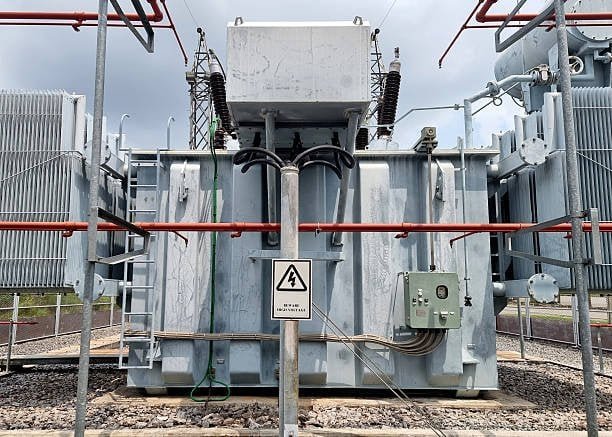
The insulation system is one of the most critical elements of a power transformer because it prevents electrical breakdown between windings, the core, tank, and other energized components. Insulation deterioration caused by heat, moisture, electrical stress, contamination, or mechanical damage can lead to partial discharge, short circuits, winding failure, and catastrophic transformer outages. Understanding the available insulation systems helps buyers evaluate transformer designs and select equipment capable of maintaining reliable dielectric performance throughout its service life.
Power transformers commonly use liquid-solid insulation systems, in which insulating oil or ester fluid works together with cellulose-based solid insulation such as kraft paper and pressboard. Dry-type transformers typically use solid insulation materials such as epoxy resin, fiberglass, Nomex, and other engineered insulation systems, with air providing the primary cooling medium. The appropriate insulation system depends on voltage level, transformer type, thermal requirements, environmental conditions, fire-safety requirements, and operating conditions.
Insulation performance depends not only on the materials selected but also on manufacturing cleanliness, moisture control, drying processes, temperature management, and electrical stress distribution. Buyers should therefore evaluate the complete insulation system rather than focusing on a single material.
What Insulation Systems Are Used in Power Transformers?
Power-transformer insulation directly affects dielectric strength, thermal aging, reliability, and service life. If the insulation system is poorly matched to voltage stress, temperature, moisture, mechanical forces, or the installation environment, problems such as partial discharge, insulation aging, overheating, or dielectric breakdown can eventually occur. The main insulation systems used in power transformers include mineral-oil-and-cellulose systems, ester-fluid-and-cellulose systems, and solid insulation systems used in dry-type transformers. Common materials include cellulose paper, pressboard, mineral oil, natural ester, synthetic ester, epoxy resin, glass reinforcement, and aramid insulation. The correct system depends on transformer voltage and capacity, cooling method, load profile, environmental conditions, fire requirements, reliability targets, applicable standards, and lifecycle cost.


Transformer insulation is not one material but an integrated system. Electrical insulation must simultaneously withstand electric fields, remove heat, tolerate short-circuit forces, control moisture, and remain stable throughout decades of operation. This is why material selection must be evaluated together with winding design, cooling, drying, field control, testing, and manufacturing quality.
Transformer insulation consists only of the material wrapped around the copper winding.False
The insulation system also includes barriers, pressboard structures, spacers, insulating liquids or resin, lead insulation, bushings, and carefully controlled clearances.
What Are the Main Transformer Insulation Systems?
The most important categories are shown below.
| Insulation System | Main Materials | Typical Transformer | Main Advantages |
|---|---|---|---|
| Mineral oil-paper | Mineral oil, cellulose paper, pressboard | Oil-immersed | Mature, economical, scalable |
| Natural ester-paper | Natural ester, cellulose, pressboard | Liquid-filled | Fire and environmental advantages |
| Synthetic ester-paper | Synthetic ester, cellulose, pressboard | Liquid-filled | High fire performance and engineered properties |
| Cast resin | Epoxy resin, glass/other reinforcement | Dry-type | No insulating liquid, robust solid insulation |
| VPI | Resin-impregnated insulation | Dry-type | Controlled impregnation and mechanical strength |
| Aramid-based | Aramid, resin or liquid systems | Specialized | High thermal endurance |
| Hybrid systems | Combination of materials | Specialized | Optimized for specific duties |
These categories can overlap. For example, an ester-filled transformer may still use cellulose paper and pressboard as its principal solid insulation.
How Does Oil-Paper Insulation Work?
The conventional oil-filled transformer uses a liquid-solid composite insulation system.
Mineral insulating oil provides both dielectric separation and cooling. Cellulose paper provides winding and turn insulation, while pressboard forms cylinders, spacers, barriers, and structural insulation.
A simplified insulation path may look like:
Conductor → paper insulation → pressboard barrier → oil gap → pressboard/winding → oil
The actual geometry is substantially more sophisticated because designers must control electric-field concentration and oil flow simultaneously.
Cellulose is widely used because it combines good electrical insulation, mechanical properties, manufacturability, and compatibility with transformer liquids.
Why Is Pressboard Important?
Pressboard is more than an electrical barrier. In large transformers, it also provides mechanical support.
It can be used for:
- Cylinders
- Spacers
- End insulation
- Barriers
- Support blocks
- Insulating structures
During a short circuit, transformer windings can experience substantial electromagnetic forces. The pressboard structure therefore has to maintain winding geometry while also providing reliable dielectric separation.
How Does Moisture Affect Transformer Insulation?
Moisture is one of the major factors accelerating transformer insulation deterioration.
Excess moisture can:
- Reduce dielectric strength
- Increase dielectric losses
- Accelerate cellulose aging
- Increase partial-discharge risk
- Reduce mechanical strength
- Increase the risk of thermally generated bubbles under severe conditions
For this reason, transformer manufacturers use controlled drying and vacuum processes during production.
Important practices include:
- Vacuum drying
- Controlled heating
- Moisture-controlled assembly
- Vacuum impregnation
- Proper sealing
- Oil-quality control
Keeping transformer oil dry is sufficient to eliminate moisture-related insulation problems.False
Moisture is distributed between liquid and solid insulation, and cellulose can retain significant water. Effective moisture control therefore requires manufacturing drying, sealing, fluid management, and appropriate monitoring.
How Does Transformer Oil Provide Insulation and Cooling?
Transformer oil has two major functions:
- Dielectric insulation
- Heat transfer
The liquid must therefore provide suitable:
- Dielectric strength
- Viscosity
- Thermal properties
- Oxidation stability
- Material compatibility
- Low-temperature performance
- Fire performance
Mineral oil remains widely used because its characteristics, manufacturing processes, diagnostics, and long-term field experience are well established.
What Are Ester-Based Transformer Insulation Systems?
Ester systems replace mineral oil with either natural ester or synthetic ester while retaining solid insulation such as cellulose paper and pressboard in many designs.
Natural ester fluids are valued for properties such as:
- High flash and fire points
- Biodegradability
- Potential environmental advantages
- Compatibility with cellulose insulation
Synthetic esters can provide different combinations of:
- Thermal stability
- Oxidation resistance
- Low-temperature behavior
- Fire performance
Ester systems can therefore be attractive in urban substations, buildings, renewable-energy projects, and environmentally sensitive locations.
However, buyers should evaluate the complete fluid-and-solid insulation system rather than selecting an ester simply because it is marketed as "green."
What Are Aramid Insulation Materials?
Aramid is a high-temperature synthetic insulation material.
Compared with conventional cellulose, aramid can provide higher thermal endurance and strong mechanical performance. It is therefore used in specialized transformer insulation systems where elevated thermal capability is valuable.
| Characteristic | Cellulose | Aramid |
|---|---|---|
| Thermal endurance | Lower | Higher |
| Electrical insulation | Excellent | Excellent |
| Mechanical strength | Good | High |
| Cost | Generally lower | Generally higher |
| Typical application | Conventional transformers | Specialized/high-temperature designs |
Aramid does not automatically provide better economics. Its value depends on transformer duty, temperature requirements, and the cost premium.
What Insulation Systems Are Used in Dry-Type Transformers?
Dry-type transformers do not use a bulk liquid insulating medium. Common systems include:
- Cast resin
- VPI
- Resin-impregnated systems
- Solid insulation with air clearances
- Hybrid resin/solid systems
Cast-resin transformers use epoxy-based insulation to encapsulate or impregnate windings. VPI transformers use controlled vacuum-pressure impregnation to introduce resin into the winding insulation.
Potential advantages include:
- No oil leakage
- No liquid handling
- Reduced liquid-related fire concerns
- Convenient indoor installation
- Good environmental resistance when properly designed
However, dry-type transformers still require adequate ventilation, cooling, cleaning, and temperature monitoring.
How Does Insulation Change With Voltage?
As voltage increases, the insulation system must manage increasingly demanding electric-field stresses.
Design considerations include:
- Clearance
- Creepage
- Barrier arrangement
- Dielectric field distribution
- Lightning impulse withstand
- Switching impulse withstand where applicable
- Partial discharge
- Bushing insulation
Simply adding more insulation material is not always the correct solution because thicker insulation can affect cooling, dimensions, and mechanical design.
Why Is Partial Discharge Important?
Partial discharge is a localized electrical discharge that does not completely bridge the insulation system.
It can be associated with:
- Voids
- Contamination
- Poor interfaces
- Local electric-field concentration
- Manufacturing defects
Persistent partial discharge can progressively damage insulation.
For high-voltage equipment, partial-discharge testing can therefore provide valuable evidence of insulation quality.
How Does Temperature Affect Transformer Insulation Life?
Transformer insulation is strongly affected by temperature.
The most important thermal parameter is often the winding hot-spot temperature, rather than average oil or ambient temperature.
Hot-spot temperature depends on:
- Load current
- Ambient temperature
- Cooling design
- Oil or air circulation
- Winding geometry
- Loss distribution
Higher temperature generally accelerates chemical aging, especially in cellulose insulation.
This creates an important engineering relationship:
Electrical insulation design + thermal design = transformer insulation life.
How Does Manufacturing Quality Affect Insulation Reliability?
Even premium insulation materials can fail prematurely if manufacturing quality is poor.
Important controls include:
- Paper application
- Winding tension
- Pressboard machining
- Clean assembly
- Vacuum drying
- Moisture control
- Resin impregnation
- Oil processing
- Sealing
Manufacturing defects can create:
- Voids
- Contamination
- Local overheating
- Partial discharge
- Moisture pockets
- Mechanical weakness
Consequently, buyers should evaluate the manufacturer's production and testing capabilities, not just the insulation material listed on the datasheet.
How Should Buyers Match Insulation Systems With Applications?
| Application | Common Insulation Direction | Main Selection Factors |
|---|---|---|
| Commercial building | Dry-type/cast resin | Fire safety, indoor installation |
| Hospital | Dry-type/cast resin | Safety, reliability, noise |
| Data center | Dry-type or specialized liquid | Availability, cooling, monitoring |
| Industrial plant | Dry-type or oil-filled | Load, environment, capacity |
| Outdoor distribution | Oil-paper or ester-paper | Cooling, cost, environment |
| Urban substation | Ester-paper or dry-type | Fire and environmental requirements |
| Transmission substation | Oil-paper | High voltage, MVA, cooling |
| Generation plant | Oil-paper | High capacity and reliability |
| Renewable-energy site | Oil-paper, ester-paper or dry-type | Cycling, environment, fire |
| High-temperature duty | Aramid/specialized system | Thermal endurance |
This table is a preliminary selection guide; final selection requires engineering verification.
How Should Buyers Compare Transformer Insulation Systems?
A professional comparison should cover more than dielectric strength.
| Evaluation Factor | Buyer Question |
|---|---|
| Dielectric performance | Can it withstand operating and impulse stresses? |
| Thermal endurance | Can it handle the calculated hot-spot temperature? |
| Moisture behavior | How sensitive is the system to water? |
| Fire performance | Does it satisfy site requirements? |
| Environmental performance | Are fluid and solid materials appropriate? |
| Mechanical strength | Can it withstand short-circuit forces? |
| Partial discharge | What performance is demonstrated? |
| Cooling | Does insulation geometry permit adequate heat removal? |
| Manufacturing | How are moisture and contamination controlled? |
| Testing | What routine/type/special tests are performed? |
| Maintenance | What monitoring and inspection are required? |
| Lifecycle cost | What are the total ownership implications? |
Which Standards Apply to Transformer Insulation?
The exact requirements depend on the transformer and jurisdiction. Important standards frameworks commonly include the IEC 60076 series, IEEE C57 family, local electrical codes, utility specifications, and project-specific requirements.
Depending on the transformer, standards can address:
- Insulation levels
- Dielectric testing
- Temperature rise
- Partial discharge
- Insulating liquids
- Dry-type transformer construction
- Loading
- Bushings
- Routine and type tests
Buyers should specify the exact applicable standard editions and project requirements rather than accepting a general statement such as "international standards compliant."
What Insulation Tests Should Buyers Request?
Depending on the design and applicable standards, testing may include:
- Applied-voltage tests
- Induced-voltage tests
- Lightning-impulse tests
- Switching-impulse tests where applicable
- Partial-discharge tests
- Insulation-resistance measurements
- Dissipation-factor/power-factor measurements
- Temperature-rise tests
- Insulating-liquid tests
- Moisture assessment
Not every test applies to every transformer. The manufacturer should provide a test plan appropriate to the transformer rating and insulation system.
What Should Buyers Ask the Transformer Manufacturer?
Before purchasing, ask:
- What complete insulation system is proposed?
- Which materials are used for turn, layer, main, and lead insulation?
- What liquid, resin, or air insulation is used?
- What is the thermal class?
- What is the calculated winding hot-spot temperature?
- What insulation withstand levels are guaranteed?
- What partial-discharge performance is demonstrated?
- How is moisture controlled during manufacturing?
- What drying process is used?
- How are insulation materials stored before assembly?
- What resin casting or impregnation process is used?
- How is insulating liquid processed?
- Which routine and type tests are performed?
- Which IEC or IEEE standards apply?
- What maintenance and monitoring are recommended?
- What insulation service life is expected under the specified duty?
Practical Buyer Checklist
Before approving an insulation system, confirm:
| Requirement | Check |
|---|---|
| Voltage class defined | ☐ |
| Insulation level defined | ☐ |
| Impulse requirements defined | ☐ |
| Winding insulation specified | ☐ |
| Main insulation specified | ☐ |
| Solid barriers specified | ☐ |
| Liquid/resin/air insulation identified | ☐ |
| Thermal class confirmed | ☐ |
| Hot-spot temperature evaluated | ☐ |
| Moisture-control process verified | ☐ |
| Partial-discharge requirements defined | ☐ |
| Fire requirements defined | ☐ |
| Cooling and insulation coordinated | ☐ |
| Manufacturing controls reviewed | ☐ |
| Applicable standards identified | ☐ |
| Factory tests defined | ☐ |
How Do Liquid-Solid Insulation Systems Protect Power Transformers?
Power transformers operating at medium and high voltages cannot rely on a single insulating material. Electrical stress exists between turns, winding layers, windings, the core, structural components, and grounded tank, while the same insulation system must also withstand heat, moisture, vibration, and short-circuit forces. A weak dielectric path can lead to partial discharge, localized overheating, insulation aging, or ultimately catastrophic breakdown. Liquid-solid insulation systems protect power transformers by combining a liquid dielectric—most commonly mineral insulating oil, or increasingly natural or synthetic ester—with solid insulation such as cellulose paper and pressboard. The liquid provides dielectric separation and removes heat, while the solid materials provide turn insulation, barriers, spacers, mechanical support, and controlled electrical field distribution. Their combined performance allows the transformer to withstand operating voltage, transient overvoltages, thermal stress, and mechanical forces over a long service life.

The essential idea is that the liquid and solid components perform different but complementary functions. Oil alone cannot provide all the mechanical support required by a large transformer, while paper and pressboard alone cannot efficiently remove heat from the active part. The insulation system works because the materials, geometry, cooling paths, electric-field distribution, drying process, and manufacturing quality are designed together.
In a liquid-solid transformer insulation system, the insulating liquid only provides electrical insulation.False
The liquid also transfers heat from windings and core structures toward radiators or other cooling surfaces, making dielectric and thermal performance closely interconnected.
What Is a Liquid-Solid Transformer Insulation System?
A liquid-solid insulation system is a composite dielectric structure in which liquid insulation and solid insulation share the electrical stress.
The most established configuration is:
Conductor → cellulose paper → pressboard structure → insulating liquid → pressboard/winding → grounded structure
The exact arrangement varies with voltage, capacity, winding configuration, and insulation coordination.
Typical liquid materials include:
- Mineral insulating oil
- Natural ester
- Synthetic ester
Typical solid materials include:
- Cellulose paper
- Transformer pressboard
- Laminated cellulose components
- Aramid paper in specialized designs
- Other engineered solid insulation materials
The liquid fills spaces between solid components, preventing air gaps and providing a continuous dielectric and thermal-transfer medium.
Why Combine Liquid and Solid Insulation?
The combination exists because each material solves a different engineering problem.
| Function | Liquid Insulation | Solid Insulation |
|---|---|---|
| Dielectric separation | Excellent | Excellent |
| Heat transfer | Major function | More limited |
| Turn insulation | Limited | Primary function |
| Mechanical support | Limited | Major function |
| Barrier formation | Limited | Major function |
| Electric-field control | Supports geometry | Controls barriers and distances |
| Impregnation | Fills insulation structure | Absorbs/retains liquid |
| Moisture management | Transfers dissolved moisture | Can retain moisture |
This division of responsibilities is what makes liquid-solid insulation practical for large power transformers.
How Does the Liquid Insulation Protect Against Electrical Breakdown?
Insulating oil or ester has a much higher dielectric capability than ordinary air under properly controlled conditions.
When liquid fills the spaces between winding and barrier structures, it reduces the risk associated with uncontrolled gas gaps.
The liquid contributes to:
- Dielectric withstand
- Electrical separation
- Impulse withstand
- Insulation coordination
- Partial-discharge control
However, liquid dielectric performance depends strongly on quality.
Contaminants such as:
- Water
- Particles
- Fibers
- Gas bubbles
- Chemical degradation products
can reduce dielectric performance.
This is why liquid processing and cleanliness are critical manufacturing controls.
How Do Cellulose Paper and Pressboard Protect the Windings?
Cellulose paper is commonly applied directly around conductors and winding sections.
It provides:
- Turn-to-turn insulation
- Layer insulation
- Radial insulation
- Axial insulation
- Separation between conductors
Pressboard provides larger structural insulation components such as:
- Cylinders
- Barriers
- Spacers
- End insulation
- Support blocks
Together, these materials create a carefully controlled dielectric structure.
Why Are Pressboard Barriers So Important?
At high voltage, simply increasing the physical distance between windings is not always the best solution.
Engineers use barriers to divide and control dielectric paths.
A barrier can:
- Increase the effective dielectric strength of an insulation path
- Control electric-field distribution
- Reduce vulnerable long oil gaps
- Support the windings mechanically
- Help organize oil circulation
Thus, a pressboard barrier is simultaneously an electrical and mechanical component.
How Does Liquid-Solid Insulation Handle Heat?
This is one of its most important advantages.
Transformer losses occur primarily through:
- Core losses
- Winding resistance
- Eddy-current losses
- Stray losses
These losses become heat.
The liquid absorbs heat from the active part and transports it through natural or forced circulation toward cooling surfaces.
A simplified thermal path is:
Winding → solid insulation/liquid → oil circulation → tank/radiator → surrounding environment
This means insulation design and cooling design cannot be separated.
Why Is Winding Hot-Spot Temperature Important?
Average oil temperature does not necessarily represent the most severe insulation temperature.
A localized winding hot spot can experience substantially higher temperatures.
Hot-spot temperature depends on:
- Load current
- Winding losses
- Oil flow
- Cooling configuration
- Ambient temperature
- Winding geometry
- Transformer loading
High hot-spot temperatures accelerate insulation aging, particularly in cellulose-based systems.
Therefore, a good liquid-solid insulation design must maintain acceptable dielectric performance and control hot-spot temperature.
How Does Moisture Affect Liquid-Solid Insulation?
Moisture is one of the most significant threats to cellulose-based transformer insulation.
Water can migrate between the liquid and solid components depending on:
- Temperature
- Moisture concentration
- Insulation condition
- Fluid properties
Cellulose can retain substantial moisture, meaning that measuring only the moisture content of the liquid does not necessarily reveal the entire condition of the solid insulation.
Excessive moisture can:
- Lower dielectric strength
- Increase aging
- Reduce paper mechanical strength
- Increase dielectric losses
- Increase bubble-generation risk under severe thermal conditions
This is why transformer manufacturing includes rigorous drying and vacuum processing.
How Does Vacuum Drying Improve Insulation Reliability?
During manufacturing, the active part is dried under controlled conditions to remove moisture from paper and pressboard.
Typical processes may involve:
- Controlled heating
- Vacuum drying
- Vapor-phase drying
- Vacuum impregnation
- Controlled oil filling
The precise procedure depends on transformer design and manufacturer technology.
The objective is not simply to make the insulation "dry" at the surface. Moisture must be reduced throughout the solid insulation structure.
How Does Oil Impregnation Protect Solid Insulation?
Once the cellulose and pressboard structure is sufficiently dry, the insulating liquid penetrates the insulation system.
Proper impregnation helps:
- Eliminate unwanted air pockets
- Establish consistent dielectric paths
- Improve heat transfer
- Stabilize the insulation structure
Poor impregnation can leave localized gas pockets or interfaces that become electrically stressed.
What Happens if Air or Gas Bubbles Remain?
Uncontrolled gas pockets are undesirable because gas generally has substantially lower dielectric strength than the surrounding liquid-solid system.
Under high electric stress, gas-filled defects can become sites for:
- Partial discharge
- Local heating
- Chemical degradation
- Insulation erosion
This is one reason manufacturing cleanliness, vacuum processing, drying, and impregnation are critical.
How Does Liquid-Solid Insulation Withstand Short-Circuit Forces?
Transformer windings experience strong electromagnetic forces during external faults.
The liquid provides comparatively little structural support by itself.
The solid insulation structure therefore plays an important mechanical role.
Pressboard spacers, winding supports, cylinders, and end insulation help maintain:
- Conductor position
- Winding geometry
- Radial compression
- Axial stability
- Dielectric clearances
A transformer with excellent dielectric materials but inadequate mechanical design can still suffer insulation damage during a severe short circuit.
How Does Liquid-Solid Insulation Control Electric Fields?
Electric-field distribution is rarely uniform inside a power transformer.
High stress can occur near:
- Winding ends
- Leads
- Corners
- Sharp conductor features
- Barrier edges
- Bushing connections
Engineers use insulation geometry, shields, barriers, grading structures, and controlled clearances to reduce excessive local electric-field concentration.
The liquid and solid insulation must therefore be considered together when performing dielectric design calculations.
How Do Impulse Voltages Challenge the Insulation System?
Power transformers can experience transient overvoltages from:
- Lightning
- Switching
- Fault clearing
- Circuit-breaker operation
An insulation system that is adequate for normal operating voltage may still require additional coordination for impulse conditions.
Design considerations can include:
- Lightning impulse withstand
- Switching impulse withstand where applicable
- Winding impulse distribution
- Barrier arrangement
- Bushing insulation
- Surge protection
The insulation system must be designed for both steady-state and transient electrical stresses.
How Does Partial Discharge Affect Liquid-Solid Insulation?
Partial discharge can occur when a local region experiences sufficient electric stress to initiate discharge without complete insulation breakdown.
Potential sources include:
- Voids
- Contaminants
- Poor interfaces
- Gas pockets
- Local field concentration
- Manufacturing defects
Continued partial discharge can progressively damage solid insulation.
Therefore, partial-discharge testing is particularly important for high-voltage transformer quality assurance.
How Do Natural Ester and Synthetic Ester Fluids Change the System?
Ester fluids can replace mineral oil while the solid insulation remains largely similar.
Natural and synthetic esters can offer potential benefits such as:
- Higher fire point
- Higher flash point
- Improved environmental profile in relevant applications
- Compatibility with cellulose systems
However, ester fluids have different physical and chemical properties from mineral oil.
Designers must therefore consider:
- Viscosity
- Heat transfer
- Moisture behavior
- Oxidation stability
- Low-temperature performance
- Material compatibility
- Maintenance procedures
Changing the liquid is therefore a system-level engineering change, not merely an oil substitution.
How Do Mineral Oil and Ester-Based Systems Compare?
| Factor | Mineral Oil | Natural/Synthetic Ester |
|---|---|---|
| Electrical insulation | Established | Established when properly designed |
| Cooling | Well established | Requires design consideration |
| Fire performance | Lower fire point than ester | Generally higher fire point |
| Environmental profile | Requires spill management | Esters can offer biodegradability advantages |
| Cellulose compatibility | Extensive field experience | Extensive and growing application experience |
| Moisture behavior | Different equilibrium with cellulose | Different, often higher water solubility |
| Maintenance | Mature procedures | Fluid-specific procedures required |
| Application | Very broad | Increasingly used for specialized applications |
Neither fluid is universally superior. Application requirements determine the appropriate choice.
How Does Manufacturing Quality Affect Liquid-Solid Insulation?
Manufacturing quality can be as important as material selection.
Critical controls include:
- Insulation material storage
- Clean-room or controlled assembly practices
- Paper application
- Pressboard machining
- Winding tension
- Drying
- Vacuum treatment
- Liquid filtration
- Oil filling
- Sealing
Poor control can introduce moisture, particles, voids, or mechanical defects.
This is why buyers should evaluate the manufacturer's process controls rather than relying solely on a material datasheet.
What Tests Verify Liquid-Solid Insulation Quality?
Depending on transformer design and applicable standards, testing may include:
- Applied-voltage dielectric testing
- Induced-voltage testing
- Lightning-impulse testing
- Switching-impulse testing where applicable
- Partial-discharge testing
- Insulation-resistance testing
- Dissipation-factor/power-factor testing
- Liquid dielectric-strength testing
- Moisture testing
- Temperature-rise testing
The exact test program should be established according to the transformer's voltage class, rating, and applicable standards.
How Should Buyers Evaluate a Liquid-Solid Insulation System?
Buyers should evaluate the entire system rather than asking only for the oil type or paper grade.
| Evaluation Area | Buyer Question |
|---|---|
| Dielectric design | Can the insulation withstand normal and transient stresses? |
| Solid insulation | What paper and pressboard materials are used? |
| Liquid insulation | What fluid and specification are used? |
| Moisture | How is moisture controlled during manufacturing? |
| Cooling | Is oil circulation adequate at rated load? |
| Hot spot | What hot-spot temperature is calculated? |
| Mechanical strength | Can the insulation structure withstand short-circuit forces? |
| Partial discharge | What PD level is demonstrated or guaranteed? |
| Cleanliness | How are particles and contamination controlled? |
| Testing | Which routine, type, and special tests are performed? |
| Maintenance | What diagnostic tests are recommended? |
| Lifecycle | What aging and replacement assumptions are used? |
What Are the Main Failure Risks in Liquid-Solid Insulation?
The major risks can be summarized as follows:
Moisture → reduced dielectric strength + accelerated cellulose aging
Contamination → reduced liquid dielectric performance
Gas/voids → partial discharge
Excessive hot spots → accelerated thermal aging
Short-circuit forces → winding movement and mechanical insulation damage
Poor electric-field grading → localized dielectric stress
Poor sealing → moisture ingress and fluid deterioration
These mechanisms can interact. For example, moisture combined with high temperature can accelerate solid-insulation degradation considerably faster than either factor alone.
What Maintenance Helps Protect Liquid-Solid Insulation?
For operating oil-filled transformers, maintenance and condition monitoring can include:
- Dissolved-gas analysis
- Oil dielectric-strength testing
- Moisture testing
- Oil acidity/oxidation assessment
- Furan analysis where appropriate
- Insulation power-factor testing
- Bushing monitoring
- Thermal imaging
- Load and temperature monitoring
The appropriate diagnostic program depends on transformer age, rating, criticality, insulation system, and operating history.
Which Standards Should Buyers Consider?
Common standards frameworks include the IEC 60076 series and IEEE C57 family, supplemented by local regulations, utility specifications, and project requirements.
Standards can establish requirements related to:
- Insulation levels
- Dielectric tests
- Temperature rise
- Insulating liquids
- Partial discharge
- Drying and testing procedures
- Transformer construction
The purchase specification should identify the applicable standard edition rather than simply stating "IEC compliant."
What Should Buyers Ask the Manufacturer?
A technically strong RFQ should request:
- Complete insulation-system description
- Liquid-insulation specification
- Paper and pressboard specifications
- Insulation coordination calculations
- Calculated hot-spot temperature
- Drying and vacuum-processing method
- Oil/ester processing method
- Moisture-control limits
- Partial-discharge performance
- Impulse withstand levels
- Short-circuit mechanical design information
- Factory test program
- Applicable IEC/IEEE standards
- Recommended condition-monitoring program
- Expected insulation aging/service-life assumptions
What Solid Insulation Materials Are Used in Dry-Type Power Transformers?
Dry-type power transformers do not use a bulk liquid such as mineral oil for their primary insulation and cooling system, so their reliability depends heavily on the quality and design of solid insulation. The wrong material, poor impregnation, excessive moisture, voids, or inadequate thermal design can lead to partial discharge, cracking, overheating, dielectric breakdown, and premature aging. The main solid insulation materials used in dry-type power transformers include epoxy resin, cellulose-based insulation, aramid paper, glass fiber, polyester-based materials, mica, insulating laminates, and engineered composite materials. These materials are used in different combinations for conductor insulation, winding insulation, encapsulation, barriers, spacers, structural support, and electrical field control. Cast-resin transformers primarily rely on epoxy resin and reinforcement materials, while VPI designs commonly use resin-impregnated paper, polyester, glass, or mica-based insulation. The correct material system depends on voltage, temperature class, partial-discharge requirements, mechanical strength, moisture exposure, fire performance, cooling, and manufacturing process.

The important point is that a dry-type transformer normally does not depend on one solid material. It uses an engineered insulation system in which each material performs a specific function. The resin may provide encapsulation and mechanical protection, while glass fiber supplies reinforcement, mica improves dielectric and thermal performance, and aramid may provide higher thermal endurance. The manufacturing process determines whether these materials perform as intended.
Epoxy resin is the only solid insulation material used in dry-type power transformers.False
Dry-type transformers can use epoxy resin together with glass fiber, mica, aramid, polyester, cellulose-based materials, insulating laminates, and other engineered composites depending on the transformer design.
What Are the Main Solid Insulation Materials?
| Material | Typical Function | Main Advantage | Typical Use |
|---|---|---|---|
| Epoxy resin | Encapsulation, impregnation | Mechanical and dielectric protection | Cast-resin transformers |
| Glass fiber | Reinforcement | Mechanical strength | Resin and VPI systems |
| Aramid paper | Electrical insulation | High thermal endurance | High-temperature designs |
| Mica | Dielectric/thermal insulation | High thermal and dielectric capability | Specialized windings |
| Polyester materials | Impregnation and insulation | Good processing characteristics | VPI and dry-type systems |
| Cellulose paper | Conductor/winding insulation | Established electrical performance | Selected dry-type designs |
| Pressboard/laminates | Barriers and structural insulation | Mechanical support | Specialized constructions |
| Composite insulation | Multiple functions | Optimized system performance | Advanced designs |
The actual material combination should always be evaluated as a complete insulation system.
How Is Epoxy Resin Used in Dry-Type Transformers?
Epoxy resin is particularly important in cast-resin transformers.
The resin can surround or encapsulate the winding, providing:
- Electrical insulation
- Mechanical reinforcement
- Environmental protection
- Resistance to contamination
- Structural integrity
A properly manufactured resin system can help protect the winding from moisture and environmental contaminants.
However, resin itself is not enough. The resin formulation, reinforcement, curing process, thermal conductivity, and void control all influence transformer reliability.
Why Is Glass Fiber Used?
Glass fiber is primarily a reinforcement material.
It can increase:
- Mechanical strength
- Dimensional stability
- Resistance to mechanical stress
- Structural integrity of resin insulation
During transformer operation and short-circuit events, windings can experience significant mechanical forces. Glass reinforcement helps the solid insulation system maintain its geometry.
Glass fiber can be incorporated into:
- Epoxy resin systems
- Insulating tapes
- Laminates
- VPI insulation
What Is Aramid Insulation?
Aramid is a synthetic high-temperature insulation material.
It is valued for:
- High thermal endurance
- Good dielectric performance
- High mechanical strength
- Resistance to thermal degradation
Aramid can be used when transformer designers need higher thermal capability than conventional cellulose-based materials can provide.
It is more expensive than many conventional insulation materials, so it is generally selected when its thermal or mechanical benefits justify the additional cost.
What Is Mica Used for in Dry-Type Transformers?
Mica has excellent dielectric and thermal characteristics.
It can be used in specialized insulation systems where high-temperature electrical performance is important.
Applications can include:
- High-voltage insulation
- Turn insulation
- Ground-wall insulation
- High-temperature winding systems
Mica is relatively rigid and can be combined with resin and reinforcement materials to form engineered insulation structures.
What Role Do Polyester Materials Play?
Polyester-based insulation and resin systems can be used in impregnation and insulation structures.
They can provide:
- Electrical insulation
- Good impregnation characteristics
- Mechanical reinforcement
- Suitable thermal performance
Their suitability depends on the particular resin system, temperature class, voltage rating, and manufacturing process.
Are Cellulose Materials Used in Dry-Type Transformers?
Yes, although their role depends strongly on transformer design.
Cellulose paper is widely established in liquid-filled transformers, but cellulose-based materials can also appear in selected dry-type insulation systems.
Potential uses include:
- Conductor insulation
- Layer insulation
- Barriers
- Composite insulation structures
The key distinction is that dry-type transformers do not rely on insulating liquid to impregnate and cool the complete insulation system in the way oil-filled transformers do.
How Are Solid Barriers and Laminates Used?
Solid insulating laminates and structural components can provide:
- Electrical separation
- Mechanical support
- Winding positioning
- Creepage control
- Structural reinforcement
Materials may include resin-bonded laminates, glass-reinforced composites, and other engineered insulating boards.
Their dimensions are determined by both electrical and mechanical calculations.
Why Is the Combination of Materials More Important Than One Material?
A dry-type transformer insulation system has to satisfy several competing requirements:
Dielectric strength + thermal conductivity + mechanical strength + environmental resistance + manufacturability.
For example:
- Epoxy provides encapsulation.
- Glass fiber provides reinforcement.
- Mica can improve high-temperature dielectric performance.
- Aramid can provide high thermal endurance.
- Solid barriers control electrical clearances.
A designer therefore selects a combination rather than simply maximizing one material property.
How Does Solid Insulation Control Transformer Temperature?
Dry-type transformers generate heat from:
- Core losses
- Winding resistance
- Eddy-current losses
- Stray losses
Because there is no transformer oil circulating through the winding, heat must travel through solid insulation and then into air or cooling structures.
This makes thermal conductivity of the insulation system particularly important.
If the insulation is electrically excellent but thermally restrictive, hot spots may increase.
Therefore, resin formulation, filler content, winding geometry, ventilation ducts, and cooling method must be designed together.
How Does Temperature Affect Solid Insulation Life?
Thermal aging is one of the most important aging mechanisms in dry-type transformers.
Higher temperatures can accelerate:
- Resin aging
- Polymer degradation
- Cracking
- Loss of mechanical strength
- Electrical deterioration
The relevant parameter is often the winding hot-spot temperature.
This is why buyers should request temperature-rise and thermal-design information rather than selecting insulation based only on its nominal thermal class.
Why Are Voids Dangerous in Solid Insulation?
Voids can occur if resin impregnation or casting is poorly controlled.
A void can create a localized region with significantly different dielectric properties from the surrounding solid insulation.
Under sufficient electric stress, this can promote partial discharge.
Persistent partial discharge may progressively damage the surrounding insulation.
Therefore, void control is one of the most important manufacturing requirements for cast-resin and impregnated dry-type transformers.
How Does Manufacturing Quality Affect Solid Insulation?
The insulation material itself is only part of the equation.
Important manufacturing processes include:
- Resin mixing
- Vacuum treatment
- Impregnation
- Casting
- Curing
- Winding tension control
- Material storage
- Clean assembly
- Temperature control
- Moisture control
Poor processing can cause:
- Voids
- Cracks
- Delamination
- Uneven resin distribution
- Contamination
- Weak interfaces
A high-quality resin system manufactured poorly can therefore perform worse than a properly manufactured conventional system.
How Does Moisture Affect Dry-Type Solid Insulation?
Dry-type transformers avoid liquid leakage, but they are not completely unaffected by humidity.
Moisture can influence:
- Surface insulation
- Resin interfaces
- Contamination
- Partial discharge
- Thermal behavior
Cast-resin systems can offer good environmental resistance, but the transformer still requires appropriate enclosure, ventilation, installation, and maintenance.
How Does Solid Insulation Handle Short-Circuit Forces?
Short-circuit currents generate electromagnetic forces within transformer windings.
Solid insulation contributes to maintaining:
- Winding position
- Conductor alignment
- Radial compression
- Axial stability
- Mechanical clearances
Glass fiber, resin, laminates, spacers, and structural insulation components can all contribute to mechanical strength.
This is one reason transformer insulation should be evaluated as a structural system rather than simply as an electrical coating.
How Do Cast-Resin and VPI Insulation Systems Differ?
| Feature | Cast Resin | VPI |
|---|---|---|
| Main process | Resin casting/encapsulation | Vacuum-pressure impregnation |
| Winding protection | Strong encapsulation | Resin-impregnated insulation |
| Moisture resistance | Generally strong | Depends on system and enclosure |
| Mechanical protection | High | High when properly manufactured |
| Repairability | More difficult if resin is damaged | Different repair considerations |
| Thermal design | Strongly resin-dependent | Strongly impregnation/material-dependent |
| Typical use | Indoor distribution/industrial | Industrial/commercial dry-type |
Neither technology is universally better. The application and manufacturing process determine suitability.
How Should Buyers Compare Solid Insulation Materials?
| Selection Factor | What to Check |
|---|---|
| Thermal class | Is the material suitable for expected hot-spot temperature? |
| Dielectric strength | Does it meet the required voltage and impulse levels? |
| Partial discharge | What PD performance is demonstrated? |
| Thermal conductivity | Can heat escape from the winding effectively? |
| Mechanical strength | Can it withstand short-circuit forces? |
| Moisture resistance | Is it suitable for the installation environment? |
| Fire performance | Does the material meet project requirements? |
| Crack resistance | Can it tolerate thermal cycling? |
| Manufacturing process | Are casting/impregnation controls documented? |
| Lifecycle | How does material selection affect maintenance and aging? |
What Solid Insulation Is Best for Different Applications?
There is no universal best material, but a preliminary guide can be useful.
| Application | Potential Insulation Direction |
|---|---|
| Commercial building | Cast resin/epoxy systems |
| Hospital | Cast resin with appropriate fire and environmental performance |
| Data center | High-quality dry-type resin or specialized system |
| Industrial facility | Cast resin or VPI depending on duty |
| High-temperature application | Aramid or mica-enhanced system |
| High mechanical stress | Glass-reinforced resin/composite system |
| Specialized high-voltage dry-type | Engineered resin, mica, aramid and composite systems |
Final selection must be confirmed through transformer design calculations and applicable standards.
What Tests Should Buyers Request?
Depending on the transformer design, buyers should consider requesting evidence of:
- Applied-voltage testing
- Induced-voltage testing
- Partial-discharge testing
- Temperature-rise testing
- Insulation-resistance measurements
- Impulse testing where applicable
- Environmental qualification
- Mechanical testing
- Routine factory tests
For cast-resin transformers, partial-discharge performance and thermal behavior deserve particular attention.
What Should Buyers Ask Dry-Type Transformer Manufacturers?
A professional RFQ should ask:
- What solid insulation materials are used?
- What resin system is used?
- What reinforcement material is used?
- What is the insulation thermal class?
- What is the calculated winding hot-spot temperature?
- What partial-discharge level is guaranteed?
- How are voids controlled during casting or impregnation?
- What curing process is used?
- How are insulation materials stored?
- What environmental conditions has the transformer been designed for?
- What short-circuit mechanical design has been applied?
- Which IEC or IEEE standards are used?
- What routine and type tests are performed?
- What maintenance and condition monitoring are recommended?
Practical Buyer Checklist
| Requirement | Check |
|---|---|
| Solid insulation materials identified | ☐ |
| Resin type identified | ☐ |
| Reinforcement identified | ☐ |
| Thermal class confirmed | ☐ |
| Hot-spot temperature calculated | ☐ |
| Partial-discharge requirement defined | ☐ |
| Void-control process verified | ☐ |
| Moisture/environmental conditions evaluated | ☐ |
| Short-circuit mechanical strength evaluated | ☐ |
| Applicable standards identified | ☐ |
| Factory testing defined | ☐ |
| Lifecycle requirements evaluated | ☐ |
How Do Transformer Insulation Systems Resist Heat, Moisture, and Electrical Stress?
Transformer insulation operates under three major stresses at the same time: heat, moisture, and electric field stress. If any one is poorly controlled, insulation aging can accelerate, partial discharge can develop, or dielectric breakdown can occur. The challenge is that these stresses interact: high temperature changes moisture distribution, moisture can reduce dielectric performance, and electrical defects can create localized heating. Transformer insulation resists these stresses through a coordinated system of solid materials, insulating liquids or resins, controlled clearances, thermal design, moisture management, and manufacturing quality. Cellulose paper and pressboard provide dielectric separation and mechanical support in liquid-filled transformers; mineral oil or ester fluids provide both insulation and heat transfer; epoxy resin and composite materials protect dry-type windings; and materials such as aramid and mica can provide higher thermal endurance in specialized designs. Reliable performance therefore depends not on one insulation material, but on the complete insulation system and its manufacturing process.

The most reliable transformer insulation designs treat thermal, moisture, and dielectric performance as a single engineering problem. A material with excellent dielectric strength can still fail if it overheats, while a thermally stable material can become unreliable if moisture or manufacturing defects create weak dielectric regions.
Transformer insulation resistance to heat, moisture, and electrical stress depends only on the insulation material's rated temperature class.False
System geometry, moisture content, electric-field distribution, cooling, material interfaces, manufacturing quality, and operating conditions also strongly influence insulation reliability.
What Are the Three Main Stresses on Transformer Insulation?
| Stress | Typical Source | Potential Consequence |
|---|---|---|
| Thermal | Core and winding losses | Accelerated aging |
| Moisture | Manufacturing, breathing, leaks, environment | Lower dielectric strength and faster aging |
| Electrical | Operating voltage, lightning, switching | Partial discharge or breakdown |
| Mechanical | Short-circuit forces, vibration | Cracking or insulation displacement |
| Environmental | Dust, chemicals, temperature cycling | Surface contamination or degradation |
Heat, moisture, and electrical stress are particularly important because they can interact rather than act independently.
How Does Insulation Resist Heat?
Transformer insulation must remain electrically and mechanically stable while the transformer produces heat.
Losses originate primarily from:
- Core hysteresis and eddy-current losses
- Winding resistance
- Winding eddy-current losses
- Stray losses
The resulting heat raises winding and insulation temperatures.
For liquid-filled transformers, the thermal path is generally:
Winding → insulation/liquid → circulating liquid → radiator/cooler → ambient
For dry-type transformers:
Winding → solid insulation/resin → air or cooling structure → ambient
This makes thermal conductivity and winding geometry important design parameters.
Why Is Hot-Spot Temperature More Important Than Average Temperature?
The average transformer temperature does not necessarily represent the most severe insulation condition.
A localized winding hot spot may operate at a substantially higher temperature than the surrounding insulation.
Hot-spot temperature is influenced by:
- Load current
- Ambient temperature
- Cooling method
- Winding geometry
- Loss distribution
- Ventilation or liquid circulation
Because insulation aging is strongly temperature-dependent, controlling hot spots is central to achieving the expected service life.
How Do High-Temperature Insulation Materials Help?
Different materials have different thermal endurance.
| Material | Typical Thermal Capability | Common Role |
|---|---|---|
| Cellulose paper | Conventional thermal endurance | Winding insulation |
| Pressboard | Conventional thermal endurance | Barriers and supports |
| Epoxy resin | System-dependent | Cast-resin insulation |
| Glass fiber | High-temperature reinforcement | Mechanical reinforcement |
| Aramid | High thermal endurance | Specialized insulation |
| Mica | High thermal/dielectric endurance | Specialized high-temperature insulation |
A higher thermal class does not automatically mean longer transformer life. The actual operating hot-spot temperature and thermal design remain critical.
How Does Moisture Damage Transformer Insulation?
Moisture is especially important in cellulose-based insulation.
Water can:
- Reduce dielectric strength
- Increase dielectric losses
- Accelerate cellulose aging
- Reduce paper mechanical strength
- Increase partial-discharge susceptibility
- Increase bubble risk at elevated temperatures
Moisture can also migrate between solid insulation and insulating liquid as temperature changes.
This makes moisture control a system-level requirement.
Why Is Cellulose Particularly Sensitive to Moisture?
Cellulose is hygroscopic, meaning it can absorb and retain water.
In an oil-filled transformer, a large portion of the total moisture can reside in the solid insulation rather than the liquid.
Consequently, a transformer with apparently acceptable oil moisture may still contain excessive moisture in paper or pressboard.
Manufacturers therefore use controlled drying processes before filling the transformer with insulating liquid.
How Is Moisture Controlled During Manufacturing?
Typical processes may include:
- Controlled heating
- Vacuum drying
- Vapor-phase drying
- Vacuum treatment
- Dry-air or controlled-atmosphere assembly
- Filtered fluid filling
- Hermetic sealing
The goal is to reduce moisture throughout the solid insulation system, not simply remove surface water.
How Does Sealing Prevent Moisture Ingress?
Once a transformer is properly dried, moisture must be prevented from entering during service.
Potential moisture-entry paths include:
- Tank seals
- Gaskets
- Bushings
- Breathers
- Expansion systems
- Access covers
A poorly sealed transformer can gradually absorb moisture from the environment.
For critical transformers, buyers should therefore evaluate sealing design and moisture-monitoring provisions together with the insulation material.
How Does Insulation Resist Electrical Stress?
Electrical stress is produced by the voltage difference between:
- Turns
- Winding layers
- Windings
- Core
- Grounded structures
- Leads and terminals
Normal operating voltage is only one part of the design requirement. Transformers can also experience transient overvoltages from lightning and switching.
The insulation system therefore uses:
- Solid barriers
- Oil or resin
- Controlled clearances
- Grading structures
- Shields
- Proper winding geometry
to distribute electric fields and prevent excessive local stress.
Why Is Electric-Field Distribution Important?
Electrical breakdown does not necessarily begin at the location with the highest average voltage.
It can begin at a localized region where electric-field intensity is concentrated.
Common high-stress areas include:
- Winding ends
- Lead exits
- Corners
- Sharp conductor features
- Barrier edges
- Bushing interfaces
Insulation design therefore aims to control local electric-field intensity, not merely total insulation thickness.
How Do Solid Barriers Improve Dielectric Performance?
Pressboard cylinders and barriers divide large dielectric paths into controlled regions.
They can:
- Reduce vulnerable long oil gaps
- Redistribute electric stress
- Increase effective dielectric strength
- Maintain physical clearances
- Provide mechanical support
This is why large power transformers often contain complex combinations of paper, pressboard, oil ducts, and barriers.
How Does Liquid Insulation Resist Electrical Stress?
Mineral oil and ester fluids fill spaces between solid insulation components.
When clean and properly processed, the liquid provides effective dielectric separation.
However, liquid dielectric performance can be reduced by:
- Water
- Particles
- Fibers
- Gas bubbles
- Aging products
Therefore, fluid filtration and dielectric-strength testing are important parts of transformer quality control.
How Does Resin Protect Dry-Type Transformer Insulation?
Dry-type transformers use solid insulation rather than bulk insulating liquid.
Cast-resin designs can use epoxy to encapsulate windings.
The resin provides:
- Electrical insulation
- Mechanical protection
- Environmental protection
- Resistance to contamination
- Structural stability
Glass fiber and other reinforcement materials can increase mechanical strength.
However, resin quality and casting/curing processes strongly influence reliability.
What Happens When Moisture and Heat Act Together?
Heat and moisture can interact in damaging ways.
Higher temperature changes moisture distribution, while moisture accelerates cellulose degradation.
This can create a cycle:
Moisture → faster insulation aging → reduced mechanical strength → greater vulnerability → further deterioration
At high temperatures, water and dissolved gases can also contribute to bubble formation, which can be particularly dangerous under strong electrical stress.
Therefore, thermal and moisture limits should not be evaluated independently.
What Is Partial Discharge and Why Does It Matter?
Partial discharge is a localized electrical discharge that does not completely bridge the insulation.
It can develop around:
- Voids
- Contaminants
- Gas pockets
- Poor interfaces
- Local electric-field concentrations
Continued partial discharge can progressively erode insulation.
For high-voltage transformers, partial-discharge testing is therefore an important indicator of manufacturing and insulation quality.
How Does Manufacturing Quality Affect Stress Resistance?
A transformer can use high-quality insulation materials and still have poor reliability if manufacturing controls are inadequate.
Important processes include:
- Material storage
- Winding insulation application
- Pressboard machining
- Clean assembly
- Vacuum drying
- Resin casting or impregnation
- Liquid processing
- Sealing
- Curing
Manufacturing defects can create voids, moisture pockets, contamination, cracks, or weak interfaces.
A transformer manufacturer can guarantee insulation reliability simply by purchasing higher-grade insulation materials.False
Material quality is important, but insulation reliability also depends on design, drying, moisture control, electric-field grading, cooling, mechanical strength, processing, and factory testing.
How Can Buyers Compare Insulation Stress Resistance?
| Evaluation Area | What Buyers Should Verify |
|---|---|
| Thermal performance | Hot-spot temperature and temperature-rise results |
| Thermal class | Appropriate material/system thermal endurance |
| Moisture | Manufacturing moisture limits and drying process |
| Sealing | Tank, gasket, bushing, and breathing-system design |
| Dielectric strength | Applied and induced test results |
| Impulse withstand | Lightning/switching impulse capability where applicable |
| Partial discharge | Factory PD performance |
| Mechanical strength | Short-circuit withstand capability |
| Fluid quality | Dielectric strength, moisture and contamination limits |
| Resin quality | Void control and curing process for dry-type units |
Which Insulation Materials Are Suitable for High-Stress Applications?
There is no universal material ranking. The application determines the appropriate system.
For conventional oil-filled power transformers, a mature combination of cellulose paper, pressboard, and mineral oil remains widely used.
For applications where fire or environmental considerations are important, ester fluid combined with cellulose-based insulation may be appropriate.
For dry-type transformers, epoxy resin, glass reinforcement, mica, aramid, and engineered composites can be selected according to voltage and thermal requirements.
The correct design must balance:
Electrical strength + thermal endurance + moisture resistance + mechanical strength + manufacturability.
What Tests Demonstrate Insulation Reliability?
Depending on transformer type and applicable standards, buyers may request:
- Applied-voltage tests
- Induced-voltage tests
- Lightning-impulse tests
- Switching-impulse tests where applicable
- Partial-discharge tests
- Insulation-resistance tests
- Dissipation-factor/power-factor tests
- Insulating-liquid tests
- Temperature-rise tests
- Moisture assessments
The exact test program should correspond to the transformer rating and applicable IEC or IEEE requirements.
What Standards Should Buyers Consider?
The IEC 60076 series and IEEE C57 family are major standards frameworks used for power transformers. Local electrical regulations and utility/project specifications may impose additional requirements.
The purchase specification should identify:
- Applicable standard
- Standard edition
- Voltage class
- Insulation level
- Test requirements
- Environmental requirements
- Temperature limits
A generic statement such as "international standards compliant" is not sufficient for a technically controlled purchase.
Practical Buyer Checklist
| Requirement | Check |
|---|---|
| Insulation system identified | ☐ |
| Thermal class confirmed | ☐ |
| Hot-spot calculation available | ☐ |
| Moisture limits specified | ☐ |
| Drying process documented | ☐ |
| Sealing system verified | ☐ |
| Dielectric withstand defined | ☐ |
| Impulse withstand defined | ☐ |
| Partial-discharge requirement defined | ☐ |
| Cooling design verified | ☐ |
| Short-circuit strength verified | ☐ |
| Factory test plan approved | ☐ |
| Applicable IEC/IEEE standards identified | ☐ |
How Do Insulation Materials and Systems Affect Power Transformer Lifespan and Reliability?
Power transformer insulation is one of the most important determinants of long-term reliability. Even when the core, windings, cooling system, and accessories are properly designed, insulation deterioration can eventually limit service life. Excessive temperature, moisture, electrical stress, partial discharge, contamination, mechanical movement, and poor manufacturing can progressively weaken insulation and increase failure risk. Insulation materials and systems affect transformer lifespan by determining how well the transformer withstands thermal, dielectric, mechanical, and environmental stresses over time. Cellulose paper and pressboard, mineral oil, natural or synthetic ester fluids, epoxy resin, glass fiber, aramid, mica, and engineered composites each contribute different properties. However, reliability depends on the complete insulation system—not simply the grade of one material. Proper material selection, electric-field control, cooling, drying, sealing, impregnation or casting, factory testing, and condition monitoring are all necessary to achieve long service life.

The key engineering principle is simple: insulation aging determines how much electrical, thermal, and mechanical stress a transformer can safely tolerate over its operating life. A premium material cannot compensate for excessive hot-spot temperature or poor moisture control, while a well-designed insulation system can substantially reduce deterioration even when the transformer operates under demanding conditions.
The lifespan of a power transformer is determined only by the rated lifespan of its insulation material.False
Transformer lifespan also depends on hot-spot temperature, moisture, electrical stress, loading, cooling, mechanical forces, manufacturing quality, maintenance, and operating environment.
What Role Does Insulation Play in Transformer Reliability?
Transformer insulation has several simultaneous jobs:
- Prevent conductor-to-conductor breakdown
- Separate windings electrically
- Insulate windings from ground
- Withstand transient overvoltages
- Control electric-field concentration
- Support winding structures
- Maintain clearances during short circuits
- Protect against environmental contamination
- Tolerate thermal cycling
This makes insulation both an electrical and mechanical system.
In liquid-filled transformers, a typical system combines:
Cellulose paper + pressboard + insulating liquid
In dry-type transformers, common systems include:
Epoxy resin + glass reinforcement + solid insulation
Specialized designs may add aramid, mica, polyester, or composite insulation for higher thermal or dielectric requirements.
How Does Insulation Material Affect Transformer Lifespan?
Different insulation materials have different resistance to:
- Temperature
- Moisture
- Electric-field stress
- Mechanical forces
- Chemical degradation
- Thermal cycling
| Material/System | Major Strength | Main Reliability Consideration |
|---|---|---|
| Cellulose paper | Mature, economical, excellent electrical insulation | Sensitive to thermal aging and moisture |
| Pressboard | Electrical barriers and mechanical support | Moisture and thermal aging |
| Mineral oil-paper | Mature dielectric/cooling system | Moisture, oxidation and contamination |
| Ester-paper | Fire/environmental advantages | Fluid-specific thermal and maintenance behavior |
| Epoxy resin | Encapsulation and mechanical protection | Thermal cycling, cracks and voids |
| Glass-reinforced resin | Mechanical strength | Processing and interface quality |
| Aramid | High thermal endurance | Higher material cost |
| Mica composites | High dielectric/thermal capability | Specialized manufacturing requirements |
The correct material is therefore application-dependent.
Why Is Cellulose Insulation So Important?
Cellulose paper and pressboard are widely used in oil-filled power transformers.
Their advantages include:
- Good dielectric performance
- Good mechanical properties
- Established manufacturing technology
- Compatibility with transformer liquids
- Proven long-term field experience
However, cellulose is particularly sensitive to temperature and moisture.
As cellulose ages, its polymer chains gradually break down. This reduces mechanical strength and can eventually make the winding structure more vulnerable to short-circuit forces.
This is why transformer insulation life is often closely associated with the aging condition of cellulose insulation.
How Does Heat Accelerate Insulation Aging?
Transformer losses generate heat, and insulation aging generally accelerates as temperature increases.
Important thermal sources include:
- Core losses
- Copper losses
- Eddy-current losses
- Stray losses
The critical parameter is usually the winding hot-spot temperature.
Higher hot-spot temperatures can accelerate chemical degradation of insulation. If the transformer repeatedly operates above its intended thermal limits, the insulation may age faster than assumed during design.
A simplified relationship is:
Higher hot-spot temperature → faster insulation aging → reduced mechanical strength → greater failure vulnerability
The exact aging rate depends on the insulation system and applicable aging model.
How Does Moisture Reduce Insulation Life?
Moisture is one of the most important degradation factors for cellulose insulation.
It can:
- Reduce dielectric strength
- Accelerate paper aging
- Increase dielectric losses
- Reduce mechanical strength
- Increase partial-discharge risk
- Increase bubble formation risk under high temperature
Moisture can enter through:
- Manufacturing
- Poor sealing
- Breathers
- Gaskets
- Tank openings
- Environmental exposure
Once inside, water can distribute between the liquid and solid insulation depending on temperature and equilibrium conditions.
If transformer oil has low moisture content, the solid insulation must also be sufficiently dry.False
Cellulose and pressboard can retain significant moisture. Liquid moisture measurements should therefore be interpreted together with transformer history, temperature, insulation condition, and other diagnostic information.
How Does Electrical Stress Affect Insulation Life?
Transformer insulation must withstand both normal voltage and transient electrical stress.
Sources include:
- Operating voltage
- Lightning impulses
- Switching surges
- Fault transients
Localized electric-field concentrations can be particularly dangerous.
Potential high-stress locations include:
- Winding ends
- Lead exits
- Sharp conductor features
- Barrier edges
- Bushing interfaces
If local stress exceeds the capability of an insulation region, partial discharge or breakdown can occur.
Why Is Partial Discharge a Reliability Concern?
Partial discharge is a localized electrical discharge that does not completely bridge the insulation.
It may originate from:
- Voids
- Gas pockets
- Contamination
- Poor interfaces
- Manufacturing defects
- Local electric-field concentration
Repeated partial discharge can progressively damage insulation.
For high-voltage transformers, partial-discharge testing is therefore an important quality and condition indicator.
How Does the Complete Insulation System Matter More Than Individual Materials?
Transformer insulation materials interact.
For example, in an oil-filled transformer:
- Paper insulates the conductor.
- Pressboard creates barriers and mechanical support.
- Oil fills gaps and removes heat.
- Winding geometry controls electric-field stress.
- Cooling maintains acceptable temperature.
- Sealing limits moisture ingress.
Changing one component can affect the others.
For this reason, buyers should avoid selecting insulation solely from a material datasheet.
How Do Dry-Type Insulation Systems Affect Lifespan?
Dry-type transformers commonly use:
- Epoxy resin
- Glass fiber
- Polyester systems
- Aramid
- Mica
- Engineered composites
Cast-resin systems can protect windings against moisture, dust, and mechanical damage.
However, dry-type transformers still depend on proper thermal management.
Potential degradation mechanisms include:
- Resin cracking
- Thermal cycling
- Delamination
- Partial discharge
- Poor impregnation
- Local overheating
Therefore, "dry-type" does not mean "maintenance-free" or "immune to insulation aging."
How Does Thermal Cycling Affect Resin Insulation?
Resin and copper have different coefficients of thermal expansion.
Repeated heating and cooling can create mechanical stresses at material interfaces.
Over many cycles, this can contribute to:
- Microcracks
- Delamination
- Interface deterioration
- Partial-discharge initiation
This makes resin formulation, curing, filler selection, winding geometry, and manufacturing quality important for dry-type transformer life.
How Does Aramid Extend Thermal Capability?
Aramid insulation can provide substantially higher thermal endurance than conventional cellulose systems.
It may be useful for:
- High-temperature transformer designs
- High-load applications
- Specialized compact transformers
- Designs requiring enhanced thermal endurance
However, the material cost is higher, so it should be selected when the application's thermal requirements justify the investment.
How Does Transformer Loading Affect Insulation Life?
Load current directly affects winding losses.
As current increases, winding heating increases approximately with the square of current for the resistive component:
Higher current → higher winding losses → higher temperature → faster aging
This means a transformer that is lightly loaded most of the time may experience a very different insulation-aging rate from one subjected to frequent overloads or high cyclic loading.
Load profile is therefore essential when estimating transformer life.
How Does Cooling Protect Insulation?
Cooling removes heat generated inside the transformer.
Common cooling approaches include:
- Natural oil circulation
- Forced oil circulation
- Natural air cooling
- Forced air cooling
An effective cooling system helps keep hot-spot temperatures within the intended range.
Insulation design and cooling design must be coordinated because thick insulation can increase dielectric strength but may also create additional thermal resistance.
How Does Manufacturing Quality Affect Insulation Life?
Manufacturing quality can determine whether the theoretical material performance is achieved in the finished transformer.
Critical processes include:
- Insulation material storage
- Winding insulation application
- Pressboard machining
- Clean assembly
- Vacuum drying
- Resin impregnation
- Resin casting
- Curing
- Liquid filtration
- Vacuum filling
- Sealing
Poor manufacturing can introduce:
- Moisture
- Voids
- Particles
- Cracks
- Weak interfaces
- Uneven impregnation
These defects can become long-term failure initiation points.
How Can Buyers Compare Insulation Systems?
| Factor | What Buyers Should Evaluate |
|---|---|
| Thermal endurance | Hot-spot temperature and aging capability |
| Moisture resistance | Drying, sealing and moisture behavior |
| Dielectric strength | Operating and impulse withstand |
| Partial discharge | Factory test results and guarantee |
| Mechanical strength | Short-circuit withstand |
| Thermal conductivity | Heat-transfer capability |
| Environmental resistance | Humidity, dust, chemicals and altitude |
| Thermal cycling | Resistance to repeated temperature changes |
| Manufacturing quality | Casting, impregnation, drying and cleanliness |
| Maintenance | Monitoring and inspection requirements |
| Lifecycle cost | Expected maintenance, losses and replacement risk |
What Tests Help Verify Insulation Reliability?
Depending on transformer type and applicable standards, buyers may request:
- Applied-voltage testing
- Induced-voltage testing
- Lightning-impulse testing
- Switching-impulse testing where applicable
- Partial-discharge testing
- Insulation-resistance measurements
- Dissipation-factor/power-factor testing
- Temperature-rise testing
- Insulating-liquid testing
- Moisture assessment
For dry-type transformers, partial discharge, thermal performance, and environmental qualification can be particularly important.
How Should Buyers Assess Remaining Insulation Life?
For an operating transformer, condition assessment can include:
- Dissolved-gas analysis for liquid-filled units
- Oil moisture analysis
- Furan analysis where appropriate
- Insulation power-factor testing
- Partial-discharge monitoring
- Bushing diagnostics
- Thermal imaging
- Load-history analysis
- Hot-spot temperature records
No single test can perfectly predict remaining life. A better assessment combines test results with transformer age, operating history, loading, temperature exposure, maintenance records, and previous faults.
What Standards Should Buyers Specify?
The IEC 60076 series and IEEE C57 family provide major frameworks for transformer design and testing.
Depending on the transformer, relevant requirements can address:
- Insulation levels
- Dielectric tests
- Temperature rise
- Partial discharge
- Insulating liquids
- Dry-type construction
- Loading
- Environmental conditions
A purchase specification should identify the exact applicable standards and editions rather than relying on a general "international standard" statement.
Practical Buyer Checklist
| Requirement | Check |
|---|---|
| Insulation system fully specified | ☐ |
| Thermal class verified | ☐ |
| Hot-spot temperature calculated | ☐ |
| Expected load profile evaluated | ☐ |
| Moisture-control process verified | ☐ |
| Sealing design reviewed | ☐ |
| Dielectric withstand defined | ☐ |
| Impulse withstand defined | ☐ |
| Partial-discharge limits defined | ☐ |
| Cooling performance verified | ☐ |
| Short-circuit mechanical strength verified | ☐ |
| Factory test plan approved | ☐ |
| Applicable IEC/IEEE standards identified | ☐ |
| Condition-monitoring strategy defined | ☐ |
| Lifecycle cost evaluated | ☐ |
How Can Buyers Evaluate Insulation Systems When Selecting Power Transformers?
Choosing a transformer insulation system by material name alone can lead to costly mistakes. A datasheet may list cellulose paper, pressboard, mineral oil, ester fluid, epoxy resin, aramid, mica, or glass fiber, yet those materials do not reveal how the complete transformer will behave under heat, moisture, electrical transients, short-circuit forces, contamination, or decades of loading. Buyers should evaluate insulation systems as complete engineered systems by comparing insulation level, dielectric withstand, partial-discharge performance, thermal aging, hot-spot temperature, moisture control, mechanical strength, environmental resistance, manufacturing quality, factory testing, applicable IEC/IEEE standards, maintenance requirements, and lifecycle cost. The most reliable selection is the insulation system that matches the transformer's voltage, capacity, load profile, installation environment, cooling method, fault duty, and expected service life—not necessarily the transformer with the most expensive insulation materials.

The practical goal is to determine whether the proposed insulation system can maintain adequate dielectric, thermal, mechanical, and environmental performance throughout the transformer's intended operating life. The following framework helps buyers move from a material-based comparison to a performance- and risk-based purchasing decision.
A higher insulation class always makes a power transformer more reliable.False
Reliability depends on the complete insulation system, including electric-field design, thermal management, moisture control, manufacturing quality, testing, loading, and operating conditions.
What Should Buyers Evaluate First?
Start with the transformer duty rather than the insulation material.
The minimum application information should include:
- Rated power
- Primary and secondary voltage
- Frequency
- Insulation level
- Load profile
- Ambient temperature
- Altitude
- Indoor or outdoor installation
- Cooling method
- Short-circuit duty
- Lightning and switching exposure
- Fire-safety requirements
- Environmental requirements
- Expected service life
Only after these requirements are established should buyers compare insulation systems.
What Are the Main Insulation Systems Buyers May Compare?
| Transformer Type | Typical Insulation System | Important Evaluation Focus |
|---|---|---|
| Oil-filled | Cellulose paper + pressboard + mineral oil | Dielectric strength, aging, moisture, oil condition |
| Ester-filled | Cellulose/pressboard + natural or synthetic ester | Fire performance, moisture behavior, cooling |
| Cast-resin dry-type | Epoxy + glass reinforcement + solid insulation | Partial discharge, thermal cycling, cracking |
| VPI dry-type | Resin-impregnated insulation | Impregnation quality, thermal and mechanical strength |
| High-temperature design | Aramid/mica/composite systems | Thermal endurance and dielectric performance |
The same material can perform differently depending on geometry, processing, and transformer design.
How Should Buyers Evaluate Dielectric Performance?
The insulation system must withstand normal operating voltage as well as abnormal electrical events.
Buyers should verify:
- Rated insulation level
- Applied-voltage withstand
- Induced-voltage withstand
- Lightning-impulse withstand
- Switching-impulse withstand where applicable
- Clearances
- Creepage distances
- Electric-field grading
The exact requirements depend on transformer voltage class and applicable standards.
A transformer should not be selected merely because its insulation is "high voltage." The buyer should specify the actual required insulation withstand levels.
Why Is Partial Discharge So Important?
Partial discharge can be an early indicator of insulation defects.
Possible causes include:
- Voids
- Gas pockets
- Contamination
- Poor resin interfaces
- Insufficient impregnation
- Local electric-field concentration
- Manufacturing defects
For high-voltage transformers, buyers should request the manufacturer's partial-discharge test method, acceptance criteria, and actual test results where appropriate.
For cast-resin transformers, this is particularly important because voids or defects inside resin insulation can be difficult to identify visually after production.
How Should Thermal Performance Be Evaluated?
Insulation life is strongly influenced by temperature.
Buyers should request:
- Temperature-rise guarantees
- Winding hot-spot calculations
- Cooling-system description
- Maximum ambient-temperature assumptions
- Loading assumptions
- Overload capability where required
A transformer that operates continuously near its thermal limit may age significantly faster than one operating comfortably below it.
The underlying principle is straightforward: transformer losses become heat, and insulation must survive the resulting temperature exposure. Cooling capacity and insulation thermal endurance must therefore be evaluated together.
How Should Moisture Resistance Be Compared?
Moisture is especially important for cellulose-based insulation.
Buyers should investigate:
- Factory drying method
- Final insulation moisture limits
- Vacuum-drying process
- Transformer sealing arrangement
- Breather design
- Moisture-monitoring provisions
- Recommended oil or ester testing
For oil-filled transformers, liquid moisture content alone does not necessarily represent the moisture condition of the solid insulation because paper and pressboard can retain water.
How Should Buyers Compare Solid Insulation Materials?
| Material | Main Benefit | Key Buyer Concern |
|---|---|---|
| Cellulose paper | Proven electrical performance | Thermal and moisture aging |
| Pressboard | Barriers and mechanical support | Moisture and mechanical degradation |
| Epoxy resin | Encapsulation and protection | Voids, cracking and thermal cycling |
| Glass fiber | Mechanical reinforcement | Interface and processing quality |
| Aramid | High thermal endurance | Higher cost |
| Mica | High dielectric/thermal performance | Specialized manufacturing |
| Composite systems | Tailored properties | Compatibility and quality control |
The objective is not to identify a universally "best" material. It is to determine whether the material combination is suitable for the actual transformer duty.
How Does Mechanical Strength Affect Insulation Reliability?
Insulation also helps maintain winding geometry.
During a short circuit, electromagnetic forces can push or compress windings. If winding movement occurs, insulation clearances can change and mechanical damage may occur.
Buyers should therefore request evidence of:
- Short-circuit withstand design
- Radial mechanical strength
- Axial mechanical strength
- Winding clamping method
- Spacer and barrier design
This is particularly important for high-capacity transformers and systems with high fault currents.
How Should Environmental Performance Be Evaluated?
Installation conditions can strongly influence insulation reliability.
Evaluate:
- Humidity
- Dust
- Salt contamination
- Chemical exposure
- Ambient temperature
- Altitude
- UV exposure for outdoor equipment
- Condensation
- Ventilation
For indoor applications, dry-type transformers may offer advantages where oil leakage and liquid-related fire risks are concerns.
For outdoor substations, liquid-filled designs may offer strong cooling and high-capacity advantages.
How Important Is Fire Performance?
Fire requirements can influence the choice between mineral oil, ester fluids, and dry-type insulation systems.
Buyers should compare:
- Flash point
- Fire point
- Transformer installation requirements
- Fire barriers
- Spill containment
- Local fire codes
- Building requirements
Natural and synthetic ester fluids can provide higher fire points than conventional mineral oil, while dry-type transformers eliminate bulk insulating liquid.
However, fire performance should be evaluated together with electrical, thermal, and lifecycle performance.
How Should Buyers Evaluate Manufacturing Quality?
This is one of the most overlooked areas.
The buyer should investigate how the manufacturer controls:
- Insulation material storage
- Cleanliness
- Paper application
- Pressboard machining
- Winding tension
- Vacuum drying
- Resin casting
- Resin curing
- Impregnation
- Liquid filtration
- Vacuum filling
- Tank sealing
Manufacturing defects can create weak points even when high-quality insulation materials are specified.
If the transformer uses internationally recognized insulation materials, manufacturing-process quality is secondary.False
Voids, moisture, contamination, poor impregnation, incorrect curing, and mechanical defects can substantially reduce insulation reliability regardless of the nominal material quality.
What Factory Tests Should Buyers Request?
The exact test program depends on transformer type and applicable standards, but buyers may request:
| Test | What It Helps Verify |
|---|---|
| Applied-voltage test | Basic dielectric withstand |
| Induced-voltage test | Internal insulation performance |
| Lightning-impulse test | Transient overvoltage capability |
| Switching-impulse test | Switching-stress capability where applicable |
| Partial-discharge test | Local insulation quality |
| Temperature-rise test | Thermal design |
| Insulation-resistance test | General insulation condition |
| Dissipation-factor test | Dielectric losses/condition |
| Liquid tests | Fluid dielectric and chemical condition |
| Mechanical/short-circuit tests | Structural integrity where applicable |
Buyers should distinguish between routine tests, type tests, and special tests and specify which are contractually required.
Which Standards Should Buyers Specify?
The most relevant international frameworks commonly include:
- IEC 60076 series
- IEEE C57 family
- Applicable national electrical codes
- Utility specifications
- Project-specific technical requirements
The purchase contract should identify the applicable standard and edition.
A statement such as "IEC compliant" is too broad unless the manufacturer identifies exactly which requirements are being satisfied.
How Can Buyers Compare Insulation Reliability?
A weighted evaluation can be useful.
| Evaluation Category | Suggested Priority |
|---|---|
| Dielectric withstand | Very high |
| Partial discharge | Very high for HV applications |
| Thermal performance | Very high |
| Moisture control | High |
| Manufacturing quality | Very high |
| Short-circuit strength | High |
| Environmental suitability | High |
| Fire performance | Application-dependent |
| Factory testing | Very high |
| Maintenance requirements | Medium-high |
| Lifecycle cost | High |
The exact weighting should be adjusted to the application.
How Should Buyers Consider Lifecycle Cost?
The purchase price is only one part of transformer ownership cost.
A useful lifecycle comparison includes:
Purchase price + energy losses + maintenance + testing + downtime risk + repair/replacement cost + disposal
An insulation system that costs slightly more but provides better thermal endurance, moisture resistance, or diagnostic performance may produce a lower total cost over decades.
Conversely, an expensive high-temperature insulation system may offer little economic benefit if the transformer is lightly loaded and operates in mild conditions.
What Questions Should Buyers Ask Transformer Manufacturers?
A strong technical RFQ should ask:
- What complete insulation system is proposed?
- Which solid materials are used?
- Which liquid or resin is used?
- What insulation levels are guaranteed?
- What are the applied and induced withstand requirements?
- What impulse withstand levels are provided?
- What partial-discharge level is guaranteed?
- What is the calculated winding hot-spot temperature?
- What thermal class applies?
- How is moisture controlled during production?
- What drying process is used?
- How are voids controlled in cast-resin systems?
- How is the winding mechanically supported?
- What short-circuit withstand capability is demonstrated?
- What routine and type tests are performed?
- Which IEC/IEEE standards apply?
- What condition monitoring is recommended?
- What assumptions support the expected service life?
Practical Insulation Selection Checklist
| Buyer Requirement | Verified? |
|---|---|
| Application duty defined | ☐ |
| Voltage and MVA confirmed | ☐ |
| Insulation level specified | ☐ |
| Thermal design reviewed | ☐ |
| Hot-spot temperature verified | ☐ |
| Moisture-control requirements defined | ☐ |
| Dielectric tests specified | ☐ |
| Partial-discharge limits specified | ☐ |
| Short-circuit strength verified | ☐ |
| Environmental conditions evaluated | ☐ |
| Fire requirements evaluated | ☐ |
| Manufacturing process reviewed | ☐ |
| Factory test plan approved | ☐ |
| IEC/IEEE standards identified | ☐ |
| Lifecycle cost calculated | ☐ |
What Is the Best Way to Select a Transformer Insulation System?
Buyers should use a four-stage process:
1. Define the duty
Establish voltage, MVA, loading, environment, fault duty, cooling, and expected life.
2. Define insulation requirements
Set dielectric, thermal, moisture, mechanical, fire, and environmental requirements.
3. Verify manufacturer capability
Review materials, manufacturing controls, drying/impregnation or casting processes, testing facilities, and quality records.
4. Compare lifecycle performance
Evaluate losses, maintenance, diagnostics, failure risk, downtime consequences, and total ownership cost—not just initial purchase price.
This approach prevents a common procurement mistake: choosing an insulation material first and trying to make the transformer design fit afterward.
Conclusion
Power transformer insulation systems typically combine solid insulating materials with liquid or air-based insulation and cooling, depending on the transformer design. Oil-immersed transformers commonly rely on insulating liquids together with cellulose paper and pressboard, while dry-type transformers use engineered solid insulation systems such as epoxy resin and specialized insulating materials. The quality of the insulation system has a direct influence on dielectric strength, thermal performance, aging rate, and transformer lifespan. Buyers should therefore consider insulation materials, manufacturing processes, environmental conditions, and applicable standards together when evaluating transformer designs for reliable long-term operation.
FAQ
Q1: What are the main insulation systems used in power transformers?
Power transformers use insulation systems to electrically separate windings, the core, tank, and other conductive components while controlling electric-field stress and preventing dielectric breakdown. The insulation system is fundamental to transformer reliability because insulation failure can lead to internal faults, outages, and costly repairs.
The main insulation systems depend on the transformer construction.
Oil-paper insulation is one of the most established systems for liquid-immersed transformers. It combines liquid insulation with solid cellulose materials such as transformer paper and pressboard. The liquid provides dielectric insulation and removes heat from the active parts, while the solid insulation provides mechanical and electrical separation around the windings.
Ester-liquid insulation uses natural or synthetic ester fluids instead of conventional mineral oil. Ester fluids can offer favorable fire-safety and environmental characteristics and are used in applications where these properties are important.
Solid insulation systems are common in dry-type transformers. These may use materials such as epoxy resin, fiberglass, polyester, pressboard, or other engineered insulation materials. The surrounding air provides part of the cooling and insulation function.
Important insulation components can include:
Enamel or paper-covered winding conductors
Insulating paper
Pressboard
Spacers
Cylinders
End insulation
Interlayer insulation
Liquid dielectric
Epoxy resin
Insulating barriers
Bushings
The insulation system must be designed for the transformer's rated voltage, impulse withstand requirements, thermal conditions, mechanical stresses, and operating environment.
For liquid-immersed transformers, the interaction between the liquid and solid insulation is particularly important. Moisture, oxygen, temperature, and electrical stress can accelerate insulation aging.
Therefore, transformer insulation should be considered as a complete system, not simply as an individual material.
Q2: What is oil-paper insulation in a power transformer?
Oil-paper insulation is a traditional insulation system used extensively in liquid-immersed power transformers. It combines cellulose-based solid insulation with an insulating liquid, historically most commonly mineral transformer oil.
The solid portion typically includes:
Kraft insulating paper
Pressboard
Paper-covered conductors
Spacers
Insulating cylinders
Barriers
The insulating liquid fills spaces around the active parts and performs two important functions: electrical insulation and heat transfer.
The winding conductors generate heat when current flows. The liquid transfers this heat toward cooling surfaces such as radiators, where it can be dissipated into the surrounding environment.
The solid insulation also provides mechanical support. Transformer windings experience significant electromagnetic forces during short-circuit conditions, so the insulation structure must maintain the required spacing and mechanical strength.
One of the major concerns with oil-paper insulation is moisture. Cellulose insulation can absorb water, and excessive moisture can reduce dielectric strength and accelerate aging.
Temperature is another important factor. Long-term exposure to elevated temperatures accelerates deterioration of cellulose insulation and can reduce the transformer's remaining service life.
For this reason, transformer condition monitoring often evaluates both the insulating liquid and the solid insulation.
Testing can include:
Dissolved-gas analysis
Oil moisture measurement
Dielectric strength
Acidity
Interfacial tension
Furan analysis
Insulation resistance
Dielectric dissipation factor
The specific test program depends on the transformer design, applicable standards, operating history, and maintenance requirements.
Oil-paper insulation remains popular because it combines mature manufacturing technology, good dielectric performance, effective cooling, and extensive field experience.
However, alternative liquid and solid insulation systems are increasingly used where improved fire safety, environmental characteristics, or specialized performance is required.
Q3: What insulation materials are commonly used in dry-type transformers?
Dry-type transformers do not use liquid insulation as their primary dielectric and cooling medium. Instead, they rely on solid insulation materials together with air or another gaseous medium for heat dissipation.
Common materials include:
Epoxy resin
Fiberglass
Polyester
Insulating paper
Pressboard
Polymer films
Enamel insulation
Composite insulation materials
The exact material depends on the dry-type transformer design.
In cast-resin transformers, the windings are encapsulated or cast in epoxy-based resin. The resin provides electrical insulation and helps protect the windings against moisture, dust, and certain environmental contaminants.
Other dry-type designs may use vacuum-pressure impregnation or other methods to impregnate the windings with insulating resin.
The insulation system must withstand:
Normal operating voltage
Switching surges
Lightning impulses where applicable
Thermal cycling
Mechanical forces
Environmental exposure
Partial-discharge stresses
Thermal performance is especially important because dry-type transformers rely heavily on air circulation to remove heat.
If ventilation is inadequate or ambient temperature is excessive, the winding temperature can rise beyond the intended design limits.
Dry-type transformers can therefore be attractive for indoor applications, but they are not maintenance-free. External surfaces, ventilation paths, cooling fans, terminals, and insulation surfaces still require appropriate inspection.
Selection should consider the installation environment as well as electrical requirements.
For example, a dusty industrial facility may require a different enclosure and protection approach from a clean, climate-controlled electrical room.
The appropriate dry-type insulation system should therefore be selected according to voltage level, capacity, environmental conditions, fire requirements, cooling, and applicable standards.
Q4: How do mineral oil and ester insulation systems compare?
Mineral oil and ester liquids are both used as liquid insulation and cooling media in power transformers, but they have different characteristics.
Mineral insulating oil has been widely used for many decades. Its advantages include extensive operating experience, established testing methods, broad availability, and well-developed transformer designs.
Natural ester and synthetic ester fluids are alternatives that can provide advantages in applications where fire safety and environmental considerations are important.
One major difference is fire behavior. Ester fluids generally have substantially higher fire points than conventional mineral oil, which can be advantageous for transformers installed near buildings or in other locations where fire-risk management is important.
Ester fluids can also offer favorable biodegradability characteristics, particularly for natural esters.
However, ester-based systems require appropriate transformer design and fluid selection. Buyers should not assume that a transformer designed for mineral oil can automatically be operated with any ester fluid without manufacturer approval.
Important considerations include:
Factor Mineral Oil Ester Fluid
Industry experience Very extensive Increasing
Cooling capability Well established Well established
Fire characteristics Lower fire point Higher fire point
Biodegradability Limited Generally better for natural esters
Moisture interaction Requires careful management Different moisture behavior
Cost Often lower Often higher
Application Very broad Increasingly specialized
The insulation liquid should be evaluated together with the solid insulation because the two components interact throughout the transformer's life.
For example, moisture behavior, thermal aging, material compatibility, and maintenance procedures can differ between liquid systems.
The final choice should therefore consider the installation's fire requirements, environmental regulations, transformer design, operating temperature, maintenance practices, and lifecycle cost.
References
IEC 60076-1 – Power Transformers: General
https://webstore.iec.ch/en/publication/603
IEC 60076-3 – Power Transformers: Insulation Levels, Dielectric Tests and External Clearances
https://webstore.iec.ch/en/publication/605
IEC 60076-5 – Power Transformers: Ability to Withstand Short Circuit
https://webstore.iec.ch/en/publication/607
IEC 60422 – Mineral Insulating Oils in Electrical Equipment
https://webstore.iec.ch/en/publication/25456
IEEE Standards Association – Transformer Standards
https://standards.ieee.org
U.S. Department of Energy – Transformer and Grid Resources
https://www.energy.gov/oe