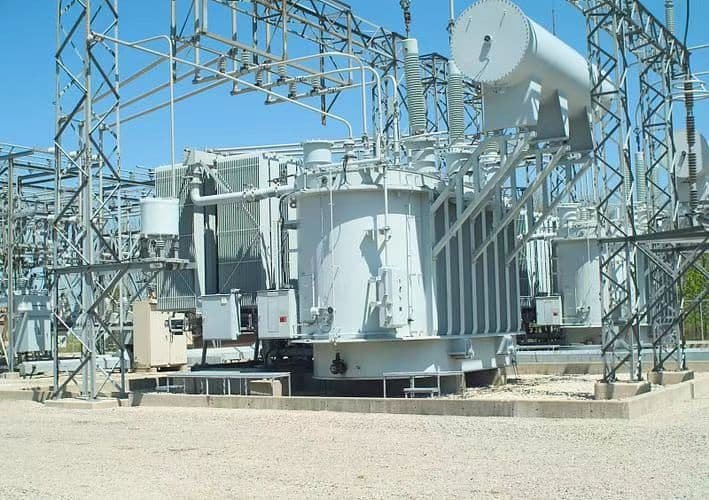
Power transformer overheating is a serious operating issue because excessive temperature can accelerate insulation aging, increase energy losses, reduce equipment reliability, and eventually cause winding or insulation failure. Overheating may result from electrical overload, inadequate cooling, high ambient temperatures, poor ventilation, low oil levels, blocked radiators, or developing internal faults. Identifying the underlying cause quickly is essential because continued operation at excessive temperature can significantly shorten transformer service life and increase the risk of an unplanned outage.
Power transformer overheating is mainly caused by excessive load current, high ambient temperature, inadequate cooling, restricted oil or air circulation, low insulating-fluid levels, poor ventilation, excessive core or winding losses, and internal electrical or mechanical faults. Buyers and operators can reduce overheating risks by correctly sizing the transformer, maintaining cooling and insulation systems, monitoring temperature and load, and investigating abnormal temperature increases before they develop into serious failures.
Transformer temperature should be evaluated as part of the complete thermal system rather than through a single temperature reading. Load profile, cooling equipment, ambient conditions, oil condition, winding design, and transformer maintenance all influence the amount of heat generated and how effectively it is dissipated.
What Causes Overheating in Power Transformers?
Power-transformer overheating is rarely caused by temperature alone; it is usually the result of excessive losses, inadequate heat removal, abnormal operating conditions, or a developing internal fault. If overheating is ignored, insulation aging accelerates, oil can deteriorate, winding hot spots can develop, and transformer service life and reliability can decline significantly. The main causes of power-transformer overheating are sustained overload, high ambient temperature, inadequate cooling, blocked radiators or fans, excessive winding and core losses, poor electrical connections, low or degraded insulating-fluid performance, harmonics, unbalanced loading, and internal faults. Effective diagnosis requires comparing temperature measurements with load, cooling-system operation, oil condition, and electrical operating data rather than relying on a single temperature reading.

Power-transformer overheating is always caused by excessive load.False
Overheating can also result from inadequate cooling, high ambient temperature, abnormal losses, poor connections, harmonics, oil problems, blocked radiators, or internal faults.
What Actually Produces Heat Inside a Transformer?
A transformer converts electrical energy through electromagnetic induction, but the process is not lossless. The losses are ultimately converted into heat.
The major sources are:
- Winding or load losses
- Core or no-load losses
- Stray losses
- Dielectric losses
Winding losses are strongly related to current. In simplified form:
P_{\text{cu}}=I^2R
This means that when current increases, winding heating can increase rapidly.
For example, doubling current under otherwise comparable conditions can increase the resistive component of winding loss by approximately four times.
That is why prolonged overload is one of the most important overheating risks.
How Does Overloading Cause Overheating?
When a transformer supplies more load than its intended continuous rating, winding current increases.
Higher current produces greater winding losses and therefore greater temperature rise.
Temporary overload may be permissible under specific operating conditions, but continuous overload can cause:
- Excessive winding temperature
- Insulation aging
- Oil deterioration
- Increased hot-spot temperature
- Reduced service life
- Protection operation
- Premature failure
The correct assessment should consider both the magnitude and duration of the overload.
A transformer operating moderately above rating for a short period is not equivalent to one operating continuously above rating.
Can High Ambient Temperature Cause Transformer Overheating?
Yes.
A transformer rejects heat to its surrounding environment. When ambient temperature increases, the temperature difference available for heat transfer decreases.
Consequently, the same electrical load can produce a higher internal temperature on a hot day than under cooler conditions.
Important environmental factors include:
- Ambient temperature
- Solar radiation
- Enclosure ventilation
- Altitude
- Air movement
- Nearby heat sources
Outdoor transformers exposed to direct sunlight can experience additional thermal stress, particularly when ventilation is poor.
How Does a Cooling-System Failure Cause Overheating?
Cooling equipment is critical for larger power transformers.
Depending on the transformer design, cooling may involve:
- Natural oil circulation
- Natural air circulation
- Forced air
- Forced oil circulation
- Radiators
- Cooling fans
- Oil pumps
- Heat exchangers
A failed fan or pump can substantially reduce heat-dissipation capability.
Potential cooling problems include:
- Fan motor failure
- Pump failure
- Control-circuit malfunction
- Blocked radiator passages
- Dirty radiator surfaces
- Closed valves
- Faulty temperature controls
- Incorrect automatic-cooling settings
A transformer can therefore overheat even when its electrical load appears normal.
Why Do Blocked or Dirty Radiators Matter?
Radiators transfer heat from transformer oil to the surrounding air.
If radiator surfaces are heavily contaminated with dust, dirt or other deposits, heat transfer can become less effective.
Similarly, restricted oil flow can prevent hot oil from reaching the cooling surfaces efficiently.
For this reason, inspection should not stop at checking whether cooling fans are rotating. Engineers should also verify actual airflow and oil circulation.
Can Poor Electrical Connections Cause Local Overheating?
Yes.
A loose, corroded or poorly made electrical connection creates increased contact resistance.
Even if the total transformer load is within its rating, the defective connection can generate a localized hot spot.
Typical problem areas include:
- Bushings
- Cable terminals
- Bus connections
- Tap-changer contacts
- Internal winding connections
- Grounding connections
Localized heating can be detected through appropriate inspection techniques, including thermal imaging and electrical testing.
A localized hot spot should not be dismissed simply because the overall oil temperature remains normal.
How Do Core Problems Produce Heat?
The transformer core experiences losses whenever it is energized.
Core losses include:
- Hysteresis loss
- Eddy-current loss
These are commonly referred to as no-load losses because they occur even when the transformer supplies little external load.
Abnormal core conditions can increase heating.
Potential causes include:
- Core insulation deterioration
- Unintended circulating currents
- Core grounding problems
- Damaged laminations
- Excessive excitation
- Abnormal operating voltage or frequency
An increase in temperature without a corresponding increase in load can therefore be an important diagnostic clue.
Can Excessive Voltage Cause Overheating?
Yes.
Transformer magnetic flux is influenced by the relationship between voltage and frequency.
If the transformer operates at an excessively high voltage for its operating frequency, core flux can increase.
This may lead to:
- Increased core loss
- Higher magnetizing current
- Increased vibration
- Abnormal noise
- Additional heating
Therefore, transformer overheating should be investigated alongside voltage and frequency measurements.
How Do Harmonics Cause Overheating?
Modern electrical systems often supply nonlinear loads such as:
- Variable-frequency drives
- Rectifiers
- UPS systems
- Data-center equipment
- Power-electronic converters
These loads can introduce harmonic currents.
Harmonics can increase additional losses in:
- Windings
- Core structures
- Clamping components
- Tank and other metallic parts
The result can be additional heating even when the fundamental-frequency load appears acceptable.
This is particularly important for transformers serving facilities with a high concentration of power electronics.
Can Load Imbalance Cause Overheating?
Yes.
In a three-phase system, significant load imbalance can produce unequal currents among phases.
This can result in:
- Unequal winding temperatures
- Increased losses
- Neutral-current problems where applicable
- Uneven thermal stress
- Reduced operating margin
A phase-by-phase load and temperature analysis can therefore reveal problems that a simple total-MVA measurement might hide.
Can Insulating Fluid Problems Cause Overheating?
For oil-immersed transformers, insulating fluid performs both electrical insulation and heat-transfer functions.
Problems with the fluid can affect cooling performance and indicate broader transformer deterioration.
Relevant conditions include:
- Low fluid level
- Fluid contamination
- Excessive moisture
- Oxidation
- Sludge formation
- Deteriorated fluid properties
- Restricted circulation
A low oil level, for example, can interfere with normal heat transfer and may also indicate leakage or another mechanical problem.
What Does Moisture Have to Do With Temperature?
Moisture is particularly harmful because it can reduce insulation performance and accelerate insulation aging.
Elevated temperature can also interact with moisture to increase insulation deterioration.
Therefore, a transformer showing both high temperature and elevated moisture deserves closer attention than a temperature reading alone would suggest.
Can Internal Faults Cause Overheating?
Yes, and this is one of the most serious possibilities.
Internal problems such as:
- Inter-turn faults
- Winding faults
- Core faults
- Poor internal connections
- Tap-changer faults
- Arcing
can generate intense localized heating.
In an oil-filled transformer, internal electrical faults may also produce gases through the decomposition of insulating materials and fluid.
This is why overheating accompanied by abnormal dissolved-gas patterns, unusual sounds, protection alarms or rapid temperature changes should be investigated promptly.
Which Temperature Measurements Matter?
Different temperatures provide different information.
| Parameter | What It Helps Indicate |
|---|---|
| Ambient temperature | Environmental thermal stress |
| Top-oil temperature | Overall oil thermal condition |
| Winding temperature | Winding thermal stress |
| Hot-spot estimate | Insulation-aging risk |
| Radiator temperature | Cooling performance |
| Bushing temperature | Connection or insulation problems |
| Local thermal image | Localized hot spots |
| Cooling-air temperature | Heat-rejection conditions |
A single top-oil temperature reading cannot fully describe transformer thermal condition.
How Can Buyers and Operators Diagnose Overheating?
A practical diagnostic sequence is:
Load → Ambient → Cooling → Temperature → Electrical losses → Oil → Insulation → Internal fault
Start by confirming the actual load and ambient conditions.
Then verify that all cooling equipment is functioning correctly.
If the temperature remains abnormal, investigate electrical losses, connections, harmonics and insulation condition.
For oil-immersed transformers, fluid testing and dissolved-gas analysis can provide additional information about internal deterioration.
What Are the Warning Signs?
Common warning signs include:
- Temperature rising faster than expected
- Increasing top-oil temperature
- Abnormal winding temperature
- Cooling fans running continuously
- Cooling pumps frequently starting
- Localized hot spots
- Discolored or overheated connections
- Abnormal transformer noise
- Oil discoloration or leakage
- Unexpected protection alarms
- Increasing dissolved gases
- Temperature increase without corresponding load increase
The trend is often more informative than a single measurement.
How Can Condition Monitoring Help?
Continuous monitoring can identify changes before overheating becomes a major failure.
Useful parameters include:
- Load current
- Voltage
- Ambient temperature
- Top-oil temperature
- Winding temperature
- Cooling status
- Oil level
- Moisture
- Dissolved gases
- Partial discharge
- Bushing condition
Trend analysis can distinguish normal thermal variation from developing problems.
A transformer temperature alarm should always mean that the transformer must immediately be replaced.False
An alarm identifies an abnormal condition requiring investigation. The cause may be overload, cooling failure, environmental conditions or a repairable component rather than permanent transformer damage.
How Can Overheating Be Prevented?
Preventive measures include:
- Keep loading within the appropriate thermal limits.
- Maintain radiators and cooling equipment.
- Test fans and pumps regularly.
- Inspect electrical connections.
- Monitor oil level and condition.
- Control moisture.
- Evaluate harmonic loading.
- Monitor phase balance.
- Verify voltage and frequency.
- Trend temperature measurements.
- Investigate unusual alarms promptly.
- Use condition monitoring for critical transformers.
Buyer Takeaway
Power-transformer overheating can result from excessive load, inadequate cooling, high ambient temperature, excessive electrical losses, poor connections, harmonics, unbalanced loading, insulating-fluid problems, excessive excitation, or internal faults. The most reliable diagnosis compares temperature trends with load, environmental conditions, cooling performance and electrical and insulation data.
For buyers, the important point is that high temperature is a symptom, not a diagnosis. Before deciding whether a transformer requires repair, derating, improved cooling or replacement, identify the actual source of the heat.
A practical troubleshooting sequence is:
Measure → trend → identify the heat source → correct the cause → verify temperature → assess remaining insulation life.
How Does Excessive Loading Cause Power Transformer Overheating?
Excessive loading is one of the most common causes of power-transformer overheating, but the mechanism is more specific than simply saying that “too much power creates heat.” As transformer load increases, winding current rises, and the winding's resistive losses increase approximately with the square of current. If the resulting heat exceeds the transformer's ability to dissipate it, winding and oil temperatures rise, creating thermal stress and accelerating insulation aging. Excessive loading causes power-transformer overheating primarily because higher load current increases winding (I^2R) losses; prolonged overloading can raise winding hot-spot and top-oil temperatures beyond their intended limits, accelerating insulation aging, reducing service life, and potentially triggering protection or causing permanent damage.

Transformer winding losses increase approximately with the square of load current.True
The dominant resistive winding-loss component can be represented by P=I²R, so increasing current produces a disproportionately larger increase in this component of heat generation.
Why Does Higher Load Produce More Heat?
A power transformer has electrical resistance in its windings. When current flows through these conductors, electrical energy is converted into heat.
The simplified relationship is:
P_{\text{cu}}=I^2R
where:
- (P_{\text{cu}}) = winding copper loss
- (I) = winding current
- (R) = winding resistance
This relationship explains why overloading becomes increasingly severe as current rises.
For example, if current increases by 10%, the resistive component of winding loss increases by approximately:
1.1^2=1.21
or about 21%, assuming resistance remains unchanged.
If current doubles, the corresponding (I^2R) loss is approximately four times higher.
Therefore, a relatively modest increase in transformer loading can create a disproportionately large increase in winding heat.
What Happens to Transformer Temperature?
The heat generated inside the transformer must be transferred to the surrounding environment.
For an oil-immersed transformer, the general thermal path is:
Winding/core → insulating fluid → tank/radiators → surrounding air
For a dry-type transformer, heat moves through:
Winding/core → insulation and surrounding air → cooling environment
When load increases, heat generation rises. If the cooling system can remove the additional heat, the transformer may reach a higher but still acceptable equilibrium temperature.
If heat generation exceeds heat dissipation, temperature continues to rise.
| Operating Condition | Typical Thermal Effect |
|---|---|
| Below rated load | Lower winding losses |
| Near rated load | Normal design thermal range |
| Moderate temporary overload | Higher temperature; duration matters |
| Sustained overload | Significant thermal stress |
| Severe overload | Rapid temperature rise and protection risk |
| Overload + cooling failure | Particularly severe overheating |
Why Is Winding Hot-Spot Temperature Important?
The average transformer temperature does not tell the whole story.
Within a winding, some locations can become substantially hotter than the average winding temperature. These areas are known as hot spots.
Hot-spot temperature is important because insulation aging is strongly influenced by temperature.
A transformer can therefore appear to have an acceptable average temperature while localized winding areas experience considerably greater thermal stress.
For critical transformers, buyers and operators should consider:
- Winding temperature
- Top-oil temperature
- Hot-spot temperature
- Load current
- Cooling status
- Ambient temperature
rather than relying on a single temperature indicator.
How Does Overloading Accelerate Insulation Aging?
Transformer insulation has a finite thermal life.
When temperature rises beyond normal operating conditions, insulation deterioration accelerates.
Long-term consequences can include:
- Reduced dielectric strength
- Loss of mechanical strength
- Brittleness
- Cracking
- Increased moisture sensitivity
- Higher probability of winding failure
This creates an important distinction:
An overload may not immediately destroy a transformer, but repeated or prolonged overload can consume its remaining insulation life.
The impact therefore depends on both temperature and time.
A short-duration overload and continuous overload have the same effect on transformer service life.False
Thermal aging depends on the magnitude and duration of elevated temperature, so temporary and sustained overloads can have very different effects on insulation life.
Does Transformer Capacity Mean It Can Always Carry That Load?
No.
A transformer's nameplate rating represents its designed operating capability under specified conditions.
Actual permissible loading depends on factors such as:
- Ambient temperature
- Cooling method
- Previous loading
- Transformer age
- Oil temperature
- Winding temperature
- Installation altitude
- Cooling-system condition
- Manufacturer design
For this reason, buyers should not interpret the rated MVA as an unrestricted operating target under every environmental condition.
How Does Ambient Temperature Make Overloading Worse?
Suppose two identical transformers carry the same load.
One operates in a cool environment. The other operates in a high-temperature environment.
The second transformer has less temperature difference available to transfer heat to the surrounding air.
Therefore, its operating temperature can be higher even at the same electrical load.
This creates a combined risk:
High load + high ambient temperature = increased thermal stress
Outdoor substations in hot climates therefore require careful thermal evaluation.
How Does Cooling Affect Overload Capability?
Cooling is critical when transformer loading approaches or exceeds normal ratings.
Depending on the transformer, cooling may include:
- Natural air circulation
- Forced-air fans
- Natural oil circulation
- Forced-oil circulation
- Oil pumps
- Heat exchangers
If cooling equipment is unavailable, the transformer's permissible loading may be reduced.
For example, a transformer designed with multiple cooling stages may have different permissible ratings depending on which cooling equipment is operating.
A failed fan should therefore not be treated as a minor maintenance issue when the transformer is heavily loaded.
Can Excessive Loading Increase Oil Temperature?
Yes.
In an oil-immersed transformer, increased winding and other losses increase the heat transferred to the insulating fluid.
As oil temperature rises, the transformer's top-oil temperature can increase.
Excessive oil temperature can contribute to:
- Faster insulation aging
- Oil degradation
- Increased thermal stress
- Reduced operating margin
Operators should monitor temperature trends rather than waiting for an alarm.
Can Overloading Damage Transformer Windings Mechanically?
Yes, especially during severe electrical faults or abnormal current events.
High currents can produce substantial electromagnetic forces in transformer windings.
During an external short circuit, for example, current can increase dramatically above normal load current.
The resulting electromagnetic forces can stress:
- Windings
- Clamping structures
- Conductors
- Insulation
- Internal supports
This is different from ordinary thermal overload, but both conditions need to be considered when evaluating transformer loading capability.
What About Repeated Overloading?
Repeated overloads can be more concerning than one isolated event.
Consider a transformer that experiences high loading every summer.
Even if each individual event does not immediately cause failure, repeated high-temperature operation can gradually consume insulation life.
Useful records include:
- Daily load profile
- Maximum current
- Duration of overload
- Top-oil temperature
- Winding temperature
- Ambient temperature
- Cooling-stage operation
These records help determine whether the transformer is experiencing a temporary operating condition or a recurring thermal problem.
How Can Buyers Detect Overloading Early?
A practical monitoring system should correlate electrical loading with thermal response.
| Parameter | Why It Matters |
|---|---|
| Load current | Direct indicator of winding thermal stress |
| Transformer MVA | Overall loading level |
| Top-oil temperature | Overall thermal condition |
| Winding temperature | Winding thermal stress |
| Hot-spot estimate | Insulation-aging risk |
| Ambient temperature | Heat-dissipation conditions |
| Cooling status | Determines available thermal capacity |
| Voltage/frequency | Helps identify abnormal excitation |
| Load imbalance | Identifies uneven phase heating |
| Harmonics | Identifies additional losses |
The most useful information comes from trends and correlations, not isolated measurements.
Can Harmonics Make Overloading Worse?
Yes.
A transformer can experience additional heating from harmonic currents produced by nonlinear loads.
Examples include:
- Variable-frequency drives
- Rectifiers
- UPS systems
- Data centers
- Industrial power electronics
Even if the fundamental-frequency current appears acceptable, harmonic currents can increase additional winding and stray losses.
Therefore, buyers serving nonlinear loads should evaluate transformer suitability using the actual harmonic environment.
How Should Buyers Determine Whether a Transformer Is Being Overloaded?
Use a structured process:
1. Determine actual current.
Compare measured current with the transformer's rated current.
2. Determine actual apparent power.
Evaluate kVA or MVA rather than only real power in MW.
3. Check temperature.
Compare top-oil, winding and hot-spot temperatures with the applicable design limits.
4. Check ambient conditions.
High ambient temperature can reduce thermal margin.
5. Verify cooling.
Confirm that fans, pumps, radiators and controls operate correctly.
6. Examine load history.
Determine whether overload is temporary or recurring.
7. Check harmonics and imbalance.
These can produce additional heating.
8. Evaluate transformer condition.
Older or deteriorated transformers may have less practical thermal margin.
What Should Operators Do During an Overload?
The appropriate response depends on the severity and transformer design.
Possible actions include:
- Reduce load where possible.
- Activate available cooling stages.
- Verify cooling equipment operation.
- Increase load monitoring.
- Check temperature trends.
- Investigate abnormal temperature rise.
- Review emergency loading procedures.
- Contact the transformer manufacturer or qualified service engineer when limits are approached.
Operators should not simply continue increasing load because the transformer has not yet tripped.
When Does Overloading Become a Replacement Concern?
Overloading alone does not automatically mean that a transformer must be replaced.
Replacement becomes more relevant when excessive loading has contributed to persistent deterioration, such as:
- Severe insulation aging
- Repeated thermal alarms
- Abnormal winding temperatures
- Deteriorated insulation condition
- Recurrent faults
- Reduced thermal capability
- Insufficient capacity for future load growth
If the transformer itself remains healthy, alternatives may include:
- Load redistribution
- Cooling upgrades
- Capacity expansion
- Operational changes
- Replacement of cooling components
The correct solution depends on the root cause.
If a transformer repeatedly overheats under normal expected site loading, increasing the transformer's nominal rating is always the only solution.False
The cause may be inadequate cooling, abnormal losses, harmonics, poor connections or environmental conditions. Root-cause analysis should precede capacity replacement.
Buyer Takeaway
Excessive loading causes power-transformer overheating mainly because increased current raises winding (I^2R) losses. As heat generation increases, winding hot-spot and oil temperatures rise. If the transformer cannot dissipate the additional heat, prolonged thermal stress accelerates insulation aging and can eventually lead to failure.
Buyers and operators should therefore evaluate transformer loading using:
Current + MVA + load duration + ambient temperature + cooling capability + hot-spot temperature + transformer condition
A transformer that occasionally experiences a controlled short-duration overload is very different from one that operates above its thermal capability every day.
The most reliable approach is to monitor loading and temperature together, investigate recurring overloads, and address the underlying capacity or cooling problem before thermal aging becomes irreversible.
How Do Cooling System Problems Cause Power Transformer Overheating?
A power transformer can be correctly sized for its electrical load and still overheat when its cooling system cannot remove the heat produced by the core and windings. This makes cooling-system problems particularly dangerous because the transformer may initially appear to be operating normally from a load perspective. Cooling-system problems cause power-transformer overheating when fans, pumps, radiators, heat exchangers, oil circulation paths, control circuits, or ventilation systems fail to transfer generated heat to the surrounding environment effectively. As heat accumulates, top-oil and winding temperatures rise, hot spots develop, insulation ages faster, and prolonged operation can lead to transformer failure.

Power-transformer cooling problems can cause overheating even when transformer loading remains within its rated capacity.True
The transformer still produces core and winding losses at normal load, and inadequate heat removal can cause temperature to rise when cooling capacity is insufficient.
How Does a Transformer Cooling System Remove Heat?
Every energized transformer produces heat.
The principal thermal sources include:
- Winding losses
- Core losses
- Stray losses
- Dielectric losses
The cooling system must continuously transfer this heat away.
For an oil-immersed transformer, the basic thermal path is:
Active parts → insulating oil → tank/radiators → air
For a dry-type transformer, heat moves primarily through:
Windings/core → surrounding air → ventilation or cooling equipment
If any important part of this thermal path becomes ineffective, the transformer's operating temperature can rise.
What Cooling Components Can Fail?
Different transformer designs use different cooling arrangements, but common components include:
| Component | Possible Problem | Thermal Consequence |
|---|---|---|
| Cooling fan | Motor failure | Reduced airflow |
| Oil pump | Pump failure | Reduced oil circulation |
| Radiator | Blockage or contamination | Poor heat transfer |
| Heat exchanger | Fouling or flow restriction | Reduced cooling |
| Control system | Sensor/relay failure | Cooling stages may not start |
| Valve | Incorrect position | Restricted oil flow |
| Ventilation | Poor airflow | Heat accumulation |
| Temperature sensor | Incorrect reading | Cooling may respond incorrectly |
A transformer can therefore overheat because of either a physical cooling failure or a control-system failure.
How Do Failed Cooling Fans Cause Overheating?
Forced-air cooling systems depend on fans to move air across radiator or heat-exchanger surfaces.
When a fan fails, the transformer loses part of its designed heat-dissipation capability.
Common causes include:
- Motor failure
- Bearing problems
- Power-supply failure
- Contactor failure
- Control-relay failure
- Damaged wiring
- Blocked air intake
- Incorrect automatic-control settings
One failed fan may not immediately create a dangerous condition at light load.
However, during high ambient temperature or heavy loading, the lost cooling margin can become significant.
How Do Oil Pumps Affect Transformer Temperature?
Some large transformers use forced oil circulation.
The pump moves hot oil away from the active parts and toward cooling equipment.
If oil circulation becomes inadequate:
- Heat remains concentrated near windings.
- Hot oil does not reach radiators efficiently.
- Winding temperature can increase.
- Local hot spots may develop.
Possible causes include:
- Pump motor failure
- Pump wear
- Blocked oil path
- Incorrect valve position
- Control-system malfunction
- Mechanical damage
If a transformer oil-cooling pump stops, the transformer will always fail immediately.False
The result depends on the transformer design, load, ambient temperature, remaining natural-cooling capability and protection scheme. A pump failure can nevertheless substantially reduce thermal capacity and requires prompt evaluation.
Why Are Radiators Important?
Radiators provide a large surface area through which transformer heat can be transferred to the surrounding air.
A simplified heat-transfer relationship can be expressed as:
Q \approx UA\Delta T
where:
- (Q) represents heat-transfer rate,
- (U) represents overall heat-transfer effectiveness,
- (A) represents effective heat-transfer area,
- (\Delta T) represents the temperature difference driving heat transfer.
If radiator surfaces become dirty, blocked or damaged, effective heat transfer can decrease.
This can cause oil temperature to rise even though the transformer continues operating at its normal load.
Can Blocked Oil Passages Cause Overheating?
Yes.
Oil must circulate properly to transfer heat from the winding and core toward the cooling equipment.
Restrictions can result from:
- Sludge
- Deposits
- Contamination
- Incorrect valve positions
- Mechanical obstructions
- Deteriorated components
A restriction can create localized temperature differences that are not immediately obvious from the average oil temperature.
How Do Incorrect Valve Positions Affect Cooling?
Large oil-immersed transformers may have valves controlling oil flow through radiators, pumps or heat exchangers.
A valve that is partially or completely closed when it should be open can restrict circulation.
This is a simple mechanical problem but can have serious thermal consequences.
During inspection, technicians should verify the actual valve position rather than relying solely on control-room indications.
How Can Cooling-Control Failures Cause Overheating?
Modern transformers often use temperature-based automatic cooling control.
A typical system may start additional fans or pumps when temperature reaches predetermined levels.
If a temperature sensor, relay, controller or communication circuit fails, the cooling equipment may not start when required.
Possible symptoms include:
- Temperature rises normally until a threshold is reached.
- Expected fans do not start.
- Temperature continues increasing.
- Alarm appears late or not at all.
- Manual cooling operation works while automatic operation fails.
This is why cooling-system testing should include both equipment operation and control logic.
Can a Faulty Temperature Sensor Cause Overheating?
Yes, indirectly.
A temperature sensor does not remove heat. Instead, it provides information used by the control system.
If the sensor reports a temperature lower than the actual transformer temperature, automatic cooling may remain inactive.
For critical transformers, temperature measurements should therefore be checked against:
- Independent sensors
- Oil temperature
- Winding-temperature indicators
- Load current
- Thermal models
- Infrared inspection where appropriate
Does High Ambient Temperature Make Cooling Problems Worse?
Absolutely.
Cooling equipment has less thermal margin when surrounding air is already hot.
For example, a transformer may operate comfortably under moderate load during cool weather but approach its thermal limit during a hot afternoon.
The combination of:
High ambient temperature + heavy load + reduced cooling capacity
can produce a rapid temperature increase.
Therefore, cooling performance should be evaluated under realistic worst-case operating conditions.
How Does Poor Ventilation Affect Dry-Type Transformers?
Dry-type transformers depend heavily on air movement.
Poor ventilation can occur because of:
- Blocked air passages
- Undersized ventilation systems
- Dirty filters
- Incorrect fan operation
- Poor room layout
- Excessive ambient temperature
- Insufficient clearance
Heat can accumulate around the transformer, reducing the temperature difference available for cooling.
For indoor installations, room ventilation should therefore be considered part of the transformer thermal system.
What Are the Warning Signs of Cooling Problems?
Operators should pay attention to:
- Temperature rising faster than normal
- Higher top-oil temperature at similar loads
- Fans running continuously
- Fans failing to start
- Pumps operating abnormally
- Increasing winding temperature
- Unequal radiator temperatures
- Unusual oil circulation behavior
- Cooling-system alarms
- Excessive temperature after relatively small load increases
The most useful indicator is often a change from the transformer's historical thermal behavior.
How Can Buyers Monitor Cooling Performance?
A condition-monitoring system can combine:
- Load current
- Top-oil temperature
- Winding temperature
- Ambient temperature
- Fan status
- Pump status
- Oil level
- Oil flow
- Cooling-stage status
- Alarm history
This allows operators to distinguish between an electrical overload and a cooling-system problem.
| Observation | Possible Cause |
|---|---|
| High load + high temperature | Normal thermal loading or overload |
| Normal load + unusually high temperature | Cooling or internal problem |
| Temperature rises when fan fails | Fan/cooling capacity problem |
| One radiator much hotter/colder than expected | Possible flow problem |
| High temperature + low oil level | Fluid/cooling problem |
| High temperature + abnormal gases | Possible internal fault |
| Fans do not start at set temperature | Control problem |
Can Cooling Problems Accelerate Insulation Aging?
Yes.
Transformer insulation is highly sensitive to temperature.
When the winding hot spot remains elevated for extended periods, insulation deterioration accelerates.
This can reduce the transformer's remaining service life even if the cooling problem is eventually repaired.
Therefore, after a serious overheating event, operators should consider not only whether the cooling system now works but also whether the transformer experienced significant thermal aging.
Should a Cooling Failure Lead to Transformer Replacement?
Not necessarily.
Many cooling problems are repairable.
Possible corrective actions include:
- Replacing failed fan motors
- Repairing pump systems
- Cleaning radiators
- Restoring oil circulation
- Correcting valve positions
- Repairing control circuits
- Replacing temperature sensors
- Improving ventilation
- Upgrading cooling capacity
Replacement becomes more relevant when cooling deficiencies have caused significant permanent damage or when the transformer no longer has sufficient thermal capacity for the required load.
A transformer with a cooling-system failure should automatically be replaced rather than repaired.False
Many cooling failures are caused by replaceable or repairable components. Replacement should depend on transformer condition, thermal history, remaining insulation life and the feasibility of restoring adequate cooling.
How Should Buyers Evaluate Cooling Systems?
When purchasing a power transformer, buyers should examine more than the nominal cooling designation.
Request information about:
- Cooling method.
- Rated capacity for each cooling stage.
- Fan quantity and redundancy.
- Pump configuration.
- Radiator capacity.
- Automatic cooling controls.
- Temperature sensors.
- Alarm functions.
- Failure-response logic.
- Auxiliary power requirements.
- Maintenance requirements.
- Ambient-temperature assumptions.
For critical installations, redundancy can be particularly valuable because the loss of one fan or pump should not necessarily force immediate shutdown.
Buyer Takeaway
Cooling-system problems cause power-transformer overheating when the transformer generates heat faster than the cooling system can remove it. Failed fans, oil pumps, blocked radiators, restricted oil flow, incorrect valves, poor ventilation, faulty sensors and control-system failures can all reduce thermal performance.
A practical troubleshooting sequence is:
Check load → check ambient temperature → check fans/pumps → check oil circulation → check radiators/ventilation → verify sensors and controls → evaluate temperature trends → assess insulation impact.
The key principle is simple: a transformer that is electrically within its rating can still overheat if its cooling system is not functioning correctly.
How Do Ambient Temperature, Ventilation, and Installation Conditions Affect Power Transformer Overheating?
Power transformers do not operate in isolation from their surroundings. A transformer may meet its electrical loading requirements and still run too hot if the ambient temperature is high, ventilation is inadequate, solar heat is excessive, altitude reduces cooling effectiveness, or the installation layout restricts heat dissipation. These conditions are especially important for indoor dry-type transformers and outdoor oil-immersed units with radiators and forced cooling. Ambient temperature, ventilation, solar exposure, altitude, enclosure design, clearance, airflow and installation layout directly affect a transformer's ability to reject heat. Higher ambient temperature reduces thermal margin, restricted ventilation traps heat, and poor installation conditions can make an otherwise correctly rated transformer operate above its intended temperature limits.

A power transformer with a correct electrical rating cannot overheat because of installation conditions.False
Transformer thermal performance depends on ambient temperature, airflow, solar exposure, altitude, enclosure design, clearances and cooling-system operation in addition to electrical loading.
Why Does Ambient Temperature Matter?
Every transformer produces heat from core, winding and other losses.
That heat must be transferred to the surrounding environment.
The higher the surrounding temperature, the smaller the temperature difference available to drive heat away from the transformer.
A simplified thermal relationship is:
\Delta T=T{\text{transformer}}-T{\text{ambient}}
If ambient temperature rises while electrical loading remains unchanged, transformer operating temperature can also rise.
For example, a transformer operating at a comfortable temperature during cool weather may approach its thermal limit during a hot summer afternoon.
This is why transformer ratings are associated with defined ambient conditions rather than being completely independent of the installation environment.
How Does High Ambient Temperature Reduce Thermal Margin?
Consider two identical transformers carrying the same load.
The first operates in a cool environment.
The second operates in a much hotter environment.
The second transformer starts with a higher surrounding temperature, leaving less thermal margin before the winding or oil reaches its allowable temperature.
| Environmental Condition | Effect on Thermal Margin |
|---|---|
| Cool ambient | Higher available margin |
| Moderate ambient | Normal operating condition |
| High ambient | Reduced margin |
| Extreme ambient | Greater risk of overheating |
| High ambient + overload | Particularly severe thermal stress |
This is important when selecting transformers for hot climates, rooftop installations, industrial plants or enclosed substations.
How Does Ventilation Affect Transformer Temperature?
Ventilation determines how effectively heat can leave the installation area.
For dry-type transformers, ventilation is particularly important because heat is transferred directly to surrounding air.
Poor ventilation can cause hot air to accumulate around the transformer.
As the local air temperature rises, the transformer has less ability to reject additional heat.
Common ventilation problems include:
- Undersized ventilation openings
- Blocked air inlets
- Blocked exhaust outlets
- Failed ventilation fans
- Incorrect fan direction
- Poor room airflow
- Recirculation of hot air
- Dirty filters
- Poor transformer placement
Increasing ventilation always allows a transformer to operate at any desired load.False
Ventilation improves heat removal, but transformer loading remains limited by winding temperature, insulation system, cooling design and other operating constraints.
Why Is Airflow Direction Important?
Simply installing a fan does not guarantee effective cooling.
Air should move through the intended thermal path.
A poorly designed ventilation system can push hot air back toward the transformer rather than exhausting it from the room.
Effective ventilation generally requires:
Cool-air intake → transformer heat absorption → hot-air exhaust
If intake and exhaust locations are poorly arranged, the system may experience air recirculation.
This can significantly reduce cooling effectiveness.
How Do Enclosures Affect Overheating?
An enclosure can protect a transformer from environmental contamination and accidental contact, but it can also restrict heat dissipation.
Buyers should evaluate:
- Enclosure type
- Ventilation openings
- Fan capacity
- Heat accumulation
- Internal airflow
- External airflow
- Required clearances
A compact electrical room may require additional ventilation or air-conditioning capacity.
For dry-type transformers, enclosure design should be considered together with the transformer's thermal rating.
How Does Solar Radiation Affect Outdoor Transformers?
Outdoor transformers can absorb significant solar radiation.
A transformer exposed to direct sunlight can operate at a higher temperature than an identical transformer installed in a shaded location.
This is particularly relevant for:
- Rooftop substations
- Desert installations
- Open substations
- Large industrial sites
Solar loading should be considered when evaluating actual site thermal conditions.
A transformer should not be selected solely from average historical ambient temperature if the equipment will experience severe direct solar exposure.
How Does Altitude Affect Cooling?
Altitude can affect cooling performance because air density decreases as elevation increases.
Lower air density reduces the ability of air to remove heat under otherwise similar conditions.
This is particularly important for:
- High-altitude substations
- Mountain facilities
- Mining installations
- High-elevation industrial plants
The transformer manufacturer should be informed of the actual installation altitude so that appropriate thermal and insulation considerations can be incorporated.
Why Are Installation Clearances Important?
Transformers need adequate space around cooling surfaces and ventilation paths.
If radiators, fans or ventilation openings are blocked by walls or nearby equipment, heat transfer can decrease.
Poor clearances can also complicate:
- Maintenance
- Inspection
- Cable access
- Fire separation
- Emergency response
The installation layout should therefore follow the manufacturer's specified clearances.
How Does Transformer Room Layout Affect Cooling?
A room can have adequate ventilation capacity on paper but still produce poor transformer cooling because of its physical layout.
Potential problems include:
- Transformer installed too close to a wall
- Multiple transformers installed too closely together
- Hot-air exhaust located near the air intake
- Cable trenches restricting airflow
- Equipment blocking radiator surfaces
- Insufficient ceiling clearance
Thermal airflow should be considered before final equipment placement.
Can Multiple Transformers Heat Each Other?
Yes.
When several transformers operate in the same enclosed space, each contributes heat to the room.
If the ventilation system is designed for only one transformer, adding additional units can increase room temperature substantially.
For multiple-transformer installations, buyers should evaluate the combined heat load.
This is particularly important for:
- Data centers
- Manufacturing plants
- Commercial buildings
- Utility substations
- Large electrical rooms
How Do Oil-Immersed Transformers Differ?
Oil-immersed transformers use insulating fluid as part of their thermal-management system.
Heat moves from the active parts into the oil and then toward radiators or heat exchangers.
Outdoor installation can provide good natural heat rejection, but problems may occur when:
- Radiators are obstructed
- Cooling fans fail
- Solar exposure is severe
- Ambient temperature is high
- Oil circulation is restricted
- Transformer spacing is inadequate
The installation environment therefore affects both natural and forced cooling performance.
How Do Dry-Type Transformers Differ?
Dry-type transformers rely heavily on air circulation.
This makes installation conditions particularly important.
For indoor dry-type transformers, buyers should evaluate:
- Room volume
- Ventilation rate
- Airflow direction
- Exhaust location
- Ambient temperature
- Transformer spacing
- Dust accumulation
- Filter condition
A dry-type transformer installed in a poorly ventilated room may experience higher temperature than the same transformer operating in an open, well-ventilated environment.
Can Dust and Contamination Cause Overheating?
Yes.
Dust can accumulate on:
- Cooling surfaces
- Ventilation openings
- Transformer windings
- Filters
- Fans
Accumulation can restrict airflow and reduce heat transfer.
In dry-type transformers, contamination can also affect insulation performance.
Therefore, installation in dusty industrial environments may require more frequent inspection and cleaning.
How Does Humidity Affect Thermal and Insulation Performance?
Humidity does not simply create a temperature problem.
It can also affect insulation condition.
High moisture environments can contribute to:
- Insulation deterioration
- Surface contamination
- Reduced dielectric performance
- Condensation
- Corrosion
For indoor installations, environmental control may therefore be necessary where humidity and temperature fluctuate significantly.
What Installation Conditions Should Buyers Evaluate?
| Condition | Thermal Concern | Buyer Action |
|---|---|---|
| High ambient temperature | Reduced thermal margin | Confirm thermal rating |
| Poor ventilation | Heat accumulation | Check airflow design |
| Direct sunlight | Additional heat input | Consider shading/site design |
| High altitude | Reduced air cooling | Inform manufacturer |
| Tight clearances | Restricted heat transfer | Follow installation requirements |
| Multiple transformers | Increased room heat | Size ventilation accordingly |
| Dust | Blocked cooling surfaces | Plan cleaning |
| High humidity | Moisture/condensation | Consider environmental control |
| Enclosed room | Limited heat rejection | Verify ventilation capacity |
| Nearby heat source | Higher local ambient | Evaluate total thermal load |
How Can Buyers Determine Whether the Site Is Suitable?
Before purchasing, collect actual site information.
At minimum, record:
- Maximum ambient temperature.
- Minimum ambient temperature.
- Typical operating temperature.
- Installation altitude.
- Indoor or outdoor location.
- Ventilation method.
- Airflow direction.
- Room dimensions.
- Transformer spacing.
- Solar exposure.
- Nearby heat sources.
- Dust and contamination conditions.
- Humidity.
- Required fire protection.
- Cooling-system availability.
This information allows the manufacturer to verify whether the proposed transformer can achieve its required thermal performance.
How Should Temperature Be Monitored After Installation?
Temperature should be evaluated together with operating conditions.
Useful measurements include:
- Ambient temperature
- Top-oil temperature
- Winding temperature
- Hot-spot temperature
- Room temperature
- Cooling-air temperature
- Fan status
- Pump status
- Load current
The most useful approach is to compare temperature with historical load and environmental data.
For example, if transformer temperature rises significantly at the same load and ambient conditions compared with previous periods, a cooling or internal problem may be developing.
Can Installation Problems Be Repaired?
Often, yes.
Possible corrective measures include:
- Cleaning ventilation openings
- Repairing fans
- Improving exhaust ventilation
- Repositioning equipment
- Increasing room airflow
- Removing obstructions
- Adding shading
- Improving radiator airflow
- Correcting valve positions
- Upgrading cooling controls
However, modifications should be reviewed by qualified engineers and the transformer manufacturer when they affect the intended cooling design.
If an installation-related overheating problem is discovered, replacing the transformer is always necessary.False
Many overheating problems can be corrected through ventilation improvements, cleaning, cooling-system repair, layout changes or environmental control when the transformer itself remains healthy.
Buyer Takeaway
Ambient temperature, ventilation and installation conditions directly affect power-transformer overheating because they determine how effectively generated heat can be transferred away from the transformer. High ambient temperature reduces thermal margin, poor ventilation traps heat, direct sunlight adds thermal stress, high altitude can reduce air-cooling effectiveness, and inadequate clearances can restrict airflow around cooling surfaces.
A practical site-evaluation sequence is:
Ambient temperature → altitude → ventilation → airflow → clearances → solar exposure → contamination → transformer loading → cooling capacity
For dry-type transformers, room ventilation and airflow deserve particular attention. For oil-immersed transformers, radiator clearance, oil circulation, cooling fans and outdoor environmental conditions are especially important.
The safest approach is to evaluate the transformer and its installation as one thermal system, rather than treating transformer selection and site design as separate decisions.
How Do Internal Faults, Core Losses, and Insulation Problems Cause Power Transformer Overheating?
Power-transformer overheating is not always caused by excessive loading or inadequate external cooling. A transformer can operate within its rated load and still develop dangerous internal heat when abnormal currents, core defects, insulation deterioration, or localized electrical faults create losses that the cooling system was never designed to remove. Internal faults, abnormal core losses, and insulation problems cause power-transformer overheating by creating additional electrical or dielectric losses, concentrated hot spots, abnormal circulating currents, or localized energy release. If these conditions persist, temperature rises can accelerate insulation aging, generate insulating-fluid decomposition products, weaken mechanical structures, and eventually develop into major transformer failure.

A power transformer can overheat internally even when its external load remains within its rated capacity.True
Internal faults, abnormal core losses, circulating currents and insulation-related dielectric losses can generate additional heat independently of ordinary external loading.
How Do Internal Transformer Faults Generate Heat?
An internal electrical fault can release energy in a very concentrated area.
Potential fault locations include:
- Winding conductors
- Inter-turn insulation
- Lead connections
- Tap-changer contacts
- Core insulation
- Bushings
- Internal grounding points
A fault can produce unusually high current density, arcing, localized resistance or electromagnetic stress.
Unlike ordinary load losses, these effects may occur in a very small region.
That creates a hot spot that may be much more severe than the transformer's average temperature suggests.
For oil-immersed transformers, an internal electrical fault can also decompose insulating oil and solid insulation, producing gases and other by-products.
Why Are Internal Hot Spots Dangerous?
A localized hot spot can damage insulation faster than a uniform temperature increase.
The sequence may be:
Electrical defect → localized heating → insulation deterioration → worsening fault → additional heating
This can become a feedback process.
Possible consequences include:
- Carbonization
- Insulation breakdown
- Arcing
- Winding deformation
- Gas generation
- Increased fault current
- Protection operation
- Transformer failure
Therefore, a transformer should not be judged only by its average oil temperature.
What Types of Internal Faults Are Especially Serious?
Common internal fault mechanisms include:
Inter-turn faults: A small portion of a winding becomes electrically connected through damaged insulation.
Winding-to-ground faults: A conductor or winding section contacts grounded structures.
Phase-to-phase faults: Electrical separation between phases breaks down.
Core faults: Abnormal current paths develop through the core or associated structures.
Tap-changer faults: Contacts or switching components develop abnormal resistance or arcing.
Each fault mechanism produces a different thermal and diagnostic signature.
A small internal winding fault is harmless if the total transformer current remains within its rated value.False
Localized faults can create severe heating and insulation damage in a small area even when the overall transformer current appears normal.
How Do Core Losses Produce Transformer Heating?
The transformer core remains energized whenever the transformer is operating.
Its main losses are:
- Hysteresis loss
- Eddy-current loss
These are generally grouped as core or no-load losses.
Some core heating is normal and accounted for in the transformer design.
The problem occurs when abnormal conditions increase these losses.
Potential causes include:
- Damaged core laminations
- Poor core insulation
- Unintended circulating currents
- Incorrect core grounding
- Excessive excitation
- Abnormal voltage
- Abnormal frequency
The result can be excessive core temperature even when external load is relatively low.
What Are Eddy-Current Losses?
Changing magnetic flux can induce circulating currents in conductive parts of the transformer.
Transformer cores use laminated electrical steel to limit these currents.
If laminations become electrically connected in unintended ways, larger circulating currents can develop.
These currents generate additional heat.
The same principle can affect other metallic structures exposed to magnetic flux, producing stray losses.
Can Excessive Voltage Increase Core Heating?
Yes.
Transformer magnetic excitation depends strongly on the relationship between voltage and frequency.
An excessively high voltage relative to frequency can increase core flux.
This may lead to:
- Increased magnetizing current
- Higher core losses
- Additional vibration
- Abnormal noise
- Increased temperature
Consequently, unexplained heating should be investigated together with voltage and frequency rather than assuming that the load is responsible.
How Does Core Grounding Affect Heating?
A transformer core normally has a controlled grounding arrangement.
If unintended grounding points develop, circulating currents can occur through portions of the core and associated metal structures.
These currents can create localized heating.
For this reason, core grounding condition is an important diagnostic consideration when temperature behavior becomes abnormal without an obvious increase in load.
How Do Insulation Problems Cause Overheating?
Transformer insulation separates electrically energized conductors from one another and from grounded structures.
When insulation deteriorates, several mechanisms can increase thermal stress.
These include:
- Increased dielectric losses
- Partial discharge
- Surface leakage
- Tracking
- Local electrical discharge
- Inter-turn faults
- Moisture-related deterioration
Insulation problems therefore can be both a cause and a consequence of overheating.
Higher temperature accelerates insulation aging, while deteriorated insulation can create electrical conditions that generate additional heat.
Why Is Moisture Important?
Moisture is one of the most damaging contaminants in transformer insulation systems.
It can affect:
- Solid insulation
- Insulating oil
- Dielectric strength
- Partial-discharge behavior
- Aging rate
Moisture combined with elevated temperature can significantly accelerate insulation deterioration.
This is especially important because solid insulation inside a transformer is difficult to replace without major refurbishment.
How Does Partial Discharge Relate to Overheating?
Partial discharge is a localized electrical discharge that does not completely bridge the insulation between conductors.
Repeated partial discharge can gradually damage insulation.
Over time, it may create:
Electrical discharge → localized insulation damage → increased electrical stress → larger discharge activity → eventual breakdown
Although partial discharge is not simply a “temperature fault,” it can contribute to localized degradation and eventual failure.
Can Insulation Aging Cause More Heat?
Yes.
As insulation deteriorates, electrical performance can change.
Potential effects include:
- Higher dielectric losses
- Increased leakage
- Partial discharge
- Reduced dielectric strength
- Localized electrical stress
The relationship is often complex, so a high temperature should not automatically be attributed to insulation failure.
Instead, temperature trends should be evaluated together with insulation-condition data.
What Role Does Oil Condition Play?
In oil-immersed transformers, insulating oil serves two major functions:
- Electrical insulation
- Heat transfer
Deteriorated oil can therefore affect both electrical and thermal performance.
Relevant conditions include:
- Moisture
- Oxidation
- Contamination
- Acidity
- Sludge
- Low oil level
Oil deterioration may also provide evidence that the transformer has experienced prolonged thermal or electrical stress.
How Does Dissolved Gas Analysis Help?
When internal electrical or thermal faults occur in oil-filled transformers, insulating materials can decompose and produce gases.
Dissolved-gas analysis can help identify abnormal conditions by examining gas patterns and trends.
It can provide clues about possible:
- Thermal faults
- Arcing
- Partial discharge
- Overheating
- Insulation deterioration
The important point is that DGA is a diagnostic tool, not a temperature measurement by itself.
Trend analysis is particularly valuable because a rapidly changing gas pattern can indicate an active developing problem.
How Can Buyers Distinguish Internal Heating From Overload?
A useful comparison is:
| Observation | Possible Interpretation |
|---|---|
| Temperature rises with load | Normal thermal response or overload |
| Temperature rises at normal load | Cooling or internal problem |
| Localized thermal hot spot | Connection or internal defect |
| High temperature + abnormal DGA | Possible internal thermal/electrical fault |
| High temperature + partial discharge | Insulation-related concern |
| Core temperature abnormal at low load | Possible core/excitation issue |
| Temperature rises with excessive V/Hz | Possible over-excitation |
| Unequal phase temperatures | Load imbalance or winding issue |
No single observation should normally be treated as a definitive diagnosis.
What Diagnostic Parameters Should Be Monitored?
For critical transformers, buyers should consider monitoring:
- Load current
- Voltage
- Frequency
- Top-oil temperature
- Winding temperature
- Hot-spot temperature
- Ambient temperature
- Oil level
- Moisture
- Dissolved gases
- Partial discharge
- Bushing condition
- Cooling-system status
- Core grounding condition
Combining these parameters provides a much stronger condition assessment than temperature monitoring alone.
Why Is Temperature Trend More Useful Than One Reading?
A single temperature reading tells you what is happening now.
A trend can tell you how the transformer is changing.
For example, if a transformer previously operated at a stable temperature under a specific load but gradually begins operating hotter under the same conditions, possible causes include:
- Cooling degradation
- Increasing losses
- Connection deterioration
- Insulation deterioration
- Internal faults
Historical comparison can therefore help identify developing problems before a major failure occurs.
Can Internal Faults Be Repaired?
Sometimes.
The repair decision depends on the fault mechanism and damage severity.
Potential repairable conditions may include:
- Faulty connections
- Certain tap-changer problems
- Cooling-related problems
- Some bushing issues
- External control-system failures
More serious winding, core or insulation damage may require major factory refurbishment or transformer replacement.
The decision should be based on condition assessment rather than temperature alone.
Any transformer that experiences an internal overheating event must automatically be replaced.False
Some abnormal conditions are repairable, while others cause permanent winding, core or insulation damage. Testing and condition assessment should determine the appropriate repair or replacement strategy.
How Can Buyers Reduce the Risk Before Purchase?
Buyers should evaluate the transformer's design and monitoring capability before ordering.
Important questions include:
- What are the guaranteed core and load losses?
- What cooling system is provided?
- How is winding temperature monitored?
- Is hot-spot estimation available?
- What insulation system is used?
- How is moisture controlled?
- What diagnostic tests are included?
- What DGA or oil-monitoring options are available?
- Is partial-discharge monitoring required?
- What protection is provided for internal faults?
For critical installations, condition monitoring should be considered part of the transformer specification rather than an optional afterthought.
Buyer Takeaway
Internal faults, core losses and insulation problems can cause power-transformer overheating even when external loading is normal. Internal faults create localized electrical and thermal stress; abnormal core or stray losses generate additional heat; and insulation deterioration can increase dielectric losses, partial discharge and the risk of winding faults.
A practical diagnostic chain is:
Temperature trend → load and V/Hz → cooling → core condition → insulation → DGA/partial discharge → fault assessment
The most important principle is that overheating is a symptom, not a diagnosis. If temperature increases unexpectedly, the objective should be to identify whether the heat originates from loading, cooling limitations, core losses, electrical connections, insulation deterioration or an active internal fault.
How Can Buyers and Operators Prevent and Detect Power Transformer Overheating?
Power-transformer overheating is easier and cheaper to prevent than to correct after insulation, windings, oil, or core components have been damaged. The challenge is that overheating can develop gradually through overload, poor cooling, high ambient temperature, blocked ventilation, abnormal losses, insulation deterioration, or internal faults, so a single temperature alarm is rarely enough. Buyers and operators can prevent and detect power-transformer overheating by selecting adequate thermal capacity, matching the transformer to its actual load and installation environment, maintaining cooling and ventilation systems, monitoring load and temperature trends, checking oil and insulation condition, and using alarms or condition-monitoring systems to identify abnormal thermal behavior before damage becomes severe.

Monitoring transformer temperature alone is sufficient to reliably prevent overheating.False
Temperature should be evaluated together with load, ambient conditions, cooling status, oil condition, electrical parameters and other condition indicators to identify the actual cause of overheating.
How Should Buyers Prevent Overheating Before Installation?
Overheating prevention begins during transformer selection.
Buyers should not select a transformer only by nominal voltage and MVA rating. The thermal design should reflect the actual operating environment.
Important inputs include:
- Maximum and typical load
- Load growth
- Load duration
- Ambient temperature
- Installation altitude
- Indoor or outdoor installation
- Ventilation
- Cooling method
- Harmonic content
- Load imbalance
- Future operating conditions
A transformer with insufficient thermal margin may appear adequate during commissioning but become problematic as the facility expands.
How Should Transformer Capacity Be Matched to Load?
The selected transformer should accommodate the expected operating profile rather than only today's average load.
Buyers should evaluate:
Rated capacity + peak load + overload duration + future load growth
Continuous operation near maximum capacity leaves less thermal margin than moderate loading.
Where large future load growth is expected, the buyer may need to consider:
- Higher transformer capacity
- Additional transformer units
- Load sharing
- Parallel operation
- Improved cooling
- Future expansion provisions
Correct capacity selection is one of the most effective ways to reduce thermal stress.
How Does Installation Environment Affect Overheating?
A transformer rejects heat into its surrounding environment.
Therefore, buyers should assess:
- Maximum ambient temperature
- Solar exposure
- Room ventilation
- Airflow
- Transformer clearances
- Altitude
- Dust
- Humidity
- Nearby heat sources
For indoor dry-type transformers, room ventilation is particularly important.
For outdoor oil-immersed transformers, radiator clearance, solar exposure and cooling-fan performance deserve close attention.
What Cooling Checks Should Operators Perform?
Cooling equipment should be inspected regularly.
Depending on transformer design, operators may need to verify:
- Fan operation
- Pump operation
- Radiator condition
- Oil circulation
- Heat-exchanger performance
- Cooling controls
- Temperature sensors
- Valve positions
- Auxiliary power supply
A fan that has stopped rotating may not cause immediate overheating under light load, but it can significantly reduce thermal capacity during peak demand.
How Can Operators Detect Cooling Problems Early?
Compare actual transformer temperature with expected temperature under similar operating conditions.
For example:
Same load + same ambient temperature + higher transformer temperature = investigate.
Potential causes include:
- Fan failure
- Pump failure
- Blocked radiator
- Restricted oil flow
- Poor ventilation
- Sensor error
- Internal loss increase
Historical temperature trends are therefore highly valuable.
Which Parameters Should Be Monitored?
A practical monitoring system should combine electrical, thermal and environmental data.
| Parameter | Purpose |
|---|---|
| Load current | Detect excessive winding current |
| MVA/kVA | Evaluate transformer loading |
| Voltage | Identify abnormal operating conditions |
| Frequency | Evaluate excitation conditions |
| Ambient temperature | Establish thermal environment |
| Top-oil temperature | Monitor overall oil thermal condition |
| Winding temperature | Monitor winding thermal stress |
| Hot-spot temperature | Assess insulation-aging risk |
| Fan status | Verify forced-air cooling |
| Pump status | Verify forced-oil circulation |
| Oil level | Identify fluid/cooling problems |
| Moisture | Assess insulation and oil condition |
| Dissolved gases | Identify possible internal faults |
| Partial discharge | Identify insulation-related problems |
No single parameter provides a complete diagnosis.
Why Is Load Monitoring Important?
Transformer heat generation increases as current increases.
The dominant winding-loss relationship can be simplified as:
P_{\text{loss}}\approx I^2R
This means that increasing current can produce a disproportionately large increase in winding heating.
Operators should therefore monitor both load magnitude and load duration.
A short-term peak and a continuous high load should not be treated as identical operating conditions.
How Can Temperature Monitoring Detect Overheating?
Useful temperature measurements include:
- Ambient temperature
- Top-oil temperature
- Winding temperature
- Hot-spot temperature
- Radiator temperature
- Transformer-room temperature
The important objective is not simply to determine whether a value is high.
Operators should ask:
Is this temperature reasonable for the current load and ambient conditions?
Trend monitoring makes this comparison much more effective.
How Can Infrared Inspection Help?
Infrared thermography can help identify localized external hot spots.
It can be useful for inspecting:
- Cable connections
- Bushings
- Terminals
- Cooling components
- Radiator surfaces
- Electrical joints
A localized hot spot may indicate increased contact resistance or an abnormal connection even when overall transformer temperature appears normal.
How Can Oil Monitoring Help Oil-Immersed Transformers?
For oil-immersed transformers, oil condition provides information about both insulation and thermal performance.
Operators can monitor:
- Oil level
- Moisture
- Oxidation indicators
- Contamination
- Dielectric properties
- Dissolved gases
Changes in oil condition can provide early evidence of thermal or electrical deterioration.
Why Is Dissolved Gas Analysis Useful?
Internal thermal and electrical faults can decompose insulating oil and solid insulation, producing characteristic gases.
Dissolved-gas analysis can help identify developing conditions such as:
- Thermal overheating
- Partial discharge
- Arcing
- Electrical faults
DGA becomes particularly valuable when temperature behavior is abnormal or when the transformer shows unexplained alarms.
A normal transformer temperature proves that no internal transformer fault exists.False
Some internal electrical or insulation faults can initially be localized and may not produce an immediately obvious overall temperature increase. Temperature should therefore be combined with other diagnostic information.
How Can Operators Detect Insulation Problems?
Insulation condition can be assessed through appropriate electrical and chemical testing.
Depending on transformer type and criticality, this may include:
- Insulation resistance testing
- Power-factor or dissipation-factor testing
- Partial-discharge testing
- Moisture assessment
- Oil testing
- DGA
- Bushing condition monitoring
The objective is to identify deterioration before it becomes a major thermal or dielectric failure.
What Should Operators Do When Temperature Starts Rising?
A rising temperature should trigger a structured investigation.
A practical sequence is:
1. Check actual load.
Determine whether current or MVA has increased.
2. Check ambient temperature.
Confirm whether environmental conditions explain part of the rise.
3. Check cooling equipment.
Verify fans, pumps, radiators and controls.
4. Check temperature sensors.
Compare readings where possible.
5. Review historical trends.
Determine whether the temperature behavior is new.
6. Check electrical conditions.
Evaluate voltage, frequency, phase balance and harmonics.
7. Check transformer condition.
For oil-filled units, review oil condition and DGA.
8. Escalate if abnormal behavior continues.
A qualified transformer engineer should investigate unexplained or rapidly increasing temperature.
How Can Buyers Specify Effective Protection?
When purchasing a transformer, buyers should consider thermal monitoring and protection as part of the complete specification.
Useful features may include:
- Temperature alarms
- High-temperature trips
- Winding-temperature monitoring
- Top-oil monitoring
- Cooling-stage control
- Fan-failure alarms
- Pump-failure alarms
- Oil-level alarms
- Online monitoring interfaces
- DGA capability for critical oil-filled units
The appropriate package depends on transformer size, importance and operating environment.
What Maintenance Practices Reduce Overheating Risk?
Preventive maintenance should focus on the complete thermal system.
A practical maintenance program can include:
- Inspecting cooling fans
- Testing pumps
- Cleaning radiators
- Cleaning dry-type transformer ventilation paths
- Checking electrical connections
- Verifying temperature sensors
- Inspecting oil level
- Testing insulating fluid
- Checking ventilation
- Reviewing load history
- Inspecting for abnormal noise or vibration
- Reviewing protection alarms
Maintenance intervals should be based on transformer design, operating conditions and criticality.
How Should Buyers Compare Monitoring Systems?
A monitoring system should provide useful information rather than simply generate a large number of alarms.
| Evaluation Point | What Buyers Should Look For |
|---|---|
| Temperature | Reliable winding/top-oil measurements |
| Load | Current and MVA trends |
| Cooling | Fan/pump status and failure alarms |
| Environment | Ambient temperature |
| Oil | Level, moisture and condition where applicable |
| Fault detection | DGA/partial-discharge options for critical units |
| Data logging | Historical trends |
| Alarm logic | Actionable thresholds |
| Communication | Integration with site monitoring |
| Maintenance | Sensor accessibility and serviceability |
Can Condition Monitoring Reduce Maintenance Costs?
Yes, when implemented properly.
Instead of replacing components solely according to fixed schedules, operators can use condition data to identify equipment that actually requires attention.
This can help:
- Detect developing problems earlier
- Reduce unexpected outages
- Avoid unnecessary maintenance
- Plan repairs
- Prioritize critical transformers
- Extend useful equipment life
However, condition monitoring should support—not replace—professional inspection and maintenance.
When Should a Transformer Be Repaired or Replaced?
Overheating does not automatically mean replacement.
The decision should consider:
- Severity of overheating
- Duration of thermal stress
- Insulation condition
- Winding condition
- Core condition
- Oil condition
- Fault history
- Transformer age
- Remaining service life
- Repair cost
- Replacement cost
- Future load requirements
If the root cause is a failed cooling fan, repair may be straightforward.
If overheating has caused severe winding or insulation damage, replacement or major refurbishment may be more appropriate.
Buyer Takeaway
Preventing and detecting power-transformer overheating requires a combination of correct transformer selection, adequate thermal margin, appropriate installation, reliable cooling, load management, temperature monitoring, electrical inspection and condition assessment. The most effective strategy is to correlate temperature with load, ambient conditions and cooling performance, then use oil and insulation diagnostics when the thermal behavior cannot be explained by normal operating conditions.
A practical lifecycle strategy is:
Select correctly → install correctly → monitor continuously → maintain cooling → analyze trends → investigate abnormalities → repair early → replace only when justified.
This approach helps buyers and operators protect transformer insulation, reduce unexpected failures and make better repair-versus-replacement decisions.
Conclusion
Power transformer overheating can arise from excessive loading, inadequate heat dissipation, unfavorable environmental conditions, abnormal losses, or developing internal faults. Persistent high temperatures accelerate insulation aging and can substantially reduce transformer reliability and service life. Preventive measures should include appropriate capacity selection, effective cooling-system maintenance, proper ventilation, oil or insulation condition monitoring, and continuous evaluation of load and temperature trends. When abnormal heating occurs, operators should identify and correct the underlying cause rather than simply reducing temperature symptoms. A proactive thermal management strategy helps protect transformer performance, extend service life, and reduce unexpected failures.
FAQ
Q1: What are the main causes of power transformer overheating?
Power transformer overheating occurs when heat generated inside the transformer exceeds its ability to dissipate that heat. Several operating, environmental, and equipment-related conditions can cause excessive temperature rise.
The most common cause is overloading. When a transformer operates above its rated capacity for extended periods, winding current increases and load losses rise. Because winding losses are approximately related to the square of current, a relatively modest increase in load can produce a significant increase in heat generation.
Common causes include:
Excessive transformer loading
Cooling fan or pump failure
Blocked radiators or ventilation openings
High ambient temperature
Poor installation ventilation
Harmonic currents
Unbalanced loads
Loose electrical connections
Insulation deterioration
Low or degraded insulating fluid
Internal faults
Core problems
Incorrect tap settings
Excessive circulating currents
For oil-immersed transformers, cooling depends on the proper movement and heat transfer of the insulating liquid. Low oil level, restricted circulation, radiator blockage, or cooling-equipment failure can reduce heat dissipation.
For dry-type transformers, inadequate airflow can cause temperature to rise rapidly. Dust accumulation can restrict ventilation surfaces and reduce cooling effectiveness.
Electrical connections can also create localized hot spots. A loose or deteriorated connection increases resistance, producing additional heat at the affected point.
Harmonic currents are another potential cause, particularly when transformers supply nonlinear loads such as variable-frequency drives, power-electronic equipment, data-center loads, and other electronic systems. Harmonics can increase additional losses and heating.
Persistent overheating is important because elevated temperature accelerates insulation aging. If excessive temperatures continue for long periods, the transformer's expected service life can be reduced.
Therefore, overheating should not be treated simply as a temperature problem. It is often an indication that the transformer is being operated outside its intended thermal conditions or that a component of the cooling or electrical system is malfunctioning.
Q2: How does transformer overloading cause overheating?
Overloading is one of the most direct causes of transformer overheating.
A transformer is designed for a specified rated capacity under defined operating conditions. When the connected load increases, the current through the windings increases.
Winding load losses are strongly dependent on current. In simplified terms, these losses are proportional to the square of current:
Load loss ∝ I²R
This means that increasing current can increase winding heating disproportionately.
For example, if current increases by 20%, the resistive component of winding losses can increase by approximately 44%, assuming resistance remains effectively constant. The additional heat must then be transferred through the transformer's cooling system.
A short-term overload may be acceptable if the transformer manufacturer has established an appropriate overload capability and the resulting temperatures remain within permissible limits.
However, prolonged or repeated overloading can cause excessive winding and insulation temperatures.
Several factors should be considered when evaluating transformer loading:
Rated capacity
Actual load profile
Ambient temperature
Cooling method
Transformer age
Harmonic content
Altitude
Previous thermal loading
Manufacturer's temperature-rise limits
The nameplate rating alone does not tell the complete story. A transformer operating at its rated capacity in a cool, well-ventilated environment may have very different thermal conditions from an identical transformer operating at the same load in a hot enclosure.
Load growth should therefore be considered when specifying transformer capacity.
If a transformer is consistently operating close to or above its rating, possible solutions include load redistribution, installation of additional transformer capacity, cooling-system improvements, or replacement with a suitably rated unit.
Operators should avoid treating repeated overload alarms as normal operating conditions. Persistent overload can accelerate insulation aging and increase the probability of premature failure.
Q3: Can a cooling-system failure cause transformer overheating?
Yes. Cooling-system failure can cause rapid temperature increases, particularly in medium- and high-capacity power transformers that depend on fans, pumps, radiators, or other active cooling equipment.
Transformer cooling systems remove heat generated by the core and windings. If the cooling equipment fails, heat can accumulate inside the transformer.
Common cooling-system problems include:
Failed cooling fans
Pump failure
Blocked radiators
Restricted airflow
Failed temperature controls
Incorrect fan operation
Poor ventilation
Cooling-system electrical faults
Contaminated heat-transfer surfaces
Oil-immersed transformers may use different cooling arrangements, including natural oil circulation, forced oil circulation, natural air cooling, or forced air cooling. The exact arrangement determines how a cooling failure affects transformer temperature.
Dry-type transformers rely heavily on air movement. A blocked ventilation path or failed cooling fan can therefore have a significant impact on operating temperature.
Cooling equipment should be inspected regularly. Fans should rotate correctly, pumps should provide the required circulation, and automatic controls should respond to temperature and loading conditions.
Temperature alarms should also be investigated rather than repeatedly reset.
A useful maintenance approach is to compare temperature, load, and cooling status simultaneously.
For example, if transformer load remains normal but temperature suddenly increases while cooling fans are not operating, a cooling-system fault becomes a strong possibility.
If temperature increases together with load, the cause may instead be excessive loading or a combination of loading and inadequate cooling.
Advanced condition-monitoring systems can help identify these relationships automatically.
Ultimately, transformer cooling should be considered part of the transformer's reliability system. A properly designed transformer can still overheat if its cooling equipment is improperly maintained, incorrectly controlled, or unable to operate under actual site conditions.
Q4: How do environmental conditions contribute to transformer overheating?
Environmental conditions can significantly affect transformer temperature because they influence how effectively the transformer can release heat.
Ambient temperature is particularly important. A transformer operating in a hot environment has less temperature difference between its external cooling surfaces and the surrounding air. Heat therefore becomes more difficult to dissipate.
Ventilation is another major factor.
A transformer installed in a poorly ventilated room can heat the surrounding air, reducing the effectiveness of natural or forced cooling. If hot air cannot escape, the transformer may continue operating at progressively higher temperatures.
Other environmental factors include:
High altitude
Dust
Humidity
Solar radiation
Restricted airflow
High outdoor temperature
Chemical contamination
Enclosed installation spaces
Altitude can affect air density and therefore the cooling performance of air-cooled equipment. Transformer specifications may need adjustment when equipment is installed significantly above the altitude assumed by the standard design.
Dust can accumulate on dry-type transformer surfaces and ventilation openings. This can interfere with heat dissipation and may also affect insulation performance.
Outdoor oil-immersed transformers can be exposed to direct solar radiation, which can increase the external temperature of the tank and cooling equipment.
Installation design is therefore important.
Before commissioning a transformer, engineers should verify that:
Ventilation is adequate.
Cooling clearances are maintained.
Radiators are unobstructed.
Ambient conditions match the specified design conditions.
Enclosures do not trap excessive heat.
Cooling fans have adequate airflow paths.
When a transformer repeatedly runs hotter than expected, environmental conditions should be checked before assuming that the transformer itself is defective.
In many cases, improving ventilation, removing obstructions, cleaning cooling surfaces, or correcting the installation environment can reduce operating temperatures substantially.
References
IEC 60076-1 – Power Transformers: General
https://webstore.iec.ch/en/publication/603
IEC 60076-2 – Power Transformers: Temperature Rise
https://webstore.iec.ch/en/publication/604
IEC 60076-7 – Loading Guide for Mineral-Oil-Immersed Power Transformers
https://webstore.iec.ch/en/publication/607
IEEE Standards Association – Transformer Standards
https://standards.ieee.org
U.S. Department of Energy – Electricity Delivery and Grid Systems
https://www.energy.gov/oe