Purchasing a power transformer is a major technical and financial decision, and procurement mistakes can create problems that extend far beyond the initial purchase. Incomplete specifications, selecting suppliers based only on price, inadequate factory testing, unclear contractual terms, and insufficient consideration of delivery and installation requirements can result in equipment that fails to meet project needs. Because transformers are long-life assets, correcting these mistakes after manufacturing or installation can be expensive, time-consuming, and disruptive.
The main procurement mistakes to avoid when buying power transformers include using incomplete technical specifications, choosing suppliers based primarily on price, failing to verify manufacturer capabilities, overlooking efficiency and lifecycle costs, neglecting factory inspections and testing, accepting unclear warranty or delivery terms, and failing to consider installation and operating conditions. Buyers should use a structured technical, commercial, quality, and supplier evaluation process before placing an order.
A successful transformer procurement process begins well before supplier quotations are compared. By clearly defining requirements and systematically evaluating manufacturers, buyers can reduce technical, financial, quality, and supply-chain risks while improving the long-term value of their transformer investment.
What Procurement Mistakes Should Be Avoided When Buying Power Transformers?
Buying a power transformer based mainly on the lowest quotation can create much larger costs later through energy losses, installation changes, premature maintenance, downtime, or even an unsuitable electrical design. Procurement mistakes often happen before manufacturing begins, when buyers use incomplete specifications, compare non-equivalent quotations, overlook site conditions, or fail to define testing and warranty requirements. The main procurement mistakes to avoid when buying power transformers are selecting by price alone, providing incomplete technical specifications, choosing the wrong transformer type, ignoring actual load characteristics and future growth, overlooking installation and environmental conditions, failing to compare losses and lifecycle costs, accepting unclear testing or warranty terms, and purchasing without verifying the manufacturer's technical capability and quality-control process.

The lowest power-transformer purchase price is normally the lowest-cost option.False
Initial price does not account for energy losses, installation, maintenance, downtime, testing, replacement and other lifecycle costs.
1. What Happens When Buyers Specify Only Voltage and Capacity?
Voltage and capacity are essential, but they are not a complete transformer specification.
A buyer who requests only something like “a 10 MVA transformer at a specified voltage” leaves many important design variables undefined.
The supplier may still need information about:
- Frequency
- Phase
- Vector group
- Impedance
- Tap range
- Insulation level
- Cooling method
- Temperature rise
- Installation altitude
- Ambient temperature
- Indoor/outdoor application
- Grounding arrangement
- Harmonic environment
- Noise requirements
- Protection requirements
Different interpretations can produce transformers that have the same nominal voltage and capacity but very different performance.
Procurement lesson: create a detailed technical datasheet before requesting competitive quotations.
2. Is Choosing the Transformer Type by Habit a Mistake?
Yes.
Oil-immersed, dry-type, autotransformer and other configurations serve different applications.
For example, a dry-type transformer may be attractive for an indoor facility where oil-free construction and fire considerations are important. An oil-immersed transformer may be more appropriate for many utility and high-capacity applications where efficient thermal management and established outdoor substation arrangements are required.
The buyer should first define the application and then select the transformer configuration.
| Procurement Requirement | Typical Consideration |
|---|---|
| Indoor installation | Dry-type may be attractive |
| Large outdoor substation | Oil-immersed often considered |
| Galvanic isolation | Two-winding transformer generally required |
| Close voltage ratio | Autotransformer may be considered |
| Fire-sensitive location | Oil-free design may offer advantages |
| High-capacity utility service | Detailed oil-immersed design evaluation often required |
These are screening principles, not universal rules.
3. Why Is Buying Based on kVA/MVA Alone Dangerous?
Transformer capacity does not fully describe the load.
Two transformers with identical MVA ratings can experience very different thermal stress depending on the loads they supply.
Buyers should understand:
- Continuous load
- Peak load
- Motor starting
- Intermittent operation
- Load cycling
- Phase imbalance
- Harmonics
- Future expansion
A facility with variable-frequency drives and other nonlinear loads may place different demands on a transformer than a facility supplying mainly linear resistive loads.
4. Should Future Load Growth Be Included?
Absolutely.
A transformer purchased for today's load may become undersized after several years of facility expansion.
Before procurement, estimate:
Current load + expected growth + operational margin
However, simply oversizing the transformer excessively is not always economical. Larger equipment can have different no-load losses, physical dimensions, costs and utilization characteristics.
The objective is to select a capacity that fits the expected operating profile rather than arbitrarily choosing the largest available rating.
5. Why Is Comparing Quotations by Price Alone a Major Mistake?
Transformer quotations are frequently not technically equivalent.
One supplier may include:
- Factory acceptance testing
- Accessories
- Monitoring equipment
- Cooling controls
- Transportation
- Installation support
while another quotation may exclude some of these items.
Consequently, a lower price may simply represent a different scope.
A proper comparison should normalize:
Technical scope + supply scope + testing + delivery + warranty + installation responsibilities
Only then does the price comparison become meaningful.
6. What Technical Specification Differences Should Buyers Watch?
Small specification differences can have significant consequences.
Important items include:
- Rated power
- Primary voltage
- Secondary voltage
- Frequency
- Impedance
- Tap range
- No-load loss
- Load loss
- Temperature rise
- Insulation level
- Cooling arrangement
- Noise level
- Enclosure/protection rating where applicable
- Accessories
- Monitoring system
A quotation should clearly identify guaranteed values rather than relying on vague statements such as “high efficiency” or “premium design.”
7. Why Should Transformer Losses Be Compared?
Transformer losses continue throughout the equipment's operating life.
The two major categories are:
No-load losses: present whenever the transformer is energized.
Load losses: increase as transformer current increases.
Because load losses are strongly related to current, a transformer with slightly higher purchase price but lower guaranteed losses can potentially have a better long-term economic result.
A transformer with a higher purchase price is necessarily more expensive over its service life.False
A higher initial price can be offset by lower energy losses, reduced maintenance, improved reliability or other lifecycle advantages.
8. What Is the Mistake of Ignoring Lifecycle Cost?
Buyers sometimes compare only the initial equipment price.
A more useful approach considers:
Total lifecycle cost = purchase + transportation + installation + energy losses + maintenance + downtime + eventual replacement
For continuously energized transformers, no-load losses can accumulate for years.
For heavily loaded transformers, load losses can also become a major operating expense.
A procurement team should therefore request guaranteed loss values and calculate their economic impact.
9. Can Site Conditions Make a Correctly Rated Transformer Unsuitable?
Yes.
The transformer must be designed for its actual environment.
Buyers should disclose:
- Maximum ambient temperature
- Minimum ambient temperature
- Altitude
- Indoor/outdoor location
- Ventilation
- Solar exposure
- Humidity
- Dust
- Corrosive atmosphere
- Available installation space
For dry-type transformers, inadequate room ventilation can cause overheating.
For outdoor oil-immersed transformers, radiator clearance, solar radiation and cooling-air conditions are important.
10. Why Is Cooling Specification Often Overlooked?
Cooling is part of transformer performance.
Depending on the design, transformers may use:
- Natural air cooling
- Forced air
- Natural oil circulation
- Forced oil circulation
- Fans
- Pumps
- Heat exchangers
A procurement specification should define the required cooling arrangement and the conditions under which rated capacity is achieved.
Buyers should also understand what happens if a fan or pump fails.
11. Is Ignoring Harmonic Loading a Procurement Mistake?
Yes.
Modern facilities may contain substantial nonlinear loads.
Potential harmonic sources include:
- Variable-frequency drives
- UPS systems
- Rectifiers
- Data-center equipment
- Industrial converters
Harmonic currents can increase additional losses and heating.
If the buyer does not disclose the harmonic environment, the selected transformer may have inadequate thermal margin for the actual application.
12. Why Should Grounding and Isolation Be Defined Early?
Grounding is not simply an installation detail.
Transformer configuration affects:
- Neutral behavior
- Fault-current paths
- System grounding
- Protection coordination
- Electrical isolation
This becomes particularly important when comparing conventional two-winding transformers with autotransformers.
All transformer types provide the same electrical isolation between their input and output circuits.False
Transformer construction determines whether galvanic isolation exists; autotransformers, for example, use electrically connected winding sections rather than providing full galvanic isolation.
13. What Testing Mistakes Should Buyers Avoid?
A quotation should not simply say “tested according to standards.”
Buyers should establish the required factory tests and documentation before placing the order.
Depending on transformer type and project requirements, this may include:
- Winding-resistance testing
- Ratio testing
- Polarity/vector-group verification
- Insulation-related tests
- No-load loss measurement
- Load-loss measurement
- Impedance verification
- Temperature-related testing
- Leak testing for liquid-filled units
- Routine factory inspection
- Additional project-specific tests
The buyer should distinguish between routine tests, type/design tests and special tests and define which are included.
14. Why Is Factory Acceptance Testing Important?
Factory acceptance testing provides an opportunity to verify that the manufactured transformer meets the agreed specification before shipment.
Procurement documents should define:
- Test scope
- Acceptance criteria
- Test standards
- Witness requirements
- Documentation
- Handling of failed results
This is much safer than discovering a specification problem after the transformer has arrived at the site.
15. Can Poor Warranty Terms Create Hidden Costs?
Yes.
A warranty should clearly state:
- Warranty duration
- Start date
- Covered components
- Repair/replacement responsibilities
- Labor coverage
- Transportation responsibility
- Exclusions
- Response time
- Spare-parts provisions
A long warranty with extensive exclusions may be less valuable than a shorter but clearly defined warranty.
16. Why Should Delivery Terms Be Examined Carefully?
Transformer logistics can be complex because large units may require specialized transportation and lifting.
Buyers should clarify:
- Manufacturing lead time
- Factory release conditions
- Transportation responsibility
- Site delivery conditions
- Unloading responsibility
- Crane requirements
- Packaging
- Storage requirements
- Installation support
For large transformers, delivery planning should begin during procurement rather than after manufacturing is complete.
17. Is Choosing an Unqualified Supplier a Procurement Risk?
Yes.
The supplier should be evaluated not only on sales capability but also on technical and manufacturing capability.
Consider:
- Relevant manufacturing experience
- Engineering resources
- Quality-control system
- Factory testing capability
- Production capacity
- Similar project experience
- After-sales service
- Spare-parts support
- Documentation quality
A technically attractive quotation from a supplier without sufficient manufacturing capability creates avoidable project risk.
18. Why Should Buyers Verify the Manufacturer's Quality Process?
Transformer quality depends heavily on manufacturing control.
Important production areas include:
- Core assembly
- Winding manufacture
- Insulation processing
- Drying
- Assembly
- Connections
- Tank fabrication
- Oil filling where applicable
- Factory testing
The procurement team should understand how the manufacturer controls these processes and how nonconforming products are handled.
19. What Is the Mistake of Accepting Vague Technical Language?
Statements such as:
- “High efficiency”
- “Long service life”
- “Advanced insulation”
- “Low noise”
- “Maintenance-free”
are not sufficient by themselves.
A procurement document should convert marketing claims into measurable requirements.
For example:
| Vague Claim | Better Procurement Requirement |
|---|---|
| High efficiency | Guaranteed loss values |
| Low temperature rise | Guaranteed temperature-rise limit |
| Low noise | Guaranteed sound level |
| Reliable cooling | Defined cooling capacity and alarms |
| Long service life | Defined insulation/design requirements |
| High-quality insulation | Specified insulation system and test requirements |
20. How Can Buyers Avoid Scope Gaps?
Create a responsibility matrix.
| Item | Buyer | Transformer Supplier | Installer |
|---|---|---|---|
| Transformer main unit | Specification | Supply | Install |
| Factory testing | Witness/approve | Perform | — |
| Transportation | Define terms | As contracted | Receive |
| Foundation | Define requirements | Provide loads/drawings | Construct |
| Cabling | Interface | Terminal data | Install |
| Protection | System requirements | Interface data | Configure |
| Commissioning | Accept | Support | Perform |
| Maintenance | Operate | Manuals/support | Service as contracted |
The exact responsibilities vary by contract, but documenting them prevents expensive misunderstandings.
What Procurement Checklist Should Be Used?
Before issuing a purchase order, verify:
- Voltage and frequency defined
- MVA/kVA rating defined
- Load profile documented
- Future load growth considered
- Transformer type justified
- Isolation requirements defined
- Grounding arrangement defined
- Impedance specified
- Tap range specified
- Cooling system specified
- Ambient conditions provided
- Altitude provided
- Installation environment reviewed
- Harmonic conditions evaluated
- Guaranteed losses compared
- Temperature rise compared
- Insulation requirements defined
- Testing scope defined
- Acceptance criteria defined
- Warranty reviewed
- Delivery terms reviewed
- Supplier capability verified
- Documentation requirements defined
- Spare-parts requirements considered
- Lifecycle cost calculated
Buyer Takeaway
The biggest power-transformer procurement mistake is treating the purchase as a simple price comparison. A reliable procurement process first defines the electrical duty, transformer type, installation environment, cooling requirements, insulation system, protection, testing and future operating conditions, then compares technically equivalent quotations using both initial and lifecycle costs.
A practical procurement sequence is:
Define application → define electrical duty → evaluate site → specify transformer → normalize quotations → compare losses → verify testing → assess supplier capability → review warranty and delivery → calculate lifecycle cost → approve purchase.
The goal is not necessarily to buy the cheapest transformer. The goal is to purchase a transformer that provides the required electrical performance, thermal capability, safety, reliability and lifecycle economics with clearly defined responsibilities between buyer, manufacturer and installer.
How Can Incomplete Technical Specifications Cause Power Transformer Procurement Problems?
An incomplete power-transformer specification can turn a seemingly simple purchase into a source of cost overruns, delays, redesigns, performance disputes, and commissioning problems. When key information is missing, different manufacturers may make different assumptions about voltage, impedance, insulation, cooling, accessories, site conditions, or testing, making quotations appear comparable when they are not. Incomplete technical specifications cause power-transformer procurement problems because manufacturers must fill missing requirements with assumptions. Those assumptions can produce non-equivalent quotations, unsuitable transformer designs, unexpected accessories or installation costs, incorrect thermal performance, testing disputes, delivery delays, and difficult warranty claims. A complete specification should define the transformer's electrical duty, environmental conditions, construction, cooling, insulation, protection, testing, documentation, and supply scope before quotations are compared.
If the transformer voltage and MVA rating are specified, the manufacturer has enough information to produce an equivalent transformer quotation.False
Important design inputs such as impedance, insulation levels, vector group, tap range, cooling, temperature rise, environmental conditions, accessories and testing can materially affect transformer design, price and suitability.
Why Are Complete Specifications So Important?
A power transformer is not a standardized commodity in the same way as many simple electrical components.
Its design depends on the complete operating duty.
Two transformers can have identical:
- Primary voltage
- Secondary voltage
- MVA rating
yet differ substantially in:
- Impedance
- Losses
- Temperature rise
- Cooling
- Insulation
- Tap arrangement
- Vector group
- Short-circuit withstand capability
- Noise
- Accessories
- Monitoring
- Testing
If these characteristics are not defined, suppliers may quote different technical solutions.
The buyer may then select what appears to be the lowest price without realizing that important scope has been excluded.
What Happens When Electrical Requirements Are Missing?
Electrical specifications form the foundation of transformer design.
A procurement specification should normally identify:
- Rated power
- Primary voltage
- Secondary voltage
- Frequency
- Number of phases
- Connection arrangement
- Vector group
- Impedance
- Tap range
- Tap location
- Neutral requirements
- Short-circuit conditions
If any of these are unclear, the manufacturer may have to make assumptions.
For example, an unspecified impedance can affect:
- Fault current
- Voltage regulation
- Parallel operation
- System protection
- Transformer design
That makes impedance a system-level requirement rather than merely a transformer nameplate detail.
How Can an Undefined Vector Group Cause Problems?
Vector group affects phase displacement and winding connection.
If it is not specified correctly, the delivered transformer may not integrate as intended with the electrical system.
This is particularly important when transformers are:
- Connected in parallel
- Integrated into existing substations
- Connected to specific grounding systems
- Used with generators
- Part of complex distribution networks
A missing vector-group requirement can therefore create a major commissioning problem even though the voltage ratio appears correct.
Why Must Tap Requirements Be Defined?
Tap arrangements influence voltage regulation and system operation.
Buyers should specify:
- Required tap range
- Number of tap positions
- Tap location
- On-load or off-circuit operation
- Voltage-control requirements
- Control interface where applicable
If the buyer leaves these details to the supplier, quotations may contain different tap solutions.
That makes both price and technical comparison difficult.
How Does Incomplete Insulation Information Affect Procurement?
Transformer insulation must be appropriate for the system voltage and expected electrical stresses.
Depending on the application, specifications may need to address:
- Insulation levels
- Lightning impulse requirements
- Switching impulse requirements where applicable
- Bushing requirements
- Neutral insulation
- Creepage considerations
- Altitude
- Environmental conditions
If insulation requirements are incomplete, a supplier may select a technically different insulation arrangement from another supplier.
This can affect both cost and system compatibility.
Can Missing Cooling Requirements Cause Overheating?
Yes.
The transformer must be able to dissipate its generated heat under actual site conditions.
The specification should consider:
- Cooling method
- Continuous rating
- Cooling stages
- Ambient temperature
- Altitude
- Indoor/outdoor installation
- Ventilation
- Fan or pump requirements
- Temperature-rise limits
If the site has a high ambient temperature but the specification assumes ordinary conditions, the selected transformer may have insufficient thermal margin.
Cooling requirements can be left unspecified because the manufacturer will automatically know the site's thermal conditions.False
Transformer cooling design depends on load, ambient temperature, altitude, installation conditions and required temperature rise. The manufacturer needs accurate site information to design or select an appropriate cooling system.
How Do Missing Load Characteristics Affect Transformer Selection?
A simple MVA number does not describe every load.
Buyers should identify whether the transformer will supply:
- Motors
- Drives
- Rectifiers
- UPS systems
- Data-center loads
- Welding equipment
- Furnaces
- Renewable-energy converters
- General distribution loads
The presence of nonlinear loads can introduce harmonic currents and additional losses.
If these conditions are omitted, a transformer may be designed for a cleaner load profile than the one actually encountered.
Why Should Future Load Growth Be Included?
A transformer is often expected to operate for decades.
If the specification considers only the present load, the transformer may become heavily loaded after facility expansion.
Buyers should therefore document:
Present load + expected peak load + load growth + operating profile
This helps manufacturers evaluate the appropriate rating and thermal margin.
How Do Environmental Specifications Affect Transformer Design?
Environmental conditions can materially change transformer requirements.
Important information includes:
| Site Condition | Potential Procurement Impact |
|---|---|
| High ambient temperature | Thermal design |
| High altitude | Cooling and insulation considerations |
| Outdoor installation | Weather and enclosure requirements |
| High humidity | Moisture protection |
| Dust | Cooling and insulation protection |
| Corrosive atmosphere | Materials and protective coatings |
| Direct sunlight | Thermal exposure |
| Indoor installation | Ventilation and fire considerations |
| Limited space | Dimensions and installation arrangement |
| High seismic exposure | Mechanical design considerations |
A supplier cannot accurately evaluate these conditions if they are missing from the tender documents.
Can Missing Dimensions Cause Installation Problems?
Yes.
A transformer is a physical piece of equipment that must fit the site.
Important dimensional requirements may include:
- Maximum length
- Maximum width
- Maximum height
- Weight
- Cable-entry arrangement
- Foundation loading
- Door or access limitations
- Lifting requirements
- Maintenance clearances
A transformer can be electrically suitable but physically impossible to install without expensive modifications.
Why Should Noise Requirements Be Defined?
Noise can be important near:
- Residential areas
- Hospitals
- Commercial buildings
- Office facilities
- Urban substations
If a maximum sound level is not included in the specification, manufacturers may provide different acoustic designs.
The buyer may then discover after installation that the transformer does not meet the site's acoustic expectations.
How Can Missing Fire Requirements Cause Problems?
Fire safety requirements can influence transformer type and installation.
For example, buyers may need to evaluate:
- Oil-filled versus dry-type construction
- Fire separation
- Fire detection
- Containment
- Ventilation
- Emergency shutdown
- Installation location
If these requirements are not defined early, a buyer may select a transformer that later requires expensive site modifications.
Why Are Accessory Requirements Often Forgotten?
Accessories can represent a significant portion of the delivered system.
Depending on the application, requirements may include:
- Temperature indicators
- Oil-level indicators
- Pressure-relief devices
- Buchholz protection
- Cooling fans
- Oil pumps
- Monitoring equipment
- Surge protection interfaces
- Control cabinets
- Tap-changer controls
- Online diagnostic systems
If the tender does not clearly identify required accessories, suppliers may exclude them or provide different configurations.
How Can Incomplete Testing Requirements Create Disputes?
Testing is one of the most common areas where procurement scope can become unclear.
The buyer should define:
- Required routine tests
- Required type/design tests
- Special tests
- Test standards
- Acceptance criteria
- Test reports
- Witness requirements
- Inspection procedures
If one supplier includes additional testing while another does not, their prices are not directly comparable.
Why Should Factory Acceptance Testing Be Defined?
Factory acceptance testing allows the buyer to verify important characteristics before shipment.
The procurement documents should establish:
What is tested + how it is tested + what constitutes acceptance + who witnesses it + what happens if results fail
Without these definitions, disagreements can occur after manufacturing is complete.
How Does Incomplete Documentation Affect Commissioning?
Transformer documentation is needed for installation, operation and maintenance.
Typical documentation may include:
- General arrangement drawings
- Foundation loads
- Wiring diagrams
- Terminal diagrams
- Nameplate information
- Test reports
- Installation instructions
- Operation manuals
- Maintenance manuals
- Spare-parts lists
- Recommended maintenance schedules
If documentation requirements are omitted, important information may arrive late or in an unsuitable format.
Can Incomplete Specifications Cause Delivery Delays?
Yes.
Missing requirements often trigger technical clarification cycles.
The sequence can become:
Incomplete tender → supplier questions → buyer clarification → quotation revision → technical review → redesign → revised quotation → purchase-order delay
If the missing information is discovered after the purchase order, the consequences can be much more serious because engineering and manufacturing may already be underway.
Why Can Incomplete Specifications Increase the Purchase Price?
Uncertainty creates commercial risk.
When suppliers cannot clearly understand project requirements, they may:
- Add contingency
- Exclude uncertain items
- Offer conservative designs
- Quote optional equipment separately
A detailed specification can therefore reduce both technical uncertainty and commercial uncertainty.
How Do Incomplete Specifications Affect Quotation Comparison?
This is perhaps the most important procurement issue.
Suppose three suppliers submit:
| Item | Supplier A | Supplier B | Supplier C |
|---|---|---|---|
| Transformer rating | Included | Included | Included |
| Cooling | Standard | Enhanced | Not clearly defined |
| Monitoring | Included | Optional | Excluded |
| Factory testing | Basic | Expanded | Not defined |
| Warranty | Defined | Defined | Unclear |
| Delivery scope | Included | Excluded | Partly defined |
| Guaranteed losses | Defined | Defined | Not stated |
The lowest quoted price may not represent the lowest-cost solution.
The buyer must normalize the technical and commercial scope before ranking suppliers.
What Should a Complete Transformer Specification Contain?
A practical specification structure is:
1. General project information
Application, location and service conditions.
2. Electrical requirements
Voltage, frequency, rating, phase, connection, impedance and taps.
3. Insulation
Required insulation levels and environmental considerations.
4. Thermal requirements
Cooling method, temperature rise and ambient conditions.
5. Mechanical requirements
Dimensions, weight, enclosure and installation constraints.
6. Protection and monitoring
Required sensors, alarms and interfaces.
7. Accessories
Clearly defined mandatory and optional equipment.
8. Testing
Factory and site testing requirements.
9. Standards
Applicable standards and project-specific requirements.
10. Documentation
Drawings, manuals, certificates and test reports.
11. Warranty
Duration, coverage and responsibilities.
12. Delivery
Lead time, transportation, unloading and commissioning responsibilities.
How Can Buyers Identify Specification Gaps Before Tendering?
Use a cross-functional technical review.
Include representatives from:
- Electrical engineering
- Mechanical engineering
- Operations
- Maintenance
- Procurement
- Safety
- Project management
Each group sees different risks.
For example, procurement may identify missing commercial scope while maintenance identifies missing spare parts or monitoring requirements.
What Is a Useful Pre-Tender Gap Checklist?
| Category | Key Question |
|---|---|
| Electrical | Are all system ratings defined? |
| Load | Is the actual load profile known? |
| Thermal | Are ambient and cooling conditions defined? |
| Environment | Are altitude, humidity, dust and corrosion addressed? |
| Mechanical | Will the transformer physically fit? |
| Protection | Are alarms and interfaces defined? |
| Testing | Are acceptance tests specified? |
| Standards | Are applicable requirements identified? |
| Accessories | Is the supply scope complete? |
| Documentation | Are drawings and manuals specified? |
| Warranty | Are responsibilities clear? |
| Delivery | Are logistics and site responsibilities defined? |
| Lifecycle | Are losses and maintenance considered? |
Why Should Buyers Avoid Selecting Power Transformer Suppliers Based Only on Price?
Selecting a power transformer supplier solely because its quotation is the lowest can create risks that are invisible at the purchasing stage. A lower initial price may reflect different technical assumptions, fewer accessories, lower testing scope, higher losses, weaker after-sales support, or a less suitable design. Once the transformer is installed, correcting these differences can be far more expensive than the original saving. Buyers should avoid selecting power transformer suppliers based only on price because the purchase price represents only one part of the total value. Supplier selection should also consider technical compliance, guaranteed losses, transformer quality, factory testing, manufacturing capability, delivery performance, warranty, spare-parts support, maintenance requirements, reliability and total lifecycle cost.

The supplier offering the lowest transformer purchase price always provides the best economic value.False
Initial price does not capture energy losses, testing scope, installation costs, maintenance, downtime, warranty coverage, reliability or other lifecycle expenses.
Why Is Transformer Procurement Different From Buying a Simple Commodity?
A power transformer is a long-life electrical asset rather than a simple interchangeable component.
Its performance depends on many interconnected characteristics:
- Electrical design
- Magnetic design
- Insulation system
- Thermal design
- Mechanical strength
- Manufacturing quality
- Cooling system
- Protection
- Testing
- Installation
- Maintenance
Two suppliers can quote the same nominal voltage and MVA rating while offering equipment with different losses, temperature rise, impedance, accessories and testing scope.
Therefore, the first question should not be:
“Which supplier is cheapest?”
It should be:
“Which technically compliant supplier provides the best overall value and lowest reasonable risk?”
How Can a Low Quotation Hide Scope Differences?
A low quotation may exclude items that another supplier has included.
For example:
| Cost or Scope Item | Supplier A | Supplier B |
|---|---|---|
| Main transformer | Included | Included |
| Temperature monitoring | Included | Optional |
| Factory acceptance testing | Expanded | Basic |
| Monitoring interface | Included | Excluded |
| Special accessories | Included | Separate price |
| Installation support | Included | Limited |
| Spare parts | Included | Excluded |
| Transportation | Included | Excluded |
| Warranty | Comprehensive | Limited |
The headline price alone therefore provides an incomplete comparison.
Buyers should create a normalized quotation comparison before making a purchasing decision.
Why Should Technical Compliance Come Before Price?
A technically cheaper transformer is not necessarily a cheaper solution.
The transformer must satisfy the actual system requirements, including:
- Rated power
- Primary and secondary voltage
- Frequency
- Phase
- Vector group
- Impedance
- Tap range
- Insulation level
- Cooling
- Temperature rise
- Short-circuit withstand requirements
- Environmental conditions
If one supplier meets these requirements while another uses different assumptions, their prices should not be compared directly.
Can Lower Manufacturing Quality Create Higher Costs?
Yes.
Transformer manufacturing requires tight process control.
Important production stages include:
- Core assembly
- Winding manufacture
- Insulation processing
- Drying
- Assembly
- Connection work
- Tank fabrication
- Oil processing where applicable
- Factory testing
Poor process control can increase the probability of:
- Insulation defects
- Winding problems
- Leakage
- Excessive losses
- Abnormal noise
- Premature failures
A small procurement saving is rarely attractive if it increases the probability of an expensive field failure.
If two transformers have the same voltage and MVA rating, manufacturing quality has little effect on their long-term cost.False
Manufacturing quality affects insulation integrity, mechanical robustness, losses, reliability and the probability of premature failure, all of which can influence lifecycle cost.
Why Are Guaranteed Losses More Important Than a Small Price Difference?
Transformers consume energy through losses throughout their operating life.
No-load losses occur whenever the transformer is energized.
Load losses increase with transformer current.
Therefore, buyers should compare guaranteed loss values, not simply efficiency claims.
A supplier with a moderately higher purchase price may offer significantly lower losses.
For a transformer operating continuously for many years, the accumulated energy cost can become much larger than the initial price difference.
How Should Buyers Think About Lifecycle Cost?
A practical lifecycle model includes:
Purchase cost + installation + energy losses + maintenance + downtime risk + repair + eventual replacement
This approach changes supplier evaluation substantially.
| Cost Factor | Typical Procurement Question |
|---|---|
| Initial price | What is included? |
| Energy losses | What are the guaranteed losses? |
| Installation | Are site modifications required? |
| Maintenance | What routine service is required? |
| Spare parts | Are critical parts available? |
| Downtime | What is the consequence of failure? |
| Warranty | What is actually covered? |
| Service | How quickly can support be provided? |
| Replacement | What is expected service life? |
Why Does Supplier Manufacturing Capability Matter?
A supplier must be capable of producing the specified transformer consistently.
Buyers should evaluate:
- Manufacturing facilities
- Engineering capability
- Production capacity
- Quality-control procedures
- Factory testing equipment
- Similar transformer experience
- Process traceability
- Technical personnel
- After-sales resources
A supplier with an attractive quotation but inadequate production capability can create schedule and quality risks.
Why Should Buyers Review Factory Testing Capability?
Factory testing provides evidence that the completed transformer meets its agreed requirements.
Buyers should examine whether the supplier can perform and document the required tests.
Depending on the project, this may include:
- Ratio testing
- Winding-resistance testing
- Insulation tests
- Impedance verification
- No-load loss testing
- Load-loss testing
- Temperature-related tests
- Leak testing
- Special project-specific tests
The important point is not simply whether a supplier says “factory tested.”
The buyer should know what was tested, according to which requirements, and what acceptance criteria apply.
Can Weak Testing Increase Field Risk?
Yes.
Testing cannot eliminate every possible failure, but inadequate testing can allow defects or specification deviations to remain undiscovered until installation.
That can result in:
- Commissioning delays
- Rework
- Transportation back to factory
- Additional site testing
- Production downtime
A supplier's testing capability should therefore be considered part of supplier value.
Why Is Warranty Coverage Important?
A warranty has value only when its terms are clearly defined.
Buyers should examine:
- Warranty period
- Start date
- Covered components
- Labor coverage
- Transportation
- Replacement responsibilities
- Exclusions
- Response time
A low-cost supplier with restrictive warranty conditions may expose the buyer to greater financial risk than a slightly more expensive supplier with stronger support.
How Does After-Sales Service Affect Supplier Selection?
Power transformers are long-life assets.
Technical support may be required years after the original purchase.
Useful supplier capabilities include:
- Troubleshooting
- Spare-parts supply
- Field service
- Technical consultation
- Condition assessment
- Repair support
- Replacement planning
For critical transformers, local or regional service capability can be particularly valuable.
Why Should Spare Parts Be Considered Before Purchase?
Some transformer components may have long replacement lead times.
Depending on the design, critical spare parts can include:
- Temperature sensors
- Fans
- Control components
- Relays
- Tap-changer components
- Gaskets
- Monitoring devices
- Bushings or associated accessories
The buyer should determine which parts should be stocked locally and which can be supplied quickly by the manufacturer.
How Can Delivery Performance Affect the Real Cost?
A transformer delay can delay an entire electrical project.
Potential consequences include:
- Delayed commissioning
- Idle construction resources
- Temporary power arrangements
- Additional storage
- Schedule penalties
- Lost production
Therefore, supplier delivery history should be evaluated alongside quotation price.
Why Do Installation Requirements Need to Be Compared?
Different transformer designs can have different installation requirements.
Consider:
- Dimensions
- Weight
- Foundation requirements
- Cable-entry arrangements
- Ventilation
- Clearance
- Noise
- Fire protection
- Cooling requirements
A supplier quotation that appears cheaper can become more expensive if the transformer's physical design requires costly site modifications.
How Does Transformer Type Affect Price Comparison?
Buyers must ensure that they are comparing equivalent transformer types.
For example, an oil-immersed transformer and a dry-type transformer may have different:
- Cooling systems
- Installation requirements
- Fire considerations
- Maintenance requirements
- Physical dimensions
- Environmental characteristics
Likewise, conventional two-winding transformers and autotransformers are not interchangeable simply because they can provide related voltage transformation functions.
Should Reliability Be Given a Monetary Value?
For critical applications, yes.
The economic impact of transformer failure can include:
Equipment repair + replacement power + production loss + emergency labor + consequential damage
For a factory, data center, utility substation or other critical facility, downtime may cost much more than the transformer itself.
Consequently, a supplier with stronger reliability evidence may provide better economic value despite a higher purchase price.
How Should Buyers Evaluate Supplier Risk?
A useful scoring framework is:
| Evaluation Category | Suggested Focus |
|---|---|
| Technical compliance | Meets every mandatory requirement |
| Manufacturing capability | Can consistently produce the required design |
| Quality | Process control and quality records |
| Testing | Appropriate factory testing capability |
| Losses | Guaranteed no-load and load losses |
| Reliability | Relevant operating experience |
| Delivery | Manufacturing and logistics performance |
| Warranty | Coverage and response |
| Service | Technical support capability |
| Spare parts | Availability and lead time |
| Lifecycle cost | Energy, maintenance and downtime |
| Commercial terms | Payment and contractual conditions |
The exact weighting should reflect project priorities.
What Is a Better Supplier-Selection Method?
A practical process is:
Step 1: Establish mandatory technical requirements.
Any supplier failing mandatory requirements should not automatically remain competitive simply because its price is low.
Step 2: Normalize quotations.
Add or remove scope differences so suppliers are compared on the same basis.
Step 3: Evaluate technical performance.
Compare losses, impedance, cooling, temperature rise, insulation and other relevant parameters.
Step 4: Evaluate quality and testing.
Review manufacturing capability, factory testing and documentation.
Step 5: Evaluate commercial conditions.
Review price, payment, delivery and warranty.
Step 6: Calculate lifecycle cost.
Include energy losses, maintenance and potential downtime.
Step 7: Assess supplier risk.
Consider experience, service capability and financial/project execution risks.
Step 8: Select based on total value.
The lowest price should win only when it also represents the best overall compliant solution.
What Warning Signs Should Buyers Watch For?
Be cautious when a supplier:
- Provides an unusually low quotation without explaining why
- Uses vague technical descriptions
- Does not provide guaranteed loss values
- Avoids detailed testing commitments
- Has unclear warranty exclusions
- Cannot provide relevant manufacturing references
- Separately charges for essential accessories
- Gives uncertain delivery dates
- Provides incomplete technical drawings
- Has limited after-sales support
None of these automatically proves that a supplier is unsuitable, but each deserves clarification.
Buyer Takeaway
Buyers should avoid selecting power transformer suppliers based only on price because the lowest quotation can conceal technical differences, excluded scope, higher energy losses, weaker testing, inadequate manufacturing capability, difficult maintenance, limited warranty support or greater failure risk. A sound procurement decision compares technically equivalent solutions and evaluates both initial and lifecycle costs.
A practical decision hierarchy is:
Technical compliance → quality → testing → reliability → losses → service → warranty → delivery → lifecycle cost → price
Price remains important, but it should be evaluated after the buyer understands what is actually being purchased.
The best supplier is not necessarily the one with the lowest invoice. It is the supplier that can reliably deliver the required transformer performance, quality, documentation, support and lifecycle value at an acceptable total cost.
How Can Poor Supplier Evaluation Increase Power Transformer Procurement Risks?
Choosing a power-transformer supplier without thoroughly evaluating its engineering capability, manufacturing process, quality controls, testing facilities, delivery record, warranty and after-sales service can create risks that are difficult to correct after the purchase order is signed. A supplier may offer an attractive price while lacking the experience or production controls needed for the required transformer design, leaving the buyer exposed to delays, specification deviations, premature failures and expensive corrective work. Poor supplier evaluation increases power transformer procurement risks because buyers may select suppliers that cannot consistently meet the required technical specifications, quality standards, testing requirements, delivery schedule or long-term service obligations. A reliable evaluation should examine technical capability, manufacturing quality, factory testing, project experience, financial and delivery capacity, warranty, spare parts, after-sales support and lifecycle value—not price alone.

A supplier with a low transformer quotation presents little procurement risk if the transformer specifications appear correct.False
Procurement risk also depends on manufacturing capability, process control, testing, delivery capacity, quality history, warranty, service support and the supplier's ability to consistently reproduce the specified design.
Why Is Supplier Evaluation Critical for Power Transformers?
A power transformer is a long-life asset whose performance depends heavily on engineering and manufacturing quality.
The buyer is not simply purchasing:
Core + windings + tank + accessories
The buyer is purchasing a complete engineered system that must operate reliably under specified electrical, thermal and environmental conditions.
Supplier capability influences:
- Design accuracy
- Material quality
- Manufacturing consistency
- Insulation integrity
- Thermal performance
- Mechanical strength
- Factory testing
- Documentation
- Delivery
- Maintenance support
If supplier evaluation is weak, these factors can remain unknown until after the transformer is manufactured or installed.
What Happens When Buyers Evaluate Suppliers Mainly by Price?
A price-first approach can cause buyers to overlook important differences.
A lower quotation may result from:
- Different technical assumptions
- Lower-cost materials
- Reduced testing scope
- Excluded accessories
- Limited warranty
- Higher guaranteed losses
- Lower monitoring capability
- Different cooling arrangements
- Less comprehensive documentation
The apparent saving may therefore be illusory.
| Supplier Factor | What Poor Evaluation May Miss |
|---|---|
| Engineering | Design capability |
| Manufacturing | Process consistency |
| Materials | Quality and traceability |
| Testing | Actual test capability |
| Quality | Defect prevention |
| Delivery | Production capacity |
| Warranty | Real coverage |
| Service | Field-support capability |
| Spare parts | Availability |
| Lifecycle | Loss and maintenance costs |
How Can Weak Technical Evaluation Cause Equipment Mismatch?
A supplier may technically interpret an incomplete specification differently from the buyer.
For example, missing requirements concerning:
- Impedance
- Vector group
- Tap range
- Insulation level
- Cooling
- Temperature rise
- Harmonics
- Ambient temperature
- Altitude
can lead to different designs.
The transformer may then satisfy the supplier's interpretation while failing to meet the buyer's actual system requirements.
A supplier's statement that its transformer is technically compliant is sufficient proof of compliance.False
Compliance should be demonstrated through detailed technical documentation, guaranteed values, drawings, calculations where appropriate and agreed factory testing rather than relying only on a general supplier statement.
Why Should Buyers Evaluate Engineering Capability?
Transformer engineering requires coordinated electrical, thermal, mechanical and insulation design.
A capable supplier should be able to explain how it addresses:
- Core flux density
- Winding design
- Short-circuit forces
- Insulation coordination
- Temperature rise
- Cooling
- Losses
- Noise
- Mechanical stresses
- Site conditions
Buyers should pay attention to whether the supplier can answer technical questions clearly and consistently.
A supplier that cannot explain its design approach may create greater project risk even if its commercial offer is attractive.
How Does Manufacturing Quality Affect Procurement Risk?
Transformer reliability is strongly influenced by manufacturing processes.
Important areas include:
- Core assembly
- Winding construction
- Insulation installation
- Drying
- Clamping
- Connections
- Assembly cleanliness
- Tank fabrication
- Sealing
- Oil processing
For dry-type transformers, winding encapsulation and insulation processing can be especially important.
For oil-immersed transformers, moisture control, oil processing, sealing and internal assembly are critical considerations.
A supplier evaluation should therefore go beyond brochures and certificates and examine actual manufacturing capability.
Why Is Factory Inspection Valuable?
A factory audit can provide information that a quotation cannot.
Buyers may evaluate:
- Production equipment
- Cleanliness
- Material storage
- Winding facilities
- Insulation-processing areas
- Assembly areas
- Testing laboratories
- Quality-control procedures
- Traceability systems
This can reveal whether the supplier's claimed production capability matches its actual facility.
How Does Poor Material Control Increase Risk?
Transformer materials directly influence performance.
Relevant materials can include:
- Electrical steel
- Conductors
- Insulation paper
- Pressboard
- Resin
- Insulating fluids
- Bushings
- Gaskets
- Structural materials
A strong supplier should have appropriate material inspection and traceability procedures.
Poor material control can create inconsistent performance even when the final transformer passes basic inspections.
Why Is Factory Testing Capability Important?
Factory testing is one of the strongest ways to verify transformer performance before shipment.
Buyers should confirm that the supplier has appropriate equipment and procedures for the required tests.
Depending on transformer type and project requirements, this may include:
- Winding resistance
- Voltage-ratio verification
- Vector-group verification
- No-load losses
- Load losses
- Impedance
- Insulation tests
- Temperature-related testing
- Leak testing
- Special tests
The buyer should verify whether these tests are performed in-house, by an approved laboratory, or through another arrangement.
Can Poor Testing Capability Create Hidden Procurement Risk?
Yes.
If the supplier cannot perform the required tests adequately, defects or specification deviations may not be identified before shipment.
This can lead to:
Factory issue → shipment → installation → commissioning failure → investigation → rework → project delay
Finding a problem at the factory is generally much easier than finding it after installation.
How Does Supplier Experience Affect Risk?
Experience should be relevant, not simply measured by years in business.
Buyers should ask whether the supplier has manufactured transformers with similar:
- Voltage
- Capacity
- Cooling
- Insulation
- Application
- Environmental conditions
- Installation constraints
A supplier experienced with small distribution transformers may not automatically have equivalent experience with a large utility transformer.
Why Should Buyers Request Relevant Project References?
Project references help establish whether a supplier has successfully delivered comparable equipment.
Useful reference information includes:
- Transformer rating
- Application
- Installation environment
- Delivery history
- Operating experience
- Customer feedback
- Service history where available
The objective is not to collect the largest number of references but to identify relevant and verifiable experience.
How Can Poor Delivery Evaluation Affect a Project?
Transformer procurement can involve long manufacturing and logistics periods.
A supplier with insufficient production capacity may struggle to meet the promised schedule.
Potential consequences include:
- Delayed installation
- Delayed commissioning
- Construction disruption
- Temporary power costs
- Contractual penalties
- Production delays
Buyers should therefore evaluate actual production capacity and previous delivery performance rather than relying only on a proposed delivery date.
Why Should Financial and Capacity Risk Be Considered?
A transformer supplier may have strong engineering skills but insufficient capacity to execute a large order on time.
Buyers should consider:
- Current production workload
- Factory capacity
- Workforce
- Major project commitments
- Procurement lead times
- Supply-chain stability
- Business continuity
For major projects, supplier capacity should be assessed before the purchase order is finalized.
How Can Poor Warranty Evaluation Increase Costs?
Warranty language can significantly affect the buyer's actual protection.
Buyers should examine:
- Warranty duration
- Coverage
- Exclusions
- Response time
- Labor responsibility
- Transportation
- Replacement components
- Repair obligations
A supplier may advertise a long warranty while excluding important failure mechanisms.
The actual contractual terms matter more than the headline warranty period.
Why Does After-Sales Support Matter?
A transformer may operate for decades.
During that period, the buyer may require:
- Troubleshooting
- Technical advice
- Spare parts
- Field service
- Testing
- Condition assessment
- Repair
- Replacement planning
A supplier without adequate after-sales capability can become a significant long-term risk.
What Happens When Spare Parts Are Not Evaluated?
Some transformer components can have long procurement lead times.
Depending on the design, buyers may need to consider spare availability for:
- Fans
- Pumps
- Sensors
- Relays
- Control components
- Tap-changer parts
- Bushings
- Monitoring equipment
A supplier evaluation should determine whether critical spare parts can be supplied throughout the expected service period.
How Does Poor Documentation Increase Procurement Risk?
Documentation is part of the delivered value.
The buyer may require:
- General arrangement drawings
- Foundation information
- Wiring diagrams
- Terminal diagrams
- Nameplate data
- Test reports
- Installation manuals
- Operation manuals
- Maintenance manuals
- Spare-parts lists
Poor documentation can delay installation and commissioning even when the transformer itself is correctly manufactured.
How Should Buyers Evaluate Supplier Quality?
A practical quality evaluation should examine the entire manufacturing process.
| Quality Area | Evaluation Question |
|---|---|
| Incoming materials | Are materials inspected? |
| Traceability | Can critical materials be traced? |
| Winding | Is production controlled and documented? |
| Insulation | Are moisture and contamination controlled? |
| Assembly | Are procedures standardized? |
| Testing | Is testing properly documented? |
| Nonconformities | Are defects recorded and corrected? |
| Final inspection | Is the completed transformer systematically verified? |
The buyer should look for evidence of a repeatable quality system, not just attractive factory photographs.
How Can Buyers Build a Supplier-Scoring System?
A weighted scoring model can make supplier selection more objective.
| Category | Example Weight |
|---|---|
| Technical compliance | 20% |
| Manufacturing capability | 15% |
| Quality control | 15% |
| Factory testing | 10% |
| Relevant experience | 10% |
| Guaranteed losses | 10% |
| Delivery capability | 5% |
| Warranty | 5% |
| After-sales service | 5% |
| Lifecycle value | 5% |
The exact weights should be adjusted according to project priorities.
For a mission-critical installation, reliability and service may deserve greater weighting.
For a cost-sensitive continuously energized application, guaranteed losses may receive greater importance.
What Warning Signs Should Trigger Additional Supplier Review?
Buyers should investigate further when a supplier:
- Cannot answer technical questions consistently
- Provides incomplete drawings
- Offers unusually low pricing without clear justification
- Avoids guaranteed performance values
- Has limited comparable project experience
- Cannot demonstrate required testing capability
- Provides vague warranty conditions
- Has uncertain delivery capacity
- Relies heavily on subcontracting without clear control
- Cannot explain its quality-control process
These warning signs do not automatically disqualify a supplier, but they indicate areas requiring verification.
Should Supplier Evaluation Continue After the Purchase Order?
Yes.
Supplier quality should be monitored throughout execution.
Important milestones include:
Design review → material procurement → manufacturing → factory inspection → testing → shipment → installation → commissioning
This approach allows problems to be identified before they become irreversible.
What Is the Best Overall Supplier-Evaluation Principle?
The strongest approach is to evaluate risk-adjusted total value.
Consider:
Technical suitability + manufacturing quality + testing + reliability + delivery + service + lifecycle economics
Then compare the commercial price.
This prevents procurement teams from confusing a low invoice with a low-risk purchase.
Buyer Takeaway
Poor supplier evaluation increases power transformer procurement risks by allowing technical, manufacturing, quality, testing, delivery and service weaknesses to remain hidden until after the equipment has been purchased or installed. A reliable supplier assessment should verify technical capability, comparable project experience, manufacturing processes, material control, factory testing, quality systems, delivery capacity, warranty, spare parts, after-sales support and lifecycle value.
A practical evaluation sequence is:
Technical screening → factory capability → quality audit → testing verification → project references → delivery assessment → warranty review → service assessment → lifecycle comparison → commercial negotiation
Price should remain part of the decision, but it should be the final commercial comparison after technical and supplier risks have been normalized.
The best transformer supplier is the one that can consistently deliver the required equipment, prove its performance, support it throughout its service life and do so at a commercially reasonable total cost.
Why Are Testing, Inspection, Warranty, and Contract Terms Important When Buying Power Transformers?
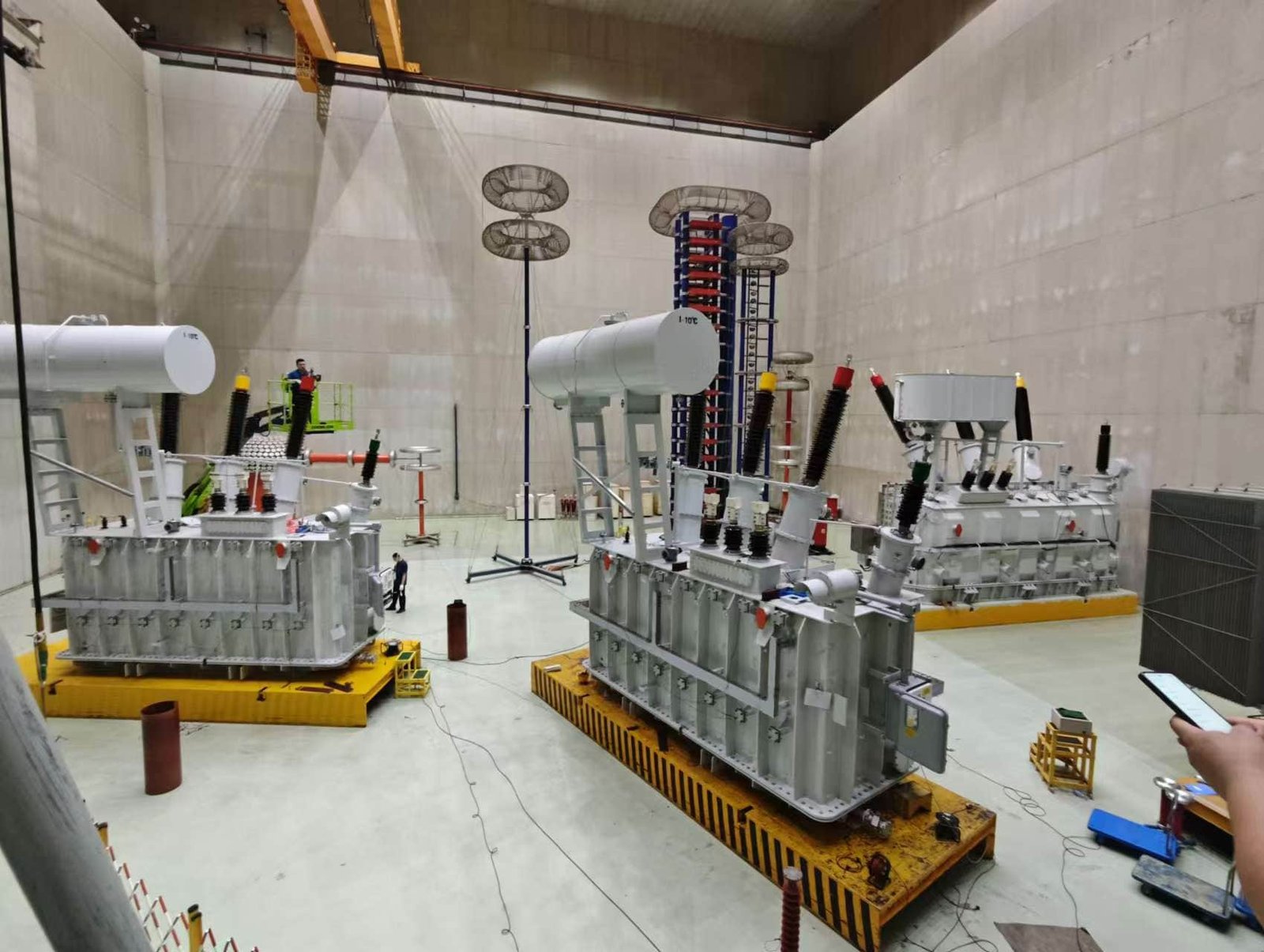
A power transformer is a high-value, long-service electrical asset, and many procurement problems become difficult to correct once the equipment has been manufactured, shipped, or installed. Buyers who focus only on technical design and purchase price can overlook how testing, inspection, warranty coverage, and contractual responsibilities determine whether defects are discovered early, whether performance can be verified, and who pays when something goes wrong. Testing, inspection, warranty, and contract terms are important when buying power transformers because they establish how the transformer will be verified before delivery, how manufacturing quality will be controlled, what performance must be demonstrated, who bears responsibility for defects or delays, and what support the buyer receives throughout the warranty period.
A transformer that passes basic factory tests does not require detailed warranty or contract terms.False
Testing verifies defined technical characteristics, while warranty and contract terms establish responsibilities for defects, delivery, documentation, performance obligations, repairs and other risks that testing alone cannot address.
Why Should Testing Be Defined Before Purchasing?
Testing should be treated as part of the transformer specification rather than an afterthought.
A power transformer can be evaluated through different categories of tests, depending on its design and project requirements.
These may include:
- Routine factory tests
- Type or design tests
- Special tests
- Performance tests
- Site acceptance tests
The buyer should clearly define which tests are mandatory, which are included in the quoted price, which require witnessing, and what documentation must be supplied.
Otherwise, two suppliers may submit quotations with different testing scopes.
What Problems Can Inadequate Testing Create?
If testing is insufficient or poorly defined, a defect may remain undiscovered until the transformer reaches the installation site.
The resulting sequence can be expensive:
Manufacturing → shipment → installation → commissioning → defect discovered → investigation → rework
At the factory, corrective action is generally easier.
After delivery, the same problem may involve:
- Removal
- Specialized transportation
- Site labor
- Schedule delays
- Additional testing
- Production interruption
This is why factory acceptance testing can provide substantial procurement value.
What Should Buyers Specify for Factory Acceptance Testing?
The purchase specification should identify:
| Testing Item | Buyer Should Define |
|---|---|
| Test scope | Which tests are required |
| Standard | Applicable testing method |
| Acceptance | Pass/fail criteria |
| Witnessing | Buyer or third-party involvement |
| Reports | Required test documentation |
| Calibration | Validity of measuring equipment |
| Failure | Corrective-action procedure |
| Retesting | Responsibility and cost |
The exact testing package depends on transformer type, voltage, capacity and application.
Why Is Inspection Different From Testing?
Testing and inspection serve different purposes.
Inspection examines whether the transformer and manufacturing process conform to agreed requirements.
Testing measures defined electrical, thermal or mechanical characteristics.
For example, inspection may verify:
- Correct components
- Workmanship
- Dimensions
- Connections
- Nameplate information
- Accessories
- Physical condition
Testing may verify:
- Winding resistance
- Ratio
- Impedance
- Losses
- Insulation performance
Using both provides stronger quality assurance than relying on either alone.
Why Should Buyers Consider Factory Inspection?
Factory inspection gives the buyer an opportunity to verify manufacturing progress and quality before shipment.
Depending on project importance, inspection may cover:
- Raw-material control
- Core assembly
- Winding
- Insulation processing
- Assembly
- Connections
- Tank fabrication
- Accessory installation
- Final inspection
- Factory testing
For major transformers, inspection points can be incorporated into the quality plan.
Can Inspection Reduce Procurement Risk?
Yes.
Inspection can identify discrepancies before the equipment leaves the factory.
Examples include:
- Incorrect component
- Incorrect dimension
- Missing accessory
- Improper connection
- Damaged insulation
- Incomplete documentation
- Incorrect nameplate information
The buyer can then request correction before shipment rather than accepting the problem at the site.
Factory inspection guarantees that a power transformer will never fail after installation.False
Inspection and testing reduce procurement and manufacturing risks but cannot eliminate all future operating failures caused by installation, environment, aging, abnormal loading or unforeseen conditions.
Why Are Witness and Hold Points Useful?
For important projects, the buyer may establish inspection hold points and witness points.
A hold point means a manufacturing or testing stage cannot proceed without the required approval.
A witness point allows the buyer or appointed inspector to observe the activity.
This provides a structured quality-control process rather than relying on inspection only at the end.
Why Does Warranty Matter?
A transformer may remain in service for decades, but manufacturing-related problems can become apparent only after operation begins.
A warranty defines the supplier's obligations when agreed requirements are not met.
Buyers should examine:
- Warranty duration
- Start date
- Covered equipment
- Covered defects
- Repair obligations
- Replacement obligations
- Labor
- Transportation
- Site service
- Exclusions
A warranty should be evaluated based on its actual terms rather than its advertised duration.
What Is the Difference Between Warranty Duration and Warranty Value?
A longer warranty is not automatically better.
For example, one supplier may offer a long warranty with broad exclusions, while another offers a shorter period with clearer coverage.
The buyer should ask:
What exactly is covered, under what conditions, and what happens when a covered problem occurs?
This is much more useful than comparing warranty periods alone.
Why Should Warranty Start Dates Be Defined?
The warranty may be structured around:
- Shipment
- Delivery
- Installation
- Commissioning
- Commercial operation
These dates can be significantly different.
If the warranty starts at shipment but the transformer remains in storage for a long period, part of the warranty may expire before the equipment begins normal operation.
Therefore, the contract should define the warranty commencement event clearly.
What Warranty Exclusions Should Buyers Examine?
Common areas requiring careful review include:
- Improper installation
- Incorrect operation
- Overloading
- Environmental damage
- Unauthorized modification
- Maintenance deficiencies
- External system faults
Buyers should understand these exclusions before signing the contract.
The purpose is not to eliminate reasonable exclusions but to make responsibilities unambiguous.
Why Are Contract Terms So Important?
The contract converts technical requirements into enforceable commercial obligations.
A strong transformer contract should clearly establish:
What is supplied + what performance is guaranteed + how compliance is demonstrated + who is responsible when requirements are not met.
Without these definitions, technical discussions can become difficult to enforce after an issue occurs.
Which Technical Values Should Be Contractually Guaranteed?
Depending on the project, buyers may consider contractual guarantees for:
- Rated capacity
- Voltage ratio
- Impedance
- No-load losses
- Load losses
- Temperature rise
- Sound level
- Insulation performance
- Cooling performance
- Dimensions
- Weight
- Other project-specific characteristics
The buyer should distinguish between guaranteed values and ordinary catalogue data.
Why Should Transformer Losses Be Contractually Defined?
Losses have a direct impact on operating cost.
If the supplier provides only a general efficiency statement, it may be difficult to evaluate the actual economic performance.
Guaranteed no-load and load losses allow buyers to compare suppliers more objectively.
This becomes particularly important for transformers that remain energized continuously.
How Do Contractual Penalties Help?
For major projects, contracts may define consequences for:
- Delivery delays
- Failure to meet guaranteed performance
- Failed acceptance tests
- Documentation delays
- Nonconforming equipment
The specific commercial mechanism depends on the project contract.
The important principle is that the buyer should not discover the supplier's responsibilities only after a problem occurs.
Why Should Delivery Terms Be Detailed?
Transformer delivery can involve specialized logistics.
Contract terms should clarify:
- Manufacturing completion
- Factory release
- Packaging
- Transportation
- Insurance
- Site delivery
- Unloading
- Storage
- Installation support
For large transformers, transportation and lifting can represent significant cost and risk.
Who Is Responsible for Site Installation?
This should never be assumed.
The contract should identify responsibility for:
- Foundation
- Cable connections
- Grounding
- Oil handling
- Assembly
- Accessory installation
- Control wiring
- Commissioning
- Site testing
A clear responsibility matrix prevents disputes between buyer, manufacturer and installer.
How Do Contract Terms Affect Commissioning?
Commissioning is where the transformer becomes part of the electrical system.
The contract should define:
- Site testing
- Energization procedure
- Supplier support
- Acceptance criteria
- Required documentation
- Defect correction
For critical equipment, supplier technical support during first energization can be valuable.
Why Should Documentation Be Contractually Required?
Technical documentation should not be treated as optional paperwork.
Required documents may include:
- General arrangement drawings
- Foundation loads
- Wiring diagrams
- Terminal diagrams
- Nameplate data
- Factory test reports
- Installation instructions
- Operation manuals
- Maintenance manuals
- Spare-parts lists
- Certificates
Missing documentation can delay installation and future maintenance.
How Should Buyers Compare Supplier Offers?
The buyer should normalize the complete scope before comparing prices.
| Evaluation Area | Key Question |
|---|---|
| Technical | Does the transformer meet every mandatory requirement? |
| Testing | Are equivalent tests included? |
| Inspection | Can the buyer inspect critical manufacturing stages? |
| Performance | Are important values guaranteed? |
| Warranty | What defects and costs are covered? |
| Delivery | Are logistics responsibilities clear? |
| Installation | Who performs and supports installation? |
| Documentation | Are all required documents included? |
| Service | Is field support available? |
| Commercial | Are penalties and remedies defined? |
This prevents an inexpensive quotation with limited scope from being compared directly with a more comprehensive quotation.
What Procurement Mistakes Should Be Avoided?
Buyers should avoid:
- Accepting “tested” without defining test scope
- Comparing different factory-test packages
- Ignoring inspection rights
- Accepting vague performance guarantees
- Failing to define warranty start dates
- Overlooking warranty exclusions
- Leaving transportation responsibilities unclear
- Assuming installation is included
- Ignoring commissioning support
- Failing to specify documentation
- Treating all supplier contracts as equivalent
These mistakes can create substantial costs after the purchase order is signed.
How Can Buyers Build a Strong Purchase Contract?
A practical structure is:
Section 1 — Technical specification
Define electrical, thermal, mechanical and environmental requirements.
Section 2 — Approved design
Define drawings, deviations and approval procedures.
Section 3 — Quality plan
Define inspections, hold points and quality documentation.
Section 4 — Factory testing
Define tests, standards, acceptance criteria and witnessing.
Section 5 — Delivery
Define transportation, packaging and site responsibilities.
Section 6 — Installation and commissioning
Define supplier support and acceptance requirements.
Section 7 — Warranty
Define duration, coverage, exclusions and remedies.
Section 8 — Documentation
Define required drawings, manuals and certificates.
Section 9 — Commercial remedies
Define appropriate consequences for nonconformance or delay.
How Can Buyers Build a More Reliable Procurement Process for Power Transformers?
A weak power-transformer procurement process can produce technically inconsistent quotations, hidden scope, unexpected costs, delivery delays, and equipment that does not fully match the site's operating conditions. The problem is rarely caused by one bad decision; it usually develops when specifications, supplier evaluation, testing, contracts, logistics, and lifecycle costs are handled separately. Buyers can build a more reliable procurement process for power transformers by defining the application and operating duty first, preparing a complete technical specification, evaluating site conditions, prequalifying capable manufacturers, comparing equivalent quotations, reviewing losses and lifecycle costs, defining inspection and testing requirements, establishing clear contract responsibilities, and controlling the project from design approval through commissioning.

A reliable power transformer procurement process begins by comparing supplier prices.False
Reliable procurement should begin by defining the application, electrical duty, site conditions and technical requirements so that supplier quotations can later be compared on an equivalent basis.
What Should Be the First Step in Transformer Procurement?
The first step should be to define what the transformer must do.
Before contacting suppliers, buyers should establish:
- Application
- Rated power
- Primary voltage
- Secondary voltage
- Frequency
- Phase
- Load profile
- Expected peak load
- Future load growth
- Installation environment
- Cooling requirements
- Insulation requirements
- Protection requirements
This information becomes the foundation for the technical specification.
Without it, suppliers may make different assumptions, making subsequent quotation comparisons unreliable.
How Should Buyers Define the Electrical Duty?
The electrical duty should describe the actual system rather than only the nominal rating.
Important parameters include:
| Parameter | Why It Matters |
|---|---|
| Rated power | Determines basic capacity |
| Primary voltage | Defines high-voltage winding requirements |
| Secondary voltage | Defines output system compatibility |
| Frequency | Affects magnetic design |
| Phase | Determines winding configuration |
| Impedance | Influences fault current and regulation |
| Vector group | Affects phase displacement and system connection |
| Tap range | Supports voltage management |
| Short-circuit duty | Determines mechanical withstand requirements |
| Load profile | Determines thermal stress |
This information allows manufacturers to develop a design appropriate to the actual application.
Why Should Load Characteristics Be Included?
A transformer supplying a stable industrial load is different from one supplying rapidly varying or nonlinear loads.
Buyers should identify major load types such as:
- Motors
- Variable-frequency drives
- UPS systems
- Rectifiers
- Welding equipment
- Furnaces
- Data-center equipment
- Renewable-energy converters
Harmonics and load imbalance can increase transformer heating and losses.
A procurement process that ignores these conditions may select a transformer that is technically adequate on paper but unsuitable in actual operation.
How Should Future Load Growth Be Handled?
A transformer should be evaluated against the expected operating period, not just today's demand.
A useful planning model is:
Current demand → expected growth → peak demand → required thermal margin
However, excessive oversizing should also be avoided without economic justification.
The buyer should balance:
- Capacity
- Utilization
- Losses
- Purchase price
- Future expansion
- Reliability
The objective is an appropriate operating point over the transformer's expected service life.
Why Should Site Conditions Be Defined Early?
Transformer performance depends partly on its installation environment.
The specification should address:
- Maximum ambient temperature
- Minimum ambient temperature
- Altitude
- Indoor/outdoor installation
- Ventilation
- Humidity
- Dust
- Corrosive atmosphere
- Solar exposure
- Available space
- Seismic conditions where relevant
For example, inadequate ventilation can reduce the practical thermal capability of an indoor dry-type transformer.
How Should Buyers Choose the Transformer Type?
Transformer type should follow the application.
Potential choices may include:
- Oil-immersed transformers
- Dry-type transformers
- Autotransformers
- Other specialized configurations
The decision should consider:
Electrical requirements + thermal requirements + fire considerations + environmental conditions + installation + maintenance + lifecycle economics
No single transformer type is universally best.
Why Is a Complete Technical Specification Essential?
A complete specification converts the project requirement into measurable supplier requirements.
It should address:
- Electrical characteristics
- Insulation
- Cooling
- Temperature rise
- Mechanical construction
- Accessories
- Protection
- Monitoring
- Testing
- Documentation
- Delivery
- Warranty
This prevents suppliers from filling major gaps with different assumptions.
Once the transformer MVA and voltage are specified, additional technical requirements mainly affect paperwork rather than equipment suitability.False
Impedance, vector group, insulation, cooling, temperature rise, taps, environmental conditions, accessories and testing can materially affect transformer design and system compatibility.
How Should Buyers Prequalify Transformer Suppliers?
Supplier evaluation should occur before detailed quotation comparison.
Important criteria include:
- Relevant manufacturing experience
- Engineering capability
- Production capacity
- Quality-control system
- Factory testing capability
- Similar project experience
- Delivery history
- Warranty capability
- After-sales service
- Spare-parts support
A supplier that cannot demonstrate the required capability should not become the preferred supplier simply because its price is attractive.
What Should Buyers Look for During a Factory Audit?
A factory visit can provide useful evidence of manufacturing capability.
Review:
- Material storage
- Incoming inspection
- Core-processing areas
- Winding equipment
- Insulation-processing facilities
- Assembly areas
- Drying facilities
- Tank fabrication
- Testing laboratory
- Quality-control procedures
- Traceability systems
The objective is to determine whether the supplier has a repeatable manufacturing process, not merely an attractive showroom.
How Should Supplier Quotations Be Compared?
Quotation comparison should begin only after technical scope has been normalized.
| Comparison Category | Questions |
|---|---|
| Transformer design | Are all technical requirements equivalent? |
| Losses | Are guaranteed values provided? |
| Cooling | Is the cooling system equivalent? |
| Accessories | Are the same items included? |
| Testing | Is the factory-test scope equivalent? |
| Documentation | Are deliverables equivalent? |
| Delivery | Are transportation terms comparable? |
| Warranty | Is coverage equivalent? |
| Service | Is support comparable? |
| Price | What is the normalized total cost? |
This prevents buyers from selecting a low quotation that simply contains less scope.
Why Should Guaranteed Losses Be Part of the Comparison?
Transformer losses continue throughout operation.
Buyers should compare:
- No-load losses
- Load losses
A small difference in purchase price can be outweighed by years of additional energy losses.
Therefore, transformer procurement should evaluate purchase cost and operating cost together.
How Can Buyers Calculate Lifecycle Cost?
A practical model is:
Lifecycle cost = purchase + installation + energy losses + maintenance + downtime risk + repair + replacement
For critical or continuously energized transformers, this calculation can significantly change supplier rankings.
The lowest purchase price is not necessarily the lowest total cost.
Why Should Testing Requirements Be Defined Before Ordering?
Testing should be part of the purchase specification.
Depending on the transformer and project, buyers may require tests covering:
- Winding resistance
- Ratio
- Vector group
- Impedance
- No-load losses
- Load losses
- Insulation performance
- Temperature-related performance
- Leakage
- Project-specific requirements
The buyer should specify applicable test methods, acceptance criteria, reports and witnessing requirements.
How Should Inspection Be Integrated Into Procurement?
Inspection should not occur only after manufacturing is finished.
A more controlled process is:
Design review → material inspection → manufacturing inspection → assembly inspection → final inspection → factory testing → shipment
For large or critical transformers, buyers may establish formal inspection and test plans with hold points and witness points.
Why Are Factory Acceptance Tests So Valuable?
Factory acceptance testing provides evidence that the completed transformer satisfies defined requirements before shipment.
If a problem is found at the factory, correction is generally easier than after installation.
This can reduce:
- Rework at site
- Commissioning delays
- Transportation problems
- Additional testing
- Installation disruption
Factory acceptance testing eliminates all transformer procurement risk.False
Factory testing substantially improves verification but cannot eliminate risks related to transportation, installation, operation, environment, aging or future abnormal conditions.
What Should Be Included in the Contract?
A reliable transformer contract should clearly define:
- Technical requirements
- Guaranteed performance
- Approved drawings
- Quality plan
- Testing
- Inspection
- Delivery
- Installation responsibilities
- Commissioning
- Warranty
- Documentation
- Spare parts
- Nonconformance procedures
The contract should make it clear who is responsible for what and what evidence is required for acceptance.
Why Should Warranty Terms Be Examined Carefully?
Warranty value depends on its actual coverage.
Buyers should review:
- Warranty duration
- Start date
- Covered defects
- Exclusions
- Repair obligations
- Replacement obligations
- Labor
- Transportation
- Response time
A long warranty with extensive exclusions may provide less practical protection than expected.
How Should Delivery Risk Be Controlled?
Transformer delivery should be treated as a project milestone.
The buyer should confirm:
- Manufacturing schedule
- Design-approval dates
- Factory-testing dates
- Shipment conditions
- Transportation
- Insurance
- Unloading
- Storage
- Site readiness
- Commissioning support
For large transformers, logistics should be reviewed before the purchase order rather than after manufacturing.
Why Is Documentation Part of Procurement Quality?
Complete documentation supports installation, commissioning and long-term maintenance.
The buyer should specify required:
- General arrangement drawings
- Foundation information
- Wiring diagrams
- Terminal diagrams
- Nameplate data
- Factory test reports
- Installation manuals
- Operation manuals
- Maintenance manuals
- Spare-parts lists
Documentation should have defined submission dates and approval procedures.
How Can Buyers Control Changes During Manufacturing?
Technical changes should pass through a formal approval process.
A useful change-control sequence is:
Supplier proposes change → technical review → commercial review → buyer approval → documented revision → manufacturing
Uncontrolled substitutions can create unexpected differences between the purchased transformer and the approved design.
How Should Buyers Evaluate Supplier Performance After Delivery?
The procurement process should continue through commissioning.
Record:
- Delivery performance
- Factory-test results
- Installation issues
- Commissioning results
- Initial operating data
- Warranty issues
- Supplier response time
This information becomes valuable when purchasing future transformers.
What Does a Reliable Procurement Workflow Look Like?
A practical end-to-end workflow is:
| Stage | Main Buyer Action | Main Risk Controlled |
|---|---|---|
| 1. Application definition | Define duty and purpose | Wrong transformer |
| 2. Site assessment | Define environment | Thermal/installation problems |
| 3. Specification | Define technical requirements | Supplier assumptions |
| 4. Supplier prequalification | Verify capability | Supplier-performance risk |
| 5. RFQ | Request equivalent scope | Non-comparable quotations |
| 6. Technical evaluation | Check compliance | Technical mismatch |
| 7. Commercial evaluation | Compare normalized cost | Hidden scope |
| 8. Contract | Define responsibilities | Disputes |
| 9. Design approval | Review drawings | Design errors |
| 10. Manufacturing inspection | Control production | Quality problems |
| 11. Factory testing | Verify performance | Defective equipment |
| 12. Delivery | Control logistics | Schedule damage |
| 13. Site testing | Verify installation | Commissioning problems |
| 14. Energization | Controlled startup | Operational risk |
| 15. Warranty monitoring | Track performance | Unresolved defects |
What Common Procurement Mistakes Should Be Eliminated?
Avoid:
- Choosing the lowest quotation automatically
- Using an incomplete technical specification
- Comparing different transformer types as if they were identical
- Ignoring load harmonics
- Ignoring future load growth
- Failing to disclose site conditions
- Accepting vague loss guarantees
- Leaving testing undefined
- Ignoring factory inspection
- Accepting unclear warranty exclusions
- Leaving transportation responsibility ambiguous
- Failing to specify documentation
- Making uncontrolled design changes
- Evaluating suppliers only after problems occur
What Should a Buyer-Evaluation Scorecard Include?
A simple scorecard can provide a consistent decision framework.
| Category | Example Weight |
|---|---|
| Technical compliance | 20% |
| Manufacturing capability | 15% |
| Quality control | 15% |
| Factory testing | 10% |
| Relevant experience | 10% |
| Guaranteed losses | 10% |
| Delivery capability | 5% |
| Warranty | 5% |
| After-sales service | 5% |
| Lifecycle economics | 5% |
The weighting should be adjusted to the project.
For a critical utility transformer, reliability and testing may deserve greater weight.
For a continuously energized commercial or industrial transformer, lifecycle losses may deserve greater weight.
Conclusion
Avoiding procurement mistakes is essential for obtaining power transformers that deliver reliable performance throughout their long service life. Buyers should define complete technical requirements, evaluate manufacturers based on proven capabilities, compare quotations on a like-for-like basis, and consider total lifecycle costs rather than purchase price alone. Factory acceptance testing, third-party inspection where appropriate, clear contractual terms, realistic delivery requirements, and comprehensive warranty provisions can further reduce procurement risks. A disciplined procurement process helps buyers protect their investment, prevent costly project delays, and select transformers that meet both immediate operational requirements and long-term power system objectives.
FAQ
Q1: What are the most common mistakes when buying power transformers?
The most common procurement mistake is treating a power transformer as a standard commodity and comparing suppliers primarily on purchase price. A transformer is a long-life electrical asset, so technical compliance, reliability, efficiency, delivery, and lifecycle cost should all influence the purchasing decision.
One frequent problem is providing suppliers with an incomplete specification. Important requirements such as rated capacity, voltage ratio, frequency, impedance, insulation level, cooling method, tap range, environmental conditions, and applicable standards should be clearly defined.
Another mistake is failing to consider the actual load profile. Selecting a transformer only according to today's demand may leave insufficient capacity for future expansion, while excessive oversizing can increase capital costs and no-load losses.
Buyers should also avoid comparing quotations without normalizing the scope. One supplier may include accessories, monitoring equipment, factory testing, transportation, or commissioning support while another may exclude them.
Other common mistakes include:
Choosing the lowest quotation without technical evaluation
Ignoring transformer losses
Failing to evaluate supplier manufacturing capability
Not checking previous project experience
Underestimating lead times
Leaving technical deviations unresolved
Failing to specify factory acceptance testing
Neglecting environmental and installation conditions
Accepting vague warranty terms
Ignoring spare parts and after-sales support
Procurement teams should also consider the consequences of transformer failure. A low-cost transformer that causes a prolonged outage can ultimately cost far more than the initial purchase-price difference.
A structured procurement process should therefore combine technical evaluation, commercial comparison, supplier due diligence, quality assurance, delivery planning, and lifecycle-cost analysis.
The goal is not simply to buy a transformer at the lowest price. It is to purchase equipment that meets the required performance and reliability criteria at an acceptable total cost and risk.
Q2: Why is choosing the cheapest power transformer quotation a mistake?
Choosing the cheapest quotation can be risky because the initial purchase price represents only one part of the transformer's total cost.
A lower quotation may result from differences in technical scope, materials, accessories, testing, warranty coverage, delivery terms, or supplier overhead. It does not necessarily mean that the supplier has found a more efficient way to manufacture an equivalent transformer.
Buyers should first establish whether quotations are technically equivalent.
For example, suppliers may quote different values for:
No-load losses
Load losses
Impedance
Temperature rise
Insulation level
Tap range
Monitoring equipment
Cooling systems
Accessories
These differences can have long-term consequences.
Transformer losses are particularly important because they continue throughout the operating life of the equipment. A transformer with a lower purchase price but higher losses may ultimately cost more to operate.
Reliability should also be considered. Manufacturing quality, material selection, factory testing, quality-control procedures, and supplier experience can affect the probability of premature failure.
Delivery risk is another consideration. A supplier offering a low price but an uncertain manufacturing schedule may create significant project costs if the transformer is needed for a planned energization date.
Warranty terms can also make quotations difficult to compare. A longer warranty is not necessarily better if exclusions are broad or claim procedures are unclear.
A better procurement approach is to compare:
Purchase price + energy losses + maintenance + transportation + installation + downtime risk + warranty + expected service life.
Buyers can then determine the total cost of ownership rather than simply comparing equipment prices.
The lowest compliant quotation may still be the best choice, but it should win because it offers the strongest overall value—not merely because its initial price is the smallest number on the quotation sheet.
Q3: What technical specification mistakes should buyers avoid?
An incomplete or ambiguous technical specification can create problems throughout transformer procurement, manufacturing, testing, installation, and operation.
One of the most important mistakes is failing to define the electrical requirements precisely.
The specification should establish applicable requirements such as:
Rated power
Primary and secondary voltage
Frequency
Number of phases
Vector group
Rated current
Impedance
Tap-changer requirements
Insulation levels
Neutral arrangement
Short-circuit requirements
Cooling classification
The operating environment should also be specified. Ambient temperature, altitude, humidity, pollution, indoor or outdoor installation, seismic conditions, and other environmental factors can affect transformer design.
Buyers should avoid using generic specifications without checking whether they reflect the actual installation.
Another mistake is failing to define loss guarantees. No-load and load losses should be specified clearly, including applicable test conditions and tolerances.
Testing requirements should also be established before placing the order. Buyers should identify required routine tests and any additional type or special tests.
The procurement specification should clearly identify the required standards and any hierarchy between standards where multiple standards apply.
Accessories should not be left vague. Depending on the transformer, requirements may include:
Bushings
Tap changer
Temperature indicators
Pressure-relief devices
Oil-level indicators
Cooling equipment
Control panels
Monitoring systems
Surge protection
Terminal arrangements
Technical deviations should be documented and approved rather than accepted informally during manufacturing.
Finally, the specification should consider future requirements. Expected load growth, system expansion, monitoring needs, and spare-parts availability can influence the appropriate transformer design.
A strong specification gives suppliers enough information to quote comparable equipment while giving the buyer measurable criteria for factory acceptance and final performance verification.
Q4: How can buyers reduce quality and supplier risks when procuring power transformers?
Supplier due diligence is essential because transformer quality depends heavily on engineering, manufacturing processes, materials, testing, and quality control.
Buyers should evaluate whether a supplier has relevant experience with transformers of similar voltage, capacity, application, and environmental conditions.
Important areas to review include:
Manufacturing facilities
Engineering resources
Quality-management systems
Production capacity
Testing equipment
Previous projects
Reference customers
Quality-control procedures
Supplier financial stability
After-sales service
Spare-parts availability
A factory audit can provide additional insight into manufacturing capability. Buyers may review winding processes, core assembly, insulation handling, drying procedures, cleanliness controls, assembly areas, testing facilities, and documentation systems.
Quality should also be controlled during manufacturing rather than only at final inspection.
A suitable quality plan can establish inspection and hold points for critical processes. Factory acceptance testing should verify the agreed technical requirements before shipment.
Buyers may also appoint an independent third-party inspector when project risk or transformer value justifies additional oversight.
Another useful measure is to require complete technical documentation, including drawings, test reports, nameplate information, operating manuals, maintenance instructions, and relevant certificates.
Contract terms should clearly establish what happens if the transformer fails to meet guaranteed requirements.
For critical projects, buyers should also assess supply-chain resilience. Long lead times for specialized materials or components can affect the manufacturer's ability to meet the promised schedule.
Supplier selection should therefore consider both current quotation value and the supplier's ability to deliver consistent quality over the entire project lifecycle.
References
IEC 60076-1 – Power Transformers: General
https://webstore.iec.ch/en/publication/603
IEC 60076-2 – Power Transformers: Temperature Rise
https://webstore.iec.ch/en/publication/604
IEC 60076-3 – Power Transformers: Insulation Levels, Dielectric Tests and External Clearances
https://webstore.iec.ch/en/publication/605
IEC 60076-5 – Power Transformers: Ability to Withstand Short Circuit
https://webstore.iec.ch/en/publication/607
IEC 60076-11 – Power Transformers: Dry-Type Transformers
https://webstore.iec.ch/en/publication/604
IEEE Standards Association – Transformer Standards
https://standards.ieee.org
U.S. Department of Energy – Electricity Delivery and Grid Systems
https://www.energy.gov/oe