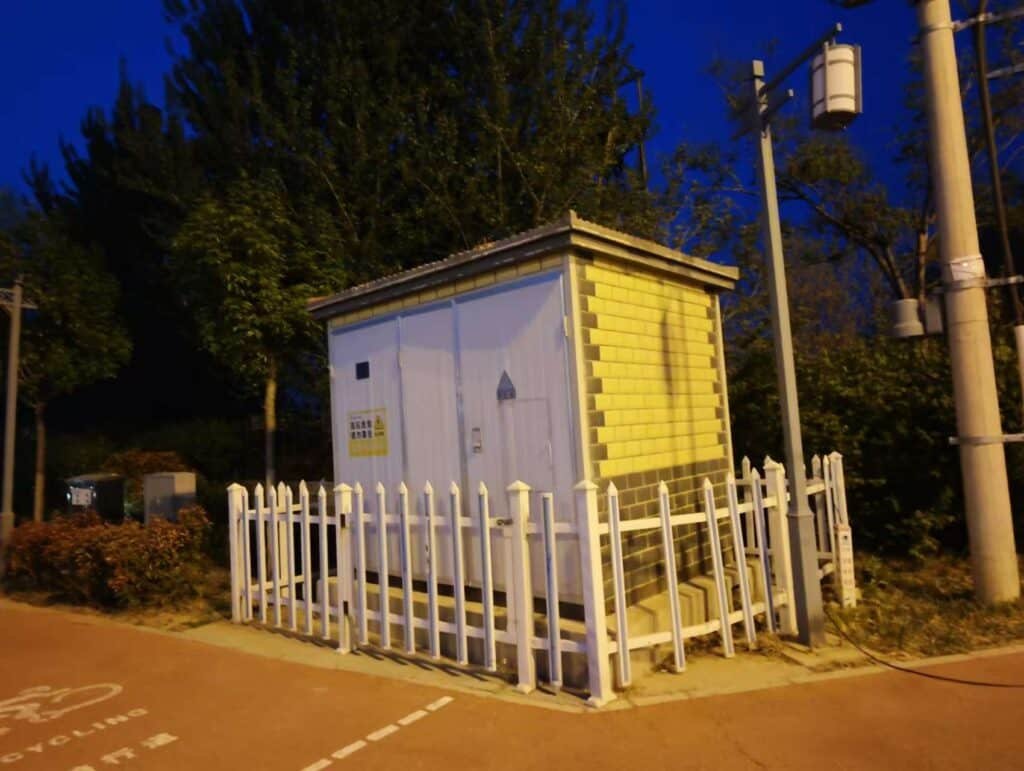
Choosing between a box transformer and a conventional transformer can affect installation layout, safety, maintenance, protection, and overall project cost. Using the wrong configuration may increase installation complexity, require additional switchgear or protection equipment, or create unnecessary space and maintenance requirements. Buyers therefore need to understand how these transformer configurations differ before selecting equipment for a power distribution or industrial project.
A box transformer typically integrates the transformer with associated medium-voltage and low-voltage switching or protection equipment within a compact enclosure, while a conventional transformer is generally supplied as a standalone transformer that requires separate external switchgear and related equipment. Box transformers can offer a more compact, integrated, and convenient installation solution, whereas conventional transformers may provide greater flexibility for customized system layouts and separate equipment selection. The best choice depends on voltage, capacity, protection requirements, installation space, maintenance strategy, and project configuration.
The term “box transformer” can refer to different integrated transformer configurations depending on the market and manufacturer, so buyers should define the exact equipment scope and internal components when comparing quotations. A meaningful comparison should focus on the complete power-system solution rather than the transformer body alone.
What Is the Difference Between Box Transformers and Conventional Transformers and How Do They Compare?
Buyers sometimes use “box transformer” and “conventional transformer” as if they were two directly competing transformer technologies, but the terminology can be misleading. A box transformer usually describes a packaged or enclosed transformer assembly, while “conventional transformer” can refer to a more traditional transformer arrangement in which the transformer and associated switchgear, protection, or distribution equipment are installed as separate components. Confusing packaging with transformer technology can result in incorrect specifications, unnecessary equipment, poor maintainability, or an unsuitable installation footprint. The key difference is that a box transformer is primarily an integrated packaging and installation concept, whereas a conventional transformer is generally a transformer installed as a separate piece of equipment; either may use oil-immersed or dry-type technology, and the correct choice depends on voltage, capacity, protection, switching requirements, installation space, environmental conditions, safety and lifecycle cost.

A box transformer is necessarily a completely different electrical transformer technology from a conventional transformer.False
Box-type or packaged construction primarily describes equipment integration and enclosure; the transformer inside may use technologies such as oil immersion or dry-type insulation.
Box-type transformer assemblies can integrate the transformer with switching, protection or distribution equipment.True
Packaged transformer substations are commonly designed as integrated assemblies to reduce site installation work and provide a compact distribution solution, although the exact equipment included varies by design.
What Does “Box Transformer” Usually Mean?
The term box transformer can have different meanings in different markets. In many power-distribution applications, it refers to a box-type or packaged transformer substation in which the transformer is housed together with other distribution equipment.
A typical packaged arrangement may include:
- Medium-voltage switchgear
- Transformer
- Low-voltage switchgear
- Protection equipment
- Metering
- Busbars
- Cable connections
- Enclosure
- Monitoring and control equipment
The result is a relatively compact assembly that can be transported to the site and connected with comparatively limited field construction.
A conventional transformer arrangement, by contrast, may place the transformer, MV switchgear and LV distribution equipment in separate positions.
This distinction is important:
Box-type describes how equipment is packaged; transformer technology describes how the transformer itself performs insulation, cooling and voltage transformation.
Therefore, a box-type transformer can potentially contain an oil-immersed transformer or a dry-type transformer, depending on the design.
How Do Box-Type and Conventional Arrangements Compare?
| Feature | Box-Type / Packaged Transformer | Conventional Separate Arrangement |
|---|---|---|
| Main concept | Integrated package | Separate equipment |
| Transformer technology | Oil or dry-type depending on design | Oil or dry-type depending on design |
| Switchgear | Often integrated | Usually separate |
| LV equipment | Often integrated | Usually separate |
| Installation | More factory-integrated | More site assembly |
| Footprint | Often compact | Potentially larger |
| Field cabling | Can be reduced | Often more extensive |
| Customization | More standardized | Often highly flexible |
| Maintenance access | Depends on enclosure design | Often easier around individual equipment |
| Expansion | May be more constrained | Usually easier |
| Transport | Requires packaged-unit planning | Transformer transported separately |
| Site construction | Potentially simplified | More civil/electrical coordination |
| Initial cost | Application-dependent | Application-dependent |
| Lifecycle cost | Application-dependent | Application-dependent |
Does a Box Transformer Perform the Same Electrical Function?
At its core, yes.
The transformer inside the package still performs the fundamental function of transferring electrical energy between voltage levels through electromagnetic induction.
The box-type configuration primarily changes how the equipment is assembled, protected and installed.
This means buyers should not compare a box transformer and conventional transformer solely by asking which has better electrical efficiency.
Instead, compare:
- Transformer losses
- Rated capacity
- Voltage ratio
- Impedance
- Insulation level
- Cooling
- Protection
- Switching
- Enclosure
- Installation
- Maintenance
How Does Capacity Affect the Choice?
Capacity is important because larger transformers generate more heat and generally require more substantial cooling, connections, foundations and maintenance access.
Box-type solutions are particularly attractive for compact distribution substations, where integrating multiple components can save space and simplify installation.
For very large power transformers, however, a conventional arrangement may provide greater flexibility for:
- Cooling systems
- High-voltage connections
- Maintenance access
- Fire protection
- Switching configuration
- Future expansion
- Replacement of individual components
There is no universal capacity threshold separating the two approaches.
How Do Oil-Immersed Box Transformers Differ From Conventional Oil Transformers?
An oil-immersed box-type transformer may integrate an oil transformer into a packaged substation enclosure.
The buyer must still consider:
- Transformer oil quantity
- Cooling
- Radiators
- Oil leakage
- Fire safety
- Containment
- Environmental protection
- Pressure-relief equipment
The enclosure does not eliminate the physical properties of the insulating liquid.
A conventional oil-immersed transformer installed separately may provide greater flexibility for radiator arrangement, access and site fire-management design.
How Do Dry-Type Box Transformers Differ?
A dry-type box-type transformer can integrate a cast-resin or other dry-type transformer into an enclosed distribution package.
Its advantages can include:
- No main transformer-fluid system
- Compact installation
- Reduced liquid-management requirements
- Factory-integrated switchgear
- Simplified site assembly
But buyers must verify:
- Ventilation
- Heat dissipation
- Enclosure temperature
- Dust protection
- Humidity
- Condensation
- Internal clearances
The enclosure must not prevent the transformer from adequately rejecting heat.
How Do Efficiency and Losses Compare?
A box-type transformer is not automatically more or less efficient than a conventional transformer.
Efficiency depends mainly on the transformer design and operating conditions.
Important parameters include:
- No-load loss
- Load loss
- Core material
- Winding resistance
- Stray losses
- Harmonic loading
- Cooling auxiliary consumption
For quotation comparison, request guaranteed losses at clearly defined reference conditions.
A packaged transformer with superior integration but higher losses may cost more over its operating life than a conventional transformer with lower losses.
How Does Installation Differ?
A major advantage of packaged box-type construction is reduced site assembly.
A factory may install and test:
- Transformer
- Switchgear
- Busbars
- Protection
- Metering
- Internal wiring
before shipment.
The site then mainly needs to provide:
- Foundation
- Incoming/outgoing cables
- Grounding
- Required clearances
- Auxiliary connections
- Communications
- Final commissioning
A conventional arrangement can require more field coordination because individual pieces of equipment need to be installed and interconnected.
Is a Box Transformer Easier to Install?
Often, yes—but not automatically.
Factory integration can reduce field assembly and wiring.
However, packaged equipment may be heavier and require careful transportation and lifting.
Buyers should verify:
- Shipping dimensions
- Shipping weight
- Center of gravity
- Lifting points
- Foundation requirements
- Cable-entry position
- Site access
- Crane requirements
A compact package can still create significant logistics requirements.
How Does Footprint Compare?
Box-type transformer substations are often chosen specifically because they provide substantial electrical functionality in a compact footprint.
This can be useful for:
- Urban distribution
- Construction sites
- Renewable-energy projects
- Industrial facilities
- Infrastructure projects
A conventional arrangement may require separate spaces for:
MV switchgear + transformer + LV switchgear + control equipment.
A packaged box-type solution can combine some or all of these functions into one coordinated enclosure.
However, buyers must distinguish between equipment footprint and required maintenance/safety envelope.
What About Maintenance?
A conventional arrangement can make individual components relatively accessible.
Technicians may be able to inspect the transformer, switchgear and LV equipment independently.
A packaged box-type substation can simplify some routine work because equipment is factory-integrated, but the enclosure can also make access more constrained.
Therefore, inspect the actual maintenance design.
Ask:
- Can doors open fully?
- Is there sufficient working clearance?
- Can components be removed?
- Can cables be isolated?
- Can the transformer be replaced without dismantling the whole package?
- Are ventilation filters accessible?
- Are protection devices easy to test?
How Does Expansion Differ?
This is one area where conventional arrangements often have an advantage.
A separate transformer and switchgear system can be easier to expand or reconfigure.
For example, a project may later need:
- Additional feeder
- Larger transformer
- Additional protection
- New metering
- Different LV distribution
A fixed packaged enclosure may have less room for modification.
Therefore, if significant future expansion is expected, buyers should discuss modular expansion options before choosing a box-type solution.
How Does Fire Safety Compare?
The answer depends on the transformer technology inside the box.
If the package contains an oil-immersed transformer, the project still needs to consider:
- Transformer-fluid fire risk
- Fluid containment
- Drainage
- Fire separation
- Pressure relief
- Fire detection
If it contains a dry-type transformer, the liquid-related risks are largely removed, but electrical faults and overheating remain possible.
Thus, “box-type” is not a fire classification by itself.
The buyer must specify the actual transformer insulation technology and applicable fire requirements.
How Does Environmental Protection Compare?
A packaged enclosure can provide physical protection against:
- Rain
- Dust
- Wind
- Unauthorized access
- Certain environmental contaminants
But enclosure protection must be properly specified.
Consider:
- IP rating
- Corrosion resistance
- Ambient temperature
- Humidity
- Salt exposure
- Dust
- Condensation
- UV exposure
A box transformer for a coastal environment may require a different enclosure and corrosion-protection strategy from one installed indoors.
How Does Noise Compare?
Noise depends on the transformer and cooling equipment, not simply on whether it is packaged.
Sources include:
- Core magnetostriction
- Electromagnetic forces
- Fans
- Pumps
- Structural vibration
The enclosure can influence sound propagation, but buyers should request actual sound-level data when the installation is near:
- Residential areas
- Offices
- Hospitals
- Schools
- Noise-sensitive industrial processes
What About Protection and Switchgear?
One of the major advantages of packaged transformer substations is integration.
A box-type solution may combine:
MV incoming → protection/switching → transformer → LV protection → outgoing feeders
This can reduce coordination problems between separate equipment suppliers.
However, buyers should verify:
- Short-circuit ratings
- Protection coordination
- Breaker ratings
- Earthing arrangement
- Interlocks
- Metering
- Surge protection
- Transformer protection
Factory integration does not automatically guarantee correct system coordination.
How Should Buyers Compare Quotations?
Do not compare:
“Box transformer: $X” vs. “conventional transformer: $Y.”
Instead normalize the scope.
| Cost Component | Box-Type | Conventional |
|---|---|---|
| Transformer | Included | Included |
| MV switchgear | Often included | May be separate |
| LV switchgear | Often included | May be separate |
| Internal busbars | Often included | Site-installed |
| Protection | Often integrated | Separate/integrated |
| Metering | Project-specific | Project-specific |
| Enclosure | Included | Separate building/structure |
| Foundation | Site-specific | Site-specific |
| Cabling | May be reduced | Potentially greater |
| Transportation | Packaged-unit logistics | Individual equipment logistics |
| Installation | Potentially simpler | More field assembly |
| Commissioning | Package + site | Multiple equipment systems |
Only after normalizing the scope can buyers make a meaningful price comparison.
Which Option Is Better for Renewable Energy?
Box-type substations can be particularly useful for:
- Solar PV plants
- Wind farms
- Battery storage
- Distributed generation
because these projects often require compact and repeatable transformer stations.
For example, a solar project may benefit from a factory-integrated transformer package that combines transformer, MV switching and LV/inverter connections.
However, buyers should carefully evaluate:
- Inverter harmonics
- Outdoor temperature
- Solar radiation
- Ventilation
- Grid-code compliance
- Protection coordination
- Monitoring
- Maintenance access
Which Option Is Better for Urban Distribution?
Box-type construction can be attractive in urban areas where:
- Land is expensive
- Installation time matters
- Equipment must be visually contained
- Space is limited
Conventional arrangements can still be preferable when the project requires extensive customization or future expansion.
Which Option Is Better for Industrial Applications?
Industrial buyers should consider the actual plant environment.
For clean, standardized distribution systems, a packaged box-type substation can simplify deployment.
For complex facilities with:
- Multiple feeders
- Large motors
- Harmonic loads
- Special protection
- Frequent expansion
a conventional arrangement may offer greater flexibility.
Which Option Is Better for Temporary Projects?
Box-type packaged substations can be attractive for temporary or rapidly deployed applications because factory integration can reduce site work.
Potential applications include:
- Construction sites
- Temporary industrial facilities
- Mining projects
- Infrastructure projects
Transportation and relocation requirements must nevertheless be considered.
How Should Buyers Evaluate Lifecycle Cost?
Use a complete lifecycle model:
Lifecycle cost = equipment + installation + energy losses + maintenance + monitoring + downtime + expansion + replacement + disposal.
For box-type equipment, include:
- Enclosure maintenance
- Ventilation
- Integrated switchgear
- Access limitations
- Package replacement considerations
For conventional equipment, include:
- Separate equipment installation
- Building/structure costs
- Additional cabling
- Individual maintenance
- Future expansion
This prevents packaging advantages from being confused with total ownership advantages.
What Technical Information Should Be Requested?
Before purchasing, request:
- Single-line diagram.
- Transformer datasheet.
- Transformer type and insulation system.
- Rated capacity.
- Primary and secondary voltage.
- Impedance.
- Insulation level.
- Guaranteed no-load loss.
- Guaranteed load loss.
- Cooling method.
- Temperature rise.
- Enclosure rating.
- MV switchgear specification.
- LV switchgear specification.
- Protection scheme.
- Earthing arrangement.
- Short-circuit withstand.
- Dimensions and weight.
- Foundation requirements.
- Cable-entry arrangement.
- Maintenance clearances.
- Factory test reports.
- Site commissioning requirements.
- Warranty.
- Spare-parts availability.
What Are the Most Common Procurement Mistakes?
Avoid:
- Treating “box transformer” as a distinct transformer technology.
- Comparing packaging rather than complete scope.
- Ignoring the transformer inside the enclosure.
- Comparing prices without including switchgear.
- Forgetting foundation and cable costs.
- Ignoring maintenance access.
- Assuming compact means smaller total installation area.
- Ignoring ventilation.
- Failing to check future expansion.
- Assuming factory integration eliminates commissioning.
- Ignoring transportation and lifting requirements.
- Comparing efficiency without normalizing loss guarantees.
Buyer Takeaway
A box transformer is generally a packaged or enclosed transformer solution, often integrating the transformer with medium-voltage switchgear, low-voltage equipment, protection and distribution components. A conventional transformer is typically installed as a separate transformer with associated equipment arranged independently. The two should not be treated as completely different transformer technologies because either arrangement can incorporate oil-immersed or dry-type transformer construction.
For compact, standardized and rapidly deployable distribution applications, a box-type solution can provide major installation advantages. For large, highly customized or expandable power systems, a conventional arrangement may provide greater flexibility and maintenance access.
The most reliable purchasing comparison is:
Electrical performance → capacity → cooling → installation footprint → switchgear scope → fire/environmental requirements → maintenance access → expansion → guaranteed losses → lifecycle cost.
The best choice is therefore not the transformer with the most compact box or the lowest initial quotation. It is the solution that provides the required electrical performance, safety, maintainability, installation practicality and lifecycle economics for the actual application.
How Do Box Transformers and Conventional Transformers Differ in Structure and Configuration?
Buyers can easily confuse box transformers with conventional transformers because both perform voltage transformation, yet their physical structures and system configurations can be very different. A conventional transformer is normally designed and installed as a dedicated transformer unit, with switchgear, protection, metering and distribution equipment arranged separately or nearby. A box transformer, often referring to a box-type or packaged transformer substation, integrates the transformer with some combination of medium-voltage switchgear, low-voltage equipment, busbars, protection and enclosure into a coordinated package. Structurally, the main difference is that a conventional arrangement separates major electrical functions, while a box-type arrangement integrates those functions into one enclosed or compartmentalized assembly; the transformer itself may still be oil-immersed or dry-type in either configuration. Understanding this distinction helps buyers specify the correct footprint, cooling, clearances, maintenance access, protection and connection arrangement before ordering.

A box-type transformer is structurally identical to a conventional transformer except that it has a larger metal box around it.False
Box-type transformer substations commonly integrate multiple electrical functions and may contain separate high-voltage, transformer and low-voltage compartments, while a conventional arrangement can install these functions separately.
The transformer inside a box-type substation may use either oil-immersed or dry-type technology depending on the design.True
Box-type construction describes packaging and system integration rather than a single insulation technology; the internal transformer technology depends on the application and manufacturer design.
What Is the Basic Structural Difference?
The easiest way to understand the difference is to separate transformer technology from system configuration.
A transformer itself normally contains:
- Magnetic core
- High-voltage winding
- Low-voltage winding
- Insulation system
- Cooling system
- Terminals or bushings
- Mechanical support structure
- Protection and monitoring accessories as required
A conventional installation may place this transformer next to separate:
- MV switchgear
- Circuit breakers
- Fuses
- Surge arresters
- Metering
- LV switchboards
- Control panels
A box-type substation combines some of these functions into a factory-engineered package.
A simplified conventional configuration might look like:
MV Grid
   ↓
MV Switchgear
   ↓
Transformer
   ↓
LV Switchboard
   ↓
Loads
A packaged box-type configuration may instead resemble:
┌─────────────────────────────────────────┐
│        BOX-TYPE TRANSFORMER SYSTEM      │
│                                         │
│  HV Compartment → Transformer → LV      │
│  Switchgear        Section      Section │
│                                         │
└─────────────────────────────────────────┘
                    ↓
                  Loads
The exact configuration varies by manufacturer and project.
What Compartments Does a Box-Type Transformer Usually Have?
A typical box-type transformer substation is divided into functional sections.
| Section | Typical Equipment | Primary Function |
|---|---|---|
| High-voltage compartment | Switchgear, fuse, breaker, surge protection | Incoming MV switching/protection |
| Transformer compartment | Transformer, connections, cooling components | Voltage transformation |
| Low-voltage compartment | LV breaker, busbars, feeders, metering | Distribution to loads |
| Control section | Relays, meters, communication devices | Monitoring and control |
| Cable section | Terminals and cable connections | Electrical interconnection |
Not every box-type design contains every component.
The buyer must therefore request a single-line diagram and general arrangement drawing rather than assuming what “box-type” includes.
How Is a Conventional Transformer Structured?
A conventional transformer is typically a standalone piece of equipment.
For an oil-immersed transformer, the main structure can include:
- Steel tank
- Core and winding assembly
- Transformer liquid
- Radiators
- Bushings
- Conservator where applicable
- Breather where applicable
- Pressure-relief equipment
- Temperature indicators
- Tap changer
- Control wiring
The associated switchgear can be installed separately.
This arrangement allows engineers to select each component independently.
How Does a Dry-Type Transformer Structure Differ?
A dry-type transformer generally does not use a transformer-liquid tank.
Instead, depending on construction, the transformer may have:
- Laminated magnetic core
- Encapsulated or cast-resin windings
- Air cooling passages
- Supporting frames
- Terminals
- Temperature sensors
- Optional enclosure
- Optional cooling fans
When installed as part of a box-type package, these components can be housed inside a larger enclosure together with switching and distribution equipment.
Does the Box Enclosure Change the Transformer Itself?
Not necessarily.
This is an important distinction.
The transformer active part may remain fundamentally the same whether installed:
- As a standalone unit
- Inside a packaged substation
- Inside an electrical room
- Inside an outdoor enclosure
The enclosure changes the installation configuration and environmental interface.
However, enclosure design can influence:
- Ventilation
- Heat dissipation
- Accessibility
- Noise
- Environmental protection
- Fire separation
- Cable routing
Therefore, the enclosure cannot be treated as a purely cosmetic component.
How Are High-Voltage Connections Configured?
In a conventional arrangement, the incoming medium-voltage cable may terminate in separate MV switchgear before connecting to the transformer.
The sequence could be:
Incoming cable → MV breaker → protection → transformer HV terminal.
In a box-type substation, these functions can be arranged within the same enclosure.
This reduces external interconnection between individual equipment items.
However, buyers should verify:
- Cable-entry location
- Termination type
- Bushing arrangement
- Switching configuration
- Earthing switch
- Surge protection
- Phase spacing
- Insulation level
How Are Low-Voltage Connections Configured?
A conventional transformer may connect to a separate LV switchboard using:
- Busduct
- Cable
- Busbars
- Other engineered connections
A box-type substation can place the LV switchgear directly beside the transformer compartment.
This can reduce connection length and installation work.
But the buyer must check whether the integrated LV compartment has enough:
- Busbar capacity
- Feeder positions
- Short-circuit withstand
- Cable space
- Maintenance clearance
- Future expansion capability
How Does Busbar Configuration Differ?
Busbars are particularly important in integrated substations.
A packaged box-type system can use relatively short internal busbar connections between:
Transformer → LV main breaker → LV busbar → outgoing feeders.
A conventional arrangement can use longer external connections.
The shorter internal configuration may simplify installation, but the entire integrated assembly must still satisfy required thermal and short-circuit ratings.
How Does Cooling Configuration Differ?
The structural configuration directly affects cooling.
For an oil-immersed transformer, heat may move:
Windings/core → insulating liquid → tank → radiators → surrounding air.
For a dry-type transformer:
Windings/core → air → ventilation system → surrounding environment.
When either transformer is placed inside an enclosure, the enclosure must provide adequate heat removal.
This is especially important for dry-type designs because unrestricted airflow can be essential to thermal performance.
Why Are Compartments Important for Maintenance?
Compartmentalization can improve safety by separating functional areas, but it can also restrict physical access.
Buyers should examine:
- Door dimensions
- Internal working clearance
- Removable panels
- Cable accessibility
- Component replacement paths
- Isolation arrangements
- Ventilation access
A box-type substation should be designed so technicians can safely perform required maintenance without unnecessarily exposing themselves to adjacent energized equipment.
How Does Structure Affect Footprint?
Box-type substations generally aim to provide a compact solution.
The integrated arrangement can eliminate some spacing between:
- MV switchgear
- Transformer
- LV switchgear
However, equipment footprint is not the same as required installation area.
The complete area must also include:
- Working clearances
- Door-opening space
- Cable-bending space
- Ventilation
- Fire separation
- Maintenance access
- Lifting and replacement routes
A compact enclosure can therefore still require substantial surrounding space.
How Does a Conventional Arrangement Provide More Flexibility?
Separating the transformer and switchgear provides greater freedom to position components.
For example:
MV Switchgear
      │
      │ MV cable
      ↓
 Transformer
      │
      │ Busduct/cable
      ↓
 LV Switchboard
The equipment can be arranged according to the site.
This can be useful when:
- The site is large.
- Multiple feeders are required.
- Expansion is expected.
- Special protection is needed.
- Equipment replacement must be independent.
How Does a Box-Type Configuration Improve Integration?
Factory integration can coordinate:
- Transformer rating
- Switchgear rating
- Protection
- Busbars
- Cable interfaces
- Enclosure
- Cooling
- Earthing
This can reduce interface problems between different equipment suppliers.
It can also reduce the amount of site assembly.
What Is the Difference in Protection Configuration?
In a conventional installation, protection devices may be distributed across separate panels.
A packaged system can integrate:
- MV protection
- Transformer protection
- LV main protection
- Surge protection
- Monitoring
- Interlocks
into a coordinated package.
But integration does not eliminate the need for system-level protection coordination.
Buyers should request the protection schematic and verify:
- Fault levels
- Breaker interrupting ratings
- Relay settings
- Coordination
- Earthing
- Transformer protection
- LV feeder protection
How Does Earthing Differ Structurally?
Both configurations require an appropriate grounding system.
A box-type substation can have an integrated grounding arrangement connecting:
- Transformer tank or enclosure
- MV equipment
- LV equipment
- Cable screens
- Surge arresters
- Grounding conductors
A conventional arrangement may have separate equipment grounding connections that are bonded into a common site grounding grid.
The important issue is not whether grounding is “integrated” or “separate,” but whether the complete system meets the required grounding and touch/step-voltage requirements.
How Does Fire Separation Differ?
Box-type construction can physically separate functional compartments.
For an oil-immersed transformer, however, the enclosure does not remove the need to consider insulating-liquid fire characteristics.
The design may require:
- Fire-resistant compartmentation
- Liquid containment
- Drainage
- Pressure relief
- Separation
For dry-type transformers, liquid containment is not required for the transformer itself, although electrical fire protection remains necessary.
How Does Environmental Protection Differ?
An outdoor box-type substation usually provides a protective enclosure against:
- Rain
- Dust
- Wind
- Unauthorized access
- Some environmental contaminants
The enclosure must be matched to the environment.
Important specifications include:
- IP rating
- Corrosion protection
- Paint/coating system
- Ambient temperature
- Humidity
- Solar exposure
- Condensation control
A conventional transformer may instead rely on its own outdoor-rated construction with separate switchgear buildings or enclosures.
How Does Cable Routing Differ?
Cable routing is another structural distinction.
A box-type system can use designated:
- MV cable compartments
- LV cable trenches
- Cable glands
- Internal busbars
- Bottom-entry or side-entry arrangements
This can make the installation predictable.
A conventional arrangement provides more freedom but requires greater site coordination.
Before purchase, buyers should verify the actual cable-entry geometry. A transformer package can be electrically suitable yet physically incompatible with the site's cable trench.
How Does Transportation Affect Structure?
An integrated box-type substation can be significantly heavier and larger as a single shipment.
Buyers should obtain:
- Shipping dimensions
- Shipping weight
- Lifting points
- Center of gravity
- Transport restraints
- Foundation loading
- Unloading requirements
A conventional arrangement may transport the transformer, switchgear and LV equipment separately.
This can simplify some logistics but increases site assembly.
How Does Maintenance Access Compare?
| Structural Feature | Box-Type | Conventional |
|---|---|---|
| Equipment integration | High | Lower |
| External cabling | Often reduced | Often greater |
| Internal access | Depends on enclosure | Usually open equipment access |
| Component replacement | Must be planned around enclosure | Often easier independently |
| Expansion | Potentially constrained | Generally flexible |
| Factory assembly | Extensive | More site integration |
| Site installation | Potentially simpler | More coordination |
| Maintenance clearance | Must be designed carefully | More easily customized |
This is why buyers should inspect general arrangement drawings, not just electrical datasheets.
How Should Buyers Compare Structural Configurations?
Use a configuration checklist:
| Item | Box-Type Requirement | Conventional Requirement |
|---|---|---|
| Transformer technology | Oil/dry specified | Oil/dry specified |
| MV equipment | Define included equipment | Define separate equipment |
| LV equipment | Define included equipment | Define separate equipment |
| Enclosure | Material/IP/corrosion | Building or equipment enclosure |
| Cooling | Internal/external | Site-specific |
| Cable entry | Exact location | Flexible |
| Maintenance access | Door/panel clearance | Site arrangement |
| Foundation | Package loading | Individual equipment loading |
| Earthing | Integrated/interface | Site grid/interface |
| Fire protection | Package-specific | Site-specific |
| Expansion | Define spare capacity | Easier to modify |
| Transport | Complete package dimensions | Individual equipment dimensions |
What Drawings Should Buyers Request?
Before approving a box-type or conventional configuration, request at least:
- Single-line diagram — shows the electrical configuration.
- General arrangement drawing — shows dimensions and equipment positioning.
- Sectional drawing — shows internal compartments and clearances.
- Cable-entry drawing — confirms connection geometry.
- Foundation drawing — confirms civil requirements.
- Earthing drawing — confirms grounding interfaces.
- Ventilation/cooling drawing — confirms heat removal.
- Protection schematic — confirms protection architecture.
- Terminal diagram — confirms control and auxiliary connections.
- Transportation drawing — confirms lifting and shipping requirements.
These documents can reveal configuration problems that a conventional datasheet will not show.
What Is the Most Important Structural Question?
Ask the supplier:
“What exactly is included inside the box?”
This simple question prevents many procurement misunderstandings.
A supplier's “box transformer” may include only:
Transformer + enclosure
while another supplier's package may include:
MV switchgear + transformer + LV switchgear + protection + metering + auxiliary systems + enclosure.
The two quotations cannot be compared directly unless the scope is normalized.
Buyer Takeaway
The structural difference between box-type and conventional transformer systems is primarily the degree of equipment integration. A box-type transformer substation typically combines the transformer with MV switching, LV distribution, protection and other equipment within a coordinated enclosure or compartmentalized package. A conventional arrangement generally treats the transformer as a separate unit and installs associated switchgear and distribution equipment independently.
The transformer itself can still be oil-immersed or dry-type in either configuration. Therefore, buyers should distinguish three separate questions:
- What transformer technology is being used?
- How is the transformer physically enclosed?
- How much of the electrical substation is integrated into the package?
The most reliable procurement method is to compare the single-line diagram, general arrangement, compartment configuration, cable interfaces, cooling, clearances, grounding, protection and maintenance access before comparing prices.
How Do Box Transformers and Conventional Transformers Compare in Installation and Space Requirements?
Transformer projects often run into problems not because the transformer is electrically unsuitable, but because the installation footprint, access clearance, cable routing, ventilation, foundation, or lifting requirements were underestimated. A box-type transformer substation can reduce the overall site footprint by integrating the transformer, switchgear and distribution equipment into one compact package, while a conventional transformer arrangement can require separate areas for the transformer, MV switchgear and LV switchboard. However, the smallest equipment footprint is not necessarily the smallest usable installation area. Box transformers generally offer more compact and faster installation, while conventional transformers usually provide greater flexibility for equipment positioning, maintenance access and future expansion; buyers should compare the complete installation envelope—including safety clearances, cable space, ventilation, foundations, access and replacement routes—rather than comparing enclosure dimensions alone.

A box-type transformer always requires less total site space than a conventional transformer.False
The packaged equipment footprint can be compact, but total required space must also include working clearances, cable access, ventilation, fire separation, maintenance areas and replacement routes.
Factory-integrated box-type substations can reduce the amount of electrical assembly required at the installation site.True
Because major components can be integrated and interconnected before shipment, packaged substations can reduce field assembly and coordination compared with separately installed equipment.
How Does Installation Configuration Affect Required Space?
The biggest difference is the arrangement of equipment.
A conventional transformer installation may look like:
MV Switchgear       Transformer       LV Switchboard
┌─────────────┐     ┌───────────┐     ┌──────────────┐
│ MV Breaker  │────→│Transformer│────→│ LV Main/Feed │
│ Protection  │     │           │     │ ers          │
└─────────────┘     └───────────┘     └──────────────┘
Each major component occupies its own space.
A box-type substation may combine these functions:
┌──────────────────────────────────────────────┐
│              BOX-TYPE SUBSTATION             │
│                                              │
│  MV Section │ Transformer │ LV Section       │
│             │             │                  │
└──────────────────────────────────────────────┘
This integration can reduce external cable runs and equipment separation.
But the buyer must still allow space around the package.
What Is the Difference Between Equipment Footprint and Installation Envelope?
This distinction is critical.
Equipment footprint is the physical area occupied by the transformer or enclosure.
Installation envelope includes everything needed to safely install, operate, inspect, maintain and replace it.
| Space Requirement | Box-Type Transformer | Conventional Arrangement |
|---|---|---|
| Transformer footprint | Compact package | Dedicated transformer area |
| MV switchgear space | Often integrated | Separate |
| LV switchgear space | Often integrated | Separate |
| External cable space | Often reduced | Potentially larger |
| Working clearance | Required | Required |
| Maintenance access | Must be designed around enclosure | More flexible |
| Ventilation space | Important | Depends on equipment arrangement |
| Fire separation | Package/site dependent | Site dependent |
| Foundation | Usually one integrated foundation | May require several foundations |
| Equipment replacement route | Must be planned | Often easier to separate |
| Future expansion | May be limited | Usually more flexible |
The installation envelope, not the enclosure size, should be used for site planning.
Why Are Box-Type Transformers Often Easier to Install?
Factory integration can reduce site work.
The manufacturer can potentially complete:
- Transformer installation
- MV connections
- LV connections
- Internal busbars
- Protection wiring
- Metering
- Control wiring
- Enclosure assembly
before shipment.
The site may then primarily need to complete:
- Foundation preparation
- Positioning
- Grounding
- Incoming cables
- Outgoing cables
- Auxiliary power
- Communications
- Testing
- Commissioning
This can shorten installation time and reduce the number of equipment interfaces that contractors must coordinate.
Does Conventional Installation Require More Site Work?
Often, yes.
With separate equipment, the site may need to coordinate:
- Transformer foundation.
- MV switchgear foundation or room.
- LV switchboard installation.
- MV cable connections.
- Transformer-to-LV connections.
- Control wiring.
- Protection wiring.
- Grounding.
- Busduct or cable installation.
- Equipment testing.
- Protection coordination.
- Final commissioning.
This can be advantageous when the project requires a highly customized layout, but it generally increases field coordination.
How Does Foundation Space Differ?
Box-type substations often use a single integrated foundation or coordinated base arrangement.
The foundation must support:
- Total package weight
- Dynamic effects where applicable
- Cable trenches
- Drainage
- Anchoring
- Earthing interfaces
A conventional installation can use separate foundations for the transformer and other equipment.
This can increase civil-work complexity but can also make future equipment replacement easier.
How Does Cable Routing Affect Space?
Cable routing can significantly change the real installation area.
A box-type transformer may provide:
- Bottom cable entry
- Side cable entry
- Integrated cable compartments
- Internal busbar connections
This can reduce the length of external connections.
A conventional installation may require cables or busduct between:
MV switchgear → transformer → LV switchboard.
Longer routes require additional:
- Cable trenches
- Bending radius
- Supports
- Protection
- Working space
Therefore, buyers should examine cable-entry drawings before finalizing the foundation.
Why Is Cable-Bending Space Important?
A transformer may fit comfortably on a foundation while its cables do not.
Medium- and low-voltage cables can require substantial bending radius depending on:
- Conductor size
- Insulation system
- Termination type
- Cable construction
- Manufacturer requirements
A box-type package with bottom cable entry can therefore require a carefully designed trench beneath the enclosure.
The buyer should obtain the minimum cable-bending radius and exact entry locations before civil construction begins.
How Does Ventilation Affect Installation Space?
For dry-type box transformers, ventilation is particularly important.
Heat generated by the transformer must leave the enclosure and installation room.
The site design may require:
- Ventilation openings
- Forced-air fans
- Air ducts
- HVAC capacity
- Temperature monitoring
- Separation from heat-sensitive equipment
A small transformer enclosure does not necessarily mean a small ventilation requirement.
For oil-immersed transformers, heat transfer occurs partly through the insulating liquid and cooling equipment, but radiators and airflow can still affect the installation envelope.
What Happens if a Dry-Type Transformer Is Installed in a Small Room?
The designer must verify that the room can dissipate the transformer's losses.
If ventilation is inadequate:
- Room temperature can increase.
- Transformer temperature can rise.
- Available loading capability can be affected.
- Insulation aging can accelerate.
- Temperature alarms may occur.
Therefore, room size should never be selected simply by measuring the dry-type transformer's dimensions.
How Does Outdoor Installation Differ?
Outdoor box-type substations are often designed as complete weather-resistant packages.
They may include protection against:
- Rain
- Dust
- Wind
- Solar exposure
- Unauthorized access
The site still needs to provide:
- Foundation
- Drainage
- Cable access
- Grounding
- Maintenance clearance
- Crane/lifting access
- Required electrical clearances
Conventional outdoor transformers also require these considerations, but associated switchgear may be installed separately.
How Does Indoor Installation Differ?
Indoor installations place greater emphasis on:
- Building height
- Door width
- Floor loading
- Ventilation
- Cable routes
- Fire separation
- Maintenance access
- Noise
Dry-type box-type solutions can be attractive in indoor electrical rooms because the transformer and associated equipment can be packaged compactly.
However, the enclosure must not compromise cooling or maintenance access.
How Does Maintenance Access Affect Space?
This is one of the most frequently overlooked requirements.
A transformer may fit into a room but still be impossible to maintain safely.
Provide adequate access for:
- Inspection
- Cable termination
- Connection tightening
- Cleaning
- Testing
- Component replacement
- Fault investigation
For a box-type transformer, check whether technicians can fully open:
- MV compartment doors
- Transformer compartment doors
- LV compartment doors
- Control panels
without creating unsafe interference with walls or neighboring equipment.
Is a Conventional Transformer Easier to Maintain?
A conventional arrangement can be easier to access because equipment is separated.
For example, technicians can potentially service:
MV switchgear → independently
Transformer → independently
LV switchboard → independently
This can be valuable in critical installations.
However, the actual maintainability depends on the equipment layout.
A poorly designed conventional installation can still have inadequate access.
How Does Future Expansion Affect Space?
Conventional installations generally provide greater flexibility for future expansion.
A buyer may reserve space for:
- Larger transformer
- Additional feeder
- Additional LV section
- Extra MV breaker
- Additional capacitor bank
- New monitoring equipment
A fixed box-type enclosure can have limited internal space.
Therefore, if load growth is expected, specify:
- Spare feeder positions
- Spare busbar capacity
- Future transformer capacity
- Expansion space
- Modular enclosure options
before purchase.
How Does Equipment Replacement Affect Space?
This is another major difference.
A conventional transformer can potentially be removed independently using:
- Crane
- Forklift
- Rollers
- Specialized transport equipment
A packaged box-type substation may require moving the entire assembly.
Therefore, the buyer should verify:
- Shipping weight
- Lifting points
- Center of gravity
- Required crane capacity
- Access-road width
- Door dimensions
- Replacement path
The installation should be designed for the entire expected service life, not only the initial installation.
How Do Transportation and Lifting Affect Site Requirements?
Box-type substations can be compact but heavy.
The logistics plan should verify:
| Parameter | Why It Matters |
|---|---|
| Overall length | Determines road and gate access |
| Overall width | Determines transportation route |
| Overall height | Determines overhead clearance |
| Total weight | Determines crane and foundation requirements |
| Center of gravity | Determines lifting safety |
| Lifting points | Determines crane configuration |
| Delivery vehicle | Determines site access |
| Unloading area | Determines temporary site space |
| Final positioning | Determines crane reach |
| Replacement route | Determines future serviceability |
A package that cannot physically reach the foundation is not a practical design.
How Do Electrical Clearances Affect Total Space?
Electrical clearance requirements can exceed the equipment footprint.
The project may need space for:
- Phase-to-phase clearance
- Phase-to-ground clearance
- Working clearance
- Maintenance access
- Cable termination
- Switching operations
The exact values depend on:
- System voltage
- Equipment construction
- Insulation level
- Applicable standards
- Manufacturer design
Buyers should therefore obtain approved dimensional and clearance drawings rather than estimating these distances.
How Does Fire Safety Affect Space?
For oil-immersed box transformers, fire and fluid containment can influence site layout.
Possible requirements include:
- Separation distance
- Fire barriers
- Liquid containment
- Drainage
- Fire detection
- Suppression systems
For dry-type transformers, liquid containment is generally not the primary issue, but the equipment still requires appropriate electrical and fire protection.
Thus, the statement “dry-type needs no fire space” would be incorrect.
Can a Box-Type Transformer Be Installed Closer to Buildings?
Potentially, but only if the complete equipment design and applicable requirements permit it.
The buyer should consider:
- Transformer technology
- Enclosure design
- Fire characteristics
- Ventilation
- Electrical clearances
- Noise
- Access
- Local regulations
The word “box” alone does not determine allowable separation distance.
How Does Noise Affect Space Planning?
Transformer noise can become important when equipment is installed near:
- Offices
- Apartments
- Hospitals
- Schools
- Residential buildings
Space planning may need to incorporate:
- Physical separation
- Acoustic barriers
- Enclosure design
- Vibration isolation
Fans can also contribute to noise.
Therefore, buyers should request sound-level data when the site is noise-sensitive.
What Installation Information Should Be Requested From the Supplier?
Before civil construction, request:
- Overall dimensions.
- Total operating weight.
- Shipping dimensions.
- Shipping weight.
- Center of gravity.
- Lifting points.
- Foundation drawing.
- Anchor locations.
- Cable-entry positions.
- Cable-bending requirements.
- Electrical clearances.
- Maintenance clearances.
- Door-opening dimensions.
- Ventilation requirements.
- Heat-loss data.
- Earthing interfaces.
- Fire-protection requirements.
- Noise data.
- Replacement/removal requirements.
- Installation and commissioning instructions.
How Should Buyers Compare Space Requirements?
Do not compare only:
Box dimensions vs. transformer dimensions.
Instead calculate:
Total installation area = equipment footprint + electrical clearance + working space + cable space + ventilation space + fire separation + maintenance access + replacement route.
This gives a much more realistic comparison.
Which Configuration Usually Saves More Space?
A box-type solution often saves space at the equipment-integration level, particularly when MV switchgear, transformer and LV equipment would otherwise be installed separately.
A conventional system may occupy more total equipment area but can provide:
- Better equipment separation
- Easier maintenance
- Greater flexibility
- Easier future expansion
- Independent replacement
Therefore, “space saving” must be evaluated against the project's long-term requirements.
Practical Application Comparison
| Application | Box-Type Advantage | Conventional Advantage |
|---|---|---|
| Urban distribution | Compact footprint | Flexible custom layout |
| Construction project | Fast deployment | Custom temporary arrangement |
| Solar farm | Integrated package | Larger customized substations |
| Industrial plant | Compact standardized distribution | Expansion flexibility |
| Commercial building | Integrated indoor installation | Independent equipment access |
| Data center | Compact equipment arrangement | High redundancy/customization |
| Large utility substation | May simplify auxiliary distribution | Greater capacity and configuration flexibility |
| Future expansion site | Limited by package | Stronger |
| Restricted land | Often favorable | Requires careful layout |
| Complex protection system | Integration can simplify interfaces | Independent equipment selection |
Buyer Takeaway
Box-type transformer substations generally provide a more compact and integrated installation, potentially reducing the space needed for separate MV switchgear, transformer and LV equipment and reducing field assembly. Conventional transformer arrangements generally require more distributed space but provide greater flexibility for equipment positioning, maintenance, replacement and future expansion.
The most important mistake is to compare only the transformer's physical dimensions.
Buyers should compare the complete installation envelope:
Footprint → electrical clearances → working access → cable trenches → ventilation → fire separation → foundation → lifting access → maintenance → future expansion → replacement route.
A box-type transformer is often the better choice when compactness, factory integration and rapid installation are priorities. A conventional arrangement may be preferable when customization, independent equipment access, high capacity or future expansion is more important.
How Do Box Transformers and Conventional Transformers Compare in Safety, Protection, and Maintenance?
Safety problems with transformers rarely come from the voltage-conversion function alone; they often arise from inadequate electrical clearances, poor fault protection, restricted maintenance access, overheating, incorrect grounding, or an enclosure that does not match the installation environment. A box-type transformer substation can integrate the transformer, medium-voltage switchgear, low-voltage switchgear and protection equipment into a controlled enclosure, potentially simplifying system coordination and limiting access to energized components. A conventional transformer installation usually separates the transformer and associated switchgear, which can provide easier access and greater configuration flexibility but also creates more equipment interfaces that must be correctly coordinated. Box-type transformers can offer strong access control, compartmentalization and factory-integrated protection, while conventional transformer arrangements can offer greater maintenance accessibility and flexibility; neither configuration is inherently “safer,” because actual safety depends on insulation, grounding, clearances, protection coordination, enclosure design, cooling, installation quality, testing and maintenance procedures.

A box-type transformer is automatically safer than a conventional transformer because its equipment is enclosed.False
An enclosure can restrict access and improve compartmentalization, but transformer safety also depends on grounding, insulation, electrical clearances, protection, cooling, testing, installation and operating procedures.
Separating major equipment in a conventional arrangement can make some maintenance and component replacement tasks easier.True
Separate transformer, switchgear and distribution equipment can provide technicians with more direct physical access and allow individual components to be serviced or replaced independently, subject to the site design.
What Is the Main Safety Difference?
The fundamental difference is equipment integration versus equipment separation.
A box-type transformer substation commonly places major electrical equipment inside a controlled enclosure:
┌─────────────────────────────────────────────┐
│             BOX-TYPE SUBSTATION             │
│                                             │
│  HV Section │ Transformer │ LV Section     │
│  Protection │   Section   │ Protection     │
│                                             │
└─────────────────────────────────────────────┘
A conventional arrangement may look more like:
MV Switchgear       Transformer       LV Switchboard
┌────────────┐      ┌───────────┐      ┌────────────┐
│ Protection │ ───→ │Transformer│ ───→ │ Protection │
│ Switching  │      │           │      │ Distribution│
└────────────┘      └───────────┘      └────────────┘
The box-type approach can provide a more controlled physical environment, whereas the conventional arrangement allows equipment to be distributed according to the site's requirements.
Neither approach eliminates electrical hazards.
How Does Access Control Compare?
A properly designed box-type substation can restrict access to energized equipment through:
- Locked doors
- Separate compartments
- Interlocks
- Warning labels
- Controlled access
- Barriers
- Earthing switches
This can reduce the likelihood of accidental contact.
A conventional installation can also provide excellent access control, but because equipment may be located in separate rooms or outdoor areas, the site operator must manage several physical boundaries.
The critical issue is therefore controlled access to energized parts, not whether the transformer has a box around it.
How Does Compartmentalization Improve Safety?
Compartmentalization is a major advantage of well-designed packaged substations.
Separate sections can distinguish:
- Medium-voltage equipment
- Transformer
- Low-voltage equipment
- Control equipment
- Cable termination areas
This can help prevent unnecessary exposure to adjacent equipment during inspection or operation.
For example, a technician working on an LV section should not automatically need access to the MV section.
However, compartmentalization must be supported by appropriate:
- Internal barriers
- Clearances
- Interlocks
- Earthing arrangements
- Access procedures
How Does Electrical Protection Compare?
Protection systems are more important than the physical configuration alone.
A transformer installation may require protection against:
- Short circuits
- Overcurrent
- Earth faults
- Overheating
- Internal transformer faults
- Overvoltage
- Excessive loading
A box-type substation can integrate some of these protection functions into the package.
A conventional system can use separate protection panels or switchgear.
| Protection Function | Box-Type | Conventional |
|---|---|---|
| MV overcurrent | Often integrated | Separate or integrated |
| Earth-fault protection | Often integrated | Separate or integrated |
| Transformer protection | Application-dependent | Application-dependent |
| LV protection | Often integrated | Usually separate |
| Surge protection | Package/site dependent | Package/site dependent |
| Temperature monitoring | Possible | Possible |
| Relay access | Enclosure dependent | Often more accessible |
| Protection coordination | Must be engineered | Must be engineered |
The important point is that protection quality depends on engineering and settings, not packaging.
Why Is Protection Coordination Important?
Protection devices must operate in a coordinated sequence.
For a downstream fault, the preferred sequence is generally:
Load-side protection → LV main protection → transformer/MV protection → upstream system protection
The closest suitable protective device should normally clear the fault without unnecessarily disconnecting healthy upstream equipment.
Poor coordination can cause:
- Larger outages
- Transformer stress
- Unnecessary trips
- Reduced system reliability
A box-type substation does not automatically solve coordination problems.
How Does Grounding Compare?
Both configurations require a properly engineered grounding system.
Grounding should address:
- Transformer enclosure or tank
- MV equipment
- LV equipment
- Cable screens
- Surge arresters
- Neutral where applicable
- Grounding conductors
- Site grounding grid
A box-type system may provide defined grounding terminals and internal bonding.
A conventional arrangement may have separate equipment connected to a common grounding grid.
The objective is the same: provide a controlled fault-current path and maintain safe touch and step potentials.
The electrical field around energized equipment is not eliminated by an enclosure. Appropriate physical clearances, insulation and barriers remain essential.
How Do Dry-Type and Oil-Immersed Designs Affect Safety?
This question must be separated from the box-versus-conventional comparison.
A box-type substation may contain either:
- Dry-type transformer
- Oil-immersed transformer
The safety characteristics therefore depend partly on the transformer technology.
For an oil-immersed unit, consider:
- Insulating-liquid fire characteristics
- Fluid leakage
- Liquid containment
- Pressure relief
- Fire separation
- Drainage
For a dry-type unit, the main transformer liquid-related concerns are removed, but there remain risks associated with:
- Electrical faults
- Overheating
- Insulation failure
- Dust accumulation
- Poor ventilation
Therefore:
Box-type vs. conventional = configuration
Dry-type vs. oil-immersed = transformer technology
These should not be confused.
How Does Fire Protection Compare?
If the box-type transformer contains an oil-immersed transformer, the enclosure does not make the insulating liquid irrelevant.
The project may need:
- Fire-resistant construction
- Separation
- Liquid containment
- Drainage
- Fire detection
- Fire suppression
If a dry-type transformer is used, the liquid-spill pathway is substantially reduced, but electrical fire protection remains necessary.
A conventional oil-immersed transformer also requires appropriate site fire protection.
Thus, the buyer should specify the actual transformer insulation technology and applicable fire requirements, rather than relying on the word “box.”
How Does Overheating Affect Safety?
Transformer temperature is a fundamental reliability and safety parameter.
Heat comes from:
- Core losses
- Winding losses
- Stray losses
- Harmonic-related losses
- Cooling-system limitations
- Excessive loading
For box-type substations, the enclosure can influence heat removal.
This is particularly important for dry-type transformers.
If the enclosure or room cannot dissipate heat adequately, transformer temperature can rise even when the electrical load appears acceptable.
Buyers should request:
- Total losses
- Temperature rise
- Cooling method
- Maximum ambient temperature
- Fan requirements
- Temperature alarms
How Does Maintenance Compare?
A box-type substation offers integration, but maintenance access must be carefully designed.
Typical maintenance includes:
Transformer
- Visual inspection
- Connection inspection
- Temperature monitoring
- Insulation assessment
- Cooling inspection
MV equipment
- Breaker inspection
- Fuse inspection
- Relay testing
- Cable termination inspection
- Earthing-switch inspection
LV equipment
- Breaker inspection
- Busbar inspection
- Cable connection inspection
- Thermal inspection
A conventional arrangement allows these functions to be physically separated.
This can make individual maintenance tasks easier.
What Maintenance Tasks Are Different for Oil and Dry-Type Units?
| Maintenance Item | Oil-Immersed Transformer | Dry-Type Transformer |
|---|---|---|
| Visual inspection | Yes | Yes |
| Terminal inspection | Yes | Yes |
| Cooling inspection | Yes | Yes |
| Insulating-liquid testing | Yes | No |
| Dissolved gas analysis | Applicable where specified | No |
| Oil leak inspection | Yes | No |
| Winding cleaning | Application-dependent | Often important |
| Dust removal | Application-dependent | Often important |
| Fan inspection | If forced cooling | If forced cooling |
| Temperature monitoring | Common | Common |
| Connection thermal inspection | Important | Important |
This distinction can have a meaningful effect on maintenance cost.
Is a Box-Type Transformer Easier to Maintain?
Some tasks can be easier, while others can be more difficult.
Potential advantages:
- Factory-integrated components
- Defined access points
- Short internal connections
- Standardized layout
- Centralized monitoring
Potential disadvantages:
- Restricted internal access
- Limited working room
- More difficult component removal
- Enclosure ventilation filters may need maintenance
- Major component replacement may require larger access routes
The buyer should inspect the maintenance drawings before purchase.
How Does Conventional Configuration Help Maintenance?
A conventional system can separate equipment sufficiently to allow technicians to work around one component without physically entering another equipment area.
For example:
MV Switchgear → Transformer → LV Switchboard

    ↑                ↑               ↑
 separate          separate       separate
 maintenance       access         access
This can be valuable in critical facilities.
If one component needs replacement, the entire packaged enclosure does not necessarily need to be moved or modified.
How Does Factory Testing Affect Safety?
Factory integration is a major potential advantage of box-type construction.
The manufacturer may be able to test:
- Transformer performance
- Internal wiring
- Switchgear
- Protection interfaces
- Control circuits
- Interlocks
- Metering
- Functional sequences
before shipment.
This can reduce site wiring errors.
However, factory testing does not replace site testing.
What Should Be Tested Before Energization?
The exact test program depends on the transformer and applicable standards, but a commissioning plan may include:
- Insulation resistance
- Winding resistance
- Transformer ratio
- Polarity/vector relationship
- Dielectric-related tests as specified
- Protective relay operation
- Breaker operation
- Interlock verification
- Grounding continuity
- Cable tests
- Control circuit tests
- Alarm and trip functions
The equipment should not be energized simply because the factory has issued a test certificate.
How Does Enclosure Design Affect Safety?
The enclosure should be selected for the actual environment.
Important factors include:
- IP rating
- Corrosion resistance
- Mechanical strength
- Ventilation
- Temperature
- Humidity
- Dust
- Salt exposure
- UV exposure
- Unauthorized access
For outdoor installations, enclosure durability can be just as important as the transformer itself.
How Does Maintenance Space Affect Safety?
Maintenance clearance is a safety issue, not merely a convenience.
Technicians may need space to:
- Open doors
- Operate switching devices
- Install test equipment
- Inspect connections
- Remove components
- Apply grounding devices
An enclosure that is technically compact but impossible to service safely is a poor design.
What About Emergency Access?
Critical installations should consider what happens during a fault.
The design should provide appropriate:
- Isolation points
- Emergency shutdown procedures
- Access routes
- Fault indication
- Protection coordination
- Fire response
- Safe working boundaries
For a box-type substation, emergency access should be evaluated for every compartment.
How Do Safety Risks Compare?
| Risk | Box-Type | Conventional |
|---|---|---|
| Accidental access | Can be reduced through enclosure | Depends strongly on site barriers |
| Internal arc exposure | Depends on switchgear/enclosure design | Depends on equipment design |
| Grounding fault | Must be properly engineered | Must be properly engineered |
| Overheating | Enclosure ventilation is important | Site arrangement may simplify cooling |
| Oil leakage | Depends on transformer technology | Depends on transformer technology |
| Maintenance access | Can be constrained | Often more flexible |
| Protection integration | Potentially strong | Flexible |
| Future modification | Potentially constrained | Usually easier |
| Factory integration | Strong advantage | More limited |
| Site wiring errors | Potentially reduced | More interfaces |
| Component replacement | Package-dependent | Often easier independently |
How Should Buyers Evaluate Arc-Fault Safety?
For medium-voltage equipment, buyers should not assume that an enclosure provides adequate arc-fault protection.
Ask suppliers about:
- Switchgear construction
- Internal arc classification where applicable
- Pressure-relief paths
- Compartmentalization
- Cable compartment design
- Operator position
- Fault containment
- Applicable test standards
The required classification depends on the equipment and installation.
How Does Monitoring Improve Protection?
Modern transformer systems can incorporate monitoring for:
- Winding temperature
- Oil temperature where applicable
- Moisture where applicable
- Partial discharge where specified
- Load current
- Voltage
- Cooling status
- Breaker status
- Alarm conditions
For oil-immersed transformers, dissolved gas analysis can also provide valuable information about developing internal faults.
For dry-type transformers, monitoring may focus more heavily on temperature, partial discharge, insulation condition and environmental conditions.
How Does Maintenance Affect Service Life?
Maintenance is intended to control degradation before it becomes failure.
For example:
Poor cooling → higher temperature → accelerated insulation aging → reduced service life.
Similarly:
Loose connection → increased contact resistance → localized heating → insulation damage → potential fault.
Therefore, routine inspection of electrical connections and cooling systems can be more important than simply following a calendar-based maintenance schedule.
How Should Buyers Compare Maintenance Costs?
Do not ask only:
“Which transformer requires less maintenance?”
Instead ask:
- What inspections are required?
- What components are consumable?
- What tests are required?
- How frequently are they performed?
- Can components be isolated individually?
- How long does routine maintenance take?
- Are specialist technicians required?
- What spare parts are needed?
- Can the transformer remain partially energized during maintenance?
- What are the consequences of a component failure?
This produces a more useful maintenance comparison.
What Safety and Maintenance Information Should Be Included in an RFQ?
| Category | Information to Request |
|---|---|
| Transformer | Type, capacity, voltage, insulation, cooling |
| Protection | Relay type, functions, settings, coordination |
| Grounding | Grounding terminals, neutral arrangement, bonding |
| Enclosure | IP rating, materials, corrosion protection |
| Fire | Transformer fluid, fire requirements, containment |
| Clearances | Electrical and maintenance clearances |
| Monitoring | Temperature, alarms, communications |
| Testing | Factory and site test requirements |
| Maintenance | Recommended intervals and procedures |
| Spare parts | Critical spare list and availability |
| Access | Door dimensions and component removal paths |
| Warranty | Coverage, exclusions and response time |
| Documentation | Drawings, manuals and test reports |
Which Configuration Is Better for Critical Facilities?
For hospitals, data centers, airports and other critical facilities, the answer depends on the complete electrical architecture.
Box-type systems can provide:
- Compact installation
- Factory integration
- Controlled access
- Standardized construction
Conventional systems can provide:
- Greater equipment separation
- Flexible redundancy
- Easier expansion
- Independent component replacement
For critical loads, redundancy and maintainability may be more important than the choice between box-type and conventional configuration.
How Can Buyers Make a Practical Safety Decision?
Use this sequence:
Define transformer technology
        ↓
Define voltage + capacity
        ↓
Determine indoor/outdoor environment
        ↓
Assess fire and environmental risks
        ↓
Design grounding + clearances
        ↓
Specify protection + coordination
        ↓
Evaluate cooling and ventilation
        ↓
Check maintenance access
        ↓
Verify factory/site testing
        ↓
Review monitoring + alarms
        ↓
Evaluate lifecycle maintenance
        ↓
Approve configuration
This prevents packaging from becoming the primary decision criterion.
Buyer Takeaway
Box-type and conventional transformer systems can both achieve high safety and reliability when properly engineered. Box-type substations can provide advantages through enclosed construction, compartmentalization, controlled access, factory integration and integrated protection. Conventional arrangements can provide advantages through equipment separation, easier maintenance access, independent replacement and greater flexibility for expansion or customized protection systems.
The most important factors are not the labels “box” and “conventional.” Buyers should evaluate:
Electrical insulation → grounding → clearances → fault protection → arc-fault protection → cooling → enclosure → fire safety → monitoring → testing → maintenance access → spare parts → lifecycle reliability.
For an oil-immersed transformer, also evaluate fluid leakage, containment and fire requirements. For a dry-type transformer, pay particular attention to ventilation, dust, temperature and insulation condition.
Ultimately, the safest configuration is the one that gives operators a controlled fault response, reliable protection, adequate cooling and safe access for inspection and maintenance throughout the transformer's service life.
How Do Box Transformers and Conventional Transformers Compare in Cost and Operating Performance?
Buyers often compare a box transformer and a conventional transformer by looking only at the quoted equipment price, but this can give a misleading result. A box-type transformer substation may cost more as an integrated package because it includes an enclosure, switchgear, internal connections and other equipment, while a conventional transformer quotation may appear cheaper because those components are purchased separately. On the other hand, factory integration can reduce installation labor, site wiring and commissioning effort. Operating performance also depends primarily on the transformer core, windings, insulation, cooling system and loading—not simply on whether the transformer is packaged in a box. Neither box-type nor conventional construction is inherently cheaper or more efficient; buyers should compare normalized total project cost, guaranteed transformer losses, cooling requirements, maintenance, installation labor, reliability, space utilization and expected operating hours to determine the better economic solution.

A box-type transformer is always more expensive to operate than a conventional transformer.False
Operating cost depends on transformer losses, loading, cooling auxiliaries, maintenance, environmental conditions and downtime risk. Packaging alone does not determine operating cost.
Factory integration can reduce some field installation and interconnection costs for box-type transformer substations.True
Packaged substations can arrive with major equipment assembled and internally interconnected, potentially reducing site labor, external cabling and coordination work.
What Exactly Should Be Compared?
A meaningful comparison should separate transformer performance from substation configuration.
A box-type system may contain:
- Transformer
- MV switchgear
- LV switchgear
- Busbars
- Protection
- Metering
- Control equipment
- Enclosure
- Internal wiring
A conventional arrangement may purchase these as separate components.
Therefore, comparing only:
Box-type transformer price vs. transformer-only price
is not an equivalent comparison.
Instead, compare the complete delivered system.
| Cost/Performance Item | Box-Type | Conventional |
|---|---|---|
| Transformer | Included | Included |
| MV switchgear | Often integrated | Often separate |
| LV switchgear | Often integrated | Often separate |
| Enclosure/building | Integrated package | Site infrastructure |
| Factory assembly | High | Lower |
| Site installation | Often reduced | Often greater |
| External cabling | Potentially reduced | Potentially greater |
| Transformer efficiency | Design-dependent | Design-dependent |
| Maintenance | Integrated access | More flexible equipment access |
| Expansion | Potentially limited | Generally flexible |
| Initial price | Scope-dependent | Scope-dependent |
| Lifecycle cost | Application-dependent | Application-dependent |
Why Can a Box-Type Transformer Have a Higher Purchase Price?
An integrated package can include substantially more than the transformer itself.
For example, a quotation may include:
Transformer + MV switchgear + LV switchgear + enclosure + protection + metering + internal busbars.
A conventional transformer quotation may contain only:
Transformer.
The apparent price difference therefore does not represent the same scope.
Buyers should request a detailed bill of supply before concluding that one technology is more expensive.
Can a Box-Type Transformer Reduce Installation Cost?
Yes, potentially.
Factory integration can reduce:
- Site assembly
- Internal wiring
- Busbar installation
- Switchgear alignment
- Equipment coordination
- External cable length
- Commissioning interfaces
This can be especially valuable when labor costs are high or project schedules are tight.
The economic advantage becomes larger when the project would otherwise require extensive civil and electrical construction.
When Can Conventional Installation Be More Economical?
A conventional arrangement can be attractive when:
- The project already has suitable switchgear.
- A transformer replacement is required.
- Existing buildings are available.
- Equipment must be distributed over a large site.
- Extensive customization is required.
- Future expansion is expected.
In these situations, paying for an integrated package may provide limited additional value.
How Should Installation Cost Be Calculated?
Use:
Total installed cost = equipment + civil work + transportation + lifting + installation + cabling + protection + commissioning.
For a box-type system, include:
- Package transportation
- Foundation
- Positioning
- Grounding
- Cable termination
- Site testing
For a conventional system, include:
- Transformer foundation
- Switchgear installation
- LV switchboard
- External cabling
- Busduct
- Control wiring
- Protection coordination
- Additional commissioning
This creates a fairer comparison.
Does Box-Type Construction Improve Transformer Efficiency?
Not automatically.
Transformer efficiency is primarily determined by:
- Core design
- Core material
- Winding resistance
- Load losses
- No-load losses
- Stray losses
- Insulation design
- Cooling
Two transformers with identical electrical designs can have essentially comparable transformer efficiency even if one is packaged and the other is installed conventionally.
The box configuration can, however, influence cooling and auxiliary energy consumption.
Why Are Transformer Losses Important?
Transformers consume energy even when they are not heavily loaded.
Two principal loss categories are:
- No-load/core losses
- Load losses
No-load losses occur while the transformer is energized.
Load losses increase with current and therefore become increasingly important as loading rises.
For a project operating continuously for many years, a small difference in guaranteed losses can have a much greater economic impact than a modest difference in purchase price.
How Should Buyers Compare Guaranteed Losses?
Request the same information from every supplier.
| Parameter | Supplier A | Supplier B | Comparison |
|---|---|---|---|
| Rated capacity | — | — | Same basis |
| No-load loss | — | — | Lower generally favorable |
| Load loss | — | — | Lower generally favorable |
| Impedance | — | — | Verify application |
| Temperature rise | — | — | Verify |
| Cooling power | — | — | Include auxiliary consumption |
| Sound level | — | — | Site-dependent |
| Efficiency | — | — | Compare at same load |
Do not accept a vague statement such as “high efficiency” without guaranteed loss values.
How Does Loading Affect Operating Cost?
Transformer losses vary with loading.
If load increases substantially, load-related losses rise.
Therefore, buyers should analyze:
- Average load
- Peak load
- Daily profile
- Seasonal profile
- Future load growth
A transformer that has slightly lower losses at a particular load point may not be the best choice across the actual annual load profile.
How Does Cooling Affect Operating Performance?
Cooling is particularly important in a packaged enclosure.
For dry-type transformers, heat must be transferred from the transformer into surrounding air and then removed from the enclosure or room.
If ventilation is inadequate:
- Temperature rises.
- Thermal stress increases.
- Available loading can be affected.
- Insulation aging can accelerate.
Oil-immersed transformers use liquid-assisted heat transfer, with cooling equipment such as radiators or forced cooling depending on the design.
Thus, buyers should compare complete thermal performance, not merely transformer ratings.
Does a Box Enclosure Increase Cooling Costs?
It can, depending on the design.
An enclosure may restrict natural airflow, requiring:
- Ventilation openings
- Fans
- Louvers
- Heat exchangers
- HVAC integration
If fans operate continuously, their energy consumption becomes part of lifecycle cost.
For this reason, buyers should request:
- Transformer total losses
- Enclosure heat-loss calculations
- Required airflow
- Fan power
- Maximum ambient temperature
How Does Maintenance Cost Compare?
Box-type construction can reduce some maintenance complexity through standardized integration, but access may be more restricted.
Conventional systems can make individual components easier to access and replace.
| Maintenance Factor | Box-Type | Conventional |
|---|---|---|
| Transformer inspection | Required | Required |
| MV maintenance | Integrated access | Separate equipment |
| LV maintenance | Integrated access | Separate equipment |
| Oil testing | If oil-filled | If oil-filled |
| Cleaning | Enclosure-dependent | Site-dependent |
| Component replacement | Package access required | Often independent |
| Maintenance flexibility | Moderate | Often higher |
| Site coordination | Lower after installation | Potentially higher |
The actual cost depends heavily on transformer technology and operating environment.
How Does Oil Versus Dry-Type Construction Affect Cost?
This is separate from box versus conventional construction.
An oil-immersed transformer may require:
- Oil sampling
- Fluid testing
- Leak inspection
- Fluid management
- Containment
A dry-type transformer avoids these liquid-related tasks but can require:
- Winding cleaning
- Dust control
- Ventilation
- Temperature monitoring
Therefore, the buyer should evaluate both dimensions:
Configuration: box-type vs. conventional
Transformer technology: oil-immersed vs. dry-type
How Does Reliability Compare?
Reliability is determined by the complete system.
Important factors include:
- Transformer design
- Insulation quality
- Thermal management
- Protection
- Component quality
- Manufacturing quality
- Installation quality
- Maintenance
- Monitoring
A box-type solution can benefit from factory integration because internal interfaces are controlled before shipment.
A conventional solution can benefit from easier equipment access and greater flexibility.
Neither configuration guarantees superior reliability.
How Does Factory Integration Affect Quality?
Factory assembly can provide advantages such as:
- Controlled wiring
- Repeatable assembly
- Factory inspection
- Integrated testing
- Standardized configuration
This can reduce certain site installation errors.
However, buyers should still verify:
- Routine test reports
- Type-test evidence where applicable
- Protection test records
- Functional tests
- Documentation
- Quality-control procedures
What About Downtime Cost?
For critical applications, downtime can exceed the value of the transformer itself.
Potential consequences include:
- Production interruption
- Data-center service interruption
- Loss of process control
- Emergency maintenance
- Replacement equipment
- Contractual penalties
Therefore, buyers should consider whether the selected configuration provides:
- Easy fault isolation
- Spare parts
- Monitoring
- Redundancy
- Fast replacement
- Local service support
How Does Space Affect Cost?
Box-type substations can reduce the space required for separately installed electrical equipment.
This can have significant economic value where land or building space is expensive.
Potential savings include:
- Smaller electrical rooms
- Shorter cable routes
- Reduced switchgear separation
- Simplified foundations
However, the package still requires:
- Working clearance
- Cable access
- Ventilation
- Maintenance access
- Fire separation
- Equipment replacement space
The correct comparison is therefore usable site area, not just equipment footprint.
How Does Conventional Configuration Help Future Expansion?
A conventional arrangement generally offers greater flexibility.
For example, buyers can reserve space for:
- Additional MV feeders
- Larger LV switchboards
- Larger transformers
- Additional protection
- New distribution circuits
A fixed box-type package may be harder to modify after installation.
Therefore, projects with uncertain future load growth should include expansion requirements in the original specification.
How Does Noise Affect Operating Performance?
Transformer noise comes primarily from electromagnetic and mechanical phenomena.
Additional cooling equipment can increase sound levels.
For noise-sensitive locations, compare:
- Transformer sound level
- Fan sound
- Enclosure effects
- Vibration
- Distance to occupied buildings
A box enclosure may alter noise transmission, but it should not be assumed to eliminate transformer noise.
How Does Harmonic Loading Affect Performance?
Modern systems can contain significant nonlinear loads.
Examples include:
- Variable-speed drives
- UPS systems
- Inverters
- Rectifiers
- Battery systems
- Data-center loads
Harmonic currents can increase additional transformer losses and heating.
For such applications, buyers should compare:
- Harmonic spectrum
- Winding design
- Additional losses
- Temperature-rise performance
- Derating requirements
This consideration applies equally to box-type and conventional transformers.
What Is the Best Lifecycle-Cost Model?
A useful model is:
LCC = purchase cost + installation cost + energy-loss cost + maintenance cost + auxiliary energy + downtime risk + replacement/expansion cost.
For example:
| Lifecycle Category | Questions to Ask |
|---|---|
| Purchase | Is the quotation scope equivalent? |
| Installation | How much site labor is required? |
| Energy | What are guaranteed annual losses? |
| Cooling | What auxiliary energy is consumed? |
| Maintenance | What inspections and tests are required? |
| Reliability | What monitoring and protection are included? |
| Downtime | What happens if a major component fails? |
| Expansion | Can capacity/feeders be added? |
| Replacement | How easily can the transformer be removed? |
This is much more reliable than comparing purchase prices.
Which Option Usually Has Better Economic Performance?
There is no universal winner.
Box-type construction is often economically attractive when:
- Space is limited.
- Fast installation is important.
- Factory integration has high value.
- MV/LV equipment must be packaged together.
- Site labor is expensive.
- The project is standardized.
- External cabling can be reduced.
Conventional construction is often economically attractive when:
- Existing infrastructure is available.
- Equipment must be customized.
- Expansion is expected.
- Individual replacement is important.
- Switchgear is already available.
- Maintenance accessibility is a priority.
Practical Application Comparison
| Application | Potentially Favorable Configuration | Main Economic/Performance Reason |
|---|---|---|
| Urban distribution | Box-type | Compact integrated installation |
| Construction project | Box-type | Rapid deployment |
| Solar farm | Box-type or conventional | Depends on standardization and scale |
| Large utility substation | Conventional often practical | Flexible configuration and expansion |
| Commercial building | Box-type | Compact equipment arrangement |
| Data center | Either | Reliability architecture is more important |
| Industrial plant | Either | Depends on load and customization |
| Existing transformer replacement | Conventional often | Existing infrastructure may already be available |
| Space-constrained site | Box-type often | Reduced equipment footprint |
| Expansion-heavy project | Conventional often | Greater flexibility |
How Should Buyers Compare Two Quotations?
Normalize the scope first.
For each quotation, identify:
Transformer
- Capacity
- Voltage
- Losses
- Impedance
- Cooling
- Temperature rise
Integrated equipment
- MV switchgear
- LV switchgear
- Protection
- Metering
- Busbars
- Enclosure
Installation
- Foundation
- Cable work
- Grounding
- Lifting
- Commissioning
Lifecycle
- Energy losses
- Maintenance
- Monitoring
- Spare parts
- Warranty
- Service response
Only then should the buyer compare the final price.
Buyer Takeaway
Box-type and conventional transformers cannot be ranked simply as “cheap” versus “expensive” or “efficient” versus “inefficient.” Box-type systems can have higher equipment prices because they integrate transformer, switchgear, protection, enclosure and distribution functions, but they may reduce site labor, cabling, civil coordination and installation time. Conventional arrangements can have a lower transformer-only price and greater flexibility, but their total installed cost can increase when separate switchgear, wiring, foundations and commissioning are included.
For operating performance, the decisive factors are transformer losses, loading, cooling, harmonic environment, insulation, protection and maintenance, rather than packaging alone.
A practical purchasing decision should therefore compare:
Equivalent equipment scope → installed cost → guaranteed losses → cooling/auxiliary power → maintenance → reliability → space → expansion → downtime risk → lifecycle cost.
For a standardized, compact distribution project, a box-type solution can provide strong economic value. For a large, customized or expansion-oriented power system, a conventional arrangement may offer better long-term flexibility.
How Can Buyers Choose Between Box Transformers and Conventional Transformers for Different Applications?
Choosing between a box transformer and a conventional transformer arrangement is difficult when buyers focus only on transformer capacity or purchase price. A box-type solution may provide compactness, factory integration and faster installation, while a conventional arrangement may provide greater flexibility, easier equipment access and better opportunities for future expansion. Selecting the wrong configuration can lead to excessive civil work, difficult maintenance, inadequate ventilation, expensive modifications or unnecessary lifecycle costs. Buyers should choose a box transformer when compactness, integrated MV/LV equipment, rapid deployment and standardized construction are priorities; they should generally consider a conventional transformer arrangement when high customization, easy independent maintenance, major future expansion or complex power-system architecture is more important. The final decision should be based on electrical requirements, site conditions, safety, installation, maintenance, expansion and lifecycle cost—not on the equipment label alone.

Box transformers are always the best choice when installation space is limited.False
Box-type solutions can reduce equipment footprint, but ventilation, electrical clearances, cable access, maintenance space and replacement routes must still be considered.
Conventional transformer arrangements can be advantageous for projects requiring extensive customization or future expansion.True
Separating the transformer and associated switchgear can provide greater freedom for equipment positioning, feeder additions, protection changes and independent component replacement.
What Is the First Decision Buyers Should Make?
First determine whether you are comparing transformer technology or system configuration.
These are different decisions.
Box-type vs. conventional primarily describes the physical/system arrangement.
Oil-immersed vs. dry-type describes transformer insulation and cooling technology.
A box-type substation may contain:
- Oil-immersed transformer
- Dry-type transformer
- MV switchgear
- LV switchgear
- Protection
- Metering
- Busbars
- Enclosure
A conventional installation may also use either oil-immersed or dry-type transformers.
Therefore, the first procurement question should be:
What electrical function and site configuration does the project actually require?
When Is a Box Transformer Usually the Better Choice?
A box-type transformer is often attractive when the project needs a compact, integrated and relatively standardized substation.
Typical advantages include:
- Compact arrangement
- Factory integration
- Reduced site assembly
- Shorter internal connections
- Controlled access
- Faster deployment
- Predictable equipment layout
It can be particularly useful where several electrical functions need to be located close together.
When Is a Conventional Transformer Usually More Appropriate?
A conventional arrangement is often preferable when flexibility is more important than compactness.
Examples include:
- Large utility substations
- Complex industrial facilities
- Projects requiring multiple feeders
- Sites expecting significant expansion
- Installations with specialized protection
- Facilities requiring independent equipment replacement
The equipment can be positioned according to the site rather than constrained by a fixed package.
How Should Application Type Influence the Decision?
| Application | Box-Type | Conventional |
|---|---|---|
| Urban distribution | Often strong choice | Possible |
| Commercial building | Often suitable | Suitable for larger/custom systems |
| Solar PV | Often suitable | Suitable for larger plants |
| Wind power | Often suitable | Suitable |
| Battery storage | Often suitable | Suitable for complex systems |
| Construction site | Strong choice | Possible |
| Small industrial plant | Often suitable | Suitable |
| Large industrial plant | Possible | Often strong choice |
| Utility substation | Possible | Often preferred for flexibility |
| Expansion-heavy facility | Limited | Usually advantageous |
| Highly customized system | Limited | Usually advantageous |
This table is a starting point, not a universal rule.
How Should Buyers Evaluate Urban Distribution Projects?
Urban installations often have expensive or restricted land.
A box-type substation can be attractive because it combines several functions into a compact package.
Potential benefits include:
- Smaller equipment footprint
- Reduced external connections
- Factory integration
- Easier architectural coordination
- Controlled outdoor installation
However, buyers must still verify:
- Noise
- Fire requirements
- Ventilation
- Public access
- Maintenance access
- Cable routing
- Electrical clearances
A compact package is valuable only if the complete installation envelope fits the site.
How Should Commercial Buildings Be Evaluated?
Commercial buildings often prioritize:
- Space efficiency
- Low noise
- Safety
- Appearance
- Reliable power
- Limited maintenance disruption
A box-type solution can simplify the equipment arrangement.
A dry-type transformer may also be considered when indoor installation, liquid-free construction and building integration are important.
However, the choice should consider:
- HVAC requirements
- Transformer losses
- Noise
- Fire strategy
- Electrical room dimensions
- Maintenance access
What About Solar Power Plants?
Solar projects are well suited to standardized transformer packages in many cases.
A typical arrangement can involve:
PV modules → inverter → transformer → MV collection system → grid
Box-type transformer substations can simplify repeated installations across a large solar project.
Benefits may include:
- Repeatable design
- Compact installation
- Factory assembly
- Reduced field wiring
- Easier deployment across multiple blocks
But buyers should evaluate:
- Inverter output
- Harmonic content
- Ambient temperature
- Solar radiation
- Outdoor enclosure
- Cooling
- Grid connection
- Protection coordination
What About Wind Farms?
Wind projects often have distributed generation assets.
A packaged transformer solution can simplify deployment where each turbine or group of turbines requires a standardized transformer arrangement.
The buyer should nevertheless evaluate:
- Outdoor environmental exposure
- Wind loading
- Salt contamination
- Temperature
- Lightning protection
- Cable routing
- Transportation
- Remote monitoring
For large collection substations, a conventional arrangement may provide greater flexibility.
What About Battery Energy Storage Systems?
Battery energy storage systems can require integrated power-conversion equipment.
A box-type configuration can be attractive when the project benefits from compact integration of:
- Transformer
- MV switchgear
- Protection
- Monitoring
- Distribution equipment
However, thermal management and fire-safety design become especially important.
The buyer should evaluate the complete energy-storage system architecture, rather than choosing the transformer package independently.
How Should Industrial Applications Be Evaluated?
Industrial plants often have complicated electrical loads.
Examples include:
- Motors
- Variable-frequency drives
- Furnaces
- Welding equipment
- Rectifiers
- UPS systems
- Large compressors
- Process equipment
These loads can create:
- High starting currents
- Harmonics
- Rapid load changes
- Voltage disturbances
For a simple standardized plant distribution system, a box-type solution may be efficient.
For a complex plant, conventional equipment may provide greater flexibility for:
- Multiple transformers
- Multiple feeders
- Special protection
- Bus-section arrangements
- Expansion
- Maintenance
How Does Future Expansion Change the Decision?
Future expansion is one of the strongest reasons to consider conventional configuration.
Suppose a facility currently requires:
5 MVA
but expects:
10 MVA
in several years.
A fixed packaged substation may have limited expansion capability.
A conventional arrangement can reserve space for:
- Additional transformer
- Additional MV feeder
- Additional LV switchboard
- Additional protection
- Busbar extension
Therefore, buyers should ask:
What will the electrical system look like five, ten or fifteen years after commissioning?
How Does Maintenance Influence the Choice?
Box-type systems provide integration, but maintenance access must be designed carefully.
Conventional arrangements provide more freedom to separate equipment.
| Maintenance Factor | Box-Type | Conventional |
|---|---|---|
| Routine inspection | Good if access is well designed | Generally straightforward |
| MV maintenance | Enclosure-dependent | Often easier |
| LV maintenance | Enclosure-dependent | Often easier |
| Component replacement | Package access required | Often independent |
| Cleaning | Enclosure-dependent | More flexible |
| Expansion work | Potentially difficult | Usually easier |
| Factory integration | Strong | Moderate |
If the site has highly specialized maintenance requirements, conventional configuration may be advantageous.
How Does Safety Affect the Choice?
Safety should be evaluated through:
Insulation + grounding + clearances + protection + enclosure + cooling + fire safety + operating procedures.
A box-type enclosure can reduce unauthorized access and provide compartmentalization.
A conventional arrangement can provide more physical separation between equipment.
Neither configuration should be selected solely because it is described as “safer.”
How Does Fire Risk Affect the Decision?
Again, distinguish configuration from transformer technology.
For an oil-immersed transformer, evaluate:
- Insulating-liquid quantity
- Leakage
- Containment
- Drainage
- Fire separation
- Pressure relief
For a dry-type transformer, evaluate:
- Insulation system
- Ventilation
- Dust
- Temperature
- Electrical fault protection
- Enclosure design
The box itself does not determine the fire risk.
How Does Installation Time Influence the Decision?
Box-type substations can provide a significant advantage where schedule is critical.
Because major components can be factory assembled, the site may require less:
- Wiring
- Busbar assembly
- Equipment alignment
- Interconnection
- Coordination
A conventional system may require more site work.
For projects with strict commissioning deadlines, this difference can be economically important.
How Does Space Affect the Choice?
Do not compare only equipment dimensions.
Use:
Total installation envelope = equipment footprint + electrical clearance + maintenance access + cable space + ventilation + fire separation + replacement access.
A box-type system often has the advantage in equipment integration, but the complete site requirement must still be calculated.
How Does Transportation Affect the Choice?
A box-type substation is transported as an integrated package.
Therefore, verify:
- Overall dimensions
- Total weight
- Center of gravity
- Lifting points
- Delivery vehicle
- Road restrictions
- Crane requirements
- Site access
A conventional arrangement can transport components separately.
This can simplify unloading but increase installation coordination.
How Does Operating Performance Affect the Choice?
Do not assume box-type construction improves transformer efficiency.
Efficiency depends primarily on:
- Core losses
- Winding losses
- Transformer loading
- Cooling
- Harmonic loading
- Design quality
Buyers should compare guaranteed no-load and load losses on the same test basis.
Although this energy relationship is not a transformer-efficiency calculation, it illustrates the important procurement principle: energy entering the transformer must ultimately be accounted for, including energy converted to heat through losses.
How Should Buyers Compare Lifecycle Cost?
A practical lifecycle model is:
Lifecycle cost = purchase + installation + energy losses + maintenance + auxiliary power + downtime + expansion + replacement.
| Lifecycle Factor | Box-Type Potential | Conventional Potential |
|---|---|---|
| Initial equipment | May be higher due to integration | May be lower for transformer-only scope |
| Site installation | Often lower | Often higher |
| Civil work | Potentially simpler | Potentially greater |
| External cabling | Potentially lower | Potentially greater |
| Energy losses | Design-dependent | Design-dependent |
| Maintenance | Integrated but access-dependent | Flexible |
| Expansion | Potentially costly | Generally easier |
| Replacement | Package-dependent | Often easier |
| Land use | Often favorable | Potentially larger |
| Long-term flexibility | Moderate | Often higher |
What Is a Simple Buyer Decision Matrix?
Buyers can score each option from 1 to 5 against project priorities.
| Criterion | Weight | Box-Type Score | Conventional Score |
|---|---|---|---|
| Compactness | 15% | ||
| Installation speed | 15% | ||
| Factory integration | 10% | ||
| Initial cost | 10% | ||
| Energy efficiency | 15% | ||
| Maintenance access | 10% | ||
| Future expansion | 10% | ||
| Safety/protection | 10% | ||
| Replacement flexibility | 5% |
Multiply each score by its weight and compare the totals.
This prevents a single factor—usually price—from dominating the decision.
What Information Should Be Included in the RFQ?
A reliable RFQ should specify:
Electrical
- Rated power
- Primary voltage
- Secondary voltage
- Frequency
- Impedance
- Insulation level
- Short-circuit level
- Tap requirements
- Loss guarantees
Transformer
- Oil-immersed or dry-type
- Cooling method
- Temperature-rise limit
- Noise requirement
- Monitoring
Substation
- MV switchgear
- LV switchgear
- Protection
- Metering
- Busbars
- Enclosure
- Cable entry
Site
- Indoor/outdoor
- Ambient temperature
- Altitude
- Humidity
- Dust
- Salt exposure
- Available space
Commercial
- Factory testing
- Site commissioning
- Warranty
- Spare parts
- Delivery
- Installation scope
What Are the Most Common Selection Mistakes?
Avoid these mistakes:
- Choosing based only on purchase price.
- Treating “box transformer” as a transformer technology.
- Ignoring the switchgear included in a packaged quotation.
- Comparing transformer-only cost with complete-substation cost.
- Ignoring ventilation.
- Underestimating maintenance clearance.
- Forgetting future expansion.
- Ignoring cable-entry requirements.
- Failing to compare guaranteed losses.
- Assuming box-type construction automatically means better fire safety.
- Ignoring transportation and lifting.
- Selecting a package without reviewing drawings.
- Failing to define protection coordination.
- Ignoring harmonic loading.
- Choosing the smallest physical package without considering lifecycle access.
Which Configuration Should Buyers Choose?
A practical rule is:
Choose box-type when:
- Space is restricted.
- The system is relatively standardized.
- Rapid installation is valuable.
- MV/LV equipment should be integrated.
- Factory assembly is advantageous.
- External cabling can be reduced.
- The project needs a compact distribution substation.
Consider conventional configuration when:
- The system is large.
- Protection is complex.
- Future expansion is significant.
- Individual equipment replacement matters.
- Existing infrastructure can be reused.
- Equipment must be distributed across a large site.
- Customization is more important than compactness.
Buyer Takeaway
There is no universal winner between box transformers and conventional transformers. Box-type solutions are generally strongest where buyers value compactness, factory integration, rapid installation and standardized distribution. Conventional transformer arrangements are generally stronger where buyers need flexibility, independent maintenance, complex protection, large capacity or future expansion.
The decision should follow this hierarchy:
1. Electrical requirements → 2. Application → 3. Site constraints → 4. Safety and protection → 5. Installation → 6. Maintenance → 7. Expansion → 8. Energy losses → 9. Lifecycle cost.
Most importantly, do not compare the two configurations as though they were simply different transformer technologies. A box-type substation can contain an oil-immersed or dry-type transformer, and a conventional installation can use either technology as well.
The best solution is the one that provides the required capacity, efficiency, safety, maintainability, installation practicality and long-term flexibility at the lowest reasonable total cost of ownership.
Conclusion
Box transformers and conventional transformers can both provide reliable voltage transformation, but their system configurations and installation approaches are different. Box transformers integrate more equipment into a compact enclosure, which can simplify installation and reduce space requirements, while conventional transformers offer greater flexibility when transformers, switchgear, and protection systems are designed and installed separately. Buyers should compare the complete scope of supply, including transformer specifications, switchgear, protection, enclosure, installation, maintenance, and lifecycle costs. The most appropriate choice is the configuration that best matches the project's electrical requirements, available space, safety conditions, and operating strategy.
FAQ
Q1: What is the difference between box transformers and conventional transformers?
A box transformer generally refers to a transformer integrated into a compact enclosure or prefabricated unit, while a conventional transformer typically refers to a transformer installed as a separate piece of electrical equipment within a larger electrical system.
The exact meaning of "box transformer" can vary by market. In many applications, the term describes a box-type or packaged substation transformer, where the transformer and associated high- and low-voltage equipment are integrated into a factory-assembled enclosure.
A conventional transformer may consist primarily of the transformer body, with switchgear, protection, control equipment, and other components installed separately.
The major difference is therefore often system integration rather than the electromagnetic transformer principle itself.
A box-type unit can combine components such as:
Transformer
High-voltage switchgear
Low-voltage distribution equipment
Protection devices
Metering
Control equipment
Enclosure
This integrated configuration can reduce installation work and provide a compact footprint.
A conventional transformer offers greater flexibility in configuring the surrounding electrical system. Switchgear, protection equipment, and distribution equipment can be selected and arranged independently.
Factor Box-Type Transformer Conventional Transformer
Configuration Integrated/package design Separate transformer installation
Footprint Often compact May require more space
Installation Often faster More site assembly
Switchgear May be integrated Usually separate
Protection Can be integrated Configured separately
Flexibility More standardized Highly configurable
Site work Generally reduced Generally greater
Maintenance access Depends on enclosure Often more direct
Applications Compact substations, distribution Broad power-system applications
Neither configuration is inherently better. The appropriate choice depends on the project's capacity, voltage, site conditions, protection requirements, space limitations, maintenance strategy, and expansion plans.
Q2: What are the advantages of box-type transformers?
The main advantage of a box-type transformer is its integrated and compact configuration.
Instead of designing the transformer, switchgear, and distribution equipment as completely independent systems, a packaged unit can combine several components into one coordinated assembly.
This can provide several practical benefits.
Space efficiency is one of the most important. A compact enclosure can be valuable where land is expensive or where electrical equipment must fit into a restricted site.
Box-type transformers can also reduce installation time. Much of the equipment can be assembled and tested at the factory, reducing the amount of field wiring and assembly required.
Other advantages may include:
Compact footprint
Factory-integrated equipment
Simplified installation
Reduced site construction work
Coordinated protection equipment
Improved equipment organization
Reduced exposure of energized components
Easier project standardization
For distribution applications, a packaged transformer can provide a convenient solution for connecting medium-voltage systems to low-voltage distribution networks.
The enclosure can also provide physical protection against accidental contact and environmental exposure, provided it is correctly specified for the installation.
Factory assembly can improve consistency because components are integrated under controlled manufacturing conditions.
However, buyers should not assume that every box-type transformer provides the same configuration. The enclosure, ventilation, switchgear, protection system, transformer technology, and environmental rating can vary significantly between manufacturers.
Maintenance access should also be considered. A highly compact enclosure can make certain components less accessible than equipment installed separately.
Therefore, box-type transformers are particularly attractive when compactness, integrated equipment, faster installation, and standardized packaged solutions are important project requirements.
Q3: What are the advantages of conventional transformers?
Conventional transformer installations provide greater flexibility because the transformer and associated electrical equipment can be designed and installed independently.
This is particularly useful for large or technically complex power systems.
A conventional installation can allow engineers to select the transformer, switchgear, protection, cooling system, monitoring equipment, and control systems according to specific project requirements.
Major advantages include:
High configuration flexibility
Broad range of capacities and voltage levels
Easier customization
Flexible protection design
Independent equipment replacement
Convenient access to individual components
Suitability for large substations
Easier integration into complex power systems
For example, a large substation may require sophisticated protection and control systems that would not necessarily fit the concept of a compact packaged transformer.
Separating the transformer from switchgear can also provide greater freedom in equipment layout and maintenance access.
If one component needs to be replaced, the independent arrangement may make it easier to service that component without modifying the entire packaged system.
Conventional installations can also be advantageous when a project is expected to expand. Additional feeders, switchgear, transformers, or protection equipment can potentially be incorporated into the wider substation design.
However, conventional systems can require more engineering, civil works, cabling, installation labor, and site coordination.
The larger footprint can also be a disadvantage where space is limited.
Consequently, conventional transformers are often a strong choice for large-scale substations, customized electrical systems, and projects where flexibility and independent equipment configuration are more important than compactness.
Q4: Are box-type transformers cheaper than conventional transformers?
A box-type transformer is not necessarily cheaper when comparing only the transformer purchase price. Its potential economic advantage often comes from the overall installed system cost.
A packaged unit can combine several components into one factory-assembled system. This may reduce site installation work, cabling, civil construction, commissioning effort, and project coordination.
For example, a box-type configuration may reduce the amount of field work required to connect the transformer with associated switchgear and distribution equipment.
However, the integrated enclosure and packaged equipment can also increase the initial equipment price.
A fair economic comparison should therefore consider:
Transformer purchase price
Switchgear
Protection equipment
Enclosure
Transportation
Foundation
Cabling
Installation labor
Commissioning
Maintenance
Energy losses
Future expansion
Replacement costs
The transport cost of a packaged unit should also be considered because the complete assembly may be heavier or larger than the transformer alone.
Lifecycle energy losses are important as well. Two transformer configurations with similar capacity can have different efficiency and loss characteristics depending on the specific transformer design.
A conventional transformer may have a higher installation cost but provide greater flexibility for future expansion and maintenance.
A box-type unit may have a higher initial equipment price but lower total installed cost because more work is completed at the factory.
The correct comparison is therefore:
Total installed cost + operating cost + maintenance cost + expansion cost, rather than simply comparing equipment quotations.
Buyers should request a complete bill of scope from each supplier and ensure that both options include equivalent protection, switchgear, accessories, testing, and installation requirements before comparing prices.
References
IEC 60076-1 – Power Transformers: General
https://webstore.iec.ch/en/publication/603
IEC 60076-2 – Power Transformers: Temperature Rise
https://webstore.iec.ch/en/publication/604
IEC 60076-3 – Power Transformers: Insulation Levels, Dielectric Tests and External Clearances
https://webstore.iec.ch/en/publication/605
IEC 60076-5 – Power Transformers: Ability to Withstand Short Circuit
https://webstore.iec.ch/en/publication/607
IEC 62271-200 – AC Metal-Enclosed Switchgear and Controlgear
https://webstore.iec.ch/en/publication/638
IEEE Standards Association – Transformer Standards
https://standards.ieee.org
U.S. Department of Energy – Electricity Delivery and Grid Systems
https://www.energy.gov/oe