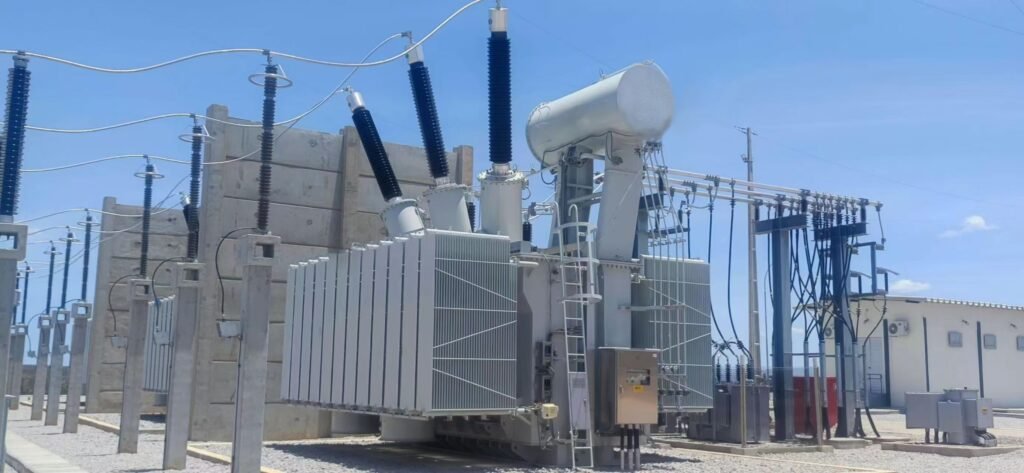
When purchasing power transformers, buyers often focus on price, technical specifications, and delivery promises while overlooking whether the manufacturer actually has sufficient production capacity. A supplier may accept a large order but lack adequate factory space, winding equipment, core-processing capability, skilled labor, testing resources, or production scheduling discipline. This can result in extended lead times, rushed manufacturing, quality problems, and costly project delays. A systematic capacity assessment helps buyers distinguish between a manufacturer that can genuinely execute the order and one that is simply willing to accept it.
Buyers can assess production capacity for power transformers by evaluating the manufacturer’s factory scale, annual and current production volume, key manufacturing equipment, workforce, production processes, testing facilities, raw-material availability, quality-control systems, and historical delivery performance. Buyers should also verify whether the supplier has sufficient capacity for the required transformer type, MVA rating, voltage class, quantity, and delivery schedule rather than relying only on stated annual output.
A reliable capacity evaluation should therefore go beyond asking, “How many transformers can you produce per year?” From a manufacturer and technical procurement perspective, the more important question is whether the supplier has available, qualified, and controllable capacity for your specific project at the required time. The following framework provides a practical way to evaluate that capability before placing an order.
Below is the article in the same established format, with the focus narrowed to the production capacity and manufacturing capability factors buyers should evaluate when sourcing power transformers.
What Production Capacity for Power Transformers Should Buyers Evaluate?
When purchasing power transformers, buyers often focus on price, rated capacity, delivery time, and technical specifications, but they may overlook the manufacturer's actual production capacity. A supplier that can produce a 5 MVA transformer may not have the manufacturing resources, testing capability, or production flexibility required for a large multi-unit project involving 50 MVA, 100 MVA, or hundreds of distribution transformers. Insufficient production capacity can result in long lead times, inconsistent quality, delayed projects, and weak after-sales support. Buyers should evaluate not only how many transformers a manufacturer can produce per year, but also its capacity by transformer type, MVA range, production equipment, core and winding capability, testing capacity, quality-control system, delivery performance, and ability to scale production for project-specific orders.
The right production-capacity evaluation should examine annual output, maximum transformer size, monthly production capability, manufacturing equipment, core-cutting and winding capacity, drying and oil-processing facilities, assembly space, routine and type-test capability, skilled engineering personnel, supply-chain strength, quality certifications, and historical delivery performance. Buyers should match the manufacturer's proven production capability with their required transformer quantity, rating, voltage class, customization level, and project schedule rather than relying on a supplier's total annual production figure alone.
Production capacity is therefore a measure of both quantity and capability. A factory producing 20,000 small distribution transformers annually is not automatically the right supplier for several large power transformers. The following criteria can help buyers assess whether a transformer manufacturer has the capacity and infrastructure required for their project.
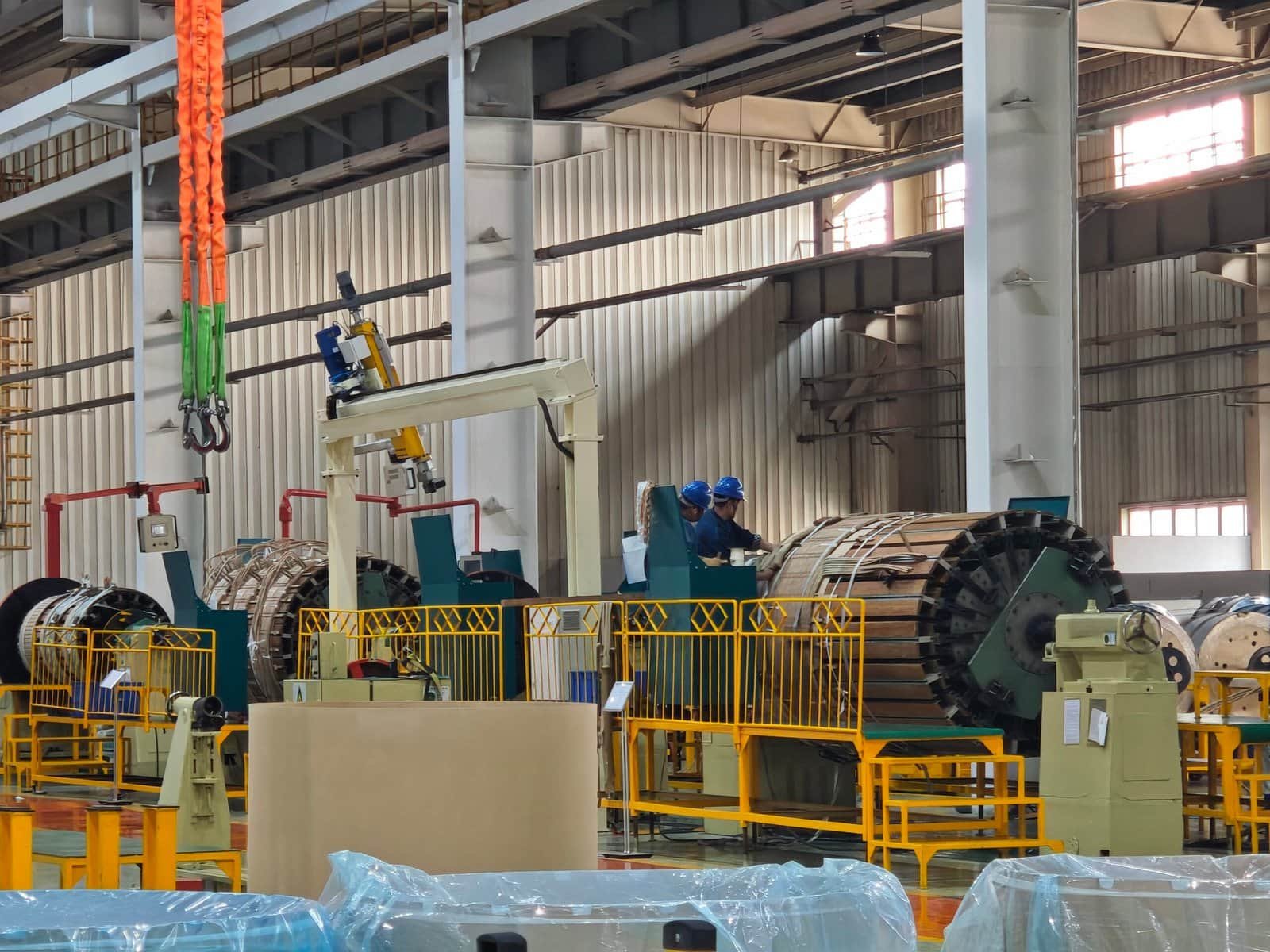
A manufacturer's total annual transformer output is enough to determine whether it is suitable for a buyer's project.False
Total output can hide major differences in transformer type, voltage class, MVA rating, customization, testing capability, production scheduling and proven delivery capacity.
How Should Buyers Evaluate a Manufacturer's Annual Production Capacity?
Annual production output is a useful starting point, but it should never be the only criterion. Manufacturers may report capacity in units per year, MVA per year, or a combination of transformer categories. These measurements are not directly comparable.
For example, a manufacturer producing 10,000 small distribution transformers annually may have a very high unit count but relatively limited capability for large power transformers. Conversely, a manufacturer producing several hundred high-value industrial transformers may have a lower unit count but substantially greater heavy-transformer manufacturing capability.
Buyers should therefore ask for a production-capacity breakdown.
| Capacity Indicator | What Buyers Should Check |
|---|---|
| Annual unit output | Total transformers produced per year |
| Annual MVA output | Total transformation capacity manufactured |
| Monthly capacity | Normal production volume |
| Peak capacity | Maximum sustainable output |
| Transformer categories | Distribution, dry-type, oil-immersed, power |
| Maximum rating | Largest proven transformer |
| Voltage capability | Highest proven voltage class |
| Customization | Engineering flexibility |
| Testing capacity | Ability to test completed units |
| Delivery history | Actual project performance |
The most valuable information is proven production capacity for transformers similar to the buyer's project.
Why Does Transformer Rating Matter When Evaluating Production Capacity?
Production capacity changes significantly with transformer size.
A factory manufacturing small dry-type transformers can often produce many units using relatively standardized production lines. Large oil-immersed power transformers require much more floor space, heavier lifting equipment, larger winding machines, controlled drying systems, oil treatment equipment, specialized assembly areas, and extensive testing facilities.
Consider a project requiring:
- 100 × 500 kVA distribution transformers;
- 10 × 5 MVA industrial transformers; or
- 2 × 50 MVA power transformers.
The numerical quantity alone does not tell the manufacturer's production burden.
A useful capacity evaluation should therefore ask:
How many transformers of this specific rating and configuration can the manufacturer produce within the required project schedule?
| Project Requirement | Capacity Question |
|---|---|
| 500 kVA × 100 units | Can the production line support repetitive volume? |
| 5 MVA × 10 units | Can heavy assembly be scheduled efficiently? |
| 50 MVA × 2 units | Has the manufacturer produced similar units before? |
| Mixed ratings | Can different production requirements be coordinated? |
| Customized units | Is engineering capacity sufficient? |
This distinction is particularly important for EPC projects and utility contracts where several transformers must be delivered according to a coordinated installation schedule.
What Manufacturing Equipment Should Buyers Evaluate?
Production capacity depends heavily on factory equipment. A manufacturer may claim substantial capacity, but inadequate machinery can become a bottleneck.
Important equipment includes:
- CNC or automated core-cutting systems;
- core stacking and assembly equipment;
- foil or wire winding machines;
- coil forming and pressing equipment;
- vacuum drying ovens;
- vacuum oil filling systems;
- transformer tank fabrication equipment;
- welding and leak-testing equipment;
- oil filtration and regeneration systems;
- overhead cranes and heavy lifting systems;
- electrical testing equipment.
For large transformers, lifting capacity is particularly important because completed units can become extremely heavy.
Core Processing
      ↓
Core Assembly
      ↓
Coil / Winding Production
      ↓
Insulation & Coil Assembly
      ↓
Drying / Vacuum Treatment
      ↓
Tank & Active-Part Assembly
      ↓
Oil Processing / Filling
      ↓
Electrical Testing
      ↓
Final Inspection
      ↓
Shipment
A factory with balanced capacity across these stages is generally better positioned to maintain consistent production schedules.
How Important Is Production-Line Balance?
A factory's overall capacity is limited by its bottleneck process.
For example, a manufacturer may have enough winding machines to produce 50 transformers per month but only one vacuum drying oven capable of processing 20 units per month. In that situation, the practical production capacity is closer to the drying-stage limitation than the winding-stage capacity.
Buyers should therefore evaluate production flow rather than counting machines individually.
| Production Stage | Potential Bottleneck |
|---|---|
| Core cutting | Cutting speed and material availability |
| Winding | Machine capacity and skilled operators |
| Coil assembly | Labor and tooling |
| Drying | Oven volume and cycle time |
| Tank fabrication | Welding and machining |
| Oil processing | Filtration and vacuum capacity |
| Testing | Test-bay availability |
| Packing | Finished-product handling |
This is especially important for large orders. A supplier with strong individual departments can still struggle if the production stages are poorly synchronized.
Should Buyers Evaluate Factory Testing Capacity?
Yes. Testing capacity is part of production capacity.
A transformer is not truly ready for delivery when assembly is complete. It must pass the required routine and project-specific tests before shipment.
Depending on transformer type and project requirements, buyers may require tests such as:
- winding resistance;
- transformer turns ratio;
- insulation resistance;
- applied-voltage testing;
- induced-voltage testing;
- no-load loss;
- load loss;
- impedance;
- dielectric tests;
- temperature-rise tests;
- partial-discharge testing;
- oil quality testing.
If a factory produces many transformers but has insufficient testing-bay capacity, completed transformers can accumulate in the factory while waiting for testing.
Therefore, buyers should ask about test-bay throughput and scheduling, not merely whether the supplier owns test equipment.
How Does Engineering Capacity Affect Production Capacity?
Production capacity is not only about machinery. Engineering resources determine how effectively a manufacturer can handle customized transformer orders.
A project may require special:
- voltage ratios;
- winding connections;
- impedance;
- tap ranges;
- enclosure designs;
- cooling arrangements;
- harmonic-duty requirements;
- seismic requirements;
- dimensions;
- terminal configurations;
- protection accessories.
A manufacturer with a strong engineering team can convert these requirements into production drawings, bills of materials, manufacturing instructions, inspection plans, and test procedures.
| Engineering Capability | Buyer Benefit |
|---|---|
| Electrical design | Correct transformer performance |
| Thermal design | Appropriate temperature control |
| Mechanical design | Reliable tank and structural integrity |
| Insulation design | Suitable dielectric performance |
| CAD/documentation | Consistent manufacturing |
| Testing engineering | Proper test procedures |
| Customization | Better project compatibility |
For customized power transformers, engineering capacity can become as important as physical factory capacity.
How Should Buyers Evaluate Delivery Capacity?
Production capacity should ultimately be measured by the manufacturer's ability to deliver the required transformers on schedule.
A supplier may have a theoretical annual capacity of 5,000 units but already have most of its production schedule committed. The buyer therefore needs to understand available capacity during the required production window.
Useful questions include:
- What is the current factory utilization rate?
- How many similar transformers are already in production?
- What is the normal monthly output for this transformer type?
- What is the maximum realistic monthly output?
- Can production be expanded for a project order?
- What are the longest-lead components?
- How much testing capacity is available?
- What is the historical on-time delivery rate?
A realistic production schedule is more valuable than a large theoretical capacity number.
What Production-Capacity Data Should Buyers Request?
For serious procurement, buyers should request a concise manufacturing-capability package.
| Information to Request | Purpose |
|---|---|
| Factory area | Indicates available manufacturing space |
| Annual output | Measures overall scale |
| Monthly output | Supports project scheduling |
| Maximum transformer rating | Confirms technical capability |
| Maximum voltage class | Confirms electrical capability |
| Winding equipment | Evaluates coil-production capability |
| Core equipment | Evaluates core-processing capability |
| Drying equipment | Evaluates insulation-processing capacity |
| Crane capacity | Confirms heavy-transformer handling |
| Test equipment | Confirms testing capability |
| Test-bay capacity | Identifies testing bottlenecks |
| Engineering team | Confirms customization capability |
| Production schedule | Determines actual availability |
| Delivery history | Validates claimed capacity |
This information allows buyers to distinguish between nominal capacity and proven capacity.
What Is the Difference Between Theoretical and Proven Production Capacity?
This distinction is critical.
Theoretical capacity represents what a factory might produce under ideal conditions with maximum utilization.
Proven capacity represents what the manufacturer has repeatedly produced while maintaining quality, testing, delivery, and workforce stability.
For procurement purposes, proven capacity is usually more meaningful.
For example, if a manufacturer states that it can produce 1,000 transformers per month but its historical output is only 500 units per month, buyers should investigate the reason for the difference before relying on the higher figure.
The same principle applies to large power transformers. A supplier may have the factory space and machinery required for a 100 MVA transformer, but buyers should ask whether the manufacturer has actually designed, tested, and delivered comparable units.
How Should Buyers Match Production Capacity to Their Project?
A simple evaluation framework is:
Buyer Requirement
      ↓
Transformer Type
      ↓
Transformer Rating
      ↓
Quantity
      ↓
Required Delivery Window
      ↓
Required Customization
      ↓
Factory Production Capacity
      ↓
Testing Capacity
      ↓
Supply-Chain Capacity
      ↓
Proven Delivery Performance
The manufacturer should demonstrate sufficient capacity at every critical stage.
For example, a buyer ordering 30 customized 2.5 MVA transformers for delivery within six months should not ask only, “Can you make 30 units?” A better question is:
“Can you manufacture, test, document, and deliver 30 transformers of this exact configuration within six months while maintaining the specified quality requirements?”
That question provides a much more meaningful assessment of supplier capability.
What Warning Signs Should Buyers Watch For?
Buyers should investigate further when a supplier:
- cannot provide a clear capacity breakdown;
- reports only total annual unit production;
- has no evidence of similar transformer projects;
- cannot explain its testing capacity;
- cannot provide a realistic production schedule;
- depends heavily on a single critical machine;
- has unusually long or uncertain lead times;
- has weak engineering documentation;
- cannot identify major production bottlenecks;
- promises unusually high output without supporting evidence.
These issues do not automatically mean that a manufacturer is unsuitable, but they indicate that additional due diligence is appropriate.
How Can Buyers Verify Factory Equipment and Production Capacity for Power Transformers?
Many power transformer buyers rely on supplier brochures, equipment lists, factory photos, or claimed annual output when evaluating a manufacturer. The problem is that these materials may show what a factory owns, not what it can actually produce, test, and deliver consistently. A factory can have modern winding machines but still have bottlenecks in core processing, vacuum drying, tank fabrication, assembly, or final testing. If buyers verify production capability only from a written quotation, they may discover capacity limitations after placing the order. A more reliable approach is to verify the factory through equipment records, on-site inspection, production-flow observation, test-capacity checks, sample documentation, and evidence of comparable completed projects.
Buyers can verify factory equipment and production capacity for power transformers by combining document review, factory audits, physical equipment inspection, production-process observation, testing-capacity verification, workforce assessment, and historical delivery evidence. Key items to verify include core-cutting machines, winding equipment, vacuum drying systems, oil-processing facilities, tank fabrication equipment, lifting capacity, electrical test equipment, test-bay throughput, factory utilization, maximum proven transformer rating, and actual production records for transformers similar to the buyer's project.
The objective is not to count machines. It is to determine whether the manufacturer's real and proven capacity matches the required transformer type, rating, quantity, customization level, quality requirements, and delivery schedule.
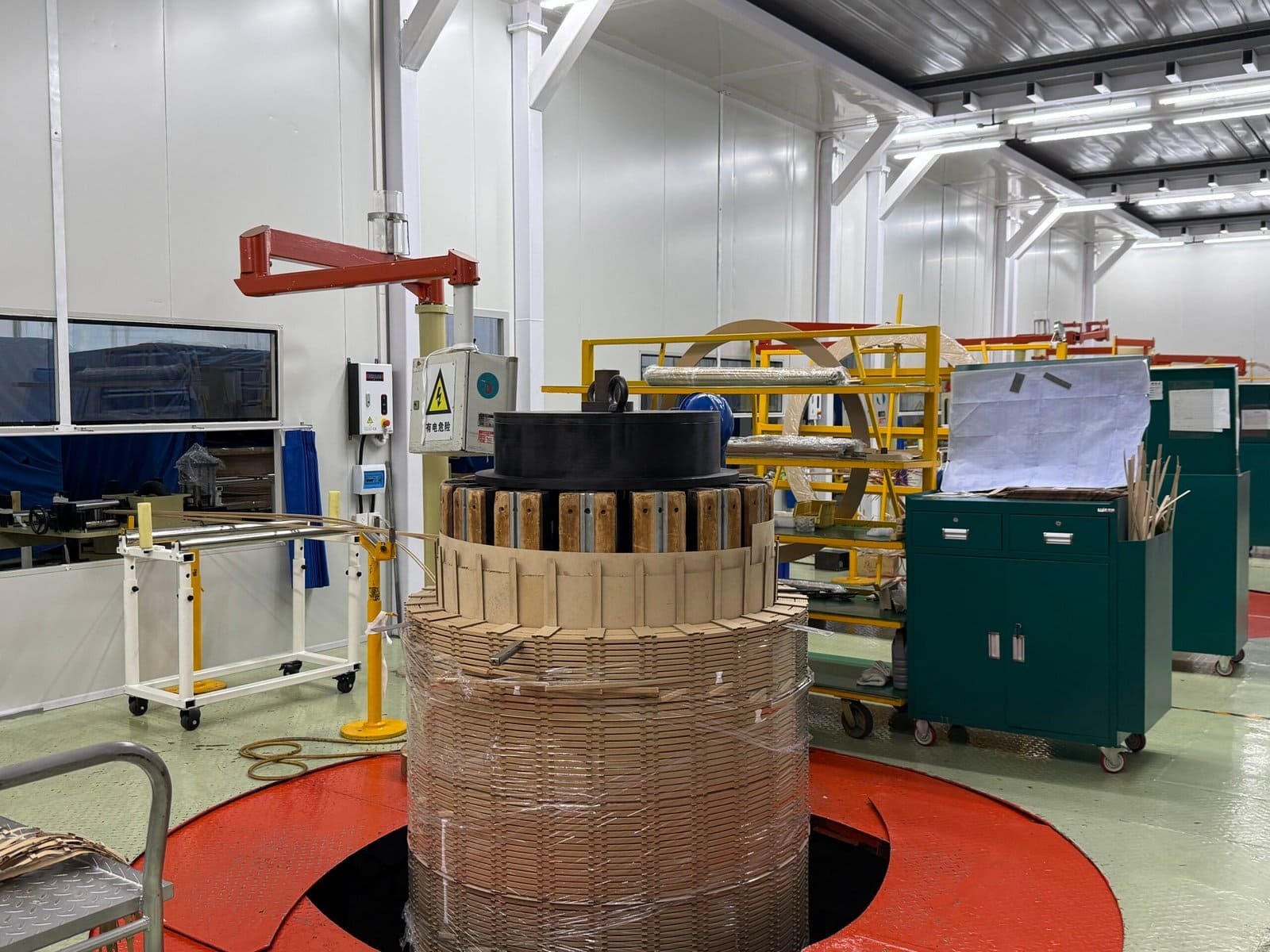
A supplier's equipment list and annual production figure are sufficient proof of actual transformer manufacturing capacity.False
Equipment lists and capacity figures should be verified through physical inspection, production records, testing capability, comparable project evidence, workforce resources, and delivery history.
What Factory Documents Should Buyers Verify First?
Before arranging a factory visit, buyers should request a basic manufacturing capability package. This makes the subsequent audit more efficient because the buyer can compare declared capability with physical conditions.
Important documents include the factory profile, equipment list, transformer product range, production-flow chart, quality certificates, test-equipment list, typical manufacturing schedules, and references for comparable projects.
Buyers should pay particular attention to whether the stated equipment corresponds to the transformers being purchased. A manufacturer producing small dry-type transformers does not automatically have the capability to manufacture large oil-immersed power transformers.
| Document | What Buyers Should Verify |
|---|---|
| Factory profile | Actual manufacturing scope |
| Equipment list | Equipment type, quantity and capacity |
| Product catalog | Transformer rating and voltage range |
| Production flow | Complete manufacturing sequence |
| Test-equipment list | Required testing capability |
| Quality certificates | Validity and scope |
| Project references | Comparable transformer experience |
| Production records | Actual historical output |
| Delivery records | Ability to meet schedules |
A good document review creates a baseline for the factory audit.
Which Factory Equipment Is Most Important to Inspect?
For power transformers, buyers should focus on equipment that directly determines manufacturing quality and throughput.
Core-processing equipment is important because core geometry and assembly influence magnetic performance and losses. Buyers should inspect whether the factory has suitable automatic or CNC core-cutting equipment, stacking facilities, clamping systems, and dimensional-control tools.
For winding production, inspect wire or foil winding machines, tension-control systems, winding fixtures, pressing equipment, and conductor-handling capability.
For insulation processing, vacuum drying and heating systems deserve particular attention. Transformer insulation must be properly dried and processed because residual moisture can negatively affect dielectric performance and long-term reliability.
Core Processing
      ↓
Winding / Coil Production
      ↓
Insulation Assembly
      ↓
Vacuum Drying
      ↓
Active-Part Assembly
      ↓
Tank Fabrication
      ↓
Oil Processing / Filling
      ↓
Electrical Testing
      ↓
Final Inspection
The factory should have sufficient capacity across the entire production chain, not merely one impressive machine.
How Can Buyers Verify That Equipment Is Actually Operational?
Physical presence does not prove production capability. Buyers should determine whether critical equipment is operational and routinely used.
During an on-site audit, inspect:
- equipment nameplates;
- manufacturer and model;
- rated capacity;
- installation condition;
- maintenance records;
- calibration records where applicable;
- operating status;
- recent production activity;
- operator competency;
- production records associated with the equipment.
For example, if a supplier claims that it can manufacture a 50 MVA transformer but the largest winding machine is clearly designed for much smaller coils, this should trigger further technical investigation.
A particularly useful question is:
“Can you show us a recently completed transformer of similar rating and the production records associated with it?”
This connects equipment claims to actual manufacturing evidence.
How Should Buyers Verify Production Capacity?
Production capacity should be evaluated against the specific project, not the factory's total output.
Suppose a buyer needs 40 transformers of a particular configuration within eight months. The relevant questions are:
- How many similar units does the factory normally produce per month?
- What is its current order backlog?
- How many production lines are available?
- What are the critical bottlenecks?
- Can the required quantity be produced without excessive overtime?
- Does testing capacity support the same output?
- Are critical components available on schedule?
| Capacity Metric | Why It Matters |
|---|---|
| Annual output | Shows overall manufacturing scale |
| Monthly output | Useful for project scheduling |
| Maximum proven rating | Confirms technical capability |
| Current utilization | Indicates available capacity |
| Existing backlog | Shows actual production availability |
| Similar-unit output | Strong evidence of project suitability |
| Test-bay throughput | Prevents testing delays |
| Lead time | Connects capacity to delivery |
Proven monthly production of comparable transformers is generally more useful than a large theoretical annual capacity figure.
Why Should Buyers Inspect the Testing Laboratory?
Testing is an essential part of transformer production capacity. A factory may complete mechanical assembly quickly but still experience delays if its test laboratory cannot process the required number of units.
Depending on the transformer and project specification, buyers may need to verify equipment for tests such as:
- winding resistance;
- turns ratio;
- insulation resistance;
- no-load loss;
- load loss;
- impedance;
- dielectric tests;
- induced-voltage tests;
- partial discharge;
- temperature rise;
- oil quality.
Buyers should verify not only whether the test equipment exists, but also whether it has sufficient rating, calibration, operating condition, and throughput.
For large power transformers, test facilities should be appropriate for the voltage, power rating, and required dielectric tests of the equipment being manufactured.
How Can Buyers Detect Factory Bottlenecks?
One of the most valuable purposes of a factory audit is identifying the bottleneck process.
For example, a manufacturer may have several winding machines but only one large vacuum drying oven. If drying requires a long cycle, that oven may determine the actual production rate.
Other potential bottlenecks include:
- large transformer winding;
- core assembly;
- vacuum drying;
- tank welding;
- oil processing;
- heavy lifting;
- final assembly;
- high-voltage testing.
A simple audit should therefore map capacity across the complete manufacturing process.
Declared Capacity
       ↓
Core Capacity
       ↓
Winding Capacity
       ↓
Drying Capacity
       ↓
Assembly Capacity
       ↓
Testing Capacity
       ↓
Shipping Capacity
       ↓
Actual Project Capacity
The final figure should reflect the weakest critical stage rather than the most productive machine.
How Important Are Factory Cranes and Handling Equipment?
For medium and large power transformers, heavy lifting capability can directly limit production.
Buyers should inspect:
- overhead crane capacity;
- crane quantity;
- lifting height;
- factory bay dimensions;
- transformer transportation routes;
- loading equipment;
- floor loading capability.
A factory may technically have the ability to manufacture a large transformer but lack adequate handling equipment to safely assemble or move it.
This is why physical factory dimensions and lifting infrastructure should be evaluated alongside electrical and manufacturing equipment.
Should Buyers Verify Workforce and Engineering Resources?
Yes. Machines alone cannot guarantee production capacity.
Power transformer manufacturing requires experienced personnel in electrical design, winding, insulation, mechanical assembly, welding, drying, oil processing, testing, quality control, and project management.
For customized transformers, engineering resources become particularly important because each project may require design calculations and manufacturing documentation.
Buyers can ask for:
| Personnel Area | Capability to Verify |
|---|---|
| Electrical engineering | Transformer design and calculations |
| Mechanical engineering | Tank and structural design |
| Production | Manufacturing experience |
| Testing | Test execution and interpretation |
| Quality | Inspection and documentation |
| Project management | Schedule coordination |
| Skilled operators | Equipment operation |
A factory with strong equipment but insufficient experienced personnel may still struggle with complex orders.
What Production Records Should Buyers Request?
Historical production evidence is one of the strongest ways to verify capacity.
Buyers can request anonymized records showing:
- transformer model;
- rated capacity;
- production date;
- quantity;
- testing completion;
- shipment date.
The buyer does not necessarily need commercially confidential customer information. The objective is to establish that the manufacturer has repeatedly produced and delivered transformers comparable to the requested project.
A useful verification matrix is:
| Buyer Requirement | Evidence to Request |
|---|---|
| 2.5 MVA transformer | Previous 2.5 MVA production records |
| 33 kV primary | Comparable voltage-class projects |
| 20 units/month | Historical monthly output |
| Six-month delivery | Previous similar schedules |
| Custom winding | Engineering drawings |
| Special testing | Completed test reports |
| Outdoor installation | Comparable completed projects |
This transforms a supplier's marketing claim into something that can be independently assessed.
What Should Buyers Observe During a Factory Visit?
A factory visit should not be limited to a showroom or finished-product area. Buyers should walk through the complete production process.
A practical audit route is:
Raw Materials
     ↓
Core Workshop
     ↓
Winding Workshop
     ↓
Insulation / Coil Assembly
     ↓
Drying Area
     ↓
Tank Workshop
     ↓
Final Assembly
     ↓
Testing Laboratory
     ↓
Finished Transformer Area
     ↓
Loading / Shipment
During the visit, compare actual production activity with the manufacturer's declared capacity.
If several similar transformers are simultaneously moving through different production stages, that provides useful evidence of production flow and project-handling capability.
What Are the Red Flags During a Factory Audit?
Buyers should investigate further if they find:
- equipment that appears unused or poorly maintained;
- production capacity claims unsupported by records;
- no clear production-flow system;
- inadequate testing facilities;
- insufficient crane capacity;
- major dependence on one critical machine;
- very high factory utilization with little available capacity;
- large differences between declared and observed production;
- limited experience with the requested transformer rating;
- inability to provide comparable project evidence.
One red flag does not automatically disqualify a supplier, but multiple inconsistencies should trigger deeper due diligence.
How Can Buyers Score a Transformer Manufacturer?
A structured scoring system can make supplier comparison more objective.
| Evaluation Category | Suggested Importance |
|---|---|
| Relevant transformer experience | Very High |
| Proven production capacity | Very High |
| Testing capability | Very High |
| Equipment condition | High |
| Engineering resources | High |
| Quality system | High |
| Supply-chain reliability | High |
| Delivery history | High |
| Factory organization | Medium |
| General annual output | Medium |
The exact weighting should depend on project complexity. For a large customized power-transformer project, proven technical capability and testing resources should generally receive more attention than simple unit-output figures.
How Should Buyers Assess Workforce and Manufacturing Processes for Power Transformer Production Capacity?
A power transformer factory can have modern equipment and a large production floor yet still fail to deliver consistent quality or volume if it lacks enough qualified engineers, skilled operators, inspectors, testers, and production managers. Poor workforce planning or weak manufacturing processes can create bottlenecks in winding, insulation, core assembly, drying, tank fabrication, testing, and final inspection, leading to delays, rework, inconsistent quality, and missed project deadlines. Buyers should therefore assess production capacity as a combination of workforce capability and process capability, verifying whether the manufacturer has enough qualified personnel, standardized manufacturing procedures, process controls, quality checkpoints, testing resources, and production planning capacity to repeatedly manufacture the required transformer type and rating on schedule.
The best assessment combines workforce verification with a step-by-step review of the manufacturing process. Buyers should evaluate the number and experience of electrical and mechanical engineers, winding and assembly technicians, welders, quality inspectors, testing personnel, and project managers, while also checking documented procedures, production-line balance, material traceability, in-process inspections, drying and vacuum treatment, testing, rework controls, and production records. The key question is whether the factory can consistently convert labor, equipment, materials, and engineering resources into qualified transformers at the required quantity, rating, quality, and delivery speed.
For buyers, the goal is not simply to count employees or observe a clean workshop. The real objective is to determine proven manufacturing capacity under normal operating conditions and identify potential bottlenecks before awarding the order.
A large number of factory employees automatically means a manufacturer has high power transformer production capacity.False
Production capacity depends on workforce skills, process organization, equipment, engineering capability, testing throughput, productivity, quality controls, and bottleneck management rather than headcount alone.
How Should Buyers Evaluate the Transformer Manufacturing Workforce?
Workforce evaluation should begin with the personnel directly involved in transformer design and production. Different transformer types require different skill sets, so buyers should determine whether the manufacturer has relevant experience rather than simply asking for the total number of employees.
A factory producing standardized distribution transformers may depend heavily on repetitive production skills, while a manufacturer producing customized medium- and high-voltage power transformers needs stronger electrical design, insulation engineering, mechanical engineering, testing, and project-management capabilities.
Key personnel normally include:
| Workforce Area | What Buyers Should Assess |
|---|---|
| Electrical engineers | Transformer design and electrical calculations |
| Mechanical engineers | Tank, structure and assembly design |
| Core technicians | Core cutting and stacking accuracy |
| Winding technicians | Winding quality and tension control |
| Assembly technicians | Active-part and insulation assembly |
| Welders | Tank integrity and dimensional quality |
| Quality inspectors | In-process and final inspection |
| Test engineers | Electrical and dielectric testing |
| Production managers | Scheduling and workflow control |
| Project managers | Customer coordination and delivery |
Buyers should ask how many qualified personnel are available for the specific transformer category being purchased and whether the factory can maintain staffing during periods of high production demand.
Why Are Skilled Winding and Insulation Personnel So Important?
Winding is one of the most technically sensitive manufacturing stages. Conductor dimensions, winding tension, layer arrangement, insulation placement, axial and radial dimensions, pressing, and mechanical stability all affect transformer performance.
A factory may have sophisticated winding machines, but operators still need to understand the manufacturing parameters and recognize abnormalities.
Insulation work is similarly important. Incorrect insulation placement, contamination, dimensional errors, or inadequate drying can affect dielectric performance and long-term reliability.
A buyer auditing workforce capability should therefore look for evidence of:
- operator training;
- work instructions;
- equipment-specific qualifications;
- inspection checkpoints;
- winding parameter records;
- insulation inspection;
- operator experience with comparable transformer ratings.
The question is not merely “How many winding machines do you have?” It is also “How many trained operators can reliably operate those machines for our required transformer configuration?”
How Should Buyers Examine the Manufacturing Process?
A professional assessment should follow the transformer through its entire manufacturing route.
Engineering Design
       ↓
Material Procurement & Inspection
       ↓
Core Processing
       ↓
Core Assembly
       ↓
Winding / Coil Production
       ↓
Insulation & Coil Assembly
       ↓
Drying / Vacuum Treatment
       ↓
Active-Part Assembly
       ↓
Tank Fabrication
       ↓
Final Assembly
       ↓
Oil Filling / Processing
       ↓
Electrical Testing
       ↓
Final Inspection
       ↓
Shipment
At each stage, buyers should identify three things:
- Who performs the work?
- What equipment and procedure are used?
- How is quality verified before the product moves forward?
This approach reveals process weaknesses that may not be visible from a factory brochure.
What Manufacturing Process Controls Should Buyers Verify?
Standardized procedures are important because transformer quality should not depend entirely on individual operator experience.
Buyers should ask whether the manufacturer has documented work instructions for critical operations and whether operators actually follow them.
Useful process controls include:
| Process | Example Control |
|---|---|
| Core assembly | Dimensional and stacking inspection |
| Winding | Tension, dimensions and turn-count control |
| Insulation | Material and dimensional inspection |
| Coil pressing | Controlled compression |
| Drying | Temperature, vacuum and time records |
| Tank fabrication | Welding and leak inspection |
| Oil processing | Moisture and dielectric-quality checks |
| Assembly | Torque and connection verification |
| Testing | Calibrated test equipment and documented results |
The strongest evidence is recorded process data, not simply a statement that procedures exist.
How Can Buyers Identify Manufacturing Bottlenecks?
Production capacity is usually constrained by one or more bottleneck processes.
For example, a factory may have enough personnel and winding machines for 30 transformers per month but only enough vacuum-drying capacity for 15 units. The drying process then becomes the practical production constraint.
Buyers should compare the approximate throughput of each major stage.
Core ──────── 40 units/month
Winding ───── 35 units/month
Assembly ──── 30 units/month
Drying ────── 18 units/month  ← Bottleneck
Testing ───── 25 units/month
Shipping ──── 30 units/month
The factory's sustainable output cannot realistically exceed the critical bottleneck without changing the process.
This is why asking “What is your annual capacity?” is less useful than asking “What limits your monthly production capacity?”
How Important Is Production Planning?
A capable workforce can still be ineffective if production planning is weak.
Buyers should evaluate how the manufacturer schedules:
- raw materials;
- engineering release;
- core production;
- winding;
- drying;
- assembly;
- testing;
- inspection;
- packaging;
- shipment.
For large projects, production planning should also account for customer inspection points and factory acceptance testing.
A good production schedule connects each transformer to a manufacturing status rather than treating the entire order as one undifferentiated batch.
| Planning Element | Buyer Benefit |
|---|---|
| Production schedule | Visibility of progress |
| Material planning | Reduces material delays |
| Workforce allocation | Avoids labor bottlenecks |
| Equipment scheduling | Prevents machine conflicts |
| Testing schedule | Reduces finished-product waiting |
| Inspection planning | Supports quality verification |
| Shipping planning | Protects delivery dates |
Should Buyers Examine Quality-Control Personnel Separately?
Yes. Quality personnel should have sufficient independence and technical capability to identify problems before transformers leave the factory.
Buyers should determine whether inspectors are involved throughout production or only at final inspection.
Important checkpoints may include:
- incoming material inspection;
- core inspection;
- winding inspection;
- insulation inspection;
- assembly inspection;
- tank inspection;
- oil inspection;
- electrical testing;
- final documentation review.
A factory that relies almost entirely on final inspection may discover defects late, when correction is expensive.
A stronger manufacturing system uses in-process quality control, preventing defects from moving to the next stage.
How Can Buyers Verify Actual Workforce Productivity?
Headcount alone is difficult to interpret. Buyers should compare workforce size with historical output and transformer complexity.
Useful evidence includes:
- monthly production records;
- average manufacturing hours;
- number of active production teams;
- overtime levels;
- rework rates;
- production efficiency trends;
- absenteeism and turnover;
- completed projects of comparable size.
For example, a supplier producing a small number of highly customized 50 MVA transformers cannot be evaluated using the same productivity metrics as a supplier producing thousands of standardized distribution transformers.
The best benchmark is output per production team for comparable transformer products.
What Warning Signs Should Buyers Watch For?
Several findings deserve additional investigation during a workforce and process audit:
- critical processes depend on one or two individuals;
- operators cannot explain their work instructions;
- production records are incomplete;
- high dependence on overtime;
- frequent rework;
- testing is routinely delayed;
- engineering changes are poorly controlled;
- quality inspections occur only at the end;
- production schedules do not identify bottlenecks;
- the factory cannot demonstrate comparable completed projects.
None of these findings alone proves that a supplier is unsuitable, but several together can indicate that the manufacturer's claimed production capacity is higher than its sustainable capacity.
What Evidence Should Buyers Request Before Placing an Order?
A practical supplier evaluation should combine personnel evidence, process evidence, and historical production evidence.
| Evidence | What It Confirms |
|---|---|
| Organization chart | Workforce structure |
| Engineering team profile | Technical capability |
| Training records | Operator competence |
| Production procedures | Process standardization |
| Monthly output records | Actual capacity |
| Production schedules | Planning capability |
| Inspection records | Quality control |
| Test reports | Testing capability |
| Rework records | Process stability |
| Comparable project references | Proven experience |
For sensitive commercial information, suppliers can provide anonymized records. The purpose is to verify capability, not to obtain confidential customer data.
How Should Buyers Score Workforce and Process Capability?
A simple audit scorecard can make supplier comparisons more objective.
| Evaluation Category | Priority |
|---|---|
| Comparable transformer experience | Very High |
| Skilled workforce | Very High |
| Engineering capability | Very High |
| Manufacturing-process controls | Very High |
| Testing personnel and capacity | Very High |
| Production planning | High |
| Quality-control system | High |
| Bottleneck management | High |
| Workforce stability | Medium |
| General employee count | Low |
This weighting reflects an important principle: quality and relevant capability are more meaningful than raw factory size.
How Can Buyers Evaluate Testing Facilities and Quality Systems When Assessing Power Transformer Production Capacity?
A transformer factory may have impressive production equipment and a large workforce, but if its testing laboratory cannot handle the required voltage, capacity, accuracy, or test volume, its real production capacity is much lower than the advertised figure. The same problem occurs when a quality system exists only on paper: poor incoming-material control, weak process inspection, inadequate calibration, or incomplete traceability can create rework and delivery delays. Buyers should therefore evaluate testing facilities and quality systems as part of production capacity, not as separate compliance items. The key is to verify whether the manufacturer can consistently manufacture, inspect, test, document, and release transformers at the required technical level and production volume.
Buyers should evaluate a transformer manufacturer's testing facilities by checking test equipment ratings, measurement accuracy, calibration traceability, test-bay capacity, qualified testing personnel, applicable routine/type/special tests, historical test reports, and the laboratory's ability to handle the buyer's actual transformer voltage and MVA range. They should also audit the quality system from incoming materials through manufacturing, testing, nonconformance control, final inspection, and shipment. A valid QMS certification is useful evidence, but actual process records and factory practices provide stronger evidence of production capability.
For a serious transformer procurement project, the objective is simple: determine whether the factory has enough testing capacity and process-control maturity to support its claimed manufacturing output without sacrificing quality or delivery performance.
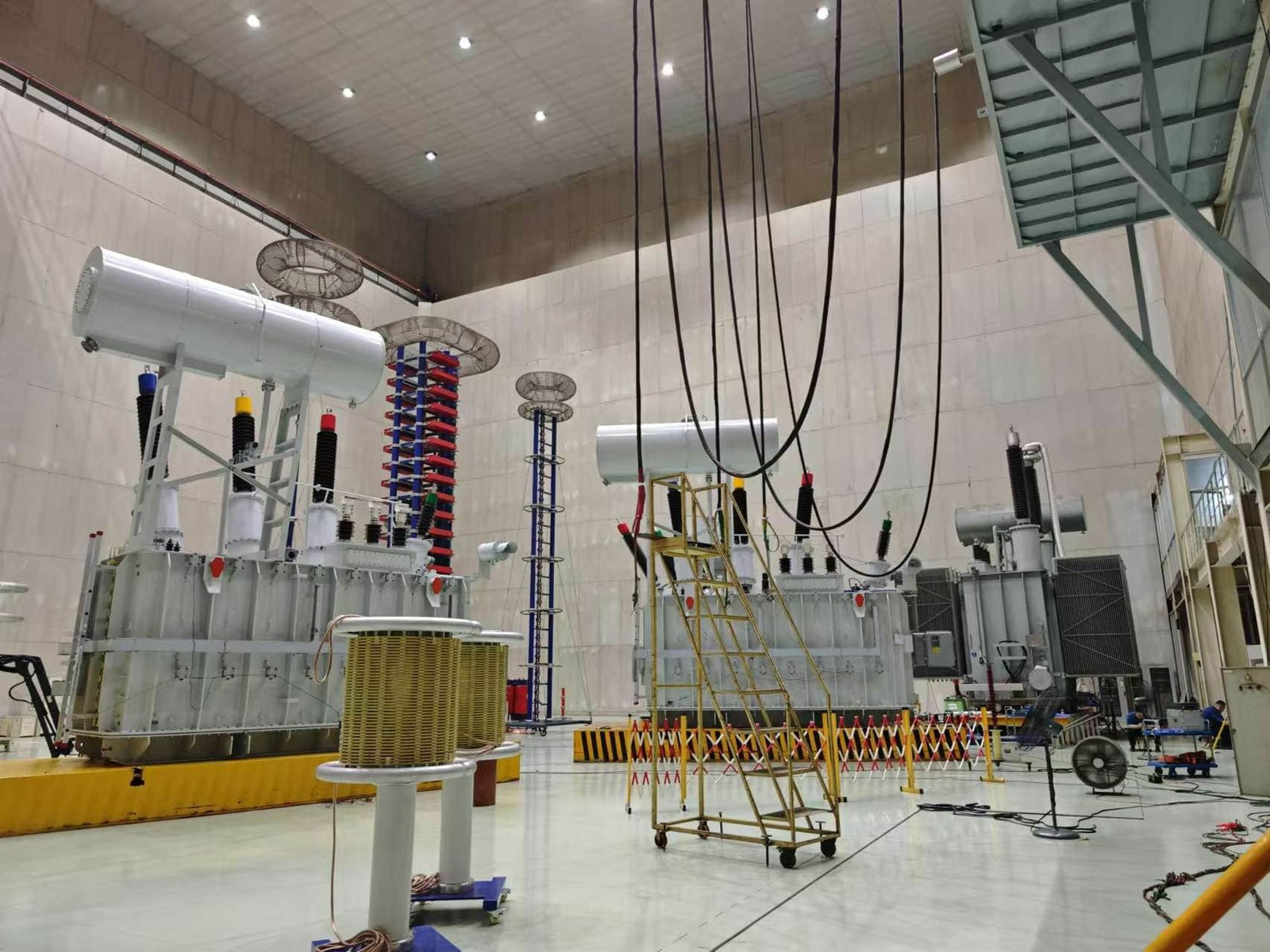
ISO 9001 certification proves that a transformer manufacturer can produce and test any required power transformer.False
ISO 9001 addresses quality-management-system requirements, but it does not by itself prove a manufacturer's transformer rating range, test-bay capability, equipment capacity, engineering competence, or experience with a specific transformer design.
Why Should Testing Capacity Be Included in Production Capacity?
A transformer is not production-ready simply because mechanical assembly has been completed. It must pass the required inspections and tests before it can be released.
This means a factory's effective production flow is closer to:
Manufacturing
      ↓
In-Process Inspection
      ↓
Final Assembly
      ↓
Routine Testing
      ↓
Customer / Special Tests
      ↓
Quality Review
      ↓
Release for Shipment
If the manufacturing workshop can complete 30 transformers per month but the test laboratory can process only 15 comparable units, the factory's practical delivery capacity may be closer to 15 units per month.
Testing can therefore become a hidden production bottleneck.
IEC transformer standards include defined testing requirements, and IEC publications also address measurement uncertainty for transformer loss measurements.
What Testing Equipment Should Buyers Inspect?
The exact test equipment depends on transformer type, rating, voltage class, and project specification, but buyers should verify that the laboratory can perform the tests actually required for the project.
Typical equipment may include:
| Testing Equipment | What Buyers Should Verify |
|---|---|
| Transformer turns-ratio tester | Voltage/range and accuracy |
| Winding-resistance tester | Current range and measurement accuracy |
| Insulation-resistance tester | Test voltage and condition |
| No-load loss system | Capacity and measurement accuracy |
| Load-loss/impedance system | Maximum test current and power |
| AC dielectric test system | Voltage capability |
| Induced-voltage system | Frequency and voltage capability |
| Partial-discharge system | Applicable voltage and sensitivity |
| Oil test equipment | Moisture, breakdown and related parameters |
| Temperature-rise facilities | Applicable transformer rating |
| Impulse test system | Required impulse-voltage capability |
The most important question is not “Do you have this instrument?” but “Can this laboratory test our exact transformer under the required test conditions?”
How Can Buyers Verify Test Equipment Is Reliable?
Testing equipment should be inspected for more than physical presence.
Buyers should review:
- equipment nameplates;
- manufacturer and model;
- measurement range;
- accuracy;
- calibration status;
- calibration certificates;
- maintenance records;
- software version where relevant;
- test history;
- operator qualifications.
For measurement-intensive tests, traceability is particularly important. IEC 60076-19-1:2023 specifically addresses uncertainty in measuring no-load and load losses during routine transformer tests, including measurement systems and corrections for known errors.
This is important because inaccurate loss measurements can affect both transformer acceptance and efficiency evaluation.
How Should Buyers Evaluate Test-Bay Capacity?
Test-bay capacity should be assessed according to the transformer's voltage, MVA rating, physical dimensions, and required test sequence.
For example, a factory may have excellent low-voltage distribution-transformer testing equipment but limited capability for large medium- or high-voltage transformers.
Buyers should ask:
- What is the maximum transformer rating normally tested?
- What is the maximum test voltage?
- How many transformers can be tested per month?
- How long does a complete test sequence normally take?
- Is the test bay currently operating near full utilization?
- Are special tests performed in-house or outsourced?
- Can customer witness testing be scheduled without disrupting production?
| Capacity Factor | Why It Matters |
|---|---|
| Maximum test voltage | Confirms voltage-class capability |
| Maximum test power/current | Confirms MVA capability |
| Test-bay dimensions | Determines physical compatibility |
| Test cycle time | Affects production throughput |
| Number of test bays | Indicates parallel capacity |
| Personnel per shift | Affects operating availability |
| Calibration status | Supports measurement reliability |
| Outsourced tests | May extend lead time |
A factory that must outsource critical tests may still be capable, but buyers should understand the additional scheduling and logistics risks.
What Quality-System Documents Should Buyers Review?
A quality system should control the entire production process rather than merely inspect finished transformers.
ISO describes ISO 9001 as a quality-management framework covering areas including resources, competence, documented information, operational control, performance evaluation, and continual improvement.
For transformer procurement, buyers should examine how those principles are implemented in actual manufacturing.
Important documents include:
| Quality Document | What It Demonstrates |
|---|---|
| Quality manual | Overall QMS structure |
| Inspection plan | Defined quality checkpoints |
| Incoming inspection records | Material control |
| Process inspection records | Manufacturing consistency |
| Calibration records | Measurement reliability |
| Nonconformance reports | Problem management |
| Corrective-action records | Root-cause improvement |
| Final inspection reports | Release control |
| Test reports | Product conformity |
| Material certificates | Traceability |
| Customer complaint records | After-sales quality management |
The buyer should compare the documents with actual factory practices during an audit.
How Important Is Incoming-Material Quality Control?
Transformer quality starts before production.
Critical materials may include:
- electrical steel;
- copper or aluminum conductors;
- insulation paper and pressboard;
- insulating liquid;
- bushings;
- tap changers;
- cooling components;
- gaskets and sealing materials;
- protection accessories.
Buyers should determine whether materials are inspected when they arrive and whether their certificates and batch information are traceable to the finished transformer.
A strong system should answer:
Which material batch was used in this transformer, who inspected it, what was the inspection result, and where is that record stored?
Traceability becomes especially important when a project contains many transformers.
How Can Buyers Evaluate In-Process Quality Control?
Final testing cannot compensate for weak manufacturing controls.
Buyers should identify quality checkpoints during:
- core assembly;
- winding;
- insulation installation;
- coil pressing;
- active-part assembly;
- lead connection;
- tank welding;
- vacuum drying;
- oil filling;
- final assembly.
For each checkpoint, determine:
Process
  ↓
Specified Parameter
  ↓
Inspection Method
  ↓
Measured Result
  ↓
Acceptance Criteria
  ↓
Record / Traceability
This structure reduces dependence on individual worker judgment and provides evidence that production is controlled.
How Should Buyers Assess Nonconformance and Rework?
A quality system is not proven by having zero reported problems. It is proven by how effectively problems are identified, analyzed, corrected, and prevented from recurring.
Buyers should ask to see anonymized examples of:
- nonconformance reports;
- root-cause analysis;
- corrective actions;
- preventive measures;
- rework records;
- customer complaints;
- closure verification.
A factory with a documented corrective-action process can often manage production problems more effectively than a factory that simply hides defects until final inspection.
Important questions include:
- How are defects identified?
- Who has authority to stop production?
- How is root cause determined?
- How is corrective action verified?
- Are recurring problems statistically tracked?
Can Buyers Use Test Reports to Verify Production Capacity?
Yes. Historical test reports are valuable evidence because they connect the factory's equipment, personnel, manufacturing process, and final product.
Buyers should request anonymized reports from transformers comparable to the intended order.
For example:
| Project Requirement | Evidence to Request |
|---|---|
| 2 MVA transformer | Comparable 2 MVA test report |
| 33 kV primary | Comparable voltage-class report |
| Low-loss design | Loss measurement report |
| Special impedance | Impedance/load-loss report |
| Customer witness testing | Previous FAT documentation |
| Large production order | Multiple-unit test records |
The purpose is not to obtain confidential customer information. It is to confirm that the manufacturer has actually tested comparable transformers successfully.
How Can Buyers Identify Testing or Quality Bottlenecks?
A useful factory audit should connect production output with test output.
Manufacturing Capacity
        30 units/month
              ↓
Final Assembly
        28 units/month
              ↓
Routine Testing
        20 units/month  ← Bottleneck
              ↓
Special Testing
        15 units/month  ← Possible Bottleneck
              ↓
Final Release
If special testing is required for every unit, the lowest-throughput stage may determine the actual project schedule.
This is particularly important for customized transformers, where additional testing and documentation may require significantly more laboratory time than standard products.
What Are the Biggest Red Flags?
Buyers should investigate further when:
- test equipment has expired calibration;
- instruments are present but rarely used;
- the factory cannot demonstrate comparable test reports;
- critical tests are routinely outsourced without schedule control;
- test-bay capacity is unclear;
- operators cannot explain test procedures;
- quality records are incomplete;
- material traceability is weak;
- nonconformance records are unavailable;
- production numbers are much higher than testing throughput;
- the supplier provides certificates but cannot explain their scope or validity.
A certificate should be treated as evidence to verify, not as a substitute for technical due diligence.
How Should Buyers Score Testing and Quality Capability?
A practical supplier scorecard can make factory comparisons more objective.
| Evaluation Area | Priority |
|---|---|
| Test equipment suitable for required rating | Very High |
| Test-bay throughput | Very High |
| Calibration and measurement traceability | Very High |
| Comparable test records | Very High |
| In-process quality control | Very High |
| Material traceability | High |
| Nonconformance management | High |
| Qualified testing personnel | High |
| QMS certification | High |
| General factory size | Medium |
For a complex power-transformer project, actual test capability and process evidence should carry more weight than marketing claims or total annual production figures.
Below is a concise, SEO-focused article in the same professional format, centered on how buyers can use current orders and historical delivery records to verify real power transformer production capacity.
How Can Current Orders and Historical Delivery Performance Reveal Power Transformers Production Capacity?
When buyers evaluate a power transformer manufacturer, a large factory, extensive equipment, and impressive stated annual output do not necessarily prove that the supplier can handle your project. The real risk appears when a manufacturer accepts too many orders at once, has long production queues, or repeatedly misses promised delivery dates. These problems can lead to delayed energization, installation downtime, additional storage costs, and even penalties under the project contract. A more reliable approach is to examine the manufacturer's current orders, production backlog, completed delivery records, lead times, and on-time delivery performance. Together, these records provide a practical picture of how much production capacity the factory actually has available.
Current orders and historical delivery performance can reveal power transformer production capacity more reliably than a manufacturer's stated annual output alone. Current orders show how much manufacturing capacity is already committed, while historical delivery records reveal whether the factory can consistently convert its available capacity into completed transformers on schedule. Buyers should compare order volume, transformer ratings, production lead times, monthly output, on-time delivery rates, and similar-project experience to determine whether the supplier has sufficient practical capacity for the new project.
For buyers, the key is not simply asking, “How many transformers can you produce per year?” The better question is, “How much relevant capacity is available when my transformers need to be manufactured and delivered?” The following evaluation method helps distinguish nominal capacity from real, usable production capacity.
A manufacturer's annual production capacity alone is sufficient to determine whether it can deliver a new power transformer project on time.False
Annual capacity does not show how much capacity is already committed, how production is distributed across transformer ratings, or whether the manufacturer historically delivers projects on schedule. Current backlog and historical delivery performance provide important additional evidence.
Why Should Buyers Analyze Current Orders?
A manufacturer's current order book is one of the most useful indicators of near-term production capacity. Annual capacity describes what a factory might theoretically manufacture under normal operating conditions, but current orders show how much of that capacity has already been allocated.
For example, suppose a manufacturer claims an annual capacity of 1,000 MVA. That number sounds substantial, but it is not enough information for a buyer. If the factory already has 850 MVA of confirmed orders scheduled for the next six months, the available short-term capacity may be considerably smaller than the headline number suggests. Conversely, a manufacturer with 700 MVA annual capacity but only 200 MVA of committed production during the buyer's required manufacturing window may have much greater practical availability.
Buyers should therefore request a backlog report or production schedule covering at least the upcoming several months. Confidential customer information does not need to be disclosed. A supplier can provide aggregated data showing transformer quantity, approximate MVA, voltage class, planned production month, and expected shipment month.
The important distinction is between installed capacity and available capacity. A factory may own sufficient winding machines, drying equipment, vacuum equipment, cranes, and testing facilities, yet those resources may already be heavily occupied by existing projects.
A useful evaluation structure is:
| Indicator | What It Reveals | Buyer Interpretation |
|---|---|---|
| Confirmed current orders | Existing capacity commitments | High backlog may limit near-term availability |
| Order MVA | Electrical production workload | More useful than transformer quantity alone |
| Transformer voltage classes | Production complexity | High-voltage projects can consume disproportionate resources |
| Scheduled production dates | Capacity allocation | Shows whether your project can enter the schedule |
| Planned shipment dates | Delivery commitments | Indicates potential schedule congestion |
| Average backlog age | Production flow | Growing backlog can indicate capacity pressure |
| Available manufacturing slots | Practical capacity | Directly relevant to a new order |
| Similar-project orders | Technical relevance | Shows experience with comparable transformers |
The MVA value is particularly important because “one transformer” is not a meaningful capacity unit by itself. A factory producing ten 10 MVA transformers is handling a very different workload from one producing ten 100 MVA transformers.
How Can Order Backlog Be Converted Into a Capacity Assessment?
A buyer can create a simple capacity-loading calculation. The objective is not to reproduce the manufacturer's internal production-planning system but to determine whether the supplier's current commitments leave reasonable room for the new order.
A simplified capacity utilization indicator can be expressed as:
Current committed workload ÷ available production capacity × 100%
However, buyers should avoid treating this as an exact engineering calculation. Power transformer production is constrained by multiple resources simultaneously. Winding capacity may be available while the drying oven, vacuum chamber, core assembly area, final assembly bay, or test station is fully occupied.
For this reason, capacity should be examined across several bottlenecks.
| Production Resource | Questions for Buyer | Capacity Risk |
|---|---|---|
| Core cutting/stacking | Is core production internally available? | Medium |
| Winding | How many winding lines are available? | High |
| Coil insulation | Is insulation processing synchronized with winding? | Medium |
| Drying/heat treatment | How many ovens or vapor-phase systems exist? | High |
| Tank fabrication | Is tank production internal or outsourced? | Medium |
| Vacuum oil filling | How many units can be processed simultaneously? | High |
| Final assembly | How many transformer bays are available? | High |
| Routine testing | Can tests keep pace with assembly? | Very high |
| Special testing | Is external testing required? | Potential schedule risk |
| Shipping preparation | Are cranes and logistics resources available? | Medium |
The strongest supplier evidence is therefore not merely “we have enough capacity,” but a production schedule showing that existing orders plus the buyer's project can fit into the relevant manufacturing window.
What Can Historical Delivery Performance Tell Buyers?
Historical delivery performance answers a different question: Can the manufacturer actually execute what it promises?
A factory may have impressive theoretical capacity but poor schedule discipline. Historical delivery data exposes this difference.
Buyers should request aggregated information for recent comparable transformer projects. Useful indicators include:
- Contract award date
- Purchase-order date
- Production-start date
- Factory acceptance test date
- Original promised shipment date
- Actual shipment date
- Installation or site-delivery date where available
- Delay duration
- Main cause of delay
The most useful comparison is between promised lead time and actual lead time.
For example, if a supplier has historically promised 16 weeks and delivered most comparable transformers in 17–18 weeks, its real planning performance is relatively predictable. If the supplier promises 12 weeks but actual deliveries range from 12 to 24 weeks, the buyer should treat the 12-week quotation as a high-risk assumption.
A practical historical-performance table can look like this:
| Project Type | Promised Lead Time | Actual Lead Time | Delay | Delivery Assessment |
|---|---|---|---|---|
| Medium-voltage distribution transformer | 12 weeks | 12 weeks | 0 | Strong |
| Industrial step-down transformer | 16 weeks | 17 weeks | 1 week | Acceptable |
| Large oil-immersed transformer | 24 weeks | 27 weeks | 3 weeks | Monitor |
| Customized high-capacity transformer | 28 weeks | 36 weeks | 8 weeks | High risk |
| Similar repeat project | 18 weeks | 18 weeks | 0 | Strong |
One late project should not automatically disqualify a supplier. Buyers should instead look for patterns. Repeated delays across several projects are much more significant than an isolated delay caused by an extraordinary event.
Which Historical Metrics Are Most Valuable?
A single on-time delivery percentage can be misleading. A supplier reporting 95% on-time delivery may have defined “on time” using an internal shipment date rather than the original contractual commitment.
Buyers should ask for the definition behind the metric.
More useful measurements include:
| Metric | Recommended Interpretation |
|---|---|
| On-time shipment rate | Percentage delivered by original committed date |
| Average delay | Mean delay among late projects |
| Maximum delay | Worst observed schedule deviation |
| Lead-time variation | Consistency of production scheduling |
| Backlog growth | Whether orders are accumulating faster than output |
| Repeat-order performance | Whether established production processes are stable |
| Comparable-project performance | Most relevant evidence for the buyer |
| Schedule recovery rate | Ability to correct emerging delays |
Historical performance becomes especially valuable when the buyer's transformer is technically similar to previous projects. A manufacturer with consistent experience delivering transformers of comparable MVA rating, voltage class, insulation system, cooling method, tank configuration, and testing requirements provides stronger evidence than a factory whose historical projects are much smaller or simpler.
How Should Buyers Compare Current Orders With Historical Output?
Current backlog tells buyers what is coming; historical delivery data tells them what the factory has actually achieved.
These two data sets should be evaluated together.
Consider a simplified example. A manufacturer reports:
- Annual transformer production: 800 MVA
- Current confirmed backlog: 500 MVA
- Next-six-month scheduled workload: 350 MVA
- Historical average output: 55–65 MVA/month
- Historical on-time shipment rate: 92%
- New buyer requirement: 120 MVA
- Required production window: six months
The annual capacity figure alone looks sufficient. But the buyer should examine whether the 120 MVA project can be inserted into the actual production schedule without creating excessive loading.
A simplified capacity review might look like this:
| Factor | Supplier Data | Buyer Assessment |
|---|---|---|
| Annual nominal capacity | 800 MVA | Strong headline capacity |
| Six-month historical output | 330–390 MVA | Practical capacity range |
| Six-month existing schedule | 350 MVA | Significant commitment |
| New project | 120 MVA | Additional load |
| Combined workload | 470 MVA | Above historical midpoint |
| Historical on-time rate | 92% | Generally reliable |
| Capacity conclusion | — | Requires detailed production-slot verification |
This does not automatically mean the supplier cannot accept the project. The manufacturer may have additional shifts, subcontracted tank production, expanded testing resources, or newly commissioned equipment. The point is that the buyer now knows which questions need to be answered.
Why Is Transformer Type More Important Than Simple Quantity?
Production capacity should always be evaluated against the specific transformer type being purchased.
A factory's production history may include hundreds of small distribution transformers. That does not automatically demonstrate capacity for large industrial step-down power transformers.
Relevant differences include:
- Rated power
- Primary and secondary voltage
- Frequency
- Cooling method
- Insulation level
- Tap-changer configuration
- Core material and design
- Winding conductor requirements
- Impedance specification
- Short-circuit withstand requirements
- Noise requirements
- Special routine tests
- Type or special tests
- Transportation dimensions
For example, a supplier may have a high unit count but low MVA output because its business is concentrated on relatively small transformers. Another supplier may manufacture fewer units but significantly more total MVA.
For this reason, buyers should analyze both unit production and MVA production.
What Red Flags Should Buyers Look for?
Several patterns deserve additional investigation.
Rapidly growing backlog: A growing order book is positive commercially, but if backlog grows faster than production output, delivery times may eventually increase.
Repeated schedule extensions: Multiple extensions indicate that quoted lead times may not reflect actual production capability.
Large differences between promised and actual delivery: A persistent gap suggests weak production planning.
Heavy dependence on subcontractors: Outsourcing is not automatically negative, but critical outsourced processes can introduce additional schedule dependencies.
Limited historical experience with comparable transformers: General transformer experience is less convincing when the new project requires substantially larger ratings or more demanding specifications.
Testing bottlenecks: A factory may complete assembly on time but create a queue at final testing. Since a transformer cannot normally be released without the required testing and documentation, testing capacity is part of practical delivery capacity.
Unexplained backlog: If a supplier cannot provide an aggregated explanation of its current production commitments, buyers should be cautious about accepting optimistic lead-time promises.
How Can Buyers Verify the Supplier's Claims?
The best approach is to request evidence rather than declarations.
A supplier does not need to disclose confidential customer names or commercially sensitive contract prices. Instead, buyers can request anonymized or aggregated records.
A strong verification package may include:
- Current production backlog by month.
- Approximate MVA and transformer quantity.
- Current production slots available.
- Historical delivery statistics for comparable products.
- Average and maximum historical delays.
- Typical lead time by transformer category.
- Recent factory acceptance records.
- Evidence of repeat orders from established customers.
- Production planning procedures.
- Explanation of how urgent projects are prioritized.
The buyer can then compare these records against the proposed delivery schedule.
A useful principle is:
Claimed capacity tells you what the supplier says it can produce. Historical delivery performance tells you what it has demonstrated. Current backlog tells you how much of that capability is already committed.
When all three indicators point in the same direction, the capacity assessment becomes much more credible.
What Should a Buyer Put Into the Supplier Evaluation Scorecard?
A structured scorecard reduces the risk of making a decision based on one impressive factory visit or one attractive quotation.
| Evaluation Category | Suggested Weight | Key Evidence |
|---|---|---|
| Relevant production capacity | 20% | MVA, voltage class, transformer type |
| Current order backlog | 15% | Upcoming production commitments |
| Historical delivery performance | 20% | Comparable project records |
| Production lead-time consistency | 10% | Promised vs. actual lead times |
| Manufacturing resources | 10% | Winding, drying, assembly, testing |
| Quality performance | 10% | FAT records, defects, corrective actions |
| Supply-chain resilience | 5% | Critical material availability |
| Project management | 5% | Scheduling and communication |
| Capacity expansion plan | 5% | New equipment and staffing |
The exact weighting should be adapted to project risk. For a standard, readily available transformer, delivery history may carry less weight. For a large customized transformer with a fixed energization date, historical schedule performance and available production slots should receive much greater attention.
A Practical Buyer Checklist
Before awarding a power transformer order, buyers should be able to answer the following questions:
- How much transformer capacity is currently committed?
- How much MVA is scheduled during our required production window?
- How many comparable transformers has the factory produced recently?
- What is the average actual lead time?
- What percentage of comparable projects were delivered on the original promised date?
- How large were historical delays?
- Are winding, drying, assembly, and testing resources sufficient for the planned schedule?
- Does our transformer require specialized processes or testing?
- Can the supplier show an aggregated production schedule?
- Does the proposed delivery date match historical performance?
- What contingency exists if another major order enters the production schedule?
- Can the supplier provide progress reporting and milestone evidence during manufacturing?
If several answers are unclear, the buyer should avoid relying solely on the supplier's quoted lead time.
The following article keeps the same professional, buyer-oriented format as your previous power-transformer production-capacity articles, while keeping the length more practical and focused.
How Can Buyers Confirm Whether Power Transformers Production Capacity Matches Their Project Requirements?
A power transformer project can fail long before the transformer reaches the site if the supplier's actual production capacity does not match the project's requirements. A manufacturer may advertise a high annual output, but that number does not automatically prove that it can manufacture your specific transformer type, rating, quantity, and delivery schedule. If buyers rely only on a factory's stated capacity, they may face production delays, postponed factory acceptance tests, installation downtime, or missed energization dates. The safer approach is to compare the project's actual requirements with the supplier's available capacity, current order backlog, relevant production experience, manufacturing resources, testing capability, and historical delivery performance before placing the purchase order.
Buyers can confirm whether power transformer production capacity matches project requirements by comparing the required transformer quantity, MVA rating, voltage class, technical complexity, production window, and delivery date against the supplier's demonstrated monthly output, current production backlog, available manufacturing slots, equipment capability, workforce, testing capacity, and historical performance on comparable projects. A supplier is a good capacity match only when it can demonstrate both the technical ability and the available time and resources to complete the specific order.
The most reliable evaluation is therefore not a simple “factory capacity versus order quantity” comparison. Buyers should build a capacity-matching model that connects the transformer specification, production workload, available manufacturing resources, and project schedule. The following method can make that assessment much more objective.
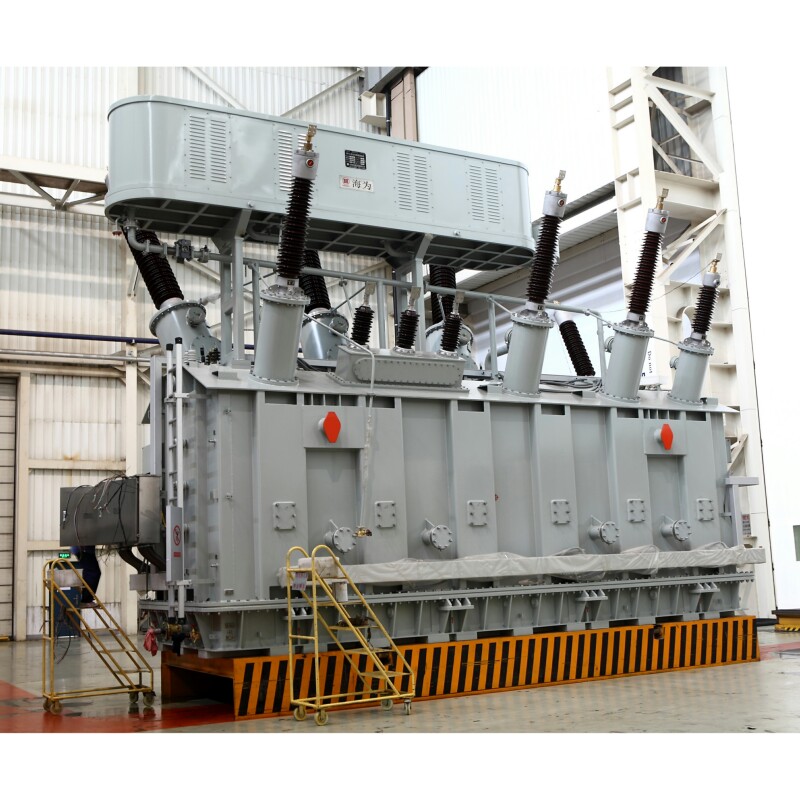
A power transformer manufacturer's annual production capacity directly proves that it can manufacture a buyer's project within the required delivery period.False
Annual capacity does not account for current backlog, transformer complexity, available production slots, bottleneck equipment, testing capacity, or the buyer's required manufacturing window. Capacity must be evaluated against the specific project and schedule.
What Project Requirements Should Buyers Define First?
Before evaluating a manufacturer's capacity, the buyer must define the project requirements in measurable production terms. “We need several power transformers” is not enough information for a meaningful capacity assessment.
The buyer should establish at least:
- Transformer quantity
- Rated power in kVA or MVA
- Primary voltage
- Secondary voltage
- Frequency
- Transformer type
- Cooling method
- Tap-changer requirements
- Insulation level
- Impedance requirements
- Core and winding configuration
- Enclosure or tank requirements
- Special testing requirements
- Required documentation
- Factory acceptance test requirements
- Required shipment date
The MVA rating and transformer complexity are especially important. Ten small transformers cannot be treated as equivalent to ten large power transformers. Larger units generally require more winding time, greater drying capacity, larger assembly areas, heavier lifting resources, longer testing cycles, and more complex logistics.
A useful project-capacity profile can therefore be established before supplier evaluation:
| Project Requirement | Example | Why It Matters |
|---|---|---|
| Quantity | 6 units | Determines total production volume |
| Rating | 40 MVA each | Determines workload intensity |
| Voltage | 69/13.8 kV | Determines manufacturing capability |
| Cooling | ONAN/ONAF | Affects design and assembly |
| Tap changer | OLTC | Adds engineering and assembly requirements |
| Testing | Routine + specified special tests | Affects test-bay utilization |
| Required FAT | Month 5 | Creates a fixed production milestone |
| Shipment | Month 6 | Determines practical capacity window |
This project profile becomes the baseline against which the supplier's capacity should be tested.
How Should Buyers Compare Required Capacity With Available Capacity?
The most useful comparison is required production workload versus available production capacity during the actual project window.
Suppose a buyer needs six 40 MVA transformers. The total project rating is:
6 × 40 MVA = 240 MVA
However, 240 MVA should not automatically be compared with a manufacturer's annual capacity. The buyer should ask how much comparable production the factory can complete during the months available for the project.
For example:
| Capacity Indicator | Supplier Data | Buyer Question |
|---|---|---|
| Annual nominal capacity | 800 MVA | What portion is actually available? |
| Average monthly output | 55 MVA | Is this based on comparable transformers? |
| Current six-month backlog | 300 MVA | How much is already scheduled? |
| Available production window | 6 months | Can the project fit? |
| Buyer requirement | 240 MVA | Does it fit without excessive loading? |
| Historical on-time delivery | 92% | Is the schedule credible? |
The important distinction is between nominal capacity and available capacity.
A manufacturer could theoretically produce 800 MVA per year but have most of its production resources committed to existing orders. In that situation, the buyer's 240 MVA project may not be realistically available within the desired six-month window.
Which Manufacturing Bottlenecks Should Buyers Check?
Production capacity is normally limited by the most constrained critical resource, rather than by the factory's total floor area or number of machines.
For power transformers, buyers should investigate several potential bottlenecks.
| Manufacturing Resource | What Buyers Should Verify | Why It Matters |
|---|---|---|
| Core processing | Core cutting and stacking capacity | Determines core availability |
| Winding machines | Number, size range and utilization | Major production constraint |
| Insulation processing | Internal capability and workload | Affects coil readiness |
| Drying equipment | Oven/vapor-phase/vacuum capacity | Critical for transformer quality and schedule |
| Tank fabrication | Internal capacity or outsourcing | Can create supply-chain dependency |
| Assembly bays | Number and current utilization | Limits simultaneous production |
| Heavy cranes | Capacity and availability | Important for large units |
| Vacuum processing | Equipment size and availability | Limits final processing |
| Test bay | Rated voltage/current/test capability | Can become final bottleneck |
| Shipping area | Space and lifting resources | Affects release and dispatch |
A factory can therefore have sufficient winding capacity but insufficient drying or testing capacity. In that case, increasing winding output will not necessarily increase finished-transformer output.
This is why buyers should ask manufacturers to explain their production bottleneck management, not simply provide a machine list.
Why Is Current Order Backlog Important?
Current orders show how much capacity is already committed.
Buyers should request an aggregated production schedule rather than confidential customer information. A supplier can normally provide a non-sensitive summary such as:
- Number of transformers currently in production
- MVA range
- Planned production months
- Approximate FAT dates
- Expected shipment months
- Available production slots
For example:
| Month | Existing Scheduled Work | Buyer Project | Total Planned Work |
|---|---|---|---|
| Month 1 | 45 MVA | 0 | 45 MVA |
| Month 2 | 55 MVA | 20 MVA | 75 MVA |
| Month 3 | 60 MVA | 40 MVA | 100 MVA |
| Month 4 | 50 MVA | 60 MVA | 110 MVA |
| Month 5 | 45 MVA | 60 MVA | 105 MVA |
| Month 6 | 40 MVA | 60 MVA | 100 MVA |
The buyer can then see whether the proposed project would overload the manufacturer's normal production pattern.
A high backlog is not automatically a negative sign. It may demonstrate strong market demand and production activity. The critical issue is whether the supplier has reserved sufficient capacity for the new project.
How Can Historical Delivery Performance Validate Capacity Claims?
Historical delivery performance provides evidence of whether the manufacturer's claimed capacity is actually achievable.
Buyers should compare the supplier's historical commitments with actual completion dates for similar projects.
Useful indicators include:
- Original contractual delivery date
- Actual shipment date
- FAT date
- Average lead time
- Average delay
- Maximum delay
- On-time delivery percentage
- Number of comparable projects completed
- Causes of significant delays
For example:
| Historical Project | Promised Lead Time | Actual Lead Time | Result |
|---|---|---|---|
| 25 MVA transformer | 16 weeks | 16 weeks | On time |
| 40 MVA transformer | 20 weeks | 21 weeks | Minor delay |
| 50 MVA transformer | 24 weeks | 25 weeks | Minor delay |
| 40 MVA repeat order | 20 weeks | 20 weeks | On time |
| 60 MVA customized unit | 28 weeks | 34 weeks | Significant delay |
The buyer should pay particular attention to projects similar to the proposed order. A supplier's excellent record for standard distribution transformers does not necessarily demonstrate the same performance for large customized power transformers.
How Should Buyers Evaluate Technical Capacity?
Production capacity must include technical capability, not merely production volume.
A factory may have enough physical production space but lack experience with the buyer's required transformer specification.
The buyer should therefore compare:
Required specification → Previous comparable products → Manufacturing process → Testing capability
For example, if the project requires a 100 MVA transformer with OLTC, ONAF cooling, specified impedance, elevated insulation levels, and special testing, the supplier should demonstrate previous production of technically comparable units.
A useful qualification matrix is:
| Technical Requirement | Supplier Evidence | Evaluation |
|---|---|---|
| Similar MVA rating | Previous production records | Strong/Weak |
| Similar voltage class | Previous designs/FAT records | Strong/Weak |
| OLTC experience | Comparable completed units | Strong/Weak |
| Cooling configuration | Production history | Strong/Weak |
| Required insulation level | Test records | Strong/Weak |
| Special testing | Internal/external capability | Strong/Weak |
| Transportation dimensions | Previous shipments | Strong/Weak |
The more technically demanding the project, the more important this comparison becomes.
Why Should Testing Capacity Be Included?
A transformer is not ready for shipment simply because mechanical assembly has been completed. Required routine tests, inspections, documentation, and customer acceptance activities can become schedule-critical.
Testing capacity should therefore be evaluated alongside production capacity.
Buyers should ask:
- How many transformer test bays are available?
- What are their voltage and power limits?
- How many units can be tested simultaneously?
- What is the normal test-bay utilization?
- Are special tests performed internally?
- If external laboratories are used, how is scheduling controlled?
- How much time is normally allocated between assembly completion and FAT?
- What happens if a transformer fails a test and requires corrective work?
A factory that produces transformers quickly but has a long testing queue may still fail to meet the contractual shipment date.
How Can Buyers Build a Practical Capacity-Matching Score?
A structured scoring model helps buyers avoid making decisions based on marketing claims.
| Evaluation Factor | Weight | Key Question |
|---|---|---|
| Relevant MVA capacity | 20% | Can the supplier manufacture the required rating? |
| Available capacity | 20% | Is capacity available during our production window? |
| Current backlog | 15% | How much capacity is already committed? |
| Comparable project experience | 15% | Has the supplier produced similar units? |
| Testing capacity | 10% | Can FAT occur when required? |
| Historical delivery performance | 10% | Does the supplier meet promised schedules? |
| Capacity contingency | 5% | Is there backup equipment or shift capacity? |
| Supply-chain resilience | 5% | Can critical materials support the schedule? |
This score should not replace technical due diligence, but it creates a transparent framework for comparing suppliers.
What Documents Should Buyers Request?
Buyers do not need access to confidential customer contracts to verify production capacity. An effective supplier audit can rely on aggregated and verifiable information.
Request:
- Current production schedule.
- Current order backlog by approximate MVA.
- Available production slots.
- Monthly historical output.
- Historical delivery performance.
- Comparable transformer project references.
- Production equipment list and rated capability.
- Test equipment list and capacity.
- Workforce information by key production function.
- Proposed project manufacturing schedule.
- Critical material procurement schedule.
- Capacity-contingency plan.
The strongest evidence is consistency among these documents. If the supplier's equipment, workforce, backlog, historical output, and proposed schedule all support the same conclusion, the capacity claim becomes much more credible.
What Red Flags Indicate a Capacity Mismatch?
Buyers should investigate further when they see:
- Annual capacity is very high but monthly output is unclear.
- Current backlog is not disclosed even in aggregate form.
- Proposed lead time is substantially shorter than historical lead time.
- The factory has limited experience with comparable MVA ratings.
- Critical drying or testing equipment appears heavily utilized.
- The supplier relies heavily on external testing without confirmed slots.
- Production starts immediately despite a long current backlog.
- The supplier cannot explain its contingency plan.
- The proposed delivery date depends on unusually accelerated production.
- The supplier repeatedly extends delivery dates on comparable projects.
None of these automatically proves that a supplier is incapable. However, each one deserves evidence before the buyer relies on the proposed schedule.
A Simple Capacity-Matching Formula for Buyers
A useful conceptual model is:
Capacity Match = Technical Capability × Available Production Capacity × Schedule Reliability
This is not an accounting formula; it is a procurement framework.
If any one factor is weak, overall capacity matching becomes weak.
For example:
- Excellent technical capability + no available production slot = poor project match.
- Large available capacity + insufficient technical experience = poor project match.
- Strong technical capability + available capacity + repeated delivery delays = schedule risk.
The ideal supplier demonstrates all three.
Final Buyer Checklist
Before confirming that a power transformer supplier has sufficient production capacity, buyers should verify:
- Required transformer quantity is clearly defined.
- Total MVA workload is calculated.
- Voltage and technical requirements are confirmed.
- Supplier has produced comparable transformer types.
- Current backlog has been reviewed.
- Available production slots have been identified.
- Winding capacity is sufficient.
- Drying capacity is sufficient.
- Assembly capacity is sufficient.
- Heavy lifting resources are available.
- Testing capacity matches the FAT schedule.
- Critical materials can support production.
- Historical lead times are consistent with the quotation.
- Historical delivery performance is acceptable.
- A contingency plan exists for production disruption.
If these items can be supported with records rather than verbal assurances, the buyer has a much stronger basis for concluding that the manufacturer's power transformer production capacity matches the project requirements.
Conclusion
Assessing production capacity for power transformers requires more than reviewing a supplier's claimed annual output. Buyers should examine actual manufacturing resources, equipment capability, technical personnel, testing capacity, current workload, supply-chain readiness, quality controls, and proven delivery records. Most importantly, capacity should be evaluated against the specific transformer specifications and project schedule. A manufacturer with lower nominal output but strong process control and sufficient available capacity may be a safer choice than a larger supplier operating near its limits.
FAQ
Q1: How can buyers assess the production capacity of a power transformer supplier?
A1: Buyers can assess production capacity by examining much more than a manufacturer's stated annual output. The most reliable approach is to evaluate the factory's actual resources, production processes, equipment, workforce, testing capabilities, and current workload.
Start by asking for documented production capacity for the specific transformer type, voltage class, and power rating required. A manufacturer may have substantial overall output but limited capacity for large or highly customized power transformers. Buyers should therefore distinguish between total factory capacity and capacity available for their particular project.
Factory equipment is another important indicator. Review whether the supplier has suitable winding machines, core-processing equipment, drying and vacuum systems, assembly areas, oil-processing facilities, and testing equipment. For large power transformers, the manufacturer's ability to handle heavy components and perform final assembly and testing can directly affect project schedules.
Buyers should also examine production lead times from recent comparable projects. Ask for examples showing order date, engineering completion, manufacturing start, testing, and shipment. Historical delivery performance is often more meaningful than a generic promise of fast production.
Workforce capacity matters as well. Experienced engineers, winding technicians, assembly personnel, quality inspectors, and testing specialists are essential for maintaining output without sacrificing quality. A factory operating near full utilization may struggle to accommodate urgent orders or engineering changes.
Current production loading should also be discussed. Buyers can ask how many projects are already scheduled and what percentage of relevant manufacturing capacity is committed. This helps reveal whether the supplier's theoretical capacity is actually available.
Finally, verify testing capacity and quality controls. Production is not complete when assembly ends; transformers must pass required inspections and tests before shipment. International requirements such as IEC 60076 provide an important framework for power-transformer specifications and testing.
The best assessment combines factory evidence, comparable project history, current workload, equipment capability, staffing, and testing resources rather than relying on a single capacity figure.
Q2: What documents should buyers request to verify transformer manufacturing capacity?
A2: Buyers should request documents that demonstrate both the manufacturer's physical capability and its ability to deliver projects consistently. A supplier's capacity claim becomes much more useful when it can be supported by verifiable production and project records.
A good starting point is a factory profile describing manufacturing facilities, production areas, major equipment, testing laboratories, engineering resources, and approximate annual output. Buyers should then ask whether those figures apply to all transformer products or specifically to the required power and voltage range.
Recent production records can provide stronger evidence. Depending on confidentiality restrictions, suppliers may provide anonymized project lists showing transformer ratings, quantities, manufacturing dates, testing dates, and delivery dates. These records help buyers determine whether the supplier has successfully produced equipment comparable to the proposed order.
Equipment lists are also valuable. Buyers can request information about core cutting and stacking equipment, winding machines, drying systems, vacuum equipment, oil treatment systems, lifting equipment, and high-voltage testing facilities. The objective is not simply to count machines but to determine whether the production line can handle the project's technical requirements.
A production schedule or capacity-loading statement can reveal whether the factory has sufficient available capacity during the required manufacturing period. This is particularly important when the supplier is handling several large transformer projects simultaneously.
Quality documentation should also be reviewed. Relevant certifications, quality-management records, inspection procedures, factory acceptance test procedures, and previous test reports can help establish whether increased production volume is supported by adequate quality controls.
Buyers should also request information about engineering capacity, including the number of design engineers and the supplier's ability to manage customized specifications. A factory may have adequate workshop capacity but insufficient engineering resources to process a complex project quickly.
For large projects, buyers can go further by arranging a factory audit or independent inspection. The objective should be to compare documented capacity with actual factory conditions.
Capacity verification is especially important because large power transformers can involve long replacement and delivery periods. The U.S. Department of Energy has highlighted extended replacement lead times as a resilience concern for large power transformers.
Q3: Why is current factory utilization important when evaluating power transformer suppliers?
A3: Current factory utilization is important because a manufacturer's maximum theoretical capacity does not necessarily represent the capacity available for a new order. A supplier may advertise a high annual production volume while most of its relevant manufacturing resources are already committed.
Consider a manufacturer that claims it can produce hundreds of transformers annually. That number may include several product categories, smaller units, and different production lines. If a buyer needs a small number of high-capacity transformers, the relevant question is not total annual output but whether the factory has open production slots for that specific equipment.
High utilization can create several risks. Production schedules may become crowded, engineering teams may have limited availability, and testing facilities can become bottlenecks. Delays in one project may also affect subsequent orders when the production schedule has little flexibility.
Buyers should therefore ask suppliers about their current order backlog, planned production schedule, utilization of key equipment, and expected production slot for the proposed project. It is useful to ask specifically about bottleneck resources rather than requesting only an overall utilization percentage.
Testing capacity deserves particular attention. Even when transformer assembly proceeds smoothly, final testing can delay shipment if the laboratory is heavily booked. Similar issues can occur with drying ovens, vacuum equipment, specialized winding machines, or heavy lifting facilities.
A supplier with moderate utilization and adequate reserve capacity may sometimes present less schedule risk than a larger manufacturer operating continuously at near-maximum capacity.
Buyers should also examine how the supplier handles schedule changes. A flexible manufacturer may have contingency production slots, alternative equipment, multiple qualified subcontractors, or additional shifts that can absorb unexpected demand.
Capacity should therefore be evaluated as available and relevant production capacity, not merely advertised annual output.
A practical supplier assessment can score capacity using several factors: relevant equipment availability, current utilization, engineering resources, testing capacity, workforce availability, historical lead times, and schedule flexibility. This provides a more realistic picture of whether the supplier can complete the transformer order on time.
Q4: How do production lead times help buyers evaluate power transformer manufacturing capacity?
A4: Production lead time provides practical evidence of how efficiently a manufacturer converts an accepted order into a tested and shippable transformer. However, buyers should examine the complete production cycle rather than relying on a single quoted number.
A useful evaluation separates the process into stages such as technical clarification, engineering approval, material procurement, core and winding production, insulation and assembly, drying and oil processing, routine testing, final inspection, and shipment preparation.
Comparing these stages across previous projects can reveal where a manufacturer has genuine capacity limitations. For example, a supplier may complete mechanical assembly quickly but have long waiting periods before final testing because its test facility is heavily utilized.
Buyers should request historical lead-time data for transformers with similar ratings, voltage levels, cooling arrangements, and customization requirements. Comparing like-for-like projects produces more useful information than comparing completely different transformer categories.
Material procurement should also be considered. Production capacity depends partly on whether the supplier can secure critical materials such as electrical steel, conductor materials, insulation components, transformer tanks, bushings, and other specialized components in time.
Another useful indicator is schedule reliability. A supplier that consistently delivers within its quoted manufacturing window may represent lower procurement risk than one that offers very short lead times but frequently misses them.
Buyers should distinguish between standard manufacturing lead time and project-specific lead time. Customized transformers can require additional engineering, special components, customer approval, and additional testing. A credible supplier should explain these variables rather than presenting one universal lead-time figure.
Lead-time analysis should also account for factory acceptance testing and inspection. IEC 60076-1 includes general requirements relevant to power transformers, including testing and transport considerations, making standards-based project planning important.
Ultimately, production lead time should be evaluated alongside factory utilization, equipment availability, material sourcing, testing capacity, and historical delivery performance. This gives buyers a better indication of whether a supplier's promised delivery date is realistic.
References
IEC 60076-1: Power Transformers – Part 1: General
https://webstore.iec.ch/en/publication/588
IEEE C57.12.00-2021: General Requirements for Liquid-Immersed Transformers
https://standards.ieee.org/ieee/C57.12.00/6962/
IEEE C57.12.01-2020: General Requirements for Dry-Type Transformers
https://standards.ieee.org/ieee/C57.12.01/6775/
IEEE C57.12.80-2024: Terminology for Power and Distribution Transformers
https://standards.ieee.org/ieee/C57.12.80/7006/
IEEE Power, Distribution & Regulating Transformers Collection
https://standards.ieee.org/ieee/Collection/10867/
U.S. DOE Large Power Transformer Resilience Report
https://www.energy.gov/sites/default/files/2024-10/EXEC-2022-001242%20-%20Large%20Power%20Transformer%20Resilience%20Report%20signed%20by%20Secretary%20Granholm%20on%207-10-24.pdf
IEEE C57.12.10: Standard Requirements for Liquid-Immersed Power Transformers
https://standards.ieee.org/ieee/C57.12.10/
IEEE C57.12.36-2026: Liquid-Immersed Distribution Substation Transformers
https://standards.ieee.org/ieee/C57.12.36/11334/
IEEE C57.12.91-2026: Standard Test Code for Dry-Type Transformers
https://standards.ieee.org/ieee/C57.12.91/10863/
IEEE C57.116-2022: Transformers Directly Connected to Generators
https://standards.ieee.org/ieee/C57.116/7760/