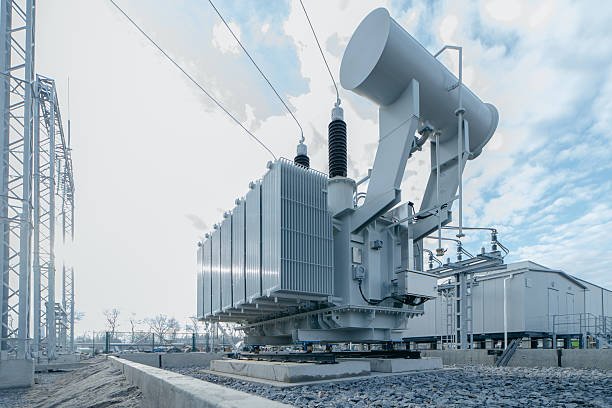
When selecting a transformer, buyers often face a critical choice between oil-immersed and dry-type transformers. Choosing the wrong design can lead to higher maintenance costs, unsuitable cooling performance, fire-safety concerns, or reduced reliability under actual operating conditions. Understanding the differences between these two transformer technologies helps buyers make a more informed decision based on capacity, installation environment, safety requirements, maintenance needs, and total cost of ownership.
The main difference between oil-immersed and dry-type transformers is their insulation and cooling systems. Oil-immersed transformers use insulating oil to provide electrical insulation and transfer heat away from the windings and core, while dry-type transformers use solid insulation and air or other gas-based cooling without insulating liquid. Oil-immersed transformers are commonly suitable for high-capacity outdoor and utility applications, while dry-type transformers are often preferred for indoor, commercial, industrial, and fire-sensitive installations.
Although both transformer types perform the same basic function of transferring electrical energy and changing voltage levels, their construction, thermal characteristics, safety requirements, maintenance practices, and application suitability can differ substantially. The following outline helps buyers understand the key differences and determine which transformer technology better matches their project requirements.
What Is the Difference Between Oil-Immersed and Dry-Type Transformers in Construction and Insulation?
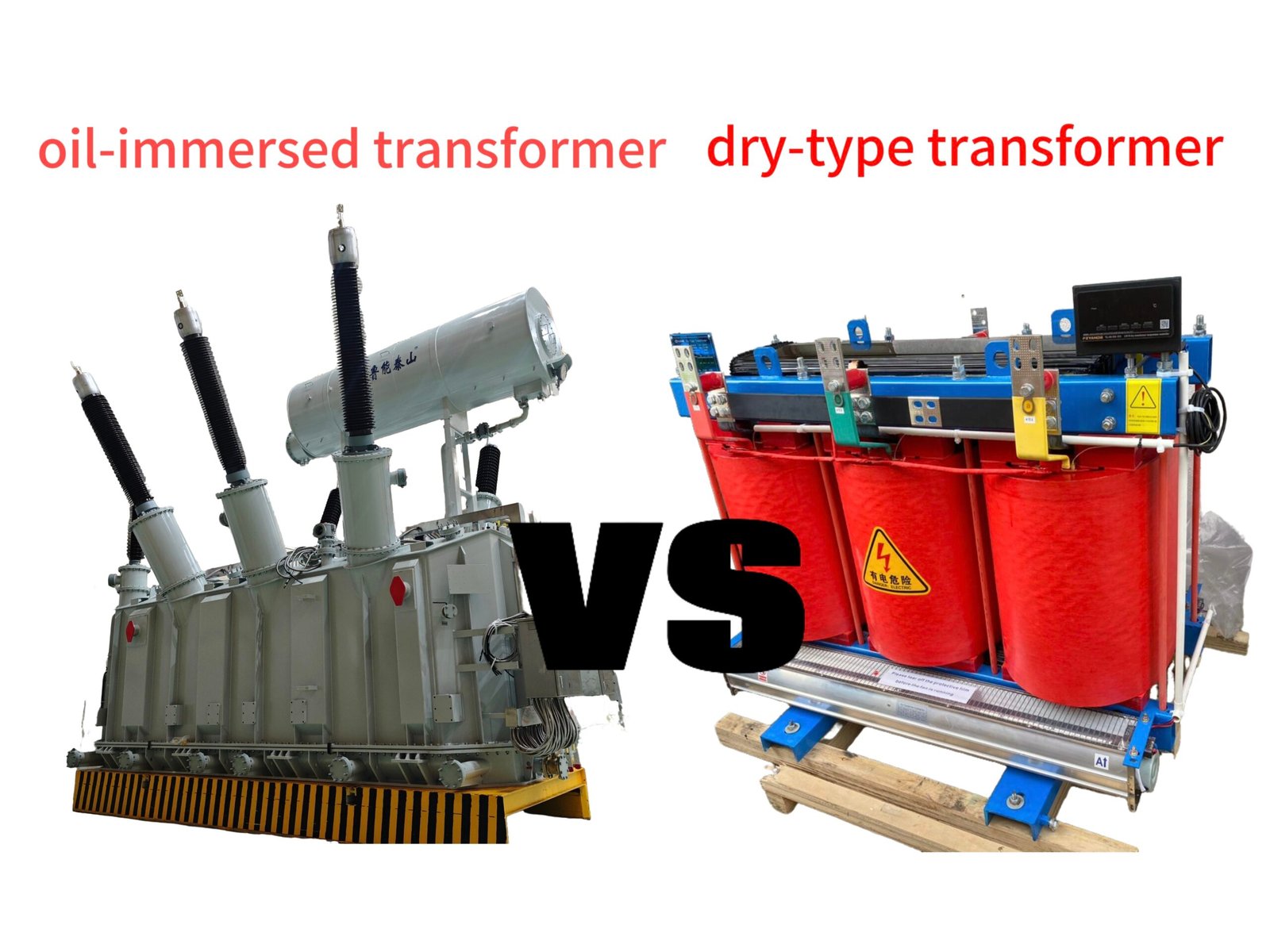
When buyers compare oil-immersed transformers and dry-type transformers, focusing only on rated voltage and capacity can hide major differences in construction, insulation, cooling, maintenance, fire protection, and installation requirements. An oil-immersed transformer relies on insulating liquid to provide dielectric insulation and transfer heat away from the windings, while a dry-type transformer uses solid insulation systems and air-based cooling without an insulating liquid surrounding the active parts. Choosing the wrong construction can create problems such as inadequate heat dissipation, unsuitable fire protection, excessive installation costs, or difficult maintenance. The practical solution is to compare the two transformer technologies according to winding structure, insulation system, cooling path, thermal performance, environmental conditions, safety requirements, and lifecycle cost before selecting a final design.
The main difference is that an oil-immersed transformer places its core and windings inside an insulating liquid-filled tank, while a dry-type transformer uses solid insulation around the windings and relies on air for cooling. Oil-immersed transformers generally offer strong thermal performance and are widely used for outdoor substations and larger power applications, whereas dry-type transformers are often selected for indoor commercial, industrial, and special installations where liquid insulation is undesirable. The correct choice depends on voltage, capacity, load profile, installation environment, fire-safety requirements, ventilation, maintenance strategy, and applicable standards.
Construction and insulation are closely connected: the insulation system determines not only how the transformer withstands electrical stress but also how heat is transferred, how the transformer is protected from the environment, and how it should be installed and maintained.
Dry-type transformers contain no insulation system because they do not use transformer oil.False
Dry-type transformers use engineered solid insulation systems, commonly involving materials such as enamel, insulating paper, resin, varnish, or other qualified insulation materials depending on the transformer design.
How Is an Oil-Immersed Transformer Constructed?
An oil-immersed transformer contains the magnetic core and windings inside a sealed or conservator-type tank filled with insulating liquid.
The insulating liquid performs two important functions simultaneously:
- It provides electrical insulation between energized components and grounded structures.
- It transfers heat from the windings and core toward the tank and cooling equipment.
A typical oil-immersed power transformer includes:
- Magnetic core
- High-voltage winding
- Low-voltage winding
- Insulation materials
- Transformer tank
- Insulating liquid
- Bushings
- Radiators or cooling equipment
- Tap changer where required
- Protective devices
- Temperature-monitoring equipment
The tank provides mechanical protection and contains the insulating liquid. For larger transformers, radiators, fans, pumps, or other cooling equipment may be integrated into the thermal system.
| Construction feature | Oil-immersed transformer |
|---|---|
| Core | Inside tank |
| Windings | Inside tank |
| Main insulation environment | Insulating liquid + solid materials |
| Cooling medium | Insulating liquid + air |
| Tank | Required |
| Bushings | Typically required |
| Radiators | Common |
| Liquid monitoring | Depending on design |
| Typical installation | Outdoor or dedicated transformer areas |
From a manufacturing perspective, oil-immersed transformer production requires strict control of moisture because moisture in solid insulation or insulating liquid can significantly reduce dielectric performance.
How Is a Dry-Type Transformer Constructed?
A dry-type transformer does not use insulating liquid as its primary cooling and insulation environment.
Instead, the windings are insulated using a solid insulation system. Depending on the design, the windings may be air-insulated, resin-encapsulated, or produced using other specialized solid-insulation technologies.
Typical components include:
- Magnetic core
- High-voltage winding
- Low-voltage winding
- Solid insulation
- Resin or varnish where applicable
- Clamping structure
- Enclosure where required
- Cooling ducts
- Terminals
- Temperature sensors
The absence of a liquid-filled tank changes the physical construction considerably.
| Construction feature | Dry-type transformer |
|---|---|
| Core | Exposed or enclosed depending on design |
| Windings | Solid-insulated |
| Main cooling medium | Air |
| Transformer oil | None |
| Tank | Not used as an oil container |
| Resin | Common in cast-resin designs |
| Ventilation | Important |
| Typical installation | Frequently indoor |
Dry-type construction can simplify certain indoor installations, but the surrounding environment becomes more important because the transformer must dissipate heat through air.
What Is the Main Insulation Difference?
The most important distinction is the insulation medium.
Oil-immersed transformers use a combination of liquid and solid insulation. The liquid fills spaces around the windings and core, increasing dielectric insulation and providing a heat-transfer path.
Dry-type transformers rely primarily on solid insulation and air.
This produces two different insulation systems.
| Insulation characteristic | Oil-immersed | Dry-type |
|---|---|---|
| Liquid insulation | Yes | No |
| Solid insulation | Yes | Yes |
| Air as primary cooling environment | No | Yes |
| Moisture sensitivity | High | Also important |
| Liquid condition monitoring | Applicable | Not applicable |
| Resin insulation | Usually not the main insulation medium | Common in cast-resin designs |
| Insulation maintenance | Includes liquid condition | Focuses on solid insulation and cleanliness |
Neither technology should be described as simply “better insulated.” They use different insulation architectures optimized for different operating environments.
How Does Oil Provide Both Insulation and Cooling?
One major advantage of oil-immersed construction is that the insulating liquid performs two jobs.
When current flows through the windings, electrical resistance produces heat. The magnetic core also produces losses during operation.
The insulating liquid absorbs heat from the active parts and transfers it toward the cooling surfaces.
A simplified thermal path is:
Winding/core losses → insulating liquid → tank/radiator → surrounding air
This makes oil-immersed transformers particularly effective for many medium- and large-capacity applications.
The thermal system may use natural or forced circulation depending on the design.
For buyers, the cooling designation and rated capacity should always be evaluated together.
How Does a Dry-Type Transformer Remove Heat?
Dry-type transformers transfer heat from the windings and core to the surrounding air.
A simplified thermal path is:
Winding/core losses → solid insulation and winding surface → air → ventilation system
This makes ventilation extremely important, especially for indoor installations.
If a dry-type transformer is installed in a small electrical room without adequate heat removal, the surrounding air temperature can rise substantially. The transformer may then operate at a higher temperature even though its electrical loading has not changed.
Buyers should therefore provide:
- Room dimensions
- Ambient temperature
- Ventilation method
- Airflow information
- Installation altitude
- Transformer loading
- Enclosure requirements
when selecting a dry-type transformer.
Why Is Moisture Control Important for Both Transformer Types?
Moisture is a critical concern for transformer insulation.
For oil-immersed transformers, moisture can exist in the solid insulation and insulating liquid. For dry-type transformers, moisture can affect solid insulation materials and, depending on the design, resin or other insulation structures.
During manufacturing, transformer windings and insulation should be properly processed and dried.
A professional manufacturing process may include:
- Controlled insulation storage
- Coil drying
- Vacuum drying where applicable
- Moisture control
- Clean assembly areas
- Insulation inspection
- Controlled oil filling for liquid-filled designs
- Electrical dielectric testing
The purpose is to ensure that the insulation system performs reliably over the transformer's service life.
How Do Oil-Immersed and Dry-Type Transformers Compare in Fire Safety?
Fire safety is an important reason buyers may consider dry-type transformers.
An oil-immersed transformer contains insulating liquid, so the installation must consider the characteristics and quantity of that liquid as well as applicable fire-protection and containment requirements.
Dry-type transformers eliminate transformer oil as a liquid insulation medium. This can simplify some installations where liquid containment or fire-risk considerations are restrictive.
However, dry-type transformers are not automatically fireproof, and buyers should not treat “dry-type” as a substitute for a complete fire-safety assessment.
The actual requirements depend on:
- Transformer rating
- Building type
- Installation location
- Enclosure
- Insulation technology
- Local regulations
- Fire-protection strategy
How Does Construction Affect Transformer Size and Weight?
Construction can influence the transformer's dimensions and weight.
Oil-immersed transformers include a tank, insulating liquid, cooling equipment, and associated accessories. Dry-type transformers eliminate the oil tank and liquid but may require larger air passages or other solid-insulation structures.
The final dimensions depend on many variables.
| Factor | Effect on transformer construction |
|---|---|
| Rated capacity | Influences core, conductor and cooling size |
| Voltage | Influences insulation and winding arrangement |
| Current | Influences conductor cross-section |
| Cooling | Influences radiators, ducts, fans and airflow |
| Insulation | Influences winding dimensions |
| Enclosure | Adds physical dimensions |
| Accessories | Increase overall size |
| Noise requirements | May require additional construction |
Therefore, buyers should request a general arrangement drawing before confirming the installation space.
How Do the Insulation Systems Affect Maintenance?
Maintenance requirements are different rather than simply higher or lower.
For an oil-immersed transformer, maintenance may include checking:
- Insulating-liquid condition
- Bushings
- Seals
- Cooling equipment
- Connections
- Tap changer
- Temperature indicators
- Protective devices
For a dry-type transformer, attention may focus on:
- Winding cleanliness
- Insulation condition
- Cooling ducts
- Electrical connections
- Temperature sensors
- Enclosure
- Ventilation
Dust and contamination can be particularly important for dry-type transformers because the windings are directly exposed to the surrounding air or protected by an enclosure rather than immersed in liquid.
How Does Construction Affect High-Capacity Transformer Applications?
For large power ratings, oil-immersed construction is widely used because liquid insulation and cooling can provide an effective solution for managing electrical and thermal stresses.
As transformer capacity increases, losses and heat generation also become significant design considerations. The manufacturer must provide sufficient cooling capability while maintaining acceptable temperature rise.
Large oil-immersed transformers can therefore incorporate sophisticated cooling systems, monitoring devices, and protection equipment.
Dry-type transformers can also be manufactured for substantial ratings, but the appropriate rating range depends on the specific technology, cooling conditions, installation environment, and manufacturer capability.
Buyers should therefore avoid using an arbitrary capacity threshold to decide between oil and dry type. The decision should be based on the actual design and installation requirements.
How Should Buyers Compare Oil-Immersed and Dry-Type Transformers?
A direct comparison is useful during procurement.
| Parameter | Oil-Immersed Transformer | Dry-Type Transformer |
|---|---|---|
| Primary insulation environment | Insulating liquid + solid | Solid insulation + air |
| Cooling | Liquid-assisted + air | Air-based |
| Oil tank | Yes | No |
| Indoor suitability | Application-dependent | Often attractive |
| Outdoor suitability | Excellent for many applications | Application-dependent |
| Fire/liquid considerations | Must be evaluated | No transformer oil |
| Ventilation requirement | Still relevant to site | Particularly important |
| Liquid maintenance | Applicable | Not applicable |
| Dust exposure | Active parts protected by liquid/tank | Must be considered |
| Large power applications | Widely used | Application-dependent |
| Typical strength | Thermal and insulation performance | Indoor installation flexibility |
| Main buyer concern | Fluid, containment and maintenance | Ventilation and thermal environment |
The comparison should always be made for the actual project rather than according to generic assumptions.
How Does Load Profile Affect the Construction Choice?
Transformer losses consist broadly of no-load losses and load-dependent losses.
No-load loss occurs while the transformer is energized, whereas load loss increases as current increases.
Because winding-related losses are approximately proportional to the square of current, load profile matters greatly when evaluating thermal behavior and energy efficiency.
A transformer operating continuously near rated capacity has different thermal requirements from a transformer that operates at a low average load with occasional peaks.
Buyers should provide the manufacturer with:
- Average load
- Peak load
- Load duration
- Power factor
- Harmonic content
- Motor starting requirements
- Expected overload conditions
- Future expansion
This information helps the manufacturer determine the appropriate winding conductor size, insulation system, cooling arrangement, and temperature-rise design.
What Should Buyers Check in Factory Construction Quality?
The best transformer type can still fail if manufacturing quality is poor.
For oil-immersed transformers, buyers should pay particular attention to:
- Core assembly
- Winding dimensions
- Insulation drying
- Tank welding
- Leak testing
- Vacuum processing
- Oil quality
- Bushing installation
- Cooling-system assembly
For dry-type transformers, buyers should examine:
- Winding manufacturing
- Resin casting where applicable
- Insulation uniformity
- Coil mechanical strength
- Air ducts
- Terminal connections
- Temperature sensors
- Enclosure construction
Factory testing should then confirm that the completed transformer satisfies the specified electrical and performance requirements.
How Should Buyers Select Between the Two Technologies?
A practical decision process is:
Step 1: Define voltage and capacity.
Step 2: Define indoor or outdoor installation.
Step 3: Evaluate fire and environmental requirements.
Step 4: Analyze the load profile and thermal duty.
Step 5: Determine ventilation and cooling conditions.
Step 6: Compare insulation requirements.
Step 7: Compare maintenance strategy.
Step 8: Calculate lifecycle cost.
Step 9: Verify factory testing and manufacturer capability.
For an outdoor utility substation with demanding thermal requirements, an oil-immersed transformer may be the natural starting point.
For an indoor commercial or industrial electrical room where liquid insulation is undesirable and ventilation can be properly engineered, a dry-type transformer may be attractive.
Neither statement should be treated as an absolute rule. The final choice must be based on the complete electrical and installation specification.
What Should Buyers Ask a Transformer Manufacturer?
Before placing an order, buyers should ask the manufacturer to provide:
- Transformer construction drawing
- Winding arrangement
- Insulation-system description
- Cooling method
- Temperature-rise data
- No-load loss
- Load loss
- Impedance
- Insulation levels
- Dimensions and weight
- Installation requirements
- Maintenance recommendations
- Factory-test plan
- Applicable standards
- Warranty conditions
For customized power transformers, buyers should also request a technical review before production.
A competent manufacturer should be able to explain why a particular construction and insulation system is appropriate for the customer's application, rather than simply offering a standard model.
What Is the Difference Between Oil-Immersed and Dry-Type Transformers in Cooling Performance?
When a transformer operates under continuous load, heat is unavoidable. If that heat cannot be removed effectively, winding temperature rises, insulation ages faster, efficiency can decline, and excessive thermal stress can shorten transformer service life. The cooling system therefore becomes a critical selection factor rather than a secondary specification. Oil-immersed and dry-type transformers use fundamentally different heat-transfer mechanisms, so choosing between them without considering load profile, ambient temperature, installation conditions, overload requirements, and maintenance capability can lead to poor thermal performance. The practical solution is to compare how each transformer transfers heat from the windings and core to the surrounding environment, then match that cooling behavior to the actual operating conditions.
Oil-immersed transformers generally provide stronger and more flexible cooling performance because insulating oil transfers heat away from the core and windings more effectively than air. Dry-type transformers rely primarily on natural or forced air circulation, making them simpler and often attractive for indoor installations, but their thermal performance can be more sensitive to ambient temperature, enclosure design, ventilation, and installation conditions. The better choice depends on transformer rating, load profile, environment, allowable temperature rise, and required cooling method—not simply on whether oil or air is preferred.
Understanding this distinction is important when evaluating transformer suppliers because cooling performance affects not only temperature rise but also transformer size, overload capability, efficiency, insulation life, noise, maintenance requirements, and installation cost. The following comparison focuses on the practical thermal behavior buyers should examine before specifying an oil-immersed or dry-type power transformer.
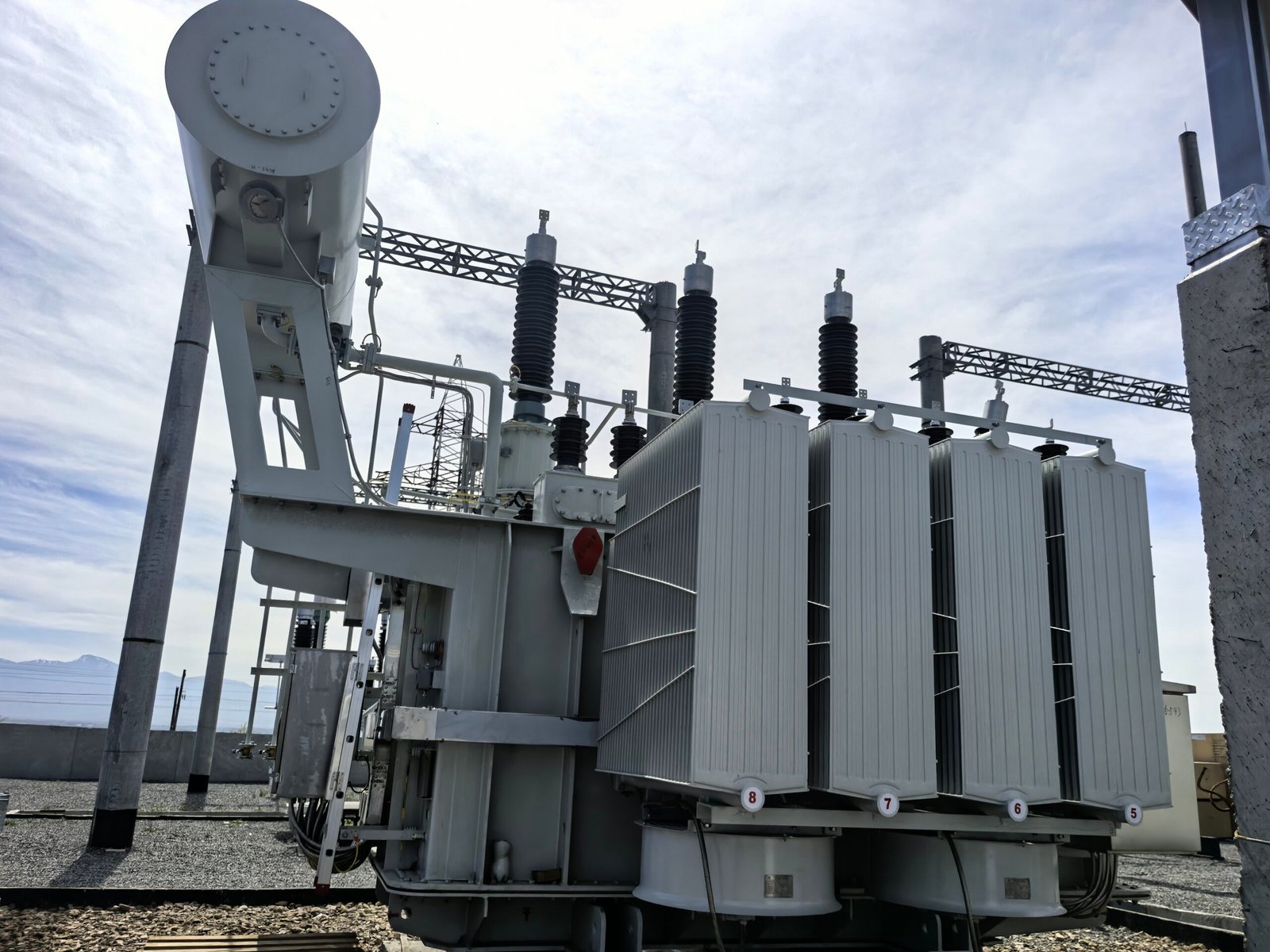
Oil-immersed transformers normally have better heat-transfer capability than comparable air-cooled dry-type transformers.True
Transformer oil surrounds the active parts and transfers heat from the core and windings to the tank and radiators, while dry-type transformers primarily depend on air circulation and solid insulation for heat removal.
How Does an Oil-Immersed Transformer Remove Heat?
The principal thermal advantage of an oil-immersed transformer comes from the direct contact between the insulating liquid and the active electrical components. The core and windings generate heat during operation, mainly because of core losses and winding load losses. The insulating oil surrounding these components absorbs that heat and transports it toward cooler regions of the transformer tank. Depending on the transformer design, this circulation can occur naturally through buoyancy-driven convection or can be assisted by pumps. Once the heated oil reaches the tank walls, radiators, cooling tubes, or other heat-dissipation surfaces, the heat moves through the metal surfaces and is finally released into the surrounding air. This creates a continuous thermal path from the winding to the oil, from the oil to the tank or radiator, and from the external surface to ambient air. For larger power transformers, this arrangement can be supplemented by fans, pumps, or combinations of both, allowing the transformer manufacturer to increase heat-transfer capacity as the load rises. Oil therefore performs two important functions simultaneously: it provides electrical insulation and acts as a heat-transfer medium. From a buyer's perspective, this dual function is especially important when comparing transformer ratings because the cooling system is integrated into the tank, radiator, oil volume, winding design, and permissible temperature-rise calculation. A well-designed oil-immersed transformer can maintain relatively stable winding temperatures under high continuous loads because heat is transported away from the windings rather than depending only on air moving around exposed surfaces. However, oil cooling does not mean that an oil transformer can be overloaded indefinitely. Temperature rise still depends on load losses, ambient conditions, oil circulation, radiator surface area, cooling equipment, and the transformer's specified thermal limits. Buyers should therefore request the manufacturer's declared cooling designation and temperature-rise data rather than assuming that every oil-immersed transformer has identical thermal capability. For distribution and power applications, common cooling arrangements include natural oil circulation with natural air cooling and designs where fans or pumps are added to increase heat rejection. The exact designation should be confirmed against the applicable transformer standard and manufacturer's design documentation. The practical lesson is that oil immersion creates a highly effective thermal bridge between internal heat sources and external cooling surfaces, which is one reason oil-immersed transformers are widely used when relatively high ratings, outdoor installations, or demanding thermal conditions are involved.
How Does a Dry-Type Transformer Remove Heat?
A dry-type transformer eliminates liquid insulation and relies primarily on air as the cooling medium. Heat generated in the core and windings must travel through solid insulation, conductor structures, magnetic components, and exposed or enclosed surfaces before being transferred to surrounding air. Natural air circulation can remove heat when the transformer is appropriately designed and installed, while forced-air cooling can be introduced with fans when additional heat-transfer capacity is required. The thermal pathway is therefore more dependent on the physical geometry of the transformer, ventilation openings, enclosure design, air velocity, ambient temperature, and room conditions. In a dry-type transformer, the winding insulation may be resin-encapsulated, cast-resin, or otherwise solidly insulated depending on the construction. These materials provide electrical insulation and mechanical protection but are not equivalent to a circulating liquid in terms of heat transport. Consequently, transformer designers must carefully manage winding geometry, conductor dimensions, insulation thickness, ventilation channels, and surface area. The advantage is that there is no transformer oil to inspect for moisture, dissolved gases, acidity, or dielectric degradation, and there is no oil tank or radiator system of the same type required for basic air-cooled designs. This makes dry-type transformers particularly attractive for buildings, commercial facilities, hospitals, data centers, underground installations, and other locations where liquid containment or fire considerations influence equipment selection. However, "dry-type" should not be interpreted as "thermally superior in every application." Its cooling performance can be strongly affected by the surrounding room. A transformer installed in a poorly ventilated electrical room may experience higher ambient temperatures than the same transformer operating in a well-ventilated space. Dust accumulation on cooling surfaces can also interfere with heat dissipation. In forced-air designs, fan reliability becomes another consideration because cooling capacity can depend on active airflow. Buyers should therefore evaluate the transformer's rated ambient temperature, temperature-rise specification, enclosure classification, ventilation requirements, and any forced-air rating separately. A dry-type transformer can provide reliable thermal performance when correctly sized and installed, but its cooling system must be considered as part of the complete electrical installation rather than as an isolated transformer feature.
How Do the Two Cooling Systems Compare?
| Cooling factor | Oil-immersed transformer | Dry-type transformer |
|---|---|---|
| Primary cooling medium | Insulating oil plus external air | Air |
| Internal heat transfer | Oil circulation transfers heat from active parts | Heat travels through solid insulation and surrounding structures |
| Natural cooling | Highly effective through oil convection | Dependent on natural air circulation |
| Forced cooling | Fans and/or pumps can increase capacity | Fans can increase air circulation |
| Large transformer suitability | Excellent for many high-rating applications | Possible, but thermal design becomes increasingly important |
| Ambient-temperature sensitivity | Still important, but oil/radiator system provides strong heat-transfer path | Often more sensitive to room ventilation and ambient conditions |
| Cooling-system maintenance | Oil condition and cooling equipment require attention | Air passages, surfaces, fans, and enclosure require attention |
| Fire considerations | Requires management of insulating liquid | No liquid insulating oil in standard dry-type construction |
| Installation environment | Commonly suited to substations and outdoor applications | Often well suited to indoor electrical rooms |
| Overload behavior | Depends on specified temperature-rise and cooling arrangement | Depends strongly on winding temperature and cooling-air conditions |
Why Does Transformer Load Profile Matter?
Cooling performance cannot be judged from transformer nameplate capacity alone. A transformer operating at a steady 40% load experiences a very different thermal duty from one operating close to rated capacity for long periods. Load losses increase approximately with the square of current, so winding-related heat generation can rise rapidly as loading approaches full load. This is particularly important because a transformer that appears to have sufficient kVA capacity on paper may operate at substantially different winding temperatures depending on its actual load profile and cooling conditions. For example, consider two 1,000 kVA transformers installed in similar locations. One may operate continuously around 600 kVA, while another may spend many hours near 950 kVA with short periods above normal load. Their average thermal stresses can be very different. The oil-immersed design benefits from liquid circulation that continuously transports heat away from the windings, while a dry-type design depends heavily on maintaining adequate airflow around its thermal surfaces. This does not mean the oil-immersed unit automatically has a higher permissible load; the manufacturer's guaranteed temperature rise, cooling designation, insulation system, and overload curve remain controlling. Buyers should request load-loss data, no-load loss data, temperature-rise limits, and cooling-system information together. It is also useful to distinguish between normal continuous loading and temporary emergency loading. Emergency overload capability depends on the transformer's thermal time constant and insulation-temperature limits, not simply on the nameplate kVA. Oil temperature and winding hot-spot temperature can change over time, meaning that a short-duration overload may be thermally different from continuous overload. Dry-type transformers also have thermal inertia, but their heat-transfer pathway and surrounding air conditions must be considered carefully. When comparing quotations, buyers should provide the supplier with expected maximum load, average load, daily load curve, starting currents, ambient temperature, installation altitude, ventilation conditions, and any expected overload duration. A technically responsible manufacturer can then evaluate the required cooling arrangement instead of merely offering the nearest standard rating. This approach reduces the risk of selecting a transformer that meets electrical capacity requirements but operates too hot in real service.
How Do Temperature Rise and Transformer Life Relate?
Temperature control is closely connected to transformer reliability because insulation systems degrade as thermal stress increases. The transformer designer therefore does not treat cooling as an independent accessory; cooling performance is part of the insulation-life strategy. Every transformer experiences a combination of no-load losses, load losses, and environmental heat input or rejection. No-load losses exist whenever the transformer is energized, while load losses increase with current. The cooling system must continuously remove this heat so that the internal temperature remains within the design limits. In an oil-immersed transformer, the oil transports heat from the core and windings toward the tank and radiators. In a dry-type transformer, heat must ultimately be transferred into surrounding air through solid structures and surfaces. If the cooling system is inadequate, the winding hot spot may rise even when the average transformer temperature appears acceptable. This is why buyers should not evaluate cooling solely by looking at external temperature or by asking whether a transformer "runs cool." A better approach is to examine the guaranteed temperature rise, winding hot-spot assumptions where applicable, cooling arrangement, ambient design condition, and test results. Manufacturing quality also matters. Poor winding compaction, incorrect conductor dimensions, inadequate cooling ducts, excessive insulation thickness, blocked ventilation channels, or inconsistent assembly can create local thermal concentrations. A professional transformer manufacturer should control these parameters through design calculations, production inspections, winding resistance measurements, insulation tests, loss measurements, temperature-related verification where specified, and final routine testing. For oil-immersed units, oil quality and circulation pathways must also be maintained. For dry-type units, cleanliness and ventilation become increasingly important over service life. The practical objective is not simply to obtain the lowest possible operating temperature. The objective is to keep the transformer within its specified thermal limits while maintaining predictable efficiency, insulation life, and reliability under the actual load profile. This is why a buyer should compare complete thermal design information rather than relying on a single cooling label.
What Factors Should Buyers Compare Before Choosing?
A practical purchasing comparison should begin with the application rather than with the transformer's insulation type. If the installation is outdoors, the transformer rating is substantial, the load is high and continuous, or the project requires a cooling system capable of handling significant internal heat, an oil-immersed transformer may offer a strong thermal solution. If the transformer is located inside a commercial or industrial building where liquid containment, fire considerations, space restrictions, or simplified maintenance are important, a dry-type transformer may be more appropriate. Neither conclusion should be made solely from these generalizations. The manufacturer's engineering design must be checked against the actual site conditions. Buyers should compare the transformer's rated capacity, cooling designation, temperature rise, ambient temperature assumptions, altitude correction, enclosure arrangement, ventilation requirements, sound level, losses, efficiency, and overload expectations. For oil-immersed transformers, buyers should additionally evaluate oil type, tank construction, radiator arrangement, oil preservation system, monitoring equipment, and maintenance requirements. For dry-type transformers, buyers should evaluate winding construction, resin or insulation system, enclosure ventilation, fan arrangement where applicable, temperature sensors, and allowable installation conditions. Factory capability is equally important. Cooling performance depends on design accuracy and manufacturing consistency. A supplier should be able to demonstrate control over core cutting and stacking, winding equipment, conductor quality, insulation processing, vacuum drying for oil-immersed designs where applicable, resin casting or encapsulation for relevant dry-type designs, assembly, and electrical testing. Buyers should also ask how the manufacturer validates loss and temperature-related performance. The strongest purchasing decision is therefore not "oil is better" or "dry type is better." It is a documented match between the transformer cooling system and the project's electrical load, ambient environment, installation configuration, maintenance strategy, and expected service life.
| Buyer requirement | Key question | What to verify |
|---|---|---|
| Continuous high load | Will the transformer operate near rated capacity for long periods? | Temperature rise, cooling designation, load losses |
| High ambient temperature | What is the maximum site ambient temperature? | Guaranteed rating conditions and derating information |
| Indoor installation | Is ventilation sufficient? | Room airflow, enclosure design, dry-type cooling requirements |
| Outdoor installation | Can the cooling system operate reliably in local weather? | Tank/radiator design, enclosure and environmental protection |
| Temporary overload | How long and how frequently will overload occur? | Manufacturer's thermal and overload limits |
| Maintenance | What cooling-system maintenance is expected? | Oil maintenance or dry-type cleaning/fan inspection |
| Fire-sensitive site | Are liquid containment and fire requirements restrictive? | Project fire-safety requirements and transformer construction |
| Long service life | How will thermal aging be controlled? | Insulation system, temperature rise, monitoring and test data |
How Can a Transformer Manufacturer Demonstrate Cooling Performance?
A credible manufacturer should support cooling claims with engineering documentation and test evidence rather than marketing language. For an oil-immersed power transformer, buyers can request the cooling designation, rated power, temperature-rise guarantees, no-load loss, load loss, impedance, oil volume, radiator configuration, and cooling equipment details. For a dry-type transformer, the buyer should request the corresponding cooling arrangement, rated ambient conditions, temperature rise, enclosure and ventilation requirements, winding construction, and forced-air provisions if applicable. Routine test reports should be consistent with the supplied design, and type or special-test documentation should be available when required by the project specification or applicable standard. It is also valuable to inspect the factory itself. Core assembly, winding production, insulation processing, drying, resin casting where applicable, tank fabrication, radiator assembly, vacuum equipment, and testing facilities can reveal whether a supplier has genuine manufacturing capability. Cooling performance begins with electromagnetic and thermal design, but it is preserved through manufacturing precision. For example, winding dimensions must remain within design tolerances, insulation materials must be processed correctly, and cooling passages must not be accidentally restricted during assembly. On oil-immersed transformers, moisture control during manufacturing is particularly important because water can negatively affect insulation performance and oil condition. On dry-type transformers, resin processing quality and cleanliness can affect thermal behavior and insulation reliability. A supplier that can explain the complete thermal path—from core and conductor losses through oil or solid insulation to the final ambient-air interface—demonstrates a much stronger understanding than a supplier that only states a nominal cooling method. Buyers should also ask whether the quoted transformer is naturally cooled or uses forced cooling, whether the forced cooling changes the rated capacity, what happens if cooling fans fail, and how temperature is monitored. These details can materially change the transformer's practical operating capability. From a procurement perspective, cooling performance should therefore be treated as a verifiable engineering characteristic supported by drawings, calculations, nameplate data, test reports, and factory quality controls.
What Is the Practical Cooling Choice?
For many applications, the simplest way to frame the decision is that oil-immersed transformers generally have a thermal advantage where high internal heat transfer and scalable cooling capacity are important, while dry-type transformers offer a practical air-cooled solution where indoor installation, liquid-free construction, and simplified environmental management are priorities. However, the correct selection still depends on the complete system. An oil-immersed transformer may require more attention to oil condition, sealing, leakage prevention, and cooling accessories. A dry-type transformer avoids insulating liquid but may require careful room ventilation, periodic cleaning, and reliable fan operation when forced cooling is used. Neither technology should be selected solely according to initial purchase price. Buyers should calculate the total cost of ownership, including energy losses, cooling-system maintenance, installation requirements, monitoring equipment, expected loading, and service conditions. The transformer's efficiency also matters because every watt of loss eventually becomes heat that the cooling system must remove. A transformer with lower losses can therefore reduce both operating energy consumption and thermal burden. When evaluating bids from multiple transformer manufacturers, use the same technical conditions for every supplier: rated voltage, rated kVA/MVA, frequency, impedance, cooling method, temperature rise, ambient temperature, altitude, enclosure, insulation level, and applicable standards. This creates a meaningful comparison rather than comparing nominal specifications that were calculated under different assumptions. A manufacturer should be able to recommend the cooling arrangement based on these parameters and explain any derating requirements. For demanding applications, buyers should also consider online temperature monitoring, winding temperature indicators, oil temperature monitoring, cooling-fan controls, and alarm/trip functions where appropriate. These systems turn cooling performance from a passive design characteristic into something that can be monitored during operation. Ultimately, the best transformer is not the one with the most sophisticated cooling equipment. It is the one whose cooling system maintains the required electrical and thermal performance reliably under the project's real operating conditions.
Below is a shorter, SEO-focused version in the same article format, with a practical manufacturer/supplier perspective and emphasis on fire safety, electrical safety, and buyer decision-making.
Here is an original, citation-free article in the same professional SEO format, focused specifically on safety and fire-risk differences.
What Is the Difference Between Oil-Immersed and Dry-Type Transformers in Safety and Fire Risk?
Transformer safety is a critical concern when selecting equipment for a factory, commercial building, data center, hospital, utility substation, or other electrical installation. Choosing a transformer only by voltage, capacity, or purchase price can overlook an important issue: how the transformer behaves under overheating, insulation failure, internal faults, external fire exposure, and abnormal operating conditions. Oil-immersed transformers contain insulating liquid that provides excellent insulation and heat transfer, but the presence of liquid introduces additional fire, spill, and containment considerations. Dry-type transformers eliminate insulating liquid, which can simplify certain indoor applications, but they still contain energized windings, solid insulation, and heat-generating components that require proper protection and ventilation. The practical solution is to compare both technologies according to actual fault risks, installation environment, protection systems, ventilation, fire separation, maintenance, and emergency-response requirements.
The main safety difference is that oil-immersed transformers use insulating liquid that can contribute to fire and spill hazards if a severe fault occurs, while dry-type transformers use solid insulation and therefore eliminate the transformer oil reservoir. Dry-type transformers can be advantageous for many indoor and fire-sensitive applications, whereas oil-immersed transformers can provide excellent thermal performance and reliable service when correctly designed, protected, installed, and maintained. Neither technology is automatically safe in every situation; overall fire risk depends on transformer design, insulation system, protection, installation, operating conditions, and maintenance.
For buyers, the correct question is therefore not simply whether oil or dry-type construction is “safer.” The better question is which transformer provides the appropriate balance of electrical reliability, thermal performance, fire protection, environmental control, installation requirements, and lifecycle risk for the specific project. Understanding how each technology behaves before, during, and after an abnormal event allows buyers to make a much more reliable purchasing decision.
Dry-type transformers cannot catch fire because they do not contain transformer oil.False
Dry-type transformers eliminate insulating liquid, reducing liquid-related fire and spill hazards, but electrical faults, overheated components, insulation damage, arcing, and surrounding combustible materials can still create fire risks.
How Does Transformer Construction Affect Fire Risk?
The fundamental safety difference begins with the insulation and cooling system. An oil-immersed transformer places its active electrical components inside a tank containing insulating liquid. The liquid performs two important functions: it contributes to electrical insulation and transfers heat away from the windings and magnetic core toward the cooling surfaces. This arrangement is one reason oil-immersed transformers are widely used for outdoor substations, utility networks, and industrial power applications. However, the insulating liquid is also a combustible material in many conventional designs. If an internal electrical fault generates sufficient heat, pressure, or an arc, the liquid can become involved in a fire event. The severity of such an event depends on transformer construction, liquid properties, fault energy, protection speed, tank design, and the surrounding installation.
Dry-type transformers remove this particular hazard because they do not use an insulating-liquid tank as part of the transformer insulation system. Their windings are insulated with solid materials, commonly including resin-based systems in cast-resin designs, and heat is transferred primarily through air circulation. This can provide a significant practical advantage when transformers are installed inside buildings or close to people and sensitive equipment. However, eliminating oil does not eliminate all fire risk. A dry-type transformer remains a high-energy electrical device. A winding fault, loose connection, insulation failure, blocked ventilation path, prolonged overload, or severe contamination can create localized overheating or electrical arcing. Solid insulation can also be damaged by excessive temperature and electrical stress.
The correct buyer perspective is therefore to identify which hazards are removed and which hazards remain. Oil-immersed construction introduces liquid-related considerations, while dry-type construction places greater emphasis on solid insulation, ventilation, thermal management, enclosure design, and environmental cleanliness. A professional manufacturer should evaluate these factors during design rather than treating “oil” or “dry” as a complete safety classification.
Oil-Immersed vs Dry-Type Transformer Safety Comparison
| Safety Factor | Oil-Immersed Transformer | Dry-Type Transformer |
|---|---|---|
| Insulating liquid | Present | Not used |
| Liquid-related fire concern | Must be considered | Eliminated at transformer level |
| Oil spill risk | Present if liquid escapes | Not applicable to transformer insulation |
| Electrical fault risk | Still present | Still present |
| Overheating risk | Still present | Still present |
| Cooling method | Primarily liquid-assisted | Primarily air-based |
| Indoor installation | Requires careful site planning | Often attractive |
| Ventilation | Important | Particularly important |
| Fire protection | Depends on liquid, rating and installation | Depends on electrical and building conditions |
| Maintenance | Includes liquid condition where applicable | Focuses on solid insulation, connections and cleanliness |
| Environmental contamination | Liquid leakage is a consideration | Dust and moisture can be significant concerns |
| Emergency response | Must consider liquid and fault energy | Must consider electrical fault and thermal energy |
| Overall fire safety | Application-dependent | Application-dependent |
The table demonstrates why a blanket statement such as “dry-type transformers are safe and oil transformers are dangerous” is technically inaccurate. Transformer safety must be evaluated as a complete system.
Why Does Transformer Oil Increase Fire Considerations?
Oil-immersed transformers require special attention because insulating liquid can participate in an abnormal thermal or electrical event. During normal operation, the liquid is a major engineering advantage. It transfers heat efficiently and contributes to insulation performance. During a severe internal fault, however, an electrical arc can rapidly heat the surrounding liquid. Depending on fault energy and transformer construction, this can generate gases and pressure inside the tank. If the fault is not interrupted quickly enough, mechanical damage or rupture can become possible.
This does not mean that every oil-immersed transformer represents a high fire risk. Properly engineered transformer systems incorporate electrical protection, mechanical design, monitoring, and installation measures intended to control abnormal conditions. The risk must instead be evaluated according to the complete system.
Buyers should pay particular attention to the type and quantity of insulating liquid, transformer rating, installation location, protection scheme, pressure-relief provisions, fire separation, liquid containment strategy, and distance from buildings or critical equipment. For indoor applications, these factors can have a major influence on project cost and design complexity.
Oil also creates an environmental consideration. A damaged transformer can release insulating liquid into the surrounding area, so projects may need appropriate containment and spill-management measures depending on site conditions and local requirements. This is especially important near waterways, sensitive industrial processes, occupied buildings, and environmentally controlled facilities.
Why Can Dry-Type Transformers Be Attractive for Indoor Applications?
Dry-type transformers are frequently selected for indoor applications because the transformer does not require an insulating-liquid reservoir. This can simplify certain aspects of fire planning and environmental management. For buildings where electrical equipment is installed near offices, production areas, public spaces, hospitals, data-processing equipment, or other sensitive facilities, eliminating liquid insulation can be an important design advantage.
However, dry-type transformers have their own safety requirements. Because air is responsible for much of the heat transfer, ventilation must be properly designed. If airflow is restricted by walls, equipment, dust accumulation, incorrect enclosure design, or insufficient room ventilation, transformer temperature can increase. Continuous high temperature accelerates insulation aging and can reduce service reliability.
Cast-resin dry-type transformers also require attention to the condition of the resin system and surrounding environment. Excessive moisture, condensation, contamination, thermal cycling, or mechanical damage can affect insulation performance. For this reason, a dry-type transformer should not simply be installed in any convenient indoor location. The purchaser must verify environmental conditions, enclosure protection, ventilation, altitude, ambient temperature, and required clearances.
What Happens During an Internal Transformer Fault?
An internal fault is one of the most important events to consider when evaluating transformer safety. Possible faults include winding-to-ground faults, winding-to-winding faults, insulation breakdown, bushing failures, loose electrical connections, and localized overheating. The faster the protection system detects and interrupts the fault, the less energy is released inside the transformer.
For an oil-immersed transformer, an internal arc can interact with the insulating liquid and produce rapid pressure and gas generation. The mechanical and protection design must therefore be capable of managing abnormal internal energy. Protective devices, fault detection, pressure-relief arrangements, and appropriate installation design are important parts of the safety system.
For a dry-type transformer, the fault does not involve a transformer oil reservoir, but the electrical arc and thermal energy remain. Fault energy can damage windings, resin insulation, supports, and nearby components. Proper overcurrent protection, short-circuit protection, temperature monitoring, and enclosure design are therefore still essential.
Buyers should ask manufacturers how the transformer is designed to respond to internal faults rather than simply asking whether the transformer is oil-filled or dry.
How Important Is Overload Protection?
Overloading is a common source of excessive transformer temperature. Transformer losses increase as load current increases, and load-related losses are strongly influenced by current. If a transformer operates above its intended rating for extended periods, winding temperature can rise significantly.
Oil-immersed transformers generally have strong heat-transfer characteristics, but this does not mean they can be overloaded indefinitely. Excessive winding temperature accelerates insulation aging and can shorten service life. Dry-type transformers are similarly sensitive to thermal stress, and poor ventilation can make overload conditions even more problematic.
Buyers should therefore specify:
- Rated kVA or MVA capacity
- Normal operating load
- Expected peak load
- Daily and seasonal load profile
- Ambient temperature
- Altitude
- Overload duration
- Required temperature-rise limit
- Cooling arrangement
- Temperature monitoring requirements
- Protection and alarm settings
A transformer should be selected based on actual thermal duty rather than simply matching the largest expected load to the nameplate rating.
How Does Ventilation Affect Dry-Type Transformer Safety?
Ventilation is one of the most important considerations for dry-type transformer installations. The transformer converts some electrical energy into heat through core and winding losses. That heat must leave the transformer room or enclosure efficiently.
If ventilation is inadequate, the surrounding air temperature increases, reducing the ability of the transformer to dissipate heat. This can cause higher winding temperatures and accelerated insulation aging. In severe circumstances, prolonged overheating can damage insulation and create abnormal operating conditions.
Buyers should therefore ask the manufacturer to provide heat-loss data and recommended ventilation requirements. The room design should then be evaluated using the transformer's actual losses, ambient conditions, room dimensions, ventilation capacity, and other heat-producing equipment.
This is particularly important in compact electrical rooms, data centers, underground facilities, and buildings where air-conditioning capacity is limited. A dry-type transformer can eliminate liquid-related concerns while simultaneously increasing the importance of thermal room design.
What Safety Factors Should Buyers Compare?
A professional transformer comparison should evaluate several categories simultaneously.
| Buyer Evaluation Area | Questions to Ask the Manufacturer |
|---|---|
| Electrical protection | How quickly can abnormal current or faults be detected and interrupted? |
| Thermal protection | How are winding and core temperatures monitored? |
| Insulation | What insulation system is used and what temperature class applies? |
| Fire behavior | How does the transformer construction address fire-related risks? |
| Cooling | How is heat removed under continuous and peak loading? |
| Enclosure | What level of mechanical and environmental protection is provided? |
| Internal fault management | What provisions address abnormal internal energy or pressure? |
| Maintenance | What inspections and maintenance tasks are required? |
| Environment | What humidity, dust, altitude and ambient-temperature conditions are acceptable? |
| Installation | What clearances, ventilation and access are required? |
| Testing | What factory tests verify electrical and mechanical performance? |
| Monitoring | Are temperature, liquid condition or other health indicators available? |
This information allows the buyer to compare real engineering characteristics rather than relying on general assumptions about transformer technology.
Does Dry-Type Mean Maintenance-Free?
No. Dry-type transformers generally remove the need for insulating-liquid sampling and management, but they still require maintenance. Dust accumulation can interfere with heat dissipation and insulation performance. Loose connections can create localized heating. Moisture and condensation can affect insulation. Cooling channels can become obstructed. Mechanical vibration and thermal cycling can also affect connections and structural components over time.
Maintenance should therefore include visual inspection, cleaning where appropriate, checking connections, inspecting insulation, verifying ventilation, and monitoring temperature or other relevant operating indicators. The actual maintenance schedule should be based on the manufacturer's recommendations and the installation environment.
Oil-immersed transformers have additional maintenance considerations because the insulating liquid itself can provide important information about transformer condition. Depending on the design and service strategy, oil condition may be monitored through sampling, testing, and other diagnostic techniques.
Consequently, the maintenance difference is not “maintenance versus no maintenance.” It is liquid-management maintenance versus solid-insulation and environmental maintenance, with electrical and thermal maintenance required for both.
Which Transformer Is Better for Fire-Sensitive Buildings?
For fire-sensitive indoor facilities, dry-type transformers are often a strong candidate because the transformer does not contain an insulating-liquid reservoir. This can reduce the number of liquid-related hazards that the building designer must address.
Potential applications include commercial buildings, hospitals, schools, high-rise facilities, data centers, transportation facilities, manufacturing buildings, and installations located close to occupied spaces. Nevertheless, the final decision should be based on the complete project design. Fire safety depends on the transformer's electrical protection, enclosure, ventilation, installation location, surrounding materials, fault-clearing system, and emergency procedures.
Oil-immersed transformers can also be used safely in appropriately designed installations. Their suitability may be particularly strong in outdoor substations where sufficient separation, containment, protection, and maintenance infrastructure can be provided.
Which Transformer Is Better for Outdoor Substations?
Oil-immersed transformers are often highly practical for outdoor substations because their liquid-based cooling system provides efficient thermal management and the outdoor environment can provide sufficient space for equipment separation and associated safety infrastructure.
Large utility and industrial substations frequently benefit from the mature engineering practices associated with oil-immersed transformer technology. However, buyers should evaluate the complete installation, including transformer liquid type, containment, protection, fire separation, monitoring, cooling equipment, and emergency access.
Dry-type transformers can also be used outdoors when properly designed and enclosed, but the purchaser must verify weather protection, condensation control, temperature range, enclosure requirements, and cooling performance.
How Should Buyers Evaluate Fire Risk During Factory Selection?
Transformer safety begins at the manufacturing stage. Buyers should not evaluate fire risk solely by looking at the final product. Manufacturing quality strongly influences insulation reliability, connection integrity, mechanical strength, and long-term thermal behavior.
A qualified transformer factory should have controlled processes for core assembly, winding production, insulation installation, connection work, drying or curing processes, tank fabrication where applicable, and final assembly. Electrical testing should verify key performance characteristics before shipment.
Buyers should pay particular attention to:
- Winding manufacturing equipment
- Insulation processing
- Vacuum drying capability for applicable oil-immersed designs
- Resin casting and curing control for applicable dry-type designs
- Core stacking quality
- Connection and joint quality
- Temperature-rise verification
- Dielectric testing
- Short-circuit or design-test evidence where applicable
- Routine testing and traceability
- Quality-control procedures
- Final inspection before shipment
A transformer with excellent theoretical fire performance can still become unreliable if manufacturing defects compromise its insulation or electrical connections.
How Should Buyers Make the Final Safety Decision?
The most effective method is to create a project-specific safety matrix. Instead of giving oil and dry-type transformers a universal safety score, buyers should assign priorities according to the actual application.
For an indoor commercial building, fire considerations, absence of insulating liquid, ventilation, acoustic performance, footprint, and maintenance may receive high weighting. For an outdoor utility substation, thermal performance, capacity, fault withstand, protection, cooling, environmental durability, and long-term serviceability may receive greater weighting.
A practical decision framework is:
| Project Priority | Potentially Favorable Technology | Reason |
|---|---|---|
| Indoor installation near occupants | Dry-type | Eliminates transformer liquid |
| Strong concern about liquid spills | Dry-type | No transformer insulating-liquid reservoir |
| Outdoor utility substation | Oil-immersed | Efficient liquid cooling and established configuration |
| Large transformer capacity | Often oil-immersed | Strong thermal management |
| Limited ventilation | Case-dependent | Thermal design must be carefully evaluated |
| Dusty indoor environment | Case-dependent | Enclosure and cleaning requirements become important |
| Fire-sensitive building | Often dry-type | Simplifies liquid-related fire considerations |
| Advanced liquid-condition monitoring | Oil-immersed | Liquid condition can support diagnostics |
| Simple liquid-free maintenance strategy | Dry-type | No insulating-liquid management |
| Long-term outdoor utility service | Often oil-immersed | Mature field application and cooling approach |
The final choice should always be verified against the project's electrical design, installation conditions, applicable safety requirements, and manufacturer's technical documentation.
What Should Buyers Ask Before Ordering?
Before placing a purchase order, buyers should ask the transformer supplier to provide clear answers to these questions:
- What is the transformer rated capacity?
- What are the primary and secondary voltages?
- What is the insulation system?
- What is the expected temperature rise?
- What are the guaranteed no-load and load losses?
- What cooling method is used?
- What happens if the transformer is overloaded?
- How is temperature monitored?
- What protection devices are recommended?
- What are the installation clearances?
- What ventilation is required?
- What environmental conditions are acceptable?
- For oil-immersed designs, what insulating liquid is used?
- What liquid containment measures are recommended?
- What internal fault protection is provided?
- What factory tests will be performed?
- What test reports will accompany the shipment?
- What maintenance schedule does the manufacturer recommend?
- What warranty and after-sales support are included?
A supplier that can answer these questions with specific technical data is much more valuable than a supplier that simply claims that its transformer is “safe.”
Here is the original, citation-free article in the same practical transformer-manufacturer style, focused on maintenance requirements and expected service life.
What Is the Difference Between Oil-Immersed and Dry-Type Transformers in Maintenance and Service Life?
Maintenance and service life are easy to underestimate when purchasing a transformer. A transformer may operate continuously for decades, but its actual reliability depends on insulation condition, operating temperature, loading, environmental exposure, connection quality, cooling performance, and the quality of preventive maintenance. Oil-immersed and dry-type transformers have different maintenance requirements because they use different insulation and cooling systems. Oil-immersed transformers require attention to insulating liquid condition, sealing, accessories, and thermal performance, while dry-type transformers avoid liquid management but place greater emphasis on winding cleanliness, ventilation, connections, and solid insulation. Choosing the wrong technology for the operating environment can increase maintenance costs, accelerate insulation aging, and shorten useful service life. Buyers should therefore evaluate maintenance workload and expected service life together rather than treating either transformer type as automatically maintenance-free or longer-lasting.
Oil-immersed and dry-type transformers can both provide long service lives when properly designed, manufactured, installed, loaded, and maintained, but their maintenance strategies are different. Oil-immersed transformers require periodic monitoring of insulating liquid, seals, bushings, cooling equipment, and insulation condition, while dry-type transformers generally avoid liquid-related maintenance but require careful control of temperature, ventilation, dust, moisture, insulation, and electrical connections. The expected service life of either type depends strongly on thermal stress, insulation aging, loading, environment, and maintenance quality rather than transformer type alone.
For buyers, the most useful comparison is therefore not simply “which transformer needs less maintenance?” A better question is which transformer has the maintenance requirements that the site can realistically support over its entire operating life. The following framework explains the major differences and shows how purchasers can evaluate maintenance workload, failure risks, insulation aging, service-life expectations, and long-term reliability before placing an order.
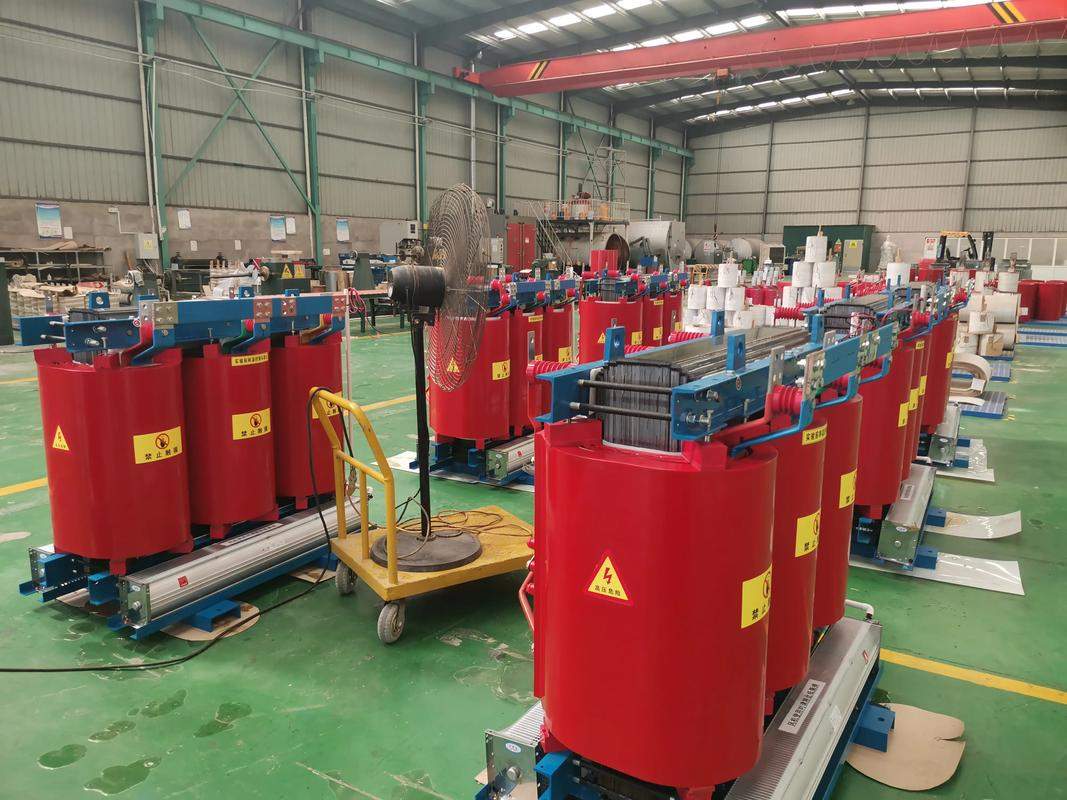
Dry-type transformers are maintenance-free because they do not contain insulating oil.False
Dry-type transformers eliminate insulating-liquid maintenance, but they still require inspection, cleaning, connection checks, thermal monitoring, ventilation management, and insulation-condition assessment.
How Does Transformer Type Affect Maintenance?
The fundamental difference in maintenance comes from the transformer's insulation and cooling architecture. Oil-immersed transformers use insulating liquid together with solid insulation. The liquid provides electrical insulation and transfers heat from the windings and core toward the cooling system. Because the insulating liquid is an active part of the transformer's thermal and dielectric system, its condition becomes an important maintenance parameter. Buyers and operators may need to monitor liquid quality, moisture, dielectric strength, acidity or other applicable characteristics, depending on transformer design, liquid type, age, operating conditions, and maintenance philosophy. Seals, gaskets, bushings, conservators, radiators, valves, pressure-relief equipment, and other accessories may also require inspection.
Dry-type transformers use solid insulation and air rather than insulating liquid. This removes liquid sampling, oil filtration, oil leakage, and liquid-level maintenance from the normal maintenance program. However, the absence of oil does not mean the transformer can be ignored. Dry-type units can accumulate dust on windings and cooling surfaces, especially in industrial environments. Restricted airflow can increase operating temperature, while moisture and condensation can reduce insulation performance. Electrical connections can loosen through thermal cycling and vibration, potentially producing localized heating.
Therefore, the two technologies shift the maintenance workload rather than eliminating it. Oil-immersed transformers require more attention to the insulating liquid and liquid-associated components, while dry-type transformers require greater attention to air circulation, cleanliness, solid insulation, and the surrounding installation environment.
Oil-Immersed vs Dry-Type Transformer Maintenance Comparison
| Maintenance Item | Oil-Immersed Transformer | Dry-Type Transformer |
|---|---|---|
| Insulating-liquid inspection | Required where applicable | Not required |
| Oil leakage inspection | Important | Not applicable |
| Oil sampling/testing | May be part of maintenance program | Not applicable |
| Winding inspection | Required | Required |
| Electrical connection inspection | Required | Required |
| Temperature monitoring | Important | Important |
| Cooling-system inspection | Important | Important |
| Cleaning | Depends on installation | Often particularly important indoors |
| Ventilation inspection | Important | Critical |
| Moisture/condensation control | Important | Particularly important |
| Bushing inspection | Important | Depends on construction |
| Sealing inspection | Important | Generally simpler |
| Diagnostic testing | Depending on application | Depending on application |
| Liquid containment considerations | Applicable | Not applicable |
| Routine maintenance complexity | Generally higher | Generally simpler |
| Environmental sensitivity | Oil condition plus external environment | Dust, moisture and ventilation are major factors |
This comparison should be adapted to the actual transformer design. Different manufacturers may use different accessories, cooling arrangements, insulation systems, and monitoring technologies.
Why Is Insulating Oil Important for Oil-Immersed Transformer Maintenance?
Insulating oil is more than a coolant. It also contributes to the dielectric insulation system. As a transformer operates, the liquid can be affected by moisture, oxidation, contamination, thermal stress, and interaction with solid insulation. These changes can reduce dielectric performance or provide evidence of developing internal problems.
For this reason, oil-immersed transformer maintenance may include periodic liquid sampling and laboratory testing. The exact testing program should be established according to transformer design, operating conditions, manufacturer's recommendations, and the criticality of the installation. Some large or strategically important transformers may also use online monitoring systems that provide continuous or near-continuous information about temperature, dissolved gases, moisture, or other health indicators.
Oil leakage is another important maintenance concern. Small leaks may initially appear insignificant, but persistent leakage can reduce liquid level, contaminate surrounding areas, damage seals, and create environmental or fire-management concerns. Operators should therefore inspect tank welds, flanges, gaskets, valves, bushings, radiators, and other possible leakage points.
From a service-life perspective, maintaining the insulating liquid can help protect the solid insulation system. Good oil condition, controlled temperature, proper loading, and effective moisture management can contribute to long-term transformer reliability.
What Maintenance Does a Dry-Type Transformer Require?
Dry-type transformers generally have a simpler maintenance program because there is no insulating liquid to test or contain. However, their solid insulation and air-cooling system require careful environmental management.
Dust is one of the most common concerns. Industrial dust can accumulate on winding surfaces and cooling passages, reducing heat dissipation and potentially creating conductive contamination under humid conditions. Dry-type transformers installed in clean electrical rooms may require less frequent cleaning than units installed in factories, workshops, mining environments, or areas with airborne particles.
Ventilation is equally important. A dry-type transformer converts part of its input energy into heat through core and winding losses. If the surrounding air cannot remove that heat effectively, the winding temperature can rise. Repeated or prolonged thermal stress accelerates insulation aging.
Maintenance should therefore consider:
- Winding cleanliness
- Cooling-air passages
- Room ventilation
- Ambient temperature
- Moisture and condensation
- Electrical terminals
- Mechanical supports
- Resin or solid-insulation condition
- Temperature-monitoring equipment
- Enclosure condition
- Signs of overheating or abnormal discharge
The maintenance advantage of dry-type construction is therefore best described as reduced liquid-related maintenance, not zero maintenance.
How Does Operating Temperature Affect Service Life?
Temperature is one of the most important factors controlling transformer service life. Electrical losses generate heat, and excessive temperature accelerates the aging of insulation materials. This principle applies to both oil-immersed and dry-type transformers.
Transformer designers establish appropriate temperature-rise limits based on the insulation system and intended operating conditions. Buyers should pay close attention to rated ambient temperature, temperature rise, cooling class, continuous loading, overload requirements, and installation altitude.
The load profile matters because transformer heating is not constant. A transformer operating continuously near full load experiences much greater load-related heating than a transformer that normally operates at light load and experiences short peak periods.
An illustrative example shows the importance of this relationship. Suppose a transformer has a rated load of 1,000 kVA and normally operates around 50% load but occasionally reaches 90–100%. The operator should not evaluate thermal performance solely from the 1,000 kVA nameplate. The duration of high-load operation, ambient temperature, cooling conditions, and daily load cycle all influence actual insulation stress.
For buyers, a transformer with a well-designed thermal system and appropriate temperature monitoring can be more valuable than a transformer with a slightly lower purchase price but weaker thermal margins.
How Does Overloading Shorten Transformer Life?
Overloading increases winding current and therefore increases load-related losses. Since these losses generate heat, sustained overload can increase winding temperature and accelerate insulation aging.
Oil-immersed transformers can often manage thermal loads effectively because insulating liquid provides strong heat transfer. Nevertheless, the liquid cannot eliminate the consequences of excessive temperature. Dry-type transformers also have good thermal performance when properly designed, but they are highly dependent on effective airflow and installation conditions.
Buyers who expect frequent overloads should disclose this requirement during the specification stage. The manufacturer should evaluate:
| Operating Condition | Potential Service-Life Effect |
|---|---|
| Light continuous loading | Generally lower thermal stress |
| Moderate continuous loading | Normal operating condition when properly designed |
| High continuous loading | Higher thermal and insulation stress |
| Short-duration overload | May be acceptable within design limits |
| Frequent repeated overloads | Can increase long-term thermal aging |
| High ambient temperature | Reduces thermal margin |
| Poor ventilation | Particularly significant for dry-type units |
| Blocked cooling surfaces | Increases operating temperature |
| Excessive moisture | Can degrade insulation performance |
| Harmonic-rich loads | May increase additional heating depending on design |
The transformer should be selected for the actual operating duty rather than an idealized average load.
Does Oil-Immersed Construction Usually Provide Longer Service Life?
Oil-immersed transformers have a long-established record of durable operation, particularly in utility and industrial applications. However, it would be incorrect to state that oil-immersed transformers automatically last longer than dry-type transformers.
Service life depends on insulation temperature, moisture, electrical stress, mechanical stress, loading, manufacturing quality, maintenance, and environmental conditions. A well-maintained oil-immersed transformer can provide decades of service, but poor oil condition, overheating, moisture ingress, repeated overloading, or accessory failures can significantly reduce reliability.
Likewise, a properly designed dry-type transformer can provide a long service life when its operating temperature remains within acceptable limits and its insulation is protected from excessive moisture, contamination, and thermal cycling.
The correct purchasing question is therefore:
“What conditions will this transformer experience, and how does its insulation system respond to those conditions over time?”
That question is much more useful than assigning a fixed lifespan to a transformer type.
How Does Dry-Type Insulation Affect Service Life?
Dry-type transformers commonly use solid insulation systems designed for elevated operating temperatures. Cast-resin designs encapsulate windings in resin, providing mechanical protection and electrical insulation while allowing the transformer to operate without liquid insulation.
The resin system can offer strong resistance to environmental contamination, but it is not immune to thermal stress. Repeated heating and cooling cause expansion and contraction of materials with different thermal properties. Over many cycles, mechanical stress can develop within the insulation system and associated structures.
This is why temperature control remains essential. A dry-type transformer installed in a clean, well-ventilated electrical room can operate under very favorable conditions. The same transformer installed in a hot, dusty, poorly ventilated room may experience substantially greater stress.
Buyers should therefore request information about insulation temperature class, temperature-rise limits, enclosure requirements, ventilation, climatic suitability, altitude correction, and expected operating conditions.
How Does Maintenance Affect Transformer Reliability?
Preventive maintenance is valuable because many transformer problems develop gradually rather than appearing suddenly. Abnormal temperature, oil deterioration, loose connections, moisture, contamination, unusual noise, and cooling-system problems can often be identified before they develop into major failures.
For oil-immersed transformers, diagnostic information from insulating liquid can provide additional insight into transformer condition. For dry-type transformers, visual inspection, thermal imaging, insulation assessment, connection inspection, and environmental checks can be particularly useful.
The objective is not simply to repair a transformer after failure. The objective is to identify degradation early enough that corrective action can be planned before an unexpected shutdown occurs.
A strong maintenance program typically includes:
- Routine visual inspection
- Temperature monitoring
- Connection inspection
- Cooling-system inspection
- Cleaning where required
- Insulation-condition assessment
- Oil testing where applicable
- Leakage inspection where applicable
- Protective-device verification
- Periodic electrical testing
- Review of loading history
- Documentation of maintenance findings
Which Transformer Is Easier to Maintain?
In general, dry-type transformers can have simpler routine maintenance because they do not require insulating-liquid management. This is particularly valuable for indoor facilities where maintenance personnel want to minimize liquid handling.
Oil-immersed transformers have a broader maintenance scope because operators must consider both the electrical equipment and the insulating liquid. However, oil condition also provides an additional diagnostic medium that can help identify developing problems.
Therefore, “easier to maintain” does not necessarily mean “more reliable.” A maintenance program should be judged by whether it can effectively control the dominant failure and aging mechanisms of the selected transformer.
For an industrial facility with technicians experienced in oil-filled equipment, an oil-immersed transformer may be very manageable. For a commercial facility with limited electrical maintenance resources, a dry-type transformer may provide a simpler maintenance routine.
How Should Buyers Evaluate Service Life Before Purchasing?
Buyers should avoid accepting vague statements such as “30 years” or “long service life” without understanding the assumptions behind them. Service life is strongly influenced by operating conditions.
Ask the manufacturer for information about:
| Service-Life Evaluation | Why Buyers Should Ask |
|---|---|
| Insulation system | Determines thermal and electrical aging characteristics |
| Temperature rise | Indicates thermal operating margin |
| Rated ambient temperature | Establishes expected environmental condition |
| Load profile | Determines actual thermal stress |
| Overload capability | Helps evaluate peak operating conditions |
| Cooling method | Determines heat-dissipation strategy |
| Insulation condition monitoring | Supports early fault detection |
| Environmental requirements | Prevents unsuitable installation |
| Maintenance schedule | Establishes expected preventive workload |
| Factory testing | Confirms manufacturing quality |
| Warranty | Defines supplier responsibility |
| Spare-parts support | Supports long-term serviceability |
| Historical operating experience | Provides practical reliability evidence |
A good manufacturer should explain not only what the transformer can do when new, but also how it should be operated and maintained throughout its expected service life.
How Do Installation Conditions Change Maintenance Requirements?
The same transformer may require very different maintenance schedules depending on where it is installed. An oil-immersed transformer located outdoors in a clean environment may have different maintenance needs from one located near corrosive industrial processes. Similarly, a dry-type transformer in a clean, temperature-controlled electrical room may need considerably less cleaning than a unit operating inside a dusty manufacturing plant.
Important environmental variables include:
- Ambient temperature
- Humidity
- Dust concentration
- Chemical contamination
- Salt exposure
- Altitude
- Ventilation
- Condensation
- Vibration
- Indoor or outdoor installation
- Enclosure configuration
Buyers should provide these conditions to the manufacturer before ordering. A supplier cannot properly evaluate service life if the actual environment is unknown.
What Does a Good Transformer Maintenance Plan Look Like?
A practical maintenance plan should divide activities according to frequency and importance. Daily or routine monitoring may focus on abnormal temperature, sound, smell, leakage, or alarm indications. Periodic inspections can examine connections, cooling systems, cleanliness, insulation condition, and accessories. More advanced diagnostic testing can be scheduled according to transformer criticality and operating history.
The plan should also distinguish between preventive maintenance and condition-based maintenance. Not every transformer requires the same testing frequency. A critical substation transformer supporting an essential production line may justify much more extensive monitoring than a smaller noncritical unit.
For oil-immersed transformers, condition-based maintenance can make effective use of oil diagnostics and other monitoring information. For dry-type transformers, temperature trends, insulation inspection, thermal imaging, and environmental condition monitoring can be valuable.
The goal is to move from a reactive maintenance strategy—repairing equipment after failure—to a predictive or preventive strategy that identifies degradation before it becomes an outage.
Oil-Immersed vs Dry-Type: Maintenance and Service-Life Decision Matrix
| Application Condition | Potentially Suitable Choice | Main Maintenance Consideration |
|---|---|---|
| Outdoor utility substation | Oil-immersed | Liquid, cooling and accessory monitoring |
| Large industrial transformer | Often oil-immersed | Thermal and insulation management |
| Indoor commercial building | Often dry-type | Ventilation and cleanliness |
| Clean electrical room | Dry-type can be attractive | Periodic inspection and cleaning |
| Dusty industrial environment | Case-dependent | Enclosure and cleaning are critical |
| High humidity | Case-dependent | Moisture and condensation control |
| Limited maintenance personnel | Often dry-type | Simpler routine maintenance |
| Advanced condition monitoring | Either | Select appropriate diagnostic package |
| Long continuous operation | Either | Control temperature and loading |
| Frequent overload | Case-dependent | Verify thermal design and insulation margin |
| Environment with liquid-spill concerns | Dry-type | Eliminates transformer insulating liquid |
| Large outdoor installation with service infrastructure | Oil-immersed | Established maintenance practices |
This matrix is a starting point rather than a substitute for engineering evaluation.
How Can Buyers Reduce Long-Term Transformer Maintenance Costs?
The most effective way to reduce maintenance cost is often to make the correct engineering decisions before the transformer is manufactured. Proper capacity selection, realistic load information, suitable cooling design, appropriate insulation, environmental protection, and correctly specified accessories can prevent many avoidable problems.
Buyers should also consider the manufacturer's service capability. A transformer supplier that can provide commissioning support, maintenance instructions, spare parts, troubleshooting assistance, inspection services, and technical documentation can reduce long-term ownership risk.
The initial purchase should therefore include a maintenance strategy. Ask the supplier to identify routine inspection requirements, recommended testing intervals, critical spare parts, expected environmental conditions, and major maintenance procedures.
This approach turns maintenance from an afterthought into part of the transformer procurement specification.
What Should Buyers Verify About the Manufacturer?
Service life is strongly influenced by manufacturing quality. Buyers should evaluate whether the transformer factory has appropriate production and testing capabilities.
For oil-immersed transformers, examine winding equipment, insulation processing, vacuum drying, tank fabrication, oil filling, sealing, and leak testing. For dry-type transformers, examine winding production, resin casting or encapsulation processes where applicable, curing control, insulation assembly, and thermal design.
For both technologies, buyers should evaluate:
- Core manufacturing quality
- Winding precision
- Insulation processing
- Assembly control
- Connection quality
- Electrical testing
- Temperature-rise testing where applicable
- Routine test procedures
- Quality traceability
- Final inspection
- Packaging and transportation protection
A transformer that leaves the factory with high-quality insulation, accurate winding geometry, reliable connections, and verified electrical performance starts its service life with a significant reliability advantage.
What Is the Difference Between Oil-Immersed and Dry-Type Transformers in Cost and Energy Efficiency?
When buyers compare oil-immersed and dry-type transformers, the lowest purchase price can be misleading. A transformer may cost less initially but consume more electricity through no-load and load losses over decades of continuous operation. Conversely, a dry-type transformer may have a higher upfront price in some applications but offer installation or maintenance advantages that change the total cost of ownership. The problem becomes more important for transformers that operate 24 hours a day, because even small efficiency differences accumulate into substantial energy costs. Choosing only by equipment price can therefore result in higher lifetime expenditure, unnecessary energy losses, and a poor return on investment. A better solution is to compare purchase cost, transformer losses, loading profile, maintenance, installation requirements, expected service life, and local energy prices as one lifecycle calculation.
Oil-immersed and dry-type transformers can both achieve high energy efficiency, and neither technology is inherently the cheapest or most efficient in every application. Oil-immersed transformers often provide strong thermal performance and can be economically attractive for higher-capacity and utility applications, while dry-type transformers can offer installation and maintenance advantages for many indoor applications. The correct choice should be based on guaranteed no-load loss, load loss, efficiency at the actual operating load, purchase price, installation cost, maintenance requirements, and expected service life—not simply on whether the transformer uses oil or air.
This distinction is increasingly important because transformer efficiency is receiving greater regulatory and commercial attention. In the United States, DOE's current distribution-transformer framework covers both liquid-immersed and dry-type equipment, with amended standards finalized in 2024 and compliance required from April 23, 2029.

Oil-immersed transformers are always more energy efficient than dry-type transformers.False
Energy efficiency depends on the specific transformer design, core material, winding losses, rating, loading profile, cooling system, and applicable efficiency requirements. Transformer type alone does not determine efficiency.
How Do Oil-Immersed and Dry-Type Transformer Costs Differ?
The purchase price is only the first component of transformer cost. Oil-immersed transformers require a tank, insulating liquid, radiators, oil-preservation components where applicable, and associated monitoring equipment. Dry-type transformers eliminate the oil tank and liquid system but often use more specialized solid insulation, resin systems, enclosures, or ventilation arrangements. Consequently, the relative purchase price can change significantly with voltage, capacity, insulation level, enclosure, cooling method, and project requirements. It is not technically sound to claim that every dry-type transformer costs more or that every oil-immersed transformer costs less. For a buyer, the more useful question is what the complete installed cost will be. An oil-immersed transformer may require additional civil works, oil containment, fire-protection measures, or greater separation depending on the installation. A dry-type transformer may simplify some indoor installations because it contains no transformer oil, but the electrical room may require suitable ventilation and clearances. Transportation can also influence the comparison because transformer weight, dimensions, oil volume, and accessories vary substantially between designs. Maintenance costs should then be added. Oil-immersed units may require oil sampling and condition monitoring, while dry-type units generally avoid oil-related maintenance but may require periodic cleaning, ventilation inspection, connection checks, and fan maintenance when forced-air cooling is used. The actual operating environment can therefore change the economic balance. In a clean indoor electrical room, a dry-type transformer may have a relatively simple maintenance program. In a utility substation, the established infrastructure and thermal characteristics of an oil-immersed transformer may make it economically attractive. Buyers should request a complete quotation that separates transformer price, accessories, transportation, installation requirements, commissioning, protection equipment, and recommended spare parts. A professional manufacturer should also provide guaranteed loss data rather than quoting efficiency as a generic percentage without specifying the test conditions. For lifecycle purchasing, the correct comparison is not “Which transformer has the lower invoice?” but “Which transformer delivers the required electrical and thermal performance at the lowest total cost over its expected operating life?”
Which Transformer Is More Energy Efficient?
The answer depends on the actual design rather than the insulation medium alone. Transformer efficiency is determined by losses, and the two major categories are generally no-load loss and load loss. No-load loss occurs whenever the transformer is energized, even if little or no load is connected. It is strongly related to the magnetic core and operating flux. Load loss increases with current and is primarily associated with winding resistance and additional stray losses. Because these two losses behave differently, a transformer with excellent efficiency at full load may not necessarily be the best economic choice for a facility that operates at only 30–50% load most of the time. Core material, magnetic flux density, conductor size, winding configuration, manufacturing tolerances, and cooling design all influence the final result. DOE research has highlighted the significance of transformer losses: DOE has estimated that distribution-transformer losses account for approximately 2–3% of U.S. generated electricity, while no-load losses represent about 25% of distribution-transformer losses. This demonstrates why even apparently small efficiency improvements can become economically meaningful across large fleets of continuously energized transformers. DOE's 2024 final rule also states that updated distribution-transformer efficiency standards are expected to produce substantial long-term energy savings and apply across liquid-immersed and dry-type categories. From a buyer's perspective, this means the transformer construction type should not be used as a substitute for actual loss data. Request guaranteed no-load loss and load loss in watts, then calculate expected annual energy consumption using the project's load profile. If two transformers have similar purchase prices but one has lower losses at the customer's actual loading conditions, the more efficient transformer may quickly recover its higher initial cost. Conversely, if the dry-type transformer has a higher purchase price but provides installation benefits that significantly reduce project costs, its total economics may still be favorable. Energy efficiency should therefore be evaluated through real operating conditions rather than through a simple oil-versus-dry comparison.
How Do No-Load and Load Losses Affect Transformer Cost?
A simple lifecycle calculation helps explain why transformer losses matter. The approximate annual energy cost associated with transformer losses can be estimated from the no-load loss and the load-dependent loss. If the transformer operates continuously, no-load losses accumulate for every energized hour. Load losses vary with current and can be approximated using the square of the load ratio under simplified conditions.
For a simplified analysis:
Annual loss energy ≈ No-load loss × operating hours + load loss at rated load × load ratio² × operating hours
For example, suppose a transformer has a 1,000 W no-load loss and a 6,000 W load loss at rated load. If it operates 8,760 hours per year at an average 50% load, a simplified estimate is:
- No-load energy = 1 kW × 8,760 h = 8,760 kWh/year
- Approximate load-loss energy = 6 kW × 0.5² × 8,760 h = 13,140 kWh/year
- Approximate total transformer-loss energy = 21,900 kWh/year
At an illustrative electricity cost of $0.10/kWh, those losses represent about $2,190 per year. At $0.15/kWh, the cost becomes approximately $3,285 per year. These are simplified examples rather than guaranteed field values, because actual load losses, harmonics, temperature, voltage, load profile, and measurement conditions must be included in a project calculation.
| Parameter | Example Transformer A | Example Transformer B |
|---|---|---|
| No-load loss | 1.0 kW | 0.8 kW |
| Rated load loss | 6.0 kW | 5.0 kW |
| Average load | 50% | 50% |
| Operating hours | 8,760 h/year | 8,760 h/year |
| Approx. no-load energy | 8,760 kWh | 7,008 kWh |
| Approx. load-loss energy | 13,140 kWh | 10,950 kWh |
| Approx. total loss energy | 21,900 kWh | 17,958 kWh |
The difference is approximately 3,942 kWh/year under these simplified assumptions. Over a long service period, that difference can become more financially important than a modest difference in purchase price. Buyers should therefore ask manufacturers to provide guaranteed loss values at the required test conditions and then model the transformer's actual loading profile.
How Does Load Profile Change the Most Economical Transformer?
Load profile is one of the most important factors in transformer economics. A transformer that serves a continuously loaded industrial process may benefit greatly from low load losses because current-related losses occur for many hours at substantial loading. A transformer serving a commercial building with highly variable occupancy may spend much of the day at partial load, making no-load loss particularly important. A transformer serving a lightly loaded facility that remains energized continuously can accumulate significant core losses even when very little power is being delivered. This is why selecting a transformer solely from peak kVA can produce misleading economic results. Two transformers with the same rated capacity can have very different annual energy costs depending on their loss characteristics and actual load curve. Buyers should ideally provide suppliers with hourly or monthly load information, expected peak demand, average demand, operating schedule, motor-starting requirements, harmonic conditions where relevant, and future expansion plans. The manufacturer can then compare transformer designs at realistic operating points. The economically optimal transformer is often the one with the best balance between no-load loss and load loss for that specific duty cycle. For example, choosing an extremely low-load-loss design may be attractive for a transformer that remains energized almost continuously at low loading. For a heavily loaded transformer, reducing load losses may have a greater financial impact. This is why advanced transformer procurement should use an efficiency curve or loss model rather than a single full-load efficiency number. From the supplier perspective, providing both guaranteed no-load and load-loss values allows the buyer to make a transparent lifecycle comparison. It also makes quotations from different manufacturers much easier to evaluate because the customer can compare equivalent technical conditions instead of relying on marketing descriptions.
How Does Maintenance Affect Total Transformer Cost?
Maintenance is another area where oil-immersed and dry-type transformers differ economically. Oil-immersed transformers can require oil sampling, oil-condition analysis, leakage inspection, tank and seal inspection, radiator maintenance, and monitoring of oil temperature or level depending on transformer design. These tasks require qualified personnel and can create periodic testing expenses. However, oil condition can also provide useful diagnostic information, helping operators identify developing transformer problems before a major failure. Dry-type transformers eliminate oil-related maintenance, which can simplify routine service. However, dry-type units are not maintenance-free. Windings and ventilation paths may require cleaning, particularly in dusty industrial environments. Electrical connections need inspection because loose connections can create localized heating. Forced-air cooling systems require fan inspection, and temperature-monitoring devices should be verified. Therefore, the maintenance cost advantage depends on the installation environment. A dry-type transformer in a clean indoor facility may have relatively simple maintenance requirements, while a dry-type transformer in a dusty plant may require frequent cleaning. An oil-immersed transformer at a well-managed utility substation may have a more sophisticated maintenance program but also benefit from established condition-monitoring procedures. Buyers should compare the full maintenance schedule, labor requirements, testing equipment, spare parts, expected downtime, and service intervals. The cheapest maintenance plan is not always the best one if it fails to detect insulation degradation or abnormal temperature early. Condition-based maintenance can often provide better lifecycle economics than purely calendar-based maintenance because inspections and testing are targeted at actual transformer condition.
How Do Installation Costs Affect the Oil vs Dry-Type Decision?
Installation cost can change the economic ranking significantly. Oil-immersed transformers may require additional measures for liquid containment, fire protection, separation, or specialized rooms depending on the project. Dry-type transformers can avoid oil containment requirements and may be easier to integrate into certain indoor electrical rooms. However, dry-type transformers still require adequate ventilation and clearance to remove heat. If a building has limited ventilation capacity, the customer may need additional HVAC or airflow provisions. These costs should be included in the project comparison. Outdoor oil-immersed transformers may be especially practical where sufficient space exists for the transformer, radiators, fire separation, and access for maintenance. For indoor commercial installations, dry-type construction can be attractive because the absence of transformer oil simplifies some safety considerations. However, the transformer footprint, enclosure, noise, ventilation, and connection configuration still need to be evaluated. Buyers should therefore request a complete installation drawing rather than comparing transformer dimensions alone. The drawing should show transformer footprint, height, access space, cable entry, ventilation requirements, maintenance clearance, and any associated fire-protection or containment requirements. This approach allows the customer to calculate the actual installed cost. A transformer that is cheaper to manufacture but expensive to install may not be the most economical solution. Likewise, a transformer with a higher equipment price may deliver lower total project cost if installation is simpler and energy losses are lower. For large projects, these differences can become significant enough to justify a formal lifecycle-cost analysis before purchase.
Oil-Immersed vs Dry-Type Transformer Cost and Efficiency Comparison
| Factor | Oil-Immersed Transformer | Dry-Type Transformer |
|---|---|---|
| Initial equipment cost | Often competitive for many medium/high-capacity applications | Can be higher depending on insulation and enclosure |
| Oil system cost | Included | Not applicable |
| Installation | May require containment/fire measures depending on site | Often attractive for indoor installations |
| No-load loss | Depends mainly on core design | Depends mainly on core design |
| Load loss | Depends on winding/conductor design | Depends on winding/conductor design |
| Energy efficiency | Can be very high | Can be very high |
| Maintenance | More oil-related tasks | Less liquid-related maintenance |
| Ventilation | Cooling system dependent | Particularly important |
| Fire-protection cost | Potentially higher | Often simpler |
| Lifecycle cost | Strong for many utility and high-capacity applications | Strong for many indoor and fire-sensitive applications |
| Best comparison method | Guaranteed losses + installation + maintenance | Guaranteed losses + installation + maintenance |
Is One Transformer Type Always Cheaper to Operate?
No. Operating economics depend more on transformer design and actual operating conditions than on the basic fact that one transformer uses oil and the other uses air. A poorly designed or inefficient transformer of either type can have high annual losses. A premium dry-type transformer can have excellent efficiency, while a high-quality oil-immersed transformer can also achieve excellent efficiency. Core material is particularly important for no-load performance, while conductor design and winding construction influence load losses. Cooling design affects thermal performance, but the presence of oil does not automatically guarantee lower energy consumption. Buyers should therefore compare guaranteed losses rather than assuming that oil cooling equals higher efficiency. DOE's 2024 distribution-transformer rule explicitly covers liquid-immersed, low-voltage dry-type, and medium-voltage dry-type equipment, demonstrating that energy-efficiency requirements apply across these different technologies. DOE also reported that distribution transformers operate continuously and that there are more than 60 million distribution transformers mounted on utility poles and pads across the United States, illustrating why small efficiency improvements can have a large aggregate impact. For an individual buyer, the same principle applies at a smaller scale: a transformer operating thousands of hours every year turns relatively small loss differences into recurring energy costs. Therefore, the purchasing process should begin with guaranteed loss data and an actual load profile. The equipment type should then be selected based on safety, installation, maintenance, capacity, and lifecycle economics.
How Can Buyers Calculate Transformer Lifecycle Cost?
A practical lifecycle-cost model can be kept relatively simple. Start with the transformer purchase price, then add installation costs, expected maintenance expenses, and the present value of energy losses. For a basic comparison:
Total Cost of Ownership ≈ Purchase Cost + Installation Cost + Maintenance Cost + Energy-Loss Cost + Expected Major-Service Cost
The energy-loss component should be calculated from no-load loss and load loss across the expected operating profile. For a preliminary estimate, buyers can calculate annual no-load energy by multiplying no-load loss in kW by annual energized hours. Load-loss energy should be estimated from rated load loss and the square of the actual load ratio over time. A more accurate model can use hourly load data. This approach is especially useful when comparing suppliers because a transformer with a $5,000 higher purchase price may have substantially lower annual losses. If the energy savings are $1,000 per year, the additional purchase cost could theoretically be recovered in approximately five years before considering discount rates, maintenance, financing, and energy-price changes. Buyers should also consider the expected transformer operating life and future electricity prices. DOE's 2024 final rule projected more than $14 billion in energy-cost savings over 30 years of shipments from the updated distribution-transformer standards. This demonstrates the long-term financial importance of transformer efficiency. The actual economics of an individual project will differ, but the methodology is the same: compare the additional capital cost with the value of avoided losses over the expected operating period. A professional transformer supplier should be willing to provide the loss data necessary for this calculation.
What Should Buyers Request From a Transformer Manufacturer?
Buyers should request a technical quotation that clearly identifies rated power, primary and secondary voltage, frequency, impedance, cooling method, insulation system, guaranteed no-load loss, guaranteed load loss, temperature rise, efficiency where specified, dimensions, weight, and applicable standards. For oil-immersed transformers, request oil type, oil volume, cooling arrangement, tank configuration, maintenance recommendations, and monitoring options. For dry-type transformers, request winding construction, enclosure details, ventilation requirements, insulation system, temperature monitoring, and forced-air options if applicable. The supplier should also provide routine test documentation and explain how guaranteed losses are measured. DOE enforcement actions demonstrate why compliance verification matters: in 2024, DOE issued an order involving distribution-transformer models that had failed applicable energy-conservation standards based on manufacturer testing. Buyers should therefore avoid relying solely on brochure efficiency claims. Instead, compare standardized test results and guaranteed losses under equivalent conditions. Factory capability is also relevant. Core manufacturing, winding equipment, insulation processing, drying systems, resin processing for relevant dry-type designs, assembly controls, and electrical testing facilities all influence final transformer performance. A credible manufacturer should be able to explain how design calculations are converted into controlled production results. The strongest quotation is therefore not necessarily the lowest price; it is the quotation that provides enough technical and commercial information to calculate lifecycle cost with confidence.
Below is a concise, SEO-focused version in the same professional manufacturer/supplier style, with practical buyer criteria, technical comparison tables, a fact-check claim, and a clear CTA.
How Should Buyers Choose Between Oil-Immersed and Dry-Type Transformers?
Choosing between an oil-immersed transformer and a dry-type transformer can become difficult when the purchase decision involves more than the initial quotation. A transformer that appears cheaper may require additional installation measures, maintenance, fire protection, or space, while a more expensive option may provide advantages in a specific indoor or environmentally sensitive application. Selecting the wrong transformer type can therefore increase lifecycle cost, complicate installation, reduce operational reliability, or create unnecessary safety challenges. The practical solution is to evaluate the transformer according to its installation environment, voltage and capacity requirements, cooling conditions, fire-risk constraints, maintenance strategy, efficiency, footprint, and total cost of ownership rather than choosing solely by purchase price.
Buyers should choose between oil-immersed and dry-type transformers by first matching the transformer to the installation environment and technical duty, then comparing capacity, voltage class, cooling performance, fire-safety requirements, maintenance, efficiency, footprint, installation cost, and lifecycle cost. Oil-immersed transformers are often preferred for outdoor substations and high-capacity applications where efficient heat transfer and economical construction are important, while dry-type transformers are often advantageous for indoor, fire-sensitive, or environmentally controlled installations where eliminating liquid insulation is valuable.
The best transformer is therefore not universally the cheapest or the most compact model. It is the transformer whose construction, insulation system, cooling method, electrical characteristics, and maintenance requirements fit the actual operating conditions. The following buyer-oriented framework can help purchasers compare both technologies systematically and avoid selecting a transformer based on one specification alone.
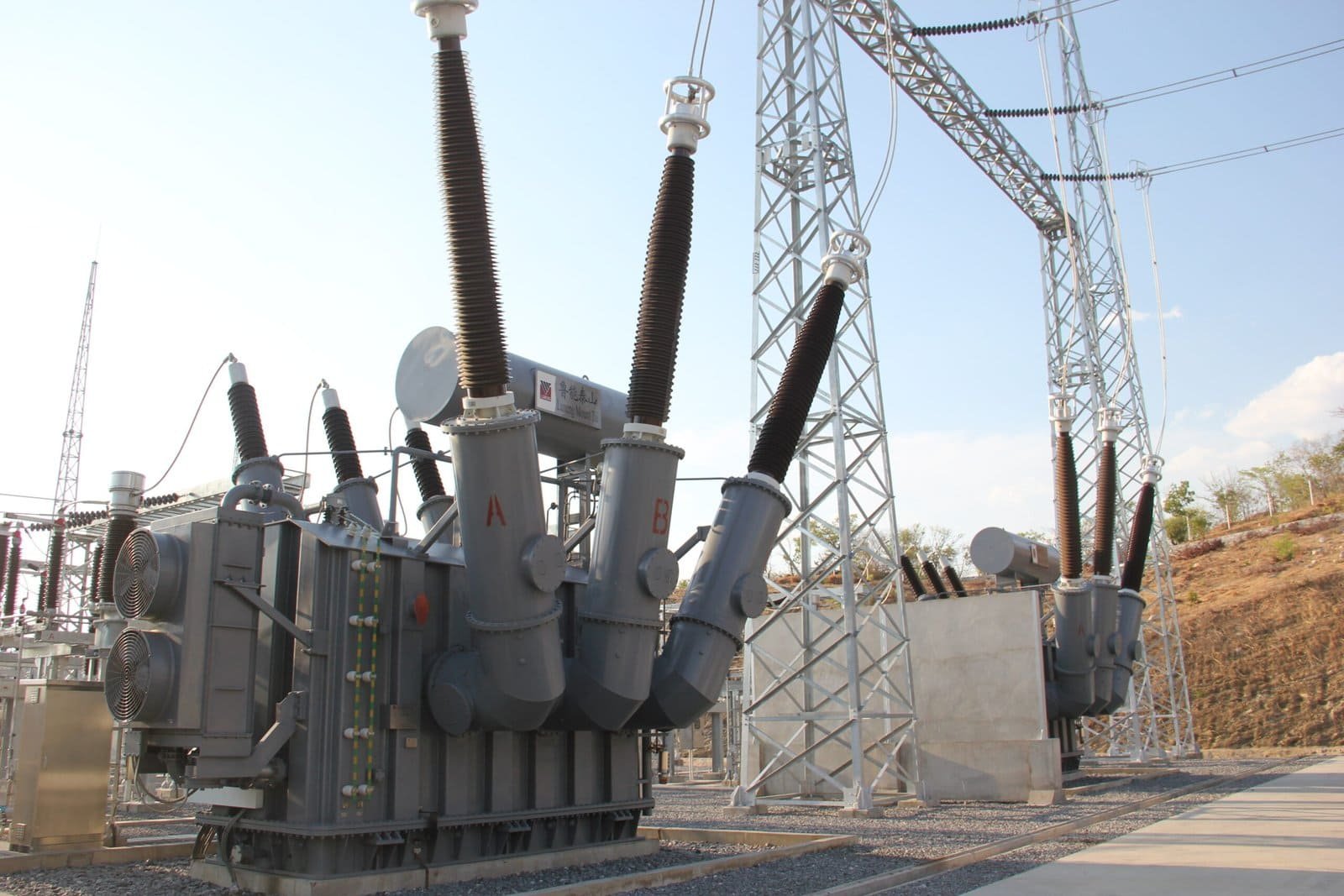
Dry-type transformers are always safer than oil-immersed transformers in every application.False
Dry-type transformers eliminate liquid insulation and can be advantageous where liquid-fire considerations are important, but overall transformer safety also depends on design, installation, protection, enclosure, ventilation, maintenance, and the specific application environment.
What Is the First Question Buyers Should Ask?
The first question should not be “Which transformer costs less?” It should be “Where and how will the transformer operate?” Installation conditions strongly influence the suitability of each technology. Oil-immersed transformers use insulating liquid for both electrical insulation and heat transfer, allowing the transformer to dissipate losses efficiently through radiators, conservators, or other cooling arrangements. This construction is particularly common in outdoor substations, utility distribution networks, industrial substations, and larger power-transformer applications. Dry-type transformers instead use solid insulation and air as the primary cooling medium, eliminating the need for an insulating liquid tank. This can make them attractive for commercial buildings, hospitals, data centers, factories, tunnels, high-rise buildings, and other locations where liquid-filled equipment creates additional installation considerations.
Buyers should therefore establish whether the transformer will be installed indoors or outdoors, whether there is a significant fire-risk concern, whether oil containment is practical, whether ventilation is adequate, whether the site has space for radiators or an enclosure, and whether local electrical and building requirements impose special conditions. Capacity and voltage are equally important. A transformer selected for a small commercial facility should not be evaluated using exactly the same criteria as a large outdoor utility transformer. As capacity increases, thermal performance, impedance, short-circuit withstand capability, transportation, installation, and maintenance become increasingly important. The purchasing specification should identify primary voltage, secondary voltage, frequency, rated capacity, phase configuration, tap requirements, impedance, insulation level, altitude, ambient temperature, cooling arrangement, enclosure requirements, and expected load profile before the technology decision is finalized.
How Do Oil-Immersed and Dry-Type Transformers Compare?
| Buyer Criterion | Oil-Immersed Transformer | Dry-Type Transformer |
|---|---|---|
| Insulation medium | Insulating liquid plus solid insulation | Solid insulation and air |
| Typical installation | Outdoor substations, utility and industrial sites | Indoor commercial and industrial facilities |
| Heat transfer | Highly effective liquid-based heat transfer | Air-based heat transfer |
| Fire considerations | Requires consideration of insulating-liquid fire risk | No insulating liquid in the active insulation system |
| Maintenance | Includes liquid inspection/testing and associated equipment | Generally simpler routine maintenance |
| Environmental considerations | Requires liquid containment and spill planning where applicable | No insulating-liquid spill from the transformer itself |
| Footprint | Often efficient for larger ratings, but tank/cooling system adds components | Can be compact depending on rating and enclosure |
| High-capacity applications | Widely used | Available, but application-dependent |
| Indoor applications | Possible with appropriate installation arrangements | Common choice |
| Purchase price | Often competitive at larger ratings | Can have higher initial cost in some ratings |
| Lifecycle evaluation | Strongly dependent on oil management, loading, and maintenance | Strongly dependent on ventilation, temperature, loading, and insulation condition |
This table should be treated as a selection framework rather than an absolute ranking. Modern transformer designs vary significantly, and the actual specification can change the economics of either technology.
How Important Is Installation Location?
Installation location can be one of the strongest decision factors. For outdoor substations, oil-immersed transformers are often highly practical because the transformer tank and cooling equipment can be designed for outdoor service, while natural or forced liquid circulation provides effective heat dissipation. Outdoor utility environments also tend to have sufficient space for transformer clearances and associated equipment.
Dry-type transformers become particularly attractive when the transformer must be installed inside a building or near occupied spaces. Because there is no insulating liquid reservoir, the purchaser avoids several concerns associated with liquid-filled equipment. However, dry-type does not mean “maintenance-free” or “risk-free.” The transformer still produces heat, requires adequate ventilation, and must be protected against dust, moisture, condensation, and other environmental conditions. Cast-resin dry-type transformers also require appropriate consideration of thermal cycling and installation conditions.
The site survey should therefore examine ambient temperature, elevation, ventilation, humidity, contamination, available floor area, access for replacement, acoustic requirements, and electrical clearances. For a building project, these factors can make the installation cost difference between two transformer technologies more important than the difference in factory purchase price.
How Should Buyers Compare Cooling Performance?
Cooling performance directly affects transformer reliability because electrical losses become heat. A transformer must keep winding and insulation temperatures within acceptable limits under its intended loading conditions. Oil-immersed designs have an important thermal advantage because insulating liquid can circulate heat away from windings and transfer it to radiators or other cooling surfaces.
Dry-type transformers depend primarily on air circulation. This makes ventilation and installation geometry particularly important. A dry-type transformer installed in a poorly ventilated room may experience higher operating temperatures than expected even when its nameplate rating appears adequate. Buyers should therefore examine the manufacturer's thermal design, temperature-rise specification, enclosure arrangement, ventilation requirements, and overload capability rather than assuming that a particular transformer technology will automatically operate cooler.
The load profile is also important. A transformer operating continuously near full load has a different thermal duty from one that spends most of its time at 30–50% load with occasional peaks. Buyers should provide the manufacturer with actual or expected load data whenever possible. This allows the supplier to evaluate transformer capacity, cooling class, temperature rise, and potential overload conditions more accurately.
How Do Fire and Safety Requirements Affect the Decision?
Fire risk should be considered early, especially for indoor installations. Oil-immersed transformers contain insulating liquid, so the installation may require additional measures depending on transformer size, liquid type, building configuration, jurisdiction, and applicable electrical and fire codes. Buyers should not assume that one universal oil quantity or clearance requirement applies to every site. The correct approach is to have the installation reviewed against the applicable local requirements.
Dry-type transformers eliminate the transformer oil reservoir and therefore can simplify certain indoor fire-risk considerations. Nevertheless, dry-type equipment still contains combustible solid materials and electrical energy, and a fault can generate heat, smoke, or arc products. Appropriate protection, enclosure design, ventilation, clearances, overcurrent protection, and installation practices remain essential.
For buyers, the key question is not simply “oil or dry?” but whether the proposed transformer can satisfy the project's complete safety and installation requirements without excessive additional infrastructure.
How Does Maintenance Differ?
Maintenance strategy is another major purchasing consideration. Oil-immersed transformers require attention to the condition of the insulating liquid. Depending on transformer design, age, duty, and maintenance program, buyers may monitor oil properties, moisture, dielectric performance, dissolved gases, temperature, and other indicators. Oil condition can provide valuable information about insulation and transformer health, but it also creates an additional maintenance responsibility.
Dry-type transformers eliminate liquid testing and liquid-management tasks. Routine maintenance generally focuses on visual inspection, cleaning, connections, insulation condition, ventilation, temperature, and signs of overheating or contamination. However, dry-type units installed in dusty or chemically contaminated environments can require regular cleaning and environmental control.
A buyer should therefore compare not only the manufacturer's recommended maintenance interval but also the availability of qualified technicians, testing equipment, spare parts, service support, and local maintenance expertise.
Which Transformer Is More Energy Efficient?
It is incorrect to assume that oil-immersed transformers are always more efficient or that dry-type transformers are always more efficient. Efficiency depends on core design, winding resistance, conductor material, magnetic flux density, operating temperature, manufacturing quality, and load profile.
Transformer losses are normally divided into no-load losses and load-dependent losses. No-load losses occur whenever the transformer is energized and are strongly associated with the magnetic core. Load losses increase as current increases and are closely associated with winding resistance and other load-related effects.
For this reason, a buyer should request guaranteed loss values rather than relying on the transformer type as a proxy for efficiency.
| Efficiency Parameter | What Buyers Should Request | Why It Matters |
|---|---|---|
| No-load loss | Guaranteed watts at rated voltage | Transformer may remain energized 24/7 |
| Load loss | Guaranteed watts at specified reference temperature and load | Determines operating cost under load |
| Total loss | Test or guaranteed value under defined conditions | Useful for lifecycle comparison |
| Temperature rise | Guaranteed design value | Affects insulation aging and thermal performance |
| Efficiency | Calculated at representative loading points | Helps compare actual operating duty |
| Sound level | Guaranteed dB value where applicable | Important for buildings and occupied areas |
| Impedance | Guaranteed percentage impedance | Influences fault current and voltage regulation |
A buyer should compare losses at several realistic loading points instead of comparing efficiency at only one ideal operating condition.
How Does Load Profile Change the Best Choice?
Load profile is often overlooked during transformer purchasing. A transformer with excellent full-load efficiency may not be the most economical choice if it spends most of its operating life lightly loaded. Conversely, a transformer operating close to rated capacity for long periods may place much greater importance on load loss, thermal performance, and cooling.
For example, consider a transformer with an illustrative no-load loss of 1 kW and a full-load loss of 6 kW. If it operates continuously at 50% load and load loss approximately follows the square of current, the approximate annual energy loss is:
No-load energy: 1 kW × 8,760 h = 8,760 kWh/year
Load-loss energy: 6 kW × 50%² × 8,760 h = 13,140 kWh/year
Total illustrative loss: 21,900 kWh/year
At an electricity value of $0.15/kWh, that represents approximately $3,285 per year in energy associated with transformer losses. The figures are illustrative rather than a quotation or universal transformer performance value, but they demonstrate why guaranteed loss data should be included in the purchasing evaluation.
How Should Buyers Compare Total Cost of Ownership?
Total cost should include more than the transformer invoice. A useful purchasing model is:
Lifecycle cost = purchase price + transportation + installation + protection + civil works + ventilation/cooling + maintenance + energy losses + expected service costs
For an oil-immersed transformer, additional cost considerations may include liquid management, containment provisions, monitoring equipment, and site-specific fire-protection requirements. For a dry-type transformer, buyers may need to consider enclosure costs, ventilation or air-conditioning requirements, indoor space, acoustic treatment, and environmental controls.
The cheapest factory quotation can therefore become the more expensive project after installation and decades of operation.
When Is an Oil-Immersed Transformer Usually the Better Choice?
An oil-immersed transformer is often worth serious consideration when the project requires outdoor installation, relatively high capacity, strong thermal performance, utility-style service, or economical large-scale transformer construction. It can be particularly practical when sufficient outdoor space is available and the project can accommodate the applicable liquid-filled-transformer installation requirements.
However, buyers should specify the insulating liquid, cooling method, temperature-rise limits, protection devices, oil-conservation system, tap arrangement, accessories, and testing requirements clearly. The transformer manufacturer should also provide routine-test documentation and appropriate technical drawings before shipment.
When Is a Dry-Type Transformer Usually the Better Choice?
Dry-type transformers are often attractive when indoor installation, fire-risk considerations, environmental sensitivity, simplified liquid management, or proximity to occupied areas are important. They are widely used where eliminating insulating liquid simplifies the project.
Nevertheless, the buyer should verify the transformer's rated capacity, insulation class, temperature-rise performance, enclosure rating, ventilation requirements, altitude correction, climatic conditions, noise level, and short-circuit capability. The installation room must also provide sufficient airflow and clearance.
What Should Buyers Request From the Manufacturer?
A professional transformer supplier should be able to provide a complete technical package rather than only a commercial quotation. Buyers should request:
| Documentation or Verification Item | Buyer Purpose |
|---|---|
| Technical datasheet | Confirms electrical and mechanical specifications |
| Guaranteed losses | Enables lifecycle energy-cost comparison |
| Temperature-rise data | Confirms thermal design |
| Insulation level | Confirms suitability for system voltage and installation |
| Impedance | Supports system fault and voltage calculations |
| Routine test reports | Verifies production-unit performance |
| Type/design test evidence | Provides additional confidence where applicable |
| Factory quality documentation | Helps assess manufacturing consistency |
| Dimensions and weight | Supports transportation and installation planning |
| Wiring/accessory drawings | Prevents installation conflicts |
| Maintenance instructions | Establishes lifecycle service requirements |
| Warranty terms | Defines supplier responsibility after delivery |
| Spare-parts and service plan | Supports long-term availability |
Buyers should also audit whether the manufacturer has appropriate winding equipment, core-cutting and stacking capabilities, vacuum drying facilities, controlled assembly areas, electrical testing equipment, and traceable quality-control procedures. A technically correct design can still become unreliable if manufacturing controls are weak.
Oil-Immersed vs Dry-Type Transformer: A Practical Decision Matrix
| Project Condition | More Likely Choice | Main Reason |
|---|---|---|
| Outdoor utility substation | Oil-immersed | Strong thermal performance and established outdoor configuration |
| Large industrial substation | Often oil-immersed | Capacity and cooling considerations |
| Indoor commercial building | Often dry-type | No insulating-liquid reservoir |
| Fire-sensitive indoor location | Often dry-type | Simplifies liquid-fire considerations |
| Very dusty indoor environment | Case-dependent | Ventilation and enclosure require careful evaluation |
| Limited ventilation | Case-dependent | Thermal design must be checked |
| 24/7 energized operation | Either | Compare no-load losses carefully |
| Highly variable load | Either | Compare loss curves and lifecycle cost |
| Strong environmental spill restrictions | Often dry-type | Eliminates transformer liquid |
| High-capacity outdoor project | Often oil-immersed | Economical thermal management |
| Noise-sensitive building | Case-dependent | Request guaranteed sound level |
| Project prioritizing simplified liquid maintenance | Dry-type | No insulating-liquid testing required |
| Project prioritizing mature utility infrastructure | Oil-immersed | Extensive established application base |
What Is the Best Buying Strategy?
The most reliable purchasing strategy is to create a weighted technical-commercial evaluation rather than selecting the lowest quotation. A buyer can assign scores to installation suitability, efficiency, safety, cooling, maintenance, footprint, serviceability, delivery capability, factory quality, and total lifecycle cost.
For example, a commercial building may give greater weight to indoor installation, fire considerations, noise, footprint, and maintenance simplicity. A utility substation may assign greater weight to capacity, cooling, efficiency, short-circuit strength, outdoor durability, accessories, monitoring, and long-term service support.
This approach prevents a common purchasing mistake: treating transformer technology as a simple “oil versus dry” preference. In reality, transformer selection is an engineering decision involving electrical duty, thermal duty, installation conditions, safety, economics, and long-term reliability.
Conclusion
The difference between oil-immersed and dry-type transformers mainly lies in their insulation, cooling, safety, maintenance, and application characteristics. Oil-immersed transformers generally provide excellent heat dissipation and are widely used in higher-capacity power systems, while dry-type transformers offer a liquid-free solution that can be advantageous for indoor and fire-sensitive environments. The right choice should be based on the specific voltage, capacity, installation conditions, safety requirements, maintenance strategy, and long-term operating costs of the project.
FAQ
Q1: What is the main difference between oil-immersed and dry-type transformers?
A1: The main difference is the insulation and cooling medium used around the transformer core and windings. Oil-immersed transformers use insulating liquid, typically mineral oil or another approved insulating fluid, while dry-type transformers use solid insulation and air or another gas-based cooling method without liquid immersion.
In an oil-immersed transformer, the insulating liquid performs two important functions. It helps electrically isolate internal components and transfers heat away from the windings and core toward the cooling surfaces. This makes liquid-based designs particularly useful for applications requiring substantial power capacity and effective thermal management.
Dry-type transformers depend on solid insulation materials and surrounding air for heat dissipation. Their construction eliminates the need for an insulating liquid, which can simplify certain indoor installations and reduce concerns associated with liquid containment or leakage.
The difference affects much more than the transformer's appearance. Oil-immersed units often provide strong thermal performance and are widely used in substations, utility networks, industrial facilities, and outdoor power installations. Dry-type transformers are frequently considered for commercial buildings, industrial plants, data centers, hospitals, and other locations where indoor installation and liquid-free construction are valuable.
Maintenance also differs. Oil-immersed transformers may require periodic attention to the insulating liquid, seals, bushings, tank condition, and associated protection equipment. Dry-type transformers do not require liquid testing, but their windings, insulation surfaces, terminals, ventilation paths, and connections still need regular inspection.
Safety considerations are another important distinction. An oil-immersed transformer requires appropriate measures for managing the insulating liquid and potential fire or leakage risks. Dry-type technology can be attractive where these liquid-related concerns need to be minimized, although dry-type transformers still require appropriate electrical and thermal protection.
Neither technology is universally superior. The appropriate choice depends on voltage, capacity, load profile, installation location, ambient conditions, safety requirements, maintenance strategy, and lifecycle cost.
For buyers, the best comparison is therefore based on the complete operating environment rather than simply choosing between “oil” and “dry.” A properly specified transformer should provide the required electrical performance while remaining practical to install, maintain, protect, and operate throughout its expected service life.
Q2: Which is more efficient, an oil-immersed or dry-type transformer?
A2: Neither oil-immersed nor dry-type transformers is automatically more efficient in every application. Efficiency depends on the transformer's design, rated capacity, core material, winding configuration, load level, cooling arrangement, and operating conditions.
Oil-immersed transformers can achieve strong thermal performance because insulating liquid efficiently transfers heat away from internal components. Effective heat management allows manufacturers to design equipment for demanding loads and high power ratings while maintaining acceptable temperature limits.
Dry-type transformers can also achieve high efficiency when properly designed. Modern dry-type units may use advanced magnetic core materials, optimized windings, and sophisticated insulation systems to reduce losses. Their efficiency should therefore be assessed from the actual manufacturer's guaranteed loss figures rather than from the transformer category alone.
Transformer efficiency is particularly important because transformers operate for long periods, and even relatively small losses can accumulate into significant energy consumption over many years. Buyers should distinguish between no-load losses and load losses when comparing quotations. No-load losses occur whenever the transformer is energized, while load losses vary with the amount of current flowing through the windings.
Operating conditions also influence the practical efficiency of a transformer. A transformer that is oversized for its normal load may operate far from its most economical point, while an undersized transformer may experience excessive loading and thermal stress. Correct capacity selection is therefore part of an efficient transformer strategy.
Cooling requirements can also influence the overall installation. A transformer with effective heat dissipation can maintain performance under demanding conditions, but the complete system must account for ambient temperature, ventilation, enclosure design, and installation space.
For procurement decisions, buyers should request guaranteed losses, efficiency information where applicable, temperature-rise data, rated capacity, and expected loading conditions. Comparing these figures provides a much more meaningful assessment than simply asking whether oil-immersed or dry-type technology is “more efficient.”
In practice, both technologies can provide excellent energy performance. The better choice is the one whose design delivers suitable losses, thermal behavior, reliability, and operating economics for the project's actual load profile.
Q3: Which transformer type is safer, oil-immersed or dry-type?
A3: Dry-type transformers are often preferred where minimizing liquid-related fire and leakage concerns is important, while oil-immersed transformers can also be safely deployed when properly designed, installed, protected, and maintained.
The safety difference primarily comes from the insulating medium. Oil-immersed transformers contain insulating liquid inside a tank. This requires appropriate consideration of liquid containment, fire protection, ventilation, clearances, and environmental protection. The exact requirements depend on the type of insulating liquid, transformer rating, installation location, and applicable regulations.
Dry-type transformers do not use insulating oil as their primary insulation medium. This can make them attractive for indoor environments, occupied buildings, commercial facilities, hospitals, transportation infrastructure, and other locations where liquid containment or fire considerations are especially important.
However, “dry-type” does not mean that no safety precautions are necessary. These transformers still contain energized high-voltage components and can experience overheating, insulation deterioration, short circuits, or other electrical faults. Adequate protection, grounding, ventilation, clearances, and maintenance remain essential.
Oil-immersed transformers also have important safety features. Protective devices can monitor abnormal temperature, pressure, gas generation, oil level, and other operating conditions. Properly engineered transformer installations can incorporate containment and fire-protection measures appropriate to the application.
Environmental considerations should also be included in the safety assessment. An oil leak can create cleanup and environmental-management requirements, whereas a dry-type transformer avoids the need to manage insulating liquid. This distinction may be especially relevant in sensitive locations.
The safest transformer is ultimately determined by the complete system design. Transformer technology, protection devices, installation environment, maintenance procedures, emergency planning, and compliance with applicable standards all contribute to operational safety.
For buyers, it is better to define the project's safety requirements first and then determine which technology best satisfies them. If indoor placement, liquid-free construction, and simplified containment are major priorities, dry-type technology may be attractive. If high capacity, outdoor installation, and advanced liquid-based thermal management are more important, an oil-immersed design may remain an excellent choice when suitable protection is provided.
Q4: Are dry-type transformers better for indoor applications than oil-immersed transformers?
A4: Dry-type transformers are often well suited to indoor applications because they do not rely on an oil-filled tank for their primary insulation and cooling system. This can simplify installation in buildings where liquid containment, leakage management, or particular fire-safety requirements are concerns.
Commercial buildings, hospitals, data centers, manufacturing facilities, educational institutions, and infrastructure projects may use dry-type transformers when their electrical and environmental requirements are compatible with this technology.
One major advantage is installation flexibility. Without insulating oil, there is no need to manage an oil-filled tank in the same way as an oil-immersed installation. This can be valuable when transformer rooms are located close to occupied areas or other sensitive equipment.
Dry-type transformers can also be easier to integrate into certain indoor electrical systems because of their construction. However, the transformer still needs sufficient ventilation and clearance to dissipate heat. A poorly ventilated transformer room can cause excessive temperature rise even when the transformer itself is correctly designed.
Oil-immersed transformers should not automatically be excluded from indoor applications. They can be used indoors when the building and electrical system are designed to accommodate them and when appropriate containment, ventilation, fire protection, and regulatory requirements are addressed.
Capacity is another consideration. For some high-power applications, oil-immersed technology can provide attractive thermal performance and compact power density. Dry-type transformers may require different physical arrangements depending on their rating and cooling method.
Noise, maintenance access, environmental conditions, electrical clearances, and future expansion should also be considered. Indoor transformer selection should account for the complete room design rather than the transformer alone.
Buyers should therefore provide manufacturers with detailed installation information before choosing a technology. Important inputs include whether the transformer will be installed indoors or outdoors, available room dimensions, ventilation conditions, ambient temperature, required capacity, voltage levels, noise requirements, and applicable safety rules.
In many indoor projects, dry-type transformers offer a practical solution because their liquid-free construction aligns well with building requirements. Nevertheless, the final decision should be based on technical specifications and lifecycle considerations rather than assuming that every indoor project requires a dry-type transformer.
References
IEC 60076-1 — Power Transformers: General
https://webstore.iec.ch/en/publication/588
IEC 60076-2 — Power Transformers: Temperature Rise
https://webstore.iec.ch/en/publication/604
IEC 60076-3 — Power Transformers: Insulation Levels and Tests
https://webstore.iec.ch/en/publication/605
IEC 60076-5 — Power Transformers: Ability to Withstand Short Circuit
https://webstore.iec.ch/en/publication/607
IEC 60076-7 — Loading Guide for Mineral-Oil-Immersed Power Transformers
https://webstore.iec.ch/en/publication/608
IEEE C57.12.00 — General Requirements for Liquid-Immersed Transformers
https://standards.ieee.org/ieee/C57.12.00/6962/
IEEE C57.12.01 — General Requirements for Dry-Type Transformers
https://standards.ieee.org/ieee/C57.12.01/6775/
IEEE C57.12.80 — Terminology for Power and Distribution Transformers
https://standards.ieee.org/ieee/C57.12.80/7006/
IEEE Technology Navigator — Power Transformers
https://technav.ieee.org/topic/power-transformers/
U.S. Department of Energy — Electricity Delivery and Grid Systems
https://www.energy.gov/oe