
Power transformers and distribution transformers both transfer electrical energy between voltage levels, but they are designed for different positions and operating conditions within the electrical power system. Confusing the two can result in inappropriate loading, inefficient operation, unnecessary costs, or equipment that does not meet the project's technical requirements. Buyers therefore need to understand the differences in application, capacity, voltage level, loading profile, efficiency, construction, and operating strategy before selecting a transformer.
The main difference between a power transformer and a distribution transformer is their typical application and operating role. Power transformers are primarily used in generation and transmission substations to transfer large amounts of electrical energy between high-voltage levels and are generally designed for operation closer to full load. Distribution transformers are used closer to end users to reduce distribution voltage to usable levels and are commonly designed to operate efficiently under varying loads, including extended periods of lighter loading. The exact distinction depends on the applicable standards, voltage class, capacity, and system requirements.
Although the two transformer categories overlap in some applications and standards, their design priorities are different. A practical comparison should consider not only rated capacity and voltage but also load profile, losses, voltage regulation, installation environment, cooling, maintenance, and lifecycle cost.
What Is the Difference Between a Power Transformer and a Distribution Transformer in Their Applications?
Power transformers and distribution transformers both change voltage through electromagnetic induction, but they serve different positions in an electrical network. Choosing the wrong type can lead to inefficient operation, unsuitable loading, or unnecessary cost. The practical distinction is mainly about where the transformer is installed, how it is loaded, and what the electrical system expects from it.
Power transformers are mainly used in generating stations and high-voltage transmission substations to transfer large amounts of electrical power efficiently, typically operating near higher and more stable loads. Distribution transformers are installed closer to end users to reduce voltage for local distribution and are designed to operate efficiently under changing, often lower average loads.
Understanding the application difference helps buyers select the appropriate transformer rather than relying only on voltage or MVA ratings.
Power transformers and distribution transformers are interchangeable as long as their voltage ratings are the same.False
Their designs are optimized for different loading patterns, efficiency priorities, voltage levels, installation locations, and operating requirements.
Where Are Power Transformers Used?
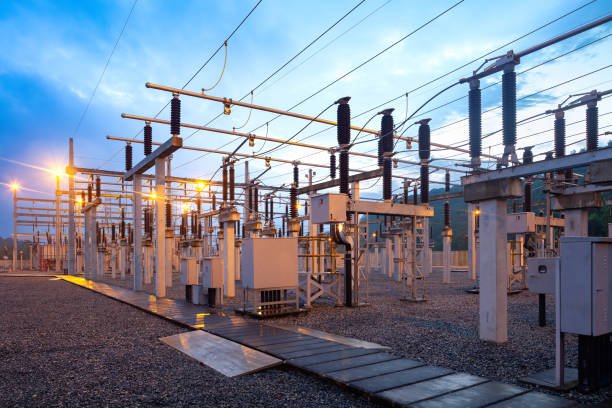
Power transformers are normally found in the high-voltage sections of the power system.
Typical applications include:
- Power-generation plants
- Step-up substations
- Transmission substations
- Grid interconnection stations
- Large industrial substations
A generator may produce electricity at a relatively moderate voltage. A power transformer can then increase the voltage to a much higher transmission level.
Later, another power transformer can reduce the voltage at a transmission or subtransmission substation.
The basic system looks like:
Generation
    ↓
Power Transformer
    ↓
High-Voltage Transmission
    ↓
Substation
    ↓
Distribution Network
These transformers are generally designed for high power capacity and efficient operation under substantial loading.
Where Are Distribution Transformers Used?
Distribution transformers are located much closer to consumers.
Their main job is to reduce distribution-system voltage to a level suitable for local networks and end-use equipment.
Typical applications include:
- Residential neighborhoods
- Commercial buildings
- Industrial facilities
- Rural electrical networks
- Local utility distribution systems
- Small renewable-energy installations
A simplified arrangement is:
Distribution Network
        ↓
Distribution Transformer
        ↓
Local Low-Voltage Network
        ↓
Homes / Buildings / Equipment
Because distribution transformers may remain energized around the clock while experiencing variable loads, no-load efficiency is particularly important.
What Is the Main Application Difference?
| Application Factor | Power Transformer | Distribution Transformer |
|---|---|---|
| Typical location | Generation and transmission substations | Near end users |
| Main purpose | Bulk power transfer and voltage transformation | Local voltage reduction |
| Typical capacity | Generally larger | Generally smaller |
| Load pattern | Often relatively high and stable | More variable |
| Efficiency priority | Efficiency under substantial load | Efficiency over changing load conditions |
| Installation | Large substations | Utility poles, pads, buildings, local substations |
| Typical voltage | Medium/high/extra-high voltage systems | Medium voltage to utilization voltage |
| Maintenance | Specialized substation maintenance | Local utility maintenance |
These are general application differences; actual ratings overlap in some projects.
Why Does Load Pattern Matter?
The most important technical difference is not simply transformer size. It is how the transformer is expected to operate.
Power transformers are often heavily loaded for significant periods. Therefore, load losses become an important consideration.
Distribution transformers may spend much of their operating life at partial load. They still consume core-related energy whenever energized, so minimizing no-load losses becomes especially valuable.
This difference influences the design priorities of the two transformer categories.
How Should Buyers Choose Between Them?
Buyers should start with the transformer's location in the electrical system.
Choose a power transformer when the application involves:
- High-capacity substations
- Generation-to-grid connections
- Transmission voltage conversion
- Large industrial power networks
- Bulk power transfer
Choose a distribution transformer when the application involves:
- Local distribution
- Commercial or residential supply
- Medium-voltage to low-voltage conversion
- Variable local loads
- Customer-side electrical networks
The transformer should then be specified according to voltage, capacity, frequency, insulation level, impedance, cooling method, installation environment, and applicable standards.
What About Oil-Immersed and Dry-Type Designs?
Both power and distribution transformers can use different insulation and cooling technologies.
For example:
- Large outdoor power transformers are commonly oil-immersed.
- Distribution transformers may be oil-immersed or dry-type.
- Indoor commercial applications may favor dry-type designs.
- Large outdoor substations often require oil-based cooling for high-capacity equipment.
Therefore, transformer category and insulation/cooling method are separate selection decisions.
What Should Buyers Compare?
A good purchasing comparison should include more than the basic quotation.
| Specification | Why It Matters |
|---|---|
| Rated kVA/MVA | Determines power capacity |
| Primary/secondary voltage | System compatibility |
| Vector group | Phase relationship |
| Impedance | Fault current and voltage regulation |
| No-load loss | Important during energized low-load operation |
| Load loss | Important under high loading |
| Cooling | Controls temperature |
| Insulation level | Determines dielectric capability |
| Tap range | Helps control voltage |
| Installation conditions | Influences transformer construction |
For a distribution transformer, buyers should pay particular attention to no-load losses and long-term energy consumption. For a power transformer, load losses, thermal performance, impedance, and high-voltage insulation can become especially important.
What Is the Difference Between a Power Transformer and a Distribution Transformer in Voltage and Capacity?
Power transformers and distribution transformers both change AC voltage through electromagnetic induction, but they are designed for different voltage levels and capacity ranges. Using only the nameplate voltage to classify a transformer can be misleading because actual ratings vary by utility, region, and application.
Generally, power transformers are designed for higher system voltages and larger MVA capacities, while distribution transformers normally handle lower distribution voltages and smaller kVA or MVA ratings. Power transformers are used mainly for bulk power transfer between generation, transmission, and substations; distribution transformers reduce medium voltage to the lower voltages used by local consumers.
The exact boundary is not universal, so buyers should evaluate the transformer's complete specification rather than rely on a single voltage or capacity number.
[Featured Image Placeholder: Side-by-side comparison of a large power transformer and a smaller distribution transformer, showing different voltage levels and capacity ratings.]
How Do Their Voltage Ratings Differ?
Power transformers are commonly associated with higher-voltage systems. They may connect generator voltage to transmission voltage or connect different high-voltage levels within substations.
Distribution transformers normally reduce medium-voltage distribution to lower utilization voltages.
A simplified system is:
Generation
    ↓
Power Transformer
    ↓
High-Voltage Transmission
    ↓
Substation
    ↓
Distribution Transformer
    ↓
Consumer Loads
However, there is no single worldwide voltage that separates the two categories. A transformer rated at a particular voltage may be considered a power or distribution transformer depending on the utility's standards and application.
How Do Their Capacity Ratings Differ?
Capacity is usually expressed as kVA or MVA.
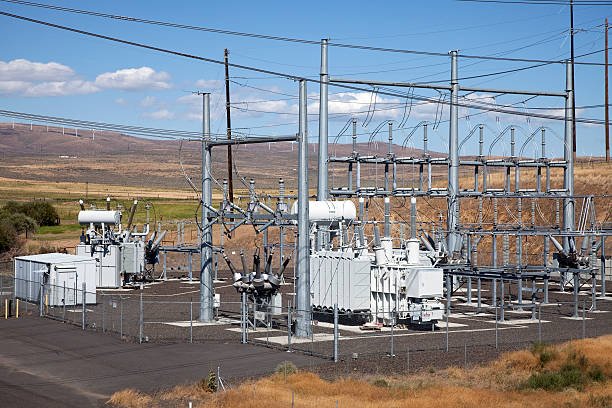
Power transformers generally serve larger power flows and therefore commonly have ratings in the MVA range. Large grid transformers can have capacities of hundreds of MVA or more.
Distribution transformers are often smaller, commonly specified in kVA, although larger distribution units can also reach the MVA range.
| Factor | Power Transformer | Distribution Transformer |
|---|---|---|
| Typical capacity | Larger, often MVA | Smaller, often kVA |
| Typical system voltage | Higher | Medium-to-low distribution |
| Main function | Bulk power transfer | Local voltage reduction |
| Load pattern | Often higher and more stable | More variable |
| Main efficiency concern | Load performance and losses | No-load and overall lifecycle losses |
| Installation | Large substations | Local substations, pads, poles, buildings |
These are general tendencies, not strict universal limits.
Why Does Capacity Matter?
Transformer capacity determines how much apparent power the transformer can supply without exceeding its thermal design.
For example, a transformer rated at 10 MVA and another rated at 100 MVA may use the same basic electromagnetic principle, but their physical dimensions, conductor sizes, cooling systems, insulation structures, and protection requirements can be very different.
Buyers should therefore match capacity to:
- Maximum demand
- Average load
- Future expansion
- Power factor
- Ambient temperature
- Overload requirements
- Operating hours
Choosing a transformer with too little capacity can cause overheating and voltage problems. Choosing one that is unnecessarily large can increase purchase cost and may increase continuous no-load energy consumption.
Why Can Voltage and Capacity Not Be Evaluated Separately?
Voltage and capacity interact with the transformer design.
A high-voltage, high-capacity transformer requires appropriate insulation distances, bushings, winding construction, cooling, and mechanical strength.
A lower-voltage transformer may carry higher current for the same apparent power, requiring larger conductors.
Therefore, two transformers with the same MVA rating can have very different winding designs if their voltage ratings differ.
What Should Buyers Check on the Nameplate?
Before comparing quotations, buyers should confirm:
- Primary rated voltage
- Secondary rated voltage
- Rated capacity in kVA or MVA
- Frequency
- Rated current
- Tap range
- Impedance
- Vector group
- Cooling method
- Temperature-rise limit
Rated current is particularly useful for checking whether the transformer capacity is consistent with the intended voltage.
For a three-phase transformer, apparent power is approximately related to voltage and current by:
S \approx \sqrt{3}VI
where (S) is apparent power, (V) is line voltage, and (I) is line current.
This relationship helps buyers verify whether the quoted voltage, current, and capacity are internally consistent.
What Is the Difference Between a Power Transformer and a Distribution Transformer in Load Characteristics and Efficiency?
Power transformers and distribution transformers may use the same basic electromagnetic-induction principle, but they experience very different operating conditions. A transformer designed for heavy, steady loading is not necessarily the best choice for a network where load changes throughout the day. Understanding these differences helps buyers compare efficiency, losses, capacity, and expected operating life more accurately.
Power transformers are generally designed to operate efficiently at relatively high and stable loads, so load losses and performance near rated capacity are important. Distribution transformers often remain energized continuously but operate at widely varying loads, including long periods of partial loading, so low no-load loss and efficiency across a broad load range are especially important.
The distinction is important because transformer efficiency is not a single fixed value. It changes with the operating load.
Distribution transformers are always more efficient than power transformers.False
Efficiency depends on transformer design and operating load. Distribution transformers are specifically optimized for variable loading and low no-load losses, while power transformers are often optimized for efficient operation at higher loads.
How Do Their Load Characteristics Differ?
A power transformer is typically installed in generation or transmission substations. Its load can remain relatively high for long periods, although the actual profile depends on the grid.
A distribution transformer is much closer to the end user. Its load can change substantially during the day.
For example, a residential distribution transformer may experience:
Low Load → Morning Increase → Evening Peak → Low Night LoadBy contrast, a large substation transformer may operate closer to a stable high-load range.
| Characteristic | Power Transformer | Distribution Transformer |
|---|---|---|
| Typical load | Higher | Lower to moderate |
| Load variation | Often relatively stable | Often significant |
| Energized continuously | Common | Very common |
| Peak loading | Important | Important |
| Partial-load operation | Less dominant | Very important |
| Main efficiency concern | Load efficiency | Broad-range efficiency |
These are general tendencies rather than strict rules.
What Are No-Load and Load Losses?
Transformer losses can be divided into two basic categories.
No-load losses mainly occur in the magnetic core. They continue whenever the transformer is energized, even when the load is very small.
Load losses mainly occur in the windings and other current-dependent parts. They increase as transformer current increases.
A simplified relationship for winding resistance is:
P_{\text{load}}\approx I^2R
Therefore, increasing the load can cause load losses to rise rapidly.
For a distribution transformer that remains energized 24 hours a day, even small no-load losses can accumulate into significant lifetime energy consumption.
Why Are Distribution Transformers Designed Differently?
Distribution transformers spend a large portion of their operating life below rated load.
Suppose a distribution transformer is energized continuously but only reaches its maximum demand for a few hours each day. During the remaining hours, core losses still occur.
This makes low no-load loss especially valuable.
A distribution transformer should therefore not be judged only by its efficiency at full load. Buyers should consider efficiency at the actual expected operating profile.
Power transformers, on the other hand, may spend more time at substantial loading. Their load losses become more significant in lifecycle energy calculations.
At What Load Is a Transformer Most Efficient?
Transformer efficiency changes with load.
A simplified expression is:
\eta=\frac{\text{Output Power}}{\text{Output Power}+\text{Losses}}
At very light load, output power is small while no-load loss continues.
As load increases, efficiency generally improves because the fixed core loss becomes smaller relative to useful output.
At high load, however, load losses rise and eventually reduce efficiency.
This means there is an operating range where efficiency is highest.
Efficiency
   ↑
   │        /\
   │       /  \
   │______/    \____
   └────────────────→ Load
      Light   High
The exact curve depends on the transformer design.
Why Is Load Profile More Important Than Maximum Load?
Two transformers may have the same maximum load but very different annual energy consumption.
For example:
- Transformer A operates near 80% load most of the day.
- Transformer B operates at 20% load most of the day and reaches 80% only during short peaks.
The optimal transformer design and loss balance may differ between these applications.
Buyers should therefore provide:
- Maximum demand
- Average demand
- Daily load curve
- Seasonal variation
- Expected future load
- Operating hours
This information allows the manufacturer to recommend a more appropriate capacity and loss specification.
How Should Buyers Compare Efficiency?
Do not compare manufacturers using only a single efficiency percentage.
Ask for guaranteed:
| Parameter | Importance |
|---|---|
| No-load loss | Critical for continuously energized transformers |
| Load loss | Important at higher loading |
| Total loss | Useful for lifecycle comparison |
| Efficiency at specified load | Shows real operating performance |
| Temperature rise | Indicates thermal behavior |
| Impedance | Affects voltage regulation and fault current |
For distribution transformers, no-load loss deserves particular attention.
For power transformers, load loss and efficiency near the expected operating point can have greater influence.
How Does Cooling Affect Efficiency?
Load losses become heat, so cooling must remove the generated heat.
For oil-immersed designs:
Higher Load
    ↓
Higher Current
    ↓
Higher Load Loss
    ↓
More Heat
    ↓
Higher Cooling Requirement
Poor thermal management can increase operating temperature and accelerate insulation aging.
Therefore, efficiency should be evaluated together with:
- Cooling method
- Temperature rise
- Ambient temperature
- Oil circulation
- Radiator capacity
- Expected load
Which Transformer Should Buyers Choose?
The decision should follow the application.
For power transformers, focus on:
- High-load efficiency
- Load loss
- Thermal performance
- Voltage regulation
- Impedance
- High-voltage insulation
- Grid operating conditions
For distribution transformers, focus strongly on:
- No-load loss
- Efficiency at partial load
- Daily load profile
- Energy consumption over the service life
- Voltage regulation
- Thermal performance
- Local installation conditions
The cheapest transformer at purchase may not be the cheapest transformer to own.
What Is the Difference Between a Power Transformer and a Distribution Transformer in Construction and Cooling?
Power transformers and distribution transformers use the same electromagnetic-induction principle, but their construction and cooling systems are designed for different operating conditions. Power transformers usually handle larger capacities and higher system voltages, while distribution transformers are generally smaller and designed for local, variable loads. Understanding these differences helps buyers compare equipment correctly.
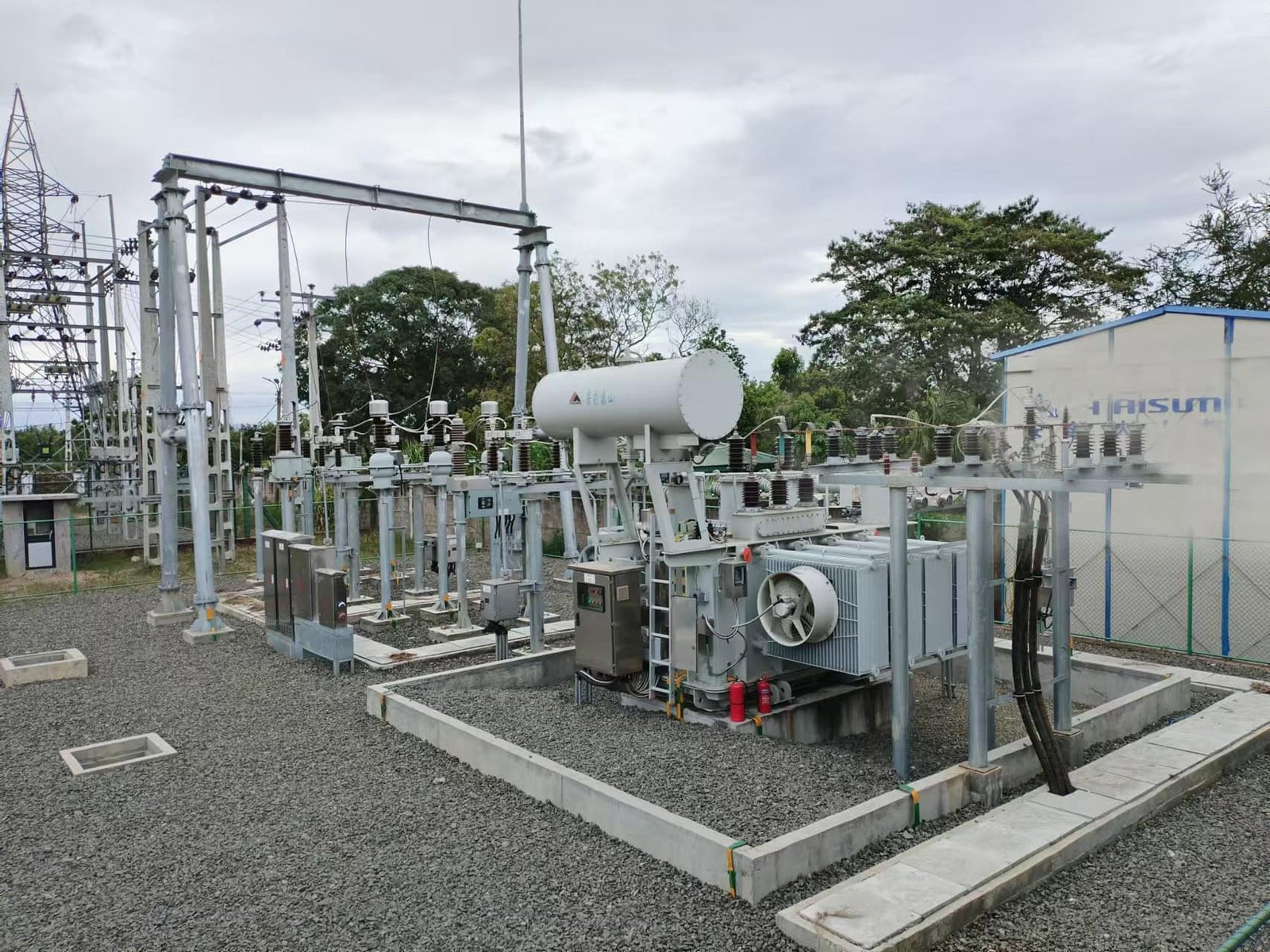
Power transformers generally have larger cores, windings, insulation systems, tanks, radiators, and cooling equipment because they handle higher power and more heat. Distribution transformers are usually smaller and simpler, with more compact construction and cooling systems suited to local distribution loads. Both may be oil-immersed, but their cooling capacity and accessory configuration can differ significantly.
Power transformers and distribution transformers use completely different construction principles.False
Both use the same basic electromagnetic-induction principle. Their construction mainly differs in scale, insulation requirements, cooling capacity, accessories, and operating conditions.
How Does Their Construction Differ?
A typical oil-immersed transformer contains:
- Magnetic core
- Primary and secondary windings
- Solid insulation
- Transformer oil
- Tank
- Bushings
- Cooling equipment
- Protection and monitoring components
The difference is mainly in size, electrical stress, heat generation, and mechanical requirements.
Power transformers often require more substantial mechanical structures because high-capacity windings can experience significant electromagnetic forces during short circuits.
Distribution transformers are usually more compact and standardized, especially for common utility applications.
| Construction Feature | Power Transformer | Distribution Transformer |
|---|---|---|
| Core | Larger | More compact |
| Windings | Larger and more complex | Usually simpler |
| Insulation | Higher electrical requirements | Generally lower system voltage |
| Tank | Larger and heavier | More compact |
| Radiators | Larger cooling surface | Smaller cooling system |
| Accessories | Often extensive | Usually simpler |
| Installation | Large substations | Local distribution |
How Does Cooling Differ?
The main purpose of cooling is to remove heat generated by transformer losses.
The basic process is:
Core + Windings
      ↓
     Heat
      ↓
 Transformer Oil
      ↓
 Radiator / Cooling Surface
      ↓
   Ambient Air
Power transformers normally generate more total heat because their capacity and losses are larger. They therefore require larger cooling surfaces and, for larger units, may use fans, pumps, or more sophisticated cooling arrangements.
Distribution transformers generally have lower total heat generation and can often use simpler cooling systems.
What Is ONAN Cooling?
ONAN means Oil Natural Air Natural.
The transformer oil circulates naturally because hot oil rises and cooler oil falls. Heat is transferred from the oil through the tank and radiators to surrounding air.
ONAN is widely suitable for many oil-immersed transformers where natural cooling provides sufficient capacity.
For smaller distribution transformers, a simple natural cooling arrangement can often meet the required temperature-rise limits.
What Is ONAF Cooling?
ONAF means Oil Natural Air Forced.
The oil still circulates naturally, but fans force additional air across the radiators.
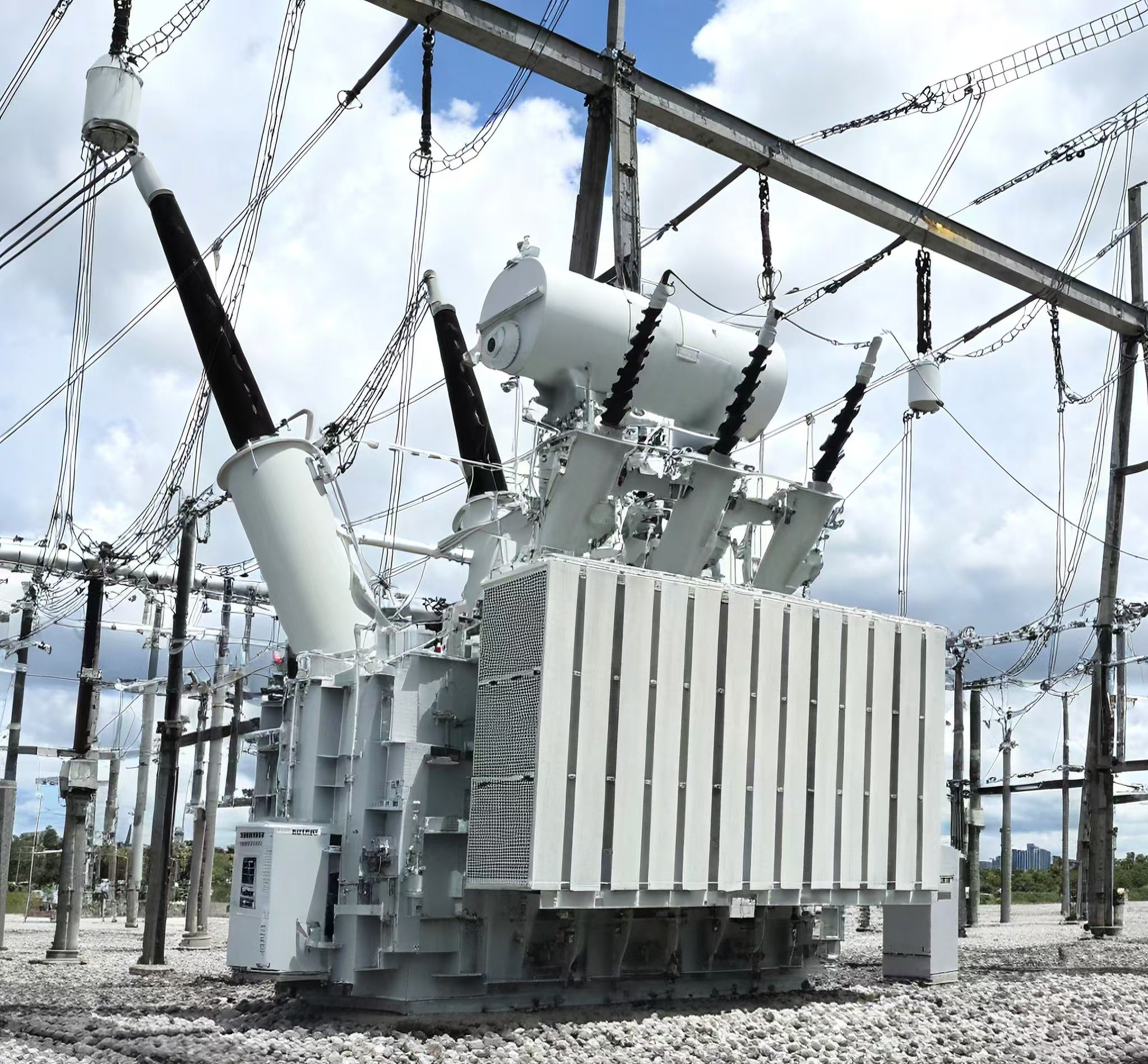
This increases heat dissipation and allows a transformer to handle greater thermal loading.
Large power transformers may use ONAF or other enhanced cooling systems when natural air circulation alone is insufficient.
Why Does Transformer Size Affect Cooling?
As transformer capacity increases, the amount of heat that must be removed generally increases.
A simplified relationship is:
Higher load → higher current → higher load loss → more heat → greater cooling requirement
Power transformers therefore commonly require:
- Larger radiators
- More cooling surface
- More powerful fans
- Temperature monitoring
- More sophisticated cooling controls
Distribution transformers usually need less extensive equipment, although larger distribution units can also require substantial cooling.
How Does Construction Affect Maintenance?
Power transformers contain more components and usually operate in critical substations. Their maintenance can therefore be more specialized.
Buyers may need to consider:
- Radiator inspection
- Fan and pump maintenance
- Bushing inspection
- Tap-changer service
- Oil testing
- Temperature monitoring
- Leak inspection
Distribution transformers are often simpler, especially sealed units with fewer accessories.
However, simpler construction does not mean maintenance can be ignored. Oil condition, temperature, insulation, connections, and enclosure integrity still influence service life.
What Should Buyers Compare?
When comparing a power transformer with a distribution transformer, buyers should review the complete construction and cooling specification rather than simply asking which one is larger.
| Buyer Check | Why It Matters |
|---|---|
| Core construction | Influences losses and temperature |
| Winding design | Determines current capacity and mechanical strength |
| Insulation | Determines dielectric reliability |
| Oil volume | Supports insulation and heat transfer |
| Radiator capacity | Determines heat-dissipation capability |
| Cooling method | Defines thermal operating limits |
| Temperature rise | Shows expected thermal performance |
| Fans/pumps | Affect cooling capacity and maintenance |
| Tank construction | Protects internal components |
| Installation environment | Influences actual cooling performance |
Which Design Is Better?
Neither transformer type is universally better.
A power transformer is more appropriate when the project requires high-capacity power transfer, high-voltage operation, and extensive cooling and protection systems.
A distribution transformer is usually more appropriate for local networks where compact construction, standardized equipment, variable loading, and economical operation are important.
The correct choice depends on voltage, capacity, load profile, installation environment, cooling requirements, and system design.
What Is the Difference Between a Power Transformer and a Distribution Transformer in Cost, Maintenance, and Service Life?
Power transformers and distribution transformers differ not only in voltage and capacity, but also in purchase cost, maintenance requirements, and expected service life. A larger transformer normally requires a larger initial investment, but the cheapest purchase price does not necessarily mean the lowest lifetime cost. Buyers should consider construction, loading, maintenance, losses, and operating environment together.
Power transformers generally have higher purchase and maintenance costs because of their larger size, higher voltage ratings, more complex cooling and protection systems, and specialized substation requirements. Distribution transformers are usually less expensive and simpler to maintain, but their service life still depends heavily on loading, temperature, insulation condition, oil quality, and maintenance. Both types can provide long service when correctly designed and operated.
The exact cost and service life vary by rating, design, manufacturer, standards, and installation conditions, so these categories should be treated as general purchasing guidelines.
A power transformer always has a longer service life than a distribution transformer because it is larger.False
Service life depends on insulation aging, temperature, loading, moisture, maintenance, manufacturing quality, and operating conditions rather than physical size alone.
Why Does a Power Transformer Usually Cost More?
Power transformers are commonly larger and designed for higher system voltages and greater power transfer.
Their cost can increase because of:
- Larger magnetic cores
- More copper or aluminum conductor
- Higher insulation requirements
- Larger tanks and radiators
- More sophisticated cooling systems
- More complex bushings and accessories
- Tap-changing equipment
- Monitoring and protection systems
- Factory testing requirements
Large power transformers may also require specialized transportation and installation equipment, adding to the project cost.
Distribution transformers are generally simpler and smaller, so their purchase price and installation requirements are often lower.
Why Is Maintenance Different?
Power transformers are critical substation assets, so maintenance is usually more structured and detailed.
Typical maintenance may include:
- Oil testing
- Dissolved-gas analysis where appropriate
- Insulation assessment
- Bushing inspection
- Tap-changer maintenance
- Cooling-system inspection
- Leak checks
- Temperature monitoring
- Electrical testing
Distribution transformers normally have simpler maintenance requirements, especially smaller sealed units. However, utility practice varies considerably.
The key difference is often not the number of maintenance tasks, but the cost and consequence of each maintenance event.
A fault in a large power transformer can affect a major section of a grid and require expensive repair or replacement.
How Does Operating Load Affect Service Life?
Transformer service life is strongly influenced by temperature.
Higher loading generally increases winding losses and heat generation. Excessive temperature accelerates insulation aging.
The relationship can be simplified as:
Higher Load
     ↓
Higher Current
     ↓
Higher Losses
     ↓
Higher Temperature
     ↓
Faster Insulation Aging
     ↓
Shorter Potential Service Life
This applies to both power and distribution transformers.
A well-designed transformer operated within its thermal limits can have a long service life, while a poorly loaded or poorly cooled transformer may deteriorate much earlier.
What About Oil and Insulation Maintenance?
For oil-immersed transformers, oil condition is an important part of service-life management.
Buyers should consider:
- Moisture
- Dielectric strength
- Oil oxidation
- Acidity
- Contamination
- Dissolved gases
- Sealing condition
The solid insulation system is also critical. Once paper or pressboard insulation has significantly aged, replacing the oil alone cannot restore the original insulation condition.
Therefore, maintenance should focus on the complete insulation system, not only the transformer oil.
Which Transformer Has the Longer Service Life?
There is no universal rule that power transformers always last longer.
Service life depends on:
| Factor | Effect on Service Life |
|---|---|
| Operating temperature | Higher temperature accelerates aging |
| Loading | Overloading increases thermal stress |
| Insulation quality | Directly affects aging |
| Oil condition | Influences insulation performance |
| Moisture | Can significantly weaken insulation |
| Cooling | Controls temperature |
| Manufacturing quality | Affects long-term reliability |
| Maintenance | Helps identify deterioration early |
| Environment | Heat, humidity, pollution, and corrosion matter |
A distribution transformer operating conservatively may outlast a heavily loaded power transformer, while a well-maintained power transformer can also operate reliably for decades.
How Should Buyers Evaluate Lifetime Cost?
The initial purchase price is only one part of the total cost.
A more useful approach is:
Purchase cost + installation + energy losses + maintenance + downtime risk + eventual replacement
For distribution transformers, continuous no-load losses can become particularly important because they may remain energized for many years.
For power transformers, maintenance, cooling equipment, tap changers, testing, and outage costs can represent a significant portion of lifetime ownership cost.
Therefore, buyers should compare guaranteed loss values as well as the initial quotation.
Practical Comparison
| Factor | Power Transformer | Distribution Transformer |
|---|---|---|
| Purchase cost | Generally higher | Generally lower |
| Installation | More complex | Usually simpler |
| Maintenance | More specialized | Usually simpler |
| Monitoring | Often extensive | Depends on size and application |
| Repair cost | High | Usually lower |
| Downtime impact | Potentially very high | Usually more localized |
| Service life | Long with proper operation | Long with proper operation |
| Key life factor | Loading, insulation, cooling | Loading, insulation, temperature, oil |
These are general tendencies rather than strict classifications.
What Should Buyers Ask the Manufacturer?
Before purchasing, buyers should request information about:
- Design service life
- Guaranteed losses
- Temperature-rise limits
- Insulation system
- Cooling method
- Oil treatment
- Maintenance intervals
- Available spare parts
- Warranty terms
- Factory testing
- After-sales service
- Repair support
For large power transformers, it is especially important to understand how quickly the manufacturer can provide technical support and replacement components after installation.
For distribution transformers, buyers may place greater emphasis on energy efficiency, standardized components, ease of maintenance, and long-term operating cost.
How Should Buyers Choose Between a Power Transformer and a Distribution Transformer?
Choosing between a power transformer and a distribution transformer is not simply a matter of selecting the larger or cheaper unit. The wrong choice can create unnecessary investment, poor efficiency, unsuitable voltage performance, or maintenance problems. Buyers should first determine where the transformer sits in the electrical system and how it will actually operate.
Buyers should choose a power transformer for high-capacity generation, transmission, or substation applications where large and relatively stable power flows are expected. A distribution transformer is generally better for local networks and end-user supply, where loads are more variable and low no-load losses, compact construction, and economical operation are important.
The best selection should consider voltage, capacity, load profile, losses, cooling, installation environment, maintenance, and future expansion together.
A distribution transformer is the right choice whenever its rated capacity is sufficient for the project.False
Transformer selection also depends on system position, voltage level, load profile, efficiency, impedance, cooling, insulation, installation conditions, and operating requirements.
1. Start With the Transformer’s Position in the Grid
The first question should be: Where will the transformer be installed?
A typical power system can be simplified as:
Generation
   ↓
Power Transformer
   ↓
Transmission
   ↓
Substation
   ↓
Distribution Transformer
   ↓
Consumers
If the transformer is part of a generating station or high-voltage transmission substation, a power transformer is usually the appropriate category.
If it is installed near customers to reduce distribution voltage for local use, a distribution transformer is generally more suitable.
This system position is more useful than relying on capacity alone.
2. Compare Voltage and Capacity
Power transformers generally handle higher system voltages and larger power flows. Distribution transformers normally reduce medium-voltage distribution levels to lower utilization voltages.
Capacity is usually expressed in kVA or MVA.
| Factor | Power Transformer | Distribution Transformer |
|---|---|---|
| Typical application | Generation / transmission / major substations | Local distribution |
| Capacity | Generally larger | Generally smaller |
| Voltage | Often higher | Usually lower distribution voltage |
| Load | Often higher and steadier | More variable |
| Main priority | Bulk-power efficiency and system performance | Lifecycle efficiency and reliable local supply |
These are general tendencies rather than strict boundaries. The exact classification depends on local standards and manufacturer specifications.
3. Examine the Actual Load Profile
Do not select a transformer only from the maximum load.
A distribution transformer may remain energized continuously but operate at low load for much of the day. A power transformer may operate closer to rated load for long periods.
This affects the importance of different losses.
Distribution transformer: Pay close attention to no-load loss because it occurs whenever the transformer is energized.
Power transformer: Pay particular attention to load loss, thermal performance, impedance, and efficiency near the expected operating point.
A useful buyer input is the daily load profile:
Low Load → Normal Load → Peak Load → Low Load4. Compare Transformer Losses
Ask manufacturers for guaranteed loss values rather than accepting general efficiency claims.
The key figures are:
- No-load loss
- Load loss
- Total loss
- Efficiency at specified load
- Temperature rise
For distribution transformers, small differences in no-load loss can accumulate into significant lifetime energy costs.
For power transformers, load losses can become especially important because these units often transfer large amounts of power.
5. Consider Cooling Requirements
Higher capacity normally means greater heat generation.
The basic thermal path is:
Core + Windings
      ↓
     Heat
      ↓
Transformer Oil
      ↓
Radiators / Fans
      ↓
Ambient Air
Large power transformers may require more extensive radiators, fans, pumps, or monitoring systems.
Distribution transformers often use simpler cooling arrangements, although larger distribution units can also require enhanced cooling.
Buyers should compare the cooling method and guaranteed temperature rise with the actual load and ambient conditions.
6. Evaluate Installation Conditions
A transformer installed outdoors in a substation has different requirements from one installed inside a commercial building.
Consider:
- Indoor or outdoor installation
- Ambient temperature
- Altitude
- Space limitations
- Ventilation
- Fire-safety requirements
- Noise restrictions
- Pollution and humidity
- Transportation and installation access
For example, a dry-type distribution transformer may be preferable in some indoor applications, while an oil-immersed design may be more practical for an outdoor substation.
7. Think About Maintenance and Service
Power transformers are usually more complex and expensive assets. Their maintenance may involve oil analysis, bushings, cooling equipment, tap changers, electrical testing, and detailed condition monitoring.
Distribution transformers are often simpler, especially standardized units, but they still require appropriate inspection and maintenance.
Ask the supplier about:
- Recommended maintenance intervals
- Oil testing requirements
- Spare parts
- Warranty
- Remote monitoring options
- Repair capability
- Technical support
For critical projects, supplier service capability can be as important as the initial transformer price.
8. Consider Future Expansion
The transformer should not only satisfy today's demand.
Buyers should consider:
- Expected load growth
- New equipment
- Additional production lines
- Renewable-energy connections
- Future grid expansion
- Required overload capability
However, excessive oversizing should also be avoided because a large transformer can carry higher purchase costs and may have unnecessary no-load losses.
The best approach is to select a practical capacity with a reasonable future margin.
9. Use a Practical Decision Checklist
| Question | Power Transformer | Distribution Transformer |
|---|---|---|
| Generation or transmission substation? | Usually suitable | Usually unsuitable |
| Local customer supply? | Usually unnecessary | Usually suitable |
| Very large MVA requirement? | Usually suitable | Depends on design |
| Highly variable daily load? | Possible | Common application |
| Low no-load loss is a major priority? | Important | Especially important |
| Large substation cooling system required? | Common | Depends on size |
| Compact local installation? | Less typical | Often suitable |
| Specialized grid protection required? | Common | Depends on application |
What Information Should Buyers Send Suppliers?
For an accurate recommendation, provide:
- Primary voltage
- Secondary voltage
- Required kVA/MVA
- Frequency
- Maximum and average load
- Daily/seasonal load profile
- Power factor
- Impedance requirement
- Vector group
- Cooling method
- Installation environment
- Future capacity requirements
This information allows the manufacturer to determine whether a power-transformer or distribution-transformer design is technically appropriate.
Conclusion
The primary difference between power transformers and distribution transformers lies in their position in the electrical system, operating profile, and design priorities. Power transformers are commonly used for high-voltage energy transfer in generation and transmission networks, while distribution transformers are typically installed closer to consumers to supply usable distribution voltages. However, there is no single universal boundary between the two categories. Buyers should evaluate voltage, capacity, load profile, efficiency, losses, cooling, installation conditions, applicable standards, and total lifecycle cost to select the most appropriate transformer.
FAQ
Q1: What is the main difference between a power transformer and a distribution transformer?
A1: The main difference between a power transformer and a distribution transformer is their typical position and function within an electrical power system. Power transformers are generally used in generation and transmission networks to transfer large amounts of electrical power between high-voltage levels, while distribution transformers reduce voltage to levels suitable for local distribution and end users.
Power transformers are commonly installed at generating stations and major substations. Their role is often to increase voltage for efficient long-distance transmission or to change voltage between transmission-system levels. Because they may handle substantial amounts of power, their design often emphasizes high capacity, efficient thermal management, strong insulation, and reliable operation under demanding grid conditions.
Distribution transformers are positioned closer to consumers. They reduce medium-voltage distribution electricity to lower voltages that can be supplied to residential, commercial, or smaller industrial loads. Their operating characteristics are therefore closely related to local load patterns.
Another important distinction is the expected loading pattern. Distribution transformers may remain energized continuously while their load varies considerably throughout the day. Consequently, reducing no-load losses is particularly important. Power transformers at substations may operate with different loading patterns, and their efficiency is often evaluated with greater emphasis on load losses and the expected operating profile.
The physical construction can also differ. Large power transformers may include sophisticated cooling systems, tap changers, monitoring equipment, and specialized protection systems. Distribution transformers are generally designed to be more compact and economical for installation throughout local networks.
The terminology is not based on one universal capacity boundary. Voltage level, application, system location, design, and regional standards can all influence whether equipment is described as a power transformer or distribution transformer.
Both types use the same fundamental principle of electromagnetic induction. Alternating current in the primary winding creates changing magnetic flux, which induces voltage in the secondary winding.
For buyers, the distinction should therefore be understood as a functional and application-based classification rather than simply a difference in size. The appropriate transformer depends on the required voltage, capacity, load profile, installation environment, efficiency requirements, and position within the electrical network.
Q2: Are power transformers larger and more powerful than distribution transformers?
A2: Power transformers are generally associated with higher-capacity and higher-voltage applications than distribution transformers, but size and capacity alone do not provide a universal dividing line between the two categories.
Large power transformers are commonly installed in generating plants, transmission substations, and major grid facilities. They may handle substantial power flows and operate at high transmission or sub-transmission voltages. Their construction can therefore involve large magnetic cores, substantial windings, sophisticated insulation systems, radiators, cooling equipment, and extensive monitoring and protection accessories.
Distribution transformers are generally installed closer to electrical consumers. They typically serve local distribution networks and are designed around the voltage and load requirements of those networks. Because many distribution transformers are installed across a utility service area, compact construction, reliability, cost, and ease of installation can be particularly important.
However, there is no single capacity value that universally separates power transformers from distribution transformers. Different countries, utilities, manufacturers, and technical standards may use different classifications.
The operating environment also matters. A transformer with a particular rating could be used in different ways depending on the electrical system. Consequently, a classification based solely on MVA rating can be misleading.
Design priorities can provide a better distinction. Power transformers are often optimized for efficient operation under substantial loading and may include advanced voltage-control and cooling systems. Distribution transformers frequently place significant emphasis on low no-load losses because they can remain energized even when local demand is relatively low.
Physical size is also influenced by voltage, insulation level, cooling technology, core material, and manufacturer design. Two transformers with similar power ratings may have different dimensions because of different technical requirements.
For procurement purposes, buyers should therefore avoid assuming that a larger transformer is automatically a power transformer or that a smaller unit is automatically a distribution transformer. The correct classification should be established according to the applicable technical standard and the intended application.
In practical terms, power transformers are generally associated with major generation and transmission functions, while distribution transformers are more closely associated with local power delivery. Capacity is an important factor, but it is only one part of the distinction.
Q3: How do power and distribution transformers differ in efficiency and losses?
A3: Both power transformers and distribution transformers are designed for efficient operation, but their loss characteristics and efficiency priorities can differ because they often operate under different load patterns.
Transformer losses can broadly be divided into no-load losses and load-related losses. No-load losses occur whenever the transformer is energized, even when little power is being delivered. Load losses increase as current through the windings increases.
Distribution transformers can remain energized around the clock because they form part of the local distribution network. Their load may vary substantially during the day and may be relatively low for extended periods. Because of this operating pattern, minimizing no-load losses is particularly important.
Power transformers in generation and transmission applications can have different loading profiles. They may operate at substantial loads for long periods, depending on their location and network role. Their efficiency evaluation therefore needs to consider both no-load and load losses, along with the expected operating profile.
Core material and design influence no-load losses. Winding conductor size, resistance, temperature, and transformer construction influence load losses. Cooling systems also affect operating temperature and therefore influence electrical resistance and thermal performance.
The most efficient transformer is not necessarily the one with the lowest loss under one specific test condition. Buyers should evaluate guaranteed loss values at relevant operating conditions and estimate the total energy cost over the expected service life.
For example, a distribution transformer with very low purchase cost but relatively high no-load losses could consume significant energy over many years. Conversely, a higher-capacity power transformer with high load losses could create substantial operating costs if it is consistently heavily loaded.
Efficiency should therefore be considered alongside capacity utilization. Oversizing a transformer can increase the initial investment and may change the relationship between fixed and load-dependent losses. Undersizing can lead to excessive loading and temperature rise.
When comparing quotations, buyers should request clear information about no-load losses, load losses, efficiency, temperature rise, rated capacity, and applicable test conditions.
Ultimately, both transformer types can be highly efficient. The important issue is whether the transformer's loss characteristics match the actual load profile and operating conditions of the electrical system.
Q4: Where are power transformers and distribution transformers used?
A4: Power transformers and distribution transformers occupy different positions within electrical networks, although their functions are interconnected.
Power transformers are commonly used at generating stations and major transmission or substation facilities. At a generating plant, a transformer can increase generator voltage before electricity enters a high-voltage transmission network. This higher voltage enables power to travel long distances at lower current, helping reduce resistive losses in transmission conductors.
Power transformers can also change voltage between different transmission levels. Major substations may use them to transfer large amounts of electricity between sections of the grid while maintaining the voltage levels required by the network.
Distribution transformers are located further downstream. They receive electricity from medium-voltage distribution circuits and reduce the voltage to levels appropriate for local consumers and connected equipment.
They can be found on utility poles, ground-mounted installations, commercial properties, industrial facilities, residential developments, and other locations where electricity needs to be delivered to end users.
Industrial facilities can use both transformer categories. A large manufacturing plant may receive power through a substation containing a power transformer and then use distribution transformers within the facility to supply different voltage levels to production equipment.
Renewable-energy projects can also involve both types. Large solar and wind facilities may use power transformers to connect generation to a utility transmission or sub-transmission network, while distribution transformers may be used in local electrical networks associated with smaller projects.
The distinction is therefore closely related to system location and electrical function. Power transformers generally support bulk power transfer and major grid voltage conversion, whereas distribution transformers support the final stages of electrical delivery.
Installation requirements also vary. Power transformers are often located in dedicated substations with specialized foundations, cooling systems, protection equipment, and monitoring. Distribution transformers may need to be installed in more numerous and geographically dispersed locations.
Understanding where each transformer operates helps buyers determine appropriate voltage, capacity, cooling, protection, efficiency, and maintenance requirements.
The two transformer categories should not be viewed as competing technologies. They perform complementary functions within the same electrical infrastructure, allowing electricity to move efficiently from generation through transmission and finally to consumers.
References
IEC 60076-1 — Power Transformers: General
https://webstore.iec.ch/en/publication/588
IEC 60076-2 — Power Transformers: Temperature Rise
https://webstore.iec.ch/en/publication/604
IEC 60076-3 — Power Transformers: Insulation Levels and Dielectric Tests
https://webstore.iec.ch/en/publication/605
IEC 60076-5 — Power Transformers: Ability to Withstand Short Circuit
https://webstore.iec.ch/en/publication/607
IEC 60076-7 — Loading Guide for Mineral-Oil-Immersed Power Transformers
https://webstore.iec.ch/en/publication/608
IEEE C57.12.00 — General Requirements for Liquid-Immersed Transformers
https://standards.ieee.org/ieee/C57.12.00/6962/
IEEE C57.12.01 — General Requirements for Dry-Type Transformers
https://standards.ieee.org/ieee/C57.12.01/6775/
IEEE C57.12.80 — Terminology for Power and Distribution Transformers
https://standards.ieee.org/ieee/C57.12.80/7006/
IEEE Technology Navigator — Power Transformers
https://technav.ieee.org/topic/power-transformers/
U.S. Department of Energy — Electricity Delivery and Grid Systems
https://www.energy.gov/oe