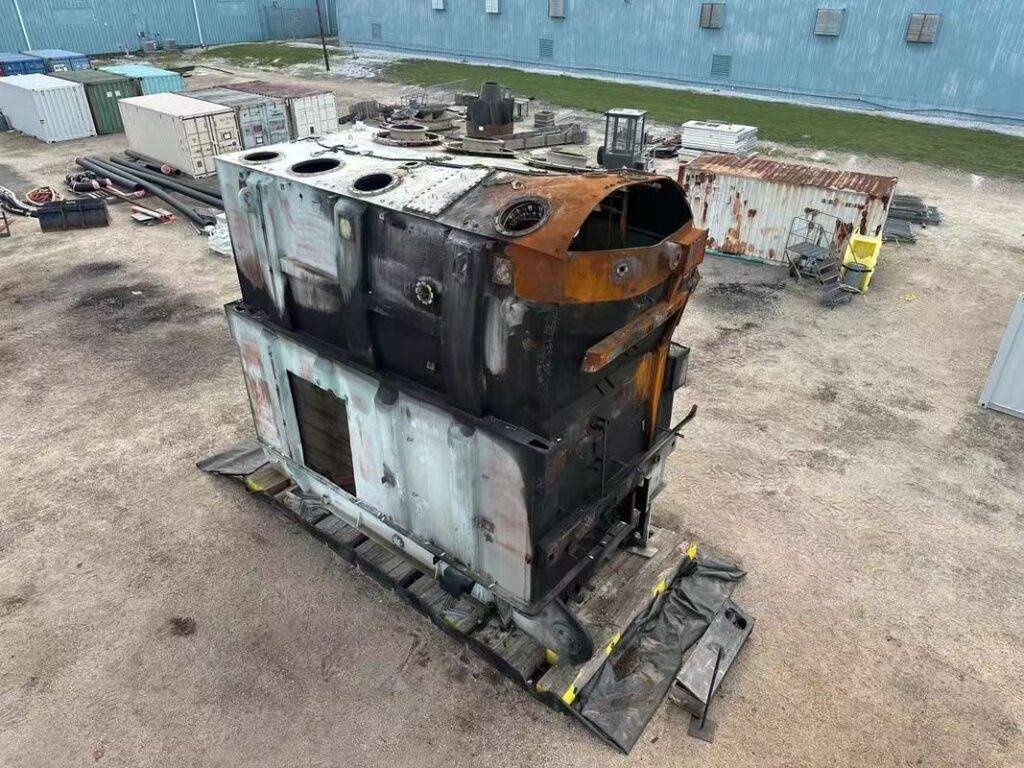
When a transformer blows, the situation can be sudden, loud, and potentially dangerous. Many people are unsure whether to treat it as an emergency. Understanding when to call emergency services like 911—and when to contact your utility provider—can help ensure safety and restore power more efficiently.
What Happens When a Transformer Blows?
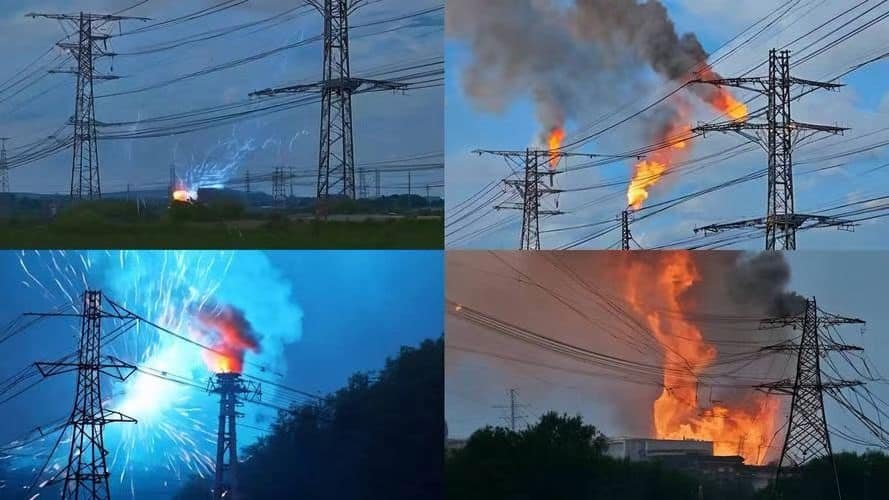
Transformers are essential for safely moving power across different voltage levels—but when one "blows," it becomes a dangerous and costly emergency. A transformer blowout doesn’t just mean power loss—it often signals a violent electrical event inside the unit. This can involve high-temperature arc flashes, oil ignition, insulation failure, and structural damage. The effects can range from local blackouts to grid-wide disturbances, with major safety and environmental implications.
When a transformer blows, it undergoes a catastrophic failure due to an internal electrical fault such as insulation breakdown, arcing, short circuit, or thermal overload. This causes a rapid energy release, often resulting in a loud explosion, fire or smoke, oil leakage, and instant power outage. Protective relays isolate the transformer from the grid to prevent wider impact, but repair or replacement is typically required. The event can also pose serious safety hazards to personnel and nearby infrastructure.
These failures happen quickly but are usually the result of long-developing internal stress or overlooked maintenance needs.
A blown transformer usually results from internal faults like arcing or insulation failure and causes loud noise, fire, or power outage.True
The rapid release of energy from internal faults leads to physical damage, trip-outs, and dangerous byproducts.
A transformer blowing is a minor issue that doesn’t impact the grid or require urgent attention.False
Transformer blowouts are critical events that interrupt power, require safety response, and can damage nearby systems.
1. What Physically Happens Inside the Transformer?
| Internal Event | Explanation |
|---|---|
| Short Circuit | Breakdown in insulation between windings or to the core |
| Arc Flash | Fault current ionizes air or oil, causing plasma explosion |
| Oil Vaporization | Rapid temperature rise turns insulating oil into gas |
| Pressure Build-Up | Gas and vapor expansion creates high internal pressure |
| Tank Rupture or Fire | Pressure or arc ignites oil, leading to fire or explosion |
These events occur in milliseconds, and the transformer is usually permanently damaged afterward.
2. External Visual and Audible Signs of a Blown Transformer
| Sign | Indication |
|---|---|
| Loud Explosion or Bang | Caused by arc flash or pressure release |
| Bright Flash or Spark | Indicates internal arc discharge or bushing flashover |
| Plume of Smoke | Insulation, oil, or windings are burning |
| Visible Fire | Oil ignites near vents or bushings |
| Oil Leak or Spray | Tank breach from overpressure or mechanical rupture |
These signs are immediate and visible, often prompting public reports and emergency response.
3. Electrical Consequences on the Grid
| Effect | Why It Happens |
|---|---|
| Instant Power Outage | Transformer disconnects from grid to isolate the fault |
| Voltage Collapse or Sag | Loss of voltage regulation in affected feeder |
| Feeder Overload | Nearby transformers pick up additional load |
| Trip Signals to Breakers | Protection relays (87T, Buchholz) isolate faulted section |
Grid operators are notified instantly via SCADA or RTU alarms, and backup routing may be triggered.
4. What Happens to the Transformer After the Blowout?
| Component Affected | Typical Result |
|---|---|
| Windings | Burned, shorted, or vaporized |
| Core | Overheated or magnetically saturated |
| Insulation System | Carbonized or destroyed |
| Tank and Bushings | Cracked, bulged, or completely ruptured |
| Oil | Contaminated with gas, acids, carbon |
Most blown transformers require complete replacement, unless the damage is minimal and localized.
5. Safety and Environmental Hazards
| Hazard | Risk |
|---|---|
| Electrical Shock | Exposed conductors or residual energy |
| Arc Flash Burns | High-temperature plasma can reach thousands of °C |
| Oil Fire or Explosion | Fire can spread to nearby equipment or vegetation |
| Toxic Smoke | Burning insulation and oil release harmful gases |
| Soil or Water Contamination | Oil leakage affects environment and wildlife |
Safety zones are established immediately, and emergency protocols activated.
6. Real-World Case Example
- Incident: 66/11 kV 25 MVA transformer blew during peak demand
- Cause: Moisture ingress + aged insulation + OLTC misalignment
- Effect: Fireball and loud bang reported; 15,000 users lost power
- Response: Fire brigade + utility engineers isolated and replaced unit in 48 hrs
- Outcome: Root cause analysis initiated; system-wide maintenance scheduled
Proactive monitoring would have flagged the fault days before the event.
7. Restoration After a Blown Transformer
| Step | Action Taken |
|---|---|
| Isolate Faulted Equipment | Disconnect from both HV and LV sides |
| Investigate and Confirm | Visual and test-based assessment (DGA, SFRA, IR test) |
| Deploy Spare or Mobile Unit | Restore power temporarily while unit is replaced |
| Install New Transformer | Match voltage, impedance, and cooling system |
| Re-energize and Monitor | Carefully bring unit back into operation |
Full restoration can take from a few hours (distribution) to weeks (power transformers).
Summary Table: What Happens When a Transformer Blows
| Aspect | Result |
|---|---|
| Physical Event | Internal arcing, pressure surge, fire or explosion |
| Grid Effect | Power outage, feeder trip, voltage instability |
| Visual Signs | Smoke, flash, flames, oil leak |
| Safety Risk | Fire, electrocution, toxic fumes |
| Restoration Need | Inspection, replacement, rerouting |
Is It Always an Emergency Situation When a Transformer Blows?
When a transformer “blows,” the term conjures images of smoke, fire, and total power loss—and often, that’s accurate. But not all transformer failures escalate into full-blown emergencies. The severity of the event depends on the fault type, transformer size and voltage level, load conditions, and safety systems in place. Some issues can be managed without incident, while others pose immediate threats to life, infrastructure, and environmental safety.
A blown transformer is not always an emergency, but it frequently becomes one when the failure involves high energy release, fire, hazardous materials, or power disruption to critical infrastructure. Minor internal faults or protective relay trips may occur without visible damage or danger, allowing planned maintenance. However, failures that cause explosions, oil fires, or affect hospitals, data centers, or grid stability must be treated as emergencies. Risk assessment and utility protocols determine the response level.
Proper diagnostics and response classification are key to managing the situation safely and effectively.
Not all transformer failures are emergencies, but some pose serious risks requiring urgent action.True
While some faults cause minor trips or containable damage, others trigger fire, power loss, and safety threats that demand immediate response.
Any transformer fault, no matter how small, is a full-scale emergency.False
Only failures involving high voltage arcs, fire, hazardous leaks, or critical infrastructure demand full emergency protocols.
1. Different Scenarios of Transformer Failure: Emergency vs Non-Emergency
| Scenario | Severity | Emergency? | Why? |
|---|---|---|---|
| Minor internal fault, detected early by DGA | Low | ❌ No | No external hazard; transformer can be de-energized and repaired |
| Bushing flashover with visible arc | Medium–High | ✅ Yes | Risk of explosion, oil fire, and grid fault propagation |
| Oil leak without pressure or fire | Medium | ⚠️ Maybe | Environmental risk; controlled cleanup may suffice |
| Total arc flash, loud explosion, and fire | High | ✅ Yes | Fire, equipment loss, power outage, personnel danger |
| OLTC stuck, no arcing, voltage deviation only | Low | ❌ No | Detected by SCADA; can be managed with voltage adjustment |
Utilities often use tiered alert systems to distinguish between reportable incidents and full-blown emergencies.
2. Factors That Make a Transformer Blowout an Emergency
| Factor | Risk Introduced |
|---|---|
| High Voltage Level (>33 kV) | Greater arc energy, fault propagation potential |
| Oil Fire or Explosion | Personnel injury, fire spread, structural damage |
| Proximity to Public or Facilities | Safety risk to untrained individuals |
| Critical Load Loss | Hospitals, airports, or data centers affected |
| Environmental Spill | Contamination of soil, water, or storm drainage |
Emergency classification is based on a mix of technical, operational, and public safety considerations.
3. Utility Response Protocols Based on Failure Severity
| Failure Type | Typical Response | Emergency Level |
|---|---|---|
| Minor relay trip only | Monitor and schedule inspection | Low |
| Visible arc or bushing crack | Immediate site dispatch, area lockdown | Medium |
| Fire, smoke, explosion | Emergency shutdown, fire brigade, transformer isolation | High |
| Oil containment breach | Environmental response, bunding, spill report | High |
Incident command structures kick in automatically at substation and transmission levels.
4. Real-World Example: Two Contrasting Events
| Case A: Low-Level Fault | Case B: High-Risk Emergency |
|---|---|
| OLTC malfunction triggered voltage deviation | 132 kV transformer caught fire during lightning storm |
| No external damage or oil loss | Loud explosion, smoke plume, public call to emergency |
| Load diverted via SCADA within minutes | 20,000 customers without power, media coverage |
| Repaired during scheduled outage next day | Full replacement required within 72 hours |
Proper classification saved resources in one case and ensured fast containment in the other.
5. When to Escalate: Signs That Require Emergency Response
| Sign | Why It Matters |
|---|---|
| Flames or heavy smoke | Indicates uncontrolled combustion and pressure buildup |
| Repeated relay trips | Suggests worsening fault, not just transient condition |
| Oil spray or hissing sound | Possible PRD activation or tank pressure surge |
| Power loss to vital services | Requires priority restoration and safety planning |
| Public safety complaint | May indicate exposed equipment or debris hazard |
If in doubt, utilities should default to caution and escalate the response.
Summary Table: Is It Always an Emergency When a Transformer Blows?
| Condition | Emergency? | Why or Why Not? |
|---|---|---|
| Insulation trip, no damage | ❌ No | Can be investigated and corrected without risk |
| Oil fire with flames | ✅ Yes | Fire risk and toxic exposure |
| Load loss to industrial park | ⚠️ Maybe | Depends on redundancy and duration |
| Public-area bushing arc | ✅ Yes | Danger to people and equipment |
| DGA abnormality, no symptoms | ❌ No | Early-stage fault manageable via maintenance |
When Should You Call 911 After a Transformer Incident?
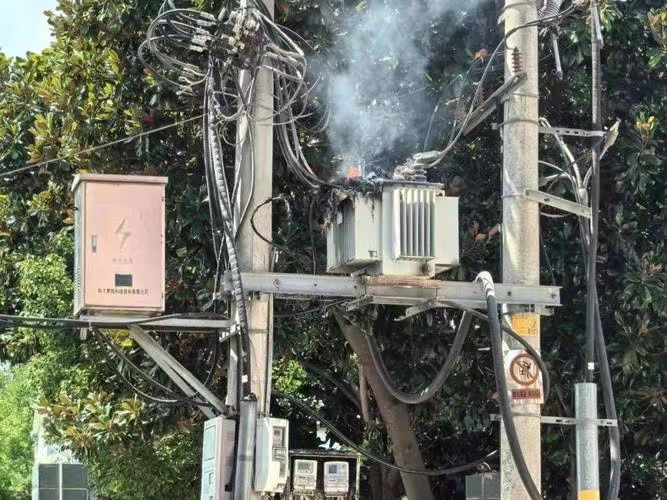
A transformer incident can be anything from a brief noise to a fiery explosion—but in many cases, the public may be uncertain about how serious the situation is or what to do next. Knowing when to call 911 is critical, not just for your safety but also to ensure emergency responders can control hazards like fire, electrocution, or environmental damage. Some transformer issues resolve safely under utility control—others are full emergencies requiring immediate public intervention.
You should call 911 immediately after a transformer incident if you see fire or smoke, hear an explosion or loud pop, notice sparking wires or oil leaking, smell burning chemicals, observe downed power lines, or see anyone injured or in direct contact with damaged equipment. If there's any threat to public safety, traffic, or nearby buildings, do not assume utility crews are already on the way—make the call.
Acting fast can save lives and prevent a minor incident from escalating into a major hazard.
911 should be called if a transformer incident involves fire, explosion, downed wires, or immediate public danger.True
These conditions pose life-threatening risks and require response from fire, police, or EMS in coordination with utility services.
There’s no need to call 911 after a transformer blowout unless someone is injured.False
Even without injuries, fire, arcing, or toxic smoke require emergency response and public safety control.
1. When to Call 911 After a Transformer Incident
| Condition Observed | Why You Must Call 911 Immediately |
|---|---|
| 🔥 Visible fire or smoke | Indicates active ignition, risk of explosion |
| ⚡ Loud explosion or arc flash | Suggests internal failure with high voltage exposure |
| 💨 Burning smell or hissing | Could be vaporized oil, gas buildup, or overheating |
| ⚠️ Downed or sparking power lines | Risk of electrocution, traffic obstruction |
| 🩹 Someone injured or unconscious | Requires immediate medical response |
| 🏠 Transformer fire near buildings | Risk of fire spread or structural damage |
| 🛻 Vehicle accident with pole hit | Possible transformer displacement and line hazard |
Do not wait for visible danger—if you feel unsafe or see anything abnormal, call and describe the situation clearly.
2. Do NOT Approach the Area—Stay Safe First
| Unsafe Actions to Avoid | Why They're Dangerous |
|---|---|
| Touching a downed wire | It may still be energized at lethal voltage |
| Pouring water on transformer fire | Water conducts electricity—this could cause electrocution |
| Going near oil leak or burn site | Vapor can ignite or be toxic to inhale |
| Climbing utility poles to inspect | Only trained professionals with insulated tools can do this |
Maintain at least 30 feet (10 meters) distance from transformer-related hazards.
3. What to Tell the 911 Operator
| Information to Provide | Why It Helps |
|---|---|
| Your location and nearest landmark | Enables fast routing of fire or police |
| What you saw or heard (bang, flash) | Indicates explosion or arcing |
| Whether there is fire or smoke | Determines if fire department is dispatched |
| Presence of injured persons | Ensures EMS is prioritized |
| If traffic or buildings are affected | Police can block roads or evacuate buildings |
Stay on the line until they confirm your information or advise you to hang up.
4. 911 vs Utility Company—Who to Call First?
| Situation | Call 911 First? | Call Utility? |
|---|---|---|
| Fire, explosion, smoke | ✅ Yes | ❌ Not first priority |
| Sparking wires or downed lines | ✅ Yes | ❌ Let fire/police secure site |
| Loud bang or arc, no fire | ⚠️ If uncertain | ✅ Yes |
| Noises, flickering lights, no damage | ❌ No | ✅ Yes |
| Environmental spill (oil on ground) | ✅ If public exposed | ✅ Yes |
911 handles immediate public safety, while the utility handles system control, isolation, and repair.
5. Real-World Examples: When 911 Was Needed
| Location | Incident | 911 Outcome |
|---|---|---|
| Suburban neighborhood | Transformer exploded with loud flash | Fire truck responded, scene secured, no injuries |
| Downtown area | Pole hit by truck, transformer fell | Police blocked road, utility de-energized lines |
| School district | Smoke seen from pad-mounted unit | Fire dept responded, students evacuated temporarily |
Fast 911 calls from bystanders allowed first responders to prevent injuries and escalate appropriately.
6. Don’t Guess—If in Doubt, Call It Out
| You Should Call If... |
|---|
| You’re unsure whether the transformer is still energized |
| There’s any visible sign of damage or danger |
| You're not certain if anyone else has reported it |
| You're near high-traffic or high-occupancy areas |
It’s always better to report and be safe than to assume someone else has handled it.
Summary Table: When to Call 911 After a Transformer Incident
| Situation | 911 Call Needed? | Why |
|---|---|---|
| Fire, smoke, or flames | ✅ Yes | Potential explosion or property risk |
| Loud bang and flash | ✅ Yes | Indicates electrical arc and fault |
| Downed lines or pole hit | ✅ Yes | Public exposure to live wires |
| Oil spill near water/public area | ✅ Yes | Environmental and slip/fire hazard |
| Flickering lights, no sound or smell | ❌ No | Contact utility unless other risks present |
What Should You Avoid Doing Near a Blown Transformer?
A blown transformer can turn into a high-risk zone within seconds. While it may just look like a smoky metal box or a popped fuse on a pole, it can actually harbor live high-voltage energy, flammable materials, and hidden physical dangers. The wrong move—especially from untrained individuals—can cause serious injury, electrocution, or escalate the incident into a fire or explosion. Whether you're a bystander or a site worker, knowing what to avoid doing near a failed transformer is just as critical as knowing what to do.
You should avoid approaching, touching, or attempting to inspect a blown transformer under any circumstances. Never touch downed wires or nearby metal objects, enter standing water or oily puddles near the site, spray water on the transformer, climb poles, or assume the area is safe if there are no visible flames. Always maintain a safe distance (minimum 30 feet), call emergency services, and wait for utility professionals to secure the scene.
Failure to follow these precautions can result in severe injury, death, or further infrastructure damage.
Approaching or touching a blown transformer or downed wires is extremely dangerous and should always be avoided.True
Even if the transformer appears inactive, residual voltage, gas buildup, or secondary faults can still pose life-threatening risks.
If a transformer looks quiet after a blowout, it’s safe to investigate or clean up the site yourself.False
Transformers can remain energized or pressurized after failure—only trained personnel should inspect or handle them.
1. Top 10 Things to Avoid Near a Blown Transformer
| What to Avoid | Why It's Dangerous |
|---|---|
| ❌ Touching downed or dangling wires | May still be live at lethal voltage levels |
| ❌ Entering puddles or standing water | Water could be electrified from nearby faulted cables |
| ❌ Touching the transformer housing | Metal casing may carry residual or fault current |
| ❌ Spraying water on the transformer | Water conducts electricity—can trigger arc or electrocution |
| ❌ Walking through smoke or vapor | May contain toxic gases or flammable substances |
| ❌ Climbing poles or transformers | Unstable structure and high-voltage proximity |
| ❌ Cleaning up spilled oil | May be hot, pressurized, or contain hazardous PCBs |
| ❌ Standing too close (within 30 feet) | Blast or arc flash radius can still cause injury |
| ❌ Using a phone under the transformer | Radio frequency interference or lightning risk |
| ❌ Assuming it's safe if there’s no sound | Quiet doesn't mean de-energized—hazards may persist silently |
Always treat the area as energized and hazardous until cleared by professionals.
2. Common Misconceptions That Lead to Danger
| Mistaken Belief | Reality |
|---|---|
| “It’s not on fire, so it must be safe.” | Many transformer dangers are invisible (gas, voltage, pressure) |
| “It just needs a reset or breaker flip.” | Faults may be internal—resetting could worsen the situation |
| “I can check the pole—it’s my property.” | Utility equipment is hazardous and should only be handled by pros |
| “I don’t see any wires down.” | Internal arcs can occur without external damage |
Visual calm doesn’t equal safety. Arc faults and dielectric breakdowns often leave no immediate signs.
3. Establishing a Safe Distance and Perimeter
| Voltage Level | Recommended Minimum Safe Distance |
|---|---|
| Low Voltage (≤11 kV) | 10–15 feet (3–5 meters) |
| Medium Voltage (33–66 kV) | 20–30 feet (6–10 meters) |
| High Voltage (≥110 kV) | 50 feet (15+ meters) or more |
If you're unsure, stay as far away as visibility allows, and use parked vehicles, fences, or trees as shielding.
4. Environmental Hazards to Avoid
| Hazard | What to Watch For | Why It’s Dangerous |
|---|---|---|
| Oil leaks | Shiny surface, slippery patches, chemical odor | May ignite or cause burns/toxic exposure |
| Gas discharge | Hissing noise, fog-like mist, odor of ozone/burnt rubber | May be explosive or toxic |
| Exposed cables | Lying on ground or snapped off pole | May still be energized |
| Collapsed structure | Leaning poles or transformer casing deformation | Could fall or explode under residual strain |
Many transformer oils are flammable and carcinogenic, especially if they contain PCBs.
5. Real-World Case: Improper Action Near Blown Transformer
- Incident: Small pole-mounted transformer blew in a residential area
- Issue: Neighbor approached to “flip the breaker” and slipped on leaking oil
- Consequence: Contacted energized frame, sustained serious burns and shock
- Resolution: Fire department and utility isolated area; area was cordoned for 8 hours
- Lesson: Even small-scale transformer events can lead to life-threatening consequences
Public awareness could have prevented the injury entirely.
Summary Table: What Not to Do Near a Blown Transformer
| Do NOT… | Because… |
|---|---|
| Touch or step on wires | May be energized, invisible current flow |
| Spray water on unit | May cause arc flash or electrocution |
| Attempt DIY inspection or reset | Can trigger secondary internal fault |
| Enter area without PPE or training | Arc flash, pressure, and chemical exposure risk |
| Ignore small leaks or smoke | May indicate worsening internal fault |
Who Else Should Be Notified Besides 911 After a Transformer Incident?
Calling 911 is the first critical step in responding to a transformer blowout when fire, explosion, smoke, or injury is involved. But the emergency doesn’t stop there. Once first responders are on the scene, a wider network of agencies and stakeholders must also be notified to manage grid restoration, investigate root causes, contain environmental damage, and restore public confidence. Notifying the right entities at the right time ensures faster recovery, proper legal reporting, and long-term safety.
Besides 911, you should notify the local utility provider (or grid operator), the environmental protection agency if oil or hazardous fluids are involved, the property owner or facilities manager if the equipment is onsite, workplace health and safety authorities if it occurred on a job site, and sometimes local news or public information offices for public updates. Notification ensures fast technical response, environmental protection, legal compliance, and operational continuity.
Each notification plays a vital role in controlling risk and restoring service.
After calling 911, the utility company, environmental agencies, and property owners should be notified of transformer incidents.True
These stakeholders are responsible for electrical repair, pollution control, legal compliance, and site coordination.
Only emergency services need to be notified after a transformer failure.False
Utilities, safety inspectors, environmental regulators, and property managers must be informed depending on the incident scale.
1. Primary Notification: Local Utility Company or Power Provider
| Who | Why Notify Them |
|---|---|
| Electric utility (e.g., ConEd, PG\&E, TNB) | Owns and maintains the transformer |
| Substation or grid control center | Manages system load, reroutes supply |
| Transmission operator (ISO, TSO) | Balances regional voltage and frequency |
Utilities must isolate power, deploy repair crews, and initiate forensic failure analysis.
2. Environmental Protection or Emergency Spill Response Agency
| Who | Why Notify Them |
|---|---|
| Local or national EPA (e.g., US EPA, Environment Canada) | Required if oil, PCBs, or chemicals leak into soil or water |
| Municipal stormwater departments | Needed if oil enters drains or creeks |
| HAZMAT or emergency pollution teams | Responds to oil fires, gas discharge, or smoke plumes |
Most laws mandate reporting of spills or fire-related emissions within a set time (e.g., 24 hours).
3. Property Owner or Facilities Management
| Who | Why Notify Them |
|---|---|
| Building owner or industrial operator | Coordinates access, shutdown, repairs, and cleanup |
| Site security or operations team | Controls public and staff access to danger zone |
| Insurance representatives | Initiates claims, inspection, and liability review |
If the transformer is located on private property, owner cooperation is essential.
4. Electrical Safety and Inspection Authority
| Who | Why Notify Them |
|---|---|
| National electrical inspectorate or energy commission | Confirms code compliance and failure investigation |
| Occupational safety authority (e.g., OSHA, HSE) | Responds if incident involves injuries on work premises |
| Fire marshal or building code office | Inspects structural damage from transformer fires |
Especially for commercial/industrial sites, this ensures legal and technical accountability.
5. Public Information and Communication Teams
| Who | Why Notify Them |
|---|---|
| Local government or city manager | For area-wide outages, evacuation alerts, or public road closures |
| Utility PR department | Issues press release or social media updates |
| Local radio/TV stations | Broadcasts grid status or safety warnings |
Timely public communication reduces panic and helps residents make informed decisions.
6. Real-World Notification Sequence Example: Substation Fire
- 911 Call Received: Loud explosion, smoke seen from substation
- Utility Notified: Remote relay trips; grid rerouted in 20 sec
- Environmental Authority Informed: 1,000 liters of oil spilled into storm drain
- Building Management Alerted: Nearby mall evacuated temporarily
- Public Warning Issued: Fire dept and utility posted updates on social media
- Electrical Safety Board: Inspected scene next day, ruled mechanical arc as cause
Fast, multi-agency coordination contained the fire, minimized outage, and ensured legal compliance.
Summary Table: Who to Notify After a Transformer Incident
| Agency or Party | Why Notify | When to Notify |
|---|---|---|
| 911 | Fire, injury, explosion, downed lines | Immediately |
| Utility Provider | Repair, shutdown, reroute power | Immediately |
| Environmental Protection | Oil or chemical release | Within legal reporting time |
| Property or Site Owner | Site access, repair planning, insurance | As soon as safe |
| Electrical Inspectorate | Failure analysis, safety approval | Within 24–48 hours |
| Media / Public Affairs | Public safety, traffic, service outage notices | As needed |
How Can Communities Stay Safe During Transformer Failures?
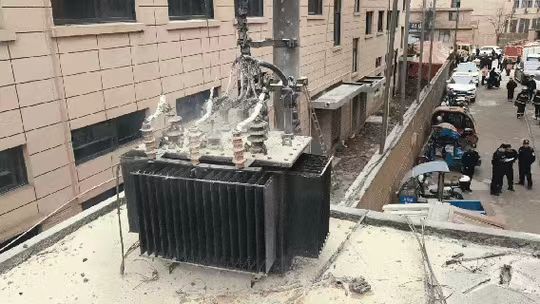
When a transformer fails—whether it’s a neighborhood pole unit or a substation-level power transformer—it poses not just an electrical problem but a community safety challenge. High-voltage energy, oil fires, toxic smoke, and exposed wires can threaten lives and property. Communities that understand what to do (and what not to do) during such events are far more resilient and capable of preventing injury and escalation.
Communities can stay safe during transformer failures by immediately reporting unusual signs (smoke, sparks, explosion sounds), keeping a minimum 30-foot distance from the equipment, avoiding contact with any downed wires or oil spills, following public safety alerts or utility updates, and never attempting to inspect or repair the transformer themselves. Schools, residential groups, and businesses should have contingency plans for outages, evacuation, and emergency communications.
Preparedness, awareness, and cooperation with utilities and first responders are the pillars of safety during such events.
Community safety during transformer failures depends on keeping distance, reporting signs early, and avoiding contact with the scene.True
Transformers may remain energized or hazardous after failure; community awareness and avoidance help prevent injury.
It is safe for residents to approach or inspect a failed transformer as long as it looks calm.False
Even quiet transformers may contain dangerous voltage or flammable materials—approach must be avoided.
1. Recognize the Warning Signs of Transformer Trouble
| Visual or Audible Clue | Possible Hazard |
|---|---|
| Loud bang, popping, or explosion | Internal arc fault or bushing failure |
| Smoke or flames | Oil ignition, winding burnout |
| Sparks or arcing | High voltage discharge |
| Oil leak | Risk of slip, fire, or PCB exposure |
| Humming that changes pitch | Core saturation or overload condition |
If any of these signs appear, stay back and immediately call 911 and your utility provider.
2. Community Do’s and Don’ts During Transformer Failure
| ✅ Do | ❌ Don’t |
|---|---|
| Stay at least 30 feet away from the equipment | Don’t touch any wires, fences, or poles nearby |
| Alert 911 and your local power company | Don’t try to inspect or reset anything yourself |
| Watch for leaking oil or unusual smells | Don’t pour water or other substances on equipment |
| Follow utility updates on outages and hazards | Don’t assume it's safe just because there’s no fire |
| Help guide others (especially children) away | Don’t post incorrect advice or rumors on social media |
Public safety hinges on avoidance and accurate communication.
3. How to Prepare as a Community
| Preparation Step | Benefit |
|---|---|
| Form a neighborhood emergency plan | Assigns roles, identifies vulnerable residents |
| Distribute safety flyers or posters | Raises awareness on signs and hazards |
| Host community safety workshops | Educates on transformer safety, first response, reporting |
| Keep battery-powered radios or lights | Ensures communication during extended outages |
| Register for utility outage alerts | Stay informed with real-time restoration status |
Neighborhoods with plans in place recover faster and prevent injury.
4. What Parents, Schools, and Children Should Know
| Audience | Essential Message |
|---|---|
| Children | Never touch wires or boxes on poles, even when quiet |
| Teachers/Schools | Ensure evacuation routes avoid utility zones |
| Parents | Teach kids to report strange sounds or smells |
Transformers may seem harmless to children—visual education and drills are key.
5. Utilities and First Responders Rely on Community Cooperation
| Your Role | Why It Matters |
|---|---|
| Calling 911 quickly | Helps responders contain hazard faster |
| Avoiding blocked roads or transformer zones | Keeps access open for fire/utility teams |
| Reporting smells or small arcs early | Can prevent large-scale transformer failure |
| Respecting barricades and no-entry zones | Reduces risk to life and speeds up restoration |
Fast, clear community action supports safe grid restoration and investigation.
Summary Table: How Communities Stay Safe During Transformer Failures
| Action | Safety Benefit |
|---|---|
| Keep distance from equipment | Avoids shock, burns, or arc flash injuries |
| Report signs and stay alert | Enables fast containment and utility action |
| Follow emergency updates | Informs when it's safe to return or use devices |
| Educate children and neighbors | Prevents dangerous curiosity or rumor spread |
| Avoid physical contact or cleanup | Stops oil exposure, fire, or electrocution risks |
Conclusion
If a transformer blows and there are signs of fire, smoke, arcing, or downed power lines, you should call 911 immediately. Emergency responders will ensure public safety and secure hazardous areas. For non-critical cases like power outages without visible danger, report the issue to your utility provider. Knowing the difference is key to protecting yourself and others in these situations.
FAQ
Q1: Should you call 911 if a transformer blows?
A1: Yes, you should call 911 if a transformer blows and you observe smoke, fire, loud explosion, downed power lines, or any immediate danger to people or property. Emergency services can respond to fire or hazardous conditions and coordinate with utility crews.
Q2: When should you call your utility provider instead?
A2: Call your electric utility company if:
There’s a power outage with no visible fire or hazard
You hear a loud pop or see the transformer go dark but no flames
You're reporting a suspected transformer issue without danger to life or property
Q3: What if the transformer catches fire or lines fall?
A3: Call 911 immediately. Do not approach:
Sparking or flaming equipment
Downed wires, which may be energized
Keep a safe distance (at least 30 feet) and warn others to stay back.
Q4: What can happen if a blown transformer is ignored?
A4: Ignoring a blown transformer with visible damage can lead to:
Fire spreading to nearby buildings or vegetation
Electrocution risk from exposed or downed lines
Extended power outages and grid instability
Prompt reporting ensures rapid emergency and utility response.
Q5: What safety steps should you follow after a transformer blows?
A5:
Stay indoors or back away from the area
Do not touch any wires, metal fences, or water near the site
Avoid using electrical appliances until power is restored
Call 911 or your utility depending on the severity and visible risk
References
"Transformer Explosion Safety Tips" – https://www.transformertech.com/transformer-explosion-response
"When to Call 911 for Electrical Emergencies" – https://www.powermag.com/when-to-call-911-transformer-blow
"Reporting Utility Hazards" – https://www.electrical4u.com/reporting-transformer-failure
"First Responder Guide to Electrical Incidents" – https://www.energycentral.com/c/ee/911-electrical-hazard-guide
"Fire Department Protocol for Transformer Fires" – https://www.sciencedirect.com/transformer-fire-emergency
"Smart Grid News: Public Response to Transformer Failures" – https://www.smartgridnews.com/transformer-safety-response
"PowerGrid: Who to Call When a Transformer Blows" – https://www.powergrid.com/reporting-transformer-incidents
"Local Utility Emergency Contacts Guide" – https://www.ready.gov/power-outages