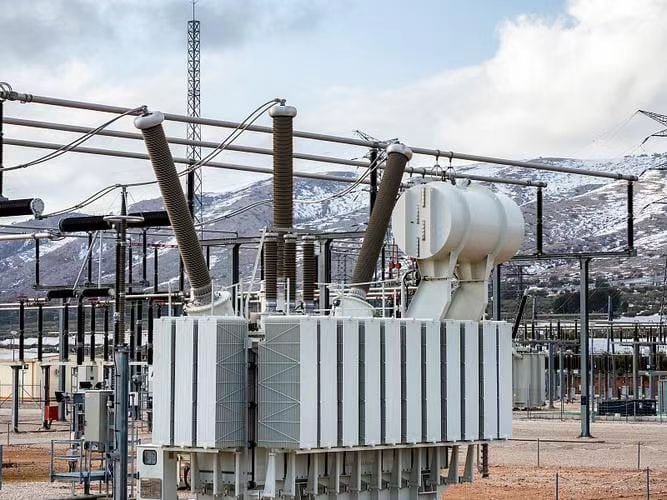
In today's evolving power systems, transformers must meet increasingly diverse and demanding application requirements. Whether it's to manage specific impedance levels, adapt to fluctuating voltages, or operate under challenging thermal conditions, power transformers can be fully customized. This flexibility enhances system reliability, efficiency, and performance across a wide range of industrial, utility, and renewable energy environments.
What Does Impedance Customization Mean in a Transformer?
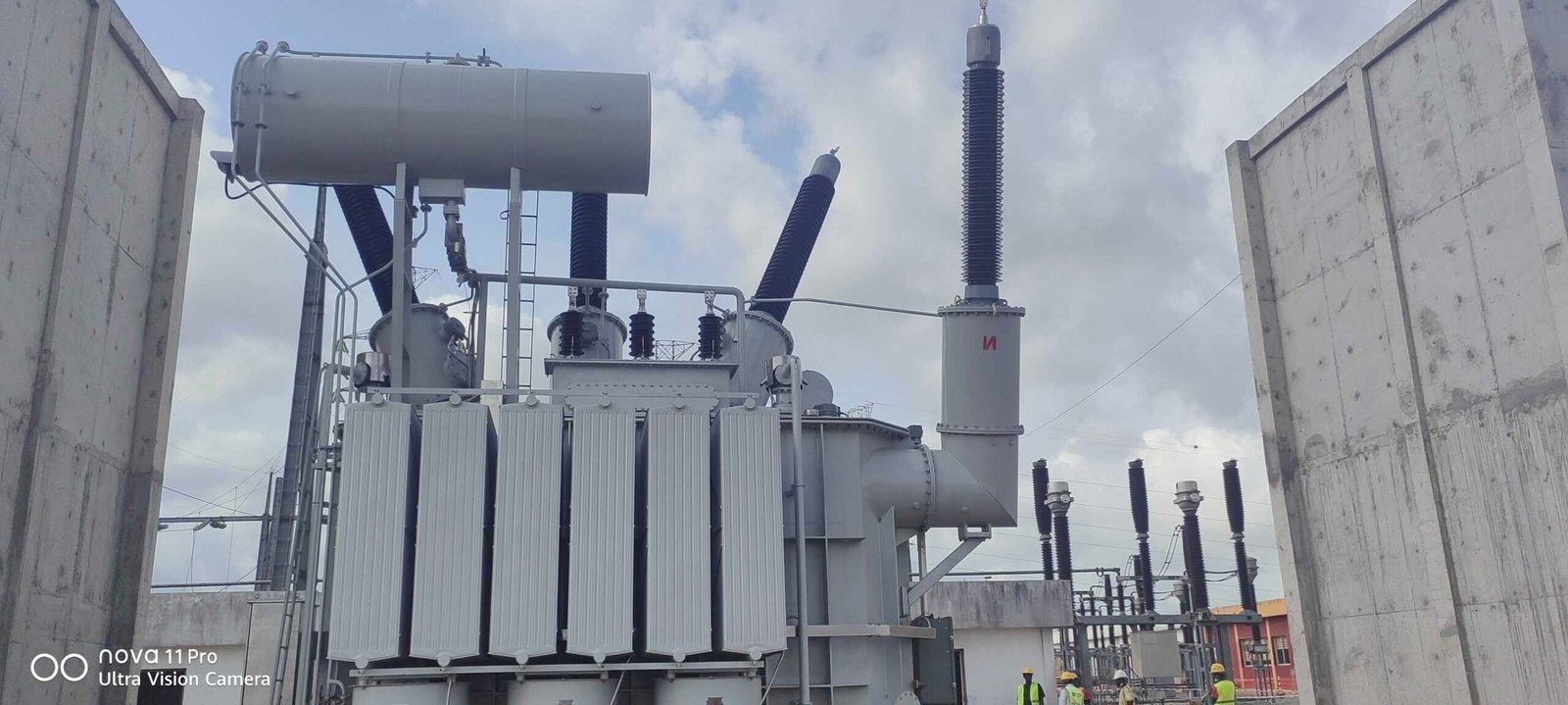
Transformer impedance plays a pivotal role in how power flows through an electrical system—and how the system reacts to faults. While every transformer inherently has an impedance based on its design, impedance customization refers to the process of specifying a non-standard impedance level during transformer design or procurement, tailored to a customer’s specific network requirements.
Impedance customization in a transformer means intentionally designing the transformer's leakage impedance to match specific system needs—such as limiting short-circuit current, balancing voltage drop, or coordinating with protective devices. It is typically expressed as a percentage (Z%) and directly affects the fault level and voltage regulation in the system.
This customization enables transformers to integrate more efficiently and safely into complex grid and load conditions.
Impedance customization allows transformers to be tailored for fault current limitation and voltage regulation.True
By specifying custom impedance values, engineers can optimize transformer performance and protect downstream equipment.
All transformers have fixed, unchangeable impedance values by default.False
Impedance can be specified during design and manufacturing to meet precise network performance criteria.
1. What Is Transformer Impedance?
| Component | Function |
|---|---|
| Leakage reactance (X) | Limits the flow of fault current and affects voltage drop |
| Resistance (R) | Causes minor I²R losses and heating, less significant than X |
| Impedance (Z) | Vector sum of R and X → defines short-circuit limitation |
Impedance is typically expressed as a percentage based on rated voltage and full-load current.
2. Why Customize Transformer Impedance?
| Application Need | Benefit of Custom Impedance |
|---|---|
| Short-circuit current control | Lower fault levels in downstream bus |
| Voltage drop control | Maintains acceptable voltage during load transitions |
| Load sharing in parallel transformers | Prevents circulating currents and overloads |
| Selective coordination | Ensures protective relays trip properly for faults |
| Harmonic or motor load control | Impedance tuning helps stabilize dynamic conditions |
Standard impedance values may not suit industrial plants, dense grids, or high-reliability applications.
3. How Impedance Affects Fault Currents
| Impedance % (Z%) | Short Circuit Current (per-unit fault level) |
|---|---|
| 5% | 20× full-load current |
| 8% | 12.5× full-load current |
| 10% | 10× full-load current |
| 15% | 6.6× full-load current |
A higher impedance reduces fault current, protecting circuit breakers and switchgear.
4. Real-World Example: Customized Impedance Design
- Transformer: 20 MVA, 33/11 kV unit for steel plant
- Standard Z%: 8.0%
- Problem: Existing circuit breakers rated for only 25 kA at 11 kV
- Solution: Specified custom impedance of 11.5% to reduce fault current to 22 kA
- Result: No need to upgrade breakers; transformer protection maintained; savings of \$60,000
Impedance customization helped match the transformer to the existing protection infrastructure.
5. Typical Impedance Ranges (and When to Customize)
| Transformer Type | Typical Z% Range | Customization Scenario |
|---|---|---|
| Distribution (up to 5 MVA) | 4.0% – 6.5% | Customized for dense urban load centers |
| Medium power (5–50 MVA) | 6.0% – 12% | Adjusted to manage industrial fault levels |
| Large power (>50 MVA) | 10% – 18% | Designed to limit substation bus fault exposure |
| Furnace/arc applications | 7.5% – 15% | Tailored for high short-time currents and balance |
Utilities often request custom impedance for interconnection transformers or sensitive feeders.
6. Engineering Considerations in Impedance Customization
| Design Factor | Impact on Impedance Specification |
|---|---|
| Winding geometry | Affects leakage flux and therefore reactance |
| Core construction | Influences magnetic path and loss balance |
| Cooling class | Higher impedance may require enhanced thermal design |
| Tap changer range | Should not excessively shift effective impedance |
| System grounding scheme | Affects fault current paths and impedance utility |
Transformer OEMs simulate these parameters using finite element analysis and load flow modeling.
7. Benefits and Trade-Offs of Custom Impedance
| Benefit | Potential Trade-Off |
|---|---|
| Reduced fault level | Slightly higher voltage drop under full load |
| Coordinated protection response | May increase transformer cost or size slightly |
| Improved load sharing | Requires matched impedance across units |
| Enhanced equipment safety | Slight reduction in efficiency if impedance is too high |
Proper design ensures benefits without compromising efficiency or regulation.
Summary Table: Key Aspects of Impedance Customization in Transformers
| Aspect | Explanation |
|---|---|
| Definition | Specifying a non-standard impedance during design |
| Purpose | Match system protection, fault level, and load needs |
| Expressed As | % of rated voltage based on rated current |
| Custom Range | Typically between 4% and 18% based on transformer size |
| Common Use Cases | Industrial systems, utility substations, parallel units |
| Trade-Offs | Slight voltage drop, higher cost, thermal consideration |
How Is Tap Range Adjusted and Why Is It Important?
Voltage on an electrical grid is not always constant—it fluctuates with load changes, transmission losses, and switching operations. Transformers play a critical role in stabilizing voltage, and they do this through a mechanism known as tap changing. The tap range determines how much the output voltage can be adjusted to match system requirements. Understanding and customizing this range is essential for reliable and efficient power delivery.
Tap range adjustment in a transformer refers to changing the connection point on the transformer winding to vary the turns ratio, thereby regulating the output voltage. This is done through tap changers—either off-circuit (OCTC) or on-load (OLTC)—which allow voltage to be increased or decreased in defined steps (typically ±5% to ±20%). It is crucial for maintaining proper voltage levels across the grid, especially during fluctuating load conditions or long transmission lines.
Voltage regulation isn’t optional—it’s what keeps equipment safe and systems stable.
Tap range adjustment allows transformers to regulate voltage by altering the winding turns ratio.True
By changing taps, transformers adjust their output voltage to maintain grid stability and match load conditions.
All transformers operate at a fixed voltage and cannot adapt to grid variations.False
Most transformers include tap changers for either manual or automatic voltage regulation.
1. What Is a Tap Changer?
| Type | Function | When Used |
|---|---|---|
| Off-Circuit Tap Changer (OCTC) | Manually adjusts tap position while de-energized | Small transformers, infrequent changes |
| On-Load Tap Changer (OLTC) | Automatically adjusts tap position under load | Power transformers, fluctuating grids |
Tap changers modify the number of active winding turns to vary the voltage ratio.
2. Typical Tap Range Specifications
| Transformer Voltage Class | Standard Tap Range | Step Increments |
|---|---|---|
| Distribution (≤33 kV) | ±5% or ±7.5% | 2.5% or 5% per tap |
| Medium Power (33–132 kV) | ±10% or ±15% | 1.25% to 2.5% (OLTC) |
| Grid-Connected (>132 kV) | ±10% to ±25% | Often 17–33 steps (1.25% or finer) |
OLTC units are usually rated for 500,000+ operations and may change tap positions hundreds of times per day.
3. Why Tap Range Adjustment Is Critical
| Purpose | Impact on System |
|---|---|
| Voltage stabilization | Keeps output within ±5% of nominal voltage |
| Load balancing on long feeders | Corrects voltage drop over distance |
| Integration of renewable energy | Compensates for variability in solar/wind generation |
| Maintaining motor voltage | Prevents motor undervoltage/overvoltage stress |
| Reactive power control | Helps maintain power factor and grid efficiency |
Without voltage control, sensitive equipment fails and grid reliability drops.
4. How the Tap Range Is Adjusted
| Adjustment Method | Process |
|---|---|
| Manual OCTC | Power down, open cabinet, shift tap manually |
| Automatic OLTC | Motorized mechanism adjusts taps based on voltage sensor feedback |
| SCADA control | Remote tap control integrated into grid automation |
| Digital AVR (automatic voltage regulator) | Continuously compares actual voltage with setpoint and adjusts tap |
In OLTC systems, tap change is smooth, automatic, and real-time.
5. Real-World Application: OLTC Voltage Regulation
- Transformer: 110/33 kV, 40 MVA with ±15% OLTC
- Setting: Industrial zone with daytime voltage sags
- Operation: OLTC adjusts tap 5–10 times daily to maintain 33 kV under variable load
- Benefit: Reduced customer complaints, improved power quality index
- AVR Range: 28.05 kV to 37.95 kV output regulated via tap positions
Tap changers reduce the impact of load fluctuations without manual intervention.
6. Engineering Considerations in Tap Range Design
| Factor | Design Impact |
|---|---|
| Winding construction | Determines how many tap points can be inserted |
| System voltage tolerance | Defines required tap range (+/− %) |
| Number of steps vs. step size | Affects resolution of voltage control |
| AVR delay and bandwidth | Prevents hunting or unnecessary tap changes |
| Load power factor variation | Influences voltage seen at load terminals |
Overly narrow tap ranges limit regulation, while excessive steps increase complexity and cost.
7. Tap Range vs. Impedance: The Balancing Act
| Parameter | Effect |
|---|---|
| Higher impedance | Limits short-circuit current but reduces voltage control precision |
| Wider tap range | Improves regulation flexibility but may stress insulation |
| Fine step resolution | Enables smoother voltage transitions but increases mechanical wear |
Both impedance and tap range must be optimized together for transformer performance and system safety.
Summary Table: Tap Range Adjustment in Transformers
| Aspect | Explanation |
|---|---|
| What it is | Changing winding connections to vary output voltage |
| Why it matters | Maintains voltage stability across loads and distances |
| Where it's used | Distribution, transmission, industrial, and renewable systems |
| Types | Off-circuit (manual) and on-load (automatic) |
| Typical ranges | ±5% to ±25% depending on voltage class |
| Step sizes | 1.25%, 2.5%, or 5% |
What Cooling Methods Can Be Selected for Power Transformers?
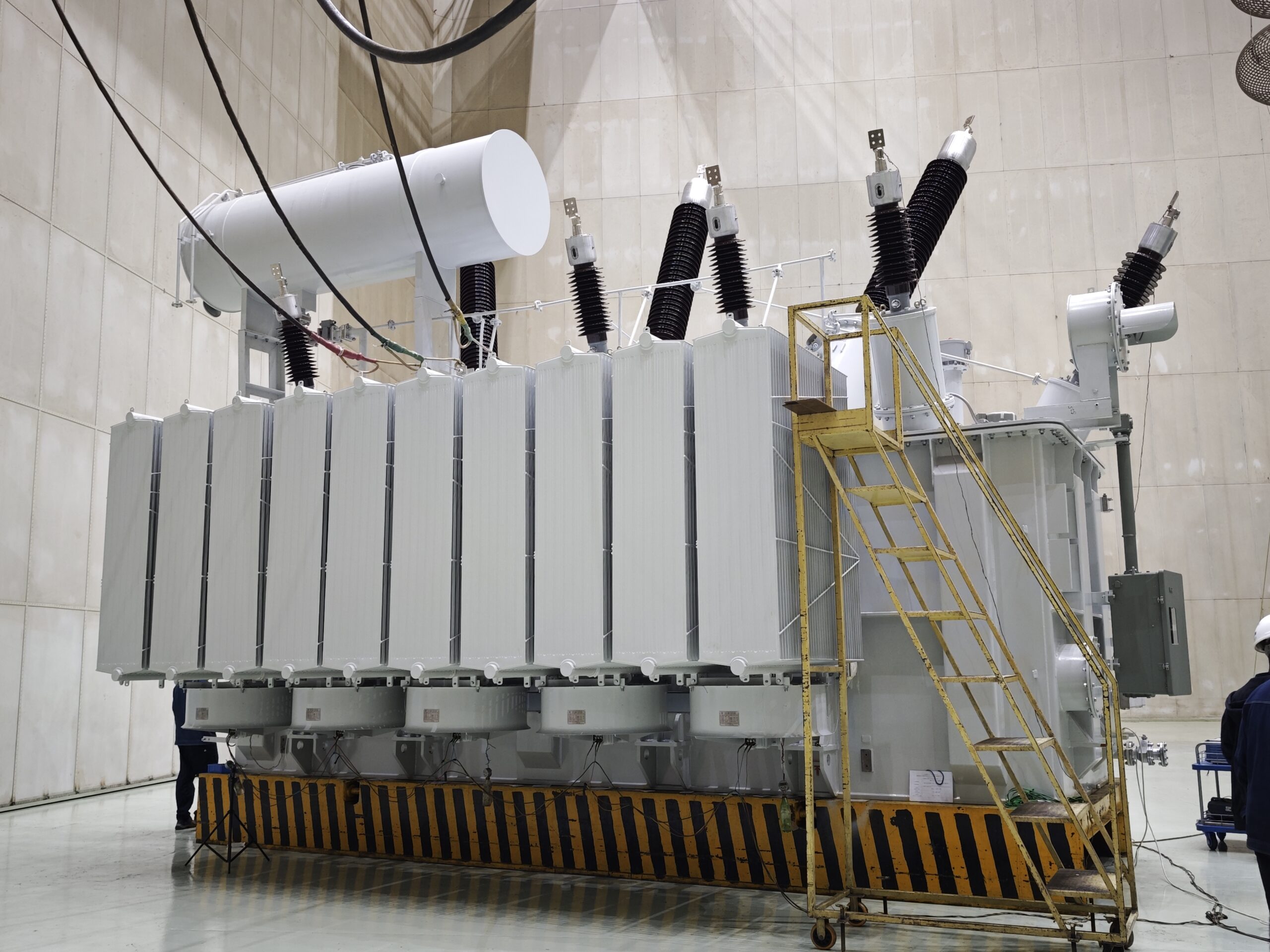
As power transformers increase in size and duty, so does the heat they generate. This heat—mainly from copper (I²R) and core (eddy and hysteresis) losses—must be efficiently removed to prevent insulation aging, internal faults, and catastrophic failures. Cooling systems are essential to keep the transformer operating within safe thermal limits, ensuring long service life and continuous performance. Selecting the right cooling method depends on transformer capacity, environment, operating duty, and maintenance needs.
Cooling methods for power transformers include a range of passive and forced techniques such as ONAN (Oil Natural Air Natural), ONAF (Oil Natural Air Forced), OFAF (Oil Forced Air Forced), OFWF (Oil Forced Water Forced), and air blast. Each method is tailored to the transformer's power rating, thermal load, and installation environment. The chosen cooling system determines the transformer's rated capacity, overload performance, and temperature rise profile.
Effective cooling is as vital as insulation or voltage regulation in transformer design and performance.
Power transformers can be cooled using oil and air in natural or forced combinations depending on capacity and application.True
Cooling methods like ONAN, ONAF, and OFAF manage heat using oil and air circulation, sometimes enhanced by fans or pumps.
All power transformers use only natural cooling with no forced systems.False
Larger power transformers often require forced oil and air or even water cooling for effective thermal management.
1. Overview of Transformer Cooling Methods
| Code | Full Name | Cooling Description |
|---|---|---|
| ONAN | Oil Natural Air Natural | Oil circulates by convection, air cools radiators naturally |
| ONAF | Oil Natural Air Forced | Oil circulates naturally, fans force air across radiators |
| OFAF | Oil Forced Air Forced | Pumps circulate oil, fans cool radiators actively |
| OFWF | Oil Forced Water Forced | Pumps circulate oil, water exchanger removes heat |
| ODAF | Oil Directed Air Forced | Directed oil flow with controlled air cooling |
| Air Blast | Air Blast | Used in dry-type or gas-insulated transformers |
Each method builds upon the previous by adding forced circulation for higher heat removal.
2. ONAN: Oil Natural Air Natural
| Cooling Principle | Convection oil flow, ambient air exchange |
|---|---|
| Typical Rating Range | Up to 10–15 MVA |
| Advantages | Simple, silent, low maintenance |
| Limitations | Limited cooling capacity, not ideal for high-load swings |
ONAN relies entirely on natural convection, with hot oil rising and cooled oil sinking in a loop.
3. ONAF: Oil Natural Air Forced
| Enhancement Over ONAN | Adds forced air via fans to increase radiator efficiency |
|---|---|
| Capacity Range | 10–60 MVA |
| Advantages | Improved cooling at moderate cost |
| Operation | Fans engage when oil temp crosses set point |
ONAF systems allow dual-rating operation, e.g., ONAN at 80%, ONAF at 100% of transformer capacity.
4. OFAF: Oil Forced Air Forced
| Working Mechanism | Oil is circulated by pumps, air cooling aided by fans |
|---|---|
| Typical Rating Range | 40–200 MVA+ |
| Advantages | Effective for high-duty or continuous overload conditions |
| Maintenance | Requires regular fan and pump servicing |
OFAF offers better thermal gradient control within transformer windings due to active oil movement.
5. OFWF: Oil Forced Water Forced
| Where Used | Indoor substations, marine, underground, nuclear sites |
|---|---|
| Cooling Fluid | Transformer oil → water via plate/tube heat exchangers |
| Advantages | Very high cooling capacity with compact radiator area |
| Challenges | Requires water treatment, flow alarms, leak-proofing |
OFWF is ideal where air circulation is poor or heat must be exported to distant sinks.
6. Dry-Type or Air Blast Cooling
| Used For | Indoor dry-type transformers, sensitive buildings |
|---|---|
| Cooling Medium | Air only, pushed via ducts or blowers |
| Advantages | No oil fire risk, clean operation |
| Drawbacks | Lower capacity, sensitive to environmental dust/humidity |
Air blast cooling is mostly found in hospitals, airports, tunnels, or data centers using cast-resin transformers.
7. Selection Guide for Cooling Method by Transformer Size
| Transformer Rating (MVA) | Recommended Cooling System | Remarks |
|---|---|---|
| < 2.5 MVA | ONAN | Distribution pole or pad-mounted units |
| 2.5–10 MVA | ONAN or ONAF (dual rated) | Rural substations, small industry |
| 10–40 MVA | ONAF or OFAF | Medium industrial, utility substations |
| 40–150 MVA | OFAF or OFWF | High load areas, data centers, smart grids |
| >150 MVA | OFWF with redundancy | Bulk transmission transformers, critical grid nodes |
8. Impact of Cooling Method on Transformer Design
| Design Factor | Cooling Implication |
|---|---|
| Tank size and fin layout | ONAN requires more radiator surface area |
| Pump and fan integration | OFAF and OFWF need control panels, relays, alarms |
| Oil volume and viscosity | Affects convective flow and must be optimized accordingly |
| Temperature rise class | Dictated by IEC/IEEE standards and cooling type |
The cooling class defines transformer rating and operational limits under ambient conditions.
Summary Table: Cooling Methods for Power Transformers
| Code | Cooling Type | Power Range | Key Features |
|---|---|---|---|
| ONAN | Oil Natural Air Natural | ≤10 MVA | Passive, silent, low maintenance |
| ONAF | Oil Natural Air Forced | 10–60 MVA | Fans increase radiator effectiveness |
| OFAF | Oil Forced Air Forced | 40–200+ MVA | Oil pumps + fans for high-performance cooling |
| OFWF | Oil Forced Water Forced | 80–300+ MVA | Uses water circuit—compact, high capacity |
| ODAF | Oil Directed Air Forced | 60–250+ MVA | Directed oil flow with baffle design |
| Air Blast | Air only | <5 MVA (dry type) | Indoor, non-oil, fire-safe |
How Does Customized Design Affect Transformer Performance?
Transformers are not one-size-fits-all machines. Each power system presents unique challenges—whether it’s fluctuating loads, short-circuit constraints, harmonic content, or space limitations. A standardized transformer might function, but it won’t optimize. Customized transformer design bridges this gap by aligning electrical, thermal, mechanical, and operational parameters precisely with application requirements, ultimately improving performance, efficiency, and system compatibility.
Customized transformer design directly enhances performance by tailoring parameters such as impedance, tap range, cooling method, vector group, and winding configuration to match the specific load characteristics, grid conditions, and installation constraints. This optimization leads to improved voltage regulation, reduced losses, extended lifespan, and seamless integration into the power system.
Customization ensures the transformer performs not just adequately, but optimally in its intended environment.
Customized transformer design improves performance by aligning electrical and thermal characteristics with application-specific needs.True
Tailoring impedance, tap range, cooling, and core construction enhances reliability, efficiency, and system compatibility.
Customizing a transformer design has no real performance impact and only affects price.False
Design customization is critical for performance, affecting load handling, fault response, thermal stability, and lifespan.
1. Key Design Parameters That Can Be Customized
| Parameter | Customization Options | Performance Impact |
|---|---|---|
| Impedance (%) | 4–18% depending on application | Controls fault current, voltage drop |
| Tap Range and Steps | ±5%, ±10%, ±15% with 1.25–2.5% steps | Enhances voltage regulation |
| Cooling System | ONAN, ONAF, OFAF, OFWF, ODAF | Affects load capacity and temperature rise |
| Core Material and Shape | CRGO, amorphous, 3-leg vs 5-leg | Impacts no-load loss, magnetic flux stability |
| Winding Configuration | Layer, disc, helical, interleaved | Adjusts short-circuit withstand, loss profile |
| Vector Group | Dyn11, Yyn0, Yd1, etc. | Ensures correct phase shift and harmonics control |
These variables are adjusted to fine-tune the transformer to its operating environment.
2. Customized Impedance and Its Effects
| Impedance Value | Use Case | Performance Result |
|---|---|---|
| Lower (4–6%) | Distributed systems needing tighter voltage | Less voltage drop, but higher fault current |
| Higher (10–15%) | Industrial plants with limited breaker rating | Lower short-circuit duty, but more drop |
Custom impedance helps balance voltage regulation vs. protection coordination.
3. Tap Range Customization and Regulation Performance
| Tap Range | Voltage Control Flexibility | Use Case |
|---|---|---|
| ±5% / 2 steps | Minimal variation, basic grid integration | Stable grid with few fluctuations |
| ±10% / 5–7 steps | Better adaptability to load changes | Industrial and mixed-load feeders |
| ±15% / 9+ steps | Wide regulation range for renewables or weak grids | Rural or unstable grid applications |
Customized tap ranges ensure voltage remains within limits despite grid variability.
4. Cooling System Choice and Thermal Performance
| Cooling Method | Custom Application | Performance Benefit |
|---|---|---|
| ONAN | Silent, natural cooling | Low maintenance, lower rating |
| ONAF | Forced air for rating enhancement | Dual-rating possible (e.g., ONAN/ONAF 80/100%) |
| OFAF / OFWF | Heavy-duty, forced circulation | Supports continuous high-load operation |
Custom cooling supports overload capability, hot-spot temperature control, and life expectancy.
5. Real-World Example: Customized Transformer for Renewable Farm
- Rating: 10 MVA, 33/11 kV
Customizations:
- Impedance: 12% to limit fault level to 22 kA
- Tap Range: ±10% in 1.25% steps with OLTC
- Vector Group: Dyn11 to isolate harmonics
- Cooling: OFAF for 24/7 high-load operation
- Result: Stable voltage under PV fluctuation, no relay misoperations, prolonged insulation health
Custom design ensured harmonic compatibility, thermal resilience, and protection alignment.
6. Efficiency and Loss Optimization in Custom Designs
| Loss Category | Customization Technique | Performance Gain |
|---|---|---|
| Core Loss (No-load) | Select low-loss CRGO/amorphous material | Reduced no-load energy consumption |
| Copper Loss (Load loss) | Optimize conductor size, shape, spacing | Improved efficiency under peak load |
| Cooling-related loss | Match radiator/pump system to load profile | Lower auxiliary power consumption |
Tailoring loss performance helps utilities meet energy efficiency and regulatory targets.
7. Mechanical and Dimensional Customizations
| Design Feature | Customization Need | Benefit |
|---|---|---|
| Tank shape | Restricted installation space | Easier integration into substations |
| Bushing orientation | Site-specific cable entry | Avoids rerouting of high-voltage connections |
| Noise level treatment | Low-noise windings, enclosure damping | Reduces acoustic impact in urban areas |
| Transportation modularity | Road or crane limitations | Facilitates shipping and on-site assembly |
These changes improve deployment speed and spatial compatibility.
Summary Table: How Customized Design Affects Transformer Performance
| Design Parameter | Customized Range/Option | Performance Effect |
|---|---|---|
| Impedance (%) | 4–18% | Adjusts fault levels, voltage drops |
| Tap Range | ±5% to ±15% with 1.25–2.5% steps | Enhances voltage control and grid adaptability |
| Cooling Method | ONAN, ONAF, OFAF, OFWF | Affects load rating, thermal aging, overload capacity |
| Core and Winding Design | CRGO, amorphous, interleaved, disc, helical | Optimizes loss, harmonics, and mechanical strength |
| Vector Group | Dyn11, Yyn0, etc. | Aligns phase rotation, suppresses harmonic propagation |
| Physical Layout | Compact, modular, low-noise, customized bushings | Improves integration, reduces installation cost |
What Applications Require Specific Impedance or Tap Settings?
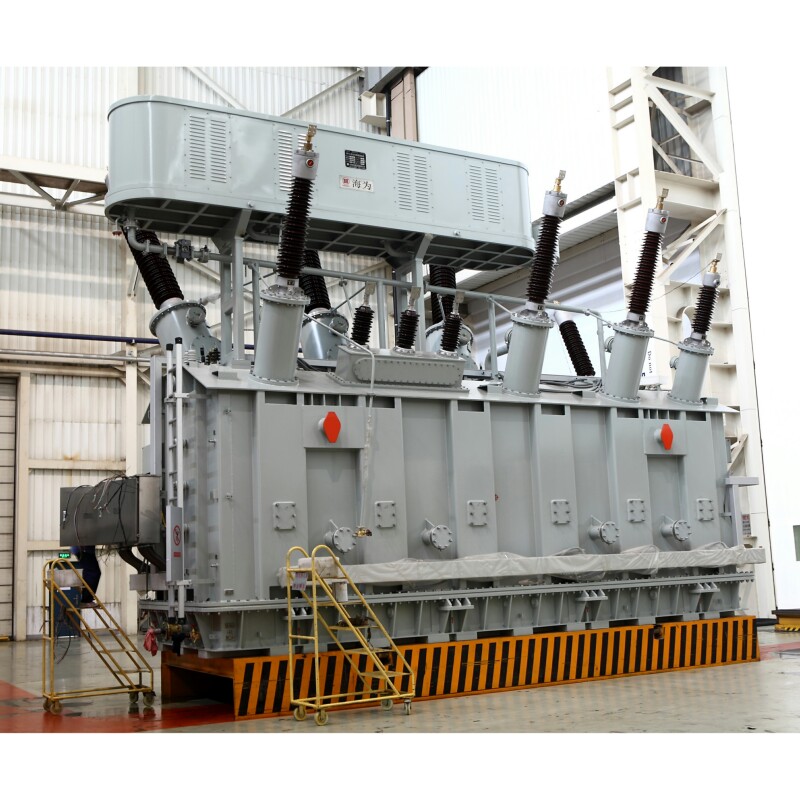
Not all transformers can be treated equally. In fact, many electrical systems require transformers to have specifically engineered impedance and tap settings to perform safely, reliably, and efficiently. From industrial furnaces to renewable energy sites, tailored electrical characteristics are essential to match system demands, manage fault levels, stabilize voltages, and protect connected equipment. Customization is not optional—it is critical.
Applications that require specific transformer impedance or tap settings include industrial plants (e.g., steel mills or chemical factories), data centers, wind and solar farms, utility substations, and parallel transformer installations. These settings are selected to manage fault currents, enable fine voltage regulation, ensure protective device coordination, and support stable operation under varying loads or grid conditions.
Proper impedance and tap selection enables the transformer to integrate seamlessly into its intended application.
Certain applications require specific impedance or tap settings to manage fault current, voltage regulation, and grid compatibility.True
Custom settings help transformers maintain power quality, reduce risk, and ensure compatibility with other systems.
Transformer impedance and tap settings are universal and don’t need to be matched to the application.False
Each application has unique load and fault characteristics, requiring tailored transformer parameters for optimal operation.
1. Industrial Facilities (e.g., Steel Mills, Refineries, Cement Plants)
| Impedance Need | High impedance to limit short-circuit current |
|---|---|
| Tap Range Requirement | ±10% to ±15% to manage heavy reactive loads and fluctuations |
| Why It Matters | Protects equipment during inrush, enables stable voltage |
| Transformer Type | OFAF-cooled with OLTC for real-time regulation |
These facilities operate heavy, high-starting-load machines that require tight control of current and voltage.
2. Data Centers and Critical Loads
| Impedance Goal | Moderate impedance (6–8%) to balance fault response |
|---|---|
| Tap Range Design | Fine steps (e.g., ±5% in 1.25%) for precise voltage tuning |
| Importance | Maintains power quality and supports UPS operation |
| Transformer Characteristics | Low-noise, high-efficiency, often dry-type with advanced monitoring |
Precision is key—voltage sags or surges can damage servers or trigger UPS disconnection.
3. Renewable Energy Systems (Wind and Solar Farms)
| Impedance Configuration | Higher impedance (10–13%) to reduce back-fed fault current |
|---|---|
| Tap Settings | ±10–15% OLTC to respond to intermittent generation changes |
| Why Customization Helps | Matches inverter output with grid, supports ride-through |
| Cooling & Integration | Compact ONAF/OFAF units for field-mounted substations |
In renewables, tap changers help stabilize voltage under variable solar or wind input.
4. Utility Substations (Urban and Rural)
| Impedance Consideration | Tailored for protection coordination (e.g., 7.5–10%) |
|---|---|
| Tap Design | ±10–15% with 1.25% steps for wide distribution feeder swings |
| Why It’s Critical | Balances fault response and voltage delivery in long feeders |
| Use Case | Interconnection transformers, grid-tie nodes, voltage regulation substations |
In rural grids, tap settings compensate for line drop across long feeders.
5. Parallel Transformer Operations
| Impedance Matching | Must be nearly identical (±2%) to ensure load sharing |
|---|---|
| Tap Matching | Identical tap range and vector group |
| Purpose | Prevents circulating currents and uneven loading |
| Common Setup | Two or more 20–60 MVA transformers in substation or industrial plants |
Impedance mismatch causes load imbalance, overheating, and protection conflicts.
6. Arc Furnaces and Load Cycling Applications
| Impedance Level | High (12–15%) to suppress arc current peaks |
|---|---|
| Tap Adjustment | Wide range to support different heating cycles |
| Why It’s Needed | Controls current distortion and protects winding insulation |
| Cooling | OFAF with robust fans and oil pumps due to thermal stress |
In arc furnaces, voltage and current fluctuate rapidly, requiring strong damping via impedance.
7. Traction and Railway Electrification Systems
| Impedance Need | Moderate (7–9%) to allow for fast load variation |
|---|---|
| Tap Settings | Automatic OLTC to maintain voltage across substation network |
| Challenges | High surge currents from train startups and regenerative braking |
| Design Considerations | Strong magnetic balancing and thermal overrating |
Rail systems rely on stable, precise voltage control under fast load swings.
Summary Table: Applications Requiring Specific Impedance and Tap Settings
| Application | Impedance Need | Tap Range Required | Purpose |
|---|---|---|---|
| Steel plant | High (10–15%) | ±10–15% | Fault current reduction, voltage swing handling |
| Data center | Medium (6–8%) | ±5% fine step | Power quality and continuity |
| Wind farm | High (10–13%) | ±10–15% | Grid matching and ride-through |
| Utility substation | Balanced (7–10%) | ±10–15% | Voltage regulation, protection coordination |
| Parallel transformers | Matched (±2%) | Identical | Load sharing and system reliability |
| Arc furnace | Very high (12–15%) | Wide tap range | Harmonics suppression, voltage damping |
| Railway systems | Moderate (7–9%) | OLTC ±15% | Voltage control under dynamic load |
What Factors Should Be Considered When Requesting a Customized Transformer?
A transformer is not just a commodity—it’s a mission-critical asset that must perform reliably within a specific electrical and physical environment. When ordering a customized transformer, the stakes are high: selecting the wrong specifications can result in poor performance, protection issues, overheating, or even catastrophic failure. That’s why a detailed, application-specific approach is required when specifying a customized transformer.
When requesting a customized transformer, key factors to consider include system voltage and insulation class, power rating (kVA/MVA), impedance requirements, tap changer configuration, cooling method, winding connection (vector group), installation environment, load characteristics, fault level constraints, physical size, and regulatory standards. These ensure the transformer aligns perfectly with its operating environment and system goals.
Failing to specify these factors properly can lead to misalignment with grid dynamics or operational hazards.
Custom transformer requests must consider voltage, impedance, tap range, cooling, vector group, and installation environment.True
These specifications ensure the transformer integrates safely and performs optimally in its application.
All transformers are built the same and don’t require detailed input from the customer.False
Each transformer should be designed according to the unique demands of its electrical and physical environment.
1. System Voltage and Insulation Levels
| Parameter | Why It’s Critical |
|---|---|
| Primary and Secondary Voltages | Must match grid and load voltages exactly |
| Basic Insulation Level (BIL) | Ensures safety during lightning or switching surges |
| Altitude Adjustment | Derates insulation for high elevations (>1000m) |
Incorrect voltage or insulation selection can lead to dielectric failure or operational incompatibility.
2. Power Rating (kVA or MVA)
| Considerations | Impact |
|---|---|
| Load Profile | Select rating based on peak, average, and contingency loads |
| Overload Requirements | Allows short-term load increases without damage |
| Future Expansion | Consider sizing for 10–20% growth if needed |
Proper sizing ensures load support without excessive heating or voltage drop.
3. Impedance Specification
| Typical Range | Why It Matters |
|---|---|
| 4%–18% | Controls fault current and voltage drop |
| Matched in parallel ops | Prevents circulating current between units |
| Protective coordination | Must align with upstream/downstream breaker capacities |
Custom impedance protects switchgear, limits fault damage, and supports relay grading.
4. Tap Changer Type and Range
| Options | Use Case |
|---|---|
| Off-Circuit Tap Changer (OCTC) | Small transformers, infrequent voltage adjustment |
| On-Load Tap Changer (OLTC) | Real-time voltage regulation under load |
| Range | ±5%, ±10%, ±15% (step size 1.25%–2.5%) |
Tap changer settings enable precise voltage regulation, especially under load variability.
5. Cooling System and Rating
| Cooling Types | Application Context |
|---|---|
| ONAN | Small transformers, quiet environments |
| ONAF/OFAF | Larger transformers, industrial or substation use |
| OFWF | High load and limited airflow environments (e.g. tunnels) |
| Dual Rating | ONAN/ONAF allows two capacity levels |
The cooling method affects load handling, lifespan, and site requirements.
6. Vector Group and Winding Configuration
| Vector Group | Function |
|---|---|
| Dyn11, Yyn0, Yd1 | Determines phase shift, harmonic isolation, load balance |
| Special Groups | May be needed for transformer paralleling or power quality |
| Load Matching | Vector group must suit connected equipment |
The wrong vector group can cause phase imbalance or trip protection devices.
7. Environmental and Mechanical Constraints
| Installation Constraints | Design Adaptation |
|---|---|
| Indoor/outdoor | Adjust cooling and protection level |
| Altitude | Affects insulation and cooling |
| Ambient temperature | Cooling class must meet local climate |
| Footprint limits | Custom tank dimensions, top or side-mounted bushings |
Transformer enclosures and design must fit physical space and climate.
8. Short Circuit Withstand and Fault Duty
| Short Circuit Requirement | Transformer Design Response |
|---|---|
| High short-circuit levels | Requires robust mechanical support in windings |
| Upstream/downstream breaker limits | May dictate custom impedance or dual winding reinforcement |
Verify that the design meets IEC 60076-5 or IEEE C57.12.00 withstand standards.
9. Regulatory and Efficiency Standards
| Standard | Impact on Transformer Design |
|---|---|
| IEC, ANSI, IS | Sets mechanical, thermal, and dielectric limits |
| Efficiency class (IE2, IE3, DOE 2016) | Determines core and copper loss targets |
| Noise limits | Acoustic dampening or tank modifications |
Compliance ensures regulatory approval and minimizes lifecycle cost.
Summary Table: Key Factors When Requesting a Customized Transformer
| Factor | Why It Matters |
|---|---|
| Voltage & Insulation Levels | Prevent overvoltage failures and match system specs |
| Power Rating | Ensures proper load support and prevents overloads |
| Impedance | Controls fault current and protection compatibility |
| Tap Settings | Enables voltage regulation under varying load |
| Cooling System | Affects load capacity, space, and maintenance |
| Vector Group | Aligns with system phase, load, and harmonics |
| Mechanical Constraints | Fits physical space and mounting layout |
| Short-Circuit Withstand | Avoids damage during grid or internal faults |
| Standards & Efficiency | Ensures safety, compliance, and long-term energy savings |
Conclusion
Power transformers can indeed be tailored to meet specific system requirements in terms of impedance, tap changer range, and cooling configuration. Whether applied in industrial facilities, smart grids, or high-voltage transmission systems, this customization ensures optimal integration, safety, and longevity. By aligning transformer specifications with operational demands, utilities and engineers can achieve more resilient and adaptable power infrastructure.
FAQ
Q1: Can a power transformer be customized for specific impedance?
A1: Yes. Power transformers can be designed with custom impedance values to match system fault levels, load sharing needs, and voltage drop limitations. Specifying the correct impedance is essential for:
Short-circuit protection
Parallel transformer operation
Grid stability and coordination with protection devices
Q2: Is it possible to specify a custom tap range on a transformer?
A2: Absolutely. Tap changers can be custom-configured to offer:
Specific voltage adjustment ranges (e.g., ±5%, ±10%)
Number of tap steps (e.g., 9, 17, or more)
On-load (OLTC) or off-load tap changer (NLTC) types
This allows for voltage regulation, especially in areas with fluctuating demand or long transmission distances.
Q3: Can I choose the cooling method for a power transformer?
A3: Yes. Transformers can be built with different cooling systems, such as:
ONAN (Oil Natural Air Natural)
ONAF (Oil Natural Air Forced)
ODAF (Oil Directed Air Forced)
Dry-type cooling (for indoor or fire-sensitive areas)
The choice depends on load profile, location, safety, and installation constraints.
Q4: Why would a custom transformer be necessary?
A4: Custom transformers are often required for:
Integration into legacy systems
Renewable energy applications (solar/wind)
Space-constrained environments
Special grid codes or regulatory compliance
Industrial processes with unique voltage/current profiles
Q5: How are these customizations specified and validated?
A5: During the engineering and design phase, manufacturers work with clients to define:
Electrical specs (voltage, frequency, impedance)
Mechanical constraints (dimensions, weight)
Environmental conditions
Testing standards (IEC, IEEE, ANSI)
Factory acceptance tests (FAT) and simulations ensure compliance before delivery.
References
"Customized Power Transformers – Design Flexibility" – https://www.transformertech.com/custom-transformer-specifications
"Transformer Impedance and Custom Design Parameters" – https://www.electrical4u.com/custom-transformer-design
"PowerGrid: Cooling Types and Transformer Engineering" – https://www.powergrid.com/transformer-cooling-options
"ScienceDirect: Optimizing Transformer Design for Specific Loads" – https://www.sciencedirect.com/custom-power-transformers
"ResearchGate: Case Studies on Transformer Customization" – https://www.researchgate.net/custom-transformer-design-study
"Siemens Energy: Custom Solutions for Power Transformers" – https://www.siemens-energy.com/custom-power-transformers
"Energy Central: Benefits of Custom-Engineered Transformers" – https://www.energycentral.com/c/ee/custom-transformer-benefits
"Smart Grid News: Designing Transformers for Complex Grids" – https://www.smartgridnews.com/custom-transformer-options