
Transformers are essential components in power systems, enabling the safe and efficient transmission of electricity. A common question is whether transformers actually "increase" electricity. To clarify this, we need to understand what transformers do and how they affect voltage, current, and power.
What Does a Transformer Do?
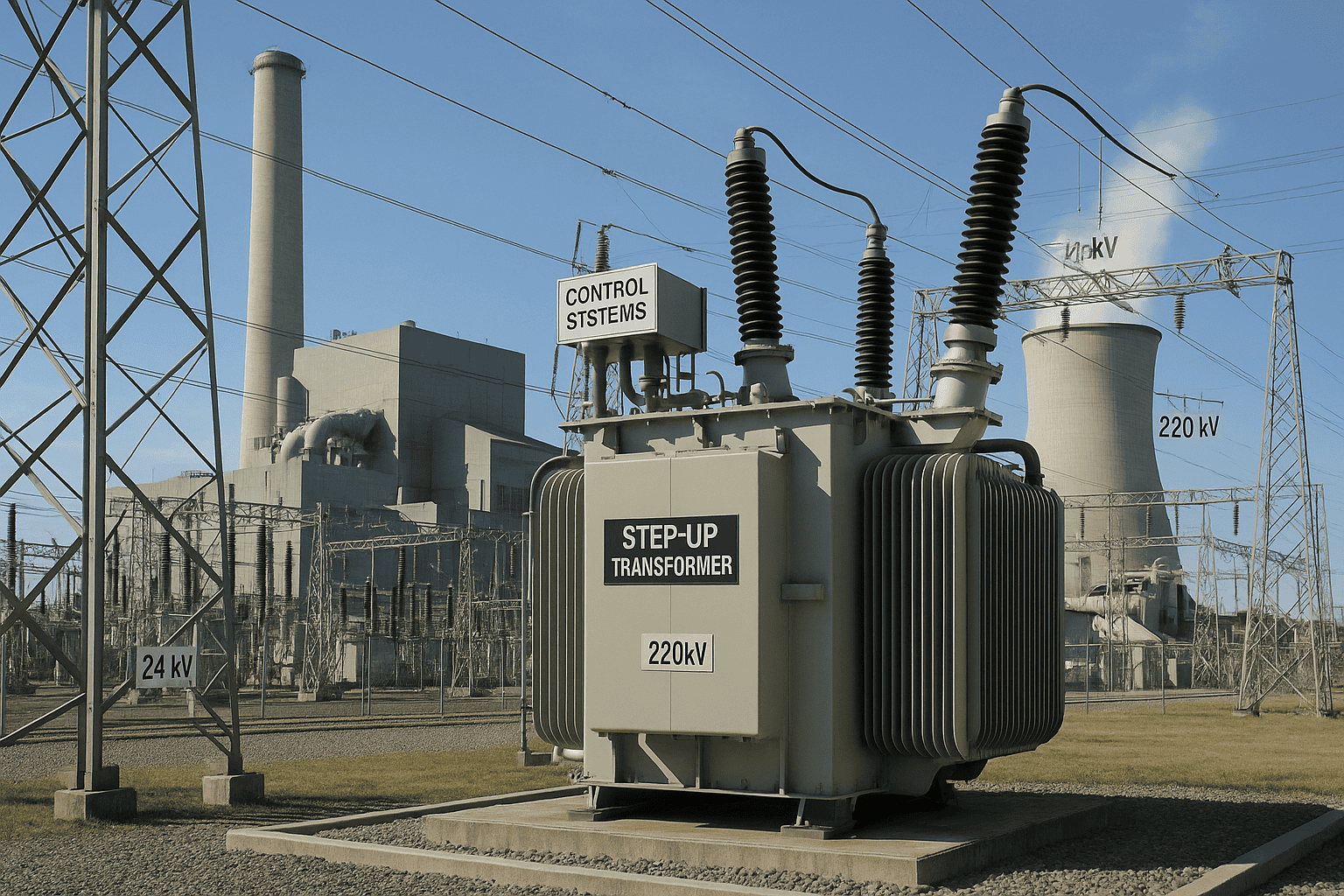
Transformers are everywhere in modern life—from the power grid to your phone charger. Yet, despite their ubiquity, many people don’t fully understand what they do. Without transformers, safe and efficient transmission of electricity would be impossible. Electrical power systems rely on transformers to move energy across different voltage levels, matching the needs of generation, transmission, distribution, and consumption.
A transformer is an electrical device that transfers electrical energy between two or more circuits through electromagnetic induction. Its primary function is to increase (step up) or decrease (step down) voltage levels while maintaining the same frequency, allowing efficient power transmission and safe voltage delivery to homes, businesses, and industries.
Transformers make long-distance power delivery viable and enable localized voltage control for user safety.
A transformer changes voltage levels through electromagnetic induction without mechanical motion.True
Transformers operate on Faraday’s law by converting voltage between windings wrapped around a magnetic core.
Transformers generate electricity for the grid.False
Transformers do not generate electricity—they only transfer and convert voltage between circuits.
1. Basic Principle of Transformer Operation
| Component | Function |
|---|---|
| Primary winding | Receives electrical power at one voltage level |
| Magnetic core | Transfers energy magnetically via alternating flux |
| Secondary winding | Delivers power at the transformed voltage |
Transformers do not store energy—they instantly transfer it between input and output.
2. How Voltage Conversion Works
- Based on Faraday’s Law of Electromagnetic Induction
- When AC voltage flows through the primary coil, it creates a changing magnetic field
- This induces a voltage in the secondary coil, which is proportional to the turns ratio
| Turns Ratio | Voltage Output |
|---|---|
| 2:1 | Secondary voltage = half of primary |
| 1:2 | Secondary voltage = double primary |
| 1:1 | Same voltage (isolation transformer) |
A transformer allows voltage manipulation without changing the total power (ignoring losses).
3. Types of Transformers by Function
| Type | Function | Example Use |
|---|---|---|
| Step-up transformer | Increases voltage for transmission | Generator to transmission grid |
| Step-down transformer | Decreases voltage for safe use | Substation to residential network |
| Isolation transformer | Provides electrical isolation | Medical equipment, sensitive electronics |
| Auto-transformer | Shared winding, compact design | Industrial motors, railway equipment |
| Instrument transformer | Measures current/voltage safely | Metering and protection systems |
4. Why Transformers Are Essential in Power Systems
| Need | Transformer Solution |
|---|---|
| High voltage needed for transmission | Step-up voltage to reduce current and losses |
| Low voltage needed for consumers | Step-down voltage to safe levels |
| Protection of sensitive circuits | Isolation and voltage regulation |
| Metering in high-voltage systems | Instrument transformers scale values |
Without transformers, power grids could not efficiently transmit electricity, and most electronics would be unsafe to use.
5. Real-Life Application Flow
| Grid Stage | Voltage (Typical) | Transformer Role |
|---|---|---|
| Generation Plant | 11–25 kV | Step-up to 132–400 kV |
| Transmission Lines | 132–400 kV | Long-distance, low-loss transfer |
| Substation | 132 kV → 33 kV | Step-down for distribution |
| Distribution Feeder | 33 kV → 11 kV or 0.4 kV | Feed homes, shops, and small factories |
| Consumer Premises | 230 V | Final delivery at usable voltage |
6. Transformers and Energy Efficiency
| Efficiency Factor | Typical Performance |
|---|---|
| Core losses (no-load) | <1% of rated power |
| Copper losses (load) | 0.5–2% depending on load and design |
| Total efficiency | 98–99.75% for large power transformers |
High-quality transformers minimize loss, supporting global energy conservation efforts.
Summary Table: What a Transformer Does
| Function | Description |
|---|---|
| Voltage conversion | Changes voltage level between circuits |
| Power transfer | Moves energy without mechanical contact |
| Isolation | Electrically separates two circuits |
| Load matching | Balances generator/load voltage requirements |
| Fault protection/metering | Provides safe scaled-down signals |
Does a Transformer Increase Voltage?
When moving electricity across long distances, high voltage is essential to reduce power losses. That’s where transformers come in. One of their primary functions is to increase voltage at the generation point, allowing energy to travel efficiently across transmission lines. Without this voltage boost, the power grid would suffer huge energy losses and instability.
Yes, a transformer can increase voltage using electromagnetic induction—this is known as a step-up transformer. It raises the voltage from a lower level (e.g., 11 kV) to a higher level (e.g., 132 kV or 400 kV) by having more turns on the secondary winding than the primary. Step-up transformers are essential in power generation plants to enable high-voltage transmission.
Voltage increase is one of the core capabilities of transformers, alongside voltage reduction and electrical isolation.
Transformers can increase voltage using the principle of electromagnetic induction.True
Step-up transformers raise voltage levels by increasing the winding ratio between primary and secondary coils.
Transformers only reduce voltage and cannot increase it.False
Transformers can be configured as step-up or step-down based on the turns ratio of the windings.
1. What Is a Step-Up Transformer?
| Feature | Description |
|---|---|
| Function | Increases voltage at the output |
| Turns Ratio | Secondary turns > Primary turns |
| Power Transfer | Voltage increases, current decreases proportionally |
| Typical Use | From generators to transmission grid |
Step-up transformers enable efficient long-distance energy transfer by reducing I²R losses.
2. Where Are Voltage-Increasing Transformers Used?
| Application | From | To | Purpose |
|---|---|---|---|
| Power plants | 11–22 kV | 132–400 kV+ | Grid injection |
| Wind and solar farms | 400–690 V | 11–33 kV | Connect inverter output to medium-voltage grid |
| Railway substations | 25 kV | 132 kV or above | Backfeed to grid or system balancing |
All generation-based facilities use step-up transformers before transmission.
3. How Does a Transformer Increase Voltage?
- Based on Faraday’s Law of Electromagnetic Induction
- When AC flows in the primary coil, it creates a magnetic field in the core
- This field induces voltage in the secondary coil
- If the secondary winding has more turns, the output voltage is higher
| Winding Turns Ratio | Voltage Output Behavior |
|---|---|
| 1:2 | Output voltage = 2× input voltage |
| 1:5 | Output voltage = 5× input voltage |
A 1:10 winding ratio could turn 11 kV into 110 kV, for example.
4. Why Increase Voltage in Power Systems?
| Reason | Benefit |
|---|---|
| Reduce transmission losses | Power loss (I²R) decreases as current drops |
| Improve transmission reach | Higher voltages allow longer distances without drop |
| Reduce conductor size | Smaller cables can carry the same power |
| Enable voltage transformation hierarchy | Supports multiple levels of distribution |
Higher voltage = lower current = higher efficiency.
5. Design Features of Step-Up Transformers
| Parameter | Typical Characteristics |
|---|---|
| High voltage bushings | Insulated to handle grid-level output |
| Strong magnetic core | Ensures high flux transfer |
| Oil-cooled or forced-air | To handle high power loads |
| Winding insulation | Designed for high dielectric strength |
Step-up transformers are built to withstand high voltage and thermal stress.
Summary Table: When and How a Transformer Increases Voltage
| Function | Occurs In | Why It’s Needed |
|---|---|---|
| Voltage step-up | Generation & renewables | Efficient long-distance transmission |
| Winding design | More secondary turns | Increases voltage output via induction |
| Transformer type | Step-up transformer | Increases voltage while reducing current |
| Voltage output range | 11 kV → 132/220/400 kV | Matches grid voltage levels |
How Does a Step-Up Transformer Work?
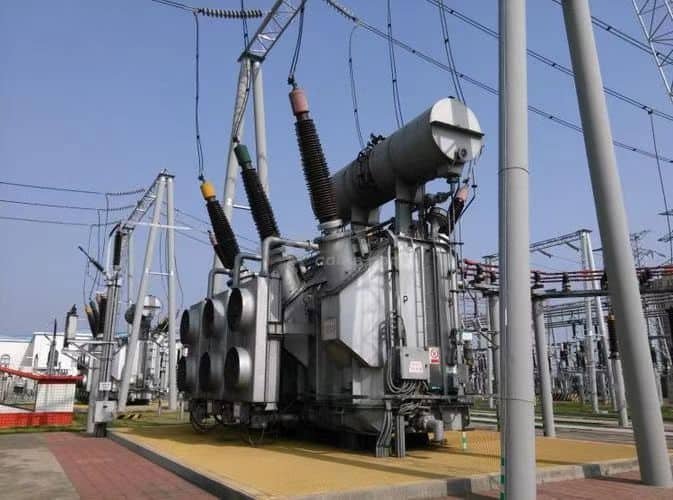
Delivering electricity efficiently over long distances requires high voltage. This is made possible by step-up transformers, which raise the voltage level right after electricity is generated. Their operation is based on the principles of electromagnetic induction, using alternating current to transfer energy from one voltage level to a higher one without moving parts. Understanding how step-up transformers work is key to understanding how the global power grid functions.
A step-up transformer works by using electromagnetic induction to increase voltage from a lower level on the primary winding to a higher level on the secondary winding. It has more turns in the secondary coil than in the primary, which results in a proportional increase in voltage while reducing current. The transformer enables efficient high-voltage transmission without changing the frequency or total power (excluding minor losses).
This voltage elevation enables efficient, long-distance power transfer with minimal line loss.
A step-up transformer increases voltage by having more turns in the secondary winding than in the primary winding.True
According to Faraday’s Law, the voltage induced is proportional to the winding ratio, which enables the voltage to be increased.
Step-up transformers reduce voltage to safer levels for residential use.False
Step-up transformers are used to increase voltage, while step-down transformers are used to reduce it for safe consumption.
1. Basic Operating Principle: Faraday’s Law of Induction
| Concept | Description |
|---|---|
| Faraday’s Law | A changing magnetic field in a coil induces voltage in another coil |
| Magnetic Coupling | AC current in the primary winding creates a magnetic field in the core |
| Voltage Transformation | The induced voltage in the secondary depends on the number of turns |
If the secondary winding has more turns, the output voltage increases—this is the step-up effect.
2. Key Components of a Step-Up Transformer
| Component | Function |
|---|---|
| Primary winding | Receives low-voltage AC input (e.g., 11 kV from a generator) |
| Magnetic core | Transfers magnetic flux from primary to secondary |
| Secondary winding | Outputs high-voltage AC (e.g., 132 kV to the transmission grid) |
| Insulation system | Withstands high voltage stress |
| Cooling system | Manages heat from core and copper losses |
Proper design ensures voltage transformation with minimal energy loss.
3. Winding Ratio and Voltage Increase
| Turns Ratio (N₂/N₁) | Effect on Voltage |
|---|---|
| 1:2 | Voltage is doubled |
| 1:10 | Voltage is increased tenfold |
| 1:1.732 | Used in special grid-matching configurations |
Formula:
$$\frac{V_2}{V_1} = \frac{N_2}{N_1}$$
Where:
- $V_1$ = primary voltage
- $V_2$ = secondary voltage
- $N_1$ = primary turns
- $N_2$ = secondary turns
This simple formula drives the design of all step-up transformers.
4. Real-World Use Cases for Step-Up Transformers
| Application | Input Voltage | Output Voltage | Purpose |
|---|---|---|---|
| Thermal power plant | 11–22 kV | 220–400 kV | Transmit power over the national grid |
| Wind turbine cluster | 690 V | 33 kV | Export energy to medium-voltage grid |
| Solar inverter blocks | 800 V | 11–33 kV | Connect solar arrays to substations |
| Industrial cogeneration plant | 6.6 kV | 132 kV | Grid synchronization |
These transformers enable grid injection at appropriate voltage levels.
5. Efficiency and Loss Considerations
| Loss Type | Cause | Impact |
|---|---|---|
| Copper losses | Resistance in windings (I²R) | Increases with current load |
| Core losses | Hysteresis and eddy currents in the core | Present even under no load |
| Dielectric loss | Leakage in insulation (minimal if designed well) | Can rise at very high voltages |
Step-up transformers are 98–99.75% efficient, depending on rating and cooling method.
6. Protection and Monitoring Features
| Feature | Purpose |
|---|---|
| Buchholz relay | Detects internal gas or arc faults |
| Temperature sensors | Monitors winding and oil temperatures |
| OLTC (on-load tap changer) | Adjusts output voltage for system balance |
| Surge arresters | Protect against lightning or switching surges |
These features help maintain reliability under high voltage and heavy load.
Summary Table: How a Step-Up Transformer Works
| Aspect | Detail |
|---|---|
| Voltage Direction | Increases from low to high |
| Turns Ratio | Secondary > Primary |
| Use Case | Generation to transmission grid |
| Efficiency | Up to 99.75% in high-capacity designs |
| Protection | Relays, surge arresters, cooling systems |
Does a Transformer Increase Total Power Output?
Transformers are often thought of as boosting or reducing electricity, but it’s important to distinguish between voltage, current, and total power. While transformers can raise or lower voltage, they do not increase the total electrical power output—doing so would violate the basic laws of physics. Instead, they conserve power (minus minor losses) while shifting voltage and current levels to match system requirements.
No, a transformer does not increase the total power output. It only changes the voltage and current levels while maintaining nearly the same total apparent power (measured in VA, kVA, or MVA). In ideal conditions, input power equals output power. Real transformers have minimal losses (usually 1–2%), so output power is slightly less than input power.
The transformer is a passive device—it does not generate or amplify power; it transforms it for safe and efficient delivery.
Transformers conserve power while changing voltage and current levels, without increasing total power output.True
Transformers obey the law of energy conservation: input power approximately equals output power minus losses.
A transformer increases the total electrical power available at its output.False
Transformers cannot generate or amplify energy; they only convert voltage and current within the same power envelope.
1. Power Relationship in Transformers
| Parameter | Primary Side | Secondary Side |
|---|---|---|
| Voltage (V) | Lower | Higher (step-up) or lower (step-down) |
| Current (I) | Higher | Lower (step-up) or higher (step-down) |
| Power (P = V × I) | \~Same | \~Same |
In ideal transformers:
$$P{input} = P{output}$$
In real transformers:
$$P{output} = P{input} - \text{Losses}$$
Transformers do not create power; they reshape it to meet system voltage or current needs.
2. What Power Is Actually Transferred?
| Power Type | Description |
|---|---|
| Apparent Power (S) | Measured in VA, includes both active and reactive |
| Active Power (P) | Real power in kW that performs work |
| Reactive Power (Q) | Supports voltage regulation (measured in kVAR) |
Transformers handle S (kVA or MVA) and maintain power balance:
- $V_1 \times I_1 = V_2 \times I_2$
If a transformer steps up voltage, it steps down current, keeping $P$ approximately constant.
3. Illustration Example
| Transformer Type | Input | Output | Total Power (P) |
|---|---|---|---|
| Step-up Transformer | 11 kV × 100 A | 110 kV × 10 A | ≈ 1,100 kW (same both sides) |
| Step-down Transformer | 132 kV × 50 A | 11 kV × 600 A | ≈ 6,600 kW (minus losses) |
Changing voltage changes how power is delivered, not how much power exists.
4. Efficiency and Energy Losses
| Loss Category | Typical Values | Effect on Output Power |
|---|---|---|
| Core (no-load) loss | 0.1–0.5% | Occurs even when not under load |
| Copper (load) loss | 0.5–1.5% | Increases with current |
| Stray and dielectric loss | <0.1% | Minor but real in high-voltage units |
Typical total efficiency:
- Distribution transformers: 97–99%
- Power transformers: 98.5–99.75%
So the output power is slightly less than input power, never more.
5. Clarifying Misconceptions
| Misunderstanding | Reality |
|---|---|
| "Step-up transformers boost energy" | They boost voltage, not power |
| "Step-down transformers waste power" | They only convert power to a lower voltage, not destroy it |
| "Using more transformers adds power to the grid" | Only generators add power—transformers simply move and convert it |
6. Application Case Study: Power Plant Grid Injection
| Scenario | Transformer Role |
|---|---|
| Generator output: 15 kV, 300 A | Input = 4.5 MVA |
| Step-up transformer output: 132 kV, \~34 A | Output ≈ 4.5 MVA (less 1–2% loss) |
| Grid sees: 132 kV line, low current | Enables efficient, low-loss transmission |
Power remains consistent—only the voltage/current relationship is altered.
Summary Table: Does a Transformer Increase Power?
| Question | Answer |
|---|---|
| Increases voltage? | ✅ Yes (in step-up configuration) |
| Increases current? | ✅ Yes (in step-down configuration) |
| Increases total power? | ❌ No (power is conserved, minus losses) |
| Adds energy to the system? | ❌ No (transformers are passive devices) |
| Maintains power flow balance? | ✅ Yes (within 98–99.75% efficiency) |
What Happens to Current When Voltage Is Increased?
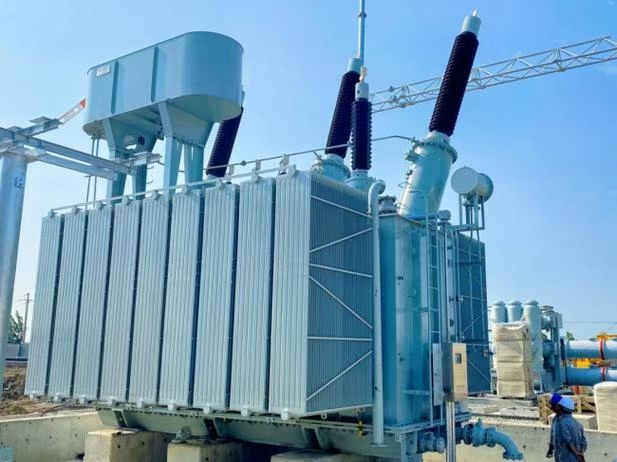
In electrical systems, voltage and current are two sides of the same power equation. Transformers allow us to increase voltage—but this always comes with a corresponding change in current. Understanding this relationship is critical in designing efficient power systems, minimizing transmission losses, and safely distributing electricity across vast distances.
When voltage is increased in a transformer (as in a step-up configuration), the current decreases proportionally to maintain the same power level. This inverse relationship ensures power (P = V × I) remains nearly constant, minus small losses. This reduction in current is what enables efficient high-voltage transmission by minimizing resistive losses (I²R).
The increase in voltage is a trade-off with current—not with power.
When voltage is increased in a transformer, current decreases proportionally to maintain power balance.True
Transformers follow the law of conservation of energy: power in equals power out (minus losses), so if voltage rises, current must fall.
Raising voltage in a transformer also increases current output.False
Increasing voltage reduces current output in proportion, maintaining constant power flow.
1. The Fundamental Power Equation
$$P = V \times I$$
Where:
- $P$ = Power (watts or VA)
- $V$ = Voltage (volts)
- $I$ = Current (amperes)
If $P$ is constant (as it is in an ideal transformer), then:
$$
\text{As } V \uparrow,
\ I \downarrow\quad
\text{and} \quad
\text{As } V \downarrow,
\ I \uparrow$$
This is the key operating principle of all transformers.
2. Step-Up Transformer Behavior
| Parameter | Primary (Low Voltage) | Secondary (High Voltage) |
|---|---|---|
| Voltage (V) | 11 kV | 110 kV |
| Current (I) | 100 A | 10 A |
| Power (P = V × I) | 1,100 kW | \~1,100 kW (minus 1–2% losses) |
The higher the voltage, the lower the current needed to carry the same power.
3. Why Reduce Current in High-Voltage Systems?
| Reason | Benefit |
|---|---|
| Lower current | Reduces I²R (resistive) power loss in lines |
| Smaller conductor size | Reduces material cost (e.g., copper, aluminum) |
| Less heating | Increases reliability and extends component life |
| Higher transmission distance | Improves efficiency over long distances |
$$\text{Power loss } = I^2 \times R$$
Reducing current dramatically reduces transmission losses.
4. Real-World Example: Grid Step-Up
| System Stage | Voltage | Current | Power |
|---|---|---|---|
| Generator Output | 11 kV | 500 A | 5.5 MVA |
| Step-Up Transformer | 132 kV | \~41.7 A | ≈5.5 MVA |
| Transmission Line | 132 kV | 41.7 A | Minimal I²R loss |
A 500 A current reduced to \~42 A means transmission is more efficient and safer.
5. Mathematical Example: Turns Ratio and Current
Transformer equation:
$$
\frac{V_2}{V_1} = \frac{N_2}{N_1}, \quad
\frac{I_2}{I_1} = \frac{N_1}{N_2}
$$
So, if:
- $V_1 = 10\,\text{kV}$
- $V_2 = 100\,\text{kV}$
Then: - Current decreases by a factor of 10.
If input current = 100 A
Then output current = 10 A
This inverse current relationship is fundamental to power conservation in transformers.
6. Applications Where This Matters Most
| Sector | Why Current Reduction Is Critical |
|---|---|
| Power Transmission | Reduces line losses and tower height |
| Renewable Energy Export | Prevents overloading of feeder cables |
| Industrial Systems | Matches equipment with high voltage needs |
| Traction / Railway | Maintains efficiency under fluctuating loads |
Voltage increase enables infrastructure scaling without overheating or costly conductor upgrades.
Summary Table: What Happens to Current When Voltage Increases
| Voltage Change | Current Reaction | Power Output |
|---|---|---|
| Voltage increases | Current decreases | Remains approximately the same |
| Voltage decreases | Current increases | Remains approximately the same |
| Transformer efficiency | Slight losses (1–2%) | No power creation involved |
Why Is Increasing Voltage Useful for Power Transmission?
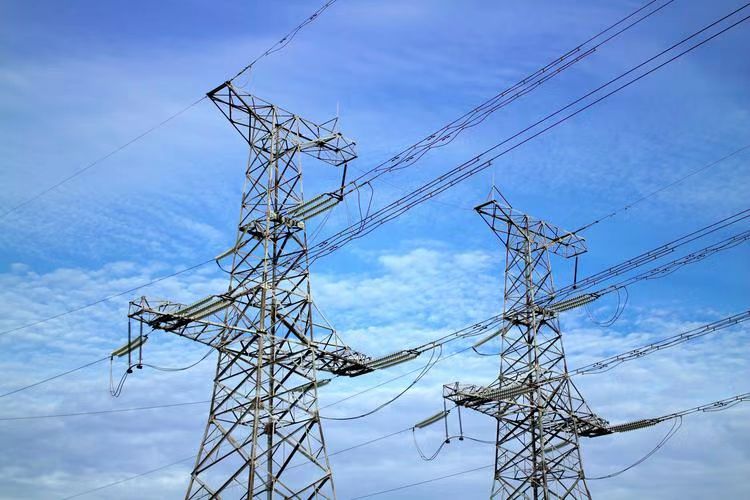
Transmitting electricity over long distances is a fundamental challenge for any power grid. Without optimization, power lines would waste enormous energy as heat, making long-range supply uneconomical. Fortunately, there’s a solution—increase the voltage. Power transformers allow energy to be stepped up to high voltages, drastically improving efficiency and reducing waste during transmission.
Increasing voltage for power transmission reduces current, which in turn minimizes resistive losses (I²R) in the conductors. Because power (P = V × I) is constant, higher voltage allows lower current to deliver the same power. This reduces heating in cables, enables smaller conductor sizes, supports longer distances, and lowers infrastructure costs.
High voltage is the backbone of efficient energy delivery from power plants to cities, factories, and rural areas.
Increasing voltage reduces current, which minimizes power losses during long-distance transmission.True
Resistive losses in conductors are proportional to the square of the current, so reducing current dramatically cuts power loss.
High voltage increases power losses in the grid.False
High voltage transmission lowers current and significantly reduces power losses, improving efficiency.
1. The Power Loss Problem in Transmission
| Loss Type | Formula | Impact |
|---|---|---|
| Resistive (Joule) Loss | $P_{loss} = I^2 × R$ | Grows rapidly with high current |
| Heat in conductors | Result of high current | Leads to energy waste and sag |
| Line voltage drop | $V_{drop} = I × R$ | Causes poor voltage regulation |
Reducing current is the only way to significantly reduce these losses, and that requires increasing voltage.
2. Why High Voltage Means Low Current
$$P = V × I \Rightarrow I = \frac{P}{V}$$
| Scenario | Voltage | Required Current for 10 MW | I²R Loss Impact |
|---|---|---|---|
| Low Voltage (10 kV) | 10 kV | 1000 A | High loss and heavy cables |
| Medium Voltage (100 kV) | 100 kV | 100 A | Much lower loss and lighter cable |
| High Voltage (400 kV) | 400 kV | 25 A | Extremely low losses |
A 10× increase in voltage cuts current by 10× and reduces I²R loss by 100×.
3. Benefits of High Voltage Transmission
| Benefit | Explanation |
|---|---|
| Reduces transmission losses | Current reduction lowers heating loss exponentially |
| Enables long-distance delivery | Voltage drop is minimized over hundreds of kilometers |
| Smaller conductor sizes | Less copper or aluminum needed = lower material cost |
| Fewer transmission towers | Wider spacing is possible with fewer line runs |
| Improved efficiency | Overall power system waste is reduced |
| Supports grid interconnection | EHV systems can link states, countries, or even continents |
Higher voltage = smarter, more efficient power systems.
4. Where Increased Voltage Is Used in the Grid
| Grid Stage | Voltage Level | Purpose |
|---|---|---|
| Generation to transmission | 132 kV – 765 kV | Step-up for long-range, low-loss delivery |
| Transmission corridors | 220 kV – 400 kV | Bulk movement between substations |
| Sub-transmission | 66 kV – 132 kV | Regional distribution to cities or zones |
| Urban substations | 33 kV – 11 kV | Prepares power for local distribution |
Every level uses transformers to adjust voltage based on distance and load need.
5. Visual Example: Voltage vs. Current Trade-Off
| Voltage Level | Current for 5 MW Load | Loss (assuming R = 1 Ω) |
|---|---|---|
| 10 kV | 500 A | $I^2 × R = 250,000$ W |
| 100 kV | 50 A | $2,500$ W |
| 400 kV | 12.5 A | $156$ W |
The same power, transmitted 1,600× more efficiently at 400 kV than at 10 kV.
6. How Transformers Enable Voltage Increase
| Component | Function |
|---|---|
| Step-up transformer | Raises voltage from generator (e.g., 11 kV to 220 kV) |
| Grid transformer | Maintains voltage levels along transmission corridors |
| Step-down transformer | Reduces voltage near cities for safe distribution |
Transformers are the enablers of high-voltage transmission—they make this efficiency possible.
Summary Table: Why Voltage Is Increased for Transmission
| Reason | Result |
|---|---|
| Reduce I²R loss | Increased efficiency |
| Reduce current | Smaller, cheaper cables |
| Improve transmission reach | Longer distances with less voltage drop |
| Enable economic design | Fewer towers, less land use |
| Support grid integration | Inter-regional and inter-country connections |
Conclusion
A transformer does not increase the total amount of electricity or power. Instead, it changes the voltage and current levels. A step-up transformer increases voltage while reducing current, and a step-down transformer does the opposite. This voltage transformation allows electricity to be transmitted over long distances efficiently, without increasing the total energy. In essence, a transformer reshapes electricity for optimal use, rather than increasing it.
FAQ
Q1: Does a transformer increase electricity?
A1: A transformer increases or decreases voltage, but it does not increase total electrical power (watts). For example, a step-up transformer increases voltage while decreasing current, keeping power (P = V × I) roughly the same, minus small losses. Transformers are energy transfer devices, not energy sources.
Q2: What is a step-up transformer and how does it work?
A2: A step-up transformer increases voltage from the primary winding to the secondary winding. It’s commonly used at power stations to raise voltage (e.g., from 11kV to 220kV or higher) for long-distance transmission, reducing current and minimizing energy loss.
Q3: Does increasing voltage mean more power is generated?
A3: No. Transformers do not generate power. They only transform voltage and current. The input power and output power remain almost the same (excluding small losses), ensuring conservation of energy.
Q4: Can a transformer be used to increase current?
A4: Yes, but inversely. A step-down transformer reduces voltage while increasing current proportionally. This is common in distribution transformers that supply electricity to homes and businesses at lower voltages.
Q5: What’s the practical benefit of increasing voltage?
A5: Increasing voltage using a transformer allows electricity to be:
Transmitted over long distances with lower losses
Delivered efficiently to substations before stepping down
Maintained with smaller, cost-effective conductors
This is a critical function in modern power systems.
References
"Does a Transformer Increase Electricity?" – https://www.transformertech.com/transformer-increase-voltage-not-power
"Transformer Voltage and Power Basics" – https://www.electrical4u.com/transformer-voltage-current-relationship
"Understanding Step-Up Transformers" – https://www.powermag.com/step-up-transformers-transmission
"Energy Central: How Transformers Affect Power Delivery" – https://www.energycentral.com/c/ee/transformer-power-conversion
"Smart Grid News: Energy Transfer in Transformers" – https://www.smartgridnews.com/transformer-energy-flow
"ScienceDirect: Voltage Conversion Without Energy Gain" – https://www.sciencedirect.com/transformer-energy-analysis
"ResearchGate: Conservation of Power in Transformer Operation" – https://www.researchgate.net/transformer-energy-balance
"PowerGrid: Myths About Transformers Increasing Power" – https://www.powergrid.com/transformer-power-increase-fact