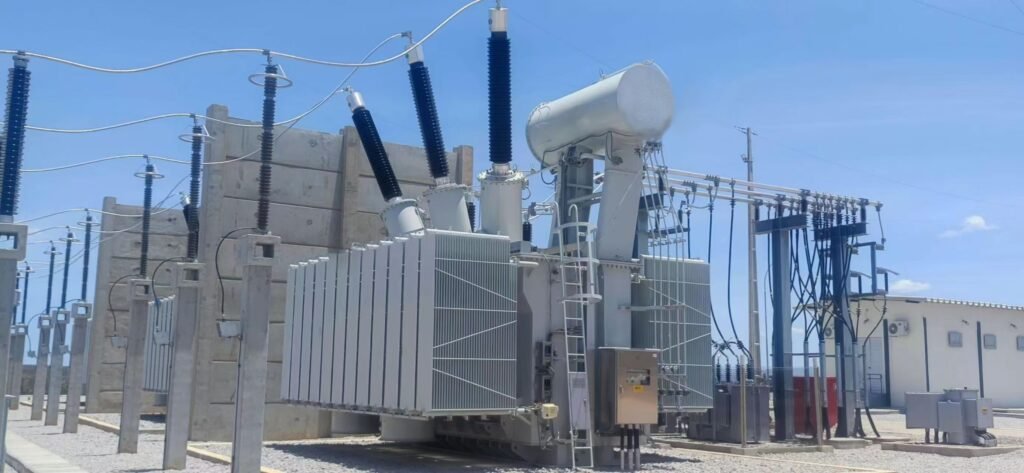
Selecting the wrong transformer configuration can increase equipment costs, reduce efficiency, and create unnecessary limitations in voltage conversion and system integration. Conventional transformers use electrically separate primary and secondary windings, while applications requiring relatively small voltage adjustments may benefit from a more compact and efficient design. Understanding how an autotransformer works and where it is appropriate helps engineers and buyers select a solution that balances efficiency, size, cost, and electrical requirements.
An autotransformer is a transformer that uses a single continuous winding with one or more common sections shared by the input and output circuits to transfer electrical energy between different voltage levels. Compared with a conventional two-winding transformer of similar rating, an autotransformer can be smaller, lighter, more efficient, and less costly when the voltage ratio is relatively close. Typical applications include voltage regulation, motor starting, interconnecting systems with similar voltage levels, and certain transmission and distribution applications.
Although autotransformers provide important efficiency and size advantages, they do not provide electrical isolation between the input and output circuits. This fundamental characteristic must be considered carefully when evaluating safety, grounding, protection, and application requirements.
What Is an Autotransformer and What Are Its Applications?
When a conventional two-winding transformer is selected for every voltage-conversion task, the result can be unnecessarily large, expensive, and inefficient, especially when the required voltage change is relatively small. An autotransformer addresses this problem by using a single continuous winding with one or more taps, allowing part of the winding to be shared by the input and output circuits. This can reduce copper and core requirements, but it also changes electrical isolation and fault behavior. An autotransformer is a transformer with a single tapped winding that serves both the primary and secondary circuits, making it particularly suitable for applications requiring voltage adjustment or relatively small voltage ratios where galvanic isolation is not required. Common applications include motor starting, voltage regulation, laboratory variable-voltage supplies, industrial voltage adjustment, and interconnecting electrical systems with closely related voltage levels.
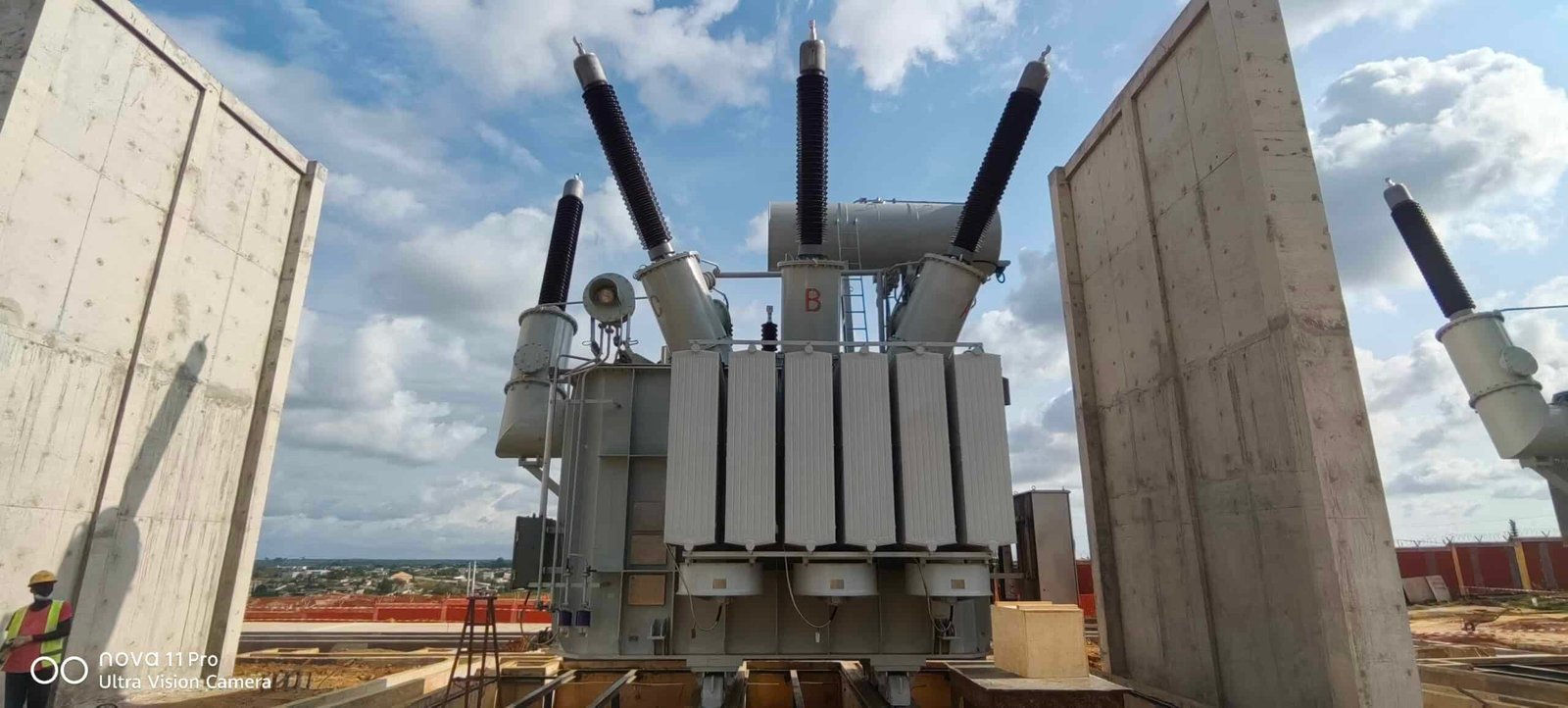
An autotransformer provides the same electrical isolation between input and output as a conventional two-winding transformer.False
An autotransformer uses a common winding between the input and output circuits, so it generally does not provide galvanic isolation between them.
What Is an Autotransformer?
An autotransformer uses one winding rather than two electrically separate windings.
A portion of the winding is common to both the input and output circuits, while another portion is connected in series. By selecting different tapping points, the transformer can provide a different voltage from the supply voltage.
This construction distinguishes an autotransformer from a conventional isolation transformer.
| Characteristic | Autotransformer | Two-Winding Transformer |
|---|---|---|
| Number of windings | One tapped winding | Two electrically separate windings |
| Input/output isolation | Generally none | Yes |
| Copper requirement | Lower for many voltage ratios | Higher |
| Physical size | Often smaller | Usually larger for equivalent duty |
| Efficiency | Generally high | High |
| Voltage adjustment | Convenient | Possible with taps |
| Short-circuit behavior | Requires careful system analysis | Different fault characteristics |
| Typical use | Voltage adjustment and motor starting | Isolation and general voltage transformation |
How Does an Autotransformer Work?
The operating principle is still electromagnetic induction.
An alternating voltage applied to the winding produces alternating magnetic flux in the transformer core. This flux induces voltage along the winding.
Because the winding contains multiple turns and taps, the voltage available between different points is proportional to the number of turns between those points.
In simplified form:
$$
\frac{V_1}{V_2}\approx\frac{N_1}{N_2}
$$
where:
- (V_1) = input voltage
- (V_2) = output voltage
- (N_1) = corresponding number of turns
- (N_2) = corresponding number of turns
The actual design must also account for losses, regulation, temperature and rated operating conditions.
Why Can an Autotransformer Be Smaller?
One of the main advantages is that part of the winding transfers power through both electromagnetic induction and direct electrical conduction.
This means the magnetic core does not have to handle the entire apparent power in the same way as a fully isolated two-winding design.
For voltage ratios close to 1:1, the material savings can be significant.
That can result in:
- Less copper
- Smaller core
- Lower weight
- Smaller enclosure
- Lower material cost
- Potentially higher efficiency
This is why autotransformers can be attractive when a system needs to adjust voltage only moderately.
What Are the Main Advantages?
1. High Efficiency
Autotransformers can achieve high efficiency because their construction can reduce winding material and associated losses.
This is especially useful for applications with continuous operation where even small efficiency differences accumulate over time.
2. Lower Material Cost
For suitable voltage ratios, an autotransformer can require less conductor material than an equivalent two-winding transformer.
This can reduce:
- Manufacturing cost
- Weight
- Transportation cost
- Installation effort
However, the overall project cost still depends on protection, accessories, enclosure, cooling and installation requirements.
3. Smaller Physical Size
A smaller transformer can be valuable when electrical-room space is limited.
This can benefit:
- Industrial equipment
- Control systems
- Laboratories
- Motor-control installations
- Voltage-regulation equipment
4. Good Voltage Adjustment Capability
Tapped windings allow the output voltage to be selected or adjusted.
Variable autotransformers can provide continuously adjustable output within their designed operating range.
What Are the Disadvantages?
The most important limitation is lack of galvanic isolation.
Because the input and output circuits share part of the winding, a fault or abnormal voltage condition on one side can be transferred to the other side.
Therefore, an autotransformer should not be selected when electrical isolation is a fundamental requirement.
Other considerations include:
- Different fault-current characteristics
- More demanding system protection analysis
- Potentially higher transferred fault voltage
- Restrictions on certain applications
- Need for appropriate grounding and protection
Autotransformers are usually most attractive when the required input and output voltages are relatively close.True
When the voltage ratio is near 1:1, the shared-winding construction can provide substantial material and efficiency advantages compared with a conventional two-winding transformer.
Where Are Autotransformers Commonly Used?
1. Motor Starting
Autotransformers can be used as reduced-voltage motor starters.
During starting, an induction motor can draw a high current. Applying reduced voltage can reduce the starting current and modify the starting behavior.
An autotransformer starter can therefore provide several selectable starting-voltage levels.
This can be useful for:
- Large induction motors
- Pumps
- Fans
- Compressors
- Industrial machinery
The exact starting method must be selected according to motor characteristics and required starting torque.
2. Voltage Regulation
Autotransformers can adjust voltage where the required voltage range is relatively narrow.
Applications may include:
- Industrial distribution
- Equipment voltage adjustment
- Utility voltage conversion
- Electrical test systems
Tap arrangements can be fixed or adjustable depending on the application.
3. Variable Laboratory Power Supplies
A variable autotransformer can allow users to adjust AC output voltage.
This is useful for:
- Laboratory testing
- Equipment development
- Electrical experiments
- Controlled AC testing
- Maintenance applications
The output should be appropriately protected because variable autotransformers do not inherently provide electrical isolation.
4. Interconnecting Similar Voltage Systems
Autotransformers can be useful when two electrical systems operate at closely related voltage levels.
For example, where a system requires a relatively small voltage adjustment rather than a large voltage conversion, the autotransformer can provide a compact and efficient solution.
5. Industrial Voltage Adjustment
Manufacturing facilities may use autotransformers to accommodate equipment requiring a voltage different from the available supply.
Potential applications include:
- Machinery
- Heating systems
- Industrial controls
- Production equipment
- Specialized electrical loads
When Should Buyers Avoid an Autotransformer?
An autotransformer may not be appropriate when galvanic isolation is required.
Buyers should consider a conventional two-winding transformer instead when the application requires:
- Isolation between circuits
- Separation between hazardous and accessible circuits
- Special grounding arrangements
- Isolation for sensitive equipment
- Independent primary and secondary systems
The absence of isolation should be treated as a fundamental design characteristic, not a minor specification.
How Should Buyers Select an Autotransformer?
Before purchasing, evaluate:
| Requirement | What to Check |
|---|---|
| Input voltage | Actual supply voltage |
| Output voltage | Required operating voltage |
| Capacity | kVA or MVA rating |
| Frequency | System frequency |
| Voltage ratio | Difference between input and output |
| Load type | Motor, resistive, electronic or mixed |
| Starting duty | Required motor-starting performance |
| Isolation | Whether galvanic isolation is mandatory |
| Regulation | Acceptable voltage variation |
| Cooling | Natural or forced cooling |
| Installation | Indoor/outdoor requirements |
| Protection | Fuses, breakers, relays and grounding |
| Environment | Temperature, altitude, humidity and dust |
| Service | Maintenance and spare-parts requirements |
Autotransformer or Conventional Transformer?
The decision can be simplified:
Choose an autotransformer when:
- Input and output voltages are relatively close.
- High efficiency is important.
- Compact size is valuable.
- Lower material usage is beneficial.
- Electrical isolation is not required.
- Voltage adjustment or motor starting is the main objective.
Choose a conventional two-winding transformer when:
- Galvanic isolation is required.
- Primary and secondary circuits must remain electrically separate.
- The application has special grounding requirements.
- Isolation is important for safety or equipment protection.
Buyer Takeaway
An autotransformer is a tapped single-winding transformer in which part of the winding is shared between the input and output circuits. Its main advantages are high efficiency, reduced material requirements, compact size and convenient voltage adjustment. Its most important limitation is that it generally does not provide galvanic isolation.
For buyers, the key decision is therefore not simply "autotransformer or transformer?" It is:
Do I need voltage transformation without isolation, or voltage transformation with electrical isolation?
If the application does not require isolation and the voltage ratio is relatively close, an autotransformer can provide an efficient and economical solution. If isolation is essential, a conventional two-winding transformer is normally the more appropriate design.
An autotransformer should be selected only after confirming that the application does not require galvanic isolation.True
The shared winding is fundamental to autotransformer construction and means the input and output circuits are electrically connected rather than isolated.
How Does an Autotransformer Work Compared With a Conventional Transformer?
Understanding the difference between an autotransformer and a conventional transformer is essential before selecting equipment for voltage conversion, motor starting, or voltage regulation. Although both use electromagnetic induction, their winding structures are fundamentally different. Treating them as interchangeable can lead to incorrect assumptions about isolation, fault behavior, protection, and cost. A conventional transformer uses two electrically separate windings, with power transferred magnetically through the core, while an autotransformer uses one continuous tapped winding shared by the input and output circuits. Both transform voltage according to the turns ratio, but an autotransformer can be smaller and more efficient for suitable voltage ratios because part of the power is transferred conductively; unlike a conventional two-winding transformer, it generally does not provide galvanic isolation.

An autotransformer and a conventional transformer operate through exactly the same electrical connection between input and output.False
Both rely on electromagnetic induction, but an autotransformer has a shared winding while a conventional transformer has electrically separate primary and secondary windings.
What Is the Fundamental Difference?
The easiest way to understand the two designs is to look at their windings.
A conventional transformer has:
- A primary winding
- A secondary winding
- Magnetic coupling through the core
- Electrical isolation between the two windings
An autotransformer has:
- One continuous winding
- One or more taps
- A common winding section
- A series winding section
- No normal galvanic isolation between input and output
| Feature | Autotransformer | Conventional Transformer |
|---|---|---|
| Winding structure | One tapped winding | Two separate windings |
| Electromagnetic induction | Yes | Yes |
| Conductive connection | Shared winding | None between primary/secondary |
| Galvanic isolation | Generally no | Yes |
| Material requirement | Often lower | Higher for equivalent duty |
| Size | Often smaller | Usually larger |
| Efficiency | Often very high | High |
| Typical advantage | Small voltage ratios | Isolation and general voltage conversion |
How Does a Conventional Transformer Work?
In a conventional transformer, an AC voltage is applied to the primary winding.
The alternating current creates alternating magnetic flux in the core.
That changing flux links the secondary winding and induces a secondary voltage.
The two circuits are electrically separate, so energy is transferred through the magnetic field rather than through a direct conductive connection.
The ideal voltage relationship is:
\frac{V_1}{V_2}=\frac{N_1}{N_2}
where:
- (V_1) = primary voltage
- (V_2) = secondary voltage
- (N_1) = primary turns
- (N_2) = secondary turns
In a real transformer, losses, leakage reactance, winding resistance and voltage regulation cause deviations from the ideal relationship.
How Does an Autotransformer Work?
An autotransformer uses a single winding with taps.
One section of the winding can serve as the common portion, while another section acts as the series portion.
The input and output circuits therefore share part of the same conductor.
Voltage is still related to the number of turns between the relevant connection points.
For an ideal design:
\frac{V_1}{V_2}\approx\frac{N_1}{N_2}
The key difference is not the basic induction principle. It is how the winding is connected to the electrical circuits.
How Is Power Transferred?
This is one of the most important technical differences.
In a conventional transformer, power is transferred from the primary to the secondary through magnetic coupling.
In an autotransformer, power transfer has two components:
- Conductively transferred power through the shared winding.
- Inductively transferred power through electromagnetic induction.
Because part of the power is transferred directly through the conductor, an autotransformer can require less winding material for certain voltage ratios.
This is a major reason for its compact size and high efficiency.
Why Does an Autotransformer Use Less Copper?
Suppose the input and output voltages are relatively close.
A conventional transformer requires separate primary and secondary windings capable of carrying their respective currents.
An autotransformer can use one shared winding section.
As the voltage ratio approaches 1:1, the potential material savings become increasingly attractive.
This can reduce:
- Copper usage
- Weight
- Physical volume
- Manufacturing cost
- Transportation requirements
The exact savings depend on the voltage ratio, power rating and design.
Why Can an Autotransformer Be More Efficient?
Reduced winding material can reduce certain winding losses.
The shorter or more efficiently utilized winding arrangement can also contribute to lower resistance.
Consequently, suitable autotransformers can achieve very high efficiency.
However, buyers should compare guaranteed no-load loss, load loss and total loss, rather than assuming that every autotransformer is more efficient than every conventional transformer.
Autotransformers can achieve higher efficiency than conventional two-winding transformers for suitable voltage ratios.True
Their shared winding and conductive power-transfer path can reduce winding material and associated losses, particularly when the input and output voltages are relatively close.
Why Does the Autotransformer Not Provide Isolation?
The shared winding creates a direct electrical connection between input and output circuits.
This means that the output is not electrically isolated from the input in the way it is with a conventional two-winding transformer.
That distinction is critical for safety and system design.
If the application requires:
- Galvanic isolation
- Separate grounding systems
- Electrical separation
- Isolation of sensitive equipment
- Isolation for safety purposes
a conventional transformer is generally more appropriate.
How Does the Turns Ratio Work?
Both transformer types rely on the relationship between voltage and turns.
For example, if a transformer changes a higher voltage to a lower voltage, the output winding or winding section has fewer effective turns.
In an autotransformer, the required voltage is obtained by selecting the appropriate tap.
This makes tapped autotransformers particularly useful for voltage adjustment.
How Does a Variable Autotransformer Work?
A variable autotransformer, commonly used for laboratory and testing applications, allows the output voltage to be adjusted by moving a contact along the winding.
The contact changes the number of active turns connected to the output.
This provides a continuously adjustable AC voltage within the equipment's designed range.
However, variable autotransformers should not be mistaken for isolation transformers.
How Do the Two Designs Compare in Current?
For an ideal transformer:
V_1 I_1 \approx V_2 I_2
Ignoring losses, power is approximately conserved.
Therefore, when voltage decreases, current capability increases correspondingly for the same power rating.
The winding must be designed for the appropriate current density and thermal conditions.
An autotransformer can use its shared winding efficiently, but its current distribution is more dependent on the particular connection and tap arrangement.
How Does Fault Behavior Differ?
The shared electrical connection means an autotransformer has different fault characteristics from a conventional transformer.
A fault on one side can have a more direct electrical relationship with the other side.
Consequently, system designers should carefully evaluate:
- Short-circuit current
- Protection coordination
- Grounding
- Insulation requirements
- Overvoltage transfer
- Breaker ratings
The lower cost of an autotransformer should never be considered separately from its protection requirements.
What Applications Suit an Autotransformer?
Autotransformers are particularly useful when isolation is unnecessary and the voltage ratio is relatively close.
Common applications include:
- Motor starting
- Voltage regulation
- Variable AC laboratory supplies
- Industrial voltage adjustment
- Interconnection of similar voltage systems
A conventional transformer remains preferable where electrical isolation is a fundamental requirement.
How Should Buyers Compare the Two?
| Selection Factor | Autotransformer | Conventional Transformer |
|---|---|---|
| Small voltage adjustment | Excellent | Suitable |
| Large voltage conversion | Application-dependent | Often preferred |
| Galvanic isolation | No | Yes |
| Compact size | Strong advantage | Less advantageous |
| Material efficiency | Strong for suitable ratios | Standard |
| Motor starting | Common application | Possible |
| Laboratory voltage adjustment | Common | Possible |
| Safety isolation | Not suitable | Strong advantage |
| Protection simplicity | Application-dependent | Generally more straightforward |
| Lifecycle efficiency | Often excellent | Excellent |
Buyer Takeaway
An autotransformer and conventional transformer both rely on electromagnetic induction, but their electrical structures are fundamentally different. A conventional transformer uses separate primary and secondary windings and provides galvanic isolation. An autotransformer uses one tapped winding, shares part of that winding between input and output, and transfers part of its power conductively.
The autotransformer design can therefore provide:
Smaller size + lower material usage + high efficiency + convenient voltage adjustment
but with the fundamental trade-off:
No galvanic isolation.
For buyers, the selection rule is straightforward: use an autotransformer when efficient voltage adjustment or transformation is needed and isolation is not required; use a conventional two-winding transformer when electrical separation is essential.
The absence of galvanic isolation is the most important functional limitation buyers should consider when replacing a conventional transformer with an autotransformer.True
The shared winding changes the electrical relationship between input and output circuits and can affect safety, grounding, protection and fault-current behavior.
What Advantages Do Autotransformers Offer in Power System Applications?
Choosing a conventional two-winding transformer for every power-system voltage-conversion task can result in unnecessary material use, larger equipment, and higher costs when the voltage ratio is relatively close to 1:1. Autotransformers address this by using a shared tapped winding, allowing part of the power to transfer conductively as well as inductively. In suitable power-system applications, autotransformers offer lower material consumption, smaller size and weight, high efficiency, lower losses, strong voltage-regulation capability, and potentially lower installation and lifecycle costs. They are particularly useful for interconnecting systems with closely related voltage levels, but their lack of galvanic isolation means protection, grounding, fault current, and system stability must be evaluated carefully.

Autotransformers are advantageous mainly because they can transfer part of the power directly through a shared winding instead of transferring all power magnetically.True
The common winding permits conductive power transfer in addition to inductive transfer, allowing material savings and compact construction for suitable voltage ratios.
Why Are Autotransformers Attractive in Power Systems?
The main economic and engineering advantage appears when two system voltages are relatively close.
For example, an application that needs to interconnect two voltage levels with a modest difference can often use an autotransformer more efficiently than a similarly rated two-winding transformer.
The shared winding means that the magnetic core and conductor material can be used more effectively.
This can provide:
- Lower copper requirements
- Smaller transformer dimensions
- Lower weight
- Lower manufacturing cost
- High efficiency
- Reduced losses
- Convenient voltage adjustment
These advantages become more significant as the transformation ratio approaches unity.
How Does an Autotransformer Save Material?
A conventional transformer requires electrically separate primary and secondary windings.
An autotransformer uses a continuous winding with taps.
Part of this winding is common to both circuits, while another portion provides the required voltage difference.
Consequently, the amount of winding material required for a given apparent-power duty can be substantially reduced for suitable voltage ratios.
| Characteristic | Autotransformer | Conventional Transformer |
|---|---|---|
| Winding | Single tapped winding | Two separate windings |
| Copper requirement | Lower for suitable ratios | Higher |
| Core utilization | Efficient | Standard |
| Weight | Often lower | Often higher |
| Size | Often smaller | Often larger |
| Efficiency | Very high potential | High |
| Isolation | Generally absent | Available |
How Does This Improve Efficiency?
Autotransformers can achieve excellent efficiency because part of the power is transferred conductively.
The reduced winding material can also reduce certain resistive losses.
For continuously operating grid equipment, even a small reduction in losses can have substantial economic value over many years.
However, buyers should compare actual guaranteed losses rather than relying on the word "autotransformer" alone.
Important specifications include:
- No-load loss
- Load loss
- Total loss
- Temperature rise
- Auxiliary cooling consumption
An autotransformer is automatically more efficient than every conventional transformer.False
Autotransformers can provide excellent efficiency because of their shared winding, but actual efficiency depends on design, rating, voltage ratio, losses and operating conditions.
Why Is Lower Weight Important?
Large power transformers can be difficult and expensive to transport.
Reducing transformer weight can simplify:
- Transportation
- Crane selection
- Foundation design
- Installation
- Site access
- Replacement planning
For substations where transportation routes or lifting capacity are constrained, equipment weight can become a significant project consideration.
How Can Autotransformers Reduce Cost?
Cost savings can occur at several stages.
Equipment stage: less winding material can reduce manufacturing cost.
Transportation stage: lower weight and smaller dimensions can reduce logistics requirements.
Installation stage: smaller equipment can simplify some civil and mechanical work.
Operating stage: high efficiency can reduce energy-loss costs.
Maintenance stage: fewer or smaller components may simplify certain service activities, although the exact maintenance scope depends on design.
Therefore, the real economic benefit should be evaluated through lifecycle cost rather than purchase price alone.
How Are Autotransformers Used to Interconnect Voltage Levels?
One of the most important power-system applications is connecting transmission or subtransmission systems with closely related voltage levels.
Typical examples may include systems where the voltage ratio is relatively modest.
An autotransformer can efficiently transfer power between these voltage levels while providing a common neutral or grounding arrangement where the system design calls for it.
The exact connection must be engineered according to the network's grounding and protection requirements.
How Do Autotransformers Support Voltage Regulation?
Tapped windings allow the transformer ratio to be adjusted.
Depending on the transformer design, taps may be:
- Fixed
- De-energized tap changer
- On-load tap changer
An on-load tap changer can adjust the effective turns ratio while the transformer remains energized and carrying load.
This capability can help manage:
- Bus voltage
- Distribution voltage
- Load variation
- Transmission-system voltage
- Reactive-power-related operating conditions
The tap changer does not independently solve every voltage problem; system voltage control must be evaluated as part of the wider network.
Why Is High Efficiency Valuable in Grid Applications?
Grid transformers can remain energized continuously.
Even when the load is not at its maximum, no-load losses continue.
At higher loading, load losses become increasingly important.
A simplified relationship is:
P_{\text{load}}\propto I^2
This means that reducing transformer losses can provide significant long-term operating savings, especially in high-utilization applications.
How Do Autotransformers Support High-Power Applications?
Autotransformers can be particularly attractive for high-power applications where the input and output voltages are relatively close.
Their reduced material requirement allows a comparatively compact design for a given power-transfer duty.
This can be useful for:
- Transmission substations
- Interconnection substations
- Subtransmission networks
- Large industrial power systems
The appropriate rating must still account for:
- Continuous load
- Emergency overload
- Ambient temperature
- Cooling
- Short-circuit duty
- System voltage
- Insulation coordination
What Is the Main Limitation?
The biggest disadvantage is also the most important selection issue: an autotransformer generally does not provide galvanic isolation.
The input and output circuits share a winding.
Therefore, buyers must evaluate:
- Fault-current transfer
- Grounding
- Protection coordination
- Insulation levels
- Surge behavior
- System fault duty
A conventional two-winding transformer is normally preferred when electrical isolation is required.
How Does Fault Current Affect the Advantage?
The lower impedance that can be associated with autotransformer construction can be beneficial for voltage regulation and power transfer, but it can also produce higher prospective fault currents in some system configurations.
Protection engineers should therefore verify:
- Transformer impedance
- Short-circuit current
- Circuit-breaker interrupting capability
- Relay coordination
- Ground-fault protection
- System stability
An autotransformer should never be selected based solely on its lower purchase price.
How Do Autotransformers Affect System Stability?
In interconnected power systems, transformer impedance and voltage ratio influence network behavior.
A correctly specified autotransformer can support efficient power transfer between voltage levels.
However, the network study should consider:
- Load flow
- Short-circuit calculations
- Voltage stability
- Protection coordination
- Grounding
- Parallel operation
- Tap-changer control
This is especially important when replacing an existing two-winding transformer with an autotransformer.
Can Autotransformers Operate in Parallel?
Yes, but parallel operation requires appropriate matching.
Engineers should verify:
- Voltage ratio
- Tap position
- Phase relationship
- Impedance
- Rated power
- Vector/phase characteristics
- Grounding configuration
Incorrectly matched transformers can cause circulating currents or unequal load sharing.
What Applications Are Best Suited to Autotransformers?
| Application | Suitability | Main Advantage |
|---|---|---|
| Closely related transmission voltages | Excellent candidate | Efficient power transfer |
| Subtransmission interconnection | Strong candidate | Compact and economical |
| Large industrial interconnection | Often suitable | High efficiency |
| Voltage regulation | Suitable | Tapped winding |
| Motor starting | Suitable | Reduced starting voltage |
| Variable AC supply | Suitable at appropriate ratings | Adjustable output |
| Isolation transformer duty | Not suitable | No galvanic isolation |
| Sensitive isolated equipment | Generally unsuitable | Isolation required |
How Should Buyers Evaluate an Autotransformer?
A power-system buyer should compare at least:
- Rated MVA.
- High- and low-voltage ratings.
- Frequency.
- Voltage ratio.
- Tap range.
- Tap-changer type.
- Impedance.
- No-load loss.
- Load loss.
- Temperature rise.
- Cooling method.
- Insulation levels.
- Short-circuit withstand capability.
- Grounding arrangement.
- Protection requirements.
- Dimensions and weight.
- Maintenance requirements.
- Condition-monitoring options.
- Warranty.
- Manufacturer service capability.
What Is the Practical Selection Rule?
Autotransformer advantages are strongest when the voltage ratio is relatively close to 1:1 and electrical isolation is not required.
For a large power-system application, the buyer should ask:
Is the voltage difference modest enough to benefit from shared winding construction?
Is galvanic isolation unnecessary?
Can the network accommodate the transformer's impedance and fault characteristics?
Will the efficiency and material savings justify the selected configuration?
If the answer to these questions is yes, an autotransformer can be a highly effective solution.
Buyer Takeaway
The principal advantages of autotransformers in power-system applications are high efficiency, reduced copper and core requirements, lower weight, smaller size, strong voltage-regulation capability and potentially lower lifecycle cost. These benefits are particularly valuable when interconnecting systems with relatively close voltage levels and when high power-transfer capacity is required.
However, the shared winding creates an essential trade-off: the input and output circuits are not galvanically isolated.
Therefore, the best selection process is:
Voltage ratio → MVA → load profile → efficiency → impedance → fault current → grounding → voltage regulation → installation → lifecycle cost
When these factors are evaluated together, buyers can determine whether an autotransformer provides a genuine system-level advantage rather than simply a lower equipment price.
Autotransformers are especially attractive for high-power systems when the input and output voltage levels are relatively close and galvanic isolation is not required.True
The shared winding can reduce material requirements and losses while supporting efficient power transfer, but system protection, grounding and fault behavior must still be evaluated.
What Are the Main Applications of Autotransformers in Electrical Systems?
Using a conventional two-winding transformer for every voltage-adjustment task can increase equipment size, material consumption, and cost when the required voltage change is relatively small. Autotransformers provide an alternative by using a single tapped winding, making them compact and efficient for applications where input and output circuits do not need galvanic isolation. The main applications of autotransformers include transmission and subtransmission voltage interconnection, voltage regulation, motor starting, industrial voltage adjustment, laboratory AC voltage control, and connecting electrical systems with closely related voltage levels. Their suitability depends primarily on the voltage ratio, power rating, load characteristics, grounding arrangement, protection requirements, and whether electrical isolation is required.
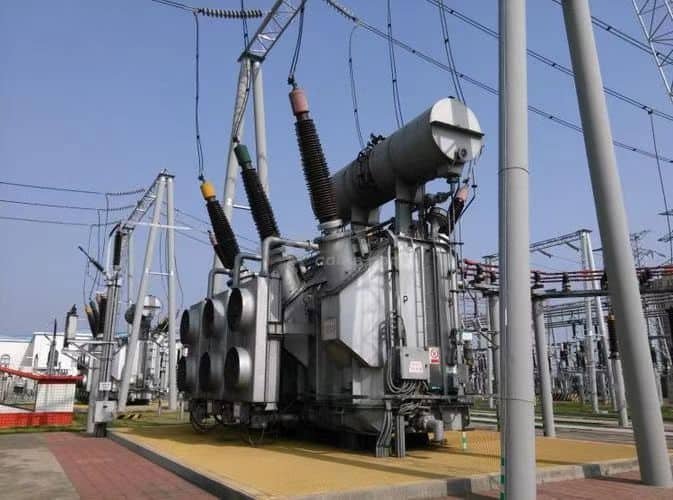
Autotransformers are used only for low-power laboratory voltage adjustment.False
Autotransformers are also widely applicable to power-system voltage interconnection, subtransmission, industrial voltage conversion, motor starting and other higher-power applications.
What Is an Autotransformer Used For?
An autotransformer is most useful when the required voltage conversion is relatively modest and electrical isolation is not a fundamental requirement.
Its common applications can be divided into several groups:
| Application | Typical Purpose | Main Benefit |
|---|---|---|
| Transmission/subtransmission | Interconnect voltage levels | High efficiency and compact construction |
| Voltage regulation | Adjust system voltage | Tapped winding |
| Motor starting | Reduce starting voltage | Lower starting current |
| Industrial voltage adjustment | Match equipment voltage | Compact and economical |
| Laboratory supply | Variable AC voltage | Convenient adjustment |
| Electrical-system interconnection | Connect similar voltages | Lower material requirement |
| Specialized equipment | Controlled AC voltage | Efficient voltage adjustment |
The actual transformer rating and construction must be selected for the specific duty.
How Are Autotransformers Used in Power-Grid Applications?
One of the most important applications is interconnecting electrical systems with closely related voltage levels.
For example, a substation may need to transfer power between two voltage levels that differ substantially enough to require transformation but are still relatively close compared with the overall system voltage.
An autotransformer can provide this conversion with:
- Lower winding material
- Lower weight
- Smaller dimensions
- High efficiency
- Good voltage regulation
This makes the technology particularly attractive for high-power transmission and subtransmission applications.
How Are Autotransformers Used for Voltage Regulation?
Tapped autotransformers can adjust the effective transformation ratio.
Depending on the design, voltage adjustment may use:
- Fixed taps
- De-energized tap changers
- On-load tap changers
On-load tap changers can modify the transformer ratio while the transformer remains energized and carrying load.
This can help control:
- Bus voltage
- Distribution voltage
- Transmission voltage
- Voltage during load changes
However, tap-changing equipment is only one part of a complete voltage-management system.
How Are Autotransformers Used for Motor Starting?
Large induction motors can draw substantial current during starting.
An autotransformer starter temporarily applies reduced voltage to the motor.
This can reduce starting current and modify starting torque.
Typical applications include:
- Pumps
- Fans
- Compressors
- Conveyors
- Large industrial motors
- Process machinery
The selected starting voltage must provide sufficient torque for the driven equipment.
Autotransformer motor starters reduce motor starting voltage and can therefore reduce the motor's starting current.True
Applying a reduced starting voltage generally reduces the current drawn by an induction motor, while the resulting starting torque must still be adequate for the mechanical load.
How Are Autotransformers Used in Industrial Facilities?
Industrial facilities often have equipment operating at different voltage levels.
An autotransformer can adapt the available supply to the voltage required by equipment where isolation is unnecessary.
Possible applications include:
- Manufacturing machinery
- Industrial heating systems
- Pumps
- Fans
- Compressors
- Machine tools
- Production lines
- Specialized control equipment
The buyer should verify the equipment's voltage tolerance and actual load profile before selecting the transformer.
How Are Variable Autotransformers Used?
Variable autotransformers allow the AC output voltage to be adjusted across a specified range.
They are commonly used for:
- Laboratory testing
- Electrical equipment development
- Product testing
- Controlled AC supplies
- Maintenance testing
- Research equipment
They are particularly useful when engineers need to gradually increase or decrease AC voltage during a test.
However, a variable autotransformer should not be mistaken for an isolation transformer.
Why Is the Lack of Isolation Important?
The defining limitation of an autotransformer is that its input and output share part of the winding.
Consequently, it generally does not provide galvanic isolation.
This makes it unsuitable where isolation is required for:
- Personnel safety
- Sensitive electronics
- Independent grounding
- Hazard separation
- Isolation of separate electrical systems
A conventional two-winding transformer is generally more appropriate for these applications.
A variable autotransformer can replace an isolation transformer whenever adjustable AC voltage is required.False
A variable autotransformer provides adjustable voltage but generally does not provide galvanic isolation, so it cannot substitute for an isolation transformer when electrical separation is required.
How Do Autotransformers Connect Similar Voltage Systems?
Another important application is connecting systems whose voltages are relatively close.
The shared winding can provide efficient voltage transformation without requiring two completely independent windings.
This can be particularly useful in:
- Utility substations
- Industrial substations
- Subtransmission networks
- Large commercial electrical systems
The system engineer must still verify phase relationship, grounding, impedance, protection and operating conditions.
What Applications Benefit Most From High Efficiency?
Applications with continuous operation can benefit strongly from efficient transformer designs.
Important examples include:
- Utility substations
- Industrial distribution
- Large motor systems
- Continuous-process plants
Buyers should compare:
- No-load loss
- Load loss
- Auxiliary cooling power
- Expected annual operating hours
Even small differences in losses can become financially significant over a long operating period.
How Does Voltage Ratio Affect Application Suitability?
The economic advantage of an autotransformer generally increases as the voltage ratio approaches 1:1.
A simplified relationship is:
\frac{V_1}{V_2}\approx\frac{N_1}{N_2}
When the voltage difference is modest, the shared winding can significantly reduce material requirements.
When a large voltage transformation or electrical isolation is required, a conventional two-winding transformer may be a better solution.
How Should Buyers Match Applications With Transformer Types?
| Application Requirement | Autotransformer | Two-Winding Transformer |
|---|---|---|
| Closely related system voltages | Strong choice | Suitable |
| Large power transfer | Often strong choice | Suitable |
| Motor starting | Strong choice | Possible |
| Variable AC voltage | Strong choice | Possible |
| Electrical isolation | Not suitable | Strong choice |
| Separate grounding systems | Requires careful analysis | More suitable |
| Indoor occupied installation | Application-dependent | Application-dependent |
| High-voltage interconnection | Common application | Possible |
| Sensitive isolated equipment | Generally unsuitable | Preferred |
What Should Be Checked Before Purchase?
For each application, buyers should define:
- Input voltage.
- Output voltage.
- Rated kVA or MVA.
- Frequency.
- Load type.
- Continuous and peak loading.
- Required voltage regulation.
- Tap range.
- Cooling method.
- Short-circuit conditions.
- Grounding arrangement.
- Insulation requirements.
- Installation environment.
- Fire and environmental requirements.
- Maintenance capability.
The transformer should then be selected against these requirements rather than against a generic application label.
Buyer Takeaway
The main applications of autotransformers are high-power voltage interconnection, transmission and subtransmission networks, voltage regulation, motor starting, industrial voltage adjustment, and variable AC laboratory supplies. They are especially valuable when input and output voltages are relatively close because the shared winding can reduce material requirements while maintaining high efficiency.
The key limitation is equally important:
An autotransformer generally does not provide galvanic isolation.
Therefore, buyers should select an autotransformer when efficient voltage transformation or adjustment is needed without isolation, and choose a conventional two-winding transformer when electrical separation is essential.
The best autotransformer applications combine a relatively modest voltage ratio with a requirement for efficient voltage transformation rather than electrical isolation.True
The shared-winding design provides its greatest material and efficiency advantages when the input and output voltages are relatively close and galvanic isolation is not required.
What Are the Limitations and Safety Considerations of Autotransformers?
Autotransformers can provide excellent efficiency, compact construction, and economical voltage adjustment, but their shared winding creates safety and application limitations that buyers must understand before specification. The biggest mistake is treating an autotransformer like a conventional isolation transformer. The main limitations of autotransformers are the lack of galvanic isolation, different fault-current behavior, more demanding grounding and protection considerations, limited suitability for applications requiring electrical separation, and potential safety risks if the output is assumed to be isolated. Buyers should evaluate insulation, grounding, short-circuit protection, tap configuration, enclosure, overload protection, installation environment, and applicable electrical requirements before selecting an autotransformer.
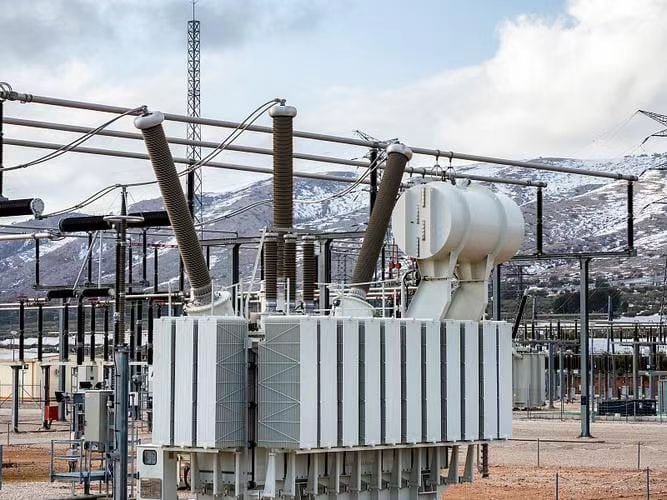
An autotransformer provides electrical isolation between its input and output just like a conventional two-winding transformer.False
The input and output circuits share part of the same winding, so an autotransformer generally does not provide galvanic isolation.
What Is the Most Important Limitation?
The fundamental limitation is the shared electrical winding.
A conventional transformer has separate primary and secondary windings. An autotransformer has one continuous winding with taps.
Because part of the winding is common to both circuits, the input and output are electrically connected.
This means an autotransformer should not automatically be considered a safety barrier.
| Consideration | Autotransformer | Conventional Transformer |
|---|---|---|
| Galvanic isolation | Generally absent | Available |
| Shared winding | Yes | No |
| Fault transfer | Requires careful analysis | Different behavior |
| Grounding | Application-specific | Often easier to separate |
| Voltage adjustment | Excellent | Good |
| Material efficiency | Strong | Standard |
| Isolation applications | Generally unsuitable | Suitable |
Why Is Lack of Isolation a Safety Concern?
If an operator assumes that the output is isolated when it is not, dangerous voltage can remain present relative to ground or other parts of the system.
This is especially important for:
- Laboratory equipment
- Maintenance equipment
- Portable test systems
- Electronic equipment
- Medical environments
- Accessible electrical terminals
A variable autotransformer, for example, can provide adjustable AC voltage, but it does not automatically make that voltage safe for touch or isolated testing.
A variable autotransformer can be used as an isolation device simply because its output voltage is adjustable.False
Voltage adjustment and galvanic isolation are different functions. An autotransformer can change voltage while maintaining an electrical connection between input and output.
How Does Fault Current Differ?
Autotransformer impedance and winding configuration can produce fault characteristics different from those of a conventional transformer.
A lower impedance can be advantageous for voltage regulation and power transfer, but it can also contribute to higher prospective short-circuit current in some system configurations.
Engineers should therefore calculate:
- Transformer short-circuit impedance
- Prospective fault current
- Breaker interrupting rating
- Busbar withstand capability
- Cable withstand capability
- Relay coordination
The protection system must be designed around the actual transformer and network rather than using generic assumptions.
Why Is Grounding Important?
Grounding is a critical part of autotransformer safety because the input and output circuits are not electrically independent.
The design should clearly define:
- Neutral connection
- Grounding point
- Equipment grounding
- System grounding
- Protective bonding
- Ground-fault detection
Incorrect grounding can create unexpected voltage conditions and interfere with protection.
For power-system autotransformers, grounding arrangements should be analyzed as part of the overall network design.
What Protection Should Be Provided?
Protection depends on the transformer rating and application, but may include:
- Overcurrent protection
- Short-circuit protection
- Overvoltage protection
- Ground-fault protection
- Temperature protection
- Differential protection
- Surge protection
- Tap-changer protection
- Cooling-system alarms
Larger power-system autotransformers may require sophisticated protection and monitoring schemes.
The exact protection philosophy should be established through an engineering study.
How Does Overload Affect Safety?
An autotransformer must operate within its rated thermal and electrical limits.
Excessive loading can increase:
- Winding temperature
- Insulation stress
- Copper losses
- Thermal aging
- Fire risk
- Mechanical stress during faults
Temporary overload capability may be available, but it must be based on the manufacturer's thermal design and applicable operating requirements.
Buyers should not assume that a transformer rated for a certain MVA can safely handle arbitrary overloads.
Why Is Tap Selection Important?
Incorrect tap selection can produce an output voltage outside the intended range.
Before energization, verify:
- Correct tap position
- Rated input voltage
- Expected output voltage
- Tap-changer configuration
- Control-system settings
- Interlocks
- Protection settings
For on-load tap changers, control and protection functions should also be checked before commissioning.
What Are the Risks of an Incorrect Tap?
An incorrect tap can cause equipment to receive excessive or insufficient voltage.
Possible consequences include:
- Motor overheating
- Insulation stress
- Electronic-equipment malfunction
- Excessive current
- Poor system voltage
- Unwanted protection operation
Tap position should therefore be treated as a critical operating parameter.
How Should Autotransformers Be Protected From Surges?
Power-system autotransformers can be exposed to lightning and switching surges.
The protection system may require appropriately coordinated:
- Surge arresters
- Insulation coordination
- Grounding
- Shielding
- Bushing protection
The selected insulation level should correspond to the actual system voltage and transient environment.
Does an Autotransformer Have Fire Risks?
Yes.
Although an autotransformer can be dry-type, many power-system autotransformers are oil-immersed.
For oil-filled designs, buyers should evaluate:
- Insulating-liquid properties
- Leakage protection
- Containment
- Fire separation
- Fire detection
- Cooling-system integrity
For dry-type autotransformers, oil-related hazards are eliminated, but electrical faults and overheating remain possible.
What About Mechanical Safety?
Large autotransformers can contain substantial stored energy and heavy components.
Installation should account for:
- Lifting points
- Transformer weight
- Foundation loading
- Transportation restraints
- Clearance
- Access for maintenance
- Cable termination
- Bushing clearance
Only properly rated lifting and handling equipment should be used.
How Does Maintenance Affect Safety?
Routine maintenance should identify electrical and thermal deterioration before it becomes a serious fault.
Depending on the design, maintenance may include:
- Connection inspection
- Insulation inspection
- Temperature monitoring
- Cooling-system inspection
- Bushing inspection
- Tap-changer inspection
- Surge-arrester inspection
- Grounding-system inspection
- Oil testing for oil-immersed units
Condition monitoring can provide additional warning of developing problems.
What Should Buyers Check During Inspection?
A practical inspection checklist includes:
| Inspection Item | Purpose |
|---|---|
| Nameplate | Confirm rated parameters |
| Terminals | Identify damage or loose connections |
| Bushings | Check insulation condition |
| Winding/taps | Verify configuration |
| Grounding | Confirm safe grounding path |
| Cooling system | Prevent overheating |
| Protection | Confirm correct settings |
| Surge protection | Reduce transient risk |
| Enclosure | Prevent unintended contact |
| Connections | Reduce hot spots |
| Temperature | Detect abnormal loading |
| Environment | Identify moisture, dust or contamination |
What Safety Information Should Suppliers Provide?
Before purchasing, request:
- Rated voltage.
- Rated power.
- Voltage ratio.
- Tap range.
- Short-circuit impedance.
- Insulation levels.
- Grounding requirements.
- Protection recommendations.
- Cooling requirements.
- Maximum ambient temperature.
- Overload capability.
- Installation clearances.
- Maintenance instructions.
- Applicable testing requirements.
- Recommended monitoring equipment.
This information should be included in the technical specification rather than left to assumptions.
When Should Buyers Avoid Autotransformers?
An autotransformer may be inappropriate when the application requires reliable electrical separation between circuits.
Examples can include applications where:
- Galvanic isolation is mandatory.
- Different grounding systems must remain separated.
- Safety isolation is required.
- Sensitive equipment requires isolated power.
- The output must not share a direct electrical connection with the input.
In such cases, a conventional two-winding transformer is normally a better starting point.
The absence of galvanic isolation should be treated as a fundamental design limitation rather than a minor disadvantage.True
It directly affects safety, grounding, fault behavior, protection and whether the transformer can be used for applications requiring electrical separation.
Buyer Takeaway
Autotransformers are efficient and economical, but their shared winding creates important safety limitations. The most critical issue is that they generally do not provide galvanic isolation. Buyers must therefore evaluate grounding, fault current, protection, tap configuration, insulation, overload capability, surge protection, cooling and installation conditions before specifying one.
A safe selection process should follow:
Application → voltage ratio → isolation requirement → grounding → fault study → protection → insulation → cooling → installation → maintenance
If isolation is essential, do not select an autotransformer merely because it is smaller or less expensive. If isolation is unnecessary, an appropriately engineered autotransformer can provide excellent electrical and economic performance.
An autotransformer should never be selected solely because it offers a lower purchase price or smaller physical size.True
The selection must also account for isolation, fault current, grounding, protection, insulation, cooling, installation and lifecycle requirements.
How Can Buyers Determine Whether an Autotransformer Is Suitable for Their Applications?
Choosing an autotransformer simply because it is smaller, lighter, or less expensive can create serious problems if the application actually requires electrical isolation, unusual grounding, high fault tolerance, or a different voltage-conversion arrangement. The right decision must begin with the electrical system and operating conditions rather than the equipment price. Buyers can determine whether an autotransformer is suitable by checking the required voltage ratio, power rating, load profile, frequency, isolation requirements, grounding arrangement, fault-current conditions, cooling, installation environment, protection, and lifecycle cost. An autotransformer is generally a strong candidate when input and output voltages are relatively close, high efficiency and compact construction are valuable, and galvanic isolation is not required.

An autotransformer is suitable whenever its rated voltage and power match the application.False
Suitability also depends on isolation, grounding, fault current, protection, cooling, installation conditions, load profile and other system-specific requirements.
What Is the First Suitability Check?
Start with a simple question:
Does the application require galvanic isolation between input and output?
If the answer is yes, an autotransformer is generally not the correct choice because its winding is electrically shared.
If the answer is no, continue evaluating the voltage ratio, power rating, operating conditions and economics.
This single check can eliminate unsuitable applications before detailed quotation comparisons begin.
How Does Voltage Ratio Affect Suitability?
Autotransformers are particularly attractive when the input and output voltages are relatively close.
Their shared winding can reduce the amount of conductor and magnetic material required.
The ideal relationship remains approximately:
\frac{V_1}{V_2}=\frac{N_1}{N_2}
For example, voltage systems with a modest difference can often benefit more from autotransformer construction than applications requiring a very large voltage transformation.
The closer the voltage ratio is to 1:1, the greater the potential material-saving advantage.
What Electrical Data Should Buyers Collect?
Before requesting quotations, prepare a complete electrical specification.
| Parameter | Information Required |
|---|---|
| Input voltage | Actual system voltage |
| Output voltage | Required equipment/system voltage |
| Rated capacity | kVA or MVA |
| Frequency | 50 Hz, 60 Hz, etc. |
| Phase | Single-phase or three-phase |
| Load type | Motor, resistive, electronic, mixed |
| Load profile | Continuous, intermittent or variable |
| Tap range | Required voltage-adjustment range |
| Impedance | Required system fault characteristics |
| Grounding | Neutral and system-grounding arrangement |
| Isolation | Required or not required |
Incomplete electrical data can lead to an apparently suitable transformer that performs poorly after installation.
How Important Is the Load Profile?
The nameplate capacity alone is not enough.
A transformer supplying a continuously loaded industrial process has different requirements from one serving a lightly loaded system with occasional peaks.
Buyers should determine:
- Average load
- Maximum load
- Starting current
- Peak duration
- Daily operating hours
- Seasonal variation
- Future load growth
For motor applications, starting current and starting torque are particularly important.
For continuous loads, transformer losses and thermal performance become increasingly important.
Is an Autotransformer Suitable for Motor Starting?
Often, yes.
Autotransformer starters can reduce the voltage applied to an induction motor during starting.
They may be appropriate for:
- Pumps
- Fans
- Compressors
- Conveyors
- Large industrial motors
But the reduced starting voltage must still produce enough torque to accelerate the mechanical load.
Therefore, buyers should compare the motor's:
- Starting current
- Starting torque
- Rated voltage
- Starting frequency
- Mechanical load characteristics
with the autotransformer starter design.
How Does the Installation Environment Affect Suitability?
The installation site can determine whether an autotransformer is practical.
Check:
- Indoor or outdoor installation
- Ambient temperature
- Humidity
- Dust
- Corrosive atmosphere
- Altitude
- Ventilation
- Available floor space
- Noise requirements
- Fire-protection requirements
For an indoor dry-type autotransformer, ventilation and heat removal are especially important.
For an oil-immersed power-system autotransformer, buyers must also evaluate liquid containment and fire protection.
What About Safety?
Safety should be evaluated before cost.
An autotransformer generally does not provide galvanic isolation.
This affects:
- Personnel safety
- Grounding
- Fault transfer
- Protection coordination
- Insulation requirements
An autotransformer can be used safely without electrical isolation as long as its grounding and protection system is correctly engineered.True
Lack of galvanic isolation is not inherently a failure, but the complete system must be designed with appropriate grounding, insulation, fault protection and operating procedures.
How Should Buyers Evaluate Fault Current?
Autotransformer impedance and winding configuration can affect prospective short-circuit current.
Before purchase, obtain the transformer's guaranteed impedance and conduct the appropriate system calculations.
Verify compatibility with:
- Circuit breakers
- Fuses
- Busbars
- Cables
- Protective relays
- Ground-fault protection
A transformer that meets the voltage and MVA rating can still be unsuitable if its fault characteristics do not match the electrical network.
How Important Is Grounding?
Grounding is especially important because the input and output circuits are not electrically independent.
The design should define:
- Neutral grounding
- Equipment grounding
- Protective bonding
- Ground-fault paths
- Surge-protection grounding
For power-system applications, grounding should be evaluated as part of the complete network rather than as an isolated transformer specification.
How Should Buyers Evaluate Efficiency?
Autotransformers can provide excellent efficiency, particularly when the voltage ratio is close to 1:1.
However, do not assume that an autotransformer is automatically more efficient.
Compare supplier-guaranteed:
- No-load loss
- Load loss
- Total loss
- Temperature rise
- Auxiliary cooling consumption
For continuous operation, these values can have a substantial impact on lifecycle cost.
How Does Size and Weight Affect Suitability?
The compact construction of an autotransformer can be a major advantage where space is limited.
Consider:
- Transformer footprint
- Total weight
- Foundation requirements
- Lifting capacity
- Transportation restrictions
- Maintenance access
- Replacement logistics
A smaller transformer can reduce installation complexity, but the equipment must still provide adequate clearances and cooling.
When Is a Conventional Transformer Better?
A conventional two-winding transformer is generally preferable when the application requires:
- Galvanic isolation
- Separate primary and secondary grounding
- Isolation for sensitive equipment
- Safety isolation
- Specialized fault separation
The higher material requirement may be justified by these functional benefits.
How Can Buyers Use a Quick Decision Matrix?
| Requirement | Autotransformer Suitability |
|---|---|
| Input/output voltages close | High |
| No galvanic isolation required | High |
| High efficiency desired | High |
| Compact size important | High |
| Large power transfer | Often high |
| Motor starting | Often high |
| Voltage regulation | High |
| Separate electrical systems required | Low |
| Safety isolation required | Low |
| Special grounding separation required | Low/application-dependent |
| High fault-current sensitivity | Requires detailed study |
This matrix is a screening tool, not a substitute for engineering calculations.
What Should Buyers Request From Suppliers?
Before approving an autotransformer, request:
- Rated voltage.
- Rated kVA/MVA.
- Voltage ratio.
- Tap range and tap positions.
- Frequency.
- Guaranteed no-load loss.
- Guaranteed load loss.
- Temperature rise.
- Short-circuit impedance.
- Insulation levels.
- Cooling method.
- Grounding requirements.
- Protection recommendations.
- Installation clearances.
- Noise data where relevant.
- Maintenance requirements.
- Warranty conditions.
- Test documentation.
- Spare-parts recommendations.
- Expected delivery time.
This information allows buyers to compare technically equivalent solutions rather than simply comparing catalog prices.
How Should Lifecycle Cost Be Considered?
The purchasing decision should include more than the initial quotation.
A practical model is:
Lifecycle cost = equipment cost + installation + energy losses + maintenance + protection + cooling + expected downtime + future replacement
An autotransformer may have a higher or lower initial price depending on the design, but its reduced losses and material requirements can create long-term economic advantages in suitable applications.
What Is the Final Suitability Test?
An autotransformer is usually worth serious consideration when all of the following are true:
1. The input and output voltage levels are relatively close.
2. The required kVA/MVA rating is supported by the proposed design.
3. The load profile is compatible with the transformer's thermal capability.
4. Galvanic isolation is not required.
5. Grounding can be safely and correctly implemented.
6. Fault-current and protection requirements can be satisfied.
7. Cooling and installation conditions are appropriate.
8. Efficiency and lifecycle economics justify the design.
If one of these fundamental conditions fails, a conventional two-winding transformer or another transformer configuration may be more appropriate.
The most reliable way to select an autotransformer is to evaluate the complete electrical system rather than selecting the transformer from voltage and capacity alone.True
Voltage ratio, load profile, isolation, grounding, fault current, protection, cooling, installation and lifecycle cost all influence transformer suitability.
Buyer Takeaway
Buyers should consider an autotransformer when the voltage transformation is relatively modest, high efficiency and compact construction are valuable, and galvanic isolation is unnecessary. They should reject or reconsider the design when electrical isolation, independent grounding, or specialized fault separation is essential.
A practical decision sequence is:
Voltage ratio → capacity → load profile → isolation → grounding → fault current → protection → cooling → installation → lifecycle cost
This approach helps buyers distinguish between a transformer that is merely technically capable of producing the required voltage and one that is genuinely safe, reliable and economical for the intended application.
Conclusion
Autotransformers provide an efficient solution for changing voltage when electrical isolation between the input and output is not required. Their shared winding construction can reduce material usage, size, weight, and losses compared with conventional two-winding transformers, particularly when the voltage levels are relatively close. They are commonly used for voltage regulation, motor starting, and interconnection of systems with similar voltages. However, the absence of galvanic isolation is a critical limitation, so buyers should evaluate voltage ratio, capacity, protection, grounding, insulation requirements, and application conditions before selecting an autotransformer.
FAQ
Q1: What is an autotransformer and how does it work?
An autotransformer is a transformer that uses one continuous winding with one or more electrical connections or taps, rather than separate primary and secondary windings. Part of the same winding is shared by both the input and output circuits.
Like a conventional transformer, an autotransformer transfers electrical energy through electromagnetic induction. However, because the primary and secondary circuits share part of the winding, some power is transferred directly through electrical conduction in addition to the magnetically transferred component.
The output voltage depends on the number of turns between the relevant terminals. By selecting different tap positions, an autotransformer can provide different voltage ratios.
For example, a tapped autotransformer can be designed to reduce a supply voltage to a lower operating voltage. A variable autotransformer can use an adjustable contact to provide a continuously variable output within its designed voltage range.
A major characteristic of an autotransformer is that there is no complete electrical isolation between input and output. This distinguishes it from an isolation transformer with separate windings.
The shared winding can make an autotransformer more compact and economical than an equivalent two-winding transformer when the required voltage ratio is relatively close to 1:1.
It can also provide advantages such as:
Lower material requirements
Smaller physical size
Lower weight
Lower losses in suitable applications
Higher efficiency
Reduced voltage drop
Competitive manufacturing cost
However, the absence of electrical isolation is an important limitation. An autotransformer should not be selected where galvanic isolation between the source and load is required.
Autotransformers are used in voltage-regulation equipment, motor-starting systems, transmission and distribution networks, industrial equipment, and variable-voltage laboratory or testing applications.
The appropriate design depends on voltage ratio, capacity, insulation requirements, load characteristics, fault conditions, and the need for electrical isolation.
Q2: What are the main advantages of autotransformers?
The main advantages of autotransformers result from their shared winding construction.
Because a portion of the winding is common to the input and output circuits, an autotransformer can require less conductor material and core-related material than a comparable two-winding transformer for certain voltage ratios.
This can result in a more compact and lighter design.
Key advantages include:
High efficiency
Smaller physical size
Lower weight
Reduced material requirements
Lower impedance in many designs
Good voltage regulation
Lower losses for suitable applications
Potentially lower purchase cost
Efficiency can be particularly attractive when the input and output voltages are relatively close.
For example, applications requiring a modest voltage adjustment may benefit substantially from autotransformer construction because only part of the power needs to be transferred magnetically.
The compact design can also simplify installation where space is limited.
Autotransformers can be particularly useful in power systems where the voltage ratio is not large. They can be used for interconnecting systems with similar voltage levels or for controlled voltage adjustment.
Another application is motor starting. An autotransformer starter can initially supply a reduced voltage to a motor, limiting starting current. After the motor accelerates, the starting arrangement can be bypassed or switched to normal operation.
Variable autotransformers also provide a convenient way to adjust voltage for testing, laboratory equipment, and industrial processes.
Despite these advantages, buyers should not evaluate an autotransformer only on efficiency or price.
The most important limitation is the lack of galvanic isolation. A fault or overvoltage on one side can be transferred to the other side more directly than with a fully isolated transformer.
Therefore, autotransformers are most appropriate where efficient voltage transformation is more important than electrical isolation.
Q3: What are the disadvantages and limitations of autotransformers?
The primary disadvantage of an autotransformer is that its input and output circuits are electrically connected through the shared winding.
A conventional two-winding transformer provides galvanic separation between primary and secondary circuits. An autotransformer does not.
This means an autotransformer may be unsuitable when isolation is required for:
Personnel protection
Sensitive equipment
Noise isolation
Grounding arrangements
Certain medical applications
Specific control circuits
Another consideration is fault behavior. Because the circuits share a winding, certain internal or external faults can result in greater fault-current transfer between the connected systems.
The voltage ratio also affects the economic attractiveness of the design. Autotransformers tend to provide their greatest material and efficiency advantages when the input and output voltages are relatively close.
For very large voltage differences, a conventional two-winding transformer may be more appropriate.
Other potential limitations include:
More complex insulation requirements in some applications
Limited suitability where isolation is mandatory
Special considerations for fault protection
Potentially greater consequences of winding faults
Design constraints related to tapping arrangements
For variable autotransformers, exposed or adjustable contacts can also require appropriate protection and enclosure design.
The absence of isolation does not make an autotransformer inherently unsafe. It simply means the protection and grounding strategy must account for its electrical configuration.
Buyers should therefore identify the required voltage ratio, insulation level, grounding arrangement, fault-current requirements, and applicable standards before selecting an autotransformer.
A useful rule is:
If the application requires voltage transformation without electrical isolation, an autotransformer may be highly advantageous. If galvanic isolation is required, a conventional two-winding transformer is generally the more appropriate choice.
Q4: Where are autotransformers commonly used?
Autotransformers are used in several power-system and industrial applications where their compact construction and high efficiency provide practical benefits.
One important application is motor starting. Large induction motors can draw high current during startup. An autotransformer starter temporarily reduces the voltage applied to the motor, helping limit the starting current and providing a controlled acceleration process.
Autotransformers are also used for voltage regulation and adjustment. Tapped designs can compensate for voltage differences within an electrical system.
In power transmission and distribution, autotransformers can interconnect systems operating at related voltage levels. They are often considered when the voltage ratio is relatively close to unity and electrical isolation between the systems is not required.
Common applications include:
Transmission substations
Distribution networks
Motor starters
Industrial plants
Voltage-regulation equipment
Laboratory power supplies
Electrical testing
Industrial control systems
Railway and traction systems
Specialized power-conversion equipment
A variable autotransformer, sometimes called a variac-type transformer, uses an adjustable contact to change the effective number of turns and therefore vary the output voltage.
These devices are widely useful for laboratory testing, equipment development, and controlled voltage applications.
In power-system applications, the selection of an autotransformer requires more than simply comparing its voltage ratio. Engineers also consider system fault levels, neutral arrangements, insulation coordination, grounding, load flow, short-circuit withstand, and protection requirements.
For motor starting, starting torque and current characteristics must also be evaluated.
Consequently, autotransformers are best suited to applications where the electrical connection between input and output is acceptable and the benefits of reduced size, weight, and losses justify the design.
References
IEC 60076-1 – Power Transformers: General
https://webstore.iec.ch/en/publication/603
IEC 60076-3 – Power Transformers: Insulation Levels, Dielectric Tests and External Clearances
https://webstore.iec.ch/en/publication/605
IEC 60076-5 – Power Transformers: Ability to Withstand Short Circuit
https://webstore.iec.ch/en/publication/607
IEEE Standards Association – Transformer Standards
https://standards.ieee.org
U.S. Department of Energy – Electricity Delivery and Grid Systems
https://www.energy.gov/oe