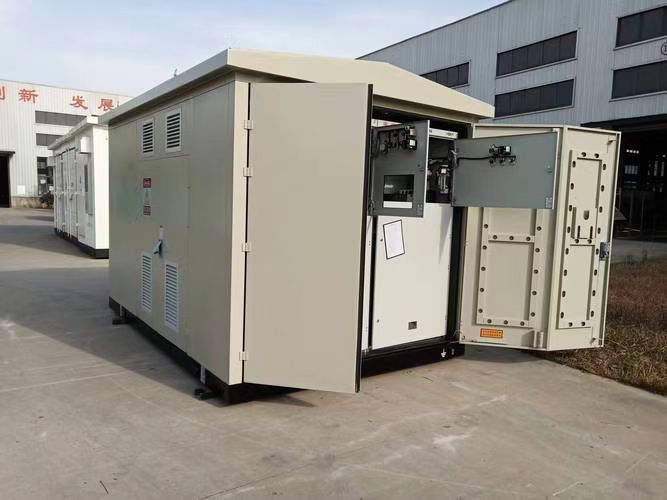
Box transformers—also known as compact substations or prefabricated substations—are designed to integrate high-voltage switchgear, transformers, and low-voltage distribution equipment into a single enclosed unit. Their compact, factory-assembled structure offers major advantages in space utilization and installation efficiency. Understanding these benefits helps project planners, utilities, and developers optimize site layout, reduce construction time, and improve overall project economics.
What Makes Box Transformers More Space-Efficient Than Traditional Substations?

In urban areas, industrial parks, and renewable energy projects, land availability is limited and expensive. Traditional substations require multiple independent structures and wide safety clearances, which significantly increase footprint and construction complexity. Box transformers (also called compact substations or packaged substations) solve this by integrating multiple electrical functions into a single enclosure.
Box transformers are more space-efficient because they combine high-voltage switchgear, the transformer, low-voltage distribution panels, protection systems, and control equipment into one compact, factory-assembled unit.
Below are the key reasons for their space efficiency.
1. Integrated All-in-One Structure
Traditional substations typically include:
- Separate transformer yard
- Independent high-voltage switchgear building
- Low-voltage distribution room
- Relay and control room
- External cable trenches
A box transformer integrates all these components into one enclosure with separated internal compartments. This eliminates the need for multiple buildings and interconnection space.
2. Reduced Physical Footprint
Because all equipment is internally arranged and optimized:
- Clearances are engineered inside the enclosure
- Components are compactly positioned
- Vertical space is utilized effectively
A conventional substation may require hundreds of square meters, while a box transformer occupies only a small pad area.
3. Minimal Civil Construction
Traditional substations require:
- Large reinforced concrete foundations
- Oil containment pits
- Cable trenches
- Control buildings
Box transformers typically require:
- A flat concrete pad
- Limited external trenching
- Minimal structural infrastructure
Less civil work directly reduces land occupation.
4. Built-In Safety Clearances
Outdoor substations require:
- Minimum spacing between live parts
- Fenced perimeters
- Safety buffer zones
In box transformers:
- Metal-enclosed switchgear provides internal isolation
- Required clearances are pre-designed inside compartments
- External buffer zones are minimized
This reduces the overall land requirement.
5. Factory Pre-Assembly
Traditional substations are assembled on-site, requiring:
- Staging areas
- Equipment storage zones
- Construction workspace
Box transformers are:
- Fully assembled and wired in the factory
- Delivered as complete units
- Installed quickly with limited on-site space
On-site working space is significantly reduced.
6. Optimized Internal Busbar Connections
In conventional substations:
- Long cable runs connect different buildings
- Extensive trench systems are required
In box transformers:
- Internal busbars directly connect compartments
- Cable lengths are minimized
- Layout is compact and efficient
This reduces both space and complexity.
7. Elimination of Auxiliary Buildings
Traditional substations often require:
- Protection relay rooms
- Metering rooms
- Control centers
Box transformers integrate:
- Protection relays
- Metering systems
- Control panels
All within the enclosure, eliminating additional structures.
8. Modular Deployment
Instead of constructing one large centralized substation, multiple box transformers can be:
- Distributed across a site
- Installed near load centers
- Deployed in phases
This modular approach optimizes land use and avoids concentrating infrastructure in one large area.
9. Suitability for Urban and Restricted Areas
Box transformers can be installed in:
- Parking lots
- Building perimeters
- Rooftops (with design consideration)
- Industrial corners
- Renewable energy sites
Traditional substations often cannot be accommodated in such restricted spaces.
10. Lower Land Cost Impact
In cities where land cost is high:
- Reducing substation footprint lowers project cost
- More land remains available for revenue-generating purposes
- Infrastructure density improves
Space efficiency translates directly into financial efficiency.
11. Comparison Overview
| Aspect | Box Transformer | Traditional Substation |
|---|---|---|
| Layout | Integrated | Separate facilities |
| Land requirement | Low | High |
| Civil work | Minimal | Extensive |
| Installation time | Short | Long |
| Expandability | Modular | Complex |
| Urban compatibility | High | Limited |
12. Limitations
While space-efficient, box transformers are generally:
- Used for medium-voltage distribution
- Limited in maximum capacity compared to large transmission substations
- Less flexible for very large-scale expansion
They are optimized for distribution systems rather than high-voltage transmission hubs.
How Does Integrated Design Simplify Site Layout and Civil Works?
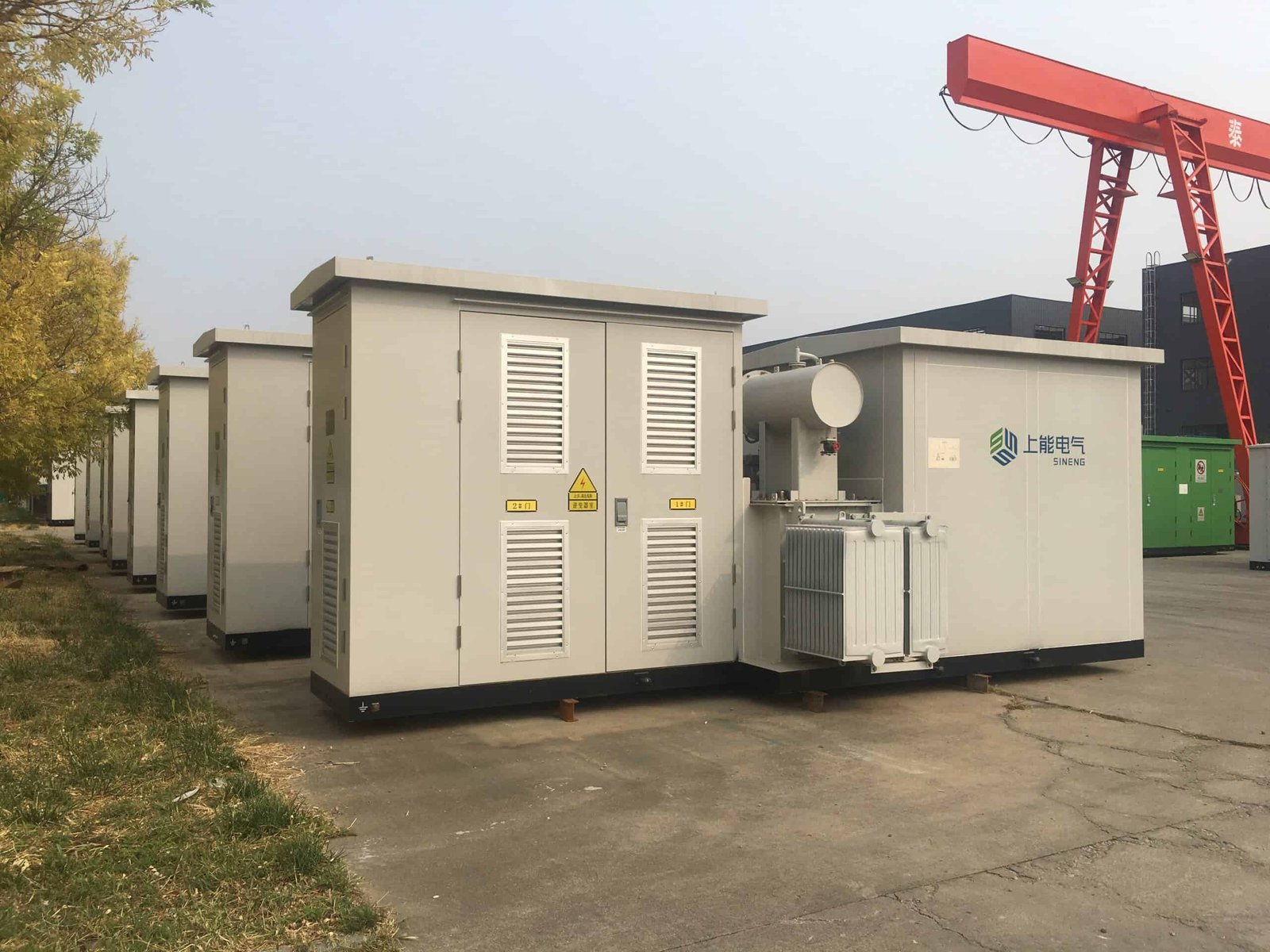
In conventional substations, electrical equipment is spread across multiple zones—transformer yard, switchgear room, control room, cable trenches, oil containment areas, and fencing. Each area requires separate foundations, structural planning, and coordination between electrical and civil engineering teams. This increases land use, construction time, and project complexity.
An integrated design—commonly used in box transformers or compact substations—combines the transformer, high-voltage switchgear, low-voltage distribution panels, protection systems, and control equipment into a single, factory-assembled enclosure.
By consolidating equipment into one engineered unit, integrated design significantly simplifies site layout, reduces civil construction scope, shortens project timelines, and lowers overall installation cost.
Below are the main ways it achieves this.
1. Reduced Land Planning Requirements
Traditional substations require separate areas for:
- Transformer placement
- High-voltage switchgear room
- Low-voltage room
- Relay and control building
- Safety clearance zones
Integrated systems combine these into one compact footprint. As a result:
- Land allocation is simplified
- Fewer zoning considerations are needed
- Plot layout becomes straightforward
This is especially beneficial in urban or space-limited projects.
2. Simplified Foundation Design
Conventional substations require:
- Multiple concrete foundations
- Oil containment pits
- Structural pads for different buildings
- Cable trench support structures
Integrated units typically require:
- A single reinforced concrete pad
- Limited anchoring points
- No separate containment structures (for dry-type systems)
This reduces structural design effort and construction work.
3. Minimal Cable Trenching and Routing
In traditional layouts:
- High-voltage and low-voltage cables run between buildings
- Long trenches and duct banks are required
- Cable routing must be carefully coordinated
With integrated design:
- Internal busbars connect components
- External cable runs are shorter
- Trench length is minimized
This reduces excavation, backfilling, and cable installation complexity.
4. Built-In Equipment Coordination
In conventional substations, civil and electrical teams must coordinate:
- Equipment positioning
- Access corridors
- Ventilation systems
- Fire separation distances
In integrated systems:
- Equipment spacing is pre-engineered
- Safety clearances are internalized
- Ventilation paths are factory-designed
On-site coordination is greatly reduced.
5. Faster Construction Timeline
Traditional substations involve:
- Sequential construction phases
- Building erection
- Equipment installation
- On-site wiring and testing
Integrated units are:
- Factory-assembled and pre-wired
- Factory-tested before delivery
- Installed quickly with minimal on-site work
This shortens project schedules and reduces labor demands.
6. Reduced Structural Complexity
Traditional substations may require:
- Structural steel frames
- Roofing systems
- Masonry or concrete buildings
- HVAC systems
Integrated enclosures:
- Provide built-in protection
- Include designed ventilation
- Require no additional building structures
This eliminates many architectural and structural components.
7. Simplified Regulatory and Permitting Process
Because integrated substations:
- Occupy less land
- Have lower visual impact
- Reduce fire and environmental risk
Permitting and approval processes are often faster compared to large conventional substations.
8. Lower Risk of Construction Errors
On-site assembly increases the risk of:
- Misalignment
- Improper cable routing
- Installation defects
Factory integration ensures:
- Quality-controlled assembly
- Standardized configuration
- Reduced field variability
This improves reliability and reduces rework.
9. Easier Expansion Planning
Instead of redesigning a large site layout, expansion can be handled by:
- Adding additional integrated units
- Connecting to existing distribution systems
- Avoiding major civil modification
This modular approach simplifies long-term infrastructure planning.
10. Reduced Overall Project Cost
By minimizing:
- Land usage
- Concrete and structural work
- Cable trenching
- On-site labor
Integrated design lowers both direct and indirect project costs.
Cost savings are particularly significant in high land-value areas.
Why Is Installation Faster With Prefabricated Box Transformers?
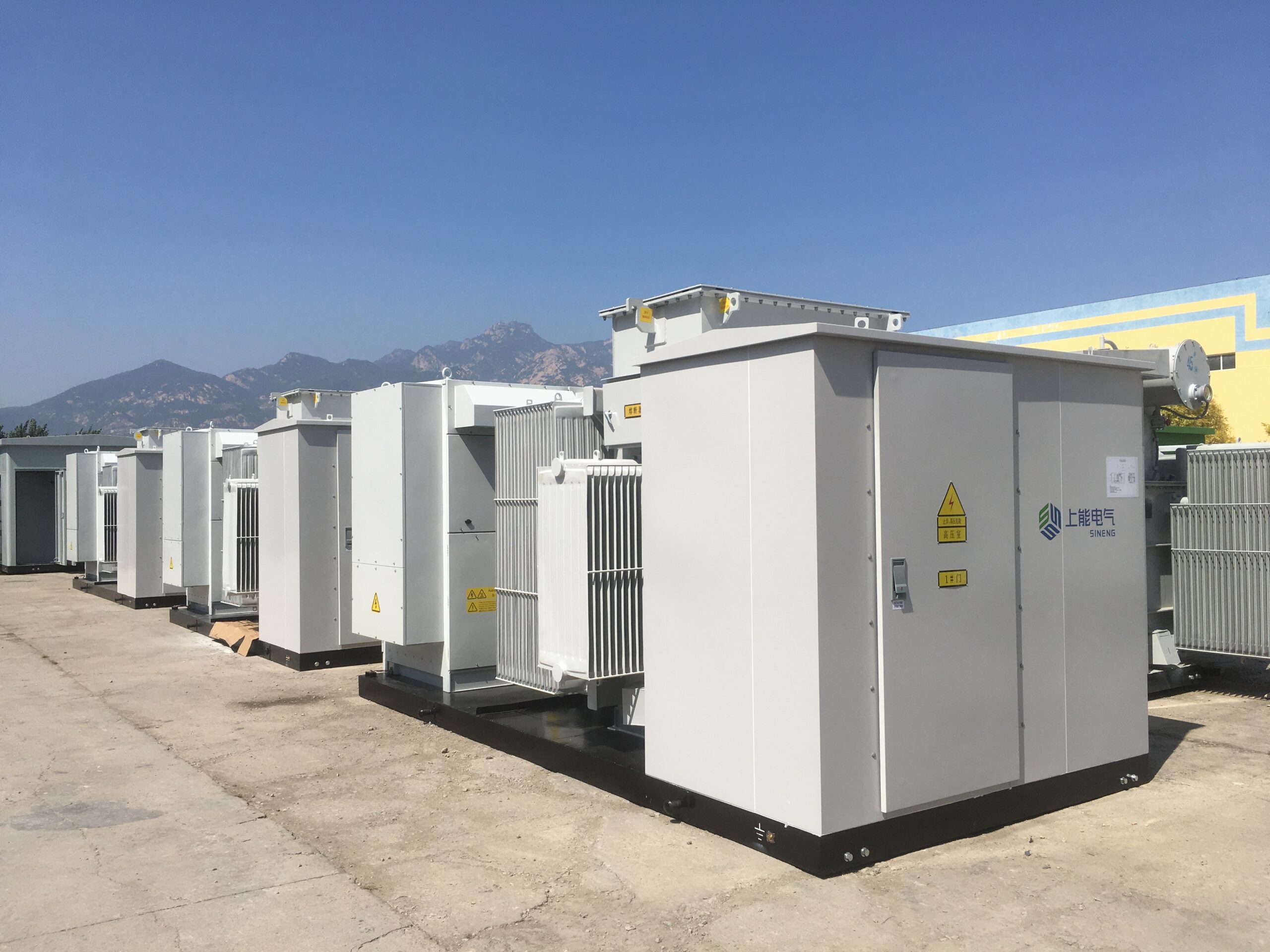
In traditional substations, installation involves multiple construction phases: civil foundation work, building erection, equipment delivery, on-site assembly, cable routing, internal wiring, testing, and commissioning. Each stage requires coordination between different contractors, which increases time and complexity.
Prefabricated box transformers (also called compact substations) significantly shorten this process.
Installation is faster because prefabricated box transformers are factory-assembled, factory-wired, factory-tested, and delivered as a nearly complete plug-and-play unit that requires minimal on-site construction and electrical work.
Below are the main reasons installation time is reduced.
1. Factory Assembly Replaces On-Site Construction
In traditional substations:
- Transformer, switchgear, and panels are delivered separately
- Equipment is assembled on-site
- Internal wiring and interconnections are completed in the field
With prefabricated units:
- All components are integrated in the factory
- Internal busbars and cables are pre-installed
- Mechanical assembly is already completed
This eliminates most on-site assembly work.
2. Reduced Civil Works
Traditional installations require:
- Multiple foundations
- Oil containment systems
- Cable trenches
- Control buildings
Prefabricated box transformers usually require:
- A single concrete pad
- Basic cable entry preparation
Less civil construction means shorter project timelines.
3. Pre-Engineered Internal Wiring
On-site wiring in conventional substations can take weeks.
In prefabricated systems:
- HV, transformer, and LV sections are internally connected
- Protection and control wiring is pre-configured
- Factory labeling and testing ensure correctness
Only external grid and load cables need to be connected on-site.
4. Factory Testing Reduces On-Site Commissioning Time
Traditional substations require extensive on-site testing because components are assembled in the field.
Prefabricated box transformers undergo:
- Routine electrical tests
- Insulation verification
- Protection function checks
- Functional interlock testing
Since systems are already tested before shipment, commissioning time is significantly reduced.
5. Simplified Logistics
Traditional projects require:
- Multiple equipment deliveries
- Storage areas
- Coordination of different suppliers
Prefabricated units are delivered as:
- One complete system
- Pre-coordinated and compact
- Ready for placement
This simplifies scheduling and reduces delays.
6. Minimal Site Coordination
Large substations require coordination between:
- Civil contractors
- Electrical contractors
- Protection engineers
- Utility inspectors
Prefabricated installations require:
- Crane placement
- External cable connection
- Final inspection
Fewer interfaces mean fewer delays.
7. Plug-and-Play Design
Box transformers are designed for rapid energization.
Typical on-site steps:
- Prepare foundation pad
- Position unit using crane
- Connect incoming HV cable
- Connect outgoing LV cables
- Perform final checks
- Energize
This process can often be completed in days instead of weeks or months.
8. Reduced Weather Dependency
Traditional construction is highly affected by:
- Rain
- Temperature extremes
- Site access limitations
Factory assembly shifts most critical work indoors under controlled conditions. On-site work is limited and less sensitive to weather delays.
9. Lower Risk of Rework
On-site assembly increases risk of:
- Wiring errors
- Alignment issues
- Protection misconfiguration
Factory-controlled production ensures standardized assembly, reducing the likelihood of installation errors that cause delays.
10. Modular Scalability
Instead of building a large substation in phases, projects can:
- Install multiple prefabricated units
- Deploy in parallel
- Expand quickly without major reconstruction
This accelerates phased infrastructure development.
Comparison Overview
| Aspect | Prefabricated Box Transformer | Traditional Substation |
|---|---|---|
| Assembly location | Factory | Site |
| Internal wiring | Pre-installed | On-site |
| Civil works | Minimal | Extensive |
| Commissioning time | Short | Long |
| Installation duration | Days to weeks | Weeks to months |
| Coordination complexity | Low | High |
How Do Box Transformers Reduce On-Site Labor Requirements?
In traditional substations, on-site labor is one of the largest cost and schedule drivers. Civil teams build foundations and structures, electrical crews install transformers and switchgear separately, technicians complete interconnections, and engineers perform field testing and commissioning. This multi-stage process requires extensive manpower, supervision, and coordination.
Box transformers—also known as compact or prefabricated substations—significantly reduce this labor burden.
Box transformers reduce on-site labor requirements because they are factory-integrated, pre-wired, pre-tested systems that minimize field assembly, wiring, civil construction, and commissioning work.
Below are the key technical reasons why manpower demand drops so dramatically.
1. Factory Integration Eliminates Field Assembly
In conventional substations:
- Transformers, switchgear, and panels arrive separately
- Components are mechanically installed on-site
- Busbars and internal wiring are assembled in the field
With box transformers:
- All internal components are installed in the factory
- HV, transformer, and LV sections are internally connected
- Mechanical alignment is completed before delivery
This eliminates large portions of field mechanical labor.
2. Reduced Electrical Wiring Work
Traditional substations require extensive field wiring:
- Inter-panel control cables
- Protection wiring
- Busbar connections
- Auxiliary power circuits
Box transformers come with:
- Pre-installed internal busbars
- Factory-labeled wiring
- Pre-configured protection systems
On-site electricians only connect external cables (incoming and outgoing feeders), significantly lowering skilled labor hours.
3. Minimal Civil Construction Teams
Conventional installations require:
- Concrete foundation crews
- Structural steel installers
- Masonry workers
- Cable trench excavation teams
Box transformers typically require:
- A single concrete pad
- Limited trench preparation
Fewer construction workers are needed, and the work duration is shorter.
4. Reduced Specialized Engineering Presence
Traditional substations demand:
- On-site protection engineers
- Commissioning engineers
- Testing specialists
- Supervisory teams
Because box transformers are factory-tested:
- Functional testing is largely completed beforehand
- Protection coordination is pre-configured
- Interlock systems are verified before shipment
On-site engineering supervision is significantly reduced.
5. Lower Coordination Complexity
Large substations require coordination between:
- Civil contractors
- Electrical contractors
- Equipment suppliers
- Utility inspectors
Box transformers reduce this complexity because:
- One integrated unit replaces multiple suppliers
- Interfaces between systems are minimized
- Installation steps are simplified
Fewer coordination meetings mean fewer labor hours.
6. Faster Installation Reduces Total Labor Hours
Labor cost is directly tied to time on site.
Since box transformers:
- Are crane-positioned in a single step
- Require only external cable terminations
- Need limited final testing
Installation time is shortened from weeks to days in many cases. Even if crew size is similar, total labor hours drop significantly.
7. Reduced Rework and Error Correction
Field assembly increases the risk of:
- Wiring mistakes
- Improper busbar torque
- Protection misconfiguration
- Alignment errors
Factory-controlled assembly improves quality consistency. Reduced errors mean less corrective labor and fewer project delays.
8. Lower Safety Supervision Requirements
Large construction sites require:
- Safety officers
- Hazard monitoring
- Compliance supervision
Box transformer installations are:
- Shorter in duration
- Less complex
- More controlled
This reduces the need for extended safety staffing.
9. Simplified Commissioning Procedures
Traditional substations require:
- Individual component testing
- System integration testing
- Interlocking verification
Box transformers undergo routine and functional tests at the factory. On-site commissioning mainly involves:
- Insulation testing of external cables
- Basic functional verification
- Final energization checks
This reduces specialized commissioning labor.
10. Modular Deployment Reduces Repetitive Labor
In projects requiring multiple distribution points:
- Traditional substations require repeated full construction cycles
- Each site demands separate labor mobilization
Box transformers allow:
- Rapid repetition of standardized installation
- Short mobilization periods
- Reduced repetitive training
Standardization reduces labor variability and effort.
Comparative Overview
| Aspect | Box Transformer | Traditional Substation |
|---|---|---|
| Mechanical assembly | Factory-completed | On-site |
| Internal wiring | Pre-installed | Field-installed |
| Civil workforce | Minimal | Extensive |
| Commissioning effort | Reduced | Extensive |
| Installation duration | Short | Long |
| Total labor hours | Low | High |
What Role Does Modular Construction Play in Easy Deployment?

In modern power distribution projects—especially urban developments, renewable energy plants, industrial parks, and infrastructure expansions—speed, scalability, and flexibility are critical. Traditional substations are typically custom-built on-site, requiring sequential construction and long project timelines.
Modular construction plays a key role in easy deployment by allowing substations or transformer units to be manufactured as standardized, self-contained modules that can be transported, installed, connected, and commissioned quickly with minimal on-site work.
Instead of building everything from scratch at the project site, modular systems shift complexity to the factory and simplify field execution.
1. Factory-Built, Site-Assembled Approach
Modular construction separates the project into:
- Factory manufacturing phase
- On-site placement and connection phase
Most mechanical assembly, wiring, integration, and testing are completed before delivery. On-site work is limited to positioning and external connections.
This dramatically shortens deployment time.
2. Standardization of Design
Modular systems are typically:
- Based on standardized designs
- Pre-engineered for specific voltage and capacity ranges
- Built using repeatable production processes
Standardization reduces engineering time and avoids custom field modifications, making deployment faster and more predictable.
3. Parallel Construction Activities
In traditional projects:
- Civil construction must be completed before equipment installation
- Electrical work often follows building completion
With modular construction:
- Modules are built in the factory
- Site preparation (foundation, cable trenches) occurs simultaneously
Parallel workflows reduce overall project duration.
4. Reduced On-Site Assembly Complexity
Traditional substations require:
- Structural assembly
- Equipment alignment
- Busbar installation
- Protection wiring
- Interconnection testing
Modular systems arrive:
- Pre-assembled
- Internally connected
- Factory-tested
This eliminates complex on-site assembly tasks.
5. Faster Installation and Commissioning
Deployment steps for modular systems are simplified:
- Prepare foundation pad
- Deliver module
- Position with crane
- Connect incoming and outgoing cables
- Perform final checks
- Energize
Compared to conventional substations, commissioning is faster because internal integration has already been validated.
6. Scalability and Phased Expansion
Modular construction supports incremental growth.
Instead of building a large facility upfront, projects can:
- Add modules as demand increases
- Expand distribution capacity in stages
- Relocate modules if needed
This flexibility simplifies long-term infrastructure planning.
7. Reduced Site Risk and Weather Dependency
Traditional on-site construction is exposed to:
- Weather delays
- Labor shortages
- Installation errors
Modular systems are manufactured in controlled environments, reducing variability and improving quality. On-site exposure is limited to a short installation period.
8. Simplified Logistics and Coordination
Large conventional substations require coordination among:
- Multiple suppliers
- Civil contractors
- Electrical installers
- Protection engineers
Modular construction reduces interfaces because:
- One integrated unit replaces multiple separate deliveries
- System integration is completed before shipment
- Fewer contractors are needed on-site
This lowers coordination complexity.
9. Improved Quality Control
Factory manufacturing allows:
- Controlled assembly conditions
- Standardized testing procedures
- Repeatable production quality
This improves reliability and reduces rework after installation.
10. Suitability for Remote or Challenging Locations
Modular construction is especially advantageous in:
- Remote industrial sites
- Offshore platforms
- Renewable energy farms
- Mining operations
Transporting a pre-assembled module is often easier than organizing full on-site construction in difficult environments.
11. Lower Total Deployment Cost
By reducing:
- Labor hours
- Construction duration
- Engineering redesign
- Rework risk
Modular systems often lower overall project deployment cost, even if initial equipment cost is slightly higher.
Comparison Overview
| Aspect | Modular Construction | Traditional Construction |
|---|---|---|
| Manufacturing location | Factory | Site |
| Installation time | Short | Long |
| Scalability | High | Complex |
| Weather impact | Limited | Significant |
| Engineering repetition | Standardized | Often custom |
| Deployment risk | Lower | Higher |
How Do Compact Substations Improve Urban and Industrial Planning?

As cities expand and industrial zones grow denser, electrical infrastructure must deliver higher reliability without occupying excessive space or disrupting surrounding activities. Traditional substations often require large land areas, separate buildings, safety buffer zones, and extensive civil works—making them difficult to integrate into modern urban layouts.
Compact substations improve urban and industrial planning by minimizing land use, integrating equipment into a single enclosure, reducing visual and environmental impact, accelerating deployment, and enabling distributed power architecture close to load centers.
Below are the key planning advantages.
1. Optimized Land Utilization
In cities and industrial parks, land is expensive and limited.
Compact substations:
- Combine transformer, HV switchgear, LV distribution, protection, and control systems into one enclosure
- Require significantly smaller footprints than traditional substations
- Can be installed in tight spaces such as building perimeters or parking areas
This allows planners to allocate more space for residential, commercial, or production activities.
2. Support for Distributed Power Architecture
Modern grids increasingly favor decentralized distribution systems.
Compact substations enable:
- Installation closer to load centers
- Reduced cable lengths
- Lower transmission losses
- Improved voltage regulation
In industrial zones, this supports localized load clusters. In urban areas, it enhances grid resilience and flexibility.
3. Faster Infrastructure Deployment
Urban and industrial developments often operate on strict construction timelines.
Compact substations:
- Are factory-assembled and pre-tested
- Require minimal on-site civil work
- Can be installed and energized quickly
This allows power infrastructure to keep pace with construction schedules.
4. Reduced Visual Impact
Large traditional substations can:
- Disrupt architectural aesthetics
- Require fencing and large exposed yards
- Create negative public perception
Compact substations:
- Are enclosed in metal or concrete housings
- Can be architecturally customized
- Blend into urban landscapes
This improves compatibility with city planning and zoning regulations.
5. Lower Environmental Impact
Compact substations help planners address environmental concerns by:
- Reducing land disturbance
- Minimizing excavation and trenching
- Limiting oil containment requirements (especially for dry-type designs)
In environmentally sensitive industrial areas, this simplifies compliance and approvals.
6. Improved Safety in Dense Areas
Urban and industrial planning must prioritize public and worker safety.
Compact substations:
- Enclose live components within metal compartments
- Internalize safety clearances
- Reduce exposed energized equipment
This makes them suitable for installation near populated or high-traffic areas.
7. Scalability and Phased Expansion
Industrial parks and urban districts often expand in stages.
Compact substations allow:
- Modular deployment
- Addition of new units as demand increases
- Expansion without major reconstruction
This flexibility simplifies long-term master planning.
8. Reduced Infrastructure Complexity
Traditional substations require:
- Separate control rooms
- Relay buildings
- Extensive cable trenches
Compact substations integrate these functions internally, simplifying site layout and reducing construction disruption.
9. Compatibility with Smart Grid Development
Modern urban planning includes:
- Smart grid systems
- Distributed renewable integration
- Digital monitoring and automation
Compact substations can incorporate:
- Intelligent protection relays
- Remote monitoring systems
- Communication interfaces
This supports advanced grid management within urban infrastructure.
10. Enhanced Industrial Productivity
In industrial planning, electrical reliability directly affects productivity.
Compact substations:
- Provide localized distribution points
- Improve voltage stability
- Reduce downtime risk
- Allow flexible plant layout
This enhances operational efficiency in manufacturing and processing facilities.
11. Lower Total Project Cost in High-Value Areas
Because they reduce:
- Land requirements
- Civil construction
- Installation time
Compact substations lower total infrastructure cost, particularly in high land-value cities and developed industrial zones.
Comparison Overview
| Aspect | Compact Substation | Traditional Substation |
|---|---|---|
| Land use | Low | High |
| Visual impact | Minimal | Significant |
| Deployment speed | Fast | Slower |
| Scalability | Modular | Complex |
| Urban suitability | Excellent | Limited |
| Industrial flexibility | High | Moderate |
Conclusion
Box transformers provide clear advantages in both space-saving and ease of installation. Their integrated, modular design reduces the footprint required for power distribution equipment while minimizing civil works and on-site assembly. Faster deployment, lower labor needs, and simplified infrastructure make them especially suitable for urban developments, renewable energy projects, industrial facilities, and temporary power installations. As space and construction efficiency become increasingly important, box transformers continue to offer a practical and cost-effective solution for modern power distribution systems.
FAQ
Q1: What is a box transformer and how does it differ from traditional substations?
A box transformer, also known as a compact substation or prefabricated substation, integrates a transformer, high-voltage switchgear, low-voltage distribution panel, and protection devices into a single enclosed unit.
Unlike traditional substations that require separate equipment rooms and extensive civil construction, box transformers are factory-assembled, tested, and delivered as a complete solution. This modular design significantly reduces on-site assembly time and space requirements.
Q2: How do box transformers save space?
Box transformers are specifically engineered for compactness. Key space-saving features include:
Integrated high- and low-voltage compartments
Optimized internal layout
Reduced external clearance requirements
Enclosed metal or composite housing
Because all components are housed in one enclosure, they require a much smaller footprint compared to conventional substations. This makes them ideal for urban areas, commercial complexes, industrial parks, and residential developments where land is limited and expensive.
Q3: Why are box transformers easier to install?
Box transformers are designed for plug-and-play installation. Their ease of installation comes from:
Factory pre-assembly and testing
Minimal on-site wiring
Reduced civil foundation work
Simplified cable connection points
Installation typically involves preparing a concrete pad, positioning the unit, and connecting incoming and outgoing cables. This dramatically shortens project timelines and reduces labor costs.
Q4: How do box transformers reduce construction time and cost?
Traditional substations require:
Equipment procurement from multiple suppliers
Structural building construction
On-site assembly and testing
Box transformers eliminate many of these steps. Because they are pre-engineered and factory-tested, project coordination is simplified. The result is:
Faster commissioning
Lower engineering complexity
Reduced installation errors
Predictable budgeting
This makes them highly cost-effective for medium-voltage distribution systems.
Q5: Are box transformers suitable for urban and commercial applications?
Yes. Box transformers are widely used in:
Residential communities
Shopping centers
Data centers
Industrial facilities
Renewable energy projects
Their enclosed design improves safety and aesthetics. Many units are designed with low noise levels and weather-resistant enclosures, making them suitable for both indoor and outdoor installations.
Q6: How do box transformers improve operational convenience?
Operational advantages include:
Clearly separated compartments for safety
Front-access maintenance
Integrated protection and metering systems
Reduced exposure to environmental contamination
Because all components are housed together, maintenance personnel can access equipment more easily without entering multiple rooms or structures.
Q7: Do box transformers offer flexibility for future expansion?
Modern box transformers are modular and can be customized for:
Different voltage levels
Various transformer capacities
Ring main unit (RMU) integration
Smart monitoring systems
This flexibility allows utilities and developers to scale capacity or integrate automation without major structural modifications.
Q8: What safety benefits do box transformers provide?
Safety features typically include:
Fully enclosed compartments
Interlocking systems to prevent incorrect operation
Grounding protection
Fire-resistant materials
These features enhance both operator safety and public protection, especially in populated areas.
References
IEC 62271-202 – High-Voltage/Low-Voltage Prefabricated Substations
https://webstore.iec.ch
IEEE C57 – Distribution Transformer Standards
https://standards.ieee.org
Electrical Engineering Portal – Compact Substation Overview
https://electrical-engineering-portal.com
CIGRE Technical Brochure – Distribution Substation Design
https://www.cigre.org
NEMA – Pad-Mounted Equipment Guidelines
https://www.nema.org
IEEE Power & Energy Society – Distribution System Design Resources
https://ieeexplore.ieee.org