
Designing high-voltage transformers is a complex engineering task that must balance electrical performance, thermal stability, insulation integrity, mechanical strength, and long-term reliability. As voltage levels increase, so do the design complexities and risks, making it crucial to address specific challenges with innovative solutions.
What Is the Challenge of Insulation Coordination and Dielectric Stress in Transformers?
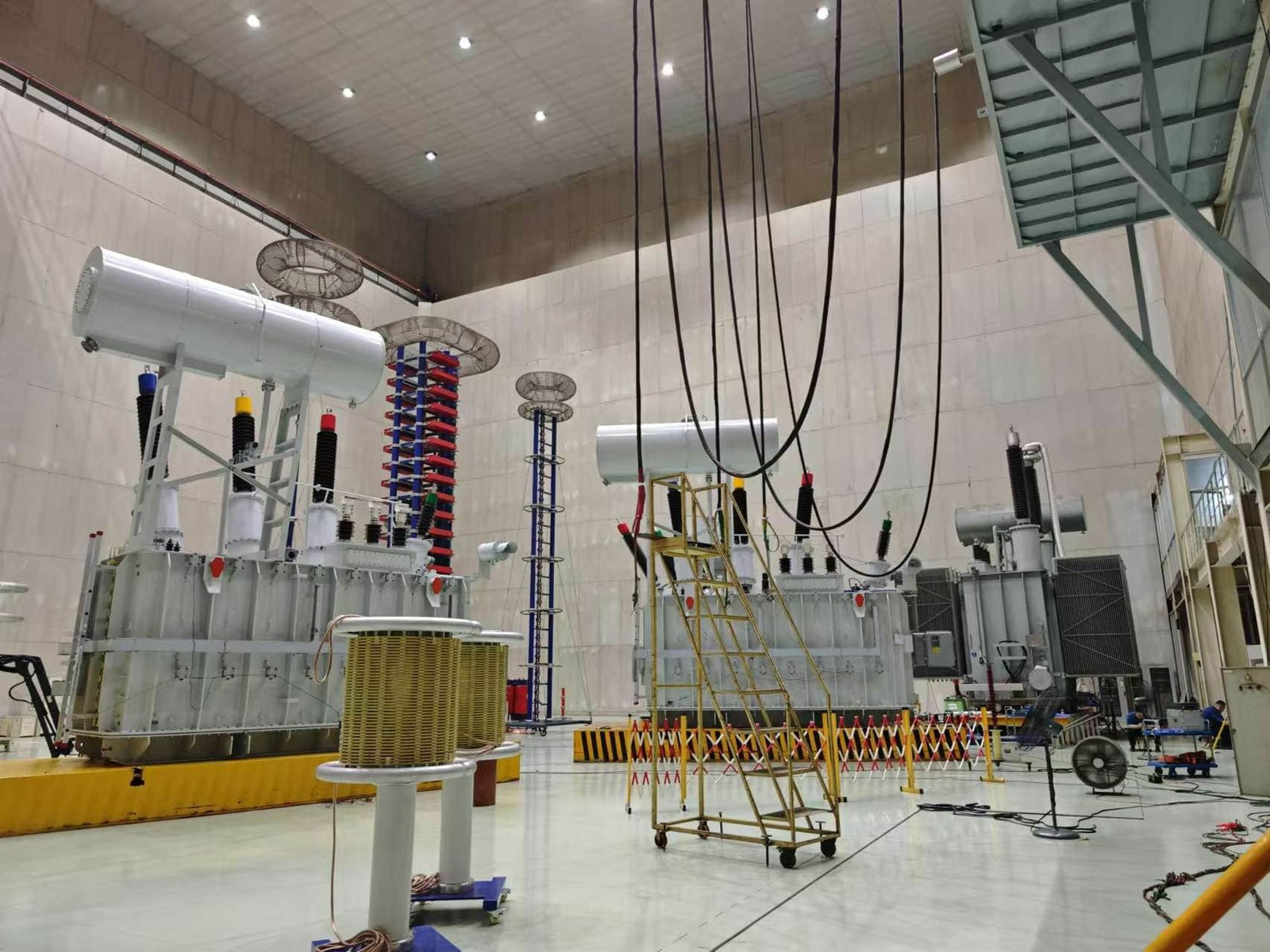
Transformer insulation systems are the first line of defense against overvoltages and electrical stress, but modern power systems—with increasing fault levels, switching transients, and renewable energy fluctuations—push these systems to their limits. Insulation coordination is the process of ensuring the insulation withstands all expected voltages throughout the transformer's life. However, this process is often complicated by system uncertainties, evolving grid dynamics, and limitations in material performance, leading to partial discharges, insulation breakdown, or catastrophic failure.
Insulation coordination challenges in transformers arise from the need to balance dielectric strength, surge protection, and material limitations under normal and transient conditions. Dielectric stress is caused by lightning impulses, switching surges, overvoltages, and harmonics, and must be mitigated using coordinated insulation design, surge arresters, grading rings, and careful voltage distribution across windings and bushings.
Transformer insulation only needs to withstand rated system voltage.False
Transformers must also be able to withstand transient overvoltages from lightning, switching, and faults—often several times the rated voltage.
Insulation coordination includes external surge protection and internal field distribution control.True
Proper coordination involves using surge arresters, capacitive grading, and insulation materials to manage stress internally and externally.
🔍 Why Insulation Coordination Matters
| Factor | Influence on Dielectric Design |
|---|---|
| Lightning Impulse (LI) Level | Determines bushing and winding insulation margins |
| Switching Impulse (SI) Level | Affects inter-turn and longitudinal insulation |
| Overvoltage Transients | Arise from line energization, faults, breaker ops |
| Voltage Grading | Essential in winding design and bushing insulation |
| Partial Discharge (PD) Limits | Define the stress endurance of insulation layers |
| Surge Arrester Placement | Critical for controlling front-of-wave steepness |
Without proper insulation coordination, the dielectric system fails over time—even if rated voltages are never exceeded.
⚡ Understanding Dielectric Stress in Transformers
Dielectric Stress (E-field) = Voltage Gradient across Insulating Material
Measured in kV/mm or kV/cm, this determines the electrical load on solid, liquid, or gaseous insulation.
| Source of Stress | Description | Example Value (Typical) |
|---|---|---|
| System Voltage | Constant stress from operating voltage | 0.1–2 kV/mm |
| Lightning Impulse | Fast, high-magnitude transient from external surges | 750–1200 kV/µs front |
| Switching Surges | Generated by line energization or disconnection | 2–3 p.u. of nominal voltage |
| Internal Resonance | Harmonics or ferroresonance amplifying voltages | 1.5–4 p.u. |
Dielectric failure can result in tracking, breakdown, or PD inception, damaging windings, bushings, or tap changers.
📊 Impulse Level Coordination Table (IEC vs IEEE)
| Voltage Class (kV) | BIL (IEC 60076-3) | BIL (ANSI C57.12.00) | SI Level (IEC) | PD Test Voltage |
|---|---|---|---|---|
| 72.5 | 325 kV | 350 kV | 250 kV | 38 kV |
| 132 | 550 kV | 550 kV | 450 kV | 76 kV |
| 245 | 1050 kV | 1050 kV | 850 kV | 145 kV |
| 420 | 1425 kV | 1550 kV | 1050 kV | 200+ kV |
Surge arresters must be selected to clamp below these limits, while insulation must hold 15–20% margin above.
🛡️ Key Measures to Improve Insulation Coordination
1. Surge Arrester Placement and Ratings
| Location | Function | Required Characteristics |
|---|---|---|
| HV Side Bushing | Arrest incoming lightning surges | Fast response, low residual voltage |
| Tertiary Windings | Protect internal voltage build-up | Energy handling, coordination curve fit |
| Cable Termination | Clamp reflections from open-ended cables | Low inductance lead, coordinated with LI |
2. Field Control in Windings
- Layer Winding Techniques: Distribute voltage evenly across layers.
- Interleaved Insulation: Reduces peak stress between turns.
- Foil or Disc Windings: Used in LV or tertiary coils to prevent hotspots.
3. Grading Rings and Stress Shields
| Device | Purpose | Common Placement |
|---|---|---|
| Grading Ring | Controls E-field at bushing air interfaces | Top of HV bushings, air terminals |
| Capacitive Foils | Smooth voltage gradient in bushings | Internal design in capacitive bushings |
🧪 Standard Dielectric Type Tests (IEC 60076-3)
| Test Name | Purpose | Typical Criteria |
|---|---|---|
| Lightning Impulse Test | Verify insulation withstands LI surges | 5 shots + 1 chopped impulse |
| Switching Impulse Test | For UHV class transformers | 3 positive polarity impulses |
| Induced Voltage Withstand | Detect inter-turn defects | 2× rated frequency for 1 min |
| Partial Discharge Test | Assess insulation integrity under stress | ≤ 100 pC at test voltage |
| Applied Voltage Test | Confirm phase-to-earth insulation margin | 2–3× nominal voltage for 60s |
All these tests must be passed during Factory Acceptance Testing (FAT) or Site Acceptance Testing (SAT).
🧠 Real-World Case: Failure from Inadequate Insulation Coordination
Project: 220/66/11 kV Transformer in Coastal Grid
Issue: Lightning surge during storm caused HV bushing flashover
Finding: Surge arrester rated too high; no grading ring; partial discharge damage present
Outcome: Unit tripped offline; needed bushing and winding replacement
Lesson: Surge devices must be correctly rated, and bushing design must match insulation stress profile
📈 Simulation Tools for Insulation Coordination
| Tool/Method | Function |
|---|---|
| EMTP/ATP/PSCAD | Simulate surge propagation and resonance |
| Finite Element Analysis (FEA) | E-field mapping in bushings/windings |
| Lightning Performance Analysis | Predict exposure based on site profile |
| Coordination Curve Software | Overlay withstand vs arrest curve |
These tools help design and validate insulation systems before manufacturing or field energization.
What Is the Challenge of Controlling Partial Discharges (PD) in Transformers?
Partial discharge (PD) is one of the most insidious and destructive failure mechanisms in transformer insulation systems. It begins as microscopic dielectric breakdowns in voids, bubbles, cracks, or interfaces within solid or liquid insulation and can persist unnoticed for years before culminating in complete insulation failure. PD activity is both a symptom and a cause of insulation deterioration, leading to carbon tracking, localized heating, gas formation, and eventual dielectric breakdown. Detecting, localizing, and eliminating PD early is essential for extending transformer life and preventing unexpected failures.
Controlling partial discharges in transformers requires a multi-faceted strategy: high-quality insulation design and material selection, minimizing voids and interfaces during manufacturing, real-time PD monitoring during operation, and diagnostic testing during factory and site acceptance. PD is influenced by voltage stress, moisture, temperature, and impurities—so both design and environmental control are critical to prevention.
Partial discharges only occur in old transformers.False
PD can also occur in new units due to manufacturing defects, air bubbles, sharp electrode edges, or improper drying.
Partial discharge can lead to insulation failure even if it’s low in magnitude.True
Even low-magnitude PD causes localized degradation over time, leading to carbonization, tracking, and breakdown.
🔍 What Causes Partial Discharges in Transformers?
| PD Source Type | Physical Cause | Location |
|---|---|---|
| Internal Voids | Gas pockets in solid insulation (paper, epoxy) | Within winding insulation |
| Delamination/Interfaces | Poor bonding between layers of insulation | Layered dielectrics (pressboard) |
| Sharp Edges or Points | Local E-field enhancement at corners, wires | Bushing terminals, OLTC contacts |
| Contamination | Moisture, dirt, or metallic particles in oil or resin | Oil channels, resin cast areas |
| Thermal Cracks | Repeated heating/cooling cycles creating cracks in insulation | Dry-type windings, epoxy interfaces |
| Corona Discharge | Air-ionization near high-voltage terminals | HV bushings, cable terminations |
These issues often originate during manufacturing, but can also arise from aging, overloading, or poor maintenance.
📊 PD Classification by IEC 60270
| PD Type | Characteristic Signal | Frequency Range | Associated Fault |
|---|---|---|---|
| Internal PD | Sharp pulses, low frequency | < 1 MHz | Voids, delamination |
| Surface Discharge | Irregular, noise-like pulses | 100 kHz – 10 MHz | Tracking, contamination |
| Corona | Symmetrical, narrow pulses | Up to 30 MHz | High-voltage terminals |
| Floating Electrode | High variance, sporadic | Broadband | Loose connections |
Modern PD monitors can detect these signals using UHF, HFCT, and acoustic sensors—even during online operation.
🛠️ Key Strategies to Control Partial Discharge
1. Design-Level Prevention
| Method | Purpose |
|---|---|
| High-Quality Insulation Systems | Use of pre-dried, void-free paper/pressboard |
| Rounded Electrode Geometry | Avoid sharp stress concentration points |
| Resin Casting Degassing | Vacuum casting to eliminate air bubbles |
| Dielectric Stress Optimization | FEM to ensure field distribution is even |
| Use of PD-Free Bushings | Graded capacitive insulation with no corona |
Factory PD testing is required to validate design margins under induced voltage conditions.
2. Manufacturing and Assembly Controls
| Process | Objective |
|---|---|
| Vacuum Drying | Remove all moisture and dissolved gases |
| Impregnation | Fill voids in insulation materials |
| Cleanroom Winding Assembly | Prevent contamination and particulate PD |
| Proper Shielding and Spacers | Avoid contact discharge between parts |
Transformer OEMs must implement PD-free assembly procedures, especially in HV and UHV units.
🧪 Standard PD Tests and Limits
| Test Type | Standard | PD Level Criteria |
|---|---|---|
| Factory PD Test | IEC 60076-11 / 3 | ≤ 100 pC at test voltage |
| Type Test on Prototype | IEC 60270 | PDIV (Inception Voltage) noted |
| Routine Induced Voltage | ANSI C57.12.90 | No PD inception at 2×Un for 1 min |
| Online PD Monitoring | Custom per site | Trending threshold, no fixed limit |
PDIV (Partial Discharge Inception Voltage) and PDEV (Partial Discharge Extinction Voltage) are measured to characterize insulation endurance.
📉 Sample Transformer PD Risk Map
| PD Location | Risk Level | Detection Method | Critical Threshold |
|---|---|---|---|
| HV Bushing Interface | High | Acoustic/UHF | PD > 100 pC |
| LV Winding Corner | Medium | Online HFCT | Rise in PD counts |
| Oil-Cellulose Interface | High | Oil DGA, Acoustic | Gas increase + PD |
| Tertiary Winding Supports | Medium | Offline IEC 60270 | pC rise > 50 |
| OLTC Contacts | Variable | HFCT + Visual inspection | Periodic discharges |
🧠 Case Study: Undetected PD Causes Early Failure
Location: 400/220 kV Transformer, Desert Climate
Issue: Tripping during switching surge
Investigation: Offline PD test showed 400 pC at LV winding, resin crack from thermal cycles
Outcome: Rewind and insulation replacement needed
Lesson: Lack of continuous PD monitoring in high-stress environments can lead to silent degradation and early failure
🖥️ PD Monitoring Systems: Online & Offline
| Monitoring Type | Advantages | Equipment Used |
|---|---|---|
| Offline PD Test | High sensitivity, accurate location | Coupling capacitors, oscilloscope |
| Online HFCT Sensors | No shutdown required, trending possible | Clamp-on sensors at bushings |
| Acoustic Sensors | Localize PD in solid insulation | Piezoelectric sensors |
| UHF Detection | Detect fast PD impulses | UHF antennas near terminations |
| DGA PD Markers | Gas patterns indicating discharges | DGA kits measuring H₂, C₂H₂ |
Multi-sensor integration ensures early detection, event correlation, and source location.
🌡️ Environmental Factors Influencing PD
| Parameter | Influence on PD Activity | Mitigation Measure |
|---|---|---|
| Humidity | Increases surface tracking risk | Dehumidifiers, sealed enclosures |
| Temperature | Promotes expansion cracks, accelerates PD | Thermal cycling analysis |
| Contaminants | Lower surface resistance | Filtered air, oil purification |
| Altitude | Affects dielectric strength (Paschen’s Law) | De-rate voltage at high altitudes |
Environmental control is just as crucial as design and detection.
What Is the Challenge of Thermal Management in Transformers?
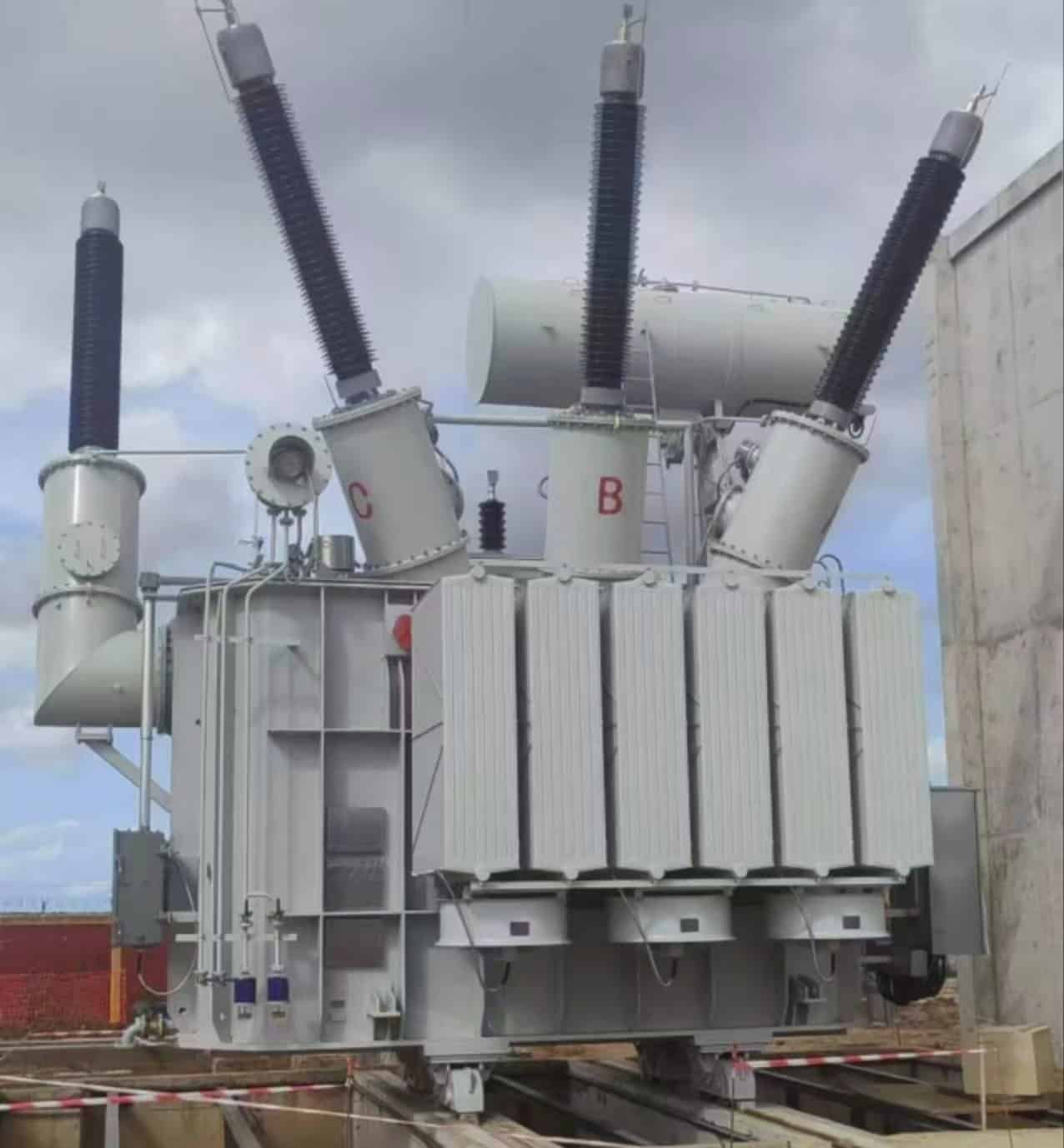
As transformers carry load, they generate heat—especially within the windings and magnetic core. Poor thermal management is one of the leading contributors to transformer aging and failure, as excess heat accelerates insulation degradation, leads to gas generation in oil, and reduces the expected service life. Despite robust cooling systems, hotspots often develop in inaccessible areas, and these temperature peaks dictate transformer aging—not the average oil temperature. The challenge lies in predicting, managing, and reacting to dynamic heat generation under fluctuating load and environmental conditions.
Transformer thermal management challenges involve identifying and controlling localized hotspots, ensuring efficient heat dissipation from windings and core, and maintaining safe insulation temperatures under full and fluctuating loads. This requires coordinated use of oil or air cooling, radiator banks, fans or pumps, embedded sensors, thermographic analysis, and thermal aging models to ensure reliability and extend asset life.
Transformer aging is directly correlated to average oil temperature.False
It is primarily governed by the winding hotspot temperature, which can be significantly higher than average oil readings.
Cooling system failure can lead to immediate thermal runaway in power transformers.True
Without proper heat dissipation, internal temperatures can rise rapidly, leading to insulation breakdown and core damage.
🔥 Why Thermal Stress Is a Critical Issue
| Factor | Impact on Transformer Health |
|---|---|
| Hotspot Temperature | Exponential increase in insulation aging rate |
| Uneven Heat Distribution | Creates localized breakdown, especially at top windings |
| Ambient Temperature Swings | Adds thermal cycling stress to joints and insulation |
| Cooling System Degradation | Reduces dissipation rate, increasing top-oil temperature |
| Overload Events | Temporarily exceed design capacity, spiking temperatures |
IEEE C57.91-2011 provides thermal life expectancy models showing that every 6–8°C rise in hotspot temperature halves insulation life.
🌡️ Key Transformer Temperature Zones
| Zone | Typical Range (°C) | Function / Risk |
|---|---|---|
| Top Oil Temp (avg) | 60–75°C (ONAN) | Cooling system design basis |
| Winding Hotspot | 80–110°C | Governs insulation aging |
| Core Area | 50–70°C | Risk of saturation or core shifting |
| OLTC Chamber | 70–100°C (if motorized) | May overheat due to contact wear |
| Radiator Surface | 35–55°C | Affected by air circulation |
Monitoring the winding hotspot is more important than just measuring top oil temperature.
🧊 Cooling Methods and Their Thermal Capabilities
| Cooling Type | Description | Capacity Range | Notes |
|---|---|---|---|
| ONAN | Oil Natural Air Natural | Up to 10 MVA | Passive system, no fans or pumps |
| ONAF | Oil Natural Air Forced | 10–50 MVA | Adds forced air fans to radiator banks |
| OFAF | Oil Forced Air Forced | 30–100+ MVA | Active oil pumps + air blowers |
| ODAF | Oil Directed Air Forced | Large GSU transformers | Directed oil flow for hotspot cooling |
| KNAN (Dry Type) | Natural convection (air) | <5 MVA | Lower capacity, used indoors |
| Water-Cooled | Oil or air with water exchanger | Rare, high-density zones | Used in nuclear or confined installations |
Forced cooling adds redundancy and can delay aging under temporary overload conditions.
📈 Thermal Aging Rate vs. Hotspot Temperature
| Hotspot Temperature (°C) | Relative Aging Rate |
|---|---|
| 80 | 1.0 (Baseline) |
| 95 | 2.0 |
| 110 | 4.5 |
| 120 | 8.0 |
| 130 | 16.0 |
This exponential curve is the basis for transformer loading guides and defines emergency loading limits.
🛠️ Measures to Improve Thermal Management
1. Design Stage Optimization
| Feature | Benefit |
|---|---|
| High thermal conductivity insulation | Reduces temperature gradient in windings |
| Improved oil channel geometry | Ensures even flow across winding surfaces |
| Use of thermally upgraded paper | Tolerates higher hotspot temperatures |
| Efficient core clamping systems | Prevents localized hot zones |
Thermal simulations (CFD and FEM) are now standard in transformer design for accurate heat flow modeling.
2. Operational Controls and Monitoring
| System | Function |
|---|---|
| Winding Hotspot Thermometers | Real-time aging and thermal profile monitoring |
| Oil Flow Sensors | Detect blockages or flow rate degradation |
| Fan and Pump Control Logic | Load-responsive cooling management |
| DGA with Thermal Gases | Detects overheating via gas composition |
Embedded fiber-optic sensors can monitor winding temperature at critical points with millisecond response time.
🌐 SCADA Integration and Alerts
Modern transformers are fitted with digital temperature relays that:
- Monitor top oil, ambient, and hotspot temps
- Control fan/pump sequencing
- Send alarms to SCADA or RTU if thresholds are exceeded
- Support load-shedding automation to prevent thermal runaway
Typical alarm thresholds:
| Parameter | Warning | Trip Limit |
|---|---|---|
| Top Oil Temp | 85°C | 95°C |
| Winding Hotspot Temp | 110°C | 120°C |
| Radiator Fan Failure | Alert | Shutdown if over temp |
🧪 Testing and Validation of Cooling Systems
| Test | Purpose | Standard |
|---|---|---|
| Heat Run Test | Simulates thermal behavior under load | IEC 60076-2 |
| Temperature Rise Test | Measures top-oil and winding rise | IEEE C57.12.90 |
| Fan and Pump Operation | Confirms cooling components functionality | Site Commissioning |
| Oil Flow Visualization | Detects blockages or channeling issues | CFD modeling |
These tests are typically performed during FAT and on-site commissioning.
🧠 Case Example: Overheating Due to Fan Malfunction
Transformer: 50 MVA ONAF Distribution Unit
Problem: Sudden oil temperature rise during peak hours
Diagnosis: 2 out of 4 radiator fans failed due to control relay issue
Impact: Hotspot reached 128°C; emergency shutdown triggered
Resolution: Relay replacement, fan motor tested, logic updated
Lesson: Redundant fans and real-time logic are essential under cyclic loads
🛡️ Thermal Risk Mitigation Strategy
| Area | Mitigation Step |
|---|---|
| Load Profile Management | Avoid prolonged overloads; plan for peak hours |
| Cooling System Maintenance | Monthly fan/pump test, visual radiator inspection |
| Thermal Scan (IR Camera) | Detect surface hot spots and leaks |
| Oil Quality Checks | Viscosity and cooling efficiency monitoring |
| Alarm Threshold Review | Adjust for seasonal temperature swings |
Regular inspections are critical, especially in harsh environments like deserts or tropical zones.
What Is the Challenge of Mechanical Stress and Short-Circuit Forces in Transformers?
Short circuits are sudden and violent events in the power system—and transformers are often at the front line of absorbing their effects. When a short circuit occurs, extremely high currents—up to 20–40 times the rated current—flow for a short duration, generating enormous electromagnetic forces within the transformer. These forces act on the windings and core, causing intense mechanical stress, vibration, displacement, or even physical deformation. If the transformer structure is not sufficiently reinforced, it can suffer permanent damage or catastrophic failure, even if the event lasts only milliseconds.
The challenge of mechanical stress and short-circuit forces in transformers lies in their capacity to withstand extreme internal electromagnetic forces during fault conditions without structural deformation or displacement of the windings and core. These forces are predominantly radial and axial and can distort insulation, cause winding collapse, break support bracing, and jeopardize dielectric integrity. Adequate structural design, robust clamping systems, and rigorous short-circuit withstand testing are critical to mitigate this risk.
Transformer short circuits cause only electrical damage.False
Short circuits induce massive mechanical forces that can distort windings, degrade insulation, and displace internal components.
Only high-voltage transformers face mechanical stress challenges during faults.False
All power and distribution transformers, regardless of voltage class, must be designed to handle short-circuit mechanical forces.
📌 Where Mechanical Forces Arise in a Short Circuit
| Force Type | Origin | Direction | Effect on Component |
|---|---|---|---|
| Radial Force | Magnetic repulsion between coils | Outward or inward | Winding hoop expansion or collapse |
| Axial Force | Unequal flux between coil ends | Up or down | Disc coil displacement, insulation shear |
| Torsional Force | Core magnetic imbalance | Rotational | Winding twisting, bracing stress |
| Vibration | Short-time oscillations (Hz–kHz) | Variable | Loosening of fasteners, fatigue |
These forces are proportional to the square of the short-circuit current and are most damaging when repeated events or resonances occur.
🔩 How Short-Circuit Forces Damage Transformers
| Damage Mechanism | Description | Typical Impact Area |
|---|---|---|
| Winding Buckling | Radial compression distorts low-voltage windings | LV coils |
| Disc Spacing Collapse | Axial forces compact disc windings, reducing cooling gaps | HV windings |
| Brace Loosening | Clamping structures shift, creating movement paths | Core clamps, yoke structures |
| Insulation Tearing | Differential motion shears solid insulation | Turn-to-turn, layer interfaces |
| Contact Misalignment | Leads, taps or OLTC terminals displaced | Tap changer or external leads |
Even if the transformer continues to function after a fault, such damage may accelerate future failure, create partial discharge sites, or reduce dielectric clearance.
📊 Short-Circuit Mechanical Test Requirements (IEC & IEEE)
| Standard | Test Type | Voltage Class | Key Requirements |
|---|---|---|---|
| IEC 60076-5 | Dynamic Short-Circuit Test | All classes | Transformer subjected to SC current for defined duration |
| IEEE C57.12.90 | Static and Dynamic SC Tests | Up to 230 kV | 3-phase SC applied; no mechanical damage allowed |
| IEC 60076-3 | Design Calculation Validation | All classes | FEM analysis or verified prior design required |
Short-circuit withstand ability must be verified through type testing or proven design history, particularly for custom or high-capacity units.
🧠 Electromagnetic Force Calculation Example
Given a transformer with:
- Rated Current (Irated): 1000 A
- Short-Circuit Current (Isc): 25,000 A
- Mean Radius of Winding (r): 0.3 m
- Height of Coil (h): 1.5 m
- Turns (N): 200
Radial Force (Fr) per unit height can be approximated:
$$
Fr = \frac{{\mu_0 \cdot N^2 \cdot I^2}}{{2 \cdot \pi \cdot r}} \quad \text{(N/m)}
$$
This shows how force increases with square of current, and why reinforcement must anticipate fault-level surges.
🏗️ Structural Design Features for Withstand Strength
| Feature | Function | Implementation Method |
|---|---|---|
| Radial Bracing | Prevent winding bulge or collapse | Pressboard cylinders, epoxy spacers |
| Axial Spacers | Resist compression along winding height | Insulating rods, layered discs |
| Core Clamping System | Restrains vertical movement of core limbs | Steel yoke beams, tie rods |
| Tank Stiffeners | Prevent deformation under flux disturbance | Corrugated walls, internal gussets |
| Insulation Strapping | Limits turn-to-turn motion | Nomex bands, epoxy bonding |
Modern designs utilize Finite Element Analysis (FEA) to optimize clamping structures and identify weak zones.
🔎 Testing Methods to Detect Mechanical Deformation
| Test Type | Objective | Frequency |
|---|---|---|
| Sweep Frequency Response (SFRA) | Detect winding shifts and deformation | Post-fault or annually |
| Frequency Response Analysis (FRA) | Compare against factory baseline | Event-driven |
| Visual Endoscopy | Internal inspection via manhole | Major overhaul |
| Resistance and Ratio Test | Identify tap lead or coil damage | After disturbance |
| Dielectric Tests (PD, Capacitance) | Evaluate insulation displacement | FAT or SAT phase |
FRA testing is now considered industry standard for post-fault condition assessments.
⚠️ Real-World Example: Failure From Inadequate Mechanical Design
Project: 132/33 kV 40 MVA Power Transformer
Incident: External fault at substation caused 28 kA SC current
Observation: Unit tripped and failed SFRA comparison
Investigation: HV winding axial collapse; bracing was undersized
Outcome: Unit sent for rewinding; 6-month outage
Lesson: Short-circuit withstand test or simulation must be verified, especially for non-standard designs
🛠️ Preventive Measures for Mechanical Stress Management
| Category | Action |
|---|---|
| Design Validation | Conduct FEA simulation and physical model test |
| Material Selection | Use high-tensile pressboard, epoxy, Nomex |
| Factory Quality Control | Winding tension and pressboard preloading monitored |
| Installation | Ensure leads and bushings are strain-free |
| Protection Settings | Fast trip relays and breaker coordination |
| Post-Fault Inspection | Always perform SFRA and resistance checks |
Short circuits are unpredictable, but transformer resilience must be predictable by design.
What Is the Challenge of Size, Weight, and Transportation Constraints in Transformers?

Large power transformers are massive, complex machines—weighing hundreds of tons and stretching up to 10 meters in length. Designing them is only part of the challenge; delivering them from factory to substation is an equally difficult feat. Transformer manufacturers and utilities must contend with transportation bottlenecks, legal axle load limits, bridge capacities, route clearances, rail gauge restrictions, and crane lift limits. These constraints directly impact how transformers are designed, fabricated, packed, shipped, and even assembled on-site. A lack of foresight can result in route rejection, costly redesigns, or project delays stretching into months.
The challenge of size, weight, and transportation constraints in transformers centers on the logistical complexity of moving ultra-heavy, over-dimensional equipment through existing infrastructure. It affects core design, tank segmentation, transport packaging, lifting provisions, and route planning. Addressing these constraints requires cross-disciplinary coordination between engineering, logistics, civil authorities, and field erection teams.
Transformer design and logistics can be considered separately.False
Transportation constraints directly affect transformer dimensions, weight, accessories, and modularity—design must integrate logistics.
All transformers can be shipped fully assembled.False
Large power transformers often exceed transport limits and must be disassembled or shipped in modular form.
📐 Key Physical Constraints in Transformer Transport
| Constraint Type | Description | Typical Limits |
|---|---|---|
| Axle Load Limits | Max weight allowed per wheel/axle during road transport | 8–15 tons/axle (varies by country/region) |
| Bridge Load Ratings | Determines safe passage of trailer with transformer load | Max 80–120 tons in many rural areas |
| Height Clearance | Tunnels, bridges, overpasses restrict maximum shipping height | 4–4.5 m (Europe); 5 m (US interstate) |
| Road Width | Narrow or curved roads limit trailer swing radius and overall width | 3.5–4 m typical road width |
| Rail Gauge & Tunnel | Railcar compatibility, bridge/tunnel size along the route | 3.2 m width; 4.3 m height max |
| Crane Lift Capacity | On-site lifting must match transformer shipping weight | Up to 500 tons for GSU transformers |
These constraints define the maximum shippable envelope, and any violation may demand re-routing or modular breakdown.
📦 Packaging and Transport Methods for Large Transformers
| Method | Description | Typical Applications |
|---|---|---|
| Fully Assembled | Transported with core, windings, and tank intact | Small-Medium units (<60 MVA) |
| Core & Coil Only | Main tank with core and windings; accessories shipped separately | 100–200 MVA transformers |
| Tank & Active Separately | Tank and core-coil shipped independently; assembly on-site | Large GSU or EHV transformers (>200 MVA) |
| Modular Segments | Winding segments, yoke, and limbs split; dry assembly on site | For UHV or confined transport routes |
| Skid-Mounted Units | Compact transformers mounted on transport skid | Mobile substations, containerized designs |
Modular breakdown increases site work but may be the only way to meet route or crane capacity constraints.
🔍 Real-World Case: Route Planning in a Mountainous Region
Project: 400 kV, 315 MVA GSU Transformer
Factory: Coastal city; Site: Upland hydro plant
Constraints:
- Bridge clearance: 3.6 m
- Hairpin mountain turns, 12% incline
- Crane lift limit: 250 tons
Solution:
- Transformer tank and core shipped separately
- Tank drained of oil to reduce weight by 38 tons
- All radiators, bushings, and OLTC parts shipped in separate crates
- On-site dry assembly and final filling with vacuum drying
Outcome: Avoided re-routing delays; transformer energized 1 month ahead of schedule
🧠 Design Considerations to Support Transportability
| Design Area | Optimized Feature |
|---|---|
| Tank Shape | Low-profile elliptical or rectangular tank to reduce height |
| Core Stack Method | Radial stacking with removable yoke beams |
| Winding Support | Rigid bracing to prevent movement during transport |
| Lifting Lugs | Multi-point symmetrical lifting pads |
| Base Skids | Designed to match trailer supports or rollers |
| Tie-Down Points | Internal bracing to prevent vibration damage |
Transport-ready transformers must withstand acceleration forces of up to 0.3–0.5 g in multiple axes.
📊 Typical Weights and Dimensions by Transformer Class
| Transformer Type | Length (m) | Height (m) | Weight (tons) | Shipping Mode |
|---|---|---|---|---|
| 33/11 kV 5 MVA | 2.5 | 2.1 | \~8 | Fully assembled, road |
| 132/33 kV 50 MVA | 4.0 | 3.0 | \~40 | Fully assembled, road |
| 220/132 kV 100 MVA | 6.2 | 4.5 | \~80 | Core-coil, radiators separate |
| 400/220 kV 315 MVA | 9.0 | 4.8 | \~180–220 | Tank + core separately |
| 765 kV UHV GSU 500 MVA | 10.5 | 5.2 | >300 | Modular or rail + crane |
Higher capacity units often require route surveys, police escort, and engineering review for infrastructure limits.
📋 Documentation for Transportation and Handling
| Document Type | Purpose |
|---|---|
| Transport Drawing | Shows exact shipping dimensions and weight |
| Center of Gravity Chart | Guides lifting and stabilization |
| Axle Load Calculations | Required for road permit and route approval |
| Handling Instructions | Lift, tilt, block, and secure procedures |
| Customs Declaration | For international shipping and import certification |
| Insurance Manifest | Ensures liability coverage for high-value equipment |
Regulatory clearance is often needed from road, rail, and port authorities, especially for cross-border shipments.
🏗️ Lifting and Handling Protocols
| Equipment | Usage Scenario |
|---|---|
| Hydraulic Jacking System | Leveling or trailer loading at factory or port |
| Gantry Crane | Heavy lifting at sites without large mobile cranes |
| Telescopic Mobile Cranes | Site placement in rugged or confined locations |
| Hydraulic Multi-Axle Trailers (SPMT) | Transport over long routes with tight curves |
| Skid Rollers | Fine adjustment positioning within substation pad |
Proper lifting points, sling angle calculations, and center of gravity markings are essential to prevent tank deformation.
🧪 Factory and Pre-Shipment Tests Relevant to Transport
| Test | Purpose | Applicable Standard |
|---|---|---|
| Impact/Vibration Test | Simulates shocks during road/rail transport | IEC 60721-3-2 |
| Pressure Test of Tank | Ensures no deformation from transport-induced flex | IEC 60076-1 |
| Oil Leak Test | Validates gasket sealing and weld integrity | IEEE C57.12.90 |
| Dry Test for Accessories | Ensures separate parts are free of moisture | In-house QC standards |
On arrival, field checks must verify alignment, no displacement, and absence of cracks or oil leaks.
What Is the Challenge of Regulatory Compliance and Testing Requirements in Transformers?
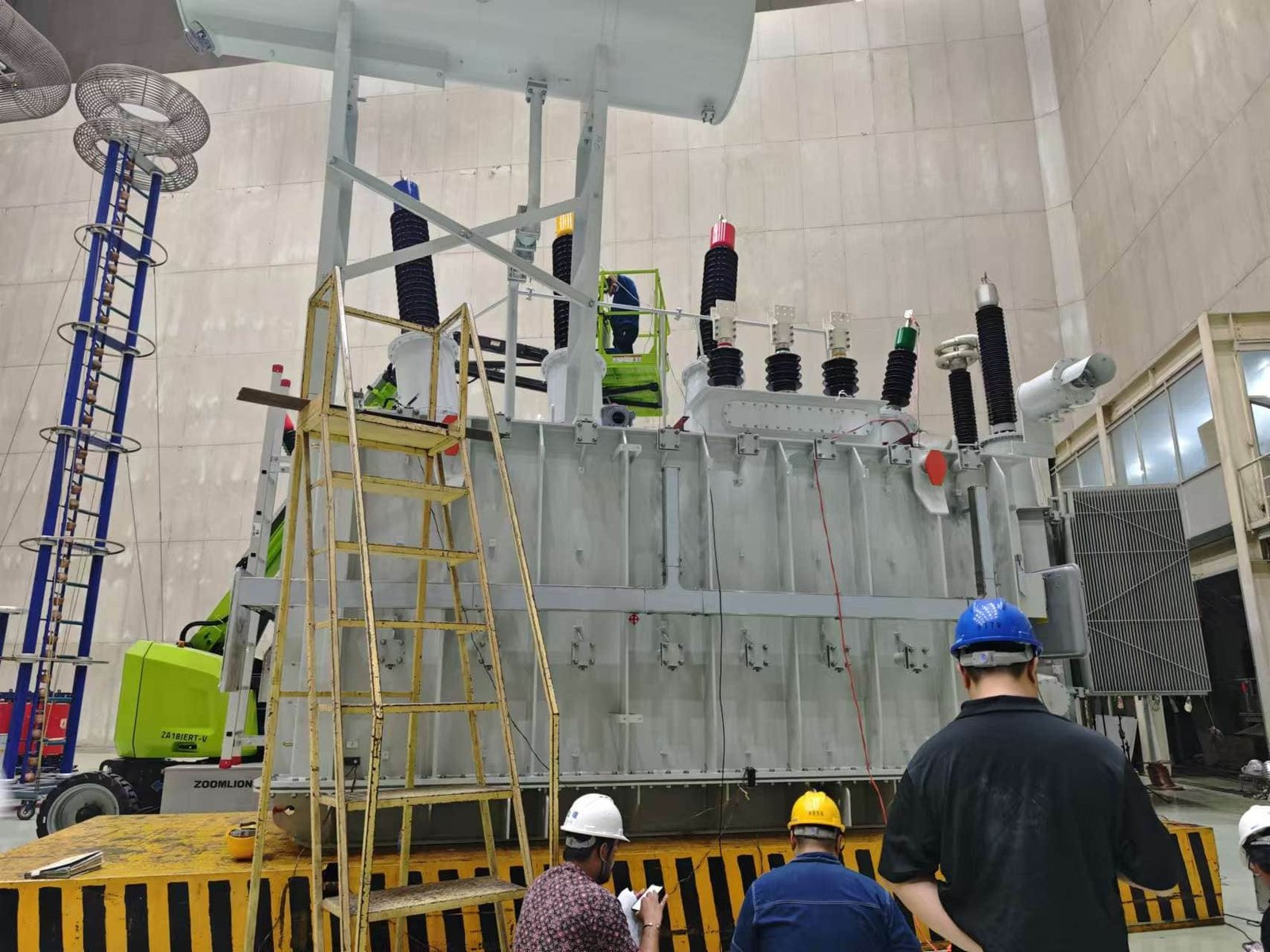
Modern power transformers must satisfy a wide array of international, national, and customer-specific regulatory and testing requirements before they can be installed, energized, or exported. These include stringent electrical performance, safety, efficiency, environmental, and mechanical tests—all of which must be documented, witnessed, and traceable. Navigating these regulatory landscapes is a major challenge for manufacturers and buyers alike. Failure to comply can lead to delays in project commissioning, rejection of equipment, legal penalties, or environmental liability. More importantly, insufficient or non-standard testing can compromise long-term asset performance and safety.
The challenge of regulatory compliance and testing in transformers lies in harmonizing international standards (IEC, IEEE/ANSI, GOST, etc.), meeting country-specific grid codes, executing all type, routine, and special tests with validated equipment and qualified personnel, and ensuring complete documentation for traceability. It requires rigorous planning, specialized facilities, real-time coordination with certifying agencies, and deep understanding of evolving regulations.
Transformer testing is optional and varies from project to project.False
Routine testing is mandatory for every unit; type and special tests are defined based on standard and project-specific requirements.
Compliance with international standards guarantees safety and performance.True
Standards such as IEC 60076 and IEEE C57.12 define performance limits, insulation levels, and testing methods that ensure safe and reliable operation.
📜 Key Regulatory Standards Governing Transformers
| Standard Body | Notable Standards | Scope |
|---|---|---|
| IEC | IEC 60076 Series | General design, testing, insulation, oil, tap changers |
| IEEE/ANSI | C57 Series | U.S.-based specifications on power/distribution transformers |
| GOST | ГОСТ 3484, ГОСТ 1516 | Russian Federation and CIS transformer norms |
| CSA | CAN/CSA-C88 | Canadian electrical safety and performance standards |
| BIS (India) | IS 2026, IS 1180 | Indian equivalents for distribution and power transformers |
| EU ErP | 548/2014 (Tier I/II), 2019/1783 | Eco-design and efficiency performance limits in Europe |
| UL/IECEx | IECEx 60079-7, UL 1446 | Explosion-proof and fire safety compliance |
Compliance depends on the export destination, voltage class, application, and whether the transformer will be grid-connected, indoors, outdoors, or in explosive environments.
🧪 Essential Factory Tests for Regulatory Compliance
| Test Category | Purpose | Standards Referenced |
|---|---|---|
| Routine Tests | Mandatory on all units to verify key parameters | IEC 60076-1, IEEE C57.12.00 |
| Type Tests | On first unit of a design series | IEC 60076-3, C57.12.90 |
| Special Tests | As per contract/customer specification | Based on IEC/IEEE project scope |
| Environmental Tests | For tropical, desert, marine or polluted sites | IEC 60076-14, IEEE C57.154 |
| Efficiency/Energy Tests | For ErP or DOE compliance | 2019/1783 (EU), DOE 10 CFR 431.196 |
Routine tests are performed on 100% of units, while type/special tests are for validation, design approval, or high-risk projects.
✅ Mandatory Routine Tests (IEC 60076-1)
| Test Name | Purpose | Equipment Used |
|---|---|---|
| Winding Resistance | Detect connection faults or mismatched conductors | Kelvin bridge, micro-ohmmeter |
| Ratio and Vector Group | Ensure correct turn ratio and phase displacement | Ratio meter |
| Short-Circuit Impedance | Validate design characteristics and voltage drop | Test bridge or voltage drop test set |
| Insulation Resistance and IR Value | Measure insulation health (dryness and leakage) | Megger |
| Applied Voltage (HiPot) | Test insulation withstand at line voltage | High-voltage AC source |
| Induced Overvoltage | Simulate double-frequency line voltage test | Motor-generator set or HV alternator |
| Partial Discharge (if required) | Ensure dielectric integrity | PD detector, coupling capacitor |
🔬 Type and Special Test Overview
| Test Name | Type of Test | Description | Standards |
|---|---|---|---|
| Lightning Impulse Withstand | Type | Simulates lightning surge (1.2/50 µs, 1050–2000 kV) | IEC 60076-3 |
| Switching Impulse Withstand | Type | For 400 kV+ systems, mimics breaker switching surges | IEC 60076-3 |
| Temperature Rise | Type | Simulates full load heat behavior | IEC 60076-2 |
| Noise Level (dBA) | Special | For urban/residential installations | IEC 60076-10 |
| SFRA (Sweep Frequency Response) | Special | Checks winding deformation or looseness | IEEE C57.149 |
| Zero Sequence Impedance | Special | Used in protection coordination | Project-specific |
| Fire Safety/Explosion Proof | Special | For flame-retardant or zone 1/2 environments | IEC 60079-7, UL 1446 |
Type tests validate dielectric, thermal, and mechanical integrity, while special tests ensure site-specific suitability.
🧾 Documentation and Certification Obligations
| Document Type | Requirement Level | Purpose |
|---|---|---|
| Routine Test Report | Mandatory | Submitted with each unit shipped |
| Type Test Certificate | Project-based | From OEM or independent lab (witnessed or notarized) |
| Third-Party Inspection Certificate | Project-based | From accredited agency (BV, SGS, DNV, TÜV) |
| Efficiency Declaration | Mandatory (EU/US) | Confirms ErP or DOE compliance |
| Transport and Storage Instructions | Mandatory | Safety, stacking, and handling guidelines |
| CE/UL Label and Technical File | Mandatory (as applicable) | For European or North American compliance |
Buyers, EPCs, and utilities must retain these documents for at least the service life of the transformer for warranty and audit purposes.
Sample Test Matrix Based on Voltage Class
Voltage Class (kV) Routine Tests Type Tests Special Tests Certifications Required
<36 ✔ Optional Site-based only CE / UL if exported
132–220 ✔ ✔ (Impulse, Temp) Optional ISO + Grid code compliance
400 ✔ ✔ ✔ (Noise, FRA, Fire) GOST, IEC, Grid Certificate
765 / UHV ✔ ✔ ✔ (FRA, seismic) Witnessed by authorities
Regional Regulatory Considerations
Country / Region Local Requirement Overarching Compliance
Europe (EU) Efficiency under ErP 548/2014, 2019/1783 CE, ISO, IEC
USA DOE energy standards, NEMA TR 1 compliance UL, IEEE, ANSI
India BIS marking, IS 1180/2026 testing mandatory CPRI/NABL lab testing
China GB standards and CCC mark CNAS lab approval
Middle East SEC/DEWA-specific specs IEC-based, often stricter
Russia/CIS GOST R certification, customs clearance IEC-GOST harmonized
Manufacturers must adapt designs and documentation per export region, not just for language but for technical testing scope.
Case Study: Test Failure Causes Project Delay
Transformer: 220/132 kV, 100 MVA
Country: Germany (EU efficiency rules applicable)
Problem: Measured no-load losses exceeded Tier II limit by 5%
Root Cause: Core lamination source switched without prior test update
Impact: Transformer rejected; delay of 4 months in commissioning
Resolution: New core built, re-tested and resubmitted
Lesson: Test values must match declared efficiency profiles; regulatory documentation is critical
FAQ
Q1: What are the main design challenges in high-voltage transformers?
A1: Designing high-voltage transformers (typically above 132kV) poses several technical difficulties, including:
Electrical insulation stress: Higher voltages demand advanced insulation to prevent partial discharges and dielectric failure
Thermal management: Efficient heat dissipation is critical to prevent overheating of windings and core
Mechanical stress: High electromagnetic forces can deform windings during short-circuits or fault conditions
Electromagnetic interference (EMI): High-voltage fields can affect nearby equipment or control systems
Core saturation and losses: Increased voltages can lead to flux density issues, impacting efficiency
Addressing these requires a careful balance of materials, geometry, and cooling systems.
Q2: How are insulation challenges overcome in HV transformer design?
A2: Insulation systems must handle both AC and impulse voltages. Solutions include:
Layered insulation barriers using pressboard, oil, and high-grade paper
Graded insulation that adjusts the insulation strength according to the electric field distribution
Impulse-resistant bushings and shielding techniques
Use of high-dielectric-strength oils or synthetic esters
Advanced Finite Element Method (FEM) simulations are often used to model electric field behavior and optimize insulation layout.
Q3: What strategies are used for thermal control in high-voltage transformers?
A3: Effective cooling is essential to maintain efficiency and extend lifespan. Techniques include:
ONAF, OFAF, or ODAF cooling systems with radiators and oil pumps
Directed oil flow to cool hot spots on windings and core
Winding temperature indicators (WTIs) and fiber optic sensors for real-time monitoring
Use of aluminum or copper windings for optimal conductivity
Thermal modeling is crucial during design to prevent overload or hot-spot formation.
Q4: How is mechanical integrity ensured in high-voltage transformer design?
A4: High fault currents and mechanical forces can damage windings or displace core components. Key solutions include:
Clamping structures and robust support brackets
Pre-compressed windings to resist short-circuit forces
Use of non-magnetic materials for structural parts to reduce stray losses
Vibration dampers in mobile or seismic zones
Mechanical designs are verified using short-circuit withstand tests per IEC 60076-5.
Q5: How do engineers mitigate electromagnetic interference in HV transformers?
A5: To reduce EMI and protect adjacent systems:
Electrostatic and magnetic shielding are applied around windings and enclosures
Low stray flux designs are achieved using core and yoke optimization
Grounding and shielding of control cables to eliminate noise
Use of shielded compartments for protection relays and sensors
These measures are crucial in urban substations, data centers, and smart grid environments.
References
IEEE: Design and Testing of High-Voltage Transformers
https://ieeexplore.ieee.org/document/8276205
Doble Engineering: High Voltage Transformer Diagnostics
https://www.doble.com/solutions/high-voltage-transformer-analysis/
ScienceDirect: Modeling Challenges in HV Transformers
https://www.sciencedirect.com/science/article/pii/S0378779619304267
NREL: High-Voltage Equipment R&D and Thermal Design
https://www.nrel.gov/docs/fy21osti/high-voltage-transformers.pdf
IEC 60076 Series: Power Transformer Standards
https://webstore.iec.ch/publication/715