
Choosing the wrong power transformer can create problems that extend throughout the entire project lifecycle, including inadequate capacity, excessive energy losses, overheating, poor voltage regulation, difficult installation, and higher maintenance costs. A transformer that looks suitable based on price or rated power alone may still be incompatible with the project's load profile, environmental conditions, protection system, or applicable standards. A structured selection process is therefore essential for achieving reliable performance and controlling total ownership costs.
To choose the right power transformer for a project, buyers should evaluate the required voltage levels, transformer capacity, load characteristics, frequency, phase configuration, impedance, insulation and cooling system, installation environment, efficiency and losses, safety requirements, applicable standards, maintenance needs, delivery schedule, and total lifecycle cost. The final transformer should be selected based on the complete electrical and operating requirements of the project rather than purchase price or capacity alone.
Transformer selection should begin with the project's actual operating requirements and then translate those requirements into a detailed technical specification. Comparing qualified manufacturers on a like-for-like basis helps buyers identify the design that offers the best combination of performance, reliability, safety, delivery capability, and long-term value.
How Do You Choose the Right Power Transformer for a Project Based on Voltage and Capacity?
Selecting a power transformer by simply matching the voltage and choosing a larger MVA rating can lead to unnecessary cost or poor operating performance. The correct transformer must match the system voltage, required capacity, load characteristics, and future demand while maintaining appropriate safety and thermal margins.
To choose the right power transformer, first match the primary and secondary rated voltages to the actual electrical system, then determine the required apparent power in kVA or MVA from the expected load. Add a reasonable future-growth margin, check transformer impedance and cooling requirements, and confirm that the selected voltage and capacity comply with the project's applicable standards and utility requirements.
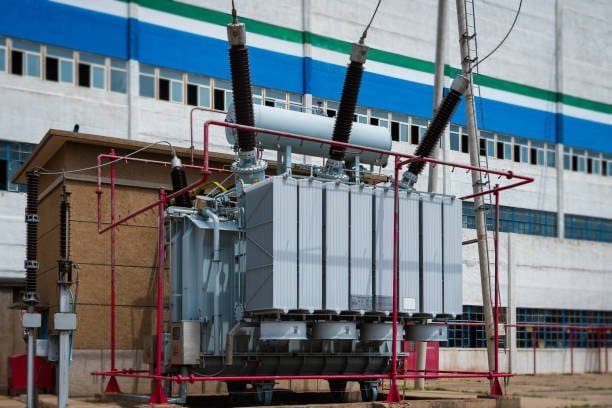
Choosing a transformer with a higher MVA rating than the current load always improves project reliability.False
Oversizing can increase purchase cost and no-load losses. The transformer should have an appropriate capacity margin based on actual load, future growth, cooling, and operating requirements.
1. Start With the Primary and Secondary Voltage
The first selection point is the transformer's rated voltage.
Identify:
- Incoming system voltage
- Required outgoing voltage
- Maximum operating voltage
- Frequency
- Required tap range
For example, if a substation receives high-voltage power and must supply a lower-voltage network, the transformer's winding voltages must correspond to those system levels.
Do not select a transformer based only on nominal voltage. Buyers should also consider the system's maximum voltage and insulation requirements.
2. Determine the Required Capacity
Transformer capacity is normally specified in kVA or MVA, representing apparent power.
For a three-phase system:
S \approx \sqrt{3}VI
where:
- (S) = apparent power
- (V) = line voltage
- (I) = line current
The required transformer capacity should be based on the expected maximum demand, not merely the connected load.
For example, equipment with a total connected load of 8 MVA does not automatically mean an 8 MVA transformer is the best choice. Demand diversity, power factor, operating schedule, and future expansion must also be considered.
3. Add a Reasonable Capacity Margin
A transformer should not normally operate continuously at its absolute maximum rating.
A practical design may include capacity for:
- Load growth
- Seasonal demand
- Temporary overload
- New equipment
- Renewable-energy integration
- Operational flexibility
However, excessive oversizing is also undesirable.
A much larger transformer can have:
- Higher purchase cost
- Higher transportation cost
- Larger physical dimensions
- Higher no-load losses
- Greater installation requirements
The objective is appropriate capacity, not maximum capacity.
4. Consider the Load Profile
Two projects with the same peak demand may need different transformer solutions.
Consider:
Peak Load
Average Load
Minimum Load
Daily Variation
Seasonal Variation
Future Growth
This is especially important for transformers that remain energized continuously.
If the transformer spends most of its time at light load, no-load losses become more important. If it operates near rated load for long periods, load losses and cooling performance become more important.
5. Check Transformer Impedance
Voltage and capacity are not enough.
Transformer impedance affects:
- Voltage regulation
- Short-circuit current
- Parallel operation
- System stability
- Protection coordination
A transformer with unsuitable impedance can create problems even when its voltage and MVA ratings appear correct.
Therefore, impedance should be specified and checked during technical evaluation.
6. Match the Cooling System
Higher capacity normally means greater heat generation.
The selected transformer should have a cooling system suitable for:
- Rated capacity
- Expected load
- Ambient temperature
- Installation altitude
- Indoor/outdoor conditions
Oil-immersed transformers may use natural or forced cooling arrangements depending on size and application.
Cooling should be evaluated together with the transformer's guaranteed temperature rise.
7. Check Voltage Regulation and Tapping
The transformer must provide acceptable secondary voltage under changing load.
Buyers should review:
- Tap range
- Tap position
- Off-circuit or on-load tap changer
- Voltage regulation
- System voltage variation
For applications with significant voltage fluctuations, the tap-changing arrangement can be just as important as the basic voltage ratio.
8. Verify Standards and Testing
After determining voltage and capacity, confirm that the transformer meets the required technical standards.
Depending on the project, this may include:
- IEC 60076
- IEEE/ANSI requirements
- National standards
- Utility specifications
Request appropriate:
- Routine test reports
- Type-test evidence
- Loss guarantees
- Temperature-rise results
- Insulation test results
Practical Buyer Checklist
| Selection Item | What to Confirm |
|---|---|
| Primary voltage | Matches incoming system |
| Secondary voltage | Matches required network |
| Capacity | Meets peak demand with reasonable margin |
| Frequency | 50 or 60 Hz as required |
| Load profile | Average, peak, and seasonal demand |
| Impedance | Suitable for regulation and fault levels |
| Tap range | Handles system voltage variation |
| Cooling | Suitable for actual thermal conditions |
| Losses | Acceptable lifecycle cost |
| Standards | IEC, IEEE, national, and utility requirements |
| Future growth | Reasonable expansion allowance |
How Do You Choose the Right Power Transformer for a Project Based on Load Characteristics?
Choosing a power transformer only from the project's peak load can result in unnecessary oversizing or poor efficiency. Two projects with the same maximum demand may have completely different daily load patterns. A reliable selection therefore starts with understanding how much power is required, when it is required, and how quickly the load changes.
Choose the right power transformer by analyzing peak load, average load, minimum load, load duration, power factor, daily and seasonal variation, motor starting demand, harmonics, and expected future growth. Then select an appropriate kVA/MVA rating, impedance, cooling system, and overload capability that can handle the real load profile without excessive oversizing.
The transformer capacity should always be equal to the project's maximum connected load.False
Transformer sizing should consider demand diversity, actual peak demand, average loading, power factor, future growth, starting currents, harmonics, and required operating margin.
1. Start With the Load Profile
The first step is to understand the project's actual load behavior.
Record:
- Maximum demand
- Average demand
- Minimum demand
- Daily load curve
- Seasonal changes
- Operating hours
- Future expansion
A simple load profile may look like:
Load
 ↑
 │          Peak
 │        /─────\
 │   ____/       \____
 │__/                 \__
 └────────────────────────→ Time
The maximum value is important, but the area under the curve also matters because it shows how long the transformer operates at different loads.
2. Calculate the Required kVA or MVA
Transformer capacity is based on apparent power, not simply real power.
For a three-phase system:
S=\sqrt{3}VI
If real power (P) and power factor are known:
S=\frac{P}{PF}
For example, a project with high real power but a poor power factor may require considerably more transformer capacity than expected from the real-power value alone.
3. Consider Peak and Average Loading Together
A transformer selected only for the peak can be unnecessarily large if the peak occurs for only a short period.
Conversely, selecting close to average load may create excessive thermal stress during sustained peaks.
A practical selection should consider:
Peak load + duration + expected frequency of occurrence + future growth
For continuous industrial loads, the transformer may need to operate close to rated capacity for long periods. For variable commercial or residential loads, the transformer may spend much more time at partial load.
4. Evaluate Motor Starting Loads
Motor-driven equipment can create short-duration starting currents much higher than normal running current.
Examples include:
- Pumps
- Compressors
- Fans
- Crushers
- Large HVAC systems
- Conveyor systems
A transformer may have sufficient steady-state MVA but still experience excessive voltage drop during motor starting.
Buyers should therefore provide the manufacturer with the largest motor ratings and starting method.
5. Check Power Factor
Power factor directly affects transformer current.
For the same real power:
Lower power factor → Higher current → Higher transformer kVA requirement
Power-factor correction equipment can reduce current and improve transformer utilization.
Therefore, buyers should provide the expected operating power factor rather than using an assumed value.
6. Consider Harmonic Loads
Modern electrical systems may contain nonlinear loads such as:
- Variable-frequency drives
- UPS systems
- Rectifiers
- Data-center equipment
- Inverters
- Switching power supplies
Harmonics can increase transformer heating and affect losses.
For projects with significant nonlinear loads, buyers should discuss harmonic content and possible transformer derating or specialized transformer designs with the manufacturer.
7. Allow for Future Growth
The transformer should support reasonable future expansion.
Consider:
- Additional production equipment
- Building expansion
- New motors
- Electrification projects
- Renewable-energy systems
- Increased production capacity
But avoid excessive capacity margins. An oversized transformer costs more and may have unnecessary no-load losses.
8. Match the Cooling System to the Load
Transformer losses become heat, so the cooling system must match the expected load profile.
Higher Load
    ↓
Higher Current
    ↓
Higher Losses
    ↓
Higher Heat
    ↓
Greater Cooling Requirement
The manufacturer should evaluate:
- Maximum continuous load
- Ambient temperature
- Temperature rise
- Cooling method
- Overload requirements
Practical Load-Based Checklist
| Load Characteristic | Transformer Selection Impact |
|---|---|
| High continuous load | Larger capacity and strong cooling |
| Short peak demand | Check overload capability |
| Low average load | Pay attention to no-load losses |
| Poor power factor | Increase required kVA |
| Large motor loads | Check starting current and voltage drop |
| Harmonic loads | Evaluate additional heating |
| Seasonal variation | Check thermal cycling |
| Rapid load changes | Review thermal and voltage performance |
| Future expansion | Add reasonable capacity margin |
How Do You Choose the Right Power Transformer for a Project Based on Cooling, Insulation, and Installation Conditions?
A power transformer may have the correct voltage and MVA rating but still be unsuitable if its cooling, insulation, or installation environment is poorly matched to the project. High ambient temperature, altitude, humidity, pollution, limited ventilation, or indoor fire-safety requirements can all affect transformer performance and service life.
Choose the transformer by matching its cooling system, insulation level, and physical construction to the actual installation conditions. Buyers should evaluate ambient temperature, altitude, indoor or outdoor installation, humidity, pollution, fire requirements, insulation level, cooling method, temperature rise, and available installation space before finalizing the transformer specification.
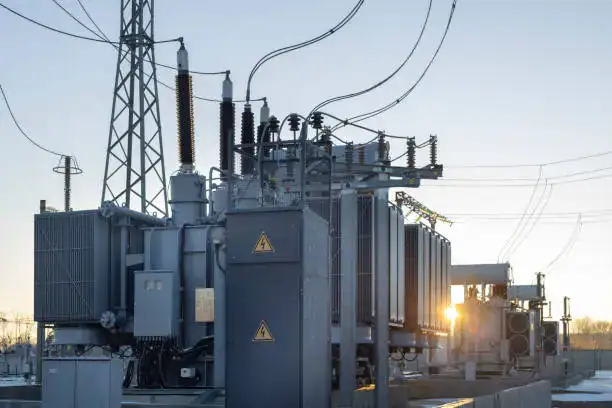
A transformer with the correct rated MVA can be installed safely in any environment without changing its cooling or insulation design.False
Ambient temperature, altitude, humidity, pollution, fire requirements, insulation level, and ventilation can significantly affect transformer design and operating performance.
1. Evaluate the Cooling Conditions
Transformer losses produce heat, so cooling capacity must match the expected operating conditions.
A simplified thermal chain is:
Electrical Losses
      ↓
     Heat
      ↓
Transformer Oil / Insulation
      ↓
Radiators / Fans
      ↓
Ambient Air
Buyers should consider:
- Maximum ambient temperature
- Average ambient temperature
- Transformer load profile
- Temperature-rise requirement
- Available ventilation
- Cooling method
- Required overload capability
Large power transformers may require natural oil and air circulation, forced-air cooling, or other enhanced cooling arrangements.
2. Check Ambient Temperature
A transformer designed for a moderate climate may need different thermal consideration in a very hot environment.
Higher ambient temperature reduces the available temperature margin.
Therefore, provide the manufacturer with the project's actual:
- Maximum ambient temperature
- Minimum ambient temperature
- Daily temperature range
- Expected continuous loading
The manufacturer can then verify the appropriate temperature rise and cooling configuration.
3. Consider Installation Altitude
High-altitude installations have thinner air, which can affect both cooling and external insulation performance.
This is especially important when the site is significantly above sea level.
Buyers should provide the exact installation altitude so the manufacturer can evaluate:
- Cooling performance
- External insulation clearances
- Dielectric strength
- Temperature rise
Do not assume that a standard low-altitude design can automatically be used at high altitude.
4. Evaluate Insulation Requirements
Insulation must withstand normal operating voltage as well as temporary overvoltages and impulse stresses.
Important parameters include:
- Rated voltage
- Maximum system voltage
- Lightning impulse withstand
- Switching impulse requirements where applicable
- Power-frequency withstand
- Bushing insulation level
- Internal winding insulation
For higher-voltage transformers, insulation coordination becomes particularly important.
5. Consider Humidity and Moisture
Moisture is harmful to transformer insulation.
For oil-immersed transformers, buyers should consider:
- Tank sealing
- Breathing system
- Oil moisture
- Conservator arrangement
- Silica-gel breather where applicable
- Moisture monitoring
For dry-type transformers, environmental humidity and enclosure protection are also important.
6. Evaluate Pollution and Outdoor Conditions
Outdoor transformers may be exposed to:
- Dust
- Salt
- Industrial pollution
- Chemical contamination
- Rain
- UV exposure
Pollution can reduce the surface insulation performance of bushings and other external insulating components.
The transformer should therefore have appropriate insulation coordination, creepage distance, bushings, and enclosure arrangements for the site environment.
7. Indoor or Outdoor Installation?
Installation location strongly affects transformer selection.
Outdoor installations generally require attention to weather protection, corrosion, drainage, bushings, noise, and cooling.
Indoor installations require additional consideration of:
- Fire safety
- Ventilation
- Room dimensions
- Noise
- Access
- Smoke management
- Oil containment where applicable
For some indoor applications, dry-type transformers may be preferred because they avoid large quantities of insulating oil.
8. Check Available Installation Space
Before ordering, confirm:
- Transformer dimensions
- Weight
- Radiator projection
- Cable entry
- Bushing clearance
- Maintenance access
- Crane or lifting requirements
- Foundation dimensions
Cooling equipment can significantly increase the footprint of a large transformer.
A technically suitable transformer may still be unsuitable if it cannot be installed or serviced safely within the available space.
Practical Buyer Checklist
| Condition | What to Evaluate |
|---|---|
| Ambient temperature | Cooling and temperature rise |
| Altitude | Cooling and insulation |
| Humidity | Sealing and insulation protection |
| Pollution | Bushings and creepage distance |
| Indoor/outdoor | Fire, weather and ventilation |
| Load profile | Cooling capacity |
| Space | Transformer dimensions and maintenance access |
| Voltage level | Insulation coordination |
| Fire requirements | Oil containment or dry-type design |
| Site access | Transport and installation |
How Do You Choose the Right Power Transformer for a Project Based on Efficiency, Impedance, and Reliability?
A transformer with the correct voltage and capacity can still perform poorly if its losses, impedance, or reliability are not suitable for the project. Buyers should therefore look beyond the nameplate and evaluate how the transformer will perform over its entire operating life.
Choose a power transformer by comparing guaranteed no-load and load losses, required impedance, voltage regulation, thermal performance, expected service life, protection, testing, and maintenance requirements. The best transformer is not necessarily the cheapest or largest unit; it is the one that provides the required electrical performance with acceptable lifecycle cost and dependable operation.
The transformer with the highest efficiency rating is always the best choice.False
Transformer selection should consider efficiency at the project's actual loading, no-load and load losses, impedance, voltage regulation, reliability, maintenance, and total lifecycle cost.
1. Compare No-Load and Load Losses
Transformer efficiency depends mainly on two types of losses.
No-load loss occurs whenever the transformer is energized and is primarily associated with the magnetic core.
Load loss increases with winding current and is strongly affected by transformer loading.
A simplified relationship is:
No-Load Loss → Mainly constant with load
Load Loss    → Increases as load increases
For transformers that remain energized continuously but operate at relatively low load, no-load loss can have a major lifecycle impact.
For heavily loaded transformers, load loss becomes increasingly important.
Therefore, buyers should request guaranteed loss values, not just a general efficiency percentage.
2. Evaluate Efficiency at the Real Load
A transformer may have excellent maximum efficiency but operate most of its life at partial load.
Buyers should compare efficiency at:
- Minimum load
- Normal load
- Peak load
- Expected annual operating point
A useful evaluation considers annual energy loss rather than relying on one efficiency figure.
3. Why Is Impedance Important?
Transformer impedance affects both voltage regulation and fault current.
If impedance is too low, fault current can become higher.
If impedance is too high, voltage drop under load may become excessive.
Impedance also matters when transformers operate in parallel.
Therefore, the selected impedance should match:
- System short-circuit level
- Protection coordination
- Voltage regulation requirements
- Parallel-operation requirements
- Utility specifications
4. Consider Voltage Regulation
A transformer should maintain acceptable secondary voltage as load changes.
A basic relationship is:
Load increases
      ↓
Current increases
      ↓
Voltage drop increases
      ↓
Secondary voltage changes
Transformer impedance, winding resistance, reactance, and load power factor all influence this behavior.
For sensitive industrial or commercial loads, voltage regulation should be reviewed carefully rather than relying only on the nominal voltage ratio.
5. Check Thermal Reliability
Efficiency and reliability are closely connected because transformer losses become heat.
Excessive temperature accelerates insulation aging.
Buyers should review:
- Guaranteed temperature rise
- Cooling method
- Hot-spot considerations
- Ambient temperature
- Overload capability
- Temperature monitoring
A transformer that operates thermally within its design limits generally has a better foundation for long service life.
6. Evaluate Manufacturing Quality
Reliability starts at the factory.
Important areas include:
- Core manufacturing
- Winding quality
- Insulation processing
- Vacuum drying
- Oil treatment
- Tank sealing
- Bushing quality
- Assembly control
A manufacturer with a strong quality-management system and traceable production process can reduce the risk of early failures.
7. Review Testing and Inspection
Buyers should request appropriate testing evidence, including:
- Routine factory tests
- Type-test reports
- Insulation tests
- Ratio and winding-resistance tests
- No-load and load-loss measurements
- Impedance measurement
- Temperature-rise evidence where applicable
For large or critical transformers, independent factory inspection or witness testing can provide additional assurance.
8. Consider Lifecycle Reliability
Purchase price is only one part of transformer cost.
A better comparison includes:
Purchase cost + installation + energy losses + maintenance + downtime risk + expected service life
A transformer with a higher initial price may provide a lower total cost if it has lower losses and stronger long-term reliability.
Practical Buyer Checklist
| Factor | What to Verify |
|---|---|
| No-load loss | Guaranteed value |
| Load loss | Guaranteed value at specified temperature |
| Efficiency | At realistic loading |
| Impedance | Suitable for system fault level |
| Voltage regulation | Acceptable under expected loads |
| Temperature rise | Meets project requirements |
| Cooling | Suitable for continuous and peak loading |
| Factory testing | Complete and traceable |
| Quality management | Valid certification |
| Maintenance | Practical service requirements |
| Service life | Appropriate for project expectations |
How Do You Choose the Right Power Transformer for a Project Based on Standards, Testing, and Supplier Capability?
A power transformer can meet the required voltage and MVA rating yet still create project risk if the manufacturer cannot demonstrate proper standards compliance, reliable testing, or consistent production capability. Buyers should therefore evaluate the transformer, factory, and supplier as one system rather than choosing only by price.
Choose the right power transformer by first defining the applicable IEC, IEEE, or national standards, then verifying routine and type-test requirements, factory quality systems, production capability, inspection procedures, documentation, warranty, and after-sales support. A strong supplier should be able to prove that the proposed transformer design and the actual manufacturing facility can consistently meet the project's technical requirements.
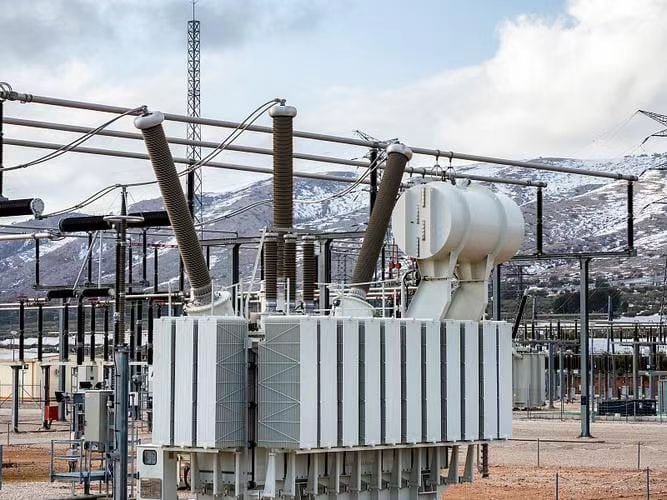
A manufacturer with ISO 9001 certification automatically has sufficient capability to supply any power transformer.False
ISO 9001 demonstrates a quality-management system, but buyers must separately evaluate transformer design capability, manufacturing capacity, testing equipment, applicable standards, experience, and project-specific requirements.
1. Define the Required Standards First
Before comparing suppliers, establish which standards apply.
For many international projects, the IEC 60076 series is an important reference. North American projects may use relevant IEEE/ANSI C57 standards, while some projects require national or utility-specific standards.
The purchase specification should clearly define:
- Applicable standards
- Standard revision
- Transformer type
- Rated voltage
- Rated capacity
- Insulation level
- Impedance
- Cooling method
- Loss guarantees
- Required tests
Do not accept a general statement such as "IEC compliant." Ask the supplier to identify the exact applicable requirements.
2. Verify Routine Testing
Routine tests provide evidence about the actual transformer being supplied.
Depending on the design and applicable standard, buyers may request:
| Test | Main Purpose |
|---|---|
| Winding resistance | Checks winding condition |
| Voltage ratio | Confirms transformation ratio |
| Vector group | Confirms phase relationship |
| No-load loss | Evaluates core performance |
| Load loss | Evaluates load-related losses |
| Impedance | Confirms system characteristics |
| Dielectric tests | Verifies insulation withstand |
The final routine test report should clearly identify the transformer's serial number and rating.
3. Review Type-Test Evidence
Type tests demonstrate that a transformer design can meet specified performance requirements.
Depending on the project, evidence may cover:
- Temperature rise
- Lightning impulse
- Switching impulse
- Short-circuit withstand
- Sound level
- Other special requirements
Buyers should verify that the tested design is representative of the proposed transformer.
A report for a completely different transformer should not automatically be accepted as proof of design compliance.
4. Inspect the Factory Capability
Supplier capability is more than annual sales volume.
Evaluate whether the factory has suitable facilities for:
- Core cutting and assembly
- Winding
- Insulation processing
- Vacuum drying
- Oil treatment
- Tank fabrication
- Final assembly
- Electrical testing
For large transformers, also consider whether the factory has sufficient lifting capacity, test-room capacity, and finished-product handling capability.
5. Check Quality Management
ISO 9001 is useful evidence of a structured quality-management system.
Buyers should also examine how that system is actually implemented.
Look for:
- Material traceability
- Incoming inspection
- Process inspection
- Calibration control
- Nonconformance procedures
- Final inspection
- Document control
- Corrective-action records
A certificate is useful, but actual factory practices provide stronger evidence of capability.
6. Evaluate Previous Experience
For a critical transformer project, relevant experience matters.
Ask for references involving similar:
- MVA ratings
- Voltage levels
- Cooling systems
- Transformer types
- Installation environments
- Utility requirements
Experience with a similar transformer is more valuable than a long general customer list.
7. Check Supplier Testing Equipment
A capable manufacturer should have appropriate calibrated equipment for its required tests.
Buyers can ask about:
- Test-room capacity
- High-voltage test equipment
- Loss-measurement systems
- Transformer ratio testing
- Impedance testing
- Insulation testing
- Temperature-rise testing capability
- Calibration records
For major projects, witness testing can provide additional confidence.
8. Evaluate Documentation and After-Sales Support
A reliable supplier should provide complete technical documentation, including:
- Drawings
- Datasheets
- Test reports
- Manuals
- Maintenance instructions
- Spare-parts lists
- Certificates
- Installation requirements
Also evaluate:
- Warranty period
- Response time
- Spare-parts availability
- Technical support
- Repair capability
- Remote troubleshooting
Transformer reliability depends on support throughout the operating life, not just successful delivery.
Practical Supplier Evaluation
| Evaluation Area | What Buyers Should Check |
|---|---|
| Standards | Exact IEC/IEEE/national requirements |
| Routine tests | Actual transformer test report |
| Type tests | Representative design evidence |
| Factory | Production and testing capability |
| ISO 9001 | Valid and relevant factory scope |
| Experience | Similar voltage, MVA, and applications |
| Inspection | Internal and third-party controls |
| Documentation | Complete and traceable |
| Warranty | Clear responsibilities |
| After-sales | Technical and spare-parts support |
How Do You Choose the Right Power Transformer for a Project Based on Total Lifecycle Cost?
A power transformer is normally expected to operate for decades, so the lowest purchase price does not necessarily mean the lowest project cost. A cheaper transformer with higher losses, frequent maintenance, or shorter service life can become more expensive over time. Buyers should therefore evaluate the transformer based on its total lifecycle cost, not only its initial quotation.
Choose a power transformer by comparing its purchase price, installation cost, no-load and load losses, maintenance requirements, expected service life, reliability, spare-parts needs, downtime risk, and end-of-life costs. The best transformer is the one that provides the required electrical performance at the lowest reasonable total cost over its operating life.
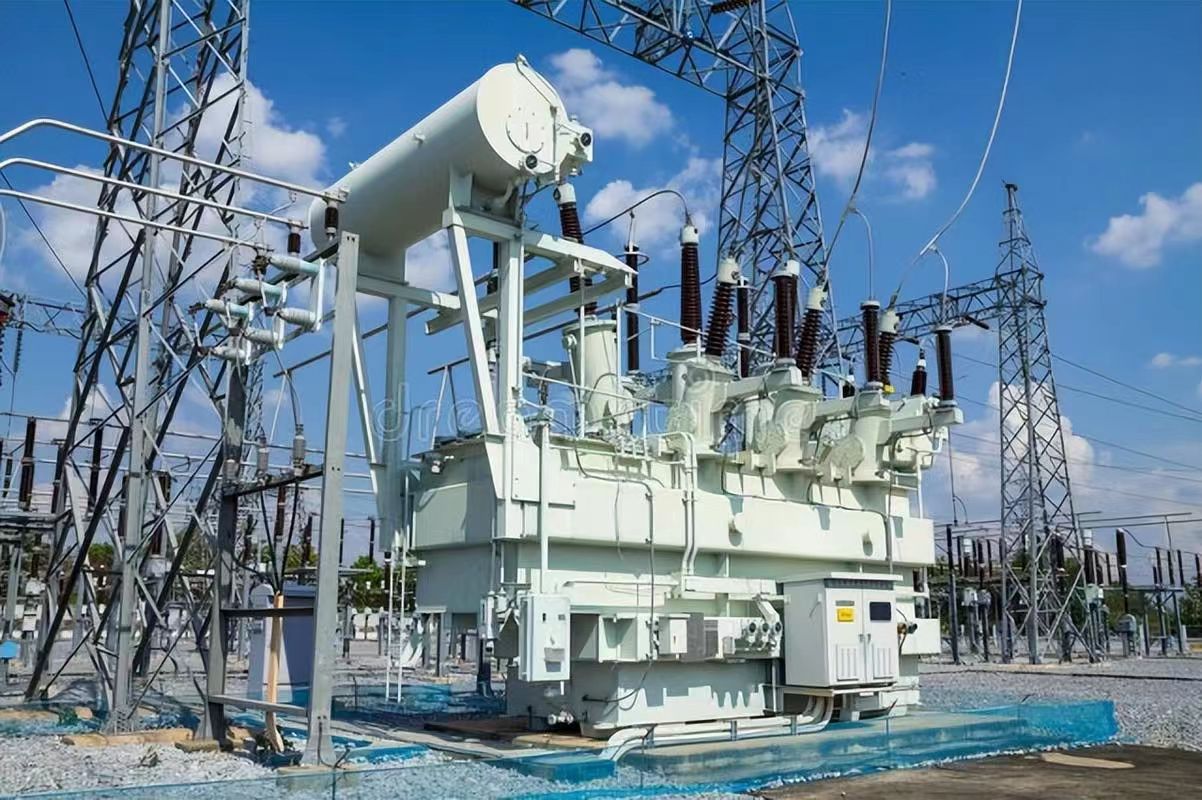
The transformer with the lowest purchase price always provides the lowest overall project cost.False
Energy losses, maintenance, downtime, reliability, installation, and end-of-life expenses can make a lower-priced transformer more expensive over its operating life.
1. Start With the Purchase Price
The initial transformer price is important, but it is only the first part of the calculation.
Buyers should include:
- Transformer price
- Transportation
- Installation
- Foundation and accessories
- Protection equipment
- Cooling equipment
- Commissioning
- Testing and inspection
A transformer with a slightly higher purchase price may be more economical if it offers lower losses and better reliability.
2. Calculate Energy Losses
Transformer losses continue throughout operation.
The two main categories are:
| Loss | Behavior | Lifecycle Importance |
|---|---|---|
| No-load loss | Occurs while energized | Important for continuously energized transformers |
| Load loss | Increases with loading | Important for heavily loaded transformers |
A transformer that operates 24/7 can accumulate substantial no-load energy losses even when the load is low.
Therefore, buyers should request guaranteed loss values rather than comparing only efficiency percentages.
3. Match Efficiency to the Real Load Profile
Do not evaluate efficiency only at full load.
Review:
- Minimum load
- Normal load
- Peak load
- Daily operating hours
- Seasonal variation
- Expected annual loading
For example, a transformer operating mostly at 40–60% load may benefit greatly from low no-load losses, while a transformer operating close to rated capacity may place greater importance on load-loss performance.
4. Include Maintenance Costs
Maintenance expenses can include:
- Oil testing
- Oil treatment
- Cooling-system maintenance
- Bushing inspection
- Tap-changer service
- Temperature monitoring
- Leak inspection
- Replacement of accessories
A simpler and more reliable transformer design may have a higher initial cost but lower maintenance expenses over its lifetime.
5. Consider Reliability and Downtime
A transformer failure can cost far more than the transformer itself.
Possible consequences include:
- Production interruption
- Lost revenue
- Emergency repairs
- Replacement equipment
- Grid disruption
- Safety incidents
For critical installations, buyers should consider supplier reliability, factory testing, protection systems, monitoring, warranty support, and spare-parts availability.
6. Evaluate Service Life
Transformer service life depends strongly on:
- Insulation quality
- Operating temperature
- Loading
- Cooling
- Moisture
- Maintenance
- Manufacturing quality
A transformer that maintains lower operating temperatures and protects its insulation system can potentially provide better long-term value.
7. Consider End-of-Life Costs
Lifecycle evaluation should also consider the final stage of the equipment.
Potential costs include:
- Decommissioning
- Oil handling
- Transportation
- Recycling
- Disposal
- Replacement installation
For oil-immersed transformers, environmental and oil-handling requirements should be included in the project calculation.
A Practical Lifecycle Cost Model
A simple comparison can be structured as:
Total Lifecycle Cost
=
Purchase
+ Installation
+ Energy Losses
+ Maintenance
+ Downtime Risk
+ Major Repairs
+ End-of-Life Cost
The exact calculation should use the project's expected operating hours, electricity price, load profile, maintenance plan, and service-life assumptions.
What Should Buyers Compare?
| Cost Factor | Key Question |
|---|---|
| Purchase | What is the initial equipment cost? |
| Installation | What site work and accessories are required? |
| Energy | What are guaranteed no-load and load losses? |
| Maintenance | How often are service activities required? |
| Reliability | What is the expected failure and downtime risk? |
| Service life | How well is insulation protected? |
| Warranty | What risks remain with the supplier? |
| Spare parts | Are critical components readily available? |
| End of life | What are removal and disposal costs? |
Conclusion
Choosing the right power transformer requires a complete evaluation of electrical, environmental, technical, commercial, and operational requirements. Buyers should first establish voltage, capacity, load profile, frequency, and system configuration, then evaluate cooling, insulation, efficiency, impedance, safety, applicable standards, testing, and supplier capabilities. Lifecycle costs should also be considered because energy losses, maintenance, downtime, and service life can have a significant impact on the true cost of ownership. A carefully specified and properly matched transformer provides greater reliability, efficiency, and long-term value.
FAQ
Q1: What factors should be considered when choosing a power transformer?
A1: Choosing the right power transformer requires evaluating the project's electrical, environmental, mechanical, operational, and economic requirements together. The first step is to define the transformer's primary and secondary voltage, rated power, frequency, phase configuration, and expected load.
Capacity is particularly important. The transformer should handle the project's normal operating load while providing appropriate allowance for peak demand and planned future expansion. Selecting a transformer that is too small can lead to excessive loading and thermal stress, while excessive oversizing can increase capital costs and may affect operating efficiency.
The load profile should also be studied. A transformer supplying a stable industrial load has different requirements from one serving fluctuating commercial demand or renewable-energy generation. Buyers should consider continuous load, peak load, load cycles, harmonics, motor starting, and possible future changes.
Cooling and insulation are another major consideration. Oil-immersed transformers may be suitable for high-capacity outdoor installations, while dry-type transformers can be attractive for certain indoor applications. The appropriate choice depends on the transformer's rating, installation environment, safety requirements, and maintenance strategy.
Voltage regulation, impedance, insulation level, tap configuration, and short-circuit withstand capability should also match the electrical system. These parameters influence system performance and must be compatible with upstream and downstream equipment.
Environmental conditions can significantly affect transformer selection. Ambient temperature, altitude, humidity, dust, pollution, corrosive atmospheres, seismic conditions, and indoor or outdoor installation should all be considered during specification.
Efficiency and lifecycle cost should be evaluated rather than focusing only on purchase price. No-load losses, load losses, maintenance, cooling requirements, spare parts, downtime risk, and expected service life can all influence the total cost of ownership.
Finally, supplier capability should be assessed. Buyers should review manufacturing experience, quality systems, factory testing facilities, technical documentation, warranty terms, production capacity, delivery performance, and after-sales support.
The right power transformer is therefore not simply the cheapest or highest-rated model. It is the transformer whose electrical characteristics, construction, reliability, safety, and lifecycle economics best match the project's actual requirements.
Q2: How do you calculate the required power transformer capacity?
A2: Transformer capacity is normally selected by evaluating the connected load, maximum demand, operating conditions, future expansion, and appropriate design margin. The basic rating is commonly expressed in volt-amperes, such as kVA or MVA.
The first step is to determine the electrical loads that the transformer will supply. This includes equipment ratings, expected operating schedules, and the relationship between connected load and actual demand. Not every connected device necessarily operates at full capacity at the same time, so the maximum expected demand is often more useful than simply adding every nameplate rating.
For industrial projects, buyers may need to consider motors, variable-speed drives, furnaces, pumps, compressors, and other equipment with distinctive load characteristics. Starting currents, harmonics, cyclic loads, and sudden changes in demand can influence transformer sizing.
Power factor also affects the relationship between real power and apparent power. Because transformer ratings are generally expressed in VA, the expected apparent-power requirement should be established rather than relying only on the project's kW figure.
Future expansion should be considered carefully. A transformer may need additional capacity to accommodate planned production increases, additional buildings, renewable-energy equipment, or new electrical loads. However, excessive allowance can result in unnecessary capital expenditure and less favorable operation at light load.
Environmental conditions can also affect usable capacity. High ambient temperature or high-altitude installation may require a transformer with an appropriate rating or modified cooling arrangement. The manufacturer's guaranteed temperature-rise and loading information should be reviewed.
A transformer should also be checked against the required voltage, impedance, short-circuit conditions, cooling system, and insulation requirements. Capacity alone does not determine whether a transformer is suitable.
For critical projects, engineers may perform load-flow, short-circuit, harmonic, and thermal studies before finalizing the transformer specification. These studies can identify conditions that are not apparent from a simple load calculation.
Buyers should avoid applying an arbitrary oversized percentage without understanding the actual project load. A better approach is to establish present demand, expected growth, operating conditions, and required reliability margin and then select a standard transformer rating that satisfies those requirements.
The final transformer capacity should be confirmed by the project engineer and manufacturer against the applicable technical standards and actual operating conditions.
Q3: Should you choose an oil-immersed or dry-type power transformer?
A3: The choice between an oil-immersed and dry-type power transformer depends primarily on the installation environment, capacity, safety requirements, cooling needs, maintenance strategy, and lifecycle economics.
Oil-immersed transformers use insulating liquid around the core and windings. The liquid provides electrical insulation and helps transfer heat toward radiators or other cooling equipment. This makes oil-immersed construction widely suitable for substations, utility networks, industrial facilities, and many high-capacity outdoor applications.
Dry-type transformers use solid insulation and air-based cooling without liquid immersion. They can be attractive for indoor installations, commercial buildings, hospitals, data centers, and other locations where liquid containment, leakage management, or particular fire-safety considerations are important.
The decision should not be based solely on whether one technology is generally “better.” Both can provide reliable and efficient service when properly designed and installed.
Installation conditions are especially important. Outdoor substations may favor oil-immersed technology because of its thermal performance and suitability for high-capacity equipment. Indoor facilities may favor dry-type designs because they eliminate the need to manage insulating oil.
Capacity and thermal requirements should also be considered. Higher-power applications may benefit from the heat-transfer characteristics of liquid insulation, although dry-type technology is available for a broad range of applications.
Maintenance requirements differ as well. Oil-immersed transformers may require monitoring and testing of the insulating liquid, while dry-type transformers avoid oil maintenance but still require inspection of windings, insulation, ventilation, and electrical connections.
Safety and environmental requirements should be evaluated according to the project's location and applicable regulations. Oil-immersed equipment may require suitable containment and fire-protection measures. Dry-type equipment can reduce liquid-related risks but still requires appropriate electrical and thermal protection.
The final decision should also consider energy losses, initial cost, expected service life, installation costs, space requirements, maintenance, and replacement strategy.
A well-prepared transformer specification should therefore identify the project requirements first and allow the manufacturer or engineering team to determine which technology provides the best overall solution.
Q4: How important are transformer efficiency, impedance, and voltage regulation?
A4: Transformer efficiency, impedance, and voltage regulation are important selection parameters because they directly affect energy consumption, system performance, fault behavior, and the quality of voltage supplied to connected equipment.
Efficiency indicates how effectively the transformer transfers electrical power. Transformer losses generally include no-load losses and load-related losses. No-load losses occur whenever the transformer is energized, while load losses increase as current rises.
For transformers that remain energized continuously, no-load losses can have a significant effect on lifecycle energy costs. For heavily loaded transformers, load losses may become more important. Buyers should therefore compare guaranteed loss values using the project's expected load profile.
Impedance is important for both normal operation and fault performance. Transformer impedance influences voltage drop under load and affects the magnitude of fault current that can flow through the transformer. Choosing an impedance value that does not match the electrical system can create coordination and performance problems.
Voltage regulation describes how the transformer's output voltage changes as its load changes. Good voltage regulation helps maintain a more stable secondary voltage between lightly loaded and heavily loaded conditions.
Tap changers may be used when the system requires voltage adjustment. Depending on the application, a transformer may use off-circuit taps or an on-load tap-changing system. The correct arrangement depends on how frequently voltage adjustment is required and how the transformer operates within the network.
These three characteristics should not be considered independently. For example, a transformer with excellent efficiency may still be unsuitable if its impedance does not coordinate with the system's short-circuit requirements. Similarly, an appropriate voltage ratio may not be sufficient if voltage regulation is inadequate for the connected load.
Buyers should also evaluate the transformer's rated voltage, frequency, temperature rise, insulation level, cooling method, short-circuit withstand capability, and harmonic environment.
The best approach is to establish the required electrical performance in the project specification before requesting quotations. Manufacturers can then provide comparable guaranteed values for efficiency-related losses, impedance, voltage regulation, and other critical parameters.
A technically suitable transformer should meet the electrical system's performance requirements while maintaining acceptable lifecycle energy costs and reliable operation.
References
IEC 60076-1 — Power Transformers: General
https://webstore.iec.ch/en/publication/588
IEC 60076-2 — Power Transformers: Temperature Rise
https://webstore.iec.ch/en/publication/604
IEC 60076-3 — Power Transformers: Insulation Levels and Dielectric Tests
https://webstore.iec.ch/en/publication/605
IEC 60076-5 — Power Transformers: Ability to Withstand Short Circuit
https://webstore.iec.ch/en/publication/607
IEC 60076-7 — Loading Guide for Mineral-Oil-Immersed Power Transformers
https://webstore.iec.ch/en/publication/608
IEEE C57.12.00 — General Requirements for Liquid-Immersed Transformers
https://standards.ieee.org/ieee/C57.12.00/6962/
IEEE C57.12.01 — General Requirements for Dry-Type Transformers
https://standards.ieee.org/ieee/C57.12.01/6775/
IEEE C57.12.80 — Terminology for Power and Distribution Transformers
https://standards.ieee.org/ieee/C57.12.80/7006/
IEEE Technology Navigator — Power Transformers
https://technav.ieee.org/topic/power-transformers/
U.S. Department of Energy — Electricity Delivery and Grid Systems
https://www.energy.gov/oe