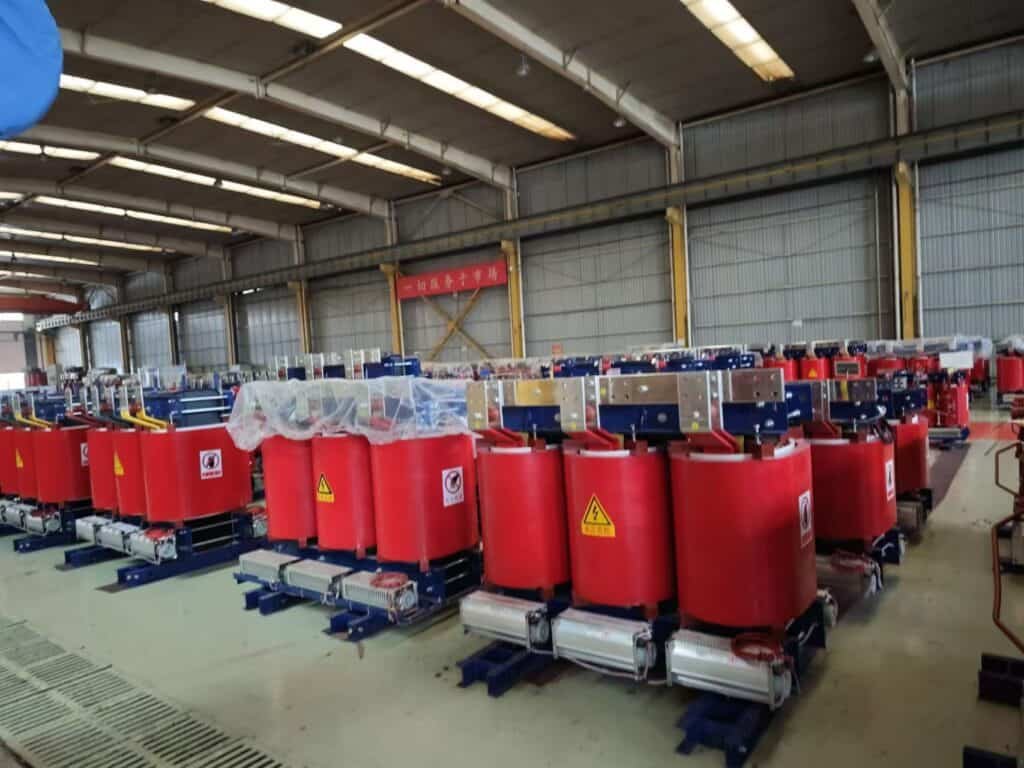
In a dry-type transformer, the core is a fundamental component that enables the transfer of electrical energy between windings. Although it does not carry electrical current directly, it plays a critical role in guiding magnetic flux and ensuring efficient operation. The design and material of the core significantly influence transformer performance, efficiency, and thermal behavior.
What Is the Core in a Dry-Type Transformer?
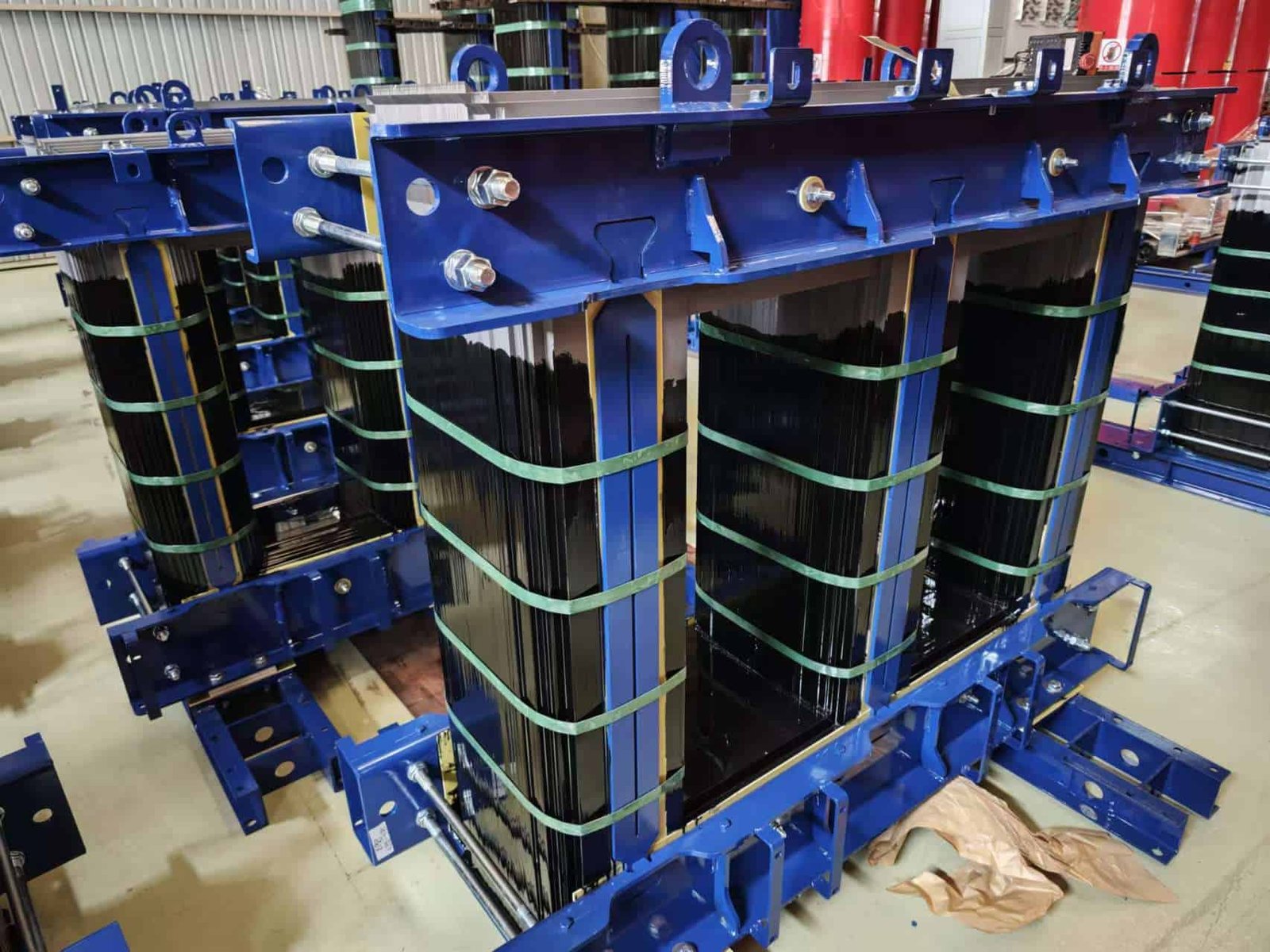
In any transformer, the core is one of the most critical components, yet it is often overlooked by users who focus mainly on windings or insulation systems. In dry-type transformers, improper understanding of the core’s function can lead to poor selection, inefficient operation, and increased energy losses. Since the core directly influences magnetic performance, efficiency, and noise levels, its design and material quality play a decisive role in overall transformer performance.
The core in a dry-type transformer is a laminated magnetic structure, typically made of high-grade silicon steel, that provides a low-reluctance path for magnetic flux, enabling efficient energy transfer between primary and secondary windings while minimizing energy losses. It is fundamental to the transformer’s operation and efficiency.
To fully understand its importance, we need to explore its structure, materials, functions, and impact on performance.
The core in a dry-type transformer only serves as a mechanical support and does not affect electrical performance.False
The core is essential for magnetic flux conduction and directly impacts efficiency, losses, and overall transformer performance.
1. Basic Function of the Transformer Core
The core serves as the magnetic circuit of the transformer.
Key Roles
• provides a path for magnetic flux
• links primary and secondary windings
• enables electromagnetic induction
Without the core, the magnetic coupling between windings would be inefficient, leading to high losses.
Functional Principle
When alternating current flows through the primary winding, it creates a magnetic field. The core channels this magnetic field efficiently to the secondary winding, inducing voltage.
2. Core Structure and Configuration
Transformer cores are typically constructed using laminated sheets.
Common Core Types
• core-type (most common in dry-type transformers)
• shell-type (less common)
Structural Features
• laminated steel sheets
• insulated layers between laminations
• stacked or wound configurations
Purpose of Lamination
| Feature | Benefit |
|---|---|
| Thin laminations | Reduced eddy current losses |
| Insulated layers | Improved efficiency |
Lamination is essential for minimizing energy loss.
3. Core Materials
The performance of the core depends heavily on the materials used.
Common Materials
• grain-oriented silicon steel (GO steel)
• amorphous metal (advanced applications)
Material Comparison
| Material | Advantages | Limitations |
|---|---|---|
| Silicon Steel | High efficiency, cost-effective | Moderate losses |
| Amorphous Metal | Very low core loss | Higher cost |
High-quality materials significantly reduce no-load losses.
4. Magnetic Flux and Efficiency
The core’s main function is to carry magnetic flux efficiently.
Key Factors
• magnetic permeability
• core cross-sectional area
• flux density
Impact on Performance
• higher permeability → better efficiency
• optimized flux density → reduced losses
Proper core design ensures minimal energy loss during operation.
5. Core Losses in Dry-Type Transformers
Core losses occur even when the transformer is not loaded.
Types of Core Losses
• hysteresis loss
• eddy current loss
Loss Characteristics Table
| Loss Type | Cause | Mitigation |
|---|---|---|
| Hysteresis | Magnetic reversal | High-quality materials |
| Eddy Current | Circulating currents | Laminations |
Reducing core losses improves overall efficiency.
6. Mechanical Design and Assembly
The mechanical construction of the core affects both performance and durability.
Key Features
• clamping structures
• rigid assembly
• vibration control
Importance
• reduces noise
• prevents mechanical deformation
• ensures long-term stability
Proper assembly enhances reliability.
7. Noise and Vibration Considerations
The core is a primary source of transformer noise.
Causes
• magnetostriction (expansion and contraction of steel)
• mechanical vibrations
Noise Control Methods
• high-quality core materials
• tight clamping
• optimized design
Reducing core noise is important for indoor installations.
8. Thermal Performance of the Core
Although dry-type transformers rely on air cooling, the core still generates heat.
Heat Sources
• core losses
• magnetic flux variations
Cooling Considerations
• proper ventilation
• airflow design
Effective heat dissipation prevents overheating.
9. Core Insulation
Even though the core is magnetic, insulation is still necessary.
Insulation Functions
• isolate laminations
• reduce eddy currents
• prevent short circuits
Proper insulation enhances efficiency and safety.
10. Advances in Core Technology
Modern transformer cores benefit from advanced technologies.
Innovations
• laser-scribed steel for reduced losses
• step-lap core construction
• amorphous core technology
Performance Improvements
| Technology | Benefit |
|---|---|
| Step-lap design | Reduced losses and noise |
| Amorphous core | Ultra-low energy loss |
These innovations improve efficiency and sustainability.
11. Role in Overall Transformer Performance
The core directly impacts several key performance parameters.
Key Influences
• efficiency
• no-load losses
• noise levels
• thermal behavior
A well-designed core ensures optimal transformer operation.
How Does the Core Enable Magnetic Flux Transfer?
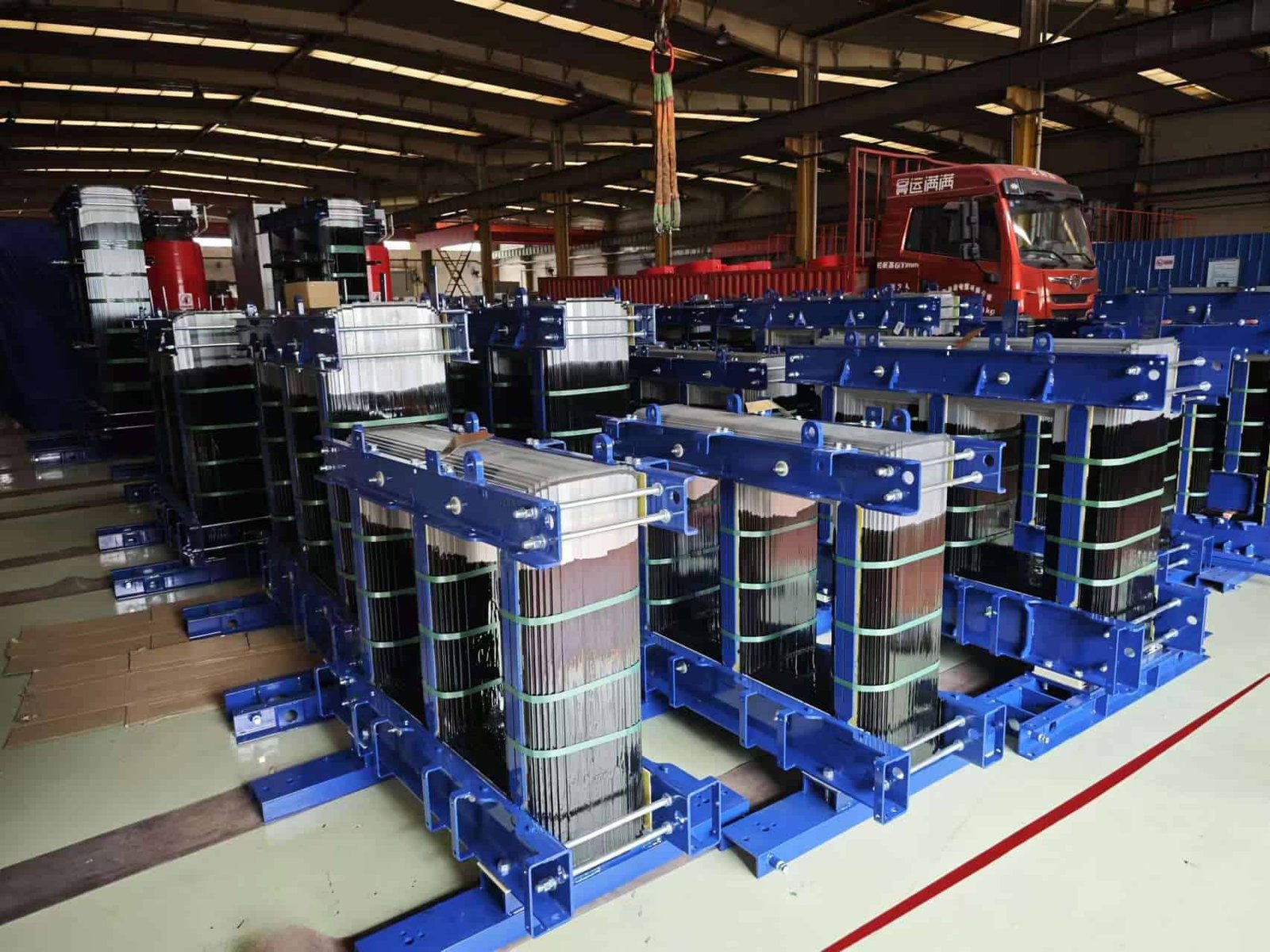
In transformer operation, efficient energy transfer depends entirely on how well magnetic flux is generated, guided, and coupled between windings. Without a proper medium to channel this flux, much of the magnetic field would dissipate into the surrounding air, leading to significant energy losses and poor performance. Many users underestimate the critical role of the core in controlling and directing magnetic flux, which is essential for achieving high efficiency and stable operation.
The transformer core enables magnetic flux transfer by providing a low-reluctance magnetic path that concentrates and guides the alternating magnetic field generated in the primary winding directly to the secondary winding, ensuring efficient electromagnetic induction with minimal energy loss. This controlled flux linkage is the foundation of transformer functionality.
To fully understand this process, we must explore the physics, materials, and structural design that allow the core to efficiently transfer magnetic flux.
Magnetic flux in a transformer can transfer efficiently without a core.False
Without a core, magnetic flux would disperse in air, resulting in very weak coupling and extremely poor efficiency.
1. Generation of Magnetic Flux in the Primary Winding
The process begins when an alternating current flows through the primary winding.
Key Principle
• alternating current creates a time-varying magnetic field
Process Description
As AC current changes direction, it produces a continuously varying magnetic field around the conductor. This magnetic field is the source of magnetic flux.
Without a Core
• flux spreads randomly in air
• weak coupling between windings
• high energy loss
The core is necessary to control and concentrate this flux.
2. Role of the Core as a Magnetic Path
The core provides a closed-loop path for magnetic flux.
Key Characteristics
• high magnetic permeability
• low magnetic reluctance
• continuous magnetic circuit
Comparison Table
| Medium | Magnetic Reluctance | Flux Efficiency |
|---|---|---|
| Air | High | Low |
| Silicon Steel Core | Low | High |
The core dramatically improves flux transfer efficiency by reducing resistance to magnetic flow.
3. Magnetic Flux Linkage Between Windings
The core ensures that the magnetic flux generated in the primary winding links effectively with the secondary winding.
Flux Linkage Concept
• primary winding produces magnetic flux
• core guides flux through secondary winding
• changing flux induces voltage in secondary
Faraday’s Law
The induced voltage in the secondary winding is proportional to the rate of change of magnetic flux.
Importance
Strong flux linkage ensures efficient energy transfer.
4. Closed Magnetic Circuit and Flux Continuity
Transformer cores are designed as closed magnetic circuits.
Structure
• core limbs (vertical sections)
• yokes (horizontal sections)
Function
• provides a continuous path for flux
• prevents flux leakage
• maintains uniform magnetic distribution
Flux Path Table
| Core Component | Function |
|---|---|
| Limb | Carries flux through windings |
| Yoke | Completes magnetic loop |
A closed path minimizes losses and improves efficiency.
5. High Magnetic Permeability of Core Materials
Core materials such as silicon steel have high magnetic permeability.
Benefits
• allows flux to pass easily
• reduces required magnetizing current
• improves efficiency
Material Comparison
| Material | Permeability | Performance |
|---|---|---|
| Air | Very low | Poor |
| Silicon Steel | High | Excellent |
High permeability is essential for efficient flux transfer.
6. Reduction of Flux Leakage
Flux leakage occurs when magnetic flux does not link both windings.
Causes
• poor core design
• gaps in magnetic path
• low-quality materials
Core Contribution
• confines flux within the magnetic circuit
• reduces leakage paths
Impact Table
| Condition | Result |
|---|---|
| Low leakage | High efficiency |
| High leakage | Energy loss |
The core minimizes leakage and maximizes usable flux.
7. Laminated Core Design and Eddy Current Control
Transformer cores are made of laminated sheets to reduce losses.
Why Lamination Matters
• prevents large circulating currents (eddy currents)
• reduces heat generation
• improves efficiency
Loss Reduction Table
| Design Feature | Effect |
|---|---|
| Solid core | High eddy current loss |
| Laminated core | Reduced loss |
Lamination ensures efficient flux transfer without excessive heating.
8. Magnetic Flux Density and Core Optimization
Flux density is a critical parameter in core design.
Key Factors
• core cross-sectional area
• material properties
• operating voltage and frequency
Effects
• optimal flux density → efficient operation
• excessive flux density → saturation and losses
Flux Density Table
| Condition | Impact |
|---|---|
| Optimal | Stable performance |
| Saturation | Distortion and overheating |
Proper design ensures the core operates within safe limits.
9. Prevention of Core Saturation
Core saturation occurs when the material cannot carry additional flux.
Causes
• excessive voltage
• incorrect design
• overexcitation
Effects
• increased magnetizing current
• overheating
• waveform distortion
Prevention
• proper material selection
• correct core sizing
• voltage control
Avoiding saturation is essential for stable operation.
10. Thermal Considerations in Flux Transfer
Magnetic flux transfer generates heat due to core losses.
Heat Sources
• hysteresis loss
• eddy current loss
Cooling Requirements
• proper ventilation
• efficient heat dissipation
Thermal management ensures reliable flux transfer over time.
11. Impact on Overall Transformer Efficiency
The efficiency of magnetic flux transfer directly affects transformer performance.
Key Outcomes
• reduced energy loss
• improved voltage regulation
• stable operation
Efficiency Comparison Table
| Core Quality | Efficiency |
|---|---|
| Low-quality core | Lower efficiency |
| High-quality core | High efficiency |
A well-designed core ensures optimal energy transfer.
Why Is the Core Essential for Electromagnetic Induction?

Electromagnetic induction is the fundamental principle behind transformer operation, yet without an effective medium to guide magnetic flux, this process becomes highly inefficient. Many assume that simply placing two coils near each other is sufficient for energy transfer, but in reality, without a proper magnetic path, most of the generated flux dissipates into the surrounding air. This leads to weak coupling, low efficiency, and unstable performance—making practical transformer operation impossible.
The core is essential for electromagnetic induction because it provides a high-permeability, low-reluctance path that concentrates and directs magnetic flux between the primary and secondary windings, ensuring strong magnetic coupling and efficient energy transfer. Without the core, induction would occur, but at extremely low efficiency and with significant energy loss.
To fully understand its importance, we must examine the physical principles, material properties, and engineering design that make the core indispensable.
Electromagnetic induction in transformers works equally well without a core.False
While induction can occur in air, the absence of a core leads to very weak flux linkage and extremely poor efficiency, making it impractical for power applications.
1. Fundamental Principle of Electromagnetic Induction
Electromagnetic induction is governed by Faraday’s Law.
Key Concept
• a changing magnetic field induces voltage in a conductor
Process in a Transformer
- alternating current flows in the primary winding
- a time-varying magnetic field is generated
- this magnetic field induces voltage in the secondary winding
Limitation Without a Core
• weak magnetic field coupling
• significant flux dispersion
• low induced voltage
The core is necessary to make this process efficient and practical.
2. Role of the Core in Magnetic Flux Concentration
The core concentrates magnetic flux within a defined path.
Key Properties
• high magnetic permeability
• low reluctance
• ability to channel flux efficiently
Comparison Table
| Medium | Flux Behavior | Efficiency |
|---|---|---|
| Air | Dispersed | Low |
| Core Material | Concentrated | High |
By concentrating flux, the core ensures that most of it links both windings.
3. Enhancement of Magnetic Coupling
Magnetic coupling refers to how effectively flux links the primary and secondary windings.
Core Contribution
• increases mutual flux linkage
• reduces leakage flux
• improves energy transfer
Coupling Efficiency Table
| Condition | Coupling Efficiency |
|---|---|
| Without core | Very low |
| With core | Very high |
Strong coupling is essential for effective induction.
4. Reduction of Magnetizing Current
Magnetizing current is the current required to establish magnetic flux.
Without Core
• high magnetizing current required
• increased energy consumption
With Core
• significantly reduced magnetizing current
• improved efficiency
Impact Table
| Condition | Magnetizing Current |
|---|---|
| Air core | High |
| Iron core | Low |
Lower magnetizing current improves overall performance.
5. Closed Magnetic Circuit Formation
The core forms a closed-loop magnetic circuit.
Structure
• limbs (carry flux through windings)
• yokes (complete the loop)
Benefits
• continuous flux path
• minimal leakage
• uniform magnetic distribution
A closed magnetic circuit ensures stable induction.
6. Minimization of Flux Leakage
Flux leakage reduces the amount of usable magnetic flux.
Causes
• absence of a guiding medium
• gaps in magnetic path
Core Function
• confines flux within the magnetic circuit
• reduces stray magnetic fields
Leakage Impact Table
| Leakage Level | Effect |
|---|---|
| High | Low efficiency |
| Low | High efficiency |
Minimizing leakage is critical for performance.
7. Material Properties and Magnetic Performance
Core materials are specifically chosen for their magnetic properties.
Common Materials
• grain-oriented silicon steel
• amorphous alloys
Key Properties
• high permeability
• low hysteresis loss
• low eddy current loss
Material Performance Table
| Material | Advantage |
|---|---|
| Silicon steel | Cost-effective, efficient |
| Amorphous metal | Ultra-low losses |
Material selection directly affects induction efficiency.
8. Control of Core Losses
Although the core improves induction, it also introduces losses.
Types of Core Losses
• hysteresis loss
• eddy current loss
Mitigation Techniques
• laminated core structure
• high-quality materials
• optimized design
Loss Comparison Table
| Design | Loss Level |
|---|---|
| Solid core | High |
| Laminated core | Low |
Proper design minimizes losses while maintaining efficiency.
9. Prevention of Core Saturation
Core saturation occurs when the material cannot carry additional magnetic flux.
Effects
• increased current
• distortion of waveform
• overheating
Prevention
• proper core sizing
• correct voltage operation
• high-quality materials
Avoiding saturation ensures stable induction.
10. Thermal and Mechanical Stability
The core must maintain performance under thermal and mechanical stress.
Considerations
• heat generated by core losses
• vibration due to magnetic forces
Solutions
• proper cooling design
• rigid core assembly
Stable operation ensures long-term reliability.
11. Overall Impact on Transformer Performance
The presence of a core significantly improves transformer performance.
Key Benefits
• high efficiency
• stable voltage transformation
• reduced energy loss
• reliable operation
Performance Comparison Table
| Parameter | Without Core | With Core |
|---|---|---|
| Efficiency | Very low | High |
| Flux linkage | Weak | Strong |
| Energy loss | High | Low |
The core is indispensable for practical transformer operation.
How Does Core Design Affect Efficiency and Losses?
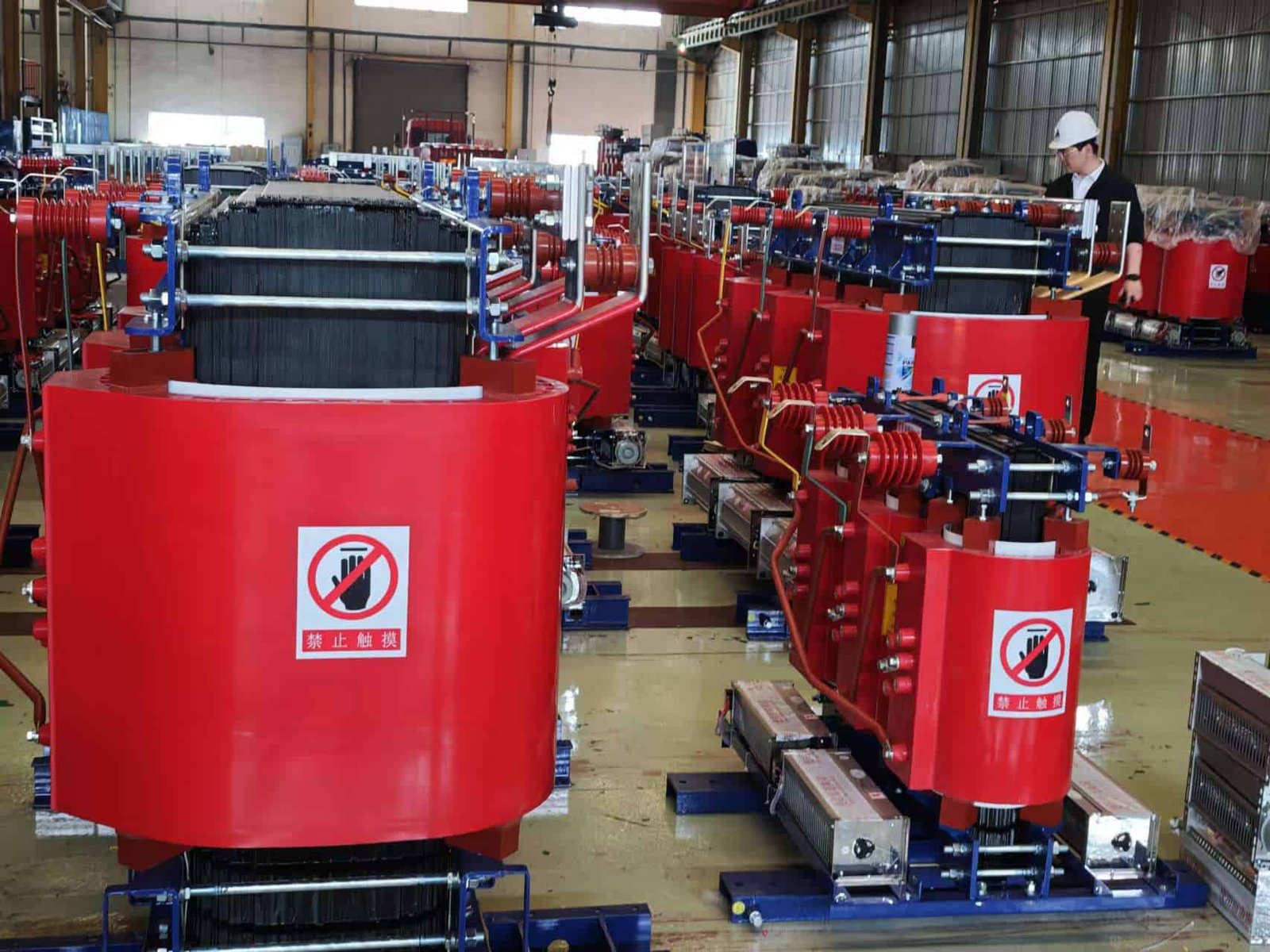
In transformer engineering, efficiency is not determined solely by windings or cooling systems—the core design plays a decisive role. Poorly designed cores can lead to excessive no-load losses, overheating, noise, and reduced lifespan. Many users overlook how factors such as material selection, lamination structure, and magnetic flux density directly influence energy efficiency. As energy costs rise and sustainability becomes critical, optimizing core design is essential for minimizing losses and improving overall transformer performance.
Core design affects transformer efficiency and losses by influencing magnetic flux behavior, hysteresis and eddy current losses, flux leakage, and magnetizing current. High-quality materials, optimized lamination, proper flux density, and advanced construction techniques significantly reduce energy losses and improve operational efficiency.
To fully understand this relationship, we must explore the technical aspects of core design and how each parameter contributes to efficiency and loss reduction.
Core design has little impact on transformer efficiency compared to other components.False
Core design directly determines no-load losses and significantly affects overall transformer efficiency and performance.
1. Core Losses: The Foundation of Efficiency
Core losses, also known as no-load losses, occur whenever the transformer is energized, regardless of load.
Types of Core Losses
• hysteresis loss
• eddy current loss
Loss Characteristics Table
| Loss Type | Cause | Dependency |
|---|---|---|
| Hysteresis | Magnetic domain reversal | Material properties |
| Eddy Current | Circulating currents in core | Lamination thickness |
These losses are continuous and directly impact energy efficiency.
2. Material Selection and Magnetic Properties
The choice of core material is one of the most important factors affecting efficiency.
Common Materials
• grain-oriented silicon steel
• amorphous metal alloys
Material Comparison
| Material | Core Loss | Cost | Application |
|---|---|---|---|
| Silicon Steel | Moderate | Lower | Standard transformers |
| Amorphous Metal | Very low | Higher | High-efficiency transformers |
Key Properties
• high magnetic permeability
• low coercivity
• low hysteresis loss
Better materials reduce energy loss and improve performance.
3. Lamination Design and Eddy Current Reduction
Transformer cores are built from thin laminated sheets to reduce eddy current losses.
Why Lamination Works
• limits current flow paths
• increases electrical resistance between layers
• reduces heat generation
Lamination Impact Table
| Design | Eddy Current Loss |
|---|---|
| Solid core | High |
| Laminated core | Low |
Optimization Factors
• thinner laminations → lower losses
• high-quality insulation between layers
Proper lamination is critical for efficiency.
4. Magnetic Flux Density Optimization
Flux density must be carefully controlled in core design.
Key Concepts
• higher flux density → smaller core size
• excessive flux density → saturation and losses
Flux Density Effects
| Condition | Result |
|---|---|
| Optimal flux | High efficiency |
| Overfluxing | Increased losses and heating |
Designers must balance efficiency and material usage.
5. Core Geometry and Magnetic Path Design
The physical shape of the core affects magnetic flux distribution.
Common Designs
• core-type
• shell-type
• step-lap construction
Geometry Impact
• shorter magnetic path → lower losses
• uniform flux distribution → improved efficiency
Geometry Comparison Table
| Design Feature | Effect |
|---|---|
| Step-lap joints | Reduced losses and noise |
| Poor alignment | Increased losses |
Optimized geometry ensures efficient flux transfer.
6. Reduction of Flux Leakage
Flux leakage reduces the amount of useful magnetic flux.
Causes
• gaps in core joints
• poor design alignment
Core Design Solutions
• tight core assembly
• optimized winding placement
• improved joint design
Leakage Impact Table
| Leakage Level | Efficiency |
|---|---|
| Low | High |
| High | Reduced |
Minimizing leakage improves performance.
7. Magnetizing Current and Efficiency
Magnetizing current is required to establish magnetic flux in the core.
Core Influence
• high-permeability materials reduce magnetizing current
• better design improves energy efficiency
Comparison Table
| Core Quality | Magnetizing Current |
|---|---|
| Low-quality | High |
| High-quality | Low |
Lower magnetizing current reduces overall energy consumption.
8. Core Assembly and Mechanical Precision
Mechanical construction affects both losses and reliability.
Key Factors
• tight clamping
• precise alignment
• minimal air gaps
Effects
• reduced vibration and noise
• improved magnetic performance
• lower losses
Poor assembly can negate material advantages.
9. Thermal Impact of Core Losses
Core losses generate heat, affecting transformer operation.
Heat Sources
• hysteresis loss
• eddy current loss
Thermal Effects
• increased temperature rise
• accelerated insulation aging
Cooling Relationship
| Loss Level | Cooling Requirement |
|---|---|
| Low | Moderate |
| High | Intensive |
Reducing losses improves thermal performance.
10. Advanced Core Technologies
Modern transformer designs use advanced technologies to improve efficiency.
Innovations
• amorphous core materials
• laser-scribed silicon steel
• step-lap core construction
Performance Improvements Table
| Technology | Benefit |
|---|---|
| Amorphous core | Up to 70% loss reduction |
| Step-lap design | Lower noise and losses |
These technologies significantly enhance efficiency.
11. Trade-Off Between Cost and Efficiency
Higher efficiency often comes with increased initial cost.
Considerations
• material cost vs energy savings
• lifecycle cost vs upfront investment
Cost-Efficiency Table
| Design | Initial Cost | Operating Cost |
|---|---|---|
| Standard core | Lower | Higher losses |
| Advanced core | Higher | Lower losses |
Long-term savings often justify higher initial investment.
12. Impact on Overall Transformer Performance
Core design influences multiple performance aspects.
Key Outcomes
• energy efficiency
• operational cost
• temperature rise
• noise levels
A well-designed core ensures optimal transformer operation.
Conclusion
The main purpose of the core in a dry-type transformer is to provide a low-resistance path for magnetic flux, enabling efficient energy transfer between windings through electromagnetic induction. By concentrating and guiding the magnetic field, the core minimizes energy losses and improves overall transformer efficiency. A well-designed core is therefore essential for achieving reliable performance, reduced losses, and long service life in dry-type transformers.
FAQ
Q1: What is the main purpose of the core in a dry-type transformer?
The main purpose of the core in a dry-type transformer is to provide a low-resistance path for magnetic flux, allowing efficient transfer of energy between the primary and secondary windings through electromagnetic induction.
The core ensures that the magnetic field generated by the primary winding is effectively linked to the secondary winding, enabling stable voltage transformation with minimal energy loss.
Q2: How does the core improve efficiency in dry-type transformers?
The core improves efficiency by concentrating magnetic flux within a controlled path rather than allowing it to disperse into the surrounding air. This reduces magnetic leakage and ensures that most of the energy contributes to useful power transfer.
Modern cores are made from high-quality materials such as grain-oriented silicon steel, which minimizes core losses (hysteresis and eddy current losses), further improving overall transformer efficiency.
Q3: How does the core enable electromagnetic induction?
When alternating current flows through the primary winding, it produces a changing magnetic field. The core guides this magnetic flux through a closed magnetic circuit that links both windings.
According to electromagnetic induction principles, this changing flux induces a voltage in the secondary winding. Without the core, the magnetic coupling between windings would be weak, making the transformer inefficient and impractical.
Q4: What materials are used for dry-type transformer cores?
Dry-type transformer cores are typically made from:
Silicon steel laminations (most common)
Amorphous metal cores (for ultra-low losses)
These materials offer high magnetic permeability and low energy losses. Laminations are insulated from each other to reduce eddy currents and heat generation.
Q5: Does the core have any role in noise generation?
Yes. The core contributes to transformer noise due to magnetostriction, a phenomenon where the core material slightly expands and contracts as the magnetic field changes.
In dry-type transformers, noise control is especially important because there is no oil to damp vibrations. Proper core design, tight assembly, and high-quality materials help reduce noise levels.
Q6: How is the core designed in dry-type transformers compared to oil-filled types?
The fundamental function of the core is the same in both dry-type and oil-filled transformers. However, dry-type transformers often require:
Enhanced mechanical rigidity
Improved cooling through air channels
Noise reduction design considerations
Since there is no oil for cooling or damping, the core design must accommodate air-based cooling and vibration control.
Q7: What happens if the transformer core is not properly designed?
A poorly designed core can lead to:
Increased energy losses
Excessive heating
Higher noise and vibration
Reduced efficiency
Potential core saturation under load conditions
Proper core design is essential for reliable and efficient transformer operation.
Q8: Can dry-type transformers operate without a core?
No, practical dry-type transformers require a magnetic core to operate efficiently at standard power frequencies. While air-core transformers exist, they are used only in specialized high-frequency applications and are not suitable for typical power distribution.
References
IEC 60076-11 – Dry-Type Transformers
https://webstore.iec.ch
IEC 60076 – Power Transformers
https://webstore.iec.ch/publication/602
IEEE C57 Series – Transformer Design Standards
https://standards.ieee.org
Electrical Engineering Portal – Transformer Core Function Explained
https://electrical-engineering-portal.com
CIGRE – Transformer Core Loss and Design Studies
https://www.cigre.org
NEMA – Transformer Design Fundamentals
https://www.nema.org