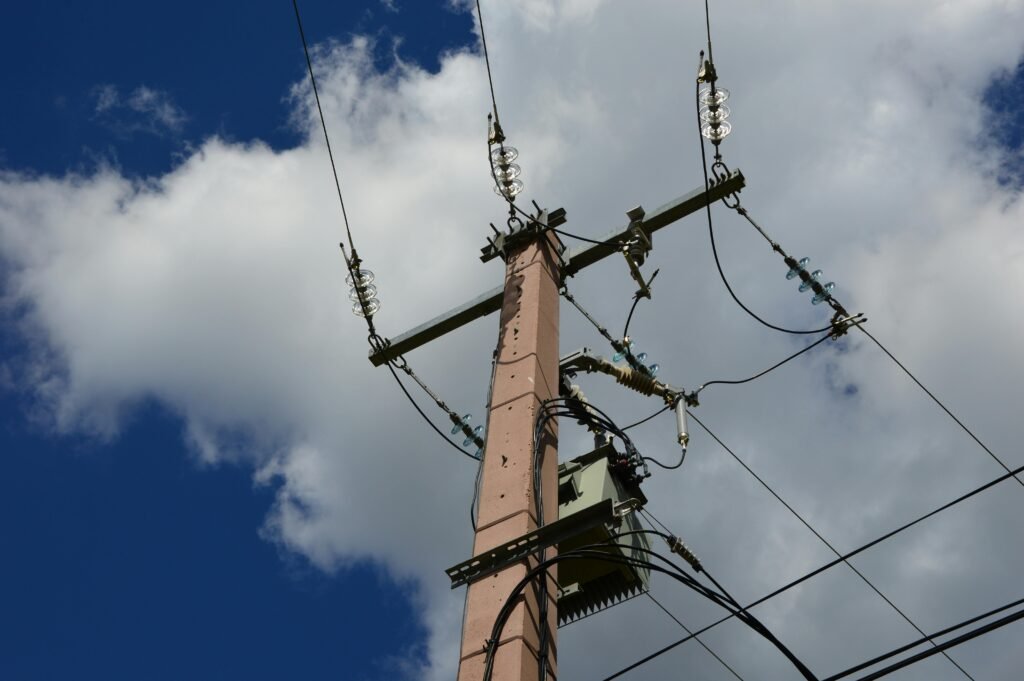
Distribution transformers are a key component in electrical power distribution systems, responsible for stepping down high transmission voltages to levels suitable for end users. They ensure safe, efficient, and reliable electricity delivery to residential, commercial, and light industrial consumers. Understanding what a distribution transformer is and how it functions is essential for grasping the final stage of power delivery in the electrical grid.
What Is a Distribution Transformer?
In modern electrical power systems, electricity must travel long distances from generation plants to end users such as homes, commercial buildings, and small industries. However, the voltage levels used for transmission are too high for direct consumer use. Without proper voltage reduction, electrical equipment would be damaged, safety risks would increase, and energy distribution would become inefficient. This is where distribution transformers play a critical role in the final stage of the power delivery chain.
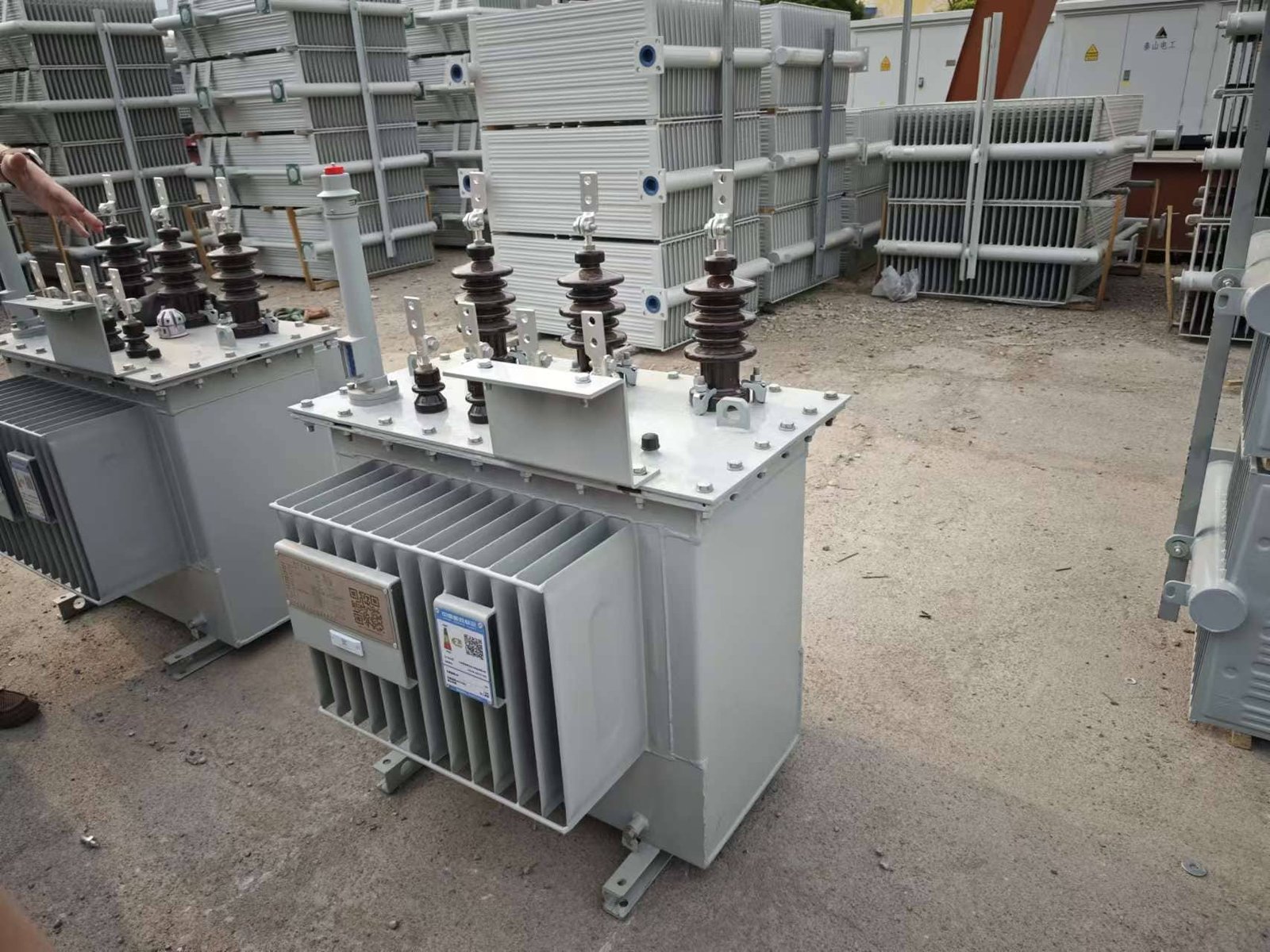
A distribution transformer is an electrical device that steps down medium-voltage electricity from distribution networks to low-voltage levels suitable for residential, commercial, and light industrial consumption, ensuring safe, efficient, and reliable power delivery to end users.
It is the last voltage transformation stage before electricity reaches consumers.
Transition to Functional Understanding
To understand its importance, it is necessary to explore how it operates within the power system and why it is essential for safe and stable electricity supply.
Distribution transformers are used to increase voltage levels for long-distance power transmission.False
Distribution transformers are step-down devices that reduce voltage from medium levels to low-voltage supply for end users.
Basic Function of a Distribution Transformer
A distribution transformer primarily performs voltage reduction while maintaining power continuity and system stability.
How Does a Distribution Transformer Work?
A distribution transformer is a key component in the final stage of electrical power delivery, but many users only see it as a “black box” that reduces voltage. In reality, its operation involves a precise electromagnetic process combined with thermal and insulation management. If this process is not well understood, it becomes difficult to diagnose faults, optimize performance, or ensure safe operation in residential and commercial networks.
A distribution transformer works by receiving medium-voltage alternating current in its primary winding, creating a changing magnetic field in the core, and inducing a lower voltage in the secondary winding, which is then safely supplied to end users such as homes, offices, and small industries.
This process is continuous, passive, and highly efficient due to electromagnetic induction.
Transition to Step-by-Step Understanding
To fully understand its operation, it is important to break the process into clear stages from energy input to final low-voltage output.
A distribution transformer directly converts electrical energy through physical contact between primary and secondary windings.False
Energy transfer occurs through electromagnetic induction, not direct electrical contact between windings.
Step 1: Medium-Voltage Electricity Enters the Primary Winding
Electricity from the distribution network enters the transformer at medium voltage levels, typically through overhead lines or underground cables. This current flows into the primary winding.
| Input Parameter | Role in Operation |
|---|---|
| Voltage (medium level) | Provides energy input |
| Alternating current | Creates changing magnetic field |
| Frequency | Determines flux variation rate |
This is the starting point of the energy conversion process.
Step 2: Creation of Magnetic Field in the Core
When alternating current flows through the primary winding, it generates a varying magnetic field around the coil. This magnetic field is directed into the transformer’s laminated core.
The core acts as a controlled path for magnetic flux, minimizing losses.
| Core Function | Effect |
|---|---|
| Magnetic flux guide | Efficient energy transfer |
| Laminated structure | Reduces eddy current losses |
| High permeability | Enhances flux concentration |
Step 3: Magnetic Flux Transfer Between Windings
The magnetic flux produced in the core links both primary and secondary windings. This shared magnetic field is the key to energy transfer.
winding | Receives induced flux |
Step 4: Voltage Induction in the Secondary Winding
As the magnetic flux changes, it induces a voltage in the secondary winding according to electromagnetic induction principles.
V_s = V_p \times \frac{N_s}{N_p}
| Turns Ratio Condition | Output Voltage Result |
|---|---|
| Ns < Np | Voltage is stepped down |
| Ns = Np | Voltage remains similar |
| Ns > Np | Voltage is stepped up (rare in distribution use) |
Distribution transformers are designed primarily for step-down operation.
Step 5: Low-Voltage Electricity Delivered to Consumers
The induced voltage in the secondary winding is typically reduced to safe levels such as 400V or 230V depending on regional standards. This electricity is then distributed to residential and commercial users.
| End Use | Voltage Level |
|---|---|
| Residential homes | Low voltage supply |
| Commercial buildings | Low voltage supply |
| Small industries | Low to medium voltage use |
Step 6: Heat Generation During Operation
While energy is transferred, some losses occur in the form of heat due to resistance in windings and magnetic losses in the core.
| Loss Type | Source |
|---|---|
| Copper losses | Winding resistance |
| Core losses | Eddy currents and hysteresis |
This heat must be managed to maintain performance and prevent insulation degradation.
Step 7: Cooling and Heat Dissipation
Depending on design, distribution transformers use either air or oil cooling to remove heat.
| Cooling Type | Method |
|---|---|
| Dry-type | Air circulation |
| Oil-immersed | Oil convection + radiators |
Oil cooling provides better thermal performance for higher loads.
Step 8: Electrical Insulation and Safety Control
Insulation systems ensure that high voltage does not leak into low-voltage circuits and that the transformer operates safely.
| Insulation Component | Function |
|---|---|
| Transformer oil | Dielectric medium (oil type) |
| Epoxy resin | Solid insulation (dry type) |
| Paper/pressboard | Winding separation |
Step 9: Continuous Operation Under Variable Load
Distribution transformers operate continuously and must handle fluctuating demand from consumers throughout the day.
| Load Condition | Transformer Response |
|---|---|
| Low demand | Stable low-loss operation |
| Peak demand | Increased current flow |
| Overload conditions | Thermal stress increase |
Real-World Engineering Example
In a residential neighborhood, a pole-mounted distribution transformer reduces 11kV medium-voltage electricity to 400V. During daytime peak usage, air conditioning loads increase current demand, causing higher heat generation. The transformer responds through natural cooling (or oil circulation in some designs), maintaining stable output voltage for household appliances.
Step-by-Step Summary
| Step | Process Description | Function Outcome |
|---|---|---|
| 1 | Medium voltage input | Energy enters system |
| 2 | Magnetic field creation | Flux generated |
| 3 | Flux transfer via core | Energy linkage established |
| 4 | Voltage induction | Voltage reduced |
| 5 | Power delivery | Electricity supplied |
| 6 | Heat generation | Thermal energy produced |
| 7 | Cooling process | Temperature controlled |
| 8 | Insulation protection | Safe operation ensured |
What Are the Main Types of Distribution Transformers?
Distribution transformers are not a single standardized design but a group of transformer types developed to meet different installation environments, safety requirements, and load conditions. Choosing the wrong type can lead to installation difficulties, safety hazards, or inefficient operation. In modern power distribution systems, each type is engineered for a specific application scenario such as urban networks, rural electrification, industrial facilities, or indoor commercial buildings.
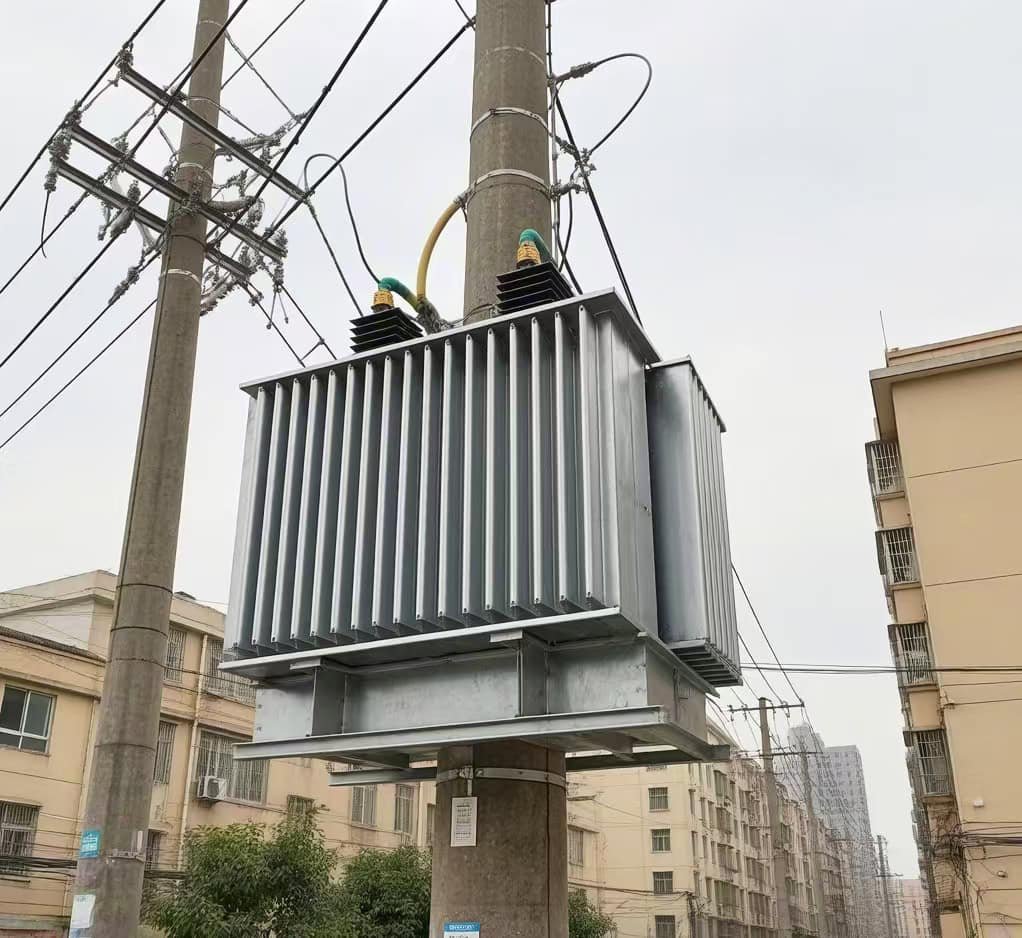
The main types of distribution transformers include pole-mounted transformers, pad-mounted transformers, dry-type distribution transformers, and oil-immersed distribution transformers, each designed for different installation environments, safety requirements, and load capacities.
Understanding these types helps ensure proper selection for reliable and efficient power delivery.
Transition to Classification Overview
To understand how these transformers differ, it is important to examine their structure, installation method, cooling system, and typical use cases in real-world power networks.
All distribution transformers have identical structure and can be used interchangeably in any installation environment.False
Different distribution transformer types are designed for specific environments such as indoor, outdoor, rural, or urban applications and are not interchangeable in all cases.
Pole-Mounted Distribution Transformers
Pole-mounted transformers are one of the most common types used in overhead distribution networks, especially in rural and suburban areas.
| Feature | Description |
|---|---|
| Installation method | Mounted on utility poles |
| Cooling type | Air or oil natural cooling |
| Application area | Rural and suburban distribution |
| Capacity range | Small to medium loads |
These transformers are cost-effective and easy to install on existing power lines.
Pad-Mounted Distribution Transformers
Pad-mounted transformers are installed at ground level and are commonly used in urban and commercial areas where safety and aesthetics are important.
| Feature | Description |
|---|---|
| Installation method | Ground-mounted enclosed unit |
| Cooling type | Oil-immersed with sealed tank |
| Application area | Cities, commercial complexes |
| Safety level | High (fully enclosed design) |
They are designed to be tamper-proof and safe for public environments.
Dry-Type Distribution Transformers
Dry-type transformers use solid insulation and air cooling instead of oil, making them suitable for indoor installations.
| Feature | Description |
|---|---|
| Insulation system | Epoxy resin and air |
| Cooling method | Natural or forced air |
| Application area | Buildings, hospitals, metro systems |
| Fire safety | High (non-flammable design) |
These transformers are preferred where fire safety is a critical concern.
Oil-Immersed Distribution Transformers
Oil-immersed distribution transformers use insulating oil for both cooling and electrical insulation, providing higher efficiency and load capacity.
Where Are Distribution Transformers Typically Installed?
Distribution transformers are the final link in the electrical power delivery chain, and their installation locations are carefully selected based on safety requirements, load demand, space availability, and environmental conditions. Installing them in the wrong place can lead to safety risks, voltage instability, or inefficient maintenance operations. Because electricity must be delivered close to end users, distribution transformers are widely deployed across multiple environments.
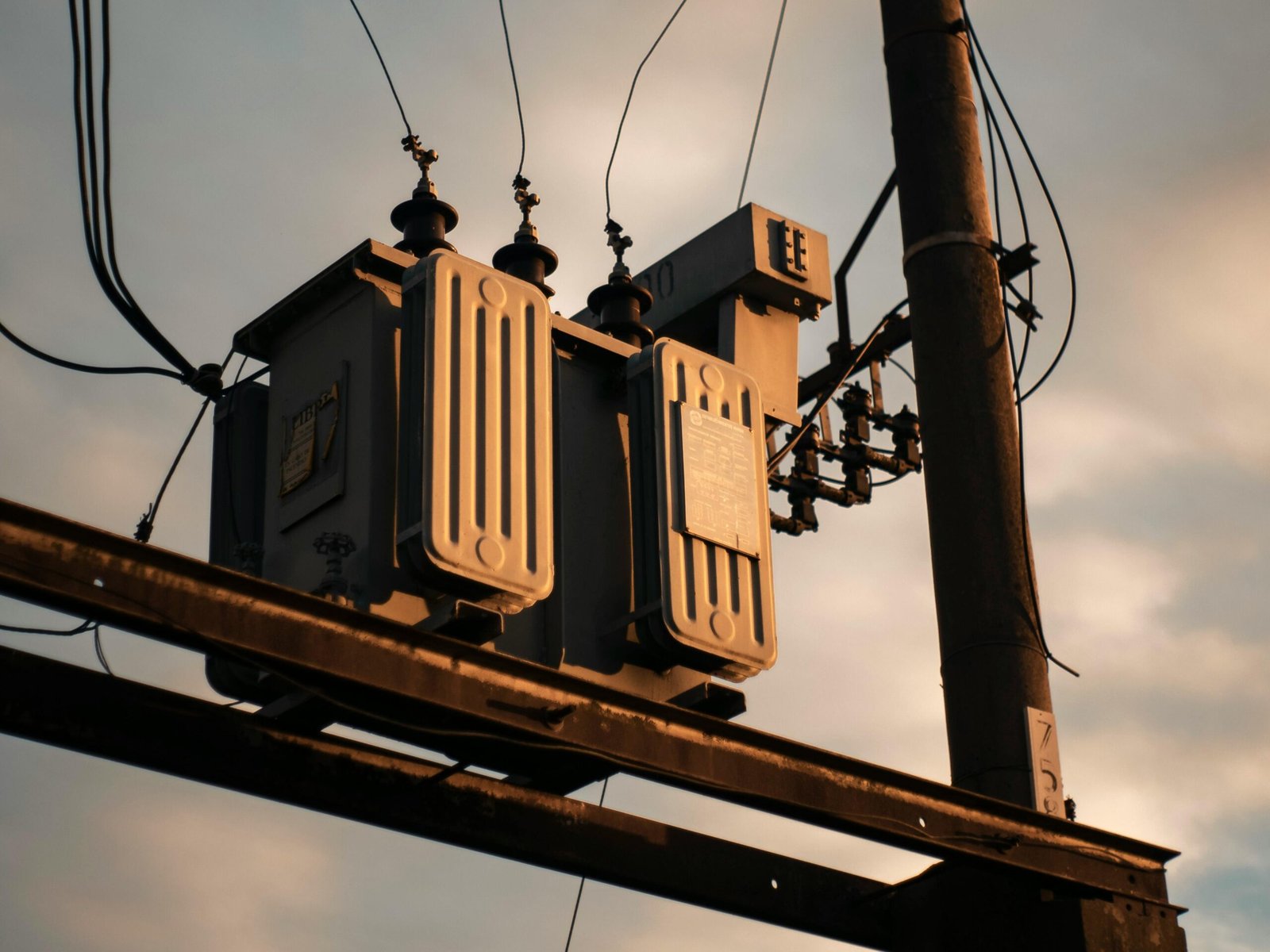
Distribution transformers are typically installed on utility poles in rural areas, in ground-mounted pad enclosures in urban zones, inside commercial and industrial buildings, and in compact outdoor substations to ensure safe and efficient final-stage power distribution.
Each installation type is designed to match specific electrical and environmental conditions.
Transition to Installation Logic
To understand where distribution transformers are placed, it is important to examine how urban planning, electrical load distribution, and safety standards influence installation decisions in real-world power networks.
Distribution transformers can only be installed inside power plants or large substations.False
Distribution transformers are widely installed near end users in urban, rural, indoor, and outdoor environments, not only in large substations.
Pole-Mounted Installations in Overhead Networks
Pole-mounted transformers are commonly used in rural and suburban overhead distribution systems where underground infrastructure is limited.
| Installation Feature | Description |
|---|---|
| Mounting location | Utility poles |
| Cooling method | Air or oil natural cooling |
| Application area | Rural and suburban regions |
| Accessibility | Easy maintenance from ground |
These installations are cost-effective and widely used for dispersed populations.
Pad-Mounted Installations in Urban Areas
Pad-mounted transformers are placed at ground level in secure enclosures, making them ideal for cities and commercial districts.
| Installation Feature | Description |
|---|---|
| Mounting location | Ground-level concrete pad |
| Protection level | Fully enclosed cabinet |
| Application area | Urban residential and commercial |
| Safety design | Tamper-resistant housing |
They are designed for safety and aesthetics in populated areas.
Indoor Installations in Buildings
In many commercial and industrial buildings, distribution transformers are installed indoors to ensure compact integration with electrical systems.
What Are the Key Features of Distribution Transformers?
Distribution transformers are essential components in electrical power systems, responsible for delivering safe and usable electricity to end users. Their design is optimized for continuous operation, variable loading, and high reliability in real-world distribution networks. Without properly engineered features, transformers would suffer from overheating, energy losses, voltage instability, and reduced service life.
The key features of distribution transformers include high efficiency at varying loads, reliable voltage regulation, robust insulation systems, effective cooling methods, compact design for installation flexibility, and long operational lifespan under continuous service conditions.
These features work together to ensure safe, stable, and efficient power delivery from substations to end users.
Transition to Functional Understanding
To understand why distribution transformers are so widely used, it is important to analyze the technical features that enable their performance in diverse environmental and load conditions.
Distribution transformers operate efficiently only under fixed load conditions and cannot handle load variations.False
Distribution transformers are specifically designed to operate efficiently under varying load conditions commonly found in real power distribution networks.
High Efficiency Under Variable Load Conditions
One of the most important features of distribution transformers is their ability to maintain efficiency even when electrical demand fluctuates throughout the day.
Why Are Distribution Transformers Important in Power Systems?
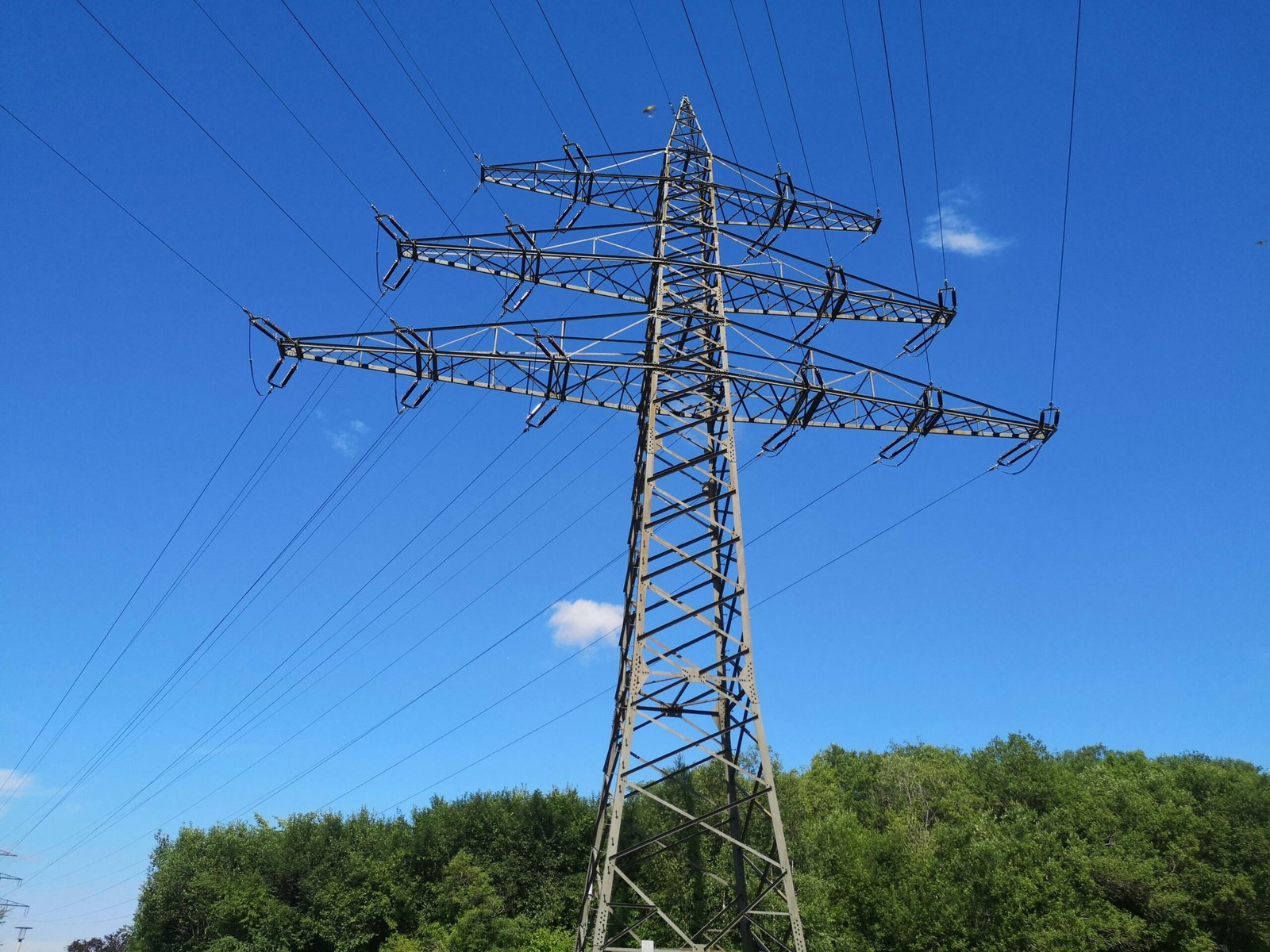
Modern power systems depend on a multi-stage structure that moves electricity from generation plants to end users. However, electricity generated at power stations is transmitted at very high voltages, which are not safe or usable for homes, offices, or small industries. Without a final voltage conversion stage, electrical devices would fail instantly, and the entire distribution network would become unsafe and inefficient.
Distribution transformers are important in power systems because they perform the final voltage step-down from medium-voltage distribution networks to low-voltage levels suitable for safe consumption, ensuring efficient energy delivery, system stability, and end-user protection.
They are the last and most critical link between the power grid and consumers.
Transition to System-Level Understanding
To understand their importance fully, it is necessary to examine their role within the complete power flow chain and how they influence safety, efficiency, and reliability at the final stage of electricity delivery.
Power systems can directly supply electricity from transmission lines to consumers without distribution transformers.False
Transmission-level voltages are too high and unsafe for direct consumer use, making distribution transformers essential for voltage reduction.
Final Voltage Conversion for Safe Use
One of the most important roles of distribution transformers is reducing voltage to safe levels.
Conclusion
A distribution transformer is a device that reduces high-voltage electricity from distribution networks to lower, usable voltages for end consumers. It operates on the principle of electromagnetic induction and is designed for continuous operation with high efficiency and reliability. As the final step in the power delivery chain, distribution transformers play a vital role in ensuring safe, stable, and accessible electricity for everyday use.
FAQ
Q1: What is a distribution transformer?
A distribution transformer is an electrical device used in power systems to step down high transmission voltages to lower voltages suitable for end users, such as homes, commercial buildings, and small industries.
It is the final stage in the power distribution network, ensuring electricity is delivered safely and efficiently to consumers.
Q2: How does a distribution transformer work?
A distribution transformer works based on electromagnetic induction:
High-voltage electricity enters the primary winding
A magnetic field is created in the core
This induces a lower voltage in the secondary winding
The reduced voltage is delivered to consumers
This process allows safe voltage levels for everyday electrical use.
Q3: Where are distribution transformers used?
Distribution transformers are widely used in:
Residential neighborhoods
Commercial buildings
Small industrial facilities
Rural electrification networks
Utility pole-mounted systems
They are typically installed near the point of electricity consumption.
Q4: What are the types of distribution transformers?
Common types include:
Pole-mounted transformers: Installed on utility poles for residential areas
Pad-mounted transformers: Ground-level units for urban and commercial areas
Oil-immersed transformers: Use oil for insulation and cooling
Dry-type transformers: Use air or resin insulation, often indoors
Each type is selected based on environment and load requirements.
Q5: What is the purpose of a distribution transformer?
The main purpose is to:
Step down voltage from medium or high levels
Ensure safe electricity usage for end consumers
Minimize power losses in local distribution
Provide stable and reliable voltage supply
Without distribution transformers, electricity from power plants would be too dangerous for direct use.
Q6: How efficient are distribution transformers?
Modern distribution transformers are highly efficient, typically operating at 95–99% efficiency. Efficiency depends on:
Core material quality
Load conditions
Cooling method
Maintenance practices
High-efficiency designs reduce energy losses and improve grid performance.
Q7: What are common issues in distribution transformers?
Common issues include:
Overloading
Insulation degradation
Oil leakage (in oil-filled types)
Voltage fluctuations
Overheating
Regular maintenance and monitoring help prevent failures.
Q8: Why are distribution transformers important in power systems?
They are essential because they:
Enable safe voltage levels for end users
Improve power distribution efficiency
Reduce transmission losses near consumption points
Support reliable electricity delivery in cities and rural areas
They are a critical link between high-voltage transmission systems and end-user consumption.
References
IEC 60076 – Power Transformers
https://webstore.iec.ch/publication/602
IEEE C57 Series – Distribution Transformer Standards
https://standards.ieee.org
Electrical Engineering Portal – Distribution Transformer Basics
https://electrical-engineering-portal.com
U.S. Department of Energy – Electricity Distribution
https://www.energy.gov
CIGRE – Power Distribution Network Studies
https://www.cigre.org
NEMA – Transformer Application Guidelines
https://www.nema.org