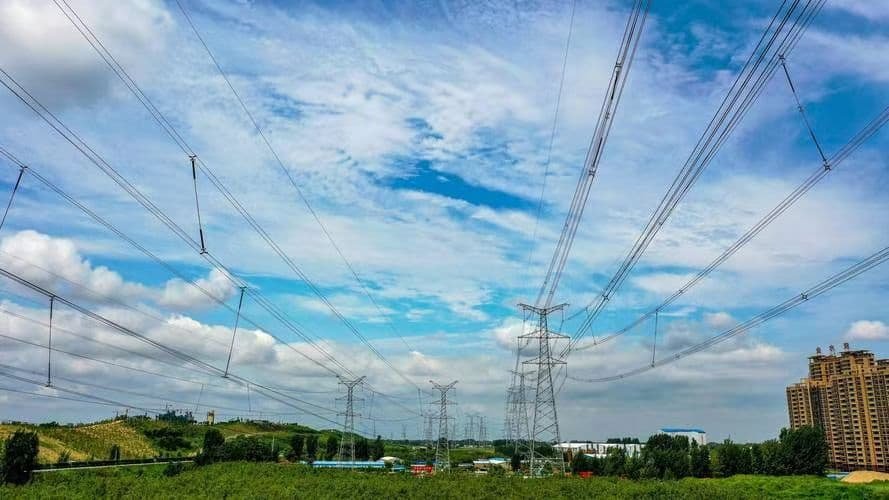
Whether or not you need a power transformer depends on your specific application and the scale and voltage level of the electrical system you're working with. Power transformers are not used in everyday residential setups but are critical in industrial, utility, and energy transmission environments. This guide helps you determine if a power transformer is right for your needs.
What Is a Power Transformer and Who Typically Uses One?
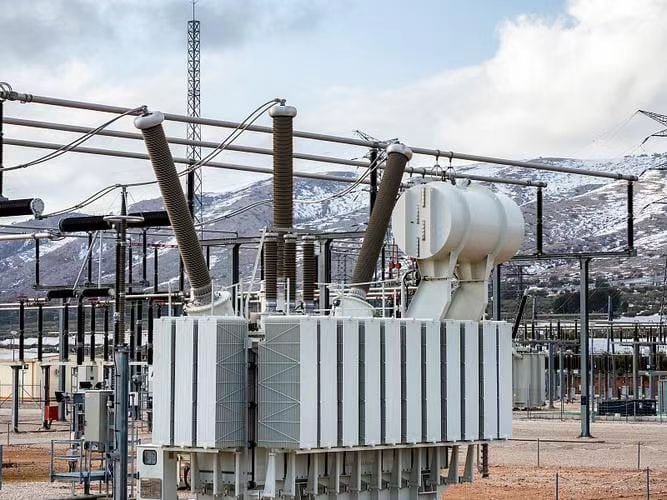
Power transformers are the backbone of high-voltage electricity networks, enabling the safe and efficient transfer of electric power across cities, countries, and continents. They are not only pivotal to the operation of national transmission systems but are also widely deployed by industries and energy producers. Understanding what a power transformer is—and who relies on it—is crucial to grasping how modern electrical infrastructure works.
A power transformer is a static electrical device designed to transfer electrical energy between two or more circuits by means of electromagnetic induction, typically converting high voltage to even higher or lower voltage levels in transmission networks. Power transformers are used by utilities, transmission operators, industrial facilities, renewable energy developers, and large commercial campuses that require voltage conversion and high-capacity power flow management.
This article explores the definition, working principle, applications, and end-users of power transformers in the modern energy landscape.
Power transformers are essential for voltage transformation in transmission and sub-transmission networks.True
They allow electricity to be transmitted efficiently over long distances by stepping up or down voltage as needed.
Only utility companies use power transformers.False
Power transformers are also used in industrial, renewable, and large commercial applications for voltage conversion and load management.
1. What Is a Power Transformer?
| Parameter | Description |
|---|---|
| Device type | Static electromagnetic device |
| Core function | Transfers electrical power via magnetic induction |
| Voltage range | Typically operates from 33 kV to 765 kV or higher |
| Capacity | Rated from 5 MVA up to 1,200+ MVA |
| Efficiency | 98% to 99.75% (optimized for full-load operation) |
| Cooling systems | ONAN, ONAF, OFWF depending on size/load |
How It Works:
- Converts voltage from one level to another without changing frequency.
- Uses a magnetic core and two or more windings (primary and secondary).
- Designed for high-load, continuous-duty operation in transmission settings.
2. How Power Transformers Differ from Distribution Transformers
| Feature | Power Transformer | Distribution Transformer |
|---|---|---|
| Voltage level | ≥33 kV to 765+ kV | <33 kV |
| Application | Transmission, generation, interconnection | Local load distribution |
| Load condition | Near-constant full-load | Variable or partial load |
| Size and capacity | Large (100–1,000+ MVA) | Small to medium (10–5,000 kVA) |
| Efficiency focus | Full-load optimized | Light-to-mid load optimized |
Power transformers are optimized for energy transfer over long distances, not local delivery.
3. Who Typically Uses Power Transformers?
| User Type | Why They Use Power Transformers |
|---|---|
| Electric utilities | Step up generator output for transmission and step down for regional distribution |
| Grid operators (TSOs/ISOs) | Interconnect regions operating at different voltage levels |
| Industrial plants | Receive high-voltage supply and step it down for internal use (e.g., 132 kV → 6.6 kV) |
| Renewable energy developers | Step up wind or solar power from 0.4/33 kV to 132/220 kV for grid export |
| Large commercial campuses | Manage internal energy systems (e.g., data centers, airports, campuses) |
| Power generation stations | Use generator step-up transformers (GSUs) to connect to grid infrastructure |
Anyone dealing with high-voltage infrastructure, generation, or transmission is a typical user.
4. Key Applications of Power Transformers
| Application Area | Transformer Function |
|---|---|
| Transmission substations | Step down 400 kV to 132 kV or 220 kV to 66 kV |
| Generation plants (thermal, hydro, nuclear) | Step up 11–22 kV generator voltage to 220–400 kV for grid injection |
| Industrial supply substations | Convert 132 kV to 6.6 kV for motors and process lines |
| Renewable energy substations | Step up inverter output (0.4 kV or 33 kV) to transmission voltage |
| Cross-border interconnectors | Match voltage and phase between two national grids |
5. Typical Features and Configurations
| Specification | Power Transformer Characteristic |
|---|---|
| Phase | Three-phase (standard) |
| Core material | CRGO steel, amorphous metal (for efficiency) |
| Tap changers | On-load tap changers (OLTC) for voltage control |
| Monitoring | Oil temperature, winding temp, DGA, OLTC position |
| Protection | Differential relay, Buchholz relay, PRV, surge arresters |
Modern power transformers are smart-enabled, supporting remote diagnostics and predictive maintenance.
6. Examples of Power Transformer Use
| Case Study | Description |
|---|---|
| 500 MVA 400/220 kV GSU in thermal power plant | Connects plant output to national transmission system |
| 132/33 kV substation for industrial hub | Feeds dozens of factories with varying voltage needs |
| 33/132 kV transformer at solar farm | Steps up PV output for grid injection |
| 400/400 kV phase-shifting transformer | Controls power flow between interconnected regions |
Summary Table: Who Uses Power Transformers and Why?
| User | Use Case | Reason for Power Transformer Use |
|---|---|---|
| Utility company | Transmission and substation voltage conversion | Enable efficient long-distance power delivery |
| Industrial facility | Receives 132 kV, operates at 6.6/11 kV | Converts voltage for internal plant systems |
| Solar/wind energy provider | Generates at 0.4–33 kV, connects to 132 kV grid | Step-up required for grid compatibility |
| Data center or airport campus | Operates private grid with HV input | Internal step-down to multiple operating voltages |
| Cross-border transmission operator | Interconnects two grid voltages | Voltage and phase matching |
Do You Need to Step Up or Step Down High Voltage?
Managing high-voltage electricity requires precision—especially when deciding whether to step voltage up or down. Voltage transformation is not just a technical choice; it's a strategic decision based on where electricity is in its journey—from generation to transmission to final consumption. Choosing the wrong approach could result in inefficiency, equipment damage, or grid instability. Knowing when to step up or step down voltage is fundamental to building an effective electrical system.
You need to step up high voltage when power is being transmitted over long distances from generation sources to reduce current and energy losses. You need to step down high voltage when delivering power to end users—such as residential, commercial, or industrial consumers—so the voltage is compatible with their equipment and safe to use. The decision is based on the position within the grid and the purpose of energy transfer.
This article explains when to step voltage up, when to step it down, and why each method is essential at different points in the power delivery process.
High voltage must be stepped up at generation and stepped down before distribution to consumers.True
Stepping up reduces transmission losses, while stepping down ensures safe, usable voltage at the load point.
Electricity can be transmitted and used at the same voltage level without stepping up or down.False
Direct use of high voltage is unsafe for consumers, and low-voltage transmission is inefficient over long distances.
1. When Do You Step Up Voltage?
| Scenario | Voltage Action | Reason |
|---|---|---|
| Power plant to transmission system | Step-up (e.g., 11 kV → 220 kV) | Reduce current for efficient transmission |
| Solar or wind farm to grid | Step-up (e.g., 0.4 kV → 33 kV or 132 kV) | Match grid voltage and minimize losses |
| HVDC or UHV transmission | Step-up (e.g., 500 kV to ±800 kV) | Enables ultra-long-distance transmission |
Why Step Up?
- Reduces I²R losses in transmission lines
- Allows use of thinner conductors
- Increases power transfer capacity
The higher the transmission distance and power demand, the more critical voltage step-up becomes.
2. When Do You Step Down Voltage?
| Scenario | Voltage Action | Reason |
|---|---|---|
| Transmission line to substation | Step-down (e.g., 400 kV → 132 kV) | Match voltage for regional distribution |
| Distribution substation to local feeder | Step-down (e.g., 33 kV → 11 kV or 400 V) | Deliver usable voltage to consumers |
| Industrial load connection | Step-down (e.g., 132 kV → 6.6 kV) | Provide equipment-compatible voltage |
Why Step Down?
- Ensures voltage is safe and standardized for end users
- Prevents equipment damage
- Enables compliance with grid codes
Stepping down voltage is mandatory for compatibility with homes, offices, and industrial machinery.
3. Power Flow Path with Voltage Transformation
| Grid Stage | Voltage Level | Transformer Role |
|---|---|---|
| Generation (e.g., 11–22 kV) | 11 kV | Step-up to 220–400 kV |
| Transmission | 132–765 kV | Maintained for distance transfer |
| Substation | 400 → 220/132 kV | Step-down for sub-transmission |
| Distribution | 33/11 kV | Step-down to medium voltage |
| Final delivery | 400/230 V | Step-down to usable low voltage |
At every level, transformers step voltage up or down to match the stage of the energy journey.
4. Deciding Between Step-Up and Step-Down
| Condition | Voltage Direction Needed | Why |
|---|---|---|
| Sending power long distances | Step-up | Reduces current and transmission losses |
| Receiving power from the grid | Step-down | Ensures safe and equipment-compatible voltage |
| Operating internal industrial systems | Step-down | Match with machine voltage ratings |
| Exporting renewable power to grid | Step-up | Align with feeder or transmission voltage |
| Grid interconnection between regions | Step-up or down | Depends on voltage mismatch across zones |
5. Transformer Types Based on Voltage Role
| Transformer Type | Used For | Direction |
|---|---|---|
| Generator Step-Up (GSU) | Generation stations | Step-up |
| Collector transformer | Solar or wind plants | Step-up |
| Transmission substation | HV grid connection | Step-down |
| Distribution transformer | Final delivery to consumers | Step-down |
| Auto-transformer | HV–HV interconnection | Step-up/down |
6. Example Scenarios
A. Step-Up Example (Thermal Plant)
- Generator output: 22 kV
- Step-up transformer: 22/400 kV
- Grid connection: 400 kV transmission line
B. Step-Down Example (Industrial Plant)
- Incoming supply: 132 kV
- Step-down transformer: 132/11 kV
- Internal use: Motors, drives, panels at 11 kV or 400 V
The choice depends on where the voltage level needs to go next in the supply chain.
Summary Table: When to Step Up or Step Down High Voltage
| Situation | Action | Reason |
|---|---|---|
| Power export to grid | Step-up | Align with high-voltage transmission lines |
| Grid delivery to households | Step-down | Ensure usable voltage for appliances |
| Interconnecting different grid voltage tiers | Step-up/down | Enable compatibility between systems |
| Supplying an industrial facility | Step-down | Meet operational voltage for equipment |
| Long-distance power transfer | Step-up | Reduce losses and improve efficiency |
Are You Working With High Power Loads or Large Facilities?
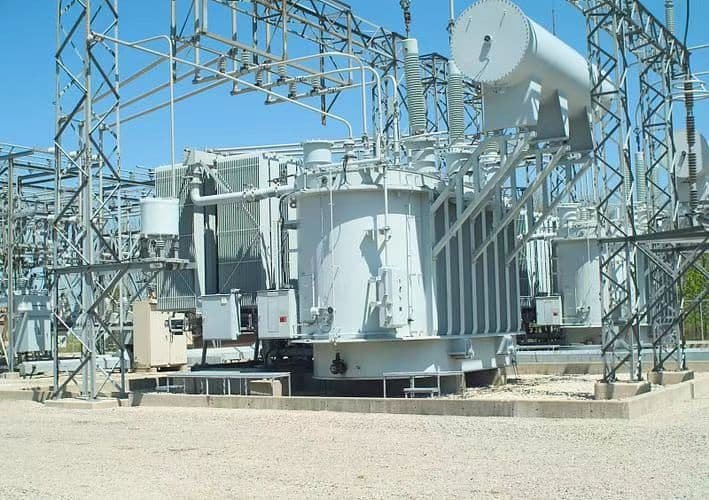
Designing or operating a large facility—like a steel plant, chemical refinery, data center, or airport—means dealing with massive electrical loads, sensitive equipment, and demanding uptime requirements. These environments can't rely on standard low-voltage infrastructure. If you're working with high power loads, you need a robust and scalable energy delivery system—one that almost always begins with power transformers.
If you're working with high power loads or large facilities, you need power transformers to step down incoming high-voltage supply to appropriate levels, distribute power efficiently, protect sensitive equipment, and ensure operational continuity. Power transformers handle the capacity, thermal demands, and voltage conversion required to power large-scale infrastructure safely and reliably.
This article explains why power transformers are essential in large facilities and how they support productivity, safety, and energy efficiency in high-demand environments.
Large facilities with high power loads require power transformers to manage voltage, load distribution, and operational safety.True
Power transformers handle high-capacity conversion from grid voltage to equipment-level voltage and isolate internal networks.
Power transformers are unnecessary in facilities that use large machinery or continuous operations.False
Without voltage transformation, equipment may be damaged, and the facility would face instability or non-compliance with utility voltage supply.
1. What Qualifies as a High Power Load Facility?
| Facility Type | Typical Load Range | Why It Requires Power Transformers |
|---|---|---|
| Steel/cement plants | 10–200+ MW | Operate induction furnaces, crushers, motors |
| Oil refineries/chemicals | 5–150 MW | Continuous process control and heavy drives |
| Data centers | 1–50 MW | Uninterruptible supply and redundancy |
| Hospitals and airports | 5–30 MW | Life-critical systems and backup power |
| Smart campuses and malls | 2–20 MW | Multi-zone power distribution |
If your connected load exceeds 1–2 MW, it’s time to plan for custom transformer infrastructure.
2. What Voltage Levels Do Large Facilities Work With?
| Supply Voltage (Grid Side) | Facility Need | Transformer Use |
|---|---|---|
| 66 kV / 132 kV / 220 kV | 33 kV, 11 kV, 6.6 kV, or 400 V | Step-down to usable voltage for motors, drives, panels |
| Direct 11 kV supply | Still needs transformer | Internal zoning or isolation |
Power transformers convert transmission or sub-transmission voltage to safe operating levels for internal systems.
3. What Are the Functions of Power Transformers in Large Facilities?
| Function | Benefit to High Power Facilities |
|---|---|
| Step-down voltage conversion | Matches grid supply with equipment ratings |
| Load balancing | Distributes power across machinery and zones |
| Fault isolation | Limits damage to local circuits during faults |
| Continuous duty capacity | Handles full load 24/7 without overheating |
| Protection and monitoring | Enables safe operation and predictive maintenance |
Power transformers reduce risk, optimize power quality, and increase uptime in demanding environments.
4. Typical Transformer Configurations for Large Facilities
| Transformer Rating | Application Example |
|---|---|
| 132/11 kV, 25–100 MVA | Industrial zone, refinery, or steel mill |
| 66/11 kV, 15–50 MVA | Airport or large commercial park |
| 33/0.4 kV, 5–15 MVA | Large campus or hospital with LT distribution |
| 11/0.4 kV, 1–5 MVA | Data center UPS feeders or server blocks |
Configuration depends on connected load, zoning, and utility voltage level.
5. Case Example: Steel Manufacturing Facility
| Power Need | Transformer Solution |
|---|---|
| 132 kV incoming grid line | 132/33 kV main step-down transformer |
| Rolling mill at 6.6 kV | 33/6.6 kV transformer with high surge tolerance |
| Sub-distribution for lighting | 6.6/0.4 kV LT transformer |
The facility uses layered voltage conversion to ensure optimized, localized power delivery.
6. When Should You Use Multiple Transformers?
| Condition | Transformer Planning Need |
|---|---|
| Load > 20 MVA | Use multiple transformers in parallel |
| Redundancy required | N-1 configuration with backup unit |
| Diverse voltage zones | Multiple voltage ratings and secondary windings |
| Step-down + isolation needed | Dual-role transformers or dedicated units |
Multiple units improve reliability, serviceability, and future scalability.
7. Benefits of Power Transformers in High-Load Facilities
| Benefit | Explanation |
|---|---|
| Operational safety | Protects systems and personnel from HV risk |
| Improved energy efficiency | Minimizes losses in power conversion |
| Voltage stability | OLTC ensures stable output under load swings |
| System scalability | Easily accommodates plant expansions |
| Compliance and code adherence | Meets national electrical standards |
Power transformers enable safe and compliant operation under heavy demand.
Summary Table: When to Use Power Transformers in Large Facilities
| Condition | Transformer Required? | Why? |
|---|---|---|
| Load exceeds 1–2 MW | ✅ Yes | Prevents overloading, enables voltage control |
| Grid voltage > 11 kV | ✅ Yes | Step-down needed for safe equipment use |
| Continuous 24/7 operation | ✅ Yes | Requires high thermal capacity and stability |
| Multiple voltage zones in one facility | ✅ Yes | Supports operational diversity |
| Direct LT utility supply with no zoning need | ❌ No | Distribution transformer may be sufficient |
Are You Building or Operating a Substation or Power Plant?
Building or operating a substation or power plant isn’t just about generating or distributing electricity—it’s about ensuring grid compatibility, voltage transformation, protection coordination, and reliable energy delivery at scale. Whether you're planning a generation facility, expanding an existing substation, or retrofitting for renewable integration, one thing is clear: power transformers are at the heart of the system. They enable high-voltage interconnection, protect infrastructure, and ensure your facility meets grid standards and performance goals.
If you are building or operating a substation or power plant, you need power transformers to step voltage up for transmission or step it down for distribution, interconnect with the grid, ensure load balancing, and protect both assets and personnel. They are essential for linking generation to transmission, handling large loads, and complying with regulatory and safety standards.
This article covers why, when, and how power transformers are used in substations and power plants—and why you should plan for them from the very first blueprint.
Power transformers are essential in substations and power plants for voltage transformation and grid interconnection.True
They allow the matching of generator output to grid voltage and enable safe, efficient power delivery.
Substations and power plants can operate without power transformers if sized correctly.False
Without transformers, voltage levels won’t match grid standards, and power cannot be transmitted or safely used.
1. Why Are Power Transformers Central to Power Plants?
| Function | Role in Generation Facilities |
|---|---|
| Step-up transformation | Converts generator voltage (11–22 kV) to 132–400+ kV for transmission |
| Grid synchronization | Aligns phase, frequency, and voltage for grid compatibility |
| Protection and isolation | Prevents fault propagation to grid or generator |
| Efficiency enhancement | Reduces transmission losses over long distances |
Example:
A 500 MW thermal plant outputs at 22 kV. A 22/400 kV generator step-up (GSU) transformer is required to inject power into the 400 kV transmission system.
2. Why Are Power Transformers Critical in Substations?
| Substation Type | Power Transformer Use Case |
|---|---|
| Transmission substation | 400/220 kV or 220/132 kV for voltage transition |
| Distribution substation | 132/33 kV or 33/11 kV for regional distribution |
| Renewable collector substation | 33/132 kV for grid tie of solar/wind output |
| Interconnection substation | Step-up/down and phase-matching transformers |
Substations act as voltage nodes, and transformers enable power transfer across different voltage levels.
3. When Must Power Transformers Be Installed?
| Project Stage or Condition | Transformer Requirement |
|---|---|
| Connecting generator to transmission | ✅ Step-up transformer (GSU) |
| Creating new feeder circuits | ✅ Step-down transformer for load distribution |
| Interfacing between regional voltage levels | ✅ HV–HV transformer |
| Handling increased load demand | ✅ Larger or parallel transformer bank needed |
If voltage levels don’t match, or capacity is exceeded, a power transformer is non-negotiable.
4. Transformer Ratings and Typical Applications
| Transformer Rating | Application |
|---|---|
| 22/400 kV, 315 MVA | Thermal or nuclear plant generator connection |
| 132/33 kV, 100 MVA | Main step-down for regional substation |
| 33/11 kV, 20 MVA | Local distribution and industrial feeders |
| 400/220/132 kV, 500 MVA | Inter-grid or bulk transfer station |
Transformer selection depends on system voltage, generation capacity, and load demand.
5. What Should Be Considered When Specifying Transformers?
| Specification Factor | Importance |
|---|---|
| Voltage rating and ratio | Must match grid and generator/substation levels |
| Capacity (MVA) | Sized for peak and future load growth |
| Tap changer (OLTC) | For voltage regulation under load |
| Cooling method (ONAN/ONAF/OFWF) | Impacts reliability under full load |
| Impedance | Affects fault current and protection settings |
| Protection and monitoring | Includes DGA, Buchholz relay, temp sensors |
Each transformer must be precisely engineered for your facility’s electrical, thermal, and mechanical needs.
6. Case Example: Power Transformer Use in Combined Cycle Plant
| Facility Component | Voltage Level | Transformer Use |
|---|---|---|
| Gas turbine generator | 11 kV | 11/220 kV GSU transformer |
| Steam turbine generator | 22 kV | 22/400 kV transformer |
| Auxiliary systems | 6.6/0.4 kV | UAT and station transformer |
| Grid interface | 400 kV switchyard | 400/220 kV interconnection transformer |
A complete transformer ecosystem enables internal operation and external grid linkage.
7. Who Uses Power Transformers in These Projects?
| Stakeholder | Transformer Use |
|---|---|
| EPC contractors | Include transformer design and integration |
| Utility grid operators (TSOs/ISOs) | Require voltage and phase matching |
| Renewable energy developers | Use step-up transformers at collector stations |
| Industrial power producers | Feed own grid or sell excess to utility |
| Substation O\&M teams | Manage loading, monitoring, and fault response |
Every stakeholder in the power ecosystem relies on transformers for safe and stable operation.
Summary Table: When and Why Power Transformers Are Required
| Scenario | Use Transformer? | Reason |
|---|---|---|
| Power generation for grid export | ✅ Yes | Step up to grid transmission voltage |
| Building a new substation | ✅ Yes | Voltage conversion, load delivery |
| Adding feeders to industrial plants | ✅ Yes | Voltage reduction and protection |
| Tying renewable output to grid | ✅ Yes | Voltage elevation and fault isolation |
| Switching-only station with same voltage | ❌ No | No voltage change; no transformer needed |
Are You Integrating Renewable Energy Sources into the Grid?
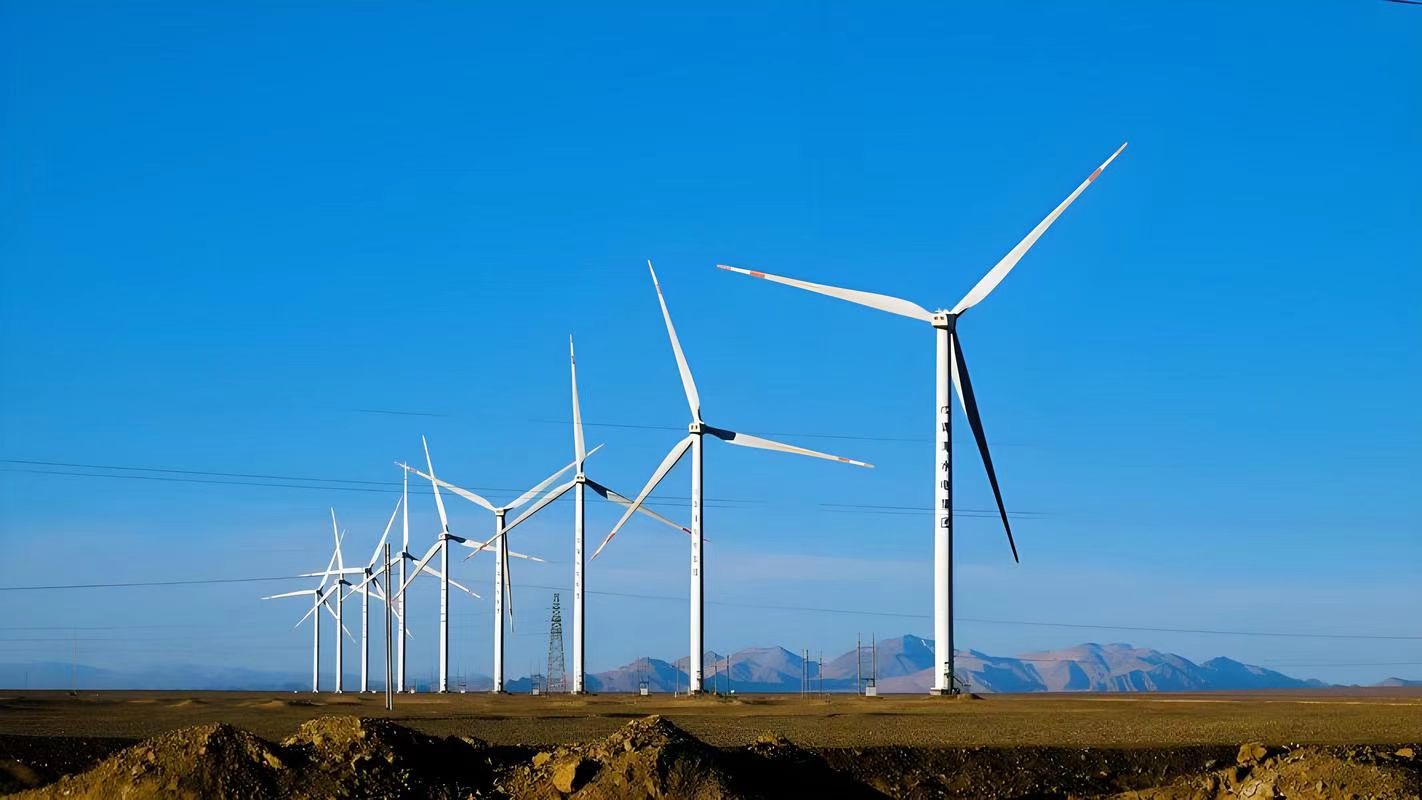
As more solar and wind projects come online, integrating these variable and decentralized energy sources into the existing power grid becomes both a priority and a challenge. Grid integration isn’t just a matter of connecting cables—it requires transformers to align voltage levels, stabilize power flow, and protect both the renewable system and the grid itself. Whether you're managing a solar park, wind farm, or hybrid microgrid, transformers are indispensable for reliable, scalable, and standards-compliant integration.
If you are integrating renewable energy sources into the grid, you need power transformers to step up the low or medium voltage output from solar inverters or wind turbines to match grid voltage levels, ensure synchronization, maintain power quality, and provide system protection. These transformers serve as the gateway between clean generation and the utility grid, enabling safe and efficient energy transfer.
This article outlines why, when, and how transformers are used when linking renewables to the power grid—covering both utility-scale and distributed systems.
Transformers are essential for integrating renewable energy into the grid by stepping up voltage and stabilizing power flow.True
Most renewable generation operates at low or medium voltage, while the grid requires high-voltage input for long-distance transmission and load balancing.
Renewables can be connected directly to the grid without transformers if properly synchronized.False
Direct connection without voltage step-up is unsafe and non-compliant with grid standards. Transformers are required for voltage conversion and protection.
1. Why Are Transformers Needed for Renewable Energy Integration?
| Renewable Type | Output Voltage | Grid Connection Requirement |
|---|---|---|
| Solar PV | 300 V–1,500 V DC → 0.4 kV AC (inverter output) | Needs step-up to 11, 33, 66, or 132 kV |
| Wind Turbines | 690 V–33 kV AC | Must be transformed to 66–220 kV |
| Hybrid/Battery Plants | Often under 11 kV | Require transformer for grid interconnection |
Key Transformer Functions:
- Voltage step-up to match transmission or distribution feeder levels
- Electrical isolation to protect equipment and people
- Reactive power control to manage voltage and frequency stability
- Bidirectional power flow support for hybrid and storage systems
2. When Do You Need a Power Transformer?
| Condition | Transformer Use |
|---|---|
| Exporting >1 MW solar or wind power | ✅ Step-up transformer needed to meet grid voltage |
| Connecting to 33/66/132 kV grid | ✅ Power transformer required for voltage elevation |
| Aggregating multiple inverter/turbine outputs | ✅ Collector transformer combines sources |
| Integrating hybrid battery storage | ✅ Transformer ensures isolation and synchronization |
| Small-scale rooftop solar (<10 kW) | ❌ No power transformer; inverter connects directly |
Utility-scale systems require at least two levels of transformation before grid export.
3. Types of Transformers Used in Renewable Systems
| Transformer Type | Description and Use Case |
|---|---|
| Inverter duty transformer | Installed between inverter and medium-voltage grid |
| Collector transformer | Combines output of multiple solar strings or turbines |
| Step-up substation transformer | Raises voltage for grid injection (e.g., 33/132 kV) |
| Converter transformer | Used in HVDC or hybrid energy systems |
Transformers are often equipped with smart monitoring systems and on-load tap changers (OLTCs) for dynamic control.
4. Typical Renewable Energy Transformer Layout
Solar Farm Example:
| Component | Voltage Level | Transformer Role |
|---|---|---|
| PV Module + Inverter | 1,000 V DC → 0.4 kV AC | Converts DC to AC; prepares for MV |
| Inverter Transformer | 0.4 kV → 11 kV | Increases voltage from inverter output |
| Collector Transformer | 11 kV → 33 kV | Aggregates multiple inverters |
| Grid Step-Up Transformer | 33 kV → 132 kV | Final voltage elevation to transmission |
Transformers make multi-stage voltage transformation possible with minimal losses.
5. How Transformers Help Maintain Grid Compliance
| Compliance Requirement | Transformer Contribution |
|---|---|
| Voltage matching | Steps voltage to required feeder/grid levels |
| Phase synchronization | Aligns phase angle and frequency with grid |
| Short-circuit current limitation | Impedance-based design to protect grid |
| Reactive power management | Supports voltage stability via OLTC and capacitive design |
| Grid code adherence (e.g., IEEE 1547, IEC 61400) | Meets mandatory transformer specs |
Without transformers, renewables would violate grid connection rules and risk outages or equipment damage.
6. Monitoring and Protection Functions
| Monitoring Feature | Benefit |
|---|---|
| Oil temperature & level sensors | Prevent overheating and dry run failures |
| Dissolved Gas Analysis (DGA) | Detect early faults in insulation |
| OLTC position feedback | Optimizes voltage under changing output |
| Differential and REF protection | Prevents internal winding and earth faults |
These smart features enhance transformer reliability and renewable plant uptime.
7. Use Case Examples
A. Wind Farm (50 MW)
- 690 V turbine output
- Step-up to 33 kV via nacelle transformers
- 33/132 kV collector transformer connects to substation
B. Utility-Scale Solar (100 MW)
- 0.4 kV inverter output stepped up to 33 kV
- Grid connection via 33/220 kV transformer at plant substation
C. Solar + Battery Hybrid Plant
- Battery inverter at 11 kV + Solar at 0.4 kV
- Synchronized via transformer bus with 132 kV export line
Summary Table: When and Why Transformers Are Used in Renewable Integration
| Condition | Use Transformer? | Reason |
|---|---|---|
| Utility-scale solar farm (>1 MW) | ✅ Yes | Required for voltage elevation and aggregation |
| Wind park with multiple turbines | ✅ Yes | Step-up and collector transformers needed |
| Grid-tied battery storage | ✅ Yes | Isolation and voltage regulation |
| Rooftop solar (<10 kW) | ❌ No | Inverter connects to 230 V grid directly |
| Off-grid hybrid with variable voltage zones | ✅ Yes | Load balancing and protection |
Do You Need Electrical Isolation and Grid Interconnection?
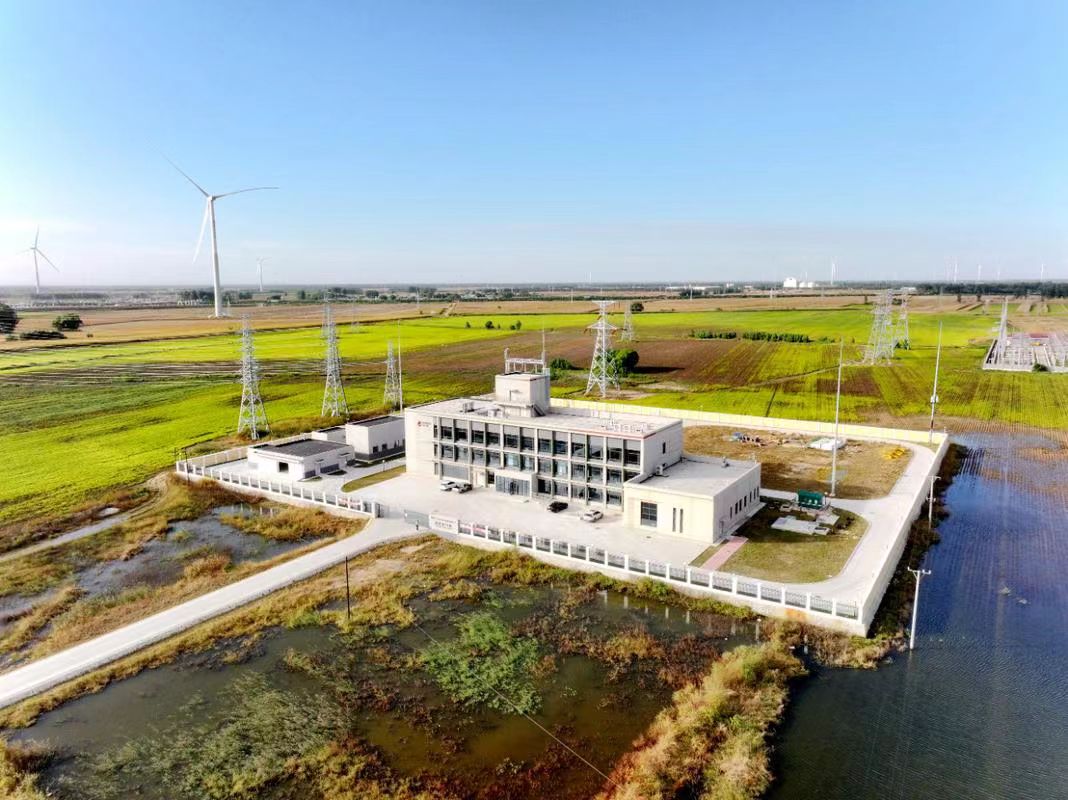
As power systems grow more complex—with distributed generation, microgrids, and variable loads—the need for safe and effective electrical isolation and grid interconnection has never been more important. Whether you're operating a renewable energy plant, industrial facility, or private substation, ensuring that your electrical system is properly isolated and compatible with the grid requires a power transformer designed for both tasks.
You need electrical isolation and grid interconnection when your electrical system must be safely separated from the utility grid for protection, control, or compliance reasons while still enabling the transfer of power. Power transformers provide galvanic isolation, voltage matching, fault containment, and grid synchronization—making them essential for safe and efficient connection to transmission and distribution networks.
This article explores why electrical isolation and grid interconnection are critical, and how power transformers fulfill both functions in generation, industrial, and grid-tied systems.
Power transformers provide electrical isolation and enable grid interconnection by converting voltage and limiting fault propagation.True
They serve as physical and electrical barriers while allowing synchronized energy transfer between systems.
Grid interconnection can be achieved without transformers if voltage is matched.False
Voltage matching alone does not ensure isolation, synchronization, or protection from faults. Transformers are required by grid codes for interconnection.
1. What Is Electrical Isolation and Why Is It Needed?
| Feature | Description |
|---|---|
| Electrical isolation | Separates two systems to prevent fault propagation |
| Galvanic separation | Ensures no direct electrical connection |
| Neutral grounding management | Allows controlled grounding schemes |
| System protection | Avoids cascading failures during faults |
Applications:
- Protects sensitive inverters in solar farms
- Segments industrial systems from utility faults
- Creates safe zones in hybrid or microgrid operations
Electrical isolation via transformers is mandated in grid codes (e.g., IEEE 1547, IEC 60255).
2. What Is Grid Interconnection and When Is It Needed?
| Condition | Need for Interconnection |
|---|---|
| Exporting power to the grid | Match voltage and frequency with utility supply |
| Importing power from the grid | Receive stable voltage for internal systems |
| Grid-tied renewable plants | Interface via step-up transformer and protection |
| Industrial plants with standby or dual sources | Ensure synchronization and phase alignment |
Requirements:
- Voltage matching (via transformation)
- Phase synchronization
- Short-circuit current limiting
- Reactive power and frequency control
Without grid-compatible transformers, your system cannot legally or safely connect to the grid.
3. How Do Power Transformers Provide Isolation and Interconnection?
| Transformer Function | Role in Isolation and Interconnection |
|---|---|
| Winding separation (primary/secondary) | Breaks direct circuit connection |
| Impedance and reactance | Limits fault currents during disturbances |
| Tap changers and vector group | Enables phase alignment and voltage control |
| Grounding design | Controls neutral point behavior |
A power transformer acts as a gatekeeper, managing energy flow while protecting systems on both sides.
4. When Is Isolation Critical?
| Use Case | Isolation Requirement |
|---|---|
| Connecting a solar or wind plant | ✅ Yes—protects inverters and grid from faults |
| Interfacing industrial loads with the grid | ✅ Yes—prevents voltage transients or surges |
| Creating an islanded microgrid | ✅ Yes—ensures secure detachment and reconnection |
| Using sensitive electronic equipment | ✅ Yes—avoids disturbances and harmonics |
| Residential solar with grid tie | ❌ No—usually handled by inverter electronics |
5. Transformer Types for Isolation and Interconnection
| Transformer Type | Isolation Capability | Grid Compatibility Role |
|---|---|---|
| Power transformer | High—galvanic isolation | Voltage step-up/down, grid connection |
| Isolation transformer | High—used for small systems | Neutral formation and noise suppression |
| Converter transformer | Critical in HVDC systems | Provides phase shift and controlled grounding |
| Auto-transformer | Low—no true isolation | Not used where electrical separation is needed |
Only true two-winding transformers provide full electrical isolation and grid-safe integration.
6. Protection Features Enabled by Isolation Transformers
| Protection Feature | Enabled Through Transformer Isolation |
|---|---|
| Differential protection | Identifies internal faults |
| Restricted Earth Fault (REF) | Detects neutral faults precisely |
| Ground fault isolation | Prevents damage to internal and external systems |
| Surge and lightning protection | Ensures safe dissipation through isolated paths |
Isolation enhances fault detection, containment, and operational safety.
7. Use Case Examples
A. Grid-Tied Solar Farm
- 0.4 kV inverter output
- Isolation transformer steps up to 33 kV
- Grid connection through 33/132 kV power transformer
- Ensures both synchronization and protection
B. Industrial Cogeneration Plant
- 11 kV generator with 132 kV grid tie
- GSU transformer provides isolation
- Allows controlled power export and import with utility
C. Off-Grid Hybrid Microgrid
- Diesel + solar + storage
- Isolated transformer allows safe black-start operation
- Switchable interconnection with main grid when needed
Summary Table: When Do You Need Electrical Isolation and Grid Interconnection?
| System Type | Isolation Needed? | Grid Interconnection? | Transformer Required? |
|---|---|---|---|
| Utility-scale solar or wind | ✅ Yes | ✅ Yes | ✅ Power transformer |
| Industrial facility with grid backup | ✅ Yes | ✅ Yes | ✅ Step-down transformer |
| Off-grid or islanded microgrid | ✅ Yes | Optional | ✅ Isolation transformer |
| Residential rooftop solar | ❌ No | ✅ Yes (via inverter) | ❌ Not typically required |
| HVDC terminal station | ✅ Yes | ✅ Yes | ✅ Converter transformer |
Conclusion
You need a power transformer if you’re dealing with high-voltage systems, large-scale energy transmission, or industrial-grade power distribution. For most homes or small commercial applications, distribution transformers or voltage regulators are sufficient. However, in any environment where voltage must be transformed for efficient long-distance transmission or heavy equipment usage, a power transformer becomes a crucial investment.
FAQ
Q1: Do I need a power transformer for my facility or project?
A1: You need a power transformer if your facility involves high-voltage transmission, industrial-scale power consumption, or utility-grade infrastructure. Power transformers are essential for converting voltage levels efficiently and safely when dealing with large-scale power generation or distribution.
Q2: What signs indicate I need a power transformer?
A2: You likely need a power transformer if:
Your system operates above 33 kV
You require long-distance power transmission
You operate heavy-duty industrial equipment
You're connecting a renewable energy source to the grid
You’re upgrading or building a power substation
Q3: Can residential or small commercial properties use power transformers?
A3: Generally, no. Homes and small businesses typically use distribution transformers, not power transformers. Power transformers are built for high voltage, high load, and continuous operation—overkill for residential or light commercial use.
Q4: What’s the alternative if I don’t need a power transformer?
A4: If your voltage and load needs are lower, consider a:
Distribution transformer for local voltage step-down
Control transformer for machinery or panels
Isolation transformer for safety or noise reduction in sensitive electronics
Q5: Who typically needs power transformers?
A5: Power transformers are typically used by:
Utilities and power plants
Industrial parks and factories
High-voltage transmission operators
Data centers and renewable energy farms
Large commercial infrastructures needing reliable, high-capacity power delivery
References
"Do You Need a Power Transformer? A Practical Guide" – https://www.transformertech.com/do-you-need-power-transformer – Transformer Tech
"When Power Transformers Are Necessary" – https://www.powermag.com/do-i-need-a-transformer – Power Magazine
"Choosing Between Power and Distribution Transformers" – https://www.electrical4u.com/power-vs-distribution-transformer – Electrical4U
"High-Load Facilities and Transformer Needs" – https://www.researchgate.net/transformer-requirements – ResearchGate
"Energy Transmission Requirements for Power Transformers" – https://www.sciencedirect.com/power-transformer-needs – ScienceDirect
"Smart Grid Infrastructure and Transformer Needs" – https://www.smartgridnews.com/transformer-use-cases – Smart Grid News
"Energy Central: Determining the Right Transformer for You" – https://www.energycentral.com/c/ee/which-transformer-do-you-need – Energy Central
"PowerGrid: Do You Need a Power Transformer?" – https://www.powergrid.com/transformer-needs-assessment – PowerGrid