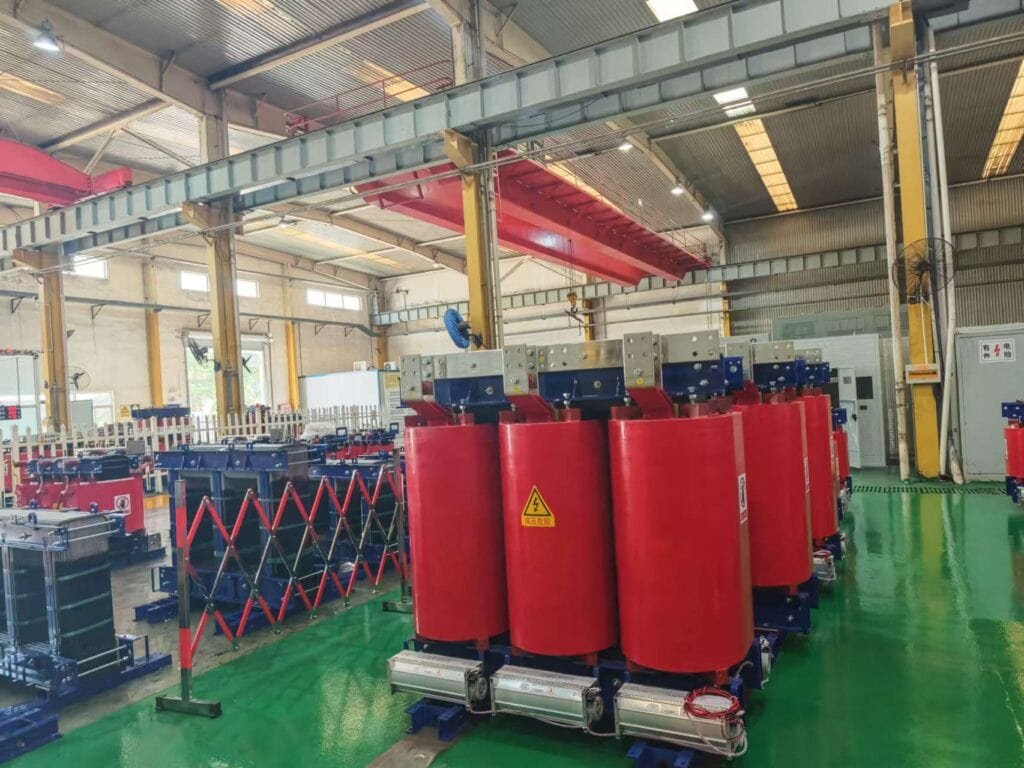
Choosing the right transformer construction is essential for electrical safety, reliability, and long-term operating performance. In locations where fire safety, indoor installation, environmental protection, or reduced maintenance are priorities, conventional liquid-filled transformers may introduce additional requirements for fluid containment and fire protection. Dry-type transformers provide an alternative by using solid insulation rather than relying on liquid insulation and cooling, making them particularly suitable for many buildings, industrial facilities, and other applications where installation conditions are demanding.
Dry-type power transformers are transformers that use air and solid insulation instead of liquid insulating oil for insulation and heat dissipation. Their main advantages include reduced fire and environmental risks, suitability for indoor installation, lower risk of insulating-fluid leakage, simpler installation in certain applications, and relatively low routine maintenance requirements. Common designs include cast-resin and other ventilated dry-type transformers, with the appropriate choice depending on voltage, capacity, environment, and application requirements.
Dry-type transformers are not automatically the best choice for every project. Their advantages should be evaluated alongside capacity, voltage level, cooling conditions, installation environment, efficiency, noise, space limitations, and total lifecycle cost. Understanding these factors helps buyers determine when a dry-type transformer is the more appropriate solution.
What Are Dry-Type Power Transformers and What Advantages Do Dry-Type Power Transformers Offer?
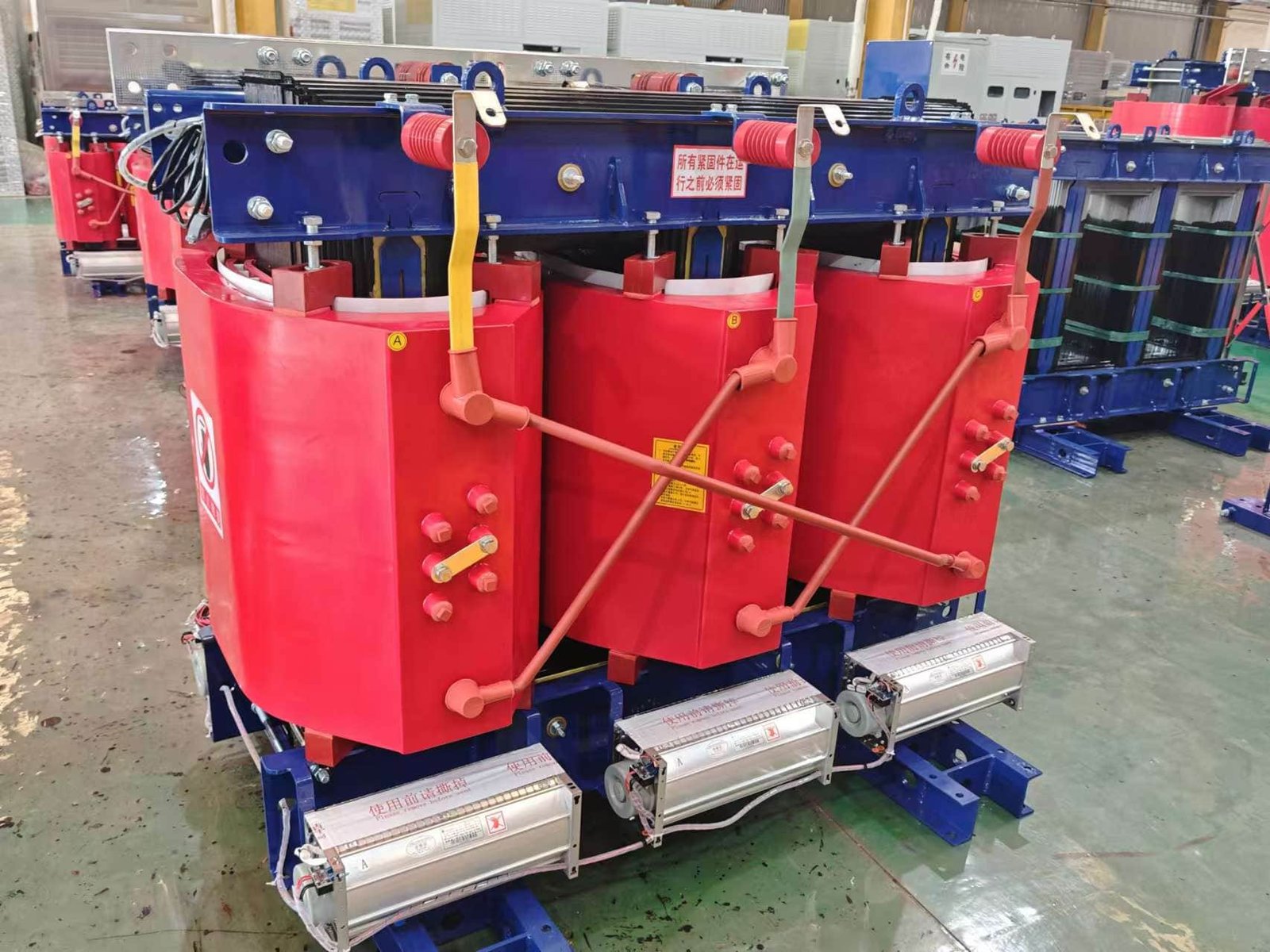
Dry-type power transformers are transformers that use air or solid insulation instead of liquid insulating oil as the primary external insulation and cooling medium. They are particularly useful where fire safety, indoor installation, environmental protection, or simplified maintenance is important. Unlike oil-immersed transformers, their windings are typically insulated with materials such as epoxy resin, varnish, paper, or other solid insulation systems and cooled by natural or forced air. The main challenge is that dry-type construction does not automatically outperform oil-immersed technology in every application; buyers must match the transformer design to voltage, capacity, load profile, ambient conditions, ventilation, and required service life.
Dry-type power transformers provide electrical isolation and voltage conversion without using liquid insulating oil. Their main advantages include reduced fire and spill risk, suitability for indoor installations, simpler environmental management, and potentially lower maintenance requirements. Common designs include cast-resin and VPI (vacuum pressure impregnated) transformers. Dry-type transformers are especially attractive for buildings, industrial facilities, commercial centers, renewable-energy installations, tunnels, hospitals, and other locations where fire safety or environmental sensitivity is important. However, heat dissipation, ventilation, humidity, contamination, and installation conditions must be carefully considered.
Dry-type transformers do not use any insulation material.False
Dry-type transformers do not use liquid insulating oil, but they rely on solid insulation systems such as epoxy resin, varnish, cellulose-based materials, or other electrical insulation materials.
How Does a Dry-Type Power Transformer Work?
The fundamental electromagnetic principle is the same as an oil-immersed transformer. The primary winding receives alternating current and establishes a changing magnetic flux in the transformer core. This changing flux induces voltage in the secondary winding, allowing the transformer to step voltage up or down while providing electrical isolation between circuits.
The major difference is the insulation and cooling system.
An oil-immersed transformer uses insulating liquid to provide dielectric insulation and transfer heat from the windings and core to the tank and radiators. A dry-type transformer instead relies primarily on solid insulation and air for heat dissipation.
This difference affects installation, thermal design, fire protection, maintenance, and environmental risk.
What Are the Main Types of Dry-Type Transformers?
Two widely encountered dry-type construction approaches are cast-resin and VPI transformers.
| Feature | Cast-Resin Transformer | VPI Transformer |
|---|---|---|
| Winding insulation | Resin encapsulation | Vacuum pressure impregnated insulation |
| Moisture resistance | Generally strong | Depends on insulation system |
| Environmental resistance | Good when properly designed | Good with appropriate protection |
| Mechanical strength | Strong encapsulated winding | Strong impregnated winding |
| Typical applications | Buildings, industrial, renewable energy | Industrial and commercial applications |
| Maintenance | Generally low | Generally low |
| Cooling | Air-based | Air-based |
Cast-resin transformers are especially attractive in environments where moisture, contamination, and fire safety are important. VPI designs can provide excellent electrical and mechanical performance while avoiding liquid insulation.
The appropriate design depends on the voltage class, capacity, site conditions, and manufacturer's engineering capability.
What Advantages Do Dry-Type Transformers Offer?
The most important advantage is the elimination of liquid insulating oil.
This can provide several practical benefits:
- Reduced liquid-spill risk
- Reduced fire-load concerns compared with conventional mineral-oil transformers
- Easier indoor installation
- Simplified environmental management
- No routine liquid-level monitoring
- No oil leakage from transformer tanks
- Reduced dependence on oil containment systems
- Useful compatibility with environmentally sensitive facilities
These advantages can be particularly valuable where installing an oil-filled transformer would require additional fire barriers, containment structures, drainage systems, or dedicated transformer rooms.
Why Are Dry-Type Transformers Attractive for Indoor Applications?
Indoor electrical installations often have limited space and strict fire-safety requirements.
A liquid-filled transformer may require additional measures to manage fire and potential oil leakage. A dry-type transformer eliminates the transformer oil itself, which can simplify facility design.
Typical applications include:
- Commercial buildings
- Hospitals
- Data centers
- Shopping centers
- High-rise buildings
- Airports
- Underground facilities
- Industrial plants
- Schools and universities
- Renewable-energy facilities
However, “dry-type” does not mean that ventilation can be ignored. The transformer still generates heat, and that heat must be removed effectively.
How Does Cooling Affect Dry-Type Transformer Reliability?
Cooling is one of the most important design considerations.
A dry-type transformer transfers heat primarily through air. If the surrounding air temperature is too high, ventilation is inadequate, or cooling passages become obstructed, winding temperature can rise significantly.
The installation therefore needs adequate:
- Airflow
- Ventilation
- Clearance
- Room volume
- Cooling capacity
- Temperature monitoring
Some transformers use natural air cooling, while larger or more heavily loaded designs may use forced-air cooling.
Buyers should always verify the specified cooling class and temperature-rise performance for the actual installation environment.
Are Dry-Type Transformers More Environmentally Friendly?
They can provide important environmental advantages, particularly because there is no mineral-oil inventory to manage.
However, the environmental performance of a transformer should not be judged solely by whether it is dry-type.
The transformer still contains:
- Copper or aluminum windings
- Electrical steel
- Epoxy or other insulation materials
- Structural steel
- Accessories
- Packaging materials
It also consumes energy through core and winding losses throughout its operating life.
Therefore, an efficient oil-immersed transformer can potentially have a lower overall lifecycle impact than an inefficient dry-type transformer.
A meaningful sustainability comparison should consider manufacturing impact + operating losses + service life + maintenance + end-of-life recovery.
What Are the Fire-Safety Benefits?
Fire safety is one of the strongest reasons to consider dry-type technology.
Without mineral insulating oil, the transformer does not have the same liquid-fuel inventory associated with a conventional oil-filled transformer.
This can be valuable in facilities where a transformer fire could have severe consequences.
The actual fire performance still depends on the insulation system, enclosure, installation, ventilation, and applicable fire standards. Buyers should therefore request the relevant fire classification and test documentation rather than treating every dry-type transformer as having identical fire behavior.
Does Dry-Type Mean Maintenance-Free?
No.
Dry-type transformers generally avoid oil-related maintenance, but they still require inspection and maintenance.
Typical activities can include:
- Cleaning dust from windings
- Checking ventilation paths
- Inspecting connections
- Checking grounding
- Inspecting insulation condition
- Checking cooling fans where installed
- Monitoring temperature
- Inspecting for contamination or moisture
- Verifying mechanical integrity
In dusty or chemically aggressive environments, cleaning requirements may be more significant than in a clean indoor electrical room.
What Are the Limitations of Dry-Type Transformers?
Dry-type technology also has limitations that buyers should understand.
The major considerations include:
- Cooling requirements: Air is generally less effective as a heat-transfer medium than transformer oil, so thermal design is critical.
- Environmental sensitivity: Dust, humidity, salt, and chemical contamination can affect exposed or inadequately protected insulation systems.
- Space requirements: Adequate ventilation and clearances are necessary.
- Capacity considerations: For some very large transformer applications, liquid-immersed technology may remain more practical.
- Initial cost: Cast-resin or specialized dry-type designs can have higher upfront costs in some markets.
- Noise: Magnetic and mechanical noise must be considered, especially in buildings.
Therefore, the best transformer technology depends on the application rather than on a simple “dry versus oil” preference.
How Should Buyers Compare Dry-Type and Oil-Immersed Transformers?
| Evaluation Factor | Dry-Type | Oil-Immersed |
|---|---|---|
| Liquid spill risk | Very low | Requires containment |
| Mineral-oil fire load | Eliminated | Present |
| Indoor suitability | Excellent for many applications | Requires additional fire/environmental considerations |
| Oil maintenance | Not required | Required |
| Cooling medium | Air | Insulating liquid |
| Large-capacity applications | Application-dependent | Very broad |
| Environmental site sensitivity | Often advantageous | Requires fluid management |
| Ventilation requirement | Important | Different thermal arrangement |
| Insulation maintenance | Cleaning/inspection | Fluid and insulation monitoring |
| Purchase cost | Can be higher | Often competitive |
| Lifecycle cost | Highly application-dependent | Highly application-dependent |
The comparison should use the same MVA rating, voltage class, efficiency target, temperature-rise requirement, and expected operating profile.
What Should Buyers Check Before Purchasing a Dry-Type Transformer?
A technical procurement specification should cover more than rated capacity.
Important questions include:
- What is the rated MVA?
- What are the primary and secondary voltages?
- What insulation level is required?
- What is the impedance?
- What cooling class is specified?
- What temperature-rise limit applies?
- What is the guaranteed no-load loss?
- What is the guaranteed load loss?
- What enclosure or IP protection is required?
- What ambient temperature applies?
- What altitude will the transformer operate at?
- Is the site humid, dusty, corrosive, or polluted?
- Is forced-air cooling required?
- What fire classification is required?
- What routine and type tests are included?
- What warranty and service support are provided?
These details determine whether a dry-type transformer will provide reliable service after installation.
How Do Dry-Type Power Transformers Differ From Oil-Filled Power Transformers?
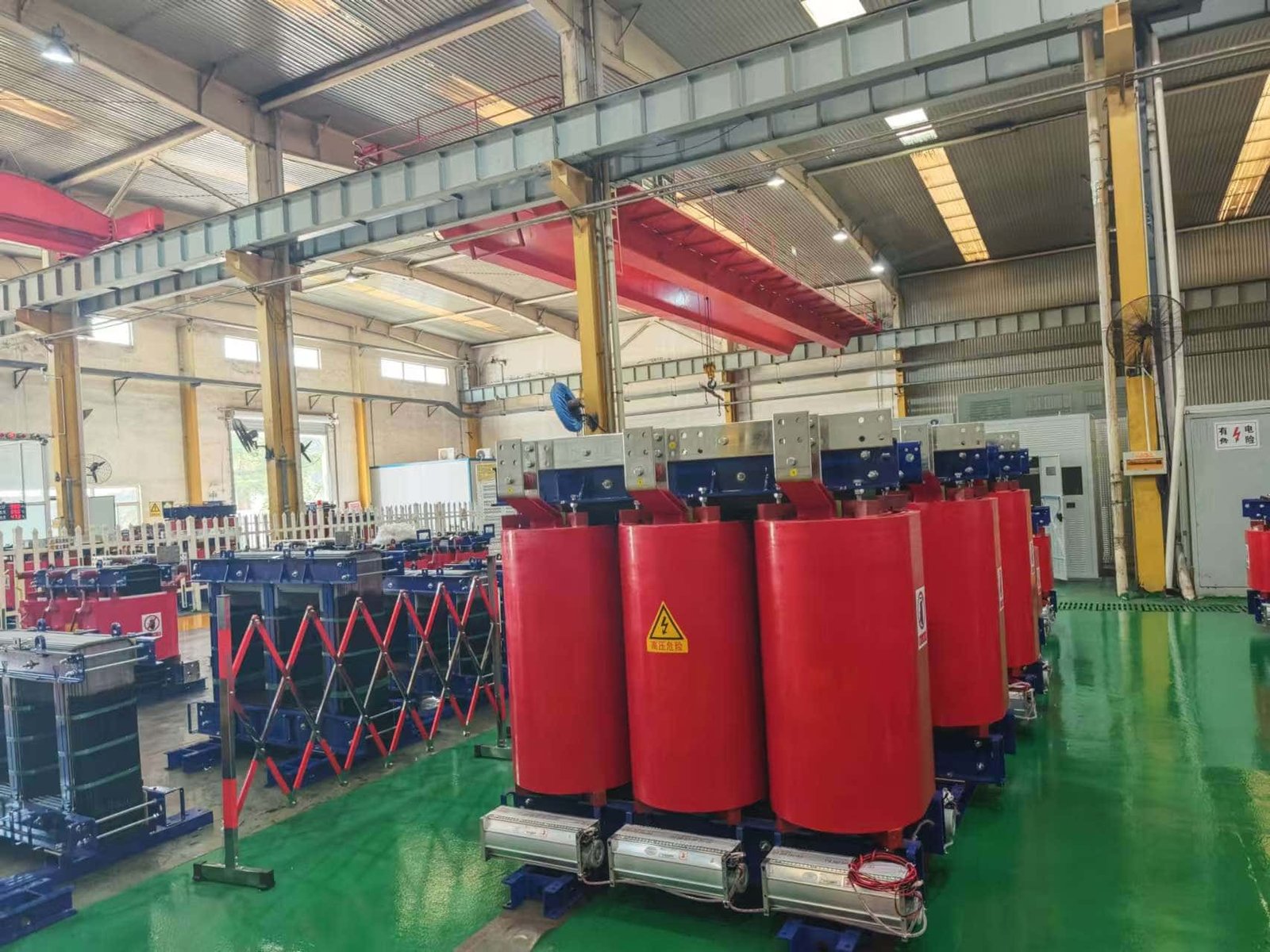
Dry-type and oil-filled power transformers perform the same fundamental function—transferring electrical energy between voltage levels through electromagnetic induction—but they differ substantially in insulation, cooling, fire safety, installation, maintenance, and environmental requirements. Choosing the wrong construction can lead to unnecessary installation costs, inadequate cooling, higher fire-protection requirements, or unsuitable performance in harsh environments. The main difference is that dry-type transformers use solid insulation and air-based cooling, while oil-filled transformers use insulating liquid for both dielectric insulation and heat transfer. Dry-type transformers are often preferred for indoor, fire-sensitive, and environmentally sensitive installations, while oil-filled transformers generally provide strong thermal performance and remain highly suitable for larger utility and outdoor applications.
Dry-type transformers are always safer and more efficient than oil-filled transformers.False
Dry-type transformers can reduce liquid-spill and mineral-oil fire risks, but efficiency and overall safety depend on transformer design, insulation, cooling, installation conditions, and operating requirements.
What Is the Fundamental Difference?
The most important difference is the insulation and cooling medium.
A dry-type power transformer does not use mineral oil or another liquid as its primary external insulating and cooling medium. Its windings typically use solid insulation systems such as epoxy resin, varnish, paper, or combinations of insulating materials, while heat is transferred to surrounding air.
An oil-filled transformer places its core and windings inside a tank containing insulating liquid. Mineral oil is traditional, although natural and synthetic ester fluids are increasingly used where fire safety and environmental performance are important.
The electromagnetic principle remains the same.
| Feature | Dry-Type Transformer | Oil-Filled Transformer |
|---|---|---|
| Primary insulation approach | Solid insulation | Liquid + solid insulation |
| Cooling medium | Air | Insulating liquid |
| Mineral-oil requirement | No | Usually, unless ester fluid is specified |
| Spill risk | Very low | Requires fluid containment |
| Indoor application | Highly suitable | Possible with additional precautions |
| Fire considerations | Generally favorable | Requires evaluation of fluid fire characteristics |
| Cooling performance | Air-dependent | Strong liquid heat transfer |
| Oil maintenance | Not applicable | Fluid testing and maintenance required |
| Large utility applications | Application-dependent | Very common |
| Environmental management | Simplified | Fluid management required |
Why Are Dry-Type Transformers Often Used Indoors?
Dry-type transformers are attractive for buildings and enclosed electrical facilities because there is no large volume of mineral insulating oil that could leak or contribute to a liquid-fueled fire.
Typical applications include:
- Commercial buildings
- Hospitals
- Data centers
- Airports
- Industrial plants
- Underground facilities
- High-rise buildings
- Renewable-energy installations
- Schools and public infrastructure
This can simplify transformer-room planning because designers may not need the same type of oil containment arrangements associated with conventional oil-filled equipment.
However, dry-type does not mean maintenance-free or installation-free. Adequate ventilation and clearance remain essential because the transformer still produces heat.
How Do Cooling Systems Differ?
Cooling is one of the most important engineering differences.
Oil-filled transformers use liquid to transfer heat away from the core and windings. The heated fluid can circulate naturally or through forced circulation and then release heat through radiators, coolers, or heat exchangers.
Dry-type transformers transfer heat directly to air. Natural-air cooling may be sufficient for some designs, while larger units can use fans for forced-air cooling.
This difference becomes increasingly important as transformer capacity increases.
A dry-type transformer installed in a poorly ventilated room can experience excessive winding temperatures even if the transformer itself is correctly manufactured.
Buyers should therefore verify:
- Cooling class
- Rated ambient temperature
- Temperature-rise guarantee
- Ventilation requirements
- Room clearances
- Fan requirements
- Continuous-load capability
The thermal design should always be evaluated according to the actual installation environment rather than simply comparing nameplate ratings.
Which Type Has Better Fire Safety?
Dry-type transformers have an important inherent advantage because they do not contain conventional mineral insulating oil.
Oil-filled transformers contain a substantial volume of liquid, so fire protection and containment requirements must be considered carefully. The actual risk depends on the fluid type, transformer construction, installation, and applicable fire-safety requirements.
Ester-filled transformers can narrow this difference because natural and synthetic ester fluids generally have significantly higher fire points than conventional mineral oil.
Therefore, the real comparison is not simply:
Dry-type = safe, oil-filled = unsafe.
A better comparison is:
Dry-type versus a specific liquid-filled transformer design using a specific insulating fluid under specific site conditions.
What About Environmental Performance?
Dry-type transformers eliminate the risk of an insulating-liquid spill, which can be valuable near environmentally sensitive locations.
Oil-filled transformers require management of:
- Fluid storage
- Leakage prevention
- Spill containment
- Fluid testing
- Fluid replacement or treatment
- End-of-life fluid disposal or recovery
However, oil-filled transformers can also use natural ester fluids, which may offer substantially improved biodegradability compared with conventional mineral oil.
Environmental performance should therefore include more than fluid selection. Buyers should also compare core loss, load loss, expected service life, manufacturing materials, maintenance, transportation, and recyclability.
Are Dry-Type Transformers More Efficient?
Not automatically.
Efficiency depends mainly on the transformer's electromagnetic design, including its core and winding characteristics.
Both dry-type and oil-filled transformers can be engineered with low no-load and load losses.
For example, buyers should compare:
- No-load loss
- Load loss
- Total loss at expected loading
- Temperature rise
- Annual operating hours
- Expected load profile
A dry-type transformer should not be selected solely because it is “dry” if another design provides substantially better electrical efficiency for the intended operating profile.
How Does Maintenance Differ?
Dry-type transformers eliminate many oil-related maintenance activities, but they still require regular inspection.
Dry-type maintenance may include:
- Cleaning accumulated dust
- Inspecting windings
- Checking terminals
- Checking grounding
- Inspecting insulation
- Checking cooling fans
- Monitoring temperature
- Inspecting ventilation paths
Oil-filled transformer maintenance can additionally involve:
- Insulating-fluid sampling
- Dielectric-strength testing
- Moisture analysis
- Dissolved-gas analysis where applicable
- Oil filtration or treatment
- Leak inspection
- Oil-level monitoring
This does not mean that dry-type transformers require no maintenance. Their maintenance profile is simply different.
Which Type Performs Better in Large Power Applications?
Oil-filled technology generally has a broader application range for high-capacity utility power transformers.
Liquid provides effective heat transfer, making it practical for equipment with substantial thermal loads. Oil-filled designs are widely used in generation, transmission, substations, and large industrial systems.
Dry-type technology is highly competitive in many medium-capacity applications, particularly where indoor installation, fire safety, or environmental considerations are important.
The appropriate choice depends on:
| Project Condition | Often Favorable Choice |
|---|---|
| Indoor commercial building | Dry-type |
| Fire-sensitive location | Dry-type or high-fire-point fluid transformer |
| Environmentally sensitive indoor site | Dry-type |
| Large outdoor substation | Oil-filled often preferred |
| Very high MVA application | Oil-filled often more practical |
| Limited ventilation | Requires careful evaluation; dry-type may be challenging |
| High humidity or contamination | Design-specific |
| Long-distance utility transmission | Oil-filled commonly used |
| Renewable-energy facility | Either, depending on application |
These are general tendencies, not universal rules.
How Should Buyers Choose Between Them?
Buyers should begin with the application rather than the transformer category.
Consider:
- Capacity and voltage — Does the transformer fall within the practical range of the selected technology?
- Installation location — Indoor, outdoor, underground, or rooftop?
- Fire requirements — What fire classification and building requirements apply?
- Environmental risk — Is fluid containment a major concern?
- Cooling — Can the installation provide sufficient ventilation?
- Efficiency — What are the guaranteed no-load and load losses?
- Maintenance — What inspection and testing resources are available?
- Environment — Are humidity, dust, salt, or chemical contamination significant?
- Lifecycle cost — What are purchase, installation, maintenance, and energy costs?
- Serviceability — Does the supplier have appropriate local technical support?
The best decision is usually the technology that meets the technical requirements with the lowest reasonable lifecycle risk and cost.
What Fire Safety and Environmental Advantages Do Dry-Type Power Transformers Offer?
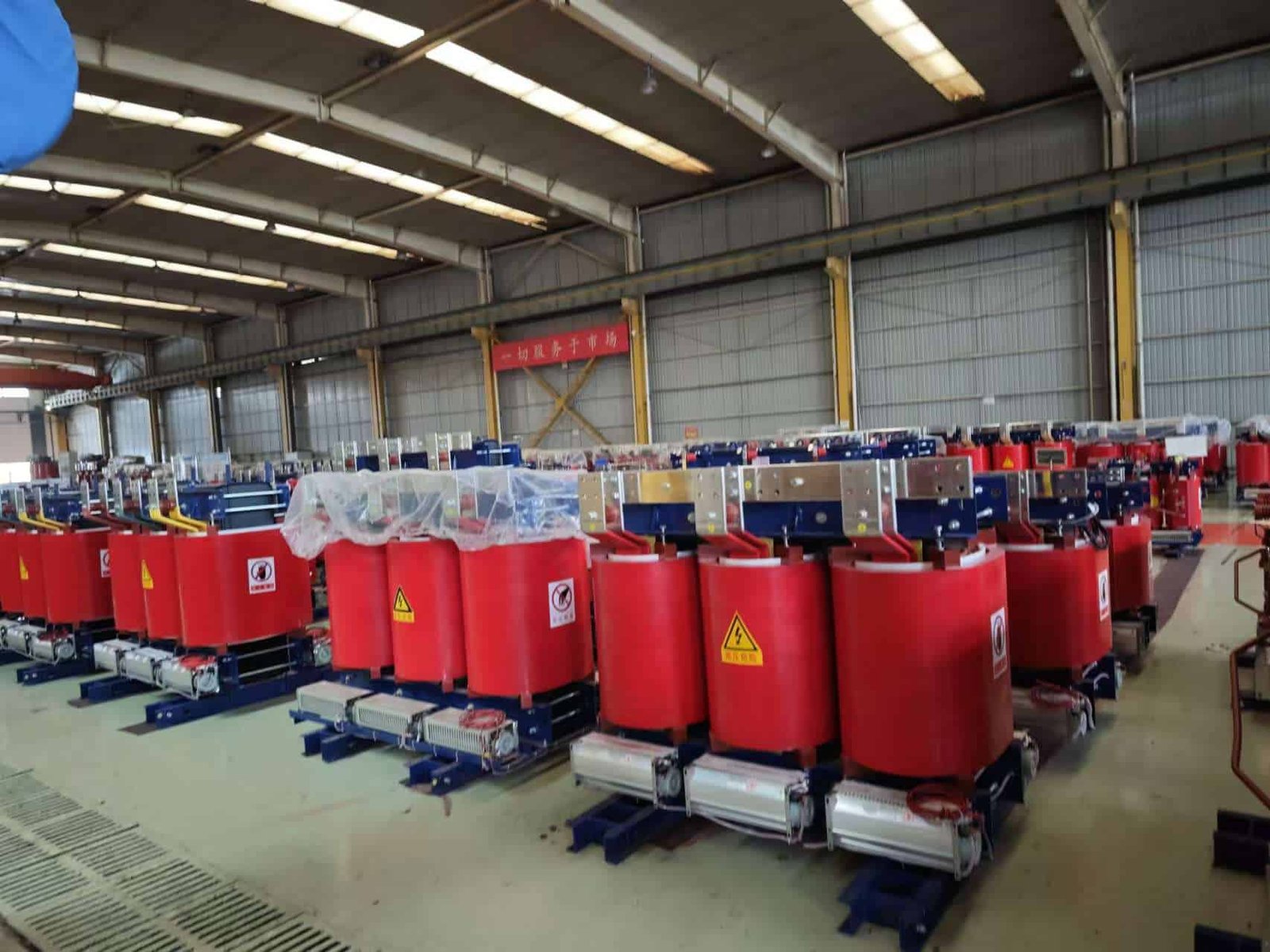
Power transformers are often installed in buildings, industrial plants, transportation infrastructure, renewable-energy facilities, and environmentally sensitive locations where transformer failure can have consequences beyond electrical interruption. Conventional oil-filled transformers rely on insulating liquid that can provide excellent cooling and dielectric performance, but the presence of a significant liquid inventory also introduces spill-management and fire-protection considerations. Dry-type power transformers approach the problem differently by using solid insulation and air-based cooling. This can reduce liquid-related hazards and simplify environmental management, but it does not make a transformer inherently risk-free. The real advantage comes from combining an appropriate dry-type design with adequate ventilation, enclosure protection, insulation quality, fire-rated construction, and proper electrical protection.
Dry-type power transformers offer important fire-safety and environmental advantages because they do not require a large volume of conventional mineral insulating oil for insulation and cooling. This eliminates the transformer-oil spill hazard and substantially reduces the liquid fuel inventory associated with an oil-filled transformer. Dry-type units are therefore often attractive for indoor, commercial, industrial, transportation, and environmentally sensitive installations. Their environmental advantages also include simpler spill management and potentially easier end-of-life material recovery. However, buyers should evaluate the complete transformer system—including insulation materials, enclosure, cooling, fire classification, electrical losses, service life, and installation conditions—rather than assuming that every dry-type transformer has identical environmental or fire performance.
Dry-type power transformers cannot catch fire because they contain no insulating oil.False
Dry-type transformers eliminate conventional liquid insulating oil but still contain electrical insulation, conductors, and other combustible or heat-sensitive materials; electrical faults and excessive temperatures can still create fire risks, so appropriate protection remains necessary.
Why Does Transformer Construction Matter for Fire Safety?
A transformer is an energy-conversion device operating under electrical, thermal, and mechanical stress. Even a properly designed transformer can experience abnormal conditions such as winding faults, insulation breakdown, overcurrent, overheating, or connection failures.
In an oil-filled transformer, a major additional consideration is the presence of insulating liquid. Conventional mineral oil is combustible, so a severe internal fault can potentially involve the insulating liquid and create a serious fire event.
A dry-type transformer removes this particular hazard.
There is no large mineral-oil tank surrounding the active electrical components. Instead, the transformer typically uses solid insulation around or within the windings and transfers heat to air.
This changes the risk profile.
| Fire and Environmental Factor | Dry-Type Transformer | Conventional Oil-Filled Transformer |
|---|---|---|
| Large mineral-oil inventory | No | Yes |
| Mineral-oil spill risk | Eliminated | Present |
| Oil containment | Generally unnecessary | Often required |
| Liquid-fueled fire concern | Greatly reduced | Must be evaluated |
| Indoor installation | Often advantageous | Requires additional assessment |
| Solid insulation fire behavior | Must be evaluated | Also present |
| Cooling | Air-based | Liquid-based |
| Environmental spill response | Simpler | More complex |
| Fire protection requirements | Still required | Typically more extensive |
| Maintenance | No oil testing | Fluid testing commonly required |
The important distinction is risk reduction rather than risk elimination.
How Does Eliminating Mineral Oil Improve Fire Safety?
The most direct benefit is the removal of a large combustible liquid inventory.
For a conventional oil-filled transformer, the insulating liquid serves two important functions: it provides electrical insulation and transfers heat away from the windings and core. The quantity of liquid can become substantial as transformer capacity increases.
If a serious fault occurs, the liquid becomes part of the fire-risk assessment.
With a dry-type transformer, that particular source of combustible liquid is absent.
This can be especially valuable in:
- High-rise buildings
- Hospitals
- Shopping centers
- Airports
- Railway systems
- Underground facilities
- Data centers
- Schools and universities
- Industrial buildings
- Indoor substations
- Environmentally sensitive sites
However, the transformer still contains copper or aluminum conductors, solid insulation, resin or varnish systems, and other materials. Electrical protection remains essential.
Does a Dry-Type Transformer Require Less Fire Protection?
It can simplify the fire-protection strategy, but buyers should not assume that all fire-protection requirements disappear.
The exact requirements depend on:
- Transformer rating
- Installation location
- Building classification
- Transformer enclosure
- Insulation system
- Applicable electrical codes
- Local fire regulations
- Required fire resistance
- Clearance from combustible materials
- Ventilation arrangement
- Emergency response requirements
In some projects, eliminating oil containment can substantially simplify the transformer room. In others, fire-rated enclosures, detection systems, ventilation controls, or automatic suppression may still be required.
Therefore, the correct procurement question is not:
“Does a dry-type transformer need fire protection?”
It is:
“What fire-protection system is appropriate for this specific dry-type transformer and installation?”
What Environmental Advantage Does the Absence of Oil Provide?
The absence of mineral insulating oil creates a particularly clear environmental benefit: there is no large transformer-oil inventory that can leak into soil, drainage systems, or surface water.
This can be important for substations located near:
- Rivers
- Lakes
- Wetlands
- Agricultural land
- Drinking-water infrastructure
- Protected ecological areas
- Dense urban development
An oil-filled transformer can be safely operated with appropriate containment and environmental controls, but those systems add equipment, inspection requirements, and emergency-response considerations.
A dry-type transformer removes the liquid spill pathway altogether.
That does not mean that a dry-type transformer has zero environmental impact. Manufacturing, transportation, electricity losses, materials, and eventual disposal remain relevant.
How Does Dry-Type Technology Support Indoor Environmental Protection?
Indoor transformer installations can create a particularly strong case for dry-type technology.
If an oil-filled transformer is installed inside a building, the project may need to address oil containment, drainage, fire separation, ventilation, and emergency response.
A dry-type transformer can reduce the complexity associated with those liquid-related risks.
This can be particularly useful in buildings where available space is limited.
The advantage is therefore not simply environmental. It can also affect the overall building design and installation cost.
For example, removing the need for a large oil-containment system may create more flexibility in transformer-room layout. The actual benefit depends on local codes and project design, but it is an important factor when comparing transformer technologies.
Are Cast-Resin Transformers More Environmentally Preferable?
Cast-resin transformers are a common dry-type solution.
In these designs, the windings are encapsulated or embedded in an epoxy-resin insulation system. This provides mechanical protection and helps shield the winding insulation from environmental contamination.
Potential advantages include:
- No insulating-oil spill
- Strong mechanical winding support
- Good resistance to moisture under appropriate design conditions
- Reduced liquid-related fire risk
- Suitability for many indoor installations
- Simplified fluid maintenance
However, the environmental performance of epoxy resin should also be considered as part of the complete lifecycle.
Resin is not automatically “green” simply because the transformer is dry-type. Buyers should evaluate material composition, manufacturing impact, service life, repairability, and end-of-life treatment.
How Does Dry-Type Technology Compare With Ester-Filled Transformers?
The comparison is becoming more interesting because oil-filled technology itself has evolved.
Natural and synthetic ester fluids can provide higher fire points and favorable biodegradability characteristics compared with conventional mineral oil.
Therefore, buyers may encounter three practical choices:
- Conventional mineral-oil transformer
- Ester-filled liquid transformer
- Dry-type transformer
The correct choice depends on the project.
| Consideration | Mineral Oil | Ester Fluid | Dry-Type |
|---|---|---|---|
| Liquid spill risk | Present | Present | No insulating liquid |
| Biodegradability | Lower | Generally favorable for ester fluids | Not applicable to liquid |
| Fire characteristics | Requires careful management | Generally favorable | No liquid-oil inventory |
| Cooling | Excellent | Excellent | Air-based |
| Indoor suitability | Project-dependent | Project-dependent | Often strong |
| Environmental containment | Required where applicable | Still required | Simplified |
| Large transformer applications | Very broad | Broad and growing | More application-dependent |
This demonstrates why “dry-type versus oil-filled” is not always the most complete sustainability comparison.
Does Dry-Type Mean Zero Environmental Impact?
No.
This is an important distinction for sustainability-focused procurement.
A dry-type transformer still requires significant quantities of:
- Electrical steel
- Copper
- Aluminum in some designs
- Epoxy or varnish
- Steel structures
- Insulation materials
- Bushings
- Cooling equipment
- Packaging
These materials require energy and resources to manufacture.
More importantly, the transformer consumes electricity through no-load and load losses throughout its operating life.
For a transformer that remains energized continuously, decades of operating losses can be much larger than some differences in embodied material impact.
Therefore, a genuinely environmentally responsible selection should consider:
Embodied impact + operating losses + service life + maintenance + end-of-life recovery
rather than dry-type construction alone.
How Do Transformer Losses Affect Environmental Performance?
Every transformer consumes some energy internally.
Core losses occur while the transformer is energized, while load losses increase with current and therefore depend on loading.
For example, if a transformer has a continuous no-load loss of 5 kW:
5 kW × 8,760 hours/year = 43,800 kWh/year
Over 20 years, that is approximately:
876,000 kWh
before considering changes in operating conditions.
Consequently, buyers should not sacrifice electrical efficiency merely to obtain a dry-type construction.
The best environmental solution may be a dry-type transformer with carefully optimized core and winding designs that minimize both no-load and load losses.
What Role Does Ventilation Play in Environmental and Fire Performance?
Dry-type transformers depend heavily on air for heat removal.
This makes ventilation a critical part of the installation.
If the transformer room is poorly ventilated, heat can accumulate. Higher winding temperatures accelerate insulation aging and can reduce service life.
A properly engineered ventilation system should consider:
- Transformer heat rejection
- Room dimensions
- Ambient temperature
- Airflow path
- Exhaust location
- Intake temperature
- Dust filtration where necessary
- Fan redundancy where required
This creates an important connection between fire safety and reliability.
A transformer that eliminates oil but operates continuously at excessive temperature is not a sustainable solution. Shorter insulation life can result in earlier replacement and higher lifecycle material consumption.
How Does Dry-Type Construction Help With Spill Response?
Oil-filled transformers require a response strategy for potential fluid leaks.
Depending on the site, this may involve:
- Bund walls
- Oil containment pits
- Drainage isolation
- Oil-water separators
- Leak detection
- Emergency response equipment
- Fluid recovery procedures
Dry-type transformers eliminate most of these oil-specific requirements because there is no transformer insulating liquid to escape.
This can simplify environmental emergency planning.
It is particularly valuable at sites where accidental contamination could have high consequences.
Can Dry-Type Transformers Be Recycled?
Yes, many of their major materials can be recovered.
A dry-type transformer can contain substantial quantities of recyclable metals, including:
- Copper
- Aluminum
- Steel
- Electrical steel
The resin and composite insulation system is more complicated than the metallic components, but the transformer can still be dismantled and its recoverable materials separated.
This makes end-of-life planning important.
Buyers can improve sustainability by asking suppliers for:
- Material identification
- Component documentation
- Recycling guidance
- Fluid-free dismantling procedures
- Recovery information
- Disposal instructions for resin and insulation materials
A transformer designed for practical material recovery can contribute to circular-economy objectives.
What Are the Environmental Advantages in Sensitive Locations?
The absence of oil can be particularly valuable in environmentally sensitive locations.
Consider a transformer installed near a waterway. An oil-filled unit can be safely installed, but the project may require extensive containment and emergency planning to protect the surrounding environment.
A dry-type transformer avoids the possibility of an insulating-fluid spill.
This can reduce environmental risk at:
- Water-treatment facilities
- Coastal infrastructure
- Underground transportation systems
- Renewable-energy sites
- Protected areas
- Urban substations
- Industrial sites near waterways
The benefit should still be evaluated against ventilation, humidity, pollution, and temperature conditions.
Does Dry-Type Technology Improve Indoor Air Quality?
The answer requires nuance.
Dry-type transformers do not release mineral-oil vapor because they do not contain conventional transformer oil. However, this should not be interpreted as a general guarantee of improved indoor air quality under all operating conditions.
Solid insulation systems can contain resins and other materials, and overheating can affect materials.
Proper ventilation and manufacturer-approved operating conditions remain important.
How Should Buyers Specify Fire Performance?
A buyer should avoid vague language such as “fireproof transformer.”
Instead, the specification should identify measurable requirements.
Possible procurement criteria include:
- Applicable fire classification
- Insulation-system characteristics
- Enclosure requirements
- Temperature-rise limits
- Overload capability
- Fault protection
- Fire separation requirements
- Applicable testing
- Installation clearances
- Ventilation requirements
The transformer manufacturer should provide supporting documentation corresponding to the selected design.
How Can Buyers Compare Environmental Performance Fairly?
A useful procurement matrix should combine safety, environmental, and electrical criteria.
| Evaluation Area | Key Buyer Question | Importance |
|---|---|---|
| Fire safety | What combustible materials and fire risks remain? | High |
| Spill risk | Is there insulating liquid? | High |
| No-load loss | How much energy is consumed continuously? | High |
| Load loss | What are losses under actual loading? | High |
| Service life | How long is the insulation system designed to operate? | High |
| Ventilation | What cooling infrastructure is required? | High |
| Materials | What metals and insulation materials are used? | Medium–High |
| Recycling | How can materials be recovered? | Medium |
| Maintenance | What inspections are required? | Medium |
| Environmental site | What pollution, humidity, or water risks exist? | High |
This approach prevents buyers from selecting a transformer based on one environmental feature while overlooking more significant lifecycle factors.
What Should Buyers Ask Dry-Type Transformer Manufacturers?
Before placing an order, buyers should ask the supplier:
- What dry-type insulation technology is used?
- Is the winding cast-resin, VPI, or another construction?
- What fire classification applies?
- What tests support the fire-performance claims?
- What are the guaranteed no-load and load losses?
- What ventilation conditions are required?
- What ambient temperature is assumed?
- What humidity and pollution levels can the transformer tolerate?
- What maintenance schedule is recommended?
- What is the expected insulation life?
- What materials are used in the insulation system?
- What recycled metals can be incorporated?
- What end-of-life recycling information is available?
- Which standards are applied to design and testing?
- What factory acceptance tests are included?
These questions help distinguish a genuinely engineered solution from a generic “eco-friendly” product claim.
How Do Dry-Type Power Transformers Perform in Indoor and Industrial Applications?
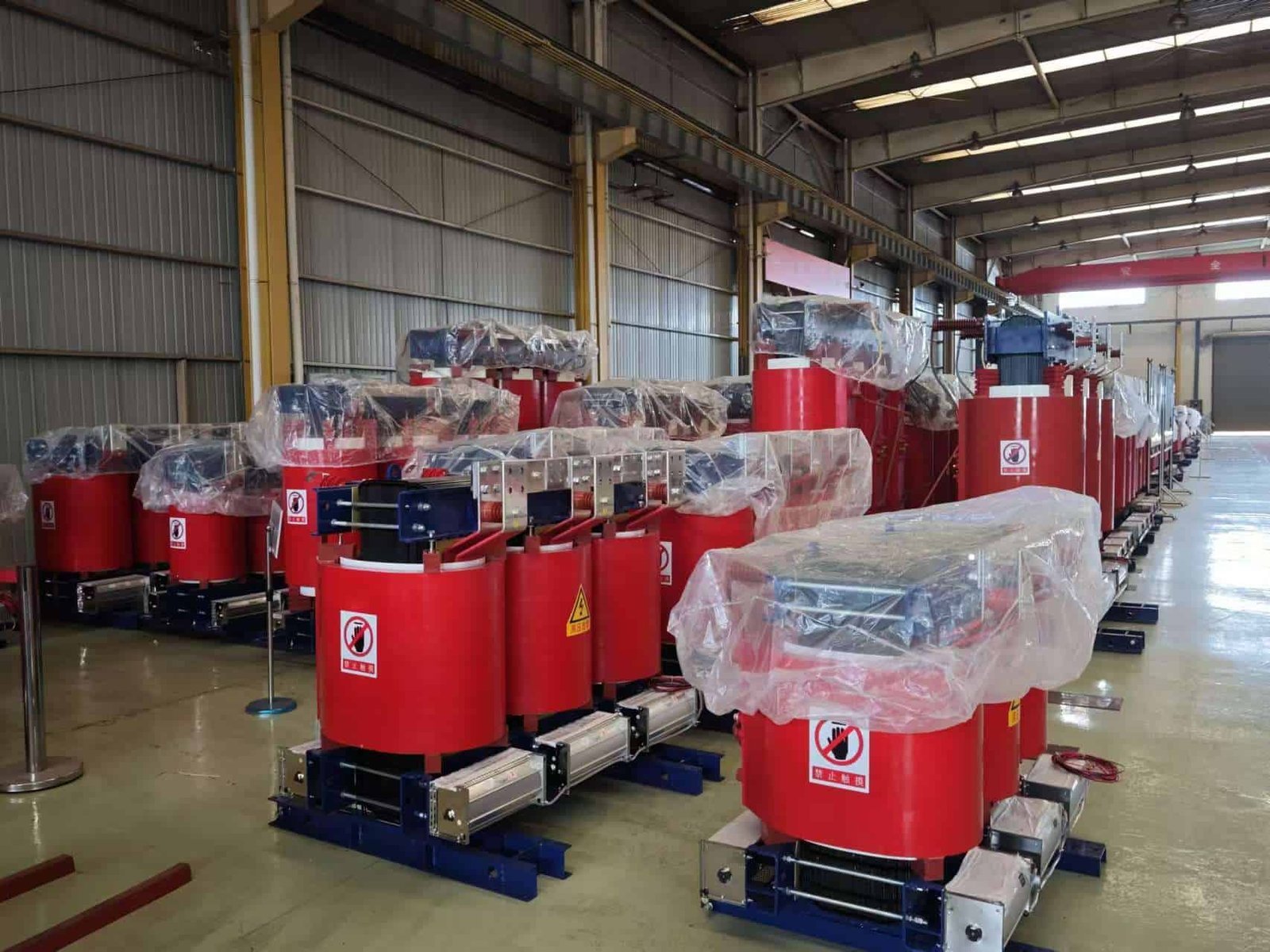
Dry-type power transformers are widely used in indoor electrical systems and industrial facilities because they combine voltage transformation with the practical advantages of solid insulation and air-based cooling. For buildings, factories, data centers, hospitals, transportation infrastructure, and renewable-energy installations, the absence of conventional insulating oil can simplify fire-risk management and eliminate liquid-spill concerns. However, industrial environments can also expose transformers to dust, humidity, chemicals, vibration, high ambient temperatures, and demanding load cycles. Dry-type transformers perform reliably in indoor and industrial applications when the transformer design, insulation system, cooling arrangement, enclosure, and environmental protection are properly matched to the installation. Their main strengths are low liquid-related risk, good indoor suitability, simplified oil maintenance, and robust operation, while their most important limitations involve heat dissipation, ventilation, contamination, and environmental conditions.
Dry-type power transformers are unsuitable for demanding industrial applications because air cooling cannot provide reliable operation.False
Dry-type transformers are widely used in industrial applications when their cooling class, enclosure, ventilation, ambient conditions, and loading are appropriately engineered and specified.
Why Are Dry-Type Transformers Suitable for Indoor Applications?
The strongest application case for dry-type transformers is often inside buildings. Conventional oil-filled transformers require consideration of insulating-fluid storage, leakage, containment, and fire protection. Dry-type transformers eliminate the conventional transformer-oil inventory and instead use solid insulation around the windings.
This makes them particularly attractive where a transformer is located close to people, equipment, or combustible building materials.
Typical applications include:
- Commercial buildings
- Hospitals
- Data centers
- Shopping centers
- High-rise buildings
- Airports
- Railway systems
- Underground facilities
- Universities
- Industrial production buildings
- Renewable-energy facilities
The transformer still generates heat, so indoor installation does not mean that ventilation can be ignored. In fact, ventilation is one of the most important design factors for an indoor dry-type transformer.
How Does a Dry-Type Transformer Perform in Industrial Facilities?
Industrial facilities can be considerably more demanding than ordinary commercial buildings. Transformer performance may be affected by continuous high loading, motor starting currents, harmonic-producing equipment, dust, moisture, corrosive chemicals, vibration, and elevated ambient temperature.
A properly specified dry-type transformer can handle these conditions, but the buyer must select the correct construction.
| Industrial Condition | Required Transformer Consideration |
|---|---|
| High continuous load | Correct MVA rating and temperature-rise design |
| High ambient temperature | Derating and thermal calculation |
| Dust | Appropriate enclosure and cleaning strategy |
| Humidity | Suitable insulation and environmental protection |
| Chemical contamination | Corrosion-resistant construction |
| Harmonic loads | Additional loss and heating evaluation |
| Frequent motor starting | Voltage-drop and mechanical-load assessment |
| Vibration | Mechanical winding and mounting design |
| Limited ventilation | Detailed room thermal calculation |
| Outdoor or semi-outdoor installation | Suitable enclosure and environmental protection |
The key principle is that dry-type technology is not a universal environmental rating. The transformer must be engineered for the actual industrial environment.
How Does Cooling Influence Reliability?
Heat is one of the primary factors governing transformer insulation life.
Dry-type transformers normally transfer heat from the windings and core to the surrounding air. Natural-air cooling can be sufficient for many applications, while larger or heavily loaded transformers may use fans to increase airflow.
A useful engineering relationship is that transformer temperature rise depends on losses, thermal design, and the effectiveness of heat removal. If the surrounding room temperature is already high, the transformer has less thermal margin.
For example, a transformer installed in a poorly ventilated electrical room may operate at a higher winding temperature than an identical transformer installed in a well-ventilated room.
This can accelerate insulation aging.
Therefore, buyers should verify:
- Cooling class
- Ambient temperature
- Temperature-rise guarantee
- Required airflow
- Minimum room clearances
- Fan operation and control
- Temperature monitoring
- Emergency ventilation requirements
What Is the Difference Between Natural and Forced-Air Cooling?
Dry-type transformers can use different cooling arrangements depending on their design and rating.
Natural-air cooling relies on convection and the natural movement of air around the transformer. It is relatively simple and avoids fan-related maintenance.
Forced-air cooling uses fans to increase airflow across the transformer. This can increase the transformer's usable capacity under appropriate operating conditions.
| Cooling Approach | Advantages | Considerations |
|---|---|---|
| Natural air | Simple, quiet, fewer moving parts | Requires adequate ventilation |
| Forced air | Improved heat removal and possible capacity enhancement | Fans require maintenance and control |
| Fan-assisted operation | Flexible thermal management | Must account for fan failure |
Industrial buyers should not assume that forced-air cooling automatically provides more reliable operation. Fan reliability, control logic, alarms, and maintenance must also be considered.
How Do Cast-Resin Transformers Perform in Harsh Indoor Environments?
Cast-resin transformers are particularly common in industrial and commercial applications because the resin-encapsulated winding provides physical protection around important insulation components.
This can be advantageous where the transformer may experience:
- Moisture
- Dust
- Mechanical contamination
- Industrial pollution
- Intermittent humidity
- Restricted access for maintenance
The encapsulated winding can provide additional protection compared with insulation systems that leave more winding surfaces exposed.
Nevertheless, cast resin does not make the transformer immune to environmental contamination. The enclosure, ventilation openings, terminals, cooling surfaces, and surrounding electrical equipment still require appropriate protection.
How Do Dry-Type Transformers Handle Dust?
Dust is a major consideration in industrial plants.
Accumulated dust can reduce heat dissipation and, depending on its composition, potentially create contamination or tracking concerns around electrical insulation.
A transformer in a clean indoor electrical room may require relatively limited cleaning. A transformer near a cement plant, woodworking process, metal-processing area, or other dusty production environment may require a substantially different maintenance strategy.
Buyers should consider:
- Enclosure type
- Airflow path
- Filtration
- Transformer-room separation
- Cleaning intervals
- Dust composition
- Accessibility for inspection
The best solution is often to place the transformer in a dedicated electrical room rather than directly inside a heavily contaminated production area.
Can Dry-Type Transformers Handle Humidity?
Yes, when appropriately designed and installed.
Humidity becomes particularly important when a transformer experiences condensation. Moisture can reduce insulation performance and contribute to corrosion or surface contamination.
A dry-type transformer should therefore be protected against condensation through appropriate:
- Room temperature control
- Ventilation
- Heating where necessary
- Enclosure design
- Insulation selection
- Maintenance procedures
For tropical, coastal, or high-humidity industrial environments, buyers should provide the manufacturer with actual site conditions rather than simply specifying “indoor use.”
How Do Industrial Loads Affect Dry-Type Transformer Performance?
Industrial loads are often more complex than ordinary building loads.
Motors, variable-frequency drives, rectifiers, welding equipment, UPS systems, and power electronics can introduce harmonic currents or rapid load changes.
These conditions can increase transformer heating even when the average load appears acceptable.
For this reason, the supplier should receive information about:
- Load type
- Peak demand
- Average demand
- Motor starting
- Harmonic content
- Nonlinear loads
- Duty cycle
- Expected overloads
A transformer designed for a stable resistive load may not be the optimum choice for a factory dominated by variable-speed drives or other nonlinear equipment.
Are Dry-Type Transformers Suitable for Data Centers?
They can be very suitable, particularly because data centers place a strong emphasis on indoor fire safety, reliability, and controlled electrical environments.
However, data centers also have high continuous loading and strict uptime requirements. Transformer selection should therefore consider:
- Continuous loading
- Redundancy
- Harmonics
- Cooling
- Noise
- Temperature monitoring
- Maintenance access
- Emergency power systems
In such applications, the transformer's guaranteed losses and thermal performance can be more important than its initial purchase price.
How Do They Perform in Renewable-Energy Systems?
Dry-type transformers are also used in renewable-energy applications, including solar and wind power systems.
They can be attractive for:
- Solar inverter systems
- Battery energy-storage systems
- Wind-power electrical systems
- Indoor renewable-energy facilities
- Commercial photovoltaic installations
However, renewable-energy transformers may experience variable loading and harmonics from power electronic converters. The transformer therefore needs to be designed around the actual inverter or converter characteristics.
What Are the Main Advantages in Industrial Applications?
Dry-type transformers offer several practical advantages.
First, they eliminate conventional transformer-oil leakage. This can simplify environmental protection and indoor installation.
Second, they reduce oil-related fire concerns. This can be valuable in buildings and industrial areas where fire consequences are significant.
Third, they can simplify maintenance. There is no transformer oil requiring routine sampling, filtration, or dissolved-gas analysis.
Fourth, they can provide strong mechanical protection. Cast-resin windings, in particular, can provide a robust insulation structure.
Fifth, they can integrate well into indoor electrical systems. This can reduce the complexity of transformer-room planning.
What Are the Main Limitations?
The limitations are equally important.
| Factor | Potential Challenge |
|---|---|
| Heat dissipation | Requires effective airflow |
| High ambient temperature | May require derating |
| Dust | Can reduce cooling and insulation cleanliness |
| Humidity | Requires condensation control |
| Chemical pollution | Requires suitable environmental protection |
| Very large capacity | Liquid cooling may become more practical |
| Fans | Additional maintenance for forced-air designs |
| Noise | Must be considered in occupied buildings |
| Installation space | Adequate clearances are required |
A good procurement decision should explicitly evaluate both advantages and limitations.
How Should Buyers Specify a Dry-Type Transformer for Industry?
A practical specification should include more than MVA and voltage.
At minimum, consider:
- Rated capacity
- Primary and secondary voltage
- Frequency
- Insulation level
- Impedance
- Cooling class
- Temperature-rise limit
- Ambient temperature
- Altitude
- Enclosure requirements
- Harmonic loading
- Short-circuit withstand
- Noise limits
- Fire-performance requirements
- Environmental conditions
- Guaranteed no-load loss
- Guaranteed load loss
- Factory testing
- Warranty
- Maintenance requirements
This information gives the manufacturer enough engineering context to select the appropriate insulation and cooling system.
How Can Buyers Improve Long-Term Reliability?
The most important reliability strategy is to avoid treating the transformer as an isolated component.
The transformer, electrical room, ventilation system, protection system, upstream network, downstream load, and maintenance program should be considered together.
For example, a well-designed transformer can still experience premature aging if:
- Room temperature is excessive
- Ventilation is inadequate
- Dust blocks cooling surfaces
- Harmonic loading is underestimated
- Connections are not maintained
- Overloads occur frequently
Consequently, correct application engineering can be just as important as transformer manufacturing quality.
What Maintenance and Operating Advantages Do Dry-Type Power Transformers Offer?
Dry-type power transformers are increasingly selected for commercial buildings, industrial plants, data centers, renewable-energy facilities, transportation infrastructure, and other installations where simple operation and reduced liquid-related maintenance are important. Conventional oil-filled transformers have excellent thermal performance, but their insulating fluid introduces additional inspection, sampling, leak-control, and environmental-management requirements. Dry-type transformers remove many of these tasks, but they do not become maintenance-free. The main operating advantages of dry-type transformers are the elimination of insulating-fluid maintenance, reduced leakage risk, simplified inspections, easier indoor installation, and straightforward visual condition monitoring. Their long-term reliability still depends heavily on temperature control, ventilation, cleanliness, insulation condition, electrical connections, loading, and periodic testing.
Dry-type power transformers can reduce maintenance complexity because they do not require conventional transformer-oil sampling, filtration, oil-level monitoring, or leak inspection. Operators can focus instead on cleaning, ventilation, winding and insulation inspection, connection integrity, temperature monitoring, grounding, and cooling-system condition. This can be particularly advantageous in indoor and industrial applications where access is limited or where oil containment and fluid management would increase operating complexity. However, reduced maintenance does not mean no maintenance: dust, moisture, excessive temperature, harmonic loading, loose connections, and blocked ventilation can still accelerate insulation aging and reduce transformer life.
Dry-type power transformers require no routine maintenance because they contain no insulating oil.False
Dry-type transformers eliminate oil-related maintenance but still require inspection, cleaning, temperature monitoring, connection checks, ventilation maintenance, and periodic electrical testing according to their application and operating environment.
Why Is Maintenance Different for Dry-Type Transformers?
The fundamental maintenance difference comes from the absence of conventional insulating liquid. In an oil-filled transformer, the insulating fluid is simultaneously part of the dielectric system and the thermal-management system. Its condition can change over time because of moisture, oxidation, contamination, dissolved gases, and aging. Consequently, operators may need to monitor fluid level and quality and perform additional fluid-related maintenance.
A dry-type transformer replaces this liquid-based maintenance requirement with a solid-insulation and air-cooling maintenance strategy. Operators therefore concentrate on the physical and electrical condition of the transformer itself.
| Maintenance Item | Dry-Type Transformer | Oil-Filled Transformer |
|---|---|---|
| Oil sampling | Not required | Commonly required |
| Oil dielectric testing | Not required | Commonly required |
| Oil-level inspection | Not required | Required where applicable |
| Oil leakage inspection | Not applicable | Important |
| Winding cleaning | Important | Important, depending on construction |
| Ventilation inspection | Very important | Important |
| Temperature monitoring | Important | Important |
| Connection inspection | Important | Important |
| Cooling-system inspection | Air paths/fans | Radiators, fluid circulation, fans |
| Moisture management | Environmental control | Fluid and insulation management |
| Fluid filtration | Not required | May be required |
| Environmental spill response | Simplified | More involved |
This does not mean one technology is universally easier to maintain. Rather, the maintenance tasks are different.
What Oil-Related Maintenance Can Dry-Type Transformers Eliminate?
One of the clearest operating advantages is the removal of routine transformer-fluid management.
Depending on the oil-filled design, maintenance programs may include:
- Fluid sampling
- Dielectric-strength testing
- Moisture testing
- Dissolved-gas analysis
- Oil-level inspection
- Leakage inspection
- Oil filtration
- Oil treatment
- Fluid replacement
- Spill-response planning
Dry-type transformers do not require these oil-specific procedures.
This can be especially useful for facilities with limited maintenance personnel or installations where the transformer is located in a restricted-access electrical room. Eliminating fluid management can also reduce the need to store replacement oil or arrange specialized oil-handling services.
However, buyers should avoid treating this as the only maintenance consideration. A dry-type transformer can still require significant preventive maintenance in a dusty industrial environment.
Why Is Cleaning Important for Dry-Type Transformers?
Air cooling creates a particularly important maintenance requirement: clean airflow paths.
Dust and contaminants can accumulate on transformer surfaces and cooling passages. As deposits increase, heat dissipation can become less effective. In severe environments, conductive or chemically active contamination can also affect insulation surfaces.
The required cleaning interval depends heavily on the installation.
A transformer inside a clean, temperature-controlled electrical room may require relatively infrequent cleaning. A transformer near cement production, metal processing, woodworking, textile production, or other dusty processes may need substantially more frequent inspection.
A practical maintenance program should therefore consider:
- Dust concentration
- Particle type
- Room cleanliness
- Ventilation
- Transformer enclosure
- Operating temperature
- Accessibility
- Manufacturer recommendations
How Does Ventilation Affect Operating Reliability?
Ventilation is arguably one of the most important operating considerations for a dry-type transformer.
The transformer generates heat through both core and winding losses. That heat must be transferred to the surrounding air and ultimately removed from the room.
If the room becomes excessively hot, transformer winding temperature rises even when electrical loading remains within the nameplate rating.
Higher insulation temperature generally accelerates insulation aging. Therefore, poor ventilation can indirectly shorten transformer service life.
Operators should monitor:
- Room temperature
- Transformer temperature
- Air intake and exhaust paths
- Cooling fan operation
- Ventilation alarms
- Obstructed openings
- Dust accumulation
For larger units using forced-air cooling, fan condition becomes an additional maintenance item.
What Advantages Do Dry-Type Transformers Offer During Normal Operation?
Dry-type transformers can provide a relatively straightforward operating routine.
Operators generally do not need to monitor transformer oil level or investigate fluid leakage. Instead, attention can be directed toward observable operating conditions.
Typical operating checks include:
- Transformer temperature
- Load current
- Room temperature
- Cooling airflow
- Fan status
- Audible noise
- Abnormal vibration
- Connection condition
- Signs of insulation contamination
- Protection-system status
This can simplify daily or periodic operational inspections.
Can Dry-Type Transformers Reduce Unplanned Maintenance?
They can reduce certain categories of maintenance, particularly those associated with insulating-fluid problems. However, reliability ultimately depends on design, manufacturing, installation, and operating conditions.
A dry-type transformer can still experience problems caused by:
- Excessive temperature
- Insulation deterioration
- Loose connections
- Partial discharge
- Mechanical vibration
- Harmonic heating
- Cooling-fan failure
- Dust accumulation
- Moisture
- Electrical overload
Therefore, the correct statement is not that dry-type transformers eliminate unplanned failures. Rather, they eliminate some failure and maintenance mechanisms associated with liquid insulation.
How Does Temperature Monitoring Support Maintenance?
Temperature is a valuable indicator of transformer operating condition.
A rising temperature can result from:
- Increased load
- High ambient temperature
- Blocked airflow
- Cooling-fan failure
- Excessive losses
- Harmonic currents
- Connection problems
Modern dry-type transformers can be equipped with temperature sensors and monitoring systems that provide alarms when temperatures approach specified limits.
For industrial applications, continuous temperature monitoring can be especially useful because the load may change rapidly during production cycles.
What About Electrical Connections?
Connections remain a critical maintenance point regardless of transformer type.
Loose or deteriorated connections can produce localized heating, increased contact resistance, and eventually equipment damage.
Periodic inspections should therefore include:
- Terminal connections
- Cable terminations
- Busbar connections
- Grounding connections
- Tap connections where applicable
- Mechanical fasteners
- Signs of discoloration or overheating
Thermal imaging can be useful during energized maintenance programs where appropriate safety procedures are followed. It can identify abnormal hot spots that may not be visible during ordinary inspection.
How Do Dry-Type Transformers Perform Under Industrial Loading?
Industrial loads can be more demanding than ordinary commercial loads. Motors, variable-frequency drives, rectifiers, welding machines, UPS systems, and other power-electronic equipment may create rapidly changing current and harmonic distortion.
This can increase transformer heating.
A transformer that appears correctly rated according to average load may still experience higher temperatures if harmonic currents are significant.
Therefore, buyers and operators should understand:
- Maximum demand
- Continuous demand
- Peak current
- Motor-starting requirements
- Harmonic content
- Load diversity
- Overload frequency
- Duty cycle
Correct application engineering reduces the likelihood of thermal problems during operation.
Does Dry-Type Technology Make Emergency Response Easier?
In many installations, yes.
Because there is no conventional insulating-oil inventory, operators do not have to respond to an oil leak or liquid spill.
This can simplify emergency procedures involving:
- Leakage
- Environmental contamination
- Oil containment
- Fluid recovery
- Oil-soaked materials
The transformer can still experience an electrical fault or fire, so normal electrical protection remains essential.
Dry-type technology should therefore be viewed as reducing certain hazards, not eliminating the need for emergency planning.
What Maintenance Schedule Is Appropriate?
There is no universal maintenance interval for every dry-type transformer. The schedule should reflect the manufacturer's recommendations and actual site conditions.
A practical framework can look like this:
| Frequency | Typical Activity |
|---|---|
| Routine operation | Check load, temperature, alarms, noise, and ventilation |
| Periodic inspection | Inspect windings, enclosure, connections, grounding, and cooling |
| Condition-based | Thermal imaging and electrical measurements where appropriate |
| After abnormal events | Inspect following overload, short circuit, flooding, or major environmental exposure |
| Major maintenance | Detailed electrical and insulation assessment according to asset condition |
| End-of-life planning | Evaluate repair, refurbishment, replacement, and material recovery |
Industrial installations may require more frequent inspection than clean commercial facilities.
Can Dry-Type Transformers Lower Lifecycle Maintenance Costs?
Potentially, particularly where oil-related services would otherwise be significant.
The lifecycle maintenance cost can include:
Inspection + labor + testing + consumables + specialized services + downtime + corrective maintenance
Removing oil-related testing and handling can reduce some of these costs.
But dry-type transformers may have other expenses, such as specialized cleaning, ventilation maintenance, fan replacement, or environmental protection.
Therefore, buyers should compare the complete maintenance program, not simply count the number of maintenance procedures.
What Operating Advantages Matter Most to Buyers?
For many projects, the most valuable operating advantages are:
1. No conventional transformer-oil management.
This eliminates fluid sampling, oil-level checks, and routine oil treatment.
2. Reduced leakage concerns.
There is no transformer-oil tank that can develop a liquid leak.
3. Simplified indoor operation.
Dry-type construction is often well suited to electrical rooms and buildings.
4. Easier visual inspection.
The physical condition of accessible components can be assessed without managing an oil-filled tank.
5. Reduced environmental spill risk.
This can be important near sensitive sites.
6. Straightforward temperature monitoring.
Temperature sensors can provide useful information about loading and cooling performance.
7. Potentially simpler maintenance logistics.
Facilities do not need the same oil-handling infrastructure.
What Are the Operating Limitations?
The advantages should be considered alongside the limitations.
| Issue | Why It Matters |
|---|---|
| Ventilation | Poor airflow can increase temperature |
| Dust | Can obstruct cooling and contaminate insulation |
| Humidity | Condensation can affect insulation |
| Fans | Forced-air designs introduce moving components |
| Ambient temperature | High temperature reduces thermal margin |
| Harmonics | Can increase additional heating |
| Accessibility | Cleaning and inspection still require access |
| Insulation aging | Excessive temperature can shorten service life |
This is why dry-type transformers are not “install and forget” equipment.
How Can Operators Extend Dry-Type Transformer Life?
A disciplined preventive-maintenance program is more valuable than simply performing inspections at fixed intervals.
Operators should focus on the factors that actually drive aging:
- Keep cooling paths clear
- Prevent excessive loading
- Monitor temperature
- Control room humidity
- Limit dust accumulation
- Inspect electrical connections
- Monitor abnormal noise or vibration
- Maintain protection systems
- Check cooling fans
- Follow manufacturer maintenance recommendations
For industrial facilities, condition-based maintenance can be particularly useful because the maintenance interval can reflect actual environmental and loading conditions.
How Can Buyers Determine Whether Dry-Type Power Transformers Are Suitable for Their Applications?
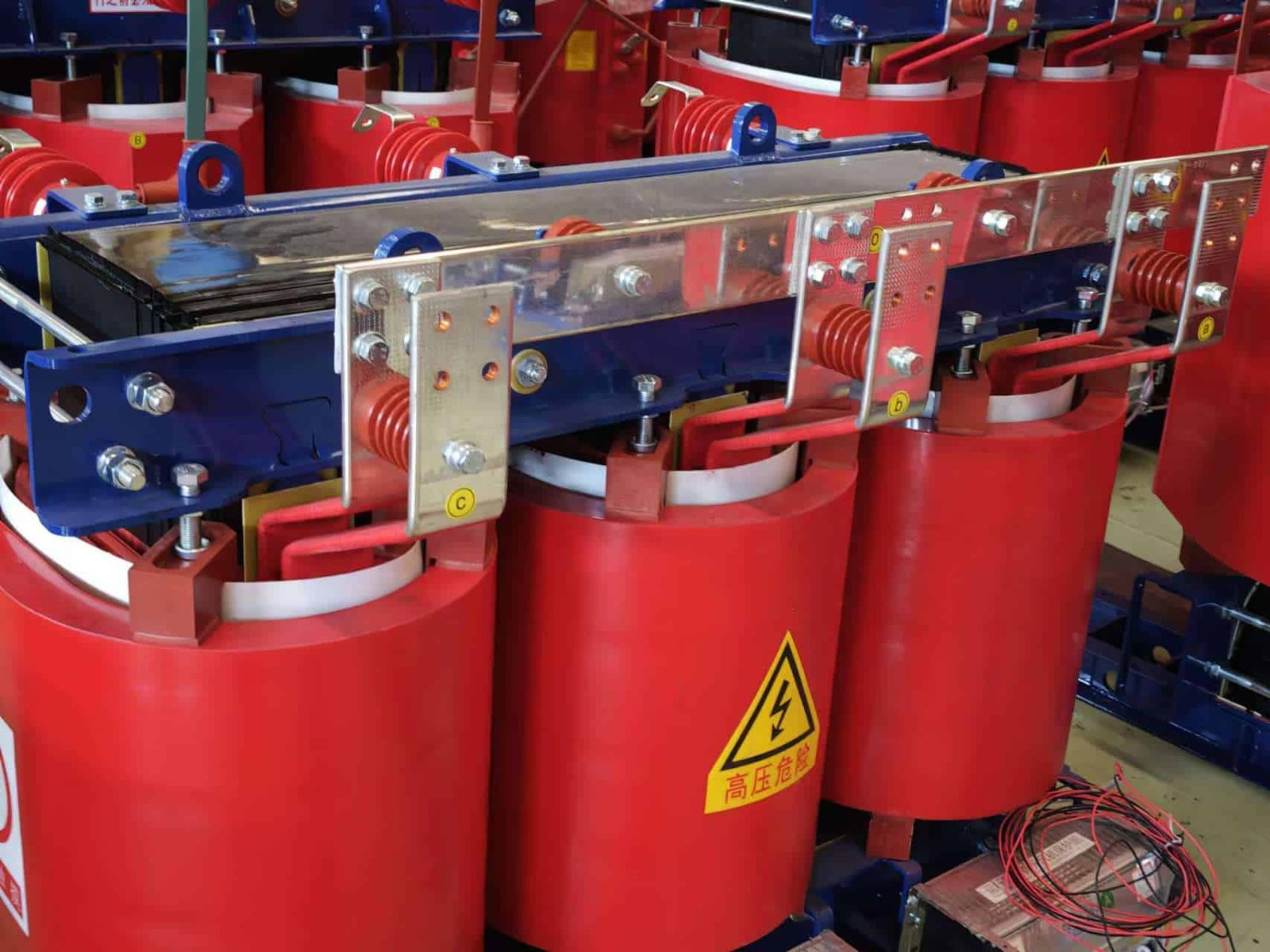
Choosing a dry-type power transformer is not simply a matter of deciding that an oil-free transformer is safer or easier to maintain. A transformer may be technically suitable in one facility and poorly suited to another because of differences in MVA rating, voltage level, load profile, ambient temperature, ventilation, humidity, dust, altitude, harmonics, installation space, and maintenance capability. Buyers should determine suitability by evaluating the complete application against the dry-type transformer's electrical, thermal, environmental, mechanical, safety, and lifecycle requirements. Dry-type technology is generally attractive for indoor and fire-sensitive installations, but it should only be selected when the required capacity, insulation system, cooling arrangement, environmental protection, efficiency, and short-circuit performance can all be demonstrated for the actual site conditions.
A dry-type transformer is suitable for any indoor application because it does not contain insulating oil.False
Indoor suitability also depends on transformer capacity, heat dissipation, ventilation, ambient temperature, humidity, contamination, insulation design, enclosure requirements, and electrical loading.
Start With the Application, Not the Transformer Type
The first question should not be “Which dry-type transformer should we buy?” It should be:
“What electrical and environmental conditions must the transformer reliably withstand?”
Before contacting suppliers, buyers should establish:
- Rated power in kVA or MVA
- Primary voltage
- Secondary voltage
- Frequency
- Phase configuration
- Impedance
- Insulation level
- Tap requirements
- Load characteristics
- Expected loading percentage
- Ambient temperature
- Installation altitude
- Indoor or outdoor location
- Humidity
- Dust and pollution
- Cooling and ventilation
- Fire-safety requirements
- Harmonic content
- Short-circuit requirements
- Noise limitations
These parameters establish whether dry-type construction is technically practical.
What Applications Are Usually Well Suited to Dry-Type Transformers?
Dry-type transformers are often a strong choice where the transformer is installed close to people, sensitive equipment, or environmentally important areas.
| Application | Dry-Type Suitability | Main Reason |
|---|---|---|
| Commercial buildings | High | Indoor installation and reduced liquid risk |
| Hospitals | High | Fire and environmental considerations |
| Data centers | High | Indoor operation and controlled environment |
| Shopping centers | High | Reduced oil-related hazards |
| Industrial plants | High when properly specified | Robust solid insulation and no oil |
| Railway infrastructure | High for suitable ratings | Indoor/underground and safety considerations |
| Solar installations | High for suitable designs | Compatibility with inverter systems |
| Battery energy storage | Application-dependent | Power electronics and thermal requirements |
| Large outdoor substations | Often application-dependent | Cooling and capacity may favor liquid systems |
| Very large utility transformers | Often less practical | Thermal and capacity considerations |
These are general application tendencies rather than absolute rules.
How Does Transformer Capacity Affect Suitability?
Capacity is one of the first technical filters.
A dry-type transformer must be capable of transferring the required apparent power without excessive temperature rise.
Buyers should not select a transformer simply because its nominal MVA rating appears larger than the expected load. They should evaluate the actual load profile.
For example, consider a facility with:
- 2,000 kVA peak demand
- 1,400 kVA normal demand
- Frequent motor starts
- High harmonic-producing loads
A simple 2,000 kVA transformer comparison may not be sufficient. The manufacturer may need to consider thermal loading, transient conditions, harmonics, and future expansion.
The selected rating should provide an appropriate balance between:
Current demand + expected growth + thermal margin + economic utilization
Oversizing also creates consequences. A substantially oversized transformer can increase purchase cost and may increase fixed no-load losses.
What Voltage and Insulation Requirements Must Be Checked?
Dry-type transformers are available across a broad range of voltage applications, but the buyer must verify the exact insulation requirements.
Important parameters include:
- Rated voltage
- Maximum system voltage
- Lightning impulse withstand level
- Power-frequency withstand level
- Partial-discharge requirements where applicable
- Clearances
- Creepage distances
- Winding insulation system
For medium-voltage applications, insulation quality and manufacturing consistency become especially important.
A supplier should provide the relevant design and test information rather than relying only on a nameplate voltage.
How Important Is the Load Profile?
Very important.
Two transformers with the same MVA rating can experience very different thermal stresses.
A transformer supplying relatively stable loads has a different operating profile from one serving:
- Large motors
- Variable-frequency drives
- Welding machines
- UPS systems
- Rectifiers
- Data-center loads
- Solar inverters
- Battery converters
Buyers should therefore provide the supplier with information about peak demand, average loading, duty cycles, starting currents, and nonlinear loads.
Are Harmonics a Concern?
They can be.
Power-electronic loads can generate harmonic currents that increase additional transformer losses and heating.
A transformer that is suitable for a conventional linear load may require additional consideration when connected to a system with substantial harmonic distortion.
Buyers should determine:
- Expected harmonic spectrum
- Total harmonic distortion
- Neutral current
- Converter or inverter characteristics
- Continuous nonlinear loading
- Required transformer thermal capability
Where harmonic loading is significant, the transformer design may need appropriate derating or other engineering measures.
How Should Buyers Evaluate Cooling and Ventilation?
Cooling is often the decisive application factor for dry-type transformers.
Dry-type transformers rely on air to remove heat. The transformer room must therefore provide an adequate thermal environment.
The buyer should establish:
- Maximum room temperature
- Minimum room temperature
- Ventilation method
- Air intake temperature
- Air exhaust arrangement
- Required airflow
- Room dimensions
- Transformer clearances
- Fan requirements
- Heat rejection capacity
A simple way to understand the issue is:
Transformer losses → heat generation → air absorbs heat → ventilation removes heat
If the final step is inadequate, transformer temperature rises.
For this reason, the transformer supplier and building or plant engineer should coordinate the thermal design rather than treating ventilation as an installation afterthought.
How Do Ambient Temperature and Altitude Affect Suitability?
A transformer rated under standard reference conditions may require adjustment when installed at unusual altitude or ambient temperature.
High ambient temperature reduces the available thermal margin.
High altitude can also affect cooling because air density decreases with elevation.
Therefore, buyers should provide the actual installation altitude and maximum ambient temperature.
For example, a transformer designed for a normal indoor environment should not automatically be assumed suitable for a hot industrial facility at high elevation.
The manufacturer should confirm the applicable derating or design adjustment.
What About Humidity and Condensation?
Humidity is particularly important for dry-type transformers because their insulation system must remain electrically reliable in the actual environment.
High humidity alone may not create a problem if the transformer is correctly designed and the environment is controlled. Condensation, however, can be more concerning.
Buyers should identify whether the transformer will experience:
- High relative humidity
- Rapid temperature changes
- Cold starts
- Seasonal condensation
- Water ingress
- Coastal conditions
Appropriate insulation, enclosure, heating, ventilation, and environmental controls may be required.
Can Dry-Type Transformers Operate in Dusty Industrial Environments?
Yes, but the environmental design must be appropriate.
Dust can accumulate on cooling surfaces and insulation components. In some industries, dust may also be conductive, chemically active, or combustible.
Examples include:
- Cement plants
- Steel mills
- Mining operations
- Wood-processing facilities
- Chemical plants
- Textile plants
- Food-processing facilities
In such environments, buyers should carefully consider transformer location, enclosure, ventilation, filtration, cleaning access, and maintenance intervals.
A dry-type transformer placed in a clean electrical room may be a much better solution than an otherwise similar transformer installed directly inside a dusty production area.
What Insulation Construction Should Buyers Consider?
Two common dry-type approaches are cast-resin and VPI construction.
Cast-resin transformers use resin-encapsulated windings, providing substantial physical and environmental protection.
VPI transformers use vacuum pressure impregnation to impregnate the winding insulation system.
Neither construction is automatically superior in every application.
| Requirement | Cast-Resin | VPI |
|---|---|---|
| Moisture resistance | Generally strong | Application-dependent |
| Mechanical winding support | Strong | Strong |
| Environmental protection | Good | Good with suitable enclosure |
| Indoor applications | Very common | Common |
| Harsh environment | Often attractive | Requires careful evaluation |
| Maintenance | Low | Low |
| Application flexibility | Broad | Broad |
The decision should be based on the actual environment and supplier design rather than marketing terminology.
How Important Is Fire Safety?
Fire safety can be one of the strongest reasons to select dry-type construction.
Because there is no conventional mineral-oil inventory, the transformer does not introduce the same liquid-fuel fire concern associated with an oil-filled transformer.
This can be especially useful in:
- High-rise buildings
- Hospitals
- Underground facilities
- Data centers
- Public transportation
- Commercial facilities
Nevertheless, dry-type transformers can still experience electrical faults and overheating. Buyers should therefore specify appropriate protection, fire performance, enclosure requirements, and installation clearances.
How Should Environmental Advantages Be Evaluated?
The environmental case should go beyond “oil-free.”
Buyers should consider:
- No liquid spill risk
- Material composition
- Core losses
- Load losses
- Expected service life
- Maintenance requirements
- Recyclability
- Manufacturing impact
- Transportation
- End-of-life recovery
A dry-type transformer with high operating losses may have a larger lifecycle environmental impact than a highly efficient liquid transformer.
Therefore, energy efficiency should remain a major part of the sustainability evaluation.
How Do Installation and Space Requirements Affect Suitability?
Dry-type transformers are often convenient for indoor applications, but they still need adequate physical space.
Buyers should verify:
- Transformer dimensions
- Weight
- Cable-entry requirements
- Front and rear clearances
- Ventilation clearances
- Maintenance access
- Lifting provisions
- Door dimensions
- Floor loading
- Acoustic requirements
A transformer that fits electrically but cannot be transported into the electrical room is obviously not a suitable selection.
What Electrical Protection Is Required?
Dry-type transformers should be integrated with appropriate system protection.
Depending on the application, buyers may need to consider:
- Overcurrent protection
- Short-circuit protection
- Ground-fault protection
- Temperature alarms
- Temperature trips
- Surge protection
- Differential protection for larger systems
- Monitoring systems
The transformer's protection should coordinate with upstream and downstream equipment.
How Should Buyers Compare Dry-Type and Oil-Filled Options?
When the application is uncertain, a direct comparison can clarify the decision.
| Criterion | Dry-Type | Oil-Filled |
|---|---|---|
| Indoor installation | Often advantageous | Requires additional evaluation |
| Oil spill risk | Eliminated | Present |
| Conventional oil maintenance | Eliminated | Required |
| Air ventilation | Critical | Different thermal arrangement |
| Large-capacity applications | Application-dependent | Highly established |
| Fire-sensitive locations | Often attractive | Requires fluid/fire assessment |
| Environmental containment | Simplified | Required where applicable |
| Harsh industrial conditions | Design-dependent | Design-dependent |
| No-load efficiency | Design-dependent | Design-dependent |
| Lifecycle cost | Application-dependent | Application-dependent |
The correct choice should be based on the complete technical and economic picture.
What Documents Should Buyers Request From Suppliers?
Before selecting a supplier, buyers should request evidence that the proposed transformer matches the application.
Useful documents include:
- Technical datasheet
- Guaranteed losses
- Temperature-rise data
- Cooling classification
- Insulation-system information
- Routine test reports
- Type-test documentation where applicable
- Short-circuit withstand information
- Environmental ratings
- Installation requirements
- Maintenance recommendations
- Warranty terms
- Reference projects
For critical applications, factory inspection and acceptance testing should also be considered.
A Practical Suitability Checklist
Before approving a dry-type transformer, buyers can use the following checklist:
| Question | Pass/Fail |
|---|---|
| Is the MVA rating adequate? | ☐ |
| Are primary and secondary voltages correct? | ☐ |
| Is the insulation level appropriate? | ☐ |
| Is the impedance suitable for the system? | ☐ |
| Is the load profile understood? | ☐ |
| Have harmonics been evaluated? | ☐ |
| Is ventilation adequate? | ☐ |
| Have ambient temperature and altitude been considered? | ☐ |
| Are humidity and condensation controlled? | ☐ |
| Is the enclosure appropriate? | ☐ |
| Are fire requirements satisfied? | ☐ |
| Are no-load and load losses acceptable? | ☐ |
| Is short-circuit withstand adequate? | ☐ |
| Is maintenance access practical? | ☐ |
| Are testing and warranty requirements defined? | ☐ |
| Does lifecycle cost justify the selection? | ☐ |
If several answers remain uncertain, the transformer should not yet be considered fully specified.
Conclusion
Dry-type power transformers offer a practical alternative to liquid-filled transformers when fire safety, indoor installation, environmental considerations, and simplified maintenance are important. Their use of solid insulation eliminates the need for liquid insulating oil and reduces the risks associated with oil leakage and flammability. However, transformer selection should always consider the complete application, including capacity, voltage, cooling, ambient conditions, efficiency, and installation requirements. By evaluating these factors carefully, buyers can determine whether dry-type power transformers provide the appropriate combination of safety, reliability, and lifecycle value for their projects.
FAQ
Q1: What are dry-type power transformers?
Dry-type power transformers are transformers that transfer electrical energy without using liquid insulating and cooling fluids such as mineral oil. Instead, their windings are insulated with solid materials and heat is dissipated through air and the transformer's surrounding structure.
The fundamental transformer principle remains the same: alternating current in the primary winding creates a changing magnetic field in the core, which induces voltage in the secondary winding. The major difference is the insulation and cooling system.
Common dry-type transformer designs include:
VPI (Vacuum Pressure Impregnated) transformers
Cast-resin transformers
Air-natural cooled transformers
Air-forced cooled transformers
In a cast-resin transformer, the windings are encapsulated in an insulating resin system. This provides physical protection and helps isolate the winding from moisture, dust, and other environmental contaminants.
VPI designs use insulating materials impregnated with resin under controlled manufacturing conditions. This approach provides mechanical and dielectric protection while allowing the winding to dissipate heat through air.
Dry-type transformers are commonly considered for locations where the use of liquid-filled equipment presents additional fire, environmental, or maintenance concerns. Typical applications include:
Commercial buildings
Hospitals
Data centers
Industrial facilities
Underground installations
Renewable energy facilities
Transportation infrastructure
Indoor substations
The absence of transformer oil does not mean that dry-type transformers require no maintenance or cannot experience thermal problems. They still generate heat through core and winding losses and require adequate ventilation and thermal management.
For buyers, important specifications include rated capacity, primary and secondary voltage, frequency, insulation class, temperature rise, cooling method, enclosure rating, short-circuit withstand capability, and applicable standards.
Dry-type transformers are therefore best understood as a liquid-free transformer technology designed for applications where environmental conditions, fire safety, installation location, and maintenance requirements make liquid-immersed transformers less attractive.
Q2: What advantages do dry-type power transformers offer?
Dry-type power transformers offer several advantages, particularly where fire safety, indoor installation, environmental protection, and reduced fluid-related maintenance are important.
One of the most important advantages is the absence of liquid dielectric fluid. Because there is no transformer oil that can leak or spill, dry-type transformers can simplify environmental risk management.
Another major advantage is fire performance. Dry-type transformers do not contain a large volume of combustible mineral oil. This can make them attractive for installations located close to occupied buildings or critical infrastructure.
Other potential advantages include:
Lower environmental spill risk
There is no liquid transformer oil that can escape from a damaged tank.
Suitable for indoor applications
Dry-type transformers can be installed inside buildings when appropriate ventilation, clearances, and enclosure requirements are satisfied.
Reduced fluid-related maintenance
There is no transformer oil to sample, filter, replenish, or replace.
Resistance to certain environmental contaminants
Cast-resin windings can provide additional protection against moisture, dust, and contaminants.
Flexible installation
Dry-type designs can be attractive where installing oil-filled equipment would require additional fire protection, containment, or drainage infrastructure.
Potentially simpler environmental compliance
Projects with strict requirements concerning liquid storage or spill containment may benefit from a liquid-free design.
However, dry-type transformers also have limitations. Their cooling performance depends heavily on the surrounding air and installation conditions. Large units can require significant ventilation, and their purchase price may be higher than comparable oil-immersed units in some applications.
Therefore, buyers should not select a dry-type transformer simply because it has fewer maintenance requirements. The decision should consider:
Capacity
Installation environment
Fire requirements
Available space
Ambient temperature
Noise requirements
Initial cost
Energy losses
Expected service life
The strongest advantage of dry-type technology is that it can provide reliable transformer operation without the risks and maintenance considerations associated with liquid insulation.
Q3: Are dry-type transformers safer than oil-immersed transformers?
Dry-type transformers can offer important fire and environmental safety advantages compared with transformers containing combustible mineral oil, but "safer" depends on the specific application and transformer design.
An oil-immersed transformer contains a substantial quantity of insulating liquid. If a serious fault causes the tank or insulation system to fail, the liquid can create fire, smoke, or spill-management concerns.
A dry-type transformer eliminates the large volume of liquid dielectric fluid. This can reduce:
Liquid leakage risk
Oil spill risk
Oil-fire exposure
Requirements for oil containment
This is particularly useful in locations where transformers are installed near people or valuable equipment.
Examples include:
Hospitals
Shopping centers
High-rise buildings
Airports
Data centers
Underground facilities
Manufacturing plants
However, dry-type transformers are still electrical equipment and can experience faults, overheating, insulation deterioration, or winding damage.
Safety depends on appropriate:
Short-circuit protection
Overcurrent protection
Temperature monitoring
Ventilation
Installation clearances
Grounding
Enclosure design
Preventive maintenance
Cast-resin transformers can provide additional environmental protection because the windings are encapsulated. Nevertheless, excessive heat, mechanical damage, electrical stress, or poor ventilation can still affect transformer life.
Buyers should therefore evaluate transformer safety according to the complete installation rather than simply comparing "dry" with "oil-filled."
A proper specification should address applicable fire-performance requirements, enclosure protection, fault withstand capability, temperature rise, protection coordination, and installation conditions.
Dry-type technology is especially attractive when minimizing combustible-fluid hazards is a high priority. Oil-immersed transformers, however, remain highly effective and widely used, particularly for larger power ratings and outdoor substations.
The correct selection depends on the project's risk profile, technical requirements, site constraints, and lifecycle cost.
Q4: Where are dry-type power transformers commonly used?
Dry-type power transformers are commonly used in locations where the absence of liquid insulation provides practical, safety, or environmental benefits.
Commercial buildings are a major application. Transformers may be installed in electrical rooms serving offices, retail facilities, hotels, and other occupied buildings.
Hospitals can also use dry-type transformers because electrical equipment may need to be installed relatively close to occupied areas.
Data centers are another important application. These facilities require reliable electrical distribution and often have strict requirements concerning fire protection, space utilization, and equipment availability.
Industrial facilities may use dry-type transformers where indoor installation, contamination resistance, or reduced fluid-related maintenance is desirable.
Other applications include:
Solar power facilities
Wind power systems
Rail and transportation projects
Underground substations
Marine and offshore facilities
Mining operations
Institutional buildings
Environmental conditions can strongly influence the selection. For example, a dusty or humid location may require an appropriate enclosure and transformer design rather than simply selecting a standard open ventilated unit.
Capacity is another important consideration. Dry-type technology is widely available across a broad range of ratings, but the practical and economic advantages may change as transformer size increases.
For large outdoor substations, oil-immersed transformers often remain attractive because liquid insulation and cooling provide highly effective thermal performance.
For indoor medium-voltage distribution, dry-type transformers can be particularly competitive because they combine electrical transformation with reduced liquid-related fire and environmental concerns.
The final selection should consider:
Required MVA/kVA rating
Voltage levels
Installation location
Ambient temperature
Humidity and contamination
Fire requirements
Noise limitations
Cooling requirements
Maintenance strategy
Therefore, dry-type transformers are not limited to one industry. Their strongest applications are generally locations where installation safety, environmental protection, and indoor operation are important.
References
IEC 60076-11 – Power Transformers: Dry-Type Transformers
https://webstore.iec.ch/en/publication/604
IEC 60076 – Power Transformers
https://webstore.iec.ch/en/publication/602
IEEE C57 Series – Transformer Standards
https://standards.ieee.org
Schneider Electric – Electrical Distribution and Transformer Solutions
https://www.se.com
NEMA – Electrical Standards and Products
https://www.nema.org
U.S. Department of Energy – Transformer Energy Efficiency Resources
https://www.energy.gov