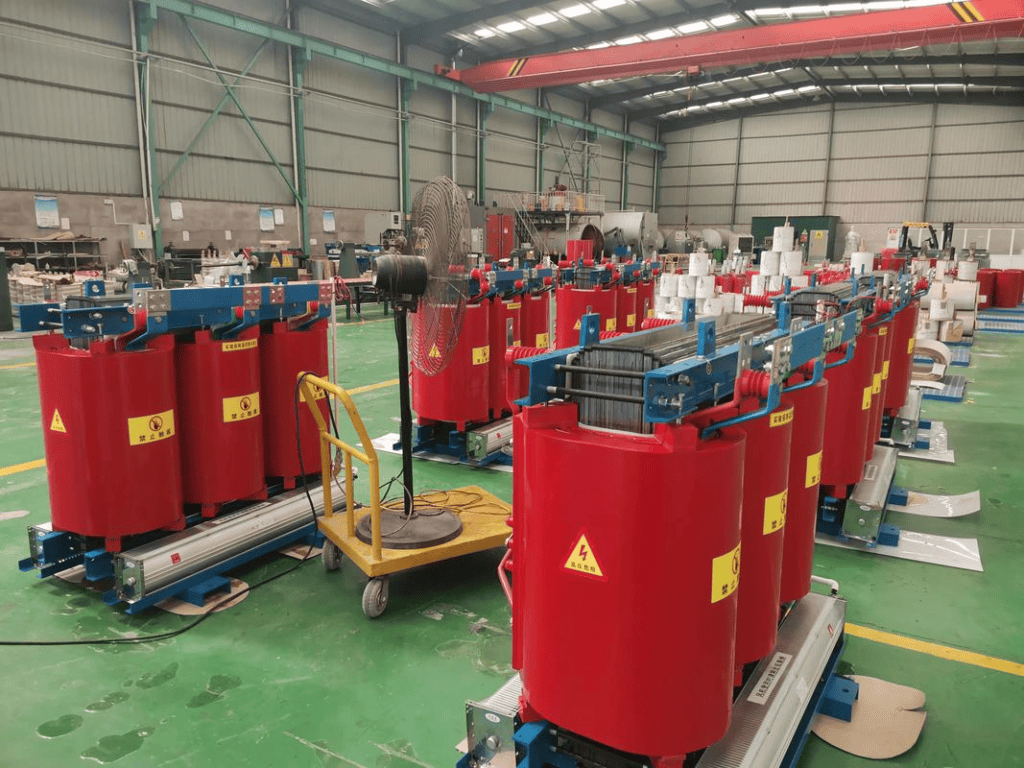
Selecting the right dry type transformer is critical for ensuring safety, performance, and cost-effectiveness in various applications such as commercial buildings, hospitals, data centers, and industrial plants. Several parameters must be carefully evaluated to match the transformer to the specific load, environment, and operational requirements.
What Is the Required Power Rating (kVA or MVA)?

When selecting a transformer, one of the first and most crucial specifications to define is its power rating. Choosing a transformer with the wrong rating can lead to overloading, overheating, energy losses, reduced lifespan, or wasted investment. On the other hand, a properly rated transformer ensures efficient, safe, and reliable power delivery for decades of service.
The required power rating of a transformer, expressed in kilovolt-amperes (kVA) or megavolt-amperes (MVA), is the maximum apparent power the transformer must supply to meet the load demand safely and efficiently. It is determined by calculating the total connected load, diversity factor, expected load growth, and system voltage levels.
In short, the power rating defines the capacity of the transformer to handle present and future load requirements without exceeding thermal and electrical limits.
Transformer ratings are always given in kilowatts (kW) instead of kVA or MVA.False
Transformers are rated in kVA or MVA because they must handle both real power (kW) and reactive power (kVAR).
Choosing the correct kVA/MVA rating prevents overloading and extends transformer lifespan.True
Proper sizing ensures safe operation, reduces heating, and improves efficiency.
How to Determine the Required Power Rating
Load Calculation
- Add up all connected loads in kW (motors, lighting, HVAC, etc.).
- Convert kW to kVA using power factor (PF).
- Formula:
[kVA = \frac{kW}{PF}]
Diversity and Demand Factor
- Not all loads operate simultaneously. Apply a diversity factor to avoid oversizing.
Future Load Growth
- Consider an additional 10–30% margin for expansion over the transformer’s lifetime.
Voltage Level and Application
- Distribution transformers: typically rated in 50–5000 kVA.
- Power/utility transformers: rated in 5 MVA to >1000 MVA.
📊 Typical Transformer Ratings by Application
| Application | Common Rating Range | Example |
|---|---|---|
| Residential Distribution | 25 – 500 kVA | Step-down 11 kV → 415 V |
| Commercial Buildings | 500 – 2500 kVA | Shopping mall or hospital supply |
| Industrial Facilities | 2.5 – 50 MVA | Manufacturing plant |
| Utility Substations | 50 – 1000+ MVA | High-voltage grid transformer |
Example Calculation
- Connected load: 1500 kW
- Power factor: 0.9
- Required kVA = 1500 ÷ 0.9 = 1666 kVA
- Add 20% margin for growth → 2000 kVA transformer selected.
Why Correct Power Rating Matters
- Too Small (Underrated): Overheating, frequent tripping, premature failure.
- Too Large (Overrated): Higher capital cost, reduced efficiency at partial loads.
- Right Size: Optimal efficiency, lower losses, long lifespan.
What Input and Output Voltage Levels Are Needed?
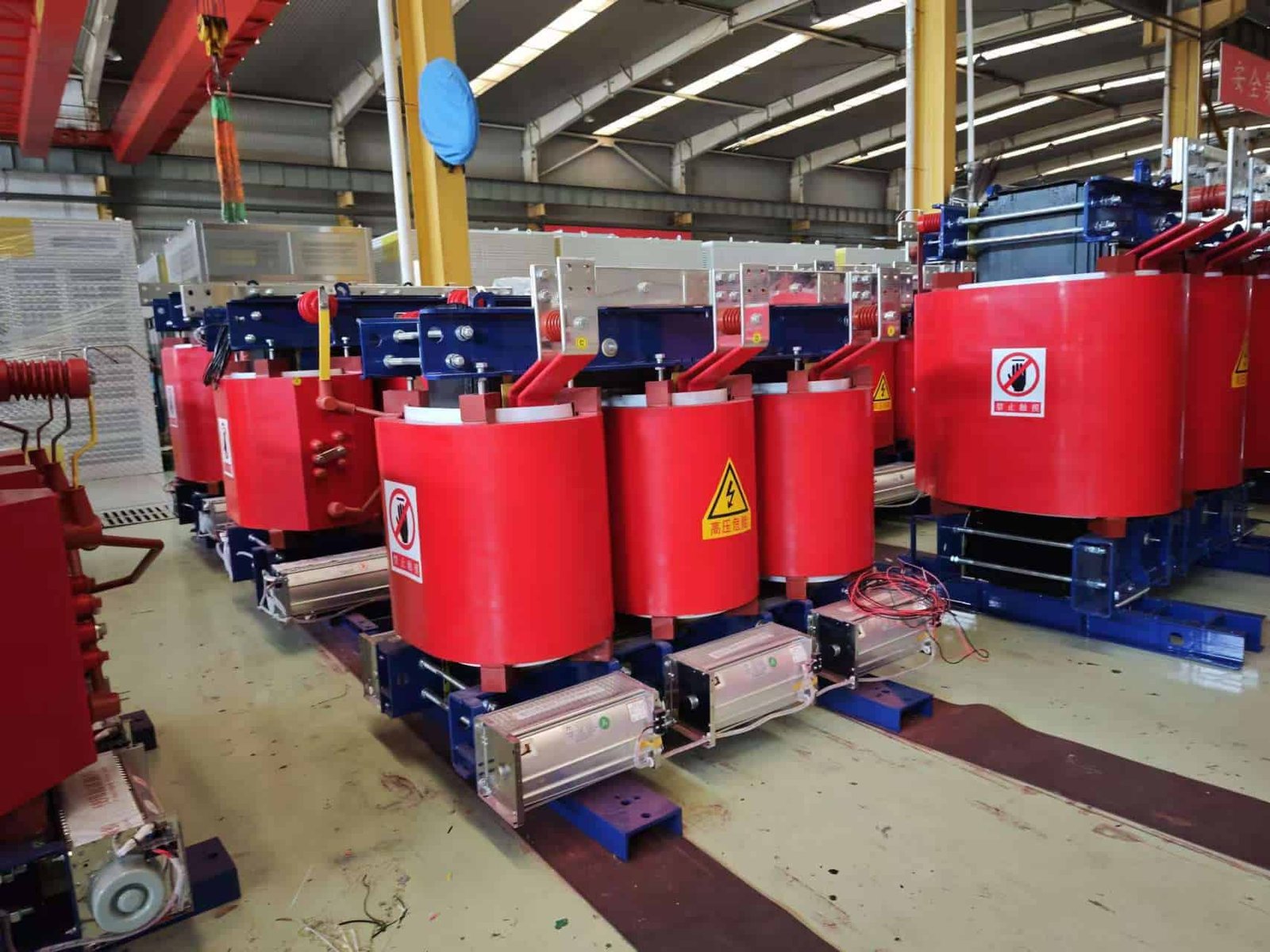
When selecting a transformer, defining the input (primary) and output (secondary) voltage levels is as important as determining the power rating. Using the wrong voltage specification can result in incompatibility with the grid, poor efficiency, insulation stress, or even catastrophic failure. Correct voltage matching ensures that the transformer can interface properly with upstream supply and downstream loads while maintaining stable and safe operation.
The required input and output voltage levels depend on the application: input voltage (primary side) must match the supply or transmission grid, while output voltage (secondary side) must match the utilization voltage of loads or distribution networks. Common examples include 11 kV/415 V step-down transformers for distribution or 11 kV/132 kV step-up transformers for power plants.
In essence, the correct voltage selection ensures grid compatibility, load safety, and transformer efficiency.
Transformers can operate at any input and output voltage without specification.False
Transformers must be designed for precise voltage levels; incorrect specification leads to failure or unsafe operation.
Step-up transformers increase voltage for transmission, while step-down transformers decrease voltage for distribution.True
Voltage transformation reduces transmission losses and ensures safe supply to end-users.
Common Input and Output Voltage Ranges
📊 Typical Transformer Voltage Configurations
| Application | Input Voltage (Primary) | Output Voltage (Secondary) | Example Use |
|---|---|---|---|
| Residential Distribution | 11 kV | 415 V / 230 V | Step-down for households |
| Commercial / Industrial | 33 kV | 11 kV / 415 V | Factories, malls, hospitals |
| Utility Substations | 132 kV / 220 kV | 33 kV / 11 kV | Regional distribution |
| Power Generation (Step-Up) | 11–33 kV | 110–765 kV | Transmission from power plants |
| Renewable Integration | 690 V (wind turbine) / 1.5 kV DC (solar) | 33–132 kV | Grid connection of renewables |
Factors Determining Voltage Requirements
- Grid Supply Voltage – The input side must match the transmission or distribution line voltage available at the site.
- Load Voltage Requirements – The output side must correspond to the operating voltage of connected equipment (e.g., 400 V for motors, 230 V for households).
- Regulatory Standards – Voltage classes are standardized regionally (e.g., 11 kV/415 V in many countries, 13.8 kV/480 V in North America).
- Future Proofing – Voltage selection may include flexibility for network upgrades or integration with renewable energy systems.
Example Case
- A manufacturing plant is supplied from a 33 kV utility feeder.
- Plant loads require 415 V for equipment.
- Required transformer: 33 kV / 415 V, 2500 kVA step-down unit.
Why Correct Voltage Levels Matter
- Prevents mismatch with supply or load equipment.
- Avoids overheating and insulation stress.
- Ensures grid compliance and safety.
- Optimizes transformer efficiency and reliability.
How Do Cooling Methods (AN, AF) Influence Performance?
One of the most critical aspects of transformer design is cooling, because excessive heat directly affects efficiency, insulation life, and reliability. Different cooling methods are employed depending on the application, load conditions, and environmental setting. In dry-type transformers, the two most common cooling methods are Air Natural (AN) and Air Forced (AF). Choosing the right cooling method ensures that the transformer performs safely and efficiently under varying loads.
Cooling methods influence transformer performance by determining how effectively heat is removed from windings and core. AN (Air Natural) uses natural convection and is simple, reliable, and maintenance-free but has limited load capacity. AF (Air Forced) uses fans to increase cooling efficiency, allowing higher load handling and improved performance under heavy or fluctuating demand, but adds complexity, noise, and maintenance needs.
In short, cooling methods define how much load a transformer can safely carry and how long it will last under real operating conditions.
Cooling has little effect on transformer performance and lifespan.False
Cooling directly affects temperature rise, insulation aging, load capacity, and efficiency.
Air Forced cooling improves load capacity by actively removing more heat compared to Air Natural.True
By increasing airflow, AF cooling lowers winding temperature and allows transformers to handle higher loads.
Comparison of AN and AF Cooling
📊 Performance Comparison Between AN and AF
| Parameter | AN (Air Natural) | AF (Air Forced) |
|---|---|---|
| Cooling Method | Natural convection | Forced air with fans |
| Load Capacity | Normal rated load | 20–40% higher than AN |
| Efficiency | Stable, no fan losses | Slight reduction due to fan power consumption |
| Reliability | Very high, no moving parts | Dependent on fan performance |
| Maintenance | Minimal | Requires fan inspection and replacement |
| Noise | Silent operation | Higher due to fans |
| Cost | Lower initial cost | Higher cost due to auxiliary equipment |
How Cooling Affects Performance
Load Handling Capacity
- AN cooling limits operation to rated load.
- AF cooling allows transformers to handle overloads and peak demand periods without overheating.
Efficiency and Energy Use
- AN is energy-efficient (no auxiliary devices).
- AF consumes extra energy for fan motors but enables higher throughput.
Insulation Life
- Lower operating temperatures extend insulation life.
- AF reduces hot-spot temperatures, slowing down thermal aging.
Operational Flexibility
- AN is suited for continuous, steady loads.
- AF is beneficial for environments with fluctuating or unpredictable loads.
Application Scenarios
AN (Air Natural):
- Small to medium dry-type transformers.
- Indoor environments where reliability and silence are essential (e.g., hospitals, offices).
AF (Air Forced):
- Large-capacity dry-type transformers.
- Industrial plants or renewable substations with variable load.
- Situations where higher short-term loading capacity is critical.
Example Case
A 2000 kVA dry-type transformer rated for AN cooling can handle up to 2000 kVA continuously. With AF cooling (fans activated), the same transformer may safely handle up to 2500–2800 kVA during peak load hours, ensuring grid stability without immediate investment in a larger transformer.
What Are the Environmental and Installation Conditions for Transformers?
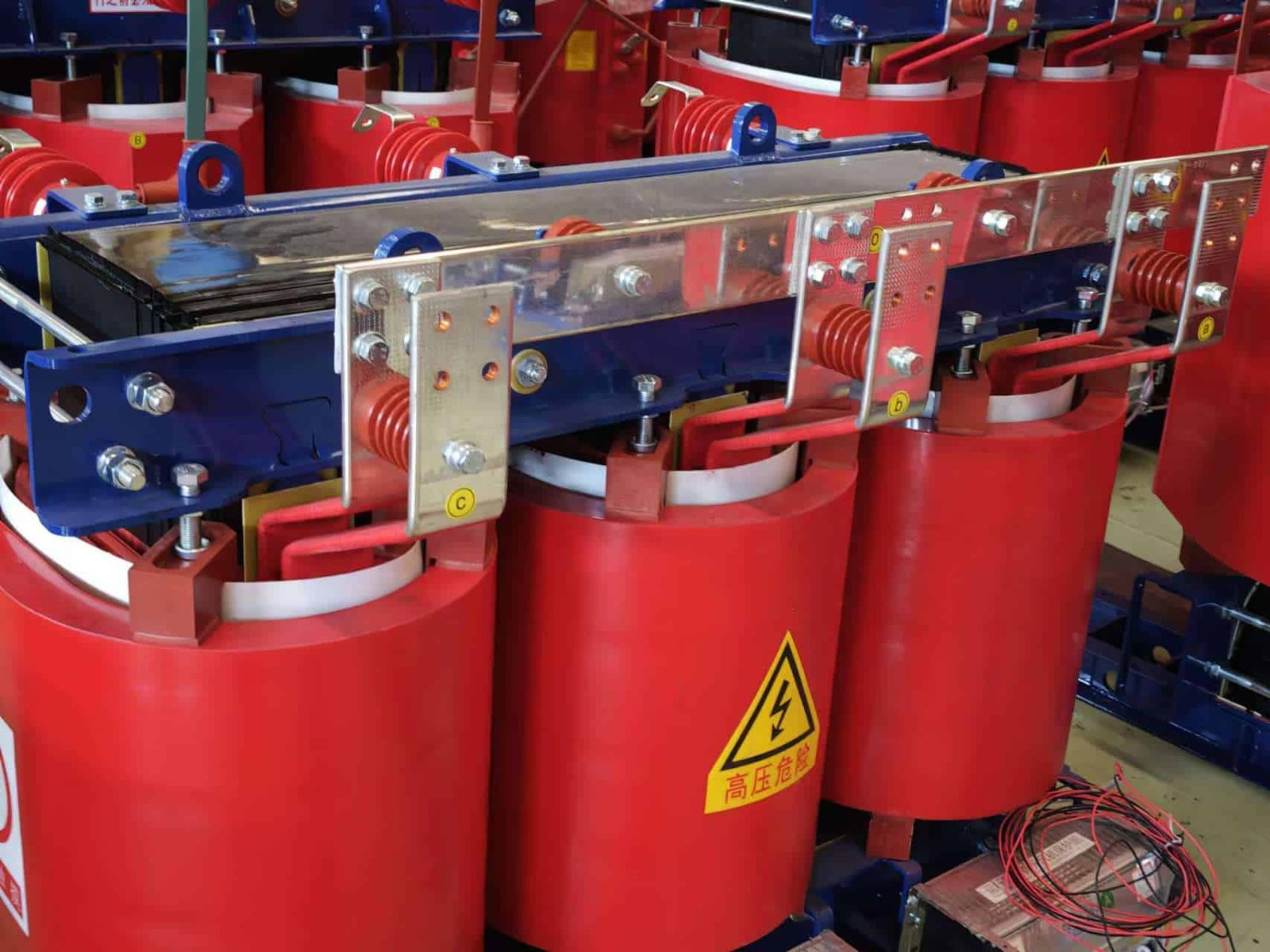
When installing and operating power transformers, environmental and installation conditions play a decisive role in their safety, efficiency, and longevity. Adverse environmental factors such as temperature extremes, moisture, dust, corrosive atmosphere, and altitude can accelerate insulation aging, increase cooling demands, and reduce reliability. Likewise, improper installation can cause vibration issues, grounding failures, and limited accessibility for maintenance, leading to costly downtime. Understanding and addressing these conditions upfront ensures that the transformer operates optimally throughout its service life.
Environmental and installation conditions determine how well a transformer performs in real-world settings. Key factors include temperature, humidity, altitude, dust, and corrosive atmosphere, as well as physical installation requirements such as space, ventilation, accessibility, and grounding. Transformers exposed to harsh environments require protective measures like enclosures, coatings, cooling adjustments, or additional monitoring systems to maintain safe and efficient operation.
By properly considering environmental and installation conditions, asset owners avoid premature failures, reduce maintenance costs, and extend the transformer’s service life.
Environmental conditions have little effect on transformer performance.False
Environmental factors directly affect cooling efficiency, insulation aging, corrosion risk, and overall transformer reliability.
Transformers installed at higher altitudes need derating due to reduced cooling efficiency.True
Air density decreases at altitude, reducing heat dissipation and requiring transformers to operate at lower loads.
Key Environmental Conditions
| Condition | Impact on Transformers | Mitigation Measures |
|---|---|---|
| Ambient Temperature | High temps accelerate insulation aging; low temps affect oil viscosity. | Cooling systems, derating, temperature monitoring. |
| Humidity & Moisture | Leads to insulation breakdown, corrosion, and partial discharge. | Dehumidifiers, sealed enclosures, moisture barriers. |
| Dust & Pollution | Dust buildup causes overheating and flashover risk. | IP-rated enclosures, regular cleaning, filters. |
| Altitude | Reduced air density impairs cooling efficiency. | Load derating, enhanced cooling systems. |
| Corrosive Atmosphere (coastal, industrial) | Salt and chemicals corrode windings, cores, and housings. | Special coatings, stainless steel parts, breather systems. |
| Solar Radiation | Excessive heating of housings outdoors. | UV-resistant coatings, shading structures. |
Installation Considerations
Space & Accessibility
- Transformers should have adequate clearance for cooling airflow, safe operation, and maintenance.
- Access for inspection, oil testing, and component replacement must be ensured.
Foundation & Vibration Control
- A rigid, leveled foundation reduces vibration stress.
- Anti-vibration pads or dampers may be required in seismic or industrial zones.
Grounding & Earthing
- Proper grounding ensures fault current dissipation and operator safety.
- Must comply with IEEE/IEC standards for earthing resistance.
Ventilation & Cooling Space
- Indoor dry-type transformers require airflow channels or forced ventilation.
- Oil-immersed outdoor transformers need space around radiators for natural convection.
Noise Considerations
- Transformers installed near residential or commercial buildings must adhere to noise regulations.
- Noise-reducing enclosures or sound barriers may be used.
Example Case
A 2500 kVA oil-immersed transformer installed in a coastal substation will face salt-laden air and high humidity. Without protective coatings and moisture control, corrosion can compromise tank integrity and insulation life within 5 years. By applying anti-corrosion paint, silica-gel breathers, and regular oil monitoring, the same transformer can reliably serve 20–25 years.
Which Insulation Class and Temperature Rise Are Suitable for Transformers?
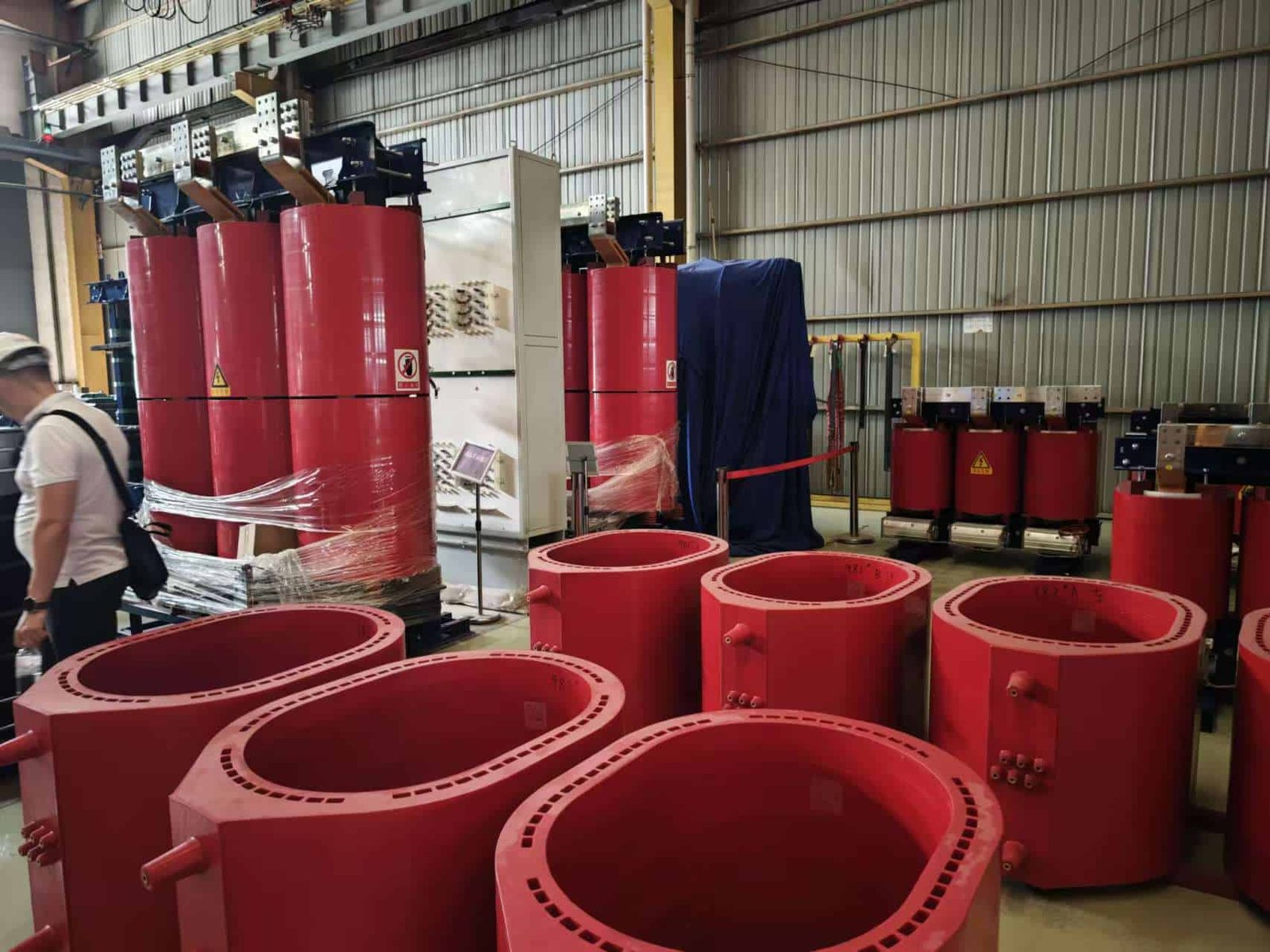
When selecting a power or distribution transformer, one of the most crucial considerations is insulation class and allowable temperature rise. Improper selection can lead to accelerated insulation aging, reduced lifespan, and potential failures due to overheating. Since insulation is the most vulnerable component inside a transformer, understanding its thermal capacity ensures safe operation, energy efficiency, and long service life.
Insulation class defines the maximum temperature the insulation system can withstand, while temperature rise indicates how much the winding temperature increases above the ambient environment during operation. Choosing the right insulation class and temperature rise ensures transformers operate safely under expected load and climate conditions. Common insulation classes are A (105°C), B (130°C), F (155°C), and H (180°C). A transformer’s life expectancy is highly dependent on keeping actual operating temperatures below the insulation’s rated limit.
By carefully matching insulation class and temperature rise to load demands, cooling method, and environmental conditions, transformer users achieve greater efficiency, safety, and durability.
The choice of insulation class does not affect transformer lifespan.False
Insulation life is directly related to operating temperature. Exceeding the class limit accelerates thermal aging and shortens lifespan.
Class F and H insulation allows transformers to handle higher temperatures safely compared to Class A or B.True
Higher insulation classes are made of materials with superior thermal endurance, supporting elevated temperatures without premature failure.
Common Insulation Classes and Limits
| Insulation Class | Max Hot-Spot Temperature (°C) | Typical Materials Used | Applications |
|---|---|---|---|
| Class A (105°C) | 105 | Cotton, paper, natural resins | Small dry-type, low-voltage transformers |
| Class B (130°C) | 130 | Mica, glass fiber, varnish | Standard distribution transformers |
| Class F (155°C) | 155 | Epoxy resin, polyester, advanced varnish | Medium-to-large dry-type, industrial transformers |
| Class H (180°C) | 180 | Silicone resin, polyimide films | High-performance, special-purpose transformers |
Temperature Rise Considerations
- Ambient Temperature: Usually assumed as 40°C (per IEC/IEEE standards).
Typical Rise Values:
- 55°C rise → Lower winding temperature, longer insulation life.
- 65°C rise → Standard for modern transformers, balancing efficiency and cost.
- 80°C rise → Possible with higher-class insulation but may shorten life if misapplied.
📊 Example: Winding Temperature Calculation
| Condition | Ambient Temp (°C) | Rise (°C) | Hot-Spot Temp (°C) | Suitable Insulation Class |
|---|---|---|---|---|
| Standard | 40 | 55 | 95 | Class A (105°C) |
| Modern Standard | 40 | 65 | 105 | Class B (130°C) |
| Heavy Duty | 40 | 80 | 120 | Class F (155°C) |
| Harsh/Overload | 40 | 100 | 140 | Class H (180°C) |
Practical Guidelines
For distribution transformers (standard duty)
- 65°C rise, Class B insulation is widely used.
For industrial or renewable applications with variable load
- 80°C rise, Class F insulation offers added safety margin.
For high-stress or space-limited applications
- Class H insulation ensures resilience under high thermal loads.
For maximizing lifespan
- Even if higher insulation class is available, operating at lower temperature rise significantly increases insulation life (Arrhenius’ law of thermal aging).
Example Case
A 2000 kVA dry-type transformer with Class F insulation (155°C) and 80°C rise can operate safely in an industrial plant with heavy load cycles. However, if designed with Class H (180°C) but limited to 65°C rise, the same unit achieves much longer insulation life and greater reliability.
What Standards, Certifications, and Safety Requirements Must Be Met for Transformers?
When selecting or installing a transformer, compliance with standards, certifications, and safety requirements is not optional—it is essential. Failure to meet these obligations can result in operational risks, legal penalties, insurance issues, and environmental hazards. Transformers must be designed, manufactured, tested, and operated in accordance with international, regional, and local regulations to ensure safety, reliability, and energy efficiency. Understanding these requirements allows buyers and operators to make informed choices, avoid compliance gaps, and guarantee long-term performance.
Transformers must comply with international standards such as IEC, IEEE, and ANSI, along with safety and environmental regulations like RoHS, REACH, and PCB-free requirements. Certifications (ISO, CE, UL) and factory acceptance tests confirm that transformers meet design, efficiency, safety, and environmental benchmarks. These requirements ensure transformers are safe, energy-efficient, environmentally responsible, and legally approved for use in their intended markets.
By ensuring compliance, buyers protect their investment, reduce liability, and guarantee transformer reliability throughout its lifecycle.
Compliance with standards is optional for transformers.False
Standards are mandatory to ensure safety, interoperability, and legal market access. Non-compliance can lead to rejection, fines, or operational risks.
Transformers must meet environmental certifications such as PCB-free, RoHS, and REACH.True
These requirements ensure that harmful substances are restricted, minimizing environmental and health risks.
Key International Standards
| Standard | Issuing Body | Scope | Application |
|---|---|---|---|
| IEC 60076 | IEC (International Electrotechnical Commission) | General design, testing, performance, insulation, and cooling | Used worldwide, especially in EU, Asia, Africa |
| IEEE C57 | IEEE (Institute of Electrical and Electronics Engineers) | US-focused standards for design, testing, insulation, and loading guides | North and South America |
| ANSI Standards | ANSI (American National Standards Institute) | Voltage levels, safety, and compatibility | US applications |
| ISO 9001/14001 | ISO (International Organization for Standardization) | Quality and environmental management systems | Global certification for manufacturing facilities |
| EN 50588 / EcoDesign | EU | Energy efficiency and eco-design requirements | Mandatory in Europe |
Safety and Environmental Regulations
- RoHS (Restriction of Hazardous Substances): Limits use of toxic materials like lead and cadmium.
- REACH (Registration, Evaluation, Authorization, Restriction of Chemicals): Ensures safe use of chemicals in transformer components.
- PCB-Free Requirement: Polychlorinated biphenyls (PCBs) are banned worldwide due to toxicity.
- Noise and Electromagnetic Compatibility (EMC) Standards: Prevent environmental and operational hazards.
Certifications and Testing
- CE Marking (EU): Ensures compliance with EU directives on safety, efficiency, and environment.
- UL Certification (US): Required for transformers in North American markets.
- Type Tests & Routine Tests (IEC/IEEE): Include dielectric, short-circuit, temperature rise, and no-load/load loss tests.
- Factory Acceptance Test (FAT): Conducted before shipment to verify compliance with customer and standard requirements.
- Site Acceptance Test (SAT): Performed after installation to ensure safe commissioning.
📊 Certification and Compliance Overview
| Requirement | Purpose | Region/Market |
|---|---|---|
| IEC 60076 | Global design & performance benchmark | Worldwide |
| IEEE C57 | US-specific design & operation | Americas |
| EcoDesign Directive | Efficiency & loss reduction | EU |
| ISO 9001 | Quality management certification | Global |
| CE Marking | Market compliance | Europe |
| UL/CSA | Safety approval | US/Canada |
| RoHS / REACH | Environmental protection | Global |
| PCB-Free | Health & environment safety | Global |
Example Case
A 5000 kVA oil-immersed transformer destined for Europe must comply with IEC 60076, EcoDesign 2019/1783 efficiency requirements, CE marking, RoHS, and REACH compliance. If the same transformer is exported to the US, it must instead comply with IEEE C57, ANSI standards, UL certification, and EPA regulations on oil handling. Without these certifications, the transformer cannot legally be sold or installed.
Conclusion
When selecting a dry type transformer, engineers must balance electrical requirements, environmental conditions, and regulatory compliance. Key considerations such as power capacity, voltage, cooling method, insulation, and safety standards ensure reliable performance, energy efficiency, and long service life. A careful evaluation of these parameters guarantees that the transformer is optimized for its intended application.
FAQ
Q1: What are the essential parameters to consider when selecting a dry type transformer?
The most important parameters include:
kVA Rating – Determines the transformer’s load capacity.
Primary and Secondary Voltage – Must match system requirements.
Insulation Class & Temperature Rise – Ensures safe operation under load.
Cooling Method (AN, AF, ANAF) – Impacts efficiency and load handling.
Efficiency Level – Higher efficiency reduces lifetime energy costs.
Enclosure Rating (NEMA/IP) – Depends on indoor or outdoor installation.
Standards Compliance (IEC, IEEE, ANSI) – Guarantees reliability and safety.
Q2: Why is the insulation system important in dry type transformers?
Dry type transformers use resin or varnish-based insulation. Choosing the right insulation class (Class F, H, etc.) ensures the transformer withstands thermal stress, improving durability and performance.
Q3: How does cooling method affect transformer selection?
AN (Air Natural): Suitable for standard loads.
AF (Air Forced): Adds fans for higher capacity.
ANAF (Air Natural/Air Forced): Allows overload handling and flexible operation.
The cooling method directly impacts transformer load capacity, reliability, and noise level.
Q4: What efficiency and loss considerations are important?
No-load losses (core losses) occur even without load.
Load losses (copper losses) increase with load.
Selecting an energy-efficient transformer reduces long-term operating costs and environmental impact.
Q5: What installation-related factors must be considered?
Location: Indoor or outdoor installation requires different enclosures.
Environment: Humidity, dust, and corrosive conditions may require protective coatings.
Accessibility: Maintenance and cooling airflow must be accommodated.
Safety standards: Compliance with fire safety and environmental regulations.
References
IEC 60076-11 – Dry Type Transformer Requirements: https://webstore.iec.ch
IEEE Std C57.12 – Dry Type Transformer Standards: https://ieeexplore.ieee.org
NEMA Standards – Dry Transformer Enclosures: https://www.nema.org
Electrical4U – Dry Type Transformer Selection Guide: https://www.electrical4u.com
EEP – How to Select a Dry Type Transformer: https://electrical-engineering-portal.com