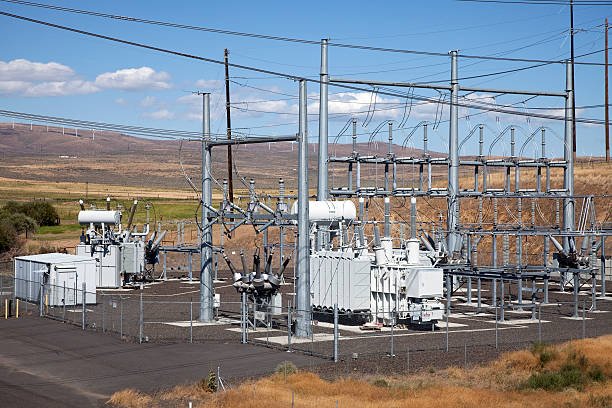
Frequency is one of the fundamental electrical parameters that must be considered when selecting a power transformer. While voltage and capacity often receive the most attention, choosing a transformer designed for the wrong operating frequency can lead to excessive losses, overheating, reduced efficiency, increased noise, and shortened service life. Because electrical grids around the world operate at either 50 Hz or 60 Hz, understanding how frequency influences transformer design is essential for ensuring reliable performance, regulatory compliance, and long-term operational efficiency.
Frequency requirements directly affect the selection of power transformers by influencing core design, magnetic flux density, efficiency, losses, temperature rise, and overall performance. Power transformers are typically designed to operate at either 50 Hz or 60 Hz, and using a transformer at an incorrect frequency can cause overheating, reduced capacity, higher energy losses, and insulation stress. Buyers should always match the transformer's frequency rating to the operating power system and consider dual-frequency designs when equipment will be used in multiple regions.
Whether installing a transformer in a utility substation, industrial plant, renewable energy facility, or export project, understanding the impact of frequency helps ensure safe operation and optimal equipment performance throughout the transformer's service life.
How Do Frequency Requirements Affect the Selection of Power Transformers?
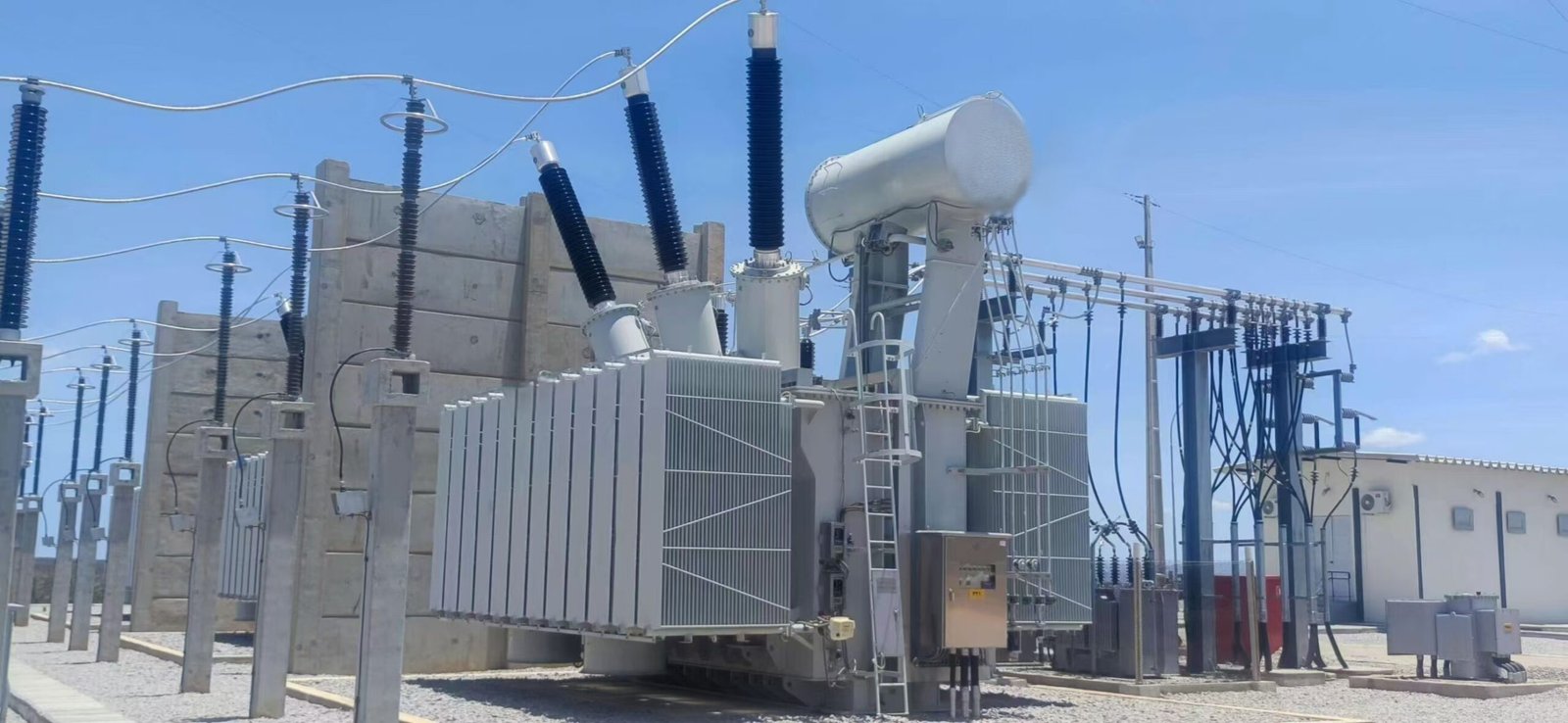
Selecting the correct power transformer involves much more than matching voltage and power ratings. One of the most fundamental design parameters is system frequency, which directly influences the transformer's magnetic core, efficiency, temperature rise, losses, and overall operating performance. Because electrical power systems around the world typically operate at either 50 Hz or 60 Hz, transformers must be designed specifically for their intended frequency. Installing a transformer on the wrong frequency can result in excessive heating, reduced efficiency, insulation deterioration, and even premature failure. Understanding how frequency affects transformer design helps buyers choose equipment that delivers reliable, efficient, and long-lasting performance.
Frequency requirements directly affect power transformer selection because the transformer core, magnetic flux density, losses, cooling performance, and insulation system are designed for a specific operating frequency. Most power transformers are rated for either 50 Hz or 60 Hz, and selecting the correct frequency ensures safe operation, optimal efficiency, and maximum service life.
A power transformer designed for one frequency can always operate safely at any other frequency without design changes.False
Transformer performance depends on operating frequency. Using a transformer at the wrong frequency can increase core saturation, overheating, and losses unless the transformer is specifically designed or derated for multi-frequency operation.
Why is frequency important in transformer design?
A transformer operates by transferring energy through a changing magnetic field generated by alternating current (AC). The operating frequency determines how quickly this magnetic field changes and directly influences the transformer's electrical and magnetic characteristics.
The relationship between transformer operation and frequency is illustrated by the ideal transformer principle.
genui{"physics_electricity_magnetism_learning_block_staging":{"type_id":"IDEAL_TRANSFORMER","locale_override":"en"}}
When the operating frequency changes, the magnetic flux inside the core also changes. If the frequency is lower than the design value while the applied voltage remains the same, magnetic flux increases, which can drive the core toward saturation and generate excessive heat.
The Two Standard Power System Frequencies
Most electrical networks worldwide operate at one of two standard frequencies:
| System Frequency | Common Regions |
|---|---|
| 50 Hz | Europe, Asia, Africa, Australia, most of South America |
| 60 Hz | United States, Canada, parts of Central and South America, South Korea |
Because national electrical grids are standardized, transformers are typically manufactured specifically for the required system frequency.
How does frequency affect transformer core design?
The transformer core is designed to operate within a specific magnetic flux density.
Lower operating frequency increases magnetic flux for the same applied voltage, requiring:
- Larger core cross-sectional area
- Higher-quality electrical steel
- Reduced magnetic saturation
- Improved cooling capability
Conversely, transformers designed for higher frequencies may use smaller cores while maintaining acceptable performance.
| Frequency Effect | Design Impact |
|---|---|
| Lower frequency | Larger magnetic core |
| Higher frequency | Smaller core possible |
| Incorrect frequency | Increased overheating risk |
| Proper frequency | Stable magnetic operation |
How does frequency influence transformer efficiency?
Transformer efficiency depends on minimizing both no-load losses and load losses.
Frequency affects:
- Core losses
- Eddy current losses
- Hysteresis losses
- Magnetizing current
- Operating temperature
A transformer operating at its rated frequency achieves its designed efficiency and thermal performance.
Operating outside the rated frequency may increase losses and reduce overall efficiency.
What happens if a 60 Hz transformer operates on a 50 Hz system?
Using a 60 Hz transformer on a 50 Hz power supply without reducing voltage can create serious operating problems.
Possible consequences include:
- Higher magnetic flux density
- Core saturation
- Increased magnetizing current
- Excessive heat generation
- Higher no-load losses
- Accelerated insulation aging
For this reason, manufacturers generally recommend that transformers only operate at their rated frequency unless specifically designed for dual-frequency service.
Can a 50 Hz transformer operate on a 60 Hz system?
In many cases, a transformer designed for 50 Hz can also operate at 60 Hz when used within its rated voltage and loading limits.
Higher frequency generally reduces magnetic flux density, resulting in:
- Lower core saturation risk
- Reduced magnetizing current
- Stable operation
However, the manufacturer should always confirm compatibility because cooling performance, impedance, and other design characteristics must also be considered.
| Operating Condition | Typical Result |
|---|---|
| 50 Hz transformer on 60 Hz | Often acceptable with manufacturer approval |
| 60 Hz transformer on 50 Hz | Usually requires derating or redesign |
| Correct frequency match | Full rated performance |
How does frequency affect transformer losses?
Transformer losses consist primarily of:
- No-load (core) losses
- Load (copper) losses
Frequency mainly influences core losses through magnetic behavior.
Higher frequencies generally increase hysteresis and eddy current effects, while lower frequencies increase magnetic flux density for a given voltage.
Manufacturers optimize core materials and lamination thickness according to the intended operating frequency to achieve the desired efficiency.
How does frequency affect transformer temperature?
Operating temperature is closely linked to transformer lifespan.
Incorrect frequency operation may increase:
- Core temperature
- Winding temperature
- Oil temperature
- Insulation stress
Higher operating temperatures accelerate insulation aging and reduce transformer service life.
Maintaining the correct frequency helps preserve thermal stability and long-term reliability.
Does frequency influence transformer size?
Yes.
For the same voltage and power rating:
- Lower-frequency transformers generally require larger magnetic cores.
- Higher-frequency transformers may use more compact core designs.
This is one reason why transformers designed for different frequencies may differ in physical dimensions and weight.
| Design Factor | 50 Hz | 60 Hz |
|---|---|---|
| Core size | Generally larger | Generally smaller |
| Transformer weight | Usually higher | Usually lower |
| Magnetic flux density | Higher for the same voltage | Lower for the same voltage |
How does frequency affect insulation and cooling?
Although insulation materials themselves are not frequency-specific, operating a transformer at an incorrect frequency can increase thermal stress.
Higher temperatures may accelerate:
- Oil degradation
- Cellulose insulation aging
- Moisture generation
- Oxidation
Cooling systems are designed to dissipate heat produced under rated operating conditions, including the specified frequency.
Are dual-frequency transformers available?
Yes.
Some manufacturers design transformers that are suitable for both 50 Hz and 60 Hz operation.
These transformers are commonly used for:
- International projects
- Export equipment
- Offshore platforms
- Industrial facilities with global operations
Dual-frequency transformers are engineered to satisfy performance requirements under both operating frequencies.
What should buyers verify before ordering?
Before purchasing a power transformer, buyers should clearly specify:
- System frequency
- Rated voltage
- Power rating
- Cooling method
- Installation location
- Applicable standards
- Load profile
- Future expansion requirements
Providing complete technical information helps manufacturers optimize the transformer design and avoid costly modifications later.
| Selection Parameter | Why It Matters |
|---|---|
| Frequency | Determines core design and magnetic performance |
| Voltage | Defines insulation and winding requirements |
| Power rating | Determines transformer capacity |
| Cooling method | Controls operating temperature |
| Installation environment | Influences protection and enclosure design |
Why is frequency especially important for international projects?
International infrastructure projects often involve equipment supplied from different countries.
Potential challenges include:
- Different national grid frequencies
- Imported electrical equipment
- Export transformer specifications
- Mixed industrial standards
Project teams should verify frequency compatibility before procurement to ensure safe and efficient operation.
Which industries must pay close attention to frequency requirements?
Frequency selection is particularly important for:
| Industry | Reason |
|---|---|
| Electric utilities | Grid compatibility |
| Renewable energy | Grid interconnection requirements |
| Industrial manufacturing | Continuous process reliability |
| Data centers | Stable power supply |
| Mining | Remote electrical systems |
| Oil and gas | International project compatibility |
Which standards define transformer frequency requirements?
Power transformers should be designed and tested according to internationally recognized standards that specify rated frequency, electrical performance, testing procedures, and operating requirements.
The most widely adopted standards are published by:
- International Electrotechnical Commission
- Institute of Electrical and Electronics Engineers
These standards establish requirements for:
- Rated frequency
- Voltage ratings
- Temperature rise
- Efficiency
- Dielectric performance
- Factory testing
Compliance with these standards helps ensure reliable transformer operation throughout its service life.
Why Are 50 Hz and 60 Hz the Most Common Transformer Frequency Ratings?
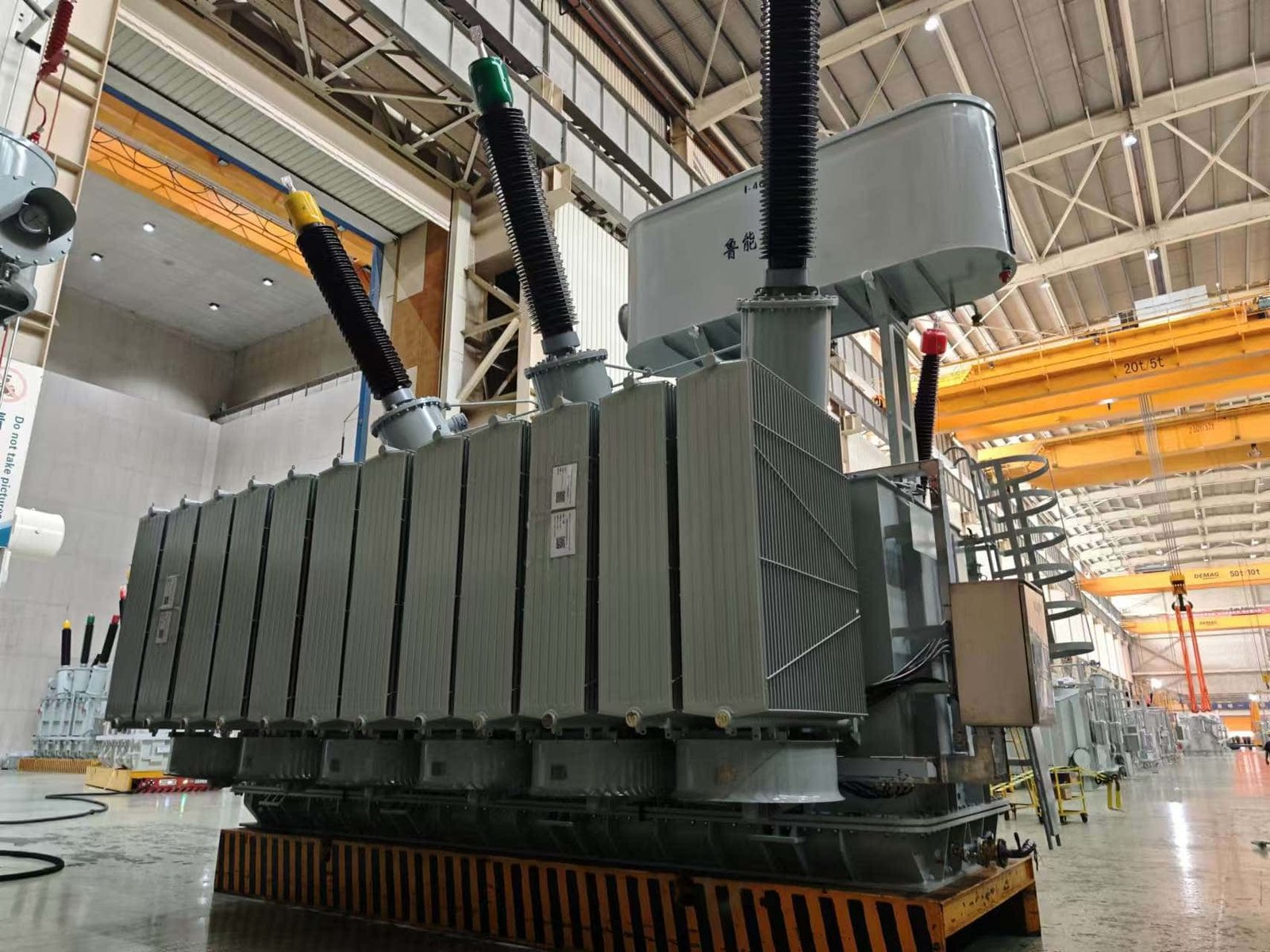
Alternating current (AC) power systems around the world operate almost exclusively at either 50 Hz or 60 Hz, making these the standard frequency ratings for power transformers. While both frequencies perform the same basic function of transmitting electrical energy, their historical development, regional adoption, and engineering characteristics have shaped today's global electrical infrastructure. Because transformers are designed to match the frequency of the power system they serve, understanding why 50 Hz and 60 Hz became the dominant standards is essential for selecting the correct transformer for utility, industrial, commercial, and renewable energy applications.
The 50 Hz and 60 Hz frequency ratings are the global standards for power transformers because they match the operating frequencies of national AC power systems. These standards originated during the early development of electrical grids and have remained in use due to infrastructure compatibility, equipment standardization, stable transformer performance, and the high cost of changing existing power networks.
Power transformers can operate equally well at any frequency, so 50 Hz and 60 Hz became common simply by coincidence.False
Power transformers are designed for specific operating frequencies because frequency affects magnetic flux, core design, efficiency, losses, and temperature rise. The widespread use of 50 Hz and 60 Hz is the result of historical standardization and long-term infrastructure development.
Why does AC frequency matter?
AC frequency represents the number of complete voltage cycles that occur each second.
- 50 Hz means the current changes direction 50 times per second.
- 60 Hz means the current changes direction 60 times per second.
This frequency determines how transformers, generators, motors, and other AC equipment are designed and operated.
How did 50 Hz and 60 Hz become global standards?
During the early development of electric power systems in the late nineteenth and early twentieth centuries, different companies experimented with various operating frequencies.
Over time, two standards became dominant because they offered a practical balance between equipment performance, generation efficiency, and transmission capability.
Generally:
- 50 Hz became the standard across much of Europe, Asia, Africa, Australia, and many other regions.
- 60 Hz became the standard in the United States, Canada, and several other countries.
Once large national power grids were established, changing frequency became economically impractical because every generator, transformer, motor, and electrical device would require replacement or modification.
| Frequency | Common Regions |
|---|---|
| 50 Hz | Europe, Asia, Africa, Australia, most of the Middle East, much of South America |
| 60 Hz | United States, Canada, Mexico, South Korea, parts of Central and South America |
Why are transformers designed for a specific frequency?
Transformer magnetic cores are designed to operate within a specified magnetic flux density.
The operating frequency directly influences:
- Core dimensions
- Magnetic saturation
- No-load losses
- Magnetizing current
- Operating temperature
- Cooling requirements
Selecting the correct frequency ensures that the transformer operates efficiently and safely throughout its service life.
What happens if the frequency is incorrect?
Using a transformer at the wrong frequency may result in:
- Increased magnetic flux density
- Core saturation
- Excessive heating
- Higher no-load losses
- Increased magnetizing current
- Reduced insulation life
For example, operating a transformer designed only for 60 Hz on a 50 Hz system at the same voltage may overload the magnetic core unless appropriate derating or redesign is applied.
| Operating Condition | Typical Result |
|---|---|
| Rated frequency | Normal operation |
| Lower than rated frequency | Increased heating and core stress |
| Higher than rated frequency | Reduced magnetic flux but manufacturer approval is still required |
Why weren't other frequencies adopted?
Historically, some electrical systems operated at frequencies such as:
- 25 Hz
- 40 Hz
- 125 Hz
- 133 Hz
These frequencies were gradually replaced because they were less suitable for widespread power transmission and equipment standardization.
Lower frequencies generally required:
- Larger generators
- Larger transformers
- Heavier equipment
Higher frequencies often increased:
- Electrical losses
- Motor operating challenges
- Equipment complexity
The widespread adoption of 50 Hz and 60 Hz created a common manufacturing base that simplified equipment production and reduced costs.
How does frequency affect transformer size?
For the same voltage and power rating:
- A 50 Hz transformer generally requires a slightly larger magnetic core.
- A 60 Hz transformer can often use a somewhat smaller core while maintaining similar performance.
This difference results from the relationship between operating frequency and magnetic flux density.
| Design Characteristic | 50 Hz Transformer | 60 Hz Transformer |
|---|---|---|
| Core size | Generally larger | Generally smaller |
| Weight | Usually higher | Usually lower |
| Magnetic flux | Higher for equal voltage | Lower for equal voltage |
Does frequency affect transformer efficiency?
Both 50 Hz and 60 Hz transformers can achieve excellent efficiency when designed for their intended operating frequency.
Manufacturers optimize:
- Core material
- Lamination thickness
- Winding design
- Cooling system
- Insulation
As a result, modern transformers operating at either standard frequency can deliver high efficiency and long service life.
Why is standardization important?
Global standardization offers significant advantages.
Benefits include:
- Equipment compatibility
- Simplified manufacturing
- Easier maintenance
- Lower production costs
- Consistent testing procedures
- International engineering standards
Without standardized frequencies, utilities and equipment manufacturers would face much greater complexity.
Are dual-frequency transformers available?
Yes.
Some transformers are specifically engineered for both 50 Hz and 60 Hz operation.
These are commonly used for:
- International industrial facilities
- Export projects
- Offshore installations
- Mobile substations
Dual-frequency designs require careful engineering to ensure reliable performance under both operating conditions.
How does frequency affect international projects?
International infrastructure projects often involve equipment supplied from different countries.
Project engineers should verify:
- Grid frequency
- Voltage rating
- Applicable standards
- Protection requirements
- Cooling method
Failure to match transformer frequency with the local electrical system can create serious operational problems.
| Application | Frequency Consideration |
|---|---|
| Utility substations | Must match national grid |
| Renewable energy plants | Must match grid interconnection frequency |
| Industrial facilities | Must match plant electrical system |
| Data centers | Requires reliable frequency compatibility |
| Export equipment | Frequency should be confirmed during design |
Why will 50 Hz and 60 Hz remain the dominant standards?
Replacing existing national electrical infrastructure would require enormous investment.
Changing system frequency would involve replacing or modifying:
- Power stations
- Transformers
- Motors
- Industrial equipment
- Household appliances
- Protection systems
- Grid infrastructure
Because the cost is extremely high and both standards perform effectively, 50 Hz and 60 Hz are expected to remain the dominant transformer frequency ratings for the foreseeable future.
What should buyers specify when ordering a transformer?
To ensure proper transformer performance, buyers should provide:
- System frequency
- Primary voltage
- Secondary voltage
- Rated power
- Cooling method
- Installation environment
- Applicable technical standards
- Expected load conditions
Providing complete specifications allows manufacturers to optimize transformer design for the intended application.
| Selection Parameter | Importance |
|---|---|
| Frequency | Defines magnetic design |
| Voltage | Determines insulation requirements |
| Power rating | Defines transformer capacity |
| Cooling method | Controls operating temperature |
| Installation location | Influences enclosure and protection |
Which standards define transformer frequency ratings?
Power transformers are designed and tested according to internationally recognized standards that specify rated frequency, electrical performance, testing procedures, and operating requirements.
The most widely recognized standards are published by:
- International Electrotechnical Commission
- Institute of Electrical and Electronics Engineers
These standards establish requirements for:
- Rated frequency
- Voltage ratings
- Temperature rise
- Dielectric performance
- Efficiency
- Factory testing
Following these standards helps ensure reliable transformer operation in electrical systems worldwide.
How Does Frequency Influence Transformer Core Design and Efficiency?

The operating frequency of a power transformer is one of the most important parameters influencing its magnetic core design, efficiency, size, weight, and long-term reliability. Although transformers are often selected based on voltage and power ratings, frequency determines how the magnetic core responds to alternating current and directly affects core losses, flux density, heating, and material requirements. A transformer designed for 50 Hz operation cannot always perform identically at 60 Hz, and a transformer designed for 60 Hz may experience problems when operated at a lower frequency. Understanding the relationship between frequency and transformer core design helps engineers and buyers select equipment that delivers optimal performance, lower energy losses, and extended service life.
Frequency influences transformer core design and efficiency by determining magnetic flux density, core size, lamination requirements, hysteresis losses, eddy current losses, and operating temperature. Lower frequencies generally require larger cores to avoid magnetic saturation, while higher frequencies allow more compact designs. Selecting the correct frequency rating enables transformers to achieve their designed efficiency, thermal performance, and reliability.
Increasing transformer operating frequency always reduces all transformer losses and improves efficiency regardless of design conditions.False
Higher frequency can reduce required core size but may increase certain magnetic losses such as eddy current and hysteresis losses. Transformer efficiency depends on optimized core materials, frequency rating, voltage, loading, and design parameters.
Why does frequency affect transformer core operation?
A transformer transfers electrical energy through electromagnetic induction. The alternating voltage applied to the primary winding creates a changing magnetic field inside the core, which induces voltage in the secondary winding.
The frequency of this alternating magnetic field determines how quickly the magnetic flux changes.
When frequency changes, several core characteristics are affected:
- Magnetic flux density
- Core saturation level
- Core dimensions
- No-load losses
- Temperature rise
- Efficiency
The transformer core must therefore be designed according to the intended operating frequency.
Relationship Between Frequency and Magnetic Flux
The magnetic flux inside a transformer core is closely related to voltage and frequency.
A lower frequency means the magnetic field changes more slowly. To maintain the same voltage transfer capability, the magnetic flux density increases.
A higher frequency allows the same voltage to be transferred with lower magnetic flux density.
genui{"physics_waves_optics_oscillations_earth_learning_block_staging":{"type_id":"ANGULAR_FREQUENCY_RELATION","locale_override":"en"}}
This relationship explains why frequency has such a strong influence on transformer core design.
| Frequency Change | Magnetic Effect | Transformer Impact |
|---|---|---|
| Lower frequency | Higher flux density | Larger core required |
| Higher frequency | Lower flux density | Smaller core possible |
| Incorrect frequency | Possible saturation | Increased heating and losses |
How does lower frequency affect transformer core size?
Power transformers operating at lower frequencies require larger magnetic cores.
For example, a 50 Hz transformer generally requires more core material than a similar 60 Hz transformer because the magnetic flux changes fewer times per second.
A larger core helps:
- Reduce magnetic saturation
- Maintain safe flux density
- Control temperature rise
- Improve reliability
This is why 50 Hz transformers are often slightly larger and heavier than equivalent 60 Hz designs.
| Design Parameter | 50 Hz Transformer | 60 Hz Transformer |
|---|---|---|
| Core size | Larger | Smaller |
| Weight | Higher | Lower |
| Magnetic flux density | Higher | Lower |
| Material requirement | More steel | Less steel |
How does higher frequency improve transformer size?
Higher operating frequencies allow manufacturers to design more compact transformers.
When frequency increases:
- Magnetic flux density decreases.
- Core cross-sectional area can be reduced.
- Less core material may be required.
- Transformer weight may decrease.
This advantage is especially important in applications where size and weight are critical.
Examples include:
- Aerospace power systems
- Electronic transformers
- Mobile power equipment
However, conventional utility transformers typically remain at 50 Hz or 60 Hz because grid infrastructure is standardized around these frequencies.
How does frequency affect transformer efficiency?
Transformer efficiency is determined by the relationship between energy output and energy input.
The main losses include:
- Core losses
- Copper losses
- Auxiliary losses
Frequency primarily affects core losses.
Core losses consist of:
- Hysteresis losses
- Eddy current losses
Efficient transformer design requires balancing these losses with material selection and operating conditions.
| Loss Type | Frequency Influence |
|---|---|
| Hysteresis loss | Generally increases with frequency |
| Eddy current loss | Increases with frequency if not controlled |
| Copper loss | Mainly affected by load current |
| Mechanical loss | Usually minimal |
How do hysteresis losses change with frequency?
Hysteresis occurs because the magnetic domains inside the core material repeatedly realign during each AC cycle.
Higher frequency means:
- More magnetic cycles per second
- More repeated domain movement
- Increased hysteresis energy loss
Manufacturers reduce hysteresis losses by using high-quality electrical steel with optimized magnetic properties.
Common core materials include:
- Grain-oriented electrical steel
- High-permeability silicon steel
- Advanced low-loss magnetic materials
How do eddy current losses change with frequency?
Eddy currents are small circulating currents generated inside conductive core materials.
They create unwanted heat and reduce efficiency.
As frequency increases, eddy current losses tend to increase because the magnetic field changes more rapidly.
Manufacturers control these losses by:
- Using thin laminated steel sheets
- Applying insulation between laminations
- Optimizing core construction
| Eddy Current Reduction Method | Purpose |
|---|---|
| Thin laminations | Reduce circulating current paths |
| Electrical insulation coating | Limit current flow |
| High-quality steel | Improve magnetic performance |
Why are transformer cores made from laminated steel?
A solid steel core would allow large circulating currents to form, causing excessive heating.
Instead, transformer cores are constructed from many thin insulated layers.
Benefits include:
- Lower eddy current losses
- Reduced heat generation
- Higher efficiency
- Better thermal performance
The thickness and quality of laminations are selected according to the transformer frequency and performance requirements.
How does frequency affect transformer temperature?
Temperature is one of the most important factors affecting transformer lifespan.
Higher losses create additional heat, which increases:
- Core temperature
- Winding temperature
- Oil temperature
- Insulation aging rate
Operating at the correct frequency allows the cooling system to maintain acceptable temperature limits.
| Operating Condition | Thermal Effect |
|---|---|
| Rated frequency | Normal temperature rise |
| Lower frequency than rated | Increased heating risk |
| Higher frequency than rated | Usually lower saturation risk but different losses |
What happens when frequency is lower than the transformer rating?
A transformer designed for 60 Hz and operated at 50 Hz is a common example of incorrect frequency application.
Potential problems include:
- Increased magnetic flux density
- Core saturation
- Higher excitation current
- Excessive heating
- Increased vibration
- Reduced efficiency
In severe cases, insulation damage may occur because of prolonged overheating.
What happens when frequency is higher than the transformer rating?
Operating at a higher frequency is generally less stressful from a saturation perspective.
For example, a transformer designed for 50 Hz may often operate on a 60 Hz system if voltage limits are maintained.
Possible effects include:
- Reduced flux density
- Lower magnetizing current
- Stable operation
However, manufacturers should confirm suitability because other factors such as losses, insulation coordination, and cooling design must also be considered.
How does frequency influence transformer efficiency ratings?
Transformer efficiency ratings depend on both design and operating conditions.
Important efficiency indicators include:
- No-load loss
- Load loss
- Total loss
- Energy efficiency over operating cycles
Frequency affects these values by influencing core behavior.
| Efficiency Factor | Frequency Influence |
|---|---|
| No-load loss | Strong influence |
| Core heating | Strong influence |
| Copper loss | Limited direct influence |
| Overall efficiency | Depends on complete design |
How do manufacturers optimize cores for different frequencies?
Transformer manufacturers adjust several design parameters according to frequency requirements.
These include:
- Core cross-sectional area
- Steel grade
- Lamination thickness
- Magnetic flux density
- Winding arrangement
- Cooling capacity
A well-designed transformer balances:
- Low losses
- Compact size
- Thermal stability
- Long service life
Why are grain-oriented electrical steels important?
Modern power transformers rely heavily on grain-oriented electrical steel because it provides excellent magnetic performance.
Advantages include:
- Low core loss
- High magnetic permeability
- Reduced excitation current
- Improved efficiency
The quality of electrical steel has a direct impact on transformer operating costs over decades of service.
How do frequency requirements affect transformer selection?
When purchasing a power transformer, buyers should confirm:
- System frequency
- Voltage rating
- Power capacity
- Efficiency requirements
- Installation environment
- Applicable standards
Selecting the correct frequency ensures that the transformer operates within its intended design limits.
| Selection Requirement | Reason |
|---|---|
| Frequency rating | Determines core design |
| Voltage rating | Controls insulation requirements |
| Power rating | Defines capacity |
| Cooling method | Controls temperature |
| Efficiency target | Determines material selection |
Which applications require careful frequency matching?
Frequency compatibility is especially important for:
- Utility substations
- Renewable energy plants
- Industrial facilities
- Data centers
- Mining operations
- International infrastructure projects
Incorrect frequency selection can result in poor performance and unexpected operating costs.
Which standards define transformer frequency and efficiency requirements?
Power transformers are designed according to internationally recognized standards that define frequency ratings, efficiency performance, testing methods, and operational requirements.
Major standards organizations include:
- International Electrotechnical Commission
- Institute of Electrical and Electronics Engineers
These standards provide guidance for:
- Transformer design
- Core performance
- Loss measurement
- Temperature rise limits
- Factory testing
What Happens If a Power Transformer Operates at the Wrong Frequency?
A power transformer is designed to operate at a specific system frequency, typically 50 Hz or 60 Hz. The frequency affects the transformer's magnetic core, flux density, losses, temperature rise, and overall performance. While voltage ratings often receive the most attention during transformer selection, using the wrong operating frequency can have equally serious consequences. If a transformer operates at a frequency different from its design rating, it may experience excessive heating, increased losses, reduced efficiency, accelerated insulation aging, and, in severe cases, permanent damage. Understanding these effects helps utilities, industrial users, and project engineers avoid costly failures and ensure reliable long-term operation.
Operating a power transformer at the wrong frequency can increase magnetic flux density, cause core saturation, raise operating temperatures, increase no-load losses, reduce efficiency, and shorten service life. A transformer designed for 60 Hz should not normally operate on a 50 Hz system at its rated voltage unless approved by the manufacturer, while a transformer designed for 50 Hz can often operate on a 60 Hz system within its specified limits.
A power transformer can safely operate at any frequency as long as the voltage rating remains unchanged.False
Transformer core design is optimized for a specific operating frequency. Using the wrong frequency can increase magnetic flux, overheating, losses, and insulation stress even if the applied voltage remains within the rated value.
Why does operating frequency matter?
A transformer transfers electrical energy through electromagnetic induction. The alternating voltage applied to the primary winding produces a changing magnetic field in the transformer core, which induces voltage in the secondary winding.
This relationship is illustrated by the ideal transformer principle.
genui{"physics_electricity_magnetism_learning_block_staging":{"type_id":"IDEAL_TRANSFORMER","locale_override":"en"}}
The operating frequency determines how rapidly the magnetic field changes. When the frequency decreases while voltage remains constant, the magnetic flux inside the core increases. Excessive magnetic flux can push the core into saturation, significantly affecting transformer performance.
Why is the transformer core designed for a specific frequency?
Transformer cores are carefully engineered to operate within a safe magnetic flux density.
The design considers:
- Rated frequency
- Rated voltage
- Core material
- Core cross-sectional area
- Cooling capability
- Efficiency targets
A transformer designed for 50 Hz generally has a larger magnetic core than an equivalent transformer designed only for 60 Hz because lower frequencies require greater core area to prevent saturation.
| Design Factor | Effect of Frequency |
|---|---|
| Core size | Lower frequency requires a larger core |
| Magnetic flux density | Increases as frequency decreases |
| Core losses | Depend on frequency and material |
| Cooling requirements | Increase if losses rise |
What happens if a 60 Hz transformer operates on a 50 Hz system?
This is the most common incorrect frequency application.
Because the frequency is lower, the magnetic field changes more slowly, causing magnetic flux density to increase.
Potential consequences include:
- Core saturation
- Increased magnetizing current
- Higher no-load losses
- Excessive heating
- Increased vibration and noise
- Reduced efficiency
- Accelerated insulation aging
If operated continuously under these conditions, the transformer may experience premature failure.
| Operating Condition | Typical Result |
|---|---|
| 60 Hz transformer on 50 Hz | High risk of overheating |
| Increased magnetic flux | Greater core saturation |
| Higher excitation current | Increased energy loss |
| Long-term operation | Reduced service life |
What happens if a 50 Hz transformer operates on a 60 Hz system?
In many cases, a transformer designed for 50 Hz can operate satisfactorily on a 60 Hz system when used within its rated voltage and loading limits.
At the higher frequency:
- Magnetic flux density decreases.
- Core saturation becomes less likely.
- Magnetizing current is reduced.
Although this operating condition is generally more favorable than the reverse situation, compatibility should always be confirmed with the manufacturer because impedance, cooling, and performance characteristics must also be considered.
How does the wrong frequency affect transformer efficiency?
Transformer efficiency depends on minimizing energy losses.
Operating at the wrong frequency may increase:
- No-load losses
- Magnetizing current
- Heat generation
- Reactive power demand
Higher losses reduce efficiency and increase operating costs over the transformer's lifetime.
| Loss Type | Effect of Incorrect Frequency |
|---|---|
| No-load loss | Often increases |
| Magnetizing current | Usually increases at lower frequency |
| Copper loss | May increase due to higher current |
| Overall efficiency | Generally decreases |
How does incorrect frequency affect transformer temperature?
Temperature is one of the most important factors influencing transformer reliability.
Operating at the wrong frequency can increase:
- Core temperature
- Winding temperature
- Oil temperature
- Hot-spot temperature
Higher temperatures accelerate the aging of:
- Cellulose insulation
- Transformer oil
- Gaskets
- Seals
Even moderate temperature increases can significantly reduce insulation life.
Can incorrect frequency damage the transformer core?
Yes.
If magnetic saturation becomes severe, the transformer core may experience:
- Excessive vibration
- Increased acoustic noise
- Localized overheating
- Mechanical stress
Repeated operation under saturated conditions may permanently reduce transformer reliability.
How does incorrect frequency affect insulation?
Higher operating temperatures place additional stress on insulation systems.
Possible effects include:
- Faster paper degradation
- Oil oxidation
- Moisture generation
- Reduced dielectric strength
- Shortened insulation life
Since insulation aging is cumulative, long-term operation at the wrong frequency can permanently reduce transformer service life.
How does frequency influence transformer cooling?
Transformer cooling systems are designed to remove heat generated under rated operating conditions.
Incorrect frequency may produce additional heat that exceeds the cooling system's design capability.
Possible consequences include:
- Higher oil temperature
- Reduced cooling effectiveness
- Increased thermal stress
- More frequent operation of cooling equipment
Maintaining the rated frequency helps ensure that cooling systems perform as intended.
| Cooling System | Effect of Incorrect Frequency |
|---|---|
| ONAN | Higher oil temperature |
| ONAF | Increased fan operating time |
| OFAF | Higher cooling demand |
| OFWF | Additional thermal loading |
Will protective devices detect frequency-related problems?
Many transformer protection systems monitor the effects of incorrect frequency rather than the frequency itself.
Protective devices may respond to:
- Overtemperature
- Overcurrent
- Differential current
- Gas generation
- Excessive pressure
However, preventing incorrect frequency operation through proper equipment selection is far more effective than relying on protective devices after problems develop.
Can voltage reduction compensate for lower frequency?
In some situations, reducing the applied voltage can lower magnetic flux density and reduce the risk of saturation.
However:
- Performance changes.
- Available transformer capacity decreases.
- Manufacturer approval is required.
Voltage derating should never be applied without engineering evaluation because other operating limits may still be exceeded.
How can buyers avoid frequency-related problems?
Before ordering a transformer, buyers should confirm:
- System frequency
- Primary voltage
- Secondary voltage
- Rated power
- Cooling method
- Installation location
- Applicable standards
- Future operating conditions
Providing complete system information allows the manufacturer to optimize the transformer for the intended application.
| Selection Item | Importance |
|---|---|
| System frequency | Determines magnetic core design |
| Voltage rating | Defines insulation requirements |
| Power rating | Determines transformer capacity |
| Cooling method | Controls operating temperature |
| Application | Ensures compatibility with operating conditions |
Which applications require special attention to frequency?
Frequency compatibility is particularly important in:
- Utility transmission systems
- Renewable energy plants
- Industrial facilities
- Mining operations
- Offshore platforms
- Export projects
- International infrastructure developments
Projects involving imported equipment should always verify that transformer frequency matches the local electrical grid.
Which standards define transformer frequency ratings?
Power transformers should be designed and tested according to internationally recognized standards that specify rated frequency, electrical performance, thermal limits, and testing requirements.
The most widely adopted standards are published by:
- International Electrotechnical Commission
- Institute of Electrical and Electronics Engineers
These standards establish requirements for:
- Rated frequency
- Voltage ratings
- Temperature rise
- Dielectric performance
- Efficiency
- Factory testing
Compliance with these standards helps ensure safe and reliable transformer operation under the intended system frequency.
When Should You Choose a Dual-Frequency Power Transformer?
Power transformers are typically designed to operate at either 50 Hz or 60 Hz, matching the frequency of the electrical grid where they will be installed. However, some applications require equipment that can operate reliably on both frequencies. In these situations, a dual-frequency power transformer provides greater flexibility by maintaining safe and efficient performance on either a 50 Hz or 60 Hz power system. Choosing a dual-frequency transformer can simplify international projects, support equipment relocation, and reduce the need for separate transformer designs. Understanding when a dual-frequency transformer is appropriate helps buyers balance technical requirements, long-term flexibility, and project costs.
A dual-frequency power transformer should be selected when equipment may operate on either a 50 Hz or 60 Hz electrical system. These transformers are commonly used for international projects, export equipment, mobile substations, offshore facilities, multinational industrial operations, and applications where future relocation is possible. Properly designed dual-frequency transformers provide reliable performance, regulatory compliance, and operational flexibility across both standard power frequencies.
Every standard power transformer can operate equally well on both 50 Hz and 60 Hz systems without any design modifications.False
Most power transformers are optimized for a single operating frequency. Dual-frequency transformers require specific engineering considerations to ensure safe magnetic flux density, acceptable temperature rise, and reliable performance under both 50 Hz and 60 Hz conditions.
What is a dual-frequency power transformer?
A dual-frequency power transformer is designed and tested to operate safely at both 50 Hz and 60 Hz while maintaining its specified electrical performance.
Compared with a single-frequency transformer, a dual-frequency design considers:
- Magnetic core dimensions
- Flux density
- Winding design
- Cooling capability
- Temperature rise
- Efficiency
- Testing requirements
This allows one transformer design to serve multiple electrical systems.
| Transformer Type | Operating Frequency |
|---|---|
| Standard transformer | 50 Hz only or 60 Hz only |
| Dual-frequency transformer | 50 Hz and 60 Hz |
Why are dual-frequency transformers needed?
Although most national power systems use either 50 Hz or 60 Hz, many organizations operate internationally.
Examples include:
- Global manufacturing companies
- International engineering contractors
- Equipment exporters
- Mining companies
- Oil and gas operators
- Renewable energy developers
Using a dual-frequency transformer simplifies equipment deployment across different regions.
International equipment export
Manufacturers exporting electrical equipment to multiple countries often specify dual-frequency transformers.
Advantages include:
- One transformer design for multiple markets
- Simplified inventory management
- Reduced engineering variations
- Faster delivery for international orders
This approach is especially useful when the final installation location has not yet been confirmed.
| Export Scenario | Benefit of Dual Frequency |
|---|---|
| Multiple destination countries | Greater compatibility |
| International equipment packages | Simplified standardization |
| OEM equipment | Reduced design variations |
Offshore oil and gas facilities
Offshore platforms frequently use equipment sourced from multiple countries.
A dual-frequency transformer offers flexibility when:
- Equipment suppliers use different electrical standards.
- Future expansion is planned.
- Modules are relocated between offshore sites.
Because offshore installations are expensive to modify, flexible electrical equipment provides long-term value.
Mobile substations
Mobile substations are designed for temporary installations and emergency grid support.
They may be deployed to regions operating on different frequencies.
Dual-frequency transformers provide:
- Greater operational flexibility
- Easier relocation
- Improved emergency response capability
Renewable energy projects
Large renewable energy developers often work on international projects.
Typical applications include:
- Wind farms
- Solar power plants
- Battery energy storage systems
- Hybrid renewable facilities
A dual-frequency transformer can simplify equipment standardization across projects located in different countries.
International industrial facilities
Many multinational manufacturers build similar production facilities around the world.
Using a common transformer design offers several advantages:
- Consistent engineering documentation
- Simplified maintenance
- Standardized spare parts
- Easier operator training
This reduces lifecycle costs while improving operational consistency.
| Industry | Why Dual Frequency Is Useful |
|---|---|
| Manufacturing | Global production facilities |
| Mining | Equipment relocation |
| Oil and gas | International operations |
| Renewable energy | Multi-country projects |
| Infrastructure | Export-based construction |
Equipment relocation
Some transformers are relocated during their service life.
Examples include:
- Temporary construction projects
- Mining operations
- Rental substations
- Industrial expansions
If future relocation to another country is possible, selecting a dual-frequency transformer during the initial purchase can avoid expensive replacement later.
Backup and emergency power systems
Organizations that maintain emergency electrical equipment may choose dual-frequency transformers to maximize deployment flexibility.
Applications include:
- Disaster recovery systems
- Emergency substations
- Military installations
- International humanitarian projects
The ability to operate on either frequency expands deployment options.
Engineering considerations for dual-frequency transformers
Designing a transformer for both frequencies requires additional engineering.
Manufacturers evaluate:
- Maximum magnetic flux density
- Core cross-sectional area
- Core material
- Winding current density
- Cooling performance
- Thermal limits
In many cases, the transformer is designed using the more demanding 50 Hz operating condition to ensure reliable performance at both frequencies.
| Design Element | Dual-Frequency Consideration |
|---|---|
| Core size | Optimized for 50 Hz operation |
| Magnetic flux | Controlled under both frequencies |
| Cooling system | Sized for worst-case conditions |
| Efficiency | Verified at both frequencies |
Does a dual-frequency transformer affect efficiency?
Modern dual-frequency transformers are engineered to achieve high efficiency under both operating frequencies.
Manufacturers optimize:
- Core material
- Lamination thickness
- Winding configuration
- Cooling design
As a result, efficiency differences between single-frequency and dual-frequency transformers are typically small when properly designed.
Does a dual-frequency transformer cost more?
In some cases, yes.
Additional engineering and material requirements may slightly increase manufacturing costs because:
- Larger cores may be required.
- Additional design verification is necessary.
- More comprehensive testing may be performed.
However, the increased flexibility often outweighs the initial investment, especially for international or long-term projects.
When is a standard single-frequency transformer sufficient?
A standard transformer is generally the better choice when:
- The installation location is permanent.
- The local grid frequency will never change.
- Equipment will not be exported.
- Future relocation is unlikely.
Selecting a single-frequency transformer can reduce initial procurement costs while maintaining excellent performance.
| Application | Recommended Transformer |
|---|---|
| Local utility substation | Single-frequency |
| Permanent industrial plant | Single-frequency |
| Export equipment | Dual-frequency |
| Mobile substation | Dual-frequency |
| Offshore platform | Dual-frequency |
| International renewable projects | Dual-frequency |
What information should buyers provide?
When requesting a dual-frequency transformer, buyers should specify:
- Operating frequencies
- Primary voltage
- Secondary voltage
- Rated power
- Cooling method
- Installation environment
- Applicable standards
- Expected loading conditions
Complete technical information allows manufacturers to optimize the transformer for both operating frequencies.
Which industries benefit most from dual-frequency transformers?
Dual-frequency transformers are particularly valuable for:
- International engineering contractors
- Renewable energy developers
- Mining companies
- Oil and gas operators
- Global manufacturers
- Equipment exporters
- Mobile utility service providers
These industries frequently work across regions with different electrical standards.
Which standards apply to dual-frequency transformers?
Dual-frequency transformers should comply with internationally recognized standards governing transformer design, testing, and performance.
The most widely adopted standards are published by:
- International Electrotechnical Commission
- Institute of Electrical and Electronics Engineers
These standards define requirements for:
- Frequency ratings
- Voltage ratings
- Temperature rise
- Dielectric performance
- Efficiency
- Factory acceptance testing
Compliance with these standards ensures reliable operation on both 50 Hz and 60 Hz electrical systems.
How Can You Select the Right Frequency Rating for Your Power Transformer Application?
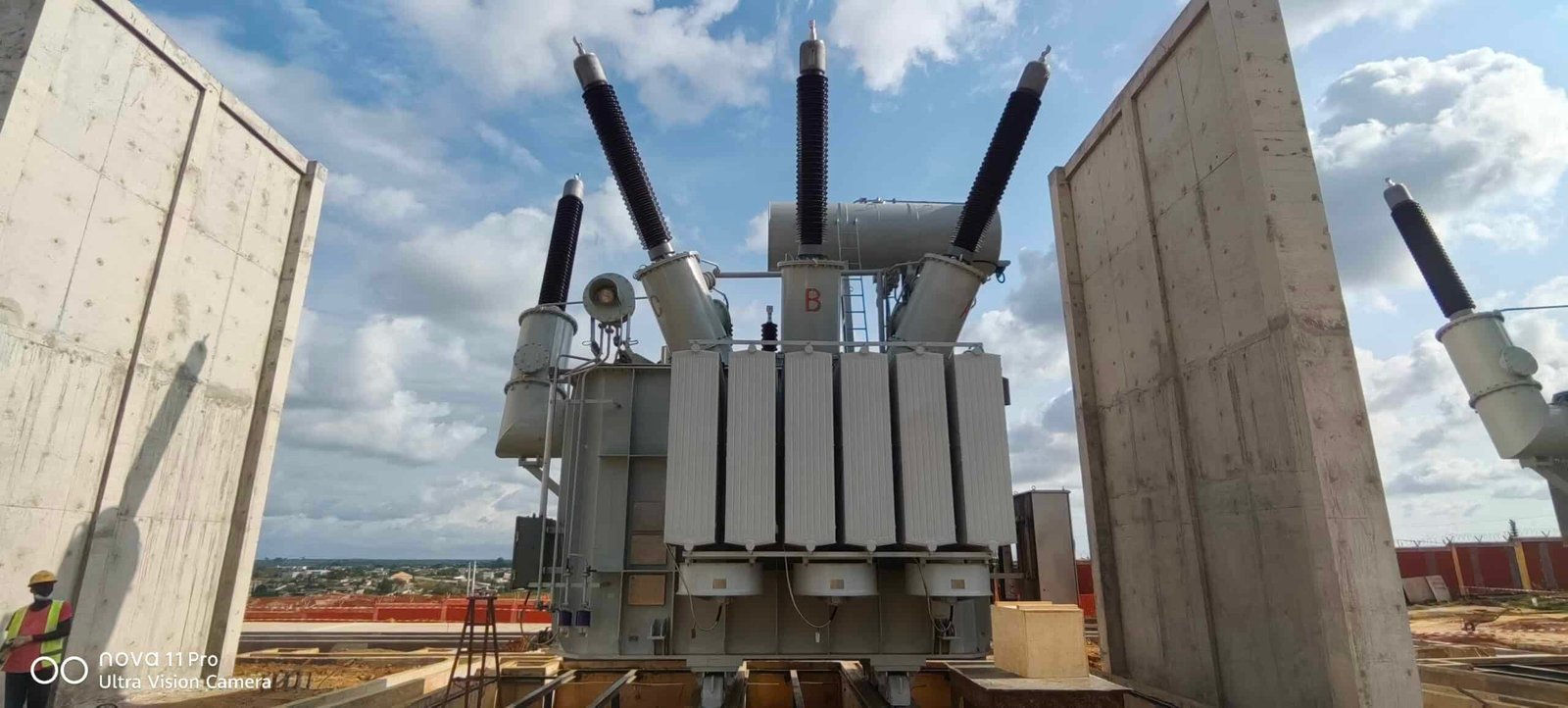
Selecting the correct frequency rating is a critical step when purchasing a power transformer because frequency directly affects the transformer's magnetic core design, efficiency, temperature performance, losses, and long-term reliability. Although most electrical systems operate at either 50 Hz or 60 Hz, choosing the wrong frequency rating can lead to overheating, core saturation, reduced capacity, increased operating costs, and premature equipment failure. For utilities, industrial facilities, renewable energy projects, and commercial infrastructure, frequency selection must be based on the actual electrical network requirements, future expansion plans, and application conditions. A careful evaluation before procurement ensures that the transformer performs safely and efficiently throughout its expected service life.
The correct frequency rating for a power transformer should be selected by matching the transformer frequency with the electrical system frequency, typically 50 Hz or 60 Hz. Buyers should evaluate grid requirements, application location, voltage conditions, future relocation plans, efficiency goals, and manufacturer recommendations. A single-frequency transformer is suitable for fixed installations, while a dual-frequency transformer may be preferred for international, mobile, or flexible applications.
Selecting transformer frequency only requires checking the voltage rating because frequency does not affect transformer performance.False
Frequency directly influences magnetic flux density, core saturation, losses, temperature rise, and transformer efficiency. Both voltage and frequency must be considered during transformer selection.
Why is frequency selection important for power transformers?
A power transformer operates by electromagnetic induction. The alternating current frequency determines how often the magnetic field inside the transformer core changes direction.
The frequency affects:
- Magnetic flux density
- Core dimensions
- Core losses
- Transformer heating
- Efficiency
- Noise levels
- Service life
A transformer designed for one frequency is optimized around specific magnetic and thermal conditions. Using an incorrect frequency can push the transformer outside its intended operating range.
Step 1: Identify the electrical system frequency
The first step is confirming the frequency of the electrical network where the transformer will operate.
The two global standard frequencies are:
| Frequency Rating | Common Application Regions |
|---|---|
| 50 Hz | Europe, Asia, Africa, Australia, Middle East, many South American countries |
| 60 Hz | United States, Canada, Mexico, South Korea, parts of South America |
For a permanent installation, the transformer should normally match the local grid frequency.
Examples:
- A substation connected to a 50 Hz utility grid requires a 50 Hz transformer.
- A factory connected to a 60 Hz industrial network requires a 60 Hz transformer.
Step 2: Consider the transformer application
The best frequency rating depends heavily on where and how the transformer will be used.
Different applications have different requirements.
| Application | Recommended Frequency Approach |
|---|---|
| Utility substation | Match local grid frequency |
| Industrial plant | Match facility electrical system |
| Solar power plant | Match grid interconnection requirements |
| Wind farm | Match transmission network |
| Export equipment | Consider dual frequency |
| Mobile substation | Consider dual frequency |
Permanent installations usually require a standard frequency transformer, while flexible applications may benefit from dual-frequency designs.
Step 3: Understand the effect of frequency on transformer design
Frequency determines how the transformer core handles magnetic flux.
When frequency decreases:
- Magnetic flux increases.
- The risk of saturation increases.
- A larger core may be required.
When frequency increases:
- Magnetic flux decreases.
- Core size can potentially be reduced.
- Magnetizing current may decrease.
| Frequency Condition | Core Design Effect |
|---|---|
| Lower frequency | Larger core required |
| Higher frequency | Smaller core possible |
| Correct frequency | Optimized performance |
Step 4: Avoid operating below the rated frequency
One of the most important rules in transformer selection is avoiding operation below the design frequency at rated voltage.
For example:
A transformer designed for 60 Hz may experience problems on a 50 Hz system because:
- The magnetic flux increases.
- The core may saturate.
- Heating increases.
- Efficiency decreases.
Possible consequences include:
- Excessive excitation current
- Higher no-load losses
- Increased noise
- Insulation stress
- Reduced transformer life
Step 5: Evaluate whether a dual-frequency transformer is needed
Some projects require flexibility between 50 Hz and 60 Hz operation.
A dual-frequency transformer may be appropriate when:
- Equipment is exported internationally.
- The final installation location is uncertain.
- A transformer may be relocated.
- A company operates facilities in multiple countries.
- Mobile power systems are required.
| Project Situation | Recommended Choice |
|---|---|
| Fixed local installation | Single-frequency transformer |
| International project | Dual-frequency transformer |
| Mobile substation | Dual-frequency transformer |
| Export equipment package | Dual-frequency transformer |
Step 6: Consider future expansion and relocation
Transformer purchases often involve equipment expected to operate for 30 years or more.
During this lifespan, project conditions may change.
Future considerations include:
- Plant expansion
- International relocation
- Grid connection changes
- Equipment reuse
If future flexibility is important, a dual-frequency transformer may provide additional value.
Step 7: Evaluate efficiency requirements
Frequency selection affects transformer efficiency because it influences core losses.
Transformer efficiency depends on:
- Core material
- Frequency rating
- Voltage level
- Load profile
- Cooling system
A correctly matched frequency allows the transformer to achieve its designed efficiency.
| Efficiency Factor | Frequency Influence |
|---|---|
| Core loss | High influence |
| Magnetizing current | High influence |
| Copper loss | Mainly load dependent |
| Overall efficiency | Depends on complete design |
Step 8: Check applicable technical standards
Power transformers should comply with recognized standards for electrical performance, testing, and safety.
Important standards include:
- International Electrotechnical Commission standards
- Institute of Electrical and Electronics Engineers standards
These standards define requirements related to:
- Rated frequency
- Voltage ratings
- Insulation levels
- Temperature rise
- Efficiency testing
- Factory acceptance tests
Compliance ensures that transformer performance matches industry expectations.
Step 9: Discuss requirements with the manufacturer
Experienced transformer manufacturers can help evaluate frequency selection based on:
- Grid conditions
- Load requirements
- Installation environment
- Operating conditions
- Future plans
Technical consultation before ordering can prevent expensive modifications after production begins.
What information should buyers provide?
To select the correct frequency rating, buyers should provide:
| Required Information | Purpose |
|---|---|
| System frequency | Defines core design |
| Primary voltage | Determines insulation design |
| Secondary voltage | Defines output requirements |
| Power rating | Determines capacity |
| Load characteristics | Determines thermal design |
| Installation environment | Determines protection requirements |
| Future requirements | Supports long-term planning |
Common frequency selection mistakes
Several mistakes can create transformer performance problems.
Choosing based only on voltage
Voltage matching alone is insufficient because frequency affects magnetic performance.
Ignoring future requirements
A transformer that meets current needs may become unsuitable if the equipment is relocated.
Assuming all transformers are interchangeable
A 50 Hz and 60 Hz transformer with identical voltage and power ratings may have different internal designs.
Selecting the lowest-cost option without technical review
A cheaper transformer that does not match the system frequency may create higher lifetime costs.
How do different industries select frequency ratings?
Different industries have different priorities.
| Industry | Main Frequency Selection Consideration |
|---|---|
| Utilities | Grid compatibility |
| Renewable energy | Interconnection requirements |
| Manufacturing | Factory electrical system |
| Data centers | Reliability and availability |
| Mining | Remote system requirements |
| Oil and gas | International equipment compatibility |
Should you always choose a dual-frequency transformer for flexibility?
Not necessarily.
A dual-frequency transformer provides flexibility, but it may involve:
- Higher initial cost
- Additional engineering
- Larger physical dimensions
For a fixed installation with a stable grid frequency, a standard transformer is often the most economical choice.
The decision should consider:
- Current requirements
- Future flexibility
- Project budget
- Operating conditions
Recommended frequency selection process
A practical selection process includes:
- Confirm the electrical grid frequency.
- Verify transformer application requirements.
- Review future operational plans.
- Determine whether dual-frequency capability is needed.
- Confirm design compatibility with the manufacturer.
- Review testing and certification requirements.
This approach minimizes risk and ensures reliable transformer operation.
Conclusion
Frequency is a critical specification that should never be overlooked when selecting a power transformer. It affects the transformer's magnetic core design, operating efficiency, thermal performance, and overall reliability. Matching the transformer's frequency rating to the electrical system—whether 50 Hz, 60 Hz, or a dual-frequency application—helps prevent overheating, minimize energy losses, and maximize equipment lifespan. By evaluating frequency requirements alongside voltage, capacity, cooling method, and installation environment, buyers can select a power transformer that delivers safe, efficient, and dependable performance for years to come.
FAQ
Q1: How do frequency requirements affect the selection of power transformers?
Frequency is one of the most critical specifications when selecting a power transformer because it directly influences the transformer's magnetic core design, operating efficiency, thermal performance, and voltage capability. Power transformers are designed to operate at a specific system frequency, most commonly 50 Hz or 60 Hz.
When selecting a transformer, engineers should verify:
System frequency (50 Hz or 60 Hz)
Rated voltage
Power rating (kVA or MVA)
Core design
Cooling method
Efficiency requirements
Applicable standards
Using a transformer at the incorrect frequency can result in excessive heating, increased losses, reduced efficiency, and shortened service life.
Q2: What is the difference between 50 Hz and 60 Hz power systems?
Electrical grids around the world generally operate at one of two standard frequencies.
50 Hz
Common in:
Europe
Asia
Africa
Australia
Most of the Middle East
60 Hz
Common in:
United States
Canada
Mexico
Parts of Central and South America
Some regions of East Asia
Power transformers are optimized for the frequency of the electrical network in which they will operate.
Q3: Why does frequency affect transformer core design?
The transformer's magnetic core is designed according to the operating frequency.
At lower frequencies (50 Hz):
Higher magnetic flux is produced for the same voltage.
A larger core cross-sectional area is generally required.
More core material may be needed.
At higher frequencies (60 Hz):
Lower magnetic flux is generated for the same voltage.
Smaller core designs are often possible.
Core losses can be reduced.
Proper core design helps maintain efficiency while preventing magnetic saturation.
Q4: Can a 50 Hz transformer operate on a 60 Hz system?
In many cases, yes. A transformer designed for 50 Hz can generally operate on a 60 Hz supply at its rated voltage because the higher frequency reduces magnetic flux density, lowering the risk of core saturation.
However, compatibility should always be confirmed with the manufacturer, as factors such as cooling, impedance, and application requirements may affect suitability.
Q5: Can a 60 Hz transformer operate on a 50 Hz system?
Operating a transformer designed only for 60 Hz on a 50 Hz system at the same rated voltage is generally not recommended unless the manufacturer specifically approves it.
At the lower frequency:
Magnetic flux density increases.
Core saturation may occur.
Magnetizing current increases.
Temperature rise may exceed design limits.
Insulation aging may accelerate.
In some applications, reducing the operating voltage may allow safe operation, but this should only be done according to manufacturer guidance.
Q6: How does frequency influence transformer efficiency and losses?
Frequency affects both magnetic and electrical performance.
Core (No-Load) Losses
Depend on:
Operating frequency
Magnetic flux density
Core material
Load (Copper) Losses
Primarily depend on:
Load current
Winding resistance
Operating temperature
Modern transformer designs optimize the balance between core and copper losses for the intended system frequency, improving overall efficiency.
Q7: Which international standards address transformer frequency requirements?
Transformer frequency ratings are specified by internationally recognized standards, including:
IEC 60076 – Power Transformers
IEC 60038 – Standard Voltages
IEEE C57 Series – Power Transformer Standards
National utility specifications
Regional grid codes
These standards define the electrical characteristics and testing requirements necessary for safe and reliable operation at the designated frequency.
Q8: What other factors should be considered alongside frequency when selecting a power transformer?
Frequency is only one aspect of transformer selection. Engineers should also evaluate:
Primary and secondary voltage ratings
Rated power (kVA or MVA)
Impedance
Cooling method (ONAN, ONAF, OFAF, etc.)
Insulation class
Basic Insulation Level (BIL)
Vector group
Installation environment
Ambient temperature
Future load growth
Compliance with IEC, IEEE, or local standards
Considering all of these factors together ensures the transformer is properly matched to the electrical system, maximizing efficiency, reliability, and service life.
References
IEC 60076 – Power Transformers
https://webstore.iec.ch/publication/602
IEC 60038 – IEC Standard Voltages
https://webstore.iec.ch
IEEE C57 Series – Power Transformer Standards
https://standards.ieee.org
Electrical Engineering Portal – Understanding Transformer Frequency Ratings
https://electrical-engineering-portal.com
IEEE Power & Energy Society – Research on Power Transformer Performance
https://ieeexplore.ieee.org