
Gas-Insulated Switchgear (GIS) is a compact, high-voltage electrical switchgear system widely used in modern power transmission and distribution networks. Unlike air-insulated switchgear (AIS), GIS uses SF₆ or alternative eco-friendly gas as an insulating medium, enabling significant space savings, higher reliability, and enhanced safety. GIS is especially valued in urban, industrial, and environmentally challenging installations where space, performance, and stability are critical.
What Is a GIS Switchgear and How Does It Work in the Power Industry?
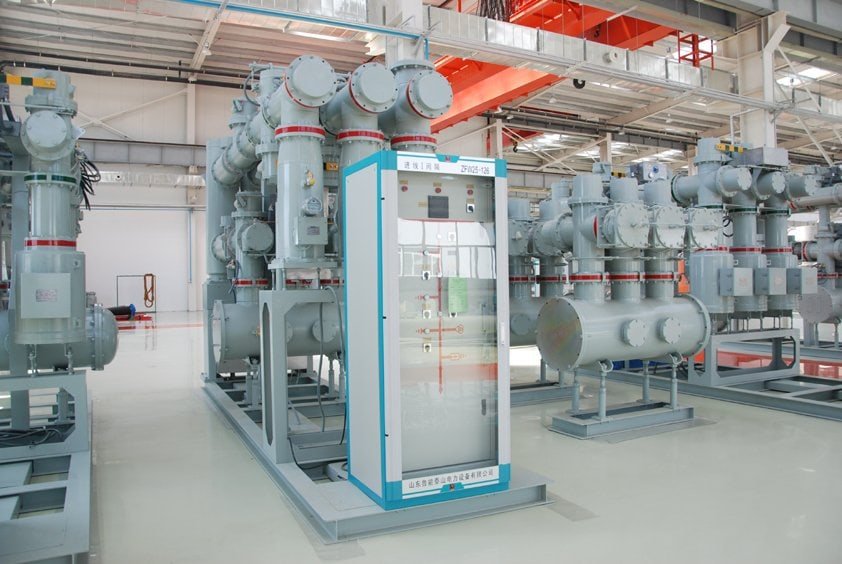
Gas-insulated switchgear (GIS) is a compact, high-performance form of electrical switchgear in which all key components—circuit breakers, busbars, disconnectors, earthing switches, and current/voltage transformers—are fully enclosed within a sealed metal tank filled with insulating gas. Unlike traditional air-insulated switchgear (AIS), which depends on atmospheric air for insulation, GIS uses sulfur hexafluoride (SF₆) or increasingly eco-alternative gases such as fluoronitrile mixtures to achieve extremely high dielectric strength in a very small footprint. This design enables the safe handling of high-voltage power, even in dense urban areas, industrial plants, offshore platforms, and environmentally constrained sites where AIS would be impractical.
At the core of GIS functionality is the principle of gas insulation. SF₆ and its modern replacements exhibit dielectric strengths nearly three times higher than air at standard pressure. When equipment is pressurized within a sealed tank, the insulation performance increases even further. This allows for much smaller clearances between energized parts, enabling the entire switchgear to be up to ten times more compact than air-insulated alternatives. The encapsulated structure protects critical components from moisture, dust, pollution, salt fog, industrial corrosion, and wildlife interference, dramatically reducing the risk of flashovers or outdoor contamination failures.
Inside the GIS enclosure, switching operations are executed through highly engineered mechanisms capable of interrupting fault currents in milliseconds. During a fault, the circuit breaker contacts separate within the gas environment, and the insulating medium rapidly quenches the arc formed between the contacts. SF₆ has exceptional arc-quenching properties because it absorbs free electrons and forms stable, non-conductive ions. Modern eco-gases have similar behavior but produce a smaller environmental footprint. Once the arc is extinguished, the breaker fully isolates the faulted section, protecting downstream equipment and maintaining system stability.
Gas-insulated disconnectors and earthing switches also operate within the sealed environment, enabling safe isolation during maintenance. Because these components are enclosed and not exposed to atmospheric conditions, their mechanical wear and contact oxidation are significantly lower than in conventional AIS systems. Current and voltage transformers, essential for protection and metering, are likewise built directly into the GIS housing, minimizing cabling, simplifying installation, and enhancing measurement accuracy due to the stable internal environment.
The modular architecture of GIS switchgear provides strong advantages for modern power grids. Each module can integrate multiple functions in a single tank, allowing easy configuration, expansion, or bay-level replacement. The sealed design leads to exceptionally low maintenance requirements—often reduced to periodic gas density checks, partial discharge monitoring, and mechanical inspections of external components. Because internal parts remain untouched by ambient conditions, intervals between major overhauls can extend for decades.
GIS plays a critical role in the power industry by supporting the reliability of high-voltage transmission networks and medium-voltage distribution grids. In urban substations where space is limited and underground or indoor installations are required, GIS allows utilities to deploy high-capacity switching equipment in areas where AIS would require several times more land. Industrial users—such as data centers, chemical plants, rail systems, and offshore energy platforms—benefit from its robustness, compact layout, and resistance to harsh environments. GIS also supports renewable integration by providing stable switching points for wind and solar farms in remote or corrosive locations.
A key operational advantage of GIS is its extremely high reliability. Because it prevents contamination and moisture ingress, it delivers one of the lowest failure rates among all switchgear technologies. The sealed, stable insulation system leads to consistent dielectric performance throughout its lifetime, minimizing outages and service interruptions. With the addition of modern sensors and digital diagnostics, GIS can continuously track gas pressure, partial discharge activity, temperature, and mechanical wear, enabling predictive maintenance strategies that further strengthen system availability.
Environmental considerations are an important part of GIS technology. Traditional SF₆ is a potent greenhouse gas, which is why manufacturers and utilities are increasingly adopting eco-gases, hybrid insulation systems, and vacuum-based interruption technologies. These new designs maintain the compactness and reliability of GIS while significantly reducing environmental impact. As global regulations tighten, next-generation GIS is evolving toward low-GWP or SF₆-free solutions without compromising performance.
In summary, GIS switchgear is a compact, gas-insulated, high-reliability switching system that supports the safe control and protection of power networks. Its sealed architecture delivers superior insulation, exceptional arc-quenching capability, minimal maintenance, and long service life, making it indispensable in modern power infrastructure where space, reliability, and environmental resilience are critical.
Why Is Gas Used as the Insulating Medium in GIS Switchgear?
1. High Dielectric Strength Enables Compact Designs
Pressurized insulating gases—traditionally SF₆ and increasingly eco-friendly gas mixtures—offer significantly higher dielectric strength compared to air. Their breakdown voltage is several times higher, especially under increased pressure.
This allows GIS components such as busbars, circuit breakers, and disconnectors to be positioned much closer together while still maintaining excellent insulation safety margins.
As a result, GIS systems can be 5–10 times smaller than AIS (air-insulated switchgear), making them ideal for:
- Urban substations
- Underground or tunnel installations
- Industrial environments with limited space
2. Superior Arc-Quenching and Arc-Cooling Capability
During the interruption of high short-circuit currents, a very hot arc is formed.
SF₆ and its replacements have strong electron-capturing properties that quickly reduce conductivity within the arc channel. This provides:
- Rapid arc cooling
- Fast de-ionization
- Very short dielectric recovery times
As a result, GIS circuit breakers achieve highly reliable interruption performance under extreme fault currents, with minimal contact wear and long service life.
3. Enclosed Gas Environment Prevents External Contamination
GIS equipment is housed inside fully sealed, pressurized metal enclosures, which completely isolate it from:
- Moisture
- Dust or industrial pollutants
- Salt fog
- Animals and insects
This environmental barrier eliminates common AIS failure modes such as pollution flashovers, corrosion, and insulation degradation.
4. Controlled Atmosphere Minimizes Partial Discharge and Extends Lifespan
Inside the gas compartment, temperature, humidity, and density remain stable and controlled.
This results in:
- Extremely low partial discharge (PD) levels
- Slower insulation aging
- Reduced failure probability
These characteristics are a key reason GIS is recognized as a highly reliable long-term solution for modern power networks.
5. Low Maintenance Requirements Reduce Lifecycle Costs
Because the insulated components never contact the external environment, GIS maintenance mainly focuses on:
- Gas density and pressure monitoring
- Structural integrity checks
- Mechanism and control system servicing
No internal cleaning is needed, and no shutdowns are required due to contamination—significantly lowering lifecycle operating costs. GIS units often operate reliably for several decades with minimal intervention.
6. Gas Insulation Supports Modular and Highly Integrated Designs
Gas insulation makes it possible to integrate busbars, breakers, disconnectors, and instrument transformers within shared compartments. This provides:
- More compact layouts
- Shorter and more reliable electrical connections
- Consistent thermal and mechanical behavior
For high-voltage and extra-high-voltage applications, this modular approach further enhances system reliability and safety.
What Are the Main Components of a GIS System?
1. Gas-Insulated Busbars for Compact Power Transmission
GIS busbars carry power between bays inside a sealed, pressurized gas compartment. They are fully enclosed in aluminum or stainless-steel housings filled with SF₆ or eco-gases, which allows extremely compact phase spacing. Their design includes support insulators, conductor tubes, and expansion joints that maintain alignment and structural integrity under temperature and load variations. Busbars are engineered to withstand high short-circuit forces, ensuring stable performance in high-density urban substations and HV transmission nodes.
2. Circuit Breakers Providing High-Performance Fault Interruption
The GIS circuit breaker is typically a single-pressure gas-blast design using the insulating medium to extinguish arcs effectively. With strong electron-capturing properties, the gas enables rapid dielectric recovery, allowing fast and reliable breaking of large fault currents. The breaker includes moving and fixed contacts, operating mechanisms (spring, hydraulic, or hybrid), arc chambers, and monitoring sensors. Its compactness and low maintenance make it superior for systems requiring extremely high reliability.
3. Disconnectors and Earthing Switches for Safe Isolation and Grounding
GIS includes motorized or manual disconnect switches that provide visible (or sensor-verified) isolation within sealed gas compartments. Because the enclosure is opaque, mechanical indicators and position sensors ensure accurate status confirmation.
Earthing switches—often capable of withstanding short-circuit currents—are installed to safely ground circuits during maintenance. Together, they guarantee safety compliance even in high-voltage environments where space is limited.
4. Instrument Transformers for Accurate Measurement and Protection
GIS integrates CTs (current transformers) and VTs/PTs (voltage transformers/potential transformers) directly inside gas compartments. Their gas-insulated design stabilizes temperature and humidity conditions, improving accuracy and reducing partial discharge.
Modern GIS also incorporates optical or digital instrument transformer variants, enabling IEC 61850 digital substations and reducing secondary wiring complexity.
5. Gas Compartments and Metal Enclosures for Insulation Integrity
GIS systems rely on hermetically sealed metal enclosures populated with pressurized insulating gas. Compartments may be segregated into bays or modules—busbar, breaker, and disconnector compartments—to maintain service continuity even if one section is depressurized.
Each enclosure includes gas barriers, O-rings, particle traps, pressure monitoring devices, and dielectric sensors, ensuring long-term insulation stability with minimal leakage.
6. Operating Mechanisms and Control Interfaces
Mechanical or electromechanical operating mechanisms drive breakers and disconnectors with high precision. Modern GIS integrates compact spring-charged mechanisms, motor drives, and electronic position control systems.
SCADA connectivity, protection relays, auxiliary AC/DC systems, and digital monitoring platforms support remote operation, fault diagnosis, and predictive maintenance.
7. Gas Handling and Monitoring Systems for Safety and Reliability
Because GIS depends on stable gas pressure and purity, monitoring devices are essential. These include:
- Density sensors and pressure switches
- Dew-point indicators
- Gas analyzers detecting moisture, decomposition gases, or contaminants
- Filling and evacuation valves
- Gas zones with interlocked valves
Eco-gas mixtures also require specialized monitoring to maintain optimal dielectric characteristics.
8. Support Frames, Enclosures, and Grounding Systems
Structural support frames hold GIS modules in alignment and absorb mechanical loads. The entire GIS assembly is enclosed in grounded metal housings, ensuring electromagnetic shielding and fault containment.
High-integrity grounding networks prevent overvoltages and ensure safe dissipation of fault currents.
Where Is GIS Switchgear Commonly Installed?

1. Urban Substations Where Space Is Extremely Limited
GIS switchgear is widely used in densely populated urban areas where conventional AIS installations are not feasible. Because GIS reduces footprint by 70–90%, it fits easily into compact buildings, basements, rooftops, or underground vaults. Urban load centers require high reliability, and the sealed gas-insulated design eliminates pollution flashovers caused by dust, humidity, or industrial contaminants. GIS also supports low-noise operation, which is essential near residential and commercial districts.
2. Underground and Tunnel-Based Substations for Hidden Infrastructure
Cities increasingly adopt underground substations to preserve surface space for public use. GIS is ideal for these installations because it requires minimal ventilation, offers high fire safety, and operates safely in enclosed environments. Tunnel substations for railways, metros, and utility corridors also rely heavily on GIS due to its compactness, reduced maintenance demand, and robust performance in low-access environments.
3. Industrial Facilities with Harsh Environmental Conditions
Heavy industrial sectors—steel plants, chemical factories, refineries, paper mills, cement plants, and mining operations—use GIS to avoid failures caused by dust, corrosive gases, moisture, and vibration. The sealed metal enclosures prevent contamination-related outages common in AIS. GIS also supports high short-circuit ratings and reliable continuous operation, which are essential in industrial networks with large motor loads and fluctuating demand.
4. Coastal, Desert, and High-Pollution Regions
Environments with salt fog, sandstorms, or heavy pollution cause significant insulation issues for AIS. GIS solves these problems by enclosing all energized components inside pressurized gas chambers. As a result, GIS is frequently installed:
- Near coastlines and marine environments
- In desert regions exposed to dust and heat
- In areas with severe industrial pollution
- In high-humidity tropical climates
GIS offers stable performance without the need for frequent cleaning or inspection.
5. Renewable Energy Integration Points and Collector Stations
Wind farms, solar PV plants, and offshore renewable platforms increasingly deploy GIS to handle high voltage levels in compact substations. Offshore platforms especially benefit from GIS due to:
- Corrosion resistance
- Space-saving requirements
- High reliability with low maintenance
Hybrid GIS modules are also used in onshore collector stations where environmental exposure is severe.
6. High-Voltage Transmission Substations and Utility Nodes
GIS is commonly used in 110 kV, 220 kV, 400 kV, and even ultra-high-voltage (UHV) 800 kV substations. Transmission utilities choose GIS when top reliability and minimal downtime are required, or when station land is limited. The modular structure allows fast installation, high fault withstand capability, and reduced grounding and clearance requirements.
7. Critical Infrastructure Facilities Requiring High Reliability
Facilities that cannot tolerate outages adopt GIS for its sealed design and low failure rate. These include:
- Data centers
- Airports
- Hospitals
- Military bases
- Nuclear power plants
- Large commercial complexes
The long lifespan (30–40+ years) and minimal maintenance needs make GIS ideal for mission-critical applications.
How Does GIS Improve Safety, Reliability, and System Performance?
1. Enclosed Gas-Insulated Design Greatly Enhances Electrical Safety
GIS encloses all live conductors within sealed metal housings filled with high-dielectric insulating gas. This prevents accidental contact, eliminates exposure to arc flash, and removes the risk of contamination-driven flashovers. The grounded metal enclosure also provides complete shielding, ensuring personnel are protected even during switching operations or fault conditions. With no exposed energized parts, GIS substations are inherently safer than AIS installations, especially in confined or high-traffic environments.
2. Superior Dielectric Strength Delivers Exceptional Reliability
The insulating gas—traditionally SF₆, now increasingly eco-gas alternatives—provides dielectric strength several times higher than air. This ensures highly stable insulation performance even under:
- High humidity
- Dust pollution
- Salt fog and corrosive atmospheres
- Temperature fluctuations
Because the gas environment is sealed and controlled, partial discharge remains extremely low, and insulation aging occurs slowly. This makes GIS one of the most reliable technologies for high-voltage transmission and dense urban power networks.
3. Advanced Arc-Quenching Enables High Fault Interruption Performance
GIS circuit breakers use the insulating medium for rapid arc suppression. The strong electron capture characteristics of the gas allow:
- Very fast dielectric recovery
- Efficient arc cooling
- Reliable interruption of high short-circuit currents
Additionally, breaker contact wear is minimal, enhancing long-term mechanical integrity and reducing maintenance frequency.
4. Compact Structure Reduces Failure Points and Improves System Stability
Because GIS integrates busbars, breakers, disconnectors, and instrument transformers within close proximity, the system requires fewer external links and shorter conductor paths. This reduces:
- Mechanical stress
- Fault propagation paths
- External wiring complexity
The modular gas compartmentalization also limits outage spread—if one compartment is compromised, others remain energized, improving overall system resilience.
5. Insensitivity to Environmental Conditions Ensures Stable Operation
GIS performance is unaffected by harsh environmental factors that commonly degrade AIS systems. It maintains consistent operation in:
- Coastal and marine regions
- Desert climates
- Heavy industrial zones
- High-pollution urban centers
This environmental immunity lowers failure rates and keeps power delivery stable, even in the most challenging environments.
6. Built-In Monitoring Enhances Predictive Maintenance and Safety
Modern GIS systems integrate sensors for:
- Gas density and pressure
- Partial discharge
- Temperature rise
- Contact wear
This allows real-time condition monitoring, enabling utilities to detect abnormalities early and take corrective measures before failures occur. The result is a safer grid with fewer unplanned outages and lower maintenance costs.
7. Reduced Maintenance Requirements Improve Long-Term Performance
Since all components are sealed within controlled gas compartments, GIS does not require periodic cleaning, extensive inspections, or contamination prevention measures. Lower maintenance demand means:
- Fewer human interaction points
- Reduced risk of operational errors
- Longer service intervals
- Higher equipment availability
This significantly improves lifecycle performance compared to AIS.
8. High Short-Circuit Strength Improves System Robustness
GIS components are designed to withstand extremely high electromagnetic forces during fault conditions. Rigid metal enclosures and solid support insulators maintain alignment and prevent mechanical deformation. This strong structural resilience enhances system safety and ensures stable performance during severe grid disturbances.
What Are the Advantages of GIS Compared to AIS (Air-Insulated Switchgear)?
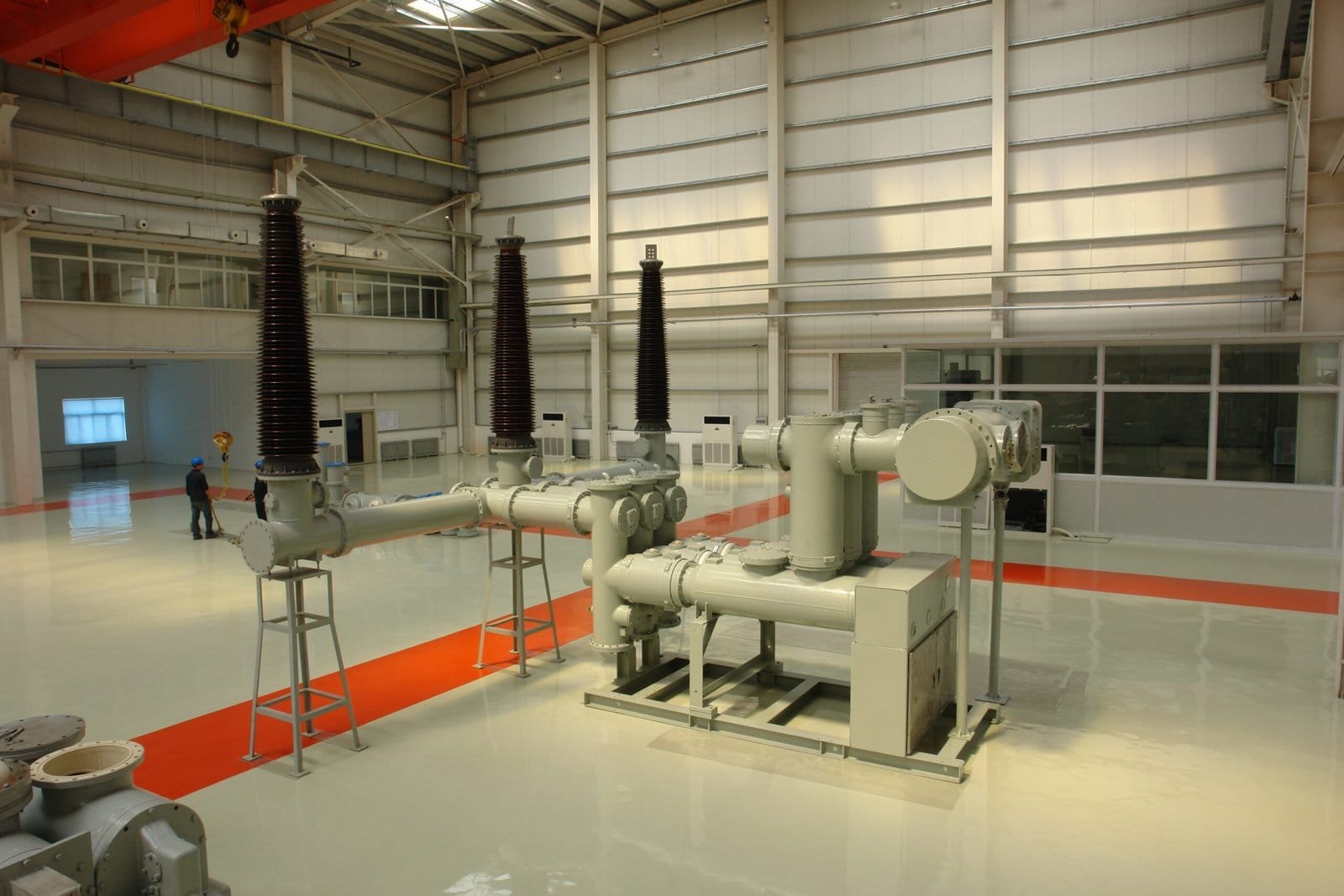
1. Far Smaller Footprint for Space-Constrained Installations
GIS is 70–90% more compact than AIS because all live parts are enclosed in high-dielectric gas compartments, allowing much smaller phase spacing. This makes GIS ideal for urban substations, underground facilities, industrial plants, and renewable energy platforms where land or building space is extremely limited. AIS requires large clearances and wide bus layouts, making it unsuitable for high-density environments.
2. Superior Reliability Due to Sealed and Controlled Insulation
In GIS, all energized components are sealed in gas-filled metal enclosures, protecting them from humidity, dust, salt fog, pollution, insects, and corrosive industrial environments.
AIS is exposed to the atmosphere and therefore vulnerable to:
- Pollution flashovers
- Moisture-related insulation breakdown
- Corrosion and contamination
GIS maintains stable dielectric strength regardless of climate, resulting in significantly fewer failures and longer service life.
3. Lower Maintenance Requirements and Reduced Lifecycle Costs
Because GIS components are enclosed and contamination-free, they require very little maintenance. Routine tasks mainly involve checking gas density, monitoring sensors, and verifying mechanisms.
AIS, in contrast, requires:
- Frequent cleaning
- Outdoor inspections
- Maintenance after storms, dust accumulation, or pollution events
The reduced maintenance burden of GIS lowers operational cost and minimizes outage time, improving long-term value.
4. Enhanced Personnel Safety Through Fully Enclosed Metal Housings
GIS eliminates exposure to live components. Its grounded metal enclosure provides:
- Full arc-flash containment
- Complete shielding of conducting parts
- Safer operation in confined areas
AIS has exposed insulators and conductors, increasing the potential for arc-flash hazards, accidental contact, and environmental interference.
5. Higher Short-Circuit Strength and Structural Stability
GIS has rigid, metal-enclosed compartments that resist electromagnetic forces during faults. Mechanically supported insulators maintain alignment even under extreme conditions.
AIS relies on open-air insulator structures that can flex or degrade over time, especially in polluted or windy environments.
This structural advantage makes GIS preferred for high-fault-level networks and critical substations.
6. Better Performance in Harsh Environmental Conditions
GIS operates reliably in:
- Coastal or marine regions
- Desert climates
- Heavy industrial zones
- High-pollution cities
AIS performance deteriorates in such environments due to salt deposits, sand, humidity, and contaminants. GIS insulation remains stable because the gas compartments are sealed and climate-independent.
7. Modular and Highly Integrated System Architecture
GIS integrates breakers, disconnectors, busbars, instrument transformers, and earthing switches within compact modules. This modularity allows:
- Faster installation
- Simplified protection and control design
- Shorter conductor paths
AIS installations require large outdoor gantries, long bus runs, and separate equipment structures, increasing complexity and installation time.
8. Quieter Operation Suited for Urban and Indoor Use
GIS confines operational noise within sealed enclosures, making it suitable for indoor buildings, commercial areas, and residential zones.
AIS, with its open-air design, generates more audible noise during switching and high load conditions, sometimes requiring noise barriers.
Conclusion
GIS switchgear plays an essential role in modern power systems by providing compact, reliable, and safe high-voltage switching and protection. Its advanced gas insulation allows for smaller footprints, minimal maintenance, and excellent fault performance, making it ideal for densely populated areas, harsh environments, and critical infrastructure. As the power industry evolves, GIS continues to be a key technology supporting efficient, stable, and high-performance electrical networks.
FAQ
Q1: What is GIS switchgear in the power industry?
Gas-Insulated Switchgear (GIS) is a type of electrical switchgear that uses pressurized insulating gas—typically SF₆—to insulate conductors and interrupt electrical faults. Unlike traditional air-insulated switchgear (AIS), GIS encloses all live components within a compact, sealed metal housing. This design makes GIS exceptionally space-efficient, highly reliable, and resistant to environmental pollution.
In power systems, GIS is used for controlling, protecting, and isolating electrical equipment, ensuring safe and stable operation. It is commonly found in urban substations, industrial plants, and high-voltage transmission networks where space is limited or environmental conditions are harsh. Because the gas insulation allows shorter clearance distances, GIS can deliver the same power-handling capacity as AIS while occupying up to 70% less space.
Q2: How does GIS switchgear work?
GIS switchgear operates by using SF₆ gas to provide insulation between energized components and ground. The gas has excellent dielectric strength, allowing it to withstand high voltages without flashover.
Inside the GIS enclosure, key components include circuit breakers, disconnectors, grounding switches, busbars, and current/voltage transformers. When a fault occurs, the circuit breaker interrupts the current by creating and extinguishing an arc in the SF₆-filled chamber. The gas’s arc-quenching properties help extinguish the arc quickly, ensuring reliable fault clearing.
Because everything is sealed and gas-filled, GIS components stay protected from dust, corrosion, moisture, and pollution, ensuring long-term performance with minimal maintenance.
Q3: What are the main advantages of GIS switchgear?
GIS provides several operational, economic, and safety advantages:
Compact size: Ideal for dense urban environments where land is costly.
High reliability: Sealed design protects against contamination and environmental effects.
Low maintenance: Gas insulation requires less frequent cleaning and servicing.
Long service life: Hardware remains stable and corrosion-free.
Enhanced safety: Arc faults are contained inside sealed metal housings.
Higher performance: Suitable for high-voltage and extra-high-voltage applications.
These advantages make GIS the preferred option for high-reliability power networks and mission-critical infrastructures like airports, hospitals, and industrial complexes.
Q4: What are the disadvantages or limitations of GIS switchgear?
Despite its benefits, GIS also has some limitations:
Higher initial cost: GIS equipment is more expensive than AIS due to complex manufacturing.
Special handling of SF₆: SF₆ is a potent greenhouse gas; strict regulations control its use and handling.
More complex diagnostics: Fault tracing may require specialized equipment and trained personnel.
Repair challenges: Gas chambers must remain sealed; repairs require depressurization and gas recovery units.
However, improvements in eco-friendly insulating gases and monitoring technology are helping reduce these drawbacks.
Q5: Where is GIS switchgear commonly used?
GIS is especially valuable in locations where reliability, space optimization, or environmental protection is critical. Common applications include:
Urban substations with limited space
High-voltage and extra-high-voltage transmission systems
Industrial plants, especially petrochemical and mining facilities
Coastal and polluted regions where air insulation is unreliable
Underground or indoor substations
Renewable energy plants, including offshore wind farms
As power networks modernize, GIS adoption continues to grow due to its strong performance and compact design.
References
IEC 62271 Standard for GIS — https://www.iec.ch
Schneider Electric Medium Voltage GIS — https://www.se.com
Mitsubishi Electric GIS Catalog — https://www.mitsubishielectric.com
GE Grid Solutions GIS Insights — https://www.gegridsolutions.com
Doble Engineering Switchgear Testing — https://www.doble.com
EEP – GIS vs AIS Comparison — https://electrical-engineering-portal.com
Statista Power Grid Equipment Market Data — https://www.statista.com