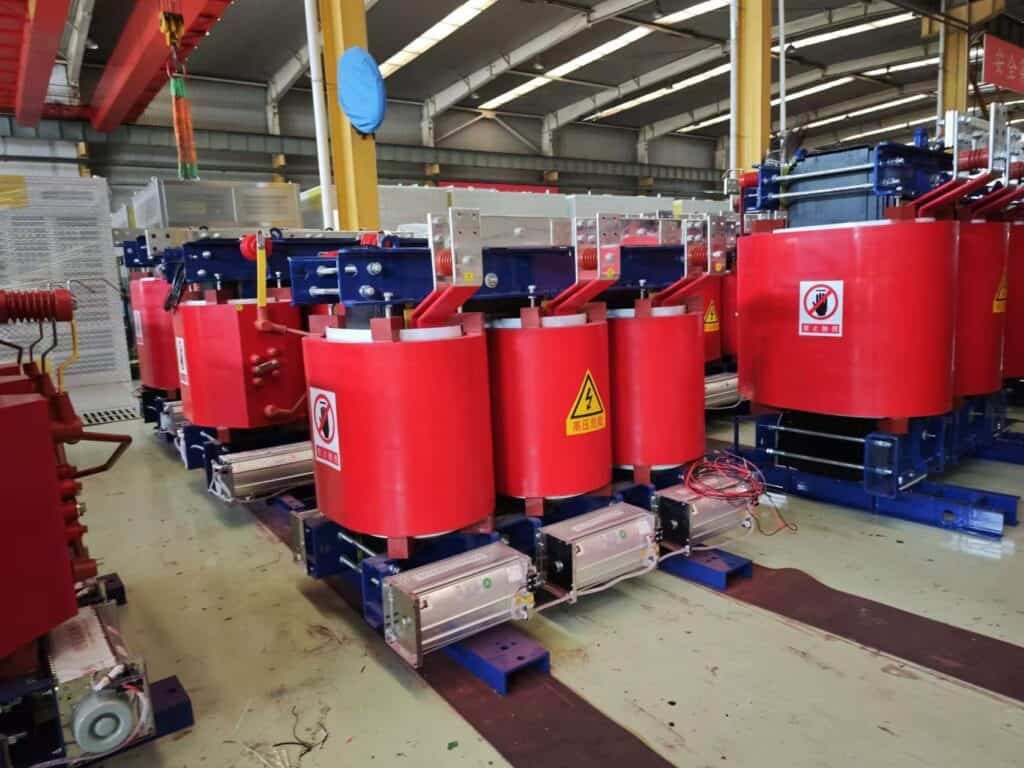
Dry-type transformers are essential components in electrical distribution systems, providing safe and efficient voltage conversion without the use of insulating oil. Instead, they rely on air and solid insulation materials to insulate and cool their internal components. Their operating principle is based on electromagnetic induction, making them a reliable solution for commercial, industrial, and renewable energy applications.
What Is the Operating Principle of a Dry-Type Transformer?
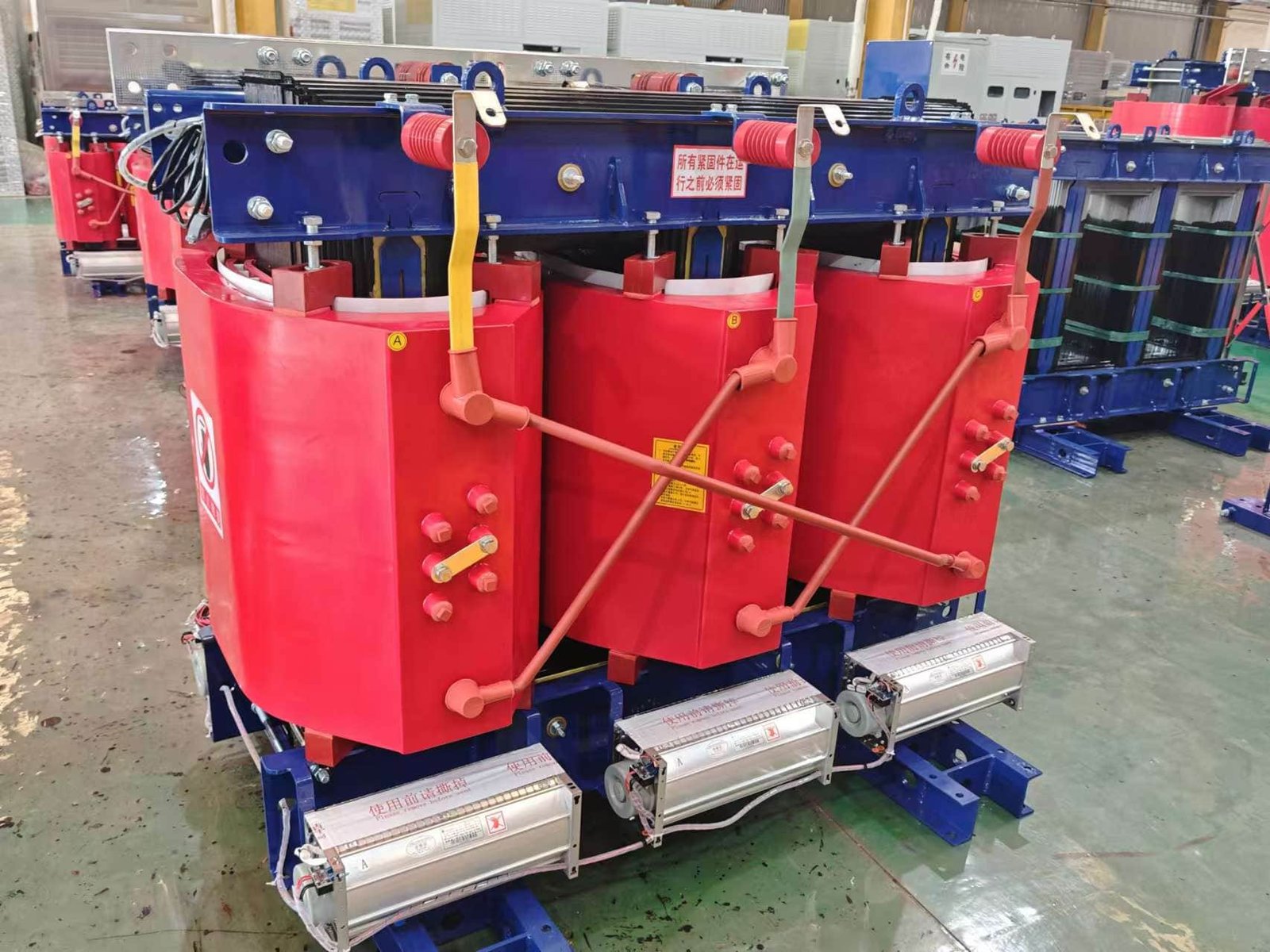
Electrical energy must often be transmitted and utilized at different voltage levels. Transformers make this possible by converting voltage efficiently without changing the frequency of the electrical supply. Among the various transformer technologies available today, dry-type transformers are widely used in commercial buildings, hospitals, data centers, industrial plants, transportation systems, and renewable energy projects due to their safety, environmental benefits, and low maintenance requirements. Although their insulation and cooling systems differ from oil-filled transformers, their fundamental operating principle remains the same.
The operation of a dry-type transformer is based on electromagnetic induction, a phenomenon first discovered by Michael Faraday. Through this principle, electrical energy is transferred from one circuit to another through a magnetic field without direct electrical contact. Understanding this operating principle helps engineers, technicians, and facility managers appreciate how dry-type transformers achieve efficient and reliable voltage conversion.
The operating principle of a dry-type transformer is electromagnetic induction. When alternating current flows through the primary winding, it generates a changing magnetic field within the transformer core. This changing magnetic flux induces a voltage in the secondary winding, allowing electrical energy to be transferred and the voltage to be stepped up or stepped down. Dry-type transformers use solid insulation materials and air cooling instead of liquid insulating oils.
This simple yet highly effective principle enables transformers to achieve efficiencies that often exceed 98–99%.
A dry-type transformer transfers electricity through direct electrical contact between its primary and secondary windings.False
The primary and secondary windings are electrically isolated. Energy transfer occurs through magnetic coupling and electromagnetic induction within the transformer core.
Understanding Electromagnetic Induction
Electromagnetic induction is the fundamental physical principle behind all transformers.
What Is Electromagnetic Induction?
Electromagnetic induction occurs when a changing magnetic field induces a voltage in a conductor.
Key Elements
| Element | Function |
|---|---|
| Electric current | Creates magnetic field |
| Magnetic field | Transfers energy |
| Conductor | Receives induced voltage |
The interaction of these elements enables transformer operation.
Faraday's Law of Electromagnetic Induction
The voltage induced in a winding depends on the rate of change of magnetic flux.
Fundamental Relationship
E=-N\frac{d\Phi}{dt}
Where:
- (E) = induced voltage
- (N) = number of turns
- (\Phi) = magnetic flux
- (d\Phi/dt) = rate of change of magnetic flux
This law forms the basis of transformer design.
Main Components Involved in Transformer Operation
Several components work together to achieve voltage transformation.
Core Components
| Component | Function |
|---|---|
| Primary winding | Receives input power |
| Secondary winding | Delivers output power |
| Magnetic core | Flux transfer path |
| Insulation system | Electrical separation |
| Cooling system | Heat dissipation |
Each component plays a critical role in operation.
The Primary Winding
The operating cycle begins with the primary winding.
Function of the Primary Winding
The primary winding receives alternating current from the power source.
What Happens When Voltage Is Applied?
| Step | Result |
|---|---|
| AC voltage applied | Current flows |
| Current alternates | Magnetic field changes |
| Magnetic flux generated | Core becomes energized |
This changing magnetic field is essential.
Why Alternating Current Is Necessary
Transformers require a changing magnetic field to operate.
AC vs DC
| Current Type | Transformer Operation |
|---|---|
| Alternating Current (AC) | Effective |
| Direct Current (DC) | Ineffective |
A constant magnetic field cannot induce continuous voltage.
Magnetic Flux Creation
Current flowing through the primary winding produces magnetic flux.
Flux Characteristics
| Characteristic | Description |
|---|---|
| Alternating | Changes direction continuously |
| Time-varying | Required for induction |
| Shared | Links both windings |
This magnetic flux is the energy transfer medium.
The Magnetic Core
The core provides a low-reluctance path for magnetic flux.
Core Functions
| Function | Benefit |
|---|---|
| Flux concentration | Improved efficiency |
| Magnetic coupling | Better energy transfer |
| Loss reduction | Lower operating costs |
Without the core, transformer efficiency would be significantly lower.
Core Construction
Most dry-type transformers use laminated silicon steel cores.
Why Laminations Are Used
| Benefit | Result |
|---|---|
| Reduced eddy currents | Lower losses |
| Reduced heating | Better efficiency |
| Improved performance | Longer service life |
Core quality directly affects transformer efficiency.
The Secondary Winding
The secondary winding receives energy from the magnetic field.
Voltage Induction Process
As magnetic flux changes within the core, voltage is induced in the secondary winding.
Sequence
| Step | Action |
|---|---|
| Flux links secondary winding | Voltage induced |
| Load connected | Current flows |
| Power delivered | Useful work performed |
This process occurs continuously while energized.
Voltage Transformation Principle
The transformer's voltage ratio depends on the winding turns ratio.
Voltage Ratio Equation
\frac{V_p}{V_s}=\frac{N_p}{N_s}
Where:
- (V_p) = primary voltage
- (V_s) = secondary voltage
- (N_p) = primary turns
- (N_s) = secondary turns
The turns ratio determines whether voltage is increased or decreased.
Step-Up Operation
A transformer increases voltage when the secondary winding has more turns than the primary winding.
Step-Up Characteristics
| Parameter | Condition |
|---|---|
| Secondary turns | Greater |
| Output voltage | Higher |
| Output current | Lower |
Step-up transformers are commonly used in power generation systems.
Step-Down Operation
Most dry-type transformers operate as step-down transformers.
Step-Down Characteristics
| Parameter | Condition |
|---|---|
| Secondary turns | Fewer |
| Output voltage | Lower |
| Output current | Higher |
This configuration is common in building power distribution.
Electrical Isolation
An important feature of transformer operation is electrical isolation.
Why Isolation Matters
| Benefit | Description |
|---|---|
| Improved safety | Shock protection |
| Noise reduction | Better power quality |
| Circuit separation | Enhanced reliability |
Primary and secondary circuits remain electrically independent.
Energy Transfer Without Direct Contact
Unlike many electrical devices, transformers transfer energy magnetically.
Energy Path
| Stage | Transfer Method |
|---|---|
| Primary winding to core | Magnetic field |
| Core to secondary winding | Magnetic flux |
| Secondary winding to load | Electrical current |
No direct electrical connection exists between windings.
Dry-Type Transformer Insulation
Dry-type transformers differ primarily in their insulation system.
Common Insulation Materials
| Material | Application |
|---|---|
| Epoxy resin | Cast resin transformers |
| Varnish | VPI transformers |
| Fiberglass | Reinforcement |
| Nomex® | High-temperature insulation |
| Air | Supplemental insulation |
These materials replace liquid insulating oils.
Cast Resin Transformer Operation
Cast resin transformers fully encapsulate windings.
Benefits
| Feature | Benefit |
|---|---|
| Moisture resistance | Improved durability |
| High dielectric strength | Reliable insulation |
| Fire safety | Reduced risk |
These transformers are widely used indoors.
Cooling During Operation
Transformers generate heat due to electrical losses.
Sources of Heat
| Loss Type | Cause |
|---|---|
| Core loss | Magnetization effects |
| Copper loss | Winding resistance |
Heat must be removed to maintain safe operation.
Air Natural Cooling (AN)
Many dry-type transformers use natural air circulation.
Cooling Process
| Step | Action |
|---|---|
| Transformer heats up | Air temperature rises |
| Warm air rises | Natural convection occurs |
| Cool air enters | Continuous cooling cycle |
This simple method is highly reliable.
Air Forced Cooling (AF)
Larger transformers often employ cooling fans.
Advantages
| Benefit | Result |
|---|---|
| Increased cooling | Higher load capability |
| Better temperature control | Improved efficiency |
Forced-air cooling supports larger capacities.
Power Conservation Principle
Transformers do not create power.
Ideal Power Relationship
V_pI_p=V_sI_s
This means:
| Parameter | Effect |
|---|---|
| Voltage increases | Current decreases |
| Voltage decreases | Current increases |
| Power remains nearly constant | Energy conserved |
Only small losses occur during conversion.
Transformer Efficiency
Dry-type transformers are highly efficient devices.
Efficiency Equation
\eta=\frac{P{out}}{P{in}}\times100%
Typical Efficiency Levels
| Transformer Type | Efficiency |
|---|---|
| Standard dry-type | 97–99% |
| Premium dry-type | Up to 99%+ |
Efficiency depends on design and operating conditions.
Applications Demonstrating the Operating Principle
Commercial Buildings
| Function | Purpose |
|---|---|
| Voltage reduction | Building distribution |
Hospitals
| Function | Purpose |
|---|---|
| Safe power delivery | Critical systems |
Data Centers
| Function | Purpose |
|---|---|
| Reliable voltage conversion | Continuous operation |
Renewable Energy Systems
| Function | Purpose |
|---|---|
| Grid integration | Efficient power transfer |
The operating principle remains identical across all applications.
Summary of the Operating Process
| Step | Description |
|---|---|
| AC voltage applied to primary winding | Current flows |
| Current creates changing magnetic field | Flux generated |
| Flux travels through core | Energy coupling occurs |
| Secondary winding intercepts flux | Voltage induced |
| Load connected | Power delivered |
| Cooling system removes heat | Stable operation maintained |
This cycle continues as long as the transformer remains energized.
How Do the Core and Windings Transfer Electrical Energy?
Transformers are among the most efficient electrical devices ever developed, routinely achieving efficiencies exceeding 98–99%. Their ability to transfer electrical energy from one circuit to another without direct electrical contact is fundamental to modern power generation, transmission, and distribution systems. Whether in a dry-type transformer or an oil-filled transformer, the transfer of energy depends primarily on two critical components: the magnetic core and the windings.
The core and windings work together through the principle of electromagnetic induction. The windings generate and receive magnetic fields, while the core provides a low-resistance magnetic path that efficiently channels magnetic flux between them. Understanding how these components interact helps explain how transformers can increase or decrease voltage while maintaining high efficiency and electrical isolation.
The core and windings transfer electrical energy through electromagnetic induction. Alternating current flowing through the primary winding creates a changing magnetic flux in the transformer core. The core guides this magnetic flux to the secondary winding, where it induces a voltage. This process transfers electrical energy magnetically, without direct electrical contact between the primary and secondary circuits.
This elegant process forms the foundation of virtually every transformer operating in modern electrical systems.
Electrical energy flows directly through the transformer core from the primary winding to the secondary winding.False
The transformer core does not conduct electrical energy between windings. Instead, it carries magnetic flux that enables energy transfer through electromagnetic induction.
Understanding Transformer Energy Transfer
A transformer transfers energy from one electrical circuit to another through magnetic coupling.
Basic Energy Transfer Sequence
| Step | Process |
|---|---|
| Primary winding energized | Current flows |
| Magnetic field generated | Flux develops |
| Flux travels through core | Magnetic coupling occurs |
| Secondary voltage induced | Energy transferred |
| Load receives power | Useful work performed |
No direct electrical connection exists between the windings.
The Role of the Primary Winding
The energy transfer process begins in the primary winding.
What Is the Primary Winding?
The primary winding is connected to the electrical power source.
Functions
| Function | Description |
|---|---|
| Receives input voltage | Source connection |
| Produces magnetic field | Flux generation |
| Initiates energy transfer | First stage of operation |
The primary winding converts electrical energy into magnetic energy.
Current Flow in the Primary Winding
When alternating voltage is applied, alternating current flows through the winding.
Current Characteristics
| Characteristic | Importance |
|---|---|
| Alternating | Essential |
| Time-varying | Required for induction |
| Continuous | Maintains flux generation |
A changing current creates a changing magnetic field.
Magnetic Field Generation
According to electromagnetic principles, current-carrying conductors generate magnetic fields.
Magnetic Field Creation
| Event | Result |
|---|---|
| AC current flows | Magnetic field produced |
| Current changes direction | Field reverses |
| Current magnitude varies | Flux changes continuously |
This changing magnetic field is the key to transformer operation.
The Function of the Transformer Core
The transformer core serves as a pathway for magnetic flux.
Why the Core Is Necessary
Without a core, much of the magnetic field would disperse into surrounding air.
Core Benefits
| Benefit | Result |
|---|---|
| Flux concentration | Improved coupling |
| Reduced magnetic losses | Higher efficiency |
| Enhanced energy transfer | Better performance |
The core significantly increases transformer effectiveness.
Magnetic Flux in the Core
The magnetic field generated by the primary winding produces magnetic flux.
What Is Magnetic Flux?
Magnetic flux represents the total magnetic field passing through a given area.
Flux Characteristics
| Property | Description |
|---|---|
| Alternating | Changes continuously |
| Shared | Links both windings |
| Guided by core | Follows magnetic path |
The core directs this flux efficiently.
Core Construction
Most transformer cores are made from laminated silicon steel.
Why Silicon Steel Is Used
| Property | Benefit |
|---|---|
| High magnetic permeability | Efficient flux flow |
| Low hysteresis loss | Improved efficiency |
| Good mechanical strength | Durability |
These characteristics improve overall transformer performance.
Why Laminations Are Important
Transformer cores are built from thin insulated steel sheets.
Benefits of Laminations
| Benefit | Result |
|---|---|
| Reduced eddy currents | Lower losses |
| Lower heating | Better cooling |
| Higher efficiency | Reduced operating costs |
Lamination is a key design feature.
Core Losses During Energy Transfer
The core is highly efficient but not loss-free.
Types of Core Losses
| Loss Type | Cause |
|---|---|
| Hysteresis loss | Repeated magnetization |
| Eddy current loss | Circulating currents in steel |
These losses occur whenever the transformer is energized.
The Role of the Secondary Winding
The secondary winding converts magnetic energy back into electrical energy.
Secondary Winding Functions
| Function | Purpose |
|---|---|
| Receives magnetic flux | Energy capture |
| Produces output voltage | Power delivery |
| Supplies load current | Useful work |
The secondary winding completes the energy transfer process.
Voltage Induction in the Secondary Winding
The changing magnetic flux induces voltage according to Faraday's Law.
Induction Relationship
E=-N\frac{d\Phi}{dt}
Where:
- (E) = induced voltage
- (N) = number of turns
- (\Phi) = magnetic flux
The greater the rate of flux change, the larger the induced voltage.
Magnetic Coupling Between Windings
The primary and secondary windings are magnetically coupled through the core.
Coupling Process
| Step | Description |
|---|---|
| Primary generates flux | Magnetic field created |
| Core channels flux | Efficient transfer |
| Secondary intercepts flux | Voltage induced |
This magnetic linkage transfers energy efficiently.
Why There Is No Direct Electrical Contact
The primary and secondary windings remain electrically isolated.
Benefits
| Benefit | Description |
|---|---|
| Improved safety | Shock protection |
| Circuit isolation | System separation |
| Noise reduction | Better power quality |
Isolation is one of the most valuable transformer features.
Voltage Transformation Through Windings
The number of turns determines the voltage ratio.
Transformer Turns Ratio
\frac{V_p}{V_s}=\frac{N_p}{N_s}
Where:
- (V_p) = primary voltage
- (V_s) = secondary voltage
- (N_p) = primary turns
- (N_s) = secondary turns
This relationship governs voltage conversion.
Step-Up Energy Transfer
A transformer increases voltage when the secondary winding contains more turns.
Characteristics
| Parameter | Result |
|---|---|
| Secondary turns > primary turns | Voltage increases |
| Current decreases | Power conserved |
Step-up transformers are common in power generation systems.
Step-Down Energy Transfer
A transformer decreases voltage when the secondary winding contains fewer turns.
Characteristics
| Parameter | Result |
|---|---|
| Secondary turns < primary turns | Voltage decreases |
| Current increases | Power conserved |
Step-down transformers are widely used in distribution systems.
Power Conservation During Transfer
Transformers transfer power rather than generate power.
Ideal Power Relationship
V_pI_p=V_sI_s
This means:
| Change | Result |
|---|---|
| Voltage increases | Current decreases |
| Voltage decreases | Current increases |
| Power remains nearly constant | Energy conserved |
Small losses account for efficiency below 100%.
Copper Losses in Windings
Windings experience resistance-related losses.
Copper Loss Equation
P_{Cu}=I^2R
Where:
- (P_{Cu}) = winding loss
- (I) = current
- (R) = resistance
These losses increase with load current.
Heat Generation During Energy Transfer
Energy losses appear as heat.
Sources of Heat
| Source | Location |
|---|---|
| Core losses | Magnetic core |
| Copper losses | Windings |
Cooling systems remove this heat to maintain safe operation.
Energy Flow Summary
The overall energy conversion process follows a sequence.
Complete Transfer Path
| Stage | Energy Form |
|---|---|
| Power source | Electrical energy |
| Primary winding | Electrical energy |
| Core | Magnetic energy |
| Secondary winding | Electrical energy |
| Load | Useful output energy |
The core and windings work together to achieve this conversion.
Efficiency of Energy Transfer
Modern transformers are extremely efficient.
Efficiency Formula
\eta=\frac{P{out}}{P{in}}\times100%
Typical Efficiencies
| Transformer Type | Efficiency |
|---|---|
| Distribution transformer | 97–99% |
| Power transformer | 98–99.5% |
| Large utility transformer | Above 99.5% |
This makes transformers among the most efficient electrical devices available.
Applications Demonstrating Core and Winding Energy Transfer
| Application | Purpose |
|---|---|
| Power generation | Voltage step-up |
| Transmission systems | Long-distance delivery |
| Distribution networks | Voltage reduction |
| Industrial facilities | Equipment supply |
| Data centers | Reliable power |
| Renewable energy systems | Grid integration |
The same operating principle applies in all cases.
Summary of Core and Winding Functions
| Component | Primary Function |
|---|---|
| Primary winding | Generate magnetic flux |
| Magnetic core | Guide magnetic flux |
| Secondary winding | Convert flux into electrical energy |
Together they form the foundation of transformer operation.
How Is Electromagnetic Induction Used in Dry-Type Transformers?
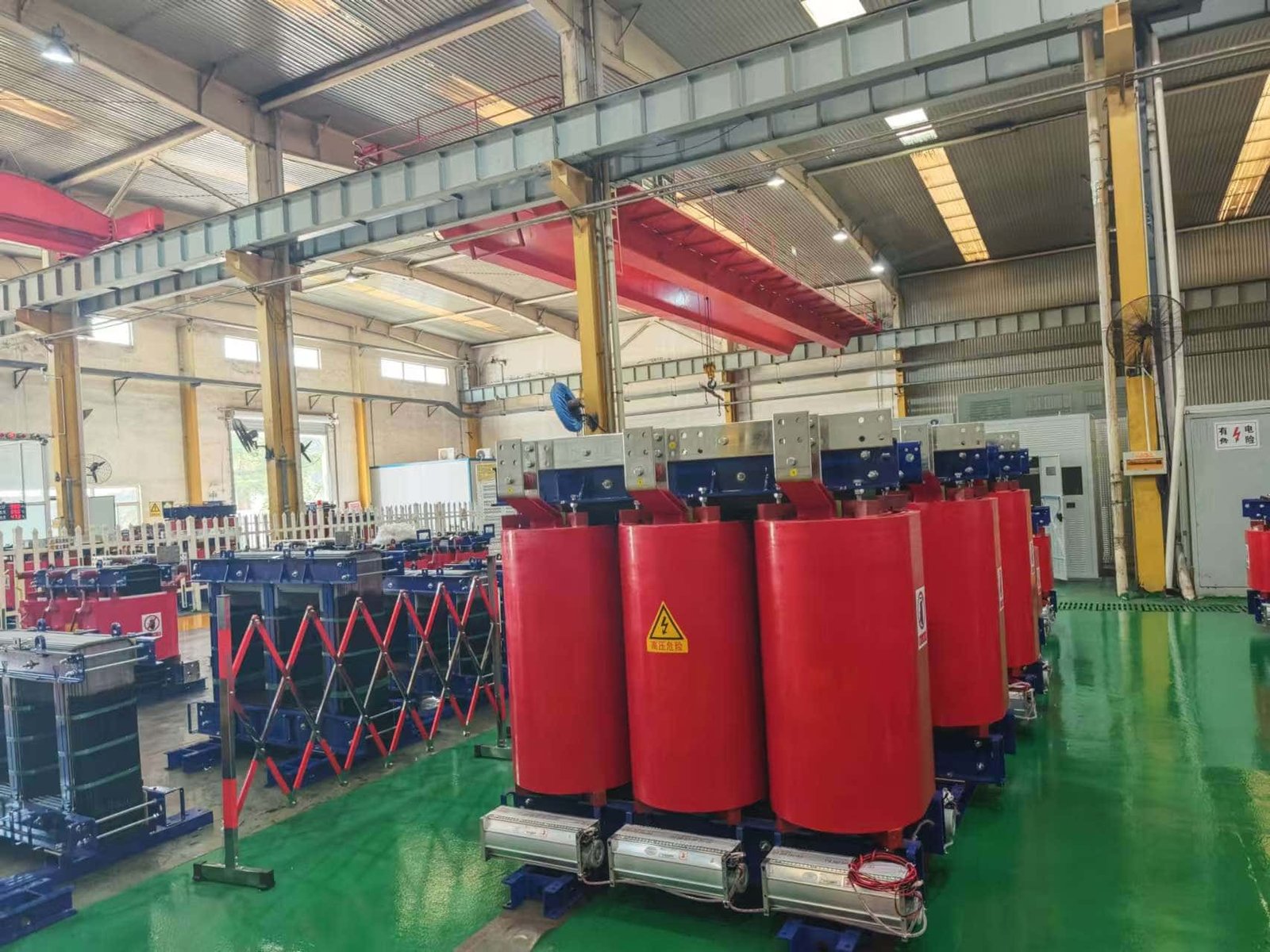
Electric power systems rely on transformers to efficiently convert voltage levels for generation, transmission, distribution, and end-use applications. Whether supplying electricity to a commercial building, powering industrial equipment, supporting a data center, or integrating renewable energy into the grid, transformers perform their function through a fundamental physical principle known as electromagnetic induction. In dry-type transformers, this principle is identical to that used in oil-filled transformers, although the insulation and cooling systems differ significantly.
Electromagnetic induction enables electrical energy to be transferred between two electrically isolated circuits without direct conductive contact. This capability allows dry-type transformers to safely increase or decrease voltage while maintaining high efficiency and electrical isolation. Understanding how electromagnetic induction works within a dry-type transformer provides valuable insight into the operation of one of the most important devices in modern electrical infrastructure.
Electromagnetic induction is the operating principle that allows dry-type transformers to transfer electrical energy between primary and secondary windings. When alternating current flows through the primary winding, it creates a changing magnetic field in the transformer core. This changing magnetic flux induces a voltage in the secondary winding, enabling voltage transformation and power transfer without direct electrical contact between the circuits.
Through this process, dry-type transformers achieve efficient, reliable, and safe voltage conversion in countless applications.
Electromagnetic induction in a dry-type transformer requires direct electrical contact between the primary and secondary windings.False
The primary and secondary windings are electrically isolated. Electromagnetic induction transfers energy through a changing magnetic field rather than through direct electrical contact.
What Is Electromagnetic Induction?
Electromagnetic induction is a fundamental principle of electromagnetism.
Definition
Electromagnetic induction occurs when a changing magnetic field produces a voltage in a conductor.
Key Elements
| Element | Function |
|---|---|
| Electric current | Creates magnetic field |
| Magnetic flux | Transfers energy |
| Conductor | Receives induced voltage |
These elements form the foundation of transformer operation.
Historical Background
Electromagnetic induction was discovered by the physicist Michael Faraday in 1831.
Importance of Faraday's Discovery
| Contribution | Impact |
|---|---|
| Electromagnetic induction | Basis of transformers |
| Generator development | Modern power generation |
| Electrical engineering foundation | Power system evolution |
Nearly all modern transformers operate according to Faraday's principle.
Faraday's Law of Induction
The induced voltage depends on the rate of magnetic flux change.
Mathematical Relationship
E=-N\frac{d\Phi}{dt}
Where:
- (E) = induced voltage
- (N) = number of turns
- (\Phi) = magnetic flux
- (d\Phi/dt) = rate of change of magnetic flux
This equation describes the fundamental mechanism behind transformer operation.
Why Dry-Type Transformers Use Electromagnetic Induction
Dry-type transformers must transfer power while maintaining electrical isolation.
Benefits of Electromagnetic Induction
| Benefit | Description |
|---|---|
| Voltage transformation | Step-up or step-down capability |
| Electrical isolation | Improved safety |
| High efficiency | Minimal losses |
| Reliability | No moving parts |
These advantages make electromagnetic induction ideal for power systems.
Main Components Involved
Several transformer components participate directly in the induction process.
Core Components
| Component | Function |
|---|---|
| Primary winding | Produces magnetic flux |
| Magnetic core | Guides flux |
| Secondary winding | Receives induced voltage |
| Insulation system | Maintains isolation |
Together, these components create an efficient energy transfer system.
The Role of the Primary Winding
The electromagnetic induction process begins in the primary winding.
What Happens When Voltage Is Applied?
| Step | Action |
|---|---|
| AC voltage applied | Current flows |
| Current alternates | Magnetic field changes |
| Flux generated | Core magnetized |
The alternating current is essential for induction.
Why Alternating Current Is Required
A continuously changing magnetic field is necessary.
AC vs DC Operation
| Current Type | Transformer Performance |
|---|---|
| Alternating Current (AC) | Effective |
| Direct Current (DC) | Ineffective |
Without a changing magnetic field, no continuous voltage can be induced.
Creation of Magnetic Flux
Current flowing through the primary winding generates magnetic flux.
Flux Characteristics
| Property | Description |
|---|---|
| Alternating | Continuously changing |
| Time-varying | Required for induction |
| Shared | Links both windings |
This flux acts as the energy transfer medium.
The Function of the Transformer Core
The magnetic core provides a controlled path for flux.
Why the Core Is Important
Without a core, magnetic flux would spread through the surrounding air.
Core Benefits
| Benefit | Result |
|---|---|
| Concentrated flux | Better coupling |
| Reduced leakage | Improved efficiency |
| Lower losses | Enhanced performance |
The core dramatically increases transformer effectiveness.
Core Construction
Dry-type transformers commonly use laminated silicon steel cores.
Advantages of Laminated Cores
| Advantage | Benefit |
|---|---|
| Reduced eddy currents | Lower losses |
| Reduced heating | Better efficiency |
| Improved reliability | Longer service life |
The core is crucial for efficient electromagnetic induction.
Magnetic Coupling
Magnetic coupling links the primary and secondary windings.
How Coupling Occurs
| Stage | Description |
|---|---|
| Primary current flows | Flux generated |
| Core channels flux | Magnetic path established |
| Secondary winding intercepts flux | Voltage induced |
The stronger the coupling, the higher the efficiency.
The Role of the Secondary Winding
The secondary winding converts magnetic energy back into electrical energy.
Voltage Induction Process
As magnetic flux changes, a voltage is induced in the secondary winding.
Sequence
| Step | Result |
|---|---|
| Magnetic flux varies | Voltage induced |
| Load connected | Current flows |
| Power delivered | Useful work performed |
This completes the energy transfer process.
How Voltage Transformation Occurs
Voltage transformation depends on the winding turns ratio.
Transformer Voltage Relationship
\frac{V_p}{V_s}=\frac{N_p}{N_s}
Where:
- (V_p) = primary voltage
- (V_s) = secondary voltage
- (N_p) = primary turns
- (N_s) = secondary turns
The ratio of turns determines the output voltage.
Step-Up Induction
A transformer increases voltage when the secondary winding contains more turns.
Characteristics
| Parameter | Result |
|---|---|
| More secondary turns | Higher voltage |
| Lower secondary current | Power conserved |
Step-up transformers are often used in power generation systems.
Step-Down Induction
Most dry-type transformers perform step-down voltage conversion.
Characteristics
| Parameter | Result |
|---|---|
| Fewer secondary turns | Lower voltage |
| Higher secondary current | Power conserved |
This is common in commercial and industrial power distribution.
Electrical Isolation Through Induction
Electromagnetic induction allows energy transfer while maintaining isolation.
Benefits of Isolation
| Benefit | Importance |
|---|---|
| Personnel safety | High |
| Equipment protection | High |
| Noise reduction | Moderate |
| Fault separation | High |
Isolation is a major advantage of transformer technology.
Power Transfer Without Physical Contact
Unlike direct electrical connections, transformers transfer energy magnetically.
Energy Path
| Stage | Energy Form |
|---|---|
| Primary winding | Electrical energy |
| Core | Magnetic energy |
| Secondary winding | Electrical energy |
This process occurs continuously during operation.
Power Conservation During Induction
Transformers do not create energy.
Ideal Transformer Relationship
V_pI_p=V_sI_s
This means:
| Change | Result |
|---|---|
| Voltage increases | Current decreases |
| Voltage decreases | Current increases |
| Power remains nearly constant | Energy conserved |
Only small losses occur in practice.
Losses During Electromagnetic Induction
Real transformers experience minor losses.
Common Losses
| Loss Type | Location |
|---|---|
| Hysteresis loss | Core |
| Eddy current loss | Core |
| Copper loss | Windings |
These losses generate heat.
Heat Management in Dry-Type Transformers
Dry-type transformers rely on air cooling rather than insulating oil.
Cooling Methods
| Cooling Type | Description |
|---|---|
| AN | Air Natural |
| AF | Air Forced |
Cooling maintains safe operating temperatures.
Efficiency of Electromagnetic Induction
Transformers are among the most efficient electrical devices.
Efficiency Formula
\eta=\frac{P{out}}{P{in}}\times100%
Typical Efficiency
| Transformer Type | Efficiency |
|---|---|
| Standard dry-type | 97–99% |
| Premium dry-type | Up to 99%+ |
This high efficiency results from effective electromagnetic coupling.
Applications Utilizing Electromagnetic Induction
| Application | Purpose |
|---|---|
| Commercial buildings | Voltage distribution |
| Hospitals | Critical power systems |
| Data centers | Reliable operation |
| Industrial facilities | Equipment power |
| Renewable energy projects | Grid integration |
| Transportation systems | Infrastructure support |
Every application relies on the same induction principle.
Summary of the Electromagnetic Induction Process
| Step | Description |
|---|---|
| AC current flows in primary winding | Magnetic field generated |
| Magnetic flux develops in core | Energy transfer medium created |
| Flux links secondary winding | Voltage induced |
| Load connected | Current delivered |
| Cooling removes heat | Stable operation maintained |
This cycle repeats continuously while the transformer is energized.
How Do Insulation Systems Ensure Safe Operation?

Electrical insulation is one of the most critical safety elements in any transformer. In dry-type transformers, where liquid insulating oil is not used, the insulation system becomes even more important because it must provide electrical isolation, mechanical support, thermal endurance, and environmental protection using only solid insulating materials and air. Without a properly designed insulation system, transformers would be vulnerable to short circuits, electrical breakdowns, overheating, equipment damage, and serious safety hazards.
Modern dry-type transformers employ advanced insulation technologies such as epoxy resin, vacuum pressure impregnated (VPI) coatings, Nomex® aramid paper, fiberglass reinforcement, and specialized insulating barriers. These materials work together to withstand electrical stresses, manage operating temperatures, prevent moisture intrusion, and maintain long-term reliability. As a result, insulation systems play a direct role in ensuring both personnel safety and equipment protection throughout the transformer's service life.
Insulation systems ensure safe transformer operation by electrically isolating energized components, preventing short circuits, withstanding operating and surge voltages, controlling thermal stress, providing mechanical support to windings, resisting moisture and contaminants, and reducing the risk of electrical breakdown or fire. Together, these functions enable reliable and safe transformer performance under normal and fault conditions.
A well-designed insulation system is often the determining factor in transformer reliability, safety, and longevity.
The primary purpose of transformer insulation is only to improve cooling performance.False
While insulation materials can influence heat dissipation, their primary functions are electrical isolation, dielectric protection, mechanical support, and safe operation under electrical and thermal stress.
Why Insulation Is Essential in Transformers
Transformers operate under significant electrical and thermal stresses.
Potential Risks Without Proper Insulation
| Risk | Possible Consequence |
|---|---|
| Electrical short circuit | Equipment failure |
| Flashover | Safety hazard |
| Arc formation | Fire risk |
| Voltage breakdown | Service interruption |
Insulation systems are designed specifically to prevent these conditions.
Primary Safety Functions of Transformer Insulation
The insulation system performs multiple critical roles simultaneously.
Main Functions
| Function | Purpose |
|---|---|
| Electrical isolation | Prevent current leakage |
| Dielectric protection | Withstand voltage stress |
| Mechanical support | Maintain winding position |
| Thermal resistance | Survive operating temperatures |
| Environmental protection | Resist contamination |
Each function contributes directly to safe operation.
Electrical Isolation Between Windings
One of the most important roles of insulation is separating energized conductors.
Why Isolation Is Necessary
The primary and secondary windings operate at different voltages.
Isolation Benefits
| Benefit | Result |
|---|---|
| Prevents direct current flow | Safe operation |
| Maintains voltage separation | Reliable transformation |
| Protects connected equipment | Reduced risk |
This isolation enables transformers to safely transfer energy through electromagnetic induction.
Preventing Short Circuits
Adjacent winding turns are separated by insulation.
Turn-to-Turn Protection
| Component | Insulation Purpose |
|---|---|
| Individual conductor turns | Prevent shorting |
| Coil sections | Voltage separation |
| Windings and core | Electrical isolation |
Without these barriers, winding failure could occur rapidly.
Withstanding Operating Voltage
Transformers continuously experience electrical stress.
Voltage Stress Sources
| Source | Description |
|---|---|
| Rated operating voltage | Continuous stress |
| Load variations | Dynamic stress |
| Voltage fluctuations | Additional stress |
Insulation materials must withstand these conditions throughout the transformer's life.
Protection Against Surge Voltages
Power systems frequently experience transient overvoltages.
Common Sources
| Source | Example |
|---|---|
| Lightning strikes | Atmospheric surges |
| Switching operations | Utility events |
| Fault clearing | System transients |
Insulation systems are designed to survive these temporary but severe stresses.
Dielectric Strength and Safety
Dielectric strength is a key insulation property.
Definition
Dielectric strength measures the maximum electric field an insulating material can withstand before breakdown.
Typical Insulation Performance
| Material | Relative Dielectric Strength |
|---|---|
| Air | Moderate |
| Epoxy resin | High |
| Nomex® | High |
| Fiberglass composites | High |
Higher dielectric strength improves transformer safety.
Managing Electrical Fields
Transformer insulation systems help distribute electrical stress evenly.
Benefits
| Function | Result |
|---|---|
| Stress grading | Reduced concentration points |
| Uniform field distribution | Lower failure risk |
| Enhanced reliability | Longer insulation life |
Proper field management prevents localized breakdown.
Thermal Protection
Heat is one of the greatest threats to insulation longevity.
Sources of Transformer Heat
| Heat Source | Cause |
|---|---|
| Core losses | Magnetization process |
| Copper losses | Winding resistance |
Insulation systems must maintain their properties despite continuous heating.
Thermal Endurance Classes
Transformer insulation is rated according to temperature capability.
Common Thermal Classes
| Class | Maximum Temperature |
|---|---|
| Class B | 130°C |
| Class F | 155°C |
| Class H | 180°C |
| Advanced systems | 220°C+ |
Higher thermal ratings support more demanding applications.
Temperature and Insulation Life
Insulation aging accelerates as temperature increases.
General Trend
| Temperature Condition | Effect |
|---|---|
| Within rating | Normal lifespan |
| Above rating | Accelerated aging |
| Excessive overheating | Premature failure |
Thermal endurance is therefore critical for safe operation.
Mechanical Support for Windings
Insulation systems also provide structural integrity.
Why Mechanical Strength Matters
Transformer windings experience significant forces during faults.
Sources of Mechanical Stress
| Source | Effect |
|---|---|
| Short-circuit currents | Electromagnetic forces |
| Transportation | Vibration |
| Thermal expansion | Mechanical movement |
Insulation materials help maintain winding alignment.
Cast Resin Insulation Systems
Cast resin technology is widely used in dry-type transformers.
How Cast Resin Enhances Safety
| Feature | Safety Benefit |
|---|---|
| Encapsulated windings | Moisture protection |
| Solid insulation barrier | High dielectric strength |
| Mechanical rigidity | Improved fault tolerance |
These characteristics contribute to exceptional reliability.
Vacuum Pressure Impregnated (VPI) Insulation
VPI systems improve insulation performance through resin penetration.
Safety Benefits
| Benefit | Result |
|---|---|
| Air void elimination | Reduced discharge risk |
| Improved dielectric strength | Better insulation |
| Enhanced durability | Longer life |
VPI technology is common in industrial transformers.
Nomex® High-Temperature Insulation
Nomex® aramid insulation provides exceptional thermal endurance.
Advantages
| Property | Benefit |
|---|---|
| Heat resistance | Extended life |
| Flame resistance | Enhanced safety |
| Mechanical durability | Reliable operation |
These properties are valuable in demanding environments.
Moisture Protection
Moisture can significantly reduce insulation performance.
Potential Moisture Effects
| Effect | Consequence |
|---|---|
| Reduced dielectric strength | Higher failure risk |
| Surface tracking | Electrical discharge |
| Accelerated aging | Reduced lifespan |
Insulation systems are designed to minimize moisture penetration.
Contamination Resistance
Dust, chemicals, and pollutants can affect insulation surfaces.
Protection Methods
| Method | Purpose |
|---|---|
| Resin encapsulation | Surface protection |
| Coatings | Chemical resistance |
| Enclosures | Environmental isolation |
These measures improve long-term reliability.
Preventing Partial Discharge
Partial discharge is a localized insulation failure mechanism.
What Causes Partial Discharge?
| Cause | Description |
|---|---|
| Air voids | Internal discharge sites |
| Sharp electrical fields | Stress concentration |
| Insulation defects | Weak points |
Modern insulation systems are designed to minimize these risks.
Fire Safety Contributions
Insulation materials significantly influence transformer fire performance.
Fire Safety Features
| Feature | Benefit |
|---|---|
| Self-extinguishing materials | Reduced flame spread |
| No flammable oil | Lower fire risk |
| Low smoke generation | Improved safety |
This is one reason dry-type transformers are preferred indoors.
Electrical Clearance and Creepage Distances
Safe transformer design includes physical insulation spacing.
Definitions
| Term | Meaning |
|---|---|
| Clearance | Air distance between conductors |
| Creepage | Surface distance along insulation |
Proper spacing prevents flashover.
Insulation Coordination
Transformer insulation must withstand expected system stresses.
Design Factors
| Factor | Importance |
|---|---|
| Operating voltage | High |
| Surge voltage | High |
| Environmental conditions | High |
| Temperature | High |
Insulation coordination ensures reliable operation.
Monitoring Insulation Health
Modern transformers often include diagnostic systems.
Common Monitoring Methods
| Method | Purpose |
|---|---|
| Insulation resistance testing | Condition assessment |
| Partial discharge monitoring | Defect detection |
| Thermal monitoring | Temperature control |
These techniques help identify problems before failure occurs.
Safety During Fault Conditions
Faults place extreme stress on transformer insulation.
Fault Challenges
| Fault Type | Stress Produced |
|---|---|
| Short circuit | Mechanical and thermal |
| Overvoltage | Electrical |
| Overload | Thermal |
Proper insulation design allows transformers to survive these events.
Comparison of Major Insulation Systems
| Characteristic | Cast Resin | VPI | Nomex® |
|---|---|---|---|
| Dielectric strength | Excellent | Very good | Excellent |
| Thermal endurance | Excellent | Good | Excellent |
| Moisture resistance | Excellent | Good | Good |
| Mechanical strength | Excellent | Good | Very good |
| Fire performance | Excellent | Good | Excellent |
Each technology contributes to operational safety.
Summary of How Insulation Ensures Safe Operation
| Safety Function | Contribution |
|---|---|
| Electrical isolation | Prevents short circuits |
| Dielectric protection | Withstands voltage stress |
| Thermal endurance | Resists overheating |
| Mechanical support | Maintains winding integrity |
| Moisture resistance | Preserves insulation performance |
| Fire resistance | Enhances safety |
| Environmental protection | Improves reliability |
These combined functions enable safe and dependable transformer operation.
How Is Heat Dissipated Without Transformer Oil?
Heat management is one of the most important aspects of transformer design. Every transformer generates heat during operation due to electrical and magnetic losses. In conventional oil-filled transformers, insulating oil serves a dual purpose: providing electrical insulation and carrying heat away from the core and windings. However, dry-type transformers operate without oil, raising an important question: how do they maintain safe operating temperatures while handling significant electrical loads?
The answer lies in a carefully engineered combination of air cooling, advanced insulation materials, optimized winding designs, thermal management systems, and, in some cases, forced-air ventilation. Modern dry-type transformers are designed to efficiently dissipate heat while maintaining high reliability, excellent safety characteristics, and long service life. Understanding these cooling mechanisms helps engineers and facility operators select the appropriate transformer for specific operating conditions.
Dry-type transformers dissipate heat primarily through air cooling. Heat generated in the core and windings is transferred to surrounding air through conduction, convection, and radiation. Natural airflow (Air Natural, AN) or forced airflow using cooling fans (Air Forced, AF) removes heat from the transformer. Advanced insulation materials, ventilation channels, and optimized winding designs further improve thermal performance without the need for transformer oil.
This combination of technologies enables dry-type transformers to operate safely and efficiently in a wide range of commercial, industrial, and renewable energy applications.
Dry-type transformers do not require cooling because they generate very little heat during operation.False
Dry-type transformers generate heat from core losses and winding losses just like oil-filled transformers. Effective cooling systems are essential to maintain safe operating temperatures and ensure long service life.
Why Transformers Generate Heat
Every transformer experiences energy losses during operation.
Main Sources of Heat
| Loss Type | Source |
|---|---|
| Core losses | Magnetic effects |
| Copper losses | Winding resistance |
| Stray losses | Leakage flux effects |
These losses are converted into heat that must be removed.
Core Losses
Core losses occur whenever the transformer is energized.
Components of Core Loss
| Loss Component | Cause |
|---|---|
| Hysteresis loss | Repeated magnetization |
| Eddy current loss | Circulating currents in core steel |
Core losses are present even when no load is connected.
Copper Losses
Copper losses increase as load current increases.
Copper Loss Equation
P_{Cu}=I^2R
Where:
- (P_{Cu}) = copper loss
- (I) = winding current
- (R) = winding resistance
Higher current results in greater heat generation.
Why Cooling Is Critical
Excessive temperature can damage transformer components.
Potential Consequences of Overheating
| Problem | Impact |
|---|---|
| Insulation aging | Reduced lifespan |
| Mechanical degradation | Reliability issues |
| Thermal stress | Premature failure |
| Reduced efficiency | Higher operating costs |
Effective heat dissipation prevents these issues.
The Difference Between Oil-Filled and Dry-Type Cooling
The cooling medium differs significantly.
Cooling Comparison
| Feature | Oil-Filled Transformer | Dry-Type Transformer |
|---|---|---|
| Primary cooling medium | Insulating oil | Air |
| Heat transfer method | Oil circulation | Air circulation |
| Fire risk | Higher | Lower |
| Maintenance requirements | Greater | Lower |
Despite different cooling methods, both types achieve reliable operation.
The Role of Air in Dry-Type Transformers
Air acts as the primary cooling medium.
Functions of Air
| Function | Purpose |
|---|---|
| Heat removal | Cooling |
| Supplemental insulation | Electrical separation |
| Ventilation medium | Thermal management |
Proper airflow is essential for performance.
Heat Transfer Mechanisms
Dry-type transformers dissipate heat using three basic mechanisms.
Primary Heat Transfer Methods
| Method | Description |
|---|---|
| Conduction | Heat movement through materials |
| Convection | Heat transfer to moving air |
| Radiation | Heat emitted as electromagnetic energy |
All three contribute to transformer cooling.
Conduction
Heat first moves through transformer materials.
Conduction Path
| Source | Destination |
|---|---|
| Windings | Insulation system |
| Core | Structural components |
| Conductors | Transformer surface |
Conduction transports heat toward cooling surfaces.
Convection Cooling
Convection is the most important cooling mechanism.
How Convection Works
| Step | Process |
|---|---|
| Transformer heats air | Air temperature rises |
| Warm air becomes lighter | Air rises |
| Cooler air enters | Continuous circulation |
This cycle removes heat from the transformer.
Radiation Cooling
Transformers also release heat through thermal radiation.
Radiation Characteristics
| Feature | Benefit |
|---|---|
| No moving medium required | Passive cooling |
| Continuous heat emission | Supplemental heat removal |
Radiation becomes more significant at higher temperatures.
Air Natural (AN) Cooling
The most common dry-type cooling method is natural air cooling.
Definition
Air Natural (AN) cooling relies entirely on natural convection.
Cooling Process
| Step | Action |
|---|---|
| Heat generated | Core and windings warm |
| Air heats up | Density decreases |
| Warm air rises | Heat removed |
| Cool air enters | Cycle repeats |
No fans or pumps are required.
Advantages of AN Cooling
| Advantage | Benefit |
|---|---|
| Simplicity | High reliability |
| No moving parts | Reduced maintenance |
| Quiet operation | Lower noise |
AN cooling is widely used in commercial installations.
Air Forced (AF) Cooling
Larger transformers may require forced-air cooling.
How AF Cooling Works
Fans increase airflow across transformer surfaces.
Components
| Component | Function |
|---|---|
| Cooling fans | Increase air circulation |
| Temperature sensors | Monitor heat |
| Control systems | Activate cooling when needed |
This enhances heat removal capacity.
Benefits of AF Cooling
| Benefit | Result |
|---|---|
| Higher transformer capacity | Increased loading |
| Lower operating temperatures | Extended life |
| Improved thermal control | Better performance |
AF cooling is common in industrial applications.
Cooling Channels Within Windings
Modern dry-type transformers include internal airflow paths.
Purpose of Cooling Channels
| Function | Benefit |
|---|---|
| Direct airflow | Improved heat removal |
| Uniform temperature distribution | Reduced hot spots |
| Better cooling efficiency | Enhanced reliability |
These channels are carefully engineered during design.
Cast Resin Transformer Cooling
Cast resin transformers use specialized thermal management techniques.
Heat Transfer Process
| Stage | Description |
|---|---|
| Heat generated in conductor | Internal heating |
| Heat conducted through resin | Thermal transfer |
| Heat reaches surface | Air cooling begins |
| Air removes heat | Convection cooling |
Advanced resin formulations improve thermal conductivity.
VPI Transformer Cooling
Vacuum Pressure Impregnated transformers have different cooling characteristics.
Advantages
| Feature | Benefit |
|---|---|
| Exposed winding surfaces | Efficient cooling |
| Improved airflow | Enhanced convection |
| Lower thermal resistance | Better heat dissipation |
This design often provides excellent thermal performance.
Thermal Classes and Temperature Limits
Insulation systems are designed for specific temperatures.
Common Thermal Classes
| Class | Maximum Temperature |
|---|---|
| Class B | 130°C |
| Class F | 155°C |
| Class H | 180°C |
| Advanced systems | Above 220°C |
Cooling systems must maintain temperatures within these limits.
Hot Spots and Temperature Distribution
Not all transformer components heat equally.
Common Hot Spot Locations
| Location | Reason |
|---|---|
| Inner winding layers | Limited airflow |
| Core joints | Magnetic concentration |
| Connection points | Electrical resistance |
Proper cooling minimizes hot spot development.
Temperature Monitoring Systems
Many modern transformers include thermal monitoring.
Common Monitoring Devices
| Device | Purpose |
|---|---|
| Temperature sensors | Continuous monitoring |
| Thermal relays | Overtemperature protection |
| Digital controllers | Cooling management |
Monitoring enhances operational safety.
Relationship Between Temperature and Transformer Life
Temperature significantly affects insulation aging.
General Trend
| Operating Temperature | Expected Effect |
|---|---|
| Within rating | Normal lifespan |
| Elevated temperature | Faster aging |
| Excessive temperature | Premature failure |
Effective cooling directly contributes to longevity.
Thermal Design Considerations
Manufacturers optimize multiple parameters.
Design Factors
| Factor | Importance |
|---|---|
| Winding arrangement | High |
| Core design | High |
| Ventilation channels | High |
| Insulation materials | High |
| Enclosure design | High |
Each factor influences cooling performance.
Enclosure Effects on Cooling
Transformer enclosures affect airflow.
Common Enclosure Types
| Type | Cooling Impact |
|---|---|
| Open ventilated | Maximum airflow |
| Ventilated enclosure | Controlled airflow |
| Weatherproof enclosure | Reduced airflow |
Design adjustments compensate for enclosure effects.
Cooling Requirements for Different Applications
| Application | Typical Cooling Method |
|---|---|
| Commercial buildings | AN |
| Hospitals | AN |
| Data centers | AN or AF |
| Industrial facilities | AF |
| Renewable energy projects | AN or AF |
Cooling selection depends on load and environment.
Comparison of Cooling Methods
| Feature | AN Cooling | AF Cooling |
|---|---|---|
| Cooling medium | Air | Air |
| Fans required | No | Yes |
| Maintenance | Lower | Moderate |
| Capacity enhancement | Limited | Significant |
| Reliability | Very high | High |
Both methods are widely used.
Summary of Heat Dissipation Methods
| Cooling Mechanism | Role |
|---|---|
| Conduction | Transfers heat internally |
| Convection | Primary heat removal |
| Radiation | Supplemental cooling |
| AN cooling | Natural airflow |
| AF cooling | Enhanced airflow |
Together, these mechanisms maintain safe operating temperatures.
What Factors Affect the Performance of a Dry-Type Transformer?
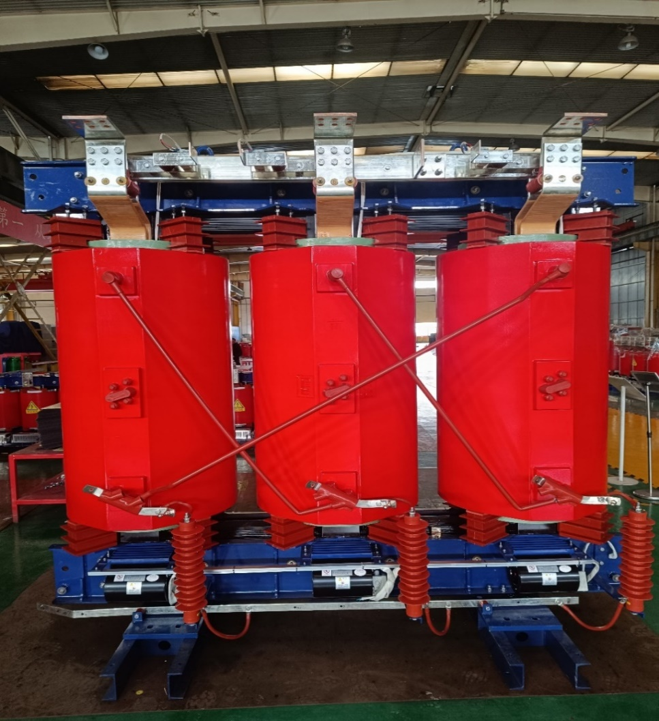
Dry-type transformers are widely used in commercial buildings, industrial plants, hospitals, data centers, transportation systems, and renewable energy facilities because of their safety, environmental advantages, and low maintenance requirements. However, achieving reliable operation and maximum efficiency depends on more than simply selecting the correct voltage and power rating. Numerous electrical, thermal, environmental, and operational factors influence transformer performance throughout its service life.
A well-designed dry-type transformer can deliver decades of dependable operation, but adverse operating conditions may reduce efficiency, accelerate insulation aging, increase losses, or shorten equipment lifespan. Understanding these performance factors enables engineers, facility managers, and system designers to optimize transformer selection, installation, operation, and maintenance.
The performance of a dry-type transformer is affected by factors such as load level, operating temperature, insulation quality, cooling effectiveness, ambient conditions, voltage stability, harmonic distortion, altitude, moisture, maintenance practices, transformer design, and power quality. Proper management of these factors improves efficiency, reliability, lifespan, and overall operational safety.
By understanding and controlling these variables, organizations can maximize transformer performance while minimizing operating costs and downtime.
The performance of a dry-type transformer depends only on its rated power capacity and is unaffected by operating conditions.False
Transformer performance is influenced by numerous factors including temperature, loading, cooling, insulation condition, environmental conditions, harmonics, altitude, and maintenance practices.
Understanding Transformer Performance
Transformer performance encompasses several key operating characteristics.
Primary Performance Indicators
| Performance Metric | Importance |
|---|---|
| Efficiency | Energy savings |
| Reliability | System availability |
| Temperature rise | Equipment protection |
| Voltage regulation | Power quality |
| Service life | Asset value |
Each of these metrics can be influenced by operating conditions.
Load Level
Load demand is one of the most significant performance factors.
How Load Affects Operation
As transformer load increases, winding current also increases.
Load Effects
| Load Condition | Impact |
|---|---|
| Light load | Lower losses |
| Rated load | Normal operation |
| Overload | Increased heating |
Proper load management is essential.
Copper Losses and Loading
Copper losses rise as current increases.
Copper Loss Relationship
P_{Cu}=I^2R
Where:
- (P_{Cu}) = copper loss
- (I) = load current
- (R) = winding resistance
A doubling of current results in four times the copper losses.
Operating Temperature
Temperature has a major influence on transformer performance and lifespan.
Sources of Heat
| Source | Cause |
|---|---|
| Core losses | Magnetization |
| Copper losses | Electrical resistance |
| Harmonic losses | Nonlinear loads |
Heat must be effectively managed.
Temperature Effects
| Condition | Result |
|---|---|
| Normal temperature | Expected life |
| Elevated temperature | Accelerated aging |
| Excessive temperature | Insulation damage |
Thermal control is critical for long-term reliability.
Insulation System Quality
The insulation system directly impacts transformer safety and longevity.
Key Functions
| Function | Purpose |
|---|---|
| Electrical isolation | Prevent short circuits |
| Thermal resistance | Withstand operating temperatures |
| Mechanical support | Maintain winding integrity |
Insulation quality often determines service life.
Common Dry-Type Insulation Systems
| Type | Characteristics |
|---|---|
| Cast resin | Excellent protection |
| VPI | Good thermal performance |
| VPE | Enhanced environmental resistance |
| Nomex® systems | High-temperature capability |
Different insulation systems perform differently under varying conditions.
Cooling Effectiveness
Cooling is essential because transformers continuously generate heat.
Cooling Methods
| Method | Description |
|---|---|
| AN | Air Natural |
| AF | Air Forced |
Effective cooling improves efficiency and extends equipment life.
Impact of Poor Cooling
| Problem | Consequence |
|---|---|
| Restricted airflow | Higher temperatures |
| Fan failure | Reduced cooling capacity |
| Dust accumulation | Heat retention |
Cooling deficiencies can significantly reduce performance.
Ambient Temperature
Environmental temperature influences transformer operating conditions.
Typical Effects
| Ambient Condition | Impact |
|---|---|
| Low temperature | Improved cooling |
| Moderate temperature | Normal operation |
| High temperature | Increased thermal stress |
Manufacturers specify maximum ambient operating conditions.
Transformer Efficiency
Efficiency is a key performance indicator.
Efficiency Formula
\eta=\frac{P{out}}{P{in}}\times100%
Typical Efficiency Levels
| Transformer Type | Efficiency |
|---|---|
| Standard dry-type | 97–99% |
| Premium efficiency | 99%+ |
Efficiency depends on both design and operating conditions.
Voltage Stability
Input voltage quality affects transformer performance.
Voltage Conditions
| Condition | Effect |
|---|---|
| Normal voltage | Stable operation |
| Undervoltage | Increased current |
| Overvoltage | Insulation stress |
Maintaining proper voltage levels improves reliability.
Voltage Regulation
Transformers experience voltage drop as load increases.
Voltage Regulation Formula
%VR=\frac{V{NL}-V{FL}}{V_{FL}}\times100
Where:
- (V_{NL}) = no-load voltage
- (V_{FL}) = full-load voltage
Good voltage regulation improves power quality.
Harmonic Distortion
Modern electrical systems often contain nonlinear loads.
Common Harmonic Sources
| Source | Examples |
|---|---|
| Variable frequency drives | Industrial equipment |
| UPS systems | Data centers |
| LED lighting | Commercial buildings |
| Inverters | Solar energy systems |
Harmonics can significantly affect transformer performance.
Effects of Harmonics
| Effect | Consequence |
|---|---|
| Increased losses | Reduced efficiency |
| Additional heating | Thermal stress |
| Insulation aging | Reduced lifespan |
Special transformer designs may be required.
Power Factor
Power factor influences transformer loading.
Relationship
P=S\times PF
Where:
- (P) = real power
- (S) = apparent power
- (PF) = power factor
Low power factor can increase system currents.
Moisture and Humidity
Environmental moisture can affect insulation performance.
Potential Effects
| Condition | Impact |
|---|---|
| High humidity | Reduced insulation resistance |
| Condensation | Surface tracking |
| Moisture ingress | Accelerated aging |
Proper enclosure design helps mitigate these risks.
Dust and Contamination
Contaminants can impair cooling and insulation performance.
Common Sources
| Source | Environment |
|---|---|
| Industrial dust | Manufacturing plants |
| Salt deposits | Coastal areas |
| Chemical contaminants | Processing facilities |
Regular maintenance helps control contamination.
Installation Altitude
High-altitude installations present unique challenges.
Why Altitude Matters
Air density decreases with elevation.
Effects
| Factor | Impact |
|---|---|
| Reduced cooling efficiency | Higher temperatures |
| Lower dielectric strength | Increased insulation stress |
Transformers may require derating at higher elevations.
Transformer Design Quality
Design choices significantly influence performance.
Important Design Factors
| Factor | Impact |
|---|---|
| Core material | Efficiency |
| Winding design | Losses |
| Cooling channels | Thermal performance |
| Insulation system | Reliability |
High-quality designs generally achieve superior performance.
Core Material Characteristics
The magnetic core affects efficiency and losses.
Important Properties
| Property | Benefit |
|---|---|
| High permeability | Improved magnetic coupling |
| Low hysteresis loss | Reduced energy consumption |
| Laminated construction | Lower eddy currents |
Modern cores are highly optimized.
Winding Design
Windings directly influence electrical performance.
Design Considerations
| Factor | Effect |
|---|---|
| Conductor size | Current capacity |
| Winding geometry | Voltage regulation |
| Resistance | Copper losses |
Proper design improves efficiency and reliability.
Mechanical Integrity
Mechanical condition affects long-term operation.
Sources of Mechanical Stress
| Source | Example |
|---|---|
| Short circuits | Electromagnetic forces |
| Transportation | Vibration |
| Thermal cycling | Expansion and contraction |
Mechanical degradation can reduce performance.
Maintenance Practices
Maintenance significantly affects transformer health.
Recommended Activities
| Activity | Purpose |
|---|---|
| Visual inspections | Condition assessment |
| Cleaning | Cooling improvement |
| Thermal scanning | Hot-spot detection |
| Electrical testing | Performance verification |
Preventive maintenance improves reliability.
Monitoring Systems
Modern transformers often include monitoring technologies.
Common Monitoring Parameters
| Parameter | Purpose |
|---|---|
| Temperature | Thermal protection |
| Load current | Capacity management |
| Partial discharge | Insulation monitoring |
Monitoring enables proactive maintenance.
Environmental Conditions
The operating environment has a direct influence on performance.
Environmental Factors
| Factor | Potential Effect |
|---|---|
| Temperature | Thermal stress |
| Humidity | Insulation degradation |
| Pollution | Surface contamination |
| Corrosive atmosphere | Material deterioration |
Environmental suitability should be considered during selection.
Load Profile and Duty Cycle
Not all transformers operate continuously at rated load.
Common Duty Cycles
| Duty Type | Characteristics |
|---|---|
| Continuous | Stable loading |
| Cyclic | Variable loading |
| Intermittent | Periodic operation |
Duty cycle affects thermal performance and lifespan.
Summary of Performance Factors
| Factor | Influence |
|---|---|
| Load level | Efficiency and heating |
| Temperature | Lifespan and reliability |
| Cooling effectiveness | Thermal management |
| Insulation quality | Safety and durability |
| Harmonics | Additional losses |
| Voltage stability | Operational performance |
| Altitude | Cooling and insulation |
| Maintenance | Long-term reliability |
| Environmental conditions | Overall durability |
Each factor contributes to overall transformer performance.
Conclusion
A dry-type transformer works by using electromagnetic induction to transfer electrical energy between primary and secondary windings while changing voltage levels as required. The magnetic core channels the alternating magnetic flux, enabling efficient energy transfer without direct electrical contact between circuits. Solid insulation systems and air-cooling methods provide electrical protection and thermal management, ensuring safe, reliable, and environmentally friendly operation across a wide range of applications.
FAQ
Q1: How does a dry type transformer work?
A dry type transformer works by transferring electrical energy from one circuit to another through electromagnetic induction without using insulating oil. Instead, it relies on air and solid insulation materials such as epoxy resin or varnish-coated insulation.
When alternating current (AC) flows through the primary winding, it creates a changing magnetic field in the transformer core. This magnetic field induces a voltage in the secondary winding, allowing electrical energy to be transferred efficiently while maintaining electrical isolation between circuits.
Q2: What is the operating principle of a dry type transformer?
The operating principle is based on Faraday's Law of Electromagnetic Induction.
The process involves:
AC voltage is applied to the primary winding.
The current generates a changing magnetic flux in the core.
The magnetic flux links both primary and secondary windings.
A voltage is induced in the secondary winding.
Electrical power is delivered to the connected load.
Q3: What are the main components of a dry type transformer?
A dry type transformer typically consists of:
Magnetic Core – Conducts magnetic flux efficiently.
Primary Winding – Receives incoming electrical power.
Secondary Winding – Supplies transformed power to the load.
Insulation System – Uses epoxy resin, varnish, or cast resin materials.
Cooling System – Uses natural or forced air circulation.
Enclosure (optional) – Protects against dust, moisture, and accidental contact.
Temperature Monitoring Devices – Monitor transformer operating conditions.
Each component contributes to efficient and safe transformer operation.
Q4: How is a dry type transformer cooled?
Unlike oil-filled transformers, dry type transformers use air for cooling.
Common cooling methods include:
Air Natural (AN)
Heat is dissipated through natural airflow around the windings and core.
Air Forced (AF)
Fans increase airflow to improve heat removal and allow higher loading capacity.
Because no oil is present, cooling design is crucial to maintaining safe operating temperatures.
Q5: How does insulation work in a dry type transformer?
Dry type transformers use solid insulation systems instead of liquid insulation.
Common insulation technologies include:
Cast resin encapsulation
Epoxy resin insulation
Vacuum Pressure Impregnation (VPI)
High-temperature insulating materials
These insulation systems provide:
Electrical isolation
Moisture resistance
Thermal protection
Mechanical strength
Proper insulation is essential for long-term reliability.
Q6: What is the role of the transformer core?
The transformer core provides a low-reluctance path for magnetic flux generated by the primary winding.
Its functions include:
Concentrating magnetic flux
Improving energy transfer efficiency
Reducing magnetic losses
Supporting voltage transformation
Modern dry type transformers typically use laminated silicon steel cores to minimize eddy current and hysteresis losses.
Q7: What are the advantages of dry type transformer operation?
Dry type transformers offer several operational advantages:
No risk of oil leakage
Reduced fire hazards
Environmentally friendly
Lower maintenance requirements
Suitable for indoor installation
Good resistance to moisture and contamination
Enhanced safety in populated areas
These features make them popular in commercial, industrial, and institutional facilities.
Q8: Where are dry type transformers commonly used?
Dry type transformers are widely used in:
Commercial buildings
Hospitals
Schools and universities
Data centers
Airports
Manufacturing plants
Renewable energy installations
Underground substations
Their safe, oil-free design makes them particularly suitable for indoor and environmentally sensitive applications.
References
IEC 60076-11 – Dry-Type Transformers
https://webstore.iec.ch/publication/627
IEC 60076 – Power Transformers
https://webstore.iec.ch/publication/602
IEEE C57.12.01 – General Requirements for Dry-Type Distribution and Power Transformers
https://standards.ieee.org
Electrical Engineering Portal – How Dry-Type Transformers Work
https://electrical-engineering-portal.com
National Electrical Manufacturers Association (NEMA) – Transformer Standards
https://www.nema.org
IEEE Power & Energy Society – Transformer Engineering Research
https://ieeexplore.ieee.org