
When a transformer blows out—often due to overload, weather, or internal failure—it can cause widespread power outages and raise public safety concerns. One of the most common questions from affected residents or businesses is: how long will it take to restore power? The answer depends on several key factors.
What Factors Influence the Repair Time of a Blown Transformer?
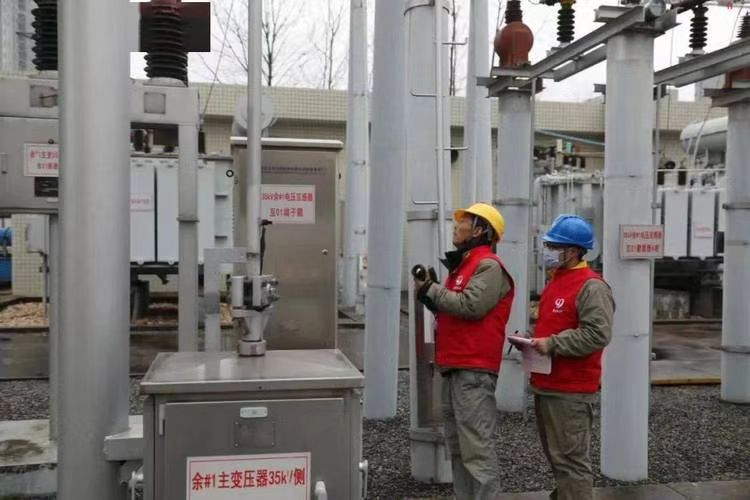
When a transformer blows, the focus immediately shifts to how quickly power can be restored. But transformer repair or replacement is a complex, multi-variable process—not a plug-and-play task. Depending on the transformer’s size, voltage class, failure mode, location, and availability of spare parts, repair time can vary from a few hours to several weeks. Understanding what factors affect the timeline helps utilities, industries, and communities plan restoration more realistically.
The repair time of a blown transformer depends on several critical factors: the severity of the failure, the availability of spare parts or a replacement unit, the voltage and capacity rating, the location and accessibility of the site, environmental hazards (like oil or fire damage), and utility or manufacturer response times. Larger, high-voltage transformers typically take longer to repair or replace than small distribution units due to their complexity and limited availability.
Speed depends on preparation, diagnostics, logistics, and coordination between technical and safety teams.
The repair time for a blown transformer depends on damage severity, spare part availability, and transformer voltage class.True
Severe internal damage or lack of replacement units can significantly delay restoration, especially for high-capacity units.
All transformer failures can be repaired within a day.False
High-voltage or major core failures often require custom parts, insulation drying, and full replacement, which can take days or weeks.
1. Extent and Type of Damage
| Damage Type | Repair Implication | Time Estimate |
|---|---|---|
| Minor (OLTC issue, relay trip) | Adjustments or recalibration | Few hours |
| Bushing flashover | Replace bushing, test windings | 1–2 days |
| Oil leak or contamination | Oil filtration, gaskets, dielectric test | 2–4 days |
| Core or winding burn | Internal disassembly, repair, drying, retest | 1–3 weeks (or longer) |
| Complete destruction/fire | Requires new transformer, site rebuild | 3–6 weeks or more |
Internal arcing and oil fire damage are among the most time-consuming faults to remediate.
2. Transformer Type and Voltage Rating
| Transformer Class | Why It Affects Repair Time | Typical Delay |
|---|---|---|
| Pole-mounted distribution (≤33 kV) | Readily available, easy access | 4–24 hours |
| Pad-mounted commercial units | May need special handling and cable terminations | 1–3 days |
| Substation-level power units (≥66 kV) | Requires heavy transport, high test standards | 5–20 days |
| Generator step-up (GSU) transformer | Custom designs, large footprint | 2–8 weeks if replacement needed |
Larger transformers often have longer lead times for winding, oil filling, and testing.
3. Availability of Spare Parts or Replacement Units
| Factor | Impact on Repair Time |
|---|---|
| Spare transformer on-site | Can reduce downtime to under 24 hours |
| Bushings, OLTCs, or gaskets in stock | Enables quick component-level repair |
| Need for imported/custom parts | Adds shipping and manufacturing delay (1–6 weeks) |
Utilities with spare fleet strategies and critical inventory reduce restoration times drastically.
4. Access to Site and Weather Conditions
| Access Factor | Delay Risk |
|---|---|
| Remote or rural location | Transport of personnel, tools, or replacement unit |
| Urban congestion | Delayed crane access, road clearance issues |
| Severe weather (rain, snow, wind) | Hinders equipment operation and safety compliance |
Site preparation (foundations, pad level, drainage) also affects installation and reconnection speed.
5. Regulatory and Safety Procedures
| Requirement | Time Implication |
|---|---|
| Arc flash, environmental, or oil spill reporting | May delay re-energization by hours or days |
| Electrical safety board inspection | Required before reconnecting HV equipment |
| Fire marshal clearance | Needed if explosion/fire was involved |
These procedures ensure safety and liability control, especially in public zones.
6. Utility or Industrial Response Coordination
| Variable | Why It Matters |
|---|---|
| Field crew availability | Limits how quickly on-site work can begin |
| Testing equipment mobilization | Required for core and winding integrity testing |
| Engineering signoff and re-energization | Final steps for grid synchronization |
Teams with dedicated transformer incident response plans can recover in half the time of unprepared operators.
7. Real-World Case: High-Voltage Substation Transformer
- Location: 220/66 kV regional substation
- Incident: Transformer blew due to internal arc + Buchholz trip
- Damage: Destroyed winding, charred insulation, pressurized tank rupture
- Response: Site secured in 2 hours, oil containment deployed
- Repair Timeline: 1 week for damage assessment + 3 weeks for delivery of spare unit
- Restoration: Load shifted to backup line within 12 hours; full unit restored in 30 days
Spare transformer stock + contingency plan = controlled downtime and no secondary outages.
Summary Table: What Influences Transformer Repair Time?
| Factor | Typical Impact on Timeline |
|---|---|
| Damage severity | Minor trip (hours) to full replacement (weeks) |
| Voltage and capacity class | Higher ratings take longer to repair |
| Spare part or unit availability | In-stock = hours; custom = weeks |
| Site location and accessibility | Urban = moderate delay; rural = logistical delay |
| Weather and environmental issues | May delay safe entry or equipment delivery |
| Regulatory safety inspections | Delays reconnection approval |
| Utility response efficiency | Trained crews reduce time significantly |
How Long Does It Typically Take to Diagnose the Problem in a Blown Transformer?
When a transformer blows, the immediate priority is public safety and restoring power. But before any repair or replacement can occur, a thorough technical diagnosis must be performed to confirm the root cause, assess internal and external damage, and determine whether the unit is salvageable. The duration of this diagnosis depends on several factors, including the type of failure, transformer size, test equipment availability, and site accessibility.
It typically takes 4 to 48 hours to diagnose a blown transformer, depending on the severity of damage, the voltage level, and the diagnostic methods required. Minor faults like a tripped relay or bushing issue can be diagnosed in under a day, while major internal failures—such as winding short circuits or oil contamination—may require multiple tests, lab analysis, and disassembly, extending the diagnostic process to several days.
Faster diagnosis is possible when utilities have on-site testing teams, pre-approved procedures, and online monitoring data.
Transformer diagnosis time varies from a few hours to several days depending on the fault complexity and testing method.True
Simple faults can be visually or electronically confirmed, but deeper failures need offline tests like DGA, SFRA, and core inspection.
It always takes at least a week to diagnose a blown transformer.False
Most issues are diagnosed within 48 hours using portable test equipment or SCADA analysis.
1. Common Diagnostic Procedures and Their Time Requirements
| Diagnostic Method | What It Detects | Time to Complete |
|---|---|---|
| Visual inspection | Burn marks, oil leaks, physical deformation | 30 min – 2 hours |
| SCADA/alarm log review | Relay trips, protection data, thermal overload | 1–3 hours |
| Infrared (IR) thermography | Hot spots, connector issues | 1–2 hours |
| Insulation resistance (IR) test | Moisture ingress, insulation breakdown | 2–4 hours |
| Dissolved Gas Analysis (DGA) | Arcing, overheating, insulation degradation | 6–12 hours (lab-based) |
| Power Factor / Tan Delta | Aging insulation, contamination | 2–6 hours |
| Sweep Frequency Response (SFRA) | Mechanical core or winding displacement | 3–5 hours |
| Oil quality test (Dielectric/Water) | Oil breakdown or moisture | 6–10 hours (lab included) |
Fast tests (visual, IR scan, SCADA) provide first impressions, while lab tests confirm deeper internal issues.
2. Factors That Affect Diagnostic Time
| Factor | How It Impacts Time |
|---|---|
| Voltage and size of transformer | Larger units require more extensive testing |
| Severity of damage | Blown casing or fire slows down safe access |
| Availability of test equipment | Delays if gear must be shipped to site |
| Oil sample transport | Adds time if lab is offsite or in another city |
| Weather and accessibility | Rain or snow can delay outdoor diagnostics |
A prepared utility team with mobile DGA or IR kits can cut diagnosis time by 40–60%.
3. Diagnosis Timeline by Fault Severity Level
| Fault Level | Diagnostic Tasks | Total Estimated Time |
|---|---|---|
| Level 1 – Minor (e.g., relay trip) | Visual, log analysis, insulation test | 2–6 hours |
| Level 2 – Medium (e.g., oil leak, flashover) | IR scan, DGA, pressure check, bushing test | 6–24 hours |
| Level 3 – Major (e.g., internal arc, winding fault) | DGA, SFRA, IR, oil sampling, partial disassembly | 24–48+ hours |
Diagnosis prioritizes confirming whether the transformer is repairable or needs to be replaced.
4. Example Case: 66/11 kV Transformer Arc Fault
- Visual signs: Flash damage near top bushing
- Initial tests: IR scan, log review showed OLTC malfunction
- DGA results: High acetylene + ethylene = arcing confirmed
- Action: Unit de-energized, winding SFRA test added
- Total diagnosis time: 18 hours
- Outcome: Decision to bypass transformer and schedule replacement
Timely testing and gas analysis helped avoid further grid damage and initiated immediate procurement.
Summary Table: How Long Does Transformer Diagnosis Take?
| Test Type | Quick Use Case | Detailed Diagnosis Time |
|---|---|---|
| Visual/IR/SCADA check | Fast triage (initial 2–3 hrs) | ✅ 1–4 hours |
| Electrical tests (IR, TTR) | Grounding, insulation check | ✅ 2–6 hours |
| Oil lab analysis (DGA, Dielectric) | Confirms internal degradation | ✅ 6–12 hours (lab delay) |
| Mechanical tests (SFRA, PF) | Core displacement, insulation | ✅ 5–10 hours |
What Are the Steps Involved in Replacing or Repairing a Transformer?
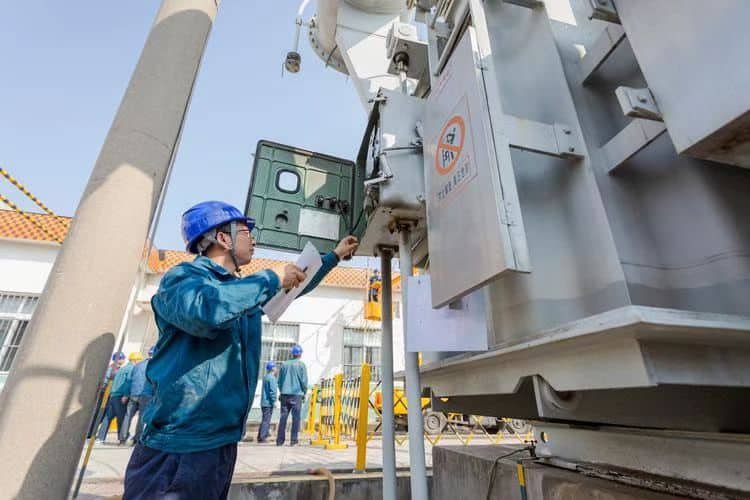
When a transformer fails—whether due to internal arcing, insulation breakdown, or fire—the decision must be made quickly: can it be repaired or does it need replacement? Regardless of the path chosen, the procedure is far from simple. Transformer replacement or repair is a multi-stage process involving electrical, mechanical, and environmental tasks that demand strict safety protocols, specialized equipment, and coordination across departments.
The steps involved in repairing or replacing a transformer include site isolation and safety preparation, fault diagnosis and inspection, removal of the damaged unit, assessment of repair feasibility, ordering or preparing the replacement unit, transportation and installation, oil filling and testing, and final energization with grid synchronization. Each stage requires careful execution to prevent hazards and ensure grid stability.
Whether it’s a pad-mounted distribution unit or a 400 kV power transformer, these procedures follow strict engineering and safety standards.
Transformer replacement or repair involves multiple coordinated steps, including removal, testing, installation, and re-energization.True
Transformer failure recovery requires both technical and safety operations to prevent grid disruption and injury.
Replacing a transformer is a simple plug-and-play process.False
Transformers are complex assets with fluid, electrical, and structural systems requiring careful decommissioning and recommissioning.
1. Site Isolation and Safety Preparation
| Task | Purpose |
|---|---|
| De-energize transformer | Prevent electrical hazard during work |
| Lockout-tagout (LOTO) procedure | Ensure no accidental re-energization |
| Grounding of all terminals | Discharge residual charge |
| Setup barricades and warning signs | Secure the area for personnel and public safety |
| Environmental spill containment | Prevent oil runoff if unit is leaking |
This step ensures zero-energy conditions before physical work begins.
2. Failure Diagnosis and Inspection
| Tests Conducted | Purpose |
|---|---|
| Visual inspection | Identify fire, bushing damage, tank rupture |
| Dissolved Gas Analysis (DGA) | Confirm arcing, overheating, insulation failure |
| Sweep Frequency Response Analysis (SFRA) | Detect mechanical core movement |
| Insulation Resistance Test | Confirm dielectric integrity |
| Structural inspection | Check tank and support condition |
Results determine if repairs are viable or if a replacement unit is required.
3. Transformer Removal (if required)
| Process | Considerations |
|---|---|
| Disconnect all primary/secondary cables | Labeled and safely isolated |
| Drain transformer oil | Collected into safe containment drums |
| Remove bushing, OLTC, and fittings | Reduce transport weight, avoid damage |
| Lift unit with crane | Load onto transport vehicle |
| Transport to repair facility or disposal site | Comply with hazmat transport rules |
Large units may require road closures and special transport permits.
4. Repair (if feasible)
| Typical Repairs | Time Estimate |
|---|---|
| Rewind coils or replace windings | 5–15 days depending on design |
| Clean and dry core assembly | 2–4 days |
| Replace bushings or gaskets | 1–2 days |
| Refill and degas oil | 1–3 days |
| Final testing (IR, TTR, PF) | 1–2 days |
Repaired transformers must meet original performance specs before return to service.
5. Replacement Unit Procurement (if needed)
| Step | Timeline |
|---|---|
| Check spare unit availability | Immediate to 1 day |
| Order new transformer | 4–20 weeks depending on specs |
| Prepare logistics and transport | 1–5 days |
Having strategic spare units can save weeks of downtime.
6. Site Preparation for New Transformer
| Task | Requirement |
|---|---|
| Inspect and repair foundation pad | Check for cracks, moisture damage |
| Install new grounding and earthing | Meet electrical safety codes |
| Replace or test cable terminations | Avoid insulation failure |
| Upgrade cooling systems if needed | Ensure capacity for new load |
Site readiness reduces the risk of commissioning delay or rework.
7. Installation and Connection of New/Refurbished Unit
| Task | Technical Notes |
|---|---|
| Position transformer with crane | Use rigging rated for transformer mass |
| Install bushings, conservator, OLTC | Must match nameplate parameters |
| Connect HV and LV terminals | Confirm torque, polarity, and phasing |
| Attach cooling system | Fans, radiators, or pumps, depending on rating |
Precision matters—a misaligned connection can cause inrush or tripping.
8. Oil Filling, Filtering, and Degassing
| Oil Procedure | Why It's Essential |
|---|---|
| Fill with dielectric fluid | Insulation and heat removal |
| Use vacuum oil purification | Remove moisture and gas bubbles |
| Circulate oil for 8–24 hours | Uniform dielectric strength |
| Oil sample testing (BDV, moisture) | Confirm dielectric performance |
This step is vital for preventing internal flashovers at re-energization.
9. Final Testing and Commissioning
| Test Conducted | Purpose |
|---|---|
| Insulation Resistance (IR) Test | Confirms insulation strength |
| Transformer Turns Ratio (TTR) | Ensures proper voltage ratio |
| Sweep Frequency Response (SFRA) | Verifies winding and core stability |
| Functional test of OLTC | Checks tap changing mechanism |
| Load no-load test (if possible) | Verifies losses and voltage regulation |
Only transformers that pass all tests can be synchronized with the grid.
10. Energization and Grid Integration
| Final Steps | Importance |
|---|---|
| Reconnect to circuit breaker | With correct protection coordination |
| Monitor inrush current on startup | Prevents tripping or voltage sag |
| SCADA and protection relay update | Integrates unit into system monitoring |
| Close out permit and test logs | Regulatory compliance and warranty validation |
The transformer is now live—and must be monitored closely for 48–72 hours post-startup.
Summary Table: Steps to Replace or Repair a Blown Transformer
| Step | Repair & Replace Commonality |
|---|---|
| 1. Site Isolation | ✅ Required for both |
| 2. Diagnosis | ✅ Determines repair feasibility |
| 3. Removal | ✅ If replacement or offsite repair needed |
| 4. Repair | ✅ Only if internal damage is manageable |
| 5. Procurement/Delivery | ✅ For full replacement or unavailable parts |
| 6. Site Readiness | ✅ Ensures foundation, grounding, connections |
| 7. Installation | ✅ Precise reconnection, bushings, radiators |
| 8. Oil Handling | ✅ Vital for cooling and insulation |
| 9. Final Testing | ✅ Prevents secondary failure |
| 10. Energization | ✅ Completes the process safely |
Does the Size and Type of Transformer Affect the Restoration Time?
When a transformer fails, one of the most pressing concerns is how soon the system can be brought back online. But not all transformers are created equal. The size, type, and application of the transformer directly affect the restoration timeline, due to differences in complexity, capacity, logistics, and risk. Understanding how transformer characteristics influence restoration helps grid operators, businesses, and communities prepare for and manage outages more effectively.
Yes, the size and type of transformer significantly affect the restoration time. Smaller transformers—such as pole-mounted or pad-mounted distribution units—can typically be replaced or restored within hours to a day. In contrast, large power transformers at substations or generation sites often require extensive testing, logistical planning, transportation, and installation processes, extending restoration times to several days or even weeks.
Preparation, spare parts inventory, and transformer design (standard vs. custom) also play major roles in the timeline.
Larger, high-voltage transformers take significantly longer to restore than small distribution transformers.True
Their weight, complexity, and custom nature require detailed testing, specialized transport, and longer lead times for replacement or repair.
All transformer types can be restored in the same amount of time.False
Restoration time varies widely depending on transformer size, location, configuration, and role in the grid.
1. Restoration Time by Transformer Type and Size
| Transformer Type | Typical Size/Rating | Average Restoration Time |
|---|---|---|
| Pole-mounted transformer | ≤ 100 kVA, 11/0.4 kV | 2–8 hours |
| Pad-mounted unit (urban/commercial) | 200–2500 kVA, 11/0.4 kV | 6–24 hours |
| Small substation transformer | 5–20 MVA, 33/11 kV | 1–3 days |
| Medium power transformer | 40–100 MVA, 132/33 kV | 3–7 days |
| Large power transformer | 100–500 MVA, 220–400 kV | 10–30+ days |
| Generator step-up transformer (GSU) | 500–1000+ MVA, custom | 30–90 days if replacement needed |
The larger and more critical the transformer, the more steps and regulatory checks are involved, increasing restoration time.
2. Why Size Affects Restoration Time
| Size-Related Factor | Impact on Time |
|---|---|
| Weight and dimensions | Requires cranes, special vehicles, route permits |
| Oil volume | More time to fill, filter, and test dielectric |
| Internal complexity | Takes longer to test windings, OLTCs, bushings |
| Cooling systems | May involve pumps, radiators, conservators |
| Testing duration | More comprehensive for large, high-voltage units |
Large transformers are not modular or easily portable—every stage of work is longer and more regulated.
3. Why Type Affects Restoration Time
| Transformer Type | Unique Restoration Requirements |
|---|---|
| Oil-immersed power transformer | Requires oil handling, fire safety, and tank inspection |
| Dry-type transformer | Easier access, faster testing, no oil-related delays |
| Pad-mounted unit | Cable splicing and buried conduit inspection may slow work |
| Autotransformer | Higher voltage sharing = more protection relays and coordination |
| Instrument or control transformer | Easy swap, minimal safety concern |
Type influences cooling, protection, and installation procedures, directly impacting restoration logistics.
4. Comparison Chart: Small vs. Large Transformer Restoration Steps
| Restoration Step | Small Transformer (≤2500 kVA) | Large Transformer (≥100 MVA) |
|---|---|---|
| Removal and handling | 1–2 hours | 1–2 days (requires crane, crew) |
| Transportation | Light truck or lift | Special flatbed, permits, escort |
| Installation and connection | Plug-in bushings, simple grounding | Complex terminations, safety isolation |
| Oil management | Not required or <300 L | 10,000–40,000 L, with degassing system |
| Testing and commissioning | Basic IR and TTR | Full IR, SFRA, DGA, power factor, ratio |
| Final energization | 30 min–2 hours | 4–8 hours with SCADA coordination |
The difference in manpower, equipment, and time is exponential between transformer classes.
5. Real-World Example: Restoration Time by Transformer Type
Case A – 315 kVA pole-mounted transformer
– Blown fuse, small oil leak
– Removed and replaced within 6 hours
– Load rerouted and restored to 50 homesCase B – 132/33 kV 100 MVA power transformer
– Internal winding fault, tank bulge
– Diagnosis: 2 days
– Removed with crane, replacement delivered in 10 days
– Oil filling + testing: 4 days
– Total restoration time: 16 days
In both cases, restoration was successful—but the scale of effort was dramatically different.
6. How to Reduce Restoration Time for Larger Transformers
| Strategy | Effect |
|---|---|
| Maintain critical spare inventory | Avoids procurement delays |
| Use mobile substations | Provides temporary voltage support |
| Pre-plan transportation routes | Saves time on permits and access |
| Standardize transformer design | Enables faster interchange and installation |
| Train local crews for HV handling | Reduces dependency on external specialists |
A 30–40% reduction in downtime is possible with proper contingency planning.
Summary Table: How Size and Type Impact Transformer Restoration
| Factor | Small Transformer | Large Transformer |
|---|---|---|
| Transport time | 1–2 hours | 1–5 days |
| Installation complexity | Low | High |
| Testing requirements | Basic | Comprehensive |
| Oil system handling | Minimal or none | Large-scale, time-intensive |
| Total restoration time | 2–24 hours | 7–30+ days |
What Are the Differences Between Emergency Repair and Full Replacement?
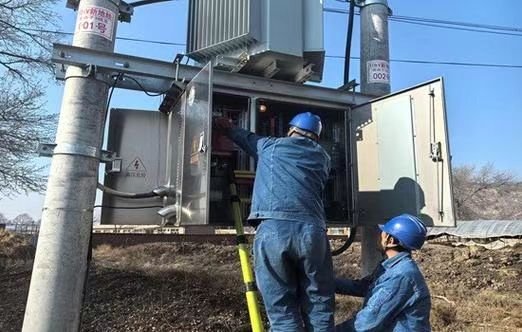
When a transformer fails, the clock starts ticking for grid operators and facility managers. The two most common response options are emergency repair or full replacement—and choosing the right path depends on the fault’s severity, the transformer’s criticality, and available resources. While emergency repairs aim to restore service quickly, full replacements focus on long-term performance and reliability. Each approach comes with distinct timelines, procedures, and costs.
Emergency repair focuses on quickly restoring functionality by fixing accessible, non-catastrophic faults such as bushing failures, oil leaks, or OLTC malfunctions—typically completed within hours to days. Full replacement involves removing the damaged transformer entirely and installing a new unit, a process that can take days to weeks depending on transformer size, logistics, and regulatory compliance.
Choosing between the two requires a cost-benefit analysis based on urgency, safety, and asset condition.
Emergency repairs are faster and cheaper but may only provide temporary restoration, while full replacement ensures long-term reliability.True
Repairs fix localized issues quickly, but replacement addresses systemic or irreparable damage with full warranty-backed reliability.
Emergency repair and full replacement involve the same procedures and timeframes.False
Repair focuses on in-situ fixes; replacement requires removal, transport, installation, oil management, and retesting.
1. Key Differences at a Glance
| Aspect | Emergency Repair | Full Replacement |
|---|---|---|
| Goal | Rapid restoration of function | Restore original or improved long-term performance |
| Timeline | 4 hours – 3 days | 7 – 30+ days |
| Scope | Component-level fix (e.g., bushings, gaskets) | Entire transformer removal and installation |
| Cost | Lower (short-term cost) | Higher (capital + installation + testing) |
| Service Continuity | Partial or temporary | Permanent solution with full warranty |
| Test Requirements | Basic tests after fix | Full commissioning (IR, SFRA, DGA, TTR, etc.) |
| Warranty Impact | May void or limit manufacturer warranty | New warranty provided |
Emergency repairs are triage, while full replacement is surgery for your power infrastructure.
2. Common Scenarios for Emergency Repair
| Fault Type | Feasibility of Repair |
|---|---|
| Leaking radiator gasket | Replace seal, refill and degas oil |
| Bushing flashover | Replace damaged bushing, retest insulation |
| Stuck on-load tap changer (OLTC) | Realign or replace drive mechanism |
| Minor oil contamination | On-site filtration and oil purification |
| Loose connections or terminal issues | Tighten, re-insulate, and re-energize |
These tasks are usually handled by mobile maintenance teams using standard kits.
3. Typical Cases Requiring Full Replacement
| Fault Type | Why Repair Is Not Feasible |
|---|---|
| Severe internal arcing or winding burn | Damaged insulation and core beyond repair |
| Tank rupture or fire damage | Structural failure and oil system compromise |
| Catastrophic OLTC failure | Safety hazard and system instability |
| Obsolete transformer design | No compatible parts, low efficiency |
| Core saturation or magnetic deformation | Mechanical realignment impractical |
Replacement is often chosen when the unit’s remaining life is short or repair costs exceed 40% of replacement value.
4. Timeline Comparison
| Phase | Emergency Repair | Full Replacement |
|---|---|---|
| Initial diagnosis | 2–6 hours | 1–2 days |
| Parts mobilization | 6–12 hours | 1–10 days (or manufacturer lead time) |
| On-site execution | 1–3 days | 5–15 days |
| Testing and recommissioning | 1–2 hours | 2–4 days |
| Total downtime (avg.) | 1–3 days | 7–30+ days |
Having spare transformers on-site significantly reduces replacement time.
5. Cost Considerations
| Cost Category | Emergency Repair | Full Replacement |
|---|---|---|
| Labor and site access | Moderate | High (crane, permits, rigging) |
| Component cost | Low to medium | High (new transformer = \$50k–\$2M+) |
| Testing and commissioning | Basic testing only | Comprehensive suite |
| Long-term maintenance | May increase after repair | Minimal if new unit is installed |
| Insurance/warranty impact | May be limited post-repair | Full new coverage |
Emergency repair is cost-effective short term, but can lead to recurring reliability issues.
6. Real-World Example
Scenario A – Emergency Repair
- Transformer: 33/11 kV, 6.3 MVA
- Issue: Oil leak + overheating alarm
- Action: Radiator gasket replaced, oil degassed
- Downtime: 10 hours
- Result: Returned to service, monitored via SCADA
Scenario B – Full Replacement
- Transformer: 132/33 kV, 100 MVA
- Issue: Major winding arc + bushing explosion
- Action: Decommissioned, new unit ordered and installed
- Downtime: 18 days
- Result: Full re-energization with warranty and load reliability restored
Both responses were correct—based on equipment role, damage type, and strategic need.
Summary Table: Emergency Repair vs. Full Replacement of Transformers
| Category | Emergency Repair | Full Replacement |
|---|---|---|
| Timeline | Fast (hours to 3 days) | Longer (7–30+ days) |
| Scope | Partial, targeted fix | Complete system restoration |
| Cost | Lower upfront | Higher, capital intensive |
| Testing requirements | Minimal | Extensive (5–7 different tests) |
| Long-term reliability | Medium to low (may recur) | High (new unit, longer lifespan) |
| Ideal use case | Moderate faults, temporary solution | Irreparable damage or asset upgrade |
How Do Utilities Communicate Restoration Timelines to the Public?
When a transformer fails and outages occur, clear communication from the utility company is just as important as the physical repair process. Consumers, businesses, hospitals, and municipalities rely on real-time information to plan, stay safe, and respond appropriately. Utilities must balance accuracy, speed, and transparency while dealing with complex field operations.
Utilities communicate restoration timelines to the public through a combination of real-time outage maps, SMS/email alerts, call centers, social media updates, and local media coordination. These tools provide estimated time of restoration (ETR), cause of the outage, affected areas, and status updates as crews progress. Communication is managed through automated systems linked to SCADA and outage management systems (OMS) to ensure consistency and speed.
The best-performing utilities also follow communication protocols based on reliability indices (like SAIDI and SAIFI), and regulatory requirements for public safety and service transparency.
Utilities use tools like SMS alerts, social media, outage maps, and call centers to communicate transformer restoration timelines to the public.True
These methods provide real-time updates to customers, reduce confusion, and improve public trust during power outages.
Utilities only communicate after full restoration is complete.False
Most utilities provide ongoing updates starting at outage detection, including estimated time of restoration and progress updates.
1. Main Communication Channels Used by Utilities
| Channel | How It Works | Frequency |
|---|---|---|
| Online Outage Maps | Interactive maps show affected areas and ETR | Real-time updates (5–15 min intervals) |
| SMS/Text Message Alerts | Sent to customers by account or zip code | As soon as outage is confirmed; updated as needed |
| Email Notifications | Longer format updates with cause, area, and timeline | Every few hours or as changes occur |
| Automated Call Centers (IVR) | Users call and receive recorded updates | Available 24/7 |
| Live Operators (Call Centers) | For high-priority users and detailed inquiries | During working hours or emergencies |
| Social Media (Twitter/Facebook) | Public announcements and progress visuals | Every 1–3 hours |
| Press Releases / Local Media | Used during extended outages or emergencies | As needed based on scale |
Combining digital tools with human support ensures inclusive communication for all customer segments.
2. Key Information Shared During a Transformer-Related Outage
| Message Element | Why It Matters |
|---|---|
| 🔌 Cause of Outage | Builds transparency and explains seriousness |
| 📍 Location(s) Affected | Helps customers self-identify risk |
| ⏰ Estimated Time of Restoration (ETR) | Allows people to plan for cooking, work, health care |
| 👷 Crew Status | Reassures public that field teams are deployed |
| ⚠️ Safety Warnings | Alerts about downed lines, transformer leaks, fire risks |
| 🔁 Update Frequency | Helps maintain confidence in utility responsiveness |
ETRs are revised dynamically based on field conditions and SCADA/OMS feedback.
3. How Estimated Time of Restoration (ETR) Is Calculated and Updated
| ETR Influencing Factors | How It Affects Communication |
|---|---|
| Severity of transformer failure | Internal damage = longer restoration, affects timeline |
| Location accessibility | Remote or storm-hit areas slow down fieldwork |
| Availability of repair crew | More crews = faster response, more accurate ETRs |
| Weather forecast | Bad weather can delay safe restoration |
| Equipment readiness | Spare transformer on-site = faster timeline communicated |
Utilities typically use OMS + AI-based prediction models to estimate and revise ETR in real time.
4. Sample Communication Timeline: Pole-Mounted Transformer Failure
| Time | Utility Action | Public Message Example |
|---|---|---|
| 12:00 PM | Transformer fails, area loses power | “Outage detected in Northview area. Crews dispatched.” |
| 12:20 PM | Crew confirms cause: bushing failure | “Transformer component fault identified. Repairs underway.” |
| 2:00 PM | Oil drained and new bushing installed | “Restoration estimated by 4:00 PM.” |
| 4:10 PM | Unit energized, power restored | “Power restored to all affected areas. Thank you for your patience.” |
This model provides transparency and control to customers during restoration.
5. Special Considerations for Critical Customers and Rural Areas
| Customer Type | Communication Protocol |
|---|---|
| Hospitals, data centers | Priority restoration with direct operator updates |
| Industrial users | Informed of impact to operations or shift planning |
| Schools or senior facilities | Pre-warnings if transformer servicing is scheduled |
| Remote villages | Often rely on radio, SMS, or satellite notifications |
Utilities often assign dedicated service coordinators for mission-critical infrastructure.
6. Challenges Utilities Face in Communicating Timelines
| Challenge | Impact |
|---|---|
| Inaccurate initial diagnosis | Leads to incorrect ETRs |
| Equipment or crew delays | ETRs must be revised often |
| Customer information outdated | SMS/email fails to reach intended recipients |
| Misinformation on social media | Can confuse or panic residents |
This is why proactive, multi-platform communication is essential.
Summary Table: How Utilities Communicate Restoration Timelines
| Channel | Use Case | Customer Benefit |
|---|---|---|
| Outage Map | Visual status + ETR by location | Easy to monitor service progress |
| SMS/Email Alerts | Quick updates direct to phone | No need to call or go online |
| Social Media | Public-wide status and instructions | Accessible and shareable info |
| Call Centers | Individual status or problem reports | Supports less tech-savvy users |
| Field Staff Updates | Direct liaison for critical users | Fast, personal updates |
Conclusion
Fixing a blown transformer can take anywhere from a few hours to several days, depending on severity. Minor faults may be resolved quickly, while full replacements—especially for large or high-voltage units—may require logistics, specialized equipment, and coordination with the power grid. Regardless of the timeline, safety and stability are always the top priorities for utility crews working to restore power.
FAQ
Q1: How long does it take to fix a blown transformer?
A1: The repair time for a blown transformer varies based on severity and type:
Minor fuse or component replacement: 1–4 hours
Pole-mounted transformer replacement: 4–8 hours
Large power transformer replacement: 1–5 days or more, depending on availability, transport, and installation complexity
Q2: What factors affect the repair time?
A2: Key factors include:
Extent of damage (minor vs. catastrophic failure)
Type and size of the transformer
Availability of spare parts or replacement units
Weather conditions and site accessibility
Utility crew readiness and inspection requirements
Q3: How quickly is power usually restored after a transformer blows?
A3: For residential areas, utilities aim to restore power within a few hours (typically 2–6 hours), especially if a spare transformer is readily available. In high-demand or remote areas, restoration may take longer.
Q4: What happens during the transformer repair process?
A4: The utility team will:
Isolate the fault and cut off power
Assess damage visually and with test equipment
Repair or remove the damaged transformer
Install and connect a replacement unit
Test and re-energize the system
Q5: Can repairs be delayed during major events or storms?
A5: Yes. During severe storms, heatwaves, or large-scale outages, response times can be delayed due to:
High demand on utility crews
Limited equipment availability
Safety concerns (e.g., downed lines, flooding)
Utility companies often prioritize critical infrastructure (hospitals, emergency services) first.
References
"How Long to Fix a Blown Transformer?" – https://www.transformertech.com/fix-blown-transformer-time
"Average Repair Time for Transformer Failures" – https://www.electrical4u.com/transformer-repair-duration
"Power Restoration Timelines After Blown Transformers" – https://www.powermag.com/transformer-replacement-speed
"Utility Company Response Time to Transformer Outages" – https://www.energycentral.com/c/ee/transformer-outage-repair
"Smart Grid News: Emergency Transformer Replacement" – https://www.smartgridnews.com/blown-transformer-repair
"PowerGrid: Fixing and Replacing Damaged Transformers" – https://www.powergrid.com/transformer-fix-guide
"ResearchGate: Case Study on Transformer Restoration Time" – https://www.researchgate.net/transformer-repair-duration
"ScienceDirect: Factors Impacting Transformer Repair Timelines" – https://www.sciencedirect.com/transformer-service-analysis