
Water contamination in transformer oil is one of the most serious threats to the reliability and lifespan of power transformers. Even trace amounts of moisture can significantly reduce the oil's dielectric strength and accelerate insulation degradation. Effective moisture removal is therefore critical for transformer health. This article outlines the importance of dry transformer oil and explains the methods used to detect and eliminate water, ensuring long-term operational safety.
Why Is Moisture in Transformer Oil Dangerous?
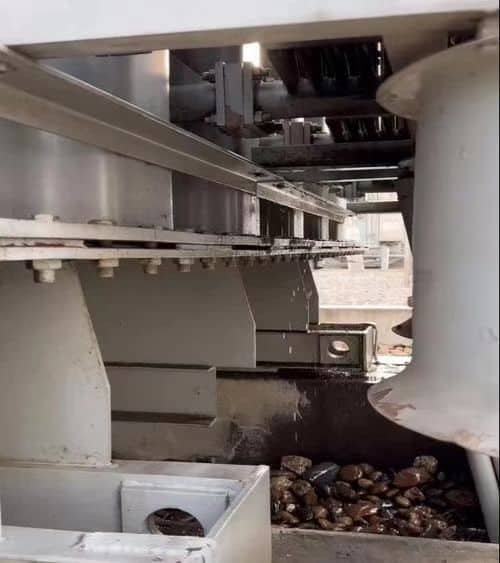
Moisture is one of the most dangerous contaminants in transformer oil because it directly undermines both dielectric integrity and insulation longevity. Transformer oil and cellulose (paper) insulation are designed to operate under dry conditions. When moisture enters the system—whether from the air, failed seals, poor storage, or aging—it causes a dramatic decline in electrical performance, thermal stability, and mechanical strength. Moisture contamination is also a key precursor to partial discharge, corrosion, and eventual insulation breakdown, which are leading causes of transformer failure.
Moisture in transformer oil is dangerous because it reduces the dielectric strength of both the oil and solid insulation, increases the risk of partial discharge and flashover, accelerates paper insulation aging, and contributes to the formation of free gases and sludge. Even small amounts of water (measured in ppm) can drastically lower insulation performance, leading to catastrophic failure under electrical stress.
It is critical to monitor and control moisture content at every stage of transformer operation.
Small amounts of moisture in transformer oil do not affect performance.False
Even minor moisture contamination significantly reduces dielectric strength and accelerates insulation aging, increasing failure risk.
How Moisture Impacts Transformer Operation
| Effect | Description |
|---|---|
| Dielectric Breakdown | Moisture reduces breakdown voltage of oil from >30 kV to <15 kV |
| Paper Insulation Aging | Water triggers hydrolysis, breaking down cellulose bonds |
| Partial Discharge Risk | Water in oil or paper creates ionization pathways and voids |
| Bubble Formation | At high temperatures, water vaporizes, causing bubbles and arcing |
| Corrosion & Sludge | Moisture reacts with metals and aging by-products to form acids and sludge |
Moisture Distribution Between Oil and Paper
| Medium | Moisture Solubility (ppm at 25 °C) | Impact Scope |
|---|---|---|
| Transformer Oil | ~50 ppm (saturation) | Can be removed by filtration/dehydration |
| Cellulose Paper | Up to 50,000 ppm (5%) | Absorbs most moisture; difficult to dry |
Paper insulation acts like a sponge—retaining water for years, increasing aging rate exponentially.
Moisture Effects on Dielectric Breakdown Voltage
| Moisture Level (ppm) | Breakdown Voltage (kV) |
|---|---|
| <10 | >45 |
| 30–40 | 25–35 |
| >60 | <20 |
A drop from 45 kV to 20 kV can make the insulation system incapable of withstanding nominal voltage.
Key Sources of Moisture Ingress
| Source | Description |
|---|---|
| Ambient Air / Poor Sealing | Breather systems saturated or faulty |
| Oil Leakage | Allows humid air to enter tank |
| Aging Insulation | Paper decomposes, releasing water |
| Oil Handling & Storage | Exposure during filling, maintenance |
| Load Cycling / Breathing | Breathing draws in air moisture during daily thermal cycles |
A saturated breather can allow up to 100 g of water per day into a large transformer.
Real-World Case – Moisture-Induced Breakdown
- 110 kV transformer experienced flashover during switching
- Moisture content: oil = 64 ppm, paper = ~2.2%
- DGA: acetylene and CO increase; breakdown voltage at 18 kV
- Cause: poor conservator bladder + saturated silica breather
- Damage: winding damage, core insulation charred, full rewind needed
- Cost: ~$260,000 + 3-week outage
Root correction: install auto-drying breather, oil dehydration, reconditioning
Moisture Monitoring and Limits (IEC/IEEE)
| Parameter | Safe Limit | Testing Method |
|---|---|---|
| Oil Moisture (ppm) | <20 (critical units) | Karl Fischer Titration |
| Relative Saturation | <30% | Temperature-dependent calculation |
| Paper Moisture (%) | <1.5% (ideal), <2% max | Core insulation test (offline) |
Use online moisture sensors for real-time trend monitoring in critical units.
Moisture Management Practices
| Practice | Purpose |
|---|---|
| Silica Gel Breather Maintenance | Keeps incoming air dry |
| Oil Filtration / Vacuum Drying | Removes dissolved water and gases |
| Nitrogen Blanketing | Prevents moist air contact with oil surface |
| Monitoring Hot Spot Temps | Prevents vaporization and bubble formation |
| Oil Sample Testing | Tracks saturation and dielectric strength trends |
Drying out a moisture-saturated transformer can double its remaining insulation life.
How Does Water Enter Transformer Oil?
Maintaining a dry internal environment is crucial for transformer oil and insulation systems. Unfortunately, water can enter the transformer from a variety of external and internal sources—degrading dielectric strength, promoting insulation aging, and triggering electrical faults. Moisture ingress is often subtle and accumulates gradually through regular operation, especially in older or poorly maintained units.
Water enters transformer oil through external sources such as atmospheric humidity drawn in by the breather system, defective seals or gaskets, improper oil handling, and internal sources such as the degradation of cellulose (paper) insulation. Thermal cycling and breathing action exacerbate moisture ingress by promoting condensation and pressure changes that draw moist air into the system.
Understanding the mechanisms of moisture entry is essential for designing effective moisture prevention and removal strategies.
Transformer oil is immune to water contamination under normal operation.False
Transformer oil can absorb moisture from ambient air, internal insulation degradation, and through poor sealing or maintenance practices.
Primary Sources of Water Ingress
| Source | Description |
|---|---|
| Breather System | Draws in ambient air with every load cycle; if silica gel is saturated, moisture passes into conservator oil |
| Seal or Gasket Failure | Cracked, aged, or improperly installed seals allow humid air or rainwater to leak into tank |
| Oil Handling Exposure | Contact with humid air during oil filling, sampling, or maintenance introduces water |
| Cellulose Insulation Decomposition | Aged paper releases chemically bound water into oil over time |
| Condensation During Thermal Cycling | Transformer cools at night, drawing in moist air that condenses internally |
Even sealed transformers experience daily “breathing” cycles that transport moisture if not properly managed.
Moisture Entry Pathways Explained
| Pathway | Mechanism |
|---|---|
| Atmospheric Ingress via Breather | Oil level changes due to load or temperature cause air inflow |
| Perished Seals and Flanges | Long-term exposure and UV degrade sealing compounds, creating leaks |
| Maintenance Openings | Oil sample valves, inspection ports exposed during humid conditions |
| Paper Insulation Aging | Hydrolysis reaction of cellulose generates free water and acids |
| Condensate Formation | Temperature swings cause dew point to be reached inside tank |
Impact of Humid Operating Environments
| Humidity Condition | Impact on Transformer Oil |
|---|---|
| High Humidity (>70%) | Increases breather moisture load, risk of saturation |
| Coastal or Rainy Regions | Encourages seal failures, condensation on tank surfaces |
| Subterranean / Tunnel Sites | Difficult to ventilate, high baseline moisture |
Units in tropical or high-humidity zones are especially vulnerable to moisture ingress.
Moisture Ingress Risk During Oil Handling
| Handling Step | Moisture Risk Source | Best Practice |
|---|---|---|
| Oil Filling | Exposed tank or piping draws moist air | Use nitrogen blanketing during filling |
| Sampling | Improper sampling equipment allows air in | Use sealed syringes and moisture-proof vials |
| Storage in Drums | Improperly sealed drums absorb moisture | Store indoors and under nitrogen cap |
A single drum of oil left open for 12 hours in a humid climate can absorb enough moisture to make it unusable.
Real-World Incident – Moisture Intrusion via Aged Breather
- 33 kV transformer showed low breakdown voltage (22 kV) and bubbling under load
- Investigation: silica gel was completely saturated; breather vent was clogged
- Moisture: 62 ppm in oil, 2.1% in paper (confirmed via DGA and Karl Fischer)
- Result: flashover occurred during a rainy night, tripping local feeder
- Solution: breather replaced, oil vacuum-filtered and dried, nitrogen padding added
- Outcome: dielectric strength restored to 48 kV, system stabilized
Monitoring and Preventing Moisture Ingress
| Control Strategy | Purpose |
|---|---|
| Breather Maintenance | Replace silica gel regularly; install smart breathers |
| Seal Inspection Program | Periodic replacement of flanges, gaskets, ports |
| Oil Handling SOPs | Minimize exposure during transfers or sampling |
| Thermal Monitoring | Detect conditions conducive to condensation |
| Paper Insulation Testing | Assess internal moisture not detectable in oil |
Proactive maintenance can cut moisture-related failure risk by over 70%.
What Are the Symptoms of Water Contamination in Oil?
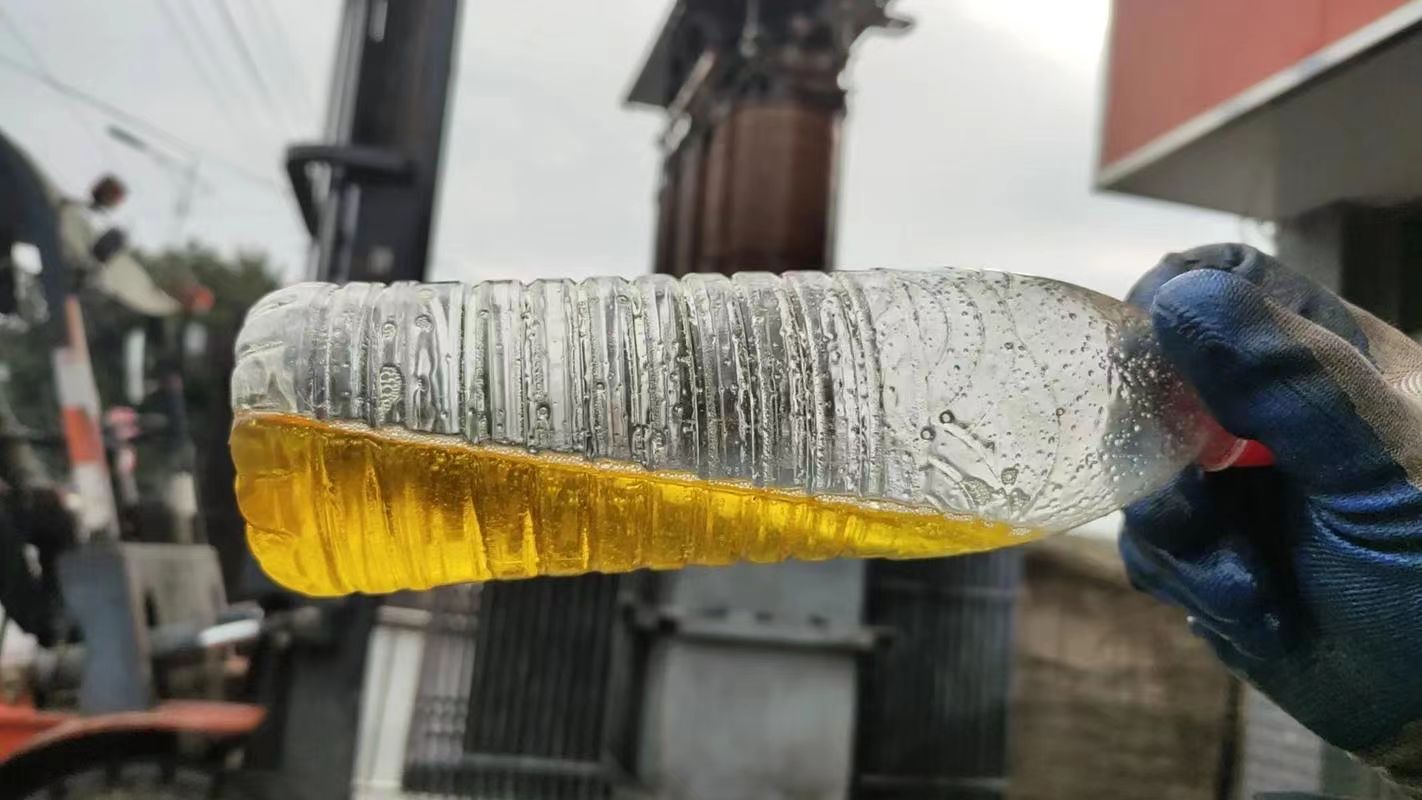
Water contamination is one of the most destructive threats to transformer insulation and stability. Unlike solid faults or visible damage, water in transformer oil often enters silently and accumulates over time, making early detection vital. If left untreated, moisture in the oil and cellulose insulation can severely reduce dielectric strength, cause electrical discharges, and drastically shorten transformer lifespan. Recognizing the early signs—both visual and technical—can help prevent catastrophic failures.
Symptoms of water contamination in transformer oil include reduced dielectric breakdown voltage, increased moisture ppm readings, cloudy or hazy oil appearance, presence of bubbles or frothing, abnormal dissolved gas analysis (DGA) results, elevated hot-spot temperatures, sludge formation, and tripping of protective devices. These indicators may appear individually or together, and signal the need for immediate oil testing and drying interventions.
Early detection is the best defense against moisture-driven transformer failures.
Water contamination in transformer oil has no visible or measurable symptoms.False
Water in transformer oil can be detected through visual inspection, electrical testing, DGA, and moisture analysis; it impacts performance measurably.
Common Technical Symptoms of Water-Contaminated Transformer Oil
| Symptom | Description | Test or Indicator |
|---|---|---|
| Low Dielectric Breakdown | Breakdown voltage drops below 30 kV | IEC 60156 test |
| High Moisture (ppm) | Moisture above 50–60 ppm in oil or >2% in cellulose | Karl Fischer titration |
| Abnormal DGA | Elevated H₂, CO, CO₂, CH₄ indicating paper deterioration | Dissolved Gas Analysis |
| Hot Spot Overheating | Moisture causes thermal instability and vapor bubbles | RTD temperature sensors |
| Interfacial Tension Drop | Below 20 mN/m indicates contamination by polar compounds | IFT test (ASTM D971) |
| Increased Acidity | Hydrolysis increases oil acidity >0.2 mg KOH/g | Neutralization number (IEC 62021) |
Observable Physical Symptoms
| Visual Indicator | Significance |
|---|---|
| Cloudy or Hazy Oil | Water emulsified in oil; no longer transparent |
| Bubbles or Frothing | Water vaporizing under heat or electrical stress |
| Sludge Formation | Moisture + oxidized oil create brownish sludge |
| Corrosion on Metal Parts | Water enables corrosion of copper, core, and tank |
| Oil Level Fluctuations | Indicates breathing activity or condensation cycles |
A single inspection of cloudy oil may reveal moisture levels >100 ppm, far exceeding safety limits.
Diagnostic Example – Oil Moisture Alarm Activation
- 132 kV power transformer showed abnormal temp rise
- Online moisture sensor: 78 ppm (critical)
- DGA: CO₂/CO ratio dropped, acetylene spike
- Oil sample: dielectric strength = 21 kV, IFT = 16 mN/m
- Cause: leaking conservator bladder and saturated breather
- Actions: installed new breather, vacuum dehydration, IFT restored to 32
- Result: No alarms, oil stabilized, failure avoided
Symptom Evolution Over Time
| Timeframe | Initial Symptoms | Progressed Symptoms | Final Stage |
|---|---|---|---|
| Weeks to Months | Elevated ppm, minor haze | Low dielectric strength, gas increase | Flashover, winding failure |
| Months to Years | Paper moisture rise | Acidic oil, sludge, bubbling | Full insulation degradation |
Long-term moisture presence can halve transformer life without visible external signs.
Sensor and Monitoring Tools for Symptom Detection
| Device/Method | What It Detects | Usage Frequency |
|---|---|---|
| Moisture Sensor (ppm) | Measures water content in oil | Continuous/online |
| DGA Monitor | Tracks gases from thermal/electrical faults | Monthly or online |
| Dielectric Strength Tester | Verifies insulation capability | Annually or after events |
| Visual Oil Inspection | Hazy or discolored oil | Monthly |
| Oil Sampling Lab Tests | Full profile of contamination | Quarterly or condition-based |
How Can Moisture Be Measured in Transformer Oil?
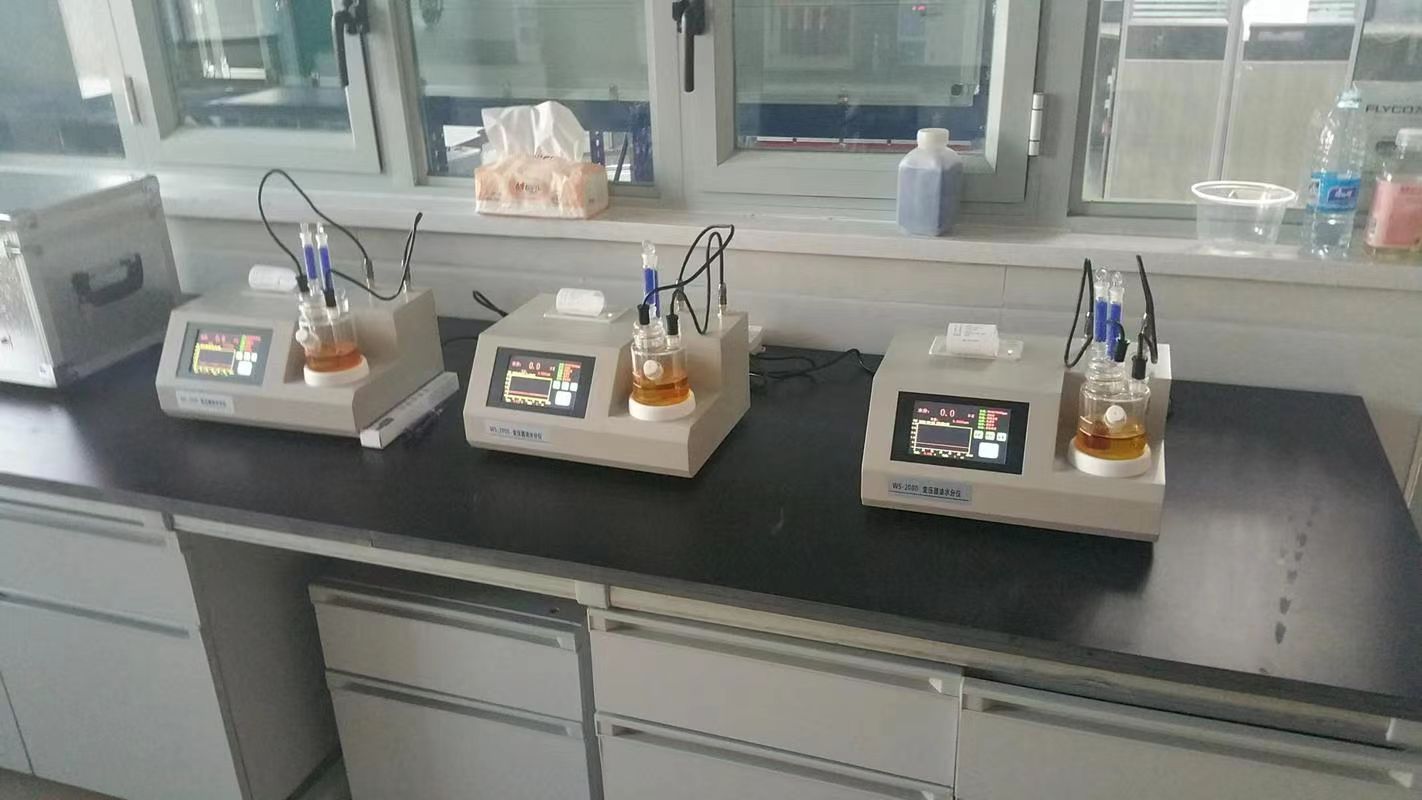
Moisture is a critical contaminant in transformer oil that must be detected and controlled to maintain the insulation integrity and operational safety of high-voltage equipment. Because even a few parts per million (ppm) of water can significantly reduce dielectric strength and accelerate insulation aging, reliable moisture measurement is essential for predictive maintenance and fault prevention.
Moisture in transformer oil is measured using laboratory-based Karl Fischer titration for precise water content analysis, portable electronic meters for field screening, and online sensors for continuous monitoring. These methods detect water in parts per million (ppm) or as relative saturation percentage, providing vital insights into insulation health and guiding drying or oil treatment interventions.
Each method serves a specific use case depending on the required accuracy, application frequency, and transformer criticality.
There is no accurate way to measure water in transformer oil.False
Multiple precise and reliable techniques exist, such as Karl Fischer titration and online moisture sensors, to measure moisture in transformer oil.
Common Methods to Measure Moisture in Transformer Oil
| Method | Accuracy | Range | Best Use Case |
|---|---|---|---|
| Karl Fischer Titration | ±1 ppm | 1–1,000 ppm | Laboratory oil samples, high precision |
| Portable Moisture Meter | ±3–5% | 10–500 ppm | Field measurements, condition screening |
| Moisture-in-Oil Sensor | Continuous | 0–100% RS* or ppm | Real-time monitoring, HV substations |
| Relative Saturation (% RS) | ±2% RS | 0–100% | Reflects water content relative to oil temperature |
*RS = Relative Saturation, a temperature-adjusted percentage of saturation solubility in oil.
Karl Fischer Titration – Gold Standard Method
| Feature | Detail |
|---|---|
| Principle | Iodine reacts with water to produce hydriodic acid |
| Precision | 1–2 ppm (milligram resolution per gram of oil) |
| Oil Sample Volume | 2–10 mL |
| Environment | Lab-controlled (moisture-free conditions) |
| Standard | ASTM D1533, IEC 60814 |
Karl Fischer is the most accurate method for moisture analysis in transformer oil and is used for certification and compliance.
Portable Electronic Moisture Meters
| Type | Measurement Mode | Usage |
|---|---|---|
| Capacitive Sensor | ppm or % RS | Fast screening, spot checks in field |
| Resistive Sensor | Electrical change from water content | In-line with oil circuit or valves |
- Offers digital display, quick results in 1–2 minutes
- Requires calibration and oil-temperature adjustment
- Accuracy varies with oil type and contamination level
These devices are ideal for routine inspections and early detection, especially in remote installations.
Online Moisture Sensors
| Feature | Description |
|---|---|
| Continuous Monitoring | 24/7 data stream from inside transformer or conservator |
| Output | ppm or % RS (via SCADA or local HMI) |
| Temperature Compensation | Provides saturation curves for real-time accuracy |
| Maintenance-Free | No recalibration for several years |
Suitable for high-value, critical power transformers in substations, wind farms, and nuclear plants.
Example: Moisture Measurement Workflow
| Step | Procedure |
|---|---|
| 1. Sampling | Draw oil using vacuum-sealed syringe or bottle |
| 2. Temperature Control | Ensure oil is at stable temp (20–30°C) |
| 3. Karl Fischer Analysis | Run titration using automated or manual equipment |
| 4. Data Recording | Compare against standard limits (IEC/IEEE) |
| 5. Interpretation | Take corrective action if >30 ppm or >2% RS |
Moisture Levels and Transformer Health Impact
| Moisture (ppm) in Oil | Risk Level | Required Action |
|---|---|---|
| <10 ppm | Excellent | Monitor annually |
| 10–30 ppm | Acceptable | Monitor quarterly, check seals |
| 30–60 ppm | Warning | Consider filtration or drying |
| >60 ppm | Critical | Immediate oil purification recommended |
Regulatory Standards Referencing Moisture Measurement
| Standard | Application | Reference Limit |
|---|---|---|
| IEC 60814 | Moisture determination via KF | Defines testing method |
| ASTM D1533 | Moisture in insulating liquids | Calibration and protocol |
| IEEE C57.106 | Oil acceptance and test values | Recommends max water content |
What Are the Methods to Remove Water from Transformer Oil?
Water contamination in transformer oil is a major cause of insulation breakdown, reduced dielectric strength, and transformer aging. Once moisture levels exceed safe thresholds (typically 20–30 ppm for mineral oil), active intervention is required to remove the water before it can trigger electrical faults. Since water may exist both dissolved in oil and absorbed in paper insulation, drying must be comprehensive and suited to the specific contamination level.
The most effective methods to remove water from transformer oil include vacuum dehydration, hot oil circulation, molecular sieve absorption, and Fuller's earth filtration. Each technique targets different moisture states—dissolved, emulsified, or free—and can be applied individually or in combination depending on transformer size, moisture level, and urgency. In critical cases, complete offline drying and oil regeneration may be necessary.
Choosing the right technique ensures restoration of oil performance and prolongs transformer life.
Water cannot be removed from transformer oil once contamination occurs.False
Various field-proven techniques such as vacuum dehydration, filtration, and hot oil circulation can effectively remove water from transformer oil.
Key Moisture Removal Techniques
| Method | Targeted Water State | Best Use Case | Efficiency Level |
|---|---|---|---|
| Vacuum Dehydration | Dissolved & emulsified | Critical transformers, high ppm levels | ★★★★★ |
| Hot Oil Circulation | Bound & dissolved | Paper drying, transformer heating | ★★★★☆ |
| Molecular Sieve Drying | Dissolved | Continuous low-level drying | ★★★★☆ |
| Fuller's Earth Treatment | Combined with drying | Old oil with acids + water | ★★★★☆ |
| Centrifugation | Free water only | Initial water separation before drying | ★★☆☆☆ |
Vacuum Dehydration – Industry Standard
| Parameter | Description |
|---|---|
| Process | Heated oil is drawn through a high-vacuum chamber; water evaporates at low temperature |
| Efficiency | Removes 95–99% of water within 6–12 hours (depending on volume) |
| Temperature | 60–70°C typical for mineral oil |
| Vacuum Level | 0.5 to 2 mbar |
| Equipment | Stationary or mobile oil dehydration units |
| Key Benefit | Can be used with the transformer energized (“on-load”) |
Best practice for large grid transformers and emergency restoration after water ingress.
Hot Oil Circulation for Paper Drying
| Process Flow | Function |
|---|---|
| Heat oil to 70–80°C | Lowers oil viscosity, raises vapor pressure |
| Pump through windings | Transfers heat to paper insulation |
| Oil absorbs moisture | Dissolved moisture pulled into oil |
| Then filter or vacuum dry | Dehydrated oil is recirculated |
Particularly effective for older units with high cellulose-bound water levels.
Molecular Sieve (Adsorptive Drying)
| Feature | Description |
|---|---|
| Adsorbent Material | Zeolite, alumina, or silica gel |
| Configuration | Oil passes through columns with desiccants |
| Use Case | Online continuous water removal |
| Replacement Cycle | Every 6–12 months (or saturation limit) |
Ideal for long-term moisture suppression in lightly contaminated or sealed systems.
Combined Drying + Oil Purification
| Contaminant Type | Removal Method |
|---|---|
| Moisture (Water) | Vacuum dehydration, hot oil |
| Acids (Oxidation) | Fuller's earth, alumina clay |
| Particles | 1–5 µm filtration |
| Gases (Dissolved) | Vacuum degassing |
Most large power utilities use multi-stage mobile units that perform all functions simultaneously.
Example – Emergency Drying Application
- 220 kV transformer in coastal substation exposed to cyclone
- Oil moisture: 84 ppm; dielectric strength: 18 kV
- Emergency vacuum dehydration truck deployed
12-hour process:
- Moisture reduced to 12 ppm
- Dielectric restored to 52 kV
- Online DGA normalized
- Result: Avoided unplanned shutdown; no insulation damage detected
Equipment Comparison Table
| Method | Time Required | Suitability | Typical Use Case |
|---|---|---|---|
| Vacuum Dehydration | 6–24 hours | Medium to large units | Moisture spikes or DGA alerts |
| Hot Oil Drying | 8–48 hours | Aging transformers | Paper insulation restoration |
| Sieve Absorption | Continuous | Lightly contaminated | Moisture prevention |
| Fuller's Earth | 4–12 hours | Acids + moisture combo | Oil rejuvenation |
Monitoring During and After Drying
| Test or Indicator | Purpose |
|---|---|
| Karl Fischer Moisture | Validate ppm reduction in oil |
| Dielectric Strength Test | Confirm restored insulating properties |
| DGA Post-Treatment | Check for any residual fault gases |
| Relative Saturation (%) | Assess long-term dryness stability |
Drying should be continued until <20 ppm moisture and >40 kV dielectric strength are achieved.
When Should Dehydration or Oil Purification Be Performed?
Transformer oil serves a dual role—electrical insulation and thermal management. Over time, this vital fluid degrades due to moisture, oxidation, particulate contamination, and gas formation, all of which reduce the oil’s dielectric and cooling capabilities. The right timing for dehydration or purification is essential to prevent insulation failure, partial discharges, and premature transformer aging.
Dehydration or oil purification should be performed when moisture exceeds safe thresholds (typically >30 ppm), dielectric strength drops below acceptable limits (usually <30 kV), dissolved gas analysis (DGA) shows thermal or electrical fault indicators, sludge or acidity is present, color or odor changes occur, or as part of preventive maintenance at defined intervals. Immediate purification is also necessary after environmental exposure or conservator faults.
Ignoring these signs accelerates insulation breakdown and increases the risk of catastrophic failure.
Transformer oil does not require purification unless there is a visible fault.False
Purification is often needed long before visible symptoms appear. Early testing and dehydration prevent major failures and extend transformer life.
Key Indicators That Signal the Need for Oil Treatment
| Symptom/Measurement | Threshold Value | Recommended Action |
|---|---|---|
| Moisture Content | >30 ppm (mineral oil) or >2% paper | Vacuum dehydration, dry-out |
| Dielectric Strength | <30 kV (IEC 60156) | Oil filtering + drying |
| Oil Acidity (Neutralization Number) | >0.2 mg KOH/g | Fuller's earth or reconditioning |
| Sludge Presence | Visible or settled on tank base | Filtration + clay treatment |
| Color Degradation | >2 on ASTM D1500 scale | Dehydration or replacement |
| Abnormal DGA Readings | Acetylene, ethylene, CO/CO₂ uptrend | Gas extraction + moisture removal |
| Breather Saturation | Silica gel exhausted, conservator failure | Dry-out + oil purification |
| Online Sensor Alerts | Moisture or temperature above setpoints | Immediate vacuum drying |
Routine Maintenance Triggers for Purification
| Transformer Age / Condition | Suggested Interval for Purification |
|---|---|
| New Installations | After 1 year (remove installation moisture) |
| 5–10 Years Old | Every 2–3 years |
| >10 Years or Heavy Load | Annually or based on test results |
| Post Fault / Repairs | Immediately after corrective work |
In highly humid or coastal environments, annual purification is advisable even with moderate test results.
Comparison of Treatment Actions by Trigger Type
| Trigger | Primary Cause | Best Treatment Method |
|---|---|---|
| High Moisture | Breathing, seal leakage | Vacuum dehydration |
| Low Dielectric Strength | Combined contaminants | Filtration + dehydration |
| Sludge / Acidity | Oxidation, overheating | Fuller's earth regeneration |
| Gas in Oil (DGA) | Internal discharges | Degassing + dehydration |
| Color / Clarity Issues | Aging, particles | Multi-stage purification |
Real-World Case – Missed Maintenance Consequence
- 132/33 kV transformer in cement plant had no oil treatment for 6 years
- Oil test: 42 ppm moisture, 0.27 acidity, breakdown strength at 18 kV
- Sludge observed; DGA showed CO/CO₂ spike and furan levels >1 ppm
- Winding insulation failed under load, causing flashover
- Downtime: 11 days, $180,000 loss, full rewind required
Post-failure oil purification, retrofitted breather, and moisture sensor installed
Purification vs. Replacement – When to Choose
| Condition | Purify or Replace? |
|---|---|
| Moisture <60 ppm, Clean DGA | Purify (Vacuum Dehydration) |
| Oil Acidity <0.3, No Sludge | Purify (Fuller’s Earth) |
| Dark, Burnt Oil + Gases Present | Replace (With Certified Oil) |
| High Sludge Content | Replace + Internal Cleaning |
Properly maintained oil can last >20 years if treated on schedule.
Supporting Tests Before and After Purification
| Test Name | Purpose |
|---|---|
| Karl Fischer Moisture | Water content in ppm |
| Dielectric Strength Test | Breakdown voltage (kV) |
| DGA | Gases indicating thermal or electrical issues |
| IFT (Interfacial Tension) | Polar compound contamination |
| Color and Visual Check | Quick field indicator |
Preventive Maintenance Schedule Recommendation
| Frequency | Action |
|---|---|
| Monthly | Visual oil check, breather inspection |
| Quarterly | Oil sampling (basic lab testing) |
| Annually | DGA, moisture, IFT, dielectric test |
| Every 3 Years | Full oil filtration and dehydration |
| As Needed | Hot oil circulation or clay reconditioning |
Conclusion
Moisture removal from transformer oil is a critical aspect of transformer maintenance. Without timely intervention, water can cause insulation failure, leading to costly outages and equipment damage. Techniques like vacuum dehydration and hot oil circulation are proven methods for restoring oil quality and ensuring dielectric reliability. Regular monitoring and preventive drying treatments are essential to prolong transformer life and reduce the risk of catastrophic failures.
FAQ
Q1: Why is it important to remove water from transformer oil?
A1: Water in transformer oil significantly:
Reduces dielectric strength, increasing the risk of arcing
Accelerates paper insulation aging
Causes sludge formation and corrosion
Maintaining low moisture levels (typically <20 ppm for mineral oil) is crucial for transformer longevity and safety.
Q2: What are the main methods to remove water from transformer oil?
A2: Common techniques include:
Vacuum Dehydration
Uses heat and vacuum to evaporate moisture
Most effective for deep drying (removes dissolved and emulsified water)
Often combined with inline filtration
Oil Filtration Units (Online or Offline)
Passes oil through fine filters and moisture absorbers
Removes free water and particulates
Suitable for routine maintenance
Hot Oil Circulation
Heats oil and circulates it through the transformer
Promotes moisture migration from solid insulation into oil, where it’s extracted
Typically paired with vacuum drying
Dry Air/Nitrogen Purging
Replaces moist air in conservator with dry air or nitrogen
Slows moisture ingress during outages or repairs
Molecular Sieve or Desiccant Cartridges
Used in breathers or offline units to absorb moisture
Prevents ingress and stabilizes moisture levels over time
Q3: How is moisture content monitored in transformer oil?
A3: Key methods include:
Karl Fischer titration (lab-accurate, ppm-level results)
Dielectric breakdown voltage test
Online moisture sensors for real-time tracking
Insulation resistance and polarization index testing
These tests ensure timely moisture control before insulation is damaged.
Q4: How often should moisture removal be performed?
A4: Frequency depends on:
Load cycle and transformer age
Ambient humidity and climate
Oil test results
Routine testing every 6–12 months, with immediate drying if moisture exceeds safe thresholds, is recommended for critical units.
Q5: Can moisture be removed without removing the transformer from service?
A5: Yes. Online oil purification systems allow:
Continuous moisture removal while transformer remains energized
Minimal disruption to operations
Effective for maintenance of grid-critical and industrial transformers
Offline methods are used for deep drying during planned shutdowns or major service.
References
"Moisture Removal Techniques in Transformer Oil" – https://www.electrical4u.com/moisture-removal-transformer-oil
"IEEE C57.106-2015: Guide for Acceptance and Maintenance of Insulating Oil" – https://ieeexplore.ieee.org/document/7109282
"Doble: Dehydration and Filtration Best Practices" – https://www.doble.com/transformer-oil-drying-techniques
"Hitachi Energy: Insulating Oil Reconditioning Methods" – https://www.hitachienergy.com/services/oil-diagnostics
"NREL: Transformer Oil Analysis and Care" – https://www.nrel.gov/docs/fy22ost/transformer-moisture-care.pdf
"ScienceDirect: Drying of Transformer Oil and Insulation" – https://www.sciencedirect.com/transformer-oil-drying-study