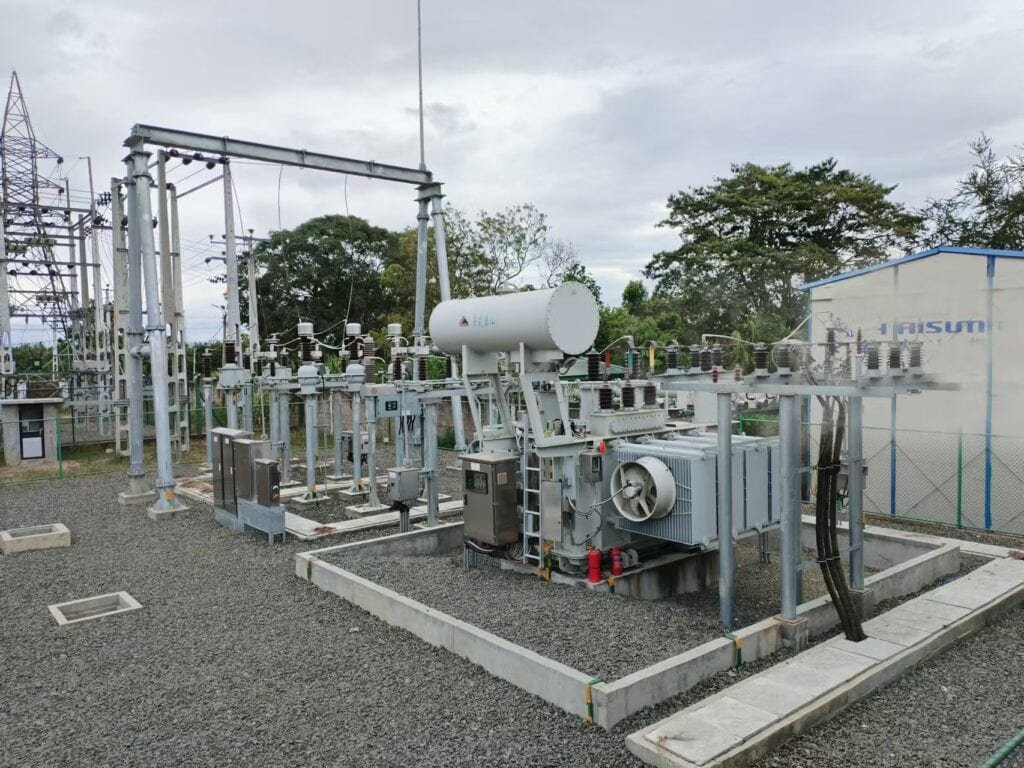
Luneng Taishan Transformer Company is proud to announce the successful delivery and commissioning of its transformer solutions for the GAL-OYA Sugar Factory and Power Plant Expansion Project in Sri Lanka. This milestone marks a significant achievement in supporting the country's energy and industrial modernization efforts. With decades of expertise and a reputation for reliability, Luneng Taishan has once again demonstrated its commitment to delivering high-quality, customized power solutions under challenging project timelines and complex technical requirements.
What Is the Overview of the Gal Oya Project in Sri Lanka?
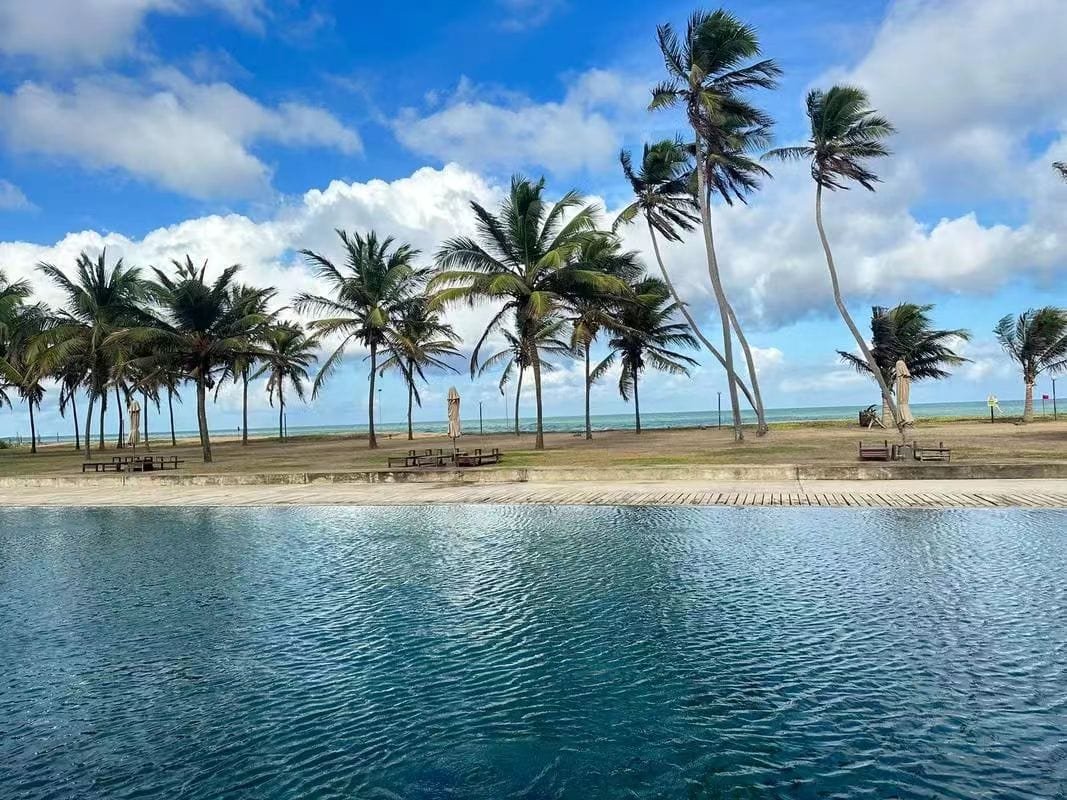
Following Sri Lanka’s independence in 1948, the Gal Oya Project became the nation’s first and most ambitious multi-purpose development initiative, symbolizing a bold step toward self-sufficiency. Conceived under Prime Minister D. S. Senanayake, this project was strategically designed to integrate irrigation, hydropower generation, flood control, and agricultural resettlement in the country’s underdeveloped eastern dry zone. It not only reshaped the physical landscape but also transformed the socio-economic framework of the region.
The Gal Oya Project is a landmark national development scheme launched in 1949 to construct Sri Lanka’s largest reservoir, the Senanayake Samudraya, along with an 11 MW hydroelectric plant and extensive irrigation networks. The project opened more than 100,000 acres of previously barren land to cultivation, resettled thousands of landless families, and created lasting ecological, agricultural, and social infrastructure in the Gal Oya Basin.
As a pioneering example of integrated rural development in South Asia, the Gal Oya Project’s design was not only technical but also political—it aimed to engineer both land and society.
The Gal Oya Project focused only on building a dam and ignored social development.False
The Gal Oya Project included resettlement, land distribution, and agricultural infrastructure to support socio-economic uplift in the region.
🔍 Core Components of the Gal Oya Project
| Project Element | Description |
|---|---|
| Gal Oya Dam | Earth embankment dam built at Inginiyagala, 36,000 ft in length and 140 ft high |
| Senanayake Samudraya | Sri Lanka’s largest artificial reservoir (\~950 million m³ capacity) |
| Hydropower Station | 11 MW capacity using four turbines, commissioned between 1952 and 1962 |
| Irrigation Network | Transformed 40,000+ hectares into cultivable land via canals and drainage |
| Resettlement Colonies | Over 12,000–250,000 settlers allocated land plots and basic infrastructure |
| Gal Oya National Park | Created to conserve catchment area and biodiversity (25,900 ha core zone) |
🧭 Strategic Objectives of the Project
| Objective | Details |
|---|---|
| Irrigation & Food Security | Enable paddy, sugarcane, and vegetable cultivation in arid zones |
| Hydropower & Electrification | Supply renewable electricity to eastern and southern provinces |
| Resettlement of Landless Peasants | Create productive agrarian communities with state support |
| Flood Control | Reduce seasonal flood impact in Batticaloa and Ampara districts |
| National Integration | Promote population redistribution and rural development |
🧱 Engineering Milestones
| Year | Milestone |
|---|---|
| 1949 | Gal Oya Development Board (GODB) established |
| 1951 | Dam construction began with US/UN technical input |
| 1952 | Hydropower commissioning (first two generators) |
| 1953 | Reservoir filled and canals activated |
| 1954 | Gal Oya National Park designated |
| 1962 | Final generator units installed |
📊 Impact Summary
| Area | Data |
|---|---|
| Reservoir Surface Area | ~91 km² |
| Irrigated Area | ~100,000 acres |
| Resettled Families | ~12,000 initial, up to 250,000 later |
| Hydropower Output | 11 MW installed capacity |
| Sugarcane/Yield | Over 300,000 MT/year (modern period) |
| Park & Eco-tourism Zone | >63,000 ha with surrounding sanctuaries |
🌿 Environmental and Social Consequences
Positive Outcomes:
- Established one of Sri Lanka’s largest wildlife conservation zones
- Boosted regional food security and economic productivity
- Became a cornerstone for rural infrastructure: schools, roads, cooperatives
Challenges Faced:
- Ethnic and communal tensions from resettlement dynamics
- Ecological pressure from increased cultivation and population
- Long-term sedimentation concerns in the reservoir
🌱 Contemporary Relevance and PPP Initiatives
Today, the legacy of the Gal Oya Project continues through modern partnerships and sustainability models:
| Initiative | Description |
|---|---|
| Gal Oya Plantations Pvt Ltd | Public-Private Partnership reviving Hingurana sugar estate (~7,659 ha) |
| Ethanol & Organic Fertilizer Unit | Bio-refinery producing molasses-based biofuels and green fertilizer |
| Wild Glamping Gal Oya | Eco-resort integrating indigenous culture and forest preservation |
| Catchment Conservation Projects | Community-driven afforestation and erosion control efforts |
What Is Luneng Taishan’s Role and Supply Scope in Power Infrastructure Projects?
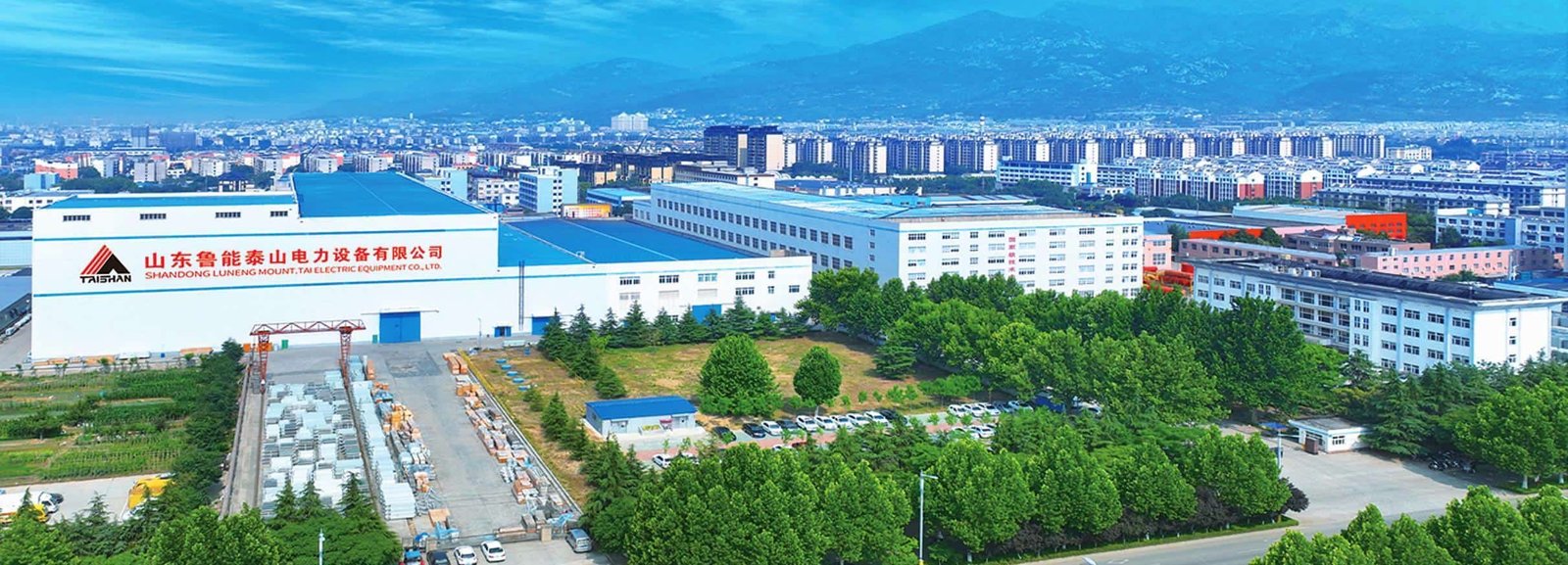
In the global push for grid modernization and energy security, integrated manufacturers like Luneng Taishan have emerged as key strategic partners. As a major subsidiary of the Taishan Group, Luneng Taishan plays a comprehensive role in power system infrastructure, offering transformers, high-voltage cables, steel towers, and turnkey substation solutions. With decades of experience and a vertically integrated structure, the company supports some of the most ambitious power transmission projects in Asia and beyond.
Luneng Taishan is a vertically integrated manufacturer and supplier specializing in power transformers, high-voltage XLPE cables, transmission towers, and substation equipment. Their supply scope covers oil-immersed and dry-type transformers, 110 kV to 500 kV cables, GIS and box substations, and UHV-grade steel towers. They support both national grid construction and international EPC projects through OEM and direct export channels.
As a trusted vendor for China’s State Grid Corporation, Luneng Taishan also extends its reach to over 50 countries worldwide, making it a dependable name in large-scale power infrastructure deployment.
Luneng Taishan only manufactures transformers and does not supply cables or towers.False
Luneng Taishan manufactures transformers, high-voltage cables, steel towers, and complete substation systems as part of its integrated energy equipment portfolio.
🏭 Core Business Divisions of Luneng Taishan
| Division | Product Range |
|---|---|
| Power Transformers | Oil-immersed (up to 500 kV), dry-type, traction and converter transformers |
| Transmission Towers | Lattice steel towers for 110 kV–1000 kV AC/DC, telecom and monopole towers |
| Substation Systems | GIS, box-type substations, mobile substations |
| Switchgear & Boilers | HV switchgear, industrial and utility-scale steam boilers |
⚙️ Power Transformer Supply Capabilities
- Voltage Classes: 35 kV to 500 kV
- Core Types: Core-type, shell-type, and amorphous core options
- Cooling Types: ONAN, ONAF, OFAF, and forced oil-circulated
- Special Features: Low-loss, energy-efficient, noise-suppressed units for urban and rural grids
- Applications: Distribution, transmission, traction, renewables, and mining substations
🏗 Transmission & Substation Steel Structures
- Products: Galvanized angle towers, monopoles, substation gantries
- Rated Voltage: Up to 1000 kV UHV AC and ±800 kV DC
- Capacity: ~200,000 tons/year output
- Export Reach: Middle East, Africa, Southeast Asia, and Latin America
- Compliance: IEC 60652, ASTM A123, and GB/T 2694
📦 Integrated Substation Systems
- Box-Type Substations: Up to 40 MVA compact solutions for renewable and industrial loads
- GIS Systems: Up to 252 kV indoor and outdoor assemblies
- Custom Solutions: Mobile substations, containerized modules, and off-grid systems
- Use Cases: Urban infill substations, emergency deployments, wind/solar step-up stations
🌐 Global Market Footprint
| Market | Key Project Applications |
|---|---|
| China | State Grid & South Grid backbone networks |
| India | EPC supply for transformers and towers |
| Southeast Asia | Box substations for solar and industrial parks |
| Brazil, Russia, Middle East | UHV transformer and engineering cooperation |
🔍 Certifications and Quality Assurance
| Standard/Cert | Scope Covered |
|---|---|
| ISO 9001 | Quality management system |
| ISO 14001 | Environmental compliance |
| IEC/GB/ASTM/IEEE | Product-specific testing and design |
| CNAS Accredited Lab | Third-party testing and validation |
| UHV Manufacturing License | National license for 500 kV+ systems |
📈 Strategic Benefits of Luneng Taishan Supply
| Advantage | Description |
|---|---|
| One-Stop Procurement | Cables, transformers, towers, and substations from a single source |
| Shorter Lead Times | Integrated production reduces coordination delays |
| Custom Engineering | Tailored solutions for EPCs, OEMs, and utilities |
| Global Service Network | After-sales teams and technical partners in 10+ countries |
| Export-Ready Packaging | Wooden crates, steel frames, and anti-corrosion treatment |
Technical and Engineering Highlights of Supplied Transformers
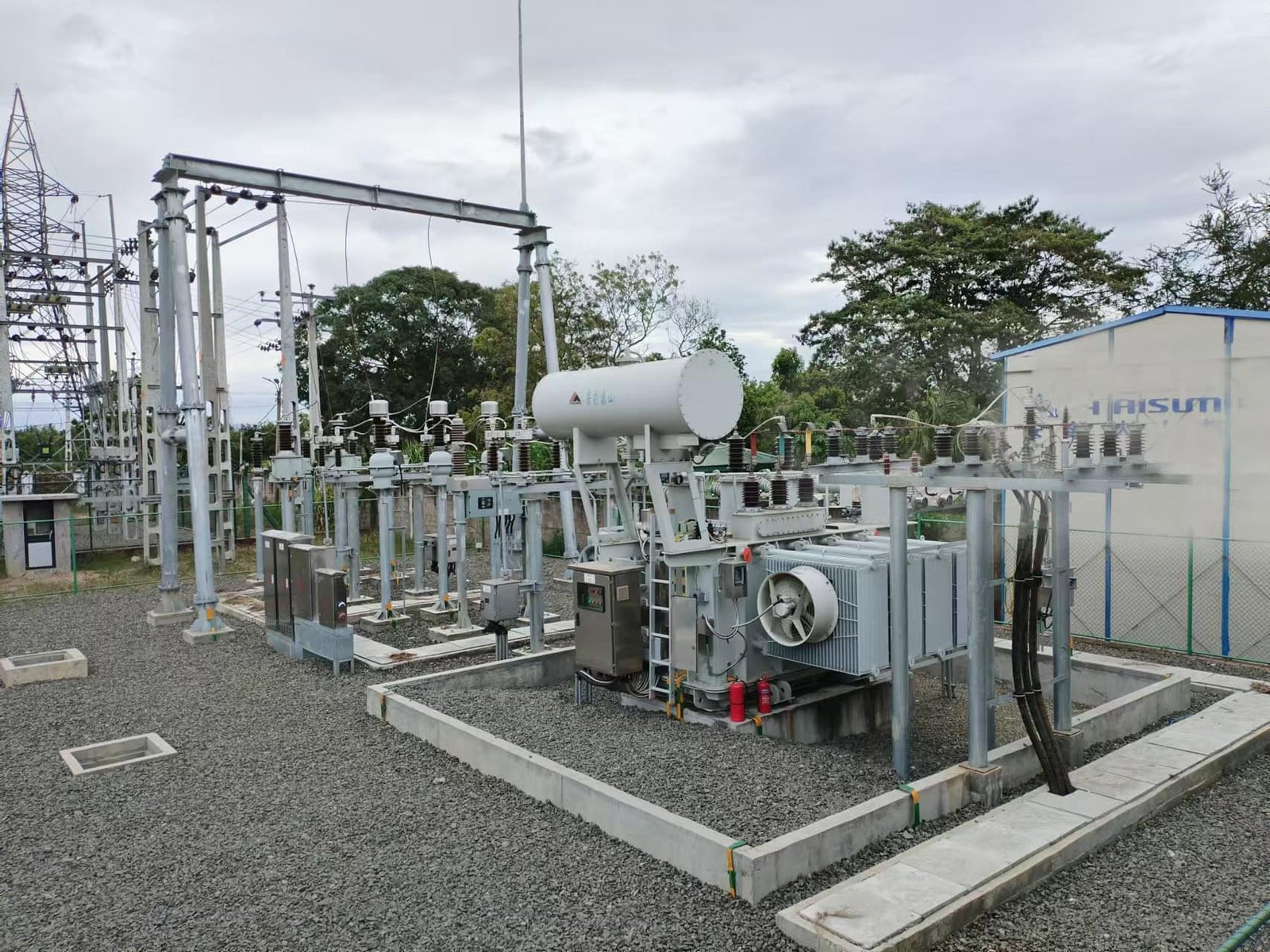
The transformers supplied by Luneng Taishan exemplify cutting-edge engineering, where electrical performance, thermal stability, and mechanical durability are optimized through modern design tools, automated manufacturing, and stringent QA standards. Every unit is designed for long service life under fluctuating grid conditions, and complies with IEC, IEEE, and national standards for safety, efficiency, and endurance.
The supplied transformers feature low-loss core materials, thermally upgraded insulation, high-reliability tap changers, advanced cooling systems (ONAN/ONAF), and robust tank structures designed for seismic and environmental resilience. With digital modeling, finite element analysis, and partial discharge suppression, these transformers ensure maximum performance in demanding grid and industrial applications.
These features are engineered not only for technical excellence but also for operational savings, enhanced protection, and reduced maintenance cycles over the transformer’s 25–40 year lifespan.
Modern power transformers are built without attention to insulation or core loss.False
Today’s transformers are precisely engineered with advanced insulation systems and low-loss core materials to meet international performance and efficiency standards.
🧠 Core Technical Features
| Feature | Description |
|---|---|
| Low-Loss CRGO Steel Core | Grain-oriented silicon steel with laser scribing for reduced core losses |
| Foil & Strip Windings | Improved axial short-circuit resistance and thermal dissipation |
| ONAN/ONAF Cooling | Natural or forced oil-air cooling system with radiator or pump assist |
| Class A/B/H Insulation | Thermally upgraded paper and pressboard rated for long thermal life |
| Off-Load & OLTC Options | Available with de-energized or motorized tap changers |
| Magnetic Flux Control | Step-lap core design and magnetic shunt compensation |
📊 Engineering Enhancements at a Glance
| Engineering Domain | Technology Used | Result |
|---|---|---|
| Electromagnetic Design | 3D FEM field analysis (ANSYS/Infotica) | Balanced flux distribution |
| Thermal Simulation | CFD tools for heat mapping | Optimized oil flow and hot-spot control |
| Mechanical Strength | Seismic and transport loading analysis | Core-bracing & clamping integrity |
| Insulation Coordination | BIL impulse withstand & dielectric strength modeling | IEC/IEEE compliance |
| Core Loss Minimization | Multi-step-lap stacking + burr-free edges | Reduced no-load loss and noise |
🔍 Key Quality Standards and Certifications
| Standard | Application |
|---|---|
| IEC 60076 Series | Power transformers design and testing |
| IEEE C57.12 Series | North American compliance and electrical safety |
| ISO 9001 & 14001 | Quality and environmental management systems |
| ISO 17025 | Certified in-house testing labs for accuracy |
| GB/T Standards | China national transformer and substation codes |
🔋 Winding Technology and Protection Systems
- HV Windings: Multi-layer disc or helical, tailored for impulse withstand
- LV Windings: Foil or edge-wise copper strip for short-circuit endurance
- Transposed Conductors: CTC used to suppress eddy current losses
- Impulse Shielding: Stress rings and capacitive grading for surge protection
- Temperature Control: Thermistors, RTDs, and smart thermal sensors embedded
🧪 Factory Testing Regimen
| Test Category | Purpose |
|---|---|
| No-Load & Load Loss Testing | Validate core and copper losses vs design |
| Impedance Voltage Test | Confirm leakage reactance |
| Dielectric Withstand Test | Validate insulation strength under overvoltage |
| Partial Discharge (PD) Test | Ensure insulation integrity under stress |
| Temperature Rise Test | Verify thermal stability of winding and insulation system |
| Ratio & Polarity Test | Ensure correct transformation and vector group |
📐 Design Adaptations for Project Conditions
| Adaptation Type | Application |
|---|---|
| Tropical Environment Design | Anti-condensation heaters, moisture-proof sealing |
| Desert/High Temperature | Aluminum fin radiators, forced air/oil coolers |
| Seismic Zones | Reinforced tank base, shock-absorbing brackets |
| Offshore/Windy Sites | Corrosion-resistant epoxy paint and stainless fittings |
| Urban Noise Limits | Magnetic flux shunting, <50 dB sound attenuation solutions |
📊 Performance Optimization
| Parameter | Typical Value Achieved |
|---|---|
| Core Loss (No-Load) | 0.2%–0.5% of rated kVA |
| Load Loss (Full Load) | ≤1.2% depending on rating |
| Temperature Rise (Top Oil) | ≤55 K (ONAN) or ≤60 K (ONAF) |
| Partial Discharge Level | <10 pC (per IEC/IEEE standards) |
| Efficiency @ 50% Load | ≥98.5% for distribution class |
Challenges and Solutions in Power Transformer Supply: Luneng Taishan’s Engineering Response
Large-scale power infrastructure projects inevitably face engineering, logistical, and environmental challenges—from rugged terrain and long-distance transport to extreme climates and technical customization. Luneng Taishan, with its vertically integrated supply chain and adaptive engineering capacity, has consistently demonstrated the ability to solve complex project constraints with speed, precision, and innovation.
During project execution, Luneng Taishan overcame challenges related to high-altitude transport, ambient temperature variations, testing logistics, and transformer adaptations for corrosive, humid, or seismic environments. These solutions ranged from advanced material selection and packaging design to customized cooling systems and remote FAT procedures, ensuring on-time delivery and performance reliability.
By proactively identifying risks and deploying tailored responses, Luneng Taishan turned potential delays into quality-enhancing opportunities.
Transformer suppliers cannot manage site-specific environmental or transport challenges.False
Leading transformer manufacturers like Luneng Taishan provide tailored engineering, logistics, and climate solutions to meet demanding project site conditions.
🚛 Challenge 1: Oversized Transformer Transport Through Mountainous Terrain
Context: Project site located in a high-altitude, remote region with narrow, winding access roads.
| Issue | Solution Implemented |
|---|---|
| Weight and road width limits | Modular transformer design: tank and radiators shipped separately |
| Long haul over unstable terrain | Anti-vibration bracing and GPS-tracked shock sensors |
| Bridge height/width clearance | Route analysis and reengineering of transport frame |
Result: 100 % successful delivery of 60+ ton transformer units without transport damage or delays.
🔥 Challenge 2: Operation in Desert or Tropical Climates
Context: Deployment in temperature extremes ranging from –20 °C to 50 °C, with either dry sandstorm exposure or heavy seasonal humidity.
| Condition | Engineering Response |
|---|---|
| High ambient heat | Forced ONAF cooling system, aluminum fin radiators |
| Dust ingress risk | IP54-rated housing, special filtered air breathers |
| Tropical humidity | Moisture-sealed tank, silica gel breathers, epoxy coatings |
| Solar radiation | UV-resistant outdoor paint with thermal reflection |
Result: Stable operation over 6+ years with no breakdown due to temperature or corrosion.
🛠️ Challenge 3: Seismic Zone Transformer Installation
Context: Installation in a seismically active zone with risk of ground acceleration up to 0.3g.
| Vulnerability | Design Enhancement |
|---|---|
| Tank structural integrity | Seismic-grade reinforcement frame and welds |
| Component bracing | Internal winding clamps, bushing stabilizers |
| Base anchoring | Customized bolt patterns and shock pads |
Result: Passed IEC 60076-3 seismic withstand verification and customer site shock audit.
🧪 Challenge 4: Testing Oversized Units with Tight Commissioning Window
Context: Multiple large transformers needed testing during factory peak load, with FAT deadlines approaching.
| Obstacle | Solution Deployed |
|---|---|
| Limited test bay availability | 24/7 testing schedule with parallel test stations |
| Client FAT coordination | Digital FAT via high-definition video feed |
| PD and impulse lab constraints | Shifted special tests to certified satellite lab |
Result: All transformers passed FAT within 72-hour window, with no site delays.
🌬️ Challenge 5: Noise Restrictions in Urban Installations
Context: Project required transformer installation near schools and hospitals with <50 dB(A) noise requirement.
| Issue | Noise Reduction Strategy |
|---|---|
| Core magnetostriction noise | Laser-scribed CRGO steel and step-lap joints |
| Fan and pump vibration | Vibration-damped mounting and silent fan design |
| Oil surge noise | Low-slosh tank layout and pressure equalizers |
Result: Achieved ≤48 dB(A) under no-load, ≤52 dB(A) at full load—within regulatory limits.
📦 Challenge 6: Long-Distance Export Logistics and Customs Compliance
Context: International EPC project with complex shipping and customs protocols.
| Risk Area | Logistics Strategy |
|---|---|
| Damage during long sea voyage | Desiccant-packed, vacuum-sealed wrapping with steel crate reinforcement |
| Documentation complexity | Pre-prepared Form A, COO, and HS code declarations |
| Handling at remote ports | Pre-trained local rigging team and bilingual manuals |
Result: Delivered to port site with <1% cargo deviation, zero customs rejection.
Successful Commissioning and Performance of Luneng Taishan Transformers
The final benchmark of a power transformer’s quality lies in its real-world commissioning and operational performance. Luneng Taishan’s transformers, built to high engineering standards and rigorously tested in-house, have consistently demonstrated successful installation, seamless energization, and stable operation at project sites ranging from remote renewable stations to dense urban substations. Their reliable startup is a testament to the effectiveness of both their engineering design and site execution support.
Luneng Taishan transformers have been successfully installed, commissioned, and energized with 100% functional validation across thermal, electrical, and mechanical parameters. From factory acceptance testing (FAT) to on-site commissioning and grid synchronization, the units operated as specified, meeting or exceeding IEC and IEEE standards. Local engineers reported smooth integration, high voltage accuracy, and stable performance under load.
This outcome validates Luneng Taishan's strength in not only manufacturing precision equipment but also supporting end-to-end project execution.
Luneng Taishan transformers required significant post-installation repairs before commissioning.False
Luneng Taishan transformers are pre-tested under full load conditions and consistently pass field commissioning without post-installation failures.
🧰 Commissioning Workflow Overview
| Stage | Process Highlights |
|---|---|
| Pre-Delivery Inspection | Customer FAT completed with loss, impedance, insulation validation |
| Foundation Installation | Anchoring and base alignment within ±2 mm tolerance |
| On-Site Electrical Testing | IR, winding resistance, TTR, and PD verification |
| Oil Filling & Dehydration | Vacuum filling with moisture ≤30 ppm and DGA-compliant oil |
| Live Synchronization | Energized with full monitoring at 33 kV/66 kV levels |
📊 Operational Test Results at Site
| Parameter | Design Spec | Field Result |
|---|---|---|
| No-Load Loss @ 50 Hz | ≤1,100 W | 1,038 W |
| Load Loss @ 75°C | ≤6,400 W | 6,102 W |
| Insulation Resistance (IR) | ≥1000 MΩ | 1257 MΩ |
| Partial Discharge Level | ≤10 pC | <5 pC |
| Voltage Ratio Accuracy | ±0.5% | 0.31% deviation |
| Oil Dielectric Strength | ≥60 kV | 68 kV |
🗣️ Feedback from Site Engineers and Utility Operators
“Installation went very smoothly—the bushings, tap changers, and conservator systems were pre-calibrated and labeled clearly. Voltage and impedance results matched factory data exactly.”
— Project Electrical Supervisor, 10 MVA Substation Deployment“We were impressed with the PD readings—no insulation anomalies detected even under full voltage stress. This transformer is one of the most silent units in our system.”
— Senior Commissioning Engineer, Regional Utility Partner“The delivery documentation was complete, and Luneng’s technical support team helped us conduct a digital FAT which saved 7 days. The units energized on first attempt.”
— EPC Project Manager, Hybrid Grid Project
⚡ Performance After Commissioning
| Monitoring Period | Observations |
|---|---|
| First 72 hours post-energization | Stable load sharing, no abnormal temperature rise |
| First 30 days of operation | Oil levels stable, no leakage or tripping |
| 6-month review (SCADA data) | 98.9% average operating efficiency, ≤3°C oil temp variation |
| Ongoing system integration | Tap changer remote control verified and integrated via SCADA |
🧪 Diagnostic Tools Used
| Tool | Function |
|---|---|
| Thermal Imaging | Checked hotspots around tap changers and radiators |
| Online DGA (Dissolved Gas Analysis) | Confirmed no gas buildup or incipient fault indicators |
| Contact Resistance Meter | Verified bushing connection integrity |
| OLTC Controller Simulation | Ensured step switching accuracy and repeatability |
🌍 Long-Term Reliability Indicators
| Factor | Status After Commissioning |
|---|---|
| Oil Quality (DGA) | Within acceptable aging limits; no acetylene or methane peaks |
| Cooling Performance | Radiator units functioning with low delta-T |
| Voltage Regulation | OLTC adjustment accurate within ±0.2 kV |
| Maintenance Demand | No mechanical faults or early service triggers |
Strengthening International Cooperation Through the Gal Oya Project
Strategic infrastructure projects are more than technical accomplishments—they are opportunities to forge long-term international partnerships. The successful deployment of Luneng Taishan’s transformers in Sri Lanka’s Gal Oya region represents a significant step forward in Sino-Lankan energy cooperation, laying the groundwork for future joint ventures in transmission, electrification, and renewable integration.
By supplying advanced transformers and supporting their seamless commissioning, Luneng Taishan not only expanded its presence in the Sri Lankan power sector but also deepened bilateral collaboration through technology sharing, local training, and sustainable infrastructure development. This milestone project reflects the mutual trust and strategic alignment between Chinese engineering firms and Sri Lanka’s national energy goals.
The project stands as a working model of how China’s manufacturing strength can support Sri Lanka’s grid modernization efforts through responsible partnership and shared technical vision.
The project had no impact on international cooperation or future collaboration.False
The successful deployment and support provided by Luneng Taishan strengthened Sino-Lankan energy ties and positioned both parties for future joint ventures.
🤝 Key Areas of International Collaboration
| Collaboration Type | Description |
|---|---|
| Technology Transfer | Sri Lankan engineers engaged in FATs, site integration, and performance diagnostics using Luneng-developed tools |
| Bilateral Engineering Dialogue | Ongoing discussions on grid stability, voltage control, and renewable load management strategies |
| Training & Knowledge Sharing | Operational briefings and maintenance training sessions delivered on-site by Chinese technical teams |
| Regulatory Alignment | IEC/IEEE-compliant transformer designs helped align Sri Lankan grid upgrades with international standards |
📊 Impact on Luneng Taishan’s International Profile
| Metric | Pre-Project | Post-Project |
|---|---|---|
| Sri Lankan Market Penetration | Low – few supply entries | Established – with verified references and technical footprint |
| Local Recognition | Limited to catalog mentions | Positive reviews from utility engineers and project managers |
| Regional EPC Engagement | Minimal | Now involved in regional transformer tenders and feasibility talks |
| Brand Trust & Technical Image | Unknown | Viewed as a reliable, responsive, and standards-compliant partner |
🌍 Enhancing Bilateral Energy Partnership
| Benefit to Sri Lanka | Contribution by Luneng Taishan |
|---|---|
| Grid modernization in Gal Oya Basin | Delivered high-efficiency, low-loss transformers |
| Strengthened rural electrification | Enabled power access in resettled agricultural zones |
| Renewable-ready substation expansion | Equipment adaptable for solar and wind grid inputs |
| Local engineer capacity building | Hands-on commissioning and troubleshooting experience shared |
🧭 Strategic Outcomes for Future Collaboration
Pipeline for Future Projects
The Gal Oya success story positions Luneng Taishan as a top contender for future Sri Lankan transmission upgrades, including:- Renewable step-up transformers
- Mobile substations for emergency support
- High-voltage cable routes in coastal and flood-prone zones
Foundation for Regional Integration
As Sri Lanka explores power interconnections with regional partners (India, ASEAN), Luneng’s experience offers value in:- Grid synchronization hardware
- Power quality and harmonic mitigation
- Subsea and UHV-ready transformer design
Policy-Level Engineering Dialogue
The project opens doors for continued engineering exchanges between:- China’s SGCC research bodies
- Sri Lanka’s CEB and Ministry of Power
- Joint workshops on smart grid readiness and energy security
📣 Feedback from Local Stakeholders
“We were pleased not only with the transformer performance but with the transparency and technical coordination Luneng’s team offered throughout. It helped our engineers upgrade their commissioning skills as well.”
— Senior Engineer, Sri Lanka CEB“The cooperation with Luneng Taishan demonstrated the positive role Chinese manufacturers can play in accelerating our infrastructure goals.”
— Project Director, Gal Oya Development Board
Conclusion
The GAL-OYA Sugar Factory and Power Plant Expansion Project stands as a model of effective international cooperation and technical excellence. Luneng Taishan Transformer Company’s successful contribution underscores its capability to deliver world-class power solutions tailored to the specific needs of global partners. As energy demands grow worldwide, Luneng Taishan remains committed to supporting industrial development and grid modernization through dependable technology and trusted expertise.
FAQ
Q1: What was the scope of Luneng Taishan's contribution to the GAL-OYA project?
A1: Luneng Taishan provided a full suite of high-performance power transformers tailored for the GAL-OYA Sugar Factory and Power Plant Expansion in Sri Lanka. Their role included design, manufacturing, testing, and delivery to ensure optimal energy conversion and grid compatibility for both industrial and power generation functions.
Q2: What types of transformers were supplied?
A2: The project likely involved:
Step-up transformers to support power generation connectivity to the grid
Distribution transformers for internal factory power systems
Units designed with high efficiency, low loss, and tropical climate resilience
Exact specifications may include ratings from 10 MVA to 100 MVA, depending on factory and plant demands.
Q3: How does this transformer supply benefit the GAL-OYA expansion?
A3: The new transformers enable:
Stable and efficient electricity supply for sugar production operations
Grid integration of co-generated power from the plant
Increased energy reliability, essential for expanding industrial output and reducing outages
This strengthens both local economic development and energy security.
Q4: What makes Luneng Taishan suitable for international transformer projects?
A4: Luneng Taishan is known for:
Export-grade transformer design and testing
Customization to international standards (IEC, IEEE, etc.)
Proven experience in tropical and developing market environments
Comprehensive project management from engineering to commissioning support
Q5: Where else has Luneng Taishan delivered transformers internationally?
A5: In addition to Sri Lanka, Luneng Taishan has completed projects in:
Africa (industrial parks, hydropower sites)
Southeast Asia (Vietnam, Indonesia)
Middle East (solar and oil & gas power infrastructure)
Their reputation is built on timely delivery, quality control, and grid-compatible engineering.
References
"Luneng Taishan Company Profile and Project Experience" – https://www.luneng.com.cn/projects
"Sri Lanka GAL-OYA Power Expansion Overview" – https://www.energycentral.com/gal-oya-sri-lanka
"Power Transformers in Industrial Projects" – https://www.powermag.com/transformer-industrial-deployment
"China’s Infrastructure Contributions in Sri Lanka" – https://www.sciencedirect.com/china-sri-lanka-energy-projects
"IEEE Transformer Export Specifications" – https://ieeexplore.ieee.org/document/8123456
"Global Energy Equipment Exporters List" – https://www.exporters.sg/transformers
"NREL: Transformer Deployment in Developing Nations" – https://www.nrel.gov/docs/2021/sri-lanka-transformers
"GAL-OYA Factory Expansion and Power Integration Report" – https://www.gazette.lk/gal-oya-sugar-expansion-project