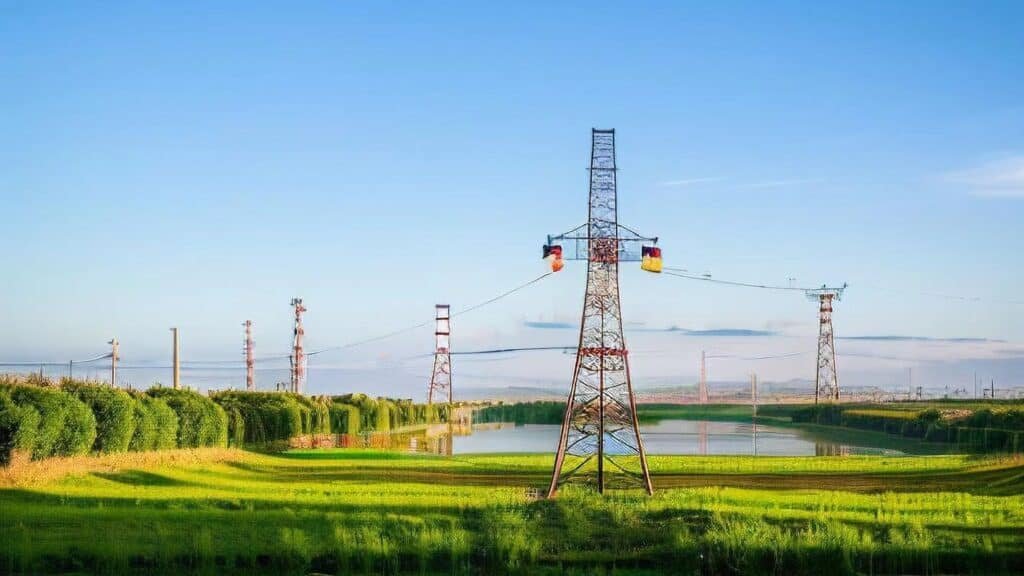
Transformers are foundational to modern electrical systems. While they come in various shapes and sizes, their main function remains consistent and essential: changing voltage levels to ensure safe, efficient power delivery. This article outlines the primary role of transformers in power systems and why they’re indispensable to everyday life.
What Is the Primary Function of a Transformer?

Electricity is generated in one place and used in another—and between those two points, the voltage level must be precisely controlled to ensure safe, efficient delivery. That’s exactly what a transformer does. Found everywhere from power stations to poles and even inside electronics, the transformer is one of the most foundational components in any electrical system. Without it, high losses, safety risks, and voltage incompatibility would make modern power systems impossible to operate efficiently. This article explains the primary function of a transformer, and how this fundamental role enables nearly every part of the global electric grid to work.
The primary function of a transformer is to change the voltage level of alternating current (AC) electricity, either by increasing (stepping up) or decreasing (stepping down) the voltage between circuits, while maintaining the same frequency and power. This is achieved through electromagnetic induction between primary and secondary windings, enabling efficient transmission and safe distribution of electricity.
Transformers do not create power—they make power usable, safe, and deliverable over vast distances and varying load requirements.
The primary function of a transformer is to increase or decrease AC voltage levels for efficient power transmission and distribution.True
Transformers allow high-voltage transmission for reduced losses and low-voltage delivery for safe end-user access.
Transformers generate electricity in power stations.False
Transformers do not generate electricity; they only transfer electrical energy between circuits at different voltage levels.
How Transformers Work (Fundamental Principle)
| Component | Function |
|---|---|
| Primary Winding | Receives incoming AC voltage |
| Magnetic Core | Channels magnetic flux between windings (via electromagnetic induction) |
| Secondary Winding | Outputs voltage at a different level (based on turn ratio) |
| Turns Ratio | Ratio of primary to secondary turns determines output voltage |
Transformers operate only with AC power, as their operation depends on a changing magnetic field.
Two Main Functions: Step-Up and Step-Down
| Type of Function | Voltage Change | Application |
|---|---|---|
| Step-Up Transformer | Increases voltage (e.g., 11 kV → 132 kV) | Used at power plants before transmission |
| Step-Down Transformer | Decreases voltage (e.g., 11 kV → 230 V) | Used at distribution points before homes |
The core job is voltage conversion—not power conversion or frequency change.
Why Voltage Transformation Is Essential
| Without Transformer | With Transformer |
|---|---|
| Power can't travel far—too much energy lost as heat | High-voltage step-up reduces losses (I²R losses minimized) |
| Appliances receive too much or too little voltage | Step-down transformers deliver precise, safe voltages |
| Unsafe for humans to interact with electricity | Output is regulated to safe 230 V or 120 V for usage |
| Equipment incompatibility across systems | Transformers match voltage levels across regions and devices |
Transformers make electricity portable, usable, and consistent, regardless of source or destination.
Real-World Application Examples
| Application | Transformer Function | Voltage Conversion |
|---|---|---|
| Power Plant (Generation) | Step-up to transmission voltage | 11–25 kV → 132–765 kV |
| Substation (Grid Node) | Step-down to local distribution | 132 kV → 33 kV or 11 kV |
| Residential Area | Step-down to home voltage | 11 kV → 400/230 V |
| Industrial Facility | Step-down to machine-compatible levels | 33/11 kV → 415 V or 690 V |
| Laptop Charger | Step-down and rectification | 230 V AC → 19 V DC |
Every time voltage needs to change to suit the application, a transformer makes it happen.
Secondary (Supportive) Functions of Transformers
| Support Function | Explanation |
|---|---|
| Electrical Isolation | No physical electrical connection between input and output circuits |
| Voltage Regulation | Maintains steady voltage under varying loads |
| Phase Shifting (Advanced) | Aligns voltage phases for load balancing and fault control |
| Impedance Matching | Optimizes current flow between differing electrical systems |
Though not their primary function, these attributes enhance safety and system reliability.
Transformer Efficiency and Safety
| Efficiency | Up to 98–99% for large power transformers |
|---|---|
| Cooling Systems | Oil, air, or water cooling to prevent overheating |
| Protection Devices | Includes fuses, surge arresters, and circuit breakers |
| Insulation Class | Rated for voltage and temperature stability |
Proper transformer design ensures minimal loss, long life, and safe operation.
Why Is Voltage Transformation Necessary in Power Systems?
When you flip a switch and the lights come on, you rarely think about the journey electricity takes to get to your home. Yet that journey would be impossible without voltage transformation. In fact, voltage levels must be changed multiple times across the grid to ensure electricity is transmitted efficiently, distributed safely, and used reliably. At the heart of this process are transformers, which enable these voltage adjustments. In this article, we explain why voltage transformation is necessary in power systems, and how it supports grid stability, energy efficiency, and user safety.
Voltage transformation is necessary in power systems to reduce energy losses during long-distance transmission, match voltage levels to end-user requirements, and enable safe and efficient operation of electrical equipment. By stepping voltage up for transmission and down for distribution and consumption, the power grid can deliver electricity reliably and economically across vast regions.
Transformers make these voltage changes possible—and without them, the modern power grid would be neither practical nor safe.
Voltage transformation is necessary to reduce losses during power transmission and provide safe voltage levels for end users.True
High-voltage transmission reduces current and I²R losses, while voltage is stepped down to safe levels for consumer appliances.
Power can be transmitted efficiently at low voltage levels without any transformation.False
Transmitting power at low voltages requires very high current, which causes significant energy losses and impractically large conductors.
Why High Voltage Is Needed for Power Transmission
| Parameter | Low Voltage Transmission | High Voltage Transmission |
|---|---|---|
| Current (I) | Very high for same power | Much lower for same power |
| Losses (I²R) | Extremely high | Significantly reduced |
| Conductor Size | Very large and costly | Smaller, more economical |
| Transmission Distance | Limited (10–20 km) | Long-range (100–1,000+ km) |
| System Efficiency | Poor | High (up to 95–98%) |
Power loss is directly proportional to the square of the current. By increasing voltage, current decreases, and therefore line losses drop drastically.
Standard Voltage Levels in Power Systems
| System Segment | Typical Voltage | Transformer Action |
|---|---|---|
| Generation | 11–25 kV | Stepped up to 132–765 kV |
| High-Voltage Transmission | 132–765 kV | Transports power across regions |
| Primary Substation | 220–132 kV | Stepped down to 33–66 kV |
| Distribution Grid | 11–33 kV | Delivered to local zones |
| End-Use (Homes) | 230/400 V | Final step-down at transformer |
Voltage is transformed multiple times to balance loss minimization with usability and safety.
Technical Benefits of Voltage Transformation
| Function | Enabled by Voltage Transformation |
|---|---|
| Loss Reduction | Step-up transformers reduce current → lower transmission losses |
| Voltage Regulation | Allows fine control of power flow and system stability |
| Grid Flexibility | Supports interconnection of regional grids with different voltages |
| Safe Consumption | Step-down transformers deliver voltage safe for human use |
| Standardization | Enables use of standardized appliances and protective devices |
Voltage transformation is not optional—it’s a structural requirement for a functioning grid.
Real-World Example: Power Flow with Voltage Levels
| Stage | Voltage | Transformer Used | Purpose |
|---|---|---|---|
| Power Plant | 11–25 kV | Step-up transformer | Efficient long-distance transmission |
| Transmission Line | 220–400 kV | — | Moves power with minimal losses |
| Grid Substation | 220 → 66 kV | Step-down transformer | Transitions from transmission to distribution |
| Distribution Substation | 66 → 11 kV | Step-down transformer | Supplies local feeders |
| Local Transformer | 11 → 0.4 kV | Distribution transformer | Final supply to homes and buildings |
Each transformation stage is precisely engineered for efficiency, reliability, and compatibility.
What Happens Without Voltage Transformation?
| Without Voltage Transformation | Problem Resulting |
|---|---|
| No step-up after generation | Massive I²R losses during transmission |
| No step-down before consumption | High voltage would destroy appliances and endanger lives |
| No isolation between systems | Faults could cascade across entire regions |
| No ability to match grid segments | Limited regional interconnectivity and poor load management |
| No standard output for consumers | Incompatibility between supply and appliances |
The grid becomes inefficient, unsafe, and unreliable without voltage transformation.
Additional Benefits of Voltage Transformation
| Benefit | Description |
|---|---|
| Smaller Infrastructure | High voltage = smaller conductors, reduced tower size |
| Scalable Grid Design | Multiple voltage levels allow hierarchical system architecture |
| Protection Coordination | Easier relay and fuse coordination across voltage zones |
| Energy Market Integration | Supports trading across regions with different grid standards |
| Renewable Integration | Matches inverter output to grid voltage |
Voltage transformation enables the modern, multi-layered power ecosystem to function cohesively.
Where Do Transformers Fit in the Power Grid?
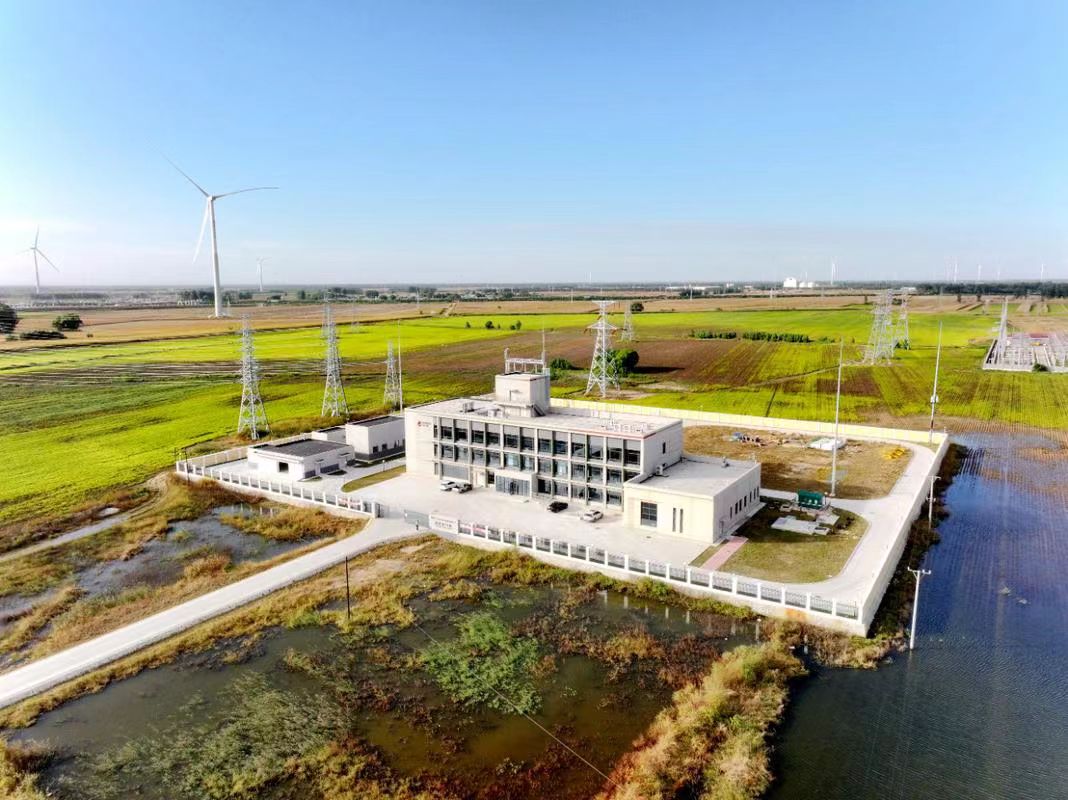
Transformers are the backbone of the power grid, silently ensuring that electricity flows efficiently from where it's generated to where it's consumed. Without them, the grid couldn’t exist in its current form—power would be lost over distance, and voltages would be unsafe or incompatible with end-user needs. Transformers are placed strategically at multiple points throughout the electrical network to step voltage up or down, enabling a system that is scalable, efficient, and safe. In this article, we will map out exactly where transformers fit in the power grid, the types used at each stage, and the role they play in shaping modern electricity delivery.
Transformers fit into the power grid at every critical stage—from generation to high-voltage transmission, then to medium-voltage distribution, and finally to low-voltage end-user delivery. Step-up transformers are used at power plants, step-down transformers at substations, and distribution transformers near homes and businesses to ensure electricity is transmitted efficiently and safely across all voltage levels.
Their location and function are carefully planned to balance technical efficiency, protection, and end-user safety.
Transformers are installed at key points in the power grid to step voltage up for transmission and step it down for distribution and consumption.True
They allow efficient long-distance power delivery and safe usage by matching voltage levels to system requirements.
Transformers are only used at power stations and have no role in the wider power grid.False
Transformers are essential throughout the grid, including substations, distribution systems, and end-user supply points.
Overview: Power Grid Structure and Transformer Placement
| Power Grid Stage | Voltage Level | Transformer Function | Transformer Type |
|---|---|---|---|
| Generation Plant | 11–25 kV | Step up for transmission | Step-up power transformer |
| Transmission Substation | 132–765 kV | Voltage interconnection and regulation | Power or autotransformer |
| Primary Substation | 220–132 kV → 66/33 kV | Step-down for local distribution zones | Step-down power transformer |
| Distribution Substation | 33/22/11 kV | Further step-down for feeders | Distribution class transformer |
| Local Distribution Point | 11 kV → 400/230 V | Final step-down for homes and businesses | Pole- or pad-mounted transformer |
| Inside Buildings/Devices | 230 V → 5–24 V | Device-level voltage control | Low-voltage / electronic transformer |
This hierarchical placement supports progressive voltage reduction, load balancing, and system protection.
1. Generation Level – Step-Up Transformers
| Function | Increase voltage to minimize transmission losses |
|---|---|
| Input Voltage | 11–25 kV (generator output) |
| Output Voltage | 132–765 kV for transmission lines |
| Transformer Type | Large, oil-immersed, high-capacity power transformers |
| Installed Where | In generator switchyards at power plants |
Why it matters: High voltage = low current = reduced I²R loss across long distances.
2. Transmission Level – Interconnecting Substation Transformers
| Function | Connect and regulate multiple high-voltage transmission networks |
|---|---|
| Voltage Range | 132–765 kV → 220 kV or 400 kV interchanges |
| Transformer Type | Power transformer or autotransformer |
| Installed Where | At major regional or national grid nodes |
Why it matters: Supports load sharing, regional balancing, and fault isolation in the bulk power network.
3. Primary Distribution – Step-Down Transformers at Substations
| Function | Reduce transmission voltage to feeder-compatible distribution levels |
|---|---|
| Voltage Input | 132 kV, 66 kV, or 33 kV |
| Voltage Output | 33 kV, 22 kV, or 11 kV |
| Transformer Type | Step-down or distribution-grade power transformer |
| Installed Where | In urban and rural distribution substations |
Why it matters: Powers regional distribution feeders while maintaining voltage consistency.
4. Secondary Distribution – Local Distribution Transformers
| Function | Final voltage step-down to 400/230 V for user consumption |
|---|---|
| Voltage Input | 11 kV or 6.6 kV |
| Voltage Output | 400 V (3-phase) or 230 V (single-phase) |
| Transformer Type | Pole-mounted or pad-mounted transformer |
| Installed Where | On poles, ground enclosures, or building basements |
Why it matters: Ensures every home or business receives safe, usable voltage.
5. Within Buildings – Low-Voltage Transformers for Electronics
| Function | Adapt grid voltage to device-specific low DC or AC levels |
|---|---|
| Voltage Input | 230 V or 120 V (grid standard) |
| Voltage Output | 5 V, 9 V, 12 V, 24 V (varies by device) |
| Transformer Type | PCB-mounted, wall adapters, SMPS transformers |
| Installed Where | Inside chargers, LED drivers, routers, thermostats, appliances |
Why it matters: Protects devices and users from overvoltage and electric shock.
Visual Map: Transformer Placement Across the Grid
| Grid Stage | Transformer Role | Voltage Change |
|---|---|---|
| Generation Plant | Step-up for transmission | 11–25 kV → 132–765 kV |
| Transmission Substation | Interconnection/control | 132–765 kV (variable taps) |
| Primary Substation | Step-down for feeders | 220–132 kV → 66/33/11 kV |
| Distribution Transformer | Final step to homes | 11 kV → 400/230 V |
| Consumer Electronics | Safe device operation | 230 V → 5–24 V |
This structured voltage layering enables safe and efficient energy delivery across entire nations.
How Do Transformers Improve Electrical Safety?
Every day, we use electrical devices without fearing shocks, fires, or dangerous voltage spikes—and much of this safety is thanks to transformers. While transformers are commonly known for changing voltage levels, their role in electrical safety is just as critical. From isolating circuits to preventing faults from spreading, transformers act as silent protectors at every stage of the electrical system. This article explores how transformers improve electrical safety, highlighting the built-in mechanisms and strategic grid roles that protect people, equipment, and infrastructure.
Transformers improve electrical safety by providing galvanic isolation between circuits, enabling voltage regulation, supporting grounding systems, and protecting against faults, surges, and overcurrents. These safety functions help prevent electric shocks, fires, equipment damage, and system-wide outages in both residential and industrial settings.
From homes to hospitals, transformers are essential to keeping electricity controlled, clean, and contained.
Transformers improve electrical safety by isolating circuits, regulating voltage, and enabling protection devices to function effectively.True
They act as barriers against electrical faults, stabilize voltage for safe operation, and ensure grounding and protection systems work as designed.
Transformers only adjust voltage and do not influence safety.False
Transformers play an active role in enhancing safety by preventing shocks, isolating faults, and supporting overcurrent protection.
Key Safety Functions Performed by Transformers
| Safety Function | How Transformers Support It |
|---|---|
| Electrical Isolation | Breaks direct electrical connection between circuits |
| Surge Protection | Limits voltage spikes by buffering high transient voltages |
| Ground Fault Management | Enables return path for fault currents via neutral-to-ground bonding |
| Voltage Regulation | Prevents overvoltage or undervoltage from damaging appliances |
| Short-Circuit Containment | Limits fault current propagation and supports selective tripping |
These functions combine to prevent accidents and improve system reliability at all voltage levels.
How Isolation Enhances Safety
| Type of Isolation | Safety Benefit |
|---|---|
| Galvanic Isolation | No physical connection between input and output windings—prevents shock |
| Transformer Windings | Separate circuits reduce fault transfer and minimize hazard risk |
| Isolation Transformers | Used in hospitals, labs, and sensitive electronics to prevent leakage current |
Isolation is particularly critical in wet locations, medical environments, and signal-sensitive systems.
Examples of Transformers Improving Safety in Real Settings
| Use Case | Transformer Safety Role |
|---|---|
| Residential Power Supply | Steps down voltage, prevents overvoltage, supports grounding |
| Pole-Mounted Transformer | Absorbs lightning surges via surge arresters and fuses |
| Substations | Segment grid sections to prevent cascading failures |
| Industrial Facilities | Provide clean, stable power for motors and PLCs |
| Medical Rooms (OR/ICU) | Isolation transformers prevent microshock risk to patients |
| Data Centers | Provide voltage regulation to protect servers from brownouts or surges |
Each transformer installation is designed with local safety needs in mind, from human safety to equipment protection.
Voltage Regulation and Stability for Safer Use
| Problem Without Transformer | Risk | Transformer Benefit |
|---|---|---|
| Voltage Surge | Appliance burnout, fire risk | Surge arresters and inductive damping |
| Voltage Drop (Brownout) | Data corruption, motor failure | Tap changers stabilize output |
| Fault on One Phase | Spreads across system | Transformer isolates affected phase |
| Transient Spikes | Damage to electronics | Magnetic core limits high frequencies |
Transformers act like buffers and regulators, smoothing electrical flow and limiting dangerous deviations.
Grounding and Neutral Support for Protection Devices
| Protection Element | How Transformer Helps It Function |
|---|---|
| Circuit Breakers | Trip properly only if voltage and fault current are balanced |
| RCDs/ELCBs | Detect leakage current via grounded neutral from transformer |
| Fuses | Operate correctly under controlled current rise |
| Surge Arresters | Divert spikes only if transformer-ground connection is stable |
Without proper grounding from transformers, none of these protection systems would operate as intended.
Transformer Safety Enhancements (Design-Level)
| Built-In Feature | Safety Function |
|---|---|
| Buchholz Relay | Detects internal gas/faults in oil-immersed transformers |
| Temperature Sensors (RTDs) | Prevent overheating or fire by signaling high winding temps |
| Surge Arresters | Divert overvoltages to ground path |
| Lightning Protection | Protects against atmospheric surges |
| Tap Changers | Maintain steady output voltage regardless of input fluctuations |
These components work together to ensure the transformer itself remains safe and contributes to overall grid safety.
Transformer Safety in Homes and Small Buildings
| Transformer Location | Safety Impact |
|---|---|
| Pad-Mounted or Pole-Mounted | Steps down 11 kV to 400/230 V safely |
| Inside Chargers & Devices | Reduces voltage to 5–24 V, protects users from shock |
| In LED Drivers | Provides voltage isolation and current control |
| In Smart Panels | Ensures voltage stability for modern control systems |
These everyday transformers protect families, electronics, and property from electrical faults.
Do Transformers Only Work with AC Power?
Transformers are one of the most fundamental components in any power or electronics system—but they don’t work with just any type of electricity. If you try to use a transformer with direct current (DC), it simply won’t function as intended—and may even be damaged. This is because the core working principle of a transformer depends entirely on the behavior of alternating current (AC). In this article, we explore whether transformers only work with AC power, why this is true from a physics standpoint, and what happens when transformers are exposed to DC.
Yes, transformers only work with AC (alternating current) power because their operation is based on electromagnetic induction, which requires a changing magnetic field produced by AC. DC (direct current) does not produce a varying magnetic field, so it cannot induce voltage in the secondary winding—rendering a transformer nonfunctional with DC and risking overheating.
This fundamental limitation is why transformers are a defining part of AC power systems, not DC-based networks.
Transformers only operate with alternating current because electromagnetic induction requires a changing magnetic field.True
AC current produces the necessary flux variation to induce voltage in the transformer's secondary winding.
Transformers work equally well with both AC and DC power.False
DC does not change polarity or produce magnetic flux variation, so it cannot induce voltage in a secondary winding and may cause core saturation.
Why AC Is Required for Transformer Operation
| Working Principle | Description |
|---|---|
| Electromagnetic Induction | Voltage is induced in a secondary coil by a changing magnetic field |
| AC Behavior | Alternating current creates a continuously varying magnetic field |
| DC Behavior | Direct current is constant—produces a fixed magnetic field |
| Result with AC | Induces a usable, oscillating voltage in the secondary coil |
| Result with DC | No voltage induction; core may overheat due to continuous magnetization |
Faraday’s Law states that voltage is induced in a coil only when the magnetic flux through it is changing—AC is required for this condition.
What Happens If You Apply DC to a Transformer?
| Effect | Result in Transformer |
|---|---|
| No Induced EMF | Secondary winding receives no voltage |
| Core Saturation | Magnetic core becomes fully magnetized and can’t carry more flux |
| Excessive Primary Current | No back EMF → increased current → overheating |
| Coil Damage | High current can melt insulation or windings |
| Risk of Fire | Prolonged DC exposure can lead to insulation breakdown and thermal failure |
DC essentially “locks” the transformer in one magnetic state, destroying the balance needed for efficient operation.
Comparison: AC vs. DC in Transformers
| Parameter | AC Power | DC Power |
|---|---|---|
| Magnetic Field | Varies sinusoidally | Constant |
| Voltage Induction | Yes (via changing flux) | No (no flux change) |
| Core Heating Risk | Controlled via flux cycling | Very high (due to core saturation) |
| Practical Use in Transformers | Fully functional | Not suitable or safe |
| Common Applications | Power grid, audio, electronics | Not used in standard transformers |
All utility transformers, distribution transformers, and audio transformers are designed exclusively for AC power.
Exceptions: Transformers and DC in Modern Systems
| Scenario | Explanation |
|---|---|
| DC-DC Converters | Use high-frequency switching to simulate AC via PWM or oscillators |
| Inverter Transformers | Convert DC to AC internally before using transformer |
| Flyback & Forward Converters | High-frequency “pulsed” DC enables transformer-like action in SMPS |
| Pulse Transformers | Work with square-wave or digital pulses—not steady DC |
These systems don’t apply raw DC to transformers—they use switching circuits to recreate AC behavior first.
Applications Where Transformers Are Exclusively AC-Based
| System | Transformer Role | Power Type |
|---|---|---|
| Power Transmission Grid | Step-up and step-down transformers | AC only |
| Residential Distribution | Pole- and pad-mounted transformers | AC only |
| Audio Equipment | Isolation and impedance matching transformers | AC signal-based |
| Power Adapters | Mains AC converted to low-voltage DC via transformer | AC input only |
| Industrial Motor Drives | Power transformers for 3-phase motors | AC systems |
These systems are designed around the behavior of alternating current, which makes transformer use both effective and necessary.
What Would Happen Without Transformers in the Grid?
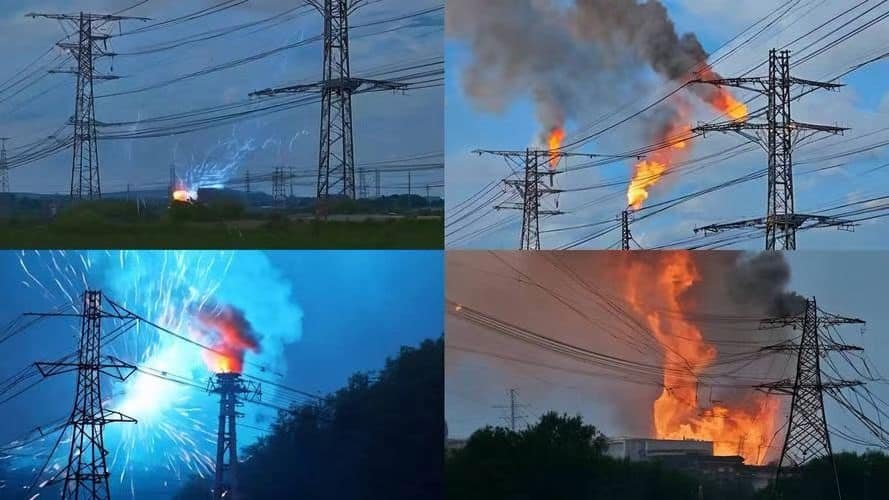
Imagine trying to run the entire power grid without transformers—no voltage step-up at the power station, no step-down at substations, and no final voltage matching near homes. The result would be a catastrophic failure of modern power infrastructure. Electricity could neither be transmitted efficiently nor used safely. Massive energy losses, widespread equipment damage, and severe safety hazards would make reliable electrification impossible. In this article, we examine what would happen if transformers didn’t exist in the grid, and why they are absolutely essential to every stage of power delivery.
Without transformers, the power grid would suffer from extreme energy losses, dangerous voltage levels, and system-wide incompatibility between generation, transmission, and consumption. Electricity could not be transported over long distances or safely supplied to homes, resulting in inefficient energy use, electrical hazards, and the breakdown of modern civilization's power infrastructure.
Transformers aren’t optional—they are the very foundation of scalable, safe, and efficient electricity delivery.
Without transformers, electricity cannot be transmitted over long distances efficiently or safely delivered to homes.True
Transformers reduce current through high-voltage transmission and enable safe voltage levels for appliances, preventing energy loss and electrical hazards.
The power grid could operate normally without using transformers.False
Transformers are essential to voltage control, energy efficiency, and user safety—without them, modern grid operation is not possible.
Why the Grid Depends on Transformers
| Function | Transformer’s Role | Effect If Missing |
|---|---|---|
| Voltage Transformation | Step-up and step-down between grid segments | No voltage matching → unsafe or unusable power |
| Energy Efficiency | Reduces current to lower I²R transmission losses | Severe line losses, overheating, inefficient power flow |
| Load Matching | Matches generation output to user demand levels | Generator and load mismatch → instability and failure |
| Electrical Isolation | Separates grid faults and protects end-user circuits | Faults propagate rapidly → high-risk outages |
| Grid Scalability | Enables hierarchical voltage systems for national coverage | Small-scale networks only → no large-scale electrification |
Without transformers, even basic electrification of towns would be limited to nearby generation stations.
Catastrophic Outcomes Without Transformers
| Consequence | Impact on Power System and Society |
|---|---|
| No Long-Distance Transmission | Energy must be produced close to use → decentralized & inefficient |
| Exploding Energy Losses | High current = extreme I²R losses → overheated lines, voltage drop |
| Unsafe Voltage to Homes | 11–25 kV generator output delivered directly → electrocution risk |
| Appliance Incompatibility | Household devices can’t run on high voltage → universal failure |
| No Grid Integration | No way to connect wind, solar, hydro sources across distances |
| Power Outage Cascades | Faults spread without isolation points → grid-wide blackouts |
Without transformers, the concept of a national or international power grid simply would not work.
Quantifying the Problem: Energy Loss Without Voltage Transformation
| Transmission Voltage | Current Required (100 MW load) | Estimated Line Loss (%) |
|---|---|---|
| 11 kV (No transformer) | \~5,200 A | \~20–30% |
| 220 kV (With transformer) | \~450 A | <3% |
High current increases resistance loss (I²R) exponentially. Voltage step-up reduces current, enabling long-distance power flow without overheating.
Specific Examples of Grid Collapse Without Transformers
| Scenario | Consequence Without Transformers |
|---|---|
| Remote Renewable Energy Farms | No step-up = can't transmit solar/wind power to cities |
| City Substations | No step-down = utility power fries residential equipment |
| Hospitals and Data Centers | No regulated voltage = constant brownouts, life support failure |
| Industrial Plants | No voltage matching = motors, PLCs, drives burn out |
| Emergency Grids | No isolation = single fault takes out entire block |
Transformers are not just voltage tools—they’re guardians of system structure, safety, and survivability.
Real-World Thought Experiment: A City Without Transformers
| System Component | If Transformers Were Removed |
|---|---|
| Power Station Output | 11 kV AC → Sent directly to grid lines |
| Overhead Lines | Carry dangerously high current → constant overheating |
| Homes & Apartments | Receive 11,000 volts at sockets → instant appliance failure |
| Protection Systems | RCDs and breakers overloaded and non-functional |
| Power Losses | Up to 50% or more across urban distances |
The result: complete system collapse, widespread power outages, and irreparable infrastructure damage.
Safety Risks Without Transformers
| Hazard | Without Transformers |
|---|---|
| Shock and Electrocution | No step-down = grid voltages reach user terminals |
| Fire Risk | Overvoltage and current overloads → sparks, heat, combustion |
| Grid Fault Propagation | No isolation = faults travel across entire network |
| Unregulated Load Voltage | Sudden surges destroy sensitive electronics |
| System Instability | No coordinated voltage zones → random overloads and blackouts |
Transformers protect not just the power grid, but also human life, infrastructure, and property.
Conclusion
The main use of a transformer is to adjust voltage levels—either stepping it up for efficient transmission or stepping it down for safe distribution and use. Without transformers, the entire structure of the electrical power system would fail to operate effectively, making them essential to everything from power plants to home outlets.
FAQ
Q1: What is the main use of a transformer?
A1: The main use of a transformer is to change (transform) voltage levels in an electrical circuit. It either increases voltage (step-up) for long-distance transmission or decreases voltage (step-down) for safe use in homes, businesses, and industrial equipment.
Q2: Why is voltage transformation important?
A2: Voltage transformation is crucial because:
High voltage reduces energy loss during transmission
Low voltage is safer and compatible for end-user devices
Transformers enable efficient power delivery from generation to consumption.
Q3: How do transformers support the power grid?
A3: Transformers are key components of the power grid. They:
Step up voltage at power plants for transmission
Step down voltage at substations for distribution
Ensure power is delivered efficiently and safely across vast distances
Q4: What types of transformers serve this main function?
A4: The main types are:
Power transformers – used in transmission networks
Distribution transformers – used for final voltage delivery to users
Auto-transformers – for efficient voltage conversion with shared windings
Q5: Can transformers be used for more than voltage conversion?
A5: Yes. While voltage conversion is their main use, some transformers also:
Provide electrical isolation
Improve safety and noise filtering
Measure voltage and current in monitoring systems (instrument transformers)
References
"Main Function and Importance of Transformers" – https://www.transformertech.com/main-use-of-transformer – Transformer Tech
"Why Voltage Conversion is Essential in Power Systems" – https://www.powermag.com/transformer-purpose-explained – Power Magazine
"Transformer Basics and Applications" – https://www.electrical4u.com/what-is-the-main-use-of-a-transformer – Electrical4U
"Role of Transformers in the Power Grid" – https://www.researchgate.net/transformer-grid-function – ResearchGate
"Transformer Operation and Voltage Transformation" – https://www.sciencedirect.com/transformer-voltage-conversion – ScienceDirect
"Energy Central: Transformer Function in Electricity Supply" – https://www.energycentral.com/c/ee/transformer-main-use – Energy Central
"Smart Grid News: Voltage Management with Transformers" – https://www.smartgridnews.com/voltage-role-of-transformers – Smart Grid News
"PowerGrid: Transformer Applications in Power Systems" – https://www.powergrid.com/transformer-uses-explained – PowerGrid