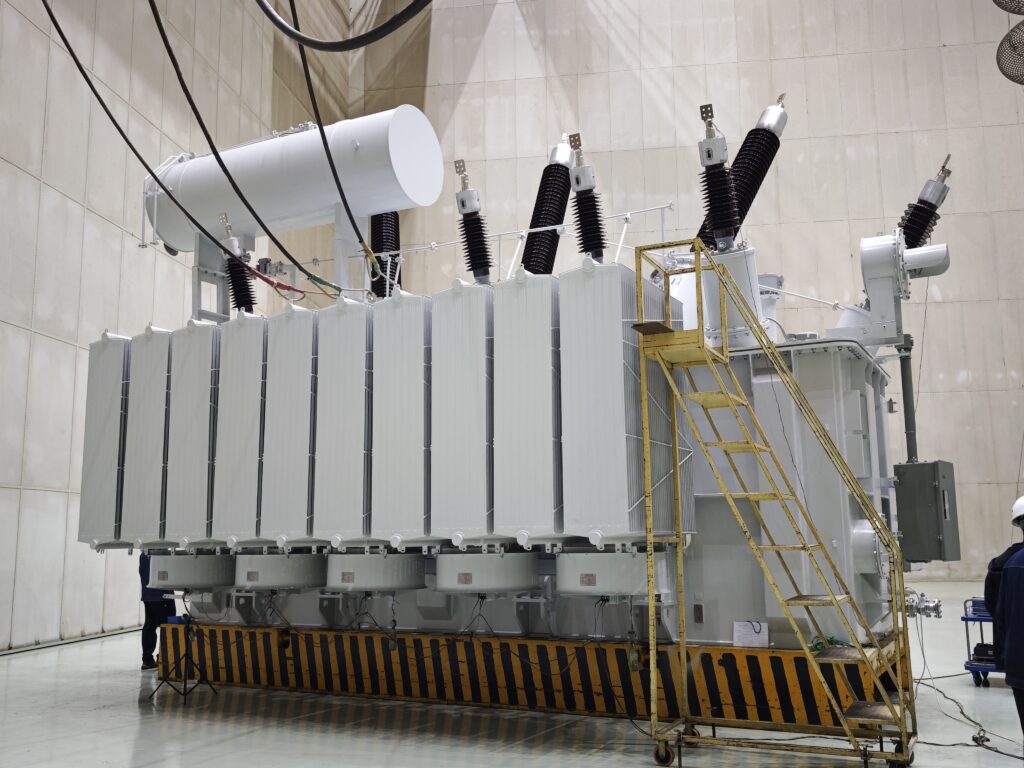
Noise generated by transformers can affect nearby environments, especially in residential areas, hospitals, and commercial installations. During transformer design, manufacturers incorporate specific techniques and materials to reduce noise levels while maintaining efficiency and reliability.
What Are the Main Sources of Transformer Noise?
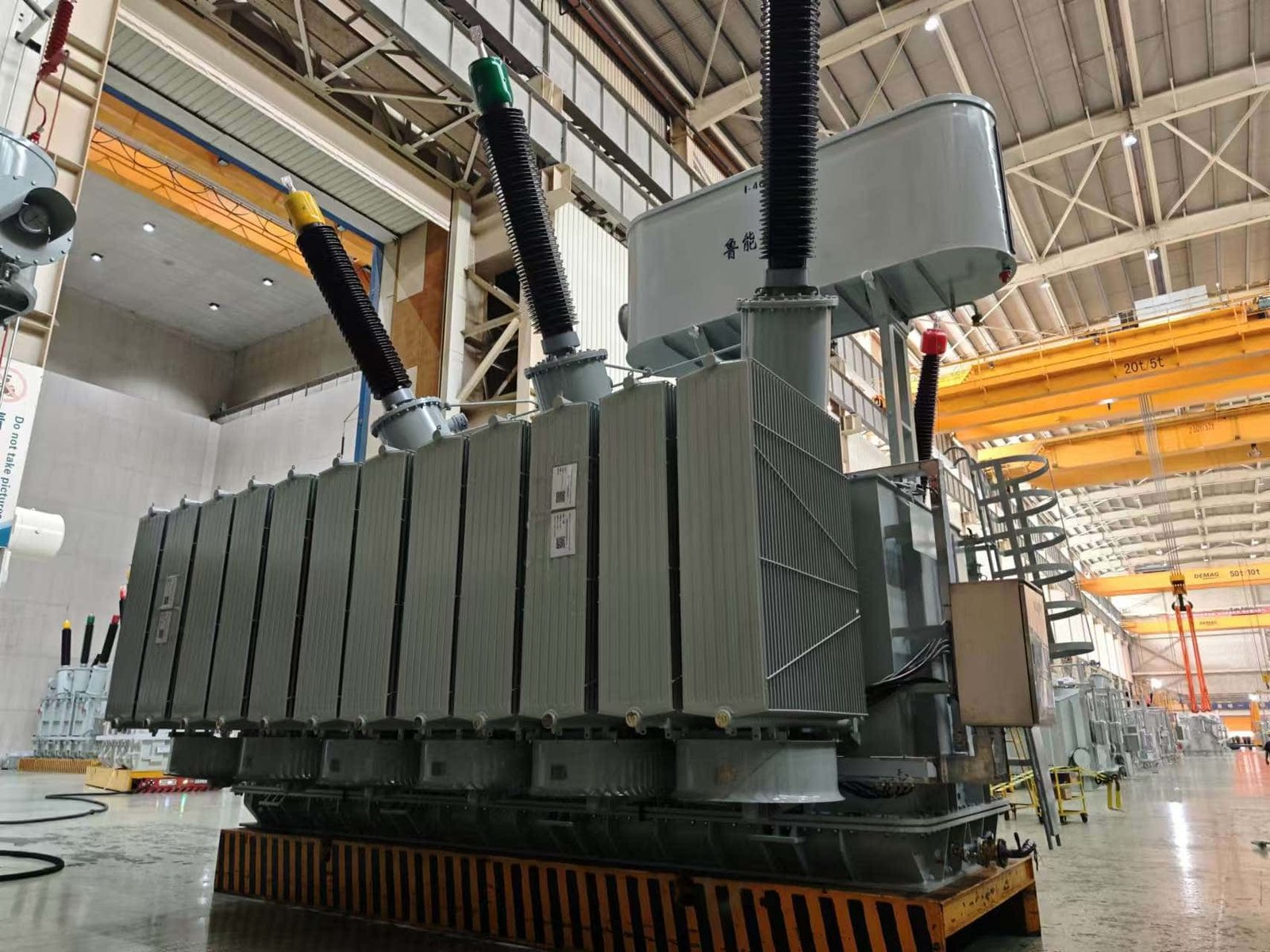
Transformer noise is often one of the most critical concerns in residential, urban, and industrial installations. Excessive noise not only causes discomfort but can also indicate mechanical stress, design flaws, or operational inefficiencies. Left unchecked, noise sources may contribute to vibration, insulation degradation, or even mechanical failures. Understanding where transformer noise comes from helps engineers and operators adopt the right design, installation, and mitigation strategies.
The main sources of transformer noise are core vibration caused by magnetostriction, winding vibration due to electromagnetic forces, cooling system noise from fans and pumps, and oil or air movement. Core noise is usually dominant and occurs at twice the supply frequency (100 Hz or 120 Hz), while load-dependent winding vibration and auxiliary cooling equipment contribute additional sound. Proper design, damping, and enclosures help reduce transformer noise levels.
Noise is not just a nuisance—it’s a diagnostic signal of transformer performance and must be considered in both design and site installation.
Transformer noise comes only from cooling fans.False
Noise primarily originates from the core (magnetostriction) and windings (electromagnetic forces), with cooling fans as secondary contributors.
Core vibration due to magnetostriction is the dominant source of transformer noise.True
When the magnetic flux varies, the core laminations expand and contract, creating audible vibration.
Main Noise Sources in Transformers
| Noise Source | Cause | Characteristics | Dependency |
|---|---|---|---|
| Core Vibration | Magnetostriction in silicon steel laminations | Steady hum, 100/120 Hz fundamental | Constant, independent of load |
| Winding Vibration | Electromagnetic forces between currents in windings | Load-dependent noise, fluctuating | Varies with load |
| Cooling Fans & Pumps | Mechanical operation of auxiliary systems | Broadband noise, mechanical hum | Present in AF/OF cooling systems |
| Oil/Air Circulation | Movement of cooling medium | Low-frequency noise | Higher in large oil-immersed units |
| Loose Components | Bolts, clamps, or shielding vibrating | Irregular rattling or metallic noise | Depends on installation/maintenance |
Key Explanations
Core Vibration (Magnetostriction)
- When the magnetic flux alternates, silicon steel laminations expand and contract.
- This produces the well-known transformer hum at double the supply frequency.
- Poor lamination stacking or loose clamping increases this noise.
Winding Vibration
- Current through windings creates Lorentz forces, especially under heavy load or fault currents.
- These forces make windings vibrate against supports.
- The noise grows as load increases.
Cooling Systems
- Fans (AF cooling) and oil pumps (OF cooling) produce mechanical noise.
- High-power transformers often require auxiliary cooling, adding to total noise level.
Oil/Air Movement
- In oil-immersed units, turbulence from circulating oil can add low-frequency sound.
- In dry-type units, forced airflow has similar effects.
Loose or Improper Installation
- Vibrations from core and windings may excite tank walls, busbars, or enclosures.
- Improper foundations amplify resonance and increase noise propagation.
📊 Typical Transformer Noise Levels (IEC 60076-10 Reference)
| Transformer Rating | Noise Level (dB(A)) | Source Dominance |
|---|---|---|
| 1000 kVA Dry-Type | 55–60 | Core vibration |
| 5000 kVA Oil-Immersed | 65–70 | Core + cooling |
| 100 MVA Power Transformer | 75–85 | Core + winding + pumps/fans |
Practical Example
A 10 MVA oil-immersed transformer in a residential substation exceeded noise limits due to loose core clamping bolts, amplifying the magnetostriction hum. After tightening and adding vibration dampers to the tank base, noise was reduced by 6–8 dB(A), bringing it within IEC limits.
How Does Core Design Influence Noise Reduction in Transformers?

Transformer noise is a critical concern, especially in urban substations, hospitals, and residential areas, where strict noise regulations apply. The core is the primary source of transformer noise, mainly due to magnetostriction, where silicon steel laminations expand and contract under alternating magnetic flux. If the core is poorly designed, these vibrations propagate into the tank and surrounding structures, causing the familiar “hum” at twice the supply frequency (100/120 Hz). Optimized core design is therefore one of the most effective strategies for noise reduction and transformer longevity.
Core design influences transformer noise reduction by controlling vibration levels through material selection, lamination thickness, joint configuration, clamping methods, and magnetic flux distribution. High-grade silicon steel with step-lap joints, thin laminations, and tight clamping minimizes magnetostriction effects and prevents resonance, thereby reducing the dominant hum. Sound-dampening core design not only ensures compliance with noise limits but also improves reliability by reducing mechanical stress.
In essence, a well-engineered transformer core is the foundation of a quiet and efficient transformer.
Core design has little effect on transformer noise.False
Core design strongly determines vibration amplitude, magnetic flux density, and therefore the dominant source of transformer hum.
Step-lap joints in transformer cores help reduce noise by minimizing flux leakage and mechanical vibration.True
Step-lap joints distribute flux evenly, reduce localized saturation, and decrease vibration compared to butt-lap joints.
Core Design Factors Affecting Noise
| Design Aspect | Impact on Noise | Engineering Approach |
|---|---|---|
| Material Quality | Poor-quality steel increases magnetostriction | Use grain-oriented silicon steel (GO) |
| Lamination Thickness | Thicker laminations amplify eddy currents & vibration | Thin laminations (0.23–0.27 mm) reduce losses & hum |
| Core Joint Type | Butt-lap joints create flux gaps & vibration | Step-lap joints ensure smoother flux path |
| Flux Density | Higher density = stronger magnetostriction = louder noise | Design for optimal flux (~1.5–1.7 T instead of >1.8 T) |
| Clamping & Support | Loose clamping increases rattling & resonance | Precision clamping with dampers and resin bonding |
| Tank Coupling | Rigid tank-core connection amplifies sound | Flexible mounts, damping pads reduce propagation |
Techniques for Core Noise Reduction
High-Grade Silicon Steel Laminations
- Grain-oriented silicon steel reduces core loss and magnetostriction.
- Lower losses → lower vibration and noise.
Thin Laminations
- Thinner laminations limit eddy current loops.
- Reduces heat and minimizes mechanical expansion.
Step-Lap Core Construction
- Replaces traditional butt joints with staggered overlaps.
- Provides smoother magnetic flux flow and lowers acoustic noise by 3–5 dB(A).
Optimal Flux Density Design
- Avoiding over-saturation reduces magnetostrictive strain.
- Designers often limit flux density slightly below maximum to balance efficiency and noise.
Improved Clamping & Damping
- Resin bonding, elastic pads, and vibration absorbers prevent core “rattle.”
- Helps suppress harmonic noise components.
Tank and Structural Isolation
- Acoustic decoupling between core and transformer tank prevents structural amplification.
- Noise can be further reduced with sound-insulated enclosures for sensitive environments.
📊 Example: Noise Reduction by Core Design Choices
| Design Choice | Noise Reduction Achieved |
|---|---|
| Thin laminations (0.23 mm vs 0.30 mm) | 2–3 dB(A) |
| Step-lap joints vs. butt-lap | 3–5 dB(A) |
| Resin-bonded core vs. unclamped | 4–6 dB(A) |
| Flexible core-tank mounting | 2–3 dB(A) |
Example Case
A 20 MVA distribution transformer installed in a city center initially produced noise at 73 dB(A), exceeding the local 65 dB(A) limit. By redesigning the core with 0.23 mm GO silicon steel laminations, step-lap joints, and improved damping, noise was reduced to 67 dB(A), bringing the unit into compliance without external sound barriers.
Role of High-Quality Materials in Reducing Transformer Vibrations
The choice and quality of materials directly determine how much a transformer vibrates and how much acoustic noise it emits. Since most vibrations stem from magnetostriction in the core and electromagnetic forces in the windings, better materials reduce mechanical strain, suppress resonance, and improve long-term stability.
How High-Quality Materials Reduce Vibrations
Grain-Oriented Silicon Steel (GO Steel)
- Why it matters: Magnetostriction (expansion/contraction of core steel under flux) is the primary cause of transformer hum.
- Effect: GO steel aligns magnetic domains in one direction, minimizing flux resistance and vibration.
- Result: Reduces both core losses and mechanical hum by several decibels compared to ordinary steel.
Thin Laminations (0.23–0.27 mm vs. 0.30+ mm)
- Why it matters: Thinner laminations reduce eddy currents, which cause localized heating and expansion.
- Effect: Less mechanical strain = fewer vibration hotspots.
- Result: Quieter and cooler operation, especially under heavy load.
High-Quality Copper (or Aluminum) Windings
- Why it matters: Load current creates strong electromagnetic forces in the windings, which can cause winding vibration and buzzing.
- Effect: High-conductivity copper with robust insulation resists deformation.
- Result: Lower vibration under short-circuit forces, improved mechanical stability.
Vacuum Pressure Impregnation (VPI) Resins
- Why it matters: In dry-type transformers, winding vibration can be amplified if insulation is weak.
- Effect: VPI resin locks the windings, damping vibrations and preventing “coil rattle.”
- Result: Significant noise reduction and improved durability.
Damping Pads and Insulating Mounts
- Why it matters: Vibrations can transfer from the core and windings into the tank or enclosure.
- Effect: High-quality elastomers or composite pads absorb vibration energy.
- Result: Prevents structure-borne noise and extends mechanical life.
Example: Noise Reduction from Material Choice
| Material Upgrade | Impact on Vibration/Noise |
|---|---|
| GO silicon steel vs. non-oriented | 5–7 dB(A) noise reduction |
| 0.23 mm laminations vs. 0.30 mm | 2–3 dB(A) reduction |
| Resin-impregnated windings vs. unimpregnated | 4–6 dB(A) reduction |
| High-quality damping pads | 2–3 dB(A) reduction |
Real-World Case
A 15 MVA dry-type transformer for a hospital installation initially exceeded noise regulations due to winding vibration. By switching to:
- VPI-impregnated copper windings,
- GO silicon steel laminations, and
- resilient vibration-damping pads,
the unit’s noise dropped from 70 dB(A) to 63 dB(A), meeting hospital acoustic standards without external soundproofing.
How Is Noise Minimized Through Winding and Structural Design?
Transformer noise is not only influenced by the magnetic core, but also by the design of windings and structural components. Vibrations generated by electromagnetic forces inside the windings can amplify hum and mechanical noise, while poor structural design can transmit and even magnify these vibrations through the tank, enclosure, or foundation. Therefore, careful winding configuration and structural optimization are critical to minimizing acoustic output and ensuring long-term reliability.
Winding Design for Noise Reduction
Tight Mechanical Clamping
- Windings experience radial and axial forces under load and short-circuit conditions.
- If windings are loosely clamped, they may vibrate and produce audible humming.
- High-quality clamping structures with uniform pressure minimize movement and noise.
Vacuum Pressure Impregnation (VPI) and Resin Encapsulation
- Particularly in dry-type transformers, resin impregnation locks windings in place.
- Prevents coil “rattle” and dampens vibration energy.
- Adds mechanical robustness, which is crucial for environments with frequent load fluctuations.
Optimized Conductor Arrangement
- Interleaved or continuously transposed conductors (CTC) balance electromagnetic forces.
- Minimizes circulating currents and uneven stresses that contribute to vibration.
- Results in both lower electrical losses and reduced mechanical noise.
Low-Vibration Materials
- Using high-conductivity copper or well-insulated aluminum reduces hot spots.
- Better insulation materials prevent micro-movements under load, reducing acoustic output.
Structural Design for Noise Reduction
Rigid Tank and Core Frame
- A stiffened tank with optimized bracing prevents resonance amplification.
- Structural rigidity stops vibration energy from being transmitted as airborne noise.
Vibration Damping Pads
- Placed between the core, windings, and tank base.
- Absorb mechanical oscillations and reduce structure-borne sound.
Sound-Insulated Enclosures
- Noise barriers and special enclosure materials can attenuate residual hum.
- Particularly valuable in urban or hospital applications with strict noise requirements.
Strategic Bracing and Support Placement
- Poor bracing can cause local hotspots of vibration, leading to rattling or buzzing.
- Well-distributed structural supports distribute mechanical stress evenly.
Data Example: Noise Reduction by Design Improvements
| Design Feature | Noise Reduction Impact |
|---|---|
| Resin-impregnated windings vs. dry coils | 4–6 dB(A) reduction |
| Optimized CTC winding vs. simple winding | 2–3 dB(A) reduction |
| Tank stiffening with damping pads | 3–4 dB(A) reduction |
| Acoustic enclosure for sensitive sites | 5–10 dB(A) reduction |
What Cooling and Enclosure Methods Help Lower Noise?

Transformer noise arises mainly from core magnetostriction and winding vibrations, but the way heat is managed and how the unit is enclosed can significantly influence the final sound level experienced outside the transformer. Cooling systems and enclosure choices play an important role not only in thermal performance but also in acoustic noise suppression.
Cooling Methods That Reduce Noise
ONAN (Oil Natural Air Natural)
- Cooling relies on natural oil circulation and natural air convection.
- Since no pumps or fans are used, it is the quietest cooling method.
- Suitable for distribution transformers and areas where silence is critical.
ONAF (Oil Natural Air Forced)
- Uses oil’s natural circulation but adds air fans to increase heat dissipation.
- Fans produce mechanical noise and airflow noise, typically increasing the sound level by 5–10 dB(A).
- Noise can be mitigated by low-noise fans, variable speed controls, and acoustic barriers.
AF (Air Forced) in Dry-Type Transformers
- Fans blow air across windings and core to improve cooling.
- Adds noticeable noise, though generally less than oil-immersed fan-cooled units.
- Installing sound-absorbing ducts and soft-mounted fans can reduce the effect.
Water Cooling (OW or OWF systems)
- Used in high-power transformers where water removes heat via coolers.
- Pumps generate some noise, but since fans are absent, it can be quieter than ONAF in many cases.
Enclosure Methods That Reduce Noise
Acoustic Enclosures or Barriers
- Special housings lined with sound-absorbing materials reduce airborne noise.
- Can lower sound levels by 5–15 dB(A), depending on thickness and material.
Tank Stiffening and Damping
- Reinforcing the tank walls reduces vibration transmission.
- Adding damping pads at structural connection points prevents resonance amplification.
Sound-Insulated Ventilation Louvers
- In air-cooled transformers, ventilation is necessary but can leak noise.
- Acoustic louvers maintain airflow while absorbing and redirecting sound waves.
Strategic Installation of Noise Barriers
- Placing concrete walls, barriers, or soundproof fences around outdoor transformers shields sensitive areas.
- Often used in residential or hospital environments.
Example: Cooling and Enclosure Noise Impact
| Method | Typical Noise Contribution | Noise Reduction Options |
|---|---|---|
| ONAN (oil natural air natural) | Baseline, quietest | N/A |
| ONAF (fans) | +5–10 dB(A) | Low-noise fans, acoustic screens |
| AF (air forced, dry type) | +3–7 dB(A) | Duct silencers, resilient mounts |
| OW (oil-water) | +2–5 dB(A) | Pump isolation, muffled piping |
| Acoustic enclosure | Reduces 5–15 dB(A) | Sound-absorbing linings |
How Do Standards and Testing Ensure Acceptable Noise Levels?
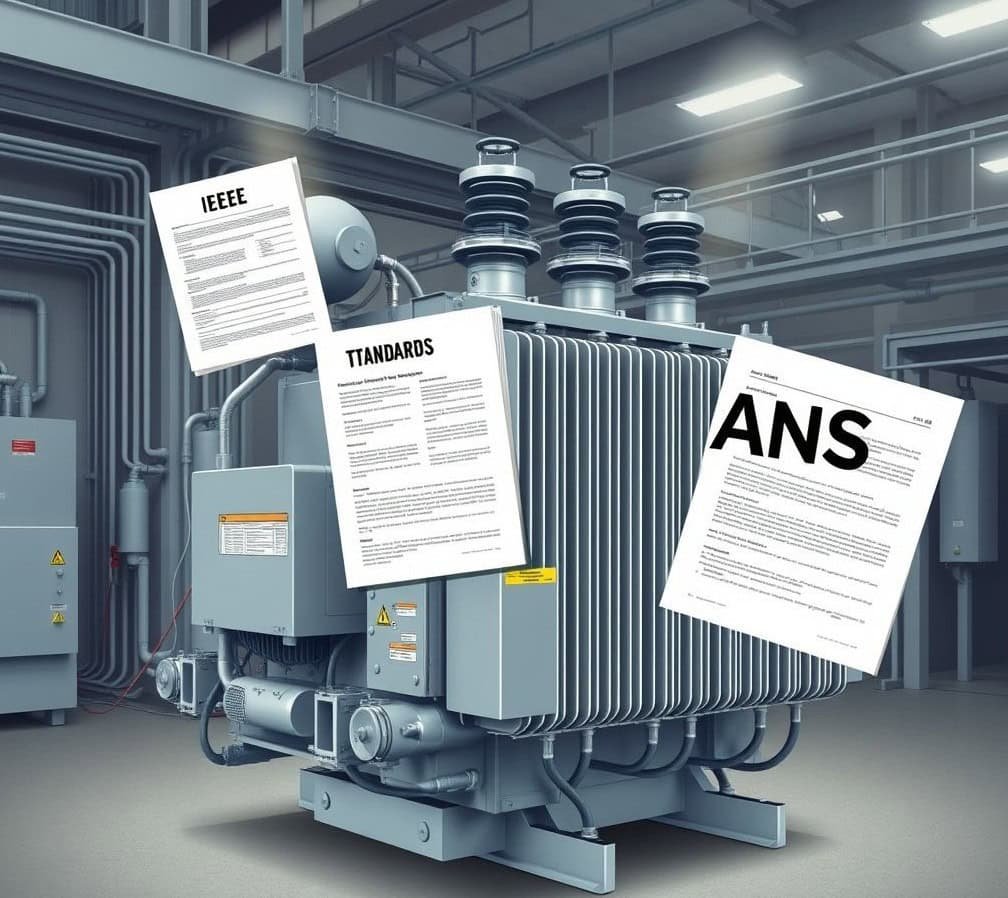
Transformer noise is a critical parameter, especially in urban, residential, hospital, and commercial installations, where regulatory authorities impose strict acoustic limits. To control this, international standards and testing procedures define how transformer noise should be measured, reported, and guaranteed. This ensures that manufacturers deliver units that comply with environmental and contractual requirements.
Relevant Standards for Transformer Noise
IEC 60076-10 (International Electrotechnical Commission)
- Global reference for transformer acoustic noise.
- Defines measurement methods, test conditions, and sound power levels.
- Ensures consistency across manufacturers and countries.
IEEE C57.12.90 (Institute of Electrical and Electronics Engineers)
- Standard used primarily in North America.
- Provides procedures for sound level testing, including acceptable tolerances.
ANSI C57.12.91
- Specifies noise test protocols for liquid-immersed transformers.
- Often referenced in U.S. utility and industrial contracts.
ISO 3744 / ISO 3746 (Acoustics Standards)
- General methods for measuring sound power levels in industrial equipment.
- Often applied alongside transformer-specific standards to validate results.
How Testing Ensures Compliance
Standardized Measurement Conditions
- Transformers are tested in a controlled environment (low background noise, defined measurement distances).
- Microphones are placed at specific points around the transformer to capture an accurate noise profile.
Defined Acceptance Levels
- Standards prescribe maximum A-weighted sound levels (dB(A)) based on transformer size, voltage, and cooling method.
- Example: A 100 MVA ONAF-cooled transformer may have a guaranteed maximum of ~80 dB(A).
Factory Acceptance Testing (FAT)
- Noise tests are part of the factory test program before shipment.
- Ensures the transformer meets contractual specifications and noise guarantees.
On-Site Verification
- In sensitive installations, field tests confirm that background noise, installation environment, and enclosure design still achieve compliance.
Example of Noise Limits by Standard
| Transformer Rating | Cooling Method | Max. Sound Level (Typical per IEC 60076-10) |
|---|---|---|
| ≤ 5 MVA | ONAN (oil natural) | ~55–60 dB(A) |
| 10–50 MVA | ONAF (oil forced) | ~65–75 dB(A) |
| ≥ 100 MVA | ONAF/OW (fan or water cooled) | ~75–85 dB(A) |
(Exact values depend on design and contractual agreements.)
Why This Matters
- Legal compliance: Utilities and industries must comply with environmental noise regulations.
- Community relations: Lower noise reduces complaints in residential or hospital zones.
- Reliability indicator: Excess noise can signal design weaknesses or mechanical looseness, so testing also verifies build quality.
Conclusion
Transformer noise is primarily caused by magnetostriction in the core and mechanical vibrations in windings and structures. By optimizing core design, using high-grade materials, reinforcing mechanical stability, and applying proper cooling and enclosure systems, manufacturers can significantly reduce noise. Compliance with international noise standards further ensures transformers meet environmental and community requirements.
FAQ
Q1: What causes noise in transformers?
Transformer noise mainly comes from:
Magnetostriction in the core – Core laminations expand and contract under alternating magnetic flux, producing the characteristic “hum.”
Vibrations in windings and tank walls due to electromagnetic forces.
Cooling systems (fans and pumps) in large units.
Q2: How do designers reduce core noise in transformers?
Using high-grade silicon steel laminations or amorphous metal to minimize magnetostriction.
Step-lap core construction to reduce flux leakage and vibration.
Tight clamping and bolting of the core to limit movement.
Applying resin bonding and varnish coating for damping.
Q3: How is winding noise reduced in transformer design?
Proper clamping of windings to minimize movement.
Using resin-encapsulated windings in dry-type transformers.
Designing symmetrical winding layouts to balance forces and reduce vibration.
Q4: What role does the enclosure play in reducing transformer noise?
Acoustic enclosures absorb and block noise radiation.
Damping materials inside the tank or casing reduce vibration transmission.
Strategic ventilation design prevents excessive fan noise.
Q5: What additional methods are used for noise reduction in transformers?
Installing low-noise cooling fans with vibration isolation mounts.
Locating transformers in soundproofed rooms or underground vaults.
Flexible mounting pads between transformer and foundation to absorb vibration.
Designing transformers to comply with IEC 60076-10 noise level standards.
References
IEC 60076-10 – Transformer Sound Level Standards: https://webstore.iec.ch
IEEE C57 – Transformer Noise and Vibration Guidelines: https://ieeexplore.ieee.org
Electrical4U – Transformer Noise and Its Reduction: https://www.electrical4u.com
EEP – How to Reduce Transformer Noise: https://electrical-engineering-portal.com
National Grid – Transformer Noise Control Measures: https://www.nationalgrid.com