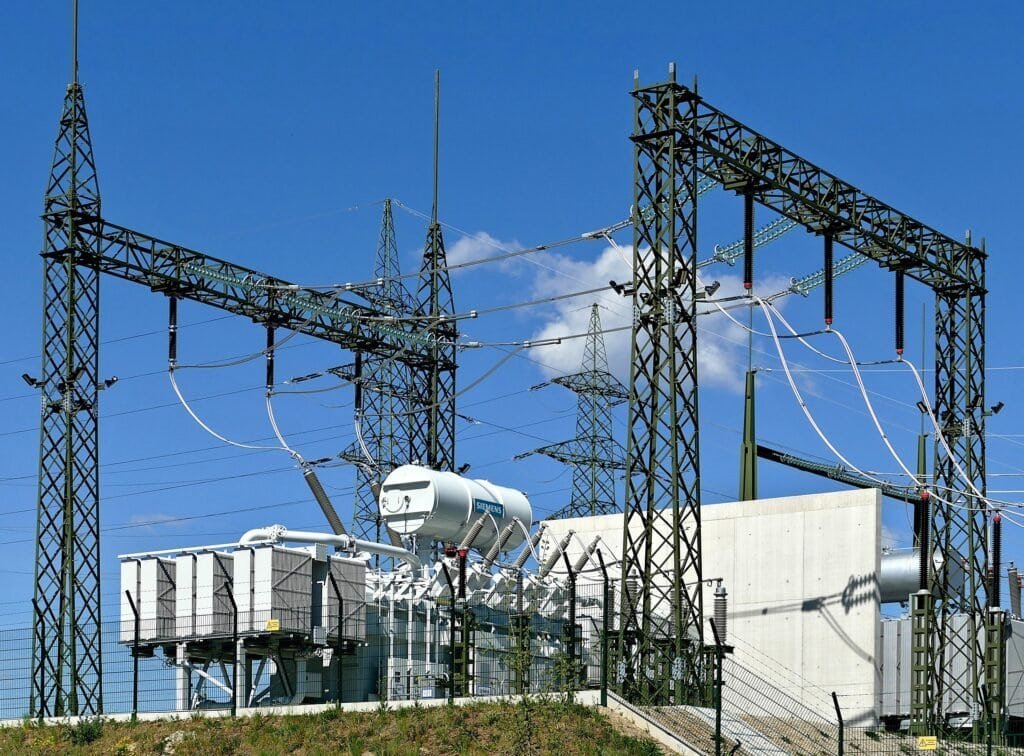
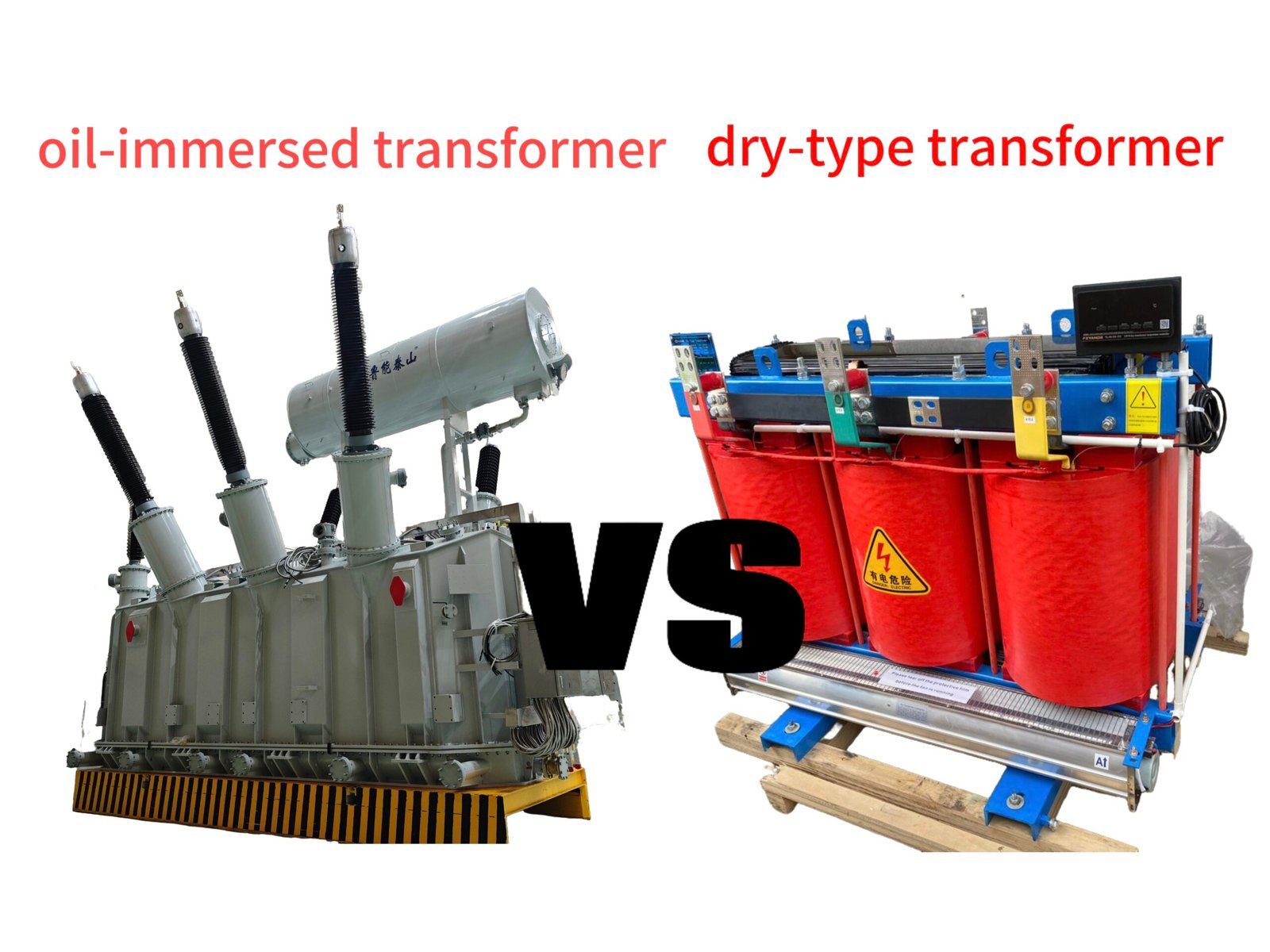
Choosing between an oil-immersed and dry-type transformer is an important decision that affects equipment safety, operating efficiency, installation costs, maintenance requirements, and service life. Selecting an unsuitable transformer can create challenges such as increased fire risk, inadequate cooling, excessive maintenance expenses, or poor performance under actual operating conditions. To avoid these problems, buyers need to understand how both transformer types differ and which environments they are designed for.
To choose between an oil-immersed and dry-type transformer, evaluate installation location, fire-safety requirements, rated capacity, operating environment, cooling performance, maintenance needs, and total lifecycle cost. Oil-immersed transformers are generally suitable for outdoor substations, utility networks, and high-capacity applications requiring effective heat dissipation. Dry-type transformers are often preferred for indoor installations, commercial buildings, hospitals, and other locations where avoiding insulating liquid and reducing liquid-related fire or leakage risks are important. The best option depends on the project's technical requirements, applicable safety standards, and operating conditions.
Although both transformer types perform voltage conversion through electromagnetic induction, their insulation systems, cooling methods, installation requirements, and maintenance practices differ significantly. The following guide explains the key differences and provides a practical framework for selecting the right transformer for your application.
What Are the Main Differences Between Oil-Immersed and Dry-Type Transformers?
Choosing between an oil-immersed transformer and a dry-type transformer can significantly affect a project's installation cost, operating efficiency, fire-safety arrangements, maintenance workload, and long-term reliability. Selecting the wrong type may lead to unnecessary ventilation or fire-protection expenses, unsuitable installation conditions, excessive operating temperatures, or higher lifecycle costs. Understanding how the two transformer designs differ helps engineers, contractors, and equipment buyers select a solution that matches the electrical load, installation environment, and project requirements.
The main difference between oil-immersed and dry-type transformers is their insulation and cooling medium. An oil-immersed transformer uses insulating liquid to provide electrical insulation and transfer heat from the windings and core to its cooling system. A dry-type transformer uses air or another suitable gaseous environment, together with solid insulation materials such as epoxy resin or insulation paper, to provide insulation and dissipate heat. Oil-immersed transformers are commonly selected for outdoor substations, utility networks, and high-capacity applications, while dry-type transformers are frequently used in commercial buildings, indoor substations, hospitals, and locations where liquid containment or fire-safety considerations influence equipment selection.
Although both transformer types perform the same fundamental function of transferring electrical energy through electromagnetic induction, their construction, thermal performance, installation requirements, and maintenance needs are different. The best choice depends on more than the purchase price or rated capacity. This guide explains the technical differences and provides practical selection criteria for real-world projects.
1. What Is an Oil-Immersed Transformer?
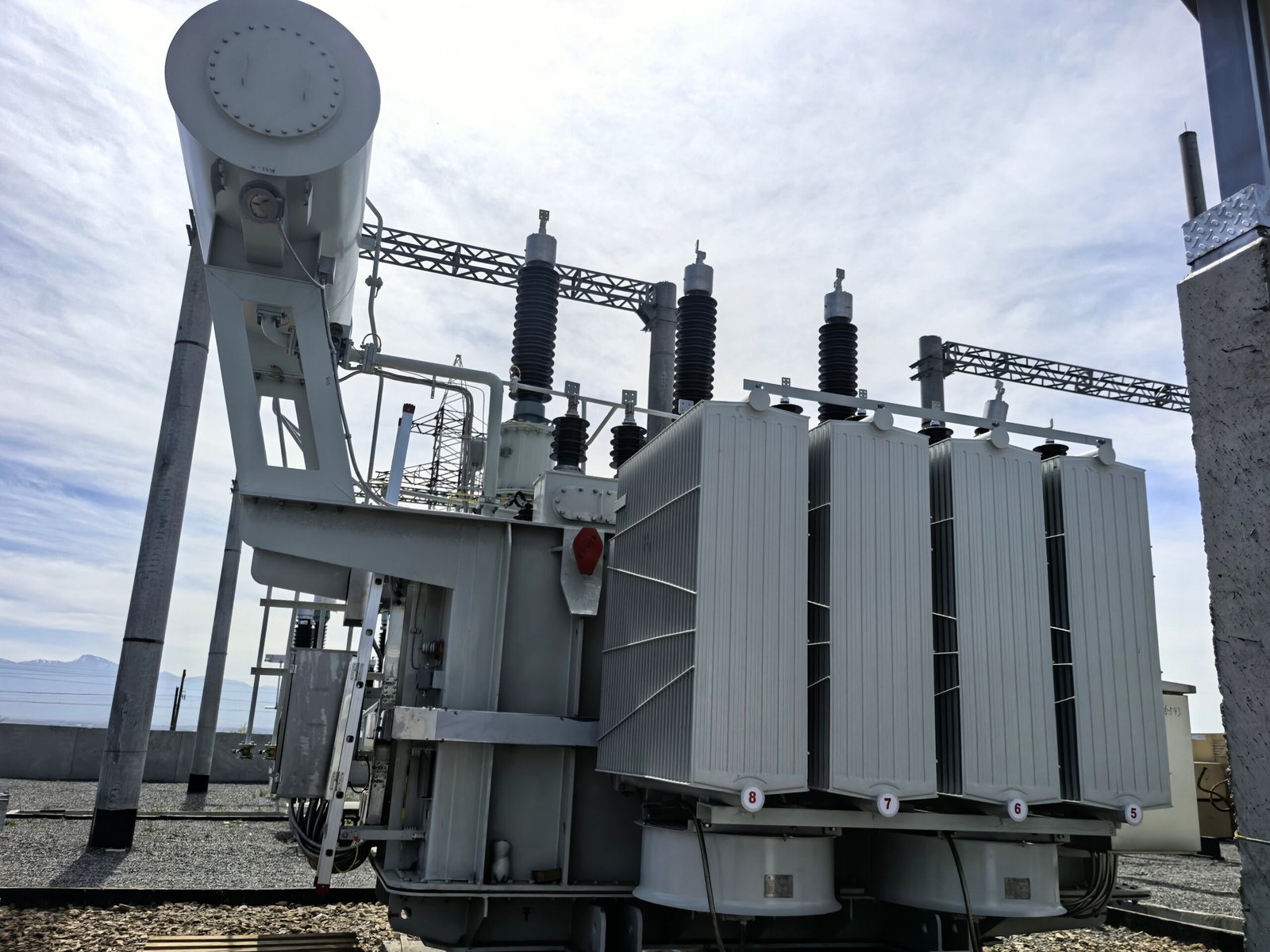
An oil-immersed transformer is an electrical transformer whose core and windings are installed inside a tank filled with insulating liquid. The liquid serves two important purposes: it provides electrical insulation between energized components and transfers heat generated during transformer operation to the cooling surfaces or heat exchangers.
Mineral insulating oil is widely used, although alternative liquids such as natural or synthetic ester fluids are available. The appropriate liquid depends on the required dielectric performance, fire-safety objectives, environmental considerations, operating temperature, and applicable specifications.
Main components
Typical components of an oil-immersed transformer include:
- Core and windings: The magnetic core provides the path for magnetic flux, while the primary and secondary windings transfer electrical energy.
- Transformer tank: An enclosed structure containing the active part and insulating liquid.
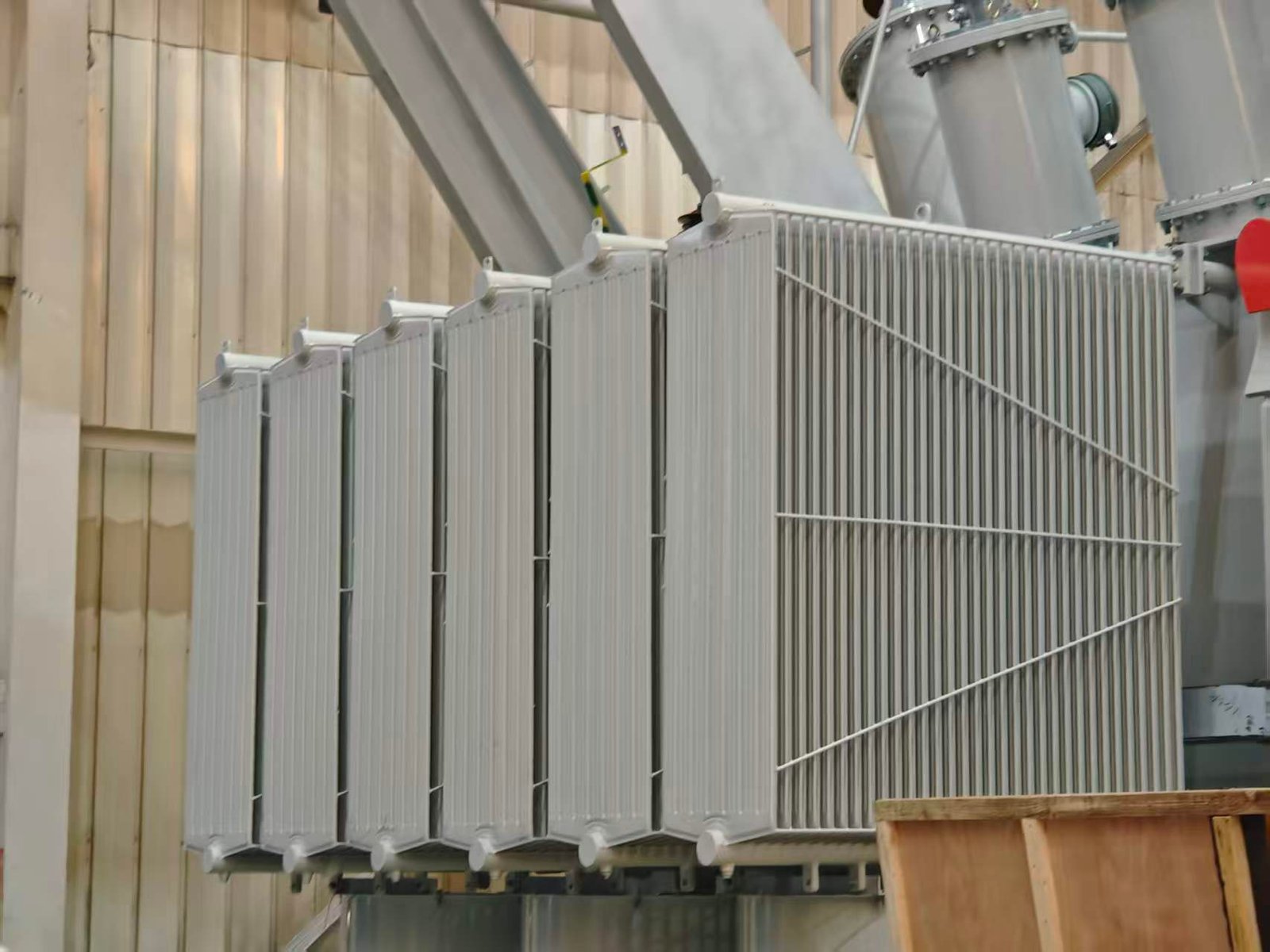
- Radiators or cooling surfaces: Transfer heat from the liquid to the surrounding environment.
- Bushings: Provide insulated electrical connections between internal windings and external circuits.
- Conservator, where applicable: Accommodates changes in liquid volume caused by temperature variations.
- Protection and monitoring devices: Depending on the design, these may include temperature indicators, pressure-relief devices, oil-level indicators, and gas-actuated protection.
Not every oil-immersed transformer uses a conservator or the same protection accessories. Hermetically sealed designs, for example, have different arrangements.
How does oil cooling work?
During operation, electrical losses generate heat in the core and windings. The insulating liquid absorbs this heat and circulates through natural convection or a forced-circulation system. Heat is then transferred through the tank or radiators to the surrounding air or another cooling medium.
Common cooling designations include:
| Cooling designation | Meaning | Typical arrangement |
|---|---|---|
| ONAN | Oil Natural Air Natural | Natural liquid circulation and natural air cooling |
| ONAF | Oil Natural Air Forced | Natural liquid circulation with forced-air cooling |
| OFAF | Oil Forced Air Forced | Pumped liquid circulation and forced-air cooling |
| OFWF | Oil Forced Water Forced | Pumped liquid circulation with a water-cooled heat exchanger |
The selected cooling arrangement affects the transformer's thermal capability, auxiliary power requirements, maintenance needs, and installation infrastructure. A transformer should only be operated at a higher cooling-stage rating when that rating is explicitly specified and supported by the manufacturer.
2. What Is a Dry-Type Transformer?
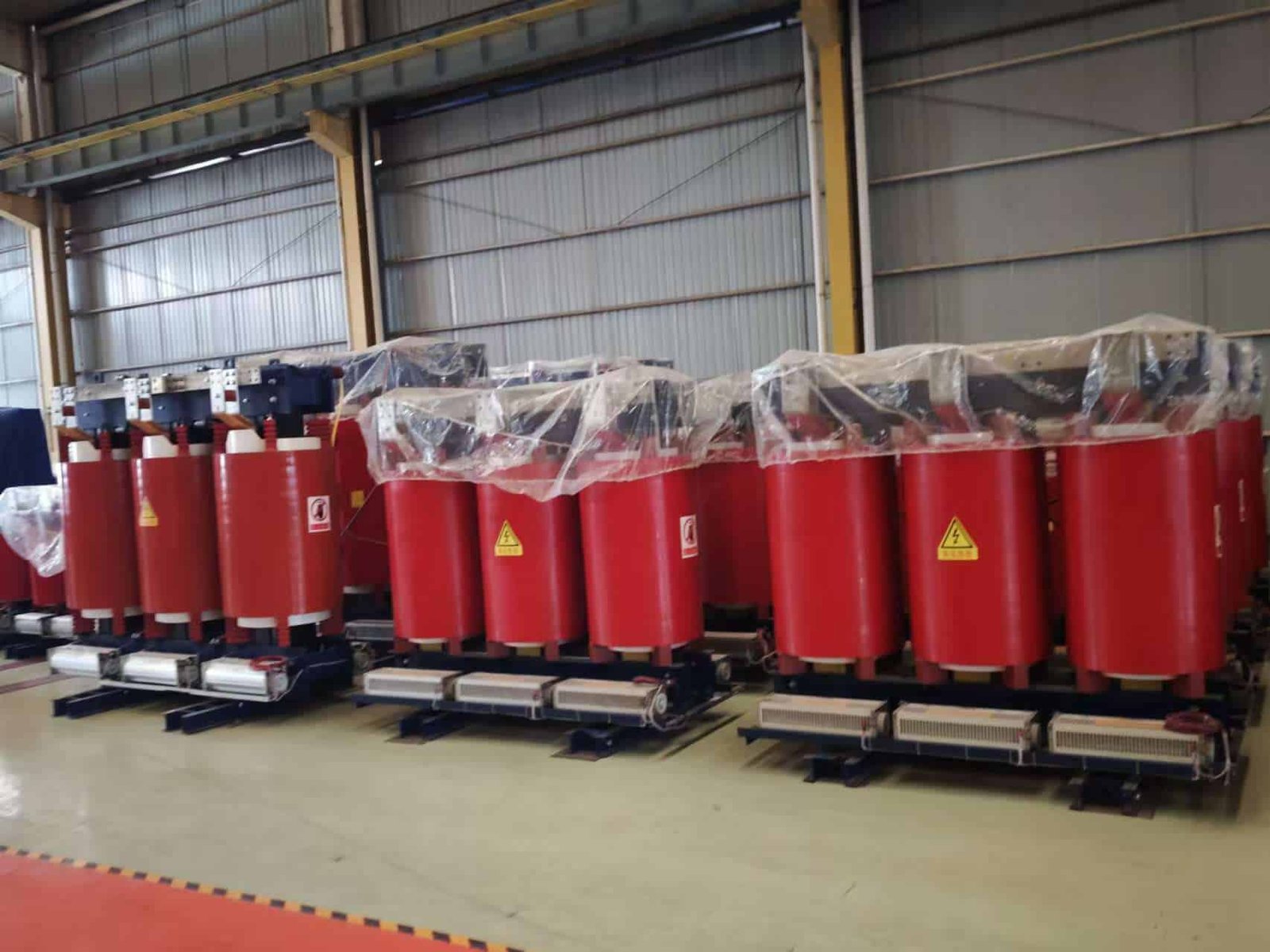
A dry-type transformer uses air or another suitable gaseous environment rather than insulating liquid as its primary cooling medium. Its windings are insulated using solid materials, which may include insulation paper, resin systems, glass-fiber materials, and other electrically suitable compounds.
Dry-type transformers are commonly installed indoors because they do not require a tank filled with insulating oil. They are frequently found in commercial buildings, industrial facilities, hospitals, data centers, renewable-energy installations, and other applications where indoor installation or liquid-management requirements influence the design.
Common dry-type transformer designs
Cast-resin transformers
\
\
Cast-resin transformers use resin to encapsulate or insulate the windings. This construction provides a solid insulation system and protects the encapsulated winding sections against many forms of environmental exposure. Actual resistance to moisture, dust, pollution, and chemical contamination depends on the design and protection enclosure.
Open-wound or VPI dry-type transformers
\
\
Vacuum pressure impregnation (VPI) uses vacuum and pressure processes to impregnate winding insulation with varnish or resin. The resulting insulation structure is designed to improve mechanical integrity and electrical insulation. Its suitability depends on the required environmental protection and the manufacturer's specifications.
How does dry-type cooling work?
In a naturally cooled dry-type transformer, heat moves from the windings and core into the surrounding air through convection and radiation. In forced-air designs, fans increase airflow across the transformer surfaces and cooling passages.
Common designations include:
| Designation | Meaning | Cooling arrangement |
|---|---|---|
| AN | Air Natural | Natural air circulation |
| AF | Air Forced | Forced-air circulation using fans |
Forced-air cooling may allow a specifically designed transformer to operate at a higher rated capacity under defined conditions. However, adding external fans does not automatically increase the transformer's permissible rating.
3. Oil-Immersed vs. Dry-Type Transformers: Main Differences
The following table summarizes the most important differences buyers should evaluate before selecting a transformer.
| Comparison factor | Oil-immersed transformer | Dry-type transformer |
|---|---|---|
| Insulation medium | Insulating liquid and solid insulation | Solid insulation and gaseous environment |
| Cooling medium | Insulating liquid transfers heat | Air or another suitable gas |
| Heat transfer | Liquid circulation to tank, radiators, or heat exchangers | Convection and airflow across core and windings |
| Fire considerations | Liquid flammability and fire protection must be evaluated | No insulating oil, but combustible materials and electrical fire risks remain |
| Installation | Common outdoors and in dedicated transformer areas | Common indoors and in commercial or industrial buildings |
| Environmental concerns | Liquid leakage, containment, and disposal requirements | Dust, moisture, pollution, and ventilation requirements |
| Maintenance | Includes liquid condition and leakage inspections where applicable | Includes cleaning, insulation condition, connections, and ventilation |
| Cooling options | ONAN, ONAF, OFAF, OFWF, depending on design | AN and AF, depending on design |
| Noise | Depends on core, tank, cooling equipment, and installation | Depends on core, enclosure, airflow, and installation |
| Initial cost | Often competitive in many utility and outdoor applications | Can be higher in some comparable ratings and configurations |
| Space requirements | Requires consideration of tank, radiators, access, and containment | Requires consideration of enclosure, ventilation, and clearances |
| Typical applications | Utility substations, outdoor networks, industrial substations | Buildings, indoor substations, commercial facilities, and selected industrial applications |
These are general engineering tendencies, not universal rules. A modern liquid-filled transformer and a modern dry-type transformer can have significantly different performance depending on their design, rating, insulation system, and operating environment.
4. What Are the Differences in Cooling Performance and Efficiency?
Cooling performance is one of the most important technical considerations when comparing oil-immersed and dry-type transformers. Transformer losses generate heat, and excessive winding temperature can accelerate insulation aging and reduce equipment service life.
Oil-immersed transformers use liquid circulation to transfer heat from the internal active part to external cooling surfaces. This arrangement can provide effective heat removal, particularly in medium- and high-capacity transformer designs. Larger units can use radiators, fans, pumps, or heat exchangers to achieve their specified thermal ratings.
Dry-type transformers transfer heat through their solid insulation structures and surrounding air. Their cooling performance is influenced by ventilation openings, air passages, fan capacity, enclosure design, room temperature, and installation clearances. Poor airflow can cause localized overheating even when the transformer is operating below its nominal load.
Comparing thermal performance
| Technical factor | Oil-immersed | Dry-type |
|---|---|---|
| Heat transfer mechanism | Liquid circulation | Air or gas circulation |
| Cooling design flexibility | Natural and forced liquid systems | Natural and forced-air systems |
| Internal thermal monitoring | Liquid and winding-related temperature monitoring, depending on design | Winding temperature sensors and other specified monitoring |
| Sensitivity to ventilation | Depends on external cooling arrangement | Often strongly influenced by room airflow |
| Cooling auxiliaries | Fans and pumps where specified | Fans where specified |
| Thermal design verification | Temperature-rise and applicable liquid-related tests | Temperature-rise and applicable insulation-system tests |
Transformer efficiency should not be judged by cooling method alone. It depends on core losses, winding losses, operating load, power factor, voltage, frequency, and auxiliary consumption.
The main loss components are:
- No-load losses: Primarily associated with the magnetic core and present whenever the transformer is energized.
- Load losses: Mainly associated with winding resistance and stray losses, generally increasing with load current.
- Auxiliary losses: Energy consumed by cooling fans, pumps, controls, and other equipment.
For a fair comparison, buyers should request guaranteed no-load losses, load losses, and auxiliary power consumption under the same rating and test conditions.
5. How Do Fire Safety and Environmental Requirements Differ?
Fire safety is frequently a decisive factor when selecting a transformer for a building or industrial site.
Oil-immersed transformers contain insulating liquid, and the fire characteristics depend on the liquid type and equipment design. Mineral oil is combustible, so the installation may require measures such as liquid containment, separation distances, fire barriers, fire detection, suppression systems, or other provisions specified by local regulations and the project's fire-risk assessment.
Alternative insulating liquids, including some ester-based fluids, may offer higher fire points or other favorable environmental and safety characteristics compared with conventional mineral oil. However, their use does not eliminate the need for a proper risk assessment or compliance with applicable installation requirements.
Dry-type transformers do not contain an insulating-oil tank, which can simplify certain indoor installation arrangements. Nevertheless, they are not completely fireproof. Solid insulation, cable insulation, nearby equipment, and accumulated dust can still contribute to fire risks. Overheating, electrical faults, poor connections, and inadequate ventilation remain important hazards.
Environmental comparison
| Environmental factor | Oil-immersed transformer | Dry-type transformer |
|---|---|---|
| Liquid leakage | Possible; containment and inspection may be necessary | No insulating-liquid leakage |
| Fire-risk assessment | Must consider insulating-liquid properties and installation conditions | Must consider insulation materials, electrical faults, and surrounding combustibles |
| Moisture exposure | Depends on tank sealing, liquid condition, and insulation system | Depends on winding design, enclosure, and insulation materials |
| Dust and contamination | External cooling surfaces and accessories require protection | Windings and ventilation passages may require regular cleaning |
| End-of-life management | Liquid recovery, testing, treatment, and disposal or recycling | Materials and insulation require appropriate recycling or disposal |
For environmentally sensitive sites, the transformer specification should identify acceptable insulating-liquid types, spill-control arrangements, environmental monitoring, and end-of-life handling. For dry-type installations, the specification should address insulation materials, enclosure protection, cleaning access, and operating conditions.
6. How Do Installation and Maintenance Requirements Compare?
Installation requirements are not identical, even when two transformers have the same rated capacity.
An oil-immersed transformer generally requires a suitable foundation, adequate access for lifting and maintenance, appropriate clearances, cable connections, grounding, and any required liquid-containment or fire-protection facilities. Outdoor installations must also consider weather exposure, corrosion, cooling airflow, and access for inspection.
A dry-type transformer installed indoors requires sufficient ventilation and clearance around the enclosure. The electrical room must be designed to remove the heat released by the transformer and maintain acceptable ambient conditions. If the room is poorly ventilated, transformer temperature can rise even when the electrical load is within the rated range.
Typical maintenance activities
| Maintenance item | Oil-immersed transformer | Dry-type transformer |
|---|---|---|
| External inspection | Tank, bushings, radiators, seals, and connections | Windings, enclosure, supports, and connections |
| Insulation condition | Liquid condition and solid insulation indicators where applicable | Solid insulation condition and signs of tracking or cracking |
| Cooling system | Radiators, fans, pumps, and liquid circulation equipment | Air passages, ventilation openings, and fans |
| Leakage inspection | Important for liquid-filled designs | Not applicable to insulating oil |
| Electrical connections | Inspection and condition assessment | Inspection and condition assessment |
| Protective devices | Functional checks according to design | Functional checks according to design |
| Cleaning | Radiators, bushings, and external surfaces | Windings, cooling ducts, and enclosure |
Oil-immersed transformers may require liquid sampling and testing to evaluate moisture, dielectric strength, acidity, dissolved gases, and other relevant indicators. The specific tests depend on the liquid, transformer design, operating history, and maintenance strategy.
Dry-type transformers avoid liquid testing, but they still require systematic inspection. Dust accumulation, moisture, overheating, loose connections, and blocked ventilation passages can damage the insulation system or reduce cooling effectiveness.
Maintenance intervals should follow the manufacturer's instructions, applicable standards, site conditions, and operating history rather than a universal schedule.
7. Which Transformer Type Is Better for Different Applications?
Neither oil-immersed nor dry-type transformers are universally superior. The right choice depends on the electrical system, location, safety requirements, load profile, and total cost of ownership.
\<AsyncImageGroup query={["outdoor oil immersed transformer utility electrical substation radiators","indoor cast resin dry type transformer commercial building electrical room","industrial oil filled transformer substation installation","dry type transformer indoor data center electrical distribution room"]} aspectRatio="5:4" layout="carousel" shop_eligible={false}/>
| Application | Commonly considered option | Important selection considerations |
|---|---|---|
| Outdoor utility substation | Oil-immersed | Capacity, voltage level, cooling, weather protection, and liquid management |
| Indoor commercial building | Dry-type | Fire-risk assessment, room ventilation, space, and noise |
| Hospital or public building | Often dry-type | Building codes, continuity of supply, fire strategy, and maintenance access |
| Industrial outdoor substation | Often oil-immersed | Load profile, environmental exposure, cooling, and protection |
| Data center | Often dry-type for indoor distribution | Reliability, redundancy, thermal management, and indoor safety requirements |
| Renewable-energy substation | Either, depending on design | Site environment, capacity, grid requirements, maintenance, and lifecycle cost |
| Underground or confined installation | Project-specific | Ventilation, fire protection, access, environmental conditions, and applicable regulations |
For example, an industrial facility may use an oil-immersed transformer in its outdoor main substation and dry-type transformers closer to indoor production areas. This arrangement can combine the thermal and capacity characteristics of liquid-filled equipment with the installation advantages of dry-type equipment.
The final design should be based on the electrical network and installation conditions rather than assuming that one transformer type is always more reliable or economical.
8. How Should Buyers Compare the Total Cost of Ownership?
The purchase price is only one part of transformer cost. A transformer that is less expensive initially may require additional installation infrastructure, higher maintenance expenditure, or more energy over its operating life.
A practical cost comparison should include:
- Purchase price: Compare equivalent ratings, voltage classes, impedance, insulation levels, cooling ratings, and accessories.
- Installation cost: Include foundations, room modifications, ventilation, liquid containment, fire protection, and cable connections.
- Energy losses: Compare guaranteed no-load and load losses using the expected load profile and local electricity tariff.
- Maintenance cost: Include inspection, liquid testing where applicable, fan or pump servicing, cleaning, and replacement parts.
- Downtime risk: Consider access to spare parts, repair arrangements, maintenance intervals, and the consequences of equipment failure.
- End-of-life cost: Include liquid handling, material recovery, recycling, and disposal requirements.
A simplified annual energy-loss calculation is:
[\E_{\text{loss}}=P_0 \times 8760+P_k \times \beta^2 \times 8760]
Where:
- (E_{\text{loss}}) is annual energy loss in kWh.
- (P_0) is transformer no-load loss in kW.
- (P_k) is load loss at rated current in kW.
- (\beta) is the average load factor expressed as a fraction.
- 8760 is the number of hours in a non-leap year.
This simplified calculation assumes a constant average load factor and does not account for detailed hourly load variations, temperature corrections, or changing auxiliary consumption. A more accurate lifecycle evaluation should use an hourly or representative load profile and include cooling-system energy use.
9. What Technical Specifications Should Buyers Confirm Before Ordering?
Before purchasing either transformer type, buyers should prepare a clear technical specification and request a corresponding manufacturer proposal.
| Specification | What should be confirmed? |
|---|---|
| Rated capacity | Required kVA or MVA and future load allowance |
| Primary and secondary voltage | Nominal voltages and system operating range |
| Frequency | 50 Hz, 60 Hz, or project-specific frequency |
| Phase | Single-phase or three-phase |
| Vector group | Required winding connection and phase displacement |
| Impedance | Percentage impedance and tolerance requirements |
| Insulation level | Power-frequency and impulse withstand requirements |
| Cooling | ONAN, ONAF, OFAF, OFWF, AN, AF, or specified alternative |
| Temperature rise | Guaranteed limits and applicable test conditions |
| Losses | Guaranteed no-load and load losses |
| Enclosure | Required IP rating or other environmental protection |
| Accessories | Monitoring, protection, alarms, and communication interfaces |
| Standards | Applicable IEC 60076, IEEE C57, and local requirements, as appropriate |
| Testing | Routine, type, and special tests required by the project |
Buyers should also verify the manufacturer's quality-control process, winding materials, insulation system, factory testing capabilities, traceability, and after-sales support.
The applicable edition and specific clauses of IEC, IEEE, and local standards should be confirmed in the project specification. A general statement that a transformer is manufactured to an international standard is not a substitute for checking the required ratings, tests, and acceptance criteria.
10. Practical Selection Checklist
Use the following checklist during the engineering and procurement process:
- Confirm the rated capacity and voltage requirements.
- Determine whether the transformer will be installed indoors or outdoors.
- Evaluate fire-safety and environmental requirements.
- Confirm ambient temperature, altitude, humidity, dust, and pollution conditions.
- Review cooling performance and ventilation requirements.
- Compare guaranteed no-load and load losses.
- Assess maintenance access and service capabilities.
- Confirm insulation level, impedance, vector group, and protection requirements.
- Verify applicable standards and factory testing requirements.
- Compare installation costs and total lifecycle costs.
How Do Oil-Immersed and Dry-Type Transformers Compare in Cooling and Heat Dissipation?
Transformer cooling is a critical factor in determining operating reliability, service life, permissible loading, and energy efficiency. When a transformer cannot dissipate the heat generated by its core and windings effectively, its internal temperature rises, accelerating insulation aging and potentially causing overheating, protective trips, or premature equipment failure. Choosing an unsuitable cooling arrangement can also increase auxiliary energy consumption and installation costs. Understanding how oil-immersed and dry-type transformers transfer heat helps engineers and buyers select equipment that can operate safely under actual site and load conditions.
Oil-immersed transformers dissipate heat primarily by transferring heat from their core and windings into insulating liquid, which circulates naturally or through pumps before releasing heat through radiators or heat exchangers. Dry-type transformers dissipate heat through solid insulation structures and surrounding air, using natural convection or forced-air fans. Oil-based cooling generally provides an effective heat-transfer path for many medium- and high-capacity transformer designs, while dry-type cooling depends strongly on winding construction, ventilation passages, ambient temperature, and room airflow. The better cooling solution depends on transformer capacity, load profile, installation environment, temperature-rise limits, and the manufacturer's rated cooling configuration.
Although both transformer types are designed to keep winding and core temperatures within specified limits, their heat-transfer mechanisms are fundamentally different. To make an informed purchasing decision, it is important to understand not only how each cooling system works but also how it responds to changing loads, high ambient temperatures, ventilation restrictions, and long-term operating conditions.
1. How Does Heat Develop Inside a Transformer?
Before comparing cooling systems, buyers should understand where transformer heat comes from. A transformer generates heat whenever it operates because its electrical and magnetic components are not perfectly lossless.
The two principal sources of heat are core losses and load losses.
Core losses
Core losses, also called no-load losses, are primarily caused by magnetic hysteresis and eddy currents in the transformer core. They occur whenever the transformer is energized, even if the secondary winding supplies little or no load.
Core losses are influenced by:
- Core material and magnetic properties.
- Operating voltage and frequency.
- Magnetic flux density.
- Core construction and manufacturing quality.
- Joint design and lamination characteristics.
Because core losses remain present whenever the transformer is energized, they contribute continuously to its thermal load.
Winding and load losses
Load losses are primarily caused by electrical resistance in the windings and include additional stray losses associated with leakage flux and induced currents in structural components.
The main winding-related component follows the approximate relationship:
[\P_{\text{winding}}=I^2R]
Where:
- (P_{\text{winding}}) is winding resistive loss.
- (I) is winding current.
- (R) is winding resistance at the relevant operating temperature.
This relationship explains why winding heat generation rises significantly as transformer loading increases. If current increases by 20%, resistive loss increases approximately 44%, assuming resistance remains unchanged.
Actual transformer load losses also include stray components, and winding resistance changes with temperature. Therefore, detailed thermal calculations should use manufacturer data rather than relying solely on the simplified equation.
2. How Does Cooling Work in an Oil-Immersed Transformer?
\
An oil-immersed transformer uses insulating liquid to provide electrical insulation and transfer heat away from the core and windings. The liquid acts as an intermediate heat-transfer medium between the internal active part and the external cooling surfaces.
The basic heat-transfer process follows four stages:
- Core and winding losses generate heat.
- The surrounding insulating liquid absorbs heat from the active part.
- Heated liquid circulates toward radiators or heat exchangers.
- Heat passes through the cooling surfaces into the surrounding air or another cooling medium.
In naturally cooled designs, temperature differences cause the liquid to circulate without mechanical pumping. Hotter liquid becomes less dense and rises, while cooler liquid moves downward to replace it. This circulation transfers heat from the windings and core to the external cooling surfaces.
In forced-cooling designs, pumps or fans increase heat-transfer capability. The exact arrangement depends on the transformer cooling designation and manufacturer design.
Common oil-immersed transformer cooling methods
| Cooling designation | Liquid circulation | External cooling medium | Main characteristics |
|---|---|---|---|
| ONAN | Natural | Natural air | Simple arrangement with no cooling fans or pumps |
| ONAF | Natural | Forced air | Fans increase heat removal from radiators |
| OFAF | Forced | Forced air | Pumps and fans support higher heat-transfer capacity |
| OFWF | Forced | Forced water | Liquid transfers heat through a water-cooled heat exchanger |
ONAN cooling
Oil Natural Air Natural cooling relies on natural liquid circulation and natural airflow around the tank or radiators. It has relatively few moving parts and generally requires less auxiliary power than forced-cooling arrangements.
It is commonly used where the transformer can meet its required temperature-rise limits without mechanical cooling assistance.
ONAF cooling
Oil Natural Air Forced cooling uses fans to increase airflow across the radiator surfaces. The insulating liquid still circulates naturally, but forced air improves heat removal from the cooling surfaces.
This arrangement can support an additional specified operating rating when the transformer is designed and tested for that cooling stage.
OFAF and OFWF cooling
Larger or specialized transformers may use pumps to circulate insulating liquid. OFAF systems use forced air to remove heat from radiators, while OFWF systems use water-cooled heat exchangers.
OFWF installations require particular attention to water quality, heat-exchanger integrity, leakage monitoring, and cooling-water reliability.
3. How Does Cooling Work in a Dry-Type Transformer?
\
A dry-type transformer does not use an insulating-oil tank as its primary cooling arrangement. Instead, heat travels from the core and windings through solid insulation structures and is released into the surrounding air or another suitable gaseous environment.
The effectiveness of dry-type transformer cooling depends on several design features:
- Winding geometry and heat-transfer surface area.
- Ventilation channels between winding sections.
- Insulation material and thermal conductivity.
- Air inlet and outlet arrangement.
- Natural or forced airflow.
- Enclosure design and installation clearances.
In a naturally cooled dry-type transformer, heated air rises through ventilation passages and cooler air enters to replace it. This process creates natural convection.
In a forced-air design, fans move air through designated cooling passages, increasing heat removal. This may allow a transformer designed and rated for forced-air operation to provide a higher permissible capacity under specified conditions.
Common dry-type transformer cooling methods
| Designation | Cooling method | Operating principle |
|---|---|---|
| AN | Air Natural | Natural air circulation |
| AF | Air Forced | Fans move air through cooling passages |
AN cooling
Air Natural cooling depends on natural convection and heat transfer from the transformer's external surfaces. It has a relatively simple arrangement and does not require cooling fans.
However, natural cooling is sensitive to the surrounding environment. Restricted airflow, high room temperature, dust accumulation, and inadequate clearances can reduce cooling performance.
AF cooling
Air Forced cooling uses fans to increase airflow across the core and windings. It can improve heat dissipation when natural convection alone is insufficient for the specified operating conditions.
Fans, controls, sensors, and ventilation passages become important parts of the cooling system. Buyers should confirm fan redundancy, alarm functions, temperature control, and the transformer's permissible operating condition if a fan fails.
It is important to distinguish between a transformer with fans and a transformer with a manufacturer-approved AF rating. Installing additional fans does not automatically authorize a higher transformer loading limit.
4. What Are the Main Differences in Heat-Transfer Mechanisms?
The most important difference is the medium that carries heat away from the transformer windings and core.
An oil-immersed transformer uses liquid circulation to move heat toward external cooling surfaces. A dry-type transformer relies on heat conduction through solid insulation and airflow around the windings and core.
| Comparison factor | Oil-immersed transformer | Dry-type transformer |
|---|---|---|
| Primary heat-transfer medium | Insulating liquid | Air or another specified gas |
| Heat transfer from windings | Winding to liquid, then cooling surfaces | Winding and insulation to surrounding air |
| Internal circulation | Natural or forced liquid circulation | Natural or forced airflow |
| External heat rejection | Radiators, tank surfaces, or heat exchangers | Transformer surfaces and ventilation passages |
| Cooling equipment | Radiators, fans, pumps, heat exchangers as required | Ventilation ducts and fans as required |
| Sensitivity to room ventilation | Depends on external cooling arrangement | Often highly dependent on room airflow |
| Liquid-related maintenance | Required where applicable | Not required |
| Mechanical cooling failure | May affect fan- or pump-assisted ratings | May affect fan-assisted ratings |
Oil-immersed designs provide a liquid-based heat-transfer path that can be effective for compact internal assemblies. Dry-type designs avoid liquid circulation but need suitable insulation structures and air passages to transfer heat efficiently.
Neither mechanism automatically guarantees lower operating temperature. The final result depends on the complete thermal design.
5. How Do Oil-Immersed and Dry-Type Transformers Compare Under Different Loads?
Transformer loading has a direct effect on heat generation. A transformer operating at 40% load generally produces less winding-related heat than the same transformer operating at 100% load, although core losses remain present in both conditions.
Because load losses increase approximately with the square of current, peak loading deserves particular attention.
For a simplified comparison, assume the rated load loss of a transformer is 10 kW. Ignoring temperature-related resistance changes and additional nonlinear effects:
| Load level | Relative current | Approximate load loss |
|---|---|---|
| 25% | 0.25 | 0.625 kW |
| 50% | 0.50 | 2.5 kW |
| 75% | 0.75 | 5.625 kW |
| 100% | 1.00 | 10 kW |
| 120% | 1.20 | 14.4 kW |
\
Oil-immersed transformers under variable loads
The liquid mass and thermal characteristics of an oil-immersed transformer influence how quickly its temperature responds to load changes. The insulating liquid absorbs and transports heat, while the tank and radiators release it.
This thermal behavior means that a short-duration load increase may not produce an immediate temperature rise equal to the eventual steady-state rise. However, repeated peak loads, high ambient temperature, and inadequate cooling can accumulate thermal stress.
Dry-type transformers under variable loads
Dry-type transformers also have thermal inertia, but the temperature response depends on winding mass, insulation materials, ventilation design, and airflow.
When a dry-type transformer experiences a sudden increase in load, winding temperature may rise before the surrounding air temperature changes significantly. The internal hot-spot temperature is particularly important because it affects solid insulation aging.
For both transformer types, engineers should evaluate the duration, frequency, and magnitude of peak loads rather than considering only average load or nameplate capacity.
6. How Do Ambient Temperature and Installation Conditions Affect Heat Dissipation?
Cooling performance is determined not only by transformer design but also by the environment in which the transformer operates.
High ambient temperature
A transformer rejects heat by transferring it to its surroundings. When ambient temperature increases, the temperature difference available for heat transfer becomes smaller unless cooling conditions or equipment are adjusted.
For an oil-immersed transformer, high ambient temperature can raise liquid and winding temperatures. Radiator performance, airflow, cooling fan operation, and liquid circulation become particularly important.
For a dry-type transformer, high room temperature reduces the temperature difference between the windings and surrounding air. Adequate ventilation becomes essential.
Altitude
At higher altitudes, air density decreases. This can reduce the cooling effectiveness of air-based systems and affect external insulation performance.
Dry-type transformers may require specific altitude-related design considerations because their cooling depends on air properties. Oil-immersed transformers also need altitude evaluation, particularly where external air cooling and insulation clearances are affected.
Buyers should provide the actual installation altitude and obtain manufacturer confirmation of any required derating or design adjustments.
Dust, moisture, and contamination
Dust can block ventilation channels and reduce the effective cooling surface area of dry-type transformers. Moisture and conductive contamination may also affect insulation performance.
Oil-immersed transformers are less directly exposed internally to airborne dust when properly sealed, but their radiators, bushings, external connections, and cooling equipment still require protection and inspection.
| Site condition | Oil-immersed cooling considerations | Dry-type cooling considerations |
|---|---|---|
| High ambient temperature | Liquid temperature and radiator capacity | Room temperature and airflow |
| High altitude | External cooling and insulation coordination | Reduced air-cooling capability and insulation considerations |
| Dusty environment | Radiator and accessory cleanliness | Ventilation blockage and winding contamination |
| High humidity | Tank sealing and liquid moisture control | Insulation moisture exposure and enclosure protection |
| Poor ventilation | Radiator airflow and heat rejection | Potentially serious reduction in cooling effectiveness |
| Corrosive atmosphere | Tank, radiator, and accessory corrosion protection | Winding, enclosure, and connection protection |
7. How Do Cooling Systems Affect Transformer Temperature and Service Life?
Transformer insulation is exposed to thermal, electrical, and mechanical stresses throughout its operating life. Temperature is one of the most important factors affecting insulation aging.
For oil-immersed transformers, engineers commonly monitor liquid temperature and estimate or measure winding hot-spot temperature according to the applicable design and monitoring method.
For dry-type transformers, winding temperature sensors and thermal monitoring systems can provide information about operating conditions. The exact sensor locations and measurement methods depend on the transformer design.
The hottest point in the winding is particularly important. Average winding temperature alone may not reveal localized overheating.
A transformer may have an acceptable average temperature while a local hot spot experiences excessive thermal stress because of restricted cooling, poor connections, winding defects, or uneven current distribution.
Practical temperature-monitoring considerations
| Monitoring parameter | Oil-immersed transformer | Dry-type transformer |
|---|---|---|
| Liquid temperature | Applicable where liquid is used | Not applicable |
| Winding temperature | Direct or calculated monitoring, depending on design | Sensors installed in specified winding locations |
| Hot-spot evaluation | Thermal model, sensors, or other specified method | Thermal model and winding sensors as specified |
| Cooling equipment status | Fan and pump monitoring where fitted | Fan and ventilation monitoring where fitted |
| Alarm and trip settings | Manufacturer-defined and coordinated with protection | Manufacturer-defined and coordinated with protection |
There is no single universal temperature limit suitable for every transformer. Permissible temperature rise and hot-spot limits depend on the insulation system, cooling method, design, applicable standard, and specified operating conditions.
Buyers should request the manufacturer's guaranteed temperature-rise values, monitoring arrangement, alarm settings, and overload guidance.
8. How Can Buyers Compare Cooling Efficiency and Energy Consumption?
A cooling system can remove heat effectively while consuming additional electrical energy. This is particularly relevant when fans and pumps operate for many hours.
An ONAN oil-immersed transformer or AN dry-type transformer generally has lower mechanical cooling auxiliary consumption than a design that relies on continuous forced cooling. However, the total energy performance also depends on transformer core and winding losses.
A practical annual energy comparison should include:
[\E_{\text{total}}=E_{\text{core}}+E_{\text{load}}+E_{\text{aux}}]
Where:
- (E_{\text{core}}) represents annual energy associated with no-load losses.
- (E_{\text{load}}) represents annual energy associated with load losses.
- (E_{\text{aux}}) represents annual energy consumed by fans, pumps, controls, and other cooling auxiliaries.
For a simplified constant-load scenario:
[\E_{\text{loss}}=(P_0+\beta^2Pk+P\{\text{aux}})\times8760]
Where (P_0) is no-load loss, (Pk) is rated load loss, (\beta) is the load factor, and (P\{\text{aux}}) is average auxiliary power in kW.
This formula is an approximation. Real calculations should consider variable loading, fan and pump operating schedules, temperature effects, and the actual efficiency of the cooling control system.
For procurement, buyers should request:
- Guaranteed no-load losses.
- Guaranteed load losses.
- Auxiliary power consumption at each specified cooling stage.
- Cooling fan and pump operating logic.
- Temperature-rise test results.
- Efficiency information at representative loading levels.
A transformer with a higher purchase price may offer lower lifecycle costs if its guaranteed losses and cooling energy consumption are sufficiently lower.
9. How Should You Select the Right Cooling Method for Your Project?
The correct cooling arrangement should be selected according to the transformer rating, load profile, installation environment, and required operating reliability.
The following practical guide can help narrow the options.
| Project requirement | Cooling arrangement to evaluate | Reason |
|---|---|---|
| Outdoor utility substation | ONAN or ONAF | Natural cooling or fan-assisted heat rejection |
| Large power transformer | ONAN, ONAF, OFAF, or OFWF as appropriate | Cooling requirements depend on capacity and thermal design |
| Indoor commercial building | AN or AF dry-type | Air-based cooling can suit indoor distribution applications |
| Indoor installation with restricted ventilation | Engineered ventilation or alternative transformer arrangement | Heat removal must be demonstrated under actual room conditions |
| High and variable industrial load | Manufacturer-rated forced-cooling option where appropriate | Cooling capacity must support the load profile |
| High ambient-temperature site | Project-specific thermal design and possible derating | Higher surrounding temperature reduces cooling margin |
| High-altitude installation | Manufacturer-approved altitude design | Air density and insulation performance require evaluation |
Before approving a transformer design, confirm the following:
- Rated capacity and expected maximum loading.
- Daily and seasonal load profiles.
- Peak-load duration and frequency.
- Ambient temperature and installation altitude.
- Indoor or outdoor installation conditions.
- Cooling-stage ratings and auxiliary power requirements.
- Temperature-rise and winding hot-spot limits.
- Ventilation, radiator, fan, pump, and heat-exchanger arrangements.
- Monitoring, alarms, and cooling-failure response.
- Maintenance access and spare-parts availability.
10. What Tests and Standards Should Verify Transformer Cooling Performance?
A cooling designation alone does not prove that a transformer can meet a project's thermal requirements. Buyers should verify the specified performance through manufacturer documentation and appropriate factory tests.
Relevant standards commonly include the IEC 60076 series and IEEE C57 series, depending on the transformer type, application, jurisdiction, and contractual specification. The applicable editions and clauses should be confirmed during engineering and procurement.
Important verification items include:
| Verification item | What buyers should check |
|---|---|
| Temperature-rise test | Measured temperature performance under specified test conditions |
| Cooling-stage ratings | Permissible capacity for each declared cooling mode |
| No-load and load losses | Guaranteed losses used for thermal and lifecycle calculations |
| Fan and pump operation | Control logic, alarms, and operating status |
| Temperature monitoring | Sensor locations, accuracy, alarm and trip arrangements |
| Ventilation requirements | Required airflow and installation clearances |
| Heat-exchanger performance | Applicable thermal capability and leakage provisions |
| Factory documentation | Test reports, drawings, nameplate data, and maintenance instructions |
For oil-immersed transformers, buyers should also confirm the insulating-liquid specification, cooling-system arrangement, and any applicable liquid-related monitoring or protection requirements.
For dry-type transformers, buyers should verify winding insulation construction, enclosure protection, ventilation requirements, and temperature monitoring.
How Do Fire Safety and Installation Environments Affect the Choice Between Oil-Immersed and Dry-Type Transformers?
Selecting a transformer without properly evaluating fire safety and installation conditions can create serious problems for an electrical project. An unsuitable transformer may require expensive fire-protection modifications, additional ventilation, liquid-containment facilities, or structural changes after the installation design has already been approved. In buildings with high occupancy, sensitive equipment, or limited installation space, overlooking these factors can also increase operational risks and complicate regulatory approval. The solution is to evaluate transformer insulation and cooling technology together with the actual installation environment, fire-risk profile, environmental exposure, and applicable electrical and building regulations.
Fire safety and installation environments are major factors when choosing between oil-immersed and dry-type transformers. Oil-immersed transformers contain insulating liquid that provides electrical insulation and cooling, so their installation must account for liquid flammability, leakage containment, fire separation, and applicable fire-protection requirements. Dry-type transformers do not use insulating oil and are often preferred for indoor installations, commercial buildings, hospitals, and other locations where liquid containment is undesirable. However, dry-type transformers are not fireproof and still require appropriate ventilation, enclosure protection, electrical clearances, and fire-risk assessment. The correct choice depends on the insulating material, transformer design, building conditions, local regulations, and total installation cost.
Neither transformer type is automatically suitable for every environment. A properly engineered oil-immersed transformer can operate reliably in a well-designed outdoor substation, while a suitably specified dry-type transformer can serve indoor electrical distribution systems. The following guide explains how engineers and buyers should assess fire safety, installation conditions, and practical selection requirements before purchasing transformer equipment.
1. Why Is Fire Safety Important When Selecting a Transformer?
A transformer is an essential part of an electrical distribution system, but it also represents a potential source of heat and electrical fault energy. Internal insulation failure, winding short circuits, loose connections, overloading, or external electrical faults can generate high temperatures and potentially cause fire.
The consequences depend on transformer construction, installation location, surrounding materials, and available protective systems.
For example, a transformer installed outdoors in a dedicated utility substation has different fire-safety considerations from a transformer installed inside a hospital, shopping center, high-rise building, or data center.
Fire-safety evaluation should consider:
- The flammability and quantity of insulating materials.
- The possibility of insulating-liquid leakage.
- Transformer location and proximity to buildings.
- Separation from combustible materials and other equipment.
- Fire detection and suppression arrangements.
- Emergency access and isolation procedures.
- Ventilation and heat removal.
- Local building, electrical, and fire-protection regulations.
The objective is not simply to select a transformer with a lower fire risk. It is to choose equipment whose characteristics can be safely accommodated by the installation design.
2. How Does Fire Risk Differ Between Oil-Immersed and Dry-Type Transformers?
\<AsyncImageGroup query={["outdoor oil immersed transformer substation steel tank radiators containment bund","indoor cast resin dry type transformer electrical room ventilation enclosure"]} aspectRatio="5:4" layout="carousel" shop_eligible={false}/>
The main fire-safety difference is the presence or absence of insulating liquid.
Oil-immersed transformers
Oil-immersed transformers use mineral oil or another specified insulating liquid to provide electrical insulation and transfer heat from the core and windings to the cooling system.
Mineral insulating oil is combustible. If a serious internal fault causes a tank rupture, oil leakage, or ignition, the released liquid can contribute to fire spread.
For this reason, oil-immersed transformer installations may require:
- Liquid containment or drainage arrangements.
- Fire-resistant separation or barriers.
- Suitable separation distances.
- Fire detection and suppression systems where required.
- Emergency access and isolation provisions.
- Appropriate management of leaked insulating liquid.
The exact requirements depend on transformer liquid volume, liquid type, installation location, equipment construction, and applicable regulations.
Some alternative insulating liquids, including certain natural and synthetic ester fluids, offer higher fire points than conventional mineral oil. These liquids may reduce particular fire risks, but they do not eliminate the need for an installation-specific fire assessment.
Dry-type transformers
Dry-type transformers use solid insulation systems and air or another suitable gaseous cooling medium rather than an insulating-oil tank.
This eliminates the particular risk of a large quantity of insulating liquid leaking and spreading a fire. It can therefore simplify certain indoor installations and reduce liquid-containment requirements.
However, dry-type transformers still contain combustible or potentially fire-affected materials, including insulation components, resin systems, cables, and supporting structures. An electrical fault or excessive temperature can still cause smoke, material degradation, or ignition.
The fire performance of a dry-type transformer depends on its insulation system, materials, enclosure, construction, and relevant test classification. Buyers should not assume that all cast-resin transformers have identical fire performance.
Fire-risk comparison
| Factor | Oil-immersed transformer | Dry-type transformer |
|---|---|---|
| Insulating liquid | Present | Not used as the primary insulation medium |
| Liquid leakage risk | Must be evaluated | No insulating-oil leakage |
| Combustible liquid fire load | Depends on liquid type and quantity | Not applicable to insulating oil |
| Solid insulation fire risk | Present | Present |
| Indoor installation | Requires careful fire-risk evaluation | Often easier to accommodate |
| Fire containment | May be required depending on installation | Usually no oil-containment system required |
| Fire protection | Based on liquid, location, and applicable codes | Based on equipment materials, location, and applicable codes |
3. How Do Installation Locations Influence Transformer Selection?
The installation environment can be just as important as the transformer's rated capacity.
A transformer that performs well in an outdoor substation may be unsuitable for a confined indoor electrical room. Similarly, a dry-type transformer designed for a clean indoor environment may not be suitable for an exposed industrial location without an appropriate enclosure and environmental protection.
Outdoor substations
\
Oil-immersed transformers are widely used in outdoor utility and industrial substations because their tank and cooling arrangements can be designed for outdoor service.
Their installation must account for:
- Rain, snow, wind, and solar radiation.
- Ambient temperature and altitude.
- Corrosion and pollution.
- Radiator ventilation and cooling access.
- Liquid containment and drainage.
- Fire separation from nearby buildings and equipment.
- Maintenance and lifting access.
Dry-type transformers can also be installed outdoors when designed with an appropriate weather-resistant enclosure and environmental protection. However, the enclosure must maintain suitable ventilation and prevent environmental conditions from compromising insulation or cooling.
Indoor electrical rooms
\
Dry-type transformers are frequently considered for indoor electrical rooms because they do not contain an insulating-oil tank.
Common applications include:
- Commercial office buildings.
- Hospitals and healthcare facilities.
- Shopping centers.
- Hotels and public buildings.
- Data centers.
- Industrial production facilities.
Their installation still requires adequate space, airflow, access, electrical clearances, grounding, and protection.
For indoor oil-immersed transformers, designers must evaluate liquid quantity, fire separation, containment, detection, suppression, and building-specific requirements. Such installations are possible in appropriately engineered facilities, but the additional measures may influence the total project cost.
4. How Do Ventilation and Heat Dissipation Affect Installation Safety?
Transformer cooling and fire safety are closely connected. A transformer that cannot dissipate heat effectively may experience accelerated insulation aging, excessive winding temperatures, or protective trips.
Oil-immersed and dry-type transformers have different ventilation and heat-removal requirements.
Oil-immersed transformer ventilation
Oil-immersed transformers transfer heat from their windings and core into insulating liquid. The liquid circulates naturally or through pumps, depending on the cooling arrangement, and releases heat through the tank, radiators, or heat exchangers.
Common cooling designations include:
| Cooling designation | Cooling arrangement | Installation consideration |
|---|---|---|
| ONAN | Natural oil, natural air | Maintain unobstructed airflow around cooling surfaces |
| ONAF | Natural oil, forced air | Provide fan power, airflow, and maintenance access |
| OFAF | Forced oil, forced air | Provide pump and fan power and appropriate controls |
| OFWF | Forced oil, forced water | Provide a suitable cooling-water supply and heat-exchanger provisions |
Radiators must have sufficient surrounding space for air circulation. If the transformer is installed close to walls or other equipment, heat dissipation may be reduced.
Dry-type transformer ventilation
Dry-type transformers rely on heat transfer through solid insulation and natural or forced airflow.
Common cooling designations include:
- AN: Air Natural.
- AF: Air Forced.
An indoor dry-type transformer room must be designed to remove the heat generated by transformer losses. The required ventilation depends on transformer losses, room dimensions, ambient temperature, cooling arrangement, and the acceptable temperature conditions.
Poor ventilation can cause excessive temperature rise even when the transformer operates below its rated capacity.
Ventilation comparison
| Installation factor | Oil-immersed | Dry-type |
|---|---|---|
| Main heat-transfer medium | Insulating liquid | Air or another specified gas |
| External heat removal | Tank, radiators, or heat exchangers | Airflow across windings and core |
| Room ventilation | Depends on installation and cooling arrangement | Often a critical design requirement |
| Fan maintenance | Required where forced-air cooling is used | Required where forced-air cooling is used |
| Cooling obstruction | Can reduce radiator performance | Can restrict airflow through winding channels |
| Temperature monitoring | Liquid and winding-related monitoring as specified | Winding temperature monitoring as specified |
The manufacturer should provide the heat-loss data and installation requirements needed to calculate ventilation capacity. Buyers should not select room ventilation equipment based only on transformer kVA.
5. How Do Humidity, Dust, Corrosion, and Pollution Affect Transformer Choice?
Environmental conditions influence insulation reliability and cooling performance. A transformer selected for a clean indoor environment may require additional protection when installed in a coastal, dusty, humid, or chemically contaminated location.
High humidity and moisture
Moisture can reduce insulation performance and accelerate deterioration.
For oil-immersed transformers, moisture management includes maintaining the condition of the insulating liquid and preventing unwanted moisture ingress through seals, breathers, or other components where applicable.
For dry-type transformers, moisture can affect solid insulation surfaces and winding assemblies. Some designs offer improved moisture resistance, but actual suitability must be confirmed with the manufacturer.
Dust and airborne contamination
Dust can accumulate on dry-type windings and block ventilation passages, reducing heat dissipation. Conductive or corrosive contamination can also increase the risk of tracking or insulation deterioration.
Oil-immersed transformers are less directly exposed internally to airborne dust when properly sealed, but radiators, bushings, cooling equipment, and external connections still require protection and maintenance.
Coastal and corrosive environments
Salt spray and corrosive atmospheres can damage metal enclosures, radiators, terminals, and other external components.
The specification should identify the required corrosion protection, enclosure material, coating system, and maintenance expectations.
| Environmental condition | Oil-immersed transformer considerations | Dry-type transformer considerations |
|---|---|---|
| High humidity | Liquid moisture control and tank sealing | Insulation moisture resistance and enclosure protection |
| Dust | Radiator and external component cleaning | Winding cleanliness and ventilation blockage |
| Coastal salt spray | Corrosion-resistant tank, radiators, and accessories | Corrosion-resistant enclosure and terminals |
| Chemical pollution | Liquid compatibility and external protection | Insulation and enclosure chemical resistance |
| High temperature | Liquid and winding thermal limits | Winding temperature and room ventilation |
| High altitude | Cooling and insulation coordination | Reduced air-cooling capability and insulation coordination |
6. How Do Different Buildings and Industrial Facilities Influence Transformer Selection?
Different facilities have different safety priorities. Transformer selection should reflect building occupancy, equipment sensitivity, available space, and the consequences of a fire or power interruption.
| Application | Common option to evaluate | Key considerations |
|---|---|---|
| High-rise commercial building | Dry-type | Indoor fire strategy, ventilation, space, and building codes |
| Hospital | Dry-type often considered | Patient safety, continuity of supply, fire risk, and maintenance access |
| Data center | Dry-type often considered for indoor distribution | Reliability, redundancy, thermal management, and room design |
| Shopping center | Dry-type often considered | Public occupancy, electrical-room location, and fire protection |
| Outdoor utility substation | Oil-immersed | Liquid containment, fire separation, weather protection, and cooling |
| Heavy industrial facility | Either type | Load profile, pollution, capacity, installation location, and lifecycle cost |
| Renewable-energy substation | Either type | Outdoor exposure, grid requirements, fire risk, and service access |
| Underground electrical facility | Project-specific | Ventilation, emergency access, fire protection, and environmental controls |
For example, a hospital may favor dry-type transformers for certain indoor distribution applications because avoiding an insulating-oil tank can simplify the building's fire-safety strategy. Nevertheless, the final design must consider the transformer's location, required fire classification, redundancy, emergency power arrangements, and local regulations.
An outdoor industrial substation may instead favor oil-immersed transformers because the equipment can be installed in a dedicated area with suitable separation, cooling access, and liquid-management provisions.
7. What Fire-Protection Measures May Be Required for Oil-Immersed Transformers?
Oil-immersed transformer installations may require additional fire-safety infrastructure because of the insulating liquid.
The required measures depend on the liquid type, quantity, transformer design, installation location, and applicable regulations.
Typical engineering considerations include:
Liquid containment
A suitable containment arrangement may be needed to collect leaked insulating liquid and prevent it from spreading into surrounding areas, drains, soil, or waterways.
The design may include a containment pit, bund, drainage system, or other approved arrangement. Its capacity and configuration should be established using the applicable code and project requirements rather than a universal assumed value.
Fire separation
The transformer may need to be separated from buildings, other transformers, and combustible materials by suitable distances or fire-resistant barriers.
The required separation depends on the installation configuration and governing fire-safety requirements.
Fire detection and suppression
Depending on the installation, fire detection or suppression systems may be required. Their selection should be coordinated with the site's fire-protection engineer and the relevant authority.
Emergency isolation
Electrical protection and emergency procedures should allow the transformer to be safely disconnected when a dangerous condition occurs. Protection may include differential protection, overcurrent protection, temperature monitoring, pressure-relief devices, and other equipment appropriate to the transformer design.
Alternative insulating liquids
Natural or synthetic ester liquids may offer favorable fire characteristics compared with conventional mineral oil. Buyers should assess fire point, dielectric performance, compatibility with transformer materials, temperature performance, maintenance requirements, and applicable approvals before specifying an alternative liquid.
8. What Installation Requirements Must Be Checked for Dry-Type Transformers?
Dry-type transformers avoid the need for insulating-liquid containment, but their installation still requires detailed engineering.
Important requirements include:
- Ventilation: The room must remove the heat generated by core and winding losses.
- Electrical clearances: Maintain the manufacturer's required distances from walls, ceilings, cables, and adjacent equipment.
- Enclosure protection: Select an enclosure suitable for dust, moisture, accidental contact, and environmental exposure.
- Fire performance: Confirm the insulation system's relevant fire characteristics and applicable classification requirements.
- Access: Provide adequate space for inspection, cleaning, cable termination, and replacement.
- Grounding: Ensure the enclosure, core, and other specified conductive parts are properly grounded.
- Monitoring: Install and configure winding-temperature sensors, alarms, and protective functions as specified.
- Noise and vibration: Evaluate the installation room and adjacent occupied spaces.
The enclosure should not be selected solely by its IP rating. The designer must confirm that its protection level is compatible with the required cooling airflow. An enclosure that restricts airflow can cause thermal problems unless the cooling system is designed to accommodate it.
9. How Should Buyers Evaluate Installation Cost and Lifecycle Cost?
Fire-safety and environmental requirements can significantly affect the total cost of a transformer project.
Oil-immersed transformers may offer competitive equipment costs for some ratings and applications, but the installation may require liquid containment, fire separation, drainage, or additional protection.
Dry-type transformers may simplify some indoor installations, but their purchase price, room ventilation requirements, enclosure specifications, and maintenance arrangements must also be considered.
| Cost category | Oil-immersed transformer | Dry-type transformer |
|---|---|---|
| Equipment purchase | Depends on rating, liquid, cooling, and design | Depends on rating, insulation, enclosure, and design |
| Foundation and civil works | May include containment and drainage | May require suitable indoor foundation and room preparation |
| Fire protection | May require liquid-related containment and protection | Still requires building-specific fire protection |
| Ventilation | Radiator airflow and cooling equipment | Room ventilation and winding airflow |
| Maintenance | Liquid condition, leakage, cooling, and accessories | Cleaning, insulation condition, connections, and fans |
| Environmental management | Liquid handling and end-of-life management | Solid-material handling and recycling |
| Downtime exposure | Depends on design, protection, and service support | Depends on design, protection, and service support |
A lifecycle comparison should also include no-load losses, load losses, cooling auxiliary consumption, inspection costs, replacement parts, and expected downtime.
For an indoor installation, the extra building modifications required for an oil-immersed transformer may make a dry-type solution more economical overall. In a dedicated outdoor substation, an oil-immersed transformer may offer a more practical arrangement.
These are project-dependent outcomes, not universal cost rules.
10. What Standards and Documents Should Buyers Verify?
Transformer selection must satisfy applicable electrical, fire, building, environmental, and occupational-safety requirements.
The IEC 60076 series and IEEE C57 series are widely used transformer standards families. However, the exact standard, edition, and clauses depend on transformer type, jurisdiction, and project specification.
Buyers should also identify applicable local electrical codes, fire codes, building regulations, environmental rules, and utility requirements.
Before approving the equipment, request the following documentation:
| Document or specification | Purpose |
|---|---|
| Transformer datasheet | Confirms capacity, voltage, impedance, frequency, and other ratings |
| General arrangement drawing | Shows dimensions, access, clearances, and installation interfaces |
| Cooling-system documentation | Confirms cooling designation and heat-dissipation requirements |
| Temperature-rise test report | Verifies thermal performance under specified test conditions |
| Guaranteed loss data | Supports efficiency and lifecycle-cost evaluation |
| Insulating-liquid data | Confirms liquid type and relevant properties for oil-filled designs |
| Fire-performance documentation | Supports evaluation of applicable material and equipment characteristics |
| Enclosure and IP documentation | Confirms environmental protection |
| Installation and maintenance manual | Defines site preparation, operating limits, and service requirements |
| Factory test reports | Verifies required electrical and mechanical performance |
A manufacturer's general statement of compliance is not enough. The buyer should confirm that the proposed transformer and its installation arrangements meet the specific project requirements.
11. Practical Checklist: How Can You Choose the Right Transformer for Your Installation?
Before placing an order, engineers and procurement teams should complete a coordinated electrical, mechanical, environmental, and fire-safety review.
- Confirm rated capacity, primary voltage, secondary voltage, and frequency.
- Identify whether the transformer will be installed indoors or outdoors.
- Evaluate the insulating-liquid fire risk, if applicable.
- Confirm whether liquid containment or drainage is required.
- Review fire separation and suppression requirements.
- Check room ventilation and transformer heat dissipation.
- Evaluate ambient temperature, altitude, humidity, dust, and corrosion.
- Confirm enclosure protection and environmental suitability.
- Verify temperature-rise limits and cooling-stage ratings.
- Check access for installation, maintenance, and emergency response.
- Compare equipment price, installation costs, energy losses, and lifecycle expenses.
- Confirm applicable standards and obtain the required factory test documents.
The transformer manufacturer, electrical designer, building engineer, and fire-protection specialist should coordinate these requirements before the final equipment specification is approved.
Which Is More Efficient and Cost-Effective: Oil-Immersed or Dry-Type Transformers?
Choosing between an oil-immersed transformer and a dry-type transformer based only on its purchase price can lead to expensive decisions over the equipment's operating life. A transformer with a lower initial cost may consume more electricity, require additional maintenance, or need costly installation modifications. Conversely, a transformer with a higher purchase price may provide better lifecycle value through lower losses, reduced infrastructure requirements, or improved suitability for its installation environment. To make the right investment, buyers must compare transformer efficiency, cooling-system energy consumption, installation expenses, maintenance costs, and operating conditions together.
Neither oil-immersed nor dry-type transformers are universally more efficient or cost-effective. Oil-immersed transformers often offer competitive purchase costs and effective heat dissipation in outdoor utility and industrial applications, while dry-type transformers can reduce installation expenses in certain indoor locations by avoiding insulating-liquid containment requirements. Actual energy efficiency depends primarily on core losses, winding losses, loading conditions, and cooling-system auxiliary consumption—not simply whether the transformer uses oil or air. The most cost-effective choice is the transformer with the lowest total cost of ownership while meeting the project's electrical, environmental, fire-safety, and reliability requirements.
For engineers, contractors, and procurement teams, the key is to compare equivalent transformer ratings and operating conditions rather than relying on general assumptions about either technology. This article examines their efficiency characteristics, energy losses, purchase and installation costs, maintenance requirements, and lifecycle economics to help buyers make a practical decision.
1. How Should Transformer Efficiency Be Evaluated?
Transformer efficiency measures how effectively electrical input power is converted into useful output power. The difference between input and output power represents losses, which are primarily released as heat.
The standard efficiency relationship is:
[\eta=\frac{P_{\text{out}}}{P_{\text{in}}}\times100%]
Where:
- (\eta) = transformer efficiency.
- (P_{\text{out}}) = useful output power.
- (P_{\text{in}}) = input power.
Since transformer losses increase the required input power, reducing these losses improves operating efficiency and can lower electricity costs.
Main types of transformer losses
Core losses
Core losses, also known as no-load losses, occur when the transformer is energized. They are mainly caused by magnetic hysteresis and eddy currents in the core.
Their magnitude is influenced by:
- Core material and magnetic properties.
- Operating voltage and frequency.
- Magnetic flux density.
- Core lamination thickness and construction.
- Manufacturing quality.
Core losses are particularly important in transformers that remain energized throughout the year, even when their average loading is relatively low.
Winding losses
Winding losses are mainly associated with electrical resistance in the primary and secondary windings.
The basic relationship is:
[\P_{\text{winding}}=I^2R]
As current increases, winding losses rise approximately with the square of current, assuming resistance remains constant.
Additional stray losses can also occur due to leakage flux and induced currents in transformer components.
Cooling-system auxiliary losses
Oil-immersed transformers may use fans and pumps, while dry-type transformers may use forced-air fans. These devices consume electricity and should be included when comparing the total operating cost.
A transformer with lower core and winding losses does not necessarily have the lowest total energy consumption if its cooling auxiliaries consume significantly more power.
2. Are Oil-Immersed Transformers More Energy-Efficient?
\
Oil-immersed transformers use insulating liquid to provide electrical insulation and transfer heat from the core and windings to the cooling surfaces.
This arrangement can provide effective heat dissipation in many medium- and high-capacity transformer designs. The liquid absorbs internal heat and circulates naturally or through pumps before releasing heat through the tank, radiators, or heat exchangers.
Potential efficiency advantages include:
- Effective heat transfer from internal windings.
- Flexible cooling arrangements for different capacity requirements.
- Availability of designs optimized for low core and winding losses.
- Suitable thermal performance for many outdoor utility and industrial applications.
However, oil-based cooling does not automatically mean lower transformer losses.
The actual efficiency depends on the magnetic core, winding conductor, current density, insulation design, manufacturing quality, and operating load.
Common oil-immersed cooling configurations
| Cooling designation | Description | Auxiliary energy considerations |
|---|---|---|
| ONAN | Oil Natural Air Natural | No cooling fans or pumps required |
| ONAF | Oil Natural Air Forced | Fans consume electricity when operating |
| OFAF | Oil Forced Air Forced | Pumps and fans consume electricity |
| OFWF | Oil Forced Water Forced | Pumps and associated cooling equipment consume electricity |
A naturally cooled ONAN transformer may have lower auxiliary consumption than a forced-cooled design, but the comparison must consider the transformer's guaranteed losses and specified rating.
For procurement, buyers should request guaranteed no-load losses, load losses, and auxiliary power consumption for each applicable cooling stage.
3. Are Dry-Type Transformers More Energy-Efficient?
\
Dry-type transformers use solid insulation materials and air or another suitable gaseous medium for cooling. Their thermal performance depends on winding construction, insulation characteristics, ventilation passages, and natural or forced airflow.
Their efficiency advantages may include:
- No insulating-liquid circulation system.
- Potentially low auxiliary consumption in naturally cooled designs.
- No oil-related pumping equipment in standard configurations.
- Suitability for indoor installations where cooling and ventilation are properly designed.
However, dry-type transformers can experience thermal limitations if ventilation is inadequate or air passages become obstructed.
Common cooling arrangements include:
| Designation | Description | Auxiliary energy considerations |
|---|---|---|
| AN | Air Natural | No cooling fans required |
| AF | Air Forced | Fans consume electricity when operating |
As with oil-immersed transformers, the cooling designation alone does not establish energy efficiency. Buyers should compare guaranteed losses under equivalent test conditions.
4. Oil-Immersed vs. Dry-Type Transformers: Efficiency Comparison
The following table summarizes the factors that influence energy performance.
| Efficiency factor | Oil-immersed transformer | Dry-type transformer |
|---|---|---|
| Core losses | Determined by core material and design | Determined by core material and design |
| Winding losses | Determined by conductor, geometry, and current | Determined by conductor, geometry, and current |
| Heat-transfer medium | Insulating liquid | Air or another specified gas |
| Natural cooling | ONAN | AN |
| Forced cooling | ONAF, OFAF, OFWF and other specified designs | AF |
| Cooling auxiliary consumption | Depends on fans and pumps | Depends on fans |
| Thermal performance | Depends on liquid circulation and external heat rejection | Depends on insulation structure and airflow |
| Efficiency at partial load | Depends on no-load and load losses | Depends on no-load and load losses |
| Operating efficiency | Must be evaluated using guaranteed loss data | Must be evaluated using guaranteed loss data |
The most important conclusion is that transformer type alone cannot predict efficiency.
A well-designed dry-type transformer may outperform an oil-immersed alternative in a particular operating scenario. Likewise, a well-designed oil-immersed transformer may offer lower losses than a dry-type alternative with similar electrical ratings.
5. How Does Transformer Loading Affect Energy Efficiency?
Transformer loading has a significant influence on operating efficiency because core losses and winding losses behave differently.
Core losses are present whenever the transformer is energized, while winding losses increase with load current.
The efficiency of a transformer therefore changes as its load changes.
For a simplified comparison:
[\P_{\text{loss}}=P_0+\beta^2P_k]
Where:
- (P_{\text{loss}}) = approximate total transformer losses.
- (P_0) = no-load losses.
- (P_k) = load losses at rated current.
- (\beta) = load factor expressed as a fraction.
This equation excludes cooling auxiliary consumption and other detailed corrections.
Illustrative loading example
Assume a transformer has:
- No-load losses: 1.0 kW.
- Rated load losses: 10.0 kW.
- Operating period: 8,760 hours per year.
| Load factor | No-load losses | Approximate load losses | Total losses |
|---|---|---|---|
| 25% | 1.0 kW | 0.625 kW | 1.625 kW |
| 50% | 1.0 kW | 2.500 kW | 3.500 kW |
| 75% | 1.0 kW | 5.625 kW | 6.625 kW |
| 100% | 1.0 kW | 10.000 kW | 11.000 kW |
\
This example demonstrates why buyers should not select transformers based only on maximum demand.
A transformer that operates continuously at low loading may benefit significantly from low no-load losses. A transformer with frequent high loading may place greater importance on winding losses and thermal performance.
6. Which Transformer Has the Lower Initial Purchase Cost?
Initial purchase cost varies with rated capacity, voltage class, insulation design, core material, winding conductor, cooling arrangement, accessories, and manufacturer.
In many applications, oil-immersed transformers offer competitive purchase costs, especially for outdoor utility and industrial installations. However, this is not a universal rule.
Dry-type transformers can have higher initial equipment costs in some comparable ratings because of winding insulation construction, resin systems, enclosure requirements, and manufacturing processes.
| Purchase-cost factor | Oil-immersed transformer | Dry-type transformer |
|---|---|---|
| Core and winding materials | Design-dependent | Design-dependent |
| Insulation system | Liquid and solid insulation | Solid insulation |
| Cooling components | Tank, radiators, and optional fans or pumps | Ventilation channels and optional fans |
| Enclosure | Tank-based construction | Often requires a suitable protective enclosure |
| Accessories | Liquid monitoring and protection where applicable | Temperature sensors and ventilation controls where applicable |
| Purchase price | Often competitive in many outdoor applications | May be higher in some equivalent applications |
For a fair comparison, request quotations based on identical electrical specifications, including:
- Rated kVA or MVA.
- Primary and secondary voltages.
- Frequency and phase.
- Percentage impedance.
- Vector group.
- Insulation level.
- Temperature-rise limits.
- Cooling ratings.
- Guaranteed losses.
- Required accessories and enclosure protection.
Comparing equipment with different technical specifications can produce a misleading price conclusion.
7. Which Transformer Has Lower Installation and Infrastructure Costs?
Installation expenses can change the economic comparison substantially.
An oil-immersed transformer may require a suitable foundation, liquid containment, drainage provisions, fire separation, and other site-specific safety measures.
A dry-type transformer may avoid liquid-containment infrastructure, making it attractive for certain indoor installations. However, it may require an appropriately designed electrical room, ventilation equipment, suitable access, and an enclosure that meets environmental requirements.
| Installation expense | Oil-immersed transformer | Dry-type transformer |
|---|---|---|
| Foundation | Required according to equipment design | Required according to equipment design |
| Liquid containment | May be required | Not required for insulating oil |
| Fire separation | Depends on liquid type, location, and applicable codes | Depends on equipment materials and building requirements |
| Ventilation | Required for effective external heat rejection | Often critical for room heat removal |
| Enclosure | Tank and outdoor protection as specified | Enclosure and environmental protection as specified |
| Maintenance access | Access to tank, radiators, and accessories | Access to windings, enclosure, and ventilation passages |
| Building modifications | Depends on installation arrangement | May be significant if room ventilation or space is inadequate |
For example, installing an oil-immersed transformer inside an existing building may require additional fire-safety infrastructure. A dry-type transformer may therefore offer a lower installed cost even if its equipment purchase price is higher.
Conversely, in a dedicated outdoor substation, an oil-immersed transformer may be more economical when the required civil and safety infrastructure is already available.
8. How Do Maintenance Costs Compare?
Maintenance expenses should be evaluated over the expected operating life of the transformer.
Oil-immersed transformers require inspection of the tank, bushings, cooling equipment, protective devices, and insulating-liquid condition where applicable.
Depending on the design and maintenance strategy, liquid testing may include:
- Dielectric breakdown voltage.
- Moisture content.
- Acidity.
- Dissolved gas analysis.
- Other liquid-quality indicators.
The purpose is to identify developing insulation or internal faults and assess the condition of the insulating liquid.
Dry-type transformers do not require insulating-liquid testing, but they still need systematic inspection and cleaning.
Typical maintenance activities include:
- Checking winding insulation condition.
- Inspecting electrical connections.
- Removing dust from ventilation passages.
- Checking enclosure condition.
- Inspecting cooling fans.
- Verifying temperature sensors and alarms.
- Checking for signs of overheating or electrical tracking.
| Maintenance factor | Oil-immersed transformer | Dry-type transformer |
|---|---|---|
| Liquid testing | Applicable | Not applicable |
| Leakage inspection | Applicable | Not applicable |
| Cooling equipment inspection | Radiators, fans, pumps, and heat exchangers where fitted | Ventilation passages and fans where fitted |
| Cleaning | External cooling surfaces and accessories | Windings, air passages, and enclosure |
| Electrical connection inspection | Required | Required |
| Insulation monitoring | Liquid and solid insulation assessment as appropriate | Solid insulation assessment |
| Maintenance cost | Depends on liquid type, equipment, and service strategy | Depends on cleanliness, environment, and cooling design |
Neither type is maintenance-free. The actual cost depends on site conditions, operating hours, maintenance intervals, access, and the manufacturer's recommendations.
9. How Do Fire Safety and Environmental Requirements Affect Total Cost?
Fire safety and environmental requirements can have a major influence on the total installed cost.
Oil-immersed transformers contain insulating liquid. Mineral oil is combustible, so the installation may require containment, separation, drainage, detection, or suppression measures depending on local requirements.
Alternative insulating liquids, such as certain ester fluids, may provide improved fire characteristics, but they still require suitable handling and installation engineering.
Dry-type transformers avoid insulating-oil leakage and the associated containment requirements. This can reduce certain building and environmental infrastructure costs.
However, dry-type transformers are not fireproof. Their solid insulation and surrounding electrical components can still be affected by fire or overheating. Fire protection, suitable enclosure design, and ventilation remain necessary.
| Cost or risk consideration | Oil-immersed | Dry-type |
|---|---|---|
| Insulating-liquid containment | May be required | Not required |
| Liquid leakage response | Required where applicable | Not applicable |
| Fire-risk management | Includes liquid properties and quantity | Includes solid insulation and surrounding combustibles |
| Environmental handling | Liquid testing, recovery, and disposal | Material recycling and disposal |
| Indoor installation | May involve additional infrastructure | Often simpler where appropriate |
| Outdoor installation | Commonly suitable with proper protection | Requires suitable outdoor enclosure and environmental design |
The economic benefit of either type depends on the site. A lower equipment price does not guarantee a lower project cost if substantial installation modifications are necessary.
10. How Can Buyers Calculate Total Cost of Ownership?
Total cost of ownership (TCO) is a more reliable way to compare oil-immersed and dry-type transformers than purchase price alone.
A practical TCO model includes:
[\TCO=C_{\text{purchase}}+C_{\text{installation}}+\
C_{\text{energy}}+C_{\text{maintenance}}+\
C_{\text{downtime}}+C_{\text{end-of-life}}]
Where:
- (C_{\text{purchase}}) = transformer purchase price.
- (C_{\text{installation}}) = civil works, fire protection, ventilation, and installation expenses.
- (C_{\text{energy}}) = cost of transformer losses and cooling auxiliaries.
- (C_{\text{maintenance}}) = inspection, testing, servicing, and replacement parts.
- (C_{\text{downtime}}) = expected economic impact of service interruptions.
- (C_{\text{end-of-life}}) = removal, recovery, recycling, and disposal costs.
For a proper investment comparison, future costs should be evaluated over the same analysis period. Discounted cash-flow or net-present-value methods can account for the time value of money.
Annual transformer energy-loss calculation
A simplified annual energy-loss estimate is:
[\E_{\text{annual}}=\
(P_0+\beta^2Pk+P\{\text{aux}})\times8760]
Where:
- (P_0) = no-load loss in kW.
- (P_k) = rated load loss in kW.
- (\beta) = average load factor.
- (P_{\text{aux}}) = average cooling auxiliary power in kW.
- 8760 = hours in a non-leap year.
The annual electricity cost can then be estimated as:
[\C_{\text{energy}}=E_{\text{annual}}\times T]
Where (T) is the applicable electricity tariff per kWh.
These formulas are simplified. A detailed project evaluation should use actual load profiles, time-dependent tariffs, cooling control schedules, and temperature-related loss corrections.
11. Which Transformer Is More Cost-Effective for Different Applications?
The most economical option depends on the application and installation environment.
\<AsyncImageGroup query={["outdoor oil immersed transformer industrial utility substation","indoor dry type cast resin transformer commercial electrical room","industrial distribution substation oil filled transformer","data center electrical room dry type transformer"]} aspectRatio="5:4" layout="carousel" shop_eligible={false}/>
| Application | Option worth evaluating | Main economic considerations |
|---|---|---|
| Outdoor utility substation | Oil-immersed | Equipment cost, cooling performance, losses, and containment |
| Indoor commercial building | Dry-type | Fire-safety infrastructure, ventilation, and building modifications |
| Hospital | Often dry-type for indoor distribution | Occupant safety, reliability, maintenance access, and building requirements |
| Data center | Often dry-type for indoor distribution | Redundancy, energy losses, thermal management, and downtime |
| Heavy industrial plant | Either type | Load profile, environmental conditions, capacity, and maintenance |
| Renewable-energy substation | Either type | Outdoor exposure, grid requirements, efficiency, and lifecycle cost |
| High-capacity outdoor installation | Often oil-immersed | Thermal design, cooling options, and overall installed cost |
For example, a manufacturing facility with an outdoor substation may find an oil-immersed transformer economical because the site already has the required infrastructure. The same company may select dry-type transformers for indoor production buildings to avoid insulating-liquid containment and simplify certain installation arrangements.
12. What Should Buyers Request From Transformer Manufacturers?
To make a reliable comparison, buyers should request complete technical and commercial information from manufacturers.
| Information required | Why it matters |
|---|---|
| Rated capacity and voltage | Ensures the equipment meets the electrical requirement |
| No-load losses | Determines energy consumption while energized |
| Load losses | Determines energy consumption under load |
| Auxiliary power | Accounts for cooling-system electricity use |
| Temperature-rise data | Confirms thermal performance |
| Cooling-stage ratings | Establishes permissible capacity under each cooling mode |
| Impedance | Supports fault-level and protection coordination studies |
| Insulation level | Confirms compatibility with system voltage and insulation coordination |
| Installation requirements | Identifies ventilation, clearance, and containment needs |
| Maintenance instructions | Supports operating-cost planning |
| Factory test reports | Verifies specified technical performance |
| Warranty and service support | Helps assess lifecycle risk and maintenance availability |
The comparison should use equivalent ratings, test conditions, and operating assumptions. Applicable requirements may reference the IEC 60076 series, IEEE C57 series, and local electrical and building regulations. The specific editions and clauses should be identified in the project specification.
How Do Maintenance Requirements and Service Life Differ Between Oil-Immersed and Dry-Type Transformers?
Transformers are long-term investments, but their reliability depends on more than initial design and manufacturing quality. Choosing an unsuitable transformer can lead to unexpected maintenance costs, insulation deterioration, unplanned outages, and premature replacement. Oil-immersed and dry-type transformers have different insulation systems, cooling arrangements, and failure mechanisms, so applying the same maintenance strategy to both can result in missed warning signs or unnecessary servicing. Understanding these differences helps facility owners, electrical engineers, and procurement teams select equipment that is easier to maintain and better suited to the required operating life.
Oil-immersed transformers generally require more attention to insulating-liquid condition, leakage, moisture, and associated cooling and protection equipment. Dry-type transformers avoid liquid testing and containment maintenance but require regular inspection and cleaning of windings, ventilation passages, insulation surfaces, and cooling fans where fitted. Neither type has an inherently guaranteed longer service life: both can provide several decades of dependable operation when correctly specified, installed, loaded, monitored, and maintained. Actual service life depends primarily on thermal stress, insulation aging, environmental conditions, manufacturing quality, and maintenance effectiveness.
The most cost-effective choice is therefore not necessarily the transformer with the fewest maintenance tasks. Buyers should consider the site's operating conditions, access to qualified technicians, outage requirements, spare-parts availability, and the long-term cost of inspection and repairs. This article explains how maintenance requirements and service life differ between oil-immersed and dry-type transformers, what operators should inspect, and how to build a practical maintenance strategy.
1. What Are the Fundamental Maintenance Differences?
The main maintenance difference comes from the materials and systems used to provide insulation and remove heat. Oil-immersed transformers use insulating liquid to provide dielectric strength and transfer heat from the core and windings to the tank, radiators, or other cooling equipment. Dry-type transformers use solid insulation systems and air-based cooling, although some specialized designs may use other suitable gases or encapsulation materials.
Because the insulating liquid is an essential part of an oil-immersed transformer's operating system, its condition must be monitored throughout the equipment's service life. Moisture, oxidation, contamination, dissolved gases, and changes in dielectric properties can indicate developing problems. Oil leaks, degraded seals, radiator condition, conservator components, and pressure-related accessories may also require inspection, depending on the transformer design.
Dry-type transformers eliminate the need for insulating-liquid sampling and oil leak inspections. However, they are not maintenance-free. Dust accumulation, blocked ventilation passages, loose electrical connections, surface contamination, insulation cracking, and cooling-fan failures can affect performance. In environments with high humidity, conductive dust, chemical vapors, or salt contamination, dry-type insulation surfaces may need more frequent inspection and cleaning.
| Maintenance item | Oil-immersed transformer | Dry-type transformer |
|---|---|---|
| Insulating medium | Liquid condition requires monitoring | Solid insulation requires visual and condition inspection |
| Moisture management | Oil and insulation moisture assessment | Humidity and condensation prevention |
| Leak inspection | Tank, gasket, valve, radiator, and pipe checks | Not applicable to insulating liquid |
| Cooling system | Radiators, pumps, fans, valves, and liquid circulation where fitted | Ventilation passages, fans, filters, and airflow |
| Surface cleaning | External tank, bushings, radiators, and accessories | Windings, insulation surfaces, ducts, and enclosure |
| Electrical connections | Terminal and bushing connection checks | Terminal, busbar, and winding connection checks |
| Diagnostic testing | Oil tests, dissolved gas analysis where appropriate, and electrical tests | Insulation resistance, winding resistance, and other electrical tests as appropriate |
| Environmental protection | Corrosion, liquid containment, and fire-risk controls | Dust, humidity, ventilation, and enclosure protection |
Dry-type transformers require no maintenance because they do not contain insulating oil.False
Dry-type transformers still require inspections, cleaning, electrical testing, ventilation checks, and monitoring for insulation deterioration and connection problems.
2. How Do Maintenance Requirements Differ for Oil-Immersed Transformers?
Oil-immersed transformers require a maintenance program that addresses both electrical performance and insulating-liquid condition. The oil acts as an insulating medium and a heat-transfer medium. As a result, changes in oil quality can influence dielectric performance, cooling effectiveness, and the long-term condition of internal insulation.
2.1 Insulating-Oil Testing
Oil testing is one of the most important condition-monitoring activities for oil-immersed transformers. Depending on the transformer design, age, operating conditions, and maintenance strategy, tests may include:
- Breakdown voltage: Evaluates the liquid's ability to withstand electrical stress under a specified test method.
- Moisture content: Helps identify water contamination, which can reduce dielectric strength and accelerate insulation aging.
- Acidity: Indicates oxidation and the formation of acidic compounds.
- Dielectric dissipation factor: Provides information about dielectric losses and contamination.
- Interfacial tension: Can help assess oil oxidation and contamination.
- Dissolved gas analysis (DGA): Identifies gases that may be generated by overheating, partial discharge, arcing, or other internal faults.
DGA is particularly valuable because certain fault conditions generate characteristic gas patterns. For example, hydrogen may be associated with partial discharge or other electrical activity, while elevated acetylene can indicate high-energy arcing. These indicators must be interpreted using applicable standards, historical trends, operating conditions, and other diagnostic evidence rather than relying on a single gas concentration.
Oil sampling must follow proper procedures. Contamination introduced during sampling can produce misleading results, while poor sampling technique may expose personnel to electrical and thermal hazards. Samples should be collected by trained technicians using suitable equipment and documented methods.
2.2 Leakage and Tank Inspection
Oil-immersed transformers should be inspected for leakage around:
- Tank welds and access covers.
- Gaskets and flange connections.
- Radiator joints and cooling pipes.
- Valves and drain points.
- Bushings and other sealed interfaces.
- Conservator and oil-level gauge connections, where fitted.
A small leak can become a significant operational problem if it remains undetected. Falling liquid levels may reduce cooling capacity or compromise insulation arrangements, depending on the transformer design. Oil leakage can also create environmental and fire-safety concerns.
Inspectors should document the leak location, apparent severity, oil level, and any change from previous inspections. Repairs should follow the manufacturer's procedures and applicable safety requirements. Simply adding oil without identifying the cause of a leak is not a reliable long-term solution.
2.3 Cooling-System Maintenance
Oil-immersed transformers may use natural or forced cooling. Typical arrangements include ONAN, ONAF, OFAF, and OFWF, depending on the design.
Maintenance requirements vary accordingly. A naturally cooled unit may require inspection of radiators, cooling surfaces, and oil circulation paths. A transformer with fans or pumps also needs checks of motors, controls, bearings, electrical connections, and automatic operating sequences. Water-cooled systems require additional attention to heat exchangers, water quality, leakage, and water-supply reliability.
Cooling equipment must be maintained according to the manufacturer's instructions. A failed fan or pump may reduce the transformer's available cooling capacity, especially during high-load periods. Operators should understand the rated capacity for each cooling stage rather than assuming the highest nameplate rating is available when auxiliary equipment is out of service.
3. How Do Maintenance Requirements Differ for Dry-Type Transformers?
Dry-type transformers have fewer liquid-related maintenance tasks, but their solid insulation and air-cooling arrangements require consistent attention. Their reliability is strongly influenced by cleanliness, ventilation, temperature, humidity, and the condition of electrical connections.
3.1 Winding and Insulation Inspection
Dry-type transformers may use cast-resin windings, vacuum-pressure-impregnated insulation, or other solid-insulation arrangements. Inspection should focus on:
- Cracks, chips, or visible damage to insulation.
- Dust and dirt accumulation on windings and insulating surfaces.
- Signs of overheating or discoloration.
- Evidence of tracking, flashover, or surface discharge.
- Loose or damaged supports and connections.
- Corrosion of metal components.
- Unusual odors, noise, or vibration.
Dust is not merely a cosmetic issue. In combination with moisture or conductive contaminants, it can create surface leakage paths and reduce electrical insulation performance. Deposits can also obstruct airflow and increase operating temperature.
Cleaning methods must be compatible with the manufacturer's insulation system. Dry, clean air or an approved vacuum-cleaning method may be suitable for some designs, but aggressive compressed-air cleaning can drive contaminants deeper into the winding or damage delicate components. Solvents and cleaning chemicals should not be used unless explicitly approved.
3.2 Ventilation and Cooling Maintenance
Most conventional dry-type transformers use natural air cooling or forced-air cooling. Natural-air designs depend on unobstructed airflow through the enclosure and winding passages. Forced-air designs add fans and associated controls.
Maintenance should include checking:
- Air inlet and outlet openings.
- Ventilation ducts and winding cooling passages.
- Filters, where fitted.
- Fan operation and abnormal noise.
- Temperature sensors and alarm circuits.
- Enclosure ventilation and room air circulation.
A dry-type transformer installed in a dusty industrial workshop may require more frequent cleaning than one installed in a clean electrical room. Similarly, a transformer in a humid coastal environment may need more attention to condensation and corrosion.
3.3 Electrical Connection Inspection
Thermal cycling, vibration, and operating stress can gradually affect electrical connections. Loose terminals may cause localized heating, increased contact resistance, and insulation damage.
Maintenance teams should inspect accessible terminals, busbar joints, cable connections, grounding conductors, and mechanical supports. Where appropriate, thermographic inspection under representative load can help identify abnormal temperature differences. Connection tightening must follow the manufacturer's specified torque values and safe isolation procedures; indiscriminate retightening can damage terminals or compromise joints.
4. How Do Inspection Frequency and Maintenance Planning Compare?
There is no single inspection interval that applies to every transformer. Recommended frequencies depend on manufacturer instructions, applicable standards, operating conditions, transformer criticality, historical test results, and local maintenance regulations.
A practical maintenance plan combines routine visual checks, periodic condition assessments, and more detailed testing during planned outages. Oil-immersed transformers generally require a dedicated liquid-monitoring program. Dry-type transformers generally place more emphasis on cleanliness, airflow, and insulation-surface condition.
The following table is an illustrative planning framework, not a universal maintenance schedule. Actual intervals should be established through a risk assessment and the manufacturer's documentation.
| Maintenance activity | Oil-immersed transformer | Dry-type transformer |
|---|---|---|
| Routine visual inspection | Check oil level, leakage, temperature indications, and external condition | Check temperature indications, dust, enclosure condition, and ventilation |
| Cooling-system inspection | Check radiators, fans, pumps, and valves where fitted | Check air passages, fans, filters, and room ventilation |
| Electrical connection inspection | During planned maintenance or as condition indicates | During planned maintenance or as condition indicates |
| Insulation condition assessment | Oil tests and electrical diagnostics as appropriate | Visual inspection and electrical insulation tests as appropriate |
| Advanced diagnostics | DGA, oil quality tests, and other condition assessments | Thermal imaging, electrical tests, and other condition assessments |
| Major maintenance | Based on condition, test results, and manufacturer recommendations | Based on condition, test results, and manufacturer recommendations |
A well-designed program should also record loading, ambient temperature, alarm events, fault history, maintenance actions, and diagnostic results. Comparing results over time is often more useful than interpreting a single test in isolation.
5. Which Transformer Type Has a Longer Service Life?
Neither oil-immersed nor dry-type transformers automatically has a longer service life. Both can operate for several decades when properly engineered, manufactured, installed, and maintained. Actual life depends on insulation aging, operating temperature, loading, environmental exposure, electrical disturbances, and maintenance quality.
The most important aging mechanism in many transformer designs is thermal deterioration of insulation. Higher operating temperatures generally accelerate insulation aging. Repeated overloading, poor cooling, blocked ventilation, high ambient temperatures, and inadequate installation conditions can therefore shorten service life.
5.1 Oil-Immersed Transformer Service Life
In oil-immersed transformers, solid insulation such as cellulose-based paper is particularly important. Its aging is influenced by temperature, moisture, oxygen exposure, and chemical conditions inside the transformer. The insulating liquid also changes over time through oxidation and contamination.
Oil treatment or replacement may improve liquid condition in some circumstances, but it cannot restore severely aged cellulose insulation to its original mechanical strength. This distinction matters because the paper insulation may become the limiting factor in the transformer's remaining life.
Condition monitoring can help identify developing problems before they cause failure. DGA trends, moisture measurements, oil quality assessments, thermal records, and electrical test results can collectively support decisions about continued operation, refurbishment, or replacement.
5.2 Dry-Type Transformer Service Life
Dry-type transformers do not depend on liquid insulation, but their solid insulation systems still age. Repeated thermal cycling, overheating, humidity, contamination, mechanical vibration, and electrical stress can degrade resin, varnish, insulation supports, and other materials.
Cast-resin windings may offer good resistance to moisture and environmental exposure when properly designed and installed, but this does not mean they are immune to damage. Cracking, surface contamination, thermal aging, and poor ventilation can reduce reliability.
Dry-type transformer life can be extended by maintaining clean ventilation paths, controlling room temperature and humidity, avoiding excessive loading, and inspecting the insulation system for visible deterioration.
5.3 What Determines Actual Service Life?
| Service-life factor | Effect on oil-immersed transformers | Effect on dry-type transformers |
|---|---|---|
| High operating temperature | Accelerates liquid and solid-insulation aging | Accelerates solid-insulation aging |
| Moisture | Affects oil and cellulose insulation | Can contribute to condensation and surface insulation problems |
| Overloading | Increases winding temperature and insulation stress | Increases winding temperature and insulation stress |
| Poor cooling | Can raise oil and winding temperatures | Can raise winding temperatures |
| Dust and contamination | Can affect external insulation and cooling surfaces | Can obstruct airflow and contaminate winding surfaces |
| Electrical surges | Can damage winding insulation and accessories | Can damage winding insulation and accessories |
| Poor maintenance | Allows leaks, oil deterioration, or internal faults to progress | Allows contamination, cooling problems, and insulation defects to progress |
A transformer should not be replaced solely because it has reached a particular age. Equally, age alone is not proof that continued operation is safe. Decisions should be based on condition assessment, criticality, operating history, available protection, and the consequences of failure.
6. How Do Maintenance Costs Affect Total Ownership Cost?
Maintenance costs should be evaluated alongside purchase price, installation cost, energy losses, downtime, and eventual replacement. Oil-immersed transformers may involve oil sampling, laboratory testing, leak repairs, liquid treatment, and additional environmental or fire-protection measures. Dry-type transformers may reduce these liquid-related expenses but still require cleaning, ventilation maintenance, inspections, and electrical testing.
The cost difference depends heavily on the installation environment. A clean indoor electrical room may allow relatively straightforward dry-type maintenance. A dusty manufacturing plant may require frequent cleaning. An outdoor oil-immersed transformer with accessible radiators and well-managed containment may be straightforward to maintain, while a poorly accessible installation can increase labor and outage costs.
| Cost category | Oil-immersed transformer | Dry-type transformer |
|---|---|---|
| Routine inspection | Oil level, leakage, temperature, external condition | Windings, enclosure, temperature, ventilation |
| Laboratory testing | Liquid quality and DGA where appropriate | No insulating-liquid laboratory testing |
| Cooling maintenance | Radiators, fans, pumps, and heat exchangers where fitted | Air passages, fans, and filters where fitted |
| Environmental controls | May require liquid containment and spill management | Usually no insulating-liquid containment |
| Cleaning | Tank, radiators, bushings, and external components | Windings, enclosure, ducts, and ventilation paths |
| Repair considerations | May involve liquid handling and sealing work | May involve winding, insulation, fan, or connection repairs |
| Downtime impact | Depends on fault type and liquid-handling requirements | Depends on fault type, winding condition, and repair or replacement availability |
A useful lifecycle-cost model is:
[\C_{\text{total}}=C_{\text{purchase}}+C_{\text{installation}}+C_{\text{energy}}+C_{\text{maintenance}}+C_{\text{downtime}}+C_{\text{end-of-life}}]
The downtime component can be especially important in facilities where transformer failure interrupts production, critical services, or commercial operations. A transformer with slightly higher routine maintenance costs may still be the better investment if it offers improved reliability or easier access to replacement parts.
7. How Can Buyers Choose a Transformer With Manageable Maintenance and Long Service Life?
Buyers should evaluate maintenance requirements before finalizing the transformer specification. The correct decision depends on the installation environment, available maintenance resources, operating profile, and consequences of an outage.
7.1 Assess the Installation Environment
For an indoor installation, dry-type transformers may be attractive where liquid containment is difficult or where project fire-risk requirements favor avoiding insulating oil. However, buyers must still verify ventilation, enclosure protection, temperature limits, and room layout.
Oil-immersed transformers may be suitable for outdoor substations, utility networks, and industrial installations where liquid handling and containment can be properly managed. The project must account for applicable fire-safety, environmental, and installation requirements.
7.2 Evaluate Maintenance Resources
Ask whether the facility has qualified personnel who can perform oil sampling, interpret DGA reports, inspect cooling systems, and manage liquid-related repairs. If these resources are unavailable, the maintenance strategy may require an external service provider.
For dry-type units, confirm that personnel can safely inspect and clean the winding system, maintain ventilation equipment, and perform electrical tests. Neither design should be selected on the assumption that ordinary visual inspection alone is sufficient.
7.3 Review Manufacturer Support
A reliable manufacturer should provide:
- Installation, operation, and maintenance manuals.
- Recommended inspection and testing intervals.
- Cooling-system operating instructions.
- Insulation and temperature-rise information.
- Factory test reports and relevant quality documentation.
- Spare-parts and technical-support arrangements.
- Clear warranty terms and service procedures.
The transformer should be designed for the actual site conditions rather than selected only by nominal capacity and voltage. Ambient temperature, altitude, humidity, pollution level, load profile, enclosure, and ventilation can all influence maintenance requirements and service life.
7.4 Confirm Applicable Standards and Tests
IEC 60076 and IEEE C57 are important transformer standards families, but the relevant requirements depend on transformer type, rating, application, and jurisdiction. Buyers should specify the applicable editions and project requirements rather than relying on a general statement that a transformer is "standard compliant."
Factory acceptance testing, routine test reports, insulation-system documentation, temperature-rise information, and any project-specific special tests should be reviewed before delivery. For critical installations, buyers may also request a maintenance plan and recommended condition-monitoring strategy as part of the technical proposal.
8. Practical Recommendations for Extending Transformer Service Life
Regardless of transformer type, several practices can improve long-term reliability:
- Avoid sustained overloading. Evaluate load profiles and temperature limits rather than relying only on nameplate capacity.
- Maintain effective cooling. Keep radiators, ventilation passages, fans, pumps, and heat exchangers in suitable operating condition.
- Monitor operating temperature. Investigate abnormal temperature trends and recurring alarms.
- Control moisture and contamination. Maintain suitable environmental conditions and inspect vulnerable insulation surfaces.
- Use condition-based diagnostics. Combine visual inspection, electrical tests, thermal imaging, and liquid analysis where applicable.
- Document every inspection. Maintain historical records to identify gradual deterioration.
- Follow manufacturer procedures. Use approved cleaning, testing, repair, and maintenance methods.
- Plan outages and spare parts. Ensure that critical maintenance can be completed without unnecessary operational disruption.
The most effective maintenance strategy is proactive rather than reactive. A developing defect identified through trend analysis is often easier and less expensive to address than a fault discovered after a forced outage.
How Do You Select the Right Oil-Immersed or Dry-Type Transformer for Your Project?
Selecting between an oil-immersed transformer and a dry-type transformer is an important engineering and procurement decision. Choosing the wrong type can increase installation costs, create avoidable fire or environmental risks, complicate maintenance, and reduce long-term operating reliability. A transformer that performs well in an outdoor utility substation may not be the best solution for an indoor commercial building, just as a dry-type transformer suitable for a clean electrical room may not be ideal for a demanding outdoor industrial environment. To make the right choice, buyers must evaluate more than the initial purchase price: electrical ratings, cooling performance, installation conditions, fire protection, maintenance resources, energy losses, and lifecycle costs all matter.
To select the right transformer, first evaluate the project's voltage, capacity, load profile, installation location, ambient conditions, and applicable safety requirements. Oil-immersed transformers are often suitable for outdoor substations, utility networks, and high-capacity applications where liquid insulation and heat dissipation can be properly managed. Dry-type transformers are often preferred for indoor buildings, commercial facilities, and locations where avoiding insulating-liquid containment is advantageous. The final decision should compare technical performance, fire and environmental risks, installation costs, maintenance requirements, efficiency, and total cost of ownership—not simply transformer price or capacity.
A reliable selection process begins with the electrical system requirements and then checks whether each transformer technology can meet the project's practical operating conditions. The following guide explains how engineers, contractors, and equipment buyers can compare oil-immersed and dry-type transformers systematically, avoid common specification mistakes, and prepare a more accurate transformer purchase specification.
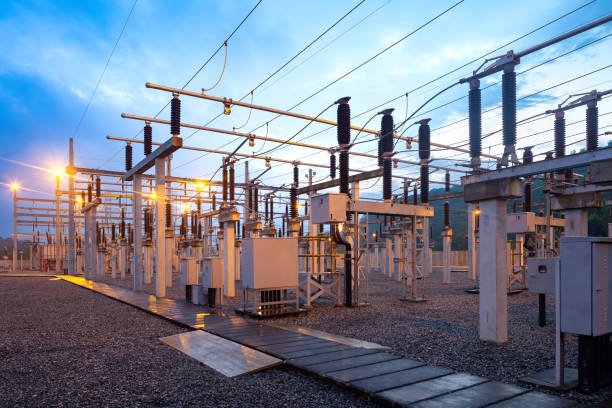
1. What Is the Main Difference Between Oil-Immersed and Dry-Type Transformers?
The fundamental difference is the insulation and cooling medium used by each transformer.
An oil-immersed transformer uses an insulating liquid, commonly mineral oil or a suitable ester-based fluid, to provide electrical insulation and transfer heat away from the core and windings. The liquid circulates naturally or through a forced-cooling system, depending on the design. Heat is transferred to the tank, radiators, or heat exchangers and then released into the surrounding environment.
A dry-type transformer uses solid insulation systems and air-based cooling rather than an insulating-liquid tank. Common designs include cast-resin transformers and vacuum-pressure-impregnated (VPI) transformers. Cooling may rely on natural airflow or forced-air fans.
Neither technology is automatically superior. Oil-immersed transformers can offer effective heat transfer and are widely used in utility and industrial substations. Dry-type transformers avoid insulating-liquid leakage and containment requirements, which can be advantageous in certain indoor and densely occupied installations. However, dry-type equipment still needs suitable ventilation and protection against dust, moisture, and overheating.
| Comparison factor | Oil-immersed transformer | Dry-type transformer |
|---|---|---|
| Insulation medium | Mineral oil or suitable insulating liquid | Solid insulation, such as resin or impregnated insulation |
| Cooling medium | Insulating liquid and air, or liquid and water in some designs | Air or another specified gas |
| Common installation | Outdoor substations, utility networks, industrial facilities | Indoor buildings, commercial facilities, industrial electrical rooms |
| Heat transfer | Liquid circulation transfers heat to cooling surfaces | Heat dissipates through winding surfaces and airflow |
| Fire considerations | Depends on liquid type, installation, and protection measures | No insulating-oil tank, but solid insulation and surrounding materials can still burn |
| Leakage risk | Liquid leakage is a possible maintenance and environmental concern | No insulating-liquid leakage |
| Maintenance | Includes liquid monitoring and leak inspection where applicable | Includes winding inspection, cleaning, and ventilation maintenance |
| Initial cost | Often competitive, depending on rating and design | May be higher for comparable specifications in some markets |
| Installation requirements | May require containment, separation, and liquid-related fire protection | Requires appropriate ventilation, enclosure, and clearances |
| Efficiency | Depends on core losses, load losses, and design | Depends on core losses, load losses, and design |
The table provides general comparisons. Actual performance and cost depend on transformer rating, insulation materials, cooling arrangement, manufacturer design, and project requirements.
2. How Should You Evaluate Project Capacity and Electrical Requirements?
The first selection step is to establish the transformer's electrical duty. Choosing the insulation technology before confirming the electrical requirements can lead to an unsuitable design or an inaccurate price comparison.
2.1 Determine Rated Capacity
Transformer capacity is normally expressed in kVA or MVA because the transformer must handle apparent power rather than only real power.
For a balanced three-phase transformer:
[\S=\sqrt{3}\times V_{LL}\times I]
Where:
- (S) = apparent power in VA.
- (V_{LL}) = line-to-line voltage in volts.
- (I) = line current in amperes.
For a single-phase transformer:
[\S=V\times I]
The required capacity should be based on the expected maximum demand, load growth, operating diversity, motor starting requirements, harmonics, and any planned expansion. A transformer should not be selected solely by adding the nominal ratings of every connected device if those devices do not operate simultaneously. Conversely, relying only on average demand can result in inadequate capacity during peak operation.
2.2 Confirm Primary and Secondary Voltages
The specification should clearly state:
- Primary rated voltage.
- Secondary rated voltage.
- Maximum system voltage where relevant.
- Required frequency.
- Number of phases.
- Winding connection and vector group.
- Neutral and grounding requirements.
- Required tap range and tap-changing method.
The voltage ratio is related to the winding turns ratio under ideal transformer conditions:
[\frac{V_p}{V_s}=\frac{N_p}{N_s}]
For three-phase transformers, the relationship between line-to-line voltage and winding turns depends on the star or delta connection. Therefore, buyers should confirm the complete connection diagram and vector group rather than comparing voltage numbers alone.
2.3 Evaluate Load Profile
The load profile influences transformer losses, temperature rise, and service life. Important questions include:
- Is the transformer continuously loaded or intermittently loaded?
- What is the maximum expected demand?
- How long do peak loads last?
- Are there large motors or frequent motor starts?
- Are nonlinear loads, variable-frequency drives, or rectifiers present?
- Is future capacity expansion expected?
A transformer serving a data center, hospital, industrial production line, or commercial building may have a very different load pattern from one serving a rural distribution network. These differences can influence the appropriate capacity, cooling design, harmonic provisions, and efficiency target.
3. How Does the Installation Environment Affect Transformer Selection?
The installation environment is often the most important factor in deciding between oil-immersed and dry-type transformers.
3.1 Indoor Installations
Dry-type transformers are frequently selected for indoor electrical rooms, commercial buildings, hospitals, shopping centers, and other locations where avoiding an insulating-liquid tank can simplify installation and reduce liquid-containment concerns.
However, indoor installation does not mean that fire and ventilation requirements can be ignored. A dry-type transformer generates heat and needs sufficient airflow or a properly engineered cooling system. The room must provide suitable clearances, cable access, ventilation, grounding, and fire protection in accordance with applicable codes and project requirements.
Oil-immersed transformers can also be installed indoors in some circumstances, but the design may require additional measures such as liquid containment, fire separation, detection, suppression, and access provisions. Whether this arrangement is acceptable depends on the applicable local regulations and the specific liquid and installation design.
3.2 Outdoor Installations
Oil-immersed transformers are widely used in outdoor substations because their tank and cooling systems can be designed for outdoor exposure. Their liquid insulation and radiator arrangements can support a range of capacities and cooling configurations.
Dry-type transformers can also be installed outdoors when designed and enclosed for the required environmental conditions. Buyers must verify the enclosure protection, moisture resistance, ventilation arrangement, corrosion protection, and operating temperature limits. A standard indoor dry-type transformer should not be assumed suitable for outdoor installation without manufacturer confirmation.
3.3 Environmental Conditions
The following site conditions should be included in the transformer specification:
| Environmental factor | Potential effect | Selection consideration |
|---|---|---|
| High ambient temperature | Reduces available thermal margin | Confirm temperature-rise design and derating requirements |
| High altitude | Reduces air density and can affect cooling and insulation performance | Request manufacturer assessment for the installation altitude |
| High humidity | Can contribute to condensation and insulation deterioration | Specify suitable insulation and environmental protection |
| Dust and pollution | Can obstruct cooling passages and contaminate insulation surfaces | Consider enclosure design, filtration, and cleaning access |
| Salt or corrosive atmosphere | Can damage metal surfaces and connections | Specify suitable corrosion protection |
| Outdoor exposure | Rain, sunlight, and temperature changes affect equipment | Confirm outdoor suitability and enclosure protection |
| Limited ventilation | Increases heat accumulation | Assess room ventilation and transformer heat rejection |
Environmental conditions should be evaluated using the actual installation data, not broad assumptions about indoor or outdoor suitability.
4. How Important Are Fire Safety and Environmental Protection?
Fire safety is a major consideration when comparing transformer technologies, especially in buildings with high occupancy or critical services.
Oil-immersed transformers contain insulating liquid. Mineral oil is combustible, so a fire-risk assessment may require suitable separation, containment, detection, suppression, and emergency-access arrangements. Some alternative liquids, including certain ester fluids, have higher fire points than conventional mineral oil, but the exact fluid classification and installation requirements must be verified. A higher fire point does not eliminate the need for a project-specific fire assessment.
Dry-type transformers avoid the presence of a large insulating-liquid volume, which can reduce certain fire and spill risks. Nevertheless, dry-type transformers are not automatically fireproof. Resin, insulation materials, cables, surrounding building materials, and electrical faults can still contribute to fire hazards. Smoke, heat, and electrical arcing also remain important safety concerns.
Environmental protection must be considered as well. Oil-immersed transformers may require secondary containment and procedures for handling leaks, sampling, treatment, and end-of-life liquid disposal or recycling. Dry-type transformers avoid insulating-liquid spill management but still require appropriate waste handling and recycling of metals, insulation materials, and other components.
Dry-type transformers are completely fireproof because they do not contain insulating oil.False
Dry-type transformers eliminate the insulating-liquid tank but can still experience electrical faults, overheating, insulation damage, and fires involving transformer or surrounding materials.
The correct decision should be based on the actual liquid properties, transformer design, installation location, fire code, environmental regulations, and risk assessment.
5. How Do Cooling Performance and Operating Temperature Influence Selection?
Cooling performance directly affects transformer loading capability, insulation aging, and reliability. Buyers should compare the manufacturer's specified cooling arrangements and rated capacity under each cooling stage.
5.1 Oil-Immersed Cooling Systems
Common oil-immersed cooling arrangements include:
- ONAN: Oil Natural Air Natural.
- ONAF: Oil Natural Air Forced.
- OFAF: Oil Forced Air Forced.
- OFWF: Oil Forced Water Forced.
ONAN relies on natural liquid circulation and natural air movement. ONAF adds fans to increase heat dissipation. OFAF uses forced liquid circulation and forced air, while OFWF uses forced liquid circulation with a water-cooled heat exchanger.
A forced-cooling arrangement may support a higher rated capacity when the transformer is specifically designed and rated for it. Adding external fans to a transformer does not automatically authorize operation at a higher capacity.
5.2 Dry-Type Cooling Systems
Common dry-type cooling arrangements include:
- AN: Air Natural.
- AF: Air Forced.
Natural-air cooling depends on unobstructed airflow through the transformer. Forced-air cooling uses fans to increase heat transfer. Buyers should confirm the rated capacity associated with each cooling stage and the control response if a fan fails.
A dry-type transformer installed in a small electrical room may require additional ventilation or heat-removal provisions. Room cooling must account for the heat released by the transformer and other equipment.
| Cooling consideration | Oil-immersed | Dry-type |
|---|---|---|
| Primary heat-transfer mechanism | Liquid circulation | Airflow across windings and cooling surfaces |
| Natural cooling | Natural liquid and air circulation | Natural air circulation |
| Forced cooling | Fans and/or pumps, depending on design | Fans |
| Auxiliary equipment | May include pumps, fans, controls, and heat exchangers | May include fans, sensors, and controls |
| Typical maintenance focus | Liquid circulation, radiators, fans, pumps | Ventilation paths, fans, filters, room airflow |
| Capacity changes | Only according to manufacturer-rated cooling stages | Only according to manufacturer-rated cooling stages |
Transformer selection should consider winding hot-spot temperature, temperature rise, ambient temperature, altitude, loading pattern, and cooling-system reliability. These factors are more meaningful than simply assuming one technology always operates cooler than the other.
6. How Should You Compare Efficiency and Energy Losses?
Efficiency is an important part of lifecycle cost, particularly for transformers that remain energized continuously.
Transformer losses are generally divided into two main categories:
- No-load losses: Primarily associated with the energized magnetic core and present whenever the transformer is energized, even at very light load.
- Load losses: Primarily associated with winding resistance and other load-dependent effects. They increase approximately with the square of the load current under comparable conditions.
The efficiency of a transformer is:
[\eta=\frac{P_{\text{output}}}{P_{\text{input}}}\times100%]
A transformer with lower losses can reduce electricity costs over its operating life. However, the correct comparison must use equivalent ratings, voltage levels, impedance, temperature-rise requirements, and test conditions.
For an approximate annual energy-loss estimate:
[\E_{\text{loss}}\approx(P_0+\beta^2P_k)\times8760]
Where:
- (P_0) = no-load loss in kW.
- (P_k) = load loss at rated current in kW.
- (\beta) = average load as a fraction of rated load.
- 8760 = hours in a typical year.
This simplified calculation assumes a constant average load factor and does not account for detailed hourly load variation, temperature corrections, or auxiliary energy. For a more accurate comparison, use the project's actual load profile and manufacturer-supplied loss data.
Oil-immersed transformers are not automatically more efficient than dry-type transformers, and dry-type transformers are not automatically less efficient. The actual losses depend on core material, winding design, conductor selection, operating temperature, and manufacturing quality.
7. How Do Maintenance Requirements Affect the Final Decision?
Maintenance capability should be considered before selecting a transformer. A design that appears attractive at purchase may create additional operating costs if the facility lacks the skills, equipment, or service access needed to maintain it.
Oil-immersed transformers typically require:
- Oil-level and leakage inspections.
- Periodic oil-quality testing as appropriate.
- Dissolved gas analysis where justified by transformer importance and condition-monitoring strategy.
- Inspection of radiators, valves, pumps, and fans where fitted.
- Inspection of bushings, seals, and external connections.
- Appropriate liquid handling and environmental procedures.
Dry-type transformers typically require:
- Inspection and cleaning of winding surfaces and ventilation passages.
- Checks for dust, moisture, cracking, and insulation damage.
- Inspection of fans, filters, and temperature-monitoring devices where fitted.
- Inspection of electrical terminals and grounding connections.
- Electrical testing according to condition, manufacturer instructions, and applicable standards.
| Maintenance factor | Oil-immersed transformer | Dry-type transformer |
|---|---|---|
| Liquid sampling | Required as part of an appropriate condition-monitoring plan | Not required |
| Leak inspection | Required | Not applicable |
| Cleaning | Tank, radiators, bushings, and external surfaces | Windings, ducts, enclosure, and ventilation |
| Cooling inspection | Liquid circulation and associated equipment | Air passages and fans |
| Diagnostic methods | Oil tests, DGA, electrical tests, thermal inspection | Electrical tests, thermal inspection, visual inspection |
| Special resources | Qualified oil sampling and liquid-handling capability | Suitable cleaning and insulation-inspection capability |
Neither transformer type is maintenance-free. Inspection intervals should be based on manufacturer recommendations, operating conditions, historical results, and risk. Buyers should request a recommended maintenance schedule and service-support information with the technical proposal.
8. How Do You Compare Initial Cost and Total Cost of Ownership?
A common purchasing mistake is to compare only the initial equipment price. A transformer is a long-term asset, and its lifecycle cost includes more than the purchase order.
A practical total-cost model is:
[\C_{\text{TCO}}=C_{\text{purchase}}+C_{\text{installation}}+C_{\text{energy}}+C_{\text{maintenance}}+C_{\text{downtime}}+C_{\text{end-of-life}}]
Each cost category should be evaluated using project-specific information.
Purchase cost: Compare equivalent transformer ratings, electrical specifications, insulation levels, cooling arrangements, accessories, and test requirements.
Installation cost: Include foundations, cable connections, ventilation, containment, fire protection, access, and any building modifications.
Energy cost: Use guaranteed or tested no-load and load losses, the actual loading pattern, and the electricity tariff.
Maintenance cost: Include inspections, testing, spare parts, repairs, liquid treatment where applicable, and specialist service support.
Downtime cost: Estimate the consequences of transformer failure or planned maintenance outages. This can be particularly important in production facilities and critical infrastructure.
End-of-life cost: Consider recycling, liquid handling, dismantling, transportation, and disposal requirements.
A dry-type transformer may offer an installation advantage in a building where liquid containment would be complicated. An oil-immersed transformer may offer a competitive lifecycle solution in an outdoor substation where its cooling and installation requirements can be efficiently accommodated. Neither conclusion should be assumed without comparing actual project costs.
9. What Technical Specifications Should Buyers Include in a Transformer RFQ?
A clear request for quotation (RFQ) helps manufacturers offer comparable equipment and reduces the risk of missing critical requirements.
The specification should include:
| Specification category | Information to provide |
|---|---|
| Rated capacity | kVA or MVA |
| Voltage | Primary and secondary rated voltage |
| Frequency | 50 Hz, 60 Hz, or project-specific |
| Phase | Single-phase or three-phase |
| Winding connection | Vector group, neutral arrangement, and grounding requirements |
| Impedance | Required percentage impedance or acceptable range |
| Insulation level | Applicable voltage and impulse withstand requirements |
| Cooling | Required cooling method and rated capacity by cooling stage |
| Temperature | Ambient conditions and temperature-rise requirements |
| Installation | Indoor or outdoor, altitude, ventilation, and enclosure requirements |
| Environmental conditions | Humidity, dust, pollution, salt, and corrosion exposure |
| Fire protection | Applicable liquid classification, separation, detection, and protection requirements |
| Efficiency | No-load and load-loss requirements |
| Protection | Temperature, pressure, electrical, and other required protection |
| Accessories | Bushings, terminals, monitoring devices, fans, pumps, and other project-specific items |
| Testing | Routine, type, and special tests required by the project |
| Standards | Applicable IEC, IEEE, and local requirements |
| Documentation | Drawings, manuals, test reports, certificates, and maintenance recommendations |
| Warranty and support | Warranty period, service response, spare parts, and technical assistance |
IEC 60076 and IEEE C57 are widely used transformer standards families. The applicable standards, editions, and specific clauses must be confirmed according to the project location, transformer type, and purchaser requirements. A general statement of compliance is not a substitute for a complete technical review.
10. Which Transformer Type Is Best for Different Applications?
The following examples provide a starting point for selection. They are not universal rules; the final choice depends on the electrical design and applicable installation requirements.
| Project application | Commonly considered option | Key selection considerations |
|---|---|---|
| Outdoor utility substation | Oil-immersed | Capacity, cooling, liquid containment, outdoor protection, and maintenance access |
| Indoor commercial building | Dry-type | Fire-risk assessment, ventilation, noise, enclosure, and room layout |
| Hospital or critical building | Often dry-type | Occupancy, fire strategy, reliability, redundancy, and local code |
| Industrial outdoor substation | Oil-immersed | Load profile, environmental exposure, cooling, protection, and service access |
| Factory electrical room | Dry-type or oil-immersed | Space, ventilation, fire requirements, process environment, and maintenance resources |
| Renewable-energy substation | Either, depending on design | Grid voltage, capacity, outdoor exposure, cooling, and project economics |
| Underground or enclosed installation | Project-specific; often dry-type where appropriate | Ventilation, access, fire protection, heat rejection, and applicable regulations |
For example, a commercial building with an indoor transformer room and limited space for liquid containment may favor a dry-type transformer. An outdoor utility substation with a high capacity requirement and established liquid-management infrastructure may favor an oil-immersed transformer. A manufacturing plant with corrosive dust or high ambient temperature needs a more detailed environmental and thermal assessment before either technology is selected.
11. What Common Mistakes Should Buyers Avoid?
Avoiding specification errors is just as important as selecting the transformer type.
Mistake 1: Selecting based only on purchase price. A lower initial price may be offset by higher energy losses, more expensive installation, or greater maintenance costs.
Mistake 2: Assuming dry-type means fireproof. Dry-type designs avoid an insulating-liquid tank but still require a complete fire and electrical safety assessment.
Mistake 3: Assuming oil-immersed always provides better cooling. Cooling performance depends on the specific design, rated cooling stage, ambient conditions, and loading.
Mistake 4: Ignoring the actual load profile. Peak demand, motor starting, harmonics, and future expansion should be included in capacity selection.
Mistake 5: Overlooking ventilation and room heat rejection. Dry-type transformers can overheat if the room cannot remove the heat they generate.
Mistake 6: Ignoring maintenance capability. Buyers should confirm that suitable technicians, test equipment, service support, and spare parts are available.
Mistake 7: Accepting vague compliance claims. Require applicable standards, technical documents, test reports, and project-specific confirmation.
Mistake 8: Failing to evaluate the complete installation. Transformer foundations, cable routing, grounding, clearances, fire protection, and access can significantly affect project cost and safety.
12. A Practical Selection Checklist Before Purchasing
Before issuing a purchase order, confirm that the engineering and procurement teams have reviewed the following:
- Required kVA or MVA capacity and expected future load.
- Primary and secondary voltage ratings.
- Frequency, phase, winding connection, and vector group.
- Percentage impedance and protection coordination.
- Load profile, harmonics, and motor-starting requirements.
- Indoor or outdoor installation conditions.
- Ambient temperature, altitude, humidity, dust, and corrosion exposure.
- Fire-safety and environmental requirements.
- Cooling method and rated capacity for each cooling stage.
- No-load and load-loss guarantees.
- Maintenance requirements and available service resources.
- Applicable standards and factory testing requirements.
- Installation drawings, accessories, manuals, and technical documentation.
- Warranty, spare parts, and after-sales support.
- Total cost of ownership, including installation, energy, maintenance, and downtime.
Conclusion
Oil-immersed and dry-type transformers each offer distinct advantages. Oil-immersed designs are widely used in utility and outdoor applications because of their effective cooling and suitability for high-capacity equipment. Dry-type designs are particularly attractive for indoor and fire-sensitive environments because they do not use liquid insulation. The final decision should consider not only the initial purchase price but also installation conditions, safety requirements, operating efficiency, maintenance costs, and expected service life.
FAQ
Q1: What is the main difference between oil-immersed and dry-type transformers?
Oil-immersed transformers use insulating liquid for cooling and electrical insulation, while dry-type transformers rely on air and solid insulation materials. Oil-immersed designs are commonly used for high-capacity outdoor applications, whereas dry-type units are often selected for indoor installations.
Q2: Which transformer is safer for indoor installations?
Dry-type transformers are often preferred indoors because they do not contain large quantities of insulating oil, reducing the risk of oil leaks and liquid-fueled fires. However, proper ventilation, fire protection, and installation clearances are still essential.
Q3: Are oil-immersed transformers more efficient than dry-type transformers?
Oil-immersed transformers often achieve lower losses in comparable high-capacity applications because liquid cooling provides effective heat dissipation. Actual efficiency depends on transformer design, rating, load profile, and applicable energy-efficiency standards.
Q4: Which transformer requires less maintenance?
Dry-type transformers generally require less routine maintenance because they do not need insulating oil sampling, testing, or replacement. Oil-immersed transformers require regular oil-quality checks, leak inspections, and monitoring of protective components.
Q5: How do you select the right transformer for a project?
Evaluate rated capacity, primary and secondary voltage, installation environment, fire safety requirements, cooling conditions, efficiency, maintenance resources, lifecycle cost, and applicable standards. Choose the design that best meets the project's technical and operational requirements.
References
- IEC 60076-1 — Power Transformers: General
https://webstore.iec.ch/en/publication/588 - IEC 60076-2 — Power Transformers: Temperature Rise
https://webstore.iec.ch/en/publication/604 - IEC 60076-3 — Power Transformers: Insulation Levels and Dielectric Tests
https://webstore.iec.ch/en/publication/605 - IEC 60076-7 — Loading Guide for Oil-Immersed Power Transformers
https://webstore.iec.ch/en/publication/608 - IEEE C57.12.00 — General Requirements for Liquid-Immersed Distribution, Power, and Regulating Transformers
https://standards.ieee.org/ieee/C57.12.00/6962/ - IEEE C57.12.01 — General Requirements for Dry-Type Distribution and Power Transformers
https://standards.ieee.org/ieee/C57.12.01/6775/ - IEEE C57.12.52 — Sealed Dry-Type Distribution and Power Transformers
https://standards.ieee.org/ieee/C57.12.52/10829/ - IEEE C57.94 — Installation, Application, Operation, and Maintenance of Dry-Type Distribution and Power Transformers
https://standards.ieee.org/ieee/C57.94/10864/ - IEEE C57.12.80 — Terminology for Power and Distribution Transformers
https://standards.ieee.org/ieee/C57.12.80/7006/ - U.S. Department of Energy — Electricity Delivery and Grid Systems
https://www.energy.gov/oe