Power transformer pricing is influenced by far more than the nameplate MVA rating. Buyers may focus on the quoted purchase price while overlooking the cost of copper or aluminum conductors, electrical steel, insulation, transformer oil, cooling equipment, testing, labor, transportation, and project-specific customization. Failing to understand these cost components can make supplier quotations difficult to compare and may lead to unexpected expenses during procurement, installation, and operation. A clear cost structure helps buyers evaluate quotations more accurately and make better purchasing decisions.
The main cost components of power transformers include core materials, winding conductors, insulation materials, transformer oil or other insulating media, tanks and mechanical structures, cooling and accessory systems, manufacturing labor, factory testing, engineering and customization, transportation, and installation-related costs. The relative contribution of each component depends on the transformer’s capacity, voltage level, design, material prices, specifications, and project requirements.
Power transformer cost should therefore be evaluated as a combination of equipment, engineering, logistics, and lifecycle expenses rather than as a single purchase figure. Understanding these components allows buyers to compare suppliers on a consistent basis and identify opportunities for cost optimization without compromising quality.
What Are the Main Cost Components of Power Transformers?
Power transformer pricing can be difficult to understand because the quoted equipment price reflects much more than the steel tank and electrical windings visible from the outside. Core material, copper or aluminum conductors, insulating materials and fluids, tank fabrication, cooling equipment, bushings, tap changers, protection, testing, engineering, and transportation can all contribute significantly to the final cost. The main cost components of a power transformer are the magnetic core, windings, insulation system, tank and structural parts, cooling system, bushings and terminals, tap-changing equipment, control and protection accessories, manufacturing and testing, engineering, and logistics. Their relative importance changes with transformer capacity, voltage class, cooling method, technical specification, material prices, and application.
The copper windings are always the largest cost component of a power transformer.False
Winding conductors can be a major cost driver, but core steel, accessories, insulation, tank construction, cooling, tap changers, manufacturing, and logistics can become equally or more significant depending on transformer rating and specification.
What Determines the Basic Cost Structure of a Power Transformer?
A power transformer can be viewed as a combination of several major cost groups rather than one single product.
| Cost Component | Main Cost Drivers | Typical Importance |
|---|---|---|
| Core | Electrical steel grade, weight, design, manufacturing | High |
| Windings | Copper/aluminum, conductor size, current density | High |
| Insulation | Paper, pressboard, oil/fluid, spacers | Medium–High |
| Tank & structure | Steel, fabrication, welding, machining | Medium |
| Cooling | Radiators, fans, pumps, controls | Medium–High |
| Bushings | Voltage class, current rating, technology | Medium |
| Tap changer | Range, current rating, OLTC complexity | Medium–High |
| Protection & controls | Monitoring, relays, sensors, cabinets | Medium |
| Manufacturing | Labor, drying, assembly, quality control | High |
| Testing | Routine, type, special tests | Low–Medium |
| Engineering | Design, drawings, calculations | Medium |
| Logistics | Weight, dimensions, transport, site requirements | Medium–High |
The exact percentage distribution is highly project-dependent. A small distribution transformer and a large transmission transformer can have very different cost structures even when they use the same basic transformer principle.
How Does the Transformer Core Affect Cost?
The magnetic core is one of the fundamental material-cost components.
Power-transformer cores commonly use grain-oriented electrical steel, while some applications use low-loss or amorphous materials.
Core cost depends on:
- Material grade
- Thickness
- Magnetic properties
- Core weight
- Joint design
- Cutting requirements
- Material utilization
- Manufacturing tolerances
Higher-performance core steel can cost more per kilogram, but it may reduce no-load losses.
That creates an important purchasing trade-off.
A buyer should not evaluate core material solely according to purchase price. If a transformer remains energized continuously for decades, lower core loss can generate substantial lifetime energy savings.
Why Are Windings a Major Cost Component?
Windings carry the transformer's operating current and require significant quantities of conductive material.
Copper is widely used because of its high conductivity and mechanical properties, while aluminum may be selected in some designs because of its lower material cost and density.
Winding cost depends on:
- Conductor material
- Conductor cross-sectional area
- Number of turns
- Winding configuration
- Current density
- Insulation
- Transposition requirements
- Mechanical reinforcement
- Manufacturing complexity
Copper prices can have a noticeable effect on transformer quotations.
However, the amount of conductor required is determined by the transformer's electrical design, so buyers should compare complete winding specifications rather than simply comparing the price of copper or aluminum.
How Does Insulation Add to Transformer Cost?
Insulation is essential for transformer reliability.
In oil-filled transformers, the insulation system may include:
- Transformer oil or alternative insulating fluid
- Kraft paper
- Pressboard
- Spacers
- Cylinders
- End insulation
- Lead insulation
Higher-voltage transformers require more sophisticated insulation coordination.
Cost can increase with:
- Higher voltage class
- Higher impulse withstand level
- More complex winding insulation
- Greater clearances
- Special insulation materials
- Vacuum drying requirements
- Alternative insulating fluids
Insulation should therefore be evaluated as both a cost component and a reliability investment.
How Much Does the Tank and Mechanical Structure Matter?
The transformer tank contains and protects the active assembly.
Its cost includes:
- Steel plate
- Welding
- Machining
- Reinforcement
- Surface treatment
- Corrosion protection
- Leak testing
- Pressure requirements
- Lifting and transportation provisions
Large power transformers can require very substantial steel structures.
The tank must withstand mechanical, thermal, and environmental stresses while maintaining oil tightness where liquid insulation is used.
Special designs for harsh environments, seismic areas, or unusual transportation conditions can further increase structural costs.
How Do Cooling Systems Affect Transformer Price?
Cooling requirements increase as transformer losses and capacity increase.
Depending on the design, a transformer may use:
- Natural oil and natural air cooling
- Oil-directed circulation
- Forced-air cooling
- Forced-oil and forced-air cooling
- Fans
- Pumps
- Radiators
- Coolers
- Automatic cooling controls
A simple cooling arrangement generally costs less than a system containing multiple fans, pumps, sensors, and automatic control stages.
For large transformers, however, additional cooling can provide higher continuous capacity and better thermal performance.
Buyers should compare the cooling system together with the required transformer rating rather than treating it as an optional accessory.
How Do Bushings Influence Transformer Cost?
Bushings provide the insulated electrical connection between internal windings and external conductors.
Their cost depends strongly on:
- Voltage class
- Current rating
- Insulation technology
- Outdoor environment
- Creepage distance
- Monitoring requirements
- Manufacturer
- Quantity
High-voltage transformer bushings can become substantial individual components in the overall transformer budget.
For high-voltage applications, buyers should also consider bushing condition monitoring and compatibility with the system insulation-coordination study.
Why Can Tap Changers Increase Transformer Cost Significantly?
Tap-changing equipment changes the transformer's effective voltage ratio.
There is a major cost difference between a basic off-circuit tap arrangement and an on-load tap changer (OLTC).
An OLTC may require:
- Tap selector mechanism
- Diverter switch
- Motor drive
- Control cabinet
- Voltage regulator
- Position indicators
- Protection
- Additional maintenance
The additional equipment increases both purchase price and lifecycle maintenance requirements.
However, OLTC capability can be essential for substations where voltage must be controlled under changing network conditions.
What About Protection, Monitoring, and Control Equipment?
Modern power transformers may include extensive monitoring and protection.
Depending on the application, equipment can include:
- Winding-temperature indicators
- Oil-temperature indicators
- Oil-level indicators
- Pressure-relief devices
- Buchholz relays
- Sudden-pressure relays
- Online dissolved-gas monitoring
- Bushing monitoring
- Cooling controls
- Remote monitoring
- Digital communication interfaces
For a small distribution transformer, the accessory package may be relatively simple.
For a large grid transformer, monitoring and protection can become a significant portion of the project cost.
The correct comparison should therefore distinguish between standard equipment and project-specific accessories.
How Do Manufacturing and Factory Testing Affect Price?
The transformer materials alone do not determine the final price.
Manufacturing requires:
- Core cutting and assembly
- Winding
- Insulation assembly
- Active-part drying
- Tank fabrication
- Vacuum treatment
- Fluid filling
- Final assembly
- Quality inspection
- Factory testing
Large transformers can require long production cycles and specialized manufacturing equipment.
Factory tests can include:
- Winding resistance
- Turns-ratio testing
- Impedance measurement
- No-load loss
- Load loss
- Dielectric tests
- Insulation tests
- Functional testing of accessories
Special customer-requested tests can increase the cost further.
How Do Engineering and Customization Affect Transformer Cost?
Power transformers are often engineered according to project-specific requirements.
Engineering costs can include:
- Electromagnetic design
- Thermal calculations
- Mechanical calculations
- Short-circuit-force calculations
- Insulation coordination
- Cooling calculations
- CAD drawings
- Manufacturing documentation
- Protection integration
- Customer documentation
Customization becomes more significant for high-voltage and large-MVA transformers.
A standardized distribution transformer can benefit from production scale, whereas a one-off high-voltage transformer requires substantially more engineering effort.
Why Is Transportation a Major Cost Consideration?
Large power transformers are extremely heavy and can have unusual dimensions.
Transportation may require:
- Specialized heavy-haul trailers
- Route surveys
- Bridge-load assessments
- Permits
- Escorts
- Special lifting equipment
- On-site assembly
- Temporary storage
- Oil transportation or filling arrangements
For very large transformers, logistics can become a substantial project cost.
Therefore, buyers should evaluate delivered cost, not just the manufacturer's ex-works quotation.
How Do Raw-Material Prices Affect Transformer Pricing?
Transformer prices can be influenced by several commodity markets.
The most important include:
- Electrical steel
- Copper
- Aluminum
- Structural steel
- Insulating fluids
- Insulation paper and pressboard
The effect varies by transformer design.
For example, a transformer with large copper windings can be particularly sensitive to copper prices, while a design with a substantial core may be more sensitive to electrical-steel prices.
This is one reason transformer quotations sometimes include raw-material price-adjustment clauses.
How Does Transformer Capacity Change the Cost Structure?
As MVA rating increases, the transformer generally requires greater material quantities and more sophisticated thermal and mechanical design.
A higher-rated transformer may require:
- More core steel
- More conductor material
- Larger tank
- Larger bushings
- More cooling equipment
- Higher mechanical strength
- More insulation
- Larger transport infrastructure
The cost does not necessarily increase in a perfectly linear relationship with MVA.
Higher voltage and higher capacity can also introduce engineering and manufacturing complexity that changes the cost disproportionately.
How Do Voltage Levels Affect Cost?
Voltage level is another major cost driver.
As voltage increases, the transformer generally requires more demanding:
- Insulation systems
- Bushings
- Clearances
- Surge protection
- Testing
- Manufacturing controls
A transformer with relatively modest MVA but very high voltage may therefore be considerably more expensive than a lower-voltage transformer with similar capacity.
This is why transformer price comparisons should always specify both MVA and voltage class.
How Can Buyers Separate Equipment Cost From Lifecycle Cost?
The purchase price is only the beginning.
A useful lifecycle-cost concept is:
[LCC=C{purchase}+C{installation}+C{losses}+C{maintenance}+C_{outage}]
Among these factors, energy losses can be especially important for continuously energized transformers.
A transformer with a higher initial price may be financially preferable if it provides substantially lower guaranteed losses.
For example, a distribution transformer operating 8,760 hours per year can accumulate significant no-load energy consumption over a long service life.
Buyers should therefore request:
- Guaranteed no-load loss
- Guaranteed load loss
- Loss tolerances
- Expected operating profile
- Maintenance requirements
- Warranty terms
How Should Buyers Compare Power Transformer Quotations?
A practical comparison should use the same technical baseline for every supplier.
| Evaluation Area | Questions to Ask |
|---|---|
| Capacity | Is the MVA/kVA rating sufficient? |
| Voltage | Are all primary and secondary voltage ratings correct? |
| Core | What material and guaranteed no-load loss are provided? |
| Windings | What conductor material and guaranteed load loss apply? |
| Impedance | Does it match the system requirement? |
| Cooling | Is the cooling system adequate for actual conditions? |
| Insulation | Does it meet the required voltage and impulse levels? |
| Tap changer | Is OLTC or off-circuit tapping required? |
| Accessories | Which protection and monitoring equipment is included? |
| Testing | Which factory tests are guaranteed? |
| Logistics | Is transportation included in the quotation? |
| Warranty | What equipment and performance guarantees apply? |
| Lifecycle | What are the expected energy and maintenance costs? |
This approach helps buyers avoid selecting a transformer based on an artificially low base price that excludes important project requirements.
How Do Core and Winding Materials Affect Power Transformer Costs?
Core and winding materials are among the most important material-related cost drivers in a power transformer, but their impact goes beyond the initial quotation. A buyer may see a higher price because of premium electrical steel or copper conductors, yet those materials can also reduce no-load losses, load losses, temperature rise, and long-term energy consumption. Conversely, choosing a lower-cost material without considering conductivity, magnetic properties, mechanical strength, or manufacturing requirements can create higher operating costs or reliability risks. Core and winding materials affect power transformer costs through material quantity, commodity prices, electrical performance, manufacturing complexity, losses, thermal behavior, and service-life requirements. Electrical steel primarily influences core cost and no-load loss, while copper or aluminum winding conductors strongly influence conductor cost, load loss, current density, weight, and thermal performance. Buyers should therefore compare material cost together with guaranteed transformer losses and lifecycle economics rather than selecting materials solely by price per kilogram.
Using the cheapest available core and winding materials always produces the lowest-cost power transformer.False
Lower material purchase prices can be offset by higher losses, greater material quantity, thermal requirements, manufacturing complexity, and lifecycle energy costs. Material selection should be evaluated on total cost and required performance.
How Do Core Materials Contribute to Transformer Cost?
The transformer core provides the magnetic path through which alternating magnetic flux circulates. Its material therefore has a direct influence on both the transformer's manufacturing cost and no-load performance.
Conventional power transformers commonly use grain-oriented electrical steel (GOES) because it provides suitable magnetic properties and relatively low core loss when properly processed and assembled. Premium grades can offer improved magnetic performance, but they may cost more per unit weight.
Core cost depends on:
- Electrical-steel grade
- Thickness
- Core weight
- Magnetic flux density
- Material utilization
- Cutting accuracy
- Joint design
- Core assembly
- Manufacturing tolerances
The core is energized whenever the transformer is connected to the electrical system, even if it is carrying little or no load. Consequently, core material selection has a direct relationship with no-load loss.
This creates an important purchasing trade-off: a more expensive core material may increase initial equipment cost but reduce energy consumption throughout the transformer's operating life.
Why Does Grain-Oriented Electrical Steel Matter?
Grain-oriented electrical steel is engineered so that its magnetic properties are particularly favorable in the rolling direction.
This makes it suitable for transformer cores, where controlled magnetic flux paths can take advantage of its directional properties.
Important characteristics include:
- Core loss
- Permeability
- Saturation behavior
- Thickness
- Surface insulation
- Magnetostriction
- Magnetic domain behavior
Higher-quality electrical steel can reduce core losses when the transformer is correctly designed and manufactured.
However, buyers should avoid assuming that a specific steel grade automatically guarantees a specific transformer performance.
Core loss also depends on:
- Flux density
- Frequency
- Joint quality
- Cutting stress
- Core assembly
- Manufacturing process
Therefore, guaranteed no-load loss measured on the finished transformer is generally more useful for procurement than the material name alone.
How Does Core Weight Affect Cost?
A simple relationship is:
More core material → higher material cost
But increasing core weight can sometimes allow a manufacturer to operate at a lower magnetic flux density.
Lower flux density can reduce core loss and noise, although the optimum design depends on the complete electromagnetic and economic calculation.
The buyer therefore faces a balance between:
- Electrical-steel price
- Core weight
- No-load loss
- Transformer dimensions
- Manufacturing cost
- Lifetime energy cost
A lightweight core is not automatically the cheapest solution, and a heavier core is not automatically the most efficient.
The manufacturer should optimize the complete core design around the required loss guarantee.
How Do Winding Materials Affect Transformer Cost?
The winding system carries the transformer current and therefore requires highly conductive material.
The two major conductor choices are:
Copper
and
Aluminum
Copper has high electrical conductivity and excellent mechanical characteristics, but it is generally more expensive by weight.
Aluminum has lower conductivity than copper but offers a lower material cost and lower density.
The choice influences:
- Conductor cross-sectional area
- Winding dimensions
- Transformer weight
- Load losses
- Current density
- Heat generation
- Mechanical strength
- Manufacturing process
Therefore, the comparison should not simply be:
Copper = expensive; aluminum = cheap.
The actual transformer design must be considered.
Why Does Copper Usually Cost More?
Copper provides high conductivity, allowing a relatively compact conductor cross-section for a specified current.
For a simplified winding-loss relationship:
[P_{cu}=I^2R]
where (I) is winding current and (R) is winding resistance.
Copper's lower resistivity can support low winding resistance, although the final loss depends on conductor dimensions, winding configuration, temperature, conductor length, and the complete transformer design.
Copper also has useful mechanical properties for high-power transformer windings, particularly where short-circuit forces are significant.
Its disadvantages are mainly:
- Higher commodity price
- Higher material cost
- Greater exposure to copper-market volatility
For high-MVA transformers requiring large quantities of conductor, copper price fluctuations can have a meaningful impact on the quotation.
Why Can Aluminum Reduce Initial Material Cost?
Aluminum generally costs less per kilogram than copper and has a lower density.
However, aluminum has higher electrical resistivity, meaning a larger conductor cross-sectional area may be required for comparable current-carrying performance.
This can affect:
- Winding size
- Radial dimensions
- Axial dimensions
- Cooling
- Mechanical design
- Material quantity
Therefore, aluminum does not simply reduce every transformer cost component.
A manufacturer must optimize the winding geometry to achieve the required electrical, thermal, and mechanical performance.
How Do Core and Winding Materials Affect Transformer Losses?
This is one of the most important connections between material selection and lifecycle cost.
Transformer losses can be broadly divided into:
| Loss Type | Main Material/Design Influence |
|---|---|
| No-load loss | Core material, flux density, core construction |
| Load loss | Winding conductor resistance |
| Stray loss | Leakage flux, conductor arrangement and structural parts |
| Dielectric loss | Insulation system and materials |
| Auxiliary loss | Cooling and control equipment |
Core material primarily affects no-load loss, while winding conductor selection strongly affects load loss.
This distinction is critical.
A distribution transformer may remain energized continuously but operate at relatively low average load. In this case, no-load loss can have a particularly important lifecycle impact.
A heavily loaded industrial transformer may place greater emphasis on winding and load losses.
How Does Temperature Change the Material Cost Calculation?
Winding resistance changes with temperature.
A simplified relationship is:
[RT=R{20}[1+\alpha(T-20)]]
where (RT) is resistance at temperature (T), (R{20}) is resistance at 20°C, and (\alpha) is the conductor temperature coefficient.
As winding temperature rises, resistance generally increases, which increases load losses.
This means that conductor material selection cannot be evaluated independently from cooling design.
A winding with acceptable losses at one temperature may have different performance under another operating condition.
For buyers, guaranteed load-loss values should therefore be reviewed together with:
- Rated temperature rise
- Cooling method
- Ambient temperature
- Loading profile
How Do Material Prices Influence Transformer Quotations?
Core steel and copper are commodity-sensitive materials.
Their market prices can fluctuate considerably over the life of a project.
A transformer manufacturer may therefore include:
- Fixed material pricing
- Price-adjustment clauses
- Raw-material escalation formulas
- Quotation validity periods
Buyers should check whether the quoted transformer price is fully fixed.
For long procurement cycles, a quotation based on today's copper and electrical-steel prices may not represent the final contract cost if price escalation is permitted.
A technically equivalent quotation can therefore have different commercial risk depending on its raw-material adjustment terms.
How Do Core and Winding Materials Affect Manufacturing Costs?
Material selection also changes production requirements.
Core manufacturing can involve:
- Precision cutting
- Slitting
- Step-lap assembly
- Stress control
- Core clamping
- Magnetic testing
Winding manufacturing may involve:
- Conductor forming
- Insulation application
- Transposition
- Winding tension control
- Lead connections
- Mechanical reinforcement
- Drying and pressing
Premium materials may require tighter manufacturing controls to achieve their intended performance.
This means the final transformer price reflects not only the material itself but also the manufacturer's ability to process it correctly.
Does More Expensive Material Always Produce a Better Transformer?
No.
The relationship between material cost and transformer performance is not linear.
A premium core steel can provide excellent magnetic characteristics, but poor joint construction or excessive cutting stress can reduce the expected benefit.
Similarly, high-quality copper does not compensate for poor winding geometry, inadequate cooling, or weak mechanical bracing.
Transformer performance results from the interaction of:
Material + electromagnetic design + thermal design + mechanical design + manufacturing quality
This is why buyers should evaluate the finished transformer rather than judging quality solely from the material specification.
How Should Buyers Compare Copper and Aluminum Windings?
A practical comparison should include more than conductor price.
| Factor | Copper | Aluminum |
|---|---|---|
| Electrical conductivity | Higher | Lower |
| Required conductor area | Generally smaller | Generally larger |
| Density | Higher | Lower |
| Material price per kg | Generally higher | Generally lower |
| Mechanical properties | Strong | Lower than copper in many respects |
| Load-loss potential | Favorable with appropriate design | Can also meet requirements with optimized design |
| Weight | Higher conductor density | Lower conductor density |
| Manufacturing | Well established | Requires appropriate joint and connection practices |
| Commodity exposure | Copper-price sensitive | Aluminum-price sensitive |
Neither conductor is universally better.
The correct choice depends on the required:
- MVA rating
- Current
- Dimensions
- Loss guarantee
- Short-circuit withstand
- Weight
- Cost target
- Manufacturing capability
How Should Buyers Evaluate Core Materials?
Instead of asking only, "What electrical steel do you use?", buyers should request measurable performance information.
Important questions include:
- What core material grade is proposed?
- What is the guaranteed no-load loss?
- At what rated voltage and frequency is the loss measured?
- What flux-density design is used?
- How are core joints constructed?
- What manufacturing controls are applied to minimize cutting and assembly stress?
- Is the guaranteed loss based on factory test results?
- What loss tolerance is permitted?
This converts a material comparison into a performance comparison.
How Should Buyers Evaluate Winding Materials?
Similarly, buyers should ask for:
- Conductor material
- Conductor type
- Current density
- Guaranteed load loss
- Winding temperature rise
- Short-circuit withstand capability
- Winding configuration
- Mechanical reinforcement
- Connection and joint technology
A transformer using copper is not automatically superior to one using aluminum.
If two designs meet the same required loss, thermal, mechanical, and reliability criteria, the buyer should then compare total cost and lifecycle value.
How Do Material Choices Affect Lifecycle Cost?
The most useful purchasing concept is total cost of ownership.
A simplified model is:
[LCC=C{purchase}+C{energy}+C{maintenance}+C{outage}]
Material selection influences several of these terms.
A higher-performance core can increase purchase price but reduce no-load energy consumption.
A lower-resistance winding design can increase conductor material cost but reduce load losses.
Better mechanical and thermal materials may increase manufacturing cost but improve reliability and reduce the probability of expensive failures.
Therefore, buyers should evaluate material upgrades according to the transformer's expected operating hours and load profile.
Which Material Considerations Matter Most by Application?
Different applications place different priorities on materials.
| Application | Core Material Priority | Winding Material Priority |
|---|---|---|
| Generator transformer | Losses, magnetic reliability | High current, thermal and mechanical strength |
| Transmission transformer | Low losses, long service life | Load loss, short-circuit strength |
| Distribution transformer | Very low no-load loss | Cost-effective load-loss performance |
| Industrial transformer | Thermal performance and losses | High-current and mechanical requirements |
| Renewable-energy transformer | Low losses and variable-load capability | Thermal cycling and harmonic considerations |
For continuously energized distribution transformers, low core loss can be particularly valuable.
For high-MVA transmission transformers, conductor performance, mechanical strength, thermal design, and short-circuit withstand can become equally important.
How Do Insulation, Transformer Oil, Tanks, and Cooling Systems Affect Power Transformer Costs?
Insulation, transformer oil, the tank, and the cooling system are sometimes treated as secondary items because they do not determine the transformer's basic turns ratio. In practice, they can have a substantial influence on both the quoted price and long-term operating value of a power transformer. Higher voltage requires more sophisticated insulation, larger clearances, and more demanding bushings; transformer oil or alternative insulating fluids must provide both dielectric strength and heat transfer; the tank must contain the active part and withstand mechanical, pressure, weather, and transport stresses; and the cooling system must remove losses without compromising reliability. These four systems affect power transformer costs through material quantity, voltage class, transformer capacity, thermal requirements, environmental conditions, manufacturing complexity, monitoring requirements, and maintenance. Buyers should therefore evaluate insulation, fluid, tank construction, and cooling as an integrated package rather than comparing each component only by its initial purchase price.
Transformer oil and cooling equipment are separate cost items that have little relationship to transformer insulation and tank design.False
These systems are closely interconnected. The insulating fluid provides both dielectric insulation and heat transfer, the tank contains the fluid and active assembly, and the cooling system controls the temperature produced by transformer losses. Changes in one system can require changes in the others.
How Does the Insulation System Affect Transformer Cost?
The insulation system is one of the most important design elements in a power transformer because it determines whether the transformer can safely withstand its operating voltage and electrical transients.
A typical oil-filled transformer may use:
- Kraft paper
- Pressboard
- Cylinders
- Spacers
- Insulating barriers
- End insulation
- Transformer oil
- Bushing insulation
As voltage increases, insulation requirements become more demanding.
The transformer may require:
- Greater insulation thickness
- Larger electrical clearances
- More sophisticated winding insulation
- Higher-performance bushings
- More careful field grading
- Higher impulse withstand capability
- More extensive factory testing
Consequently, insulation cost generally rises with voltage class and insulation level.
The cost is not simply the price of paper or pressboard. It also includes the engineering and manufacturing processes needed to produce a reliable insulation system.
Why Does Insulation Quality Matter to Lifecycle Cost?
A transformer can operate for decades, so insulation aging is an important economic consideration.
Insulation aging is influenced by:
- Temperature
- Moisture
- Oxygen
- Electrical stress
- Mechanical stress
- Contamination
Excessive temperature can accelerate solid-insulation aging.
This creates a direct connection between insulation design and cooling design.
A buyer who focuses only on initial insulation cost may overlook the economic consequences of higher operating temperature or shortened service life.
For important transmission and generation transformers, higher-quality insulation design may therefore justify additional initial investment.
How Does Transformer Oil Affect Cost?
In oil-filled transformers, insulating fluid performs two major functions:
Electrical insulation
and
Heat transfer
This dual function makes the fluid an integral part of transformer design.
Traditional mineral oil is widely used because of its established dielectric, thermal, and operational characteristics.
Alternative fluids, including natural ester fluids, may be selected for applications where environmental performance and fire-safety characteristics are important.
Fluid cost depends on:
- Fluid type
- Transformer volume
- Required dielectric performance
- Fire-safety requirements
- Environmental requirements
- Supplier
- Filtration and processing requirements
For a large transformer, the quantity of fluid can be substantial, so the difference in price between fluid types can materially affect the project cost.
Is More Expensive Transformer Oil Always Better?
No.
Fluid selection must be matched to the transformer application.
A natural ester may offer advantages in some indoor, environmentally sensitive, or fire-conscious applications, but the buyer should evaluate:
- Dielectric performance
- Viscosity
- Pour point
- Oxidation behavior
- Compatibility
- Temperature performance
- Maintenance requirements
- Standards and approvals
- Total lifecycle cost
Mineral oil may remain the most economical choice for many conventional outdoor utility applications.
The appropriate fluid is therefore the one that meets the project's technical and environmental requirements without creating unnecessary cost.
How Does Transformer Tank Construction Affect Cost?
The tank is the transformer's primary mechanical enclosure.
It protects:
- Core
- Windings
- Insulation
- Transformer fluid
- Internal connections
Tank cost depends on:
- Steel thickness
- Tank dimensions
- Internal reinforcement
- Welding
- Machining
- Surface treatment
- Corrosion protection
- Pressure requirements
- Leak-tightness requirements
- Lifting provisions
- Transport design
Large high-voltage transformers require significantly larger tanks and stronger structures than smaller distribution transformers.
Tank construction also becomes more demanding when the transformer must withstand special environmental or mechanical conditions.
Why Does Tank Size Matter?
Transformer capacity and voltage influence the dimensions of the active part.
A larger core and larger winding assembly require a larger tank.
The tank must also provide sufficient space for:
- Electrical clearances
- Oil circulation
- Internal insulation
- Leads
- Bushings
- Mechanical supports
Increasing tank size increases material consumption, fabrication time, welding requirements, coating area, transportation dimensions, and lifting requirements.
Therefore, tank cost is closely connected to the transformer's overall electromagnetic and mechanical design.
How Does Corrosion Protection Affect Tank Cost?
Outdoor transformers may face:
- Rain
- Humidity
- Salt
- Industrial pollution
- Temperature cycling
- UV exposure
The tank and external steelwork therefore require appropriate corrosion protection.
Possible measures include:
- Surface preparation
- Primer systems
- Protective coatings
- Stainless or corrosion-resistant components
- Special fasteners
- Enhanced enclosure protection
A coastal transformer, for example, may require more robust corrosion protection than a comparable unit installed in a dry inland environment.
This increases initial cost but can reduce long-term maintenance and corrosion-related failures.
How Does Cooling System Design Affect Transformer Cost?
Every operating transformer produces losses.
These losses appear primarily as heat.
The cooling system must transfer that heat from the active parts to the surrounding environment.
Common cooling arrangements include:
- ONAN
- ONAF
- OFAF
- Forced-air cooling
- Forced-oil circulation
A simple transformer may use natural circulation.
A larger transformer may require radiators, fans, pumps, controls, and multiple cooling stages.
As cooling complexity increases, so does the cost of:
- Radiators
- Fans
- Pumps
- Motors
- Control cabinets
- Sensors
- Valves
- Wiring
- Monitoring
- Maintenance
However, a more sophisticated cooling system can also provide greater thermal capacity.
How Does Transformer Capacity Affect Cooling Cost?
The relationship between transformer rating and cooling is particularly important.
Higher MVA generally means greater power transfer and potentially greater total losses.
More heat must therefore be removed.
This may require:
Natural cooling → Radiator cooling → Forced-air cooling → Forced-oil/forced-air cooling
The exact progression depends on the transformer design.
Cooling should be specified based on the required continuous and emergency rating rather than simply selecting the largest available system.
How Does Cooling Affect Transformer Service Life?
Temperature is closely related to insulation aging.
If cooling is inadequate, winding temperature can increase.
Higher temperature can accelerate degradation of solid insulation.
Therefore:
Better thermal control → Lower temperature stress → Slower insulation aging → Potentially longer service life
This is why cooling equipment should not be viewed only as an additional purchase cost.
For a critical transformer, the cost of a properly designed cooling system may be small compared with the economic consequences of premature failure.
How Do Insulation, Oil, Tank, and Cooling Interact?
These four systems should be considered together.
A simplified relationship is:
Electrical losses → Heat generation → Oil circulation → Radiators/coolers → Heat rejection
At the same time:
Winding voltage → Insulation stress → Solid insulation + fluid insulation → Tank containment
The tank contains the oil and active assembly, while the cooling system manages the heat transported by the oil.
Therefore, changing one major design parameter can affect several others.
For example, increasing transformer capacity may require:
- More winding material
- Larger core
- More insulation
- More oil
- Larger tank
- Larger radiators
- Additional fans
- More monitoring
This explains why transformer costs do not always increase proportionally with MVA.
How Do Environmental Conditions Change These Costs?
Environmental conditions can significantly alter the required design.
| Condition | Possible Cost Impact |
|---|---|
| High ambient temperature | Greater cooling requirements |
| High altitude | Cooling and insulation assessment |
| Coastal environment | Enhanced corrosion protection |
| High humidity | Improved sealing and moisture control |
| Industrial pollution | External insulation and enclosure requirements |
| Indoor installation | Fire and ventilation considerations |
| Fire-sensitive location | Alternative fluid or dry-type design |
| Severe cold | Fluid and material requirements |
| High solar exposure | Thermal design considerations |
A transformer designed for one environment should not automatically be assumed suitable for another.
How Does High Voltage Increase Insulation and Accessory Cost?
Voltage class can have a major influence on transformer cost.
Higher voltage generally requires greater:
- Electrical clearances
- Insulation coordination
- Bushing ratings
- Impulse withstand
- Internal shielding
- Field grading
- Testing
Bushings can become particularly significant at high voltage.
High-voltage bushings may use sophisticated condenser or capacitive-grading structures and can include monitoring provisions.
Consequently, a transformer with moderate MVA but high voltage can still have a substantial insulation-related cost.
How Do Cooling Controls Add to the Cost?
Modern cooling systems may be automatically controlled according to:
- Winding temperature
- Oil temperature
- Transformer load
- Ambient temperature
- Cooling-stage status
This can require:
- Temperature sensors
- Fan controls
- Pump controls
- Motor starters
- Control relays
- Alarm circuits
- Remote communication
- Redundancy
The additional equipment increases the purchase price but can improve operational flexibility and monitoring.
For critical grid transformers, the additional control and monitoring capability may be economically justified.
What Is the Relationship Between Cooling and Transformer Losses?
Transformer losses can be broadly divided into no-load and load losses.
No-load losses primarily originate in the core.
Load losses primarily occur in windings and other components affected by load current.
The simplified load-loss relationship is:
[P_{cu}=I^2R]
The cooling system does not eliminate these losses. It removes the heat they produce.
This distinction is important when evaluating quotations.
A manufacturer cannot compensate for excessive electrical losses simply by adding more cooling equipment. A more efficient transformer design reduces the heat that must be removed in the first place.
How Should Buyers Compare Cooling Systems?
Buyers should request clear information about:
- Rated cooling class
- Continuous capacity
- Emergency capacity
- Number of fans
- Number of pumps
- Cooling-stage control
- Fan redundancy
- Pump redundancy
- Temperature sensors
- Alarm functions
- Maintenance requirements
- Spare-parts availability
A system with more fans is not automatically better.
Reliability depends on the complete cooling architecture, including redundancy and control logic.
How Should Buyers Compare Insulation Systems?
A practical comparison should include:
| Parameter | Buyer Question |
|---|---|
| Voltage class | Is insulation suitable for system voltage? |
| Lightning impulse level | Is surge withstand adequate? |
| Switching impulse | Is it appropriate for the application? |
| Solid insulation | What materials and design margins are used? |
| Fluid insulation | What fluid and dielectric performance are specified? |
| Moisture control | How is moisture prevented during manufacturing? |
| Factory testing | Which dielectric tests are performed? |
| Temperature rise | Is thermal performance compatible with insulation life? |
This approach gives buyers a better basis for comparing transformer quotations.
How Can Buyers Evaluate the Total Cost?
The most useful approach is lifecycle cost rather than purchase price alone.
A simplified model is:
[LCC=C{purchase}+C{installation}+C{losses}+C{maintenance}+C_{outage}]
Insulation, oil, tank, and cooling systems influence several of these categories.
For example:
- Higher-quality insulation can improve service life.
- Better fluid selection can improve fire or environmental performance.
- Better corrosion protection can reduce tank maintenance.
- More efficient cooling can reduce thermal stress.
- Lower transformer losses reduce energy costs.
The best design is therefore the one that meets the technical requirements at the lowest reasonable total ownership cost.
How Do Manufacturing, Engineering, and Testing Contribute to Power Transformer Costs?

The price of a power transformer is not determined only by its core, copper, insulation, tank, and oil. A significant part of the cost comes from the expertise and processes required to turn those materials into a reliable, tested electrical asset. Manufacturing, engineering, and testing contribute to power transformer costs through design work, production labor, specialized equipment, process control, factory quality assurance, routine testing, customer-specific tests, documentation, and project management. These costs generally become more significant as transformer capacity, voltage level, customization, and performance requirements increase. For buyers, understanding these components helps distinguish between a genuinely competitive quotation and a low-priced offer that may contain insufficient engineering, testing, documentation, or quality-control scope.
Manufacturing and testing costs are minor because most of a power transformer's price comes from raw materials.False
Raw materials are major cost drivers, but engineering, precision manufacturing, drying, assembly, quality control, factory testing, documentation, and project-specific requirements can materially affect the final price, especially for large or customized power transformers.
What Does Engineering Add to Power Transformer Cost?
Engineering is the starting point of transformer production. Before a manufacturer purchases or processes materials, engineers must establish an electrical, thermal, mechanical, and insulation design that satisfies the customer's technical specification.
Typical engineering activities include:
- Electrical design
- Core design
- Winding design
- Impedance calculation
- Loss calculation
- Thermal analysis
- Insulation coordination
- Short-circuit mechanical calculations
- Cooling-system design
- Tank and structural design
- Bushing selection
- Tap-changer selection
- Protection and monitoring design
- Manufacturing drawings
- Test planning
For a relatively standardized distribution transformer, much of this work may be based on an established product platform.
For a large transmission or generator transformer, engineering can become much more extensive because the unit may be designed around a specific grid duty.
This is one reason two transformers with the same MVA rating can have very different prices.
How Does Transformer Capacity Influence Engineering Cost?
Higher capacity generally requires more detailed engineering.
As MVA increases, engineers must consider:
- Higher currents
- Larger conductors
- Greater electromagnetic forces
- More heat
- Larger cooling systems
- Larger structural components
- More complex transportation requirements
Short-circuit forces are particularly important.
During a fault, very high currents can generate substantial electromagnetic forces on the windings. The mechanical design must ensure that the winding structure can withstand these forces without permanent deformation.
For large transformers, this requires detailed mechanical calculations and careful manufacturing control.
Therefore, engineering cost generally reflects the complexity and risk of the design, not simply the number of transformers being produced.
How Does Voltage Level Affect Engineering Cost?
Higher-voltage transformers require more sophisticated insulation coordination.
Engineering may include analysis of:
- Rated voltage
- Lightning impulse withstand
- Switching impulse withstand
- Internal electrical clearances
- Bushing insulation
- Electric-field distribution
- Surge conditions
- Grounding arrangements
As voltage increases, relatively small design errors can have serious consequences.
Consequently, high-voltage transformers require more engineering attention and more rigorous design verification.
How Does Manufacturing Contribute to Transformer Cost?
Manufacturing converts the engineering design into a physical transformer.
Important production processes include:
- Core cutting and preparation
- Core stacking and assembly
- Winding
- Conductor insulation
- Active-part assembly
- Lead connection
- Insulation installation
- Drying
- Tank fabrication
- Tank welding
- Surface treatment
- Fluid processing and filling
- Final assembly
- Factory testing
Each process requires equipment, labor, inspection, process documentation, and quality control.
The manufacturing cost therefore reflects more than direct labor.
Why Is Core Manufacturing Quality Important?
Electrical-steel laminations must be processed carefully.
Manufacturing controls can include:
- Precision cutting
- Correct lamination orientation
- Step-lap joint control
- Stacking accuracy
- Clamping pressure
- Core grounding
- Handling procedures
Improper handling can damage the magnetic properties of the material.
For example, excessive mechanical stress or poor joint construction can increase core losses.
Therefore, a manufacturer may invest in precision cutting and assembly equipment to ensure that the final core performs close to its calculated design.
How Does Winding Manufacturing Affect Cost?
Winding is another highly controlled manufacturing process.
Production quality affects:
- Conductor positioning
- Insulation integrity
- Winding tension
- Axial dimensions
- Radial dimensions
- Leakage reactance
- Mechanical strength
- Short-circuit withstand
For large transformers, winding equipment must maintain precise geometry over large physical dimensions.
Manufacturing may also require specialized conductor arrangements, such as transposed conductors, depending on the design.
The additional equipment and labor contribute to the final transformer price.
Why Is Drying Such an Important Manufacturing Process?
Moisture is one of the major enemies of transformer insulation.
Before final fluid filling, manufacturers typically use controlled drying processes to remove moisture from solid insulation and the active assembly.
Processes may include:
- Vacuum drying
- Hot-air circulation
- Vapor-phase drying
- Controlled heating
- Vacuum treatment
The exact process depends on transformer size and manufacturer technology.
For large transformers, drying can require substantial time and specialized equipment.
Although this process may not be visible in a quotation, it is important for long-term dielectric reliability.
How Does Tank Manufacturing Affect Cost?
The transformer tank must be mechanically strong and fluid-tight.
Manufacturing includes:
- Steel cutting
- Forming
- Welding
- Reinforcement
- Machining
- Accessory installation
- Leak testing
- Surface preparation
- Painting or coating
Large tanks require significant fabrication capacity.
The manufacturer must also ensure that the tank can withstand transportation and installation stresses.
Special requirements such as seismic design, high-pressure testing, or unusual transportation dimensions can increase fabrication cost.
How Does Quality Control Add Value?
Quality control adds cost because components and processes must be inspected throughout production.
Quality-control activities can include:
- Incoming-material inspection
- Dimensional inspection
- Conductor verification
- Core inspection
- Winding inspection
- Insulation inspection
- Welding inspection
- Leak testing
- Process documentation
- Final electrical testing
A strong quality system aims to identify problems before the transformer leaves the factory.
For large transformers, preventing a manufacturing defect is especially valuable because repairing a unit after installation can be extremely expensive.
What Are Routine Transformer Tests?
Routine tests are normally performed on individual transformers to verify that the finished unit meets specified requirements.
Common tests include:
- Winding resistance
- Voltage ratio
- Phase displacement
- Impedance
- No-load loss
- Load loss
- Insulation-related tests
- Dielectric tests
- Functional checks
The exact test program depends on the applicable standard and project specification.
Testing requires:
- Specialized instruments
- High-voltage equipment
- Test engineers
- Calibration
- Safety systems
- Controlled test environments
- Test documentation
These requirements contribute to manufacturing cost.
What Are Type and Special Tests?
Some projects require testing beyond routine factory acceptance tests.
Depending on the transformer and specification, buyers may request tests related to:
- Temperature rise
- Lightning impulse
- Switching impulse
- Short-circuit withstand
- Sound level
- Partial discharge
- Harmonic performance
- Special environmental requirements
These tests can require substantial preparation and specialized facilities.
For example, a full short-circuit test on a large transformer can be much more expensive than a routine winding-resistance measurement.
Therefore, testing cost depends heavily on the project's technical requirements.
How Do Factory Testing Requirements Affect the Quotation?
A buyer should clearly distinguish between:
Included routine tests
and
Additional customer-requested tests
A quotation that includes only basic routine testing may look cheaper than a quotation that includes a comprehensive factory acceptance program.
Before comparing prices, buyers should request a detailed test schedule.
| Test/Verification | Procurement Purpose |
|---|---|
| Ratio test | Confirms transformation ratio |
| Winding resistance | Verifies winding and connection condition |
| Impedance test | Confirms system impedance |
| No-load loss | Verifies core-loss performance |
| Load loss | Verifies winding-loss performance |
| Dielectric tests | Verifies insulation withstand |
| Temperature-rise test | Confirms thermal performance |
| Partial-discharge test | Evaluates insulation quality where specified |
| Impulse testing | Evaluates surge withstand where required |
| Functional testing | Confirms accessories and controls |
How Does Documentation Contribute to Transformer Costs?
Large transformer projects can require extensive documentation.
This may include:
- General arrangement drawings
- Nameplate information
- Electrical diagrams
- Wiring diagrams
- Foundation drawings
- Transportation drawings
- Installation manuals
- Operation manuals
- Maintenance instructions
- Factory test reports
- Material certificates
- Calibration records
- Quality documentation
Documentation is particularly important for utility and industrial projects where the transformer must be integrated into a larger engineering and asset-management system.
A supplier providing comprehensive documentation is performing additional engineering and administrative work, which naturally contributes to the quotation.
How Does Customization Increase Engineering and Manufacturing Costs?
Standardized transformers benefit from repeated designs and established production procedures.
Customization reduces some of those economies of scale.
Examples include:
- Unusual voltage ratios
- Special vector groups
- Non-standard impedance
- Special tap ranges
- Unusual cooling arrangements
- Special environmental protection
- Alternative insulating fluids
- Additional monitoring
- Special noise requirements
- Special footprint limitations
Each customization may require additional calculations, drawings, procurement, production instructions, inspection, and testing.
Therefore, buyers should distinguish between standard product requirements and genuine project-specific requirements.
How Does Manufacturing Location Influence Cost?
Manufacturing location can affect:
- Labor
- Electricity
- Factory overhead
- Raw-material availability
- Supplier network
- Quality-control infrastructure
- Transportation
- Export documentation
- Local certification
However, manufacturing cost should not be evaluated from labor rates alone.
A factory with highly automated processes and strong material supply chains may produce a competitively priced transformer even when labor costs are higher.
Conversely, a low-cost manufacturing location may not deliver the lowest total cost if quality control, testing, logistics, or warranty support are weak.
How Does Production Volume Affect Transformer Cost?
Manufacturers can achieve economies of scale through repeated production.
High-volume products may benefit from:
- Standardized designs
- Reusable engineering
- Bulk material purchasing
- Dedicated tooling
- Established manufacturing procedures
- Experienced production teams
- Faster quality-control processes
This is one reason standard distribution transformers can often be produced at relatively competitive prices.
Large custom transmission transformers do not usually benefit from the same degree of repetition.
How Do Manufacturing Quality and Price Relate?
Manufacturing quality should not be confused with simply paying more.
The objective is to achieve the required performance consistently.
Important quality indicators include:
- Stable manufacturing processes
- Traceable materials
- Controlled winding processes
- Proper drying
- Accurate assembly
- Reliable sealing
- Calibrated testing equipment
- Documented inspections
A supplier with strong manufacturing controls may charge more than a low-cost competitor, but the additional cost may reduce failure risk.
For high-value transformers, the economic consequences of one serious failure can be much greater than the original price difference.
How Should Buyers Evaluate Engineering, Manufacturing, and Testing Costs?
A practical procurement evaluation can separate the quotation into several layers.
| Cost Area | What Buyers Should Review |
|---|---|
| Engineering | Design scope, calculations, drawings, customization |
| Core manufacturing | Cutting, stacking and assembly controls |
| Winding manufacturing | Equipment, conductor processing, dimensional control |
| Insulation processing | Drying and assembly procedures |
| Tank fabrication | Steelwork, welding, sealing and coatings |
| Quality control | Inspection and material traceability |
| Routine testing | Standard factory tests |
| Special testing | Customer- or project-specific tests |
| Documentation | Drawings, reports and manuals |
| Project management | Coordination and customer support |
This makes supplier comparisons much more transparent.
How Do These Costs Relate to Lifecycle Value?
The purpose of engineering, manufacturing quality, and testing is not simply to increase the factory price.
They help ensure that the transformer delivers its expected performance over its operating life.
A simplified lifecycle-cost model is:
[LCC=C{purchase}+C{energy}+C{maintenance}+C{outage}]
Engineering can reduce design-related failures.
Manufacturing quality can reduce defects.
Testing can identify problems before shipment.
Therefore, a higher-quality production process may increase the initial price while reducing downstream costs.
How Do Transportation, Installation, and Project Requirements Affect Power Transformer Costs?
The factory price of a power transformer is only one part of the actual project investment. A transformer can be competitively priced at the manufacturer's facility but become significantly more expensive after transportation, site preparation, unloading, installation, commissioning, special permits, and project-specific requirements are included. Transportation, installation, and project requirements affect power transformer costs through transformer weight and dimensions, route restrictions, lifting equipment, site conditions, foundations, oil handling, electrical connections, commissioning, environmental requirements, local standards, schedule constraints, and customized accessories. These costs are particularly important for large transmission and generator transformers because they can weigh many tonnes and require specialized logistics and site equipment. Buyers should therefore compare the total delivered-and-installed cost, not simply the ex-works transformer quotation.
The cost of transporting a power transformer is mainly determined by its purchase price.False
Transportation cost is primarily influenced by weight, dimensions, route conditions, permits, distance, handling requirements, specialized equipment, and delivery schedule. Transformer purchase price has little direct relationship to the physical logistics cost.
How Does Transformer Size Affect Transportation Cost?
Transformer transportation becomes increasingly important as transformer capacity and voltage increase.
Large power transformers may have substantial:
- Total weight
- Length
- Width
- Height
- Center-of-gravity requirements
- Axle-load requirements
- Handling limitations
A small distribution transformer can often be transported using conventional commercial vehicles.
A large generator or transmission transformer may require:
- Heavy-haul trailers
- Multi-axle vehicles
- Hydraulic suspension systems
- Route surveys
- Police or traffic escorts
- Special permits
- Temporary road modifications
- Crane or jacking systems
Therefore, the transportation cost is strongly connected to the physical characteristics of the finished transformer, not simply its MVA rating.
Why Are Transformer Dimensions Important?
A transformer may fit easily within a factory but encounter restrictions once it leaves the factory.
Transport planners must consider:
- Bridge clearance
- Road width
- Tunnel height
- Overhead power lines
- Railway crossings
- Sharp turns
- Road gradients
- Bridge load capacity
- Urban traffic
- Port handling facilities
For oversized transformers, the route may need to be surveyed before shipment.
A route that appears geographically short may be more expensive than a longer route if it contains bridges, tunnels, narrow roads, or difficult intersections.
How Do Transportation Routes Affect Project Cost?
Transportation planning should ideally begin during transformer design.
A typical logistics assessment may include:
- Factory loading point
- Road transportation
- Port or railway transfer if required
- Heavy-haul route
- Site entrance
- Unloading area
- Final positioning
Potential additional costs include:
- Route survey
- Engineering assessment
- Government permits
- Traffic management
- Escorts
- Temporary road reinforcement
- Bridge assessment
- Utility-line relocation
- Night transportation
- Storage
For extremely large transformers, route engineering can become a specialized project in itself.
How Does Transportation Packaging Affect Cost?
Power transformers are not always shipped in exactly the same configuration in which they operate.
Depending on size and logistics requirements, some components may be shipped separately.
Possible separately transported components include:
- Radiators
- Conservator tanks
- Bushings
- Cooling equipment
- Control cabinets
- Accessories
- Oil
- Monitoring equipment
Large transformers may also require specialized protection against:
- Moisture
- Shock
- Vibration
- Contamination
The transportation configuration therefore affects both logistics cost and installation labor.
Why Does Site Unloading Become a Major Cost?
Moving a heavy transformer from a truck to its foundation can be one of the most technically demanding stages of the project.
Depending on the site, unloading may require:
- Heavy cranes
- Hydraulic jacking
- Skidding systems
- Rollers
- Temporary rails
- Hydraulic lifting equipment
- Specialized rigging
The required equipment depends on transformer weight, site access, foundation elevation, and available lifting capacity.
A project site with restricted crane access can therefore have substantially higher installation costs than a conventional open substation.
How Do Foundation Requirements Affect Installation Cost?
The transformer foundation must support the equipment safely throughout its service life.
Foundation requirements depend on:
- Transformer weight
- Tank dimensions
- Oil containment requirements
- Seismic conditions
- Soil properties
- Local construction standards
- Drainage requirements
A project may require:
- Reinforced-concrete foundation
- Oil containment pit
- Drainage system
- Fire barrier
- Cable trench
- Access platforms
- Equipment anchoring
The foundation cost should be considered separately from the transformer itself when evaluating project budgets.
How Does Oil Handling Affect Installation Cost?
Oil-filled transformers require careful fluid handling during installation.
Depending on the transformer design and shipping method, the project may require:
- Vacuum oil filtration
- Oil storage tanks
- Oil purification
- Vacuum filling
- Moisture testing
- Breakdown-voltage testing
- Dissolved-gas baseline testing
The purpose is to prevent moisture and contamination from compromising transformer insulation.
For large transformers, oil processing can require specialized equipment and experienced technicians.
This creates both equipment and labor costs.
How Do Site Electrical Connections Affect Cost?
The transformer must be connected to the surrounding electrical system.
Installation may involve:
- High-voltage bushings
- Cable connections
- Busbars
- Grounding conductors
- Neutral connections
- Surge arresters
- Current transformers
- Control wiring
- Protection circuits
The physical distance between the transformer and switchgear can affect cable and busbar costs.
High-voltage connections may also require careful field installation and testing.
How Do Tap Changers Affect Installation and Commissioning?
Transformers with on-load tap changers (OLTCs) require additional control and commissioning work.
Installation may include:
- Tap-changer control wiring
- Voltage-regulator configuration
- Position feedback
- Protection settings
- Motor-drive testing
- Functional testing
- Communication integration
If the transformer is connected to a sophisticated substation automation system, additional engineering and commissioning may be required.
How Does Project-Specific Cooling Affect Cost?
Cooling equipment can add both equipment and installation costs.
Large transformers may use:
- Radiators
- Fans
- Pumps
- Cooling controls
- Temperature sensors
- Valves
- Motors
Installation teams must assemble and connect these systems at the site.
The cost can increase when redundancy or remote monitoring is required.
For critical transformers, buyers should determine whether spare cooling capacity or redundant fans and pumps are required.
How Do Environmental Requirements Change Installation Costs?
Site conditions can significantly influence the installation budget.
Important considerations include:
- Ambient temperature
- Altitude
- Humidity
- Coastal exposure
- Pollution
- Dust
- Fire risk
- Seismic conditions
- Flood risk
- Ground conditions
For example, a transformer installed in a coastal environment may require additional corrosion protection.
A transformer installed in a fire-sensitive location may require special fluid containment or fire-protection infrastructure.
A seismic installation may require additional foundation and anchoring design.
How Do Fire-Safety Requirements Affect Cost?
Oil-filled transformers require appropriate fire and oil-management considerations.
Projects may require:
- Oil containment
- Fire walls
- Drainage systems
- Fire detection
- Fire suppression
- Increased equipment separation
- Special transformer fluids
The requirements vary according to transformer type, installation location, local regulations, and project risk assessment.
Consequently, fire-safety costs should be established during the early design stage.
How Do Local Standards and Regulations Affect Transformer Cost?
A transformer built for one market may require additional work to comply with another market's requirements.
Project requirements may involve:
- IEC standards
- IEEE standards
- National electrical codes
- Utility-specific specifications
- Local environmental regulations
- Grid codes
- Certification requirements
Differences can affect:
- Insulation levels
- Testing
- Accessories
- Documentation
- Labeling
- Protection
- Noise requirements
- Environmental performance
Buyers should identify applicable standards before requesting quotations.
Otherwise, a low initial quotation may exclude modifications needed for local compliance.
How Does Installation Labor Affect Project Cost?
Installation labor can include:
- Mechanical assembly
- Electrical connection
- Oil processing
- Vacuum treatment
- Control wiring
- Cooling-system assembly
- Testing
- Commissioning
Large transformers require experienced technicians because installation errors can affect insulation integrity or mechanical performance.
The project may therefore require both:
- Manufacturer technicians
- Local electrical contractors
Travel, accommodation, specialist equipment, and commissioning time can all contribute to the final cost.
How Does Commissioning Affect Transformer Cost?
Commissioning confirms that the transformer is ready for energization.
Typical activities can include:
- Ratio verification
- Winding-resistance measurement
- Insulation checks
- Oil testing
- Protection testing
- Tap-changer testing
- Cooling-system testing
- Alarm verification
- Control-system integration
- Grounding checks
For large transformers, commissioning can be a substantial engineering activity.
The cost should be clearly identified in the contract.
How Do Schedule Requirements Affect Price?
A normal manufacturing and delivery schedule allows the supplier to optimize:
- Material purchasing
- Production planning
- Factory testing
- Transportation
- Installation
Urgent delivery can create additional costs.
Examples include:
- Expedited raw-material purchasing
- Overtime
- Priority production
- Special logistics
- Airfreight for small accessories
- Accelerated testing
- Additional project-management resources
For large transformers, however, physical manufacturing limitations mean that some schedule acceleration options are inherently limited.
Therefore, buyers should communicate the required energization date as early as possible.
How Does Spare-Parts Strategy Affect Project Cost?
Critical transformer projects may require spare equipment or components.
Potential spare items include:
- Cooling fans
- Pumps
- Control relays
- Monitoring devices
- Bushings
- Tap-changer components
- Gaskets
- Sensors
For very large transformers, utilities may also maintain strategic spare transformers.
The initial investment is higher, but spare equipment can significantly reduce outage duration.
How Do Site Conditions Influence Total Installation Cost?
A useful way to think about installation is:
Easy access + prepared foundation + standard environment = lower installation cost
while:
Restricted access + difficult foundation + special environmental requirements = higher installation cost
| Site Condition | Likely Cost Impact |
|---|---|
| Good road access | Lower logistics cost |
| Restricted road access | Higher transportation cost |
| Prepared foundation | Lower installation cost |
| New foundation required | Higher civil cost |
| Open crane access | Lower unloading cost |
| Restricted lifting area | Higher rigging cost |
| Standard outdoor environment | Lower protection cost |
| Coastal/polluted environment | Higher protection cost |
| Existing switchgear nearby | Lower connection cost |
| Long connection distances | Higher cable/busbar cost |
This is why buyers should provide site information before finalizing transformer quotations.
How Should Buyers Compare Transportation and Installation Quotations?
A clear commercial comparison should separate the major cost categories.
| Cost Category | Included? | Buyer Review |
|---|---|---|
| Factory transformer price | Yes/No | Confirm technical scope |
| Inland transportation | Yes/No | Confirm destination |
| Heavy-haul equipment | Yes/No | Confirm weight and dimensions |
| Permits and escorts | Yes/No | Confirm responsibility |
| Site unloading | Yes/No | Confirm crane/jacking scope |
| Foundation | Yes/No | Confirm civil scope |
| Oil processing | Yes/No | Confirm equipment and labor |
| Assembly | Yes/No | Confirm manufacturer scope |
| Electrical connections | Yes/No | Confirm contractor scope |
| Commissioning | Yes/No | Confirm test schedule |
| Site supervision | Yes/No | Confirm technician days |
| Spare parts | Yes/No | Confirm recommended package |
| Documentation | Yes/No | Confirm local requirements |
| Insurance | Yes/No | Confirm transport coverage |
This prevents hidden costs from appearing later in the project.
How Can Buyers Reduce Transportation and Installation Costs?
Several decisions can reduce total project cost without compromising transformer performance.
First, provide site information early.
Factory engineers can consider transport dimensions during design.
Second, optimize the shipping configuration.
Separate transportation of certain accessories may reduce overall transport complexity.
Third, prepare the foundation before delivery.
A completed foundation and access route can reduce crane and storage time.
Fourth, coordinate installation with the manufacturer.
This reduces delays caused by missing equipment, tools, or documentation.
Fifth, establish the commissioning scope in advance.
Clear responsibilities prevent duplicated testing and unexpected labor charges.
How Should Buyers Calculate Total Transformer Project Cost?
The transformer purchase price should be combined with all associated project costs.
A simplified model is:
[C{total}=C{transformer}+C{transport}+C{civil}+C{installation}+C{commissioning}+C_{other}]
For large transformers, buyers should also consider lifecycle costs:
[LCC=C{initial}+C{losses}+C{maintenance}+C{outage}]
This broader perspective is particularly important for transmission and generation projects, where a transformer failure can produce substantial indirect financial consequences.
How Can Buyers Analyze and Optimize the Total Cost of Power Transformers?
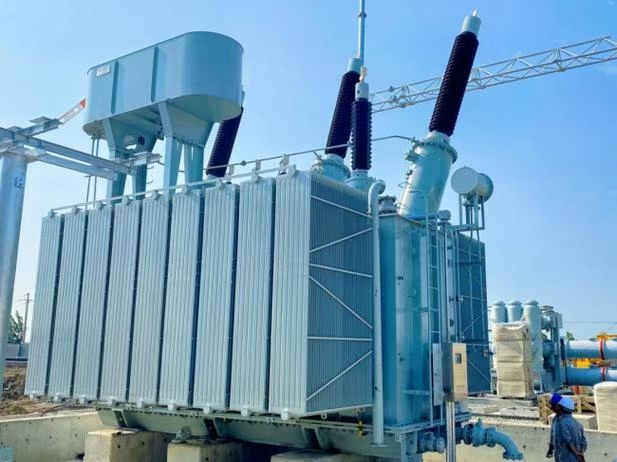
A power transformer should not be selected by comparing supplier quotations alone. A low purchase price can become expensive if the transformer has higher no-load or load losses, requires costly installation, needs frequent maintenance, or creates greater outage risk. Conversely, a higher-priced transformer may provide better lifetime economics through lower losses, stronger manufacturing quality, longer service life, and more suitable project integration. Buyers can optimize the total cost of power transformers by evaluating the complete lifecycle cost, including purchase price, transportation, installation, energy losses, maintenance, spare parts, financing, and potential outage costs, then balancing these costs against transformer capacity, efficiency, reliability, and expected operating conditions.
The lowest-priced power transformer quotation is normally the most economical choice over the transformer's service life.False
Initial purchase price is only one part of lifecycle cost. Transformer losses, maintenance, installation, reliability, financing, and outage consequences can make a higher-priced but more efficient and reliable transformer economically preferable.
What Should Be Included in the Total Cost of a Power Transformer?
The first step is to define what "total cost" actually means.
A practical purchasing model is:
[C{total}=C{purchase}+C{transport}+C{installation}+C_{commissioning}]
However, for lifecycle analysis, buyers should go further:
[LCC=C{initial}+C{energy}+C{maintenance}+C{spares}+C_{outage}]
where:
- (C_{initial}) = transformer purchase and project costs
- (C_{energy}) = cost of no-load and load losses
- (C_{maintenance}) = planned maintenance over the service life
- (C_{spares}) = spare parts and replacement equipment
- (C_{outage}) = economic impact of failures and downtime
This approach changes the procurement question from:
"Which transformer has the lowest quotation?"
to:
"Which transformer delivers the required performance at the lowest total ownership cost?"
Which Cost Components Should Buyers Compare?
| Cost Category | Main Factors | Optimization Focus |
|---|---|---|
| Purchase | Materials, capacity, voltage, accessories | Correct specification |
| Core | Electrical steel, core weight, no-load loss | Lower lifetime loss |
| Windings | Copper/aluminum, conductor design, load loss | Optimize conductor and losses |
| Insulation | Voltage class, materials, fluid | Reliability without overdesign |
| Cooling | Radiators, fans, pumps | Match actual thermal duty |
| Tank | Steel, dimensions, fabrication | Avoid unnecessary customization |
| Tap changer | OLTC range and controls | Specify required regulation |
| Transportation | Weight, dimensions, route | Optimize shipping configuration |
| Installation | Foundation, lifting, oil processing | Plan site work early |
| Energy | No-load and load losses | Evaluate lifetime energy cost |
| Maintenance | Oil, accessories, inspections | Favor maintainable designs |
| Outage | Failure probability and downtime | Improve reliability |
The correct balance depends on how the transformer will actually operate.
Why Is the Operating Profile So Important?
Transformer losses have different economic importance depending on loading.
No-load loss occurs whenever the transformer is energized.
Load loss changes with load current.
A simplified relationship for winding copper loss is:
[P_{load}\propto I^2]
Therefore, a transformer operating at low average load may place greater economic importance on no-load loss, while a heavily loaded transformer can place greater emphasis on load loss.
Buyers should therefore obtain an expected load profile rather than using only the nameplate MVA rating.
For example, the analysis can consider:
- Average loading
- Peak loading
- Daily operating hours
- Seasonal loading
- Energized hours
- Expected future load growth
This produces a more realistic economic comparison.
How Should Buyers Evaluate No-Load Losses?
No-load loss is particularly important for transformers that remain energized continuously.
A simplified annual energy-loss calculation is:
[E{NL}=P{NL}\times8760]
where (P_{NL}) is the no-load loss.
For example, if a transformer has a constant no-load loss of 10 kW:
[10\times8760=87,600\text{ kWh/year}]
That loss occurs even when the transformer carries little load.
Over many years, the cumulative energy cost can become much larger than the initial difference between two transformer quotations.
How Should Buyers Evaluate Load Losses?
Load losses depend strongly on operating current.
A simplified model is:
[E{LL}\approx P{LL,rated}\times LF^2\times H]
where:
- (P_{LL,rated}) = rated load loss
- (LF) = average load factor
- (H) = annual operating hours
The relationship is simplified because actual load profiles vary over time, but it illustrates an important point: load losses should be evaluated according to actual utilization, not just the rated value.
A transformer with slightly higher purchase price but substantially lower load losses may therefore provide better long-term value for a highly utilized application.
How Can Buyers Put a Financial Value on Efficiency?
A useful method is to convert guaranteed losses into lifetime energy cost.
For example:
[C{loss}=E{loss}\times C_{electricity}]
If electricity costs vary by time, buyers can use:
- Average energy price
- Time-of-use prices
- Demand charges
- Expected future electricity prices
For more sophisticated projects, buyers can use discounted cash flow rather than simply adding annual energy costs.
This makes efficiency improvements directly comparable with additional purchase price.
How Does Transformer Capacity Affect Total Cost?
Over-sizing a transformer is a common purchasing mistake.
A larger transformer may provide:
- More future capacity
- Lower loading
- Greater operational margin
But it may also increase:
- Purchase price
- Core material
- Winding material
- Tank size
- Cooling equipment
- Transportation
- Foundation requirements
- No-load loss
This creates a capacity optimization problem.
The buyer should ask:
How much capacity is actually required during the expected service life?
A sensible design may include reasonable growth margin without paying for excessive unused capacity.
How Should Future Load Growth Be Considered?
Future load growth can justify additional transformer capacity, but it should be quantified.
For example, buyers can model:
- Current load
- Expected annual growth
- Peak demand
- Expansion projects
- Renewable integration
- Seasonal demand
- Required reserve capacity
Then compare transformer alternatives over the expected planning period.
This is usually better than simply selecting the largest standard transformer available.
How Can Buyers Optimize Material Selection?
Core and winding materials should be evaluated using both initial and operating costs.
For the core, compare:
- Electrical-steel grade
- Core weight
- Guaranteed no-load loss
- Magnetic performance
For windings, compare:
- Copper versus aluminum
- Conductor dimensions
- Current density
- Guaranteed load loss
- Thermal performance
- Mechanical strength
The objective is not necessarily to choose the most expensive material.
It is to select the most economical material and design that meet the required performance and reliability criteria.
How Should Buyers Evaluate Transformer Cooling?
Cooling equipment should match the actual transformer duty.
An unnecessarily complex cooling system increases:
- Initial cost
- Auxiliary power consumption
- Maintenance
- Number of components
- Failure points
Insufficient cooling, however, can increase operating temperature and accelerate insulation aging.
The optimum solution should consider:
- Continuous rating
- Emergency rating
- Ambient temperature
- Altitude
- Load profile
- Cooling redundancy
- Fan/pump maintenance
- Auxiliary energy consumption
How Do Transportation and Installation Affect Total Cost?
The factory quotation can exclude significant site costs.
Buyers should evaluate:
- Transformer weight
- Dimensions
- Delivery distance
- Road restrictions
- Heavy-haul requirements
- Permits
- Escorts
- Crane capacity
- Foundation
- Oil processing
- Site assembly
- Commissioning
A transformer with a slightly lower factory price may become more expensive if it requires substantially more complex transportation or installation.
Early logistics planning can reduce these costs.
How Important Are Manufacturing Quality and Testing?
Manufacturing quality is difficult to express as a simple percentage of purchase price, but it can have a major influence on lifecycle economics.
Buyers should examine:
- Core manufacturing controls
- Winding quality
- Vacuum drying
- Moisture control
- Tank sealing
- Factory testing
- Material traceability
- Quality-control procedures
A strong factory acceptance test program can identify problems before shipment.
This is particularly valuable for large transformers because field repair or replacement can be extremely expensive.
How Should Buyers Value Reliability?
Reliability has an economic value.
A transformer failure can cause:
- Lost production
- Power interruption
- Emergency repairs
- Replacement equipment
- Labor costs
- Regulatory consequences
- Customer compensation
For an industrial facility, the cost of one hour of downtime may be much greater than the energy savings obtained from a small efficiency improvement.
For a utility, the consequences may include network congestion and service interruption.
Therefore, buyers should consider the application-specific value of reliability.
How Can Buyers Compare Supplier Quotations Fairly?
The most effective approach is to create a normalized technical-commercial comparison.
Every supplier should be evaluated against the same baseline.
| Parameter | Supplier A | Supplier B | Supplier C |
|---|---|---|---|
| Purchase price | — | — | — |
| MVA rating | — | — | — |
| Voltage ratio | — | — | — |
| No-load loss | — | — | — |
| Load loss | — | — | — |
| Impedance | — | — | — |
| Cooling system | — | — | — |
| Tap changer | — | — | — |
| Insulation level | — | — | — |
| Factory testing | — | — | — |
| Transportation | — | — | — |
| Installation | — | — | — |
| Warranty | — | — | — |
| Expected maintenance | — | — | — |
| Lifecycle cost | — | — | — |
This prevents a supplier from appearing cheaper simply because certain requirements were excluded from its quotation.
How Can Buyers Avoid Paying for Unnecessary Features?
Optimization also means avoiding unnecessary specifications.
Examples include:
- Excessive capacity
- Unnecessarily complex cooling
- Excessive tap range
- Unnecessary monitoring systems
- Over-specified environmental protection
- Special materials without measurable benefit
- Excessive testing beyond project requirements
However, cost reduction should never remove essential reliability or safety provisions.
The correct question is:
Does this specification requirement create measurable value for the application?
If the answer is no, it may be a candidate for optimization.
How Does Warranty Affect Total Cost?
Warranty terms should be evaluated alongside equipment price.
Buyers should review:
- Warranty duration
- Covered components
- Performance guarantees
- Loss guarantees
- Response procedures
- Replacement obligations
- Labor coverage
A longer or more comprehensive warranty may have commercial value, particularly for expensive high-voltage transformers.
However, warranty terms should not substitute for strong factory quality control.
How Can Buyers Use a Weighted Evaluation?
A practical procurement model can assign different weights to:
- Purchase cost
- Efficiency
- Reliability
- Technical compliance
- Manufacturing quality
- Delivery
- Warranty
- Supplier experience
For example:
| Evaluation Category | Example Weight |
|---|---|
| Initial cost | 25% |
| Efficiency/losses | 20% |
| Technical compliance | 20% |
| Reliability and manufacturing quality | 15% |
| Delivery/logistics | 10% |
| Warranty and service | 10% |
These percentages are examples rather than universal rules. A critical transmission project may assign much greater weight to reliability, while a highly cost-sensitive distribution project may place greater emphasis on efficiency and purchase price.
What Is the Best Strategy for Total-Cost Optimization?
The best strategy is usually a lifecycle optimization process:
1. Define the actual electrical duty.
Establish MVA, voltage, load profile, impedance, frequency, and operating conditions.
2. Establish environmental conditions.
Consider ambient temperature, altitude, pollution, humidity, seismic conditions, and fire requirements.
3. Define mandatory standards.
Identify applicable IEC, IEEE, utility, and local requirements.
4. Obtain comparable quotations.
Make sure suppliers quote the same technical scope.
5. Calculate loss costs.
Convert guaranteed no-load and load losses into annual and lifetime energy costs.
6. Evaluate installation and logistics.
Include transportation, foundation, lifting, oil processing, and commissioning.
7. Evaluate reliability.
Consider manufacturing quality, testing, warranty, service capability, and outage consequences.
8. Optimize specifications.
Remove unnecessary requirements while protecting safety and reliability.
9. Select based on total ownership cost.
Choose the transformer with the best combination of price, efficiency, reliability, and project suitability.
Conclusion
The cost of a power transformer is determined by a combination of materials, manufacturing, engineering, testing, logistics, and project-specific requirements. Core steel and winding conductors are major material costs, while insulation systems, tanks, cooling equipment, accessories, labor, and testing also contribute significantly to the final quotation. Buyers should compare suppliers based on the complete scope of supply rather than purchase price alone and consider operating losses, maintenance, transportation, and other lifecycle expenses. A detailed cost analysis can help buyers achieve the right balance between initial investment, transformer quality, efficiency, and long-term value.
FAQ
Q1: What are the main cost components of power transformers?
The cost of a power transformer is made up of several major components, with raw materials, manufacturing, engineering, testing, transportation, and project-specific requirements being the most important.
For large power transformers, core electrical steel and winding conductors are particularly significant material costs. U.S. Department of Energy research has identified copper and electrical steel as major contributors to large power transformer material costs, with their prices also affecting procurement strategies.
The main cost categories generally include:
Core materials – Primarily grain-oriented electrical steel used to create the magnetic core.
Winding conductors – Usually copper or aluminum, depending on the transformer design.
Insulation materials – Paper, pressboard, resin, insulating barriers, and related components.
Insulating and cooling fluid – For liquid-immersed transformers, this may include mineral oil or ester-based fluids.
Tank and structural components – Steel tanks, covers, supports, clamps, radiators, and associated hardware.
Bushings and accessories – Bushings, tap changers, protection devices, gauges, monitoring equipment, and control components.
Engineering and manufacturing labor – Design, winding, core assembly, drying, tank fabrication, assembly, and quality control.
Testing and inspection – Routine tests, special tests, factory acceptance testing, and third-party inspection.
Transportation and logistics – Particularly important for large transformers because of their size and weight.
Installation and commissioning – Field assembly, oil processing, testing, connection, and commissioning.
The relative proportion varies considerably according to transformer capacity, voltage class, cooling arrangement, insulation system, standards, and customization.
A small distribution transformer and a 500 MVA transmission transformer cannot be evaluated using the same cost structure. Large units require substantially more engineering, manufacturing capacity, specialized equipment, testing, and transportation.
Therefore, buyers should request a detailed commercial breakdown when comparing transformer quotations. Looking only at the equipment purchase price can hide substantial downstream costs.
For procurement, the most useful approach is to compare total delivered and installed cost, while also considering transformer losses and expected operating life.
Q2: How much do raw materials contribute to power transformer costs?
Raw materials can represent a very large portion of power transformer manufacturing costs, particularly for large power transformers.
The most important materials typically include:
Electrical steel
Copper or aluminum
Insulation materials
Transformer oil or ester fluid
Tank steel
Bushings
Radiator and cooling components
U.S. Department of Energy analysis has reported that raw materials represented approximately 57% to 67% of the total cost of a typical large power transformer in the U.S. during the period studied. Electrical steel and copper were among the largest material-cost contributors.
These percentages should not be treated as a universal modern pricing formula. Actual proportions vary with transformer design, commodity prices, labor costs, manufacturing location, and project specifications.
Electrical steel is used for the magnetic core. Its grade affects magnetic losses and transformer efficiency, so selecting a lower-cost material without considering performance can increase lifetime operating costs.
Copper is commonly used for windings because of its high electrical conductivity and mechanical properties. Copper prices can therefore have a significant effect on transformer quotations.
Other materials can also influence cost. High-voltage bushings, specialized insulation, tap changers, cooling equipment, and monitoring systems may become significant expenses in customized or high-voltage designs.
Commodity-price volatility is particularly important because transformer manufacturers may purchase materials months before the finished transformer is delivered.
This creates procurement risk for both manufacturers and buyers.
A buyer can manage this risk by specifying:
Material-price adjustment clauses
Quotation validity periods
Commodity-price assumptions
Fixed-price or indexed pricing structures
Approved material substitutions
Delivery schedules
The material strategy should also consider technical performance. A cheaper material is not necessarily more economical if it increases losses, reduces reliability, or shortens service life.
For this reason, buyers should evaluate material cost together with efficiency, reliability, availability, and lifecycle cost.
Q3: How do transformer capacity and voltage rating affect cost?
Transformer capacity and voltage rating are two of the most important technical factors affecting transformer cost.
A higher-capacity transformer generally requires larger or more robust components. Higher MVA ratings can require:
More conductor material
Larger magnetic cores
Greater insulation volume
Larger tanks
More powerful cooling systems
Stronger mechanical structures
Higher voltage ratings introduce another set of requirements.
As voltage increases, the transformer may require greater:
Insulation levels
Electrical clearances
Bushing performance
Winding insulation
Dielectric testing
Mechanical and electrical design controls
This means that two transformers with the same MVA rating can have significantly different prices if their voltage ratings are different.
The relationship between capacity and price is also not perfectly linear. Some costs are relatively fixed, including basic engineering, project management, documentation, and certain testing activities. As capacity increases, these costs may be distributed across a larger transformer rating.
However, very large transformers can introduce substantial additional costs related to:
Specialized manufacturing equipment
Large-capacity cranes
Factory testing
Special transportation
Site preparation
Installation
U.S. Department of Energy reports emphasize that large power transformers are custom-designed, capital-intensive equipment and that their size and weight create special procurement and transportation requirements.
Voltage and capacity should therefore be optimized together.
Oversizing can increase initial capital expenditure and no-load losses, while undersizing can cause excessive loading, reduced flexibility, and potentially premature aging.
The appropriate transformer should provide sufficient capacity for current demand and expected future growth without adding unnecessary cost.
Q4: How do engineering, manufacturing, testing, and accessories affect transformer prices?
Engineering, manufacturing, testing, and accessories can add substantial costs beyond the basic materials.
Power transformers are not simple off-the-shelf products in many medium- and high-capacity applications. They are often engineered according to specific requirements for voltage, capacity, impedance, losses, cooling, insulation, environmental conditions, and installation.
Engineering costs may include:
Electrical design
Magnetic design
Thermal calculations
Mechanical design
Insulation coordination
Short-circuit calculations
Drawings and documentation
Manufacturing costs include the labor and equipment required for:
Core cutting and stacking
Winding
Insulation assembly
Drying
Tank fabrication
Final assembly
Oil processing
Large transformers require specialized manufacturing infrastructure, including large factory floor areas, cranes, drying equipment, and testing facilities.
Testing costs depend on the project specification. Routine testing is normally required, while special tests may be added for critical projects.
Additional equipment can also significantly change the quotation.
Examples include:
On-load tap changers
Motor drives
Cooling fans
Oil pumps
Radiators
Temperature indicators
Buchholz relays
Pressure-relief devices
Online monitoring systems
Digital condition-monitoring equipment
IEC 60076-1 establishes general requirements for power transformers and includes provisions relating to ratings, testing, transport, safety, environmental considerations, and other transformer requirements.
This is why buyers should provide a complete technical specification before requesting quotations.
If two suppliers quote different accessory packages or testing scopes, their headline prices may not be directly comparable.
A proper commercial comparison should therefore normalize:
Transformer + accessories + testing + documentation + packaging + transportation + installation requirements
This produces a much more meaningful comparison than simply choosing the lowest equipment price.
References
IEC 60076-1 – Power Transformers: General
https://webstore.iec.ch/en/publication/588
U.S. Department of Energy – Large Power Transformers and the U.S. Electric Grid
https://www.energy.gov/ceser/articles/large-power-transformers-and-us-electric-grid-report-update-april-2014
U.S. Department of Energy – Large Power Transformer Resilience Report
https://www.energy.gov/sites/default/files/2024-10/EXEC-2022-001242%20-%20Large%20Power%20Transformer%20Resilience%20Report%20signed%20by%20Secretary%20Granholm%20on%207-10-24.pdf
U.S. Department of Energy – Materials Innovation for the Electric Grid
https://www.energy.gov/sites/default/files/2016/06/f32/OE%20ORNL%20Materials%20Innovation%20for%20Grid%20Workshop%20Scoping%20Document%20FINAL.pdf
U.S. Department of Energy – Distribution Transformer Energy Efficiency
https://www.energy.gov
IEEE Standards Association – Transformer Standards
https://standards.ieee.org