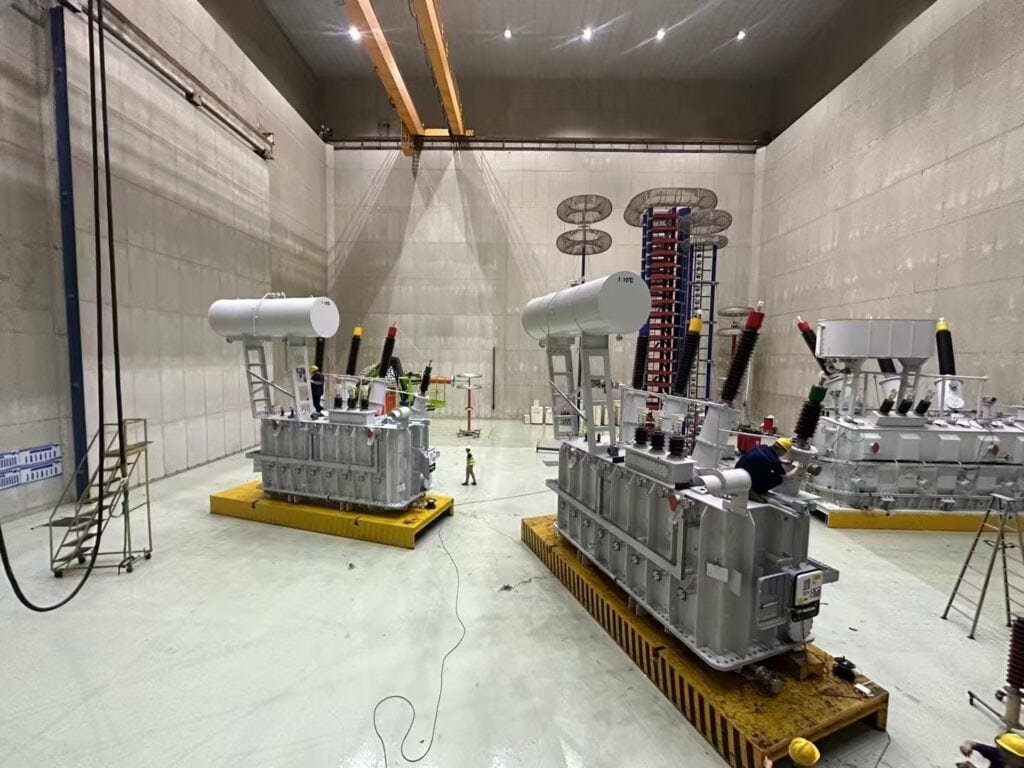
Transformer testing is essential to ensuring product quality, safety, and long-term reliability. During manufacturing and before commissioning, transformers undergo two major categories of tests: routine tests and special tests. Each category serves a specific purpose—routine tests verify fundamental performance and safety for every unit produced, while special tests provide deeper validation when required by customers, standards, or unique operating conditions. Understanding these tests helps engineers, buyers, and operators ensure that the transformer will perform reliably throughout its service life.
What Are Routine Tests and Why Are They Performed on Every Transformer?
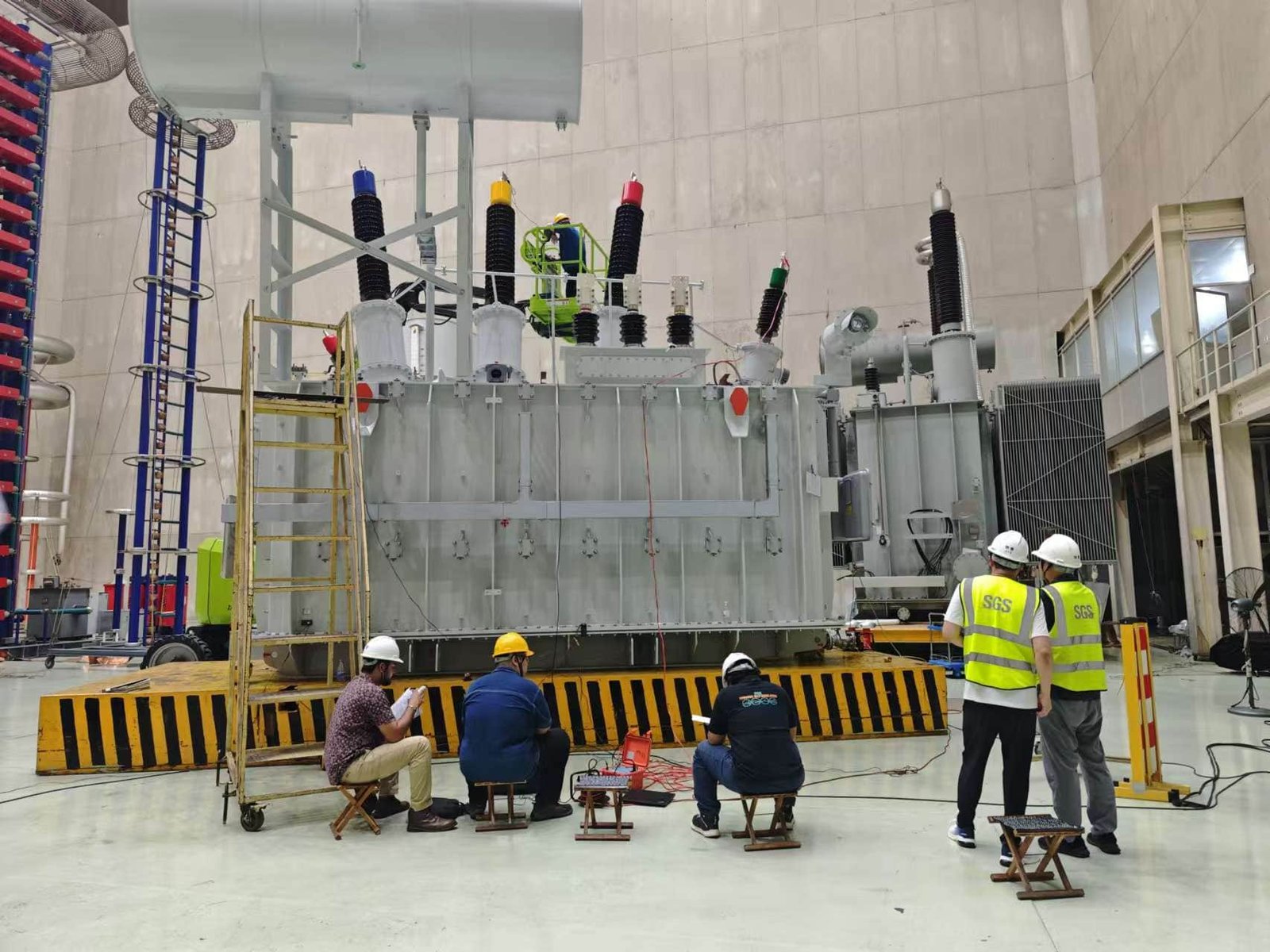
Routine tests are a mandatory part of transformer quality assurance, carried out on every unit produced, regardless of size, voltage class, or application. Their purpose is simple but crucial: to verify that the transformer meets the performance, safety, and reliability requirements defined in international standards such as IEC 60076, IEEE C57, and various utility specifications. These tests ensure that every transformer leaving the factory is free from manufacturing defects, properly assembled, and capable of operating safely under expected field conditions.
Routine tests do not validate long-term durability—that role belongs to type and special tests—but they confirm that the transformer’s fundamental electrical characteristics meet the guaranteed parameters. Without routine tests, even minor issues such as insulation defects, winding errors, or assembly flaws could lead to in-service failure, safety risks, or costly downtime.
1. Purpose of Routine Tests: Ensuring Basic Safety and Performance
Routine tests answer three essential questions:
Is the transformer safe to energize?
– Verifies insulation integrity and dielectric strength
– Confirms no risk of short-circuit or internal flashoverDoes it meet the contractual electrical specifications?
– Checks voltage ratio, impedance, polarity, no-load losses, and load lossesIs it free from manufacturing or assembly defects?
– Detects workmanship issues before the transformer is shipped
These tests serve as the final quality checkpoint before a transformer enters operational service.
2. Common Routine Tests Conducted on Every Transformer
The exact list depends on the standard (IEC vs. IEEE), but the key tests typically include:
a. Measurement of Winding Resistance
Confirms correct conductor material, cross-section, and proper joints. High resistance indicates poor connections or manufacturing defects.
b. Verification of Voltage Ratio, Vector Group, and Polarity
Ensures correct electrical configuration. Any deviation may cause phase displacement errors, circulating currents, or system instability.
c. Insulation Resistance and Dielectric Tests
Examples include:
- Applied voltage test
- Induced voltage test
- Power frequency withstand test
These validate the integrity of insulation between windings and between windings and the core.
d. No-load Loss and No-load Current Measurement
Assesses core quality and lamination accuracy. Deviations may indicate poor steel properties, improper assembly, or magnetic defects.
e. Load Loss and Impedance Measurement
Critical for verifying conductor quality and thermal design. Ensures proper short-circuit performance and system protection coordination.
f. Oil Tests (for Oil-Immersed Units)
Includes:
- Dielectric strength of oil
- Moisture content
- Acidity
- Dissolved gas analysis (in some specifications)
These tests confirm the oil is clean, dry, and insulating effectively.
g. Pressure or Leak Testing (Oil-Filled Transformers)
Ensures the tank and radiators are sealed, preventing environmental contamination.
3. Why Routine Tests Are Performed on Every Transformer
Routine tests are essential due to production variability. Even with advanced manufacturing processes, variables such as:
- Material defects
- Assembly misalignment
- Loose mechanical connections
- Incorrect tap-changer settings
- Contaminated insulation
- Improper winding tension during production
may occur. Routine tests help catch these issues immediately, long before the transformer reaches the customer.
Additionally, routine tests:
- Protect utilities and industries from operational failures
- Ensure compliance with contractual and regulatory standards
- Provide the manufacturer with traceable quality records
- Reduce warranty claims and unexpected downtime
Routine testing is not optional; it is a critical safety and reliability requirement.
4. Routine Tests Are the Last Line of Defense Against Early Failure
Many transformer failures occur within the first hours or days of commissioning—typically due to manufacturing or assembly defects that were not detected. Routine tests:
- Prevent catastrophic failures at energization
- Confirm proper insulation strength
- Validate thermal and electrical parameters
- Ensure no internal short circuits exist
- Guarantee the transformer will operate safely under rated conditions
In short, routine tests dramatically reduce early-life risk, one of the most failure-prone periods in a transformer's lifetime.
Which Routine Tests Are Required by IEC/IEEE Standards?
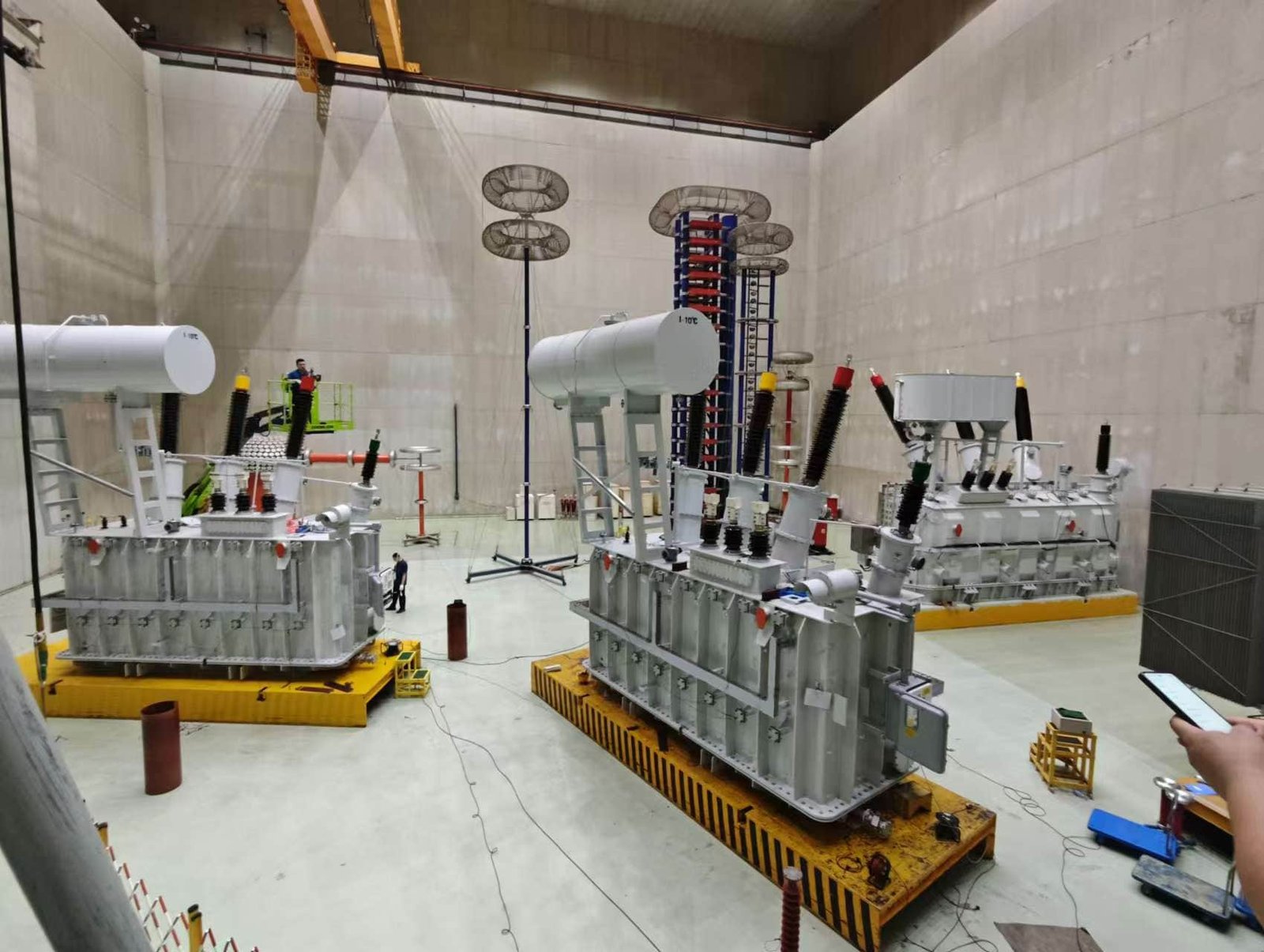
Routine tests are mandatory factory tests performed on every transformer before it leaves the manufacturing facility. Both IEC and IEEE standards define specific routine tests to ensure safety, performance, and manufacturing quality. Although the two standards differ slightly in terminology and test conditions, their purpose is the same: to confirm that each transformer meets guaranteed electrical specifications and is safe for energization.
Below is a clear, detailed breakdown of the routine tests required by IEC 60076 and IEEE C57.
1. Winding Resistance Measurement
Standards:
- IEC 60076-1
- IEEE C57.12.90
This test verifies that the winding conductors, brazed joints, and tap connections are properly built. Abnormally high or imbalanced resistance indicates poor connections or damaged conductors.
Purpose:
- Detects incorrect winding material
- Identifies loose or poor brazed joints
- Confirms proper tap changer functioning
2. Ratio, Polarity, and Vector Group Verification
Standards:
- IEC 60076-1
- IEEE C57.12.90
Every transformer must operate with the correct phase displacement and turns ratio. Any deviation can cause system instability, circulating currents, or malfunction in multi-transformer systems.
Confirms:
- Turns ratio accuracy
- Correct polarity
- Correct vector group (e.g., Dyn11, YNd1, etc.)
3. No-Load Loss and No-Load Current Test
Standards:
- IEC 60076-1
- IEEE C57.12.90
Performed at rated voltage and frequency to verify the performance of the core.
Purpose:
- Confirms core steel quality
- Detects core joint gaps or mechanical defects
- Ensures proper lamination and assembly
Deviation from guaranteed values is unacceptable under both IEC and IEEE.
4. Load Loss and Impedance Voltage Measurement
Standards:
- IEC 60076-1
- IEEE C57.12.90
Defines transformer efficiency under load and validates conductor and winding geometry.
Verifies:
- Copper losses
- Impedance within guaranteed tolerance
- Proper short-circuit withstand design
Both standards specify allowable tolerance bands.
5. Insulation Resistance Measurement (IR Test)
Standards:
- IEC 60076-1
- IEEE C57.12.90
Measured between windings and from each winding to the tank. IR values confirm dry, clean insulation.
Purpose:
- Identifies moisture in insulation
- Detects contamination or insulation degradation
- Ensures safe dielectric performance
6. Applied Voltage (AC Withstand) Test
Standards:
- IEC 60076-3
- IEEE C57.12.90
This is a crucial dielectric test verifying insulation strength between windings and between windings and ground.
Performed at:
- High AC voltage
- Specified duration (usually 1 minute)
Failure here indicates insulation breakdown risk.
7. Induced Voltage Withstand Test
Standards:
- IEC 60076-3
- IEEE C57.12.90
High-frequency or over-voltage AC is applied to ensure insulation between turns and between phases is robust.
Purpose:
- Detects turn-to-turn insulation weakness
- Validates phase insulation
- Confirms proper winding geometry
This is one of the most critical routine tests.
8. Partial Discharge (PD) Measurement (Mandatory in IEC for MV/HV)
Standards:
- IEC 60076-3 (required for most MV/HV units)
- IEEE C57 (not always mandatory, depends on transformer class)
PD testing ensures high-voltage insulation is free from defects that could grow into failures.
Detects:
- Voids in insulation
- Poor coil impregnation
- Contaminants or moisture
IEC requires PD limits; IEEE often includes it as a type or special test depending on customer specs.
9. Oil Tests for Oil-Immersed Transformers
Test items:
- Dielectric strength
- Moisture (ppm)
- Acidity
- Resistivity
Standards:
- IEC 60296
- IEC 60422
- IEEE C57.106
These tests ensure the transformer oil is clean, dry, and provides proper insulation.
10. Tank Pressure or Leak Test
Required for sealed-tank oil-filled transformers.
Purpose:
- Ensures tank integrity
- Prevents future oil leaks
- Confirms weld and gasket quality
Standards referenced: IEC 60076-1 and IEEE design guidelines.
Summary Table: Routine Tests Required by IEC vs. IEEE
| Test | IEC 60076 | IEEE C57 | Mandatory for All Units? |
|---|---|---|---|
| Winding resistance | Yes | Yes | Yes |
| Ratio & vector group | Yes | Yes | Yes |
| No-load loss/current | Yes | Yes | Yes |
| Load loss & impedance | Yes | Yes | Yes |
| Insulation resistance | Yes | Yes | Yes |
| Applied voltage (AC withstand) | Yes | Yes | Yes |
| Induced voltage test | Yes | Yes | Yes |
| Partial discharge | Yes | Sometimes | IEC-mandatory for MV/HV |
| Oil quality tests | Yes | Yes | Oil-immersed only |
| Tank leak/pressure test | Yes | Yes | Oil-immersed only |
What Are Special Tests and When Are They Needed?
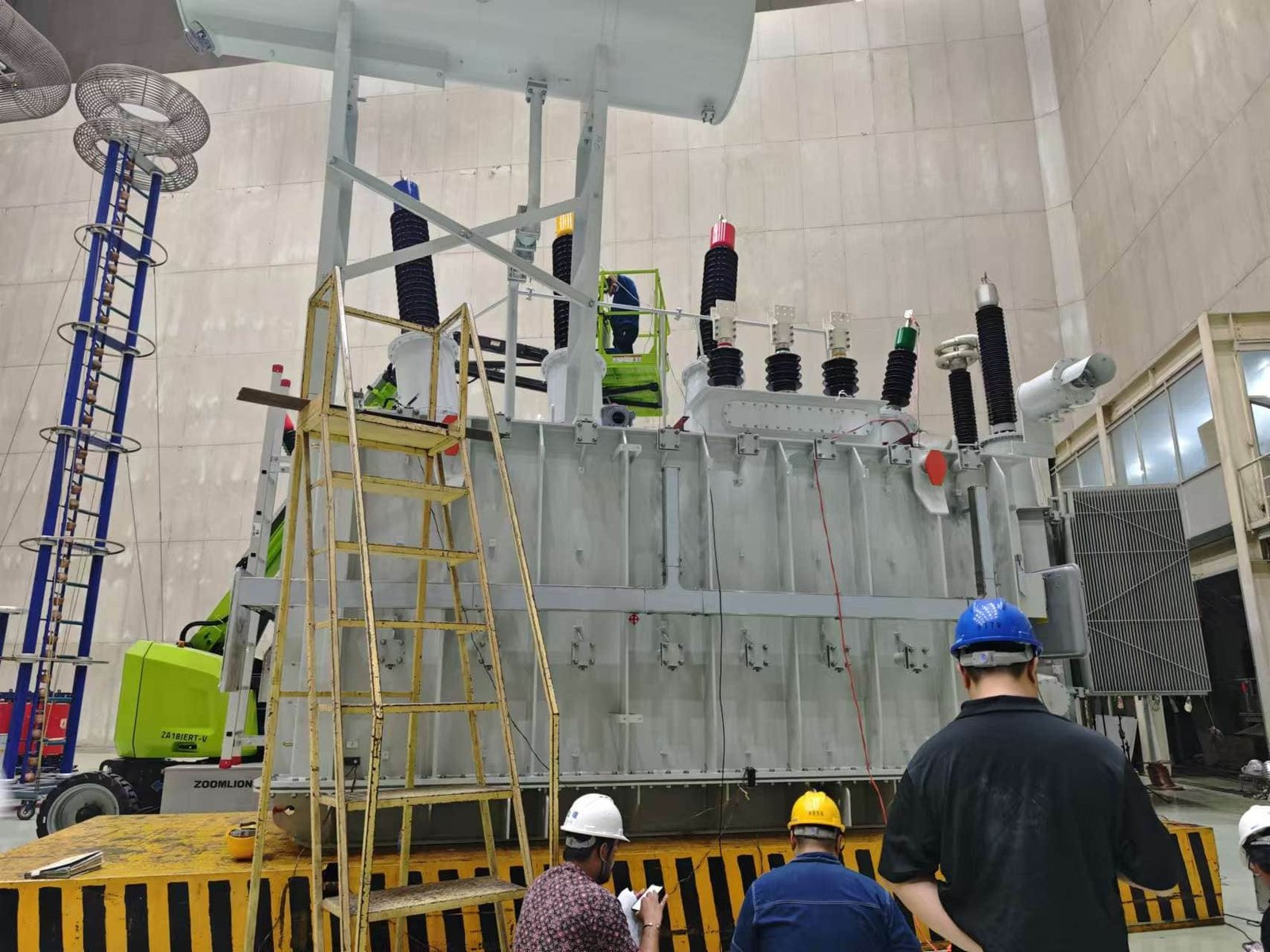
Special tests are optional, customer-specified tests performed in addition to routine and type tests. They are used to verify specific performance characteristics that are important for certain applications, environments, or system requirements. While routine tests confirm basic safety and manufacturing quality, and type tests validate design compliance, special tests address unique technical needs that vary by project.
Special tests are defined in both IEC 60076 and IEEE C57, but they are performed only when requested by the purchaser or required by a project specification.
1. Temperature Rise Test at Non-Standard Conditions
Normally a type test, but can be a special test if required at:
- Non-standard ambient temperatures
- Special cooling configurations
- Derated or elevated load profiles
When needed:
- High-altitude installations
- Industrial sites with elevated ambient temperatures
- Data centers or EV charging hubs with high continuous load
2. Sound Level Measurement
IEC and IEEE provide noise limits, but detailed sound profiles are optional.
Verifies:
- Compliance with stricter customer noise limits
- Suitability for residential or noise-sensitive locations
When needed:
- Hospitals
- Urban substations
- Commercial buildings
3. Harmonic and Overload Performance Tests
These tests evaluate how the transformer behaves under non-linear loads (e.g., harmonics from power electronics).
When needed:
- Solar inverters
- Wind turbine converters
- Industrial VFDs
- Data center UPS systems
4. Insulation Power-Factor (Tan δ) and Dissipation Factor Tests
These tests measure insulation quality beyond basic dielectric checks.
When needed:
- High-voltage units
- Critical grid infrastructure
- Aged or refurbished transformers
5. Lightning Impulse Tests for Special BIL Ratings
Impulse testing is normally a type test, but can be a special test when:
- A higher BIL rating is ordered
- The transformer is for harsh lightning regions
- Customer requires additional impulse verification
6. Short-Circuit Withstand Test (Non-Destructive)
A destructive short-circuit test is a type test, but additional non-destructive current tests can be special.
When needed:
- Transformers installed in systems with high fault levels
- Industrial plants or grid-interconnected substations
7. Partial Discharge (PD) at Stricter Limits
Routine PD is required for many MV/HV units; a special test applies stricter limits or additional measurements.
When needed:
- GIS-connected transformers
- Renewable energy step-up transformers
- Projects requiring high insulation reliability
8. Vibration and Mechanical Integrity Tests
Evaluates the transformer’s ability to withstand mechanical shocks or transport vibration.
When needed:
- Offshore wind platforms
- Marine or mining environments
- Mobile substations
9. FRA (Frequency Response Analysis)
Checks winding mechanical integrity.
When needed:
- Transport-sensitive projects
- Units with long-distance shipping
- Customers requiring baseline fingerprints
10. SFRA or Dielectric Response Tests (For HV Units)
Optional insulation diagnostics to evaluate moisture and aging characteristics.
When needed:
- High reliability power utilities
- Long-lifespan infrastructure projects
When Are Special Tests Required?
Special tests are typically needed when:
1. The Project Has Unique Operating Conditions
- High harmonic distortion
- Frequent overloads
- Extreme temperatures
- High fault level grids
2. The Installation Environment Is Sensitive
- Urban areas (noise limits)
- Indoor installations (temperature limits)
- Critical infrastructure (higher dielectric security)
3. The Customer Demands Higher-Than-Standard Performance
- Stricter noise requirements
- Reduced PD levels
- Enhanced mechanical strength
- Verified overload capabilities
4. The Utility or EPC Requires Additional Verification
Common for:
- Renewables (wind/solar step-up transformers)
- Rail systems
- Data centers
- Offshore platforms
How Do Special Tests Validate Performance Beyond Standard Requirements?
Special tests play a crucial role in verifying transformer performance under non-standard, application-specific, or high-risk operating conditions. While routine tests prove manufacturing quality and type tests confirm design compliance with IEC/IEEE standards, special tests allow engineers and buyers to evaluate additional performance characteristics that go beyond baseline requirements. These tests provide confidence that the transformer can operate reliably in environments, duty cycles, or system configurations that standard tests do not fully represent.
Special tests ensure that the transformer not only meets minimum industry requirements but is also optimized for its exact operating environment, enhancing reliability, safety, and lifespan.
1. They Confirm Performance Under Unique Environmental Conditions
Special tests validate that the transformer can maintain stable operation in challenging or non-standard environments such as:
- High altitude (reduced cooling efficiency)
- Coastal or offshore locations (salt, humidity, vibration)
- Extreme heat or cold
- Indoor spaces with limited ventilation
Through tests like special temperature-rise verification, humidity endurance, or mechanical vibration evaluations, engineers ensure the transformer will not fail prematurely when exposed to abnormal environmental stresses.
2. They Validate Behavior Under Complex Electrical Loads
Modern electrical systems—especially those supported by renewables, EV charging, or digital infrastructure—produce load patterns that differ significantly from traditional linear loads.
Special tests such as:
- Harmonic current withstand tests
- Overload endurance tests
- Stray loss verification
- Enhanced partial discharge measurement
confirm that the transformer can handle non-linear, distorted, or rapidly changing loads without overheating, insulation failure, or increased aging. These tests ensure performance beyond what routine tests can predict.
3. They Provide Deeper Insight Into Insulation Strength and Dielectric Reliability
Standard dielectric tests confirm basic insulation integrity, but special tests provide more sensitive and diagnostic-level validation, such as:
- Dissipation factor (tan δ) analysis
- Dielectric response (FDS/DRS)
- Advanced partial discharge measurement at tighter limits
These tests reveal early-stage insulation issues that standard tests may not detect. The results allow operators to evaluate long-term reliability and anticipate aging behavior under real-world stresses.
4. They Ensure Mechanical Robustness for High-Stress Applications
Transformers installed in heavy industrial plants, high-fault-level grids, or transport-heavy projects require greater mechanical resilience.
Special tests such as:
- Frequency Response Analysis (FRA)
- Short-circuit withstand verification (non-destructive)
- Transport shock and vibration testing
validate that the transformer can withstand mechanical shocks, electromagnetic forces during faults, and repeated load cycling—factors that standard tests do not fully simulate.
5. They Confirm Noise and Thermal Performance Beyond Standard Limits
In noise-sensitive or temperature-restricted installations, normal standards may not be sufficient. Custom noise or thermal tests validate:
- Compliance with stricter noise exposure limits
- Ability to dissipate heat in confined spaces
- Cooling performance under special ventilation conditions
This ensures the transformer performs reliably without violating site constraints.
6. They Align Transformer Capability With Customer-Specific Specifications
In many EPC, utility, and industrial projects, the transformer must meet specifications that go beyond IEC/IEEE minimums. Special tests provide the technical evidence needed to confirm:
- Custom BIL lightning impulse ratings
- Special impedance tolerances
- Enhanced efficiency guarantees
- Extended load cycles
- Reduced partial discharge thresholds
These tests demonstrate compliance with contractual performance guarantees, preventing disputes and ensuring the transformer is engineered exactly for the project’s needs.
Conclusion
Routine tests confirm that every transformer meets essential safety, electrical, and functional requirements before leaving the factory. Special tests, on the other hand, offer enhanced verification for specific performance aspects—such as noise level, temperature rise, or short-circuit strength—tailored to customer specifications or demanding applications. Together, these test categories ensure the transformer is both compliant with international standards and capable of delivering reliable, efficient performance throughout its operational lifetime.
FAQ
Q1: What are routine tests for transformers?
Routine tests are mandatory factory tests performed on every transformer before shipment to ensure that each unit meets the required design, performance, and safety standards. These tests verify electrical characteristics, insulation strength, losses, and workmanship quality. According to IEC 60076, routine tests typically include:
Measurement of winding resistance – Confirms proper conductor connections and detects loose or damaged windings.
Ratio, polarity, and phase displacement tests – Ensure correct transformation ratio and vector group accuracy.
Short-circuit impedance and load-loss tests – Verify copper losses and mechanical integrity.
No-load loss and no-load current tests – Measure core losses and magnetizing characteristics.
Induced AC withstand voltage test – Confirms insulation performance under operating frequency stress.
Applied AC withstand voltage test – Validates basic insulation level (BIL).
Partial discharge test (for dry type transformers) – Ensures low discharge activity for long insulation life.
These tests guarantee that every transformer shipped complies with contractual and standard requirements.
Q2: What are special tests for transformers?
Special tests are optional, performed upon customer request or when required by project specifications. They evaluate additional performance characteristics or verify suitability for demanding applications. Typical special tests include:
Temperature-rise test – Confirms cooling efficiency and thermal limits under full load.
Lightning impulse test (LI/BIL test) – Tests high-voltage insulation against lightning surges.
Sound level measurement – Ensures compliance with noise regulations, especially for urban installations.
Short-circuit withstand test – Verifies mechanical robustness against fault currents.
No-load current harmonics test – Required in sensitive electrical networks.
Insulation power factor/tan delta test – Evaluates insulation aging and moisture levels.
Vibration or seismic test – Required in earthquake-prone regions or special structural designs.
Special tests help buyers confirm reliability under specific environmental, operational, or regulatory conditions.
Q3: Why are routine tests mandatory while special tests are optional?
Routine tests ensure that every transformer built meets the minimum safety and performance criteria established by IEC, IEEE, or national standards. Without these tests, manufacturers cannot guarantee product quality or certify compliance.
Special tests, however, evaluate additional properties that may not apply to all transformers. Not every application requires impulse withstand levels, noise testing, or seismic testing. Thus, they are performed only when specified by the buyer, engineering consultant, or local regulations.
Q4: How do routine and special tests affect transformer pricing?
Routine tests are included in the standard manufacturing cost.
Special tests, however, add additional costs because they require:
Extra time
Additional test equipment
Higher energy usage
Expert test engineers
Custom test setups for impulse, temperature rise, vibration, etc.
A transformer with extensive special test requirements can cost 5–20% more depending on test complexity.
Q5: How can buyers decide which special tests are necessary?
Buyers should specify special tests based on:
Voltage level (higher voltage = more insulation tests)
Installation environment (seismic, noise-sensitive, corrosive, etc.)
Criticality of service (hospitals, data centers, utilities, heavy industry)
Grid standards and utility requirements
Expected load profile and harmonics
Safety compliance
A consultant or transformer specialist typically prepares a Factory Acceptance Test (FAT) plan combining routine and selected special tests.
References
IEC 60076 – Power Transformers
https://webstore.iec.ch/publication/602
IEEE C57 Transformer Testing Standards
https://ieeexplore.ieee.org
Schneider Electric – Distribution Transformer Testing
https://www.se.com
NEMA Standards for Transformer Performance
https://www.nema.org
Doble Engineering – Electrical Insulation Testing
https://www.doble.com
EEP – Transformer Routine and Type Tests
https://electrical-engineering-portal.com
ASTM Standards for Electrical Insulation Testing
https://www.astm.org