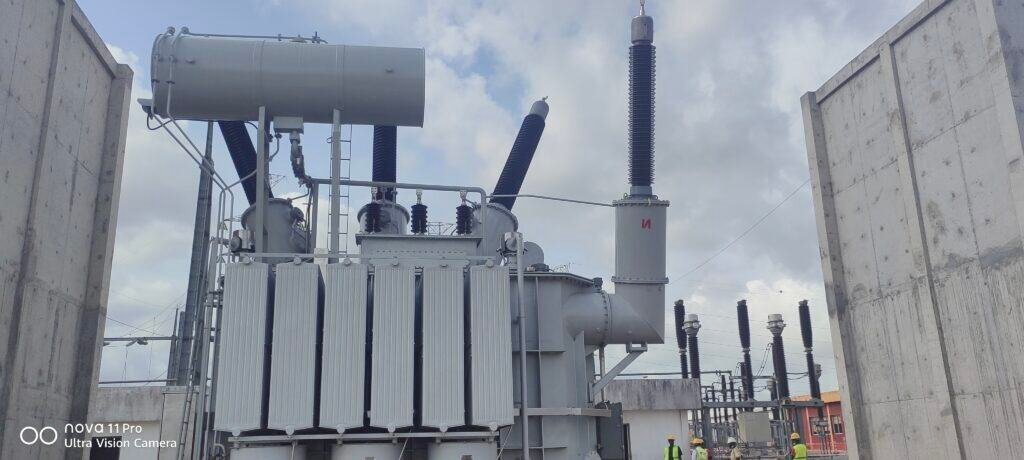
Transformer capacity is one of the most important factors influencing the purchase price of a power transformer. As capacity increases, the transformer generally requires more active materials, larger components, stronger mechanical structures, greater cooling capability, and more extensive testing. If buyers focus only on the MVA rating without considering how capacity affects the complete design, they may either overpay for unnecessary capacity or select an undersized transformer that creates operational and expansion risks. Understanding the relationship between capacity and price helps buyers make more accurate procurement and budgeting decisions.
Transformer capacity directly impacts power transformer pricing because higher-capacity transformers generally require more copper or aluminum conductors, electrical steel, insulation materials, transformer oil, structural components, and larger cooling systems. However, price does not increase in a simple one-to-one relationship with MVA capacity because voltage level, cooling method, insulation requirements, impedance, customization, efficiency targets, testing, and manufacturing complexity also significantly affect the final cost.
For buyers, the objective should not simply be to purchase the largest transformer at the lowest unit price. The right approach is to match transformer capacity with current load demand, expected growth, system conditions, and lifecycle requirements while understanding the cost implications of each specification.
How Does Transformer Capacity Impact Power Transformer Pricing?
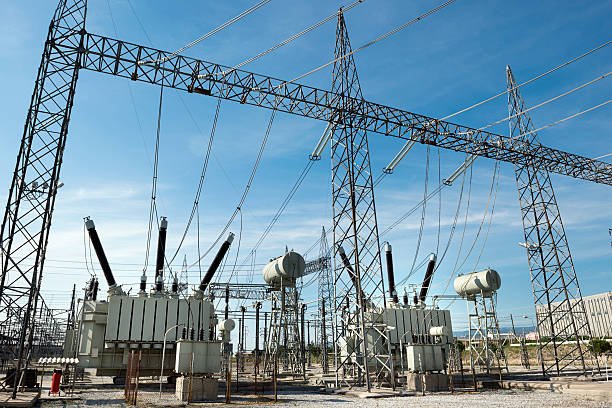
Transformer capacity is one of the first specifications buyers look at when estimating the price of a power transformer, because a higher MVA rating generally requires a larger magnetic core, more conductor material, greater cooling capacity, a stronger tank, and more demanding testing. However, transformer price does not increase in direct proportion to capacity. A 100 MVA transformer is not necessarily twice the price of a 50 MVA transformer because many costs are influenced by voltage class, insulation requirements, cooling system, accessories, efficiency targets, transportation, and project-specific customization.
Transformer capacity affects pricing primarily through the amount and size of core and winding materials, thermal and mechanical design requirements, cooling equipment, tank construction, and factory testing. As MVA capacity increases, the total transformer price normally increases, but the price per MVA can decrease because some engineering, control, testing, and auxiliary costs are spread across a larger unit. Buyers should therefore compare both total purchase price and normalized cost per MVA while keeping voltage, impedance, cooling, losses, accessories, and delivery conditions consistent.
Transformer price increases exactly in proportion to MVA capacity.False
Capacity strongly influences material quantities and design complexity, but transformer pricing is also affected by voltage level, insulation, cooling, losses, accessories, customization, logistics, and market conditions.
![Featured image placeholder: Engineers reviewing large power transformers of different MVA ratings in a modern manufacturing facility.]
AI image prompt: "Large power transformers with different MVA capacities, industrial engineering photography, detailed transformer tanks and bushings with engineers reviewing technical specifications, modern power transformer manufacturing facility, realistic heavy electrical equipment, professional procurement and engineering atmosphere, clean industrial environment, balanced factory lighting, photorealistic high detail"
Why Does Higher Capacity Usually Increase Transformer Cost?
The basic reason is that a higher-capacity transformer must transfer more apparent power while maintaining acceptable temperature rise, insulation performance, mechanical strength, and efficiency. This generally requires larger active components.
The core may need a greater cross-sectional area and increased magnetic-circuit dimensions. The windings require more conductor material or larger conductors to carry the required current. The tank and structural components must withstand greater mechanical forces, while the cooling system must remove the additional heat generated during operation.
| Cost Driver | Effect of Increasing Capacity |
|---|---|
| Core material | Generally increases |
| Winding conductor | Generally increases |
| Insulation system | Often increases |
| Tank and structural steel | Generally increases |
| Cooling equipment | Usually increases |
| Bushings and accessories | May increase depending on voltage and design |
| Factory testing | More demanding for larger units |
| Transportation | Can increase substantially |
| Engineering | May increase, but not necessarily proportionally |
Capacity therefore creates a broad cost impact rather than simply increasing the quantity of one component.
Does Voltage Matter More Than Capacity?
In some projects, yes. A relatively moderate-MVA transformer with a very high voltage rating can be more expensive than a higher-capacity transformer designed for a lower voltage class.
Higher voltage requires greater insulation distances, more sophisticated bushings, insulation structures, clearances, and testing. For this reason, buyers should never compare transformer prices using MVA alone.
For example, a meaningful quotation comparison should keep at least the following parameters aligned:
- Rated capacity
- Primary and secondary voltage
- Frequency
- Number of phases
- Percentage impedance
- Cooling class
- Insulation level
- Tap-changer type and range
- No-load and load-loss guarantees
- Accessories
- Applicable standards
- Factory testing requirements
How Does Capacity Affect Price per MVA?
Although total price normally rises with capacity, the price per MVA may decrease as transformer size increases. Engineering design, documentation, project management, certain testing activities, and some auxiliary systems contain relatively fixed costs.
A simplified example illustrates the concept:
| Transformer Capacity | Illustrative Total Cost | Illustrative Cost/MVA |
|---|---|---|
| 20 MVA | $1.0 million | $50,000/MVA |
| 50 MVA | $2.0 million | $40,000/MVA |
| 100 MVA | $3.5 million | $35,000/MVA |
These figures are illustrative rather than market quotations. Actual prices vary substantially by voltage, design, country, materials, supplier, specifications, and market conditions.
The important procurement lesson is that buyers should examine both the total investment and the normalized cost rather than assuming that the lowest total-price transformer is automatically the most economical option.
How Do Cooling Requirements Influence Pricing?
Capacity has a direct relationship with heat generation. As transformer capacity increases, the manufacturer may need more sophisticated cooling arrangements, such as larger radiators, fans, pumps, or different combinations of natural and forced cooling.
Cooling requirements can also influence the physical size of the transformer and the number of accessories installed. A transformer designed for multiple cooling stages may therefore cost more than a similar-capacity unit with a simpler cooling arrangement.
Buyers should verify whether the quoted price includes the complete cooling system required for the specified rating or whether certain fans, pumps, controls, or spare components are priced separately.
How Do Loss Guarantees Affect the Price?
Two transformers with identical MVA ratings can have noticeably different prices if their guaranteed losses differ.
A manufacturer may use higher-performance electrical steel, larger conductor cross-sections, optimized magnetic flux density, or additional design measures to achieve lower no-load and load losses. These improvements can increase the initial purchase price but potentially reduce energy costs throughout the transformer's operating life.
Therefore, capacity should be evaluated together with the transformer's total cost of ownership.
What Should Buyers Compare When Reviewing Quotations?
A useful comparison should normalize the technical specifications before comparing prices.
| Item | Supplier A | Supplier B | Supplier C |
|---|---|---|---|
| MVA rating | Same basis | Same basis | Same basis |
| Voltage ratio | Same basis | Same basis | Same basis |
| Impedance | Same basis | Same basis | Same basis |
| Cooling | Same basis | Same basis | Same basis |
| No-load loss | Compare | Compare | Compare |
| Load loss | Compare | Compare | Compare |
| Tap changer | Compare | Compare | Compare |
| Accessories | Included? | Included? | Included? |
| FAT scope | Same? | Same? | Same? |
| Delivery | Compare | Compare | Compare |
| Warranty | Compare | Compare | Compare |
| Total price | Compare | Compare | Compare |
If one supplier offers a significantly lower price, buyers should determine whether the difference comes from genuine manufacturing efficiency or from omitted accessories, weaker loss guarantees, different testing scope, shorter warranty coverage, or different delivery terms.
Can Oversizing Increase the Project Cost Unnecessarily?
Yes. Selecting a transformer with substantially more capacity than the actual system requirement increases capital expenditure and may increase physical footprint, transportation requirements, and certain auxiliary costs.
At the same time, undersizing can create thermal loading, reduced operating flexibility, accelerated aging, and future expansion problems. The objective should therefore be an appropriately engineered capacity with reasonable allowance for expected load growth.
Buyers should base capacity selection on the present load, expected future demand, load diversity, emergency loading requirements, parallel-transformer strategy, and the consequences of transformer failure.
How Do Higher MVA Ratings Increase Power Transformer Manufacturing Costs?
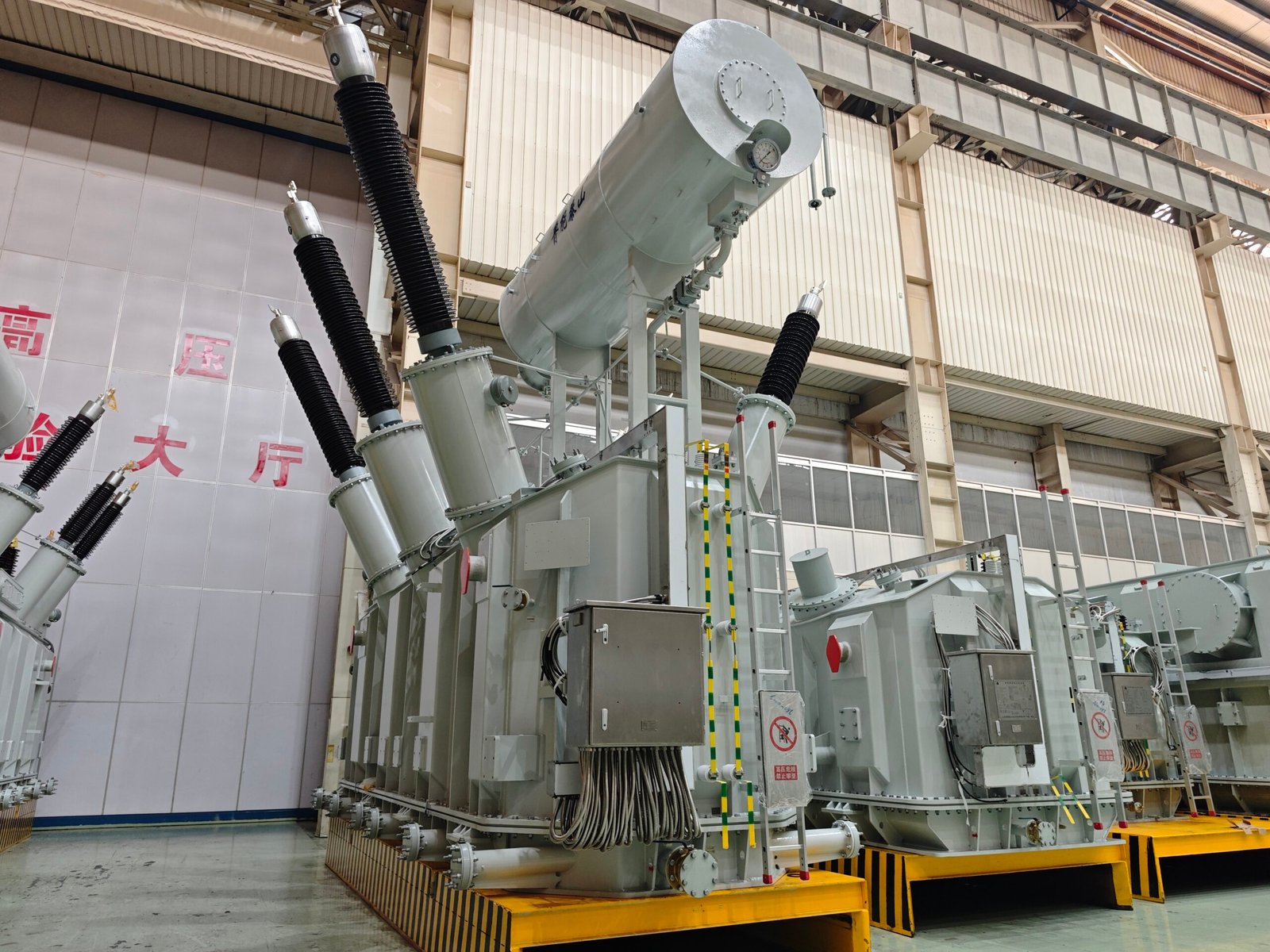
Higher MVA ratings generally increase power transformer manufacturing costs because the transformer must transfer more apparent power while maintaining acceptable temperature rise, insulation strength, mechanical integrity, efficiency, and service life. As capacity increases, manufacturers normally need larger cores, more winding conductor, stronger structural components, larger cooling systems, and more extensive testing. However, the cost does not increase perfectly in proportion to MVA: voltage class, impedance, cooling method, loss guarantees, tap changer, accessories, materials, factory capability, and transportation can have an equally important influence on the final quotation.
Higher MVA ratings increase manufacturing costs mainly through greater quantities and dimensions of core and winding materials, larger cooling and structural systems, stronger mechanical design, more demanding insulation, and more extensive manufacturing and testing requirements. The total price normally rises as MVA increases, but cost per MVA may fall because engineering, factory setup, testing, and certain auxiliary costs are distributed across a larger transformer. Buyers should therefore evaluate both total price and normalized cost per MVA while comparing identical voltage, impedance, cooling, loss, and accessory specifications.
Doubling transformer MVA capacity necessarily doubles manufacturing cost.False
Higher MVA generally increases material and manufacturing requirements, but transformer cost also includes fixed engineering and testing costs and depends strongly on voltage, insulation, cooling, impedance, losses, accessories, and logistics.
![Featured image placeholder: Engineers inspecting large high-MVA power transformers during core, winding, tank, and quality-control operations in a modern transformer factory.]
AI image prompt: "High-MVA power transformer manufacturing, large transformer core and winding assembly being inspected by professional electrical engineers, realistic industrial engineering photography, massive copper windings, laminated electrical steel core, heavy steel tank components, advanced manufacturing equipment, clean modern power transformer factory, precision quality-control atmosphere, professional technical mood, bright controlled factory lighting, photorealistic high detail"
Why Does MVA Capacity Increase Material Consumption?
The most direct cost effect comes from the active parts of the transformer: the magnetic core and electrical windings. A higher-rated transformer must transfer a greater apparent-power load without exceeding specified thermal limits. This generally requires larger current-carrying conductors and a magnetic circuit capable of handling the required power without excessive loss or saturation.
For windings, current is a particularly important driver. At a given voltage, increasing MVA increases rated current. Larger conductors, more parallel conductor paths, additional insulation, and stronger winding supports may therefore be required. The winding structure must also withstand electromagnetic forces during short-circuit conditions, so a higher-capacity design can require more substantial mechanical reinforcement.
The core side has a similar relationship. The magnetic circuit must be appropriately sized for the transformer's rated power and design flux density. More core material means greater material cost, while larger dimensions can also increase machining, stacking, clamping, handling, and assembly requirements.
| Manufacturing Cost Driver | Effect of Higher MVA |
|---|---|
| Core steel | Usually increases |
| Copper or aluminum conductor | Usually increases |
| Winding insulation | Usually increases |
| Winding supports | May increase significantly |
| Core clamping structure | Generally becomes more substantial |
| Tank steel | Generally increases |
| Radiators/cooling equipment | Usually increases |
| Bushings | Depends on voltage and current |
| Tap changer | Depends mainly on voltage and specification |
| Factory testing | More demanding |
| Transportation | Can become a major additional cost |
The important procurement point is that higher MVA does not simply mean “more raw material.” It can change the engineering approach used throughout the transformer.
How Does Higher MVA Affect Winding Manufacturing Costs?
Winding manufacturing is one of the major areas where capacity increases become visible. A higher MVA transformer normally carries greater current at the same voltage level, requiring greater conductor cross-sectional area or multiple parallel conductors.
Larger windings can require more copper or aluminum, more conductor insulation, additional winding supports, and longer production time. Depending on the design, the manufacturer may need larger winding machines or different tooling. Operators also need to maintain tighter control over conductor tension, axial alignment, radial dimensions, insulation placement, and winding compression.
Mechanical strength becomes increasingly important as transformer capacity rises. During an external short circuit, the windings can experience very high electromagnetic forces. The winding system must be designed and manufactured to resist deformation. This means that a high-MVA transformer may require more sophisticated spacers, clamping structures, supports, and verification procedures than a smaller unit.
Consequently, buyers should not compare winding costs simply by looking at the weight of copper or aluminum. The manufacturing precision and mechanical design required to produce a reliable high-MVA winding also contribute to cost.
How Does the Core Size Affect Manufacturing Cost?
Higher MVA ratings can require a larger magnetic core, although the exact relationship depends on voltage ratio, frequency, flux density, cooling design, and the manufacturer's optimization approach.
A larger core means more electrical steel and potentially more sophisticated handling equipment. Laminations must be cut, transported, stacked, aligned, and clamped accurately. As the physical dimensions increase, maintaining dimensional accuracy becomes more demanding.
The core also has an important relationship with no-load loss. Buyers may specify aggressive loss guarantees that require premium electrical steel, optimized flux density, improved joint construction, or additional design work. Such requirements can increase the cost even when two transformers have exactly the same MVA rating.
This is why a quotation should identify the guaranteed no-load loss, not simply state the MVA capacity and core-material grade.
Why Does Cooling Become More Expensive?
Higher-capacity transformers generally produce more heat that must be transferred safely away from the active components. The cooling system therefore becomes an increasingly important part of the manufacturing cost.
A smaller transformer may rely primarily on natural oil circulation and natural air cooling, while a larger transformer may require larger radiators, fans, oil pumps, or combinations of natural and forced cooling. The exact configuration depends on the required continuous rating and temperature-rise limits.
Cooling equipment also requires control systems, monitoring devices, valves, wiring, structural supports, and spare components. These additions increase both material and assembly costs.
Buyers should carefully check whether the quoted transformer price includes the complete cooling system. Some quotations may present a basic transformer price while pricing additional fans, pumps, controls, or redundant cooling stages separately.
How Does Higher MVA Affect the Tank and Mechanical Structure?
The transformer tank is not simply a container for oil. It must withstand internal pressure, vacuum conditions during processing or maintenance, transportation forces, mechanical loads from accessories, and the structural requirements associated with the active assembly.
Larger transformers generally require larger tanks and more structural steel. Transport dimensions can also become a limiting factor, causing manufacturers to consider transportable sections, detachable radiators, lifting arrangements, jacking points, and specialized packaging.
The structural requirements may also increase because larger transformers can experience significant mechanical forces during fault conditions. The tank, core, winding supports, and internal structures must therefore be designed as an integrated mechanical system.
Does Higher MVA Increase Insulation Costs?
Not necessarily in a simple linear relationship, because insulation requirements are strongly influenced by voltage class, not MVA alone. However, a high-MVA transformer can still require more insulation materials because of larger winding dimensions, increased conductor arrangements, more complex insulation structures, and greater physical clearances.
This distinction is important when comparing quotations. A 100 MVA transformer at one voltage level may have very different insulation costs from a 100 MVA transformer at another voltage level.
Therefore, buyers should never treat MVA as the only capacity-related pricing variable.
Why Can Two Transformers With the Same MVA Have Very Different Prices?
MVA provides only one part of the technical specification. Two 100 MVA transformers can have significantly different manufacturing costs if their technical requirements differ.
| Specification | Lower-Cost Configuration | Higher-Cost Configuration |
|---|---|---|
| Voltage class | Lower | Higher |
| Cooling | Simpler | Multi-stage forced cooling |
| Core loss | Standard | Low-loss guarantee |
| Load loss | Standard | Aggressive efficiency target |
| Tap changer | Simpler | OLTC with advanced control |
| Insulation level | Standard for application | Higher insulation requirement |
| Accessories | Basic | Extensive monitoring/protection |
| Noise requirement | Standard | Low-noise design |
| Short-circuit requirement | Standard | More demanding |
| Testing | Standard FAT | Expanded witnessed FAT |
| Transportation | Conventional | Specialized heavy transport |
This explains why buyers should avoid judging supplier quotations from MVA and price alone.
Does Higher MVA Increase Factory Testing Costs?
Yes, particularly for large power transformers. Testing a high-value transformer requires sophisticated equipment and strict procedures. Depending on the applicable standards and contract, the manufacturer may need to perform routine tests, type or special tests, temperature-rise testing, dielectric tests, loss measurements, winding-resistance measurements, ratio and phase-displacement tests, and other inspections.
Some special tests can be expensive because they require dedicated equipment, longer preparation, specialized engineering personnel, or external laboratories.
Buyer-witnessed testing can also increase project cost, particularly when third-party inspectors, additional documentation, calibration records, and extended test schedules are required. However, these costs can be justified for high-value equipment because they reduce the risk of accepting an incorrectly manufactured transformer.
Does Manufacturing Cost per MVA Always Increase?
No. This is one of the most important points for procurement teams.
Some costs are relatively fixed. Engineering design, project management, documentation, production planning, certain inspection activities, and portions of testing do not necessarily double when MVA doubles. As a result, larger transformers can sometimes achieve a lower cost per MVA.
A simplified illustration is:
| Capacity | Illustrative Total Manufacturing Cost | Illustrative Cost per MVA |
|---|---|---|
| 20 MVA | $1.00 million | $50,000/MVA |
| 50 MVA | $2.00 million | $40,000/MVA |
| 100 MVA | $3.50 million | $35,000/MVA |
These figures are illustrative only and are not market quotations. Actual prices depend on transformer design, voltage, materials, supplier location, specifications, commodity prices, and project conditions.
This means buyers should ask suppliers for a transparent commercial breakdown rather than assuming that a higher MVA automatically produces a proportionally higher price.
How Should Buyers Evaluate a Higher-MVA Quotation?
A good purchasing comparison should normalize the technical specification first. At minimum, buyers should compare MVA, voltage ratio, frequency, impedance, cooling class, insulation level, tap changer, losses, accessories, testing requirements, delivery terms, warranty, and transportation scope.
If one manufacturer is substantially cheaper, investigate whether the difference comes from genuine manufacturing efficiency or from a different technical basis.
A lower quotation might exclude certain cooling equipment, use different loss guarantees, provide a narrower accessory package, specify a different tap-changer configuration, or offer a different testing scope.
The buyer should therefore evaluate:
Technical specification → material requirement → manufacturing complexity → testing scope → logistics → total price.
How Do Voltage Levels and Capacity Together Affect Power Transformer Pricing?
Power transformer pricing is influenced by both MVA capacity and voltage level, but these two factors affect manufacturing costs in different ways. Higher capacity generally increases the amount of copper, electrical steel, insulation, cooling equipment, and structural material required, while higher voltage introduces additional insulation, clearance, bushing, testing, and design requirements. A transformer with moderate MVA capacity but a very high voltage rating can therefore cost more than a higher-capacity transformer designed for a lower voltage class.
Higher MVA ratings mainly increase costs through greater current-carrying and thermal requirements, while higher voltage levels increase costs through insulation systems, clearances, bushings, dielectric design, and testing. When both MVA and voltage increase together, their effects can compound because the transformer must handle higher power while maintaining safe electrical insulation and mechanical performance. Buyers should therefore compare transformer quotations using both MVA and voltage class rather than using capacity alone.
Transformer pricing can be estimated reliably from MVA capacity alone.False
Voltage class, insulation level, impedance, cooling, losses, tap changer, accessories, testing, transportation, and other project requirements can substantially affect the final price.
![Featured image placeholder: Engineers comparing power transformers with different MVA capacities and voltage classes in a modern manufacturing facility.]
AI image prompt: "Power transformers with different MVA capacities and voltage classes being compared by professional electrical engineers, realistic industrial engineering photography, large transformer tanks, bushings and cooling radiators, technical inspection documents, modern transformer manufacturing facility, precise procurement atmosphere, clean industrial environment, professional neutral lighting, photorealistic high detail"
Why Does Higher MVA Increase Transformer Cost?
Higher MVA means the transformer must transfer more apparent power. At a given voltage, this generally means higher current, requiring larger conductors, stronger winding supports, greater heat-dissipation capability, and potentially larger tanks and cores.
| Cost Factor | Higher MVA Impact | Higher Voltage Impact |
|---|---|---|
| Winding conductor | Strong | Moderate |
| Core material | Strong | Moderate |
| Cooling system | Strong | Moderate |
| Tank and structure | Strong | Moderate |
| Insulation | Moderate | Strong |
| Bushings | Moderate | Strong |
| Dielectric testing | Moderate | Strong |
| Transportation | Strong | Moderate to strong |
This means MVA is primarily associated with power-transfer and thermal requirements, whereas voltage is strongly associated with electrical insulation and dielectric requirements.
Why Does Higher Voltage Increase Pricing?
Higher voltage requires greater electrical clearances and more sophisticated insulation structures. Bushings, winding insulation, barriers, leads, and connections must all withstand the specified operating voltage and transient overvoltages.
Higher-voltage transformers may also require higher insulation levels and more demanding dielectric tests. These requirements increase both material and engineering costs.
Consequently, buyers should compare the complete voltage specification, including insulation level and applicable test requirements, rather than comparing only the nominal voltage ratio.
Why Can a Lower-MVA, Higher-Voltage Transformer Be Expensive?
Consider two hypothetical transformers:
| Specification | Transformer A | Transformer B |
|---|---|---|
| Capacity | 50 MVA | 100 MVA |
| Voltage class | 69 kV | 33 kV |
| Cooling | Standard | Standard |
| Insulation requirement | Higher | Lower |
| Indicative cost tendency | May be substantial | May also be substantial |
These figures are illustrative rather than quotations. Transformer A may require expensive high-voltage insulation, bushings, clearances, and dielectric testing despite having half the MVA capacity.
This is why MVA should never be used as a standalone price index.
How Do Voltage and Capacity Interact?
The two parameters can influence different parts of the design simultaneously. Increasing MVA increases current and thermal requirements, while increasing voltage increases insulation requirements. If both rise significantly, the transformer may require larger active components and more sophisticated insulation and cooling systems at the same time.
For example, a high-MVA transmission transformer may require:
- Large copper or aluminum windings
- Large low-loss electrical-steel cores
- Advanced cooling systems
- High-voltage bushings
- Increased insulation distances
- More sophisticated winding insulation
- Stronger short-circuit reinforcement
- More extensive factory testing
- Specialized transportation arrangements
Therefore, the final manufacturing cost reflects the combined technical envelope, not simply the arithmetic addition of MVA and voltage.
What Should Buyers Compare in Supplier Quotations?
A fair quotation comparison should normalize the technical specification first. Buyers should compare:
MVA + voltage ratio + voltage class + impedance + insulation level + cooling + losses + tap changer + accessories + testing + delivery scope.
If two suppliers quote the same MVA but different prices, examine the voltage class, insulation level, loss guarantees, cooling configuration, tap changer, accessory package, FAT scope, and transportation terms before concluding that one supplier is more competitive.
How Do Cooling Systems and Material Requirements Change With Power Transformer Capacity?
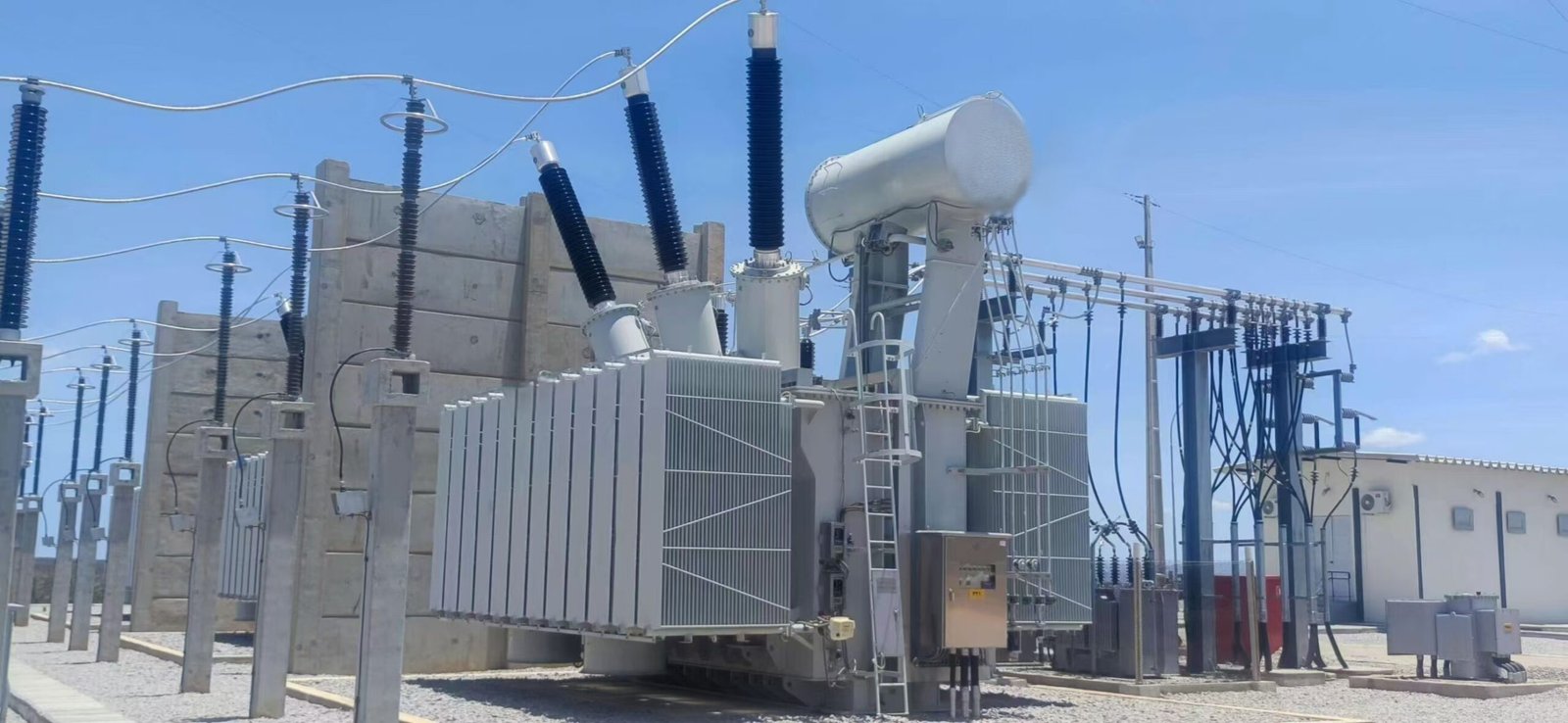
As power transformer capacity increases, the thermal and mechanical demands placed on the transformer also become more severe. A small transformer may dissipate heat using relatively simple natural cooling, while a large power transformer can require extensive radiators, fans, pumps, monitoring equipment, and carefully engineered oil-flow paths. At the same time, higher capacity generally means more core steel, winding conductor, insulation, structural steel, and tank material. If these requirements are underestimated, the transformer may experience excessive temperature rise, accelerated insulation aging, reduced overload capability, or unnecessarily high manufacturing costs.
Higher power transformer capacity generally increases the quantity and performance requirements of core, winding, insulation, tank, and cooling-system materials. As MVA increases, greater losses must be removed to maintain the specified temperature rise, which can require larger radiators or forced-air and forced-oil cooling. However, capacity alone does not determine the design: voltage level, load profile, cooling class, ambient temperature, altitude, efficiency targets, impedance, and installation conditions must also be considered when selecting materials and cooling equipment.
A higher-MVA transformer always requires forced cooling.False
Cooling requirements depend on the transformer design, losses, allowable temperature rise, ambient conditions, and specified cooling class; some higher-capacity transformers can use natural cooling or staged cooling arrangements.
![Featured image placeholder: Engineers inspecting the cooling system, copper windings, laminated core, and radiators of a large power transformer in a manufacturing facility.]
AI image prompt: "Large high-MVA power transformer under manufacturing inspection, engineers examining copper windings, laminated electrical steel core, large oil radiators, cooling fans and piping, realistic industrial engineering photography, detailed transformer components, modern power transformer factory, professional quality-control environment, clean technical atmosphere, controlled industrial lighting, photorealistic high detail"
Why Does Higher Capacity Increase Cooling Requirements?
A transformer does not convert electrical power with zero losses. Core loss occurs whenever the transformer is energized, while winding and other load-related losses increase as current and loading increase. These losses ultimately appear as heat.
As transformer capacity increases, the design must manage this heat while keeping winding and oil temperatures within specified limits. The cooling system therefore becomes an important part of the transformer's thermal design rather than simply an accessory attached to the tank.
For a simplified illustration, if a transformer dissipates 100 kW of total losses, the cooling system must continuously transfer approximately that amount of heat to the surrounding environment under the relevant operating conditions. If the losses rise substantially in a larger design, the cooling surfaces and oil circulation must be capable of handling the additional thermal load.
How Do Cooling Methods Change With Capacity?
Power transformers can use different cooling arrangements depending on their rating and application. Smaller units may rely primarily on natural circulation, while larger units can incorporate forced-air or forced-oil systems.
| Cooling Approach | Typical Characteristic | Capacity Implication |
|---|---|---|
| Natural oil / natural air | Simple, low auxiliary consumption | Suitable where heat load permits |
| Natural oil / forced air | Fans increase heat dissipation | Greater thermal capacity |
| Forced oil / forced air | Pumps improve oil circulation | Suitable for higher thermal demands |
| Forced oil / water | High heat-transfer capability | Specialized applications |
| Multi-stage cooling | Cooling stages operate according to load | Flexible operation and redundancy |
The exact rating range associated with each cooling arrangement varies by manufacturer and design. Buyers should therefore evaluate the specified continuous ratings for each cooling stage rather than assuming a particular MVA automatically corresponds to a particular cooling method.
How Does Capacity Affect Core Material Requirements?
The magnetic core is one of the principal active components affected by transformer capacity. A larger power rating may require a larger magnetic circuit, although the exact dimensions depend on voltage, frequency, flux density, and the transformer's overall electromagnetic design.
Core-material selection also affects no-load losses. High-quality grain-oriented electrical steel can provide low magnetic losses, while amorphous metal may be considered where extremely low no-load losses are a priority.
The important point is that more MVA does not simply mean proportionally more steel. The manufacturer must optimize the core for the required voltage, magnetic flux, efficiency target, dimensions, and thermal design.
How Does Winding Material Change With MVA?
Winding requirements are strongly affected by capacity because, at a given voltage, increasing MVA generally increases rated current. Higher current requires an appropriate conductor cross-sectional area and adequate thermal and mechanical support.
Copper is widely used for power-transformer windings because of its high electrical conductivity and mechanical characteristics. Aluminum can also be used in suitable designs where its lower density and material cost provide advantages.
As capacity increases, manufacturers may use larger conductors, multiple parallel conductors, transposed conductors in suitable designs, more sophisticated winding arrangements, and stronger mechanical supports.
| Winding Requirement | Effect of Increasing Capacity |
|---|---|
| Conductor cross-section | Generally increases |
| Total conductor quantity | Generally increases |
| Winding support | Becomes more demanding |
| Short-circuit mechanical strength | More critical |
| Cooling-oil circulation | May need improvement |
| Insulation structure | Can become more complex |
| Manufacturing precision | Becomes increasingly important |
Why Is Insulation Also Important?
Capacity and voltage affect insulation in different ways. Higher capacity primarily increases current and thermal requirements, while higher voltage strongly influences electrical insulation and clearances.
Nevertheless, large-capacity transformers can require more physical insulation material because of larger winding dimensions, more conductors, additional supports, and more complex internal structures.
Buyers should therefore avoid evaluating material requirements from MVA alone. A 100 MVA transformer at a high transmission voltage can have substantially different insulation requirements from a 100 MVA transformer at a lower voltage.
How Does Tank and Radiator Size Change?
As the active components become larger and the thermal losses increase, the transformer tank and cooling surfaces generally become larger as well.
Radiators provide the surface area through which transformer oil transfers heat to the surrounding air. If natural cooling is insufficient, fans can be installed to increase heat transfer. For still larger or more demanding applications, pumps can force oil through dedicated cooling paths.
The physical size of these systems can also affect transportation. Large radiators may be shipped separately and installed at the project site. Heavy tanks may require specialized transport vehicles, route surveys, lifting equipment, and additional logistics planning.
Therefore, cooling requirements can influence not only the manufacturing price but also the transportation and installation cost.
How Do Environmental Conditions Change Cooling Requirements?
Capacity should never be evaluated without considering the installation environment. A transformer designed for a moderate ambient temperature may require a different cooling configuration when installed in a hot climate.
High ambient temperature reduces the available temperature difference between the transformer and surrounding air, making heat rejection more difficult. High altitude can also affect air-side cooling because air density is lower.
Buyers should provide the manufacturer with relevant environmental information, including:
- Maximum and minimum ambient temperature
- Average annual temperature
- Installation altitude
- Solar exposure
- Indoor or outdoor installation
- Ventilation conditions
- Pollution level
- Humidity
- Expected load profile
- Required emergency loading
This information allows the manufacturer to determine whether standard cooling capacity is sufficient.
Why Does Load Profile Matter?
Two transformers with identical MVA ratings may have very different thermal requirements because they operate differently.
A transformer that operates continuously near its rated load requires sustained cooling capacity. Another transformer with the same nameplate rating but a highly variable load profile may spend much of its operating time at partial load.
For this reason, buyers should consider not only the rated MVA but also expected loading patterns, peak duration, emergency loading requirements, and future demand growth.
A staged cooling system can be particularly useful because different cooling stages can be activated as the load increases. This can reduce unnecessary auxiliary energy consumption during periods of low loading.
What Materials Become More Important as Capacity Increases?
Higher-capacity transformers require a coordinated increase in several material categories.
| Material / Component | Main Function | Capacity-Related Consideration |
|---|---|---|
| Electrical steel | Magnetic circuit | Core size and loss target |
| Copper/aluminum | Current conduction | Higher current capability |
| Transformer oil | Insulation and heat transfer | Greater volume and thermal management |
| Solid insulation | Dielectric and mechanical support | Larger and more complex winding system |
| Radiator steel | Heat dissipation | Greater cooling surface |
| Tank steel | Mechanical containment | Larger and stronger structure |
| Bushings | Electrical connection | Depends strongly on voltage and current |
| Cooling fans/pumps | Heat removal | Increased thermal capacity where required |
| Monitoring equipment | Protection and condition monitoring | More complex systems for larger assets |
The quantities of these materials generally increase with transformer size, but not at a fixed ratio. Engineering optimization determines the final configuration.
How Does Cooling Affect Transformer Reliability?
Cooling is not only about achieving a nameplate rating. Temperature directly affects insulation aging and therefore transformer service life. Persistent operation at excessive temperature can accelerate deterioration of solid insulation and oil, reducing the transformer's long-term reliability.
A well-designed cooling system should maintain acceptable temperature distribution throughout the active assembly and provide sufficient margin for expected operating conditions.
For critical transformers, redundancy can also become important. Multiple fans or pumps can provide continued cooling capability if one component becomes unavailable. Buyers should therefore examine not only the cooling capacity but also the cooling-system reliability and control philosophy.
How Does Selecting Excess Transformer Capacity Affect Purchasing and Lifecycle Costs?
Selecting a transformer with more capacity than the power system actually needs can appear to be a safe purchasing strategy. A larger transformer may provide additional loading margin, accommodate future expansion, and reduce concerns about immediate overload. However, excessive capacity also means paying for a larger core, more conductor, a larger tank, additional cooling capability, and potentially higher transportation and installation costs. The economic impact does not stop at the purchase order: an oversized transformer can also have different no-load losses, physical requirements, maintenance needs, and operating economics over its service life.
Excess transformer capacity usually increases the initial purchase and project costs because buyers pay for a larger active core, winding system, tank, cooling system, and associated equipment. It can also increase no-load energy costs because the transformer remains energized even when lightly loaded. However, some capacity margin can be economically justified when future load growth, emergency loading, system reliability, or operational flexibility is important. The right choice is therefore the capacity that provides an appropriate technical margin without unnecessarily increasing total cost of ownership.
Choosing the largest available transformer capacity always provides the lowest lifecycle cost because it gives the greatest operating margin.False
Excess capacity increases capital investment and may create additional no-load energy, space, transportation, and maintenance costs; the economically optimal capacity depends on actual and forecast loading requirements.
![Featured image placeholder: Engineers comparing transformer capacity options and lifecycle-cost data during power transformer procurement.]
AI image prompt: "Power transformer capacity selection and lifecycle cost evaluation, professional electrical engineers comparing different transformer sizes with technical documents and cost charts, realistic industrial engineering photography, large oil-immersed transformers in modern factory, procurement planning environment, detailed transformer tanks, radiators and bushings, analytical and professional mood, clean controlled lighting, photorealistic high detail"
Why Does Excess Capacity Increase the Purchase Price?
The most obvious consequence is the higher initial equipment cost. A transformer with a substantially higher MVA rating generally requires more core material, winding conductor, insulation, structural steel, transformer oil, cooling equipment, and larger mechanical components.
The price increase is not necessarily proportional to the MVA increase because some engineering and testing costs are relatively fixed. Nevertheless, buyers normally pay more for a larger transformer.
| Cost Category | Effect of Excess Capacity |
|---|---|
| Core material | Usually increases |
| Winding conductor | Usually increases |
| Tank and structural steel | Usually increases |
| Transformer oil | Usually increases |
| Cooling system | May increase |
| Bushings | Depends on voltage and current |
| Tap changer | Depends mainly on voltage/specification |
| Factory testing | May become more demanding |
| Transportation | Can increase substantially |
| Installation | May require larger equipment |
The additional capital cost should therefore be justified by a real operational requirement rather than simply by a desire for a larger safety margin.
How Does Oversizing Affect No-Load Energy Cost?
One of the most important lifecycle considerations is that a transformer consumes core energy whenever it is energized, regardless of whether it is carrying its full rated load.
Suppose a transformer operates continuously for 8,760 hours per year. If its no-load loss is 20 kW, the annual no-load energy consumption is approximately:
20 kW × 8,760 h = 175,200 kWh/year
This energy is consumed even if the transformer is operating at very low load.
A larger transformer does not automatically have proportionally higher no-load loss because core design and material selection matter, but buyers should not assume that excess capacity is operationally free. If a substantially oversized transformer has a higher guaranteed no-load loss, the additional energy cost can accumulate over decades.
Does Low Loading Make an Oversized Transformer Less Economical?
Potentially, yes. Consider two transformers serving the same load:
| Item | Appropriately Sized Unit | Oversized Unit |
|---|---|---|
| Rated capacity | 50 MVA | 80 MVA |
| Typical load | 35 MVA | 35 MVA |
| Loading percentage | 70% | 44% |
| Capital cost | Lower | Higher |
| No-load operation | Continuous | Continuous |
| Load-loss contribution | Depends on loading | Depends on loading |
| Future margin | Moderate | High |
The oversized transformer has greater capacity margin, but the buyer has paid for that unused capability. If the expected load never approaches 80 MVA, part of the investment may remain underutilized for the majority of its service life.
This does not mean low loading is always undesirable. Grid reliability, redundancy, future expansion, and emergency conditions can justify significant headroom. The issue is whether the additional capacity creates enough measurable value to offset its cost.
How Does Excess Capacity Affect Load Losses?
Transformer load losses are strongly related to current and therefore to loading. At a lower percentage of rated capacity, an oversized transformer can have relatively low winding losses for the actual load.
However, this does not automatically mean the oversized transformer is more efficient overall. The buyer must consider both:
No-load loss + load loss at the actual operating load
For example, an oversized transformer may have lower load losses at a given operating point, while its additional purchase price and no-load energy consumption make it less economical over the full lifecycle.
The correct comparison is therefore based on the actual load curve, not simply the transformer's rated efficiency.
Can Excess Capacity Improve Reliability?
Yes. This is one of the strongest arguments for selecting additional capacity.
A transformer operating well below its maximum rating may have greater thermal margin during abnormal conditions. It may also be better positioned to accommodate short-term load growth or emergency loading.
For critical power systems, buyers may deliberately specify additional capacity to support:
- Future demand growth
- Seasonal peak loading
- Emergency loading
- Network reconfiguration
- Parallel-transformer operation
- Production expansion
- Reliability targets
- N-1 or other redundancy strategies
However, capacity margin should be distinguished from redundancy. Installing one oversized transformer does not necessarily provide the same reliability benefit as having multiple appropriately sized transformers capable of supporting the load if one unit is unavailable.
How Should Future Load Growth Be Considered?
Future expansion is a common reason for transformer oversizing, but it should be supported by a credible load forecast.
A useful planning approach is to estimate:
- Present maximum demand
- Expected annual demand growth
- Major planned loads
- Expansion schedule
- Diversity factor
- Seasonal variations
- Emergency operating requirements
- Expected transformer service life
For example, if a facility currently requires 30 MVA but credible expansion is expected to increase demand to 45 MVA within several years, selecting a 40 or 50 MVA transformer may be economically reasonable. Purchasing a much larger unit without a realistic future load requirement may produce unnecessary capital expenditure.
Does Oversizing Increase Transportation and Installation Costs?
It can. Large transformers are heavy and physically difficult to transport. A significant increase in capacity may increase transformer dimensions and total weight, which can affect:
- Road transportation
- Rail transportation
- Heavy-haul permits
- Bridge and route surveys
- Crane requirements
- Site access
- Foundation dimensions
- Installation equipment
- On-site assembly
In some projects, these secondary costs can be substantial. A transformer that is only moderately more expensive at the factory may become significantly more expensive after transportation and installation are included.
This is particularly important for remote substations, mountainous areas, constrained industrial sites, and projects with limited lifting infrastructure.
How Does Excess Capacity Affect Site Requirements?
A larger transformer generally occupies more physical space. It may require a larger foundation, greater clearance, larger oil-containment facilities, and more space around radiators and cooling equipment.
For indoor or space-constrained installations, physical dimensions can become a significant design constraint.
Buyers should therefore evaluate the complete equipment footprint rather than looking only at the electrical rating. The additional capacity should provide enough value to justify the additional land, civil works, and installation requirements.
Does Oversizing Affect Transformer Selection in Parallel Operation?
When multiple transformers operate in parallel, excessive or poorly matched capacity can create additional considerations. Transformers should have compatible voltage ratios, impedance characteristics, vector groups, and other relevant parameters.
A large difference in rated capacity or impedance can affect load sharing. Simply adding a higher-capacity transformer does not guarantee that the available capacity will be evenly utilized.
For parallel operation, buyers should evaluate the entire transformer group and confirm that the proposed ratings and impedance values support the intended load-sharing behavior.
What Is the Best Economic Approach?
The best approach is to compare several realistic capacity scenarios instead of selecting the largest available rating immediately.
| Scenario | Initial Cost | Future Margin | Lifecycle Risk |
|---|---|---|---|
| Closely matched capacity | Lower | Limited | Potential future expansion risk |
| Moderate reserve | Moderate | Good | Often balanced |
| Significant oversizing | High | Very high | Underutilization and higher capital cost |
| Multiple smaller units | Potentially higher | Flexible | May improve redundancy |
The comparison should include both capital and operating costs.
A simplified lifecycle model can consider:
Total Cost of Ownership = Purchase Cost + Installation Cost + Energy Cost of Losses + Maintenance Cost + Major Replacement/Upgrade Costs
This approach allows buyers to quantify whether additional capacity actually creates economic value.
How Can Buyers Optimize Power Transformer Capacity to Achieve the Best Price and Performance?
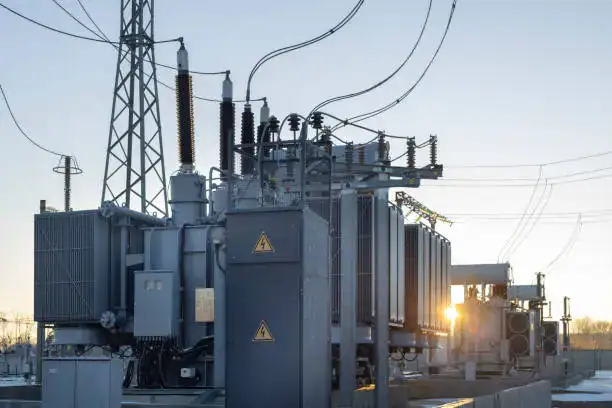
Selecting transformer capacity is often treated as a simple MVA calculation, but the cheapest transformer is not necessarily the most economical one, and the largest transformer is rarely the best choice either. If the selected capacity is too small, the transformer may operate close to its thermal limits, leaving little room for future load growth or emergency conditions. If it is substantially oversized, buyers may pay for unnecessary core, winding, cooling, structural materials, transportation capacity, and installation space while continuing to incur no-load losses whenever the transformer remains energized. The best procurement decision is to optimize capacity around the actual load profile, credible future growth, reliability requirements, environmental conditions, and lifecycle cost rather than maximizing or minimizing the nameplate MVA.
Buyers can optimize power transformer capacity by establishing the present maximum demand, forecasting realistic future loading, defining emergency and redundancy requirements, and comparing several MVA options using total cost of ownership. The optimum transformer normally provides enough capacity margin for expected growth and abnormal operating conditions without creating excessive capital cost or unnecessary no-load losses. A proper evaluation should compare MVA, voltage, impedance, cooling, guaranteed losses, tap-changer requirements, accessories, transportation, installation, and lifecycle energy costs on a like-for-like basis.
The best-priced power transformer is the one with the lowest purchase price for the required MVA.False
Purchase price is only one component of transformer economics; losses, installation, transportation, maintenance, future capacity requirements, and reliability can materially change the total lifecycle cost.
![Featured image placeholder: Engineers comparing several transformer capacity options using technical and lifecycle-cost data.]
AI image prompt: "Power transformer capacity optimization meeting, professional electrical engineers comparing multiple MVA transformer designs, technical specifications and lifecycle cost analysis documents, realistic industrial engineering photography, large oil-immersed power transformers in a modern manufacturing facility, detailed copper windings, electrical steel cores, radiators and bushings, professional procurement atmosphere, analytical mood, clean controlled industrial lighting, photorealistic high detail"
Why Is the Optimum Capacity Not Simply the Largest Available Rating?
Oversizing a transformer can appear attractive because additional capacity creates a larger operating margin. However, every additional MVA has a cost. A larger transformer normally requires more active materials and may increase transportation and civil-engineering requirements.
At the same time, selecting the smallest possible transformer can create its own risks. High loading can increase winding temperature, accelerate insulation aging, reduce emergency operating flexibility, and leave insufficient capacity for future demand.
The objective is therefore to identify the economic operating range, rather than simply selecting the maximum or minimum capacity.
| Capacity Strategy | Initial Cost | Operating Flexibility | Main Risk |
|---|---|---|---|
| Minimum practical MVA | Low | Limited | Future overload or expansion |
| Moderate capacity margin | Moderate | Good | Usually balanced |
| Large reserve | High | Very high | Underutilization |
| Multiple smaller units | Variable | High | Higher equipment complexity |
For many projects, a moderate capacity margin provides a better balance between price and performance.
How Should Buyers Establish the Required MVA?
The starting point should be the actual electrical load rather than a nominal capacity target. Buyers should collect historical demand data wherever possible and distinguish between connected load and actual coincident demand.
Important information includes:
- Present peak demand
- Average operating load
- Seasonal demand
- Daily load variation
- Motor starting requirements
- Power-factor characteristics
- Renewable generation patterns
- Planned expansion
- Emergency loading requirements
- Expected service life
For a three-phase system, apparent power can be related to line voltage and current by:
S = √3 × V × I
where S is apparent power, V is line-to-line voltage, and I is line current.
This relationship illustrates why voltage and capacity should be evaluated together. At a fixed voltage, increasing MVA means increasing current, which affects conductor size, thermal design, and mechanical forces.
How Much Capacity Margin Should Be Included?
There is no universal percentage that is correct for every project. A suitable margin depends on the quality of the load forecast and the consequences of transformer overload or failure.
For example, a facility with highly predictable demand and limited expansion may not need the same reserve as a rapidly growing industrial plant or renewable-energy substation.
A practical procurement model is to examine at least three scenarios:
- Current requirement
- Expected design-year requirement
- Contingency or emergency requirement
If current demand is 32 MVA, credible design-year demand is 42 MVA, and the project requires additional emergency capability, comparing 40, 50, and 63 MVA transformers may be more useful than automatically selecting a 63 MVA unit.
The final choice should consider whether emergency loading is permitted and for how long, rather than treating nameplate capacity as the only available operating margin.
How Does Load Profile Affect the Economic Choice?
Capacity optimization should consider how the transformer actually operates. A transformer that spends most of its life at low loading has a different economic profile from one that operates near full load for thousands of hours each year.
Transformer losses can broadly be separated into:
- No-load loss, primarily associated with the energized core
- Load loss, strongly associated with winding current and other load-dependent effects
A larger transformer may provide lower load losses at a particular operating point, but the buyer still needs to account for continuous no-load energy consumption.
For example, a transformer energized continuously with a 20 kW no-load loss consumes approximately 175,200 kWh per year:
20 kW × 8,760 hours = 175,200 kWh
If the transformer is heavily oversized and its no-load loss is higher than necessary, the additional energy cost can continue for decades.
Should Buyers Optimize for Purchase Price or Total Cost of Ownership?
Total cost of ownership is usually the more useful approach.
A simplified model is:
TCO = Purchase Cost + Installation Cost + Loss Cost + Maintenance Cost + Major Future Costs
For transformer procurement, buyers should consider at least:
| Cost Component | Capacity Optimization Question |
|---|---|
| Transformer purchase | How much does each MVA option cost? |
| Transportation | Does larger equipment require special heavy-haul logistics? |
| Civil works | Does the transformer require a larger foundation or containment system? |
| No-load losses | What is the guaranteed continuous loss? |
| Load losses | What are losses at the actual load curve? |
| Maintenance | Does the larger cooling system require more maintenance? |
| Expansion | Will additional capacity actually be needed? |
| Replacement | What is the consequence if capacity becomes insufficient? |
A transformer with a moderately higher purchase price can be economically superior if it provides the right capacity and significantly lower losses. Conversely, paying substantially more for unused capacity may not be justified.
How Do Core and Winding Materials Affect Capacity Optimization?
Capacity selection directly influences active-material requirements. A higher-MVA transformer generally needs a larger winding system and an appropriately designed magnetic core.
However, buyers should not compare materials independently of the finished transformer. A premium electrical-steel grade, for example, may reduce no-load losses, while optimized conductor design can reduce load losses. These improvements may increase initial cost but can generate energy savings over the operating life.
The key is to compare guaranteed finished-transformer performance, not simply the advertised material grade.
Buyers should request:
- Core material grade
- Specific core-loss data
- Guaranteed no-load loss
- Winding conductor material
- Guaranteed load loss
- Temperature-rise guarantee
- Relevant factory test results
How Does Cooling Capacity Influence the Decision?
Higher MVA ratings generally require greater heat-dissipation capability. Depending on the design, this may mean larger radiators, fans, pumps, or staged cooling systems.
A buyer should not automatically pay for the most sophisticated cooling system. Instead, the cooling configuration should correspond to the actual loading and environmental conditions.
For example, if a transformer normally operates at 50% of its nameplate rating but occasionally reaches a higher seasonal peak, staged cooling may provide a better economic solution than continuously operating extensive forced cooling.
Environmental conditions should also be considered. High ambient temperature and high installation altitude can reduce cooling effectiveness and may influence the appropriate transformer rating.
Why Is Impedance Important When Optimizing Capacity?
Impedance affects both transformer performance and system behavior. It influences short-circuit current, voltage regulation, and load sharing when transformers operate in parallel.
A buyer should therefore avoid selecting capacity independently of impedance. If transformers are intended for parallel operation, their relevant electrical characteristics must be compatible.
A technically attractive MVA rating can become problematic if its impedance does not fit the system's protection and short-circuit requirements.
Can Multiple Smaller Transformers Be Better Than One Large Transformer?
Sometimes. A single large transformer can provide a simple installation and potentially lower equipment cost per MVA. However, multiple units can provide operational flexibility and redundancy.
For example, two appropriately sized transformers can allow one unit to remain operational if the other is removed from service, depending on the system design and contingency requirements.
The comparison should include:
One large transformer versus multiple smaller transformers
and consider:
- Initial equipment cost
- Switchgear requirements
- Footprint
- Redundancy
- Maintenance flexibility
- Load sharing
- Future expansion
- Failure consequences
- Transportation
- Spare strategy
The technically optimal arrangement is not always the one with the fewest transformers.
How Should Buyers Compare Supplier Quotations?
Before comparing prices, normalize the specifications. A 50 MVA transformer from Supplier A cannot be fairly compared with a 50 MVA transformer from Supplier B if one has a different voltage class, cooling arrangement, loss guarantee, tap changer, accessory package, or FAT scope.
A useful commercial comparison should include:
| Parameter | Supplier A | Supplier B | Supplier C |
|---|---|---|---|
| MVA | Compare | Compare | Compare |
| Voltage ratio | Compare | Compare | Compare |
| Impedance | Compare | Compare | Compare |
| Cooling | Compare | Compare | Compare |
| No-load loss | Compare | Compare | Compare |
| Load loss | Compare | Compare | Compare |
| Tap changer | Compare | Compare | Compare |
| Accessories | Included? | Included? | Included? |
| FAT scope | Same? | Same? | Same? |
| Delivery | Compare | Compare | Compare |
| Warranty | Compare | Compare | Compare |
| Total price | Compare | Compare | Compare |
This approach helps identify whether a low quotation reflects manufacturing efficiency or simply a less comprehensive specification.
What Is the Best Procurement Strategy?
A practical strategy is to ask manufacturers to quote several optimized capacity options rather than only one predetermined MVA rating.
For example, buyers might request commercial and technical proposals for 40, 50, and 63 MVA units. The engineering team can then compare:
- Capital expenditure
- Guaranteed losses
- Loading margin
- Temperature rise
- Cooling requirements
- Dimensions and weight
- Transportation cost
- Installation cost
- Future expansion capability
- Lifecycle energy cost
This creates a much stronger basis for negotiation and capacity selection.
It also prevents the buyer from locking into an unnecessarily large transformer before understanding the economic consequences.
Conclusion
Transformer capacity has a direct and significant influence on power transformer pricing, but it is only one part of the overall cost structure. Larger-capacity transformers generally require greater quantities of materials, larger cooling systems, stronger construction, and more complex manufacturing and testing. Buyers should therefore evaluate capacity alongside voltage level, load profile, future expansion, efficiency, cooling requirements, and lifecycle costs. Selecting an appropriately sized transformer can help avoid unnecessary capital expenditure while providing sufficient capacity, reliability, and long-term operating value.
FAQ
Q1: How does transformer capacity impact power transformer pricing?
Transformer capacity is one of the most important factors affecting power transformer pricing because larger-capacity transformers require more materials, advanced designs, longer manufacturing processes, and additional testing requirements.
Transformer capacity is usually expressed in kVA or MVA, representing the amount of electrical power the transformer can handle continuously under specified operating conditions. As capacity increases, the transformer generally becomes larger and requires more:
Core materials
Copper or aluminum windings
Insulation materials
Transformer oil
Steel tank structures
Cooling equipment
Protection accessories
For example, a small distribution transformer may require relatively simple construction, while a large power transformer used in substations may require extensive engineering, specialized manufacturing equipment, and complex factory testing.
However, transformer pricing does not increase in a completely linear way. A transformer with twice the capacity does not necessarily cost exactly twice as much. This is because some costs are fixed regardless of size, such as:
Engineering design
Project management
Documentation
Quality procedures
Factory preparation
Larger transformers usually have higher material costs, but economies of scale may reduce the cost per MVA.
Other factors also influence the final price, including:
Voltage rating
Cooling method
Efficiency requirements
Insulation level
Tap changer type
Environmental conditions
Required standards
Delivery location
Therefore, buyers should evaluate transformer capacity together with technical requirements and total project needs rather than comparing capacity alone.
Q2: Why do higher-capacity power transformers cost more?
Higher-capacity power transformers cost more because they require larger electrical and mechanical components to transfer greater amounts of power safely.
The main cost drivers include:
- Larger Core Size
A higher-capacity transformer requires a larger magnetic core to handle increased power transfer. More electrical steel is needed, increasing:
Material cost
Processing requirements
Manufacturing time
- More Winding Material
The windings must carry higher currents at greater capacity levels. This requires:
More copper or aluminum conductors
Larger conductor dimensions
More insulation materials
- Stronger Mechanical Structure
Large transformers experience higher electromagnetic forces during operation and short-circuit events. Therefore, they require:
Stronger clamping systems
Reinforced tanks
Improved structural design
- Advanced Cooling Systems
Higher-capacity transformers generate more heat and may require:
Larger radiators
Cooling fans
Oil pumps
Heat exchangers
- More Extensive Testing
Large transformers often require additional factory testing, including:
Temperature rise tests
Short-circuit withstand verification
Special performance tests
Because of these additional requirements, transformer capacity has a direct influence on manufacturing complexity and final purchase price.
Q3: How do MVA ratings affect transformer costs?
MVA rating is a major pricing factor because it defines the transformer's power-handling capability.
A transformer with a higher MVA rating typically requires greater:
Current-carrying capacity
Thermal capability
Mechanical strength
Insulation performance
For example:
A 20 MVA transformer and a 100 MVA transformer may use similar basic technology, but the larger unit requires significantly more:
Magnetic core material
Conductive winding material
Cooling equipment
Structural components
The MVA rating also affects transportation and installation requirements.
Large transformers may require:
Special transportation equipment
Reinforced foundations
Larger installation spaces
Additional site preparation
However, buyers should not assume that selecting the lowest-capacity transformer will always reduce costs. An undersized transformer may lead to:
Overloading
Higher losses
Reduced lifespan
Future expansion limitations
The correct approach is to select capacity based on:
Current load requirements
Future load growth
Load characteristics
Reliability requirements
Backup capacity needs
Proper capacity selection helps optimize both initial investment and long-term operating costs.
Q4: What other factors besides capacity affect power transformer pricing?
Although capacity is a major factor, transformer pricing depends on many technical and commercial factors.
Important factors include:
Voltage Rating
Higher voltage transformers require:
More insulation
Larger clearances
More advanced testing
This increases manufacturing complexity.
Transformer Type
Different transformer designs have different costs:
Oil-immersed transformers
Dry-type transformers
Autotransformers
Three-phase transformers
Efficiency Requirements
High-efficiency transformers may require:
Premium electrical steel
Improved winding designs
Lower-loss materials
Cooling System
Cooling methods influence cost:
ONAN
ONAF
OFAF
OFWF
More advanced cooling systems increase equipment cost.
Accessories and Monitoring
Additional features may include:
Online monitoring systems
Temperature sensors
Buchholz relays
Pressure protection devices
Tap changers
Standards and Certifications
Projects requiring compliance with:
IEC standards
IEEE standards
Utility-specific requirements
may involve additional engineering and testing costs.
Therefore, transformer pricing should always be evaluated using a complete technical specification rather than capacity alone.
Q5: How can buyers optimize transformer capacity to control costs?
Buyers can control transformer costs by selecting an appropriate capacity based on actual operational requirements.
Oversizing a transformer may increase:
Initial purchase cost
Installation cost
Transportation expenses
No-load losses
Undersizing may cause:
Excessive loading
Higher operating temperatures
Reduced service life
Future replacement costs
A balanced capacity selection process should consider:
Current Load
Analyze:
Maximum demand
Average demand
Load variation
Future Expansion
Consider expected:
Industrial growth
Facility expansion
Renewable energy integration
Reliability Requirements
Evaluate whether the system requires:
Spare capacity
Parallel transformers
Emergency operation capability
Efficiency Considerations
A transformer operating too far below or above its optimal loading range may not provide the best efficiency.
Buyers should work with engineers to perform load studies and select a transformer rating that balances:
Purchase price
Operating efficiency
Reliability
Future flexibility
The lowest initial price does not always represent the lowest total cost. A correctly sized transformer usually provides better long-term economic value.
References
IEC 60076 – Power Transformers
https://webstore.iec.ch/en/publication/602
IEEE C57 Series – Power Transformer Standards
https://standards.ieee.org
U.S. Department of Energy – Transformer Efficiency Resources
https://www.energy.gov
NEMA – Transformer Standards
https://www.nema.org