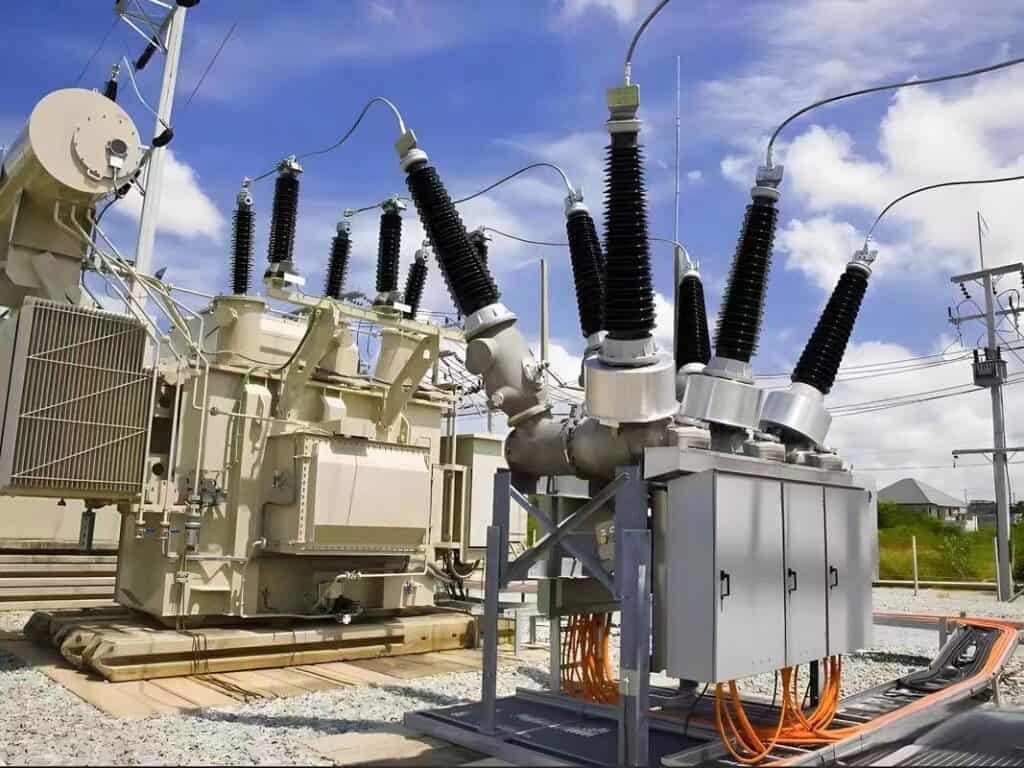
Cooling is a critical aspect of transformer design and operation, as excess heat can accelerate insulation aging, increase losses, and reduce overall reliability. Different transformer applications, ratings, and installation environments require specific cooling methods to ensure safe and efficient performance. Understanding the various cooling methods used in transformers helps users select the right equipment and maintain optimal operating conditions.
What Is the Purpose of Cooling in Transformers?

Power transformers operate continuously under electrical and magnetic stress, converting and transferring large amounts of energy every second. While transformers are highly efficient, the small percentage of energy that is not transferred becomes heat. If this heat is not removed effectively, temperatures rise, losses increase, insulation ages rapidly, and the risk of failure grows. Cooling is therefore not an auxiliary function, but a core requirement for safe, efficient, and long-term transformer operation.
The purpose of cooling in transformers is to remove heat generated by electrical and magnetic losses, maintain temperatures within design limits, preserve insulation life, control losses, and ensure reliable long-term operation.
Transformer cooling is essential because excessive temperature directly accelerates insulation aging and increases electrical losses.True
Higher temperatures raise winding resistance and speed up insulation degradation, shortening transformer service life.
Removing Heat Generated by Losses
All transformers generate heat during operation.
The main heat sources are:
- Core losses from magnetic hysteresis and eddy currents
- Copper losses from current flowing through windings
- Stray losses in structural parts
Cooling systems continuously transfer this heat away from active components, preventing dangerous temperature buildup.
Controlling Winding and Hot-Spot Temperature
The hottest point in a transformer determines its aging rate.
Cooling ensures:
- Winding hot-spot temperatures remain within allowable limits
- Temperature gradients are kept under control
- Localized overheating is avoided
By limiting hot-spot temperature, cooling directly extends insulation life.
Preserving Insulation Integrity and Service Life
Insulation is the life-limiting component of most transformers.
Effective cooling:
- Slows chemical aging of paper and solid insulation
- Reduces moisture generation within insulation
- Maintains dielectric strength over time
Every reduction in operating temperature significantly increases expected service life.
Maintaining Electrical Efficiency
Temperature affects electrical performance.
Proper cooling:
- Keeps winding resistance low
- Limits the growth of copper losses
- Prevents loss escalation caused by overheating
Stable temperatures help the transformer maintain its original efficiency throughout decades of operation.
Enabling Rated Load and Overload Capability
Transformers are designed for specific thermal limits.
Cooling systems allow:
- Continuous operation at rated load
- Short-term overload capability without damage
- Safe handling of load fluctuations
Without adequate cooling, a transformer would need to be derated, reducing its usable capacity.
Protecting Mechanical and Structural Components
Heat affects more than insulation.
Cooling helps:
- Prevent excessive thermal expansion and contraction
- Reduce mechanical stress on windings and core
- Limit vibration and material fatigue
Stable thermal conditions preserve mechanical integrity.
Supporting Safe and Reliable Operation
Overheating is a major cause of transformer failure.
Effective cooling:
- Reduces fire and safety risks
- Prevents oil degradation in oil-immersed units
- Maintains stable operating conditions
Cooling systems are therefore integral to overall transformer safety.
Enabling Long-Term Asset Value
From an asset management perspective, cooling has economic importance.
Well-cooled transformers:
- Experience slower aging
- Require fewer repairs
- Deliver lower lifetime losses
- Remain serviceable for decades
Investment in proper cooling pays back through extended service life and reduced total cost of ownership.
What Are the Common Cooling Methods Used in Dry-Type Transformers?

Dry-type transformers do not use insulating oil, so their cooling relies entirely on air and solid insulation systems. Because heat directly affects efficiency, insulation life, and load capability, cooling design is a critical part of dry-type transformer performance. Different cooling methods are used depending on transformer size, installation environment, load profile, and reliability requirements.
The most common cooling methods used in dry-type transformers are natural air cooling (AN), forced air cooling (AF), and enhanced or hybrid air-based cooling systems designed to improve heat dissipation without liquid insulation.
Dry-type transformers rely exclusively on air-based cooling methods to remove heat from windings and cores.True
Unlike oil-immersed transformers, dry-type units use air circulation and solid insulation to manage heat dissipation.
Natural Air Cooling (AN)
Natural air cooling is the simplest and most widely used method.
Key characteristics:
- Heat is dissipated by natural convection and radiation
- Warm air rises through ventilation ducts, drawing in cooler air
- No fans or moving parts are required
Advantages include:
- High reliability due to minimal mechanical components
- Low maintenance requirements
- Quiet operation
Natural air cooling is commonly used for small to medium-capacity dry-type transformers operating under relatively stable loads.
Forced Air Cooling (AF)
Forced air cooling enhances heat removal using fans or blowers.
How it works:
- Fans circulate air across windings and core surfaces
- Heat transfer rate increases significantly
- Transformer can operate at higher load or power density
Benefits include:
- Higher kVA capacity in the same physical size
- Better temperature control during peak loads
- Improved overload capability
Forced air cooling is widely applied in medium-capacity transformers and installations with variable or high load demand.
Cast Resin Transformer Cooling
Cast resin transformers use encapsulated windings with integrated air channels.
Cooling features:
- Epoxy resin provides mechanical strength and thermal conduction
- Optimized air ducts allow efficient airflow
- Compatible with both natural and forced air cooling
This design improves heat dissipation while offering excellent moisture, pollution, and fire resistance.
Enclosed and Ventilated Cooling Designs
Dry-type transformers installed in enclosures require special airflow management.
Cooling methods include:
- Ventilated enclosures with controlled air paths
- Filtered air intake for dusty or polluted environments
- Forced ventilation where natural airflow is insufficient
These systems balance thermal performance with environmental protection.
Hybrid and Enhanced Air Cooling Solutions
Modern dry-type transformers increasingly use optimized thermal design.
Enhancements include:
- Improved winding geometry for better airflow
- Heat sinks and thermal guides integrated into structure
- Intelligent fan control based on temperature monitoring
These innovations reduce losses, improve efficiency, and extend insulation life.
Temperature Monitoring and Smart Cooling Control
Cooling effectiveness is increasingly supported by monitoring systems.
Features include:
- Sensors embedded in windings and core
- Automatic fan activation based on temperature
- Alarm and protection functions
Smart control ensures cooling is only applied when needed, reducing auxiliary losses.
Comparison of Common Dry-Type Cooling Methods
| Cooling Method | Moving Parts | Capacity Range | Maintenance Level | Typical Applications |
|---|---|---|---|---|
| Natural Air (AN) | None | Small–Medium | Very Low | Buildings, light industry |
| Forced Air (AF) | Fans | Medium–Large | Moderate | Data centers, renewables |
| Enclosed Ventilated | Fans / ducts | Medium | Moderate | Harsh environments |
| Enhanced Air Cooling | Fans + design optimization | Large | Moderate | High-efficiency systems |
What Cooling Methods Are Used in Oil-Immersed Transformers?
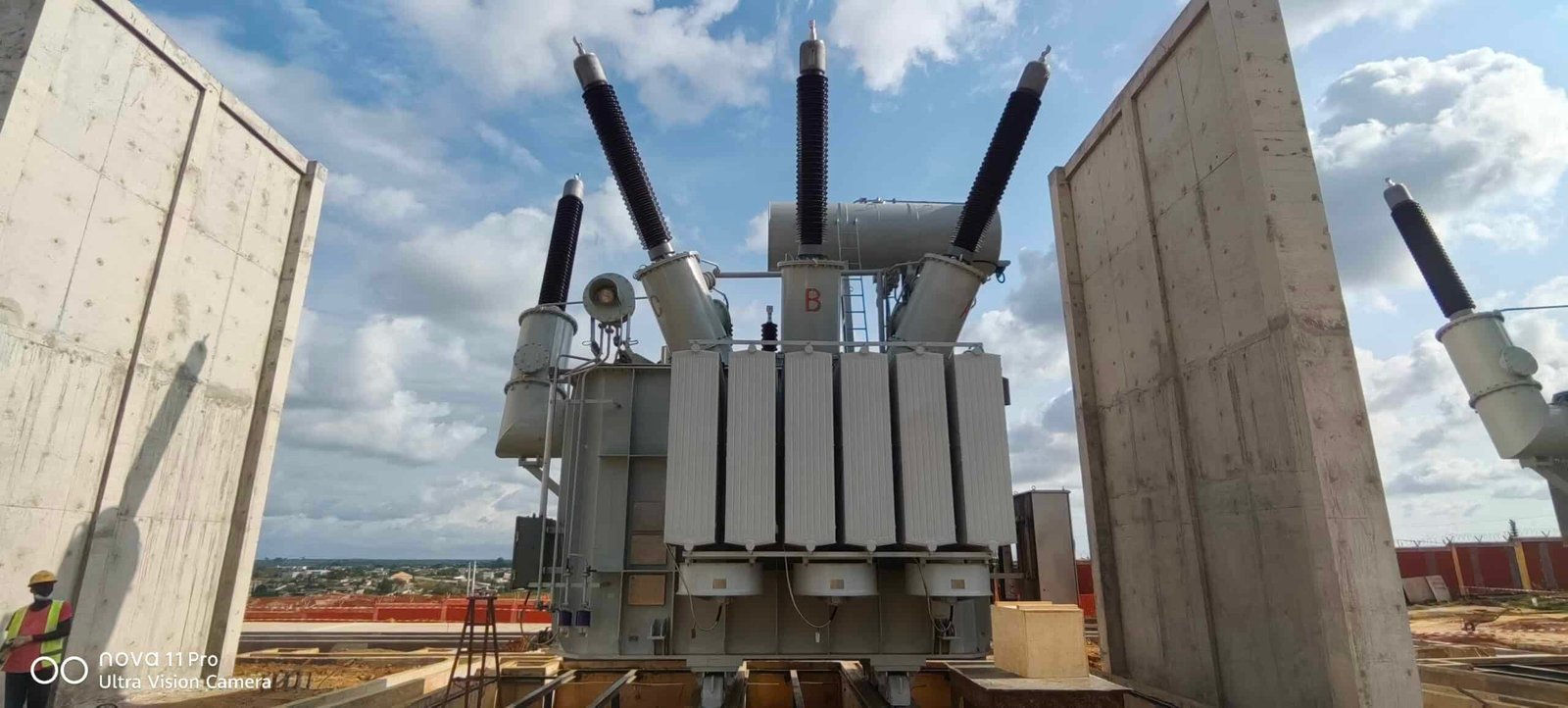
Oil-immersed transformers rely on insulating oil not only for electrical insulation but also as the primary medium for heat removal. During operation, heat generated in the core and windings must be efficiently dissipated to maintain insulation life, stable performance, and long-term reliability. For this reason, oil-immersed transformers use a range of standardized cooling methods that combine oil circulation and air or water heat exchange.
The main cooling methods used in oil-immersed transformers include natural oil–natural air (ONAN), natural oil–forced air (ONAF), forced oil–forced air (OFAF), and oil–water cooling (OFWF), each selected according to transformer capacity, load profile, and installation conditions.
Oil-immersed transformers use mineral oil or alternative insulating liquids as both an electrical insulator and a primary cooling medium.True
Transformer oil absorbs heat from windings and core and transfers it to external cooling surfaces, enabling effective thermal management.
Oil Natural Air Natural (ONAN)
ONAN is the most common and basic cooling method for oil-immersed transformers.
How it works:
- Oil circulates naturally by convection inside the tank
- Hot oil rises to radiators or cooling fins
- Heat is released to surrounding air by natural convection
Advantages:
- No pumps or fans required
- High reliability and low maintenance
- Quiet operation
ONAN cooling is typically used for small to medium power transformers operating under steady load conditions.
Oil Natural Air Forced (ONAF)
ONAF builds on ONAN by adding forced air cooling.
Key features:
- Oil circulation remains natural
- Fans blow air across radiators to increase heat dissipation
- Cooling capacity increases without changing the core design
Benefits:
- Higher load capability compared to ONAN
- Flexible cooling stages that activate only under high load
- Cost-effective capacity enhancement
ONAF is widely used for medium to large transformers in substations and industrial facilities.
Oil Forced Air Forced (OFAF)
OFAF introduces forced oil circulation in addition to forced air cooling.
Operating principle:
- Oil pumps circulate hot oil through windings and radiators
- Fans force air over cooling surfaces
- Heat transfer efficiency is significantly increased
Advantages:
- Supports high power density designs
- Better temperature uniformity inside the transformer
- Suitable for heavy-duty and variable load applications
OFAF is commonly applied in large power transformers for transmission and generation systems.
Oil Forced Water Forced (OFWF)
OFWF is used for very large or specialized transformers where air cooling is insufficient.
How it works:
- Oil is pumped through oil–water heat exchangers
- Water removes heat more efficiently than air
- Closed-loop water systems control thermal performance
Benefits:
- Extremely high cooling efficiency
- Compact radiator footprint
- Stable operation in confined spaces
OFWF cooling is typical for large power stations, underground substations, and industrial plants with available cooling water systems.
Directed Oil Cooling (ODAF / ODWF)
Advanced oil-immersed transformers may use directed oil flow.
Characteristics:
- Oil is guided directly through winding ducts
- Improves hotspot temperature control
- Enhances insulation life
Directed oil cooling is especially important for ultra-high-voltage and high-capacity transformers.
Comparison of Oil-Immersed Transformer Cooling Methods
| Cooling Method | Oil Circulation | Air / Water Cooling | Typical Capacity | Common Applications |
|---|---|---|---|---|
| ONAN | Natural | Natural Air | Small–Medium | Distribution substations |
| ONAF | Natural | Forced Air | Medium–Large | Utility substations |
| OFAF | Forced | Forced Air | Large | Transmission transformers |
| OFWF | Forced | Forced Water | Very Large | Power plants |
| ODAF / ODWF | Directed Forced | Air or Water | Extra Large | UHV systems |
Role of Monitoring and Control
Modern oil-immersed transformers integrate cooling control systems.
Key features:
- Temperature sensors in windings and oil
- Automatic fan and pump activation
- Alarms for cooling system failure
These systems optimize energy consumption while ensuring thermal safety.
How Do Natural and Forced Cooling Systems Differ?
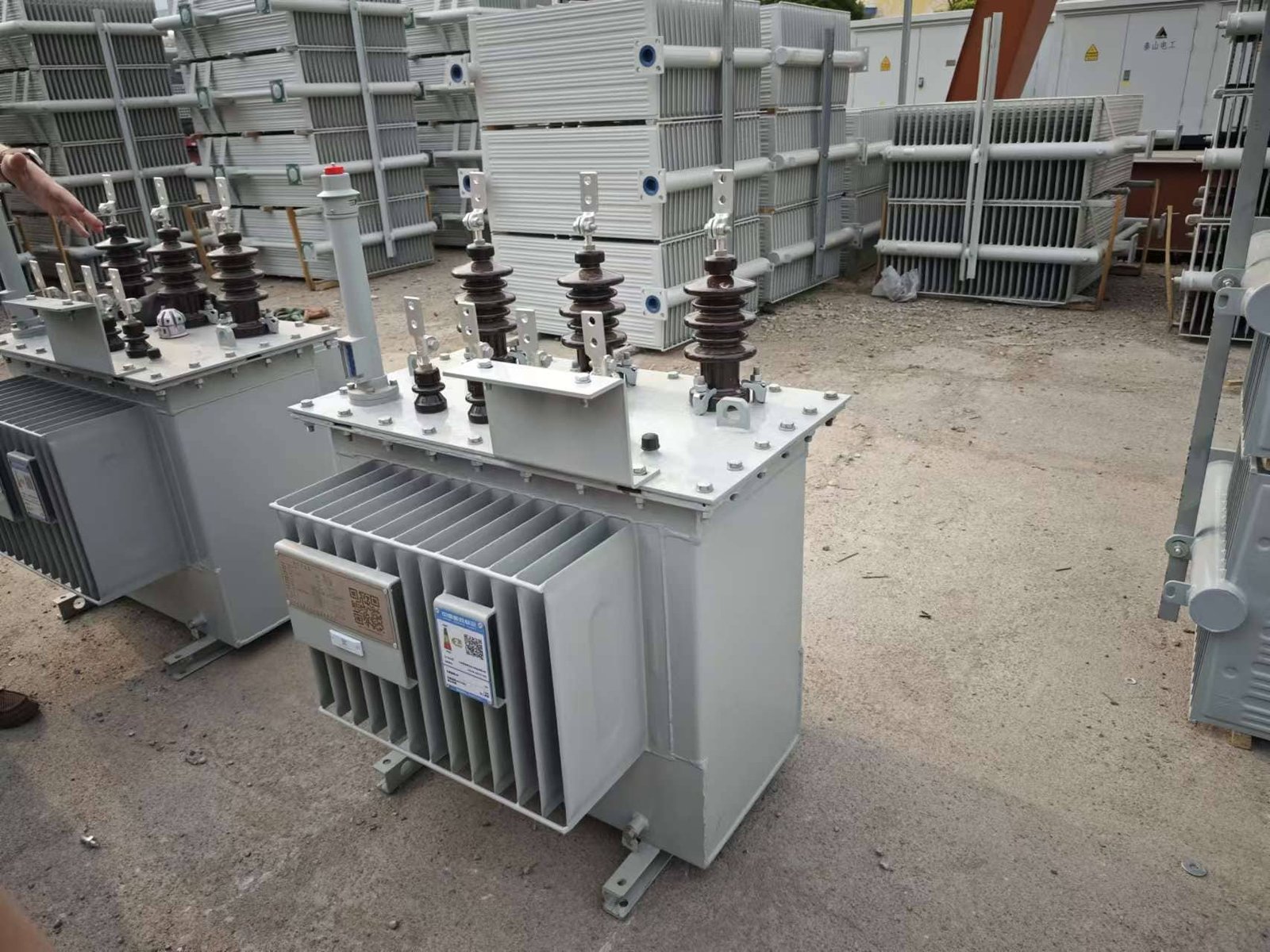
Cooling systems play a decisive role in transformer efficiency, reliability, and service life. Whether in dry-type or oil-immersed transformers, the choice between natural and forced cooling directly affects temperature rise, allowable load, maintenance complexity, and long-term operating cost. Understanding the differences between these two cooling approaches helps engineers and asset owners select the most suitable solution for their application.
Natural cooling systems rely on passive heat transfer mechanisms such as convection and radiation, while forced cooling systems use mechanical devices like fans or pumps to actively enhance heat dissipation and increase transformer capacity.
Forced cooling systems allow transformers to operate at higher load levels than natural cooling systems.True
By actively increasing airflow or oil circulation, forced cooling improves heat removal and raises permissible operating capacity.
Fundamental Working Principles
Natural cooling operates without any mechanical assistance. Heat generated in the transformer core and windings causes the surrounding medium—air in dry-type units or oil in oil-immersed units—to warm up and rise. Cooler air or oil then moves in to replace it, creating a continuous convection cycle. Heat is finally released to the surrounding environment through surfaces such as cooling fins, radiators, or ventilation ducts.
Forced cooling, by contrast, uses fans, blowers, or oil pumps to accelerate this heat transfer process. Instead of relying solely on natural convection, forced systems actively move air or oil across heat-generating components and cooling surfaces, significantly increasing the rate of thermal exchange.
Impact on Thermal Performance
The most noticeable difference lies in cooling efficiency and temperature control. Natural cooling provides stable and predictable performance but is limited by ambient conditions and physical surface area. As load increases, temperature rise also increases rapidly.
Forced cooling improves thermal performance by maintaining lower winding and oil temperatures at higher loads. This enables transformers to operate closer to their rated capacity or even beyond nominal rating for limited periods without exceeding insulation temperature limits.
Load Capability and Power Density
Natural cooling systems typically support lower power density designs. Transformers using natural cooling must be physically larger to dissipate the same amount of heat compared to forced-cooled units.
Forced cooling allows:
- Higher kVA or MVA ratings in the same physical footprint
- Improved overload capability
- Flexible capacity expansion using staged cooling
This makes forced cooling particularly valuable in space-constrained substations or applications with fluctuating demand.
Reliability and Maintenance Considerations
Natural cooling systems have a clear advantage in simplicity. With no moving parts, they offer:
- High intrinsic reliability
- Minimal maintenance requirements
- Low risk of auxiliary system failure
Forced cooling systems introduce additional components such as fans, pumps, sensors, and control circuits. While modern designs are highly reliable, they still require:
- Periodic inspection and maintenance
- Monitoring of auxiliary power supply
- Contingency planning for component failure
However, redundancy and intelligent control systems have significantly improved forced cooling reliability in modern transformers.
Energy Consumption and Operating Costs
Natural cooling consumes no auxiliary power, resulting in lower operating energy consumption. This can be advantageous for lightly loaded or continuously operated transformers.
Forced cooling consumes additional energy for fans or pumps. However, this is often offset by:
- Higher efficiency at increased load
- Reduced thermal losses
- Extended insulation life
When properly controlled, forced cooling only operates when needed, minimizing unnecessary energy use.
Environmental and Noise Factors
Natural cooling systems are inherently quieter and produce no additional vibration. They are ideal for noise-sensitive environments such as hospitals, residential areas, and commercial buildings.
Forced cooling introduces mechanical noise from fans or pumps. While modern low-noise designs and variable-speed controls mitigate this issue, noise remains a factor to consider in certain installations.
Typical Applications Comparison
| Aspect | Natural Cooling | Forced Cooling |
|---|---|---|
| Heat Transfer | Passive convection | Active airflow or oil circulation |
| Load Capability | Lower | Higher |
| Maintenance | Very low | Moderate |
| Auxiliary Power | None | Required |
| Noise Level | Very low | Moderate |
| Typical Use | Small to medium loads | Medium to large or variable loads |
What Do Cooling Designations Like ONAN, ONAF, and OFAF Mean?
Cooling designations such as ONAN, ONAF, and OFAF are standardized codes used to describe how oil-immersed transformers remove heat during operation. These designations are defined by international standards such as IEC 60076 and IEEE C57, and they provide a clear, concise way to understand the cooling principle, oil circulation method, and heat dissipation medium used in a transformer. Correctly interpreting these codes is essential for selecting a transformer that meets thermal, efficiency, and reliability requirements.
Cooling designations like ONAN, ONAF, and OFAF specify whether oil circulation is natural or forced and whether heat is dissipated to air naturally or by forced means, directly indicating the transformer’s cooling capability and load performance.
Cooling designations for oil-immersed transformers follow a standardized letter code that describes both oil circulation and external cooling method.True
IEC and IEEE standards define cooling codes so engineers can quickly understand transformer thermal design and operating limits.
How Cooling Designations Are Structured
Each cooling designation consists of a sequence of letters, where each letter represents a specific aspect of the cooling system.
Meaning of common letters:
- O – Oil is the internal cooling and insulating medium
- N – Natural circulation (no pumps or fans)
- F – Forced circulation (using pumps or fans)
- A – Air is the external cooling medium
- W – Water is the external cooling medium
The first pair of letters describes how heat is removed from the active parts (core and windings), while the second pair describes how heat is transferred to the surrounding environment.
ONAN – Oil Natural Air Natural
ONAN is the most basic and widely used cooling method.
How ONAN works:
- Oil circulates naturally inside the transformer by convection
- Hot oil rises to radiators or cooling fins
- Heat is released to ambient air through natural airflow
Key characteristics:
- No pumps or fans
- Simple and highly reliable
- Limited cooling capacity
ONAN transformers are commonly used in distribution and small to medium power applications with stable load conditions.
ONAF – Oil Natural Air Forced
ONAF enhances ONAN by introducing forced air cooling.
Operating principle:
- Oil circulation remains natural
- Fans force air across radiators to increase heat transfer
- Cooling capacity increases when fans are activated
Advantages:
- Higher allowable load compared to ONAN
- Flexible staged cooling for peak demand
- Cost-effective capacity upgrade
ONAF cooling is widely applied in utility substations and industrial installations.
OFAF – Oil Forced Air Forced
OFAF uses forced circulation for both oil and air.
How OFAF operates:
- Oil pumps circulate oil through windings and radiators
- Fans force air across cooling surfaces
- Heat removal efficiency is significantly increased
Benefits:
- Supports high power density designs
- Better temperature uniformity
- Suitable for large and heavily loaded transformers
OFAF is typically used in transmission-level and large power transformers.
Other Common Cooling Designations
In addition to ONAN, ONAF, and OFAF, several other codes are used.
- OFWF – Oil Forced Water Forced, using oil–water heat exchangers
- ODAF – Oil Directed Air Forced, with guided oil flow through windings
- ODWF – Oil Directed Water Forced, for ultra-high-capacity systems
These advanced systems are designed for very large or specialized transformers.
Comparison of Common Cooling Designations
| Cooling Code | Oil Circulation | External Cooling | Typical Capacity | Typical Application |
|---|---|---|---|---|
| ONAN | Natural | Natural Air | Small–Medium | Distribution networks |
| ONAF | Natural | Forced Air | Medium–Large | Utility substations |
| OFAF | Forced | Forced Air | Large | Transmission systems |
| OFWF | Forced | Forced Water | Very Large | Power plants |
| ODAF / ODWF | Directed Forced | Air or Water | Extra Large | UHV transformers |
Why Cooling Designations Matter
Cooling designations directly influence:
- Permissible load and overload capability
- Transformer efficiency and losses
- Insulation aging rate and service life
- Maintenance requirements and operating cost
Selecting the correct cooling type ensures the transformer can handle expected load conditions without overheating or premature aging.
How Is the Appropriate Cooling Method Selected for a Transformer?
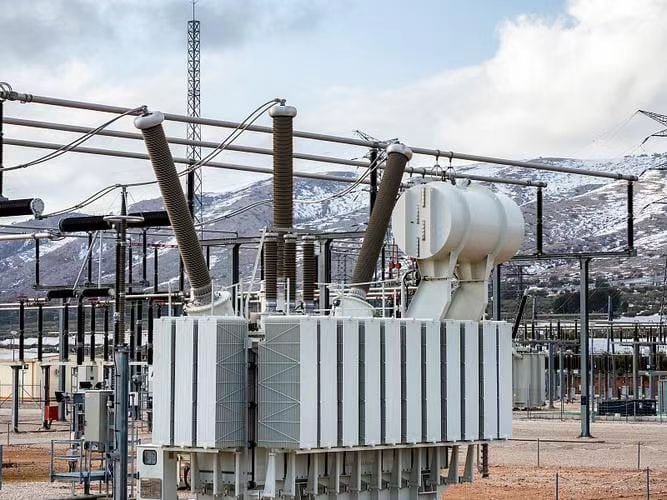
Selecting the appropriate cooling method for a transformer is a critical engineering decision that directly affects efficiency, reliability, service life, footprint, and total lifecycle cost. Cooling is not chosen in isolation; instead, it results from a comprehensive evaluation of electrical, thermal, environmental, and economic factors. An unsuitable cooling method can lead to overheating, accelerated insulation aging, frequent outages, or unnecessary capital and operating expenses.
The appropriate transformer cooling method is selected by balancing load demand, thermal limits, installation environment, reliability requirements, and lifecycle cost, ensuring that heat generated during operation is safely and efficiently dissipated under all expected operating conditions.
Transformer cooling method selection directly impacts allowable load, insulation life, and long-term operating reliability.True
Effective cooling controls temperature rise, which is the primary factor influencing insulation aging and transformer lifespan.
Load Profile and Rated Capacity
The starting point for cooling selection is the expected electrical load.
Key considerations include:
- Rated kVA or MVA of the transformer
- Continuous load versus cyclic or peak loading
- Future load growth and overload requirements
Transformers operating at stable, moderate loads often use natural cooling (AN or ONAN). Applications with frequent peaks, high utilization, or planned capacity expansion typically require forced cooling (AF, ONAF, or OFAF) to maintain acceptable temperature rise.
Temperature Rise and Insulation Class
Every transformer is designed with a maximum allowable temperature rise based on its insulation system.
Cooling selection must ensure:
- Winding hot-spot temperature remains within limits
- Insulation aging rate stays within design expectations
- Compliance with IEC or IEEE temperature rise standards
Higher insulation classes allow higher operating temperatures, but effective cooling is still required to preserve insulation life and efficiency.
Installation Environment and Ambient Conditions
The surrounding environment strongly influences cooling performance.
Factors evaluated include:
- Ambient temperature range
- Altitude (affects air density and heat dissipation)
- Indoor or outdoor installation
- Ventilation quality and available space
Hot climates, high altitudes, or enclosed installations often require enhanced cooling to compensate for reduced natural heat dissipation.
Transformer Type and Application
Different transformer types favor different cooling approaches.
Examples:
- Dry-type transformers typically use air-based cooling (AN or AF)
- Oil-immersed transformers use oil-air or oil-water systems
- Urban substations may prefer compact forced-cooled designs
- Power plants and transmission systems require high-performance forced cooling
Application-specific requirements such as noise limits, fire safety, or environmental protection also influence cooling choice.
Reliability and Maintenance Strategy
Cooling systems affect operational complexity and maintenance planning.
Natural cooling offers:
- Fewer components
- Minimal maintenance
- High inherent reliability
Forced cooling introduces:
- Fans, pumps, and control systems
- Higher maintenance requirements
- Need for monitoring and redundancy
Critical installations often justify forced cooling with redundancy and alarms to ensure uninterrupted operation.
Energy Efficiency and Operating Cost
While forced cooling consumes auxiliary power, it can improve overall efficiency by reducing operating temperatures and losses.
Cooling selection considers:
- Auxiliary power consumption
- Reduced thermal losses
- Extended insulation life
- Total cost of ownership over decades
In many cases, intelligent staged cooling minimizes energy use by operating only when required.
Standards, Codes, and Utility Requirements
Cooling methods must comply with applicable standards and customer specifications.
Common references include:
- IEC 60076 series
- IEEE C57 standards
- Utility or grid operator technical requirements
These standards define allowable temperature rise, cooling classifications, and testing procedures.
Typical Cooling Selection Logic
| Condition | Preferred Cooling Method |
|---|---|
| Small capacity, stable load | Natural cooling (AN / ONAN) |
| Medium capacity, variable load | Forced air (AF / ONAF) |
| Large capacity, high load | Forced oil & air (OFAF) |
| Very large or confined space | Oil–water (OFWF) |
| Harsh or high-altitude environment | Enhanced forced cooling |
Role of Future Expansion and Flexibility
Cooling systems are often designed with staged capability.
Examples:
- ONAN transformer upgraded to ONAF by adding fans
- AF dry-type transformer with standby cooling stages
This allows capacity growth without replacing the transformer.
Conclusion
Transformers use a range of cooling methods to control temperature and ensure reliable operation under varying load conditions. From natural air cooling in dry-type transformers to advanced oil and forced cooling systems in high-capacity power transformers, each method is designed to balance performance, efficiency, and cost. Selecting the appropriate cooling system and maintaining it properly are essential for extending transformer life and maintaining system reliability.
FAQ
Q1: Why is cooling essential in transformers?
Cooling is essential because transformers generate heat due to core losses (iron losses) and winding losses (copper losses) during operation. If this heat is not effectively dissipated, excessive temperature rise can:
Accelerate insulation aging
Reduce transformer efficiency
Increase failure risk
Shorten service life
Proper cooling maintains operating temperatures within design limits, ensuring reliable performance and long-term durability.
Q2: What are the main categories of transformer cooling methods?
Transformer cooling methods fall into two main categories:
Oil-immersed transformer cooling
Dry type transformer cooling
Oil-immersed transformers use insulating oil as both a cooling and dielectric medium, while dry type transformers rely on air or gas circulation without liquid insulation. The choice depends on voltage level, installation environment, safety requirements, and maintenance preferences.
Q3: What are the common oil-immersed transformer cooling methods?
Oil-immersed transformers use standardized IEC cooling designations, including:
ONAN (Oil Natural Air Natural):
Oil circulates naturally by convection, and heat is dissipated through radiators to ambient air. Used for small to medium transformers.
ONAF (Oil Natural Air Forced):
Natural oil circulation with forced air cooling using fans. Increases cooling capacity during higher loads.
OFAF (Oil Forced Air Forced):
Oil is pumped through radiators, and fans force air circulation. Used for large power transformers.
OFWF (Oil Forced Water Forced):
Oil is pumped through water-cooled heat exchangers. Applied in very large or indoor substations with limited space.
These methods allow oil-immersed transformers to handle high power ratings and voltage levels efficiently.
Q4: How are dry type transformers cooled?
Dry type transformers use air or gas instead of oil. Common cooling methods include:
AN (Air Natural):
Natural air convection removes heat. Suitable for smaller dry type transformers.
AF (Air Forced):
Fans are used to increase airflow and cooling capacity, allowing higher load operation.
Cast resin cooling:
Heat is dissipated through resin-encapsulated windings combined with air circulation.
Dry type cooling methods are preferred in commercial buildings, hospitals, data centers, and indoor installations where fire safety and environmental protection are critical.
Q5: What do IEC cooling codes mean (e.g., ONAN, ONAF)?
IEC cooling codes describe the cooling medium and circulation method:
First letter: Cooling medium inside winding (O = oil, A = air)
Second letter: Circulation method inside (N = natural, F = forced)
Third letter: External cooling medium (A = air, W = water)
Fourth letter: External circulation method (N = natural, F = forced)
For example, ONAF means oil-immersed transformer with natural oil circulation and forced air cooling.
Q6: How does cooling method affect transformer rating and efficiency?
Enhanced cooling allows transformers to:
Carry higher loads safely
Reduce winding temperature rise
Improve efficiency under heavy load
Extend insulation life
Many transformers are designed with multiple cooling stages, enabling additional cooling (fans or pumps) only when required, optimizing energy consumption and operational flexibility.
Q7: How is the appropriate cooling method selected?
Cooling method selection depends on several factors:
Transformer rating (kVA/MVA)
Installation location (indoor or outdoor)
Environmental conditions
Fire and environmental safety requirements
Maintenance capabilities
High-voltage, high-capacity transformers usually require oil-based cooling, while dry type cooling is favored in sensitive or indoor environments.
Q8: Can cooling systems be upgraded over time?
Yes. Cooling systems can be enhanced through:
Adding fans or pumps
Improving radiator design
Retrofitting monitoring and control systems
Upgrading heat exchangers
Such upgrades can increase transformer loading capability and extend service life without full replacement.
References
IEC 60076 – Power Transformers
https://webstore.iec.ch/publication/602
IEC 60076-2 – Temperature Rise and Cooling
https://webstore.iec.ch/publication/603
IEEE C57 Series – Transformer Cooling Standards
https://standards.ieee.org
Schneider Electric – Dry Type Transformer Cooling
https://www.se.com
Electrical Engineering Portal – Transformer Cooling Explained
https://electrical-engineering-portal.com
CIGRE – Transformer Thermal Performance
https://www.cigre.org
U.S. Department of Energy – Transformer Efficiency and Cooling
https://www.energy.gov