
Transformer efficiency is a key indicator of how effectively a transformer converts input electrical power into usable output power. Because transformers operate continuously in power systems, even small efficiency differences can lead to significant energy savings or losses over time. Understanding transformer efficiency helps utilities, engineers, and end users select the right transformer, optimize operation, and reduce lifecycle costs.
What Does Transformer Efficiency Mean?

Transformer efficiency is a key indicator of how effectively a transformer converts electrical input power into usable output power. Because transformers operate continuously and often for decades, even small efficiency differences can result in significant energy losses, operating costs, and environmental impact over their service life. Understanding transformer efficiency is therefore essential for engineers, utilities, and end users when selecting, operating, and maintaining transformers.
Transformer efficiency is the ratio of output electrical power delivered to the load to the input electrical power supplied to the transformer, expressed as a percentage, indicating how much power is transferred without being lost as heat or other losses.
Transformer efficiency measures how much input power is converted into usable output power rather than being lost.True
Losses in the core, windings, and auxiliary systems reduce the output power available to the load.
Basic Definition of Transformer Efficiency
Transformer efficiency compares useful output power with total input power.
It is expressed as:
- Efficiency (%) = (Output Power ÷ Input Power) × 100
If a transformer has low losses, its efficiency approaches 100%. In practice, power transformers often achieve efficiencies above 98%, especially at or near rated load.
Relationship Between Losses and Efficiency
Efficiency is directly influenced by internal losses.
The main loss categories are:
- Core (no-load) losses
- Winding (load) losses
- Auxiliary losses from cooling systems
Reducing these losses increases overall efficiency and lowers operating cost.
Load Dependence of Efficiency
Transformer efficiency is not constant and varies with load.
Key characteristics:
- At light load, core losses dominate
- At heavy load, winding losses increase
- Maximum efficiency occurs near a specific load point
This is why transformers are designed and selected based on expected operating load profiles.
Importance of High Efficiency in Power Systems
High-efficiency transformers provide multiple benefits.
These include:
- Lower energy losses over time
- Reduced operating and cooling costs
- Lower carbon emissions
- Extended insulation and component life
In large power networks, efficiency improvements translate directly into significant economic and environmental gains.
Efficiency vs. Voltage Transformation
Efficiency should not be confused with voltage ratio.
Key distinction:
- Voltage transformation describes change in voltage level
- Efficiency describes how much power is preserved during that change
A transformer can step voltage up or down accurately while still being inefficient if losses are high.
Standards and Efficiency Requirements
Transformer efficiency is governed by international standards.
Common references include:
- IEC 60076 series
- IEEE C57 standards
- Regional energy efficiency regulations
These standards define loss limits, testing methods, and efficiency benchmarks.
How Is Transformer Efficiency Calculated?
Transformer efficiency is calculated by comparing how much electrical power a transformer delivers to the load versus how much power it draws from the supply. Because transformers operate continuously and losses occur inside the core and windings, efficiency calculation is essential for evaluating performance, operating cost, and compliance with technical standards.
Transformer efficiency is calculated by dividing the output power by the input power, or equivalently by subtracting total losses from input power and expressing the result as a percentage.
Transformer efficiency can be accurately calculated using measured output power and known core and load losses.True
Standard test methods allow losses to be determined without fully loading the transformer.
Basic Efficiency Formula
The general formula for transformer efficiency is:
- Efficiency (%) = (Output Power ÷ Input Power) × 100
Since input power equals output power plus losses, efficiency can also be written as:
- Efficiency (%) = [Output Power ÷ (Output Power + Total Losses)] × 100
This second form is commonly used in practical calculations.
Components of Transformer Losses
To calculate efficiency accurately, all significant losses must be considered.
Main loss components:
- Core (no-load) losses, which are constant
- Winding (load) losses, which vary with load
- Auxiliary losses from cooling fans or pumps
Total losses are the sum of these components.
Efficiency Calculation at a Given Load
Efficiency depends on the load level.
For a transformer operating at a fraction of rated load:
- Load losses scale with the square of load current
- Core losses remain essentially constant
For example:
- At 50% load, load losses are approximately 25% of full-load winding losses
- Core losses remain unchanged
This relationship is critical when calculating efficiency under real operating conditions.
Maximum Efficiency Condition
Transformer efficiency reaches its maximum when:
- Core losses equal load losses
This operating point is often near 60–80% of rated load, depending on design.
Understanding this helps engineers match transformer design to expected load profiles.
Efficiency Calculation Using Test Data
In practice, efficiency is calculated using standardized test results.
Tests include:
- No-load test to measure core losses
- Short-circuit test to measure winding losses
These tests allow accurate efficiency calculation without full-load operation.
Example Efficiency Calculation
Assume:
- Output power = 1,000 kW
- Core losses = 5 kW
- Load losses = 10 kW
Total losses = 15 kW
Efficiency = 1,000 ÷ (1,000 + 15) × 100 ≈ 98.5%
What Are No-Load (Core) Losses?

No-load losses, also known as core losses, are the losses that occur in a transformer whenever it is energized, regardless of whether it is supplying power to a load. These losses are inherent to the magnetic behavior of the transformer core and represent a continuous energy consumption that directly affects transformer efficiency and long-term operating cost.
No-load (core) losses are the power losses that occur in a transformer’s magnetic core due to alternating magnetic flux when the transformer is energized, even when no load is connected.
No-load losses occur whenever a transformer is energized, independent of load current.True
These losses are caused by magnetic effects in the core rather than current flowing to the load.
Origin of No-Load Losses
No-load losses arise from the interaction between alternating magnetic flux and the core material.
They occur because:
- The core is magnetized by the applied voltage
- Magnetic domains continuously realign
- Energy is dissipated during each AC cycle
These losses exist as long as rated voltage is applied.
Main Components of Core Losses
No-load losses consist primarily of two components.
Hysteresis loss:
- Caused by repeated magnetization and demagnetization
- Depends on core material properties
- Proportional to frequency and maximum flux density
Eddy current loss:
- Caused by circulating currents induced within the core
- Depends on core thickness, resistivity, and flux density
- Increases with the square of frequency and voltage
Together, these losses determine the baseline energy consumption of a transformer.
Characteristics of No-Load Losses
Core losses have distinct characteristics.
Key features include:
- Nearly constant with load
- Strongly dependent on voltage and frequency
- Present even at zero load
This makes them particularly important in lightly loaded or standby transformers.
Impact on Transformer Efficiency
No-load losses significantly affect efficiency at light load.
Effects include:
- Reduced efficiency when transformer operates below rated load
- Continuous energy cost over the transformer’s lifetime
- Increased heat generation even without load
Reducing core losses is a major focus of modern transformer design.
Measurement of No-Load Losses
No-load losses are measured during standardized testing.
The process involves:
- Applying rated voltage at rated frequency
- Keeping the secondary circuit open
- Measuring input power drawn by the transformer
These tests are defined by IEC and IEEE standards.
Methods to Reduce Core Losses
Modern transformers use advanced materials and design techniques.
Common approaches include:
- High-grade grain-oriented silicon steel
- Amorphous metal cores
- Thinner laminations
- Optimized core geometry
These measures significantly lower lifetime energy consumption.
What Are Load (Copper) Losses?

Load losses, commonly referred to as copper losses, are the losses that occur in a transformer when it is supplying current to a load. Unlike no-load (core) losses, which are present whenever the transformer is energized, load losses depend directly on the amount of current flowing through the windings. They play a major role in determining transformer efficiency at medium to high load levels and strongly influence thermal performance and operating limits.
Load (copper) losses are the power losses caused by the resistance of transformer windings when current flows through them, increasing in proportion to the square of the load current.
Load losses increase rapidly as transformer load increases because they are proportional to the square of the current.True
Doubling the load current results in approximately four times the winding losses.
Origin of Load Losses
Load losses originate from electrical resistance in the transformer windings.
When current flows:
- Electrons encounter resistance in copper or aluminum conductors
- Electrical energy is converted into heat
- Winding temperature rises
These losses occur only when the transformer is delivering power to a load.
Components of Load Losses
While winding resistance is the main source, load losses include several elements.
Primary components:
- DC resistance (I²R) losses in windings
- Additional losses from AC effects
Additional losses include:
- Skin effect at higher frequencies
- Proximity effect due to magnetic fields between conductors
- Eddy current losses in windings and structural parts
These factors become more significant in large or high-current transformers.
Load Dependence of Copper Losses
Load losses are highly dependent on current.
Key relationships:
- Proportional to the square of load current
- Minimal at light load
- Dominant at high load
This makes load profile analysis critical when selecting transformer capacity.
Impact on Transformer Efficiency
Load losses strongly influence efficiency at rated and peak loads.
Effects include:
- Reduced efficiency at high load levels
- Increased operating temperature
- Accelerated insulation aging if not properly managed
Well-designed transformers balance conductor size, cooling, and material cost to control these losses.
Measurement of Load Losses
Load losses are measured using standardized short-circuit tests.
The test involves:
- Applying reduced voltage to circulate rated current
- Measuring power input during the test
- Separating load losses from core losses
These procedures are defined in IEC and IEEE standards.
Methods to Reduce Load Losses
Manufacturers use several techniques to minimize copper losses.
Common strategies:
- Using high-conductivity copper
- Increasing conductor cross-sectional area
- Optimizing winding geometry
- Improving cooling to limit temperature rise
Advanced designs reduce losses while maintaining compact size.
How Does Load Level Affect Transformer Efficiency?
Transformer efficiency is not a fixed value; it varies continuously with load level. Understanding how efficiency changes from light load to full load is essential for proper transformer selection, system planning, and long-term energy cost optimization. The interaction between no-load losses and load losses determines where a transformer operates most efficiently and how it performs under real operating conditions.
Load level affects transformer efficiency by changing the balance between constant no-load losses and current-dependent load losses, causing efficiency to increase from light load, peak at an optimal point, and then decline at higher load levels.
Transformer efficiency reaches its maximum when load losses equal no-load losses.True
At this point, total losses are minimized relative to output power.
Efficiency at Light Load
At light load, transformer efficiency is relatively low.
Reasons include:
- Core losses remain constant regardless of load
- Output power is small compared to input power
- Core losses dominate total losses
As a result, a lightly loaded transformer may appear inefficient despite low current flow.
Efficiency Increase with Load
As load increases, efficiency improves.
This happens because:
- Output power increases linearly with load
- Core losses remain constant
- Load losses are still relatively small
Efficiency rises rapidly as the transformer moves toward its optimal operating range.
Point of Maximum Efficiency
Transformer efficiency reaches a maximum at a specific load level.
At this point:
- Load losses equal no-load losses
- Total losses are minimized relative to output
- Transformer operates at its most economical condition
This optimal load typically occurs between 60% and 80% of rated load, depending on design.
Efficiency at High Load
Beyond the optimal point, efficiency begins to decrease.
Causes include:
- Load losses increase with the square of current
- Winding temperature rises
- Additional cooling losses may occur
At full load or overload, copper losses dominate and reduce efficiency.
Impact of Load Profile on Efficiency
Real-world transformer efficiency depends on how it is used.
Important factors:
- Average operating load
- Duration of peak loads
- Load variability over time
Transformers should be selected to match expected load profiles rather than peak demand alone.
Practical Implications for Transformer Selection
Understanding load-efficiency behavior guides better decisions.
Key implications:
- Oversized transformers may operate inefficiently at light load
- Undersized transformers suffer high losses and overheating
- Proper sizing improves efficiency and extends service life
Modern efficiency regulations increasingly emphasize real operating conditions.
Why Is High Transformer Efficiency Important in Power Systems?
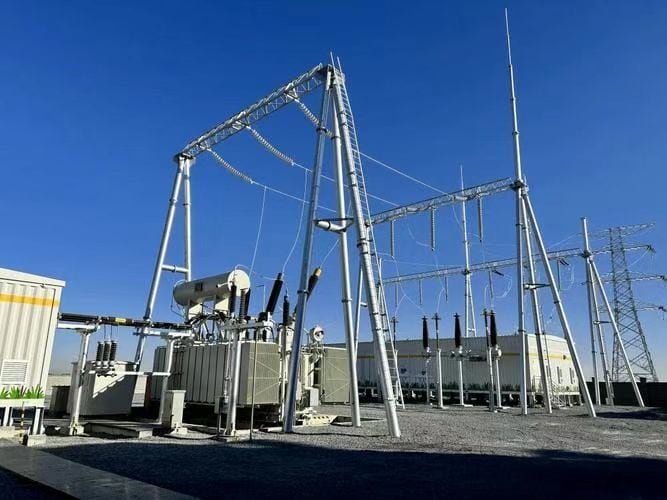
High transformer efficiency is a critical requirement in modern power systems because transformers operate continuously and form the backbone of electricity transmission and distribution. Even small efficiency improvements can translate into significant energy savings, reduced operating costs, enhanced system reliability, and lower environmental impact over a transformer’s long service life.
High transformer efficiency is important because it minimizes energy losses, reduces operating and cooling costs, improves system reliability, extends equipment lifespan, and lowers the overall environmental footprint of power systems.
Improving transformer efficiency delivers long-term economic and environmental benefits across the entire power network.True
Because transformers operate 24/7 for decades, loss reductions accumulate into substantial savings.
Reduction of Energy Losses
Transformers with high efficiency waste less energy as heat.
Benefits include:
- Lower core and copper losses
- Reduced total system losses
- Improved energy utilization across the grid
This directly increases the amount of generated power delivered to end users.
Lower Operating and Lifecycle Costs
Efficiency strongly affects total cost of ownership.
Key cost advantages:
- Reduced electricity losses over decades of operation
- Lower cooling and auxiliary power requirements
- Decreased maintenance due to lower thermal stress
Although high-efficiency transformers may have higher upfront cost, lifecycle savings often outweigh initial investment.
Improved Thermal Performance and Reliability
High efficiency reduces internal heat generation.
This leads to:
- Lower winding and oil temperatures
- Slower insulation aging
- Reduced risk of thermal faults
Lower operating temperatures significantly enhance transformer reliability and service life.
Enhanced System Capacity and Stability
Efficient transformers support better system performance.
Advantages include:
- Greater usable capacity from existing infrastructure
- Improved voltage regulation under load
- Reduced stress on upstream generation and transmission assets
This contributes to overall grid stability.
Environmental and Sustainability Benefits
Efficiency improvements reduce environmental impact.
Key impacts:
- Lower greenhouse gas emissions
- Reduced fuel consumption at power plants
- Support for energy efficiency and carbon reduction policies
High-efficiency transformers play a direct role in achieving sustainability targets.
Compliance with Standards and Regulations
Many regions enforce minimum efficiency requirements.
High efficiency helps:
- Meet IEC, IEEE, and regional energy regulations
- Avoid penalties or retrofitting costs
- Support utility and customer efficiency programs
Regulatory compliance is increasingly linked to efficiency performance.
Long-Term Asset Value
Efficient transformers retain higher long-term value.
Benefits include:
- Longer service life
- Better resale or reuse potential
- Lower risk of premature replacement
This improves asset management outcomes.
Conclusion
Transformer efficiency represents how well a transformer delivers output power compared to the power it consumes. It is influenced mainly by core losses and copper losses, which behave differently under varying load conditions. High-efficiency transformers reduce energy waste, operating costs, and environmental impact while improving system reliability. Selecting and operating transformers with optimal efficiency is therefore essential for modern, sustainable power systems.
FAQ
Q1: What is transformer efficiency?
Transformer efficiency is a measure of how effectively a transformer converts input electrical power into usable output power. It is defined as the ratio of output power to input power, expressed as a percentage.
In practical terms, transformer efficiency indicates how much energy is delivered to the load versus how much is lost as heat within the transformer. Because transformers have no moving parts, their efficiencies are very high—often exceeding 98% for power transformers under normal operating conditions.
Q2: How is transformer efficiency calculated?
Transformer efficiency is calculated using the following relationship:
Efficiency (%) = (Output Power ÷ Input Power) × 100
Since the difference between input and output power represents losses, efficiency can also be expressed as:
Efficiency (%) = Output Power ÷ (Output Power + Losses)
The main losses considered are core (no-load) losses and copper (load) losses. Efficiency varies with load, meaning a transformer does not operate at the same efficiency under all conditions.
Q3: What are the main losses that affect transformer efficiency?
Transformer efficiency is affected by two primary types of losses:
Core losses:
Caused by hysteresis and eddy currents in the magnetic core. These losses are nearly constant whenever the transformer is energized.
Copper losses:
Caused by resistance in the windings and proportional to the square of the load current (I²R). These losses increase as load increases.
Additional minor losses include stray losses and dielectric losses, but core and copper losses dominate efficiency behavior.
Q4: Why does transformer efficiency vary with load?
Efficiency varies with load because core losses remain constant while copper losses increase with load. At light load, core losses dominate, resulting in lower efficiency. As load increases, output power rises faster than losses, improving efficiency.
At heavy load, copper losses increase rapidly, causing efficiency to decline. Maximum efficiency occurs when copper losses equal core losses, typically between 40% and 70% of rated load, depending on transformer design.
Q5: Why is high transformer efficiency important?
High transformer efficiency is important because transformers operate continuously for decades. Even small losses result in significant energy waste over time. High efficiency leads to:
Lower energy consumption
Reduced operating costs
Less heat generation
Longer insulation life
Lower carbon emissions
For utilities and industrial users, efficiency directly impacts total cost of ownership and sustainability goals.
Q6: How does transformer type influence efficiency?
Different transformer types exhibit different efficiency characteristics:
Power transformers: Optimized for high efficiency near full load
Distribution transformers: Optimized for varying or lighter loads
Dry type transformers: Typically higher no-load losses than oil-filled units
Amorphous core transformers: Extremely low core losses, ideal for light-load operation
Selecting the right transformer type based on load profile is critical for maximizing efficiency.
Q7: How do standards define and regulate transformer efficiency?
Transformer efficiency and losses are regulated by international standards such as IEC, IEEE, DOE, and EU Ecodesign regulations. These standards specify maximum allowable losses and minimum efficiency levels to reduce energy waste.
Compliance ensures transformers meet modern energy-efficiency and environmental requirements, particularly for distribution and utility-scale applications.
Q8: Can transformer efficiency be improved over time?
Yes. Efficiency can be improved by:
Proper transformer sizing
Maintaining optimal loading
Ensuring effective cooling
Regular maintenance and monitoring
Replacing older units with high-efficiency designs
Lifecycle efficiency management can deliver substantial long-term energy and cost savings.
References
IEC 60076 – Power Transformers
https://webstore.iec.ch/publication/602
IEEE C57 Series – Transformer Efficiency and Loss Standards
https://standards.ieee.org
ANSI C57.12.90 – Transformer Loss Evaluation
https://www.nema.org
Schneider Electric – Transformer Efficiency Explained
https://www.se.com
Electrical Engineering Portal – Transformer Efficiency Basics
https://electrical-engineering-portal.com
EPRI – Transformer Energy Efficiency Research
https://www.epri.com
U.S. Department of Energy – Transformer Energy Conservation
https://www.energy.gov