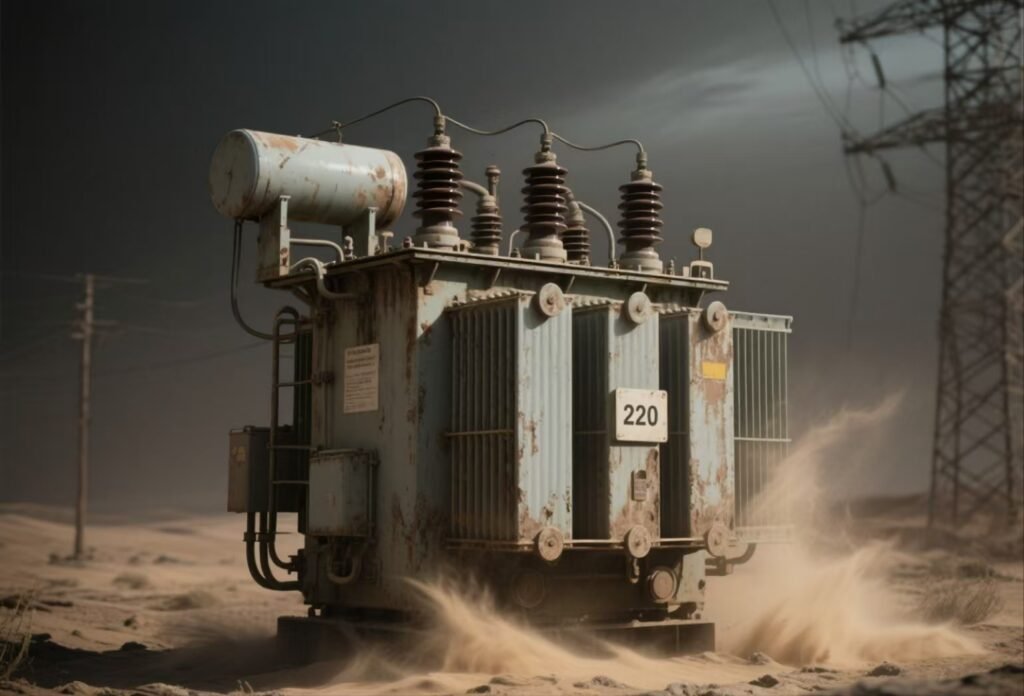
Transformer efficiency is a key performance indicator that directly impacts energy losses, operating costs, and system sustainability. Measuring and optimizing transformer efficiency allows utilities and industries to maximize output while minimizing waste. With rising energy demands and carbon reduction targets, optimizing transformer performance has become a priority in grid modernization. This guide explores how efficiency is measured and practical ways it can be improved.
How Is Transformer Efficiency Defined and Calculated?
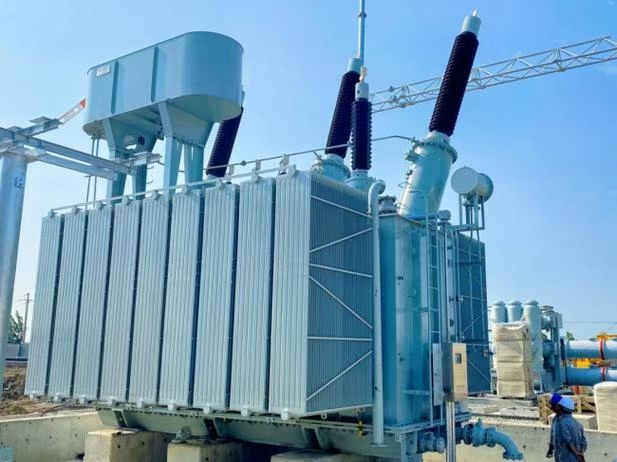
Transformer efficiency is a key metric in electrical systems, especially for power distribution, transmission, and industrial operations where minimizing energy loss directly affects performance and operating cost. Unlike mechanical systems, electrical transformers typically reach efficiency levels over 98%, but small percentage losses can still translate into thousands of kilowatt-hours annually. To make informed decisions, engineers and operators must understand how efficiency is defined, calculated, and interpreted.
Transformer efficiency is defined as the ratio of the output power (delivered to the load) to the input power (supplied from the source), expressed as a percentage. It is calculated using the formula:
Efficiency (%) = (Output Power / Input Power) × 100
or
Efficiency (%) = [Input Power – Total Losses] / Input Power × 100
This takes into account the two major loss types: no-load (core) losses and load (copper) losses.
Transformer efficiency is independent of losses.False
Transformer efficiency is directly influenced by losses; both core and copper losses reduce the amount of input power converted to usable output.
Formula Breakdown – Transformer Efficiency
| Variable | Description |
|---|---|
| Pout (Output Power) | Power delivered to load = V × I × cos ϕ (kW) |
| Pin (Input Power) | Power drawn from source = Pout + losses |
| Losses | Core loss + copper loss |
| Efficiency (%) | (Pout / Pin) × 100 or (Pin – Loss) / Pin × 100 |
Example Calculation
Given:
- Output: 950 kW
- Core (No-Load) Loss: 3.0 kW
- Load (Copper) Loss: 7.0 kW
- Input Power = 950 kW + 10 kW = 960 kW
Efficiency = (950 / 960) × 100 = 98.96%
Loss-Based Efficiency Calculation Formula
Efficiency (%) = Output Power / (Output Power + Total Losses)
Useful when output power and losses are known from test reports.
Losses That Affect Efficiency
| Loss Type | Description |
|---|---|
| No-Load Loss (P₀) | Occurs when transformer is energized (constant); from core excitation |
| Load Loss (Pᵤ) | Varies with load current (I²R); caused by winding resistance |
| Stray Losses | Magnetic leakage inducing eddy currents in tank/structure |
| Dielectric Loss | Minor losses from insulation and dielectric heating |
Typical Efficiency Ranges by Transformer Class
| Transformer Type | Efficiency (%) |
|---|---|
| Distribution (11–33 kV) | 97.0% – 98.5% |
| Medium Power (66–132 kV) | 98.5% – 99.2% |
| Large Transmission (>220 kV) | 99.3% – 99.7% |
Even a 0.5% difference in efficiency can mean tens of thousands of kWh per year saved.
Load-Dependent Efficiency
Transformer efficiency varies with load. At light loads, core losses dominate; at higher loads, copper losses increase.
| Load % | Core Loss (kW) | Load Loss (kW) | Total Loss | Output (kW) | Efficiency (%) |
|---|---|---|---|---|---|
| 0% | 3.0 | 0 | 3.0 | 0 | 0% |
| 25% | 3.0 | 0.44 | 3.44 | 250 | 98.64% |
| 50% | 3.0 | 1.75 | 4.75 | 500 | 99.06% |
| 75% | 3.0 | 3.94 | 6.94 | 750 | 99.08% |
| 100% | 3.0 | 7.0 | 10.0 | 1000 | 99.00% |
Peak efficiency typically occurs between 50%–75% of rated load.
Efficiency Classifications (Per Standards)
| Standard | Classification Criteria |
|---|---|
| IEC 60076-20 | Specifies loss values for energy-efficient transformers |
| EU EcoDesign Tier 2 | Caps total losses for various kVA ratings |
| DOE 10 CFR 431 (U.S.) | Mandates minimum efficiency at 35% or 50% load |
Tips to Maximize Transformer Efficiency
| Strategy | Efficiency Impact |
|---|---|
| Proper Sizing | Avoids core loss from oversizing or overload losses |
| Use of Low-Loss Core | CRGO or amorphous metal reduces no-load loss |
| High-Purity Copper Windings | Reduces I²R losses |
| Efficient Cooling System | Maintains optimal temperature for minimal resistance |
| Regular Oil Maintenance | Ensures insulation integrity and reduces dielectric loss |
What Are No-Load and Load Losses in Transformers?
In any transformer, not all electrical energy received at the primary winding is transferred to the load. A portion of energy is lost as heat and electromagnetic loss, even when no load is connected. These losses are primarily classified into two categories: no-load losses and load losses. Understanding them is essential for efficiency optimization, proper transformer selection, and lifecycle cost management.
No-load losses (also called core losses) occur whenever the transformer is energized and are independent of load; they arise from the magnetization of the core. Load losses (also called copper or winding losses) occur only when current flows through the windings and increase with the square of the load current. Together, these two loss types account for nearly all of the energy lost in a transformer.
Their magnitude affects efficiency, thermal design, and long-term operating cost.
Load losses occur even when the transformer is not supplying any load.False
Load losses are proportional to current flow and occur only when the transformer is supplying load; no-load losses occur regardless of load.
1. No-Load Losses (Core or Iron Losses)
| Type | Description |
|---|---|
| Hysteresis Loss | Caused by magnetic domains aligning and re-aligning each AC cycle |
| Eddy Current Loss | Induced currents in the laminated steel core create resistive heating |
| Stray Core Losses | Minor losses in structural components due to leakage flux |
| Characteristics | Details |
|---|---|
| Occurs When? | As long as transformer is energized (regardless of load) |
| Depends On? | Voltage, frequency, core material, flux density |
| Typical Range | 0.1%–0.3% of transformer capacity (can be ~1–5 kW for small/med units) |
| Design Minimization | Use of CRGO or amorphous steel, thin laminations, optimized flux |
2. Load Losses (Copper or Winding Losses)
| Type | Description |
|---|---|
| I²R Loss | Joule heating from current through winding resistance |
| Stray Load Losses | Magnetic flux leakage induces eddy currents in metallic parts |
| Contact Losses | Losses at joints, connections, and tap changer contacts |
| Characteristics | Details |
|---|---|
| Occurs When? | Only when the transformer is supplying load |
| Depends On? | Load current, winding resistance, temperature |
| Typical Range | 0.5%–2% of full load power |
| Design Minimization | Use of low-resistance copper, compact winding geometry, better cooling |
Graphical Loss Behavior with Load
| Load Level (%) | No-Load Loss (kW) | Load Loss (kW) | Total Loss (kW) | Dominant Loss Type |
|---|---|---|---|---|
| 0% | 2.5 | 0.0 | 2.5 | No-Load |
| 25% | 2.5 | 1.0 | 3.5 | Mostly No-Load |
| 50% | 2.5 | 4.0 | 6.5 | Balanced |
| 75% | 2.5 | 9.0 | 11.5 | Load Loss Dominant |
| 100% | 2.5 | 16.0 | 18.5 | Load Loss Dominant |
Example: 1000 kVA distribution transformer
Heat Dissipation Comparison
| Loss Source | Heat Location | Cooling Requirement |
|---|---|---|
| No-Load Loss | Core laminations, yoke | Passive cooling often sufficient |
| Load Loss | Windings, leads, tank area | Active cooling (fans, pumps) may be needed |
Impact on Efficiency and Cost
| Loss Type | Effect on Efficiency | Operating Cost Contribution |
|---|---|---|
| No-Load Loss | Reduces efficiency at light load | High cost for lightly-loaded units |
| Load Loss | Reduces efficiency at high load | Dominant in heavily-loaded units |
Design Focus to Reduce Losses
| Loss Type | Design Improvement Measures |
|---|---|
| No-Load | Use of amorphous metal, optimized magnetic path, lower flux density |
| Load | Electrolytic copper, short turn length, radial winding cooling |
Regulatory Loss Limits (Examples)
| Standard | No-Load Loss Limit (kW) | Load Loss Limit (kW) |
|---|---|---|
| EU EcoDesign (Tier 2) | 1.4 kW (1000 kVA, 11 kV) | 10.3 kW |
| DOE TP1 (USA) | Efficiency >98.4% | Limits total losses |
| IS 1180 (India) | Star-rating linked to max allowable losses |
What Tests Are Performed to Measure Transformer Efficiency?
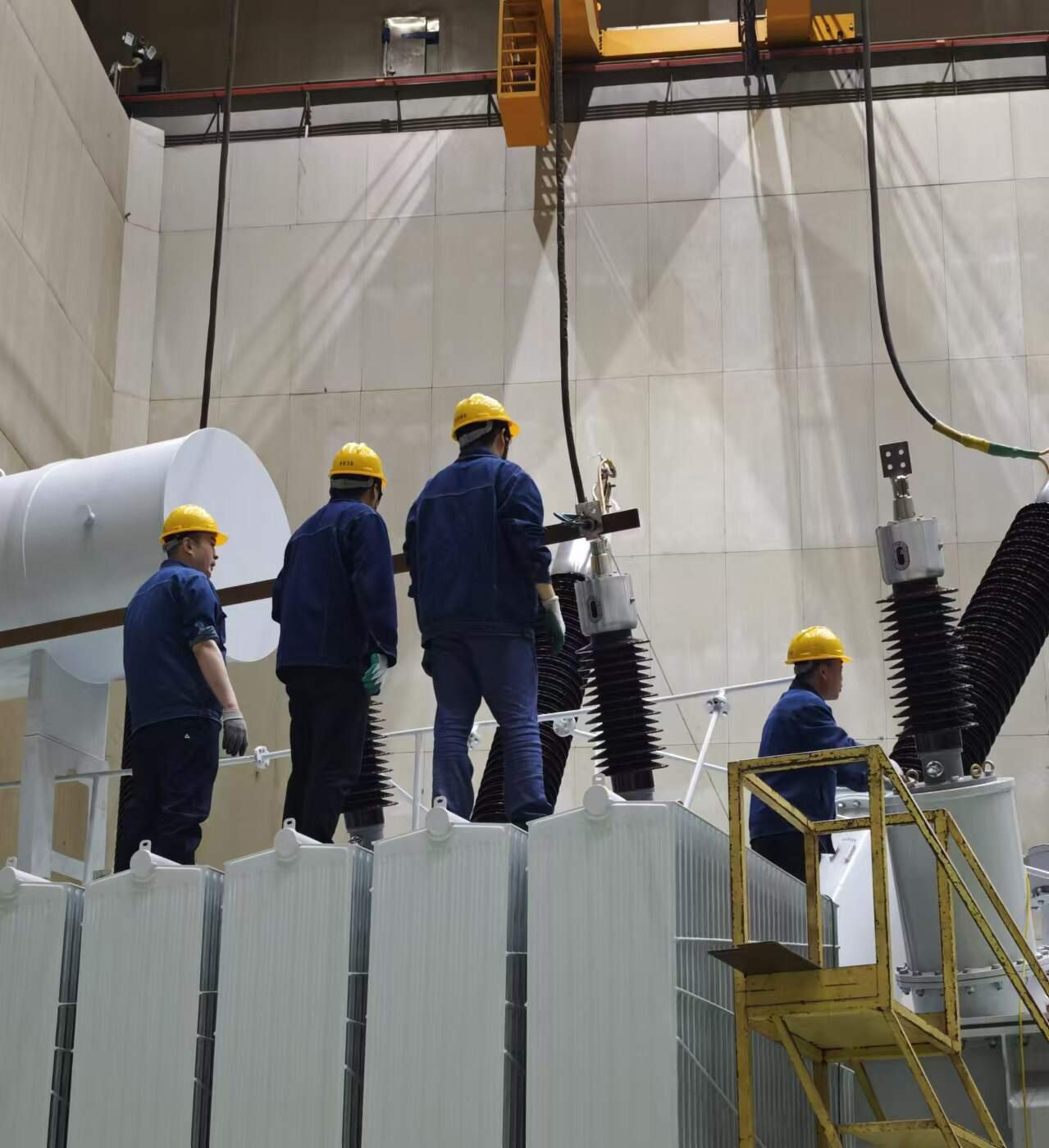
Accurately measuring transformer efficiency is critical for validating performance, ensuring compliance with regulations, and confirming design specifications. Since transformer losses are minimal compared to their power capacity, direct efficiency measurement is impractical for most high-power transformers. Instead, standardized test procedures—primarily open-circuit and short-circuit tests—are used to indirectly determine efficiency by measuring the constituent losses.
Transformer efficiency is measured by conducting open-circuit and short-circuit tests to quantify no-load and load losses. These test results are used to calculate the efficiency at various load levels using the formula: Efficiency = Output Power / (Output Power + Total Losses). Advanced methods may include temperature rise tests, DGA, and harmonic loss assessments to refine real-world performance estimates.
These tests follow standards like IEC 60076, IEEE C57, and IS 2026.
Transformer efficiency is directly measured using output divided by input during full-load operation.False
Efficiency is calculated indirectly using open-circuit and short-circuit tests, since direct full-load testing is impractical for high-power transformers.
1. Open-Circuit Test (No-Load Loss Measurement)
| Purpose | To determine core (no-load) losses and excitation current |
|---|---|
| Test Setup | Apply rated voltage to LV side; keep HV side open |
| Measured Parameters | Input voltage, no-load current, no-load power (using wattmeter) |
| Output | Hysteresis and eddy current losses in core |
| Standard Used | IEC 60076-1, IS 2026-1, IEEE C57.12.90 |
This test simulates the transformer energized with no load connected—ideal for evaluating constant losses.
2. Short-Circuit Test (Load Loss Measurement)
| Purpose | To measure winding (load) losses due to I²R and stray losses |
|---|---|
| Test Setup | Short LV side, apply reduced voltage to HV side to circulate rated current |
| Measured Parameters | Voltage, current, power input (using wattmeter) |
| Output | Copper loss + stray load losses at reference temperature (usually 75 °C) |
| Temperature Correction | Adjusted to standard load temp (e.g., 75 °C or 85 °C) for consistent comparison |
This test evaluates the energy lost only when the transformer is supplying current—representing variable losses.
3. Efficiency Calculation Formula Using Test Results
Efficiency (%) = Output Power / (Output Power + No-Load Loss + Load Loss at given load level)
Where:
- No-load loss = Result from open-circuit test (constant)
- Load loss = (Short-circuit test value) × (Load fraction)²
- Output Power = V × I × cos ϕ (load-dependent)
4. Temperature Rise Test (Thermal Loss Validation)
| Purpose | To verify thermal behavior and loss-to-heat correlation |
|---|---|
| Method | Load transformer continuously at rated load until thermal stability |
| Measurements | Oil temp rise, winding hotspot, cooling performance |
| Insight Gained | Confirms loss levels match expected heat output |
Overheating during this test may indicate underreported load losses or cooling inadequacies.
5. Optional Advanced Tests for Loss Analysis
| Test Type | Insight Provided |
|---|---|
| Harmonic Loss Measurement | Assesses additional eddy losses from non-linear loads |
| Dielectric Loss Tangent (Tan δ) | Evaluates insulation losses (minimal in oil-immersed units) |
| DGA (Dissolved Gas Analysis) | Monitors gases from arcing or overheating (not used in new units) |
| Power Analyzer-Based Load Test | Used in small/medium units for real-time efficiency tracing |
Efficiency Test Report Sample (1000 kVA, 11/0.415 kV)
| Parameter | Measured Value |
|---|---|
| Rated Voltage (HV/LV) | 11 kV / 0.415 kV |
| Frequency | 50 Hz |
| No-Load Loss (P₀) | 2.8 kW |
| Load Loss at 75 °C (Pᵤ) | 10.2 kW |
| Full Load Output Power | 1000 kW (assumed PF = 1) |
| Efficiency @ Full Load | (1000 / 1013) × 100 = 98.72% |
| Efficiency @ 75% Load | ~99.08% |
| Efficiency @ 50% Load | ~99.02% |
Standards for Transformer Efficiency and Testing
| Standard | Description |
|---|---|
| IEC 60076-1 | General test procedures and loss measurement |
| IEC 60076-20 | Energy efficiency classification for power transformers |
| DOE 10 CFR 431 (US) | Test methods and minimum efficiency for distribution xfmrs |
| IS 1180 / IS 2026 (India) | Test methods and loss limits for star-rated transformers |
| IEEE C57.12.90 | IEEE test code for dry/oil-filled transformer performance |
Challenges in Efficiency Testing of Large Transformers
| Challenge | Solution |
|---|---|
| High Power Handling | Use indirect tests (open/short-circuit) |
| Heat Generation During Test | Limit duration or simulate load with calculated corrections |
| Testing Infrastructure | Conduct at certified factory test bays |
| Measurement Accuracy | Use precision wattmeters, CT/PTs, and correction factors |
How Does Load Variation Affect Transformer Efficiency?
Transformer efficiency is not constant—it fluctuates based on the amount of load applied. As the load varies, so do the loss mechanisms within the transformer. Efficiency is influenced by the balance between core (no-load) losses, which are constant, and copper (load) losses, which increase with the square of the current. Understanding how these losses behave at different load levels is critical for optimal sizing, energy cost control, and life-cycle performance optimization.
Transformer efficiency increases with load up to an optimal range (typically 50–80% of rated capacity), then decreases as copper losses begin to dominate. At very light loads, core losses represent a large share of input power, reducing efficiency; at overload, excessive copper losses cause further decline. Consistent operation near optimal loading ensures maximum efficiency and minimum thermal stress.
This relationship makes load management and correct sizing essential for high-efficiency operation.
Transformer efficiency is the same regardless of the load applied.False
Transformer efficiency varies with load; no-load losses dominate at low load, and copper losses increase rapidly at high load, making efficiency load-dependent.
Efficiency Equation at Variable Load
Efficiency (%) = Output Power / (Output Power + No-Load Loss + Load Loss at Load %)
Where:
- No-Load Loss (P₀) is constant
- Load Loss (Pᵤ) = Full-load copper loss × (Load fraction)²
Transformer Efficiency at Various Load Levels – Sample (1000 kVA)
| Load % | Output Power (kW) | No-Load Loss (kW) | Load Loss (kW) | Total Loss (kW) | Efficiency (%) |
|---|---|---|---|---|---|
| 0% | 0 | 2.5 | 0 | 2.5 | 0% |
| 25% | 250 | 2.5 | 1.0 | 3.5 | 98.61% |
| 50% | 500 | 2.5 | 4.0 | 6.5 | 98.72% |
| 75% | 750 | 2.5 | 9.0 | 11.5 | 98.49% |
| 100% | 1000 | 2.5 | 16.0 | 18.5 | 98.16% |
| 125% | 1250 | 2.5 | 25.0 | 27.5 | 97.84% |
Assumptions: 1000 kVA transformer, 2.5 kW core loss, 16.0 kW full-load copper loss
Loss Composition Shift with Load
| Load % | Dominant Loss Type |
|---|---|
| 0–25% | No-load (core) losses dominate |
| 40–75% | Balanced loss region (highest efficiency) |
| 100% | Load (copper) losses begin to dominate |
| >100% | Excessive load loss, reduced efficiency |
Efficiency Curve Characteristics
| Region | Behavior & Explanation |
|---|---|
| Low Load (0–25%) | Efficiency low due to high % of fixed core losses |
| Mid Load (50–80%) | Peak efficiency; losses are balanced |
| High Load (100%+) | Efficiency declines due to rapid rise in I²R losses |
Efficiency is highest not at full load, but usually between 50–75% load.
Practical Impact of Load Variation
| Scenario | Efficiency Implication |
|---|---|
| Undersized Transformer | Frequently overloaded → high copper loss, hot spots |
| Oversized Transformer | Mostly idle → high no-load loss share |
| Intermittent Load (e.g., solar) | Load mismatch causes low average efficiency |
| Balanced, Flat Load | Highest possible annual energy efficiency |
Optimal Sizing and Load Matching
| Transformer Size vs. Average Load | Efficiency Impact |
|---|---|
| Too Small | Overheats under demand peaks; high I²R losses |
| Too Large | Core losses dominate; low efficiency at low load |
| Correct Size (\~75–90% avg load) | Balanced operation → peak efficiency over lifetime |
Ideal efficiency is achieved by matching transformer rating to actual load profile.
Regulatory and Economic Considerations
| Factor | Relevance to Load Variation |
|---|---|
| IEC 60076-20 / DOE TP1 | Require testing efficiency at specified load points |
| EU EcoDesign Tier 2 | Mandates low total losses at 50% or 100% load |
| Energy Cost Calculations | Vary significantly with real load factor and hours |
| Return on Investment (ROI) | Improved with higher utilization and load alignment |
Strategies to Improve Efficiency Despite Load Variation
| Method | Effect |
|---|---|
| Proper Sizing | Keeps operation in optimal efficiency window |
| Use of Multiple Transformers | Shares load dynamically; avoids oversizing |
| Load Management Systems | Flatten peaks; prevent overload |
| High-Efficiency Core Materials | Reduces impact of idle time |
| Smart Grid Integration | Real-time adjustment to load patterns |
What Design Features Improve Transformer Efficiency?
Transformer efficiency can reach 98%–99.7%, but achieving that level requires precise engineering and careful selection of design materials and geometries. Since even a 0.1% improvement in efficiency can result in significant lifetime savings, manufacturers increasingly focus on minimizing core and copper losses, optimizing heat dissipation, and maintaining dielectric strength. Modern energy regulations such as IEC 60076-20, EU EcoDesign Tier 2, and DOE TP1 push for ever-lower loss limits, driving innovation in transformer design.
Key design features that improve transformer efficiency include the use of high-grade core materials (e.g., CRGO or amorphous steel), optimized winding geometry with low-resistance copper conductors, improved insulation systems, efficient cooling structures, reduced stray flux, and minimized leakage reactance. These features reduce both no-load and load losses while enhancing thermal and dielectric performance.
The result: less wasted energy, better reliability, and longer service life.
Transformer efficiency is determined only by the size of the unit.False
Efficiency depends on design quality, materials, geometry, and cooling—not just size.
1. Low-Loss Magnetic Core Materials
| Core Type | Characteristics | Efficiency Benefit |
|---|---|---|
| CRGO (Cold-Rolled Grain-Oriented Steel) | Low hysteresis, aligned grains | Standard for high-voltage transformers |
| Amorphous Metal (Nano-crystalline) | Very low eddy and hysteresis losses | Up to 70% lower no-load losses |
| Thin Laminations (<0.23 mm) | Reduces eddy currents | Lowers total core loss |
Core loss accounts for nearly 30–40% of lifetime energy loss in lightly loaded transformers.
2. Optimized Winding Design
| Design Element | Description | Efficiency Impact |
|---|---|---|
| High-Purity Copper Conductors | Low resistivity, fewer I²R losses | Reduces load (copper) losses |
| Shorter Turn Lengths | Compact design reduces conductor length | Minimizes resistive loss |
| Low-Leakage Flux Geometry | Close coupling of primary and secondary | Minimizes stray and eddy current losses |
| Layered and Interleaved Windings | Improves flux distribution | Lower leakage reactance, better voltage control |
Winding losses are proportional to current squared; improving geometry dramatically lowers full-load losses.
3. Advanced Cooling and Thermal Management
| Cooling Feature | Description | Effect on Efficiency |
|---|---|---|
| ONAN / ONAF / OFAF Cooling | Improves heat dissipation via oil/air | Keeps resistance low, slows insulation aging |
| Directed Oil Flow Ducts | Forced cooling in hotspots | Reduces hotspot temperatures and localized loss |
| Aluminum Radiators with Fans | Enhances ambient cooling | Enables higher efficiency at full load |
| Digital Thermal Sensors | Real-time monitoring of winding temps | Enables smarter derating and fault prevention |
Lower winding temperatures = lower resistance = lower copper losses.
4. High-Performance Insulation Systems
| Insulation Feature | Function | Impact on Efficiency and Longevity |
|---|---|---|
| Thermally Upgraded Paper (TUP) | Withstands higher temperatures | Allows higher loading without aging |
| Natural Ester Fluids | High fire point, moisture-absorbing | Extends insulation life, lowers maintenance |
| Dry Transformer Epoxy (VPI) | Reduces partial discharge | Keeps dielectric losses low |
Good insulation reduces risk of electrical discharge and dielectric heating losses.
5. Minimized Stray and Eddy Current Losses
| Design Tactic | Purpose | Efficiency Gain |
|---|---|---|
| Flux Shielding (Magnetic Shunts) | Redirects stray flux | Reduces heating in clamps, tank, and supports |
| Compact Tank Design | Minimizes stray magnetic exposure | Avoids unnecessary eddy current loss |
| Electromagnetic Field Simulation (FEA) | Optimizes field paths | Improves core utilization and reduces leakage |
Stray losses may account for 10–20% of load losses in poorly optimized designs.
6. Loss-Optimized Tap Changer and Leads
| Component | Improvement | Efficiency Contribution |
|---|---|---|
| Vacuum Tap Changers | Lower arcing loss than oil type | Prevents contact burning, lower switching loss |
| Silver/Tin-Plated Connections | Lower contact resistance | Minimizes hot spots and I²R losses |
| Optimized Lead Routing | Short, shielded conductor paths | Minimizes stray loss and impedance mismatch |
7. Precision Manufacturing Techniques
| Practice | Benefit | Loss Reduction Role |
|---|---|---|
| Tight Winding Tolerances | Improves magnetic coupling | Reduces leakage reactance |
| Vacuum Drying of Insulation | Removes moisture | Prevents dielectric loss and hot spot formation |
| Laser-Cut Core Laminations | Minimizes burrs and misalignment | Preserves low-loss magnetic path |
| Core Clamping Precision | Reduces vibration and noise | Prevents mechanical losses and damage |
Quality control during manufacturing is essential to achieve theoretical design efficiencies.
8. Energy-Efficient Standards and Testing Compliance
| Design Compliance | Efficiency Contribution |
|---|---|
| IEC 60076-20 | Sets low total loss and eco limits |
| EU EcoDesign Tier 2 | Forces use of amorphous or CRGO cores |
| DOE 10 CFR 431 (TP1) | Ensures part-load efficiency standards |
| IS 1180 (India) | Requires star-rated distribution units |
Modern high-efficiency designs are tested under multiple load points (e.g., 50%, 100%) to ensure energy performance.
Sample Comparison: Standard vs. High-Efficiency Transformer (1000 kVA)
| Feature | Standard Unit | High-Efficiency Unit |
|---|---|---|
| Core Material | CRNGO | Amorphous |
| No-Load Loss | 3.2 kW | 1.4 kW |
| Load Loss @ Full Load | 12.0 kW | 8.5 kW |
| Efficiency @ 50% Load | 98.55% | 99.10% |
| 20-Year Energy Loss Cost | $28,000 | $19,200 |
| Payback Period | — | 3–5 years |
What Operational Practices Can Optimize Transformer Efficiency?

Even the best-designed transformer can suffer performance and lifespan losses if operated incorrectly. To realize its full potential, operators must manage loads wisely, monitor thermal conditions, maintain oil quality, and prevent overuse or underuse. A transformer’s efficiency is directly tied not only to its construction but also to how it is used, monitored, and maintained in the field.
Operational practices that optimize transformer efficiency include proper loading (avoiding overload and underload), maintaining clean and dry insulating oil, monitoring temperature and cooling systems, ensuring phase load balance, avoiding harmonic distortion, and conducting regular preventive maintenance. These actions reduce both core and copper losses, improve thermal performance, and extend transformer life.
These efficiency gains translate into lower operating costs, improved reliability, and environmental benefits.
Transformer efficiency is only determined at the time of manufacture and cannot be influenced during operation.False
Operational practices such as load management, oil maintenance, and temperature monitoring significantly influence transformer efficiency and energy losses.
1. Maintain Optimal Load Range (50–80%)
| Practice | Efficiency Benefit |
|---|---|
| Avoid Underloading | Prevents no-load losses from dominating |
| Avoid Overloading | Limits I²R copper losses and thermal stress |
| Match Size to Load Profile | Maximizes performance within peak efficiency zone |
Operating consistently at 50%–80% of rated load yields the best efficiency and thermal stability.
2. Implement Load Balancing Across Phases
| Unbalanced Load Impact | Efficiency Loss Mechanism |
|---|---|
| Unequal Phase Currents | Increases I²R losses in overloaded phases |
| Core Saturation Risk | Increased magnetizing current, reduced efficiency |
| Bushing & Conductor Heating | Accelerated insulation degradation |
| Balancing Practice | Efficiency Impact |
|---|---|
| Use of load monitors | Real-time correction of phase imbalance |
| Regular SCADA analysis | Early detection of load shifts |
3. Monitor and Control Temperature
| Thermal Factor | Influence on Efficiency |
|---|---|
| Higher Winding Temp | Increases conductor resistance → more copper loss |
| Oil Overheating | Accelerates aging, reduces insulation strength |
| Fan/Pump Failure | Results in hot spots, localized losses |
| Best Practices | Action |
|---|---|
| Install hot spot sensors | Enables dynamic load control |
| Use thermo-scanning tools | Detects invisible overheating |
| Verify cooling system performance | Ensures steady thermal dissipation |
4. Ensure High-Quality Insulating Oil
| Oil Parameter | Effect on Efficiency |
|---|---|
| Moisture Content | Lowers breakdown voltage, promotes partial discharge |
| Acidity & Sludge | Reduces heat transfer, clogs cooling ducts |
| Low BDV | Increases fault risk, forces shutdown or derating |
| Action Items | Frequency |
|---|---|
| Oil testing (BDV, moisture, acidity) | Semi-annually or per loading cycle |
| Filtration or regeneration | Every 5–7 years or based on test results |
5. Conduct Regular Preventive Maintenance
| Maintenance Activity | Efficiency Benefit |
|---|---|
| Winding Resistance Test | Identifies rising copper loss |
| Tap Changer Overhaul | Prevents arcing, reduces connection losses |
| Bushing Inspection | Avoids leakage and capacitive losses |
| Cooling System Check | Ensures full-load thermal support |
| Maintenance Schedule | Suggested Interval |
|---|---|
| Minor Visual Inspections | Monthly |
| Electrical Diagnostics | Annually |
| Oil Quality Assessment | Semi-Annually |
6. Minimize Harmonic Distortion
| Source of Harmonics | Efficiency Issue |
|---|---|
| Non-linear loads (e.g., VFDs, UPSs) | Causes additional eddy and stray losses |
| Unfiltered inverters | Leads to waveform distortion |
| Harmonic Mitigation Strategy | Action |
|---|---|
| Install harmonic filters | Protects core and windings from excess loss |
| Use K-rated transformers for harmonic-rich environments | Maintains efficiency |
7. Smart Monitoring and Data Analysis
| Technology | Role in Efficiency Optimization |
|---|---|
| IoT-Based Load Sensors | Provides real-time data to optimize loading |
| Online DGA Systems | Detects internal faults before loss escalation |
| Predictive Analytics Tools | Enables condition-based derating or intervention |
Digital monitoring supports real-time decision-making to maximize operational efficiency.
8. Avoid Frequent Switching or Idle Energization
| Operating Habit | Energy Waste Concern |
|---|---|
| Keeping lightly loaded transformers energized | Constant no-load losses consume energy |
| Frequent on/off switching | Induces thermal/mechanical stress |
| Efficient Alternative | Use automated load-sharing schemes or bank switching to reduce idle power |
9. Apply Correct Tap Settings
| Incorrect Tap Position | Efficiency Impact |
|---|---|
| Over-voltage condition | Core saturation, higher magnetizing current |
| Under-voltage condition | Inadequate power delivery, increased load current |
| Optimization Tactic | Periodic tap position review based on voltage trend |
Summary Table – Operational Practices and Their Efficiency Gains
| Practice Area | Key Action | Efficiency Benefit |
|---|---|---|
| Load Management | Maintain 50–80% loading | Peak efficiency, low I²R losses |
| Thermal Control | Cooling check, hot spot monitoring | Prevent resistance escalation |
| Oil System Maintenance | Filtration, moisture control | Sustains insulation, heat transfer |
| Maintenance & Diagnostics | Regular testing | Identifies hidden loss points |
| Harmonic Reduction | Use filters or K-rated units | Prevents stray and eddy losses |
| Digital Monitoring | Smart sensors and alerts | Enables proactive optimization |
Conclusion
Transformer efficiency can be accurately measured through industry-standard testing and calculated based on known input/output parameters. By understanding where losses occur and how design, loading, and operation influence performance, users can optimize efficiency across the transformer’s life. High-efficiency transformers not only save energy and cost, but also support environmental goals by reducing carbon emissions. Smart planning, quality equipment, and proactive maintenance are key to unlocking optimal transformer performance.
FAQ
Q1: How is transformer efficiency measured?
A1: Transformer efficiency is typically measured by comparing output power to input power, accounting for losses:
Efficiency (%) = (Output Power ÷ Input Power) × 100
This is done through:
Load testing at various output levels
Calculating total losses, including:
No-load (core) loss – from magnetizing current
Load (copper) loss – from resistance in windings
High-efficiency transformers usually exceed 98%, with ultra-efficient models reaching 99.5%.
Q2: What tests are used to analyze transformer efficiency?
A2: Key tests include:
Open Circuit Test (to measure no-load/core loss)
Short Circuit Test (to measure copper loss under load)
Temperature Rise Test (to determine thermal behavior under load)
Load Test with wattmeters and ammeters to measure actual input and output power
DGA (Dissolved Gas Analysis) and insulation resistance to ensure health under high efficiency loads
Q3: How can transformer efficiency be optimized through design?
A3: Efficiency optimization at the design stage includes:
Using CRGO or amorphous metal cores to reduce core loss
Employing high-purity copper or aluminum windings to lower resistance
Improved cooling systems (ONAF, OFAF) to reduce temperature-related resistance
Compact winding layouts and magnetic shielding to minimize stray losses
These improvements reduce both load-dependent and constant losses.
Q4: What operational strategies help maintain optimal transformer efficiency?
A4: Best practices include:
Maintaining proper load levels (ideally 40–80% of rated capacity)
Avoiding frequent overloading or high harmonic distortion
Regular testing of oil (for insulation) and thermal scans
Keeping terminals and connections clean and tight
Installing online monitoring systems to track temperature, load, and performance trends
Preventive actions reduce energy loss and extend transformer lifespan.
Q5: Are there tools or technologies that support transformer efficiency?
A5: Yes. Efficiency-enhancing technologies include:
Smart sensors and SCADA integration for real-time load balancing
Predictive analytics software for maintenance and optimization
EcoDesign and DOE-compliant transformer models
Power factor correction systems and harmonic filters to minimize reactive power loss
Modern digital tools support continuous performance improvement and compliance with energy standards.
References
"Transformer Efficiency Calculation Methods" – https://www.electrical4u.com/transformer-efficiency
"IEEE C57.120: Guide for Loss Evaluation of Power Transformers" – https://ieeexplore.ieee.org/document/7964097
"DOE: Energy Efficiency Standards for Transformers" – https://www.energy.gov/eere/buildings/distribution-transformer-efficiency-standards
"NREL: Measuring Transformer Loss and Performance" – https://www.nrel.gov/docs/fy22ost/transformer-testing.pdf
"ScienceDirect: Analysis and Optimization of Transformer Efficiency" – https://www.sciencedirect.com/transformer-efficiency-analysis