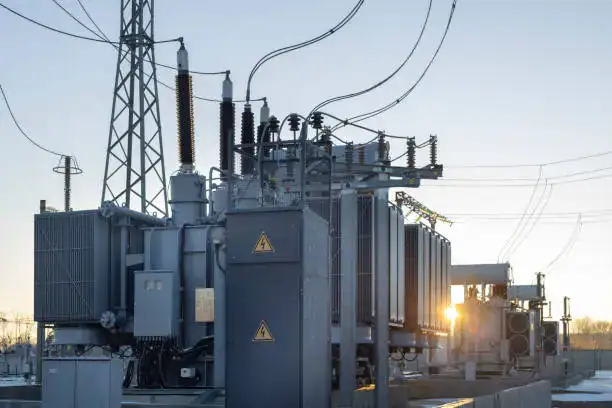
Transformer efficiency is not constant and changes depending on how heavily the transformer is loaded. Understanding why efficiency varies with load is essential for proper transformer selection, system design, and energy management. By examining how different types of losses behave at various load levels, operators can optimize transformer performance and reduce operating costs.
What Does Transformer Efficiency Mean?
In power systems, transformers operate continuously for decades, quietly consuming energy even when loads are light. Small efficiency differences can therefore translate into enormous energy losses, higher operating costs, and increased carbon emissions over a transformer’s lifetime. This is why transformer efficiency is not just a technical metric—it is a critical economic and environmental parameter that utilities, industrial users, and regulators closely monitor.
Transformer efficiency refers to the ratio of useful electrical power delivered at the output to the total electrical power supplied at the input, expressed as a percentage. It indicates how effectively a transformer converts input power into output power while minimizing losses.
Transformer efficiency measures how much input electrical power is successfully delivered to the load.True
Efficiency is defined as output power divided by input power, with losses accounting for the difference between the two.
The Basic Definition of Transformer Efficiency
Mathematically, transformer efficiency is defined as:
Efficiency (%) = (Output Power ÷ Input Power) × 100
The difference between input and output power represents losses within the transformer. Because transformers have no moving parts, these losses are almost entirely electrical and magnetic in nature.
Types of Losses That Affect Efficiency
Transformer efficiency is primarily influenced by two categories of losses:
- Core (no-load) losses, caused by hysteresis and eddy currents in the magnetic core, which occur whenever the transformer is energized, regardless of load
- Load (copper) losses, caused by resistance in the windings, which increase with the square of the load current
The balance between these losses determines efficiency at different load levels.
Why Efficiency Depends on Load
Transformer efficiency is not constant—it varies with load:
- At very light loads, core losses dominate, reducing efficiency
- At heavy loads, copper losses dominate, again reducing efficiency
- Maximum efficiency typically occurs at a load level where core and copper losses are approximately equal
This is why transformers are designed and selected based on expected load profiles, not just rated capacity.
Peak Efficiency vs. All-Day Efficiency
In practice, two efficiency concepts are important:
- Peak efficiency, measured at a specific load point
- All-day (energy) efficiency, which reflects performance over a 24-hour load cycle
For distribution transformers, all-day efficiency is often more important because they operate under varying loads for long periods.
Why Transformer Efficiency Is So High
Compared to many electrical machines, transformers are extremely efficient:
- Large power transformers often exceed 99% efficiency
- Distribution transformers typically range from 97% to 99%
This high efficiency is possible because transformers:
- Use optimized magnetic core materials
- Have no mechanical losses
- Operate under stable electromagnetic conditions
Economic Impact of Efficiency
Even a small efficiency improvement can have a large financial impact:
- Reduced energy losses lower electricity bills
- Lower losses reduce cooling requirements
- Improved efficiency extends insulation life by reducing operating temperature
Over a transformer’s lifetime, energy savings often exceed the initial purchase cost difference between standard and high-efficiency designs.
Environmental Significance
Transformer losses translate directly into additional power generation and higher emissions. Higher-efficiency transformers:
- Reduce CO₂ emissions over their operating life
- Support energy conservation regulations
- Help utilities meet sustainability targets
This is why many countries mandate minimum efficiency levels through standards and energy regulations.
Efficiency Standards and Regulations
Transformer efficiency is governed by international and regional standards such as IEC and DOE regulations. These standards:
- Define maximum allowable losses
- Classify transformers into efficiency tiers
- Influence procurement and design decisions
Compliance ensures both technical reliability and regulatory acceptance.
What Types of Losses Occur in a Transformer?
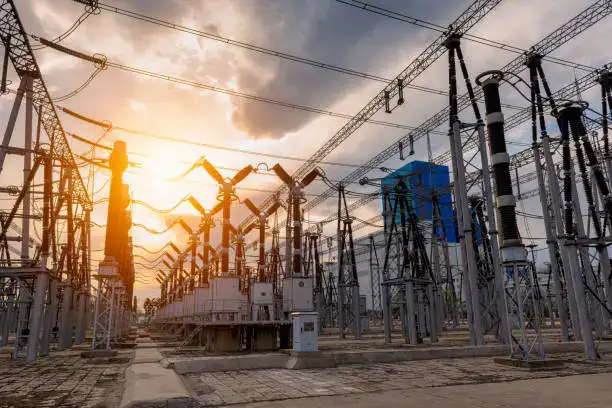
Although transformers are among the most efficient electrical devices ever developed, they are not loss-free. Every transformer continuously converts a small portion of input electrical energy into heat, sound, and stray electromagnetic effects. Over years of operation, these losses accumulate into significant energy costs, thermal stress, and environmental impact. Understanding the different types of transformer losses is therefore essential for proper design, selection, operation, and lifecycle cost optimization.
Transformer losses are the portions of input electrical power that are not delivered to the load and instead dissipated mainly as heat due to magnetic, electrical, and auxiliary effects. These losses are inherent to electromagnetic operation but can be minimized through advanced materials and engineering.
Transformer losses are unavoidable because magnetic and electrical processes inherently dissipate energy.True
Core magnetization, conductor resistance, and leakage flux all produce heat and energy dissipation during normal transformer operation.
Core Losses (No-Load Losses)
Core losses occur whenever a transformer is energized, regardless of whether it is supplying load current. They are primarily caused by the alternating magnetization of the core.
Core losses consist of:
- Hysteresis losses, resulting from repeated reversal of magnetic domains in the core material
- Eddy current losses, caused by circulating currents induced within the core itself
These losses depend mainly on:
- Applied voltage
- Frequency
- Core material quality and thickness
Because core losses are present 24/7 in energized transformers, they are especially important for distribution transformers that operate under light or variable load.
Copper Losses (Load Losses)
Copper losses occur in the transformer windings and are directly related to load current. They are caused by the electrical resistance of the conductors.
Key characteristics:
- Proportional to the square of the load current (I²R losses)
- Increase rapidly as load increases
- Depend on conductor material, cross-sectional area, and temperature
As windings heat up, resistance increases, further amplifying copper losses. This creates a strong link between thermal design and electrical efficiency.
Stray Load Losses
Stray losses arise from leakage magnetic flux that does not follow the intended path through the core.
These losses include:
- Eddy currents induced in tank walls, clamps, bolts, and structural parts
- Additional heating in windings due to non-uniform current distribution
Although smaller than core and copper losses, stray losses become more significant in large power transformers and high-current designs.
Dielectric Losses
Dielectric losses occur in the insulation system due to the alternating electric field applied across insulating materials.
They are influenced by:
- Insulation type (oil, paper, resin, solid insulation)
- Moisture content and aging
- Operating voltage and frequency
While typically small, dielectric losses increase with insulation degradation and can serve as an early indicator of insulation health problems.
Mechanical and Acoustic Losses
Transformers have no intentional moving parts, but some energy is still lost through mechanical effects:
- Magnetostriction in the core causes vibration
- Vibrations produce audible noise and minor energy dissipation
These losses are small in terms of power but important for noise control, structural integrity, and environmental compliance.
Auxiliary Losses
Auxiliary losses are associated with transformer support systems rather than electromagnetic operation itself.
Examples include:
- Cooling fan power consumption
- Oil pump energy usage
- Monitoring and control system power
In forced-cooled transformers, auxiliary losses can become significant during high-load operation and must be included in overall efficiency assessments.
Relationship Between Losses and Operating Conditions
Different losses dominate at different operating points:
| Operating Condition | Dominant Loss Type |
|---|---|
| No load / light load | Core losses |
| Medium load | Balanced core and copper losses |
| Heavy load | Copper and stray losses |
| Aging transformer | Dielectric and stray losses increase |
This is why efficiency varies with load and why transformers are optimized for specific duty cycles.
Impact of Losses on Temperature and Lifespan
All transformer losses ultimately convert to heat. Excessive losses lead to:
- Higher winding and core temperatures
- Accelerated insulation aging
- Reduced service life
Even small loss reductions can significantly extend transformer lifespan by lowering operating temperature.
Standards and Loss Evaluation
International standards such as IEC and IEEE:
- Define how losses are measured and classified
- Set maximum allowable loss limits
- Form the basis for efficiency classes and energy regulations
Compliance ensures predictable performance, fair comparison between designs, and long-term reliability.
How Do No-Load Losses Affect Efficiency at Light Load?
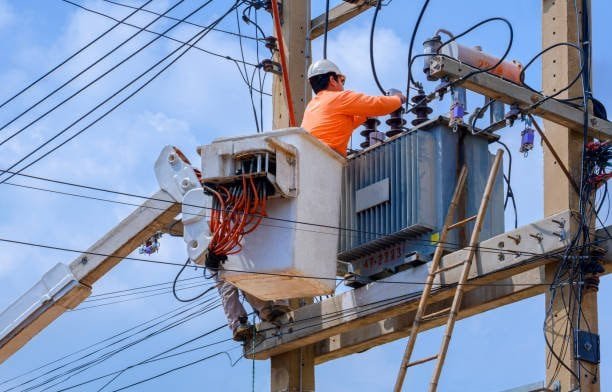
Transformers are often expected to operate efficiently under all conditions, but in real power systems they spend a large portion of their life at light load or even near no-load. Under these conditions, no-load losses become the dominant factor shaping overall efficiency. Understanding this behavior is critical for distribution networks, standby transformers, renewable energy systems, and any application with fluctuating or low average demand.
At light load, no-load losses have a disproportionate impact on transformer efficiency because they remain essentially constant regardless of load, while useful output power is very small. As a result, efficiency drops sharply even though the transformer may appear to be lightly stressed.
No-load losses dominate transformer efficiency at light load conditions.True
Core losses remain constant while output power decreases, causing efficiency to fall significantly at light loads.
What Are No-Load Losses?
No-load losses, also called core losses, occur whenever a transformer is energized, even if no load is connected. They mainly include:
- Hysteresis losses from repeated magnetization of the core
- Eddy current losses induced within the core material
These losses depend on:
- Applied voltage
- System frequency
- Core material and construction
They are largely independent of load current.
Why Efficiency Drops at Light Load
Transformer efficiency is defined as the ratio of output power to input power. At light load:
- Output power is very small
- No-load losses remain nearly unchanged
- Losses represent a large percentage of input power
This causes efficiency to fall sharply, even though the absolute loss value has not increased.
Illustrative Comparison at Different Load Levels
| Load Level | Output Power | No-Load Losses | Efficiency Impact |
|---|---|---|---|
| No load | 0 | 100% losses | 0% efficiency |
| 10% load | Very low | Dominant | Poor efficiency |
| 30–40% load | Moderate | Balanced | Rising efficiency |
| Rated load | High | Minor share | Peak efficiency |
This explains why transformers are not most efficient at zero or very light load.
Practical Impact in Distribution Systems
In distribution networks:
- Transformers are energized 24/7
- Average load may be only 20–40% of rated capacity
- No-load losses accumulate continuously
Over a year, energy lost to no-load losses can exceed copper losses, making core efficiency far more important than peak-load performance.
Economic Consequences
High no-load losses at light load lead to:
- Continuous energy waste
- Higher operating costs
- Increased heat generation
- Reduced overall system efficiency
For utilities, these losses translate directly into higher generation requirements and long-term financial penalties.
Environmental Impact
Since no-load losses occur continuously:
- They contribute significantly to lifetime CO₂ emissions
- Poor core efficiency undermines sustainability goals
- Regulatory efficiency limits increasingly focus on no-load losses
This is why modern energy regulations emphasize low core loss designs.
Design Strategies to Reduce No-Load Losses
Manufacturers reduce no-load losses through:
- High-grade silicon steel or amorphous metal cores
- Thinner laminations to reduce eddy currents
- Optimized flux density design
- Precision core assembly and clamping
These improvements are especially valuable for lightly loaded transformers.
Importance of Proper Sizing
Oversized transformers worsen light-load efficiency:
- Larger cores mean higher no-load losses
- Low utilization keeps efficiency suppressed
- Energy waste persists for decades
Correct transformer sizing is one of the most effective ways to control no-load loss impact.
When No-Load Losses Matter Most
No-load losses are most critical in:
- Distribution transformers
- Backup and standby systems
- Renewable energy installations with variable output
- Urban substations with low night-time demand
In these applications, selecting low-core-loss transformers delivers significant long-term benefits.
Why Do Load Losses Increase at Higher Load Levels?
 ncreases, efficiency behavior changes in a predictable but often misunderstood way. While no-load losses dominate at light load, load losses become the primary efficiency limiter at medium to high load levels. These losses grow rapidly with current and are a key reason transformers must be carefully sized, cooled, and operated within design limits.
Load losses increase at higher load levels because they are mainly caused by current-dependent effects—especially resistive heating in windings—which rise with the square of the load current. This nonlinear relationship means that even modest overloads can produce disproportionately large losses and temperature rise.
Transformer load losses increase rapidly with load because they are proportional to the square of the current.True
Resistive and stray losses depend on current magnitude, and doubling current results in approximately four times the load loss.
The I²R Relationship in Transformer Windings
The dominant component of load loss is copper loss, caused by the electrical resistance of transformer windings.
Key characteristics:
- Load current flows through primary and secondary windings
- Power loss is proportional to I² × R
- As current increases, losses grow nonlinearly
For example:
- 50% load → ~25% copper losses
- 100% load → 100% copper losses
- 120% load → ~144% copper losses
This steep rise explains why overloading quickly becomes dangerous.
Temperature Rise Amplifies Load Losses
As current increases, windings heat up. This has a compounding effect:
- Copper and aluminum resistance increases with temperature
- Higher resistance produces even more I²R losses
- A positive feedback loop develops
Without adequate cooling, this thermal runaway accelerates insulation aging and failure risk.
Stray Load Losses Increase With Current
Not all load losses occur directly in the windings. Leakage magnetic flux increases with load current and induces additional losses.
Stray losses include:
- Eddy currents in windings due to non-uniform current distribution
- Heating in tank walls, clamps, and structural components
- Localized hot spots caused by flux concentration
These losses grow with current and are especially significant in large power transformers.
Skin and Proximity Effects at High Current
At higher load currents:
- Current tends to concentrate near conductor surfaces (skin effect)
- Nearby conductors influence current distribution (proximity effect)
- Effective resistance increases
These electromagnetic effects further raise load losses beyond simple DC resistance calculations.
Impact on Overall Efficiency Curve
As load increases:
- Useful output power rises linearly
- Load losses rise quadratically
- Efficiency peaks at an optimal load point
- Beyond that point, losses erode efficiency
This is why transformers are designed to operate most of the time near their expected load level rather than at extremes.
Thermal Limits and Design Constraints
Transformer designs account for rising load losses by:
- Selecting adequate conductor cross-sectional area
- Designing robust cooling systems
- Limiting allowable overload duration
Exceeding design load levels compromises thermal margins and shortens service life.
Consequences of Sustained High Load
Persistent high load levels lead to:
- Elevated winding temperatures
- Accelerated insulation aging
- Increased risk of dielectric failure
- Reduced reliability and lifespan
Even if immediate failure does not occur, long-term damage accumulates silently.
Importance of Load Management
Utilities and operators manage load losses by:
- Avoiding chronic overloading
- Using parallel transformers
- Implementing load monitoring systems
- Selecting transformers matched to load profiles
Effective load management protects efficiency and asset life.
Conclusion
Transformer efficiency varies with load because different losses dominate at different operating points. No-load losses remain constant regardless of load, while load losses increase with current. As a result, efficiency improves as load increases up to an optimal point, then decreases when excessive load causes higher copper losses. Proper sizing and load management are key to achieving maximum transformer efficiency and long-term reliability.
FAQ
Q1: Why does transformer efficiency change with load?
Transformer efficiency varies with load because different types of losses behave differently as load changes. A transformer mainly experiences two categories of losses:
Core (iron) losses – constant
Copper (winding) losses – variable
At low load, core losses dominate and efficiency is low. As load increases, useful output power increases faster than losses, improving efficiency. At high load, copper losses rise sharply, causing efficiency to decline. This balance explains why efficiency is not constant across all load levels.
Q2: What are core losses and how do they affect efficiency?
Core losses occur in the transformer’s magnetic core and include:
Hysteresis loss
Eddy current loss
These losses depend mainly on voltage and frequency, not on load current. As long as the transformer is energized, core losses remain nearly constant—even at no load.
At light load conditions, output power is small while core losses remain fixed, resulting in low efficiency.
Q3: What are copper losses and how do they change with load?
Copper losses occur due to resistance in the transformer windings and are proportional to the square of the load current (I²R).
Low load → small copper losses
High load → rapidly increasing copper losses
As load approaches or exceeds rated capacity, copper losses become significant, generating more heat and reducing overall efficiency.
Q4: At what load does a transformer reach maximum efficiency?
A transformer reaches maximum efficiency when copper losses equal core losses.
This typically occurs at 40% to 70% of rated load, depending on transformer design and application. Power transformers used in transmission systems are often designed for peak efficiency at higher loads, while distribution transformers are optimized for lighter average loads.
Q5: Why is efficiency low at both very light and very heavy loads?
At light load:
Core losses dominate
Output power is low
Efficiency is poor
At heavy load:
Copper losses increase rapidly
Heating and resistive losses rise
Efficiency drops
Between these extremes lies the optimal operating point where losses are minimized relative to output power.
Q6: How does load variation affect transformer operating cost?
Efficiency directly impacts energy losses and operating costs. Transformers operating far from their optimal load point may:
Waste energy
Generate excess heat
Require more cooling
Experience reduced lifespan
Selecting a transformer with a rating closely matched to expected load profiles improves efficiency, reduces electricity losses, and lowers total cost of ownership.
Q7: Does transformer type influence how efficiency varies with load?
Yes. Transformer design significantly affects efficiency behavior:
Distribution transformers are optimized for lower average loads
Power transformers are optimized for high-load operation
Dry type transformers typically have higher no-load losses than oil-filled units
Amorphous core transformers have much lower core losses, improving light-load efficiency
The expected load profile determines the most suitable transformer type.
Q8: Can transformer efficiency be improved under variable loads?
Efficiency can be improved by:
Proper transformer sizing
Using low-loss core materials
Selecting high-conductivity winding materials (copper)
Applying load management strategies
Using multiple transformers with load sharing
Modern energy-efficiency standards focus on reducing losses across typical operating loads, not just at rated capacity.
References
IEC 60076 – Power Transformers
https://webstore.iec.ch/publication/602
IEEE C57.12 – Transformer Efficiency Standards
https://standards.ieee.org
ANSI C57.12.90 – Transformer Loss Evaluation
https://www.nema.org
Electrical Engineering Portal – Transformer Efficiency vs Load
https://electrical-engineering-portal.com
EPRI – Transformer Energy Efficiency Research
https://www.epri.com
U.S. Department of Energy – Transformer Energy Losses
https://www.energy.gov