
The on-site installation of a transformer is a crucial process that ensures the safe, reliable, and efficient operation of electrical power systems. Whether it's a distribution transformer for a neighborhood or a power transformer in a substation, proper installation is essential to avoid failures, ensure compliance with safety standards, and prolong equipment life. The procedure involves careful planning, coordination, and execution by skilled professionals. This article outlines the step-by-step process of transformer installation, key considerations, and best practices for ensuring a successful deployment.
What Preparations Are Needed Before Transformer Installation?
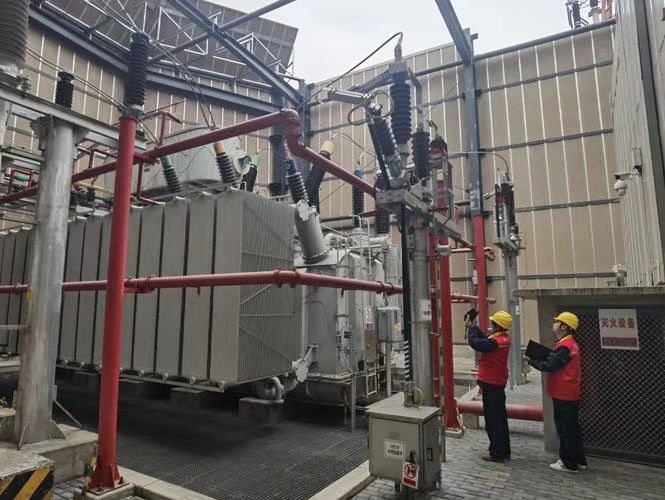
Installing a transformer is not just a matter of placing equipment on a concrete pad and connecting wires—it requires a sequence of meticulous preparations to ensure safety, performance, and long-term reliability. Poor site preparation, lack of coordination, or skipping essential pre-checks can lead to equipment damage, power failures, safety hazards, and expensive commissioning delays. Proper planning and execution during the pre-installation phase are the foundation for successful transformer operation.
Preparations before transformer installation include site readiness (civil foundation, drainage, access), mechanical handling arrangements (lifting gear, transport), electrical and earthing infrastructure (cable trenches, busbars, grounding grid), pre-installation inspections (visual checks, insulation tests), and compliance with standards, ensuring the site is safe, stable, and fully equipped for installation and commissioning.
This professional checklist will walk you through every step required before physically installing a power or distribution transformer on site, from civil work to pre-energization readiness.
Transformers can be installed without specific foundation work as long as the ground is level.False
Transformers require a specifically designed concrete pad or plinth to support their weight, manage vibration, and provide safe access.
Pre-installation testing is essential for transformer reliability and warranty compliance.True
Most manufacturers require site tests such as insulation resistance, ratio, and vector group verification before commissioning to validate performance and maintain warranty.
Key Areas of Transformer Installation Preparation
Proper transformer installation involves preparation across several disciplines: civil, mechanical, electrical, safety, and coordination. Each of these has clear requirements and checklists.
1. Site Civil Readiness
A. Concrete Foundation or Plinth
- Designed to bear static and dynamic loads of the transformer
- Consider soil bearing capacity and seismic conditions
- Include anti-vibration pads or rails if required
B. Drainage and Spill Containment
- Ensure oil spillage pit with stone/mesh base
- Oil containment bund or trench for oil-immersed units
- Slope and drain rainwater away from transformer area
| Item | Requirement |
|---|---|
| Pad load capacity | 5–25 tons based on size class |
| Plinth height | 200–900 mm (site-dependent) |
| Oil containment volume | 110% of transformer oil volume |
C. Access and Logistics
- Ensure crane access for unloading
- Sufficient space for workers, maintenance, and safety clearance
- Cable trench openings or ducts aligned with terminal boxes
2. Mechanical Handling and Storage Preparations
A. Transformer Handling
- Use certified lifting slings and spreader bars
- Avoid tilting beyond permissible angle
- Confirm center of gravity and lifting points
B. Storage Before Installation
- Dry, ventilated area
- Apply space heaters for indoor dry-type units
- Desiccant bags in oil conservators for outdoor units
C. Accessories and Oil
- Check that all accessories (bushings, radiators, OLTC) are delivered
- Store mineral or ester oil in sealed drums away from sunlight
- Plan for on-site oil filling or topping up
| Accessory | Transported As | Installation Time Needed |
|---|---|---|
| HV/LV bushings | Detached | 2–4 hours |
| Conservator tank | Detached | 2–3 hours |
| Radiator bank (if large) | Detached or flat | 4–6 hours |
3. Electrical Infrastructure Readiness
A. Grounding System
- Design earthing system per IEEE 80 / IEC 61936
- Ensure earth resistance < 1 ohm (or site standard)
- Bond transformer tank, neutral, surge arresters, marshalling box
B. Cable Trenches and Busbar Support
- Trench ducts aligned and cleared
- Cable markers installed
- Bus ducts or termination points cleaned and tested
C. Surge and Protection Preparation
- Mount surge arresters on HV terminals
- Install current transformers (CTs) and voltage transformers (VTs)
- Confirm relay coordination (distance, differential, REF settings)
4. Pre-Installation Inspection and Testing
A. Visual and Mechanical Checks
- Check for transport damage (welds, oil leaks, bent fins)
- Verify nameplate details (kVA, voltage, vector group)
- Ensure breather is active (silica gel color = blue/dry)
B. Electrical Tests (Mandatory for Warranty)
- Insulation resistance test (Megger, 5kV or 10kV)
- Turns ratio test (TTR meter)
- Vector group verification (clock method)
- Winding resistance test (optional but recommended)
| Test Type | Equipment Needed | Acceptance Criteria |
|---|---|---|
| IR (Insulation) | Megger tester | >100 MΩ phase–ground |
| TTR (Ratio) | TTR meter | Within ±0.5% of rated ratio |
| Vector group | Phase angle meter | Matches nameplate |
5. Safety and Compliance Readiness
A. Site Safety Measures
- PPE available: helmets, gloves, arc flash suits
- Emergency plan for oil spillage or fire
- Fire extinguisher or hydrant near transformer bay
B. Standards and Documentation
- Drawings: single-line diagrams, grounding layout, cable schedule
- Test reports ready for audit
- OEM manuals and installation guidelines reviewed
6. Coordination and Team Mobilization
A. Stakeholders to Coordinate With:
- Electrical contractor (for cabling and connections)
- Crane operator (for mechanical placement)
- Protection engineer (for CT, relay testing)
- Manufacturer or service rep (for commissioning)
B. Site Readiness Checklist Before Installation
| Task | Status |
|---|---|
| Civil pad cured and leveled | ✅ |
| Earth pit tested <1Ω | ✅ |
| Cable trench open and aligned | ✅ |
| Oil drums received and sealed | ✅ |
| HV/LV bushings checked | ✅ |
| Test instruments calibrated | ✅ |
| Commissioning team scheduled | ✅ |
How Is the Transformer Transported and Unloaded at the Site?
Power transformers are among the heaviest and most valuable components in any electrical network. Their transportation and unloading involve high precision, strict safety protocols, and well-coordinated logistics. A mishap during these stages—such as tilting, collision, or improper handling—can cause mechanical deformation, oil leaks, or internal winding displacement, compromising the transformer's integrity and long-term performance. To avoid these risks, the entire transport and unloading operation must follow a carefully structured process.
A transformer is transported to the site using specialized vehicles such as hydraulic trailers or multi-axle lowbeds, and it is unloaded using cranes or jacking and skidding systems, depending on its weight and site constraints. The process involves route planning, load securing, shock monitoring, lifting by certified lifting lugs, and careful positioning on the foundation, all under strict safety and coordination protocols.
This article provides a professional, detailed guide to how transformers are transported from the factory to the installation site and how they are safely unloaded and positioned for installation.
Transformers can be transported using standard flatbed trucks regardless of their size.False
Large transformers often exceed weight and dimension limits for standard trucks and require specialized multi-axle trailers or modular transporters for safe movement.
Shock and tilt sensors are commonly used during transformer transport to monitor potential damage.True
Sensitive sensors are attached to detect any abnormal shocks, tilts, or vibrations that could compromise the transformer’s internal structure during transport.
1. Pre-Transport Planning and Site Coordination
Before moving a transformer, multiple factors must be analyzed:
A. Transport Route Survey
- Check bridge capacities, road width, turning radius
- Identify overhead obstacles (power lines, signs, trees)
- Secure permits for oversized or heavy loads
B. Transport Mode Selection
| Transformer Weight | Preferred Transport Method |
|---|---|
| <10 tons | Flatbed truck |
| 10–40 tons | Lowbed semi-trailer |
| >40 tons | Hydraulic multi-axle trailer (Goldhofer, Nicolas) |
| >100 tons | Modular self-propelled trailer (SPMT) |
C. Lifting and Foundation Readiness
- Ensure foundation is cured, level, and clean
- Confirm availability of lifting equipment: crane, jacks, rails
- Assign trained rigging and handling crew
2. Transformer Loading and Transport
A. Factory Loading
- Use overhead gantry crane or mobile crane
- Attach to certified lifting lugs or trunnions only
- Secure transformer on trailer using:
- Chain lashings
- Wooden blocks/chocks
- Vibration-damping pads
B. Transport Safety Measures
- Install shock and tilt indicators on transformer
- Monitor temperature and vibration during long-distance hauling
- Escort vehicles used for traffic and route control
C. Typical Load Dimensions and Limits
| Voltage Rating | Approx. Weight (Core Only) | Typical Dimensions (L×W×H) |
|---|---|---|
| 11kV, 1MVA | 1.5–3 tons | 1.8 × 1.2 × 1.5 m |
| 66kV, 10MVA | 20–25 tons | 3.5 × 2.2 × 2.5 m |
| 132kV, 50MVA | 45–60 tons | 6.5 × 2.8 × 3.4 m |
Note: For very large units, transformer may be transported without oil, bushings, or radiators to reduce weight.
3. Transformer Unloading at the Site
A. Method Selection Based on Site Conditions
| Method | When Used | Equipment Required |
|---|---|---|
| Crane Lifting | Open, crane-accessible areas | Mobile or crawler crane |
| Jack and Skid System | Confined or indoor areas | Hydraulic jacks, rails |
| Slide-on by Ramps | Small units with ramp access | Winch, guides, steel rollers |
B. Crane Lifting Procedure
- Conduct toolbox talk and safety briefing
- Connect sling and spreader bars to manufacturer-provided lifting points
- Keep lifting angle <60° to reduce side load
- Guide with tag lines to prevent swinging
- Slowly lower onto plinth with rubber pads or rails
- Align with anchor bolts or base rail guides
Important: Never lift from radiators, bushings, or tap changers. These are not load-bearing components.
C. Position Verification
- Check transformer alignment with cable trench or bus duct
- Confirm oil drain pipe is accessible
- Allow space for radiator fitting and marshalling box wiring
4. Transformer Reassembly (If Transported in Parts)
If bushings, radiators, conservator tanks were removed:
- Reinstall components using OEM torque specs and gaskets
- Conduct vacuum dehydration and oil filtration (if oil removed)
- Monitor breather silica gel color and oil level gauge
| Component | Installation Time | Precaution |
|---|---|---|
| HV Bushings | 2–3 hours | Avoid scratches and contamination |
| Radiators | 3–6 hours | Check flange gaskets |
| Conservator tank | 1–2 hours | Mount air bag or breather pipe |
5. Post-Unloading Inspection and Testing
After the transformer is placed:
A. Visual Inspection
- Check for oil leaks or dented panels
- Inspect bushing terminals and control wiring
- Verify grounding connections to base plate and neutral
B. Electrical Pre-Checks
- Insulation Resistance Test (HV–LV–Earth)
- Turns Ratio Test (TTR)
- Winding Resistance Test (optional)
- Vector Group Verification (if required)
Summary Table: Transformer Transport and Unloading Checklist
| Task | Responsibility | Status |
|---|---|---|
| Route survey and clearance | Logistics team | ✅ |
| Site foundation completed and leveled | Civil contractor | ✅ |
| Crane and lifting gear certified | Safety officer | ✅ |
| Lifting plan approved | Site supervisor | ✅ |
| Oil and accessories verified onsite | Stores/inventory team | ✅ |
| Transformer visually inspected | QC/commissioning team | ✅ |
| Pre-installation electrical tests performed | Test engineer | ✅ |
What Is the Proper Procedure for Mounting the Transformer?
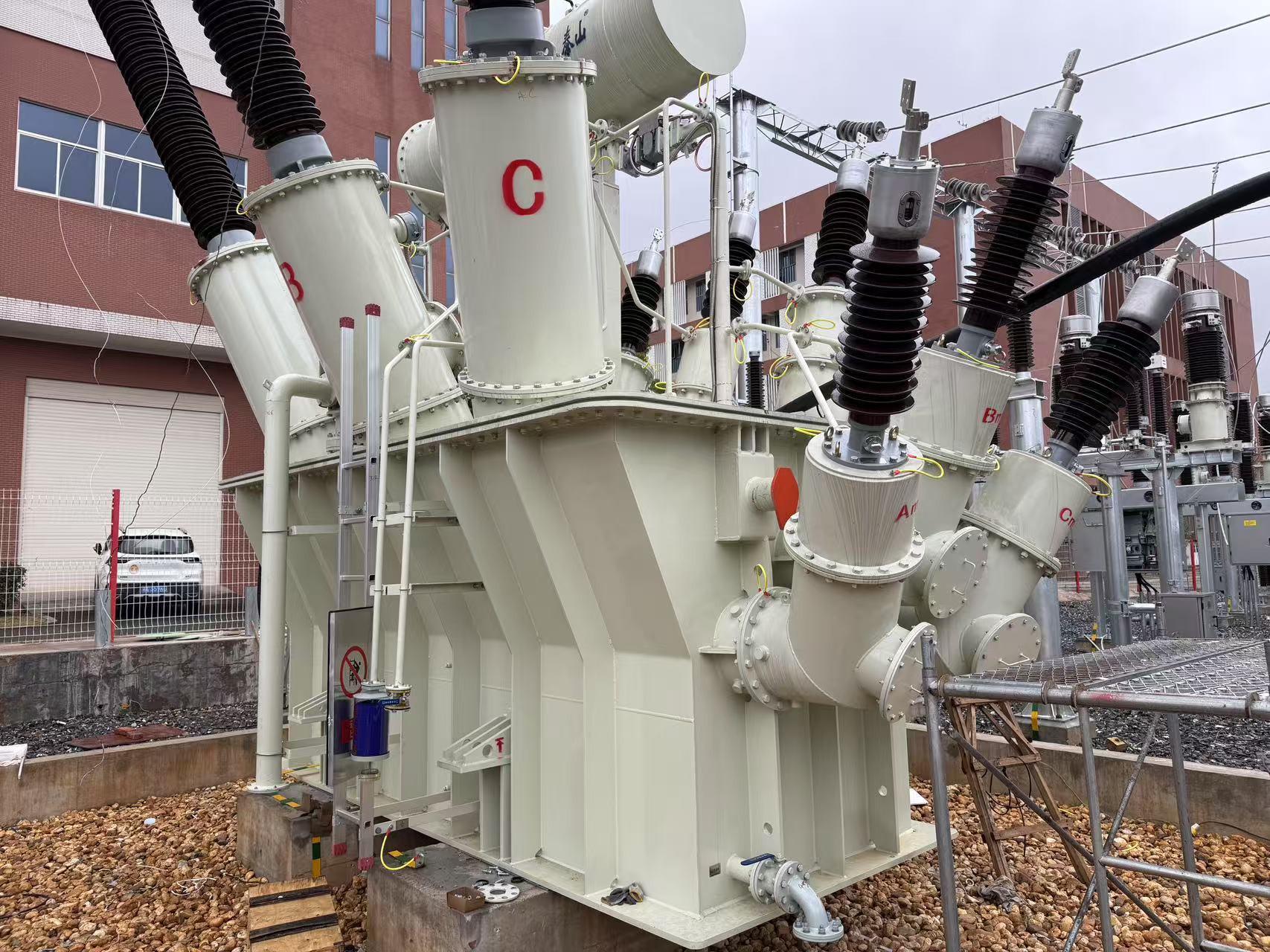
Mounting a transformer is a critical step in the installation process that directly affects its mechanical stability, electrical performance, and operational safety. Improper mounting can result in structural vibration, misalignment with bus ducts or cable trenches, foundation stress, and inadequate grounding—all of which may lead to premature failure or hazardous conditions. A well-defined, step-by-step mounting procedure ensures the transformer is correctly positioned, aligned, secured, and connected for long-term reliable operation.
The proper procedure for mounting a transformer involves verifying the foundation, aligning the base frame, anchoring the transformer to the plinth, securing accessories, ensuring thermal clearance, establishing grounding connections, and conducting post-mounting mechanical and electrical checks before energization.
This guide provides a professional, technically sound approach to transformer mounting—from preparation to final bolt tightening—ensuring your transformer is installed correctly and safely.
Transformers can be installed directly on soil or gravel without a concrete foundation.False
Transformers must be mounted on a specifically designed, level concrete plinth or pad to support their weight and ensure safety, vibration resistance, and alignment.
Proper anchoring and alignment during mounting ensure operational stability and prevent transformer vibration.True
Mechanical vibration and misalignment during operation can be prevented through accurate leveling and secure mounting on a suitable foundation.
1. Prepare the Mounting Site and Foundation
A. Confirm Foundation Readiness
- Use engineered concrete plinth or pad per transformer weight class
- Check that the pad is:
- Level within ±2 mm per meter
- Cured for at least 7 days (28 days ideal)
- Free from oil, dust, debris, or cracks
| Specification | Typical Value |
|---|---|
| Pad Load Capacity | 10–100 tons (based on design) |
| Plinth Height | 300–900 mm (site dependent) |
| Plinth Level Tolerance | <2 mm/m slope |
B. Check Alignment with External Interfaces
- Cable trench openings must align with terminal boxes
- Ensure radiator and conservator clearance from walls/fences
- Confirm space for future maintenance access (min. 1 m on all sides)
2. Positioning the Transformer on the Plinth
A. Lifting and Placement
- Use crane or hydraulic jacks with certified slings
- Lift only from OEM-specified lifting lugs
- Use tag lines to control swing and rotation during lifting
B. Lowering Procedure
- Slowly lower the transformer while guiding it into position
- Place rubber anti-vibration pads or rail guides if specified
- Use shims or wedges to level the transformer if needed
C. Verify Orientation
- Confirm transformer HV/LV terminals face correct direction
- Conservator, marshalling box, and drain valves should be accessible
- Orientation must match project layout drawing
| Tool Used | Purpose |
|---|---|
| Spirit level / laser | Check horizontal alignment |
| Measuring tape | Confirm terminal-to-trench offset |
| Torque wrench | For final bolt tightening |
3. Anchoring and Securing the Transformer
A. Base Frame Anchoring
- Align mounting holes with embedded anchor bolts
- Use grouting compound if gaps exist under base frame
- Torque anchor nuts as per OEM torque specification
B. Seismic and Wind Protection
- In seismic zones, install vibration dampers or isolators
- Install wind bracing or hold-down clamps if required
- Confirm compliance with IEEE 693 / IEC 60076-7 seismic specs
C. Radiator and Conservator Mounting
- Reinstall detached components securely
- Use correct gaskets and flange torque
- Install air release valves and breather connections
4. Grounding and Bonding
A. Transformer Body and Neutral Grounding
- Connect main tank, neutral bushing, marshalling box, and radiator frames to the ground grid
- Use bare copper strip or GI flat, minimum 50 mm² cross-section
| Grounding Item | Recommended Conductor Type |
|---|---|
| Tank body to earth | Copper/GI strip (min 50 mm²) |
| Neutral bushing | Direct to earth mat |
| Radiator fins/frame | Bonded to tank ground |
B. Earthing Resistance Check
- Perform earth resistance measurement (<1 ohm preferred)
- Verify continuity between all grounded points
5. Post-Mounting Checks and Inspections
A. Mechanical Checks
- Recheck torque on anchor bolts and flange connections
- Inspect for oil leakage, paint scratches, or cracked gaskets
- Ensure access ladders and nameplates are visible and secure
B. Electrical Readiness
- Confirm terminal box alignment with cable tray
- Ensure bushings are clean and moisture-free
- Confirm tap changer is in the neutral position
| Inspection Item | Acceptance Criteria |
|---|---|
| Anchor bolt torque | Per OEM spec (e.g., 250 Nm) |
| Plumb alignment | <2 mm tilt across frame |
| Oil level gauge | Between MIN and MAX marks |
| Breather silica gel | Blue (dry) |
6. Safety and Compliance Confirmation
- Install barrier fencing or signage around transformer
- Place fire extinguishers or foam systems if required
- Log all mounting steps in the installation record sheet
Tip: Take photographs of foundation, anchoring, and grounding for documentation and future audits.
How Are Electrical Connections Made During Installation?
A transformer is only as good as its connections. Once mounted and secured on its foundation, the next critical step is making the electrical connections—the link between the transformer and the power system. These connections include high-voltage (HV) and low-voltage (LV) terminations, neutral and grounding conductors, and control or protection wiring to auxiliary devices. Mistakes here—such as incorrect phasing, poor contact torque, improper cable bends, or missing interlocks—can lead to dangerous faults, relay failures, or even explosive short circuits.
Electrical connections during transformer installation are made by securely terminating power cables to the high-voltage and low-voltage bushings, bonding the grounding system, wiring control and protection circuits to the marshalling box, and verifying phasing, torque, and insulation levels, all in compliance with OEM instructions and national standards.
This guide offers a comprehensive and professional approach to transformer electrical interconnection—from cable lugging and grounding to control wiring and final verification.
It is safe to connect transformer bushings without checking torque values.False
All power and grounding terminals must be tightened to specified torque values to ensure secure, low-resistance connections and prevent overheating or arcing.
Control wiring for protection relays is routed through the transformer’s marshalling box.True
The marshalling box houses terminal blocks and control points for current transformers (CTs), voltage transformers (VTs), thermometers, Buchholz relays, and other monitoring devices.
1. Preparation Before Making Electrical Connections
A. Visual Inspection of Terminals
- Inspect HV/LV bushings for cracks, dirt, or oil
- Clean terminals using isopropyl alcohol and lint-free cloth
- Verify phase labels (e.g., R-Y-B or H1-H2-H3 / X1-X2-X3)
B. Tools and Materials Required
- Crimping tool (hydraulic or mechanical)
- Cable lugs and sleeves (as per cable size)
- Torque wrench (calibrated)
- Heat shrink or cold shrink sleeves
- Insulation tester (5 kV or 10 kV)
- Phase sequence meter
- Personal protective equipment (PPE)
2. High-Voltage (HV) and Low-Voltage (LV) Power Connections
A. Cable Termination Process
- Prepare cable ends (strip insulation to required length)
- Crimp lugs using correct die for conductor size
- Apply insulation sleeves and heat/cold shrink
- Align cables with bushing terminals (avoid sharp bends)
- Tighten connections using torque wrench (per OEM spec)
- Color-code or tag phase conductors
| Bushing Type | Typical Torque (Nm) | Connection Method |
|---|---|---|
| Bolt-on Terminal | 80–250 Nm | Crimped lug bolted |
| Plug-in Type | Push-fit w/ clamp | Plug connector with lock |
| Bus Duct Interface | OEM-specific | Expansion links if needed |
Always use double lugs for large cables (≥300 mm²) to ensure proper contact and mechanical strength.
B. Cable Support and Routing
- Use cleats or clamps every 1–1.5 meters
- Maintain minimum bending radius (12–15 × diameter)
- Ensure separation between power and control cables
3. Neutral and Grounding Connections
A. Neutral Connection
- Connect neutral bushing directly to earthing bar or grid
- Install neutral current transformer (NCT) if required
- Confirm continuity with megger (phase–neutral–earth)
B. Transformer Body Grounding
- Ground:
- Tank body
- Radiator frames
- Marshalling box
- Surge arresters
- Use tinned copper strip or GI flat (≥50 mm²)
| Grounding Point | Location |
|---|---|
| Main tank ground | Base plate or flange bolt |
| Surge arrester ground | Below each HV terminal |
| Control box ground | Marshalling box terminal lug |
Ground resistance < 1 ohm is preferred; test using fall-of-potential or clamp-on meter.
4. Control and Protection Wiring
A. Marshalling Box Wiring
The marshalling box contains:
- Terminal blocks for CTs, VTs, RTDs, Buchholz relay, oil level, WTI, OTI
- Interfacing points to SCADA or protection relays
| Device Type | Typical Wiring Required |
|---|---|
| CTs | Shorting blocks, shielded cables |
| VTs | Fused terminals, phase label |
| Buchholz relay | NO/NC contacts for trip/alarm |
| WTI/OTI | Analog or RTD leads |
B. Wiring Procedure
- Use color-coded wires (as per IEC/NEC codes)
- Terminate with crimped pin/fork lugs
- Maintain 5–10 mm wire spacing
- Label all wires clearly
- Route neatly with ducts or tie wraps
- Verify wiring against schematic diagrams
5. Verification and Testing After Connection
A. Insulation Resistance Test (IR)
- Perform between:
- Phase-to-phase
- Phase-to-ground
- Neutral-to-ground
| Voltage Rating | Test Voltage | Minimum IR Value |
|---|---|---|
| <11kV | 1 kV–5 kV | >100 MΩ |
| 11–66kV | 5–10 kV | >500 MΩ |
B. Phase Sequence and Polarity Test
- Use phase rotation meter (R-Y-B verification)
- Confirm vector group alignment (e.g., Dyn11)
C. Continuity and Loop Check
- Test for open circuits, wrong connections, and shorts
- Confirm CT polarity using primary injection (if required)
- Verify relay trip logic with functional testing
Summary Table: Electrical Connection Checklist
| Task | Responsibility | Status |
|---|---|---|
| Bushing terminals cleaned and tightened | Electrical team | ✅ |
| Cables terminated and tagged | Cable technician | ✅ |
| Neutral grounding completed | Grounding contractor | ✅ |
| Marshalling box wired and labeled | Control technician | ✅ |
| IR and phase rotation tested | Test engineer | ✅ |
| Relay/control loop verified | Protection engineer | ✅ |
What Pre-Commissioning Tests Are Conducted?
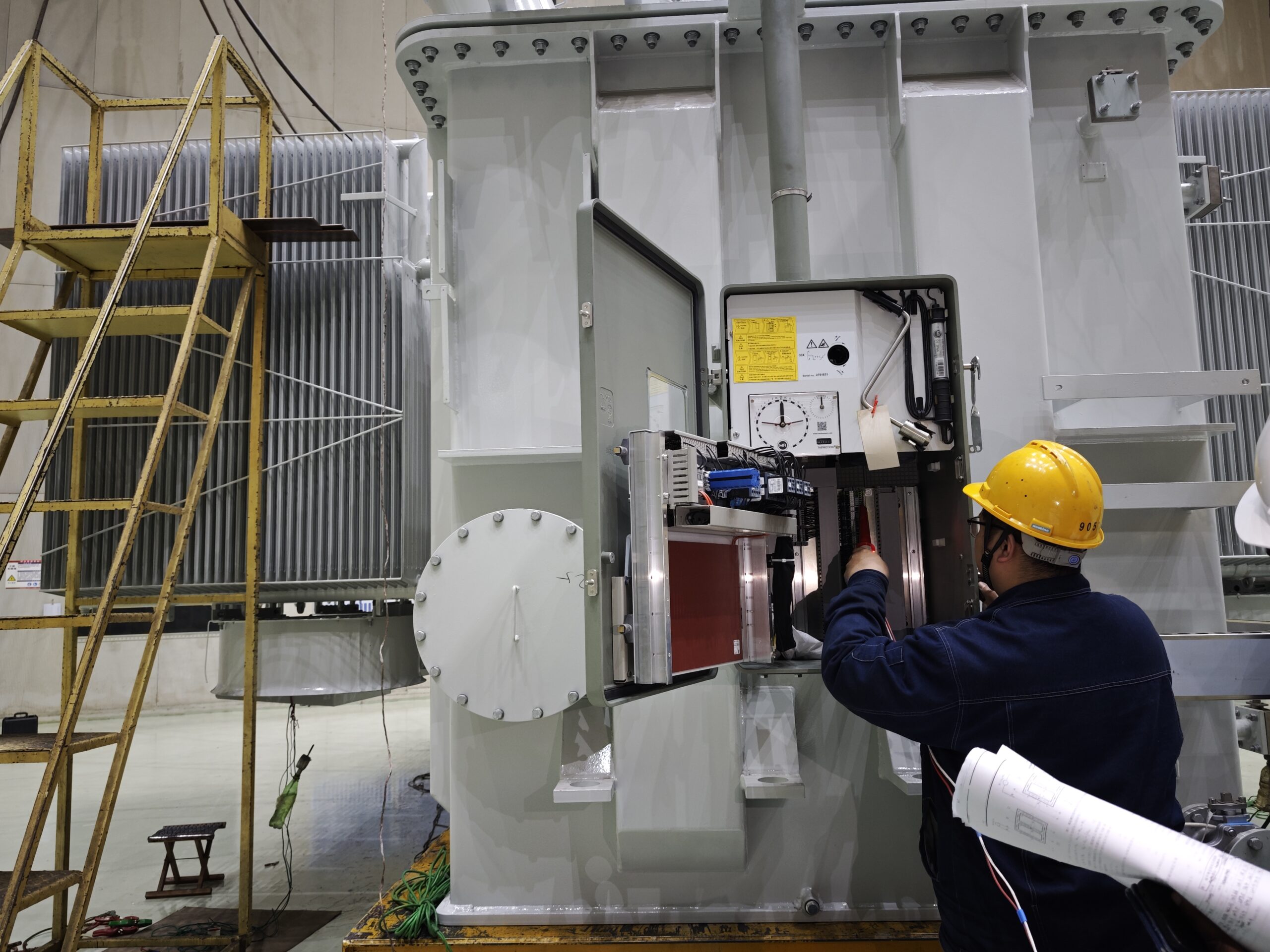
Before a power transformer is energized, it must undergo a comprehensive series of pre-commissioning tests. Skipping or rushing these tests can lead to undetected faults, such as winding shorts, incorrect vector groups, or poor insulation, which may result in system failures, fire hazards, or immediate trip-outs. These tests act as the final safety net to verify manufacturing quality, transport integrity, correct installation, and functional readiness of the transformer and its protection systems.
Pre-commissioning tests are a mandatory set of electrical, mechanical, and functional verifications carried out on transformers after installation and before energization, including insulation resistance (IR), polarization index (PI), transformer turns ratio (TTR), winding resistance, vector group check, core grounding test, functional testing of protection devices, and oil quality analysis to ensure operational integrity and safety.
Every test serves a distinct purpose—from checking the health of insulation systems to ensuring protection relays respond correctly. For engineers and asset managers, understanding the purpose and procedure of each test is essential for delivering a reliable power system.
\
Pre-commissioning tests are optional if the transformer passes factory testing.False
Factory Acceptance Tests (FAT) confirm design compliance, but pre-commissioning tests ensure installation integrity and on-site performance. Both are necessary.
\
The Polarization Index (PI) test helps assess insulation aging and moisture ingress in transformer windings.True
PI is the ratio of 10-minute to 1-minute insulation resistance and indicates insulation dryness and integrity.
Purpose and Importance of Pre-Commissioning Tests
Pre-commissioning tests ensure:
- Mechanical integrity after transportation and installation
- Electrical parameters are within design specification
- Correct phasing, polarity, and vector group
- Reliable operation of protection and control systems
- Oil and insulation quality are suitable for energization
Essential Transformer Pre-Commissioning Tests and Their Purpose
| Test Name | Equipment Used | Purpose & Standards |
|---|---|---|
| Insulation Resistance (IR) Test | 5kV/10kV Megger | Evaluate insulation level (IEEE C57/IEC 60076) |
| Polarization Index (PI) | Megger (IR over time) | Detect moisture or aging in insulation |
| Winding Resistance Test | Micro-ohmmeter | Check for winding uniformity and contact quality |
| Transformer Turns Ratio (TTR) | TTR tester | Validate primary-secondary voltage ratio |
| Vector Group Verification | TTR tester + phasing kit | Confirm phase displacement and connection type |
| CT and VT Testing | CT/PT tester | Ensure correct polarity, ratio, and burden |
| Functional Test of Relays | Secondary injection kit | Verify relay operation and tripping logic |
| Oil Dielectric Strength Test | BDV test kit | Assess transformer oil breakdown voltage |
| Core Grounding Check | Multimeter | Ensure single-point earthing only |
| Temperature Device Test | Thermometer + resistance test | Check WTI, OTI, RTD signals for accuracy |
| Marshalling Box Wiring Check | Multimeter and schematic | Confirm continuity, polarity, and labeling |
Insulation Resistance and Polarization Index (IR/PI)
These tests are among the first to be performed:
- IR values must exceed 1000 MΩ for HV windings when tested at 5kV
- PI value should be ≥2.0, indicating dry and healthy insulation
| Windings Tested | Min IR Value @5kV | PI (10-min/1-min) |
|---|---|---|
| HV to LV + Ground | >1000 MΩ | ≥ 2.0 |
| LV to HV + Ground | >500 MΩ | ≥ 2.0 |
| HV to Ground only | >1000 MΩ | ≥ 2.0 |
Winding Resistance and Transformer Ratio Tests
Winding resistance:
- Performed using DC current injection
- Indicates loose joints, improper tap changer contacts, or damaged windings
- Compare measured vs factory test values
Turns Ratio (TTR):
- Measures voltage ratio between primary and secondary
- Must be within ±0.5% of nameplate rating
| Tap Position | Nameplate Ratio | Measured Ratio | Deviation (%) |
|---|---|---|---|
| Nominal Tap | 13200V:440V | 13190V:439.8V | -0.08% |
Vector Group Verification
- Ensures correct phase shift (e.g., 30° lag in Dyn11)
- Use phase rotation meter and TTR instrument
- Incorrect vector group may prevent parallel operation and cause circulating currents
Example: Dyn11 has a 30° lag, meaning the LV phase lags the HV phase by 30°.
Core Grounding and Magnetizing Current Test
- Core must be grounded at one point only to avoid circulating currents
- Magnetizing current test checks core integrity and insulation
| Test Parameter | Expected Range |
|---|---|
| Core-to-ground resistance | >1000 MΩ |
| Magnetizing current | 0.1%–0.5% of full load |
CTs, VTs, and Protection Relay Testing
CT Testing:
- Polarity check
- Ratio test
- Knee point verification (for protection class CTs)
VT Testing:
- Ratio
- Polarity
- Burden check
Relay Testing:
- Use secondary injection to simulate faults
- Verify relay pick-up, time delay, and tripping action
- Confirm trip outputs energize breaker coils correctly
| Relay Function | Test Method | Acceptance Criteria |
|---|---|---|
| Overcurrent (50/51) | Secondary injection | Trip within specified time |
| Differential (87T) | Ratio current injection | No trip under balance, trip on fault |
| Buchholz Relay | Float and pressure switch | Alarm/trip contact verification |
Transformer Oil Dielectric Strength (BDV) Test
- Oil samples tested using automatic BDV kit
- Minimum acceptable BDV: >60 kV/2.5 mm gap
- Tests for moisture, gas bubbles, and contamination
| Oil Test | Standard Value | Purpose |
|---|---|---|
| BDV | >60 kV | Insulating property |
| Moisture (PPM) | <30 ppm | Prevent aging/arc flash |
| DGA (Optional) | No fault gases | Check for arcing, overheating |
Functional Tests and Control Loop Check
- Simulate alarms (oil level, gas trip, temperature)
- Verify signal flow from field device to SCADA or annunciator
- Test RTD to temperature indicator, OLTC motor control, and fan starter logic
| Function Tested | Simulation Method | Observed Result |
|---|---|---|
| Buchholz relay trip | Gas injection or manual | Breaker trip |
| WTI high alarm | RTD simulator | Alarm light/signal |
| Fan auto start | Heat lamp to sensor | Fan activation |
Documentation and Final Approval
All test results must be:
- Recorded with date, values, remarks
- Signed off by testing engineers and client
- Reviewed before charging
A final pre-commissioning report is required, containing:
- Test procedure
- Instruments used (with calibration data)
- Test results with acceptable range
- Pass/fail status
- Recommendations (if any)
What Are the Safety and Environmental Considerations for Transformer Installation and Operation?

Transformers are vital to the power grid, but improper handling, installation, or maintenance can result in serious safety hazards and environmental violations. Incidents such as oil leaks, electrical arcs, or fire outbreaks can cause personal injuries, operational losses, and regulatory penalties. Moreover, environmental risks from mineral oil contamination or SF6 gas leakage pose significant long-term ecological damage. Thus, a transformer’s lifecycle—from delivery and installation to operation and decommissioning—must follow strict safety and environmental guidelines.
Transformer safety and environmental considerations encompass a wide range of risk mitigation measures including personal protective equipment (PPE), oil containment systems, arc-flash protection, fire suppression setups, routine leak detection, gas handling protocols (for SF6), and strict compliance with international safety and environmental regulations such as OSHA, IEC 60076, and ISO 14001. These practices aim to ensure operational safety, personnel protection, and ecological integrity during the transformer's full service life.
To avoid costly mishaps and ensure responsible stewardship, utility operators, electrical contractors, and plant engineers must understand and implement a comprehensive safety and environmental protocol before energizing or working around any transformer.
\
Transformer mineral oil can pollute groundwater if spilled.True
Mineral oil is classified as a hazardous substance; without containment, spills can leach into soil and water sources.
\
SF6 gas used in gas-insulated transformers is harmless to the environment.False
SF6 is a potent greenhouse gas with a global warming potential over 23,000 times that of CO₂. Proper handling is essential.
Key Areas of Transformer Safety Management
1. Personal and Occupational Safety
Personnel working near transformers must be safeguarded against electrical hazards, chemical exposure, and mechanical risks. This includes:
- Wearing full PPE: arc-rated clothing, gloves, dielectric boots, face shields
- Following lockout-tagout (LOTO) procedures before service
- Ensuring clearances and restricted zones are respected
- Using insulated tools and live-line testers before contact
- Adhering to arc-flash safety boundaries per NFPA 70E
| Safety Gear | Purpose | Standard Reference |
|---|---|---|
| Arc-rated PPE | Protect against arc flashes | NFPA 70E, IEC 61482 |
| Insulated gloves | Electrical shock prevention | ASTM D120 |
| Voltage detectors | Confirm de-energization | IEEE Std 510 |
| Rubber mats/barriers | Step and touch potential control | OSHA 1910.269 |
2. Fire Protection and Thermal Safety
Transformer fire risks stem from:
- Oil overheating
- Electrical short circuits
- Lightning surges
Fire protection strategies include: - Fire barriers between adjacent units
- Nitrogen injection systems or CO2 flooding systems
- Use of non-flammable dielectric fluids (e.g., FR3)
- Temperature monitoring with WTI, OTI, and RTDs
- Automatic trip settings for over-temperature or pressure events
| Fire Mitigation System | Description | Recommended for |
|---|---|---|
| Firewalls and blast walls | Physical fire separation | Outdoor substations |
| Nitrogen Injection System | Suppresses combustion in tank | Large power transformers |
| Fire-retardant oil (FR3) | Biodegradable, high flash point | Urban/residential use |
| Fire detectors and alarms | Infrared or flame sensors | All transformers >500 kVA |
3. Environmental Spill and Containment Control
Transformer fluids, especially mineral oil, can severely contaminate soil and water if spilled. Required containment measures include:
- Oil collection trenches
- Bund walls (110% volume containment)
- Oil-water separators
- Biodegradable oils for sensitive areas
- Routine inspection for leaks, rust, and gasket failures
| Containment Method | Purpose | Regulatory Basis |
|---|---|---|
| Bunded containment | Prevents spill from reaching soil | ISO 14001, EPA SPCC rules |
| Oil separator pits | Cleans water discharge from pits | Local water quality laws |
| Leak detection sensors | Early identification of seepage | IEC 60076 Part 14 |
Greenhouse Gas and SF6 Management
Gas-insulated transformers (GITs) use SF6, which, though inert and excellent for insulation, is a powerful greenhouse gas. Proper SF6 handling protocols are mandatory:
- Only trained, certified personnel may handle SF6
- Use closed-loop recovery and refill systems
- Maintain leak records and emission logs
- Avoid venting SF6 to atmosphere
- Transition to low-GWP alternatives where feasible
| SF6 Risk Mitigation Practice | Equipment Required | Compliance Requirement |
|---|---|---|
| Gas leak detection | Portable gas leak detector | IEC 60376 |
| Recovery and reuse system | Vacuum pump, gas cart | Kyoto Protocol, EU F-Gas regs |
| Personnel certification | SF6 training and license | ISO 14064-1 |
Noise Pollution and Public Safety
Transformer noise levels (typically 55–65 dB for power transformers) can become problematic in urban areas. Addressing this involves:
- Acoustic enclosures and soundproof fencing
- Using low-noise core design
- Vibration dampers on base and clamps
- Location planning: avoid proximity to homes or schools
Waste Management and End-of-Life Disposal
At the end of its service, a transformer must be decommissioned with care:
- Drain and dispose of oil per hazardous waste guidelines
- Recycle copper, aluminum, and steel materials
- Properly dispose of insulation and composite materials
- De-gas SF6 (if present) and reclaim it per EPA protocols
- Document all disposal for audit compliance
| Waste Item | Disposal Method | Environmental Risk |
|---|---|---|
| Mineral oil (contaminated) | Hazardous waste incinerator | Groundwater pollution |
| Windings (Cu/Al) | Metal recycling | Low |
| SF6 gas | Recovered, reclaimed, reused | High GWP potential |
| Silica gel | Replace and dispose per chemical code | Minor |
Regulatory Compliance and Certifications
Operating transformers responsibly requires compliance with multiple international and national standards, including:
- IEC 60076-1 to 60076-22 (for design and maintenance)
- NFPA 850 (fire protection guidelines)
- OSHA 1910.269 (workplace electrical safety)
- ISO 14001 (environmental management systems)
- EPA SPCC (oil spill control requirements)
Conclusion
Installing a transformer on-site is a delicate process that combines mechanical precision with electrical expertise. Each step — from preparation and transport to electrical connection and testing — plays a vital role in ensuring the unit performs safely and efficiently. By adhering to best practices and industry standards, operators can minimize risks, avoid costly delays, and extend the service life of the transformer. A successful installation sets the foundation for reliable power delivery in any application, whether industrial, commercial, or utility-scale.
FAQ
Q1: What are the preparatory steps before transformer installation on-site?
A1: Preparatory steps include selecting a proper site with adequate ventilation and accessibility, ensuring civil foundation work is complete, verifying grounding system readiness, and checking that all necessary permits and approvals are obtained.
Q2: How is a transformer transported and positioned on-site?
A2: Transformers are transported using flatbed trucks or trailers, often with protective packaging. Upon arrival, cranes or forklifts position the transformer onto its concrete or steel-reinforced foundation pad, ensuring alignment with cable trenches and ventilation paths.
Q3: What connections are made during transformer installation?
A3: During installation, technicians connect:
High-voltage and low-voltage cables to bushings
Neutral grounding system
Control and protection wiring to relay panels
Cooling systems, if applicable (radiators, fans, or pumps)
Earthing to ensure safety and compliance
Q4: What testing is done after transformer installation?
A4: Key tests include:
Insulation resistance testing
Transformer turns ratio (TTR) testing
Oil testing (for oil-immersed types)
Polarity and phase verification
Functional checks of protection relays and monitoring devices
These tests ensure safe energization and identify faults before the transformer is brought online.
Q5: What are the final steps before commissioning a transformer?
A5: Final steps include:
Cleaning and tightening all connections
Completing documentation and inspection checklists
Trial energization and load testing
Monitoring for abnormal sounds, temperatures, or vibrations
Once verified, the transformer is officially commissioned and integrated into the electrical network.
References
"Power Transformer Installation Guide" – https://www.transformertech.com/installation-guide – Transformer Tech
"Field Installation of Transformers" – https://www.eaton.com/us/en-us/catalog/electrical-installation.html – Eaton
"On-Site Power Transformer Installation Procedures" – https://www.powermag.com/on-site-transformer-setup – Power Magazine
"Transformer Commissioning Checklist" – https://www.electrical4u.com/transformer-commissioning/ – Electrical4U
"Safe Installation of Transformers in Substations" – https://www.energycentral.com/transformer-installation-safety – Energy Central
"Transformer Handling and Site Preparation" – https://www.researchgate.net/publication/transformer-site-handling – ResearchGate
"Installation Practices for Power Transformers" – https://www.sciencedirect.com/transformer-installation-best-practices – ScienceDirect
"Testing and Commissioning of Electrical Transformers" – https://www.smartgrid.gov/transformer-testing-commissioning – Smart Grid
"PowerGrid's Transformer Setup Guidelines" – https://www.powergrid.com/transformer-installation-guide – PowerGrid