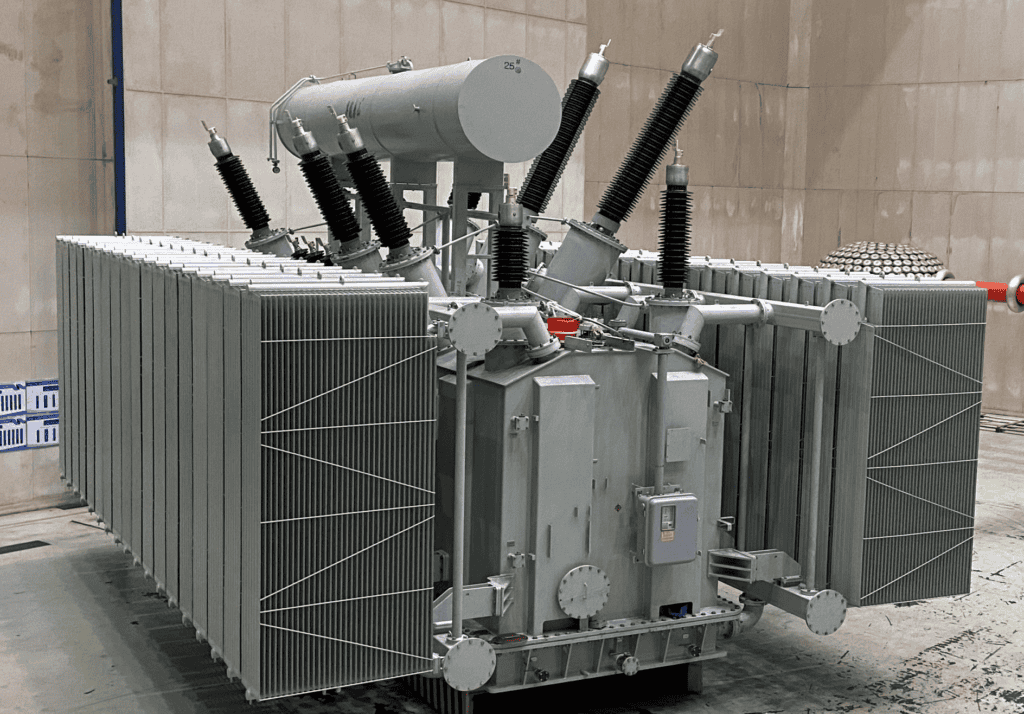
Transformer insulation is essential for preventing electrical breakdown, controlling leakage currents, and protecting the windings and other energized components from short circuits. If the insulation system is poorly designed, improperly manufactured, contaminated, or exposed to excessive heat and moisture, a transformer can experience partial discharge, insulation deterioration, winding failure, or costly unplanned outages. For buyers, understanding transformer insulation is critical to evaluating equipment safety, service life, operating reliability, and suitability for the intended application.
Transformer insulation is the system of dielectric materials and insulating structures used to electrically separate energized components from one another and from grounded parts of a transformer. Common insulation materials include cellulose-based paper and pressboard, insulating liquids, epoxy resin, and other solid dielectric materials. Transformer insulation prevents short circuits, withstands operating and transient voltages, supports mechanical stability, and helps ensure safe, reliable operation. Its performance depends on material quality, insulation design, temperature, moisture content, electrical stress, and manufacturing quality.
Transformer insulation is not a single material but a coordinated system that must withstand electrical, thermal, mechanical, and environmental stresses throughout the transformer's service life. The following outline explains the main insulation types, their functions, the factors that cause deterioration, and how buyers can assess insulation quality before purchasing transformer equipment.
What Is Transformer Insulation and How Does Transformer Insulation Protect Electrical Components?
Transformer insulation is essential for safe and reliable electrical power transmission. Without effective insulation, high voltage can cause electrical breakdown between windings, between conductors and the transformer core, or between energized parts and the grounded tank. These failures can lead to short circuits, overheating, equipment damage, and costly power interruptions. Selecting suitable insulation materials and maintaining their condition are therefore critical for transformer manufacturers, operators, and buyers.
Transformer insulation is the system of solid, liquid, or gaseous insulating materials that prevents unwanted current flow between electrical conductors and grounded components. It withstands electrical stress, separates windings and the core, helps manage heat in many transformer designs, and reduces the risk of short circuits and insulation breakdown. Common materials include transformer oil, cellulose-based paper and pressboard, and solid insulating materials used in dry-type transformers.
Understanding transformer insulation helps buyers assess equipment quality, choose the right transformer for an application, and establish an effective maintenance program. The insulation system must be designed for the transformer's voltage, temperature, cooling method, operating environment, and expected service life.
What Is Transformer Insulation?
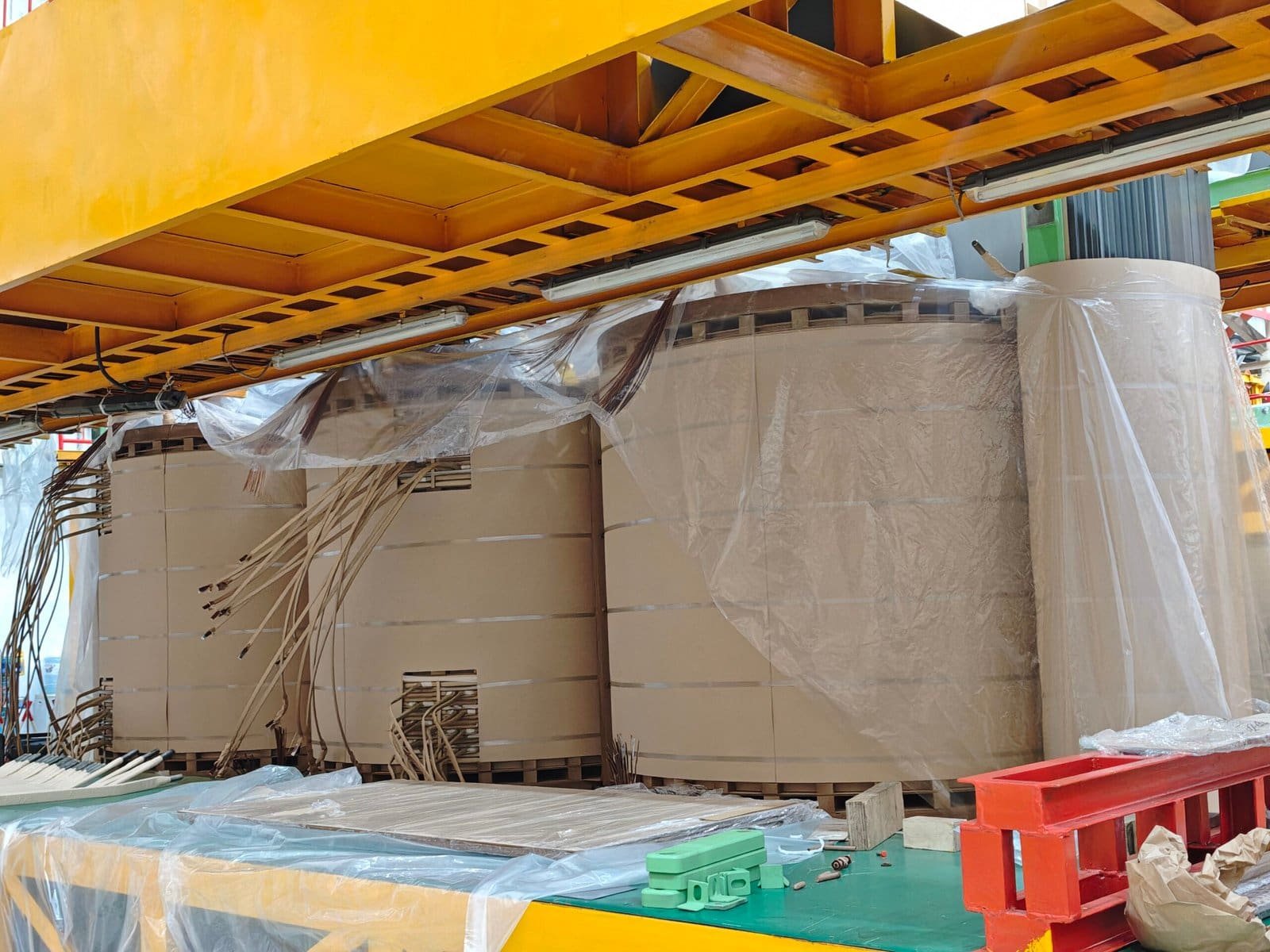
Transformer insulation is not a single material. It is a coordinated system of materials and clearances designed to control electrical stress and prevent unwanted current paths.
Inside a transformer, the primary and secondary windings operate at different electrical potentials. Insulation separates adjacent turns, winding layers, individual windings, the core, and grounded structural parts. It must withstand normal operating voltage as well as specified temporary overvoltages and electrical transients.
The insulation system also needs suitable mechanical strength, thermal stability, and compatibility with the transformer's cooling method. In oil-immersed transformers, solid insulation and insulating liquid work together. In dry-type transformers, solid insulation and air or another specified cooling medium perform the corresponding functions.
What Are the Main Types of Transformer Insulation?
Transformer insulation can be classified by material and application.
| Insulation type | Common materials | Main function | Typical application |
|---|---|---|---|
| Liquid insulation | Mineral oil or suitable ester-based insulating liquid | Provides dielectric insulation and helps transfer heat | Oil-immersed transformers |
| Cellulose insulation | Electrical-grade paper | Insulates conductors and winding turns | Oil-immersed transformers |
| Solid structural insulation | Pressboard and molded insulating components | Separates windings and maintains dielectric clearances | Oil-immersed and selected dry-type designs |
| Solid resin insulation | Epoxy resin and related systems | Encapsulates or supports energized components | Cast-resin dry-type transformers |
| Air insulation | Designed air clearances | Prevents flashover between separated components | Dry-type and other transformer designs |
The materials must be selected as part of a complete insulation system. A material that performs well in one design may be unsuitable in another because of voltage stress, temperature, moisture, mechanical loading, or compatibility issues.
How Does Transformer Insulation Protect Electrical Components?
1. Prevents Short Circuits Between Windings
Transformer insulation keeps electrically separate conductors from making unintended contact. It prevents adjacent turns, winding layers, and primary and secondary windings from forming an unintended conductive path.
If insulation becomes damaged, a turn-to-turn short circuit may occur. Even a localized winding fault can produce high circulating current and intense heating, potentially causing rapid damage.
2. Separates Energized Parts From the Core and Tank
The transformer core and tank are commonly grounded or connected to the designated protective grounding system. Insulation prevents energized windings from contacting these grounded structures under normal operating conditions.
Insulation failure between a winding and the core or tank can create a ground fault. Depending on the fault location and protection scheme, this may cause relay operation, an equipment shutdown, or extensive internal damage.
3. Withstands Electrical Stress
Transformer insulation must withstand electric fields generated by operating voltage, switching events, lightning-related surges, and other specified transient conditions.
The insulation system is designed with appropriate material properties, clearances, barriers, and dielectric strength. Correct design reduces the risk of partial discharge, flashover, and electrical breakdown.
4. Supports Thermal Management
In oil-immersed transformers, insulating liquid generally performs two important functions: electrical insulation and heat transfer. It carries heat away from the core and windings toward radiators or other cooling surfaces.
Solid insulation must also withstand operating temperature over time. Excessive temperature accelerates the aging of many insulating materials, particularly cellulose-based paper and pressboard.
How Do Insulation and Cooling Work Together?
Electrical insulation and cooling are closely related, but they perform different functions. Insulation prevents unwanted electrical conduction, while cooling removes heat generated by winding resistance, core losses, and other operating losses.
In oil-immersed transformers, circulating insulating liquid helps transfer heat while maintaining dielectric performance. In dry-type transformers, air circulation or another designed cooling arrangement removes heat from the windings and core.
| Transformer design | Insulation system | Typical cooling approach | Key consideration |
|---|---|---|---|
| Oil-immersed | Liquid plus solid insulation | Natural or forced liquid circulation, with air-side heat rejection | Liquid quality, temperature, and solid insulation condition |
| Cast-resin dry-type | Resin-based solid insulation | Natural or forced air cooling | Winding temperature and ventilation |
| Other dry-type designs | Solid insulation with air or another specified medium | Depends on the design | Dielectric clearances and thermal performance |
The appropriate design depends on the application, voltage level, installation environment, loading pattern, and manufacturer's specifications.
What Causes Transformer Insulation to Deteriorate?
Insulation gradually ages during normal service. Poor operating conditions, contamination, and electrical faults can accelerate the process.
Common causes include:
- Excessive temperature: Prolonged overheating accelerates aging of paper, pressboard, resin, and other insulation materials.
- Moisture: Water can reduce the dielectric performance of insulating liquids and cellulose materials.
- Oxidation and contamination: These can degrade liquid insulation and contribute to deposits or sludge in oil-immersed equipment.
- Electrical transients: Surges and abnormal overvoltages can impose stress beyond normal operating conditions.
- Mechanical movement: Short-circuit forces, vibration, and transport damage can compromise insulation barriers or winding support.
- Poor maintenance or sealing: Moisture ingress, leaks, contamination, and neglected defects can shorten insulation life.
The severity of these effects depends on the transformer design, insulation materials, operating history, and exposure conditions.
How Can Buyers Evaluate Transformer Insulation Quality?
Buyers should review the insulation system as part of the transformer's complete technical specification rather than relying on a single dielectric-strength value.
| Evaluation item | What to check | Why it matters |
|---|---|---|
| Rated voltage and insulation level | Specified dielectric withstand requirements | Confirms suitability for the electrical system |
| Insulation materials | Material type and manufacturer's specifications | Supports thermal, mechanical, and dielectric compatibility |
| Liquid insulation, if applicable | Type, quality requirements, and test results | Helps verify dielectric and cooling performance |
| Winding and core clearances | Approved drawings and design documentation | Reduces the risk of flashover and breakdown |
| Factory testing | Required routine and specified dielectric tests | Verifies compliance with the purchase specification |
| Thermal design | Temperature-rise limits and cooling arrangement | Helps prevent accelerated insulation aging |
| Standards and documentation | Applicable IEC, IEEE, or local requirements | Supports technical verification and quality assurance |
Applicable tests depend on the transformer type, voltage class, governing standards, and purchase contract. Buyers should request the relevant factory test reports and confirm that the proposed insulation design meets the project's requirements.
How Should Transformer Insulation Be Maintained?
Maintenance practices depend on the insulation system and the manufacturer's recommendations.
For oil-immersed transformers, operators may monitor insulating-liquid dielectric properties, moisture, acidity, dissolved gases, and other condition indicators as appropriate. Periodic inspection can also identify leaks, abnormal temperature, contamination, and defective seals.
For dry-type transformers, maintenance may include inspecting insulation surfaces, checking for dust or moisture accumulation, verifying ventilation, and monitoring temperature and signs of tracking or discharge.
Any unusual electrical noise, persistent overheating, visible insulation damage, abnormal test results, or protection operation should be investigated by qualified personnel. Testing and maintenance must follow approved procedures and applicable safety requirements.
What Are the Different Types of Transformer Insulation Materials?
Choosing the wrong transformer insulation material can lead to premature aging, electrical breakdown, overheating, and expensive equipment failures. Different transformers operate at different voltage levels, temperatures, and environmental conditions, so one insulating material cannot meet every requirement. Buyers need to understand how insulating liquids, cellulose paper, pressboard, epoxy resin, and other solid materials perform before selecting a transformer for their application.
The main types of transformer insulation materials are insulating liquids, such as mineral oil and ester fluids; cellulose-based materials, such as electrical paper and pressboard; and solid synthetic materials, such as epoxy resin, silicone-based materials, and electrical laminates. Oil-immersed transformers commonly combine insulating liquid with paper and pressboard, while dry-type transformers often use air, epoxy resin, or other solid insulation systems. The right choice depends on voltage, temperature, cooling requirements, fire safety, environmental conditions, and service-life expectations.
Understanding these materials helps buyers compare transformer designs, evaluate manufacturing quality, and choose equipment that meets their electrical and operating requirements. The following guide explains the major materials, their advantages, limitations, and typical applications.
1. What Are the Main Types of Transformer Insulation Materials?
Transformer insulation materials are selected to prevent unwanted electrical conduction, withstand electric fields, and maintain mechanical and thermal stability during operation.
| Material type | Common examples | Main function | Typical transformer application |
|---|---|---|---|
| Liquid insulation | Mineral oil, natural ester, synthetic ester | Dielectric insulation and heat transfer | Oil-immersed transformers |
| Cellulose insulation | Electrical paper, kraft paper, crepe paper | Insulates conductors and winding turns | Oil-immersed transformers |
| Structural solid insulation | Pressboard, molded cellulose components | Separates windings and supports electrical clearances | Oil-immersed transformers |
| Resin insulation | Epoxy resin, cast resin | Encapsulates and electrically isolates components | Cast-resin dry-type transformers |
| Other solid insulation | Silicone-based materials and selected electrical laminates | Provides insulation, support, or protection in specific designs | Application-dependent transformer designs |
| Gaseous insulation | Air or other specified insulating gases | Provides insulation across designed clearances | Dry-type and specialized transformer designs |
These categories are often combined. For example, an oil-immersed transformer typically uses mineral oil together with paper and pressboard rather than relying on the liquid alone.
2. Mineral Transformer Oil
Mineral transformer oil is a petroleum-derived insulating liquid widely used in oil-immersed power and distribution transformers.
It provides dielectric insulation between energized components and helps carry heat from the core and windings to the cooling surfaces. Its performance depends on its formulation, cleanliness, moisture content, oxidation stability, and operating conditions.
Advantages
- Established technology with extensive service experience
- Good dielectric and heat-transfer performance when properly maintained
- Widely available for many transformer designs
- Compatible with many conventional paper-and-pressboard insulation systems
Limitations
- Combustible and subject to fire-safety requirements
- Can oxidize and form degradation products over time
- Requires monitoring for moisture, contamination, and dissolved gases
- Leakage can create environmental and cleanup concerns
Mineral oil remains a common choice for conventional oil-immersed transformers, but it must be selected and maintained according to the manufacturer's requirements.
3. Ester-Based Transformer Fluids
Ester fluids are alternatives to conventional mineral oil. They include natural ester fluids, generally derived from vegetable oils, and synthetic ester fluids produced through chemical processing.
They are used in suitable oil-immersed transformer designs where fire safety, environmental considerations, or fluid properties are important selection factors.
| Feature | Mineral oil | Natural ester | Synthetic ester |
|---|---|---|---|
| Origin | Petroleum-derived | Generally plant-derived | Chemically synthesized |
| Fire behavior | Combustible | Typically higher fire point | Typically higher fire point |
| Environmental considerations | Leakage requires careful management | Often offers favorable biodegradability | Properties depend on formulation |
| Moisture behavior | Requires careful moisture control | Can absorb more water while maintaining suitable properties in designed systems | Moisture behavior depends on formulation |
| Cost | Often economical | May have a higher purchase price | May have a higher purchase price |
| Compatibility | Widely used in conventional designs | Requires a compatible transformer design and material assessment | Requires a compatible transformer design and material assessment |
Ester fluids should not be treated as direct, universal replacements for mineral oil. Their viscosity, moisture behavior, temperature characteristics, compatibility, and cooling performance must be considered in the transformer design.
4. Electrical Paper and Cellulose Insulation
Electrical paper is commonly manufactured from cellulose fibers and is used to insulate transformer conductors and winding turns.
In oil-immersed transformers, paper insulation works together with the insulating liquid. The paper provides a solid dielectric barrier, while the liquid fills spaces and assists heat transfer.
Cellulose insulation is particularly sensitive to temperature, moisture, and oxidation. As it ages, its mechanical strength can decline, increasing the risk of winding movement or insulation failure.
Common forms include:
- Kraft electrical paper: Used for turn and conductor insulation.
- Crepe paper: Its textured structure allows it to conform to irregular shapes and connections.
- Layer or barrier paper: Used where the design requires separation between conductors or winding sections.
Paper selection depends on thickness, dielectric properties, mechanical strength, thermal class, moisture control, and compatibility with the selected insulating liquid.
5. Pressboard and Molded Cellulose Insulation
Pressboard is a dense, cellulose-based solid material used to create barriers, spacers, support structures, and insulation components within oil-immersed transformers.
It helps maintain the designed distance between energized components and supports winding structures under mechanical stress.
Pressboard is not simply a physical spacer. Its dimensions, moisture condition, density, and dielectric characteristics can affect electric-field distribution and insulation reliability.
Typical uses include:
- Barriers between windings
- Spacers within winding assemblies
- Insulation cylinders and support components
- Molded parts around leads and connections
Manufacturers must ensure that pressboard is properly dried, processed, and installed. Moisture or contamination can reduce insulation performance and accelerate aging.
6. Epoxy Resin and Cast-Resin Insulation
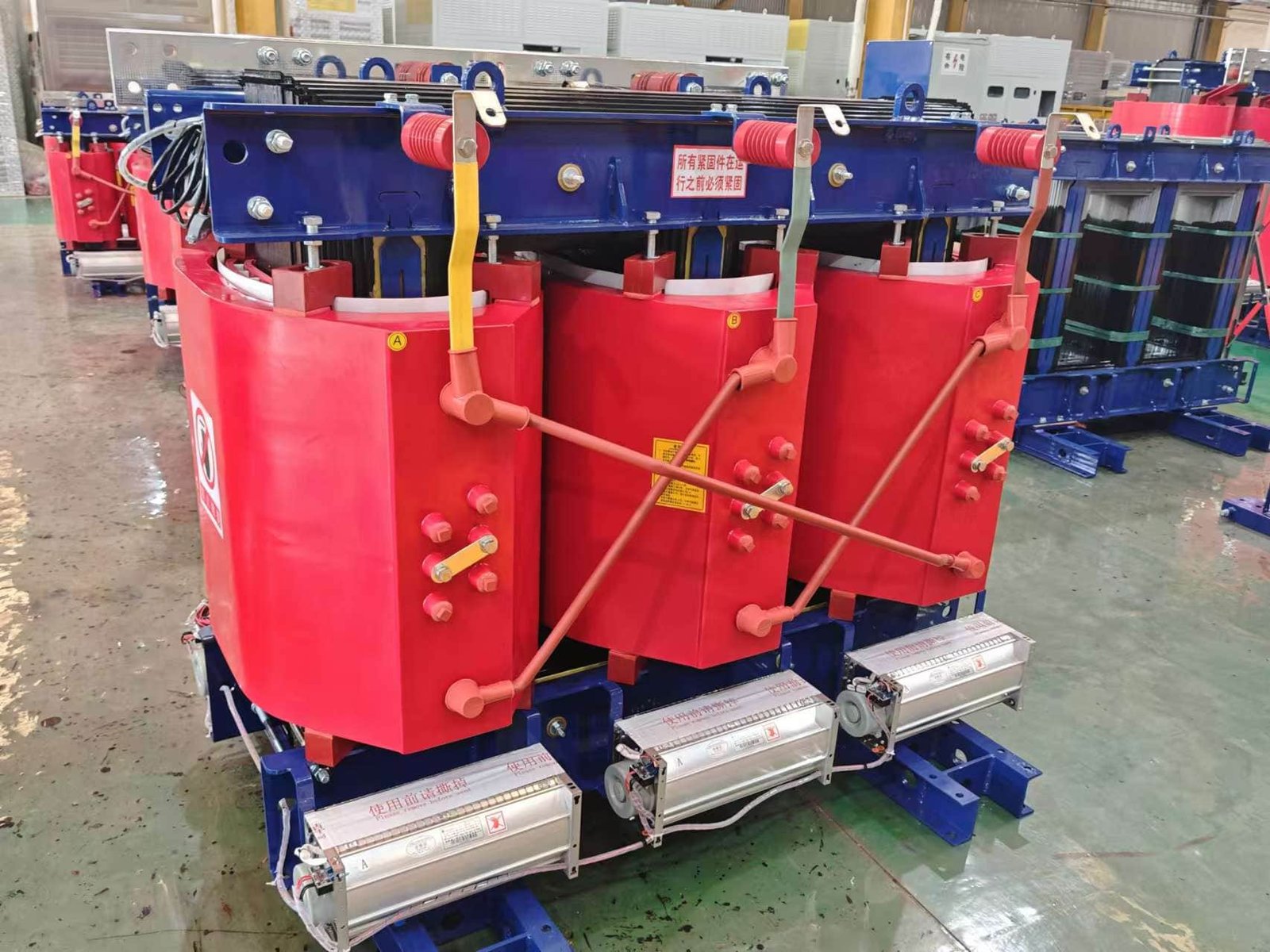
Epoxy resin is widely used in cast-resin dry-type transformers. It encapsulates or surrounds winding conductors and forms a solid insulation structure.
Because these transformers do not rely on a tank of insulating oil for their main insulation and cooling, they can be suitable for indoor installations where liquid containment and fire-safety considerations are important.
Advantages
- Solid encapsulation provides mechanical support and electrical insulation
- No mineral transformer oil is required for the main insulation system
- Suitable for many indoor commercial and industrial installations
- Can provide good resistance to moisture and environmental exposure when correctly designed
Limitations
- Heat dissipation and ventilation must be properly engineered
- Resin can be damaged by excessive thermal or mechanical stress
- Repairing internal encapsulated winding damage can be difficult
- Performance depends on resin formulation, manufacturing quality, and curing process
Epoxy insulation must be selected according to the transformer design, voltage level, thermal requirements, and environmental conditions. Resin quality alone does not determine overall transformer reliability.
7. Silicone-Based and Other Solid Insulation Materials
Silicone-based materials and other engineered insulation products are used in selected transformer designs, accessories, bushings, and specialized electrical components.
Their properties vary widely. Some provide flexibility and resistance to environmental exposure, while others are designed for specific thermal, mechanical, or dielectric requirements.
Buyers should confirm the exact material grade and its role in the transformer rather than assuming that all silicone-based or synthetic insulation materials have the same performance.
Other materials, including electrical laminates and engineered polymers, may also be used for specific barriers, supports, and components. Their suitability depends on the operating temperature, electrical stress, mechanical load, and applicable product standards.
8. How Should Buyers Choose the Right Transformer Insulation Material?
The best insulation material is determined by the complete transformer design, not by a single property.
| Selection factor | What buyers should evaluate |
|---|---|
| Rated voltage | Required dielectric strength and insulation coordination |
| Operating temperature | Thermal class, temperature-rise limits, and aging characteristics |
| Transformer type | Compatibility with oil-immersed or dry-type construction |
| Cooling method | Heat-transfer performance and ventilation requirements |
| Fire safety | Fluid fire point, installation rules, and containment requirements |
| Environmental impact | Leakage consequences, fluid biodegradability, and site restrictions |
| Maintenance | Required fluid sampling, testing, cleaning, and inspection |
| Service life | Expected loading, temperature profile, moisture control, and material compatibility |
| Standards | Applicable IEC, IEEE, and local requirements |
| Supplier quality | Material traceability, manufacturing controls, and factory test reports |
A reliable transformer supplier should explain why the proposed insulation system suits the application and provide supporting technical documentation.
9. Common Questions About Transformer Insulation
Is transformer oil better than epoxy resin?
Neither is universally better. Transformer oil is commonly used with paper and pressboard in oil-immersed transformers, while epoxy resin is widely used in cast-resin dry-type transformers. The right choice depends on voltage, cooling, installation environment, fire-safety requirements, and maintenance strategy.
Can transformer insulation materials be mixed?
Yes, compatible materials are commonly combined into a complete insulation system. However, compatibility must be verified. Material selection should account for thermal behavior, moisture, chemical interaction, and long-term dielectric performance.
Does better insulation always mean a longer transformer life?
Not necessarily. Transformer life also depends on operating temperature, loading, moisture, manufacturing quality, cooling, electrical transients, and maintenance. High-quality insulation must be combined with an appropriate design and suitable operating conditions.
All transformer insulation materials provide the same dielectric and thermal performance.False
Insulation materials differ in dielectric strength, thermal stability, moisture behavior, mechanical properties, fire behavior, and compatibility. Their suitability depends on the transformer design and operating conditions.
Why Is Transformer Insulation Important for Electrical Safety and Operating Reliability?
Transformer insulation is one of the most important factors affecting electrical safety, equipment lifespan, and power system reliability. When insulation deteriorates, transformers may experience partial discharge, winding short circuits, overheating, or catastrophic dielectric failure. These problems can cause unplanned outages, expensive repairs, and serious safety hazards. Understanding how transformer insulation works, what causes it to fail, and how to maintain it helps operators reduce risk and protect their investment.
Transformer insulation prevents unwanted electrical current between energized components and grounded parts, separates windings operating at different voltages, and helps withstand electrical and thermal stresses. Reliable insulation reduces the risk of short circuits, electrical fires, equipment damage, and unexpected downtime. Its performance depends on appropriate material selection, correct installation, temperature control, moisture management, and regular condition monitoring.
For utilities, industrial facilities, commercial buildings, and transformer buyers, insulation should be considered a core design and maintenance requirement rather than simply a component specification. The following guide explains its safety functions, key materials, common failure mechanisms, and practical methods for improving transformer reliability.
1. What Does Transformer Insulation Do?
Transformer insulation consists of dielectric materials that prevent current from flowing along unintended paths. It is designed to withstand the electric fields created by operating voltage, transient overvoltages, and differences in potential between internal components.
A transformer typically requires insulation between adjacent turns, between winding layers, between high-voltage and low-voltage windings, and between windings and the grounded core or tank. Each location experiences different electrical stresses, so insulation thickness, geometry, material properties, and manufacturing quality must be carefully coordinated.
Main insulation functions
- Electrical separation: Prevents unwanted current flow between conductors at different electrical potentials.
- Dielectric strength: Resists electrical breakdown under normal operating voltage and specified overvoltage conditions.
- Thermal protection: Helps maintain dielectric performance as winding temperatures rise during operation.
- Mechanical support: Certain solid insulation materials help stabilize windings against vibration and short-circuit forces.
- Environmental protection: Oil, sealed tanks, and moisture barriers can limit exposure to water, oxygen, contaminants, and other degradation factors.
Transformer insulation is needed only between the primary and secondary windings.False
Insulation is also required between winding turns and layers, between windings and the grounded core or tank, and around terminals and lead connections.
2. How Does Transformer Insulation Improve Electrical Safety?
Electrical safety depends on preventing insulation breakdown under the stresses that occur throughout a transformer's service life. A failure may allow current to flow through an unintended path, creating a short circuit, an arc, or dangerous touch voltages.
In an oil-immersed transformer, the insulating system commonly combines cellulose-based solid insulation with dielectric liquid. Paper and pressboard separate conductors and control electric-field distribution, while the liquid fills spaces and provides additional dielectric insulation. In dry-type transformers, materials such as epoxy resin, electrical-grade laminates, and specialized insulation systems provide the required separation without mineral insulating oil.
The insulation system must also withstand transient events. Lightning impulses, switching surges, and system faults can create electrical stresses beyond normal operating conditions. Transformer designers therefore coordinate insulation levels with system voltage, grounding arrangements, surge protection, and applicable standards.
| Safety risk | How insulation helps | Additional protection |
|---|---|---|
| Winding-to-winding short circuit | Separates conductors at different potentials | Correct winding design and production testing |
| Winding-to-ground fault | Insulates energized windings from grounded structures | Protective relays and grounding |
| Lightning or switching surge | Withstands specified transient voltage stresses | Surge arresters and insulation coordination |
| Electrical tracking or flashover | Maintains adequate creepage and clearance distances | Clean surfaces and suitable terminal design |
| Internal arcing after a fault | Helps prevent initial dielectric failure | Fault protection and appropriate enclosure design |
Insulation reduces the likelihood of electrical faults, but it cannot replace protective relays, grounding, surge protection, safe clearances, or proper maintenance.
3. How Does Insulation Affect Transformer Operating Reliability?
A transformer may operate continuously for many years when its insulation system remains in good condition. However, insulation degradation can progress gradually and remain undetected until a fault occurs.
In liquid-filled transformers, moisture and thermal aging can weaken cellulose insulation. Dissolved gases and other changes in the insulating liquid may also indicate overheating, arcing, or partial discharge. In dry-type transformers, contamination, moisture absorption, thermal cycling, vibration, and electrical tracking can reduce insulation performance.
A weakened insulation system may initially produce small electrical discharges or localized deterioration. As the damage progresses, the probability of a winding fault or forced outage increases. This is why insulation condition monitoring is important even when a transformer appears to operate normally.
Practical consequences of insulation deterioration
- Increased risk of winding faults and unplanned shutdowns.
- Reduced ability to withstand electrical transients.
- Higher maintenance costs and potentially expensive winding repairs.
- Shortened transformer service life.
- Greater risk of collateral damage to connected equipment.
Insulation condition is therefore a useful indicator of transformer health, although it should be assessed alongside loading, cooling performance, electrical test results, and the equipment's operating history.
4. Which Factors Cause Transformer Insulation to Fail?
Insulation failure usually results from one or more stresses acting over time rather than a single universal cause.
| Degradation factor | Typical effect | Recommended control |
|---|---|---|
| Excessive temperature | Accelerates aging of paper, resin, and other materials | Maintain loading and cooling within design limits |
| Moisture | Reduces dielectric performance and accelerates cellulose deterioration | Control moisture ingress and monitor oil or insulation condition |
| Electrical overvoltage | Increases dielectric stress and may initiate breakdown | Coordinate insulation levels with surge protection |
| Contamination | Can encourage tracking, surface discharge, or reduced insulation resistance | Keep insulation clean and protect it from dust and conductive deposits |
| Mechanical movement | May damage insulation barriers or create localized stress | Ensure secure winding support and investigate abnormal vibration |
| Oxidation and chemical aging | Can change liquid properties and weaken some materials | Maintain sealing and perform suitable fluid-condition tests |
| Manufacturing defects | May create voids, weak insulation points, or uneven electric-field distribution | Use controlled manufacturing, drying, impregnation, and quality testing |
Temperature is particularly important. For cellulose insulation, aging generally accelerates as operating temperature rises, but the actual life impact depends on the insulation system, moisture content, oxygen exposure, and thermal history. Buyers should evaluate the manufacturer's specified temperature limits rather than relying on one universal service-life estimate.
5. How Can Transformer Insulation Be Maintained?
Effective maintenance combines routine inspection with condition-based testing. The correct program depends on transformer type, voltage class, operating environment, criticality, and manufacturer recommendations.
For oil-immersed transformers
- Inspect the tank, seals, bushings, and cooling system for leaks or abnormal conditions.
- Test insulating liquid properties as appropriate, including dielectric breakdown voltage, moisture content, and acidity.
- Use dissolved gas analysis when justified by the transformer type and risk profile to investigate possible internal faults.
- Assess cellulose insulation condition using suitable methods and available historical data.
- Investigate abnormal temperature, pressure, gas alarms, or protection events promptly.
For dry-type transformers
- Inspect ventilation paths and cooling surfaces.
- Remove accumulated dust and contaminants using manufacturer-approved procedures.
- Check for cracks, discoloration, tracking marks, loose connections, or signs of overheating.
- Perform insulation resistance, winding resistance, partial-discharge, or other tests when appropriate to the design and maintenance plan.
- Verify that the installation environment remains within specified temperature, humidity, and pollution limits.
Testing should be performed by qualified personnel using appropriate procedures. No single test proves that the entire insulation system is healthy; results should be interpreted together and compared with previous measurements whenever possible.
6. What Should Buyers Check When Selecting a Transformer Insulation System?
Transformer buyers should assess insulation as part of the complete electrical design. A suitable system must match the transformer's voltage, load profile, environment, cooling method, and expected service conditions.
| Selection criterion | What buyers should verify | Why it matters |
|---|---|---|
| Rated voltage and insulation level | Applicable dielectric withstand and impulse requirements | Confirms suitability for expected electrical stresses |
| Insulation material | Material compatibility and documented performance | Helps ensure the system meets electrical and thermal requirements |
| Temperature capability | Winding temperature limits and cooling design | Reduces the risk of accelerated aging |
| Environmental conditions | Humidity, contamination, altitude, and installation location | Influences insulation performance and maintenance needs |
| Manufacturing quality | Drying, impregnation, assembly controls, and test records | Reduces the likelihood of insulation defects |
| Applicable standards | Relevant IEC, IEEE, or local requirements | Supports consistent design, testing, and acceptance |
| Maintenance support | Inspection guidance, test recommendations, and technical documentation | Helps operators manage long-term reliability |
Buyers should request the applicable routine and type-test documentation, insulation-level specifications, temperature-rise information, and maintenance recommendations. Exact requirements vary by transformer category and project specifications.
How Do Temperature, Moisture, and Electrical Stress Affect Transformer Insulation?
Transformer insulation must withstand years of electrical loading, temperature changes, and environmental exposure. When heat accelerates material aging, moisture weakens dielectric performance, or electrical stress exceeds the insulation system's capability, the risk of partial discharge, insulation breakdown, winding faults, and unplanned outages increases. These problems can shorten transformer service life and lead to costly repairs. Understanding these three major degradation factors helps operators maintain reliability and enables buyers to select transformers suited to their operating conditions.
Temperature, moisture, and electrical stress affect transformer insulation in different but interconnected ways. Excessive heat accelerates chemical aging, moisture reduces dielectric strength and degrades cellulose insulation, and excessive electrical stress can cause partial discharge or dielectric breakdown. Controlling operating temperature, preventing moisture ingress, coordinating insulation levels, and monitoring insulation condition are essential for improving transformer safety and service life.
For transformer manufacturers, utilities, and industrial power users, insulation reliability depends on managing these stresses as a combined system rather than treating each factor independently. The following guide explains their mechanisms, warning signs, and practical control measures.
1. How Does Temperature Affect Transformer Insulation?
Temperature is one of the most important factors influencing insulation aging. During operation, transformer windings generate heat because of electrical losses, while the core and other components contribute additional heat. The cooling system must transfer this heat away to keep insulation temperatures within design limits.
In oil-immersed transformers, cellulose-based paper and pressboard commonly provide solid insulation around conductors and between windings. Repeated or prolonged exposure to elevated temperatures accelerates chemical changes in cellulose, reducing its mechanical strength and making it more vulnerable to damage during short circuits or other mechanical disturbances.
Dry-type transformers face similar thermal risks. Epoxy resin, electrical laminates, and other insulation materials must remain within their specified temperature limits to avoid excessive aging, cracking, or loss of mechanical integrity.
Why overheating is dangerous
High temperature accelerates insulation aging, but the relationship is not identical for every material or transformer design. Moisture content, oxygen exposure, thermal distribution, loading history, and the quality of the insulation system all affect the actual aging rate.
| Temperature-related condition | Potential effect | Recommended response |
|---|---|---|
| Sustained high winding temperature | Accelerated insulation aging | Review loading and cooling performance |
| Blocked radiators or ventilation paths | Reduced heat dissipation | Inspect and maintain cooling equipment |
| Uneven temperature distribution | Localized insulation deterioration | Investigate hot spots and cooling balance |
| Frequent thermal cycling | Expansion, contraction, and mechanical fatigue | Review load variations and operating conditions |
Practical recommendation: Monitor winding or hot-spot temperature where measurement is available, review load history, and maintain cooling equipment according to the manufacturer's instructions. Do not rely only on average oil or ambient temperature, because localized winding hot spots can be significantly hotter.
Higher transformer insulation temperature generally accelerates thermal aging.True
Elevated temperature accelerates chemical degradation in many transformer insulation materials, although the actual aging rate depends on material properties, moisture, oxygen exposure, and operating conditions.
2. How Does Moisture Damage Transformer Insulation?
Moisture is especially important in transformers using cellulose paper and pressboard. These materials can absorb water, and their moisture content influences dielectric behavior and the rate of aging.
Water may enter through damaged seals, maintenance activities, inadequate drying, or exposure to humid air. Moisture can also migrate between insulating paper and transformer oil as temperature changes. Therefore, a liquid sample with relatively low water content does not necessarily prove that the solid insulation is dry.
Main risks associated with moisture
- Reduced dielectric performance: Moisture can lower the dielectric strength of insulating materials under certain conditions.
- Faster cellulose aging: Water promotes chemical degradation of paper and pressboard, reducing their mechanical strength.
- Increased discharge risk: Moisture, contamination, and localized electric-field concentration can contribute to discharge activity.
- Reduced reliability under thermal stress: Wet insulation is generally less tolerant of demanding operating conditions than properly dried insulation.
The relationship between moisture and temperature is complex. As temperature changes, water can redistribute between oil and cellulose. A single oil-moisture measurement should therefore be interpreted with temperature, sampling conditions, insulation type, and other diagnostic results in mind.
| Moisture source or indicator | Possible concern | Practical control |
|---|---|---|
| Leaking tank seals or gaskets | Moisture ingress | Inspect and repair sealing systems |
| High water content in insulating oil | Possible moisture contamination | Test the liquid and investigate the source |
| Elevated moisture in cellulose | Reduced insulation reliability | Use appropriate assessment and drying procedures |
| Recent maintenance or oil processing | Moisture introduced during servicing | Follow controlled handling and drying practices |
Practical recommendation: Use appropriate oil testing and, when necessary, specialized methods to estimate solid-insulation moisture. Confirm abnormal results before deciding on drying or other corrective action. For oil-immersed transformers, maintaining tank integrity and using proper oil-processing procedures are essential preventive measures.
3. How Does Electrical Stress Cause Insulation Failure?
Electrical stress develops when voltage creates an electric field across insulating materials. The field distribution depends on voltage, insulation thickness, conductor geometry, interfaces between materials, and the presence of defects or voids.
If the local electric field becomes excessive, insulation may experience partial discharge or complete dielectric breakdown. Partial discharge is a localized electrical discharge that does not completely bridge the insulation between conductors. Although it may initially involve a small region, repeated activity can progressively damage surrounding material.
Electrical stress may arise from normal operating voltage, switching surges, lightning impulses, temporary overvoltages, or abnormal system conditions. Manufacturing defects, contamination, voids, and poorly designed insulation interfaces can increase local field concentration and raise failure risk.
Common electrical stress mechanisms
| Mechanism | What happens | Potential consequence |
|---|---|---|
| Partial discharge | Localized discharge occurs within or around insulation | Progressive material erosion and deterioration |
| Lightning or switching surge | Voltage temporarily rises above normal operating conditions | Increased dielectric stress or breakdown |
| Surface tracking | Conductive paths develop along an insulating surface | Leakage current and possible flashover |
| Insulation breakdown | Dielectric material loses its ability to withstand the applied field | Short circuit, arcing, or equipment failure |
How manufacturers reduce electrical stress
Manufacturers must coordinate insulation design with rated voltage and expected transient conditions. Important measures include selecting suitable dielectric materials, controlling insulation dimensions, managing electric-field distribution, avoiding voids during manufacturing, and verifying performance through applicable tests.
For buyers, insulation coordination should be assessed alongside surge arresters, grounding arrangements, terminal clearances, and system protection. No insulation material can compensate for an incorrectly designed or poorly protected electrical system.
4. Why Must Temperature, Moisture, and Electrical Stress Be Managed Together?
These factors often reinforce one another. High temperatures accelerate the aging of cellulose insulation, while moisture can further weaken the material. As insulation deteriorates, its ability to withstand electrical stress may decrease, making localized discharge or breakdown more likely.
For example, a transformer operating under sustained heavy loading may experience elevated winding temperatures. If moisture has entered the insulation system, the solid insulation may age more rapidly. If a manufacturing defect or local field concentration is also present, the combined conditions can increase the probability of an insulation-related fault.
This does not mean that every elevated temperature or moisture reading will cause immediate failure. Instead, the combination of operating history, material condition, electrical test results, and observed trends provides a more reliable picture of transformer health.
A practical condition-monitoring program should include:
- Reviewing loading, cooling performance, and temperature trends.
- Checking for oil leaks, seal deterioration, and moisture ingress.
- Testing insulating liquid and assessing solid insulation when warranted.
- Investigating abnormal dissolved gas results or partial-discharge indications.
- Comparing test results with historical baselines and manufacturer limits.
Maintenance decisions should be based on the transformer's design, criticality, operating environment, and applicable standards—not on a single measurement in isolation.
5. How Can Transformer Buyers Improve Insulation Reliability?
Buyers can reduce long-term risk by evaluating insulation performance during equipment selection, factory acceptance, installation, and operation.
| Buyer consideration | What to verify |
|---|---|
| Thermal design | Rated loading, cooling method, temperature limits, and temperature-rise data |
| Moisture protection | Tank sealing, insulation drying procedures, and maintenance guidance |
| Dielectric design | Rated insulation level and applicable withstand-test requirements |
| Manufacturing quality | Winding assembly, insulation placement, drying, and impregnation controls |
| Testing and documentation | Routine test reports, applicable type-test records, and acceptance criteria |
| Service support | Inspection intervals, diagnostic recommendations, and corrective-action guidance |
The exact requirements depend on transformer type, rated voltage, insulation system, and installation conditions. Request documentation relevant to the actual project rather than assuming that one set of tests or material specifications applies to every transformer.
How Is Transformer Insulation Tested and Evaluated for Quality?
Transformer insulation quality directly affects electrical safety, operating reliability, and equipment service life. Hidden insulation defects, excessive moisture, material contamination, or weak dielectric performance can lead to partial discharge, winding faults, and costly unplanned outages. Without appropriate testing, these problems may remain undetected until the transformer is already at risk. A structured insulation testing program helps manufacturers and operators identify defects, verify design performance, and establish a reliable baseline for future maintenance.
Transformer insulation is evaluated through a combination of visual inspection, insulation resistance testing, dielectric withstand tests, power factor or dissipation factor measurements, partial discharge testing, and insulating liquid analysis where applicable. No single test can confirm the complete condition of the insulation system. Reliable evaluation combines appropriate test methods, manufacturer limits, applicable standards, and historical results to assess insulation quality and identify potential failure risks.
For transformer manufacturers, utilities, industrial facilities, and equipment buyers, understanding these methods helps ensure that insulation performance is verified before commissioning and monitored throughout service. The following guide explains the major tests, how to interpret results, and what to check when reviewing a transformer manufacturer's quality documentation.
1. What Are the Main Transformer Insulation Tests?
Different tests examine different properties of the insulation system. Some assess electrical resistance, others measure dielectric losses or withstand capability, while diagnostic methods look for signs of degradation.
| Test method | Main purpose | Typical application |
|---|---|---|
| Insulation resistance (IR) | Measures resistance between selected electrical parts | Initial screening and condition trending |
| Polarization index (PI) | Compares insulation resistance readings taken at different times | Additional assessment for suitable insulation systems |
| Dielectric withstand test | Verifies the ability to withstand a specified test voltage | Factory acceptance or other prescribed testing |
| Power factor or dissipation factor | Evaluates dielectric losses and insulation condition | Bushings, windings, and insulation systems where applicable |
| Partial discharge (PD) test | Detects localized electrical discharge activity | Quality verification and defect investigation |
| Insulating liquid tests | Assesses properties such as moisture, dielectric breakdown voltage, and acidity | Oil-immersed transformers |
| Dissolved gas analysis (DGA) | Identifies gases that may indicate internal electrical or thermal faults | Condition monitoring of oil-filled transformers |
The appropriate test selection depends on transformer design, voltage rating, insulation materials, test purpose, and applicable standards. Dry-type and liquid-filled transformers do not use identical testing programs.
2. How Is Insulation Resistance Testing Performed?
Insulation resistance testing uses a suitable insulation tester to apply a specified DC voltage and measure the resulting resistance. Depending on the test plan, measurements may be taken between high-voltage windings and ground, low-voltage windings and ground, or between separate windings.
A low or declining insulation resistance reading can indicate moisture, contamination, insulation deterioration, or an unintended conductive path. However, the result can also be influenced by temperature, surface condition, connected equipment, and the test setup.
Practical testing procedure
- De-energize, isolate, and ground the transformer according to approved safety procedures.
- Confirm that the equipment is safe to test and disconnect components that could affect the measurement.
- Select the test voltage and connection arrangement specified by the manufacturer or applicable procedure.
- Record insulation resistance after the prescribed measurement interval.
- Record winding temperature, ambient conditions, test duration, and relevant configuration details.
- Compare the result with applicable acceptance criteria and previous measurements.
For some suitable insulation systems, a polarization index may provide additional information by comparing readings taken at different times. However, its interpretation is not equally useful for every transformer design or modern insulation material.
Important: A high insulation resistance reading does not, by itself, prove that a transformer can withstand its required AC or impulse voltage. It is a screening measurement, not a substitute for prescribed dielectric tests.
3. How Do Dielectric Withstand Tests Verify Insulation Quality?
Dielectric withstand testing checks whether insulation can endure a specified electrical stress without unacceptable breakdown or discharge.
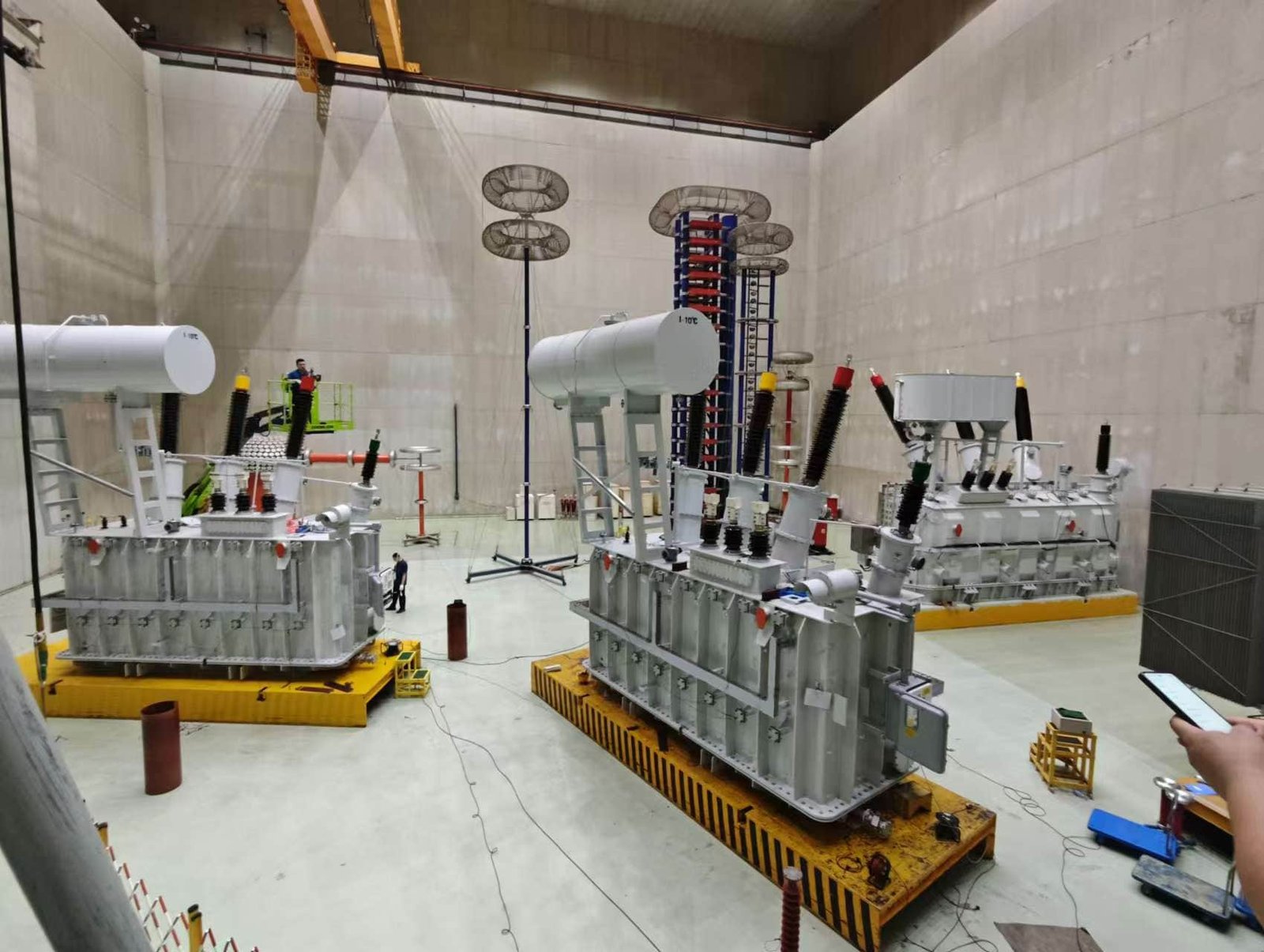
Depending on the design and applicable requirements, tests may include applied-voltage tests, induced-voltage tests, and lightning impulse tests. These methods assess different insulation paths and voltage conditions.
- Applied-voltage testing checks insulation between selected energized parts and grounded parts.
- Induced-voltage testing applies an elevated voltage through the transformer to stress winding insulation, often at a frequency selected to control core flux.
- Lightning impulse testing evaluates the ability of specified insulation arrangements to withstand standardized transient voltage waveforms.
The test voltage, duration, connections, and acceptance criteria must follow the applicable product standard and approved test procedure. These values should not be selected from a generic chart without considering the transformer’s design.
A successful withstand test demonstrates performance under the specified test conditions. It does not guarantee that insulation will never fail during service, particularly if moisture ingress, overheating, contamination, or abnormal electrical events occur later.
4. How Are Dielectric Losses and Partial Discharge Evaluated?
Power factor and dissipation factor testing
Insulating materials behave imperfectly under alternating electric fields. Some electrical energy is dissipated as heat rather than stored and returned. Power factor or dissipation factor measurements help assess these dielectric losses.
Higher-than-expected losses may indicate moisture, contamination, aging, or other changes in the insulation system. Results should be corrected or interpreted for temperature where required and compared with suitable reference values.
Partial discharge testing
Partial discharge occurs when a localized region of insulation experiences electrical breakdown without completely bridging the insulation between conductors. It can occur around voids, sharp edges, material interfaces, or defective insulation.
PD testing can help identify defects that may not be obvious during a visual inspection or a basic resistance test. Depending on the transformer and test method, measurements may be performed during factory testing or used diagnostically when investigating suspected insulation problems.
| Diagnostic finding | Possible meaning | Recommended action |
|---|---|---|
| Increasing dielectric loss | Moisture, contamination, or insulation deterioration | Review trends and investigate the insulation system |
| Unexpected PD activity | Localized defect or concentrated electric field | Locate and assess the source using an appropriate procedure |
| Falling insulation resistance | Moisture, contamination, or degradation | Verify test conditions and investigate the cause |
| Abnormal DGA trend | Possible thermal or electrical fault in an oil-filled unit | Interpret gas patterns alongside other diagnostic evidence |
These findings are indicators, not automatic proof of a specific defect. A qualified engineer should interpret them using the transformer's design, test conditions, operating history, and other available evidence.
5. How Is Insulating Oil Tested?
For oil-immersed transformers, insulating liquid forms part of the overall insulation and cooling system. Its condition can influence dielectric performance and provide clues about internal faults.
Common tests include:
- Dielectric breakdown voltage: Assesses the liquid's ability to withstand a prescribed electrical stress under the test method.
- Moisture content: Measures water present in the insulating liquid.
- Acidity: Helps evaluate oxidation-related changes in the oil.
- Dissolved gas analysis: Measures gases that may be generated by overheating, arcing, or other internal faults.
- Additional liquid-condition tests: May include interfacial tension, resistivity, or other properties when relevant to the oil type and maintenance program.
Oil test results must be interpreted together. For example, water measured in the oil does not directly establish the moisture content of cellulose paper, because water distribution changes with temperature and material condition.
Oil sampling must also be performed carefully to avoid introducing moisture or contaminants that could distort the results.
6. How Should Buyers Evaluate Transformer Insulation Test Reports?
When purchasing a transformer, buyers should review not only whether a test was performed but also whether it was appropriate for the design and whether the results meet the specified acceptance criteria.
A practical documentation checklist includes:
- Transformer rating, serial number, and identification of the tested unit.
- Applicable standards and approved test procedures.
- Test voltage, duration, connections, and environmental conditions where relevant.
- Actual measured results and the corresponding acceptance limits.
- Confirmation of required routine tests and any specified type or special tests.
- Records of identified abnormalities and corrective actions.
- Clear documentation of deviations, retesting, and final acceptance.
Manufacturers should provide traceable test records that relate directly to the supplied equipment. Buyers should avoid relying on statements such as “insulation passed” without supporting data when the project requires detailed quality documentation.
A single insulation resistance test is sufficient to prove the complete dielectric quality of a transformer.False
Insulation resistance testing provides useful screening information, but it cannot independently verify every insulation property or replace applicable dielectric withstand, impulse, partial discharge, or other required tests.
How Can Buyers Choose a Transformer With Reliable Insulation Performance?
Choosing a transformer based only on rated power, voltage, and purchase price can leave buyers exposed to hidden insulation risks. Poor insulation materials, inadequate moisture control, weak manufacturing processes, or incomplete factory testing can lead to overheating, partial discharge, winding faults, and unexpected downtime. These failures may result in expensive repairs and interruptions to power supply. The best way to reduce these risks is to evaluate insulation performance as part of the complete transformer design, from material selection through factory testing and long-term maintenance.
Buyers can choose a transformer with reliable insulation performance by verifying its insulation system, rated voltage and dielectric withstand levels, thermal design, moisture protection, manufacturing quality, factory test records, applicable standards, and maintenance support. Selection should be based on the actual operating environment and load conditions, with documented evidence that the complete transformer meets the project's technical requirements.
A reliable transformer is not defined by one insulation material or a single successful test. Its performance depends on how the materials, electrical design, cooling system, manufacturing processes, and quality controls work together. The following checklist helps buyers compare suppliers and make better-informed purchasing decisions.
1. Evaluate the Insulation System for the Intended Application
The first step is to confirm that the transformer's insulation system suits its design, voltage class, loading profile, and installation environment. Different transformer types use different combinations of solid and liquid insulation.
Oil-immersed transformers commonly use cellulose-based electrical paper and pressboard alongside mineral oil or an appropriate alternative insulating liquid. Dry-type transformers may use epoxy resin, electrical-grade laminates, and other solid insulation materials designed for the relevant thermal and electrical conditions.
Buyers should not assume that one material is automatically superior in every application. The complete insulation system must be compatible with the transformer design and meet its specified dielectric and thermal requirements.
| Buyer consideration | What to verify | Why it matters |
|---|---|---|
| Transformer type | Oil-immersed or dry-type construction | Determines the insulation materials and maintenance approach |
| Rated voltage | Correct insulation level for the system | Helps ensure adequate electrical withstand capability |
| Rated capacity and loading | Thermal design for expected duty | Reduces the risk of excessive insulation aging |
| Installation environment | Temperature, humidity, dust, pollution, and altitude | Affects insulation stress and degradation risk |
| Insulating liquid, if applicable | Type, compatibility, and documented properties | Supports dielectric performance and cooling |
| Solid insulation | Material specifications and quality controls | Helps maintain electrical separation and mechanical integrity |
2. Check Dielectric and Thermal Performance Specifications
Insulation must withstand normal operating voltage as well as the electrical stresses specified for transient conditions. Buyers should therefore review the transformer's insulation coordination and applicable dielectric test requirements rather than relying on a generic insulation description.
Ask the supplier to identify the applicable power-frequency withstand voltage, induced-voltage test requirements, and lightning impulse level where required for the transformer design. These requirements vary according to rated voltage, equipment category, and governing standards.
Thermal performance is equally important. Sustained high temperature accelerates aging in many insulation materials, especially cellulose insulation. The cooling system, winding design, loading profile, and temperature-rise limits must be considered together.
Questions to ask the supplier
- What insulation level and dielectric tests apply to this transformer?
- What are the specified winding temperature-rise limits?
- How is heat removed under the expected loading conditions?
- Are overload requirements and operating duty clearly defined?
- Which standards and project specifications govern acceptance?
A supplier should be able to explain how the insulation design matches the application and provide traceable supporting documentation.
3. Verify Moisture Protection and Manufacturing Processes
Moisture is a major concern for transformers using paper and pressboard insulation. Water can reduce dielectric performance and accelerate cellulose aging. It may enter through defective seals, unsuitable storage, poor handling, or inadequate maintenance.
Buyers should assess the manufacturer's controls for material storage, insulation drying, oil handling, impregnation where applicable, and tank sealing. For dry-type transformers, moisture and contamination protection should match the intended installation environment.
| Manufacturing or design control | Evidence to request |
|---|---|
| Insulation material handling | Documented storage and cleanliness procedures |
| Drying process | Defined process controls and relevant records |
| Oil processing, if applicable | Oil quality and processing documentation |
| Tank sealing | Design details and inspection records |
| Winding assembly | Production inspection and quality-control records |
| Contamination prevention | Controlled assembly procedures and inspection results |
Reliable insulation begins before the final electrical tests. A transformer may pass an individual test and still be vulnerable to premature deterioration if materials are contaminated, moisture control is inadequate, or assembly quality is inconsistent.
4. Review Factory Insulation Test Reports
Factory testing provides evidence that the supplied transformer meets specified requirements at the time of testing. Buyers should review the actual test documentation, not simply accept a general statement that the transformer has passed inspection.
Depending on the design and specification, relevant tests may include insulation resistance, dielectric withstand tests, induced-voltage tests, lightning impulse tests, power factor or dissipation factor measurements, and partial discharge testing.
Not every test applies to every transformer. The required test program should follow the relevant product standards, contract specifications, and manufacturer's approved procedures.
| Test or record | What buyers should check |
|---|---|
| Insulation resistance | Actual readings, test conditions, and acceptance criteria |
| Dielectric withstand tests | Required test levels, duration, and outcome |
| Partial discharge test, where applicable | Measured results and specified limits |
| Insulating liquid analysis | Relevant properties and sample traceability |
| Routine test report | Transformer identification and complete required results |
| Corrective-action records | Explanation and resolution of any abnormal findings |
Important: No single test proves the entire insulation system is defect-free. Test results should be considered collectively, and unusual readings should be investigated by qualified personnel.
A transformer with a high insulation resistance reading is guaranteed to have a defect-free insulation system.False
Insulation resistance is a useful screening measurement, but it does not independently verify all dielectric properties or detect every possible insulation defect. Appropriate additional tests and design-specific evaluation are necessary.
5. Compare Supplier Quality Systems and Technical Support
Reliable insulation performance depends on consistent manufacturing, testing, and documentation. Buyers should evaluate whether the supplier can demonstrate effective quality management and provide technical support throughout the transformer's service life.
Useful evidence includes documented production inspections, traceable material records, calibrated test equipment, approved testing procedures, and clear management of nonconformities. Applicable quality-system certifications may support this assessment, but a certificate alone does not prove that an individual transformer meets every technical requirement.
Also consider the supplier's ability to provide installation guidance, commissioning support, maintenance instructions, and assistance with diagnostic results. Good after-sales support can help identify insulation deterioration before it develops into a serious fault.
A practical supplier evaluation checklist
- Confirm the supplier's experience with the required transformer type and voltage class.
- Review relevant factory test reports and technical documentation.
- Check that test equipment and procedures are suitable for the specified tests.
- Request clear acceptance criteria and records of resolved abnormalities.
- Confirm warranty conditions, maintenance guidance, and technical support arrangements.
- Compare quotations using equivalent specifications, testing scope, and service conditions.
6. Consider Long-Term Operating and Maintenance Requirements
The lowest initial purchase price does not always provide the best lifecycle value. A transformer with suitable insulation, effective cooling, robust moisture protection, and accessible technical support may reduce the risk of unplanned outages and expensive repairs.
Before ordering, define the expected load profile, ambient conditions, installation location, maintenance resources, and service-life objectives. Ask the manufacturer to recommend an appropriate inspection and condition-monitoring program for the specific design.
For oil-immersed transformers, this may include insulating liquid testing, moisture assessment, and dissolved gas analysis where appropriate. Dry-type transformers may require inspections for contamination, ventilation problems, surface tracking, and signs of overheating.
The objective is not to perform every available test at every interval. It is to establish a practical program based on equipment criticality, operating conditions, manufacturer recommendations, and trends in diagnostic results.
Conclusion
Transformer insulation is fundamental to the electrical safety, dielectric strength, thermal performance, and long-term reliability of a transformer. Solid materials, insulating liquids, and carefully designed insulation structures work together to prevent electrical breakdown and withstand operating stresses. Buyers should evaluate insulation materials, thermal class, moisture control, dielectric test results, manufacturing quality, and applicable standards to ensure the selected transformer meets its operating requirements and expected service life.
FAQ
Q1: What is transformer insulation?
Transformer insulation consists of materials that prevent unwanted electrical current between windings, conductors, and grounded components. Common materials include insulating paper, pressboard, transformer oil, and specialized solid insulation.
Q2: Why is transformer insulation important?
It prevents short circuits, withstands electrical stress, reduces the risk of equipment failure, and helps maintain reliable transformer operation throughout its service life.
Q3: What materials are used for transformer insulation?
Common materials include cellulose paper, pressboard, mineral oil, synthetic ester fluids, and other insulation materials selected according to transformer design and operating conditions.
Q4: How is transformer insulation tested?
Testing may include insulation resistance, power factor or dissipation factor, dielectric strength, and dissolved gas analysis for oil-filled transformers. Appropriate tests depend on equipment type and maintenance objectives.
Q5: What causes transformer insulation to deteriorate?
High temperatures, moisture, oxidation, electrical surges, contamination, and prolonged electrical stress can accelerate insulation aging and reduce transformer reliability.
References
- IEC 60076-1 — Power Transformers: General
https://webstore.iec.ch/en/publication/588 - IEC 60076-2 — Power Transformers: Temperature Rise for Liquid-Immersed Transformers
https://webstore.iec.ch/en/publication/604 - IEC 60076-3 — Power Transformers: Insulation Levels and Dielectric Tests
https://webstore.iec.ch/en/publication/605 - IEC 60076-5 — Power Transformers: Ability to Withstand Short Circuit
https://webstore.iec.ch/en/publication/607 - IEC 60076-7 — Loading Guide for Mineral-Oil-Immersed Power Transformers
https://webstore.iec.ch/en/publication/608 - IEEE C57.12.00 — General Requirements for Liquid-Immersed Transformers
https://standards.ieee.org/ieee/C57.12.00/6962/ - IEEE C57.12.90 — Test Code for Liquid-Immersed Transformers
https://standards.ieee.org/ieee/C57.12.90/ - IEEE C57.104 — Guide for the Interpretation of Gases Generated in Mineral Oil-Immersed Transformers
https://standards.ieee.org/ieee/C57.104/ - IEEE C57.91 — Guide for Loading Mineral-Oil-Immersed Transformers
https://standards.ieee.org/ieee/C57.91/ - IEEE Technology Navigator — Power Transformers
https://technav.ieee.org/topic/power-transformers/