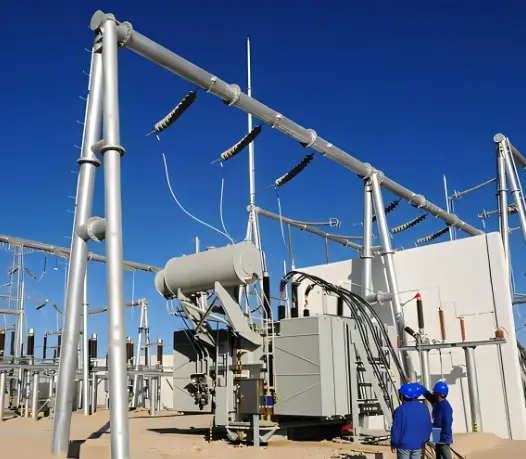
When purchasing a transformer, comparing total prices alone can be misleading. A more accurate method is to evaluate the price per kVA, which normalizes the cost according to the transformer’s rated capacity. This approach allows buyers to compare different offers fairly, regardless of size or specification. In this guide, we explain how to calculate price per kVA, identify factors that influence it, and use it as a tool for making smarter procurement decisions.
How Does kVA Rating Influence Transformer Pricing?

When buyers request transformer quotes, the kVA rating is often the very first parameter that influences the price. The rated kVA defines the apparent power handling capacity of the transformer under standard conditions, and it directly dictates the size of the core, amount of conductor material, cooling system capacity, and mechanical structure required. Choosing the wrong kVA rating can either inflate costs unnecessarily or cause overloading and premature failure.
In transformer pricing, the kVA rating is a primary cost driver because higher capacities require larger cores, more copper or aluminum windings, stronger mechanical supports, and more robust cooling systems, all of which proportionally increase material and manufacturing costs.
Understanding the price impact of kVA rating helps buyers optimize their investment—sizing the transformer to match actual and forecasted load demand while avoiding overspecification.
A transformer’s purchase price increases linearly with kVA rating.False
While larger kVA ratings require more materials, the price increase is not strictly linear due to manufacturing efficiencies and fixed overhead costs.
1. kVA Rating and Material Requirements
- Core steel size increases with kVA to prevent magnetic saturation.
- Conductor size (cross-sectional area) grows to handle higher current without overheating.
- Cooling systems must be scaled to dissipate more heat from load losses.
2. Price Trends by kVA Size
The relationship between kVA and cost is not a straight line—smaller units have higher relative costs per kVA because fixed manufacturing expenses are spread over a smaller capacity.
| Typical Distribution Transformer Size | Approx. Price Range* | Cost per kVA |
|---|---|---|
| 100 kVA | $4,000 – $6,000 | $40 – $60 |
| 500 kVA | $12,000 – $18,000 | $24 – $36 |
| 2000 kVA | $40,000 – $65,000 | $20 – $32 |
| 10 MVA | $200,000 – $350,000 | $20 – $35 |
*Prices vary by design type, cooling method, and compliance requirements.
3. kVA Sizing Strategy to Control Costs
- Match to actual load + growth margin: A 15–25% headroom is often enough for most installations.
- Avoid excessive oversizing: Large unused capacity means higher no-load losses and unnecessary upfront cost.
- Consider load diversity: For systems where loads are not all used simultaneously, you may not need to size for the absolute sum.
4. Other Factors That Influence Price at the Same kVA
Even for two transformers with identical kVA ratings, prices can vary significantly due to:
- Voltage ratings and tap changer range
- Cooling method (ONAN vs. OFAF, etc.)
- Impedance level requirements
- Type (oil-immersed vs. dry-type)
- Compliance with specific standards (IEEE, ANSI, IEC, CSA)
How Do You Calculate the Price per kVA of a Transformer?
When comparing transformer quotes, price per kVA is one of the quickest ways to evaluate whether you’re getting a competitive deal for the required capacity. However, many buyers calculate it incorrectly by ignoring accessories, compliance costs, or installation expenses. A precise price-per-kVA calculation gives you a realistic benchmark for cost analysis across suppliers and designs.
The price per kVA is calculated by dividing the total purchase cost of the transformer (including essential accessories) by its rated kVA capacity. This figure allows for easy comparison between different units and suppliers, but should always be considered alongside performance, compliance, and lifecycle costs.
Price per kVA is the only factor you need to consider when buying a transformer.False
While it’s a useful cost indicator, transformer procurement decisions must also consider efficiency, durability, cooling method, standards compliance, and total lifecycle costs.
1. Basic Formula
\text{Price per kVA} = \frac{\text{Total Transformer Price (USD)}}{\text{Rated kVA}}
Example:
- Transformer cost: $50,000
- Rated capacity: 2,000 kVA
- Price per kVA = $50,000 ÷ 2,000 = $25/kVA
2. What to Include in the "Total Price"
To avoid misleading comparisons, the “Total Transformer Price” should cover:
- Base unit price (core, windings, tank)
- Essential accessories (tap changer, cooling fans, radiators)
- Mandatory compliance upgrades (IEEE, IEC, CSA standards)
- Factory testing costs
- Freight and handling (if bundled in supplier quote)
3. Typical Price per kVA Ranges
| Transformer Type | Capacity Range | Typical Price/kVA |
|---|---|---|
| Small distribution (oil-filled) | 50–500 kVA | $40 – $70 |
| Medium distribution | 500–2,500 kVA | $20 – $40 |
| Large power units | 5–50 MVA | $15 – $30 |
| Dry-type (cast resin) | 500–3,000 kVA | $25 – $55 |
4. How to Use Price per kVA Effectively
- Compare similar designs only – Don’t compare oil-filled to dry-type without adjusting for inherent cost differences.
- Account for efficiency – A slightly higher \$/kVA can be justified if the transformer has lower losses.
- Factor in lifecycle savings – Higher efficiency and better materials may reduce total ownership cost despite higher $/kVA.
5. Common Pitfalls in Calculation
- Ignoring extras – Not adding mandatory accessories to the price inflates cost-per-kVA later.
- Mixing currencies – Always convert to the same currency before comparing.
- Using nameplate capacity without load profile consideration – kVA rating doesn’t reflect your actual utilization rate.
What Factors Influence the Price per kVA of a Transformer?

When procurement teams compare transformer prices, price per kVA is often used as a quick metric. However, it can vary widely for the same kVA rating because different design, material, compliance, and market factors affect production cost. Without understanding these factors, price comparisons can be misleading and lead to poor procurement choices.
The price per kVA of a transformer is influenced by capacity, design type, cooling method, efficiency level, material selection, voltage class, compliance with standards, and market conditions. Larger kVA ratings generally have a lower cost per kVA due to economies of scale, but high-spec designs can still raise unit costs.
Price per kVA always decreases as transformer size increases.False
While larger transformers benefit from economies of scale, specialized designs, higher voltage classes, or stringent compliance requirements can cause price per kVA to remain stable or even increase.
1. Capacity and Economies of Scale
- Trend: Higher kVA ratings typically have a lower $/kVA because fixed manufacturing costs are spread over greater capacity.
- Exception: Ultra-high-voltage or special-purpose transformers may reverse this trend due to added complexity.
2. Design Type and Complexity
- Oil-immersed vs. Dry-type – Oil-filled units are generally cheaper per kVA, while dry-type transformers cost more due to resin casting, ventilation design, and fire safety ratings.
- Specialized designs – Step-up units for power plants or rectifier transformers for industrial processes require extra engineering, raising cost.
3. Cooling Method
- ONAN (natural air) – Least expensive option.
- ONAF / OFAF (forced air/oil) – Adds fans, pumps, controls, increasing cost per kVA.
- ODAF / OFWF (forced oil + water) – Used in high-capacity units; significantly raises cost per kVA.
| Cooling Method | Complexity | Relative Price Impact |
|---|---|---|
| ONAN | Low | Baseline |
| ONAF | Medium | +5–10% |
| OFAF | High | +10–20% |
| OFWF | Very High | +15–25% |
4. Efficiency Class and Loss Requirements
- Meeting DOE, EU Ecodesign, or Energy Star efficiency standards requires premium-grade core steel and larger conductors.
- Higher efficiency = higher initial $/kVA, but lower lifecycle costs.
5. Material Prices and Supply Chain
- Copper vs. Aluminum windings – Copper costs more but offers better conductivity.
- Steel price fluctuations directly affect large-core transformers.
- Shipping costs for large units can add significantly to total $/kVA.
6. Voltage Class and Insulation Level
- Higher voltage ratings require thicker insulation, more oil, and stronger tank construction.
- High BIL (Basic Insulation Level) ratings also add cost.
7. Compliance and Certification
- Meeting IEEE, ANSI, IEC, CSA or other standards adds testing and documentation costs.
- Special certifications (e.g., seismic, marine, explosion-proof) increase price per kVA.
8. Market and Order Volume Conditions
- Bulk orders reduce $/kVA via production efficiency.
- Market demand surges (e.g., renewable energy expansion) can push prices up temporarily.
How Can You Effectively Compare Transformer Offers from Different Suppliers?
When purchasing transformers, comparing supplier quotations goes far beyond looking at the lowest price. Without a structured evaluation process, buyers risk selecting equipment that may fail compliance checks, require costly retrofits, or have higher lifetime operating costs. Differences in technical specs, material quality, warranties, and delivery schedules can make a low-priced offer the most expensive choice in the long run.
To compare transformer offers effectively, evaluate total lifecycle value instead of only upfront price. This means analyzing technical compliance, efficiency, material quality, delivery terms, warranty coverage, after-sales support, and proven supplier reliability, then factoring these into a standardized comparison matrix.
The cheapest transformer offer is usually the most cost-effective choice.False
Low purchase prices can be offset by higher energy losses, shorter service life, compliance failures, or lack of after-sales support, making total cost of ownership a better evaluation metric.
1. Standardize the Technical Baseline
- Ensure all suppliers quote based on identical technical specifications (kVA rating, voltage class, cooling method, efficiency class, tap range, impedance).
- Request detailed technical data sheets and certified test reports to verify claims.
2. Compare Price per kVA, but in Context
- Calculate $ / kVA for each offer.
- Adjust for differences in cooling system, efficiency, and BIL rating to ensure an apples-to-apples comparison.
| Supplier | kVA | Total Price (USD) | Price/kVA | Cooling | Efficiency Class | Warranty |
|---|---|---|---|---|---|---|
| A | 2,500 | $85,000 | $34.00 | ONAN | DOE 2023 | 5 yrs |
| B | 2,500 | $80,000 | $32.00 | ONAF | DOE 2016 | 3 yrs |
| C | 2,500 | $87,000 | $34.80 | ONAN | DOE 2023 Premium | 10 yrs |
3. Factor in Energy Loss Costs
- Use no-load and load loss data from each offer.
- Estimate lifecycle energy cost over 20–30 years at local electricity rates.
- Often, a unit with a slightly higher purchase price but lower losses is the better investment.
4. Review Delivery and Lead Times
- Delays in delivery can cause project overruns.
- Compare lead times and penalties for late delivery.
5. Assess Warranties and After-Sales Support
- Longer warranties and responsive service teams reduce operational risk.
- Check if the supplier provides spare parts availability and on-site technical support.
6. Verify Compliance and Certifications
- Ensure offers meet required IEEE/ANSI/IEC standards and local grid codes.
- Request factory inspection reports or audit records.
7. Evaluate Supplier Track Record
- Check case studies, reference projects, and industry reputation.
- Consistent delivery performance and field reliability often justify a higher quote.
What Are the Typical Price per kVA Ranges for Different Transformer Sizes?
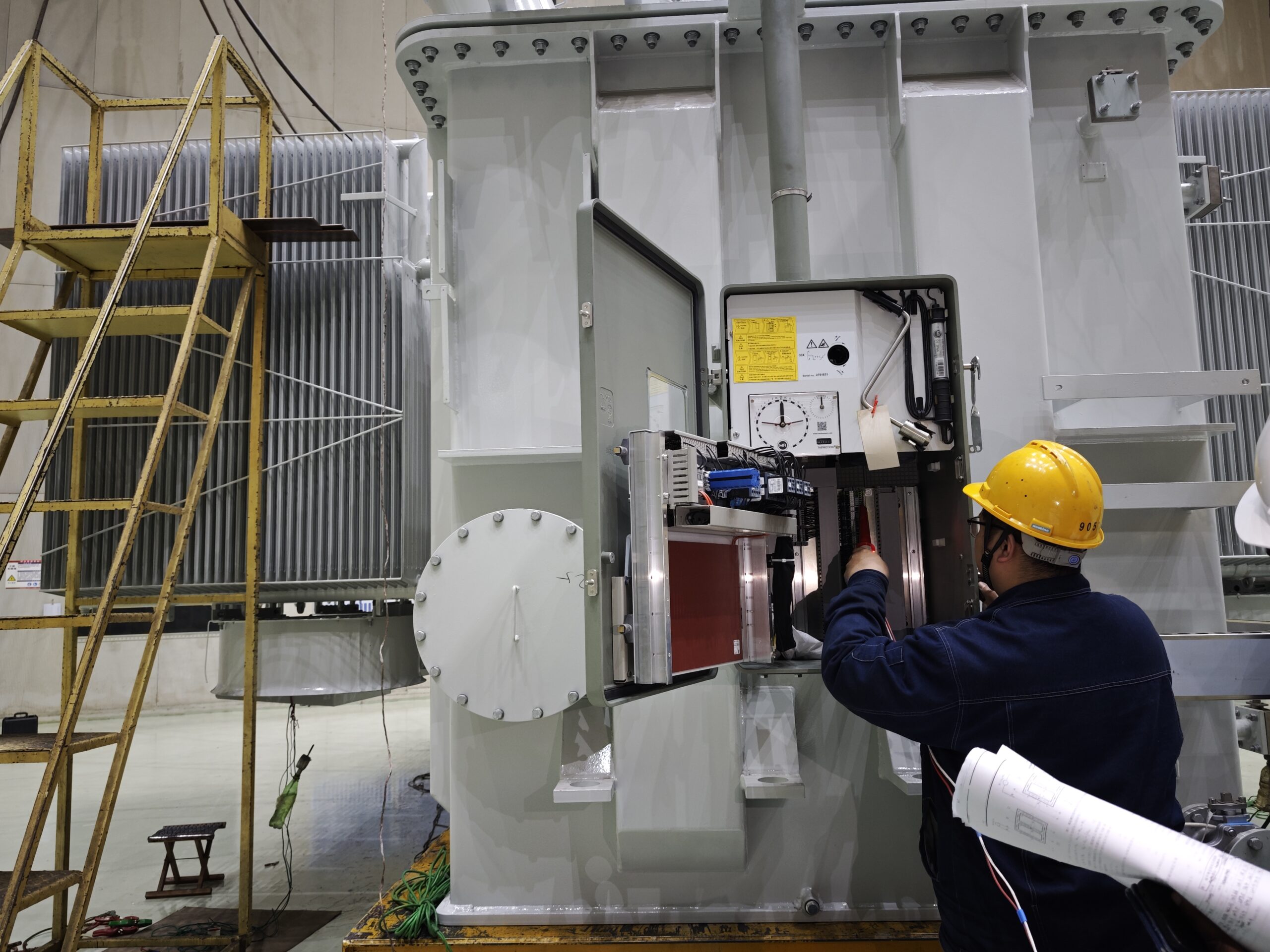
When budgeting for a transformer purchase, knowing typical price per kVA ranges for various capacities helps you quickly assess whether a supplier quote is reasonable. However, these values vary depending on the transformer’s type, cooling method, efficiency class, and compliance standards. Overlooking these differences can lead to misleading cost comparisons and poor procurement decisions.
Price per kVA generally decreases as transformer capacity increases, with small distribution units costing more per kVA than large power transformers. For oil-filled distribution units, expect $20–$70/kVA depending on size, while dry-type units are usually higher, ranging from $25–$90/kVA.
Large power transformers always have a higher price per kVA than smaller distribution transformers.False
Due to economies of scale, large transformers typically have a lower cost per kVA than smaller ones, despite higher total purchase prices.
1. Typical Price per kVA by Size and Type
| Transformer Type & Size | Capacity Range | Typical Price per kVA (USD) | Notes |
|---|---|---|---|
| Small oil-filled distribution | 50–500 kVA | $40 – $70 | Higher due to fixed manufacturing overhead spread over small kVA |
| Medium oil-filled distribution | 500–2,500 kVA | $20 – $40 | Widely used in commercial/industrial sites |
| Large power transformers | 5–50 MVA | $15 – $30 | Lower $/kVA due to scale, but high total cost |
| Small dry-type (cast resin) | 50–500 kVA | $45 – $90 | Higher material and insulation costs |
| Medium dry-type | 500–3,000 kVA | $25 – $55 | Popular in indoor, fire-risk-sensitive areas |
| Special application units | Custom ratings | Varies widely | Includes mining, marine, renewable energy units |
2. Factors That Shift Price per kVA
- Cooling method – ONAF or OFAF adds cost over ONAN.
- Efficiency class – Higher efficiency units cost more initially but save on lifetime losses.
- Compliance standards – IEEE C57, IEC 60076, or DOE 2023 add testing and material costs.
- Accessories – Tap changers, protection relays, or enhanced monitoring systems increase price per kVA.
3. Using Price per kVA in Procurement
While useful for budget planning, price per kVA must be contextualized:
- Always compare similar types and specs.
- Account for energy loss cost over the service life.
- Include transportation, installation, and maintenance in total cost analysis.
How Can You Use Price per kVA in Transformer Purchase Negotiations?
Transformer buyers often struggle to determine if a quoted price is truly competitive because total costs can be hard to compare between different sizes, types, and configurations. Without a common benchmark, negotiations may favor the supplier’s framing rather than the buyer’s leverage. This is where price per kVA becomes a strategic tool—it standardizes cost comparisons and makes gaps in pricing visible.
To use price per kVA effectively in negotiations, buyers should calculate it for each comparable offer, benchmark it against market ranges, and use any significant deviations as a negotiation point to request price adjustments, value-added features, or improved terms.
Price per kVA is the only factor that matters in transformer procurement negotiations.False
While price per kVA is a powerful comparison tool, technical compliance, efficiency, reliability, and after-sales support are equally important to determine total value.
1. Establish a Market-Based Baseline
- Gather recent market data for similar transformers (capacity, cooling type, efficiency).
- Identify the average and low-end $/kVA range for your specification.
- Example: For a 2,500 kVA ONAN oil-filled unit, market averages may be $28–$35/kVA.
2. Standardize Supplier Quotes
- Break down each offer into total price / kVA rating.
- Remove cost elements not part of the transformer core (e.g., shipping, civil works) to compare equipment costs fairly.
| Supplier | Rating (kVA) | Price (USD) | Price/kVA | Notes |
|---|---|---|---|---|
| A | 2,500 | $85,000 | $34.00 | Includes remote monitoring system |
| B | 2,500 | $78,000 | $31.20 | Standard features only |
| C | 2,500 | $82,000 | $32.80 | Higher efficiency rating |
3. Leverage Price Gaps in Negotiation
If one supplier is above the market range, you can:
- Present your market research to justify a counter-offer.
- Offer to remove non-critical features to lower cost.
- Negotiate for added value (extended warranty, faster delivery, or spare parts) without increasing price.
4. Account for Lifecycle Costs
- If a higher $/kVA comes with better efficiency, use loss cost calculations to demonstrate long-term savings.
- Example: A $2 higher $/kVA may save $50,000 in energy costs over 20 years.
5. Maintain Technical Compliance
- Never compromise on essential specifications to chase a lower $/kVA.
- Ensure all offers meet IEEE/ANSI/IEC requirements before negotiating on price.
Conclusion
Evaluating transformers on a price-per-kVA basis gives buyers a clear, capacity-adjusted view of cost competitiveness. By applying this method alongside a detailed review of specifications, warranties, and supplier reputation, you can ensure your investment delivers both value and long-term performance. This strategy not only simplifies comparisons but also strengthens your position in price negotiations.
FAQ
Q1: What does transformer price per kVA mean?
Transformer price per kVA is a cost metric that divides the total price of a transformer by its rated capacity in kilovolt-amperes (kVA). It allows buyers to compare pricing across different transformer sizes and suppliers more objectively.
Q2: How do you calculate transformer price per kVA?
The formula is:
Price per kVA = Total Transformer Cost ÷ Transformer kVA Rating
For example, if a 1,000 kVA transformer costs $50,000, the price per kVA is $50. This helps standardize comparisons between offers.
Q3: Why is price per kVA important when comparing offers?
It normalizes costs regardless of transformer size, helping buyers quickly identify whether an offer is competitively priced. However, it should be considered alongside other factors like efficiency, brand reputation, and warranty coverage.
Q4: What factors can affect transformer price per kVA?
Influencing factors include voltage rating, cooling type (oil or dry-type), material costs, compliance with standards, manufacturing origin, transportation, and customization requirements. Higher efficiency or special features may increase the price per kVA but lower lifetime operating costs.
Q5: How can I ensure I’m comparing transformer offers fairly?
Always compare transformers with similar ratings, voltage classes, cooling systems, and warranty terms. Consider lifetime cost analysis, not just purchase price. Request itemized quotes to see how much each feature contributes to the total price.
References
IEEE - Transformer Cost Analysis: https://ieeexplore.ieee.org
NEMA - Transformer Pricing Standards: https://www.nema.org
Electrical4U - Transformer Price Per kVA Explained: https://www.electrical4u.com
EEP - Comparing Transformer Prices: https://electrical-engineering-portal.com
Energy.gov - Transformer Efficiency & Cost Factors: https://www.energy.gov
All About Circuits - Transformer Cost Comparison: https://www.allaboutcircuits.com
Engineering Toolbox - Transformer Sizing and Pricing Data: https://www.engineeringtoolbox.com