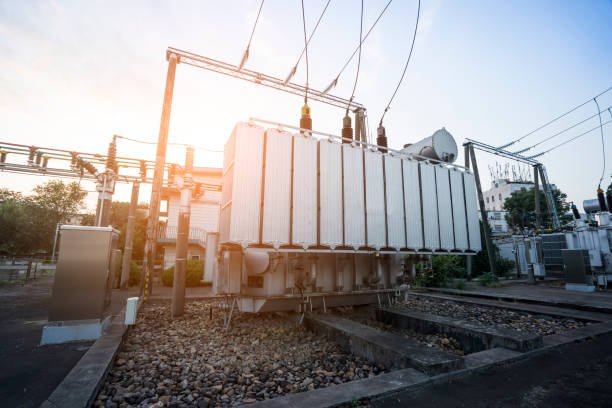
Transformers are central to substation operation, enabling voltage levels to be adjusted for efficient transmission and safe distribution. Within substations, they act as the link between different parts of the power system—stepping voltage up or down as required while maintaining stability and reliability. Understanding how transformers work in substations helps clarify their role in ensuring continuous and efficient electricity flow.
What Is the Role of Transformers in Substations?
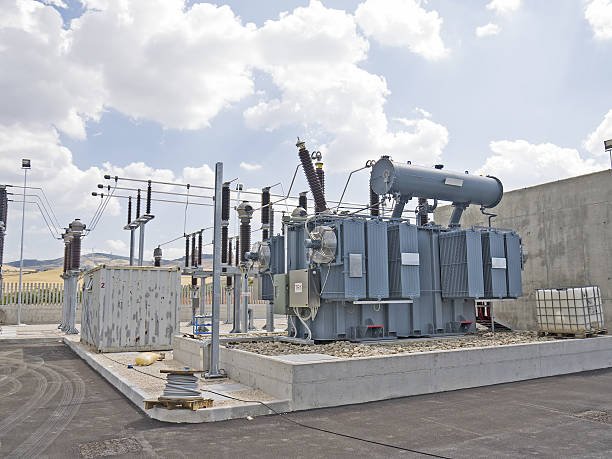
In modern power systems, substations act as critical nodes where electricity is controlled, transformed, and redistributed. However, the voltage levels used in transmission networks are far too high for direct distribution or consumption. Without transformers inside substations, it would be impossible to safely adjust voltage levels, manage power flow, or ensure stable operation across the grid. This makes transformers one of the most essential components within any substation.
Transformers in substations play the primary role of stepping voltage levels up or down to enable efficient transmission, safe distribution, voltage regulation, and reliable power flow control across the electrical grid.
They serve as the core devices that connect different stages of the power system.
Transition to Functional Breakdown
To fully understand their importance, it is necessary to analyze the multiple roles transformers perform within substations, from voltage conversion to system protection and grid stability.
Transformers in substations only serve as passive components without affecting system performance or stability.False
Transformers actively influence voltage levels, load distribution, efficiency, and overall system stability in substations.
Voltage Transformation for System Integration
The most fundamental role of transformers is voltage conversion between different stages of the power system.
V_s = V_p \times \frac{N_s}{N_p}
| Substation Type | Transformer Function |
|---|---|
| Step-up substation | Increases voltage for transmission |
| Step-down substation | Reduces voltage for distribution |
| Distribution substation | Final voltage adjustment |
This ensures electricity can be transmitted efficiently and used safely.
Enabling Efficient Long-Distance Transmission
High-voltage transmission reduces current and minimizes energy losses over long distances.
| Transmission Factor | Transformer Contribution |
|---|---|
| Voltage increase | Reduces current flow |
| Loss reduction | Minimizes I²R losses |
| Energy efficiency | Improves system performance |
Transformers make large-scale power transmission economically viable.
Supporting Safe Power Distribution
Transformers reduce voltage to levels suitable for regional distribution and end-user consumption.
| Distribution Stage | Voltage Adjustment Role |
|---|---|
| Sub-transmission | Medium voltage conversion |
| Local distribution | Low voltage preparation |
| End-user supply | Safe usable voltage |
This ensures safe electricity delivery to homes and industries.
Voltage Regulation and Stability
Transformers help maintain stable voltage levels despite load fluctuations and system disturbances.
| Stability Factor | Transformer Role |
|---|---|
| Load variation | Maintains voltage consistency |
| Grid disturbances | Absorbs fluctuations |
| Tap changer function | Adjusts output voltage |
Stable voltage is essential for protecting electrical equipment.
Power Flow Control and Load Management
Transformers assist in directing power flow and balancing loads across the grid.
| Load Condition | Transformer Response |
|---|---|
| Peak demand | Distributes load efficiently |
| Low demand | Maintains stable operation |
| Network imbalance | Supports load balancing |
This improves overall grid reliability.
Electrical Isolation and System Protection
Transformers provide isolation between different parts of the power system.
| Protection Function | Benefit |
|---|---|
| Electrical isolation | Prevents fault propagation |
| Grounding separation | Enhances safety |
| Fault containment | Limits system damage |
Isolation is critical for maintaining safe operation.
Integration with Substation Equipment
Transformers work alongside other substation components such as switchgear and protection systems.
| Equipment | Transformer Interaction |
|---|---|
| Circuit breakers | Protect transformer circuits |
| Switchgear | Controls power flow |
| Protection relays | Monitor transformer conditions |
This integrated system ensures efficient and safe operation.
Real-World Engineering Example
In a high-voltage substation, electricity enters at 220kV from transmission lines. A large power transformer steps down the voltage to 33kV for regional distribution. Further downstream, distribution transformers reduce the voltage to 400V for residential use. Throughout this process, transformers ensure efficient energy transfer, stable voltage levels, and safe delivery to end users.
Role Summary
| Role Category | Function in Substation |
|---|---|
| Voltage transformation | Step-up and step-down conversion |
| Efficiency improvement | Reduces transmission losses |
| Voltage regulation | Maintains stable supply |
| Load management | Balances system demand |
| Safety and protection | Provides electrical isolation |
How Do Substation Transformers Change Voltage Levels?
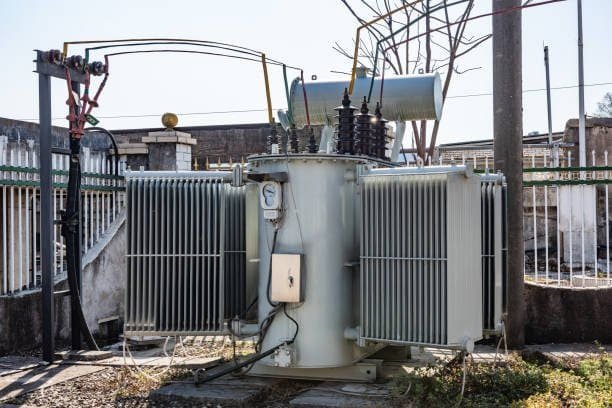
In electrical power systems, voltage levels must be carefully controlled to ensure both efficient transmission and safe utilization. High voltages are necessary for long-distance transmission to minimize losses, but these levels are unsafe for distribution and consumption. Without a reliable method to adjust voltage, the entire power grid would become inefficient and hazardous. Substation transformers solve this problem by precisely converting voltage levels at key points in the network.
Substation transformers change voltage levels by using electromagnetic induction, where alternating current in the primary winding creates a magnetic field in the core, which induces a different voltage in the secondary winding based on the turns ratio between the windings.
This process allows voltage to be increased or decreased efficiently without direct electrical contact between circuits.
Transition to Step-by-Step Mechanism
To fully understand how voltage transformation occurs, it is essential to break down the process into its fundamental physical and electrical steps.
Substation transformers change voltage by directly altering electrical current through mechanical switching inside the windings.False
Voltage change in transformers occurs through electromagnetic induction, not mechanical switching of current.
Step 1: High-Voltage Input Enters the Primary Winding
Electricity from transmission lines enters the transformer at a specific voltage level and flows through the primary winding.
| Input Parameter | Role in Process |
|---|---|
| Voltage | Determines initial energy level |
| Current | Creates magnetic field |
| Frequency | Controls flux variation |
This input energy initiates the transformation process.
Step 2: Creation of Alternating Magnetic Field
As alternating current flows through the primary winding, it generates a continuously changing magnetic field around the conductor.
| Magnetic Effect | Description |
|---|---|
| Alternating flux | Expands and collapses repeatedly |
| Core interaction | Directs magnetic field efficiently |
| Energy transfer medium | Magnetic field carries energy |
The magnetic field is the key link between input and output.
Step 3: Magnetic Flux Transfer Through the Core
The transformer core, made of laminated steel, provides a low-reluctance path for magnetic flux.
uction of Voltage in the Secondary Winding
The changing magnetic flux induces a voltage in the secondary winding according to Faraday’s Law.
V_s = V_p \times \frac{N_s}{N_p}
| Turns Ratio Condition | Voltage Outcome |
|---|---|
| Ns > Np | Voltage is stepped up |
| Ns < Np | Voltage is stepped down |
| Ns = Np | Voltage remains unchanged |
The turns ratio determines the final output voltage.
Step 5: Voltage Adjustment Using Tap Changers
Substation transformers often include tap changers to fine-tune voltage levels.
| Tap Changer Type | Function |
|---|---|
| Off-load tap changer | Adjusts voltage when offline |
| On-load tap changer | Adjusts voltage during operation |
This allows real-time voltage regulation under varying load conditions.
Step 6: Output Voltage Delivered to Next System Stage
The transformed voltage is then sent to the next stage of the power system, such as distribution networks or sub-transmission lines.
| Output Application | Voltage Level |
|---|---|
| Transmission | High voltage |
| Sub-transmission | Medium-high voltage |
| Distribution | Medium to low voltage |
Step 7: Energy Conservation During Transformation
While voltage changes, total power remains approximately constant (minus losses).
What Types of Transformers Are Used in Substations?
Substations are complex nodes in the power system where voltage is transformed, controlled, and distributed. However, not all transformers used in substations serve the same purpose. Using the wrong type of transformer can lead to inefficient operation, poor protection, or inaccurate system monitoring. Each transformer type is specifically designed to handle a unique function such as voltage conversion, measurement, isolation, or auxiliary supply.
The main types of transformers used in substations include power transformers, autotransformers, instrument transformers (current transformers and voltage transformers), and auxiliary transformers, each serving a specific role in voltage transformation, system protection, measurement, and internal power supply.
Understanding these types is essential for designing safe and efficient substation systems.
Transition to Functional Classification
To fully understand substation transformer types, it is important to examine how each one contributes to voltage control, system monitoring, and operational reliability.
All transformers in substations perform the same function of stepping voltage up or down.False
Different transformers in substations have specialized roles such as measurement, protection, and auxiliary power supply in addition to voltage transformation.
Power Transformers
Power transformers are the primary transformers in substations responsible for large-scale voltage conversion.
V_s = V_p \times \frac{N_s}{N_p}
| Feature | Description |
|---|---|
| Function | Step-up or step-down voltage |
| Capacity | Very high (MVA range) |
| Application | Transmission and sub-transmission |
| Cooling | Oil-immersed or advanced cooling |
These transformers handle the bulk of power flow in substations.
Autotransformers
Autotransformers use a single winding for both primary and secondary functions, making them more efficient for certain voltage ranges.
| Feature | Description |
|---|---|
| Winding structure | Shared winding |
| Efficiency | Higher than conventional transformers |
| Size | More compact |
| Application | Voltage regulation and interconnection |
They are commonly used where voltage ratios are relatively close.
Instrument Transformers
Instrument transformers are used for measurement and protection rather than power transfer.
Current Transformers (CT)
| Feature | Description |
|---|---|
| Function | Measure high current safely |
| Output | Scaled-down current signal |
| Application | Protection and metering |
Voltage Transformers (VT or PT)
| Feature | Description |
|---|---|
| Function | Measure high voltage safely |
| Output | Reduced voltage signal |
| Application | Monitoring and control systems |
These transformers ensure accurate system monitoring and protection.
Auxiliary Transformers
Auxiliary transformers supply power to substation equipment such as control systems, lighting, and cooling systems.
| Feature | Description |
|---|---|
| Function | Provide internal power supply |
| Capacity | Low to medium |
| Application | Substation operation support |
They ensure continuous operation of substation infrastructure.
Special Purpose Transformers
Some substations use specialized transformers for specific applications.
| Type | Function |
|---|---|
| Earthing transformer | Provides neutral grounding |
| Phase-shifting transformer | Controls power flow direction |
| Converter transformer | Used in HVDC systems |
These transformers enhance system flexibility and stability.
Comparison of Transformer Types
| Transformer Type | Primary Function | Application Area |
|---|---|---|
| Power transformer | Voltage conversion | Transmission substations |
| Autotransformer | Efficient voltage adjustment | Grid interconnection |
| Current transformer | Current measurement | Protection systems |
| Voltage transformer | Voltage measurement | Monitoring systems |
| Auxiliary transformer | Internal power supply | Substation equipment |
Real-World Engineering Example
In a high-voltage substation, a large power transformer steps down voltage from 220kV to 66kV. An autotransformer is used to regulate voltage between interconnected grids. Current transformers and voltage transformers monitor system conditions and feed data to protection relays. Meanwhile, an auxiliary transformer supplies power to cooling systems, control panels, and lighting within the substation.
Functional Summary
| Role Category | Transformer Type | Purpose |
|---|---|---|
| Voltage transformation | Power transformer | Step-up/step-down voltage |
| Efficiency optimization | Autotransformer | Reduce losses |
| Measurement | CT and VT | Monitoring and protection |
| Internal supply | Auxiliary transformer | Support equipment operation |
| Special functions | Earthing / phase-shifting | Grid stability and control |
How Do Transformers Support Power Flow and Load Management?
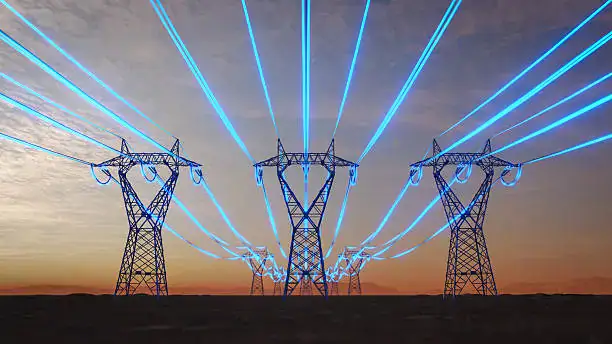
In modern electrical power systems, maintaining stable power flow and balanced load distribution is a constant challenge. Demand fluctuates throughout the day, industrial loads vary, and grid disturbances can occur unexpectedly. Without proper control mechanisms, these variations can lead to voltage instability, equipment overload, and even large-scale outages. Transformers play a central role in managing these challenges by regulating voltage, directing power flow, and balancing loads across the network.
Transformers support power flow and load management by adjusting voltage levels, controlling current distribution, enabling efficient energy transfer, and balancing electrical loads across different parts of the grid to maintain stability and reliability.
Their role goes far beyond simple voltage conversion—they actively contribute to grid control and optimization.
Transition to Functional Breakdown
To fully understand their contribution, it is important to analyze how transformers influence power flow and load management through multiple technical mechanisms.
Transformers have no role in controlling power flow and only passively transfer electricity.False
Transformers influence power flow through voltage regulation, impedance characteristics, and tap-changing mechanisms.
Voltage Control for Power Flow Regulation
Voltage level directly affects how power flows through the electrical network. Transformers adjust voltage to optimize power transfer.
What Protection and Control Systems Are Used with Substation Transformers?
Substation transformers are among the most critical and expensive assets in the power grid. Because they operate continuously under high voltage and high load conditions, even a small fault can escalate into severe equipment damage, system instability, or large-scale outages. For this reason, transformers are never operated alone—they are always integrated with advanced protection and control systems that monitor performance, detect abnormalities, and isolate faults instantly.
Protection and control systems used with substation transformers include protective relays, circuit breakers, current and voltage transformers for sensing, temperature monitoring systems, pressure relief devices, and SCADA-based control systems that collectively ensure safe, stable, and reliable transformer operation.
These systems act as a coordinated safety and automation network around the transformer.
Transition to System-Level Protection Concept
To understand how these systems work together, it is important to break them down into sensing, decision-making, and fault-clearing functions.
Substation transformers can safely operate without any external protection or monitoring systems.False
Transformers require integrated protection systems to detect faults, isolate failures, and prevent catastrophic damage or outages.
Protective Relays: The Brain of Transformer Protection
Protective relays continuously monitor electrical parameters and trigger protective actions when abnormal conditions occur.
| Relay Type | Function |
|---|---|
| Differential relay | Detects internal faults |
| Overcurrent relay | Protects against excessive load |
| Earth fault relay | Detects ground faults |
| Thermal relay | Monitors overheating |
These relays act as the first line of defense.
Circuit Breakers: Fault Isolation Devices
Circuit breakers disconnect the transformer from the grid when a fault is detected.
How Do Substation Transformers Ensure Reliability and Efficiency?
In modern electrical power systems, substations act as critical hubs that connect generation, transmission, and distribution networks. At the center of these substations are transformers, which must operate continuously under varying loads and environmental conditions. Any instability in transformer performance can lead to voltage fluctuations, power losses, or even large-scale outages. Therefore, ensuring both reliability and efficiency is a core requirement in substation transformer design and operation.
Substation transformers ensure reliability and efficiency by maintaining stable voltage transformation, minimizing energy losses, managing thermal conditions, balancing load variations, and integrating protection and monitoring systems that support continuous and optimized grid operation.
They are engineered not only to transfer energy but also to optimize how that energy flows through the power system.
Transition to System-Level Performance View
To understand how transformers achieve these objectives, it is necessary to analyze the key technical mechanisms that support stable operation and energy optimization.
Substation transformers operate efficiently without requiring any monitoring, cooling, or control systems.False
Reliable and efficient transformer operation depends on cooling systems, protection devices, monitoring systems, and voltage regulation mechanisms.
Voltage Stability for Reliable Operation
Maintaining consistent voltage levels is essential for reliable power delivery across the grid.
V_s = V_p \times \frac{N_s}{N_p}
| Stability Factor | Transformer Contribution |
|---|---|
| Load variation | Maintains steady output voltage |
| System disturbances | Dampens voltage fluctuations |
| Tap changers | Adjusts voltage dynamically |
Stable voltage prevents equipment failure and service interruptions.
High-Efficiency Energy Conversion
Efficiency is achieved by minimizing energy losses during voltage transformation.
| Loss Type | Optimization Strategy |
|---|---|
| Core losses | High-grade laminated steel core |
| Copper losses | Optimized winding design |
| Stray losses | Improved magnetic shielding |
Conclusion
In substations, transformers operate by using electromagnetic induction to convert voltage levels between transmission and distribution networks. They enable efficient long-distance power transfer and safe delivery to end users. Combined with protection systems, cooling methods, and monitoring technologies, substation transformers ensure stable, reliable, and efficient operation of the entire power grid.
FAQ
Q1: How do transformers work in substations?
Transformers in substations work by changing voltage levels through electromagnetic induction to enable efficient transmission and safe distribution of electricity.
In a typical power system:
Step-up transformers increase voltage for long-distance transmission
Step-down transformers reduce voltage for local distribution
This voltage conversion minimizes energy losses and ensures safe electricity delivery.
Q2: What is the role of transformers in a substation?
Transformers in substations serve several key roles:
Adjust voltage levels between transmission and distribution systems
Improve energy efficiency by reducing transmission losses
Maintain grid stability and voltage regulation
Isolate different sections of the power network
They are essential for linking power plants, transmission lines, and end users.
Q3: What types of transformers are used in substations?
Common transformer types in substations include:
Power transformers: Used in transmission substations for high voltages
Distribution transformers: Used near load centers for lower voltages
Autotransformers: Used for voltage regulation and interconnection
Instrument transformers (CTs and PTs): Used for measurement and protection
Each type serves a specific function within the substation.
Q4: How does a substation transformer control voltage?
Voltage control is achieved through:
Transformer turns ratio: Determines output voltage level
Tap changers (OLTC): Adjust voltage dynamically under load
Reactive power management: Helps stabilize voltage fluctuations
These mechanisms ensure consistent voltage delivery despite load variations.
Q5: Why are transformers essential in power substations?
Transformers are essential because they:
Enable long-distance high-voltage transmission
Reduce energy losses in the grid
Provide safe voltage levels for consumers
Support system reliability and flexibility
Without transformers, modern electrical grids would not function efficiently.
Q6: How are transformers cooled in substations?
Cooling methods depend on transformer size and load:
Oil-immersed cooling (ONAN, ONAF, OFAF) using oil and radiators
Dry-type air cooling in indoor substations
Forced cooling systems for high-capacity units
Proper cooling prevents overheating and extends equipment life.
Q7: What safety systems are used with substation transformers?
Safety systems include:
Buchholz relays (for internal fault detection)
Pressure relief devices
Temperature monitoring sensors
Circuit breakers and protection relays
Grounding systems
These systems protect both equipment and the power grid.
Q8: How do transformers support grid stability in substations?
Transformers help maintain grid stability by:
Balancing voltage levels across the network
Handling load fluctuations
Providing fault isolation
Supporting reactive power control
They are critical for maintaining continuous and stable electricity supply.
References
IEC 60076 – Power Transformers
https://webstore.iec.ch/publication/602
IEEE C57 Series – Transformer Standards
https://standards.ieee.org
Electrical Engineering Portal – Substation Transformer Operation
https://electrical-engineering-portal.com
U.S. Department of Energy – Power Substations Overview
https://www.energy.gov
CIGRE – Power Transmission and Substation Studies
https://www.cigre.org
NEMA – Transformer Application Standards
https://www.nema.org