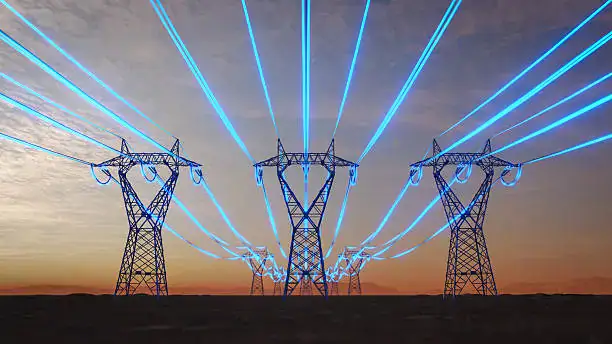
Modern electrical power systems must move electricity efficiently across long distances and deliver it at voltage levels suitable for distribution and end-use equipment. Without power transformers, large amounts of energy would be lost during transmission, while generators, distribution networks, and electrical loads could not operate at their required voltage levels. Poorly selected or unreliable transformers can also cause excessive losses, voltage instability, overheating, equipment damage, and costly power interruptions. Understanding why power transformers are important helps buyers evaluate their role in system efficiency, reliability, safety, and long-term operating costs.
Power transformers are important in electrical power systems because they efficiently increase or decrease AC voltage to make electricity suitable for generation, transmission, distribution, and consumption. By stepping voltage up for long-distance transmission, they reduce current and minimize transmission losses; by stepping voltage down near consumers, they provide safer and usable voltage levels for distribution networks and electrical equipment. Their capacity, efficiency, insulation, cooling, impedance, and reliability directly influence the performance and stability of the entire power system.
Power transformers are therefore more than voltage-conversion devices—they are critical infrastructure connecting different voltage levels throughout the electrical network. The following outline examines their role from both technical and practical perspectives, helping buyers understand why transformer selection and quality can have such a significant impact on power-system performance.
Here is the next article in the same concise, technical, buyer-focused format, emphasizing the role of power transformers in the complete electrical power system.
Why Are Power Transformers Important in Electrical Power Systems for Voltage Conversion?
Electricity cannot be generated, transmitted, distributed, and consumed efficiently at one fixed voltage level. Generators, transmission networks, distribution systems, industrial facilities, commercial buildings, and electrical equipment often require very different voltage levels. If voltage is not converted appropriately, transmission current can become unnecessarily high, increasing conductor losses, while end-use equipment may receive a voltage that is too high or too low for safe and reliable operation. Power transformers solve this fundamental problem by transferring AC electrical energy between circuits while stepping voltage up or down. Their role is therefore much broader than simply changing voltage: transformer design affects current, transmission efficiency, voltage regulation, fault current, insulation requirements, system stability, and the reliability of the entire power network.
Power transformers are essential in electrical power systems because they allow electricity to be converted between appropriate voltage levels for generation, transmission, distribution, and utilization. Step-up transformers increase voltage and reduce current for efficient long-distance transmission, while step-down transformers reduce voltage and increase current for distribution and equipment supply. By matching voltage levels to each stage of the power system, transformers reduce transmission losses, support voltage management, improve system compatibility, and enable electrical energy to move safely and economically from generators to loads.
For buyers, understanding this system-level function is important because transformer selection should be based not only on voltage conversion but also on kVA/MVA capacity, impedance, losses, regulation, insulation, cooling, load characteristics, and applicable technical standards.

Power transformers increase electrical power when they increase voltage.False
A transformer does not create additional power. Ideally, voltage and current change inversely so apparent power remains approximately constant; real transformers deliver slightly less power because of electrical and magnetic losses.
How Do Power Transformers Fit Into the Electrical Power System?
The electrical power system is fundamentally a chain of voltage transformations. Electricity is typically generated at a generator-terminal voltage that is practical for the generator and associated equipment. A transformer then raises the voltage before transmission. The transmission network carries electrical energy over potentially long distances at high voltage. At substations closer to consumers, transformers reduce the voltage to levels appropriate for distribution. Additional transformers may reduce voltage again for industrial machinery, commercial buildings, control systems, and other loads. This staged approach allows the same electrical energy to move through a network using different voltage and current combinations. The key engineering principle is that for a given power level, increasing voltage reduces current. Lower current reduces resistive conductor losses because these losses are proportional to the square of current. This makes high-voltage transmission considerably more efficient than attempting to transmit the same power at a much lower voltage. The transformer therefore acts as the interface that makes this voltage optimization possible. It also provides electrical isolation between circuits because energy is transferred magnetically rather than through a direct conductive connection between the primary and secondary windings. In practical power networks, transformers may be located at generating stations, transmission substations, distribution substations, renewable-energy facilities, industrial plants, and large commercial installations. Their construction varies according to voltage, capacity, installation environment, cooling requirements, insulation requirements, and system function. Large transformers can represent major capital assets, so reliability and lifecycle performance are important procurement considerations. A transformer failure can interrupt power delivery and create significant operational and economic consequences. Consequently, the importance of a power transformer should be evaluated not simply by its ability to change voltage but by its contribution to the reliability, efficiency, controllability, and safety of the entire electrical system.
Generation
    │
    ▼
Step-Up Transformer
    │
    ▼
High-Voltage Transmission
    │
    ▼
Transmission Substation
    │
    ▼
Step-Down Transformer
    │
    ▼
Distribution Network
    │
    ▼
Industrial / Commercial Loads
Why Are Step-Up Transformers Important for Transmission?
Step-up transformers are critical because long-distance transmission becomes more efficient when electrical power is transported at higher voltage. Consider a simplified example in which 100 MW of three-phase power must be transmitted. At 100 kV, the line current, ignoring power factor and losses for illustration, is approximately 577 A. At 500 kV, the corresponding current is approximately 115 A. Reducing current by approximately a factor of five can dramatically reduce resistive losses in conductors because resistive loss varies approximately with the square of current. This does not mean that a transformer eliminates all transmission losses; conductor resistance, transformer losses, reactive effects, corona, and other system factors remain. However, voltage transformation makes it possible to select a much more favorable current level for transmission. This is one of the most important reasons modern electrical grids use high-voltage and extra-high-voltage networks. The step-up transformer must simultaneously handle high electrical stress, insulation requirements, switching transients, and mechanical forces associated with fault currents. Generator step-up transformers are especially important because they connect generator output to the transmission network. Their design must consider generator voltage, grid voltage, transformer impedance, power rating, cooling, insulation coordination, and system fault levels. A transformer with an incorrect ratio can create unacceptable operating conditions even if its kVA rating is adequate. Similarly, an inappropriate impedance can affect voltage regulation and short-circuit current. Buyers should therefore evaluate step-up transformers as system-interface equipment rather than simply voltage-conversion devices. For renewable-energy projects, additional factors may include converter harmonics, bidirectional power flow, rapid changes in generation, and grid-code requirements. These factors can affect transformer thermal performance and insulation stress. The step-up transformer is therefore a central component in converting generator-side electrical characteristics into a form suitable for efficient and reliable transmission.
| Transmission Condition | Lower-Voltage Transmission | Higher-Voltage Transmission |
|---|---|---|
| Required power | Same | Same |
| Current | Higher | Lower |
| Conductor I²R loss | Higher | Lower |
| Conductor requirements | Larger current capacity | Greater insulation requirements |
| Typical role | Limited-distance applications | Long-distance transmission |
| Transformer function | — | Step-up before transmission |
Why Are Step-Down Transformers Essential for Distribution?
Transmission voltage is far too high for most utilization equipment, so the electrical system must progressively reduce voltage before electricity reaches consumers. Step-down transformers perform this function. A distribution transformer may convert medium voltage to a low-voltage supply suitable for a facility or local electrical network. Industrial plants can require several voltage levels because different equipment has different electrical requirements. Motors, drives, furnaces, control circuits, lighting, instrumentation, and electronic systems may all operate at different voltages. The step-down transformer provides the appropriate interface between the incoming electrical network and these loads. One important consequence of stepping voltage down is that current increases for a given power transfer. This makes the low-voltage winding a significant design consideration. For example, a 1 MVA three-phase transformer supplying a 400 V secondary has an approximate full-load secondary current of 1,443 A, while the current on a 10 kV side is approximately 57.7 A. The low-voltage winding therefore requires substantial conductor cross-section and robust terminals. Thermal management becomes particularly important because winding losses increase with current. Voltage regulation is also important because high-current loading causes voltage drop through winding resistance and leakage reactance. Motor starting and nonlinear loads can make the situation more demanding. Buyers should therefore evaluate expected load profile rather than simply adding nameplate loads and selecting a transformer without further analysis. Starting current, power factor, harmonics, duty cycle, ambient temperature, altitude, and future expansion can all affect transformer selection. The step-down transformer must also coordinate with downstream cables, switchgear, breakers, fuses, and protection systems. Its impedance affects both normal-load voltage behavior and prospective short-circuit current. A properly selected step-down transformer therefore ensures that the receiving equipment obtains a suitable and sufficiently stable voltage while remaining within thermal and electrical limits.
How Do Transformers Improve Transmission Efficiency?
The efficiency advantage of voltage transformation comes from the relationship between power, voltage, and current. For a simplified system, electrical power can be represented as the product of voltage and current. If the transmitted power is fixed, increasing voltage allows current to decrease. Because conductor heating losses are related to current squared, reducing current has a disproportionately large effect on resistive losses. For example, if current is reduced by a factor of 10 while conductor resistance remains unchanged, the theoretical I²R loss is reduced by a factor of 100. This relationship explains why electrical utilities transmit power at high voltage and then use step-down transformers near load centers. However, the transformer itself introduces losses. Core losses occur because the transformer core is repeatedly magnetized by alternating flux, while winding losses arise from current flowing through conductor resistance. Additional stray and dielectric losses can also occur. Consequently, system designers must optimize both transmission voltage and transformer efficiency. A higher transmission voltage may reduce conductor losses, but transformers and network equipment must then satisfy higher insulation and switching requirements. The optimal system therefore balances conductor losses, transformer losses, insulation costs, equipment ratings, reliability, and safety. For buyers, transformer efficiency should be considered over the expected operating profile. No-load losses are particularly relevant when a transformer remains energized for long periods at low load, while load losses become increasingly important as current increases. This is why guaranteed no-load and load-loss values can be more useful than a generic “high efficiency” statement. The transformer's lifecycle energy consumption can become a substantial part of its total ownership cost, especially for continuously energized utility and industrial equipment.
How Do Transformers Affect Current and System Protection?
Voltage conversion necessarily changes current, but transformer impedance determines how the system responds to abnormal conditions. Under normal loading, the transformer's internal impedance contributes to voltage drop and therefore influences voltage regulation. During a fault, the same impedance limits the magnitude of short-circuit current. This creates an important engineering balance. A lower-impedance transformer can provide stronger voltage performance under certain load conditions but may allow greater fault current. A higher-impedance transformer can reduce prospective fault current but may produce greater voltage drop. Protection engineers therefore need the transformer's impedance when calculating fault levels and coordinating breakers, fuses, relays, and other protective equipment. The transformer must also withstand the mechanical forces generated by short-circuit currents. Winding conductors experience electromagnetic forces during faults, so the mechanical construction and clamping system must be designed accordingly. Inrush current during transformer energization is another consideration. The temporary magnetizing current can be substantially higher than normal magnetizing current, so protection settings must distinguish legitimate energization inrush from actual faults. These characteristics show why transformers are integral to system protection rather than isolated voltage-conversion devices. Buyers should request guaranteed impedance values, current ratings, short-circuit withstand information, and appropriate test documentation. If multiple transformers are intended to operate in parallel, compatible ratios, phase relationships, connections, and impedances are also essential for proper load sharing. A transformer that has the correct voltage ratio but unsuitable impedance can therefore cause system-level problems.
Why Is Voltage Regulation Important to Power-System Reliability?
Voltage regulation determines how closely the transformer's terminal voltage remains at the desired level as the load changes. In a real transformer, winding resistance and leakage reactance cause internal voltage drops when current flows. The magnitude and direction of this voltage change depend partly on load current and power factor. Industrial motor loads, for example, may produce different regulation behavior from unity-power-factor resistive loads. If voltage falls excessively during heavy loading, motors and other equipment may operate outside their preferred conditions. Large motor starting events can cause temporary voltage dips, while fluctuating industrial loads can repeatedly change the transformer's operating point. Tap changers may be incorporated into certain power-transformer designs to adjust the effective turns ratio and maintain system voltage within the required range. However, tap adjustment should complement correct transformer sizing rather than compensate for an unsuitable design. Buyers should specify acceptable voltage limits, expected loading conditions, power factor, and tap requirements. The transformer's regulation should then be considered together with downstream feeder voltage drop. A facility with long low-voltage cables can experience additional voltage loss after the transformer, so evaluating transformer regulation alone may give an incomplete picture. System-level voltage studies should therefore consider the transformer, cables, busbars, source voltage, load characteristics, and expected operating conditions. This is especially important for critical infrastructure and industrial processes where voltage stability directly affects equipment reliability and production continuity.
| Transformer Parameter | System Effect | Procurement Importance |
|---|---|---|
| Voltage ratio | Establishes nominal conversion | Essential |
| kVA/MVA rating | Determines power-transfer capability | Essential |
| Rated current | Determines conductor and terminal requirements | Essential |
| Impedance | Influences voltage drop and fault current | Essential |
| Voltage regulation | Indicates load-dependent voltage variation | High |
| No-load loss | Affects energized standby consumption | High |
| Load loss | Affects efficiency and temperature | High |
| Temperature rise | Influences insulation aging | High |
| Tap range | Supports voltage adjustment | Application-dependent |
| Insulation level | Determines dielectric withstand | Essential for HV systems |
| Cooling | Removes transformer losses | Essential |
| Short-circuit withstand | Protects against fault forces | Essential |
Why Are Power Transformers Important for Renewable Energy Systems?
Modern power systems increasingly include solar generation, wind generation, battery storage, and other power-electronic sources. These facilities frequently require transformers to connect low- or medium-voltage collection systems to higher-voltage grid networks. The transformer must not only provide the correct voltage conversion but also operate reliably with rapidly changing power output and potentially harmonic-rich converter currents. Renewable-energy projects can therefore require more detailed transformer specifications than a simple conventional load application. Engineers may need to evaluate harmonic heating, insulation stress, cooling performance, bidirectional power flow, reactive-power requirements, and grid-interconnection conditions. Battery-energy-storage systems can be particularly interesting because power may flow in both directions depending on whether the system is charging or discharging. The transformer must be designed for the expected operating modes and control strategy. The increasing deployment of renewable generation also makes transformer availability and reliability strategically important. If a main transformer fails, a large generation facility may lose its ability to export power even though the generation equipment itself remains operational. Buyers should therefore consider reliability, redundancy, monitoring, maintenance accessibility, factory testing, spare-parts strategy, and supplier support. Transformer monitoring may include temperature, oil condition, dissolved-gas analysis for liquid-filled units, winding temperature, and other condition indicators depending on transformer size and application. The correct design can improve both electrical performance and asset-management decisions. This demonstrates another reason power transformers are important: they provide the physical electrical interface between increasingly diverse energy sources and the wider power grid.
How Should Buyers Evaluate a Power Transformer for Voltage Conversion?
A professional transformer specification should begin with the complete electrical system rather than a generic request such as “10 kV to 400 V transformer.” Buyers should identify primary and secondary rated voltages, frequency, phase configuration, rated kVA/MVA, winding connection, expected load profile, power factor, harmonic content, voltage variation, and future expansion. The required transformer action—step-up or step-down—should then be confirmed. Next, evaluate impedance, voltage regulation, guaranteed no-load and load losses, temperature rise, cooling classification, insulation levels, tap range, short-circuit withstand capability, and installation conditions. For outdoor liquid-immersed transformers, additional requirements may include tank construction, insulating liquid, bushings, pressure-relief devices, cooling radiators, and environmental containment. For dry-type transformers, enclosure, ventilation, insulation system, ambient temperature, altitude, and installation clearances can be important. Buyers should also evaluate factory capability. Core-processing equipment, winding machinery, controlled insulation processes, assembly procedures, and electrical testing facilities directly influence the finished transformer's performance. Required factory tests should be defined before production, with guaranteed values clearly distinguished from typical values. Suppliers should be compared using identical technical requirements so that loss, impedance, regulation, and testing claims are evaluated on a consistent basis. This procurement discipline reduces technical misunderstandings and helps ensure that the selected transformer can provide the required voltage conversion throughout its intended operating life.
I’ll keep this version about one-third shorter than the previous article while preserving the same SEO structure, technical depth, tables, ClaimReview, image prompt, conclusion, and CTA.
Why Are Power Transformers Important in Electrical Power Systems for Reducing Transmission Losses?
Electricity must often travel long distances from generating stations to cities, factories, and other loads. If the same power were transmitted at a relatively low voltage, the resulting current would be high, causing significant heating losses in transmission conductors. These losses increase operating costs and reduce the amount of electricity that ultimately reaches the load. Power transformers provide the practical solution by stepping voltage up before long-distance transmission and stepping it down again near the point of use. Understanding this voltage-current relationship is essential when evaluating transformer efficiency, transmission design, and long-term operating costs.
Power transformers reduce transmission losses mainly by increasing transmission voltage and consequently reducing current for a given amount of transferred power. Because conductor losses are approximately proportional to the square of current, a substantial reduction in current can produce a much larger reduction in resistive losses. Step-up transformers therefore make high-voltage transmission practical, while step-down transformers return electricity to suitable distribution and utilization voltages near consumers.
This principle explains why power transformers are among the most important components in modern electrical power systems and why their efficiency and voltage ratings must be carefully selected.
Increasing transmission voltage reduces conductor losses for a given transmitted power because it reduces current.True
For a given power level, higher voltage permits lower current, and resistive conductor losses are proportional to current squared.
How Does Higher Voltage Reduce Transmission Losses?
The basic relationship between electrical power, voltage, and current explains the importance of transformer voltage conversion. For a simplified system, if transmitted power remains constant, increasing voltage reduces the required current. Conductor heating loss is approximately proportional to (I^2R), where (I) is current and (R) is conductor resistance. This means that even a moderate reduction in current can produce a much larger reduction in resistive loss. For example, if current is reduced by a factor of 10 while conductor resistance remains unchanged, theoretical I²R loss falls by a factor of 100. This is the fundamental economic reason electrical grids transmit power at high voltage. However, increasing voltage does not eliminate every form of system loss. Transformer losses, conductor resistance, reactive effects, corona, and other network losses remain. Higher voltage also requires more demanding insulation, clearances, bushings, switchgear, and protection systems. The electrical system must therefore balance reduced conductor losses against the additional requirements associated with high-voltage equipment. Power transformers make this balance practical by converting voltage at strategic points in the network.
| Transmission Strategy | Voltage | Current for Same Power | Conductor Loss |
|---|---|---|---|
| Lower-voltage transmission | Lower | Higher | Higher |
| Higher-voltage transmission | Higher | Lower | Lower |
| Very high-voltage transmission | Much higher | Much lower | Much lower, subject to other system effects |
Why Are Step-Up Transformers Used Before Transmission?
Generators typically produce electricity at a voltage suitable for the generator and connected equipment, but this voltage is not necessarily economical for long-distance transmission. A step-up transformer raises the voltage before electricity enters the transmission network. The increased voltage reduces current for the same transferred power, helping reduce conductor heating and improve transmission efficiency. For example, consider a simplified 100 MW three-phase transmission system. At 100 kV, the approximate current is 577 A, ignoring power factor and losses. At 500 kV, the current falls to approximately 115 A. The fivefold reduction in current corresponds to a theoretical 25-fold reduction in resistive conductor loss if conductor resistance remains unchanged. Actual systems are more complicated, but the example clearly demonstrates why step-up transformers are essential. Generator step-up transformers must also satisfy high-voltage insulation, thermal, mechanical, and system-integration requirements. Their impedance influences voltage regulation and fault current, while insulation coordination must account for switching and lightning stresses. Renewable-energy plants can have additional requirements because solar inverters, wind converters, and battery systems may introduce harmonics and rapidly changing power flows. Buyers should therefore evaluate step-up transformers according to the complete grid-interconnection requirement rather than simply selecting the highest available voltage ratio.
How Do Step-Down Transformers Support Efficient Distribution?
After electricity has traveled through the transmission network, it must be converted to lower voltages suitable for distribution and utilization. Step-down transformers perform this function. They reduce voltage while increasing current for approximately the same apparent power. This is necessary because industrial machinery, commercial buildings, infrastructure, and other loads cannot normally be supplied directly from high-voltage transmission lines. The step-down transformer therefore provides the electrical interface between the transmission or medium-voltage network and downstream equipment. Because the lower-voltage winding carries higher current, its conductor size and thermal design become especially important. Consider a simplified 1 MVA three-phase transformer operating at 10 kV and 400 V. The approximate current is 57.7 A at 10 kV and 1,443 A at 400 V. This large current difference affects winding conductors, terminals, busbars, cooling, and short-circuit mechanical strength. Voltage regulation also becomes important because internal impedance causes voltage drop as load current increases. Motor starting, low power factor, nonlinear loads, and long feeder cables can further affect voltage at the equipment terminals. Buyers should therefore evaluate step-down transformers using actual load characteristics rather than only the nominal secondary voltage.
How Do Transformer Losses Affect Overall Efficiency?
Power transformers themselves consume energy, so reducing transmission losses does not mean that the transformer has zero losses. The principal categories are core losses and load losses. Core losses occur whenever the transformer is energized and are primarily associated with hysteresis and eddy currents in the magnetic core. Load losses increase with winding current and are strongly related to conductor resistance. Additional stray losses can also occur. This creates an important procurement issue: a transformer should be evaluated according to its expected operating profile. A transformer that remains energized continuously at light load may be strongly affected by no-load losses, while a transformer operating near rated capacity for long periods may be more sensitive to load losses and temperature rise. Losses ultimately become heat, so cooling design and temperature rise must also be considered. Manufacturers control losses through core-material selection, core construction, conductor sizing, winding design, joint quality, and production accuracy. Buyers should request guaranteed no-load loss and load-loss values rather than relying on general claims such as “high efficiency.” Lifecycle energy cost can be more important than purchase price, especially for transformers that operate continuously for many years.
| Transformer Factor | Effect on Transmission System | Buyer Consideration |
|---|---|---|
| Step-up voltage | Reduces transmission current | Confirm grid voltage |
| Transformer losses | Consume part of input energy | Request guaranteed losses |
| Load losses | Increase with current | Evaluate loading profile |
| Core losses | Occur while energized | Important at partial load |
| Impedance | Affects voltage drop and fault current | Include in system studies |
| Temperature rise | Indicates thermal stress | Verify guaranteed value |
| Efficiency | Affects lifecycle operating cost | Compare at realistic loading |
Why Does Transformer Impedance Matter for Transmission Losses?
Transformer impedance affects both normal operation and abnormal system conditions. Under load, internal impedance contributes to voltage drop and therefore affects voltage regulation. During faults, it helps limit short-circuit current. A transformer with lower impedance may provide better voltage performance under certain loading conditions but can allow higher fault current. A transformer with higher impedance can limit fault current but may create greater voltage drop. Therefore, the lowest possible impedance is not automatically the best choice. Engineers must coordinate transformer impedance with system voltage regulation, switchgear ratings, fault levels, protection, and load requirements. In large transmission substations, impedance is particularly important because a transformer may influence the fault-current contribution of an entire network section. Buyers should request the guaranteed impedance value, tolerance, rated power, and applicable test conditions. If transformers operate in parallel, compatible impedance and voltage ratios are also necessary for appropriate load sharing.
How Should Buyers Evaluate a Transformer for Low Transmission Losses?
Buyers should begin with the complete electrical requirement: primary and secondary voltage, rated kVA/MVA, frequency, phase configuration, load profile, expected operating hours, power factor, and installation environment. For transmission applications, the buyer should also establish the required grid voltage, insulation level, impedance, tap range, short-circuit withstand capability, and cooling method. Loss guarantees should include both no-load and load losses. The buyer should then consider the expected annual operating profile because the cheapest transformer to purchase is not necessarily the cheapest transformer to operate. A transformer with lower losses may provide greater long-term value even when its initial price is higher. Factory capability should also be verified. Core-processing equipment, winding machinery, insulation treatment, controlled assembly, and electrical testing directly affect actual transformer performance. Buyers should request appropriate routine and, where required, type or special test documentation. Comparing suppliers using identical technical specifications is essential; otherwise, differences in test conditions or guaranteed values can make price and efficiency comparisons misleading.
| Final Selection Check | What Buyers Should Confirm |
|---|---|
| Voltage ratio | Correct step-up or step-down requirement |
| kVA/MVA | Adequate capacity for actual and future load |
| Current | Correct primary and secondary ratings |
| No-load loss | Acceptable energized standby consumption |
| Load loss | Acceptable full-load operating loss |
| Impedance | Suitable voltage regulation and fault-current behavior |
| Cooling | Adequate heat removal |
| Insulation | Appropriate dielectric and system requirements |
| Tap changer | Required voltage-adjustment range |
| Testing | Complete factory verification |
| Manufacturer | Suitable production and quality capability |
Why Are Power Transformers Important in Electrical Power Systems for Reliable Power Distribution?
Power distribution systems must deliver electricity at the correct voltage, with stable performance and minimal interruption. Without properly selected power transformers, excessive voltage drop, overheating, insulation stress, and inefficient power delivery can affect industrial facilities, commercial buildings, substations, and distribution networks. Power transformers solve this problem by efficiently changing voltage levels, isolating electrical circuits, supporting load requirements, and maintaining dependable power delivery from generation through distribution.
Power transformers are important for reliable power distribution because they adjust voltage to appropriate levels for transmission, substations, and end users while supporting electrical isolation, voltage stability, system efficiency, and safe operation. Proper transformer capacity, impedance, cooling, insulation, protection, and testing are essential for maintaining reliable service under both normal and changing load conditions.
For buyers and power-system engineers, transformer reliability is not determined by voltage ratio alone. The transformer's capacity, thermal performance, insulation system, impedance, accessories, protection design, manufacturing quality, and factory testing all influence how reliably it will perform throughout its service life.

Power transformers only change voltage and do not contribute to reliable power distribution.False
Power transformers affect voltage levels, thermal loading, voltage regulation, electrical isolation, system losses, and the ability of a network to serve changing loads reliably.
How Do Power Transformers Support Reliable Power Distribution?
A power transformer provides controlled voltage conversion between different sections of an electrical network. A typical system may generate electricity at one voltage, transmit it at a much higher voltage, reduce it at substations, and finally distribute it at lower voltages suitable for industrial or commercial loads. The transformer makes these transitions practical while maintaining electrical continuity between network stages.
Reliability begins with correct transformer sizing. A transformer that is too small may operate continuously near or above its thermal limit, accelerating insulation aging and reducing service life. A transformer that is substantially oversized may have higher initial cost and can operate inefficiently at light loads because no-load losses continue whenever it is energized.
| Transformer Selection Factor | Why It Matters for Reliability |
|---|---|
| Rated power, kVA/MVA | Determines the load the transformer can serve |
| Primary/secondary voltage | Ensures compatibility with the electrical network |
| Impedance | Influences voltage regulation and fault current |
| Cooling system | Controls winding and oil temperature |
| Insulation level | Determines ability to withstand electrical stresses |
| Tap changer | Helps maintain suitable output voltage |
| Protection system | Detects internal and abnormal operating conditions |
| Factory testing | Verifies electrical and mechanical performance before shipment |
Why Is Voltage Conversion Essential for Distribution?
Electrical networks operate at multiple voltage levels because each part of the system has different technical requirements. High voltage is advantageous for long-distance transmission because the same amount of power can be transferred with lower current. Lower voltage is required closer to consumers because equipment, insulation, clearances, and utilization systems are designed for specific voltage levels.
For a three-phase system, apparent power is approximately proportional to voltage multiplied by current. Therefore, for the same power, increasing voltage reduces current. Lower current reduces conductor losses and thermal stress, while transformers allow the system to move efficiently between these voltage levels.
A distribution transformer therefore does more than simply “reduce voltage.” It creates a controlled interface between network sections. The transformer must be designed so that its insulation, winding configuration, cooling system, bushings, and accessories can withstand the electrical and thermal conditions expected at its installation point.
How Do Transformers Help Maintain Voltage Stability?
Reliable distribution requires voltage to remain within an acceptable operating range. When customer loads increase, transformer windings experience higher current and voltage drop can increase. Transformer impedance and tap settings therefore become important design considerations.
A transformer with an appropriate tap-changing arrangement can compensate for variations in system voltage and loading. On-load tap changers are particularly useful in substations where voltage must be regulated while the transformer remains energized and supplying consumers.
Voltage regulation should be evaluated together with the actual load profile rather than using the nameplate voltage ratio alone. A transformer serving a highly variable industrial load may have very different operating requirements from one serving a relatively stable commercial load.
How Does Transformer Capacity Affect Distribution Reliability?
Transformer capacity should reflect both the present load and the expected future load. Engineers normally consider maximum demand, load diversity, ambient temperature, cooling method, duty cycle, harmonic content, and future expansion.
For example, if a facility has a peak apparent load of 1,000 kVA, selecting a 1,000 kVA transformer without considering future growth or operating conditions may leave little practical margin. A somewhat higher rating may provide useful capacity, but excessive oversizing also has economic and efficiency consequences.
| Application | Typical Design Consideration |
|---|---|
| Small commercial facility | Stable demand, moderate growth, compact installation |
| Manufacturing plant | High motor load, starting current, variable demand |
| Data center | High availability, continuous load, redundancy |
| Utility substation | Large MVA capacity, voltage regulation, fault performance |
| Renewable-energy connection | Variable generation, bidirectional power flow, grid requirements |
Why Are Cooling and Insulation Critical?
Transformer reliability is strongly linked to temperature. Electrical losses in windings and the magnetic core become heat. If heat cannot be removed effectively, insulation aging accelerates.
Common transformer cooling arrangements include natural oil circulation with air cooling and forced cooling systems. The appropriate arrangement depends on transformer rating, installation conditions, and required loading.
The insulation system is equally important. Transformer insulation must withstand normal operating voltage as well as transient stresses caused by switching events and lightning. Oil, paper, pressboard, bushings, and other insulation components therefore need appropriate dielectric properties and manufacturing quality.
For this reason, buyers should evaluate more than the transformer's rated voltage and MVA. Insulation level, dielectric testing, temperature-rise performance, oil quality, sealing, and accessory reliability are all part of the overall reliability equation.
How Do Protection and Monitoring Improve Transformer Reliability?
Even a well-designed transformer can experience abnormal conditions. Protection systems help detect faults before they develop into severe equipment damage.
Depending on transformer type and application, protection and monitoring may include:
- Buchholz or gas-actuated protection for suitable oil-filled transformers
- Pressure-relief devices
- Oil-temperature indicators
- Winding-temperature indicators
- Sudden-pressure protection
- Overcurrent and differential protection
- Oil-level monitoring
- Surge arresters
- Online dissolved-gas monitoring for critical installations
These systems allow operators to identify abnormal thermal, electrical, or mechanical conditions and take corrective action.
What Should Buyers Check Before Purchasing a Power Transformer?
Reliable power distribution starts with a reliable transformer specification. Buyers should provide the manufacturer with accurate electrical and environmental requirements, including rated power, voltage ratio, frequency, phase arrangement, vector group, impedance, insulation level, cooling method, tap requirements, installation altitude, ambient temperature, indoor or outdoor service, and expected load characteristics.
The manufacturing process should also be evaluated. A capable power transformer supplier should have appropriate winding equipment, core-processing machinery, vacuum drying or equivalent insulation-processing capability, controlled assembly procedures, and suitable electrical testing facilities.
Factory acceptance testing is particularly important because it provides evidence that the completed transformer satisfies the specified requirements before shipment.
A Practical Reliability Checklist
Before approving a power transformer for distribution service, buyers can use the following checklist:
| Question | Recommended Evaluation |
|---|---|
| Is the transformer correctly sized? | Compare rating with maximum and future expected load |
| Is the voltage ratio correct? | Verify primary, secondary and tap-range requirements |
| Is impedance appropriate? | Evaluate voltage regulation and short-circuit requirements |
| Is cooling adequate? | Check temperature-rise and cooling-class requirements |
| Is insulation suitable? | Confirm dielectric and impulse withstand requirements |
| Are protection devices included? | Match accessories to application and transformer rating |
| Has the transformer been tested? | Review routine and required type/special test records |
| Can the manufacturer support the unit? | Check documentation, spare parts and technical service |
Below is the article in the same SEO-focused format as your previous transformer content, with the length kept relatively concise while retaining the key technical points.
Why Are Power Transformers Important in Electrical Power Systems for Electrical Safety and Equipment Protection?
Electrical systems operate with different voltage levels, high fault currents, switching transients, and continuously changing loads. Without suitable power transformers and properly coordinated protection, excessive voltage, insulation stress, short-circuit currents, overheating, and electrical faults can damage expensive equipment and create serious safety risks for personnel. Power transformers help manage these risks by providing controlled voltage conversion, electrical isolation, impedance, and a reliable interface between different sections of the power system. When transformers are correctly specified and combined with appropriate protection, grounding, insulation, monitoring, and testing, they become an important part of a safer and more reliable electrical installation.
Power transformers are important for electrical safety and equipment protection because they provide voltage transformation and electrical isolation while helping control system voltage, fault-current levels, insulation stress, and power-system interfaces. Proper transformer rating, insulation coordination, impedance, grounding, surge protection, cooling, monitoring, and protective relays are essential for preventing equipment damage and reducing electrical hazards.
For buyers, transformer safety should therefore be evaluated as part of the entire electrical protection system. The transformer itself cannot eliminate every electrical hazard, but a correctly designed unit can significantly improve system protection when its electrical and mechanical characteristics are coordinated with switchgear, circuit breakers, surge arresters, grounding systems, and protective relays.
Power transformers alone can prevent all electrical accidents and equipment failures.False
Transformers provide important functions such as voltage conversion and electrical isolation, but complete electrical safety also requires grounding, insulation coordination, surge protection, overcurrent and differential protection, proper installation, maintenance, and system-level safety procedures.
How Does a Power Transformer Improve Electrical Safety?
One of the most important safety functions of a transformer is separating electrical circuits while transferring energy electromagnetically. In suitable transformer configurations, the primary and secondary circuits are electrically isolated from each other, even though energy is transferred through the magnetic field.
This isolation can help prevent certain faults on one side of the system from being directly transferred as conductive faults to the other side. However, the actual safety benefit depends on the transformer connection, grounding arrangement, insulation system, and overall protection design.
Voltage conversion is also important. Equipment must operate within its specified voltage range. A transformer allows engineers to supply equipment at an appropriate voltage rather than connecting it directly to a much higher system voltage.
| Transformer Function | Safety or Protection Benefit |
|---|---|
| Voltage transformation | Supplies equipment with an appropriate operating voltage |
| Electrical isolation | Separates suitable primary and secondary circuits |
| Impedance | Influences available fault current and voltage drop |
| Insulation system | Withstands normal and transient electrical stress |
| Grounding interface | Supports controlled fault-current paths |
| Surge protection interface | Helps coordinate protection against transient overvoltage |
| Cooling | Reduces overheating and insulation degradation |
| Monitoring | Provides early warning of abnormal operating conditions |
How Does Transformer Impedance Help Protect Equipment?
Transformer impedance is an important characteristic when evaluating short-circuit performance. During a fault, the transformer impedance limits the current that can flow from the upstream source into the fault, although the actual fault current depends on the complete network impedance.
This is particularly important because excessive fault current can produce severe electromagnetic forces and thermal stress in transformer windings, busbars, cables, switchgear, and other electrical equipment.
A transformer with inappropriate impedance can therefore create coordination problems. Engineers must balance fault-current limitation with acceptable voltage regulation and system performance.
For example, increasing transformer impedance can reduce prospective short-circuit current, but excessive impedance can also increase voltage drop under load. Transformer selection must therefore consider both equipment protection and voltage regulation rather than optimizing only one parameter.
Why Is Transformer Insulation Important for Electrical Protection?
Transformer insulation protects conductive components from unwanted electrical breakdown. Windings, winding-to-ground insulation, interlayer insulation, bushings, oil, pressboard, and other insulating materials must withstand the expected electrical stresses.
Electrical systems can experience transient overvoltages caused by lightning, switching operations, and other network events. This means transformer insulation must be coordinated with the system's insulation level and surge-protection equipment.
A reliable manufacturer should therefore control insulation materials, winding clearances, drying processes, assembly cleanliness, and dielectric testing. Poor moisture control or contamination can reduce dielectric strength and accelerate insulation deterioration.
For buyers, important specifications may include:
- Rated insulation level
- Power-frequency withstand requirements
- Lightning impulse withstand requirements
- Switching impulse requirements where applicable
- Bushing insulation characteristics
- Insulation oil quality for oil-filled transformers
- Winding-to-ground and winding-to-winding clearances
How Do Surge Arresters Protect Power Transformers?
Surge arresters are commonly used around transformer installations to help limit transient overvoltages. They provide a controlled path for surge energy and help prevent excessive voltage from reaching transformer insulation.
The arrester must be correctly selected and installed. Its voltage rating, energy capability, grounding connection, physical location, and coordination with transformer insulation all matter.
The shorter and better-controlled the protection path, the more effectively the system can manage transient voltage stresses. This is why transformer protection should be considered during substation layout rather than added as an afterthought.
How Do Protective Relays Protect Transformers?
Transformers can experience external faults, internal winding faults, overheating, abnormal oil conditions, overcurrent, and other abnormal operating conditions. Protective relays and associated circuit breakers are designed to detect specified fault conditions and disconnect the affected equipment.
For larger transformers, differential protection is particularly important because it compares currents entering and leaving the protected transformer zone. A significant imbalance can indicate an internal fault and initiate rapid tripping.
Depending on transformer design and application, protection may include:
| Protection / Monitoring | Typical Purpose |
|---|---|
| Differential protection | Detects many internal electrical faults |
| Overcurrent protection | Protects against excessive current |
| Ground-fault protection | Detects certain earth faults |
| Overtemperature monitoring | Identifies excessive thermal loading |
| Oil-level monitoring | Detects abnormal oil level |
| Pressure relief | Releases excessive internal pressure |
| Gas monitoring | Provides information about developing internal faults in suitable oil-filled units |
| Surge arresters | Limits transient overvoltage |
How Does Cooling Protect Transformer Equipment?
Electrical losses generate heat inside a transformer. If the winding and insulation system operate at excessive temperature for prolonged periods, insulation aging can accelerate significantly.
Cooling equipment therefore contributes directly to transformer service life and reliability. Depending on rating and design, transformers may use natural or forced circulation of oil and air, or other cooling arrangements.
Buyers should consider not only the rated MVA but also:
- Ambient temperature
- Installation altitude
- Continuous loading
- Emergency loading
- Cooling stage
- Ventilation
- Harmonic-producing loads
- Expected load growth
A transformer that is technically adequate under nominal conditions may not be adequate if installed in a hot environment or subjected to sustained overload.
How Does Grounding Contribute to Transformer Safety?
Grounding provides a controlled reference and fault-current path within an electrical system. Transformer grounding arrangements must be coordinated with the overall system configuration, including neutral grounding, protection settings, equipment bonding, and fault-clearing requirements.
A transformer should therefore never be selected independently of the grounding design.
Incorrect grounding can cause unexpected fault behavior, inadequate protection sensitivity, or dangerous touch and step voltage conditions. Proper system engineering is essential.
What Should Buyers Check for a Safety-Oriented Power Transformer?
When purchasing a power transformer, buyers should evaluate electrical, mechanical, and manufacturing characteristics together.
A practical checklist includes:
| Evaluation Area | What Buyers Should Verify |
|---|---|
| Voltage rating | Primary, secondary and tap-voltage requirements |
| Capacity | Normal, peak and future loading |
| Impedance | Fault-current and voltage-regulation requirements |
| Insulation | Required dielectric and impulse withstand levels |
| Cooling | Temperature-rise performance and cooling class |
| Protection | Relay, monitoring and pressure/temperature accessories |
| Surge protection | Compatibility with system insulation coordination |
| Grounding | Correct neutral and enclosure grounding arrangements |
| Testing | Routine and required special/type tests |
| Manufacturing quality | Winding, core, insulation and assembly controls |
Factory testing is especially important. Electrical tests can help verify winding resistance, ratio, insulation performance, losses, impedance, and other specified characteristics before the transformer is shipped.
Why Are Power Transformers Important in Electrical Power Systems for Efficiency and Grid Stability?
Power systems must move electricity across long distances while handling changing loads, voltage fluctuations, and complex network conditions. Poorly selected transformers can increase electrical losses, worsen voltage regulation, overload equipment, and make the grid more difficult to control. Power transformers address these challenges by changing voltage levels efficiently, matching different parts of the grid, controlling power-flow conditions, and supporting stable operation from generation through transmission and distribution.
Power transformers are essential for electrical efficiency and grid stability because they enable economical voltage conversion, reduce current-related transmission losses, support voltage regulation, control fault-current levels through their impedance, and connect different voltage levels within the grid. Proper transformer capacity, impedance, tap-changing capability, cooling, insulation, and protection are therefore critical to maintaining efficient and stable power-system operation.
From a manufacturer's perspective, transformer efficiency and grid stability should be evaluated together. A transformer with excellent efficiency but unsuitable impedance or voltage regulation may not perform well in a real network. Conversely, a transformer optimized only for voltage regulation may introduce unnecessary losses. The correct design balances electrical performance, thermal limits, network requirements, reliability, and lifecycle cost.
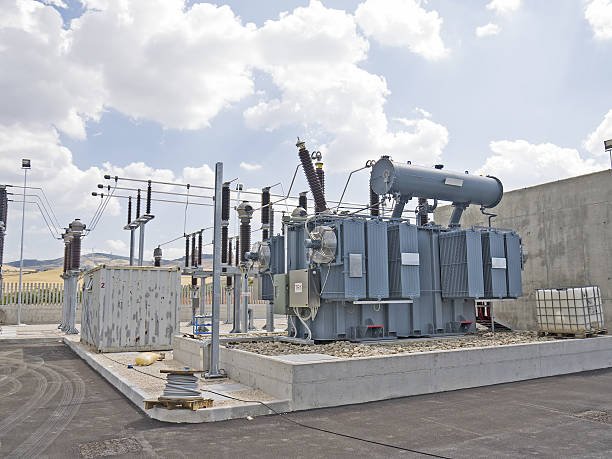
Power transformers improve grid efficiency only by increasing voltage, and transformer impedance has no effect on grid stability.False
Voltage conversion can reduce current and I²R losses, while transformer impedance also affects voltage regulation, fault-current levels, load behavior and power-system protection coordination.
How Do Power Transformers Improve Electrical Efficiency?
The fundamental efficiency benefit of a transformer comes from voltage conversion. For a given three-phase power level, increasing transmission voltage allows the same power to be transferred at lower current. Since conductor losses are proportional to the square of current, reducing current can substantially reduce resistive losses.
For example, consider transferring approximately 100 MW through an ideal three-phase system at 100 kV and 500 kV, assuming unity power factor for simplicity. The approximate line currents are 577 A and 115 A respectively. Because resistive loss varies with current squared, the theoretical loss ratio is approximately:
\left(\frac{115}{577}\right)^2 \approx 0.04
This means the 500 kV case has approximately 4% of the resistive loss of the 100 kV case if conductor resistance is otherwise unchanged.
The transformer therefore enables the network to use a high-voltage transmission level and later reduce the voltage for distribution and utilization. This is one of the most important reasons transformers are fundamental to modern power networks.
| Power-System Stage | Transformer Function | Efficiency Benefit |
|---|---|---|
| Generation interface | Raises generator voltage | Enables economical transmission |
| Transmission | Connects different high-voltage levels | Optimizes network voltage |
| Substation | Reduces transmission voltage | Prepares power for distribution |
| Distribution | Reduces voltage for consumers | Matches utilization requirements |
| Industrial facility | Provides required operating voltage | Avoids inefficient direct voltage conversion |
Why Does Transformer Efficiency Matter at Partial Load?
Transformer losses generally include no-load losses and load-dependent losses. No-load losses are associated mainly with the energized magnetic core and occur whenever the transformer is energized. Load losses increase as winding current increases.
This distinction matters when evaluating lifecycle efficiency. A transformer operating continuously at relatively low load may be strongly affected by no-load losses, while a heavily loaded transformer is more affected by load losses.
Buyers should therefore avoid selecting transformers based only on their maximum rated efficiency. The expected load profile should be considered, including daily demand, seasonal variation, operating hours, and future load growth.
How Do Power Transformers Support Grid Stability?
Grid stability requires voltage, frequency, power flow, and fault behavior to remain within acceptable operating conditions. Transformers influence several of these characteristics because they connect different network sections and determine the voltage and impedance relationship between them.
One particularly important function is voltage regulation. As electrical demand changes, voltage drop across transformer impedance changes. Tap-changing equipment can adjust the effective turns ratio to help maintain the desired downstream voltage.
This is particularly valuable in substations serving industrial areas, commercial loads, renewable generation, and networks with significant daily load variation.
Why Is Transformer Impedance Important?
Transformer impedance is a key parameter connecting efficiency, voltage regulation, and grid stability.
A transformer with higher impedance generally limits short-circuit current more strongly, which can help reduce fault-current stress on downstream equipment. However, higher impedance can also increase voltage drop under heavy loading.
Therefore, the correct impedance is a system-design decision rather than simply a value that should be minimized.
| Transformer Parameter | Efficiency / Stability Impact |
|---|---|
| Voltage ratio | Determines compatibility between network voltage levels |
| Rated MVA/kVA | Determines available loading capability |
| Impedance | Influences voltage drop and fault current |
| No-load loss | Affects energy consumption while energized |
| Load loss | Determines efficiency under operating load |
| Tap range | Supports voltage regulation |
| Cooling capacity | Determines sustainable thermal loading |
| Insulation level | Supports reliable operation under electrical stress |
How Do Tap Changers Improve Grid Performance?
Voltage requirements can change because of load variation, transmission conditions, and network configuration. A fixed transformer ratio cannot always maintain the desired secondary voltage across all operating conditions.
Tap changers provide an adjustable turns ratio. Off-circuit tap changers require the transformer to be de-energized for adjustment, while on-load tap changers (OLTCs) can change taps while the transformer remains in service.
For substations where voltage regulation is a continuous operational requirement, OLTC capability can be especially valuable. The appropriate tap range and control strategy should be determined from the actual network voltage profile rather than selected generically.
How Do Transformers Help Manage Changing Grid Loads?
Modern grids increasingly experience variable demand and variable generation. Industrial motors, data centers, electric-vehicle charging, solar generation, and wind generation can all create operating conditions that differ from traditional steady-load assumptions.
Transformer selection should therefore consider:
- Maximum and minimum loading
- Load growth
- Power factor
- Harmonic currents
- Voltage variation
- Ambient temperature
- Cooling conditions
- Renewable generation profiles
- Required redundancy
- Emergency loading requirements
A transformer with insufficient thermal margin may become a bottleneck even when its nominal MVA rating appears adequate.
What Should Buyers Evaluate When Choosing an Efficient, Stable Transformer?
For a practical procurement decision, buyers should evaluate both technical specifications and manufacturing quality.
A reliable supplier should be able to provide clear information about transformer losses, impedance, temperature rise, insulation system, cooling method, tap-changing equipment, protection accessories, and factory testing.
Factory testing is particularly important because efficiency and stability depend on actual transformer characteristics rather than brochure-level claims.
Buyers should request and review relevant test results for parameters such as:
- Winding resistance
- Voltage ratio
- No-load loss and current
- Load loss
- Impedance voltage
- Dielectric performance
- Temperature-rise performance where specified
- Functional performance of accessories
How Can Buyers Balance Efficiency and Grid Stability?
The lowest-loss transformer is not automatically the best transformer for every grid application. A more useful procurement strategy is to identify the required operating envelope first and then optimize efficiency within that envelope.
For example, a substation transformer serving a highly variable load may require a different design priority from a continuously loaded industrial transformer. Similarly, a transformer in a constrained network may require carefully selected impedance and tap-changing characteristics.
The best transformer is therefore the one that provides an appropriate combination of low losses, suitable voltage regulation, correct impedance, adequate thermal capacity, reliable insulation, and coordinated protection.
Why Are Power Transformers Important in Electrical Power Systems When Selecting and Maintaining Critical Equipment?
Power transformers are among the most important and expensive assets in an electrical power system, yet choosing a transformer based only on voltage and MVA rating can create serious long-term problems. An undersized transformer may overheat and age prematurely, while an unsuitable impedance, insulation level, cooling system, or tap-changing arrangement can cause voltage instability, protection problems, and unnecessary downtime. The solution is to treat the power transformer as a critical system asset from the initial selection stage through installation, commissioning, condition monitoring, preventive maintenance, and eventual replacement.
Power transformers are important critical equipment because they determine how electrical energy is transferred between voltage levels while strongly influencing system efficiency, voltage regulation, fault performance, reliability, and equipment protection. Selecting the correct transformer and maintaining its insulation, oil, windings, cooling system, bushings, connections, tap changer, and protection devices helps reduce failures, extend service life, and maintain dependable power-system operation.
For buyers and plant operators, transformer reliability is not created by one specification or one maintenance inspection. It results from matching the transformer to its duty and then continuously controlling the conditions that cause deterioration. The following approach provides a practical framework for selecting and maintaining power transformers as critical electrical equipment.
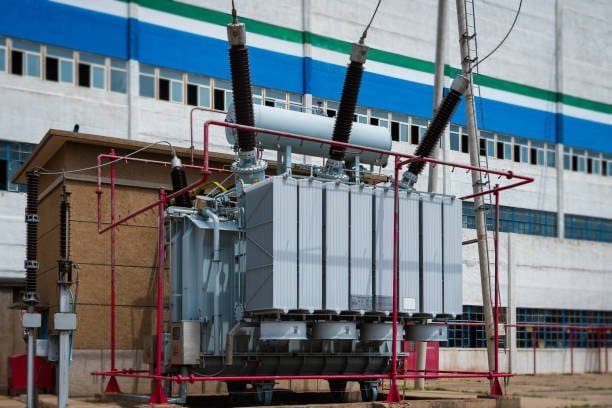
Power transformer maintenance should begin only after the transformer develops an obvious fault.False
Preventive and condition-based maintenance is intended to identify deterioration before failure, including monitoring insulation, oil condition, temperature, bushings, connections, cooling systems, and tap-changing equipment.
How Should Buyers Select a Power Transformer as Critical Equipment?
The first maintenance decision is actually made during procurement. A transformer that is poorly matched to its application can be difficult or expensive to maintain throughout its service life.
Buyers should begin with the electrical duty rather than simply selecting a standard catalog model. Important inputs include rated power, primary and secondary voltage, frequency, phase arrangement, impedance, vector group, insulation level, cooling method, tap range, ambient conditions, altitude, installation location, and expected loading profile.
The load profile is particularly important. A transformer supplying a continuous industrial load may have very different requirements from one operating with large daily or seasonal variations. Motors, variable-frequency drives, rectifiers, data-center loads, and renewable-energy equipment can also introduce operating characteristics that should be considered during specification.
| Selection Parameter | Critical Equipment Consideration |
|---|---|
| MVA/kVA rating | Must support normal and expected peak demand |
| Voltage ratio | Must match system operating voltages |
| Impedance | Affects voltage regulation and fault current |
| Cooling | Determines sustainable thermal performance |
| Insulation level | Determines withstand capability |
| Tap changer | Supports voltage regulation where required |
| Load characteristics | Influences thermal and electrical duty |
| Installation environment | Affects cooling, insulation and enclosure requirements |
| Protection | Must coordinate with the wider electrical system |
| Maintenance access | Influences long-term serviceability |
Why Is Transformer Condition Monitoring Important?
Power transformers can deteriorate gradually without showing an immediately visible external fault. Thermal aging, moisture, insulation deterioration, oil contamination, loose connections, bushing problems, and abnormal tap-changer operation can develop over months or years.
Condition monitoring provides information about this deterioration. The appropriate monitoring program depends on transformer size, criticality, technology, operating environment, and the consequences of failure.
For important oil-filled transformers, operators may monitor oil temperature, winding temperature, oil level, dissolved gases, moisture, and other indicators. Trends are often more informative than a single measurement. A gradual increase in an abnormal indicator can provide an early warning that deserves investigation.
The objective is not simply to collect data. Condition monitoring should connect measurements with maintenance decisions. An abnormal result should lead to investigation, risk assessment, corrective action, or closer monitoring as appropriate.
How Does Transformer Maintenance Protect Critical Equipment?
Maintenance should address the major systems that influence transformer reliability.
Insulation: Moisture, contamination, thermal aging, and electrical stress can degrade insulation performance.
Transformer oil: For oil-filled transformers, oil condition provides valuable information about dielectric performance and, depending on the testing program, developing internal problems.
Bushings: Bushings provide the insulated interface between internal windings and external conductors. Cracking, contamination, moisture ingress, or electrical deterioration can create serious risks.
Cooling system: Blocked radiators, failed fans or pumps, restricted oil circulation, and abnormal temperature conditions can reduce allowable loading.
Tap changer: Mechanical wear, contact deterioration, and incorrect operation can affect voltage regulation and reliability.
Connections: Loose or deteriorated connections can create localized heating and potentially develop into more serious failures.
| Maintenance Area | What to Check |
|---|---|
| Transformer oil | Dielectric condition, moisture and abnormal deterioration indicators |
| Insulation | Moisture, aging indicators and dielectric performance |
| Bushings | Condition, contamination, leakage and electrical indicators |
| Cooling system | Radiators, fans, pumps, valves and temperature behavior |
| Tap changer | Operation, contacts, mechanism and control system |
| Connections | Tightness, heating and physical condition |
| Protection | Relay functions, alarms and trip circuits |
| Grounding | Connections and system integrity |
| Accessories | Gauges, sensors, relief devices and monitoring equipment |
How Does Loading Affect Transformer Life?
Transformer loading has a direct relationship with temperature and aging. Higher winding and oil temperatures accelerate insulation aging, while sustained operation beyond the intended thermal duty can reduce expected service life.
This does not mean that every short-duration overload immediately damages a transformer. Transformer loading must be evaluated according to the transformer's design, cooling capability, ambient conditions, previous loading, and applicable operating guidance.
Operators should therefore maintain accurate load information and investigate unusual temperature behavior rather than relying only on the nameplate rating.
A useful maintenance strategy combines load history with temperature trends. If the transformer repeatedly operates close to its thermal limit, operators may need to consider load redistribution, additional cooling, transformer replacement, or capacity expansion.
Why Are Factory Tests Important Before Installation?
Maintenance cannot compensate for inadequate manufacturing quality. Before a transformer becomes a critical operating asset, buyers should verify that the completed unit meets the agreed technical requirements.
Routine testing can provide evidence of manufacturing consistency and electrical performance. Depending on the transformer and procurement specification, testing may cover winding resistance, voltage ratio, no-load current and loss, load loss, impedance, dielectric performance, and other specified characteristics.
A strong supplier should also have controlled manufacturing processes for core assembly, winding, insulation treatment, drying, assembly, oil processing where applicable, and final inspection.
From a buyer's perspective, documented test results are valuable because they establish a baseline condition. Future maintenance measurements can then be compared against commissioning or historical data to identify changes.
How Can Preventive and Condition-Based Maintenance Work Together?
A practical maintenance program should not depend exclusively on either fixed schedules or continuous monitoring.
Preventive maintenance uses planned inspections and tests based on operating time, manufacturer recommendations, transformer design, and system criticality. Condition-based maintenance uses actual equipment condition and trends to determine when intervention is necessary.
For critical transformers, combining the two approaches is often more effective. Routine inspections can identify obvious physical problems, while electrical and oil-condition tests can reveal developing internal deterioration.
The maintenance interval should also reflect consequences of failure. A transformer supplying a noncritical auxiliary load may justify a different maintenance strategy from a transformer whose failure could shut down an entire production facility or major substation.
What Maintenance Records Should Operators Keep?
Good records are essential for critical equipment management. A transformer should have a service history that follows it throughout its operating life.
Useful records include:
- Factory test reports
- Commissioning measurements
- Oil test results
- Insulation test results
- Load and temperature history
- Protection-system test records
- Tap-changer maintenance records
- Bushing inspection data
- Cooling-system inspections
- Fault and alarm history
- Repairs and replacement components
- Previous abnormal-condition investigations
Trend analysis becomes much more powerful when measurements are consistently recorded under comparable conditions.
For example, an isolated oil-test result may be difficult to interpret without historical context. A series of results showing a consistent deterioration trend can provide much stronger evidence for maintenance planning.
How Should Buyers Evaluate Transformer Maintainability?
A critical transformer should be evaluated not only for electrical performance but also for serviceability.
Ask the manufacturer whether inspection points are accessible, whether critical spare parts are available, whether monitoring equipment can be integrated into the control system, and whether technical documentation will be supplied.
A supplier's after-sales capability can become especially important for large transformers because an unexpected failure may require specialized personnel, replacement components, oil processing equipment, or diagnostic testing.
| Maintainability Factor | Buyer Question |
|---|---|
| Documentation | Are drawings, manuals and test reports complete? |
| Spare parts | Are critical replacement parts available? |
| Monitoring | Can important condition indicators be monitored? |
| Diagnostics | Can the supplier support fault investigation? |
| Service | Is technical support available after commissioning? |
| Repair capability | Can the manufacturer support major repairs if required? |
| Training | Can operators receive appropriate technical guidance? |
Conclusion
Power transformers are essential to electrical power systems because they enable efficient voltage conversion, lower transmission losses, reliable power distribution, electrical safety, and stable system operation. Their performance affects the entire energy chain, from power generation through high-voltage transmission to final distribution. For buyers, investing in appropriately rated, efficiently designed, and reliably manufactured transformers is therefore critical to achieving long service life and controlling total operating costs.
FAQ
Q1: Why are power transformers important in electrical power systems?
A1: Power transformers are important because they allow electricity to move efficiently between different voltage levels throughout an electrical power system. Electricity generation, transmission, distribution, and consumption often require different operating voltages, and transformers provide the connection between these stages.
At generating facilities, transformers can increase the voltage of electricity before it enters a transmission network. Raising voltage allows the same amount of power to be transferred with lower current, which can help reduce resistive losses in transmission conductors. This makes long-distance electricity transmission more practical and efficient.
As electricity moves closer to consumers, substations use transformers to reduce voltage to appropriate levels for distribution networks and large electrical loads. Additional voltage reduction may occur before electricity reaches commercial, industrial, or residential equipment.
Transformers also help electrical systems operate safely and reliably. Equipment throughout the grid is designed for particular voltage ranges. By providing controlled voltage conversion, transformers allow generators, transmission lines, substations, and loads with different electrical characteristics to operate as part of one interconnected system.
Their importance extends beyond voltage conversion. Power transformers must manage heat, electrical insulation, mechanical forces, short-circuit conditions, and changing loads. A well-designed transformer can operate for many years when properly specified, installed, monitored, and maintained.
Transformers are also essential when electrical networks expand or change. New generation sources, industrial facilities, renewable-energy projects, and transmission infrastructure often require transformer connections that match existing grid voltage levels.
Because many transformers occupy strategically important positions within substations, their reliability can have a direct effect on power-system availability. A failure of a major transformer may reduce the ability of a substation to transfer power and can require complex replacement procedures.
For these reasons, power transformers are fundamental components rather than optional supporting equipment. They provide the voltage flexibility needed to move electricity from where it is generated to where it is consumed.
Q2: How do power transformers improve electricity transmission efficiency?
A2: Power transformers improve transmission efficiency primarily by allowing electricity to be transferred at higher voltage and lower current. For a given power-transfer requirement, increasing voltage generally reduces the current required to carry that power.
Transmission conductors have electrical resistance. When current flows through a conductor, some electrical energy is converted into heat. These losses increase significantly as current increases. Therefore, reducing current can substantially decrease resistive transmission losses.
A step-up transformer is commonly positioned between electricity generation and a high-voltage transmission network. It increases the voltage before electricity travels over long distances. The transmission system can then move the required power using a lower current than would be necessary at a lower voltage.
At the receiving end, a transformer can reduce the voltage to a level appropriate for another section of the network. This step-down process can occur through several stages as electricity moves from transmission infrastructure toward distribution networks and end users.
The efficiency benefit does not mean that transformers operate without losses. Transformers themselves consume some energy through winding resistance, magnetic effects, and other physical mechanisms. Engineers therefore design transformer cores, windings, cooling systems, and insulation structures to keep these losses within acceptable limits.
Transformer impedance is another important consideration. It affects voltage behavior and fault-current characteristics and must be coordinated with the surrounding electrical network.
The load profile also influences transformer performance. A transformer operating close to its rated capacity has different loss characteristics from one operating lightly loaded. Selecting an appropriate transformer rating can therefore help balance efficiency, reliability, future capacity, and investment cost.
For large electrical networks, even relatively small improvements in efficiency can have significant cumulative effects because transformers may operate continuously for many years.
Power transformers consequently contribute to efficient transmission in two ways: they enable higher-voltage power transfer and provide controlled voltage conversion between different parts of the network.
Their role is especially important as power systems become more interconnected and electricity must travel over increasingly complex transmission paths. Proper transformer selection helps ensure that electrical energy can be transferred efficiently while maintaining appropriate voltage levels throughout the system.
Q3: What role do power transformers play in electricity distribution?
A3: Power transformers play an important role in electricity distribution by connecting higher-voltage transmission networks with lower-voltage distribution systems. They make it possible to progressively reduce voltage as electricity moves toward the equipment that consumes it.
Electricity arriving at a major substation may have a voltage that is too high for a local distribution network. A transformer reduces that voltage to a suitable intermediate level. Other transformers can then provide additional voltage conversion closer to the final load.
This staged approach allows electrical networks to use different voltage levels for different purposes. High voltages are useful for efficient long-distance transfer, while lower voltages are more appropriate for distribution and end-use equipment.
Transformers also help maintain the quality and usability of electrical service. Voltage levels need to remain within appropriate operating ranges as loads change throughout the day. Transformer designs can incorporate voltage-adjustment features that help compensate for variations in system conditions.
Distribution networks can serve many different types of loads, including residential buildings, commercial facilities, manufacturing plants, data centers, transportation infrastructure, and other electrical installations. Each application may have different capacity and voltage requirements.
For industrial users, transformer selection can be particularly important because large motors, heating systems, production equipment, and other loads can create substantial electrical demand. The transformer must have adequate capacity and suitable characteristics for the expected operating conditions.
Transformers also support network expansion. When a distribution system is extended to serve new facilities or increased demand, additional transformer capacity may be required to accommodate the expected load.
Reliability is equally important. A transformer failure can interrupt power to downstream circuits, so appropriate protection, monitoring, maintenance, and spare-capacity planning are important parts of distribution-system management.
Power transformers therefore serve as critical interfaces between different voltage levels. They allow electricity to move from high-voltage infrastructure into progressively lower-voltage networks while supporting the capacity, reliability, and operating requirements of connected loads.
Q4: How do power transformers support electrical grid reliability?
A4: Power transformers support grid reliability by providing dependable connections between different voltage levels and enabling electricity to flow through generation, transmission, and distribution networks.
A modern electrical grid contains many interconnected substations and circuits. Each part of the network may operate at a different voltage. Transformers provide the electrical interface needed to connect these sections.
Transformer reliability depends on several factors, including insulation condition, winding integrity, thermal performance, cooling, mechanical strength, and protection systems. Excessive temperature, moisture, electrical faults, mechanical forces, and aging can all affect transformer performance.
Monitoring can help identify developing problems before they become major failures. Depending on the transformer design, monitoring systems may track temperatures, oil conditions, electrical characteristics, loading, or other operating indicators.
Protection equipment is also important. When a serious electrical fault occurs, protective devices should identify abnormal conditions and isolate the affected equipment as quickly as appropriate. This can help limit damage and prevent a local transformer problem from developing into a wider system disturbance.
Transformer capacity also affects reliability. A transformer operating continuously near its maximum rating may have less flexibility to accommodate unexpected demand or changes in network configuration. Appropriate capacity planning can provide additional operating margin.
Maintenance is another important consideration. Regular inspections and condition assessments can reveal deterioration in insulation, connections, cooling equipment, bushings, or other components. Maintenance strategies can then be adjusted according to equipment condition and operating importance.
For strategically important substations, utilities may also consider redundancy, spare transformers, alternative power-flow routes, and emergency replacement planning. These measures can reduce the consequences of a major transformer failure.
Reliability is therefore not determined by transformer construction alone. It results from the combination of equipment design, installation, protection, monitoring, maintenance, loading, and system planning.
Because transformers can serve as critical links within the grid, maintaining their availability is an important part of overall power-system reliability.
References
IEC 60076-1 — Power Transformers: General
https://webstore.iec.ch/en/publication/588
IEC 60076-2 — Power Transformers: Temperature Rise
https://webstore.iec.ch/en/publication/604
IEC 60076-3 — Power Transformers: Insulation Levels and Dielectric Tests
https://webstore.iec.ch/en/publication/605
IEC 60076-5 — Power Transformers: Ability to Withstand Short Circuit
https://webstore.iec.ch/en/publication/607
IEC 60076-7 — Loading Guide for Mineral-Oil-Immersed Power Transformers
https://webstore.iec.ch/en/publication/608
IEEE C57.12.00 — General Requirements for Liquid-Immersed Transformers
https://standards.ieee.org/ieee/C57.12.00/
IEEE C57.12.01 — General Requirements for Dry-Type Transformers
https://standards.ieee.org/ieee/C57.12.01/
IEEE C57.12.80 — Terminology for Power and Distribution Transformers
https://standards.ieee.org/ieee/C57.12.80/
IEEE Transformers, Regulators and Reactors Standards
https://technav.ieee.org/topic/transformers-regulators-and-reactors-c57/
U.S. Department of Energy — Electricity Delivery and Grid Systems
https://www.energy.gov/oe