
Electrical transformers are almost always rated in kilovolt-amperes (kVA) rather than kilowatts (kW), which often raises the question: why measure apparent power instead of real power? Understanding the difference between these ratings helps clarify how transformers are designed, loaded, and evaluated for efficiency and performance across various loads and power factors.
What Is the Difference Between kW and kVA?
In the world of electrical power systems—especially in transformers, generators, and industrial applications—you’ll frequently encounter two key units: kW (kilowatts) and kVA (kilovolt-amperes). These terms may seem interchangeable, but they measure fundamentally different aspects of power. Misunderstanding their distinction can lead to oversized equipment, underestimated energy usage, and inaccurate system planning. Whether you’re designing a power system or sizing a transformer, it’s critical to know the difference between real and apparent power.
The key difference between kW and kVA lies in what they represent: kW (kilowatts) is the measure of real or active power that actually performs work, while kVA (kilovolt-amperes) is the measure of apparent power—the total power supplied to the circuit. The two are related by the power factor (PF), which represents how efficiently electrical power is converted into useful work. The formula is kW = kVA × Power Factor.
In simple terms: kW is what you use, kVA is what you pay for in capacity planning.
kW measures real power while kVA measures apparent power.True
kW is the useful power consumed by a load, while kVA is the total power supplied including losses due to inefficiency.
kVA and kW are always equal in electrical systems.False
They are equal only when the power factor is 1, which is rare in real-world inductive systems.
Power factor bridges the difference between kW and kVA.True
The power factor defines the portion of apparent power that is converted into real power.
1. Defining kW, kVA, and the Power Triangle
| Term | Full Form | Definition | Unit |
|---|---|---|---|
| kW | Kilowatt | Real (active) power that performs work | kW |
| kVA | Kilovolt-ampere | Apparent power (total supplied) | kVA |
| kVAR | Kilovolt-ampere reactive | Non-working power (stored and returned) | kVAR |
| Power Factor | — | Ratio of kW to kVA: efficiency of power usage | 0–1 |
The relationship is visualized using the power triangle:
$$
text{kVA}^2 = \text{kW}^2 + \text{kVAR}^2
$$
$$
text{Power Factor (PF)} = \frac{\text{kW}}{\text{kVA}}
$$
2. How the Power Factor Affects kW and kVA
| Power Factor | Efficiency | kVA Required for 100 kW Load |
|---|---|---|
| 1.0 (Ideal) | 100% | 100 kVA |
| 0.95 (Typical Industrial) | 95% | 105.3 kVA |
| 0.85 (Low PF) | 85% | 117.6 kVA |
| 0.70 (Very Poor) | 70% | 142.9 kVA |
A low power factor increases kVA demand, which:
- Requires larger transformers and cables
- Increases energy bills if utilities charge based on kVA
- Reduces system efficiency
3. Why the Distinction Matters in Transformer Sizing
Transformers are typically rated in kVA because they must supply both:
- Real power (kW)
- Reactive power (kVAR)
If you size a transformer based on kW without considering power factor:
- You risk overloading the transformer
- You may face voltage drops and reduced equipment life
Transformer Sizing Example:
| Load Demand | Power Factor | Required Transformer |
|---|---|---|
| 500 kW | 1.0 | 500 kVA |
| 500 kW | 0.9 | 555 kVA |
| 500 kW | 0.8 | 625 kVA |
4. Real-World Application Scenarios
| Sector | Typical PF | Implication |
|---|---|---|
| Industrial (motors) | 0.85–0.90 | Large difference between kW and kVA |
| Commercial Buildings | 0.95+ | Smaller gap, better efficiency |
| Hospitals/Data Centers | 0.9–1.0 (with PF correction) | Close kW and kVA values |
| Renewables (solar inverters) | 0.98–1.0 | Highly efficient power conversion |
5. Quick Conversion Chart
| kW | Power Factor | kVA |
|---|---|---|
| 100 | 1.0 | 100 |
| 100 | 0.9 | 111.1 |
| 100 | 0.8 | 125.0 |
| 100 | 0.7 | 142.9 |
| 100 | 0.6 | 166.7 |
Formula:
$$
text{kVA} = \frac{\text{kW}}{\text{Power Factor}}
$$
6. Energy Billing and Metering Impacts
| Billing Basis | Charges For | Common In |
|---|---|---|
| kW-based | Energy used (real work) | Residential & small businesses |
| kVA-based | Total capacity drawn | Commercial & industrial users |
Industrial clients often install power factor correction capacitors to:
- Improve PF
- Lower kVA
- Reduce demand charges
7. Generator and UPS Sizing Consideration
Generators and UPS systems are also rated in kVA, but must deliver required kW.
Sizing Example:
- Load = 300 kW
- PF = 0.85
→ Required size = $300 / 0.85 = 353$ kVA
Oversizing helps prevent overload and ensures stable voltage during transient conditions.
Why Does Power Factor Not Affect Transformer Losses?
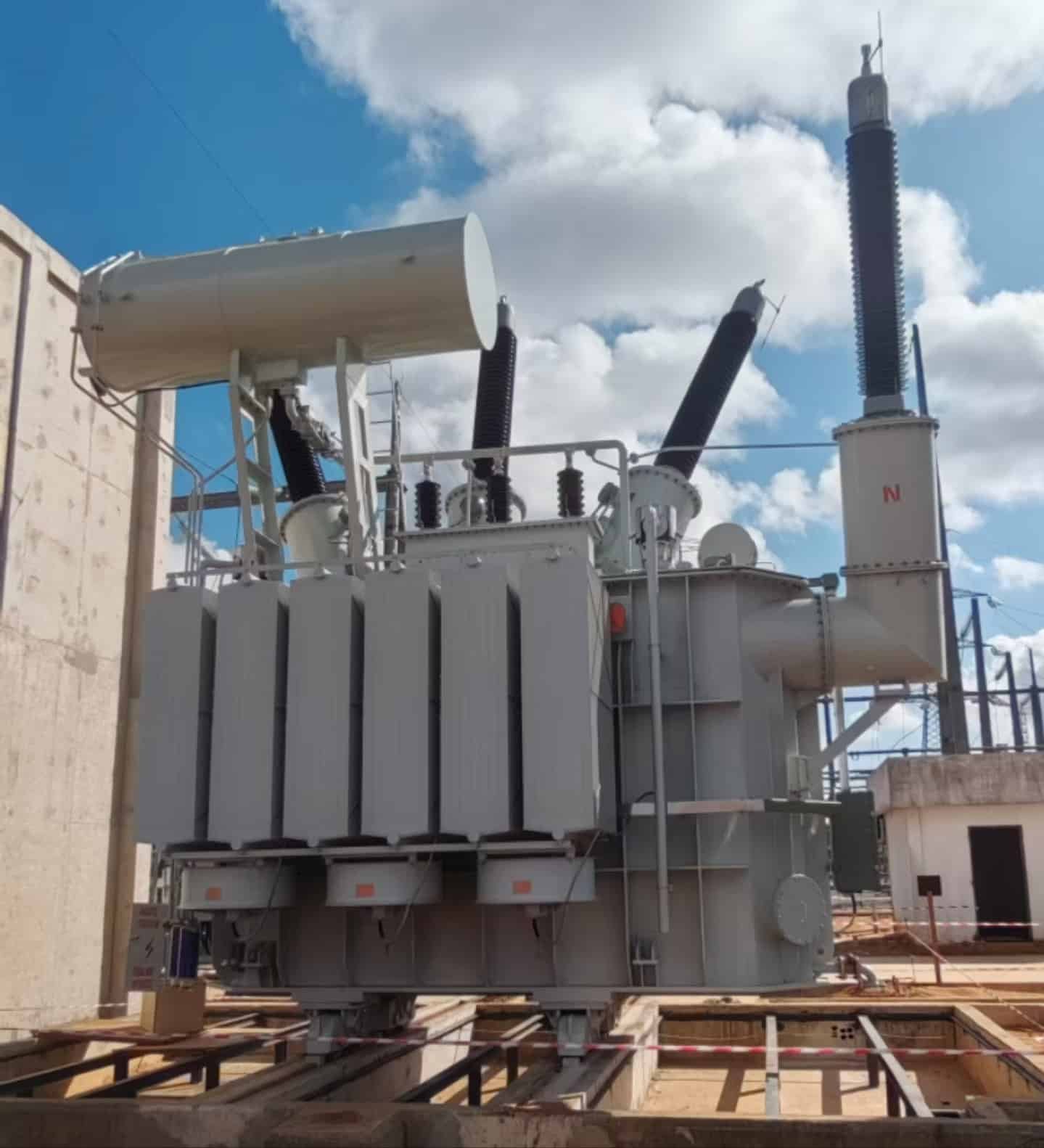
In power engineering, understanding what affects transformer losses—and what doesn't—is critical for optimizing efficiency and equipment selection. One common misconception is that poor power factor increases transformer losses, much like it affects generators or utility charges. However, this is technically incorrect. While power factor affects how much apparent power (kVA) is drawn, it does not significantly influence the inherent energy losses inside a transformer. To understand why, we need to break down transformer loss mechanics and the independence of those losses from reactive power flow.
Power factor does not affect transformer losses because transformer losses depend primarily on current magnitude and core magnetization behavior, not on the phase angle between voltage and current. Copper (I²R) losses are determined by the actual current flowing through the windings, and core (iron) losses are largely constant, regardless of the load’s power factor. Since poor power factor implies more reactive power but not necessarily more current, transformer losses remain nearly the same.
That’s why transformer ratings are in kVA, not kW—because losses and thermal loading correlate with apparent power, not real power.
Power factor has a significant impact on transformer losses.False
Transformer losses are primarily dependent on load current and voltage, not on the phase relationship between them.
Transformer copper loss is proportional to the square of current.True
Copper losses (I²R) depend solely on the amount of current, regardless of its phase angle.
Transformer losses occur even when the power factor is unity.True
Both core and copper losses exist irrespective of power factor conditions.
1. Types of Transformer Losses and Their Dependencies
| Loss Type | Depends On | Affected by Power Factor? |
|---|---|---|
| Core Loss (Iron Loss) | Voltage, Frequency | ❌ No |
| • Hysteresis | Magnetic domain switching | ❌ |
| • Eddy Current | Induced currents in core | ❌ |
| Copper Loss (I²R) | Load current | ❌ (indirectly if current rises) |
| Stray Loss | Leakage flux, tank heating | ❌ |
| Dielectric Loss | Insulation stress | ❌ |
| Cooling Losses | Oil pumps, fans | ❌ |
None of these are directly influenced by the phase angle between voltage and current (which defines the power factor).
2. Power Factor: Definition and Misconception
$$
text{Power Factor (PF)} = \frac{\text{Real Power (kW)}}{\text{Apparent Power (kVA)}}
$$
- kW = Power doing actual work
- kVAR = Power oscillating in the circuit (reactive)
- kVA = Total power drawn from the source
Transformer losses are driven by current and voltage magnitude:
- Current → copper losses
- Voltage → core losses
Reactive power alters the ratio between kW and kVA but does not increase power drawn in a way that increases losses unless total current increases.
3. Comparison Example: High vs Low Power Factor Load
Transformer Rating: 1000 kVA, 11 kV / 415 V
Load Current = Constant 1000 A
| Scenario | Power Factor | Real Power (kW) | Copper Loss (I²R) | Core Loss |
|---|---|---|---|---|
| A | 1.0 (Unity) | 415 kW | 1000² × R | Constant |
| B | 0.7 (Lagging) | 290.5 kW | 1000² × R | Constant |
✅ Current is the same → Copper loss is identical
✅ Voltage is unchanged → Core loss is identical
🔺 Real power differs—but losses do not change
4. Why Are Transformers Rated in kVA, Not kW?
| Reason | Explanation |
|---|---|
| Losses depend on current | kVA captures total current demand (real + reactive) |
| Thermal design is current-based | Windings heat due to current regardless of PF |
| Universality | kVA rating covers all load types without assuming PF |
| Reactive loads | Many industrial loads are inductive (motors, HVAC) |
If two loads draw the same apparent power, they stress the transformer the same way—regardless of their PF.
5. Practical System Impact: What Does PF Affect, Then?
While transformer losses are not affected, power factor does impact:
| System Component | PF Effect |
|---|---|
| Generators | Higher fuel usage at poor PF |
| Cables | Higher current = more loss if PF drops |
| Utility Charges | Demand charges based on kVA (apparent power) |
| Capacitor Banks | Installed to correct PF and reduce billing |
| Voltage Regulation | Poor PF causes voltage drops on long feeders |
So while the transformer’s internal losses don’t change, external system costs and performance do suffer under poor PF.
6. Illustration: Load Scenarios with Constant kVA
| Load Type | PF | kW | kVA | Copper Loss (I²R) |
|---|---|---|---|---|
| Resistive Heater | 1.0 | 100 | 100 | 100 A → 10 kW loss |
| Inductive Motor | 0.8 | 80 | 100 | 100 A → 10 kW loss |
| Capacitive Bank | 0.6 | 60 | 100 | 100 A → 10 kW loss |
All draw 100 A from the transformer → identical heating effect, despite differing work output.
7. Key Exception: Extremely Low Power Factor Loads
In some cases, extremely poor PF (e.g., <0.5) can:
- Increase total current, which increases I²R loss
- Create harmonic distortion, indirectly raising stray and dielectric losses
- Lead to overheating due to sustained high apparent power
But under typical industrial PF (0.8–0.95), the effect is negligible or nonexistent.
How Are Transformer Losses Related to kVA Rating?
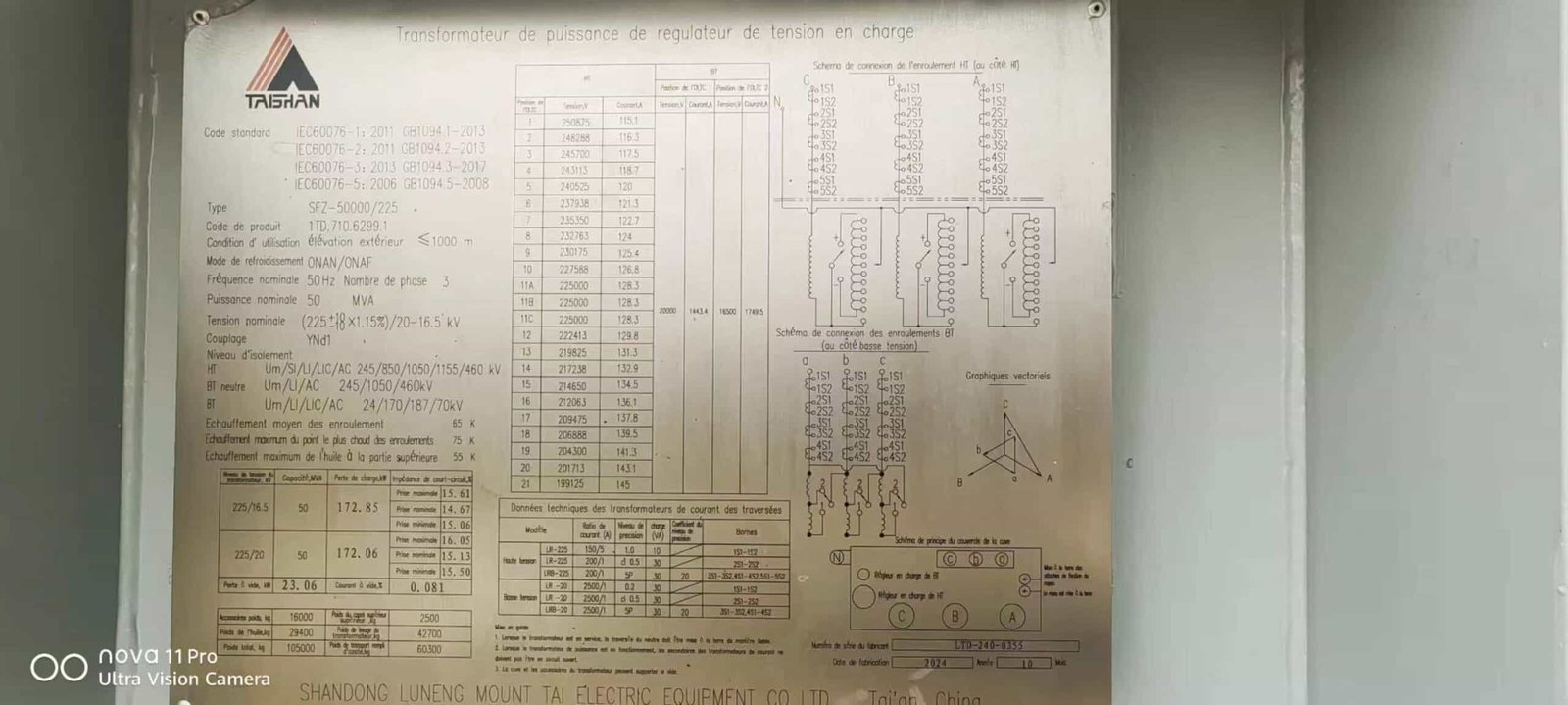
When designing or selecting a transformer, one of the most important specifications is its kVA rating—the measure of the apparent power it can deliver. But why is it that transformers are rated in kVA and not kW, and how does this relate to the internal losses that limit their efficiency? The answer lies in understanding how transformer losses—core and copper—respond to voltage and current, the two fundamental drivers of kVA. Misjudging this relationship can lead to thermal overloading, poor energy performance, and premature failure.
Transformer losses are directly related to the kVA rating because both copper losses (I²R losses) and core (iron) losses depend on the magnitude of current and voltage—the components of apparent power (kVA). The kVA rating defines the transformer’s thermal limit based on how much current and voltage it can handle without exceeding safe loss thresholds. Since losses are not affected by power factor, kVA—not kW—represents the total burden placed on a transformer’s insulation, windings, and cooling system.
In other words, the larger the kVA rating, the higher the transformer’s permissible loss levels, and all sizing and efficiency analysis must be based on this unit.
Transformer losses increase with higher kVA loads.True
As kVA increases, current rises, increasing copper losses, and voltage excites the core, sustaining iron losses.
Transformer efficiency should be evaluated at the rated kVA, not just at the kW load.True
Efficiency varies with load level and is calculated using both real output and total losses at a given kVA.
Transformers are rated in kVA because their losses depend on current and voltage, not power factor.True
Losses are influenced by voltage (core losses) and current (copper losses), which together define kVA, independent of load type.
1. Types of Transformer Losses: The Two Categories
| Loss Type | Description | Depends On | Affected by kVA |
|---|---|---|---|
| Core (Iron) Losses | Hysteresis + eddy current loss in magnetic core | Constant voltage & frequency | ✅ Yes |
| Copper (I²R) Losses | Heating of windings due to load current | Current magnitude (load dependent) | ✅ Yes |
- Core Losses: Independent of load but present whenever voltage is applied.
- Copper Losses: Increase with load current and scale with (Load kVA)².
2. Why kVA and Not kW?
- kW = kVA × Power Factor
- Power factor varies depending on load (inductive, capacitive, resistive).
- Transformer losses don’t vary with power factor—they depend only on current and voltage, which define kVA.
Example:
| Scenario | Voltage | Current | Power Factor | Load (kVA) | Load (kW) | Copper Loss |
|---|---|---|---|---|---|---|
| A | 415 V | 100 A | 1.0 | 41.5 | 41.5 | 100² × R |
| B | 415 V | 100 A | 0.8 | 41.5 | 33.2 | 100² × R |
Same kVA, same copper loss, different kW.
3. How kVA Affects the Thermal Design of a Transformer
The kVA rating of a transformer defines the limit of heat it can safely dissipate without damaging insulation or other components. This includes:
Allowable copper loss (Pcu):
$$
P_{cu} = I^2 \cdot R
$$Allowable core loss (Pcore):
$$
P_{core} = k \cdot V^2 \cdot f^2
$$
kVA rating sets the maximum current and voltage, and therefore the maximum internal loss a transformer is built to handle.
4. Loss vs. Load Graph: Visualizing the Impact of kVA on Losses
| Load (% of kVA) | Core Loss (kW) | Copper Loss (kW) | Total Loss (kW) | Efficiency (%) |
|---|---|---|---|---|
| 0% | 1.0 | 0.0 | 1.0 | 0.0 |
| 25% | 1.0 | 0.25 | 1.25 | 89.4 |
| 50% | 1.0 | 1.0 | 2.0 | 95.2 |
| 75% | 1.0 | 2.25 | 3.25 | 96.6 |
| 100% | 1.0 | 4.0 | 5.0 | 96.0 |
- Efficiency improves as load increases (due to fixed core loss).
- Maximum efficiency occurs typically around 70%–80% of rated kVA.
5. Real-World Case Study: 2000 kVA Distribution Transformer
| Parameter | Value |
|---|---|
| Rated Voltage | 33 kV / 415 V |
| Rated kVA | 2000 kVA |
| Full Load Current (LT) | \~2787 A |
| Core Loss | 3.8 kW |
| Copper Loss | 18.0 kW |
| Total Loss at Full Load | 21.8 kW |
| Efficiency @ Full Load, PF = 1 | 98.9% |
| Efficiency @ Full Load, PF = 0.8 | 98.9% (same losses) |
📌 Same losses at both power factors because losses are kVA-driven.
6. How Manufacturers Use kVA to Define Loss Limits
| Transformer Class | Typical kVA Range | Loss Standard (IEC/IS) | Loss Optimization |
|---|---|---|---|
| Distribution | 16–2500 kVA | IS 1180, IEC 60076-1 | Low-loss CRGO steel, Cu windings |
| Power | 5 MVA–1000 MVA | IEC 60076-2 | OFWF/ONAF cooling, advanced insulation |
| Furnace | High current, low voltage | IS 2026-1 | Oversized windings, thermal margin |
Each transformer's design ensures it meets thermal, electrical, and efficiency criteria for its rated kVA.
7. What Happens If You Exceed the kVA Rating?
- Copper overheating → Insulation breakdown
- Increased I²R losses → Efficiency drops
- Voltage drop → Poor load performance
- Thermal runaway → Permanent transformer damage
- Protection trips → System instability
Hence, kVA defines not just capacity, but the safe operating envelope for transformer health.
What Happens If a Transformer Is Rated in kW Instead?
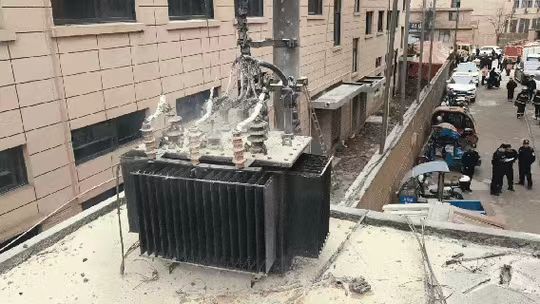
In transformer engineering, it’s essential to understand that power systems deal with apparent power (kVA), not just real power (kW). While it may seem logical to rate a transformer based on the power actually consumed (kW), doing so ignores critical parameters that affect transformer operation, sizing, and safety. If a transformer were rated in kilowatts instead of kilovolt-amperes, it would fail to account for reactive power, potentially causing overloading, overheating, and insulation failure—even when operating "within its kW limit." Understanding why transformers must be rated in kVA, not kW, is key to avoiding catastrophic mismatches in design and application.
If a transformer were rated in kW instead of kVA, it would not account for the reactive component of power (kVAR), leading to a serious underestimation of the actual current it must carry. This misrepresentation could result in overloading the windings, increased copper losses, overheating, premature insulation degradation, and even transformer failure—especially under low power factor conditions. Transformer losses and heating are driven by current and voltage, not the amount of real power (kW) being transferred.
This is why all transformers are universally rated in kVA, which encompasses both active and reactive components of power flow.
Transformers can be safely rated in kW if power factor is fixed.False
Even with a fixed power factor, transformer current and losses are defined by apparent power (kVA), not real power (kW).
Transformer thermal and electrical limits are based on current and voltage, which define kVA.True
Because transformer losses depend on current (copper loss) and voltage (core loss), kVA accurately represents its capacity.
Using kW instead of kVA to rate a transformer can result in serious overloading at low power factors.True
Reactive power is excluded in kW; ignoring it leads to underestimating the transformer's total power handling requirement.
1. The Misconception: Why Not Use kW as a Rating?
At first glance, using kW seems reasonable—it reflects the real power actually consumed by loads.
However:
- Transformers do not consume power
- They transfer apparent power (real + reactive)
Transformer heat stress and losses are determined by:
- Current (→ copper loss)
- Voltage (→ core loss)
Power factor, which relates kW to kVA, can vary based on load:
$$
text{kW} = \text{kVA} \times \text{Power Factor}
$$
If a transformer is rated in kW, it cannot adapt to varying power factors without exceeding thermal limits.
2. Illustrative Example: The Risk of kW-only Rating
Example Load:
- Load requirement: 500 kW
- Transformer rating: 500 kW
- Power factor: 0.8 (lagging, typical industrial)
Actual Apparent Power Drawn:
$$
text{kVA} = \frac{\text{kW}}{\text{PF}} = \frac{500}{0.8} = 625 \, \text{kVA}
$$
If transformer is designed for 500 kW, but not sized for 625 kVA:
- Current overload on windings
- Overheating
- Efficiency drops
- Accelerated insulation wear
- Potential failure under full load
3. Losses and Thermal Stress Depend on kVA, Not kW
| Loss Type | Depends On | Affected by Rating Type? |
|---|---|---|
| Copper Loss | $I^2R$ → Current | ✅ Underestimated with kW rating |
| Core Loss | Voltage | ❌ Fixed |
| Dielectric Stress | Insulation temperature | ✅ Related to current (kVA driven) |
| Cooling Requirements | Heat generated | ✅ Exceeds capacity with low PF |
If only kW is considered, the cooling system will be undersized, leading to:
- Hotspots
- Oil degradation (in oil-filled units)
- Loss of dielectric strength
- Reduced lifespan
4. Comparison Table: Transformer Rated in kW vs. kVA
| Parameter | Transformer Rated in kVA | Transformer Rated in kW |
|---|---|---|
| Accounts for reactive power? | ✅ Yes | ❌ No |
| Suitable for variable PF loads? | ✅ Yes | ❌ No |
| Thermal protection aligned with actual current? | ✅ Yes | ❌ No |
| Common industry standard? | ✅ Universal | ❌ Incorrect |
| Risk of overloading at PF < 1 | ❌ Low | ✅ High |
5. Power Factor Variation and kVA Demand
| Power Factor | Real Power (kW) | Apparent Power (kVA) | Increase Over kW |
|---|---|---|---|
| 1.0 (Unity) | 100 | 100 | 0% |
| 0.95 | 100 | 105.3 | +5.3% |
| 0.80 | 100 | 125.0 | +25% |
| 0.60 | 100 | 166.7 | +66.7% |
With lower PF, the same kW load draws more current, which increases copper losses exponentially (I²R).
6. IEC/IEEE Design Justification for kVA Rating
Standards such as:
- IEC 60076-1
- IEEE C57.12.00
Mandate kVA-based transformer ratings because:
- It reflects thermal limits
- It enables universal application, regardless of load type
- It supports system planning without needing exact load PF
Designers and utilities size transformers using kVA to ensure:
- Safe operation
- Proper protection coordination
- Voltage stability
- Minimized losses
7. Real-World Consequences of kW-only Ratings
| Consequence | Impact |
|---|---|
| Underrated windings | Overheat during high reactive load |
| False load matching | Leads to unexpected tripping |
| Shortened insulation life | Reduces transformer longevity |
| Compromised energy efficiency | Higher I²R losses |
| Regulatory non-compliance | Fails IEC/IS/IEEE standards |
A 1 MW load at 0.7 PF demands \~1.43 MVA, not 1 MVA.
Conclusion
Transformers are rated in kVA because their losses and thermal performance are independent of load power factor. While kW measures usable power, kVA accounts for both real and reactive components of electrical energy. Since transformers must handle the total current regardless of how effectively that current does work, kVA provides a more consistent and accurate measure of their capacity and durability across diverse applications.
FAQ
Q1: Why are transformers rated in kVA instead of kW?
A1: Transformers are rated in kVA (kilovolt-amperes) because they transfer apparent power, which includes both:
Active power (kW) – does real work
Reactive power (kVAR) – maintains magnetic fields
Since a transformer doesn’t control the power factor (cosφ), its size and losses depend on total current and voltage, not just real power.
Thus, kVA rating reflects its true thermal and electrical loading capacity.
Q2: What is the difference between kVA and kW in electrical systems?
A2: kW (kilowatts) = real power, consumed by loads to perform work
kVAR (kilovolt-ampere reactive) = power used to maintain electric/magnetic fields
kVA (kilovolt-ampere) = apparent power, the vector sum of kW and kVAR
Transformers carry both, so kVA rating = √(kW² + kVAR²).
Q3: How does the power factor affect transformer rating?
A3: The power factor (PF) = kW / kVA.
Since power factor depends on connected load, not the transformer itself, manufacturers use kVA to specify capacity without assuming any PF.
This ensures the transformer’s rating is independent of load conditions, avoiding incorrect sizing.
Q4: Are transformer losses related to kVA or kW?
A4: Transformer losses depend on current and voltage, not power factor:
Core losses (iron losses) depend on voltage
Copper losses (I²R losses) depend on current
Both components are influenced by apparent power (kVA). So, kVA accurately reflects how much electrical stress a transformer can handle.
Q5: Can a transformer’s kVA rating be converted to kW?
A5: Yes, but only if the power factor (PF) is known:
kW = kVA × PF
Example:
A 500 kVA transformer at 0.8 PF can supply:
500 × 0.8 = 400 kW
This helps in selecting transformers for specific load types, but the nameplate remains in kVA.
References
Electrical4U: Why Transformers Are Rated in kVA
https://www.electrical4u.com/why-transformers-are-rated-in-kva-and-not-in-kw/
IEEE C57.12.00: General Requirements for Transformer Ratings
https://standards.ieee.org/standard/C57_12_00-2015.html
Doble: kVA and Transformer Load Capability
https://www.doble.com/transformer-load-guidelines/
NREL: Apparent Power and Transformer Sizing
https://www.nrel.gov/docs/fy20osti/transformer-sizing.pdf
ScienceDirect: Transformer Rating and Load Calculations
https://www.sciencedirect.com/science/article/abs/pii/S0378779617302454