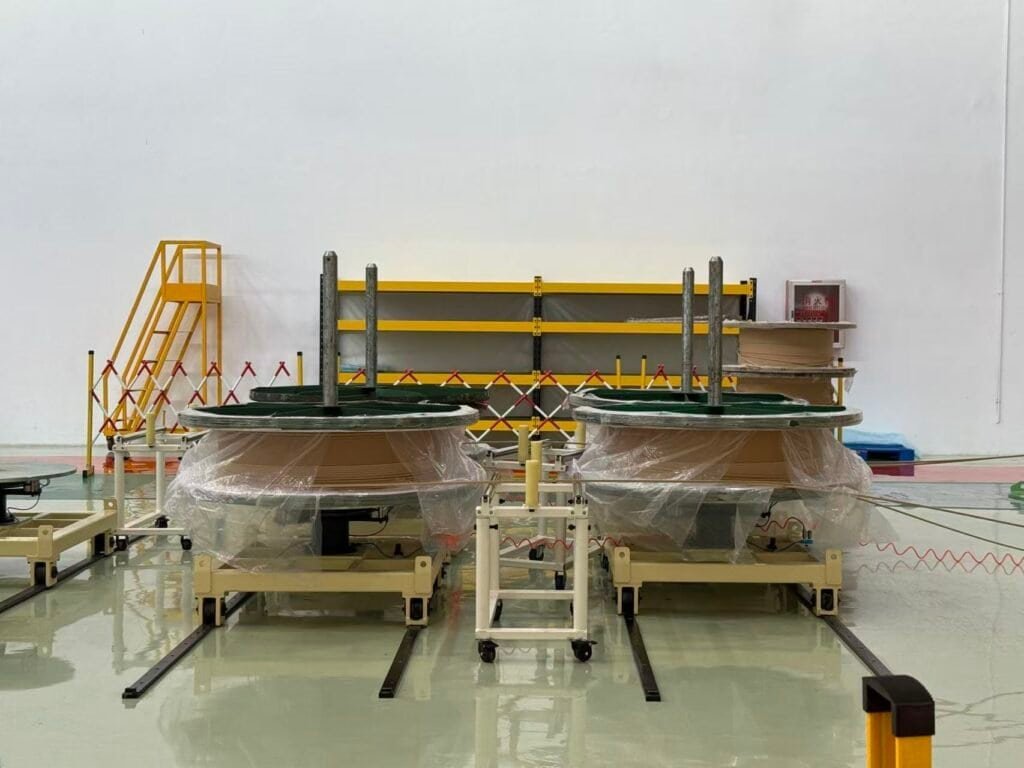
Transformers are fundamental components in electrical power systems, enabling voltage conversion, isolation, and efficient energy transfer. One of their defining design features is the use of multiple windings. Understanding why transformers have multiple windings helps explain how they adapt voltage levels, improve safety, and serve different applications across power generation, transmission, and distribution systems.
What Are the Risks of Operating Outside the Standard Voltage Range?

In practical power systems, short-term voltage fluctuations are unavoidable, but continuous operation outside the standard service voltage range creates serious and cumulative risks for transformers and the entire electrical network. International standards such as IEC and IEEE define voltage limits precisely because transformer electrical, thermal, and mechanical designs are based on those boundaries. When a transformer operates beyond them, hidden damage begins long before visible failure occurs.
Operating outside the standard voltage range exposes transformers to accelerated insulation aging, overheating, core saturation, efficiency loss, mechanical stress, and a significantly higher probability of catastrophic failure. These risks affect not only the transformer itself but also downstream equipment, system reliability, regulatory compliance, and total lifecycle cost.
Prolonged operation outside the standard voltage range significantly shortens transformer service life.True
Transformer insulation, thermal limits, and core design are calculated based on standardized voltage limits; exceeding them accelerates aging and failure mechanisms.
Accelerated Insulation Aging and Dielectric Breakdown
Transformer insulation systems are designed for a specific electric field strength. When voltage exceeds standard limits:
- Electrical stress on insulation increases disproportionately
- Partial discharge activity becomes more likely
- Moisture migration and chemical degradation accelerate
- Insulation life is reduced exponentially
Once insulation aging accelerates, it cannot be reversed. Many transformer failures attributed to “aging” are actually the result of long-term overvoltage operation.
Core Saturation, Noise, and Abnormal Heating
Overvoltage pushes the magnetic core beyond its optimal operating region:
- Magnetic flux density rises sharply
- Core saturation occurs during voltage peaks
- No-load losses increase significantly
- Excessive noise and vibration develop
These effects generate localized hot spots in the core and structural components, weakening mechanical integrity over time.
Why Are Separate Primary and Secondary Windings Necessary?
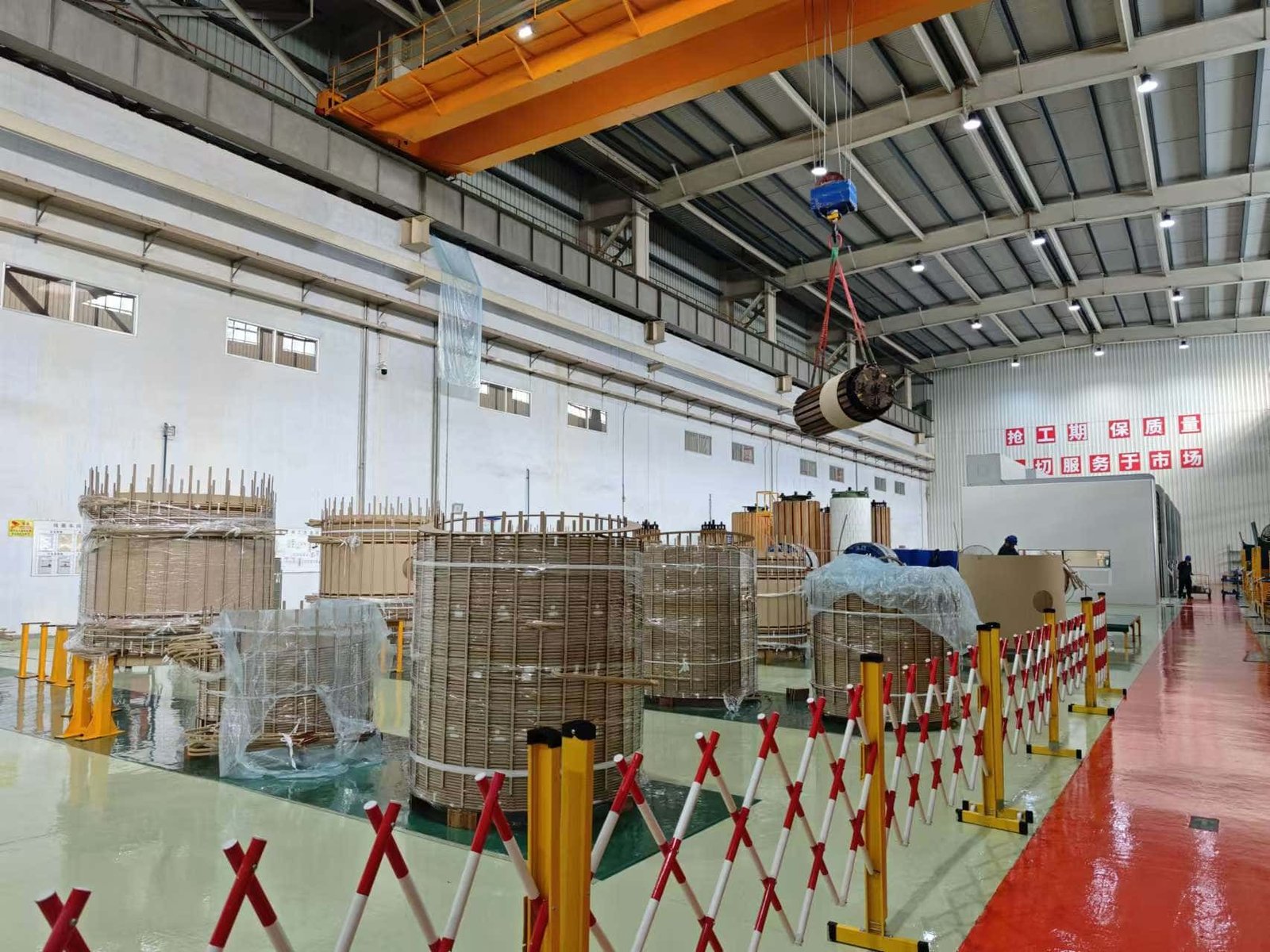
In transformer design, one of the most fundamental structural choices is the use of separate primary and secondary windings. At first glance, this may seem like a simple construction detail, but in reality, it is a critical requirement that directly affects electrical safety, voltage transformation accuracy, insulation reliability, and long-term operational stability. Without physically and electrically distinct windings, a transformer would not be able to perform its core function safely or reliably.
Separate primary and secondary windings are necessary to achieve controlled voltage transformation, electrical isolation, insulation coordination, and safe energy transfer between circuits operating at different voltage levels. This separation is a cornerstone of transformer theory and is mandated by all international standards.
Transformers require separate primary and secondary windings to ensure electrical isolation and safe voltage transformation.True
Physical and electrical separation between windings prevents direct conductive paths, controls insulation stress, and enables reliable voltage conversion according to IEC and IEEE standards.
Enables Electrical Isolation and Safety
One of the most important reasons for separate windings is electrical isolation. The primary winding is connected to the supply side, often at medium or high voltage, while the secondary winding feeds loads at a lower, safer voltage.
Separate windings:
- Prevent direct electrical contact between high-voltage and low-voltage circuits
- Protect personnel and equipment from dangerous fault conditions
- Reduce the risk of fault propagation from one side to the other
- Enable compliance with safety regulations and grid codes
Without this isolation, a fault or surge on the primary side could be directly transferred to downstream equipment, creating severe safety hazards.
Allows Accurate Voltage Transformation
Transformers operate on the principle of electromagnetic induction. Separate windings with different numbers of turns are essential to achieve precise voltage conversion.
Having distinct windings:
- Allows the turns ratio to define the voltage ratio accurately
- Enables step-up or step-down transformation as required by the system
- Ensures stable voltage regulation under varying load conditions
If primary and secondary circuits were not separated into independent windings, controlled voltage transformation would not be possible.
Supports Proper Insulation Coordination
Primary and secondary windings are subject to very different voltage stresses. Separate windings allow designers to:
- Apply different insulation thicknesses and materials
- Optimize insulation for each voltage level
- Control electric field distribution within the transformer
- Meet impulse and power-frequency withstand requirements
This insulation coordination is essential for preventing partial discharge, breakdown, and long-term insulation degradation.
Reduces Fault Risk and Improves Reliability
Separate windings limit the impact of internal faults:
- A fault in one winding does not automatically short the other
- Protection systems can detect and isolate faults more effectively
- Mechanical forces during short circuits are better controlled
This separation improves transformer reliability and reduces the likelihood of catastrophic failures.
Enables Multiple Voltage Levels and Configurations
Having distinct primary and secondary windings allows:
- Multiple secondary windings for different voltage levels
- Star, delta, or zigzag connections as required
- Flexible grounding arrangements
- Adaptation to different grid and load requirements
These configurations are essential in modern power systems where transformers must serve diverse applications.
Facilitates Compliance With International Standards
IEC, IEEE, and ANSI standards all assume physically separate primary and secondary windings when defining:
- Dielectric test requirements
- Temperature rise limits
- Short-circuit withstand capability
- Efficiency and loss guarantees
Transformers without proper winding separation would not meet certification requirements and would be unsuitable for regulated power systems.
Prevents Uncontrolled Circulating Currents
Separate windings prevent unintended circulating currents that could arise if conductors were shared:
- Reduces additional losses
- Prevents localized overheating
- Maintains stable magnetic flux distribution
This contributes to higher efficiency and longer service life.
How Do Multiple Windings Enable Voltage Transformation and Isolation?
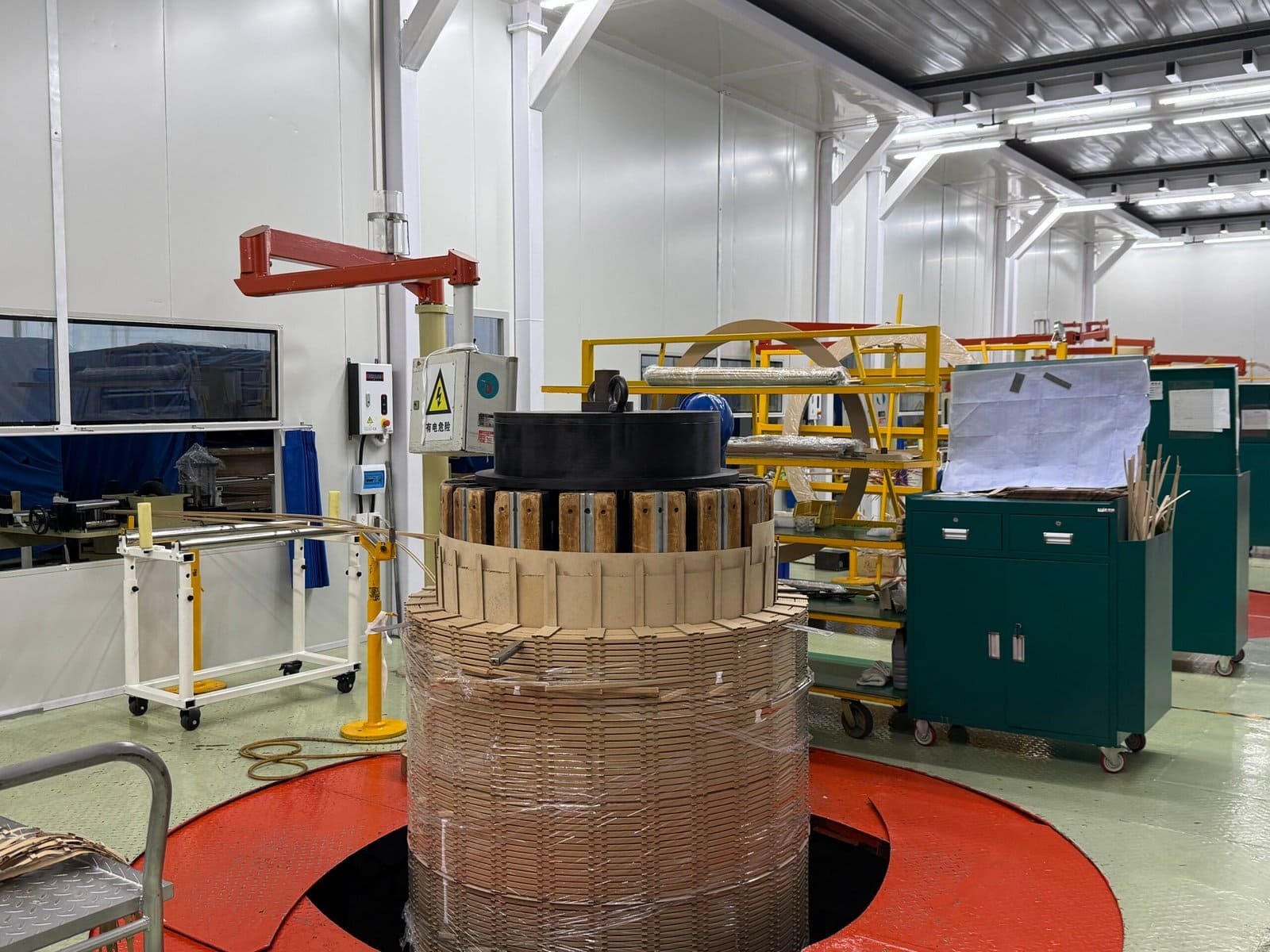
In modern power systems, transformers must do far more than simply change voltage levels. They must safely connect circuits operating at very different voltages, protect equipment and personnel, support complex grid configurations, and maintain stable performance under varying loads. These requirements are met through the use of multiple windings, which are a fundamental element of transformer design rather than a structural convenience.
Multiple windings enable voltage transformation and electrical isolation by using electromagnetic coupling instead of direct electrical connection, allowing energy to be transferred safely between circuits with different voltage levels, grounding schemes, and operating conditions. This principle is central to transformer operation and is enforced by all international electrical standards.
Multiple transformer windings allow voltage conversion while maintaining electrical isolation between circuits.True
Energy is transferred magnetically through the core, not through direct electrical contact, which enables safe voltage transformation and isolation.
Electromagnetic Induction as the Basis of Voltage Transformation
Transformers operate on the principle of electromagnetic induction. When alternating current flows through the primary winding, it creates a changing magnetic flux in the core. This flux links to other windings and induces a voltage proportional to the number of turns in each winding.
With multiple windings:
- Each winding experiences the same magnetic flux
- Voltage induced in each winding depends on its turns count
- Different voltage levels are obtained simultaneously
- Power is transferred without direct electrical contact
This is how a transformer can step voltage up or down with high efficiency and precision.
Electrical Isolation Between Circuits
One of the most critical advantages of multiple windings is galvanic isolation. Because windings are physically and electrically separate:
- There is no conductive path between circuits
- High-voltage faults are not directly transferred to low-voltage systems
- Sensitive equipment is protected from surges and ground faults
- Personnel safety is significantly improved
Isolation is especially important in substations, industrial plants, hospitals, and renewable energy systems where fault containment is essential.
Independent Insulation Design for Each Voltage Level
Different windings operate at different voltage stresses. Multiple windings allow designers to:
- Apply insulation materials matched to each voltage level
- Control electric field distribution between windings
- Meet impulse and power-frequency withstand requirements
- Reduce partial discharge risk
This targeted insulation design would not be possible if all circuits shared a single winding structure.
Flexibility in Voltage Ratios and System Configuration
Multiple windings provide design flexibility that single-winding systems cannot offer:
- Step-up and step-down transformation in the same unit
- Multiple secondary voltages from one transformer
- Star, delta, zigzag, or hybrid winding connections
- Neutral grounding or isolation as required by the system
This flexibility is essential for adapting transformers to diverse grid architectures and load requirements.
Improved Fault Containment and Reliability
When a fault occurs:
- It is usually confined to the affected winding
- Protection systems can isolate the fault more effectively
- Mechanical and thermal damage is limited
Multiple windings reduce the likelihood that a single failure will escalate into a total transformer loss, improving system reliability and asset protection.
Support for Specialized Applications
Multiple windings are essential in many advanced applications, including:
- Auxiliary and tertiary windings for station service power
- Phase-shifting transformers
- Rectifier and converter transformers
- Renewable energy and traction systems
In each case, separate windings enable precise voltage control and isolation tailored to the application.
Compliance With International Standards
IEC, IEEE, and ANSI standards for transformers are based on the assumption of multiple, isolated windings. These standards define:
- Dielectric test levels between windings
- Temperature rise limits for each winding
- Short-circuit withstand requirements
- Efficiency and loss measurement methods
Transformers without properly designed multiple windings would not meet certification or grid interconnection requirements.
What Additional Functions Can Extra Windings Provide?
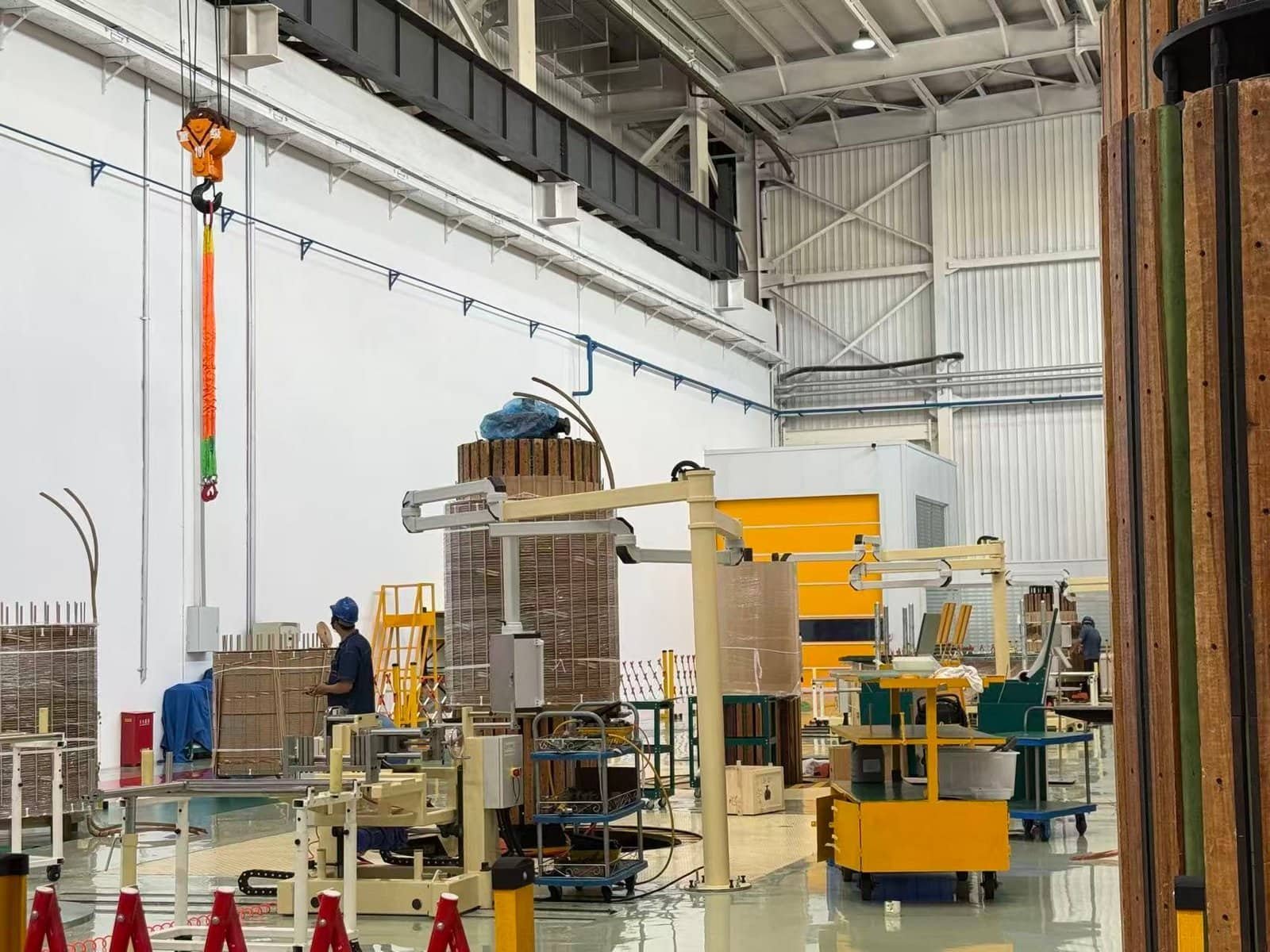
In modern transformer engineering, windings are no longer limited to a single primary and secondary pair. As power systems become more complex and multifunctional, extra windings—often referred to as tertiary, auxiliary, or special-purpose windings—play a critical role in extending transformer capability beyond basic voltage transformation. These additional windings are intentionally designed to support system stability, protection, control, and operational flexibility.
Extra windings provide essential additional functions such as voltage regulation support, system grounding, harmonic suppression, auxiliary power supply, fault current control, and enhanced grid stability, all without compromising electrical isolation. Their inclusion reflects advanced system-level thinking rather than simple redundancy.
Extra windings in transformers serve functional roles beyond voltage transformation.True
Tertiary and auxiliary windings are commonly used for grounding, harmonic control, auxiliary supply, and system stability in accordance with IEC and IEEE practices.
System Grounding and Neutral Stabilization
One of the most important roles of extra windings is to provide controlled grounding for the power system. In many high-voltage and transmission transformers, the main windings may be delta-connected or otherwise ungrounded.
An additional winding allows:
- Creation of a stable neutral point
- Controlled earth fault current paths
- Improved ground fault detection and protection
- Reduced overvoltage during single-line-to-ground faults
This function is essential for system safety and protection coordination.
Harmonic Suppression and Power Quality Improvement
Extra windings are frequently used to manage harmonics generated by nonlinear loads such as rectifiers, inverters, and variable-frequency drives.
By using a delta-connected tertiary winding:
- Triplen harmonics are trapped and circulate internally
- Harmonic distortion on the main windings is reduced
- Voltage waveform quality improves
- Heating and losses caused by harmonics are minimized
This significantly enhances transformer life and system power quality.
Voltage Regulation and Load Balancing Support
Additional windings can assist in stabilizing voltage under varying load conditions:
- Absorbing unbalanced loads
- Supporting tap changer operation
- Improving voltage symmetry in multi-phase systems
In large substations, tertiary windings often contribute to smoother voltage regulation and reduced stress on primary and secondary windings.
Auxiliary Power Supply for Substations
Extra windings are commonly used to supply auxiliary or station service power, eliminating the need for separate transformers.
They can provide power for:
- Cooling fans and oil pumps
- Control circuits and protection relays
- Monitoring, communication, and SCADA systems
- Lighting and emergency systems
This integration reduces equipment count, improves reliability, and simplifies substation design.
Fault Current Limitation and System Protection
In certain configurations, extra windings help control fault behavior:
- Limiting fault current magnitude
- Providing controlled circulating current paths
- Reducing mechanical stress during short circuits
This improves the transformer’s short-circuit withstand capability and reduces damage during fault events.
Support for Special Applications
Extra windings are essential in many specialized transformer designs, including:
- Phase-shifting transformers for power flow control
- Converter transformers in HVDC systems
- Traction transformers for railways
- Renewable energy transformers with auxiliary outputs
Each application relies on extra windings to meet unique operational requirements.
Enhanced Operational Flexibility and Future Expansion
Including extra windings during initial design allows:
- Future system expansion without replacing the transformer
- Connection of additional loads or equipment
- Improved adaptability to evolving grid conditions
This foresight significantly increases long-term asset value.
Compliance With Grid Codes and Standards
Many utility and grid operator requirements explicitly call for tertiary or auxiliary windings to:
- Meet grounding and protection criteria
- Control harmonics
- Improve system resilience
IEC and IEEE standards fully recognize and regulate these additional functions, ensuring safe and standardized implementation.
Conclusion
Transformers have multiple windings to perform voltage transformation, provide electrical isolation, and support diverse system requirements. By using separate and sometimes additional windings, transformers can safely adapt voltage levels, supply multiple loads, and enhance the flexibility and reliability of power systems. This design principle is essential to the efficient operation of modern electrical networks.
FAQ
Q1: Why do transformers require multiple windings?
Transformers have multiple windings because their fundamental purpose is to transfer electrical energy between circuits at different voltage and current levels without changing frequency. Each winding serves a specific electrical and functional role. At a minimum, a transformer must have:
Primary winding – receives electrical energy from the source
Secondary winding – delivers transformed energy to the load
The interaction between these windings through a shared magnetic core enables voltage step-up or step-down based on the turns ratio. Multiple windings also provide electrical isolation, improve system safety, and allow power to be supplied to different voltage levels simultaneously.
In more advanced designs, additional windings are added to support system stability, harmonic suppression, auxiliary power supply, or grounding. Without multiple windings, transformers would not be able to perform voltage transformation, isolation, or multi-load distribution effectively.
Q2: What is the role of primary and secondary windings?
The primary winding is connected to the input power source, while the secondary winding supplies power to the load. When alternating current flows through the primary winding, it creates a magnetic flux in the transformer core. This flux induces a voltage in the secondary winding through electromagnetic induction.
The voltage ratio between the primary and secondary windings is determined by the number of turns in each winding:
More turns on secondary → step-up transformer
Fewer turns on secondary → step-down transformer
This relationship allows transformers to adapt electrical energy for safe transmission, distribution, and utilization. Primary and secondary windings are electrically isolated but magnetically coupled, ensuring safe energy transfer without direct electrical connection.
Q3: Why do some transformers have tertiary windings?
A tertiary winding is an additional winding commonly found in large power transformers. It serves several important purposes:
Stabilizing system voltage under unbalanced loads
Providing a path for third-harmonic currents, reducing voltage distortion
Supplying auxiliary loads such as station service or reactive power devices
Improving fault performance by controlling zero-sequence currents
Tertiary windings are often connected in delta configuration and may be loaded or unloaded depending on system requirements. In transmission transformers, tertiary windings enhance grid stability and protect the main windings from excessive electrical stress.
Q4: How do multiple windings improve transformer flexibility?
Multiple windings allow a single transformer to serve multiple voltage levels or loads simultaneously. This is particularly valuable in substations and industrial facilities where different equipment requires different voltages.
Examples include:
One high-voltage primary with multiple secondary voltages
Separate windings for control circuits, protection systems, or lighting
Multi-secondary transformers supplying independent loads
This flexibility reduces the need for multiple transformers, lowers installation costs, saves space, and improves system efficiency. It also allows engineers to customize transformer designs to match specific grid or application requirements.
Q5: Do multiple windings affect transformer efficiency and losses?
Yes, multiple windings influence transformer efficiency, but when properly designed, the benefits outweigh the additional complexity. Each winding introduces:
Copper losses due to winding resistance
Additional insulation requirements
Magnetic coupling considerations
However, advanced core design, optimized conductor sizing, and modern insulation systems ensure that efficiency remains high. In fact, multiple windings can improve overall system efficiency by reducing the number of transformers required and minimizing power conversion stages.
Properly engineered multi-winding transformers achieve excellent performance while maintaining low losses and high reliability.
Q6: Are multiple windings necessary for electrical isolation?
Yes. Electrical isolation is one of the most important reasons for using separate windings. Because windings are magnetically coupled but electrically isolated, transformers protect downstream equipment and personnel from:
High-voltage surges
Ground faults
Noise and interference
Isolation windings are essential in medical facilities, data centers, industrial control systems, and sensitive electronic applications. Multiple windings also enable grounding configurations that improve system safety and fault detection.
Q7: Do all transformers have the same number of windings?
No. The number of windings depends on the transformer’s application, size, and system requirements:
Basic transformers: Primary + secondary
Power transformers: Primary + secondary + tertiary
Special-purpose transformers: Multiple secondary windings
Instrument transformers: Dedicated windings for measurement and protection
Each additional winding is carefully designed to meet electrical, thermal, and mechanical constraints while ensuring long-term reliability.
References
IEC 60076 – Power Transformers
https://webstore.iec.ch/publication/602
IEEE C57 Series – Transformer Standards
https://standards.ieee.org
Electrical Engineering Portal – Transformer Windings
https://electrical-engineering-portal.com
NEMA – Transformer Design Fundamentals
https://www.nema.org
MR Reinhausen – Transformer System Design
https://www.reinhausen.com
U.S. Department of Energy – Transformer Basics
https://www.energy.gov